Languages
15Teatro Romano de Málaga Audio Guide
Teatro Romano de Málaga is an archaeological site in Málaga, Spain. Explore it with Stanza's guided offline audio tour — narrated in 15 languages.
Quick Facts
16
Stops
15
Languages
100%
Offline
📍 Málaga, Spain · 36.7212°N, -4.4169°E
About Teatro Romano de Málaga
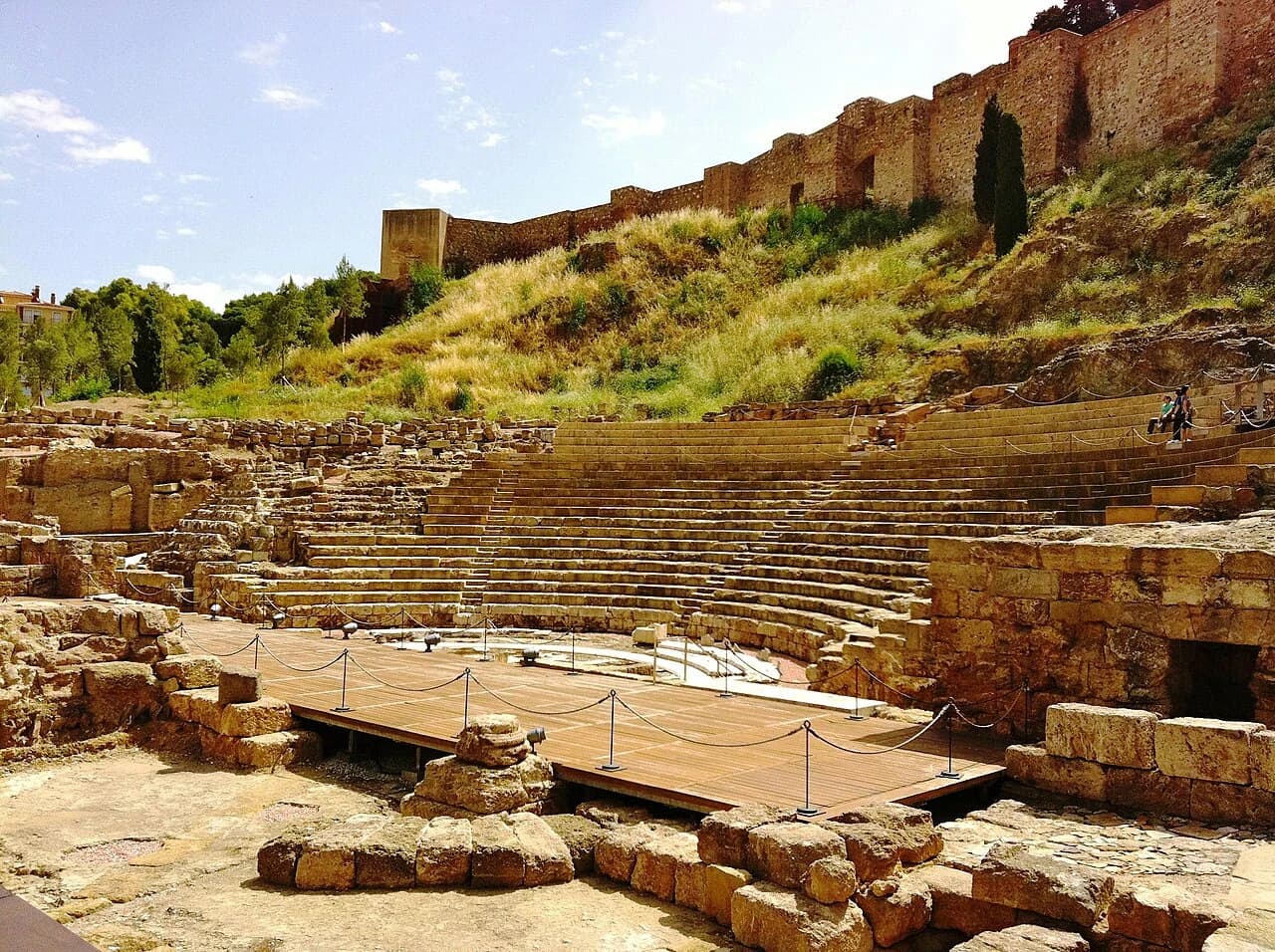
An ancient Roman theatre located in Málaga, Spain. It served as a venue for theatrical performances during the Roman era and is now a significant archaeological site.
Teatro Romano de Málaga is also known as Roman theater of Málaga, Teatro Romano, Teatro Romano de Malaga, Teatro Romano, and 1 other names in various languages.
This self-guided audio tour features 16 narrated stops organized across 7 sections. As a archaeological site, Teatro Romano de Málaga offers a unique cultural experience in the heart of Málaga, Spain.
The Stanza audio guide is available in 15 languages and works entirely offline — download the complete tour including audio narration, maps, and images before your visit. As you walk through Teatro Romano de Málaga, GPS-triggered narration plays automatically at each point of interest.
Last updated:
What you will hear
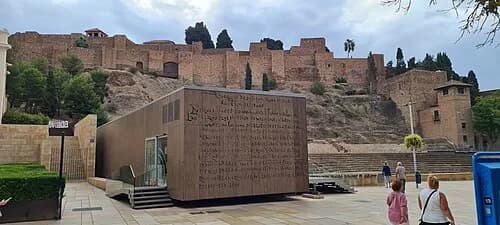
The Gateway to the Past: The Interpretation Center
Starting at the main entrance to set the scene with the modern center and the legal history engraved on its facade.
Overview of the Ruins
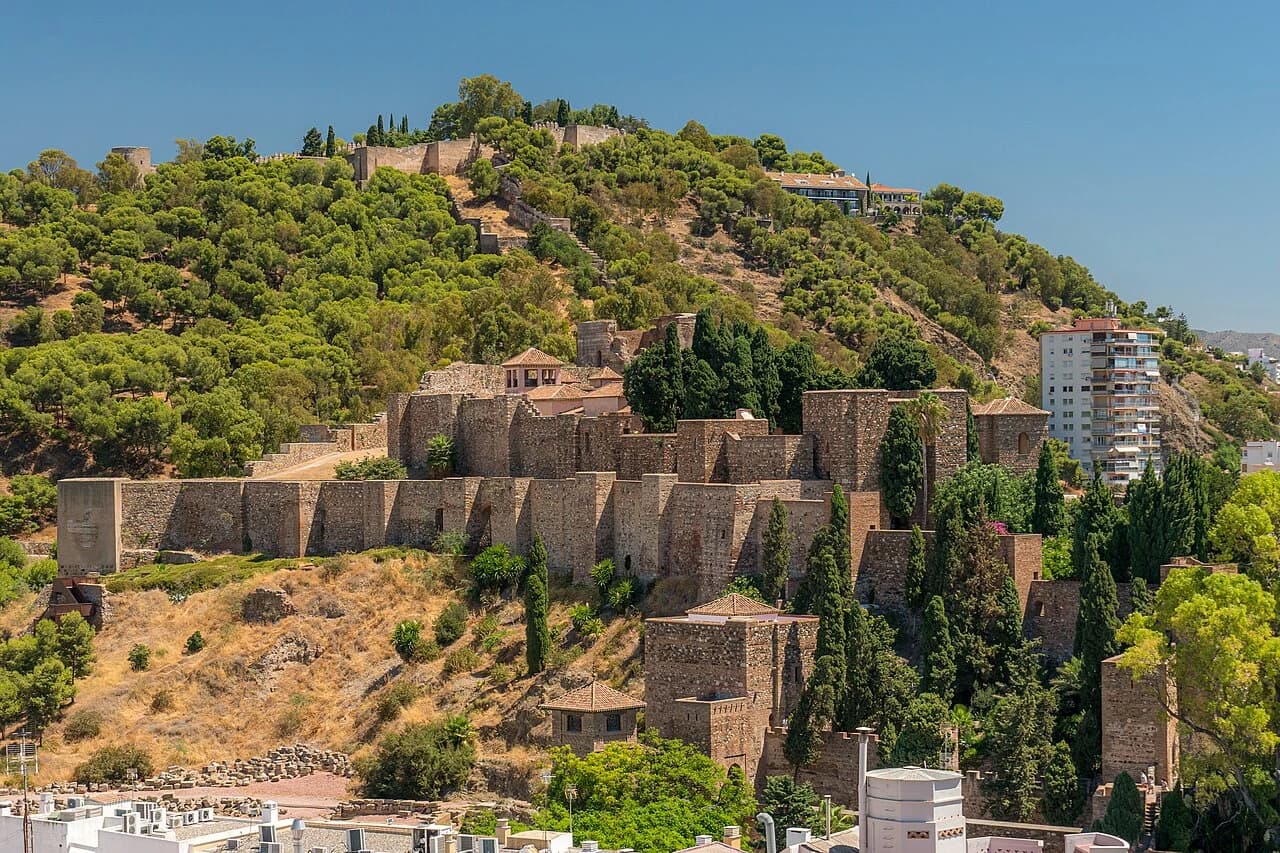
This sprawling site dates back to the early 1st century BC, constructed during the pivotal reign of Emperor Augustus. For roughly 300 years, this was the primary venue for public performance and cultural life in Málaga. The theater was not just a building; it was a statement of Roman power and sophistication in the province of Hispania. One of the most striking features is how it interacts with the landscape. It sits directly at the base of the hill where the Alcazaba fortress now stands. This proximity was not a coincidence; the topography provided a natural foundation for the massive structure. This location introduces a theme that defines the entire site: layers of history. While the theater below is Roman, the walls rising above represent a later Islamic period. Throughout the tour, you will see how different civilizations utilized this same plot of land, often literally building upon the foundations of those who came before. It serves as a visual timeline of the city's evolution from antiquity through the Middle Ages.
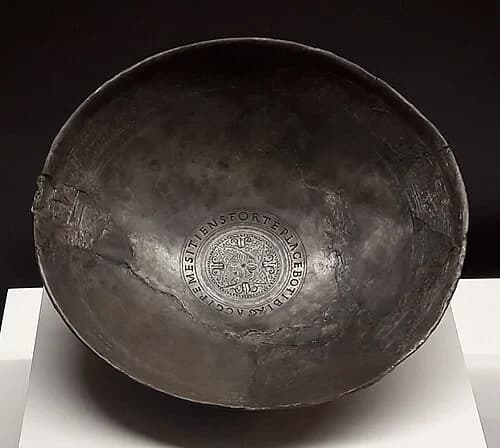
The Inscribed Bowl
Small artifacts like this inscribed bowl are essential for understanding the lived experience of Roman Málaga. Found during archaeological excavations of the site, it features a central floral design and clear Latin lettering circling the rim. Objects of this type were often used in religious ceremonies or sacrificial rituals that frequently accompanied public spectacles and theater performances. For archaeologists, this piece is more than a relic; it is evidence of the cultural shift that occurred here. Before the Romans arrived, Málaga was a Phoenician settlement called Malaka. As the city became fully Romanized, its inhabitants adopted Roman customs, religion, and the Latin language. This bowl reflects that transition, showing how deeply Roman identity had taken root in the local population. It suggests that the theater was a place of ritual as much as entertainment. Each inscription and decorative element tells the story of a community merging its older traditions with the dominant laws and culture of the Roman Empire, effectively transforming the city into a mirror of Rome itself.
A City of Layers: The Overlook
A panoramic stop to appreciate the hybrid Greek-style design and the theatre's position beneath the Alcazaba.
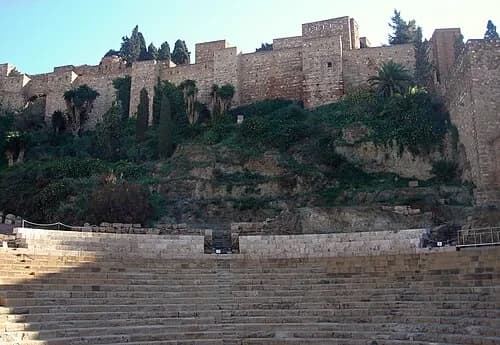
The Hillside Design
While the theater is a Roman creation, its architectural DNA contains elements borrowed from the ancient Greeks. Looking at the way the seating area is integrated into the hillside, you can see a technique known as 'Greek-style' construction. In a traditional Roman theater, such as the Colosseum, the entire structure would be free-standing, supported by a complex system of internal arches and vaults. However, here in Málaga, the builders chose to carve the tiers of seats directly into the limestone slope of the Alcazaba hill. This was a masterstroke of practical engineering. By following the natural contour of the land, the Romans saved an immense amount of time, labor, and expensive materials. It required far less masonry to create the seating area, as the hill provided the primary support. This hybrid approach allowed for a grand, permanent structure that felt integrated with the landscape. It shows the Roman ability to adapt their monumental architecture to the specific challenges of a local site, combining established engineering principles with the efficiency of older traditions to create a lasting public space.
Center Stage: The Scaena
Focusing on the performance area and the foundations of the once-grand stage backdrop.
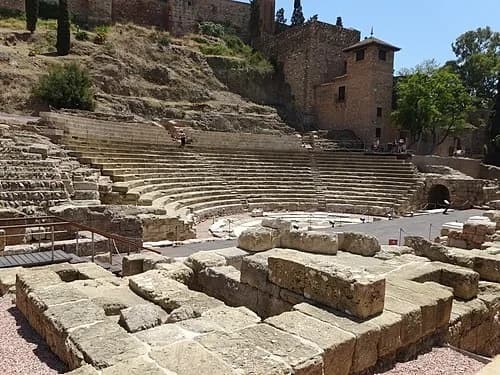
The Seating Tiers
The tiered seating area, called the 'cavea,' could accommodate several thousand spectators. However, attendance was not a simple matter of finding an empty spot. In Roman society, where you sat was a direct reflection of your social standing and legal status. This theater functioned as a microcosm of the city’s hierarchy. The rows were divided into three main sections. The lowest tiers, closest to the stage, were reserved for the elite: senators, local magistrates, and wealthy patrons. Above them, in the middle section, sat the ordinary Roman citizens. Finally, the highest and furthest rows were where the poorest residents, women, and enslaved people were permitted to watch. This arrangement ensured that every person in the theater knew exactly where they belonged in the social order. Even the entrances were controlled to keep different classes from mixing too closely. As the crowd looked down toward the stage, they were viewing the physical manifestation of Roman law and social rigidity, where every stone seat reaffirmed their place in the community.
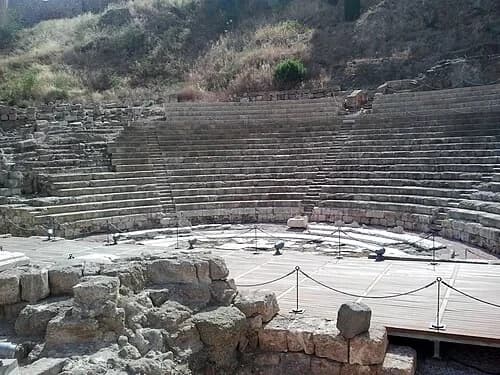
The Reconstructed Stage
The wooden platform before you is known as the 'scaena.' While it looks simple now, in the 1st century, this was the center of a visually overwhelming environment. Behind the actors stood a massive architectural backdrop called the 'scaenae frons.' This was a three-story ornamental wall that functioned like a permanent stage set. It would have been decorated with tiers of grand columns and niches filled with statues depicting emperors, gods, and prominent local citizens. The scale of this wall was designed to dwarf the performers and awe the audience, projecting a sense of the immense power and wealth of the Roman state. It also had a practical purpose, acting as a sounding board to help project the actors' voices toward the top rows of seats. Performers entered and exited through several ornate doorways built into this towering facade. Although the original wall has long since collapsed, its presence would have dominated the view, ensuring that even during a comedy or drama, the spectator never forgot they were standing in a monument to the Roman Empire's grandeur.
The Best Seats in the House: The Orchestra
Exploring the semi-circular VIP area where Málaga's elite once sat on marble slabs.
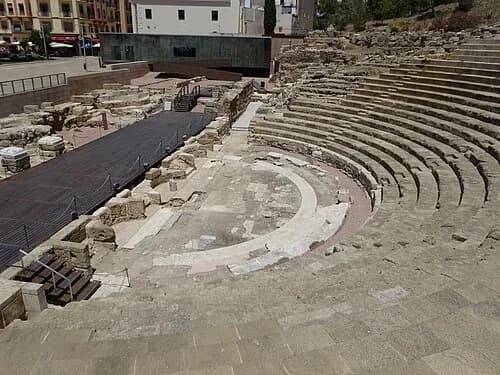
The Marble Paving
The flooring of the orchestra reveals the meticulous craftsmanship and planning that went into this structure. The variety of stone used here suggests that materials were sourced from different quarries to create a durable and impressive surface. The layout follows the strict classical proportions established by the famous Roman architect and engineer, Vitruvius. He wrote the definitive guide to theater construction, emphasizing that the orchestra should be a perfect semicircle to ensure ideal sightlines and acoustic balance. Achieving this mathematical precision with heavy stone blocks required expert masonry. Each block had to be carefully cut and fitted together to form the curve without any uneven gaps. This was not just for aesthetics; a perfectly level and stable floor was necessary for the dignitaries who sat here in their chairs. The surviving paving stones are a testament to the longevity of Roman building techniques. Despite two thousand years of exposure and the weight of later buildings on top of them, the geometric harmony of the Vitruvian design remains clearly visible to visitors today.
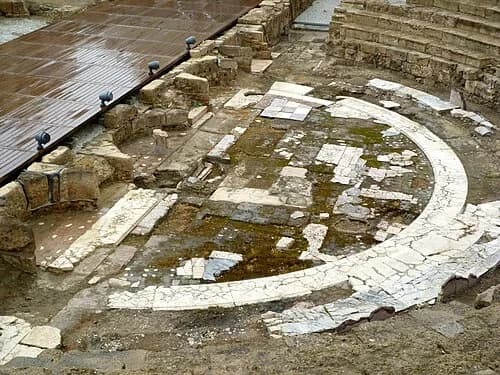
The VIP Orchestra
The semi-circular space between the stage and the rising tiers of seats is called the orchestra. Unlike modern theaters, this area was not for a group of musicians. In a Roman theater, this was the highest-prestige seating available. If you look closely at the floor, you can see the remains of high-quality marble slabs, a clear sign of the area's importance. This exclusive zone was reserved for the city's most powerful magistrates and visiting VIPs. Instead of sitting on the stone benches of the cavea, these elite individuals sat in luxurious, movable chairs placed directly on the marble floor. This position placed them as close to the action as possible, often just a few feet from the actors. It was the ultimate 'front row' experience, designed both for comfort and as a visible display of their authority to the thousands of people sitting in the tiers above. By paving this section in stone that was far more expensive and colorful than the rest of the theater, the Roman builders created a permanent visual boundary between the ruling elite and the general public they governed.
Social Order in Stone: The Cavea
Climbing the seating tiers to discuss the strict social hierarchy of Roman entertainment.
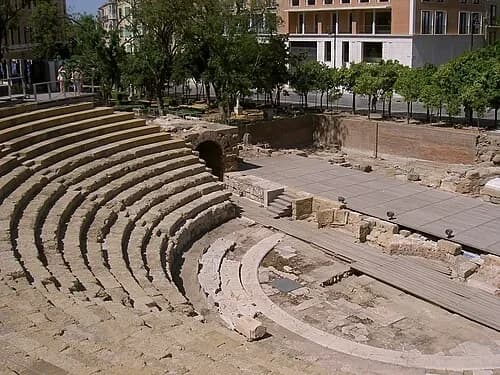
The Vitruvian Curve
Standing at a higher point in the seating area allows you to appreciate the theater's acoustic design. The semi-circular shape isn't just for visibility; it was an advanced audio engineering feat. Roman architects, heavily influenced by the writings of Vitruvius, understood how sound waves moved. The steep rise of the tiers combined with the curved shape of the cavea helped to naturally amplify voices from the stage, carrying them all the way to the top rows without the need for electronic help. Vitruvius’s influence is seen in the mathematical precision of these entertainment spaces. He taught that every part of the theater's geometry—from the height of the stage to the angle of the seats—had to work in harmony. This created a 'canonical' theater shape that could be reproduced across the empire, from Rome to the edges of Hispania. The curve you see here was designed so that even a whisper on the stage could be heard by the thousands of spectators. This focus on acoustics made the theater an immersive experience, where the architecture itself acted as a grand instrument, binding the audience and performers together through sound.
The Secret Entrance: Aditus Maximus & The Tower
Revealing the story of the accidental 1951 discovery and the later reuse of theatre stones by the Moors.
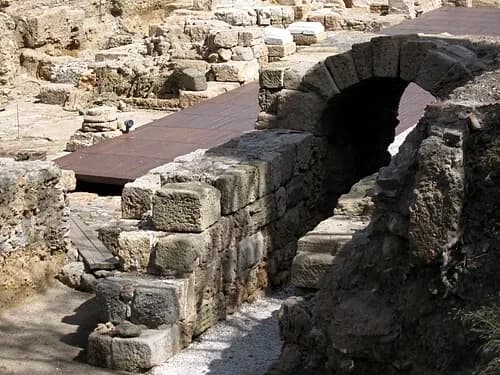
The Grand Entrance Arch
This arched passage is one of the primary entry points into the theater, known as the 'Aditus Maximus.' It served as a grand corridor, allowing large crowds to flow into the orchestra and seating areas efficiently. What makes this arch truly remarkable is the engineering behind it. Look closely at the massive stone blocks that form the structure. They were cut with such precision that they fit together perfectly, held in place solely by their own weight and the force of gravity. This mortarless construction is a hallmark of Roman engineering. By distributing the weight of the structure through the curve of the arch, the Romans created a passage that was both elegant and incredibly durable. This technique has allowed the arch to survive for two millennia, outlasting the wooden roofs and decorative marble that once covered the theater. Even after the theater was repurposed for fish processing and later used as a quarry, this stone skeleton remained standing. It is a testament to the skill of the original builders, whose grasp of physics and geometry created a gateway that still functions today.
Saved from the Shadows: Calle Alcazabilla
Concluding the tour on the modern promenade to discuss the demolition of the Casa de la Cultura and the site's preservation.
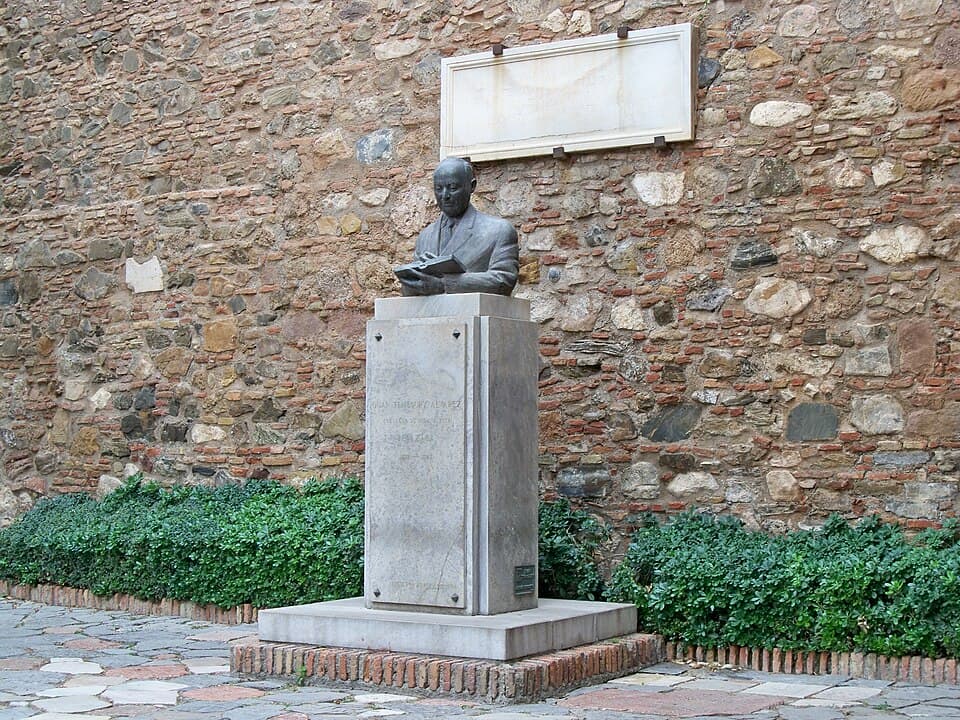
Bust of Juan Temboury
This bust honors Juan Temboury, the man largely responsible for the theater's survival into the modern era. In 1951, when workers first struck stone while creating a garden at the foot of the hill, the immense historical value of the find was not immediately understood. Temboury, a dedicated historian and influential politician, was one of the first to recognize that these were the remains of a grand Roman entertainment venue. He campaigned tirelessly to protect the site from being paved over or lost to urban development. At a time when the city was eager to build the new Casa de la Cultura, Temboury fought to ensure the archaeology was documented and shielded. While a modern building did eventually sit atop the stage area for several decades, his intervention prevented the total destruction of the seating tiers and orchestra. His advocacy laid the essential groundwork for the later restoration projects that finally revealed the theater in its full glory. The figure's studious expression reflects a lifetime spent documenting the city's heritage. A small plaque on the pedestal records his name, marking the end of a long journey from ancient drama to modern-day preservation.
Want to hear the rest?
Download the Stanza app to unlock all 16 stops and the complete guided audio tour.
Frequently Asked Questions
How long does the Teatro Romano de Málaga audio tour take?
The Teatro Romano de Málaga audio guide includes 16 narrated stops. Most visitors spend 45 minutes to 1.5 hours exploring the complete tour, though you can listen at your own pace and skip or revisit any stop.
Is the Teatro Romano de Málaga audio guide available in my language?
Stanza supports 15 languages: English, Spanish, French, German, Italian, Portuguese, Russian, Japanese, Chinese, Korean, Arabic, Hindi, Polish, Dutch, Hebrew. Check the guide in the app to confirm the languages currently available for this tour.
Can I use the audio guide offline at Teatro Romano de Málaga?
Yes! Download the complete Teatro Romano de Málaga tour — including all audio, maps, and images — before your visit. The Stanza app works completely offline, so you don't need WiFi or mobile data at the venue.
How much does the Teatro Romano de Málaga audio guide cost?
The Stanza app is free to download, and the Teatro Romano de Málaga audio guide is currently listed as free.
How do I use the Stanza audio guide at Teatro Romano de Málaga?
Download the free Stanza app, search for "Teatro Romano de Málaga", and download the tour. When you arrive at the venue, the app uses GPS to detect your location and automatically plays the relevant narration as you move between points of interest — completely hands-free.
What makes the Stanza audio guide different from other Teatro Romano de Málaga tours?
Stanza offers GPS-triggered narration that plays automatically as you walk through Teatro Romano de Málaga — no need to manually select stops. The tour is available in 15 languages, works fully offline, and includes 16 expertly narrated stops with images and historical context.
What other audio guides are available near Teatro Romano de Málaga?
Stanza offers multiple audio guides in Málaga, Spain and nearby areas. After downloading the app, browse the map to discover all available tours near Teatro Romano de Málaga. Each guide can be downloaded for offline use.