Stanza · Audio guide
Catedral de Orense Audio Guide
A place to remember. A story to take with you.
The Ourense Cathedral is a Roman Catholic church in Galicia dedicated to St Martin. The building features a transition of architectural styles including Romanesque, Gothic, Renaissance, Baroque, and…
Download Stanza, then search for “Catedral de Orense”.
About the tour
One guide. Your kind of visit.
The Ourense Cathedral is a Roman Catholic church in Galicia dedicated to St Martin. The building features a transition of architectural styles including Romanesque, Gothic, Renaissance, Baroque, and Neoclassical.
Ready when you are.
- 01Get the free Stanza app.
iOS & Android
- 02Find your guide.
“Catedral de Orense”
- 03Download before you go.
Works offline
Audio guide / 12 narrated stops
Inside the guide
Get to know a few of the stories before you go. Open a stop to read more.
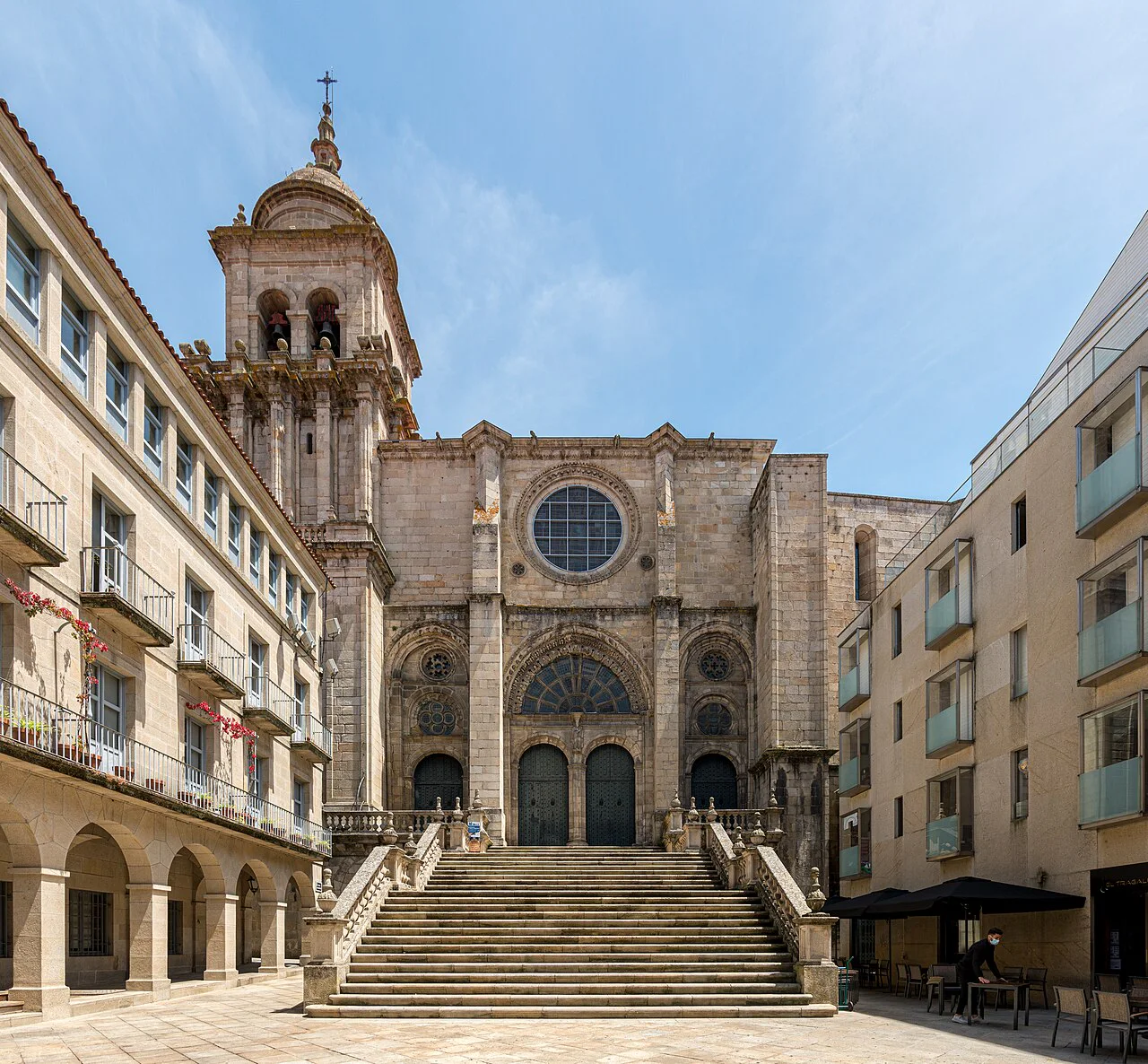
01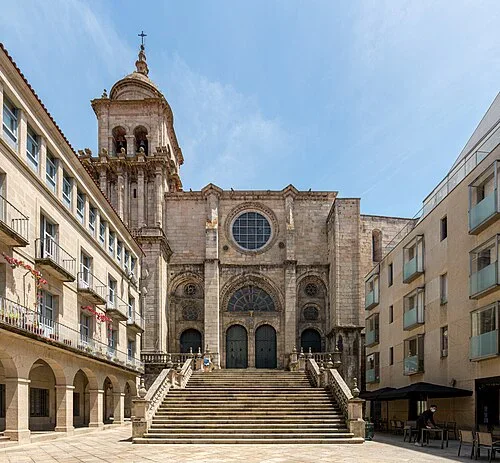 West Facade and Main Staircase
The West Facade and Monumental Stairway
Welcome to the cathedral of San Martiño in Ourense, one of Galicia's great medieval churches. This tour follows the building from its west front to the treasures kept inside. The stairway climbs towards a facade that wears its age openly: a Romanesque base, Gothic additions above, towers from later centuries. A church stood here long before any of that. A cathedral dedicated to Santa María la Madre came first. In the year five hundred and fifty, the Suevian king Chararic raised a second church on this ground, dedicated to St Martin of Tours. That early building suffered badly. Moors and Northmen raided the city over the centuries, and the cathedral was destroyed more than once. The church of today took shape in the twelfth and thirteenth centuries as a Romanesque building, with Bishop Lorenzo standing behind the work. He built beyond the church too: the city's new bridge over the river and the bishop's palace are his. From this west front, medieval visitors passed through an outer porch towards the Pórtico del Paraíso, the sculpted threshold to the nave, and that carved entrance is where the tour goes next.
Photo: Fernando · CC BY-SA 4.0
02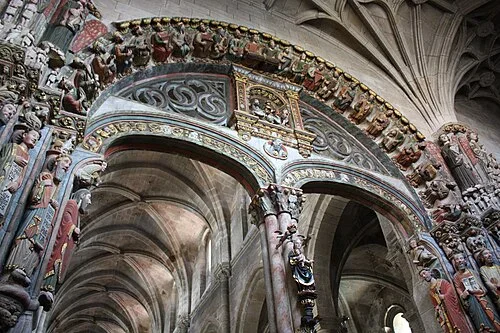 Pórtico del Paraíso
The Pórtico del Paraíso
The Pórtico del Paraíso fills the entrance to the nave with carved stone. It was made in the thirteenth century by students of Master Mateo, the master behind the Pórtico de la Gloria at Santiago de Compostela. His workshop carried the idea along the pilgrimage route, and Ourense received a deliberately simplified echo of the great Santiago portal. The sculpture here is more hieratic, more sternly Romanesque, than its famous model. Three arches rest on slender columns with a central mullion, marking the passage from the world outside into the church. Apostles and prophets stand sculpted along the columns, and angels and saints crowd the arches above. For worshippers who could not read, carvings like these told the sacred stories in stone. Two figures arrived late: the Santiago holding a sword, a reminder of his legendary part in the Battle of Clavijo, and the Virgin of Consolation with the body of Christ atop the mullion. Both were added in the nineteenth century. The stone here, in other words, is itself layered.
Photo: P.Lameiro · CC BY-SA 4.0
03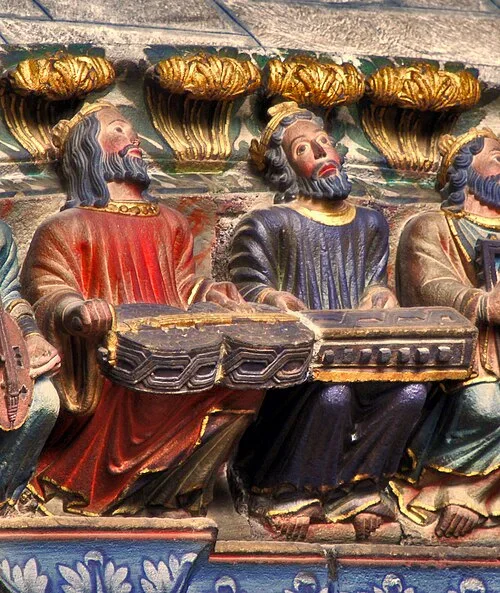 Pórtico del Paraíso
The Twenty-Four Elders and Their Instruments
Under the central arch, the archivolts carry the twenty-four elders from the Book of Revelation. Each is carved crowned and holding a musical instrument, the heavenly court of the Apocalypse imagined as a band of medieval musicians. The crowned elder playing the large stringed instrument is the detail people remember. That instrument is an organistrum, and it took two players: one turned the wheel, the other worked the keys. Most Romanesque portals have long since lost their paint to weather. These figures were restored in the eighteenth century from the original Romanesque polychrome, which is why the reds and blues still look so vivid. The paint is later, but it follows the medieval scheme. The elders appear much as their carvers meant them to be seen.
Listen in the appGerardo Rosa--Grosasm · Public domain
04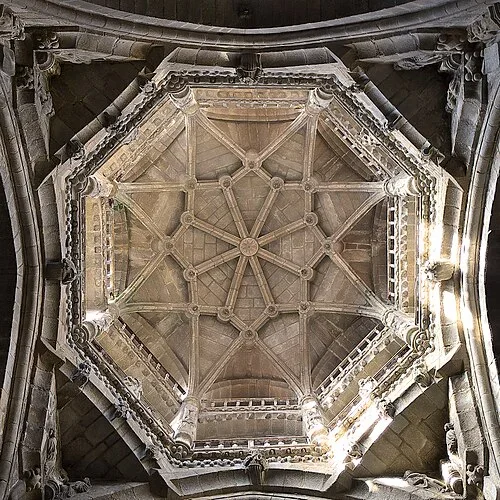 Central Nave and Gothic Cimborrio
The Gothic Cimborrio
Above the crossing rises the cimborrio, the octagonal lantern tower that crowns the whole church. Rodrigo de Badajoz built it in the late Gothic current known as Hispano-Flemish, finishing the work in 1505. It climbs twenty-eight metres, with tiered windows pouring light onto the crossing and an eight-pointed star vault spread across its ceiling. Spain keeps only three Gothic lantern towers of this kind. This is one of them; the others stand at the Seo de Zaragoza and at Tarazona. The tower makes sense once the building's size is clear. The cathedral follows a Latin cross plan, its nave flanked by slightly lower aisles. It runs about eighty-four metres from end to end. Across the transept it measures forty-three. At the meeting point of nave and transept, this lantern was the late medieval finishing touch.
Listen in the appPhoto: Jl FilpoC · CC BY 3.0
05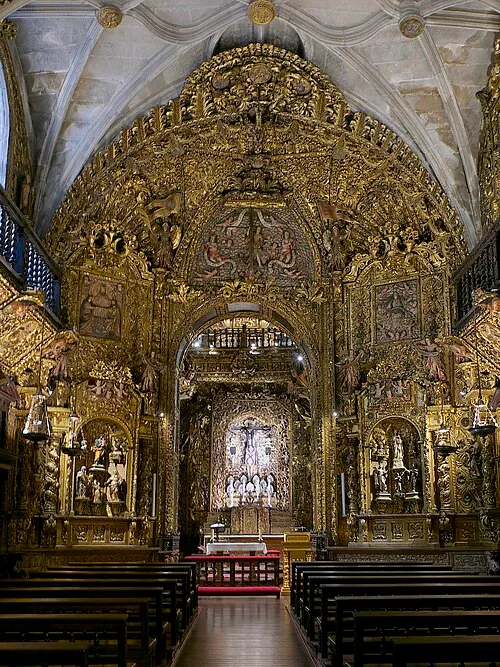 Chapel of the Holy Christ
Inside the Chapel of the Santo Cristo
Gold covers nearly every surface of the Chapel of the Santo Cristo. The chapel owes its existence to Bishop Vasco Pérez Mariño, who wanted to be buried as close as possible to the figure of Christ. His wish shaped this whole space beside the north door. The present look is flamboyant Baroque, the work of several hands. Domingo de Andrade made the canopy that rises over the altar. Juan Bautista Celma, a Renaissance craftsman, made the screen across the chapel, and Francisco de Castro Canseco added much of the remaining ornament. Eighteenth-century paintings around the walls show scenes from Christ's life, among them the evening meal at Emmaus. One detail has changed. The chapel first presented the figure of Christ itself where the altar of Our Lady of the Pillar stands today.
Listen in the appPhoto: Jl FilpoC · CC BY-SA 4.0
06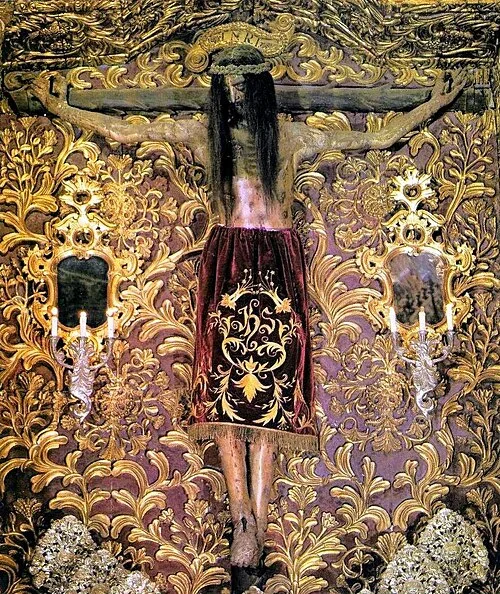 Chapel of the Holy Christ
The Santo Cristo of Ourense
The Santo Cristo of Ourense is the cathedral's sacred heart. The crucifix arrived in 1330, brought from a small church on Cape Finisterre, and reverence for it spread across all Galicia. Pilgrims came to this figure, and the chapel around it exists because they came. Tradition tells something remarkable about it. The Christ, it is said, has human qualities: its hair and beard keep growing, and the cathedral's caretakers trim them from time to time. That is folklore rather than settled fact, but it shows how alive the image feels to its devotees. The figure itself has long dark hair falling over its shoulders, and an embroidered velvet skirt fastened at the waist, set against gilded foliage. Candles burn at either side. Nobody knows who carved it, or exactly when. The devotion is what carried it here.
Listen in the appUnknown author · CC BY-SA 4.0
07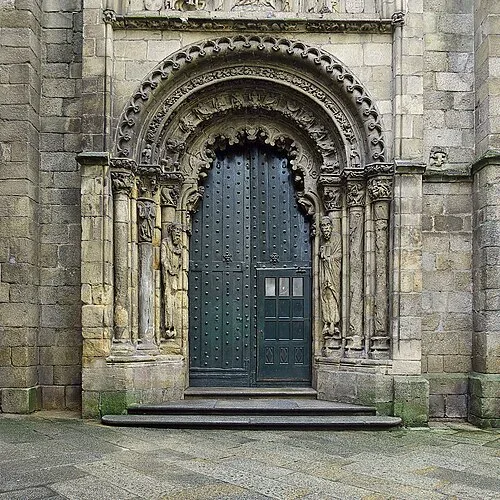 North Portal (Puerta de la Misericordia)
The North Portal (Puerta de la Misericordia)
This north doorway carries the cathedral's most violent story. In 1471, Don Alonso Pimentel, Count of Benavente, assaulted the cathedral on its north side and left the facade practically destroyed. The attack belonged to a wider feud between the counts of Benavente and the counts of Lemos for standing in Ourense. Then remorse took over. The count himself financed the reconstruction, which is why the doorway mixes its styles so oddly. Marble shafts and carved archivolts from the school of Master Mateo, pure Romanesque work, sit against late-Gothic masonry built like a fortification. Turrets flank the entrance, raised because a door that had been smashed once clearly needed protecting. Above the door, the tympanum shows Mary receiving the body of Christ, with a cross above.
Listen in the appJosé Luis Filpo Cabana · CC BY 3.0
08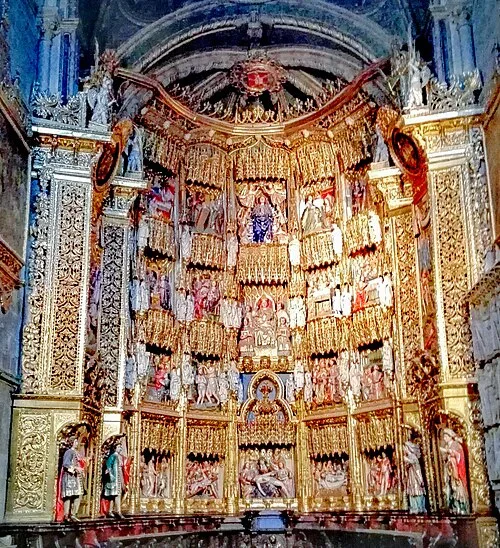 High Altar and Retablo Mayor
The High Altar and Retablo Mayor
The high altar holds the clearest dated fact of the whole medieval building campaign: it was consecrated in 1188. Around it rises the great Gothic retablo, believed to be the work of Cornielles de Holanda, built between 1516 and 1520. Five vertical panels rise in tiers, each divided into compartments of carved and gilded scenes. Martin of Tours, the cathedral's patron, fills the central panel. The others carry scenes from the lives of Jesus and Mary. The altar also guards an odd privilege. The eight canons of Ourense alone performed the services before it, and they were called Cardinals, as at Santiago de Compostela. In 1209 Pope Innocent III recognised the custom as immemorial, older than anyone could remember.
Listen in the appCatedralOurense · CC BY-SA 4.0
09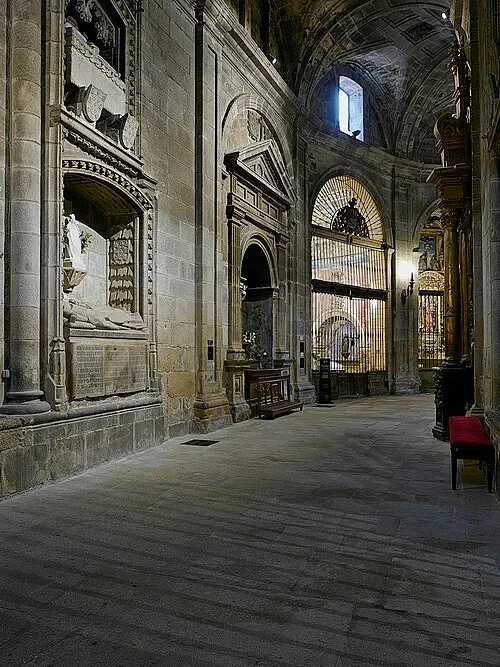 The Ambulatory Chapels
Behind the high altar, a curved passage circles the east end. The cathedral originally ended in three apses. Those were later opened into this ambulatory, bordered by a line of chapels. Wealthy patrons claimed the space. The Chapel of San Juan was created in 1468 by the Conde de Benavente, the same family whose count once attacked the north door, a story told at the north portal. Next along stands the sixteenth-century Chapel of the Snows. Burial followed patronage. From the thirteenth to the fifteenth centuries, bishops and nobles were laid to rest in these chapels, and tombs still line the walls, among them that of the Infantina, possibly a Castilian princess. The twentieth century rearranged things once more. After the old chancel was demolished, the Renaissance choir stalls carved by Diego de Solís and Juan de Angers were dispersed, some into the body of the church and some into Christ's Chapel.
Listen in the appPhoto: Jl FilpoC · CC BY-SA 4.0
10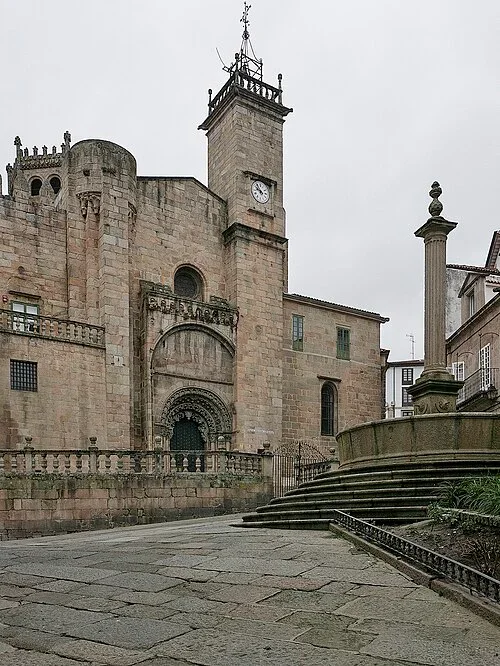 South Portal and Plaza del Trigo
The South Facade and Plaza del Trigo
The south side of the cathedral opens onto the Plaza del Trigo, the square that takes its name from the wheat market. This facade keeps the look of a fortification, and it counts among the fine works of Spanish Romanesque, with traces of Master Mateo's influence. A Romanesque portal leads from the square into the church. Beside it rises the Torre del Reloj, the clock tower, a sixteenth-century piece in the Renaissance manner. Its construction broke the front's original harmony. One of the two little cylindrical turrets flanking the portal had to go to make room for it.
Listen in the appPhoto: Jl FilpoC · CC BY-SA 4.0
- 11
The Claustra Nova and Cathedral Museum
An unfinished Gothic cloister holding Galicia's first printed book and older treasures.
- 12
The Virgen de la O
The expectant Virgin whose name comes from a prayer that begins with 'O'.
Catedral de Orense
Frequently asked questions
How much does the guide cost?
Free app download. Listed guide price: $0.99. Guide price shown in the app. Audio guide only. Venue admission is separate.
Can I listen without internet?
Yes. Download the guide’s audio, images, and maps in the app before your visit. Your downloaded content is then available offline.
Can I listen in my language?
This audio guide is available in 15 languages, including English.
Do I need to follow a schedule?
No. This is a self-guided experience. Choose your stops, pause whenever you like, and return to a story at your own pace.
At your own pace
Explore Catedral de Orense.
Download Stanza, then search for “Catedral de Orense”.
Free app download · Guide price shown in the app
Keep exploring
Nearby audio guides
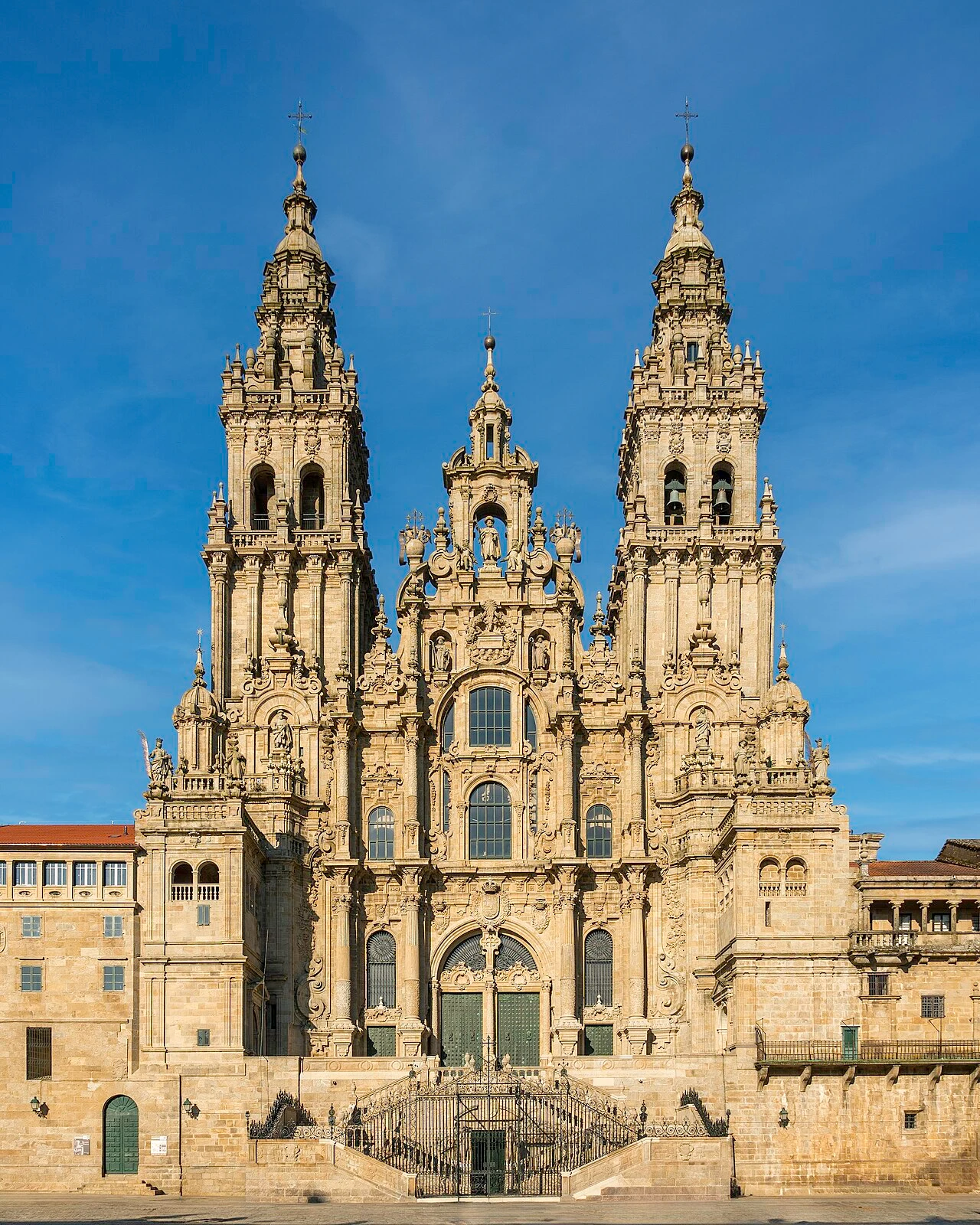
Santiago de Compostela · 82 km
Santiago de Compostela Cathedral
Content & sources
Photo: Fernando · CC BY-SA 4.0
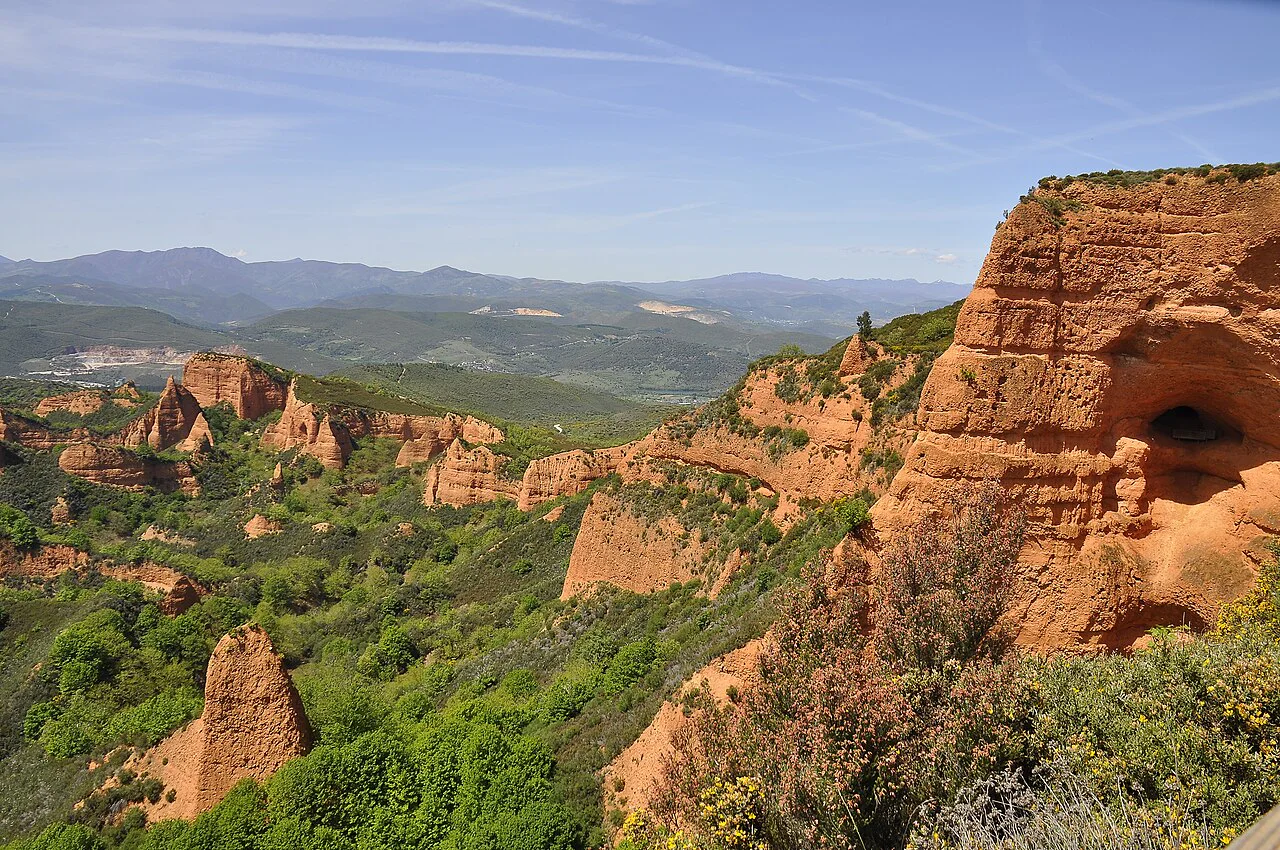
Carucedo · 92 km
Las Médulas
Content & sources
Frayle from Salamanca, España · Public domain
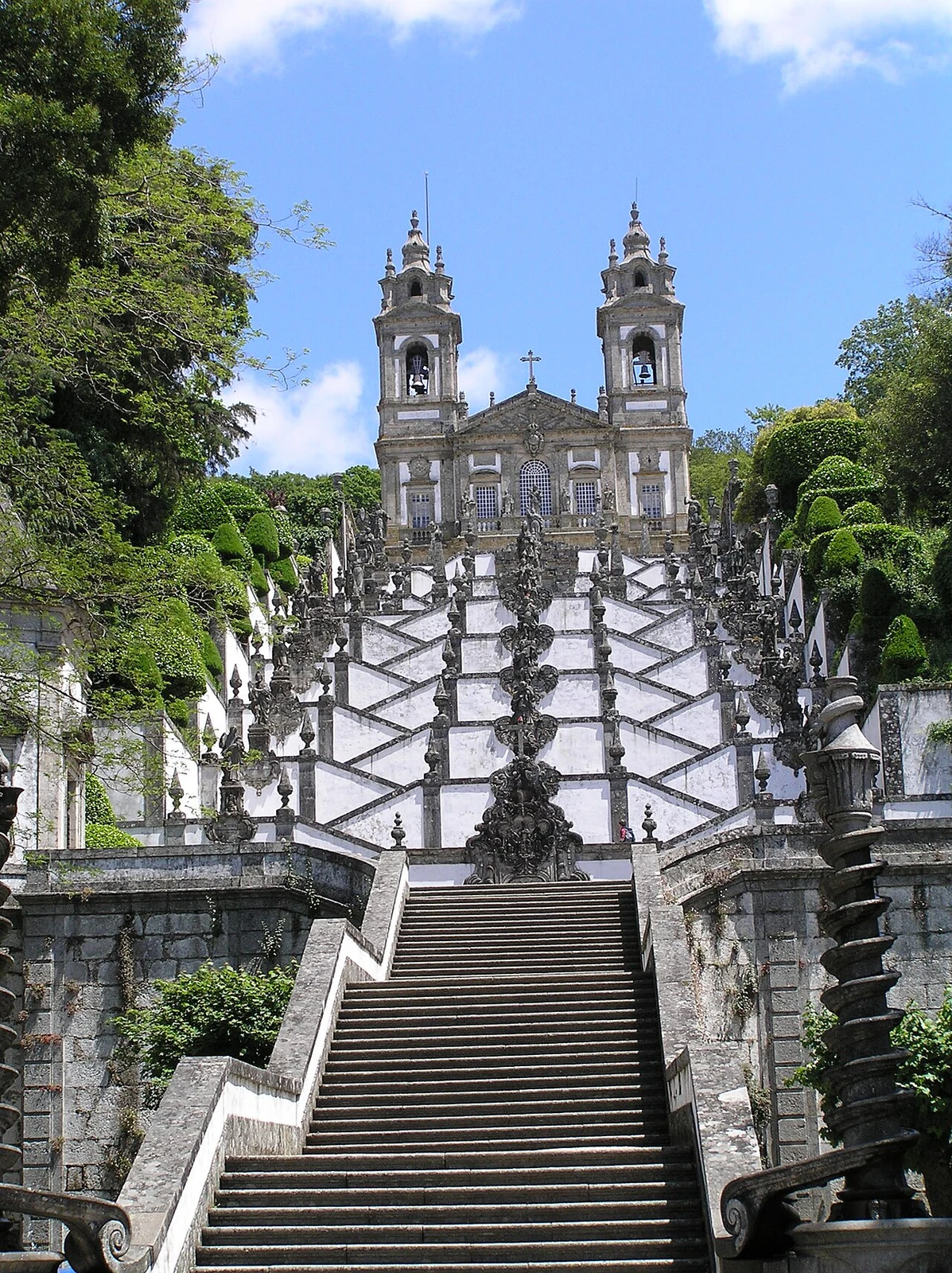
Braga · 97 km
Tenões
Content & sources
Botafogo · Public domain
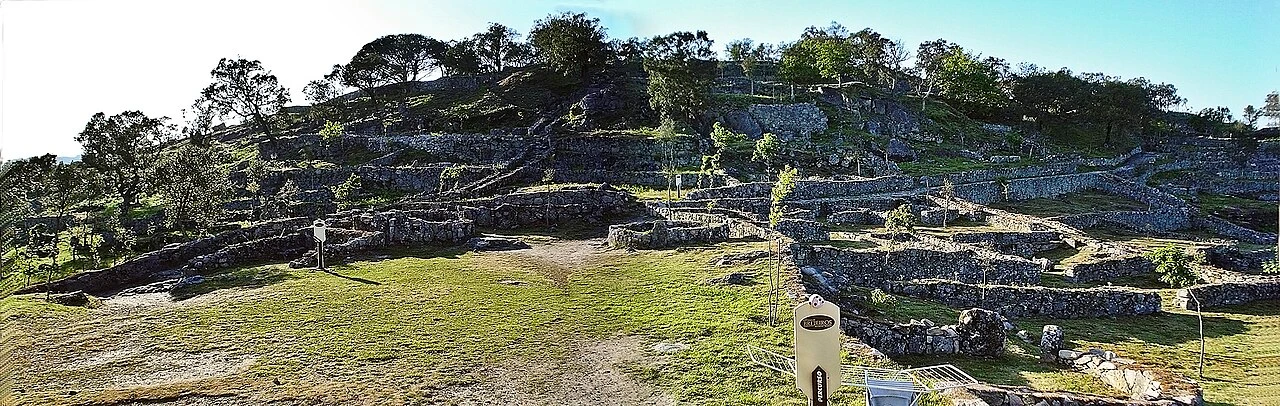
Guimarães · 97 km
Citânia de Briteiros
Content & sources
Lansbricae · CC BY-SA 3.0