Stanza · Audio guide
Catedral de Santiago de CompostelaAudio guide
A place to remember. A story to take with you.
The Cathedral of Santiago de Compostela is a Roman Catholic cathedral in Galicia, Spain. It is a significant architectural heritage monument and a major pilgrimage site.
Download Stanza, then search for “Catedral de Santiago de Compostela”.
About the tour
One guide. Your kind of visit.
The Cathedral of Santiago de Compostela is a Roman Catholic cathedral in Galicia, Spain. It is a significant architectural heritage monument and a major pilgrimage site.
Ready when you are.
- 01Get the free Stanza app.
iOS & Android
- 02Find your guide.
“Catedral de Santiago de Compostela”
- 03Download before you go.
Works offline
Audio guide / 28 narrated stops
Inside the guide
Get to know a few of the stories before you go. Open a stop to read more.
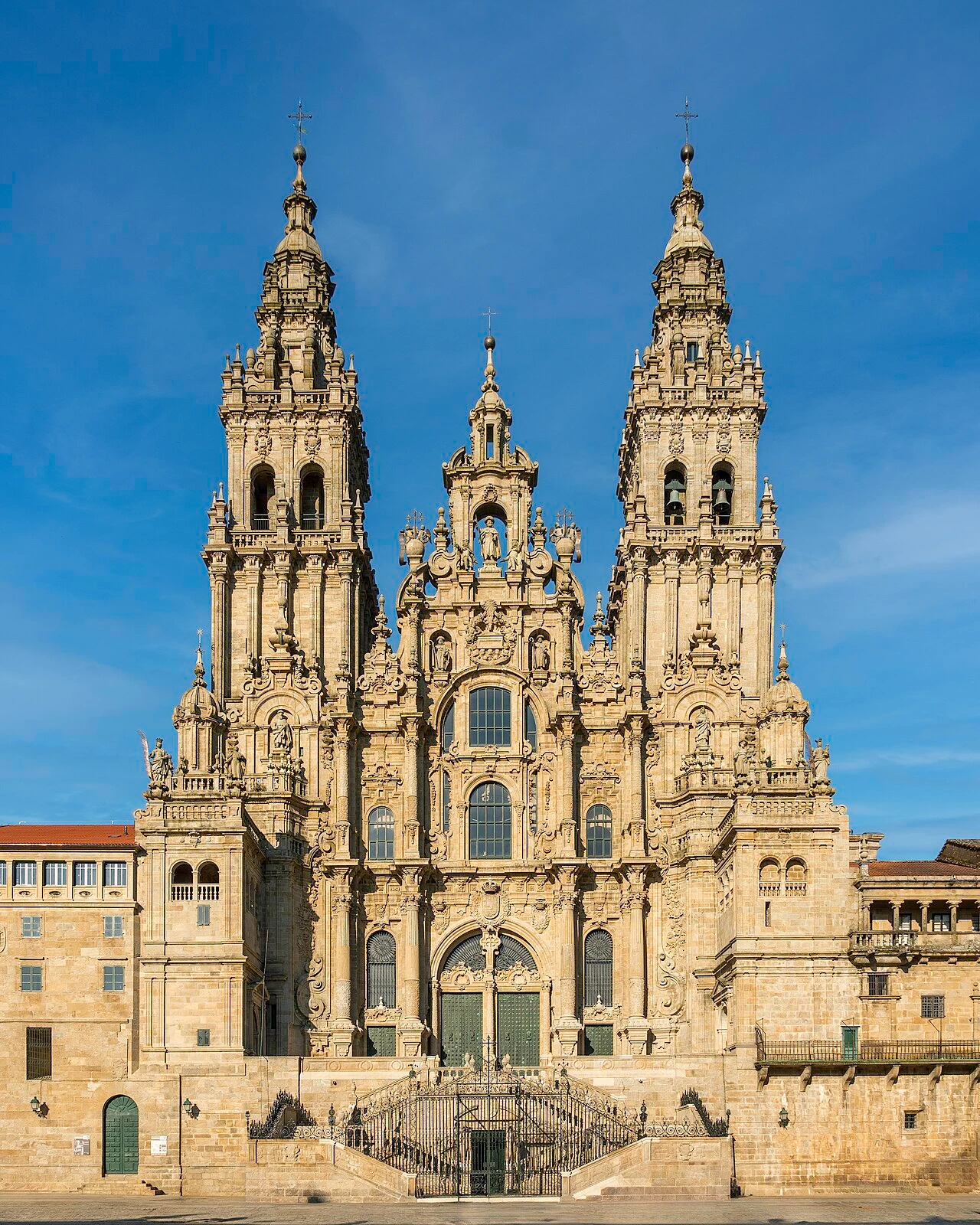
01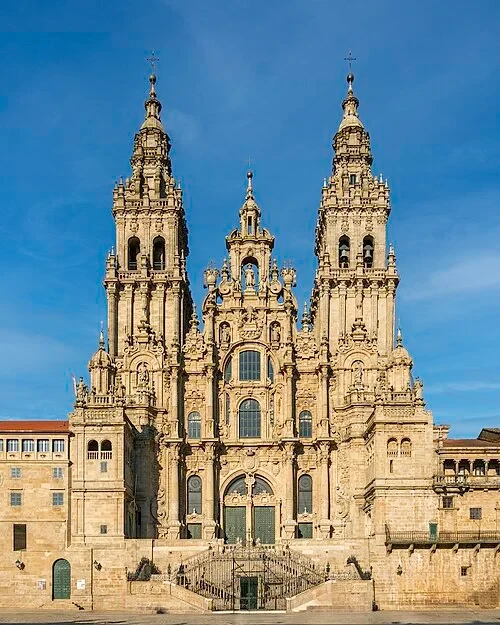 Plaza del Obradoiro and the West FacadeThe Obradoiro Facade
Welcome to one of the most significant pilgrimage sites in the world. Standing here in the Plaza del Obradoiro, you are looking at the grandest face of the cathedral. This Baroque facade was constructed in the 18th century to protect the original, more delicate Romanesque portal from the harsh Galician weather. The architect, Fernando de Casas Novoa, designed this stone exterior to inspire awe, and it serves as the definitive image of the city. Notice the two flanking towers, which reach approximately 75 meters in height. If you look at the very top of the central structure, you can see the figure of Saint James himself. He is depicted in his traditional pilgrim attire, complete with a wide-brimmed hat and a staff, overlooking the square as he has for centuries. This square is often filled with pilgrims who have finished their journey, laying down their backpacks to take in the sheer scale of the building. The facade is a masterful display of granite carving, creating deep shadows and highlights that change as the sun moves across the plaza throughout the day. It sets the stage for the historic relics waiting just beyond the threshold.
Photo: Fernando · CC BY-SA 4.0
02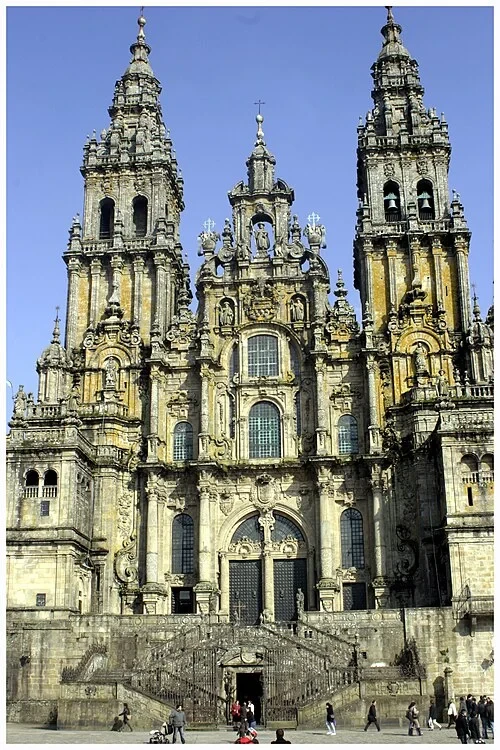 Plaza del Obradoiro and the West FacadeThe Grand Granite Staircase
Leading up to the main entrance is an elegant 17th-century double staircase. This structure is built from local Galician granite, a material that defines much of the region’s historic architecture. Notice the characteristic golden-grey hue of the stone; it’s a color that deepens and changes character when wet, which is a frequent occurrence in this part of Spain. For many visitors, these steps represent the final leg of an arduous journey known as the Camino de Santiago. Many pilgrims have walked for weeks or even months across Europe to stand right where you are now. The design of the stairs allows for a grand, ceremonial approach, leading the eye upward toward the intricate facade and the entrance to the sanctuary. The masonry here shows signs of age and the passage of millions of feet, yet remains remarkably sturdy. Granite was chosen for its durability against the Atlantic winds and rain, ensuring the cathedral would remain a permanent beacon in the landscape. As you look at the construction, consider the labor involved in quarrying and shaping these massive blocks in an era before modern machinery.
JCNazza · CC BY 3.0
03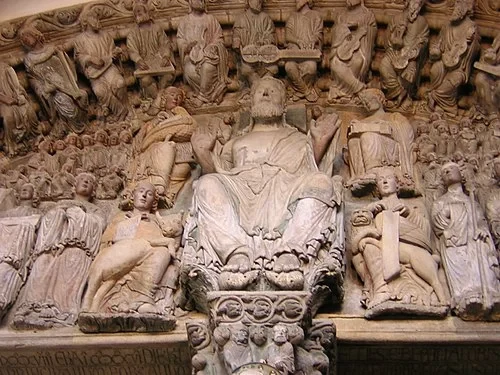 The Pórtico da GloriaPortico of Glory
Stepping inside, we find ourselves at the Portico of Glory, a Romanesque crowning achievement completed in 1188 by Master Mateo. The central focus is the Pantocrator, or Christ in Majesty, who is shown seated and displaying the wounds on his hands and feet. Surrounding him are the four Evangelists and a heavenly court. Look closely at the semi-circular arch above Christ, known as the tympanum. Here, you will see the 24 Elders of the Apocalypse. What makes this carving truly exceptional is the detail of the musical instruments they hold, such as lutes, harps, and organistrums. These carvings were created with such precision that modern musicologists and craftsmen have been able to reconstruct the actual instruments to hear the sounds of the 12th century. The figures are not stiff; they lean toward one another, appearing as if they are in conversation or preparation for a celestial concert. Originally, these statues were painted in vibrant colors, traces of which can still be found in protected corners of the stone. This portal was meant to represent the entrance to the New Jerusalem, offering a visual preview of paradise to the medieval pilgrim who had finally reached the end of the road.
Listen in the apppedronchi · CC BY 2.0
04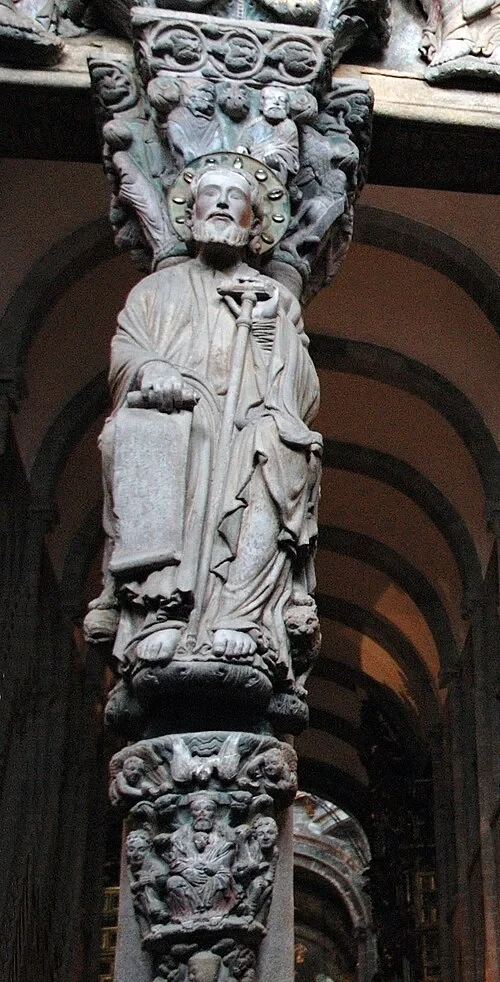 The Pórtico da GloriaThe Central Mullion
In the center of the Portico of Glory, directly beneath the figure of Christ, is the mullion, or central pillar. This column features a seated figure of Saint James. He holds a pilgrim’s staff and a scroll, his calm expression serving as a welcome to all who have traveled to his shrine. Below the saint, the column is intricately carved with the Tree of Jesse, which illustrates the genealogy of Christ from the root of Jesse. This vertical arrangement links the human ancestry of Jesus to the spiritual kingdom represented above. The column itself is distinct from the surrounding stone, often described as marble though it is a specific type of hard stone that has taken on a polished look over centuries. For generations, it was a ritual for pilgrims to place their hands in the hollows at the base of the pillar as a gesture of thanksgiving for their safe arrival. While this practice is now restricted to preserve the stone, you can still see where the rock has been worn smooth by millions of fingers. This column acts as a physical and symbolic anchor for the entire entrance, bridging the gap between the terrestrial world and the divine sanctuary inside.
Listen in the appPhoto: MarisaLR · CC BY-SA 3.0
05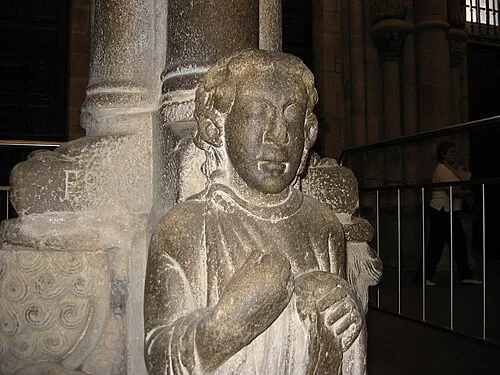 The Pórtico da GloriaThe Saint of the Bumps
At the very base of the central column, facing away from the altar and toward the entrance, is a small kneeling figure known as the 'Santo dos Croques,' or the Saint of the Bumps. Tradition holds that this is a self-portrait of Master Mateo, the genius architect and sculptor behind the Portico of Glory. Legend says that when King Ferdinand II saw the completed portico, he was so impressed he asked Mateo if he thought he was a god. Mateo humbly replied by carving himself in this submissive, kneeling position as a sign of penance. Over the centuries, a peculiar tradition developed among local students and pilgrims. It became customary to bump one's forehead three times against the head of the statue, in the hopes that some of Master Mateo’s genius and wisdom would be transferred through the contact. The word 'croque' in the local Galician language actually means a blow or a bump to the head. The figure is now behind a protective barrier to prevent further wear, but the tradition remains a famous part of the cathedral's lore. It reminds us of the human hands and the singular vision required to create such an immense and enduring work of religious art.
Listen in the appP. Lameiro · Public domain
06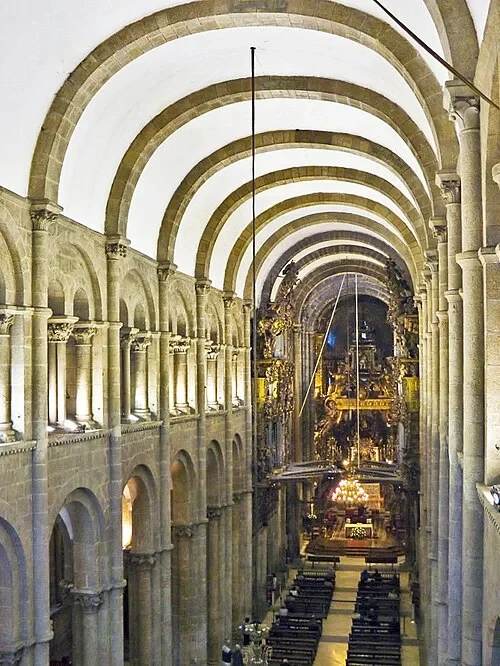 The Main NaveThe Central Nave
Moving into the main body of the church, the atmosphere changes from the ornate Baroque exterior to a more restrained and massive Romanesque interior. The central nave stretches over 100 meters in length, making it one of the largest Romanesque structures in Europe. Above you, a powerful barrel vault ceiling is supported by thick pillars and transverse arches, creating a sense of rhythmic repetition that draws the eye toward the distant altar. This design was not just aesthetic; it was functional. In the Middle Ages, the cathedral had to accommodate thousands of pilgrims at once, often arriving simultaneously for major feast days. The sturdy architecture provided the necessary space and strength for such large gatherings. The walls are thick, and the windows are relatively small, which keeps the interior cool and dimly lit, focusing attention on the sanctuary at the far end. The use of local stone continues here, giving the space a cohesive, grounded feeling. As you walk down the aisle, the sheer volume of the space reflects the importance of this destination as the final stop on a continent-wide spiritual network. This nave served as both a place of worship and a vast shelter for the tired travelers who reached its doors.
Listen in the appLansbricae · CC BY-SA 2.0
07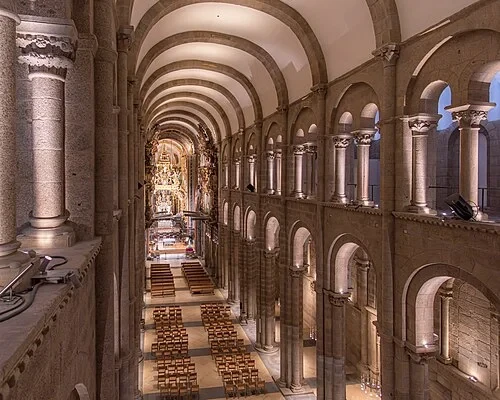 The Main NaveThe Pilgrim's Triforium
If you look up above the side aisles, you will see a second level known as the triforium or upper gallery. This architectural feature was particularly important in pilgrimage churches. In the Middle Ages, this second floor allowed for better circulation of the massive crowds. Pilgrims could walk through the upper gallery without interrupting the religious services occurring on the main floor below. Even more practically, it was not uncommon for pilgrims to sleep in the triforium when the city's inns were full. The gallery is large enough to accommodate roughly 1,500 people. From this elevated vantage point, visitors could look down into the nave and toward the high altar, participating in the life of the cathedral from above. The arches of the triforium mirror the Romanesque style of the lower level, contributing to the balanced, harmonious feel of the interior. Today, special tours allow visitors to walk through these upper spaces, offering a unique perspective on the vaulting and the scale of the building. It remains a testament to the cathedral’s historical role as a multifunctional space that served the physical and spiritual needs of the travelers who sought refuge within its walls.
Listen in the appFernando Pascullo · CC BY-SA 4.0
08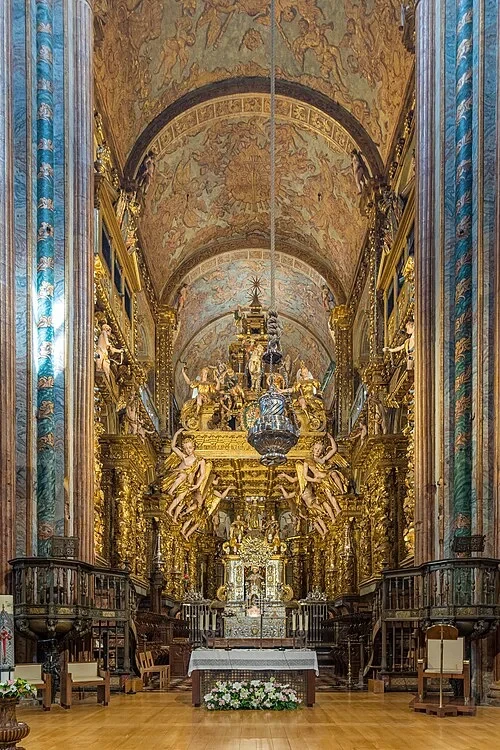 The Main Altar (Capilla Mayor)The Main Altar
The visual focus of the entire cathedral is the High Altar, an explosive display of Baroque art added in the 17th century. This area was intentionally remodeled to create what historians call a 'theatre of faith,' designed to overwhelm the senses with golden light and intricate detail. At the center sits a 13th-century seated statue of Saint James. He is draped in a silver cape and surrounded by an elaborate canopy of gilded wood and soaring angels. One of the most important rituals for a pilgrim who has completed the Camino is to climb a small staircase located behind the altar. From there, they enter a narrow passage that allows them to reach out and hug the statue of the saint, looking out over the nave they just walked through. This act symbolizes the personal connection and greeting between the traveler and the Apostle. The contrast between the sober Romanesque nave and this brilliant, golden sanctuary reflects the transition from the hardship of the journey to the joy of arrival. Every surface is covered in decorative motifs, from vines to celestial figures, all designed to draw the eye toward the sacred heart of the cathedral.
Listen in the appFernando Pascullo · CC BY-SA 4.0
09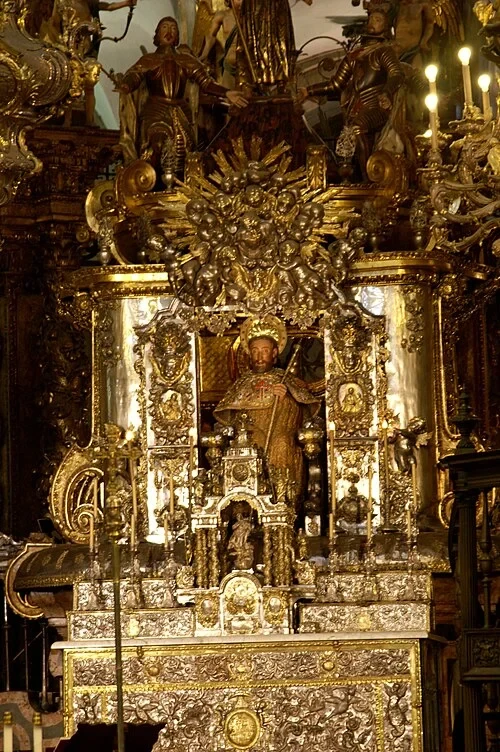 The Main Altar (Capilla Mayor)The Gilded Sanctuary
The sanctuary surrounding the main altar is a masterwork of decorative arts, featuring a dense concentration of silverwork and gilding. This opulence was not original to the 11th-century church; it grew over time as kings, queens, and wealthy nobles provided lavish donations to honor Saint James. Originally, the site held a much simpler 9th-century chapel, but as the pilgrimage grew in fame across Europe, so did the wealth of the cathedral. The silverwork you see today reflects the height of Spanish craftsmanship, often using precious metals brought back from the Americas during the colonial era. The shimmering surfaces are designed to catch and reflect candlelight, creating an ethereal glow that fills the choir area even on the gloomiest Galician days. Look closely at the details of the altar frontal and the surrounding pedestals to see finely hammered scenes and patterns. This level of decoration served a dual purpose: it was both an act of extreme devotion and a display of the power and reach of the church and the Spanish Crown. It represents the culmination of a millennium of art and history, all focused on a single point of veneration.
Listen in the appPhoto: Mboesch · CC BY-SA 3.0
10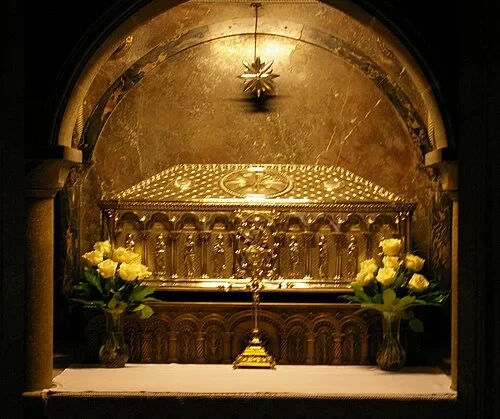 The Crypt of Saint JamesThe Apostle's Sepulchre
Descending below the main altar, you enter the crypt, the emotional and spiritual heart of the pilgrimage. This small, solemn space holds the remains of Saint James and two of his disciples, Athanasius and Theodore. The history of this spot dates back to the year 814. Tradition says a hermit named Pelagius saw mysterious lights or stars hovering over a remote field. When the area was investigated, a Roman-era tomb was found, which the local bishop authenticated as that of the Apostle James. The name 'Compostela' is believed to derive from the Latin 'Campus Stellae,' meaning 'Field of Stars,' referencing this discovery. This find transformed a quiet corner of Galicia into a major center of the Christian world. The current crypt allows visitors to stand just a few feet from the resting place of the saint. The atmosphere here is a stark contrast to the brilliant Baroque display directly above; it is quiet, cool, and intimate. It is here that the physical reality of the pilgrimage becomes most apparent, as visitors from every corner of the globe gather in silence to pay their respects at the very site that prompted their long walk.
Listen in the appDoke · CC BY-SA 3.0
Catedral de Santiago de Compostela
Frequently asked questions
How much does the guide cost?
Free app download. Listed guide price: $1.99. Guide price shown in the app. Audio guide only. Venue admission is separate.
Can I listen without internet?
Yes. Download the guide’s audio, images, and maps in the app before your visit. Your downloaded content is then available offline.
Can I listen in my language?
Stanza supports 15 languages. Check the app for the languages available for this guide.
Do I need to follow a schedule?
No. This is a self-guided experience. Choose your stops, pause whenever you like, and return to a story at your own pace.
At your own pace
Explore Catedral de Santiago de Compostela.
Download Stanza, then search for “Catedral de Santiago de Compostela”.
Free app download · Guide price shown in the app
Keep exploring
Nearby audio guides
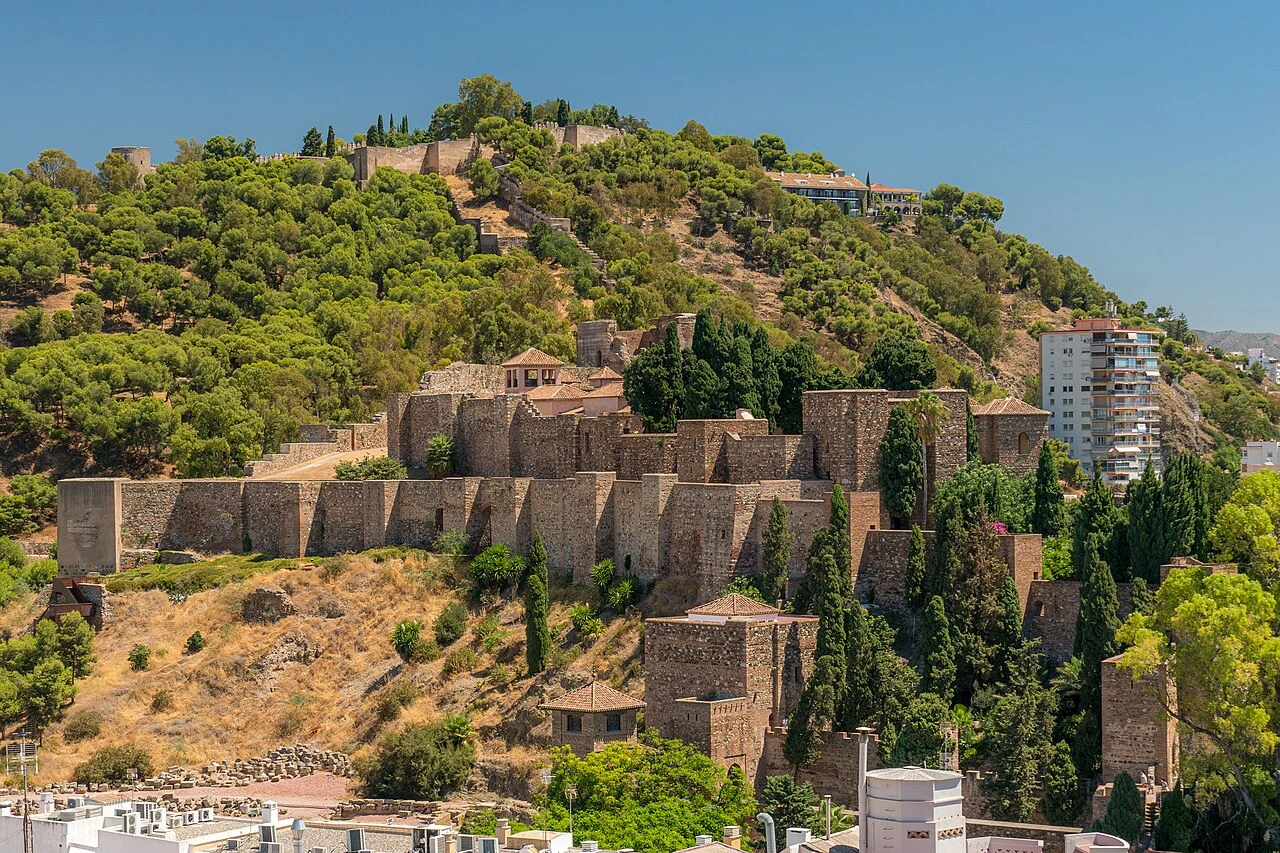
Málaga
Alcazaba de Málaga
Content & sources
Photo: Fernando · CC BY-SA 4.0
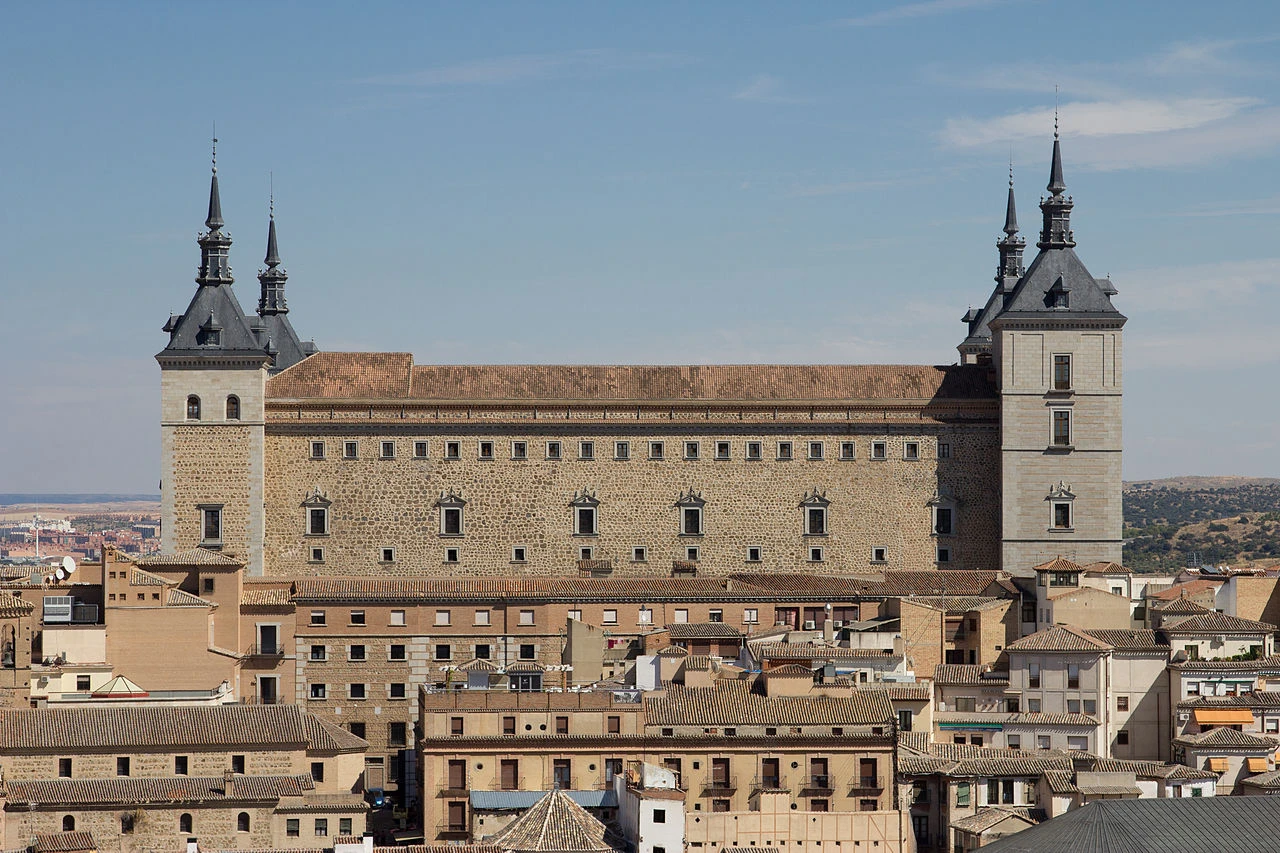
Toledo
Alcázar de Toledo
Content & sources
Carlos Delgado · CC BY-SA 3.0 es
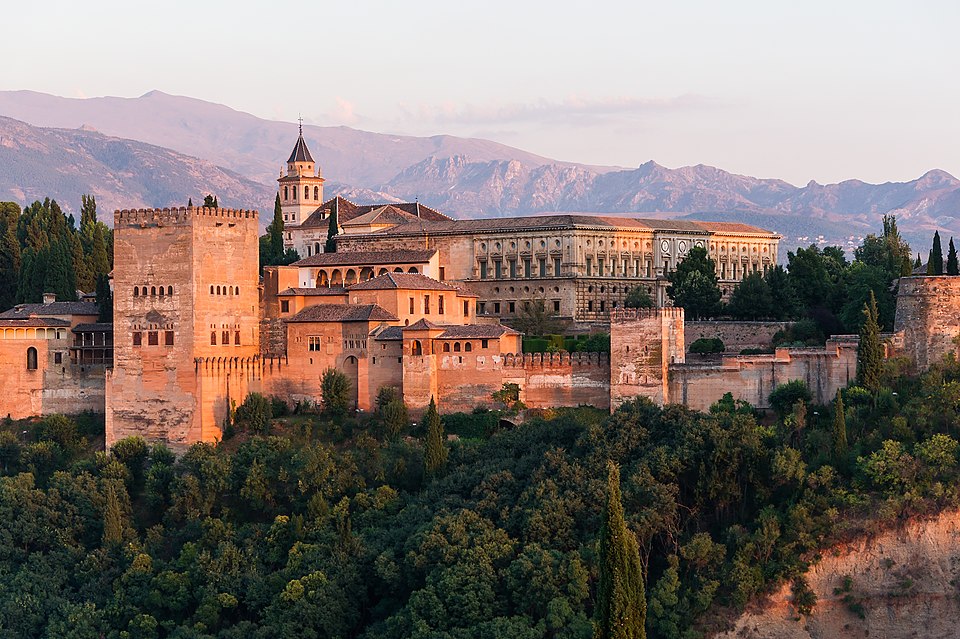
Alhambra
Content & sources
Photo: Jebulon · CC0
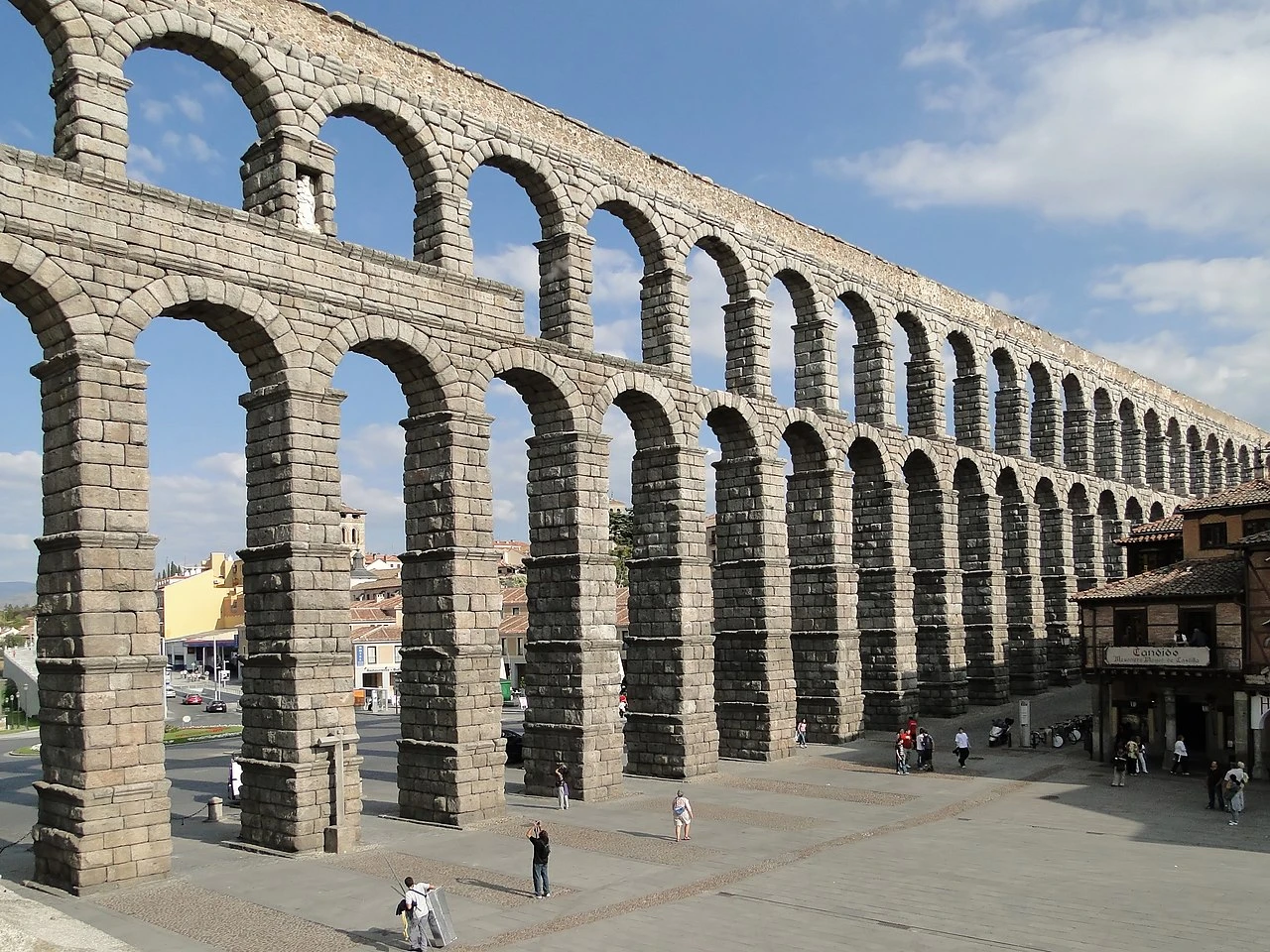
Segovia
Aqueduct of Segovia
Content & sources
Bernard Gagnon · CC BY-SA 3.0