Stanza · Audio guide
Abhayagiri Vihāra Audio Guide
A place to remember. A story to take with you.
Abhayagiri Vihāra was a major monastery site of Theravada, Mahayana and Vajrayana Buddhism in Anuradhapura. It is one of the most extensive ruins in the world and a sacred Buddhist pilgrimage site.
Download Stanza, then search for “Abhayagiri Vihāra”.
About the tour
One guide. Your kind of visit.
Abhayagiri Vihāra was a major monastery site of Theravada, Mahayana and Vajrayana Buddhism in Anuradhapura. It is one of the most extensive ruins in the world and a sacred Buddhist pilgrimage site.
Ready when you are.
- 01Get the free Stanza app.
iOS & Android
- 02Find your guide.
“Abhayagiri Vihāra”
- 03Download before you go.
Works offline
Audio guide / 13 narrated stops
Inside the guide
Get to know a few of the stories before you go. Open a stop to read more.
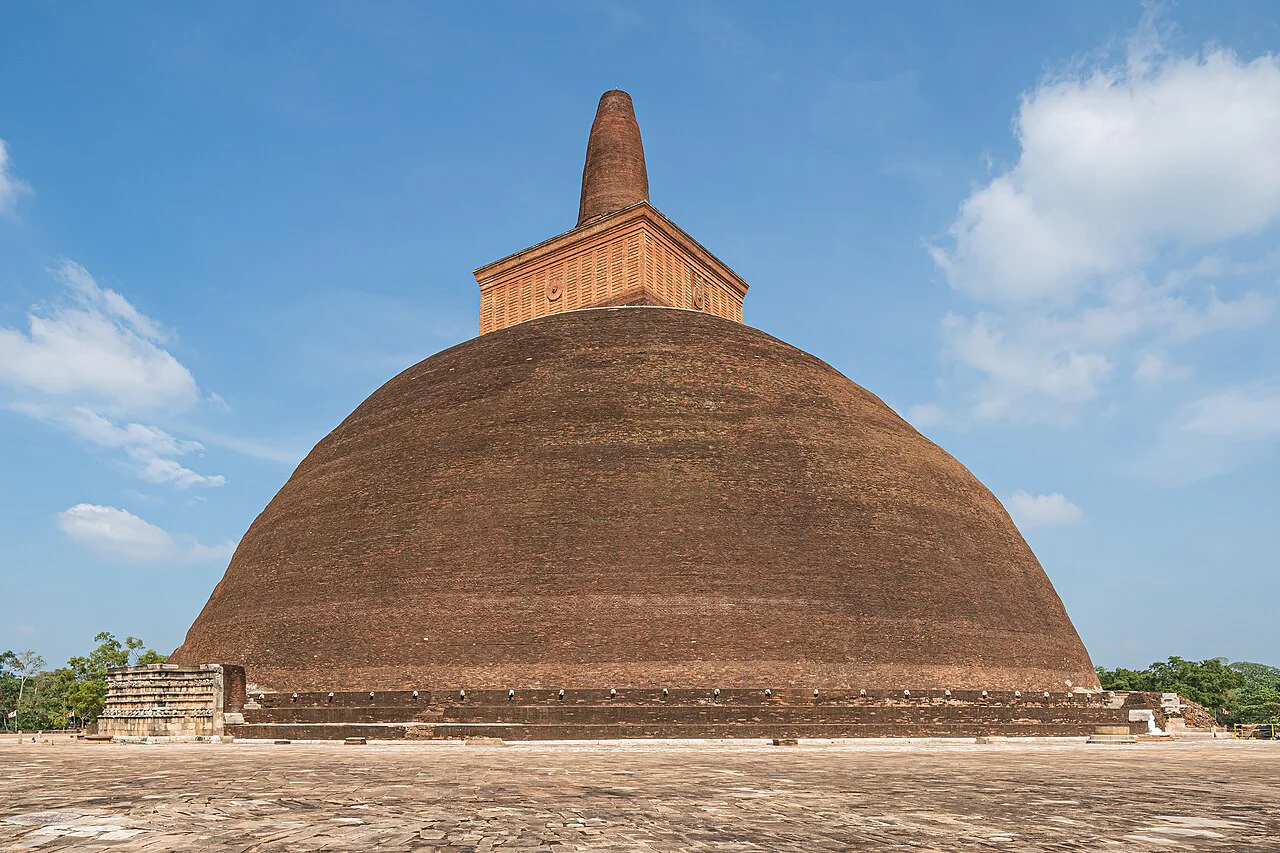
01 The Great Abhayagiri Dagaba
The Abhayagiri Dagaba
Abhayagiri Vihara lay north of the royal city of Anuradhapura, and it was once a major monastery. The story of its founding begins with a king on the run. Valagamba, also called Vattagamani Abhaya, had been defeated by Tamil forces and fled into the mountains. As the king left the city, a Jain monk named Giri cried out, 'The great Sinhala is fleeing.' Giri looked after a monastery near the northern gate, one built by an earlier king. The king vowed that if he regained his kingdom, he would build a monastery on that spot. A chronicler wrote that he spent more than fourteen years in exile. Then, in 89 BC, he marched on Anuradhapura and defeated the last Tamil king. Keeping his vow, one of his first acts was to build the monastery on the ground where Giri's monastery stood. Abhayagiri came to be seen as a symbol of national revival. It also marked the end of Brahmin and Jain influence in the country. The monastery was a seat of the Northern Monastery, the Uttara Vihara. When the Buddha's tooth relic reached the island in the fourth century, Abhayagiri was chosen to house it. The relic was placed there for public veneration. One of its focal points is the Abhayagiri Dagaba, a dome-shaped stupa. The reddish dome rises from a stepped base, and a tapering spire tops a small square terrace. The Sri Lankan Central Cultural Fund fully restored it over fifteen years, as a UNESCO project. It was unveiled in June 2015, with the president and prime minister in attendance.
Photo: A.Savin · FAL
02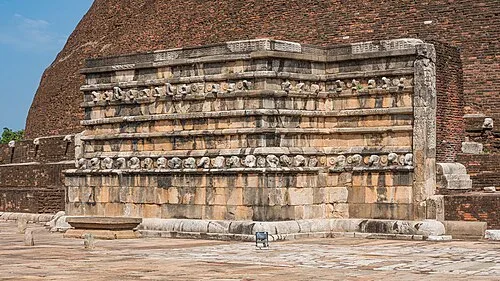 The Great Abhayagiri Dagaba
Carved Stone Structure at the Dagaba
Entrances at Abhayagiri reflect a practice of placing buildings under the protection of a guardian deity. At the base of the dome, a carved stone facing has horizontal bands of small figures and a moulded top. Two statues stand on either side of the stupa's entrance. They represent Sanka and Padma, the two chief treasure houses of the deity Kuvera. One wears a conch on its headdress, and the other wears a lotus. They were believed to ward off evil and danger threatening the stupa and its precinct. Even now, many people believe the statues hold mystic powers. It is said that courts in Anuradhapura still accept oaths sworn before the statues in settling minor disputes.
Photo: A.Savin · FAL
03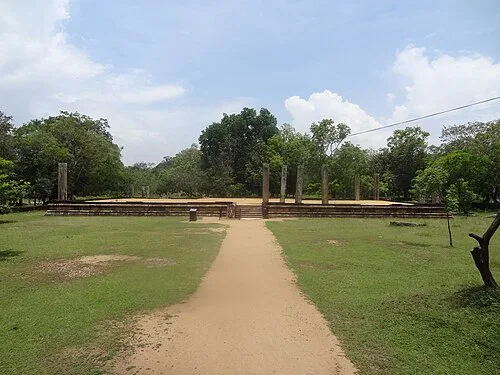 Ratnaprasada and the Nagaraja Guardstone
Ratnaprasada
Ratnaprasada lies within the Abhayagiri complex, where a row of tall stone pillars rises from a low platform. Its ruins tell a story of rivalry with the Mahavihara, another great monastery of the capital. In the third century AD, King Mahasena took action against the Mahavihara monks. He stopped the alms given to them, and he had their buildings pulled down. Their materials went into new buildings at Abhayagiri. His reign opened what is remembered as the golden age of Abhayagiri. Later, invasions from South India and the abandonment of the capital weakened the monastery. In the twelfth century, Parakramabahu the First backed the Mahavihara. He completely abolished the Abhayagiri and Jetavana traditions. Despite later efforts at repair, the monastery gradually fell into ruin.
Listen in the appPhoto: Cherubino · CC BY-SA 3.0
04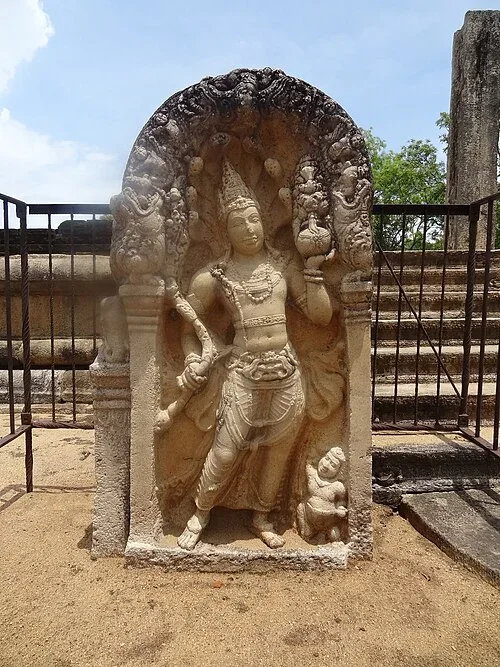 Ratnaprasada and the Nagaraja Guardstone
The Nagaraja Guardstone at Ratnaprasada
Guardstones, called muragala in Sinhala, stand in pairs on either side of the foot of a building's steps. They are usually carved, though some are plain. Among the most common figures on them is the Nagaraja, a king cobra shown in human form. A guardstone from Ratnaprasada is counted among the finest yet discovered. A crowned figure stands inside an arched frame, with cobra hoods arching over its head. In one hand it holds a pot-like vessel, and in the other a long staff. At the lower right, a small attendant figure is carved.
Listen in the appPhoto: Cherubino · CC BY-SA 3.0
05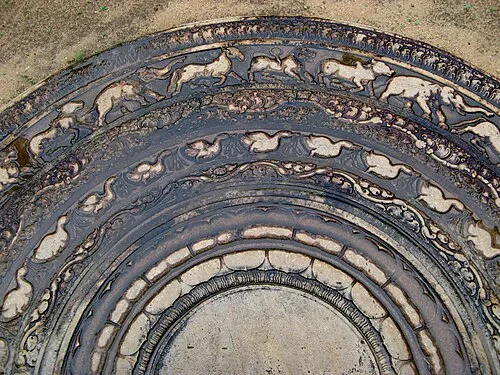 The Pancavasa Moonstone
 (Sandakadapahana)
The moonstone is a form unique to the sculptors of Sri Lanka. It is a curved stone with concentric rings of carving. The best example, it is said, lies at the foot of the steps leading up to the Pancavasa. That building is commonly called Mahasena's palace, though the name is a traditional one. Moonstones vary in shape and size, and they are made of different kinds of stone. Their outer bands carry animal figures and scrolling foliage, and the inner rings give way to a lotus at the centre. A smaller example, just as finely carved, was found nearby at the Queen's Pavilion.
Listen in the appMichael Gunther · CC BY-SA 4.0
06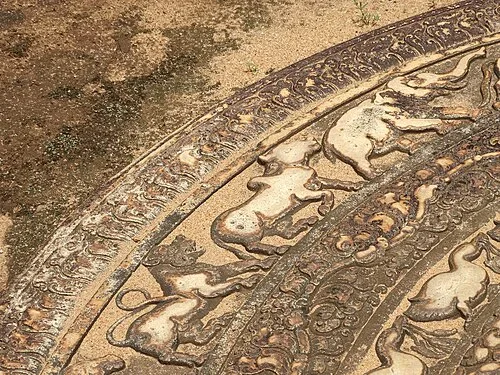 The Pancavasa Moonstone
Detail of the Pancavasa Moonstone
According to the scholar Senarath Paranavitana, this moonstone stands for samsara, the endless cycle of rebirth. It also points to the path out of that cycle, called nibbana. Paranavitana read the outermost ring as flames. The animals in the rings inside it, he suggested, mark successive stages of a person's passage through samsara.
Listen in the appAdam Jones from Kelowna, BC, Canada · CC BY-SA 2.0
07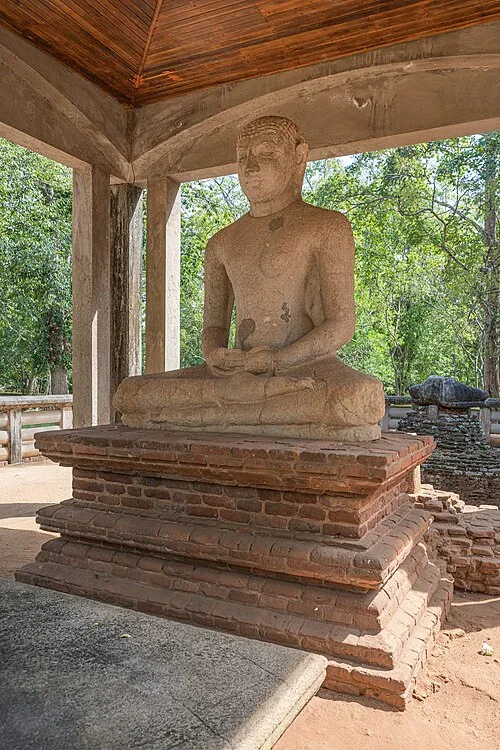 The Samadhi Buddha Statue
The Samadhi Buddha shows the Buddha absorbed in deep meditation. His legs are folded in front, his hands rest together in his lap, and his upper body is bare. His hair is arranged in tight rows, and he sits on a stepped base in reddish-brown tones. Seated Buddha images often express meditation in Buddhist art, and this one sits beneath a roofed pavilion. Abhayagiri was a site of Theravada, Mahayana and Vajrayana Buddhism. It appears to have been a centre for Mahayana and Vajrayana teaching. The more conservative monks of the Mahavihara regarded that teaching as heretical. In the seventh century, the Chinese monk Xuanzang described both monasteries. He called the Mahavihara monks Hinayana Sthaviras, and the Abhayagiri monks Mahayana Sthaviras. In the eighth century, two Indian monks who helped spread esoteric Buddhism in China, Vajrabodhi and Amoghavajra, visited the island.
Listen in the appPhoto: A.Savin · FAL
08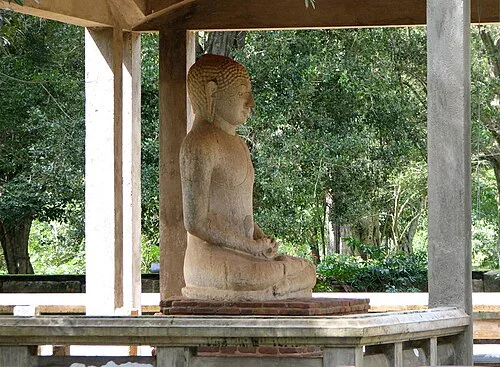 The Samadhi Buddha Statue
 in Profile
Abhayagiri was a major university and centre of learning, home to scholars who worked in Sanskrit and Pali. Upatissa wrote the Vimuttimagga, and Kavicakravarti Ananda wrote the Saddhammopayana. Other scholars were masters of tantra, and the fraternity practised a tantra called the Tattvasamgraha. Its ties reached far beyond the island. In 412 AD, the Chinese monk Faxian visited Abhayagiri in search of the Dhamma. By then, the monastery had become a leading Buddhist centre. In the fifth century, Sinhala nuns reached Nanjing, the capital of the Liu Song dynasty. According to Chinese texts, they gave higher ordination to Chinese nuns there. A fragmentary inscription from central Java, dating from around the end of the eighth century, is read as naming an Abhayagiri Vihara.
Listen in the appBernard Gagnon · CC BY-SA 3.0
09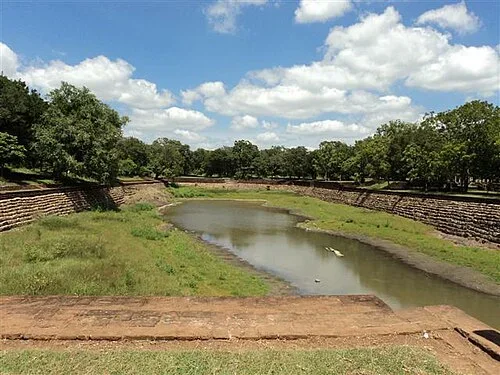 Eth Pokuna (The Elephant Pond)
Water had its own symbols at Abhayagiri. At the Eth Pokuna, the Elephant Pond, an elephant figure is a symbol of water. The pool itself is long and stone-lined, with water in its lower part. Grassy banks run along the sides, and reddish stone edging frames the near edge. A Sinhala account says it was built to meet the monks' water needs. Trees grow beyond the far bank.
Listen in the appKurun at en.wikipedia · CC BY-SA 3.0
10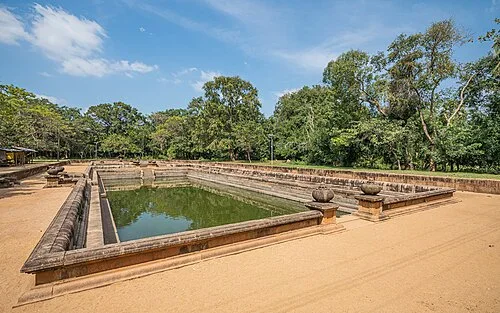 Kuttam Pokuna (The Twin Ponds)
Within the great walls of Abhayagiri stood elaborate bathing ponds, and the Kuttam Pokuna is one of them. Its two long rectangular pools have stone-faced sides, with stone posts along the edges, each topped by a rounded, urn-like shape. By the seventh century, the monastery was made up of four mulas, or fraternities: Uttara, Kapara, Mahanethpa and Vahadu. A Sinhala account says the pools were built for the water needs of the Kapara fraternity's monks.
Listen in the appPhoto: A.Savin · FAL
- 11
Stone Chamber in the Kuttam Pokuna
A squared stone chamber sunk into a pool floor, and the water filter one account describes here.
- 12
Punkala at Kuttam Pokuna (North Pond)
A stone pot at a pool's edge, and the lotus and punkala as signs of plenty.
- 13
Lankarama Stupa
A white stupa with flags and columns, offered as a comparison, and a closing word on Abhayagiri.
Abhayagiri Vihāra
Frequently asked questions
How much does the guide cost?
Free app download. Listed guide price: $0.99. Guide price shown in the app. Audio guide only. Venue admission is separate.
Can I listen without internet?
Yes. Download the guide’s audio, images, and maps in the app before your visit. Your downloaded content is then available offline.
Can I listen in my language?
This audio guide is available in 15 languages, including English.
Do I need to follow a schedule?
No. This is a self-guided experience. Choose your stops, pause whenever you like, and return to a story at your own pace.
At your own pace
Explore Abhayagiri Vihāra.
Download Stanza, then search for “Abhayagiri Vihāra”.
Free app download · Guide price shown in the app
Keep exploring
Nearby audio guides
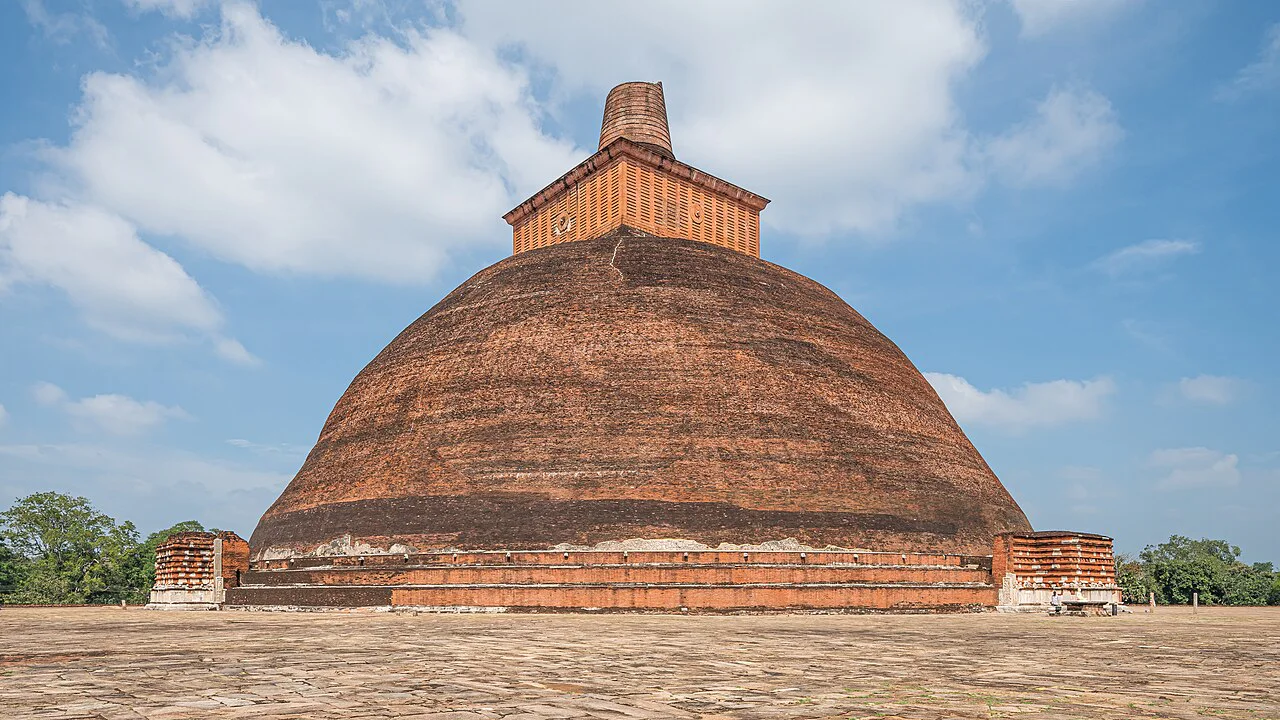
Anuradhapura · 2 km
Jetavanaramaya
Content & sources
Photo: A.Savin · FAL
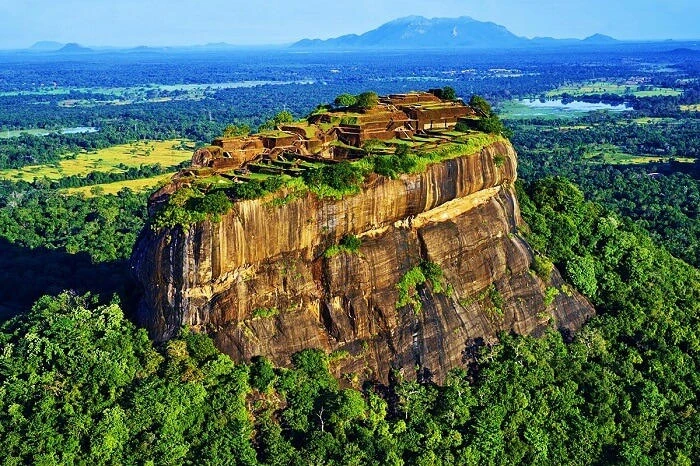
Sigiriya · 61 km
Sigiriya Rock Fortress
Content & sources
Photo: Binuka poojan · CC BY-SA 4.0
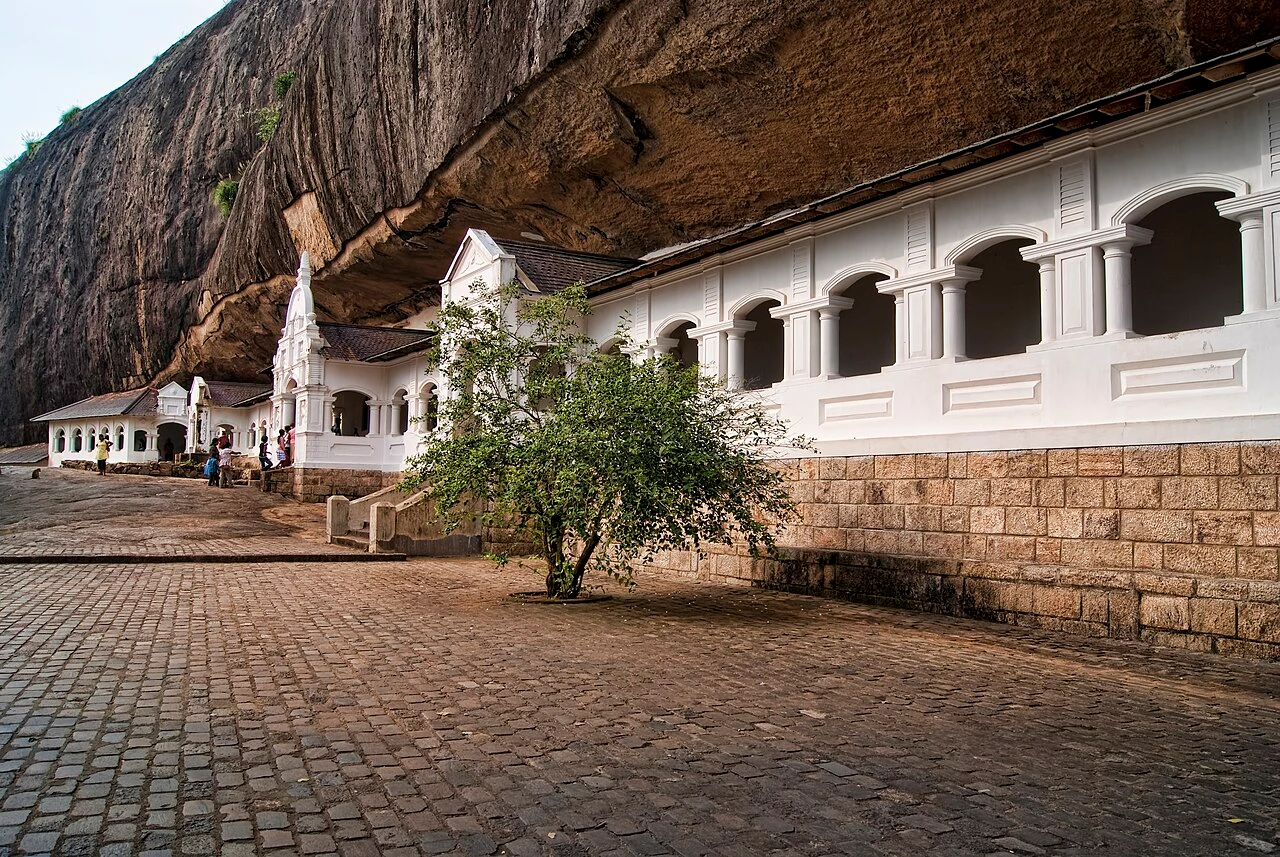
Moragollewa · 64 km
Dambulla cave temple
Content & sources
Philip Nalangan · CC BY 4.0
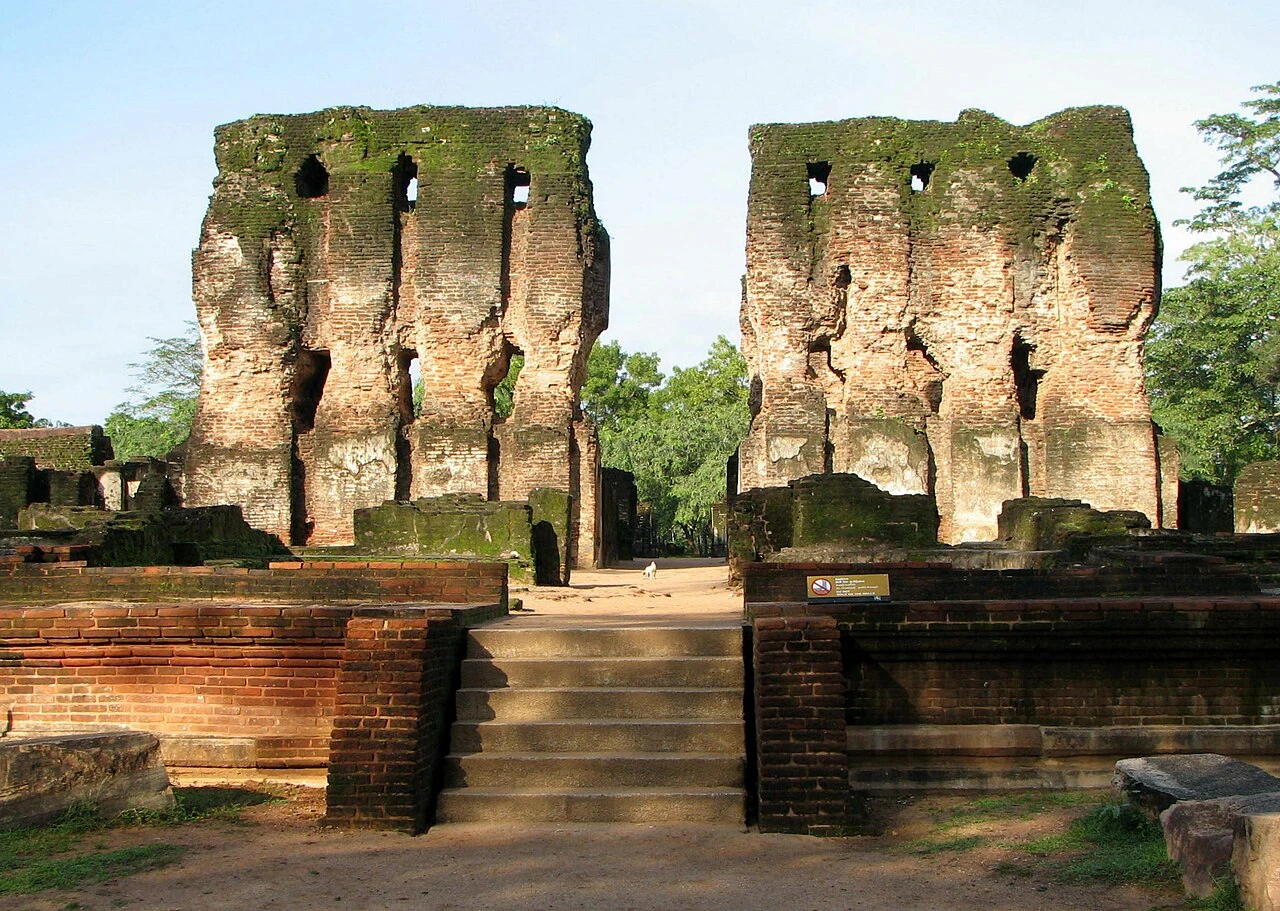
Polonnaruwa · 82 km
Polonnaruwa
Content & sources
Bernard Gagnon · CC BY-SA 3.0