Stanza · Audio guide
Jetavanaramaya Audio Guide
A place to remember. A story to take with you.
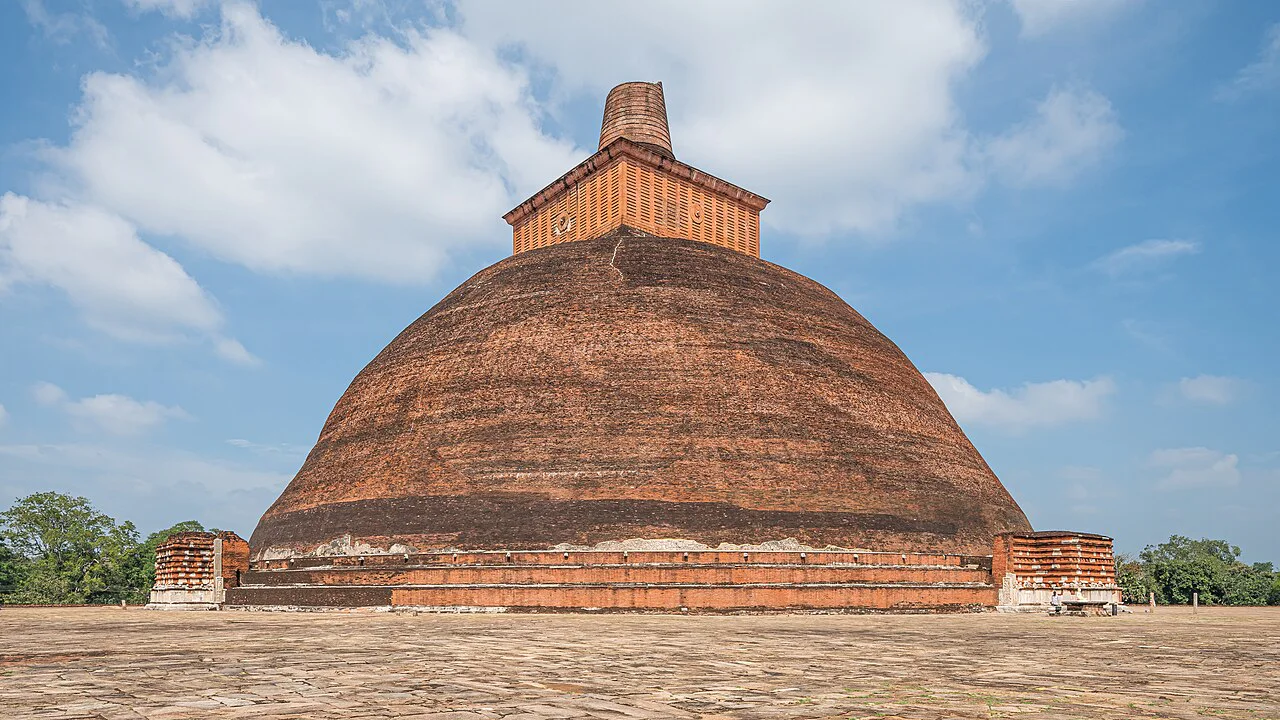
Jetavanaramaya is a stupa located in the ruins of the Jetavana monastery in Anuradhapura. It was the world's tallest stupa when it was built by King Mahasena.
Download Stanza, then search for “Jetavanaramaya”.
About the tour
One guide. Your kind of visit.
Jetavanaramaya is a stupa located in the ruins of the Jetavana monastery in Anuradhapura. It was the world's tallest stupa when it was built by King Mahasena.
Ready when you are.
- 01Get the free Stanza app.
iOS & Android
- 02Find your guide.
“Jetavanaramaya”
- 03Download before you go.
Works offline
Audio guide / 13 narrated stops
Inside the guide
Get to know a few of the stories before you go. Open a stop to read more.
01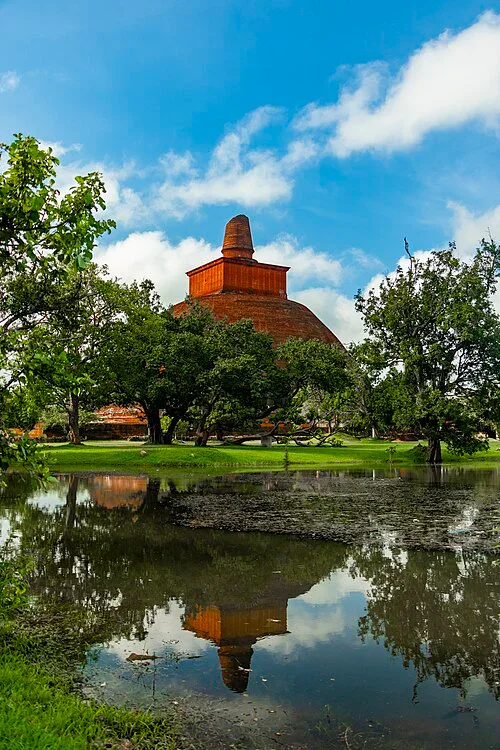 Monastery Grounds and Sacred Pond Approach
Jetavanaramaya: The Stupa in the Jetavana Grove
Welcome to Jetavanaramaya, in the sacred city of Anuradhapura. A stupa is a Buddhist reliquary monument, a dome raised to hold something sacred. This one rises from the ruins of an ancient monastery called Jetavana. The name comes from the grove itself. Long ago, Mahinda, the monk who brought Buddhism to Sri Lanka, lived here and preached the Dharma. Because of him, the forest was named Jotavana, which later became Jetavana. Water and trees still surround the monument, as they would have in the days of the monks. The tour begins here among the outer monastery grounds, and moves step by step toward the great dome itself.
Hasitha Senadheera · CC BY-SA 4.0
02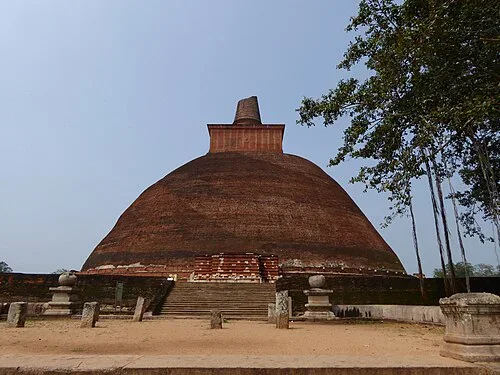 Monastery Grounds and Sacred Pond Approach
The King, the Monk and the King's Apology
This stupa owes its existence to a quarrel. In the third century, King Mahasena was crowned under the influence of a monk named Sanghamitra. At the monk's urging, the king turned against the Mahavihara, the old monastery of Anuradhapura. Anyone caught giving alms to its monks faced a penalty. The Mahavamsa records Sanghamitra telling the king that the Mahavihara monks did not teach the true discipline, and that his own circle did. The old monastery was abandoned, its monks fled to the hills, and its valuables were carried off. That pillaging provoked a rebellion. A minister named Meghavannabhaya raised an army and camped by the Duratissaka tank. The king marched out to meet him, but the night before battle the two men talked. The king apologized, and agreed to rebuild. The chronicle preserves his words: we will make the vihara to be dwelt in yet again, forgive me my fault. Out of that reconciliation, Mahasena began this stupa, and his son Kithsirimevan finished it. Sanghamitra did not live to see it. The monk was killed by a labourer, on the instructions of one of the king's own wives.
Photo: Psychoslave · CC BY-SA 4.0
03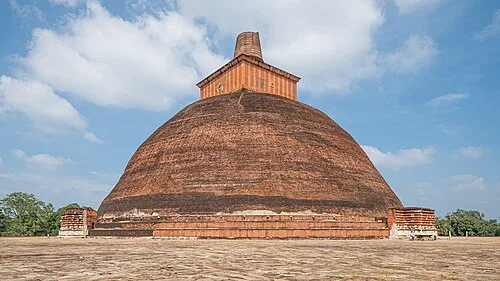 The Sand Courtyard (Maluwa) and Base Terrace
The Sand Courtyard and the Monastic City
The sand courtyard in front of the stupa is called the Maluwa. It gives the first true sense of scale. The whole compound covers about five and a half hectares. At its height, this monastery is estimated to have housed around ten thousand Buddhist monks. One side of the stupa base runs a hundred and seventy-six metres. Broad flights of stairs, nine metres wide, rise on each of the four sides. The courtyard is sacred ground, and the custom here is old: shoes and hats come off before crossing the sand. Early morning and late afternoon are the kindest times to make that walk.
Listen in the appPhoto: A.Savin · FAL
04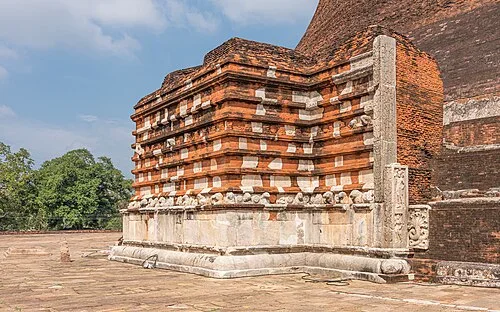 The Sand Courtyard (Maluwa) and Base Terrace
Brick by Brick: The Engineering
Up close, the masonry tells its own story. Roughly ninety-three million baked bricks went into this building, which still makes it the largest brick structure in the world. The bricks were made for the job. They mix about sixty percent fine sand with thirty-five percent clay, and one side was roughened to grip the slurry and stop sideways slipping. The bonding material between them was finely crushed dolomite, limestone, sieved sand and clay. The clay was pliable, so it allowed the structure to move without cracking. Over the brickwork went a coat of lime plaster. Its recipe sounds like a kitchen: seashells, sugar syrup, egg whites, coconut water, glues, oils, plant resin, sand and pebbles. That plaster also waterproofed the whole dome.
Listen in the appPhoto: A.Savin · FAL
05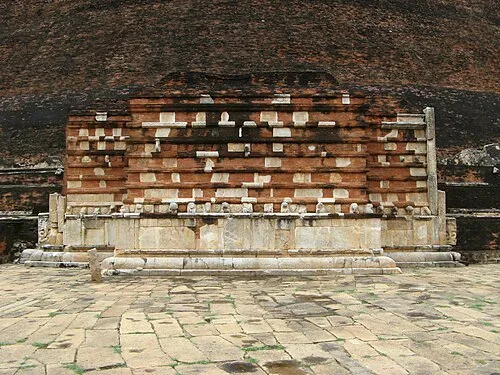 The Southern Vahalkada and Architectural Reliefs
The Southern Vahalkada
Projecting from the base of the dome is an ornate structure called a vahalkada. These frontispieces are attached at the four cardinal points of a classic Sinhalese stupa. They frame the ceremonial approaches to the dome, rising above layered mouldings and carrying sculptural decoration in stone and brick. On this southern example, the carved bands stack up toward the brickwork of the dome behind. The frontispiece bonds directly into the masonry, so the two structures stand as one. It is a signature element of the stupa design that grew up on this island.
Listen in the appMichael Gunther · CC BY-SA 4.0
06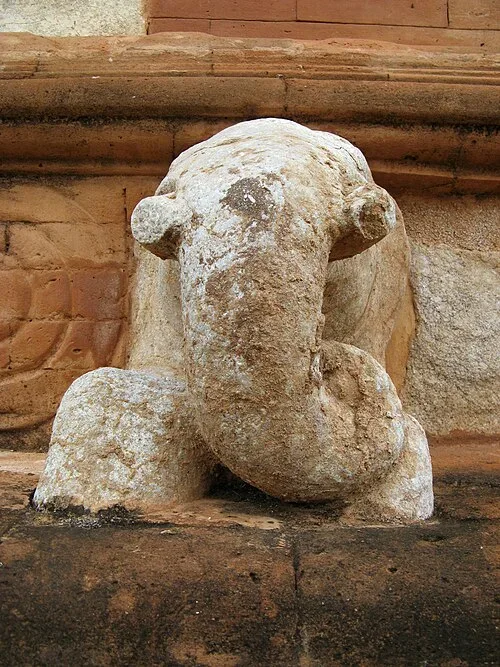 The Southern Vahalkada and Architectural Reliefs
The Elephant and the Foundation
A kneeling elephant is carved into the shrine, its trunk curled down toward the ground. The Mahavamsa, the old chronicle, tells of elephants at work here too, at the very start of the building. When the foundation rock was laid, its fissures were filled with stones and stamped down by elephants. Their feet were protected with leather bindings. The chronicle records this as the way the base was made firm. The foundation reaches down eight and a half metres, and rests on solid bedrock. Elephants stamping the ground below, and elephants carved on the shrine above, belong to the same story.
Listen in the appMichael Gunther · CC BY-SA 4.0
07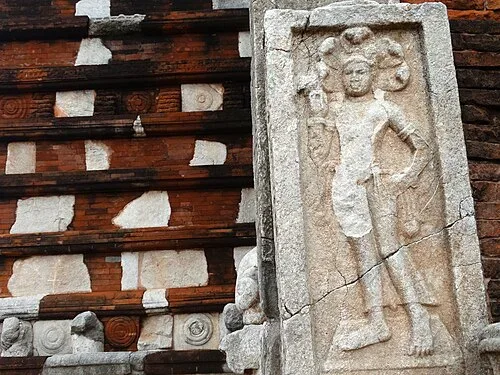 The Southern Vahalkada and Architectural Reliefs
Stone Carvers of Jetavana
This standing figure, carved against the brickwork, was cut by hand. The stupa is estimated to have taken about fifteen years to complete. Hundreds of skilled workers were needed: brickyard workers, bricklayers, and stonemasons like the one who shaped this panel. Excavations around the site have added a wider picture. The finds include artistic influences pointing to a shared culture across South Asia. The carvers here worked in a style that belonged to more than one kingdom.
Listen in the appAdam Jones from Kelowna, BC, Canada · CC BY-SA 2.0
08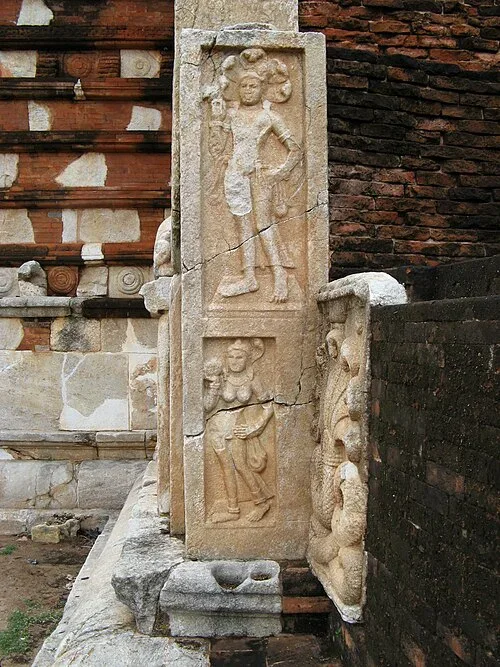 Guardian Stones and Naga Carvings
The Nagaraja Guardstone
At the entrances to the stupa's sacred spaces stood carved guardian stones. The serpent figure, the Naga, was placed at these thresholds as a symbolic protector of the precinct. This stone shows the idea at its finest. A crowned Naga figure stands in relief, holding up a canopy of many serpent hoods above his head. Below him, a smaller attendant figure stands in the same panel. Stones like this marked the line between the ordinary ground a visitor crossed and the sacred space beyond it.
Listen in the appMichael Gunther · CC BY-SA 4.0
09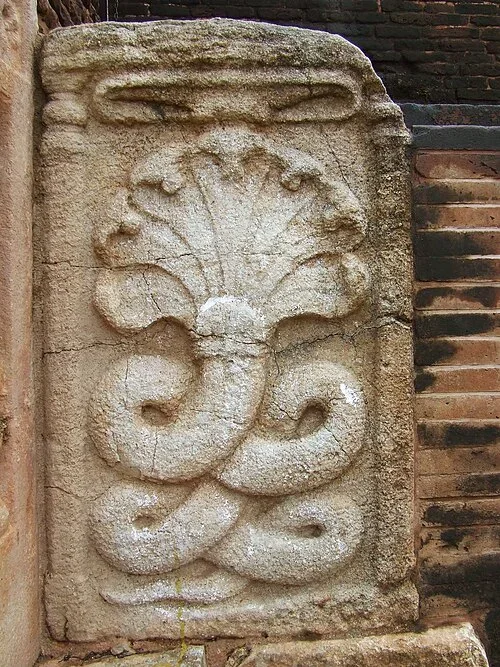 Guardian Stones and Naga Carvings
The Cobra Guardstone
This weathered stone carries a coiled cobra, its hoods spread into a broad canopy. It is the same protective idea as the crowned guardian, told in a plainer form. Across the site the guardian motif appears in different stages of design, from simple serpents to elaborate crowned figures. The coiled body here fills the stone with almost no background left bare. It shows how one symbol could be carved many ways, by many hands.
Listen in the appPhoto: S.G.Seyone · CC BY-SA 3.0
10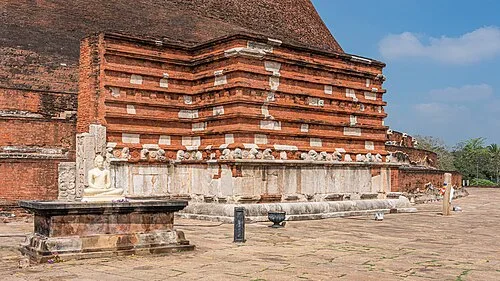 Image House Shrine and Sacred Offerings
The Image House
Against the dome stand the ruins of the image house, the patimaghara, which served as the worship hall of the monastery. The shrine in the courtyard is recorded as having a doorpost eight metres high. A single stone doorway of that height says a great deal about the ambition of the builders and their masons. The digging here turned up more than stone. Excavations unearthed Roman coins and other finds, pointing to Sri Lanka as a primary entrepot of ancient trade, linking the Mediterranean, India and the Far East. A seated Buddha figure rests on the platform today, and the shrine area remains a place where people still come to pay respect.
Listen in the appPhoto: A.Savin · FAL
- 11
Flower Offerings
Lotus flowers laid before a seated Buddha, and worship that has never stopped.
- 12
The Dome and the Belt Relic
The dome at its full height: once the third-tallest structure on earth, and a reliquary of the Buddha.
- 13
Restoration and What Endures
Jungle, a twelfth-century rebuild to today's height, and bricks burned the old way again.
Jetavanaramaya
Frequently asked questions
How much does the guide cost?
Free app download. Listed guide price: $0.99. Guide price shown in the app. Audio guide only. Venue admission is separate.
Can I listen without internet?
Yes. Download the guide’s audio, images, and maps in the app before your visit. Your downloaded content is then available offline.
Can I listen in my language?
This audio guide is available in 15 languages, including English.
Do I need to follow a schedule?
No. This is a self-guided experience. Choose your stops, pause whenever you like, and return to a story at your own pace.
At your own pace
Explore Jetavanaramaya.
Download Stanza, then search for “Jetavanaramaya”.
Free app download · Guide price shown in the app
Keep exploring
Nearby audio guides
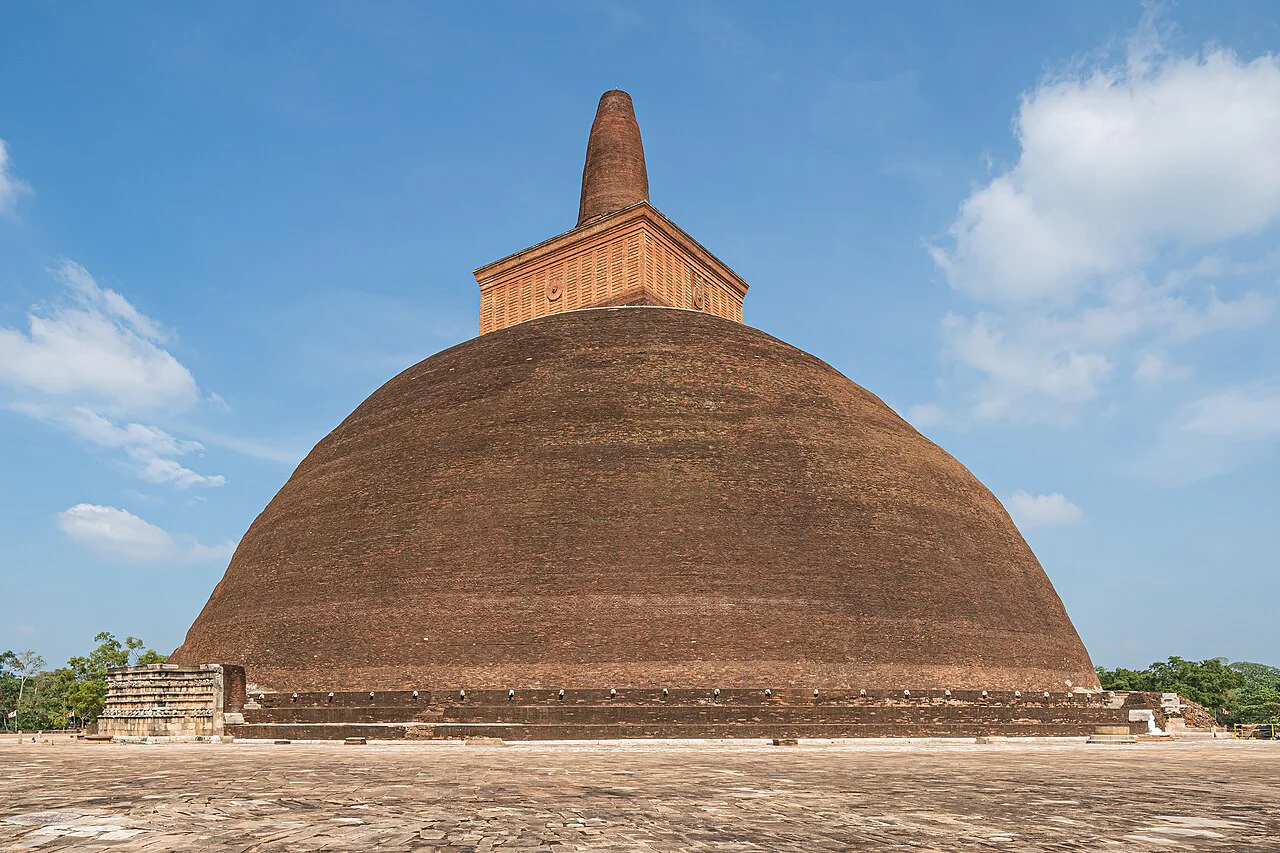
Anuradhapura · 2 km
Abhayagiri Vihāra
Content & sources
Photo: A.Savin · FAL
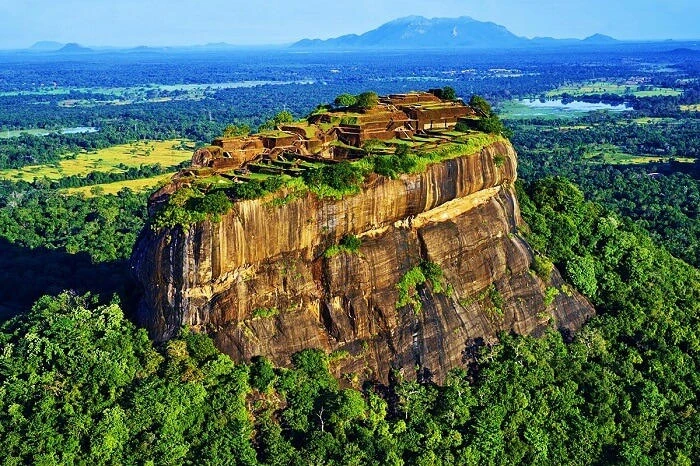
Sigiriya · 59 km
Sigiriya Rock Fortress
Content & sources
Photo: Binuka poojan · CC BY-SA 4.0
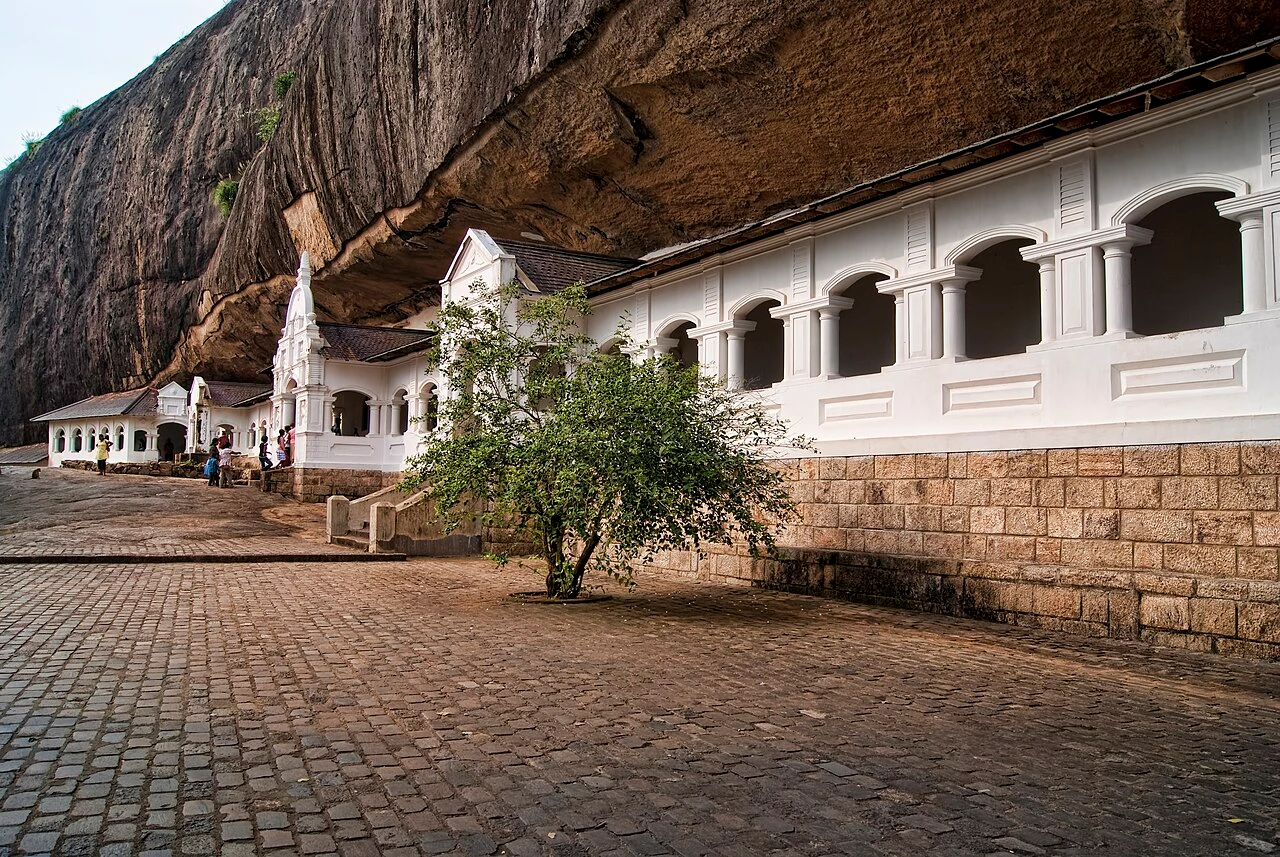
Moragollewa · 61 km
Dambulla cave temple
Content & sources
Philip Nalangan · CC BY 4.0
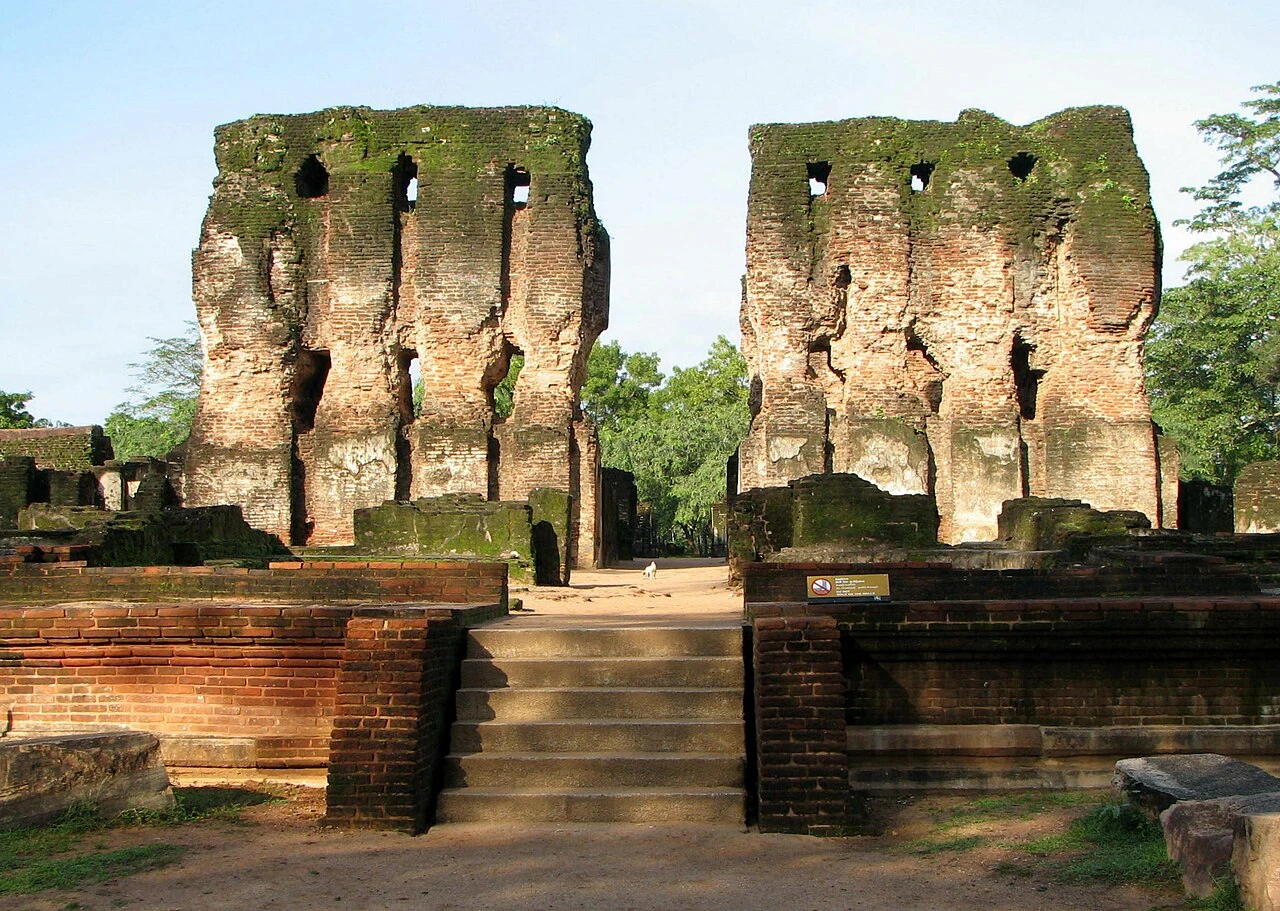
Polonnaruwa · 80 km
Polonnaruwa
Content & sources
Bernard Gagnon · CC BY-SA 3.0