Stanza · Audio guide
Sigiriya Rock FortressAudio guide
A place to remember. A story to take with you.
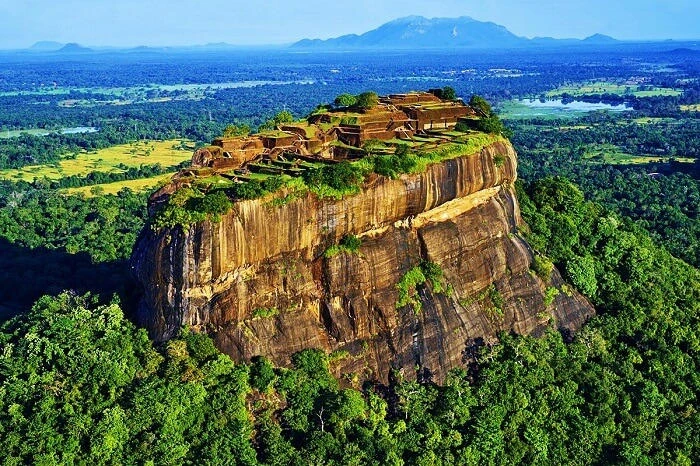
Sigiriya is an ancient rock fortress and former human settlement located near Dambulla, Sri Lanka. This prominent tourist attraction is renowned for its historical and archaeological significance.
Download Stanza, then search for “Sigiriya Rock Fortress”.
About the tour
One guide. Your kind of visit.
Sigiriya is an ancient rock fortress and former human settlement located near Dambulla, Sri Lanka. This prominent tourist attraction is renowned for its historical and archaeological significance.
Ready when you are.
- 01Get the free Stanza app.
iOS & Android
- 02Find your guide.
“Sigiriya Rock Fortress”
- 03Download before you go.
Works offline
Audio guide / 18 narrated stops
Inside the guide
Get to know a few of the stories before you go. Open a stop to read more.
01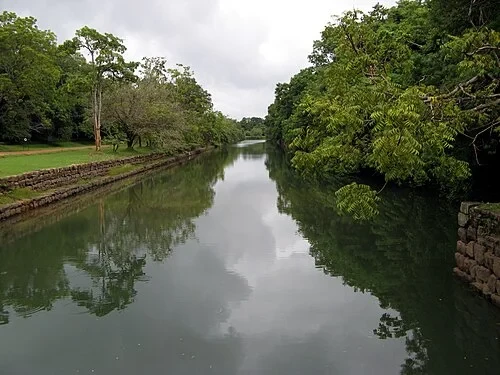 The Moat and Outer DefensesThe Outer Moat
Welcome to one of the most remarkable archaeological sites in South Asia. Standing here at the water’s edge, you are looking at the outer moat of Sigiriya. Its construction began in 477 CE under King Kashyapa, a man who seized the throne through violence. Tradition holds that Kashyapa murdered his father, King Dhatusena, by walling him up alive after a dispute over royal treasures. Fearing the inevitable return and vengeance of his brother, Moggallana, Kashyapa abandoned the traditional capital of Anuradhapura to build this island-fortress in the sky. This moat was no mere aesthetic choice; it was a critical defensive barrier designed to slow any invading army. The entire capital, including the elaborate gardens and the palace atop the rock, took approximately 18 years to complete. As you look across the still water, which reflects the surrounding trees and the heavy sky, consider the immense labor required to excavate this perimeter. It served as a clear boundary between the wild jungle and the heavily guarded royal precinct, a statement of isolation and security for a king constantly looking over his shoulder.
Michael Gunther · CC BY-SA 4.0
02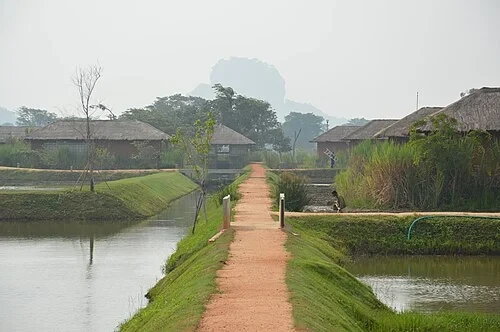 The Royal Water GardensThe Path to the Peak
The scale of Sigiriya becomes truly apparent as you look toward the massive granite plug rising approximately 180 meters, or 590 feet, above the plains. This geological formation, the result of a hardened magma plug from an extinct volcano, was chosen by King Kashyapa to serve as his 'Lion Rock.' The path ahead is challenging, requiring visitors to climb roughly 1,200 steps to reach the palace ruins at the summit. This was designed as a fortress of absolute sanctuary, a place where a king could live as a god-king, far above his subjects. The architecture here blends the raw power of the natural rock with sophisticated human construction. Notice the long, straight path cutting through the landscape toward the base of the rock. This axis was central to the city’s layout, intended to impress and intimidate anyone approaching the royal seat. It wasn't just a home; it was a calculated display of divine power and architectural mastery, meant to prove Kashyapa’s legitimacy through sheer grandeur despite his troubled path to the throne.
VINUKR86 · CC BY-SA 4.0
03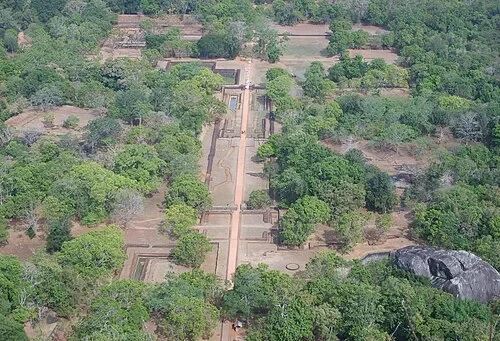 The Royal Water GardensThe Symmetrical Water Gardens
Looking down across the landscape, the precision of the ancient designers is striking. These symmetrical water gardens are among the oldest surviving landscaped parks in the world. They follow a 'charbagh' style, where the area is meticulously divided into quadrants by paths and water channels. This created a highly organized, royal pleasure park right at the foot of the jagged rock face. The engineering behind these features was incredibly advanced for the 5th century. Builders used a sophisticated network of gravity-fed underground clay pipes to move water throughout the gardens. This system maintained the water levels in the ponds and even powered fountains without the need for pumps. The layout reflects a desire for total control over the environment, contrasting the wild, unpredictable jungle with the rigid geometry of the king's private grounds. Walking through this area, you see how the natural elements were tamed to serve the king’s aesthetic vision. Large ponds, small islands, and narrow streams work together to provide cooling and visual beauty, proving that Sigiriya was as much a luxurious palace as it was a fortified stronghold.
Listen in the appPhoto: Chamal N · CC BY-SA 3.0
04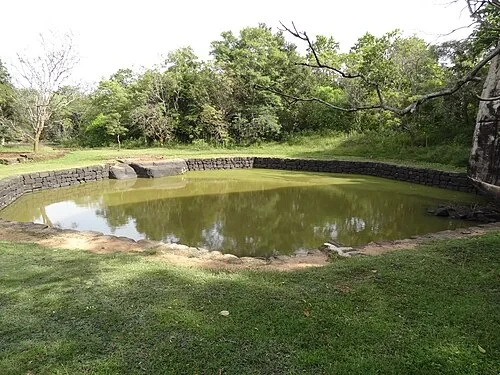 The Royal Water GardensThe Bathing Pools
The stone-lined bathing pools offer a closer look at the precision of Sigiriya’s hydraulic systems. These basins were not just simple ponds; they were part of a complex network of cisterns and conduits that managed water flow across multiple levels. Notice the tight fit of the stone blocks used to line the walls, a testament to the skill of the 5th-century masons who shaped them. The functionality of this site is extraordinary—even now, over 1,500 years after they were constructed, the limestone fountains in these gardens continue to operate during the heavy rains of the monsoon season. This was a place of luxury and ritual, where the royal court could escape the tropical heat. The water was kept clean and moving through a gravity-fed cycle that integrated perfectly with the natural slope of the land. These pools served both practical and aesthetic functions, acting as reservoirs while also providing a serene environment for the king and his retinue. The preservation of these stone structures allows us to appreciate the longevity of ancient Sri Lankan engineering, which successfully integrated large-scale water management into the very heart of the royal residence.
Listen in the appPhoto: Cherubino · CC BY-SA 3.0
05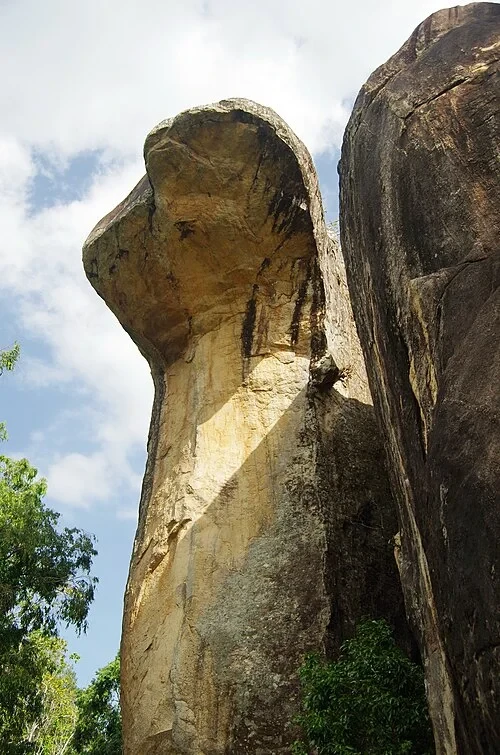 The Boulder Gardens and Monastic SheltersCobra Hood Cave
As you move into the boulder gardens, you encounter a natural formation known as the Cobra Hood Cave. Its name comes from the overhanging rock that remarkably resembles the flared hood of a cobra poised to strike. Long before King Kashyapa arrived to build his fortress, this area served a very different purpose as a Buddhist monastery. The transition from a place of spiritual retreat to a royal stronghold is visible in the architecture here. Look up at the rock above the cave opening to see the 'drip-ledges.' These are narrow grooves carved into the stone to prevent rainwater from running into the sheltered area, keeping the cave floor dry for the monks who lived here. This technique is a hallmark of ancient Sri Lankan monastic architecture and can be found in sites across the island. The interior of the cave still bears traces of ancient floral paintings and inscriptions. It serves as a reminder that while Kashyapa’s reign was defined by power and violence, the rock had a much older history as a quiet sanctuary for meditation and religious study.
Listen in the appPhoto: Balou46 · CC BY-SA 3.0
06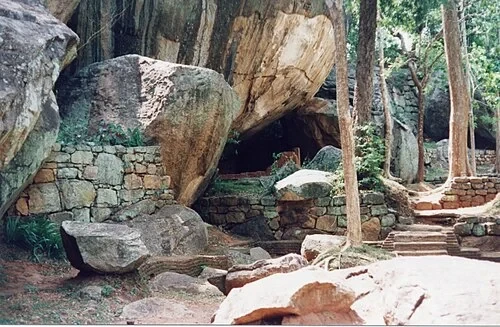 The Boulder Gardens and Monastic SheltersThe Monastic Shelters
The Boulder Gardens offer a sharp contrast to the rigid symmetry of the water gardens you saw earlier. Here, the architects chose to work with the existing natural landscape rather than flatten it. These massive boulders were used for both defense and habitation. Tucked beneath and between the rocks are monastic shelters—simple cells where monks resided both before and after King Kashyapa's brief 18-year reign. These rock-cut dwellings were modest, reflecting a life of asceticism. You can see where the granite has been notched and flattened to support wooden beams or brick walls that once enclosed these spaces. While the king lived in luxury at the summit, these shelters remained part of a persistent monastic community. Strategically, this area was also a defensive maze. The irregular placement of the boulders created narrow, easily defended passages. If an invader managed to cross the moats and gardens, they would find themselves trapped in this labyrinth of stone. This area highlights the dual nature of Sigiriya: a site of deep religious significance and a fortress built out of the paranoid needs of a usurper king.
Listen in the appPhoto: Nataraja~commonswiki · CC BY-SA 3.0
07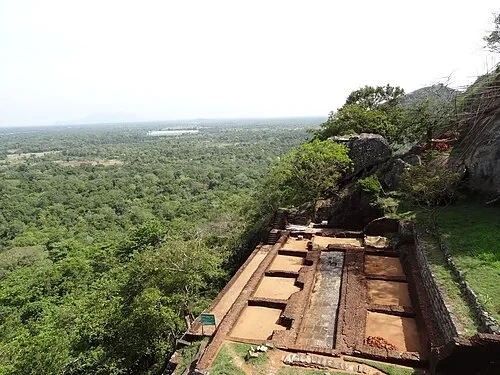 The Terraced GardensThe Lower Terraces
Moving from the garden floor toward the rock face, you pass through a series of lower terraces. These were created using extensive stone and brick retaining walls, which leveled the steep natural slope into flat platforms. These terraces served as a transition zone between the public gardens and the high-security palace areas above. They were heavily guarded, providing a vantage point for the King's soldiers to monitor the grounds below. However, their primary function was defensive. The architecture was designed to repel intruders through a terrifying method: massive boulders were perched on the edges of these terraces, held in place by wooden wedges. If an invading army attempted to climb the rock, these boulders could be released to crash down the slope, crushing anyone in their path. You can still see the notches and brickwork where these 'boulder traps' were positioned. This area underscores the constant state of alert that defined Kashyapa's life at Sigiriya. Every architectural feature, from the level ground you stand on to the rocks above, was part of a lethal system intended to keep the king's enemies at bay.
Listen in the appPhoto: Cherubino · CC BY-SA 3.0
08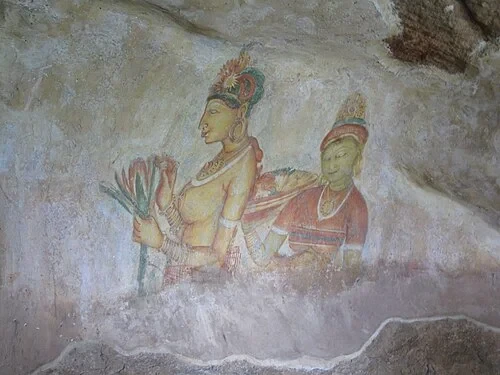 The Gallery of the Sigiriya MaidensThe Sigiriya Maidens
Within a sheltered gallery on the side of the rock are the famous Sigiriya Maidens. Painted during the 5th century, these frescoes are among the most significant works of ancient art in Asia. They depict figures known as Apsaras, or celestial nymphs, who appear to be floating through the sky. While ancient accounts suggest that there were once as many as 500 of these paintings covering a large section of the rock face, only 22 survive today. Unlike most ancient Sri Lankan art, which is predominantly Buddhist in theme, these frescoes are notably secular or mythological in nature. They provide a rare look at the courtly aesthetics and ideals of beauty from the era of King Kashyapa. The women are shown with elaborate hairstyles, jewelry, and fine clothing, often holding flowers or trays of fruit. Their presence on the rock face transformed the fortress into a 'cloud palace,' reinforcing the king’s image as a divine ruler inhabiting a heavenly realm. The survival of these delicate paintings is remarkable, given their exposure to the elements for over 1,500 years.
Listen in the appshankar s. from Dubai, united arab emirates · CC BY 2.0
09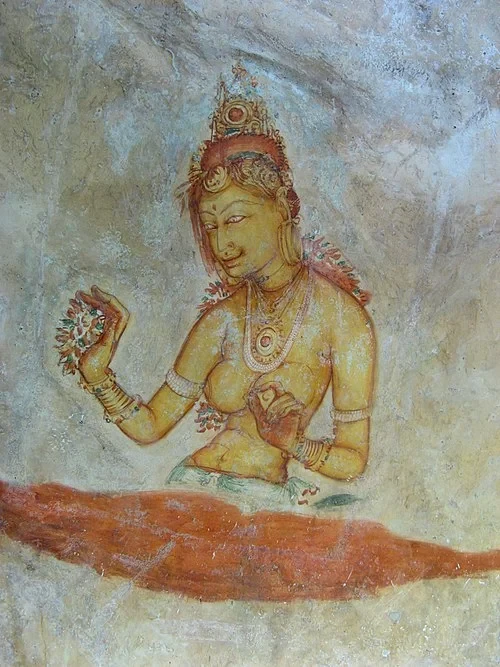 The Gallery of the Sigiriya MaidensCelestial Nymphs
Examining the frescoes closely reveals the incredible artistic technique used by 5th-century painters. The vibrant colors—deep reds, yellows, and greens—were derived from natural earth pigments and plant dyes. Notice the detail in the maidens' jewelry, the delicate way they hold flowers, and the intricate patterns of their headpieces. One of the most distinctive features is the 'cloud' effect at their waists. By showing the lower half of their bodies obscured by stylized clouds, the artists conveyed that these are not earthly women, but celestial beings floating high in the sky. This artistic choice helped turn the granite rock of Sigiriya into a metaphor for a mountain in the heavens. The natural hollow in the rock face has acted as a protective shelter, shielding the pigments from direct sun and heavy rain for over fifteen centuries. The fluidity of the lines and the expressive faces suggest a high level of artistic sophistication in the royal court. These paintings offer a window into a vanished world of courtly elegance, preserved almost by accident in the middle of a military stronghold.
Listen in the appMichael Gunther · CC BY-SA 4.0
10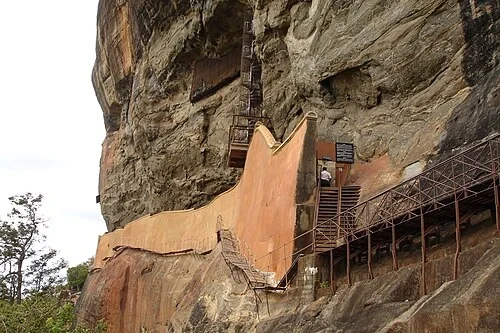 The Mirror Wall and Ancient GraffitiThe Gallery Path
The approach to the higher levels of the fortress takes you along the Gallery Path, home to the famous Mirror Wall. This impressive structure is made of brick masonry and was originally coated in a plaster so highly polished that it acted like a mirror. Legend says it was kept so shiny that the King could see his own reflection as he walked by. Even today, though the luster has faded with time, the surface remains remarkably smooth to the touch. This wall serves a dual purpose: it protected the path from the sheer drop on one side and provided a surface for the 'Mirror Wall Poetry' you will see shortly. To reach the frescoes located nearly 100 meters above the ground, visitors now use a modern spiral staircase, a necessary addition to protect the ancient site while allowing access. The construction of a path like this on a near-vertical rock face is a marvel of ancient engineering, showing the lengths to which Kashyapa’s builders went to ensure the King could move safely and comfortably between the different levels of his sky-palace.
Listen in the appPhoto: Jalo · CC BY-SA 3.0
Sigiriya Rock Fortress
Frequently asked questions
How much does the guide cost?
Free app download. Listed guide price: $1.99. Guide price shown in the app. Audio guide only. Venue admission is separate.
Can I listen without internet?
Yes. Download the guide’s audio, images, and maps in the app before your visit. Your downloaded content is then available offline.
Can I listen in my language?
Stanza supports 15 languages. Check the app for the languages available for this guide.
Do I need to follow a schedule?
No. This is a self-guided experience. Choose your stops, pause whenever you like, and return to a story at your own pace.
At your own pace
Explore Sigiriya Rock Fortress.
Download Stanza, then search for “Sigiriya Rock Fortress”.
Free app download · Guide price shown in the app
Keep exploring
Nearby audio guides
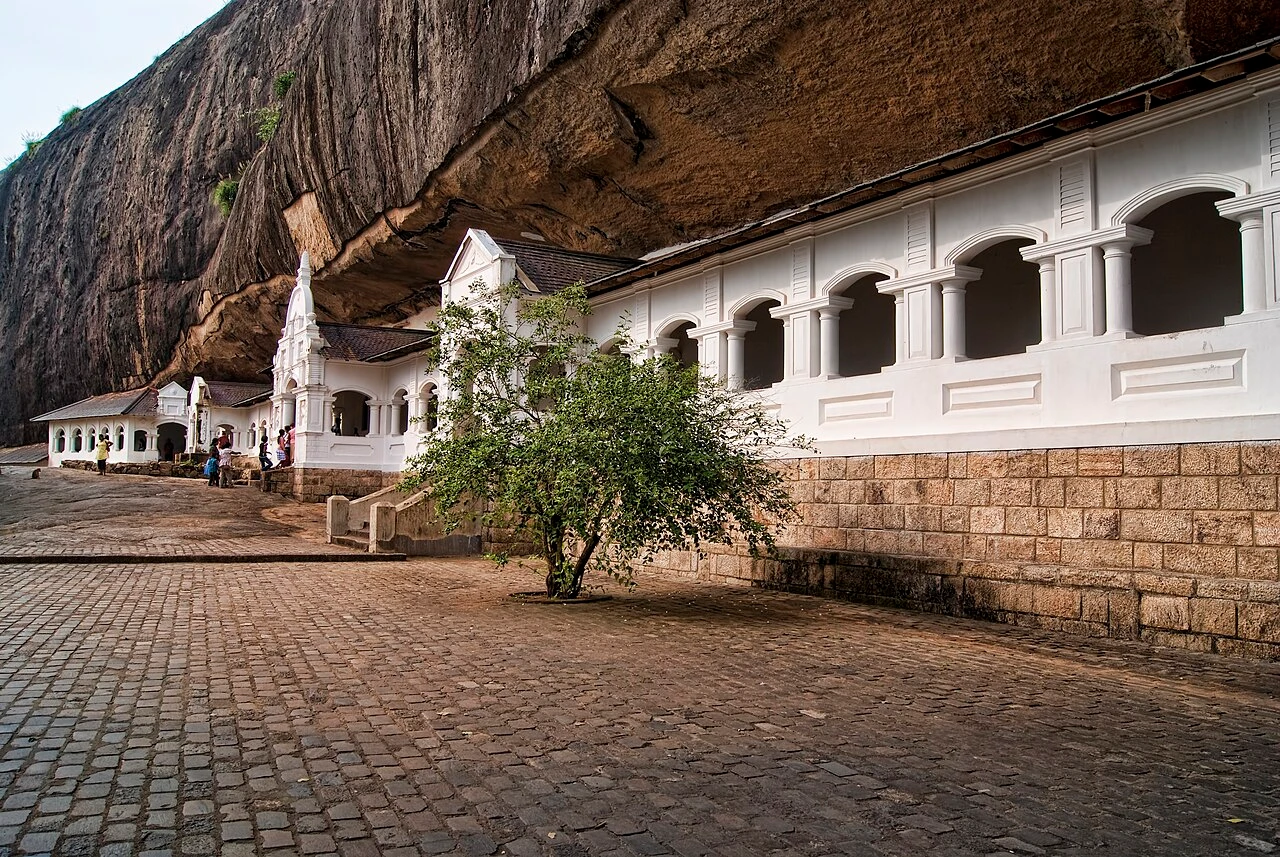
Moragollewa
Dambulla cave temple
Content & sources
Philip Nalangan · CC BY 4.0
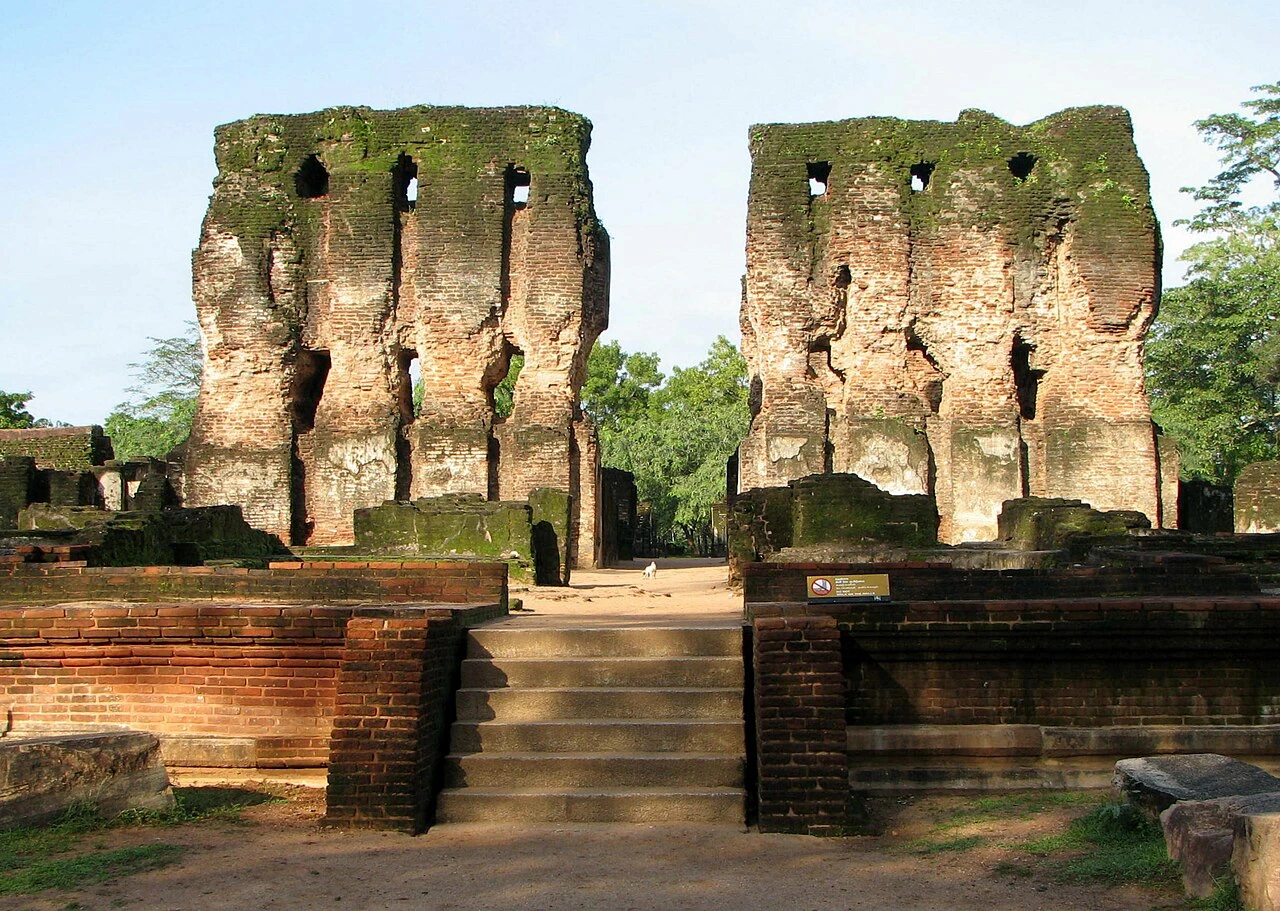
Polonnaruwa
Polonnaruwa
Content & sources
Bernard Gagnon · CC BY-SA 3.0