Stanza · Audio guide
Temple of the Tooth Audio Guide
A place to remember. A story to take with you.
The Temple of the Sacred Tooth Relic is a Buddhist temple located in Kandy, Sri Lanka. It houses the relic of the tooth of the Buddha, which has historically played an important role in local politics.
Download Stanza, then search for “Temple of the Tooth”.
About the tour
One guide. Your kind of visit.
The Temple of the Sacred Tooth Relic is a Buddhist temple located in Kandy, Sri Lanka. It houses the relic of the tooth of the Buddha, which has historically played an important role in local politics.
Ready when you are.
- 01Get the free Stanza app.
iOS & Android
- 02Find your guide.
“Temple of the Tooth”
- 03Download before you go.
Works offline
Audio guide / 13 narrated stops
Inside the guide
Get to know a few of the stories before you go. Open a stop to read more.
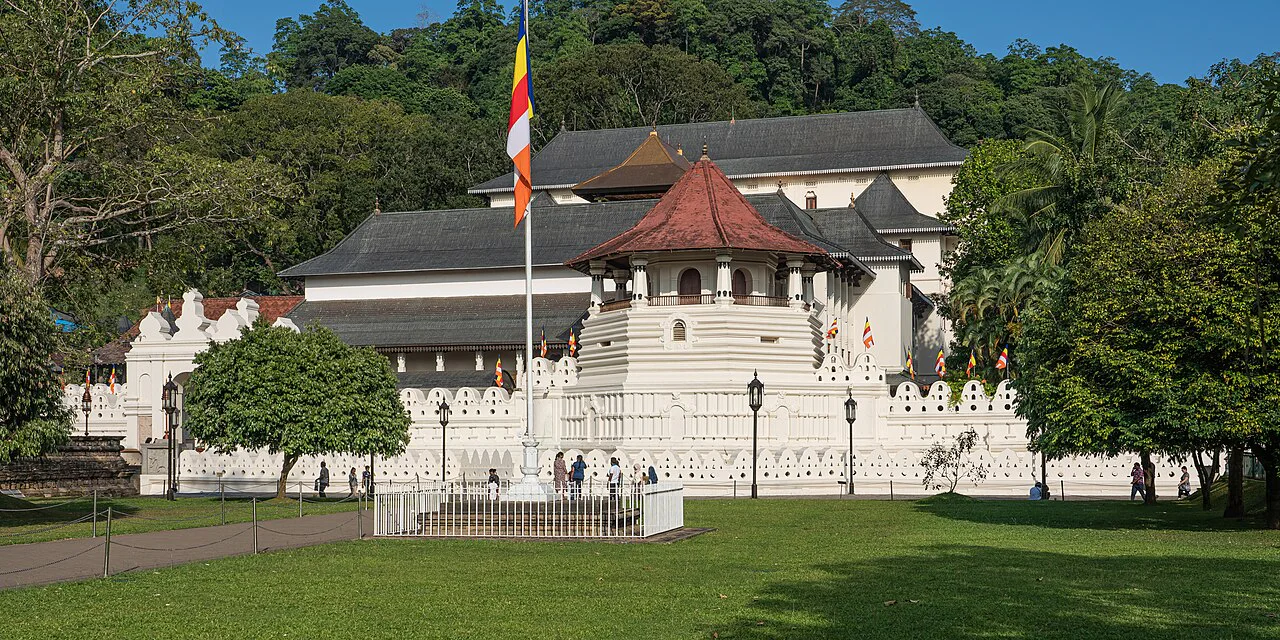
01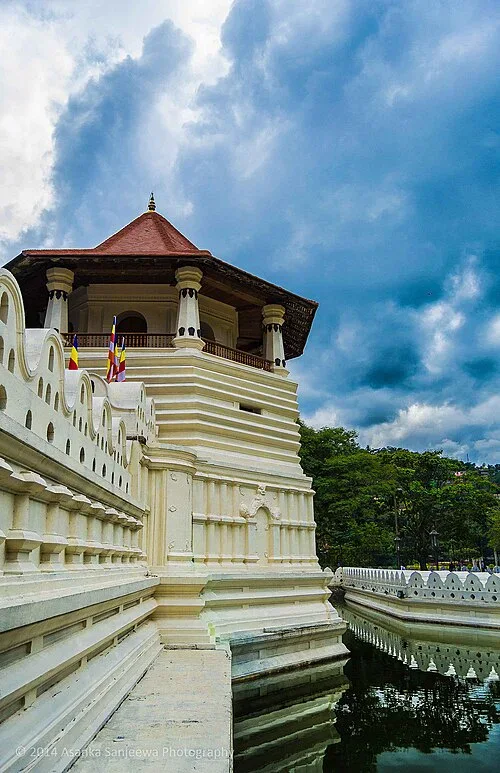 Mahamaluwa Esplanade and the Palace Moat
The Temple of the Tooth and the Palace Moat
Welcome to the Temple of the Tooth, known in Sinhalese as Sri Dalada Maligawa. This is a temple built inside a royal palace, and that is no accident. In 1595 King Vimaladharmasuriya the First of Kandy enshrined here the relic of the tooth of the Buddha. For centuries before that, the relic travelled with the court. Whoever held it, people believed, held the right to govern the island. So every Sinhalese king kept the tooth temple close to his own residence. The white walls curving along the moat give the place a fortress look, and the corner pavilion rising above the water belongs to that same palace precinct. In 1988 the temple and the relic together earned the site a place on the World Heritage list.
Asanka Sanjeewa · CC BY 3.0
02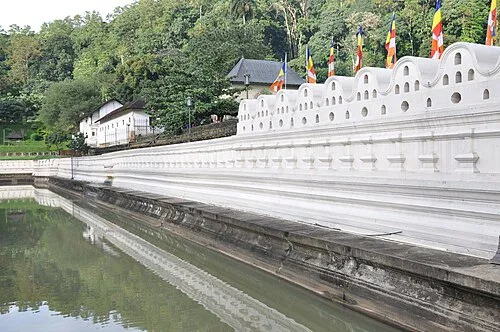 Mahamaluwa Esplanade and the Palace Moat
The Water Waves Wall and the Moat
The low wall running along the moat and the lake has a name of its own: the water waves wall. Its edge rises and falls like ripples, which is where the name comes from. Holes built into the wall were made for lighting coconut oil lamps. So the boundary that guarded the temple also glowed with offerings after dark. The older compound wall around the palace stood about two and a half metres high. Three main gateways, called wahalkadas, pierced that wall to let people through. Defence and devotion were built into the same line of brick and plaster.
Jorge Láscar from Australia · CC BY 2.0
03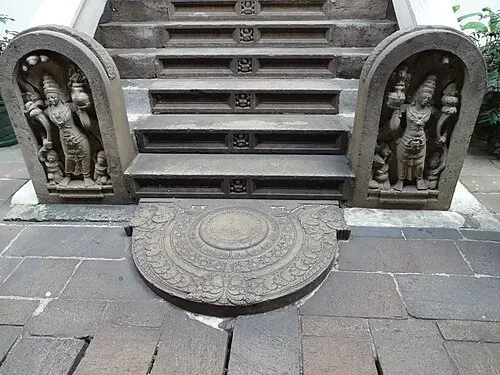 Mahawahalkada and the Moonstone Threshold
The Mahawahalkada Steps, Moonstone and Guardian Stones
At the foot of the main gateway's steps lies a carved semicircle of stone called a sandakada pahana, a moonstone, worked in the Kandyan style. Stone elephants stand on either side of the entrance, and above the staircase rise a makara torana arch and two guardian stones. The gateway itself is the Mahawahalkada, the great entrance over the moat. In 1998 a bomb blast destroyed it completely. The entrance was rebuilt afterwards, together with the moonstone and the other stone carvings. The steps visitors cross today are faithful new work standing where the old ones fell.
Listen in the appPhoto: Z thomas · CC BY-SA 4.0
04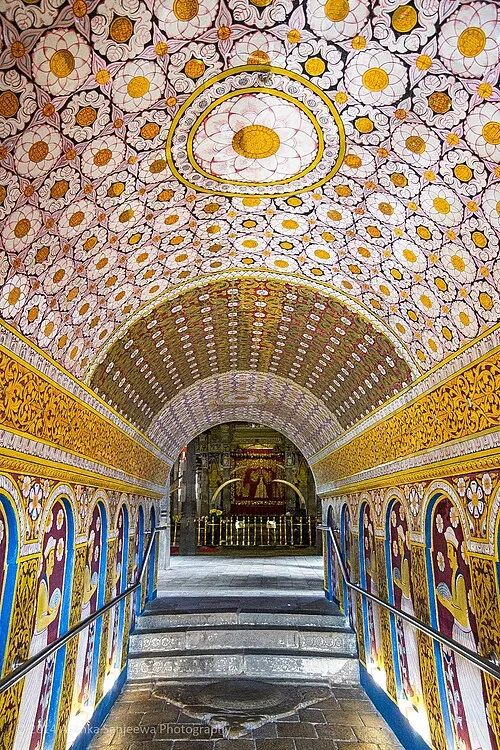 Ambarawa Vaulted Tunnel
The Ambarawa Vaulted Tunnel
The way into the inner temple runs through a curved corridor called the Ambarawa. The name comes from its roof, shaped like the arch of a traditional wagon. The passage is about nine metres long and two and a half metres wide. Every inch of the vaulted ceiling is painted with lotus flowers in gold, red and white. The tunnel does more than connect two courtyards. It closes off the bright outside world step by step, so that by the end of the passage the eye has adjusted to the dim light of the shrine zone.
Listen in the appAsanka Sanjeewa · CC BY 3.0
05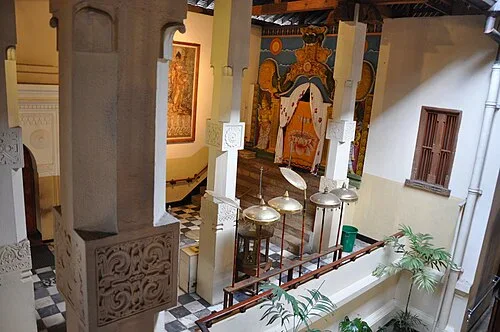 Hewisi Mandapaya and Ritual Courtyard
The Hewisi Drummers' Chamber and the Daily Rituals
In front of the main shrine stands the Hewisi drummers' chamber, where ceremony is played rather than spoken. Monks of two chapters, the Malwathu and the Asgiri, conduct worship in the inner chamber every day. Offerings called Thevava are performed three times daily, at dawn, at noon and in the evening, with drumming and the blowing of the conch. On Wednesdays comes a gentler rite, the Nanumura Mangallaya. The relic is symbolically bathed with scented water and fragrant flowers. That holy water is then distributed to those present, who believe it carries healing power.
Listen in the appJorge Láscar from Australia · CC BY 2.0
06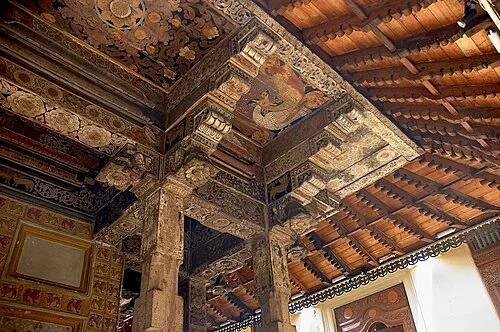 Hewisi Mandapaya and Ritual Courtyard
Kandyan Woodcarving and Painted Ceilings
Kandyan craftsmen built in wood the way others built in stone. Thick timber columns carry the roofs here, and every bracket and beam is carved with figures and scrolls. Overhead, ceiling panels bloom with painted designs in gold and deep colour. This decorative language runs through the whole complex, from shrine halls to royal buildings. The carving reached such fame that the wooden pillars of the royal Audience Hall are still held up as the example of the Kandyan period. The same hands, and the same traditions, shaped temple and palace alike.
Listen in the appWouter Hagens · CC BY-SA 3.0
07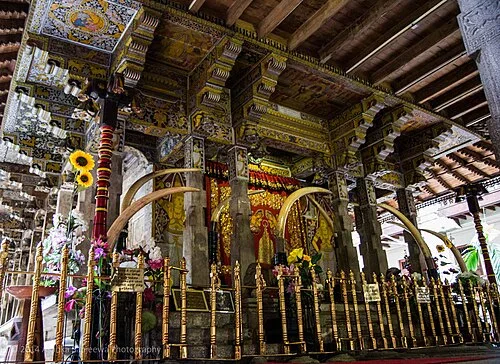 Weda Hitina Maligawa and the Golden Canopy
The Inner Shrine and the Relic's Journey to Kandy
The story of the tooth begins, so the legend goes, in the kingdom of Kalinga, where it was kept after the Buddha's death. When that kingdom came under attack, King Guhasiva sent the relic away for safekeeping. His daughter, Princess Hemamali, and Prince Dantha carried it across the sea to Sri Lanka, with the tooth hidden in the princess's hair. They landed during the reign of King Sirimeghavanna, in the early fourth century, and the king enshrined it at Anuradhapura. Tradition names Hiripitiye Diyawadana Rala and the monk Devanagala Rathnalankara Thera as the men who finally brought it to Kandy. King Vimaladharmasuriya the First raised a two-storey building here for it, though that building is gone. When the Portuguese invaded in 1603 the relic was carried away to Meda Mahanuwara for safety, and it was recovered under Rajasinha the Second. The shrine standing today was built by King Vira Narendra Sinha.
Listen in the appAsanka Sanjeewa · CC BY 3.0
08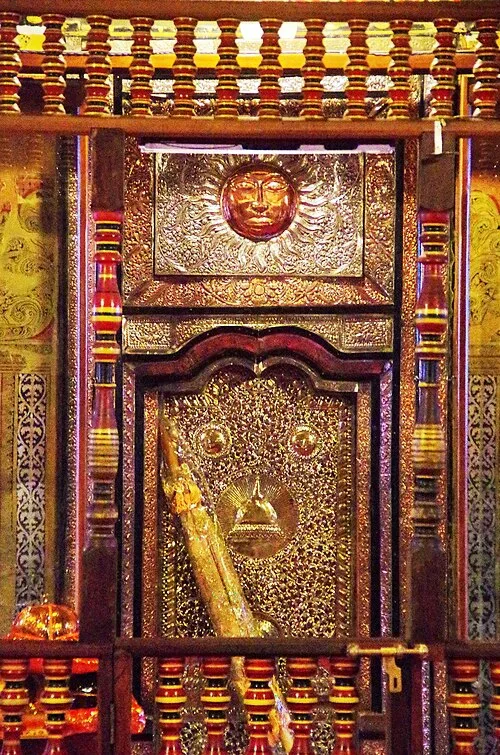 Weda Hitina Maligawa and the Golden Canopy
The Relic Chamber: Caskets Behind the Golden Door
The actual chamber where the tooth rests is called the Handun kunama, and it hides its treasure completely. The relic is encased in seven golden caskets, each one inlaid with precious gemstones. The caskets are shaped like stupas, nested one inside another, so the tooth itself is never seen. The upper floor of the shrine, the Weda hitina maligawa, has doors carved from ivory, and one account says they are filled with gold and silver. Above the shrine hangs a golden canopy, and a golden fence encircles the whole complex. The canopy and the fence were both built in 1987 under Prime Minister Ranasinghe Premadasa. Devotion here works by concealment, layer within layer.
Listen in the appPhoto: Balou46 · CC BY-SA 3.0
09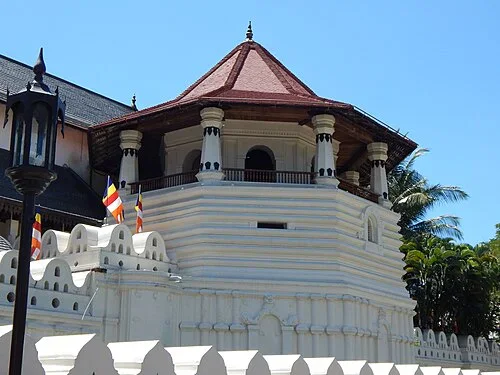 The Paththirippuwa Octagon and Royal Library
The Paththirippuwa Octagon
The octagonal pavilion jutting out over the moat is the Paththirippuwa, the most recognisable silhouette at Kandy. It was added during the reign of King Sri Vikrama Rajasinha, the last king of Kandy. The royal architect Devendra Moolacharya is credited with building it. At first the king used the octagon for recreation, a place of leisure above the water. Later it was offered to the tooth relic itself, a gift from royal pleasure to sacred use. Today it holds the temple's library.
Listen in the appPhoto: Sandaru · CC BY-SA 4.0
10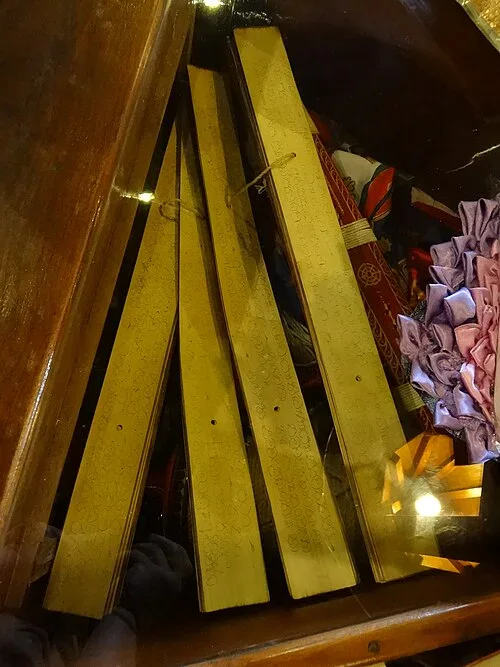 The Paththirippuwa Octagon and Royal Library
Palm-Leaf Manuscripts of the Temple Library
The books kept in the Paththirippuwa were written on leaves. Palm leaves were dried, polished and inscribed with a stylus, then strung together between wooden covers. These long narrow pages preserved Buddhist texts for centuries in the island's damp climate. The leaves displayed here in their glass case give a sense of that tradition, though their own history is not recorded.
Listen in the appPhoto: Cherubino · CC BY-SA 3.0
- 11
The Magul Maduwa: Royal Audience Hall
The wooden hall where Kandyan kings held court, and where the kingdom's rule ended.
- 12
The Kandyan Convention of 1815
The treaty signed by chiefs, not the king, that ceded Kandy and promised to protect the Buddha's teaching.
- 13
The Museum and the Elephants of the Perahera
The pageant of drummers, dancers and adorned tuskers that still honours the tooth each year.
Temple of the Tooth
Frequently asked questions
How much does the guide cost?
Free app download. Listed guide price: $0.99. Guide price shown in the app. Audio guide only. Venue admission is separate.
Can I listen without internet?
Yes. Download the guide’s audio, images, and maps in the app before your visit. Your downloaded content is then available offline.
Can I listen in my language?
This audio guide is available in 15 languages, including English.
Do I need to follow a schedule?
No. This is a self-guided experience. Choose your stops, pause whenever you like, and return to a story at your own pace.
At your own pace
Explore Temple of the Tooth.
Download Stanza, then search for “Temple of the Tooth”.
Free app download · Guide price shown in the app
Keep exploring
Nearby audio guides
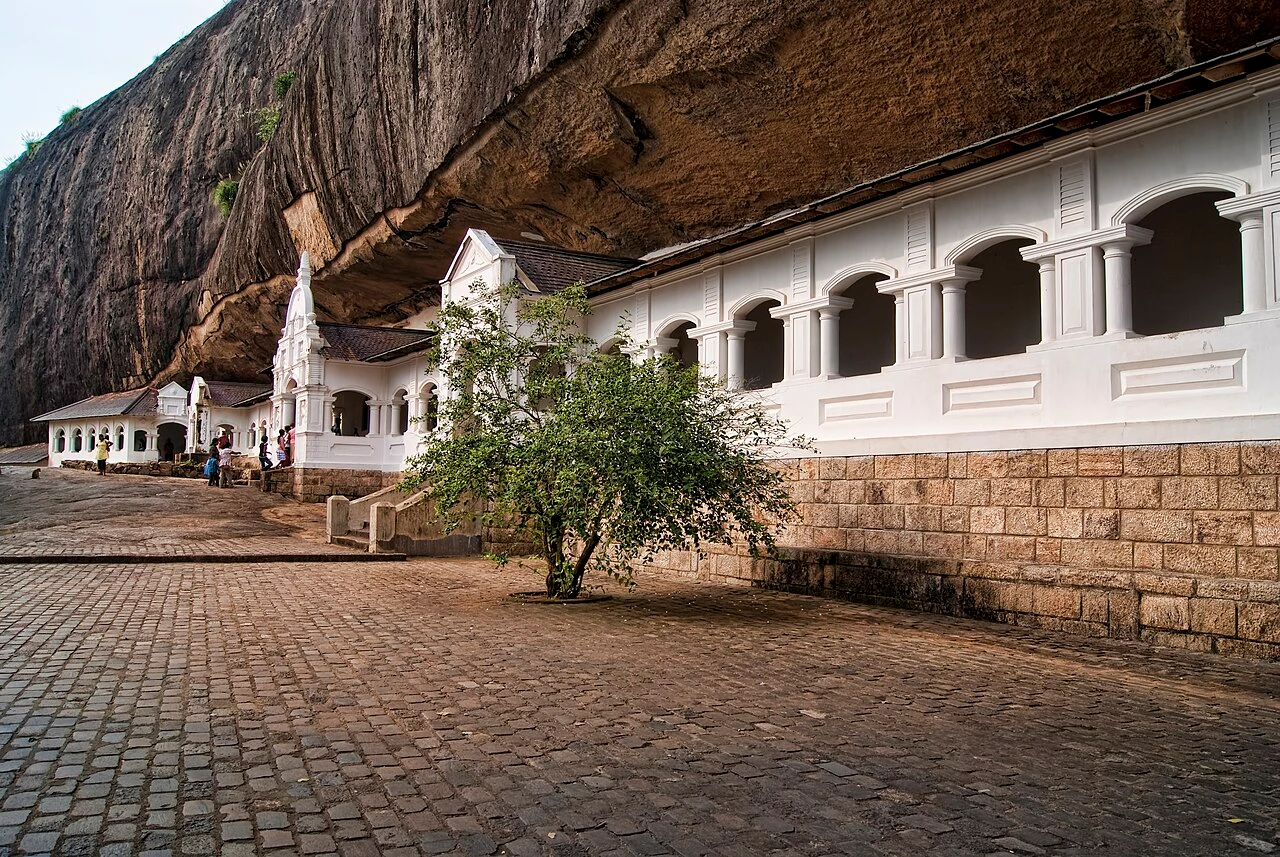
Moragollewa · 63 km
Dambulla cave temple
Content & sources
Philip Nalangan · CC BY 4.0
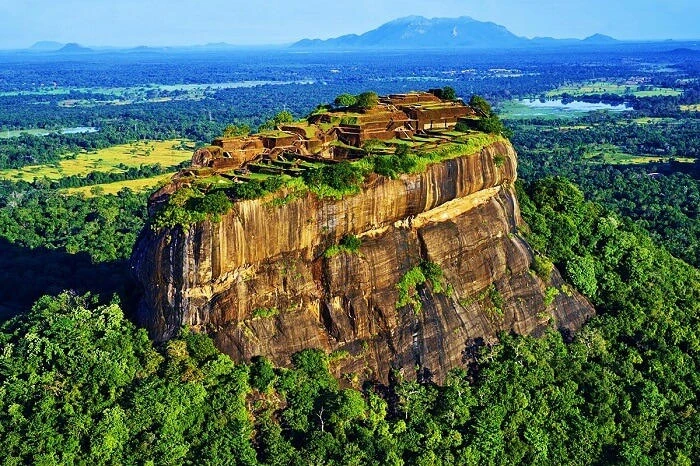
Sigiriya · 75 km
Sigiriya Rock Fortress
Content & sources
Photo: Binuka poojan · CC BY-SA 4.0
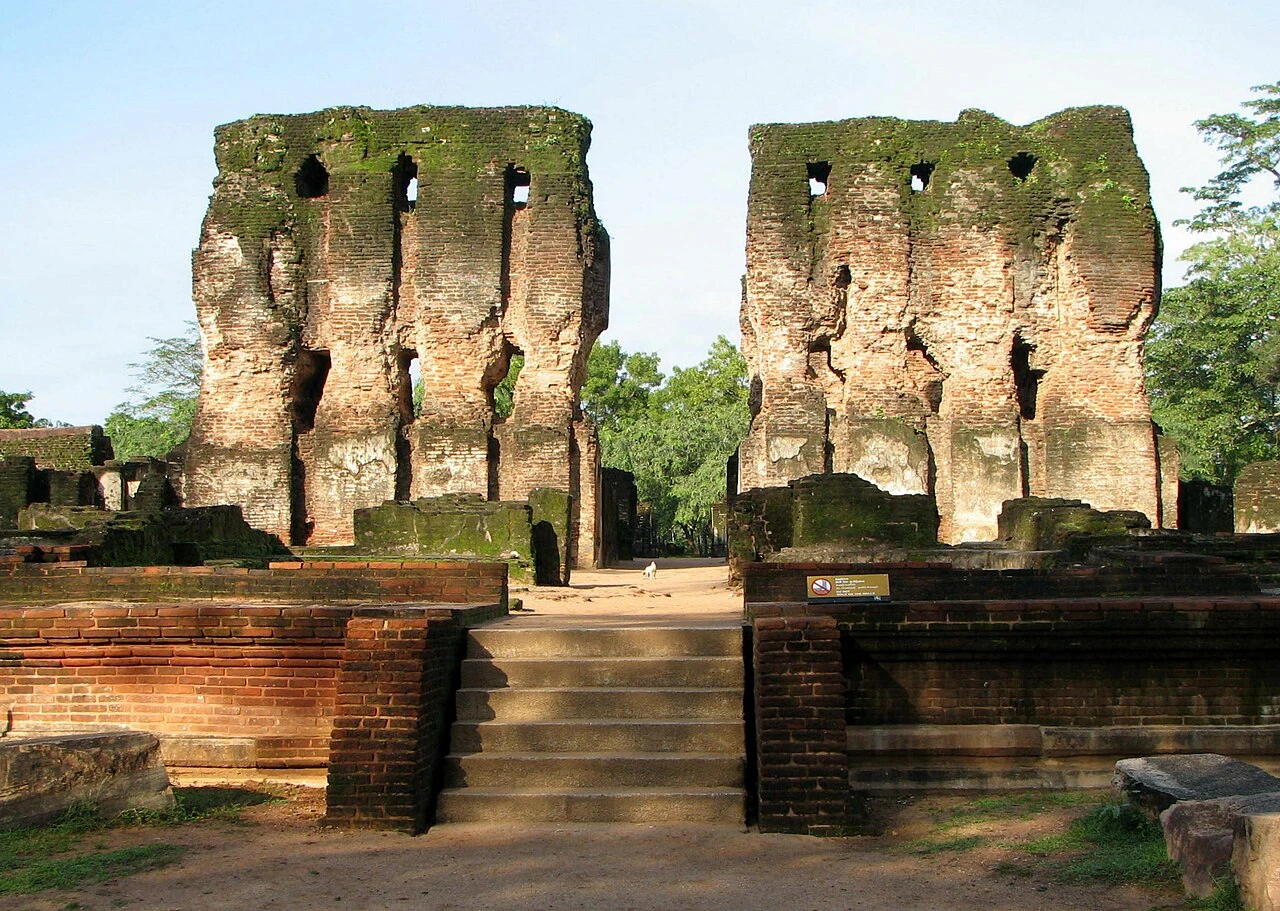
Polonnaruwa · 81 km
Polonnaruwa
Content & sources
Bernard Gagnon · CC BY-SA 3.0
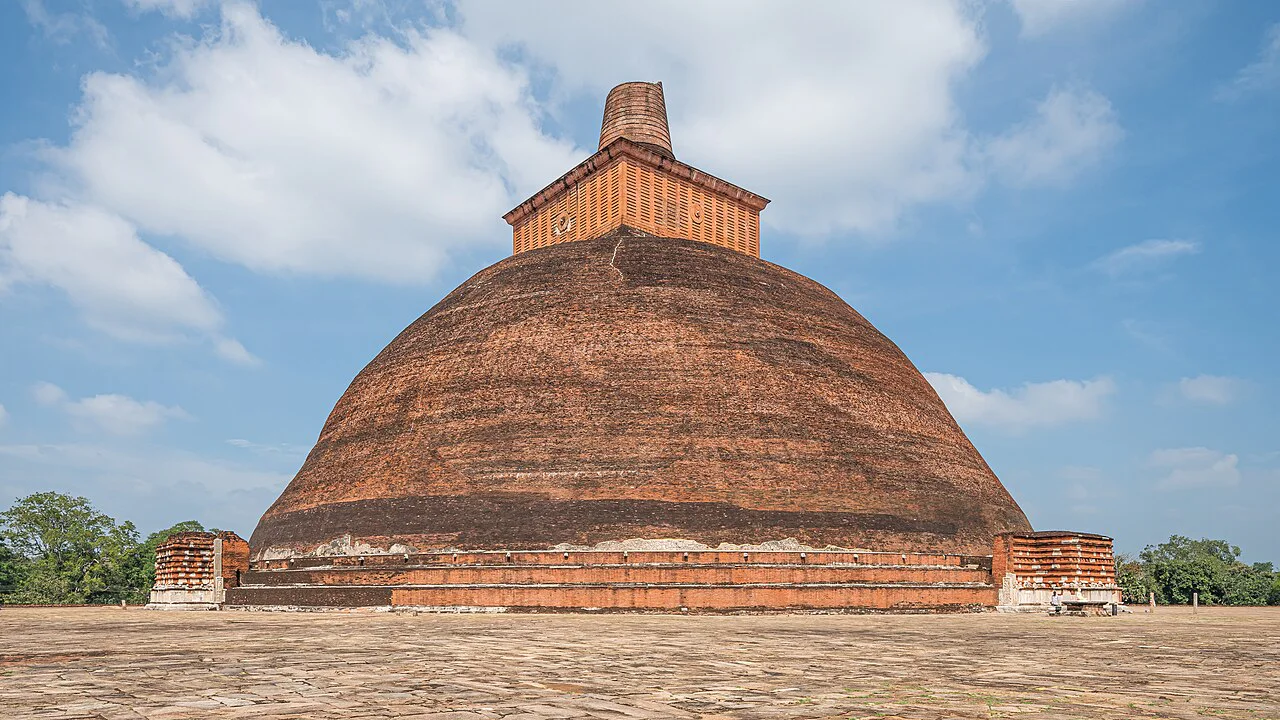
Anuradhapura · 121 km
Jetavanaramaya
Content & sources
Photo: A.Savin · FAL