Stanza · Audio guide
Birka Audio Guide
A place to remember. A story to take with you.
Birka is an archaeological site located on the island of Björkö in Sweden. It was an important Viking Age trading center that handled goods from Scandinavia, Continental Europe, and the Orient.
Download Stanza, then search for “Birka”.
About the tour
One guide. Your kind of visit.
Birka is an archaeological site located on the island of Björkö in Sweden. It was an important Viking Age trading center that handled goods from Scandinavia, Continental Europe, and the Orient.
Ready when you are.
- 01Get the free Stanza app.
iOS & Android
- 02Find your guide.
“Birka”
- 03Download before you go.
Works offline
Audio guide / 14 narrated stops
Inside the guide
Get to know a few of the stories before you go. Open a stop to read more.
01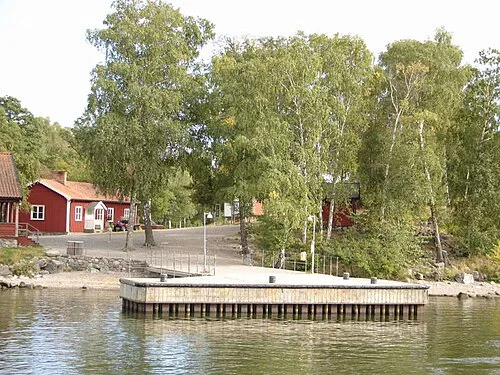 Björkö Boat Pier
Welcome to Björkö, an island in Lake Mälaren about thirty kilometres west of Stockholm. The red buildings and the wooden pier belong to the modern ferry landing, but the town they serve is far older. Birka was founded around the year 750, and it is generally regarded as Sweden's oldest town. It began as a trading port, an organised act rather than a slow growth. Whether a king ordered it built or merchants laid it out, no one knows. Goods moved through here between Scandinavia, continental Europe and the lands of the East. Birka and its neighbouring royal estate survive today as earthworks, graves and dark soil, and UNESCO listed them as a World Heritage Site in 1993. Along the path, this tour follows the town from its harbour to its houses, its graves, its fort and its cross.
Diego Tirira from Quito, Ecuador · CC BY-SA 2.0
02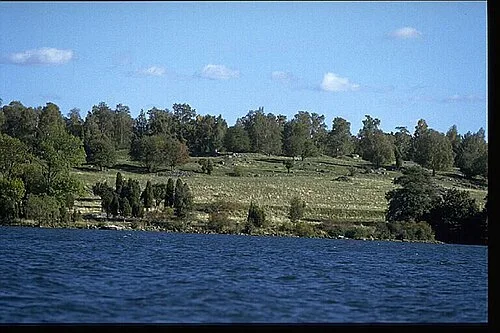 Björkö Boat Pier
The Shoreline Approach to Björkö
Adam of Bremen described this port in the 1070s, calling it Birca. He wrote that an inlet of the Baltic forms a harbour facing north, one that welcomes all the wild peoples around this sea. Ships belonging to Danes and Norwegians, Slavs and other peoples, he says, gathered here every year for trade. The anchorage was well sheltered, and that shelter is the reason a town could grow on a shore like this one. Adam also records a danger. Hidden masses of rocks blocked the approach for more than eighteen kilometres, a trap for careless or ignorant sailors. He never says exactly where that blocked stretch lay, so it cannot be pinned to any single bay. Adam's book remains the main written source on Birka, and in its later additions he already calls the town destroyed.
Bengt A. Lundberg · CC BY 2.5
03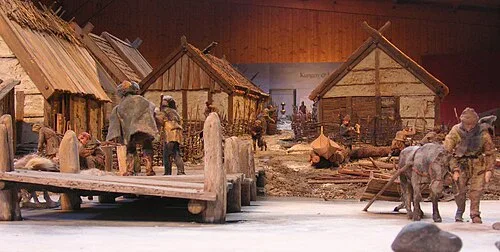 The Birka Museum
The Town Model at the Birka Museum
The model at the museum shows Birka as it may have looked. Rows of wooden workshops and dwellings stand tightly packed, a planned settlement rather than a village that grew at random. The built-up area covered about seven hectares, enclosed behind its own rampart. At its height, perhaps seven hundred people lived here, though estimates run from five hundred to a thousand. That is a real town by the standards of the time. Rule came from across the water. On the neighbouring island of Adelsö stood Hovgården, a royal estate where the king stayed with his retinue and kept watch on the trade. The model itself is a modern reconstruction, built from excavation rather than from any surviving house.
Listen in the appPhoto: Holger.Ellgaard · CC BY-SA 3.0
04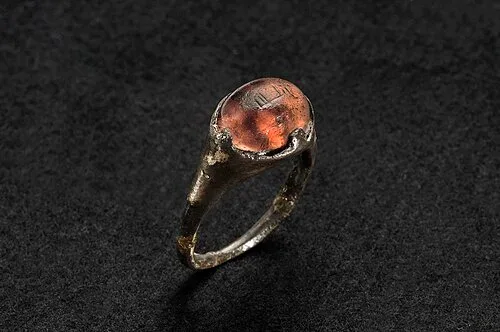 The Birka Museum
The 'Allah' Ring
A silver ring set with a pink-violet oval glass came from a woman's grave here, a burial of the 800s. It was recovered during excavations between 1872 and 1895. On the glass is a carved inscription resembling the Arabic word for God, Allah, written in an angular style. It is the only ring from Birka with an inscription of this kind, which earned it the name the Allah ring. Whether it actually says anything is disputed. The linguist Marijn van Putten has argued that it is pseudo-Kufic, an imitation of Arabic script carrying no meaning in the language. Others read it as genuine writing and a direct link to the Islamic world. What can be said is this: objects with Arabic script reached Birka, and the people here valued them as marks of standing.
Listen in the appGabriel Hildebrand · CC BY 2.5
05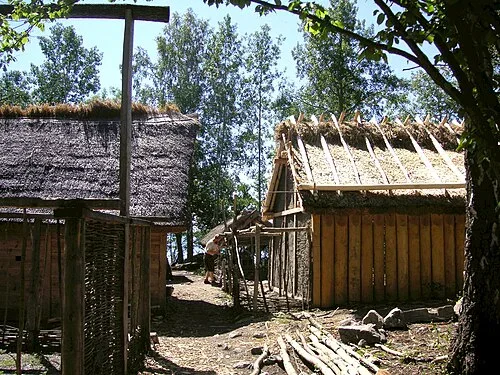 Reconstructed Viking Village
Reconstructed Viking-age Houses
Wood was Birka's building material, and these reconstructed houses show what that meant. Timber walls, wattle panels and thick thatch, all raised with tools a Viking-age carpenter would recognise. The reconstructions are informed interpretation rather than copies. How Birka's buildings were actually put together is still unknown; only the main material, wood, is certain. That uncertainty has a simple cause. Wood rots, burns and settles, so a timber town leaves little standing after a thousand years. What survives instead is what the ground preserved: postholes, floor layers, and the dark, artifact-rich soil of the town site itself. That soil, the Black Earth, holds much of what is known about daily life here.
Listen in the appPhoto: Holger.Ellgaard · CC BY-SA 3.0
06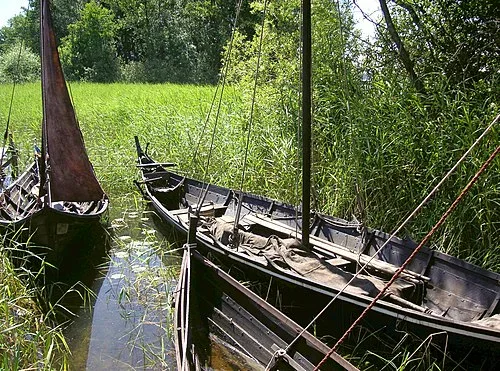 Reconstructed Viking Village
Reconstructed Boats at the Shore
Everything Birka bought, sold or traded arrived by water, so the boat was the town's lifeline. These reconstructed vessels, moored among the reeds, show the kind of craft that worked this shore. In 2022 archaeologists from Stockholm University announced a discovery at Birka: a Viking-age shipyard, the first site of its kind ever found. It lay in the old shore zone, a stone-lined depression with a wooden boat slip at the bottom. The finds told the rest: large quantities of boat rivets, some unused and some used, along with slate whetstones and woodworking tools. Boats were not only bought here. They were built and repaired on the spot. Boats like these were how everyone, from merchants to missionaries, reached Birka.
Listen in the appPhoto: Holger.Ellgaard · CC BY-SA 3.0
07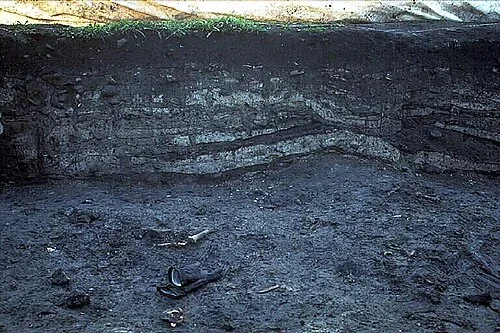 The Black Earth (Svarta jorden)
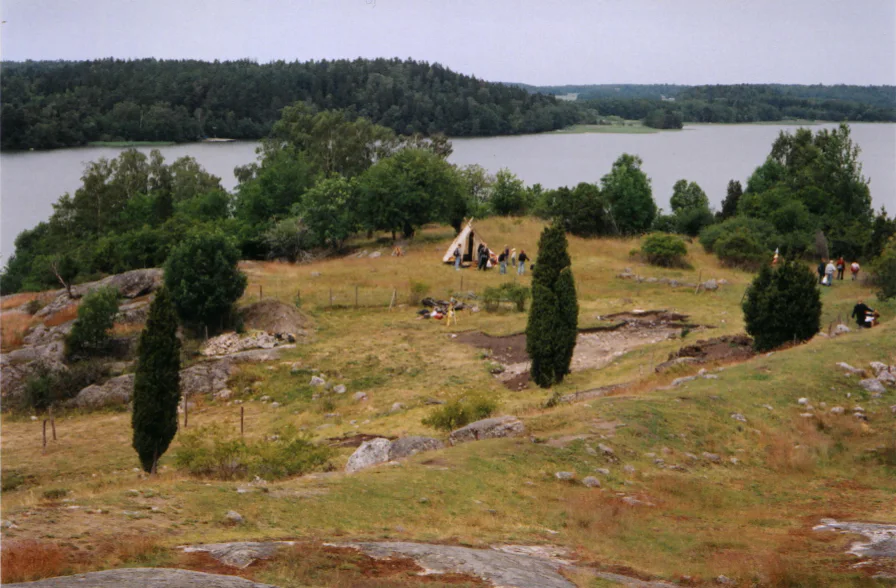
The reason Birka is known at all lies in its soil. Centuries of hearths, household waste and metalworking turned the ground of the settlement black, and the name stuck: Svarta jorden, the Black Earth. The antiquarian Johan Hadorph dug here in the 1680s and found what he called the blackest coal from burnt houses, beneath which the local farmers had their richest fields. The black earth covers about seven hectares on the northern part of the island, the ground of the town itself. Digging here goes back at least to the seventeenth century, but the most recent large campaign ran from 1990 to 1995 and opened a few hundred square metres.
Listen in the appBjörn Ambrosiani · CC BY 2.5
08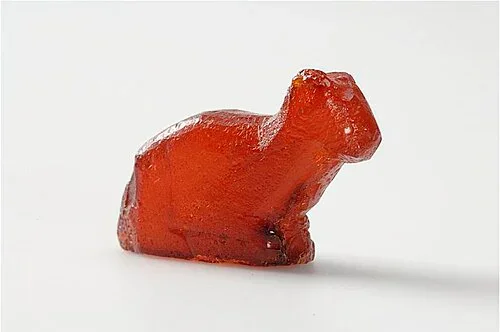 The Black Earth (Svarta jorden)
Amber Cat Figurine from the Black Earth
A small cat carved in amber, seated with its head raised, came out of the Black Earth. It dates from between 800 and 1099. Amber also led to Birka's rediscovery. Hjalmar Stolpe, an entomologist by training, came to Björkö to study the insects trapped inside amber. He found far more of it than Lake Mälaren should hold, since amber is not normally found there. That was his clue that the island had been a trading post, and he excavated between 1871 and 1895, laying the foundation for all later work on Birka. Among his finds was a silver hoard of 450 Islamic coins, resting on an iron tray. Amber itself was one of the goods Birka traded, alongside furs and iron.
Listen in the appHistoriska museet · CC BY 2.5
09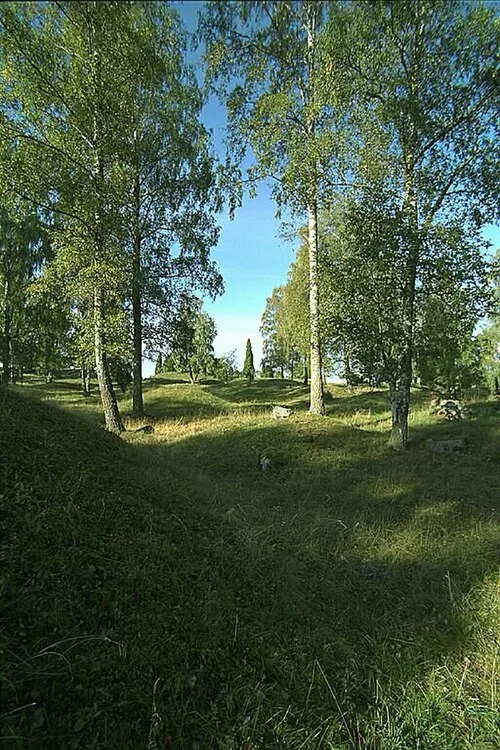 The Hemlanden Grave Fields
The Hemlanden Grave Field
Outside the town's rampart, the burial ground called Hemlanden spreads across the fields. More than 3,000 graves have been found on Björkö, serving a town of only several hundred people. The cemetery spans the full two centuries of Birka's life. Two main forms appear among the dead. Cremation graves, where the body was burned. And inhumations, bodies laid whole into the ground, some in coffins, some in chamber graves. The chamber graves are the richest kind: deep dug shafts with timber-lined walls, holding well-preserved burials with fine goods. Those goods, and what they reveal about the people inside, are the subject of the graves closer at hand.
Listen in the appBengt A. Lundberg · CC BY 2.5
10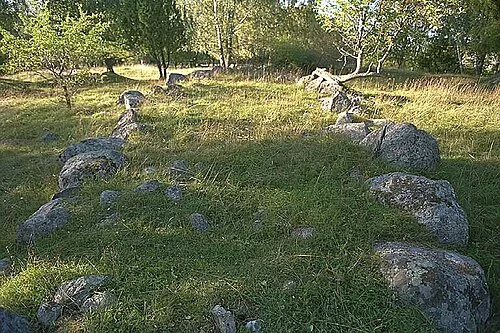 The Hemlanden Grave Fields
Stone Settings of Hemlanden
Among these stone settings, the graves tell who Birka's people were. Skeletal analysis and gender-linked objects show that most of the identifiable dead are women. The scholar Nancy L. Wicker suggests a bias is at work: female grave goods like brooches are easy to recognise, while a male grave without objects is hard to identify at all. One burial stands out. Grave Bj 463 held a girl buried in the mid-900s. By the condition of her teeth she was five or six years old. She lay in a coffin with goods fit for a high-status woman: a round brooch, glass beads and a needle case. Analysis showed her diet resembled that of male warriors rather than a typical child's. Children were seldom buried with identifiable goods, which makes her an unusual case, and the reason for her diet remains an open question.
Listen in the appBengt A. Lundberg · CC BY 2.5
- 11
Borgberget Hill Fort
The hill fort called Borgen, and the one recorded crisis when the townspeople fled to a stronghold.
- 12
The Town Rampart
The low earthwork that enclosed the town, and the disputed end of Birka around 960.
- 13
The Ansgar Cross
Ansgar's mission of 829: pirates, a king's permission, and Sweden's first Christian congregation.
- 14
The Ansgar Cross of 1834
The 1834 cross that marks a vanished town, raised a thousand years after Ansgar came.
Birka
Frequently asked questions
How much does the guide cost?
Free app download. Listed guide price: $1.99. Guide price shown in the app. Audio guide only. Venue admission is separate.
Can I listen without internet?
Yes. Download the guide’s audio, images, and maps in the app before your visit. Your downloaded content is then available offline.
Can I listen in my language?
This audio guide is available in 15 languages, including English.
Do I need to follow a schedule?
No. This is a self-guided experience. Choose your stops, pause whenever you like, and return to a story at your own pace.
At your own pace
Explore Birka.
Download Stanza, then search for “Birka”.
Free app download · Guide price shown in the app
Keep exploring
Nearby audio guides
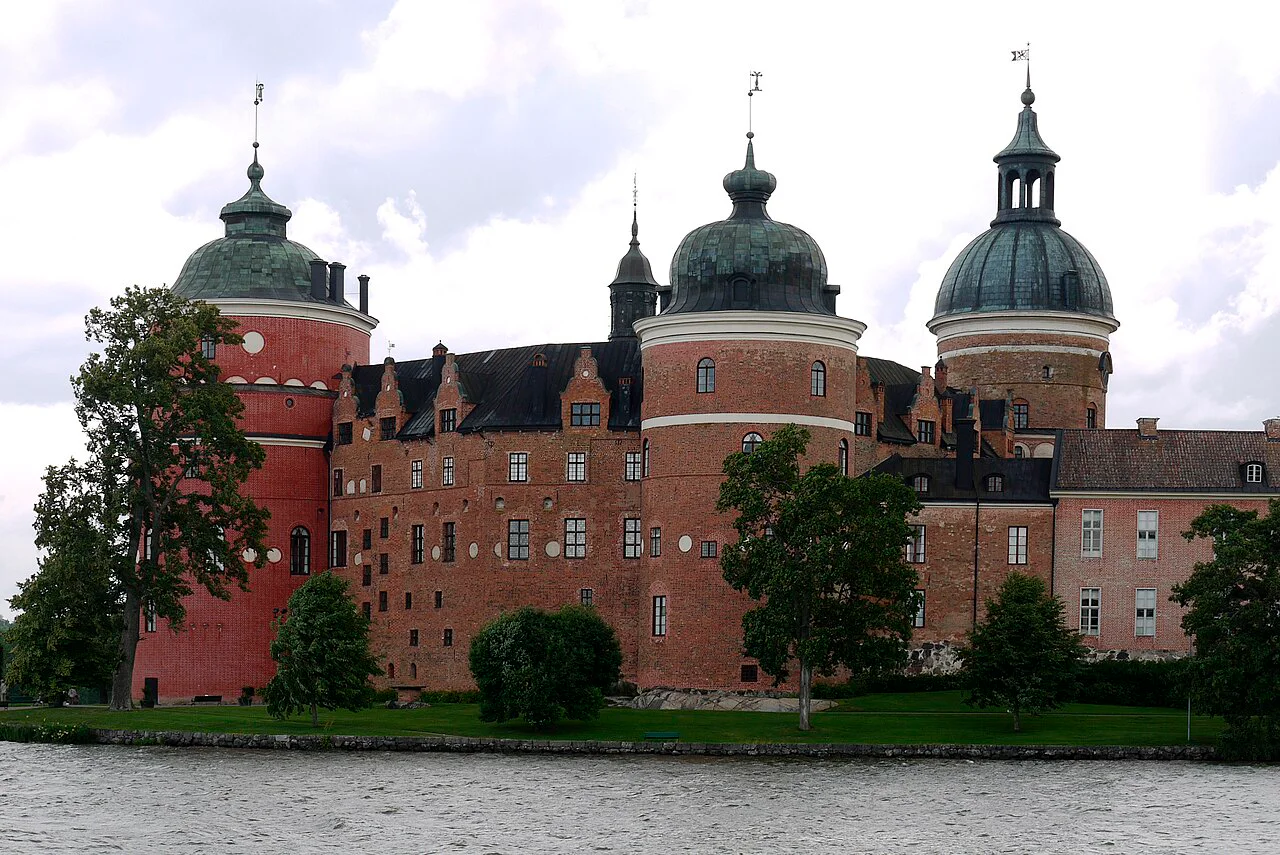
Mariefred · 21 km
Gripsholm Castle
Content & sources
Xauxa Håkan Svensson · CC BY-SA 3.0
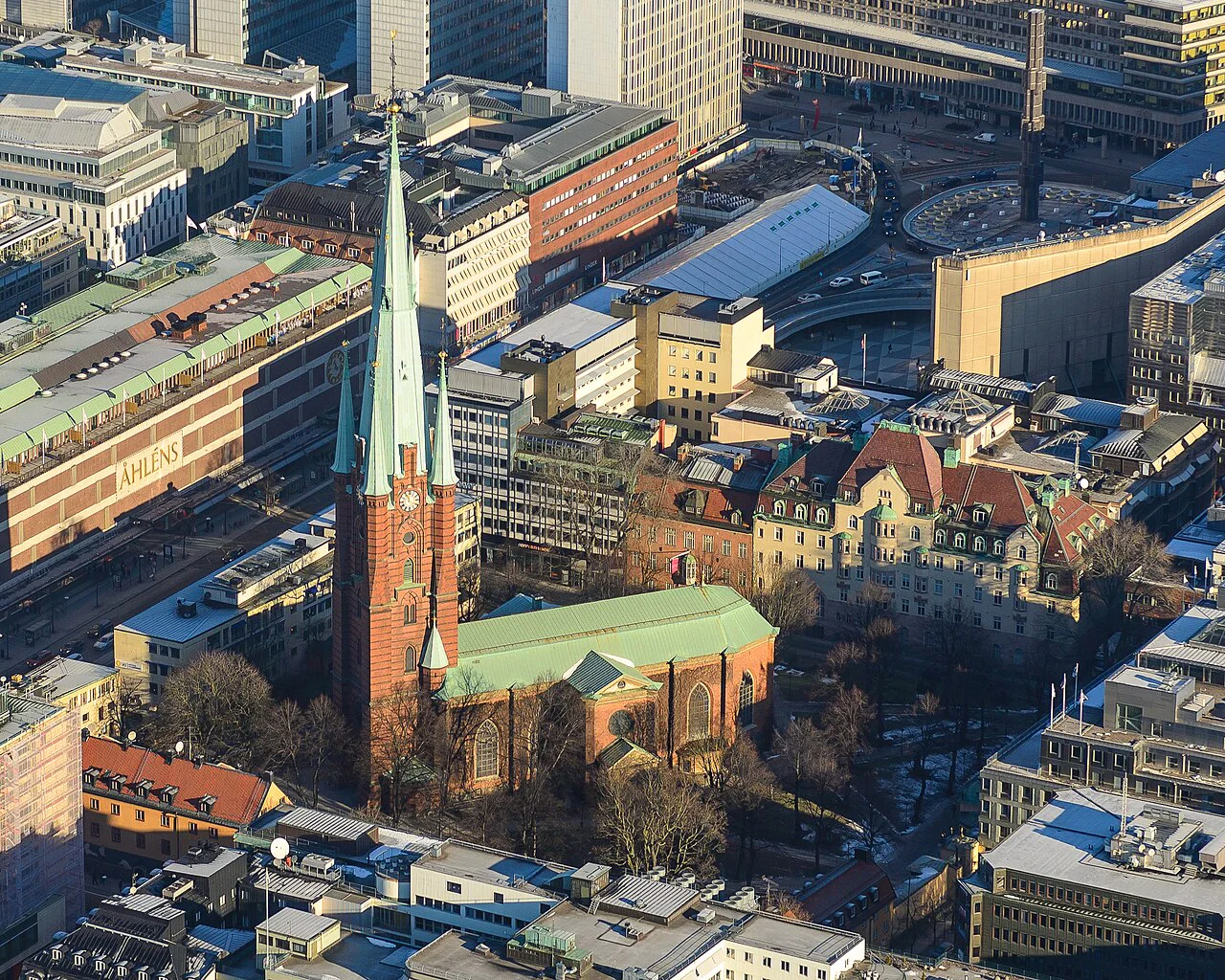
Stockholm · 29 km
Klara Church
Content & sources
Arild Vågen · CC BY-SA 3.0
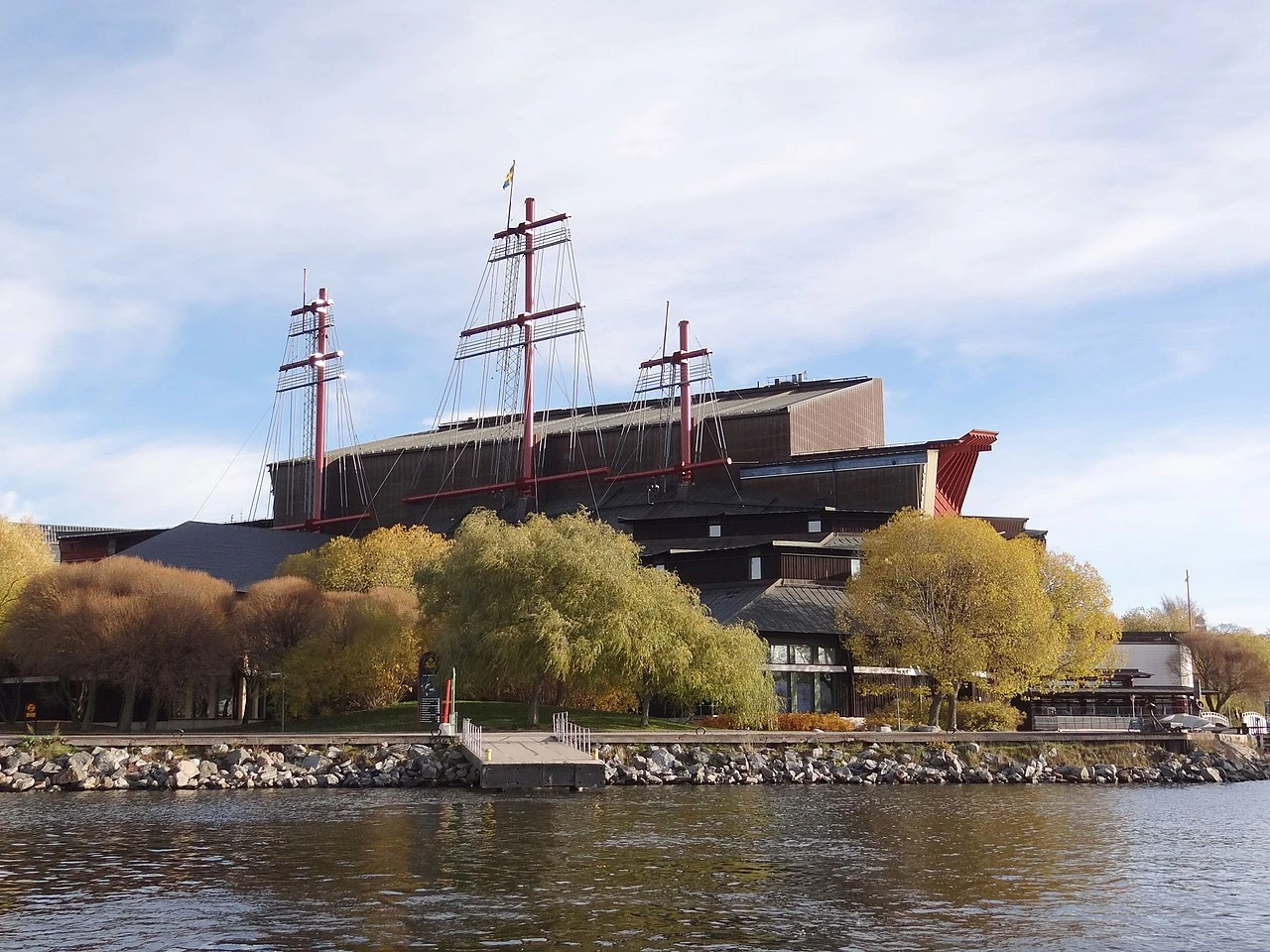
Stockholm · 31 km
Vasa Museum
Content & sources
Photo: Hanay · CC BY-SA 3.0
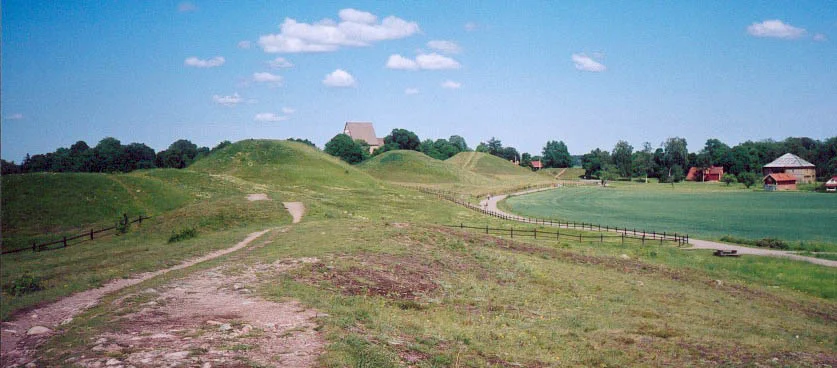
Uppsala · 62 km
Gamla Uppsala
Content & sources
OlofE · CC BY-SA 3.0