Stanza · Audio guide
Gamla Uppsala Audio Guide
A place to remember. A story to take with you.
Gamla Uppsala is a parish and a village located outside Uppsala in Sweden. It had 17,973 inhabitants in 2016.
Download Stanza, then search for “Gamla Uppsala”.
About the tour
One guide. Your kind of visit.
Gamla Uppsala is a parish and a village located outside Uppsala in Sweden. It had 17,973 inhabitants in 2016.
Ready when you are.
- 01Get the free Stanza app.
iOS & Android
- 02Find your guide.
“Gamla Uppsala”
- 03Download before you go.
Works offline
Audio guide / 13 narrated stops
Inside the guide
Get to know a few of the stories before you go. Open a stop to read more.
01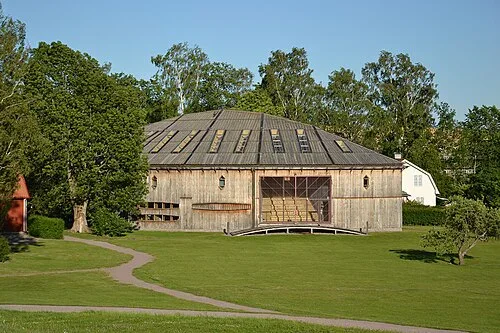 Gamla Uppsala Museum Arrival
Gamla Uppsala Museum
Welcome to Gamla Uppsala, the old royal seat of the Swedes. For centuries this was the political, legal and religious centre of the realm, the home of kings of the legendary Yngling dynasty, and later the seat of Sweden's first archbishop. The low wooden building with the broad, tent-like roof is the site museum, and it makes the natural first stop. Inside, the exhibits and a great model of the old landscape set the whole scene. From there, the visit runs outward: across the plain to the great burial mounds, then up to the medieval church. Everything here, from the royal graves to the parish farms, belongs to one long story.
Photo: Pudelek · CC BY-SA 4.0
02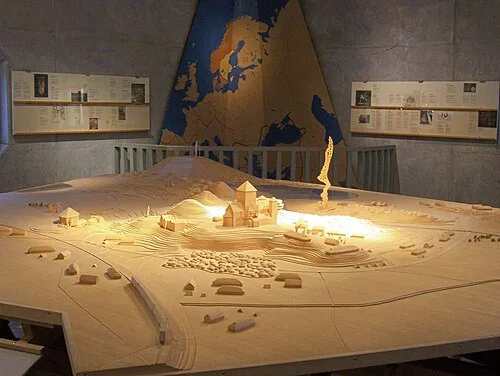 Gamla Uppsala Museum Arrival
Model of the Old Uppsala Landscape
The museum's great model lays the whole landscape out on one table. Gamla Uppsala's power rested on water. In the Iron Age the sea reached far closer than today, and ships could sail up near the ridge. But after the ice age, the land itself kept rising, a slow rebound that still goes on. Little by little the water retreated, and the site lost its access to navigable waters and its harbour at Östra Aros, downstream on the river Fyris. In the end, the archbishop's seat and the very name Uppsala moved there, to the new town by the water. The model also shows how dense this ground once was with graves. There were between two and three thousand mounds; only a few hundred survive.
Cyberjunkie · CC BY 2.5
03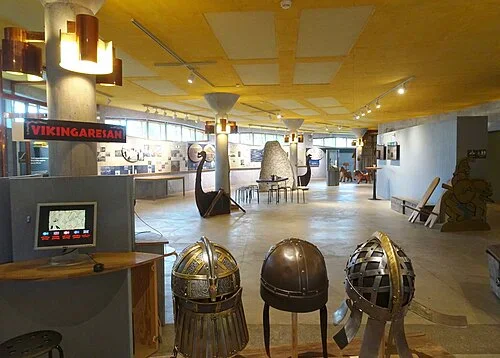 The Lost Temple and Royal Treasures
Inside the Exhibition: Warrior Grave Goods
Inside the gallery, the finds from the western mound speak of a warrior elite with contacts across Europe. There was a Frankish sword adorned with gold and garnets. A board game with pawns of Roman ivory. Four cameos from the Middle East, probably once part of a casket. And a costly suit of Frankish cloth woven with golden threads, worn with a belt and a sumptuous buckle. All of it went into the grave of a very powerful man of the sixth century. The helmets and ship imagery on display evoke the visual world of this class, a style whose closest foreign cousins include the famous helmet from Sutton Hoo. The finds show how far the connections of the people of Uppland reached.
Listen in the appPhoto: Holger.Ellgaard · CC BY-SA 4.0
04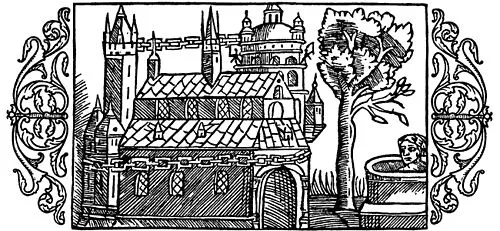 The Lost Temple and Royal Treasures
The Legendary Temple at Uppsala
A woodcut from the sixteenth century shows a temple crowned with spires and hung with a golden chain. It is Olaus Magnus's imagining of the Temple at Uppsala, drawn some five hundred years after the events. The oldest full account comes from Adam of Bremen, writing around 1076 from an eyewitness's report. He describes a temple built entirely of gold, where people worshipped statues of three gods, Thor, Odin and Freyr. A golden chain encircled the building and hung over the gables, gleaming so that people saw it from afar. Beside it stood a great evergreen tree of a kind nobody could name, and a spring where, Adam writes, a living person was immersed as a sacrifice. For nine days around the spring equinox, he says, feasts were held, with seventy-two victims offered in all. It is a famous account and a hotly contested one. No temple like it has ever been found, and scholars still argue over whether it existed at all, and what it looked like.
Listen in the appOlaus Magnus · Public domain
05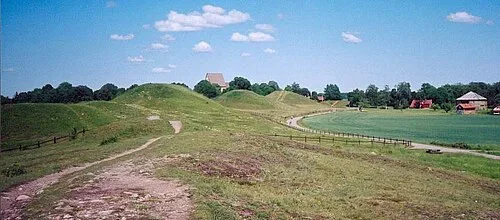 The Royal Mounds and Assembly Plateau
Out on the Plain: The Burial Landscape
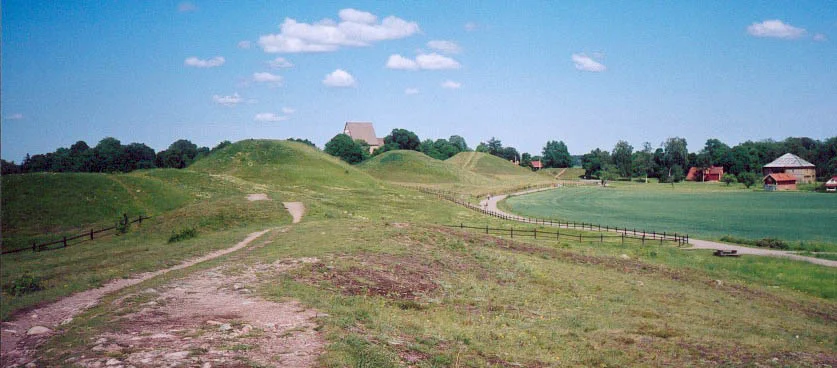
Out on the plain, the ground itself is the oldest exhibit. People have buried their dead here for some two thousand years, ever since the land first rose clear of the water. Cairns of splintered stone mark the Bronze Age, while most of the grave fields belong to the Iron Age and the Viking Age. For kings, the rite was cremation. The dead ruler was burned on a pyre together with his armour, and such a fire could reach fifteen hundred degrees. The remains were then covered in layers, cobblestones first, then gravel and sand, and finally a thin skin of turf. That is how a mound was built, outward from the fire.
Listen in the appOlofE · CC BY-SA 3.0
06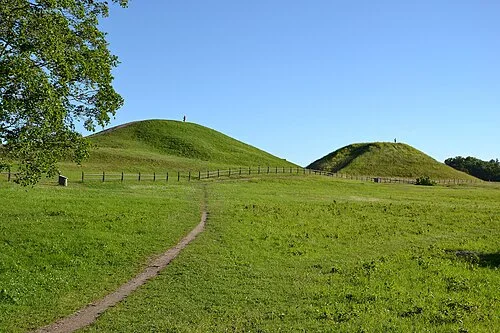 The Royal Mounds and Assembly Plateau
The Royal Mounds (Kungshögarna)
Three great mounds crown the ridge, and they are the heart of Gamla Uppsala. Excavation has dated them to around the sixth century, raised as monuments for royal burials. Folklore placed the gods themselves here, resting as Thor, Odin and Freyr. Later scholarship named the Yngling kings Aun, Adils and Egil. Today they are simply the Eastern, Middle and Western Mounds, and they figure as Sweden's oldest national symbols. In the 1830s, some scholars claimed the mounds were natural hills, not graves at all. That affront stirred the future king Karl XV, who resolved to settle the matter by excavation. The task fell to Bror Emil Hildebrand, who in 1846 dug into the Eastern Mound, nine metres tall, through a long tunnel. Inside he found a clay pot filled with burnt bones, ringed by the remains of charred grave offerings. Whose bones they were is still debated, and Hildebrand reburied most of the remains. The mounds remain a living stage. In 1989 Pope John Paul the Second held an open-air mass here, and since 2000 the old blót sacrifice has been celebrated here again.
Listen in the appPhoto: Pudelek · CC BY-SA 4.0
07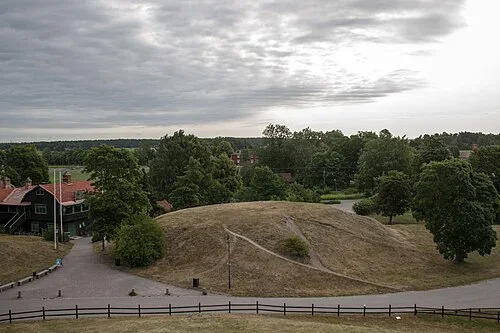 The Royal Mounds and Assembly Plateau
The Court Mound (Tingshögen)
Beside the royal mounds lies a low, flat-topped hill with a quieter kind of power. Gamla Uppsala was the meeting place of the Thing of all Swedes, the great assembly of the realm, held from prehistoric times into the Middle Ages. It gathered at the end of February or early March, alongside a great fair called the Disting and a sacrifice called the Dísablót. Here, by the Law of Uppland, the king proclaimed the fleet levy, and all the crews, rowers, commanders and ships for the summer's warfare were decided. The assembly could even unmake a king. In the 1080s the Christian king Ingi was driven into exile for refusing to perform the sacrifices. The Swedes instead elected Blot-Sweyn, who took his very name from the old rites. Sweyn was killed within a few years, and Ingi regained his throne.
Listen in the appPhoto: Szilas · Public domain
08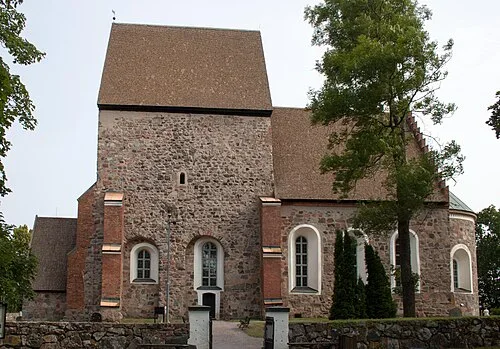 Gamla Uppsala Church Exterior and Cemetery
Gamla Uppsala Church
The stone church at the top of the rise carries the Christian turn of the story. In 1164 Sweden received its first archbishopric here, on the old royal and cultic ground. The old cathedral was probably begun in the eleventh century, and completed in the twelfth. But in 1273 the archiepiscopal seat moved away, and the great church was demoted to a parish church. A fire in 1240 had already cut it down. The nave and the transepts were removed, leaving only the choir and the central tower that give the building its truncated look today, with a later sacristy and porch. Beneath the church, archaeologists have found the remains of one or more large wooden buildings. Some claim them for the legendary temple; others for an early Christian wooden church. The argument is still open.
Listen in the appPhoto: Szilas · Public domain
09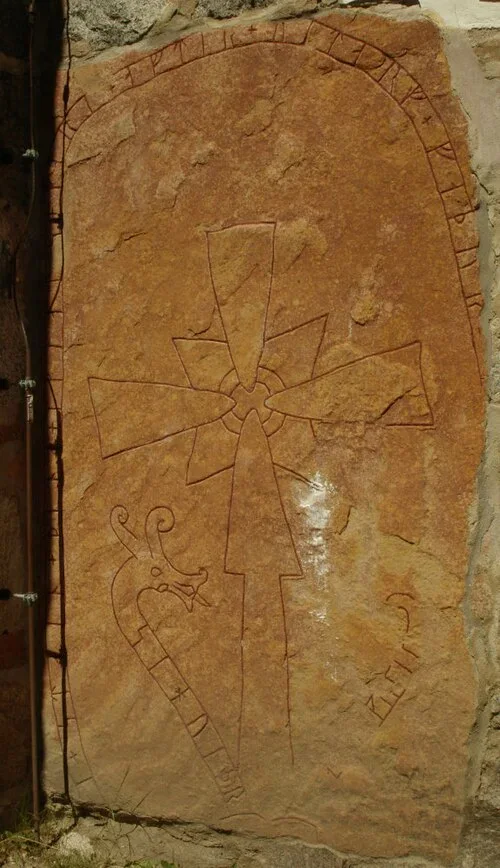 Gamla Uppsala Church Exterior and Cemetery
Runestone U 978
Set into the wall of the church is a runestone, its face carved with a great cross above a long runic serpent. Stones like this belong to the conversion era, when the old faith and the new met in the same landscape. Cross and serpent share one surface, in the ornamental manner of the Viking Age. Churches often rose on pre-Christian sacred ground, and this one is no exception.
Listen in the appUwe Zimmermann · CC BY-SA 3.0
10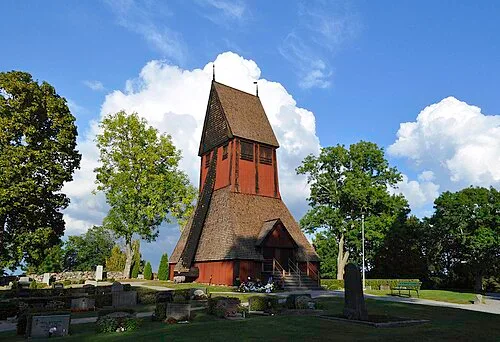 Gamla Uppsala Church Exterior and Cemetery
The Wooden Bell Tower
A red timber bell tower stands apart from the stone church, in the traditional Scandinavian way. Together, the shrunken stone building and the wooden tower record how a cathedral became a country church.
Listen in the appHelen Simonsson · CC BY-SA 2.0
- 11
Inside the Church: Vaults and Crucifixes
Stone vaults with chalk paintings overhead, and three crucifixes from three different centuries.
- 12
The Grave of Anders Celsius
The grave of Anders Celsius, the man behind the temperature scale, among archbishops and a king.
- 13
Disagården: The Living Parish
Disagården's red farmsteads, where ordinary parish life went on in the shadow of the monuments.
Gamla Uppsala
Frequently asked questions
How much does the guide cost?
Free app download. Listed guide price: $0.99. Guide price shown in the app. Audio guide only. Venue admission is separate.
Can I listen without internet?
Yes. Download the guide’s audio, images, and maps in the app before your visit. Your downloaded content is then available offline.
Can I listen in my language?
This audio guide is available in 15 languages, including English.
Do I need to follow a schedule?
No. This is a self-guided experience. Choose your stops, pause whenever you like, and return to a story at your own pace.
At your own pace
Explore Gamla Uppsala.
Download Stanza, then search for “Gamla Uppsala”.
Free app download · Guide price shown in the app
Keep exploring
Nearby audio guides
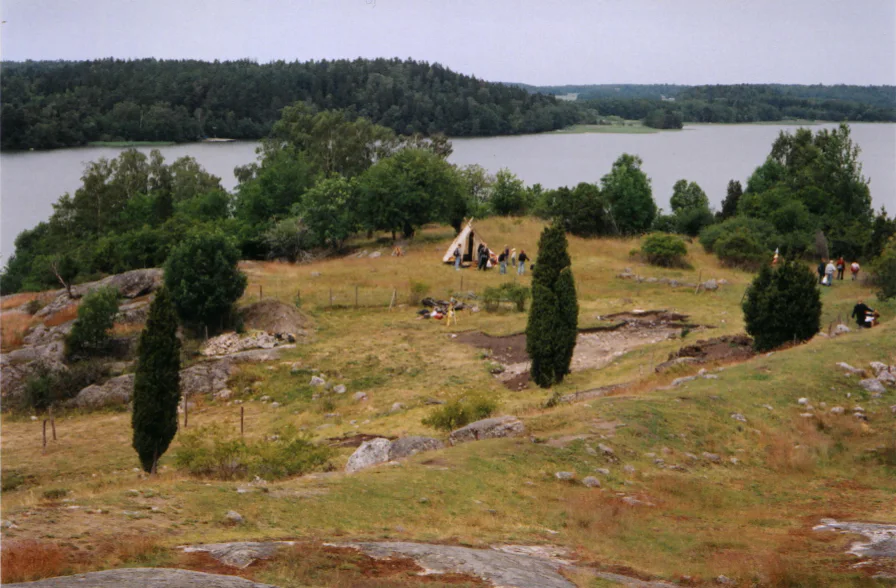
Ekerö kommun · 62 km
Birka
Content & sources
Alex Peterson · CC BY-SA 3.0
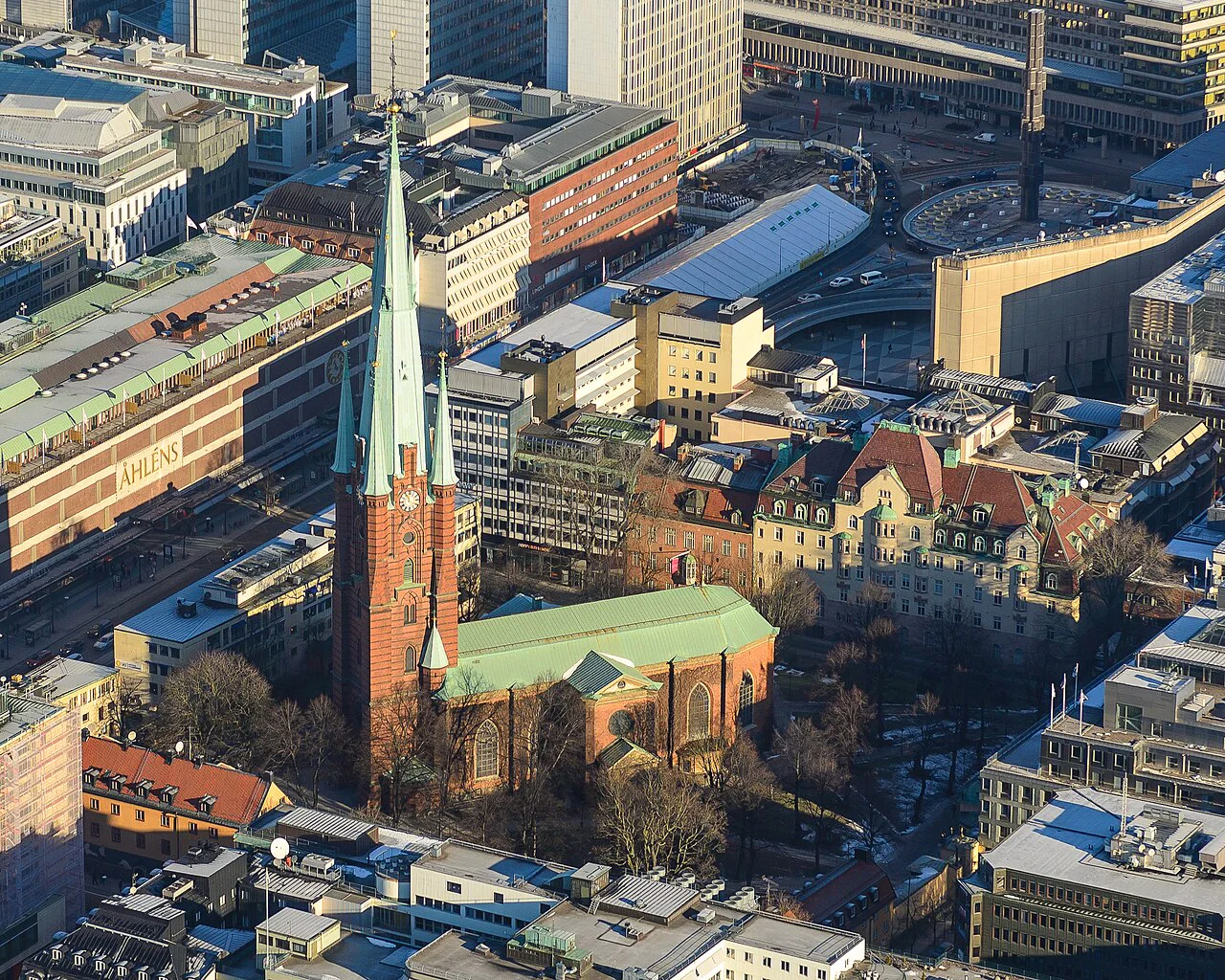
Stockholm · 67 km
Klara Church
Content & sources
Arild Vågen · CC BY-SA 3.0
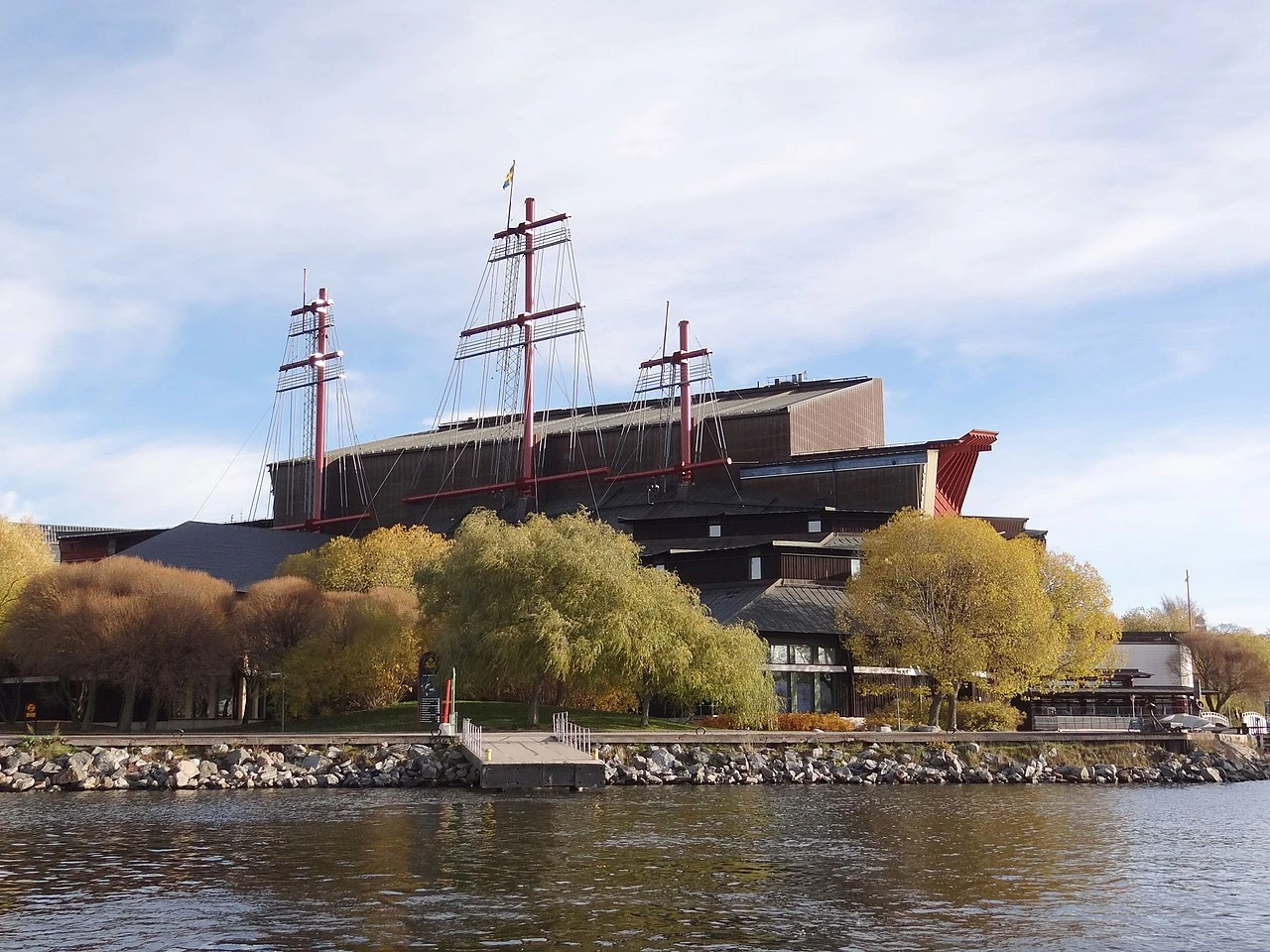
Stockholm · 68 km
Vasa Museum
Content & sources
Photo: Hanay · CC BY-SA 3.0
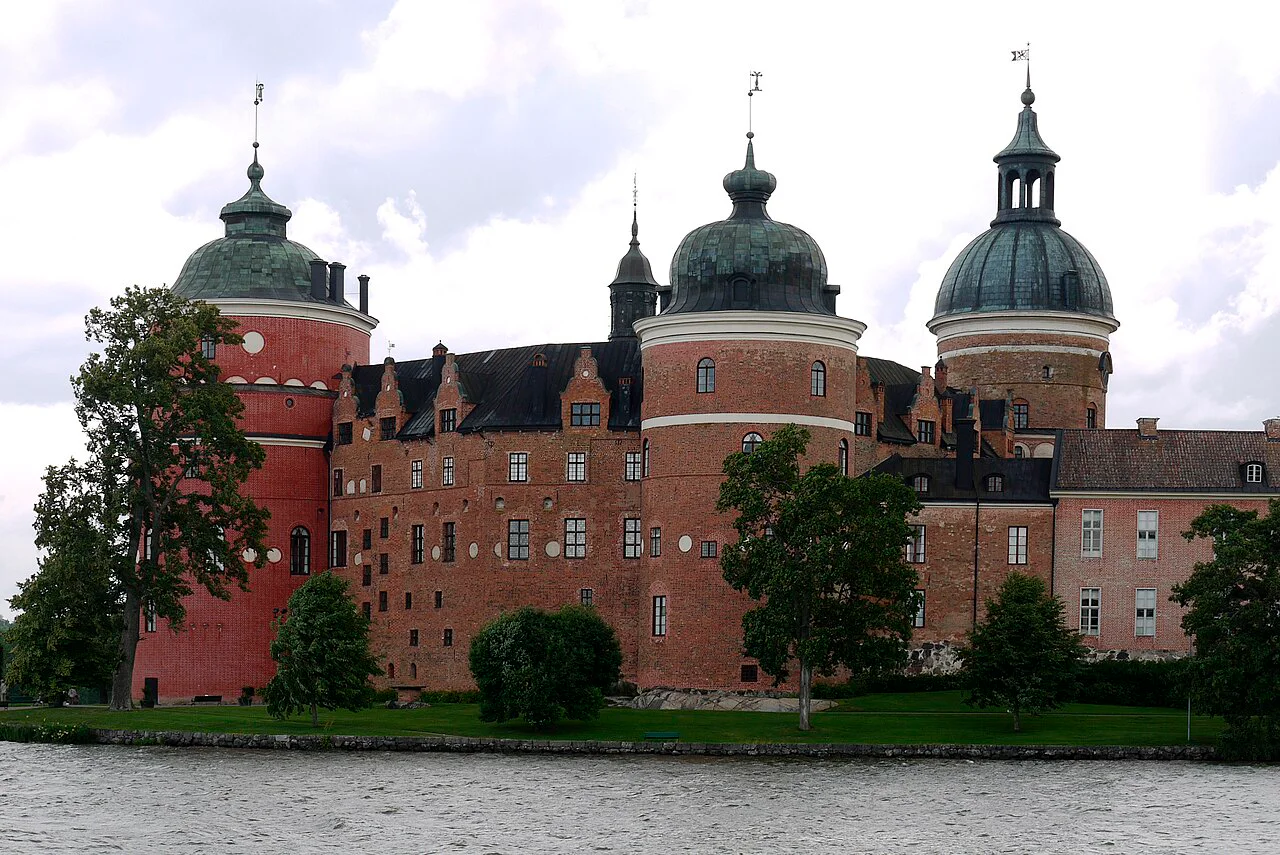
Mariefred · 75 km
Gripsholm Castle
Content & sources
Xauxa Håkan Svensson · CC BY-SA 3.0