Stanza · Audio guide
Gripsholm Castle Audio Guide
A place to remember. A story to take with you.
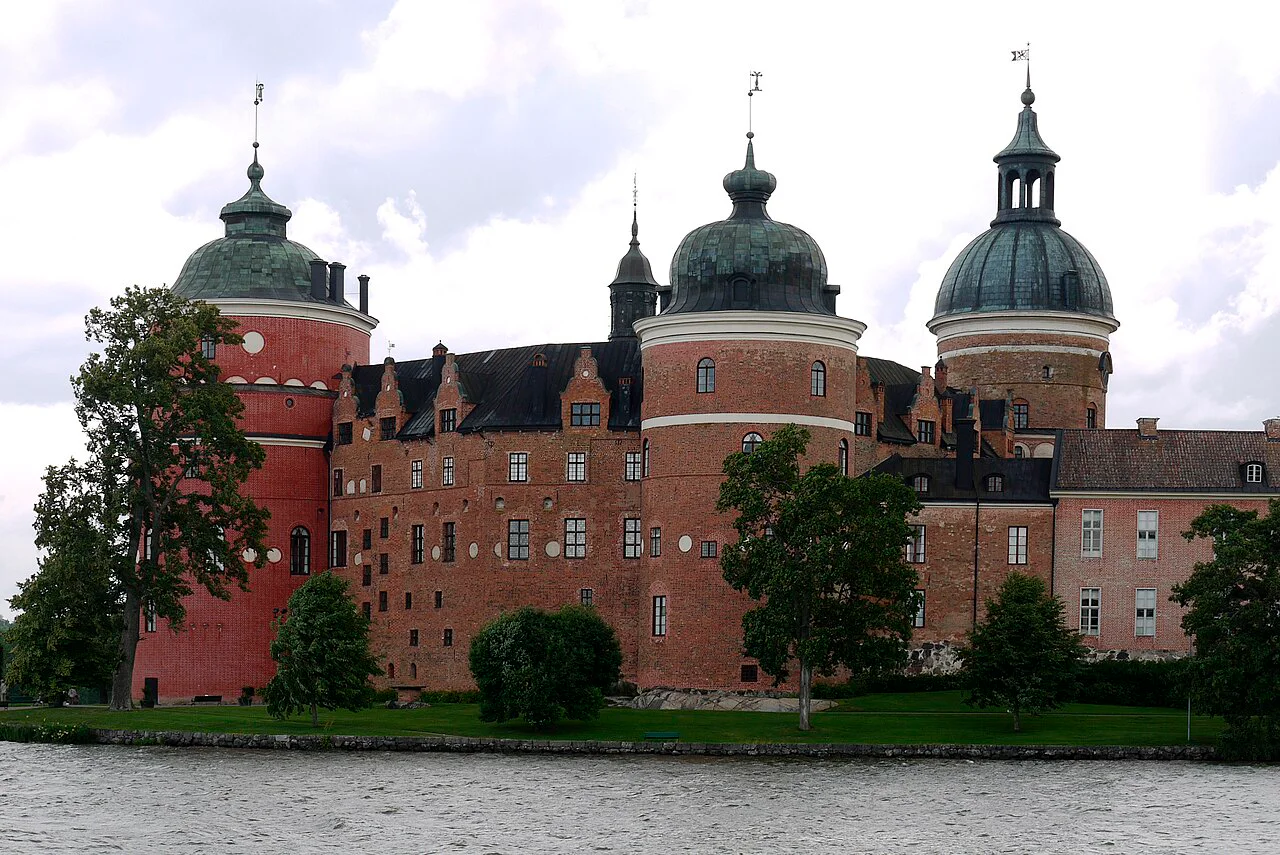
Gripsholm Castle is a castle located in Mariefred, Sweden. It served as a residence for the Swedish royal family until the 18th century and is now a museum.
Download Stanza, then search for “Gripsholm Castle”.
About the tour
One guide. Your kind of visit.
Gripsholm Castle is a castle located in Mariefred, Sweden. It served as a residence for the Swedish royal family until the 18th century and is now a museum.
Ready when you are.
- 01Get the free Stanza app.
iOS & Android
- 02Find your guide.
“Gripsholm Castle”
- 03Download before you go.
Works offline
Audio guide / 14 narrated stops
Inside the guide
Get to know a few of the stories before you go. Open a stop to read more.
01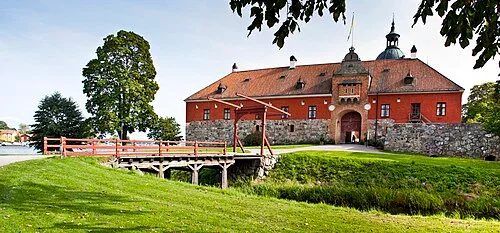 Moat and Drawbridge Approach
Gripsholm Castle over the Canal
Welcome to Gripsholm, a red-brick castle on an islet in Lake Mälaren, about sixty kilometres west of Stockholm. Its story begins in the 1370s, when the steward Bo Jonsson Grip bought farms here and raised a fortress, well placed for Stockholm. His heirs sold the estate to Queen Margaret in 1404, and it passed to the crown. Later the regent Sten Sture the Elder took it over, and in 1498 he gave it to the Carthusians. For almost thirty years the estate was Mariefred Charterhouse, a monastery of the strictest contemplative order. Then came the Reformation. In 1526 King Gustav Vasa dissolved the monastery and reclaimed the estate. He tore down both the monastic buildings and the old castle, and from 1537 he built his own fortified residence, with round corner towers and a defensive wall. The work was essentially done by 1545. Of that first medieval fortress, only a few fragments of wall survive.
Alexandru Baboş · CC BY-SA 3.0
02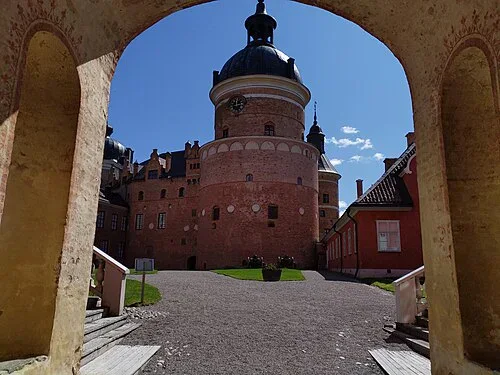 Outer Bailey and Trophy Cannons
The Outer Bailey through the Arch
Four round towers anchor the corners of Gripsholm, each built of brick on a base of grey stone. They belong to Gustav Vasa's castle of the 1530s, and they were originally armed with cannon. Over the centuries they have been rebuilt and renamed many times. Today they answer to Griptornet, Vasatornet, Fängelsetornet and Teatertornet, the Prison Tower and the Theatre Tower among them. Between the towers stand house after house, each added or rebuilt in its own era. The red wing on the east side of this outer bailey is the Kavaljersflygeln, the court wing. It went up in 1780 to drawings by the architect Fredrik Adolf Ulrik Cronstedt. When the court travelled out from Stockholm, visiting nobles and the king's retinue were lodged here.
Photo: Janders · Public domain
03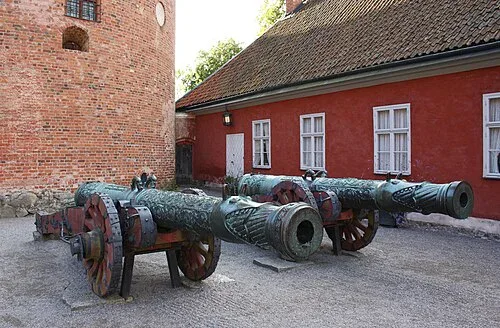 Outer Bailey and Trophy Cannons
Galten and Suggan, Russian Trophy Cannons
Two bronze cannons stand here, their barrels covered from muzzle to breech in carved ornament. They were cast in Russia at the end of the sixteenth century, and they came to Sweden the hard way, as spoils of war. They have stood at Gripsholm since 1623. Their popular names are Galten and Suggan, the Boar and the Sow. Before those names caught on, people called them Rysseulvarna, the Russian wolves, or Vargen och Varginnan, the Wolf and the She-wolf. Whatever the name, the animals on the decoration made themselves heard. The Boar and the Sow have outlasted the wars that brought them here, and they still face the courtyard they were posted to guard.
Listen in the appPhoto: Janders · Public domain
04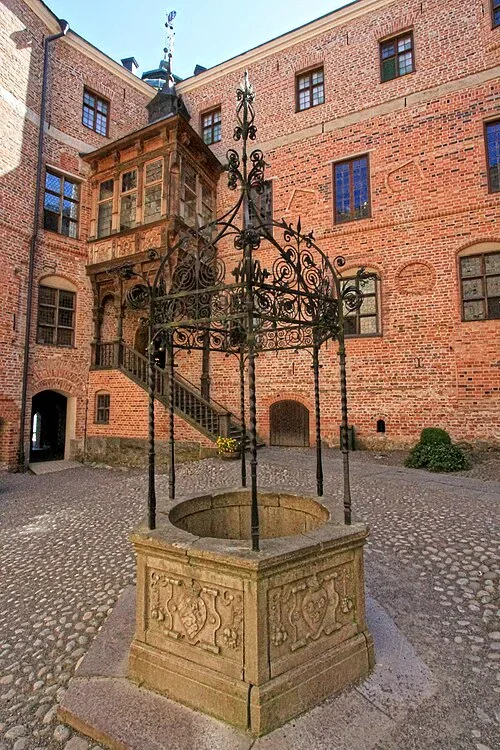 Inner Courtyard and the Restoration Debate
The Inner Courtyard and the Restoration Battle
In January 1889 a society was founded with a single ambition: to give Gripsholm back the outward character it had at the end of the sixteenth century. The driving force was Gustaf Upmark, head of the Nationalmuseum, and the architect in charge was Fredrik Lilljekvist. His work ran through the decade and was finished in 1899. Lilljekvist searched for models, studying traces on the building itself, old depictions, and other Swedish castles of the 1500s. The moat was reopened, a new drawbridge went in, and the courtyard façades were painted with decoration. Even the well here came from elsewhere; it was fetched from Gamla Stockholm, the old-town showpiece built for the Stockholm exhibition of 1897. Not everyone applauded. The writer Verner von Heidenstam attacked the restoration in the publication Modern barbarism. His opening line mocked the work directly: Anno Domini 1893 made this old house even older. Good intentions, he wrote, can go astray, and a styled Gripsholm was not worth a ruin.
Listen in the appPhoto: ThomasLendt · CC BY-SA 4.0
05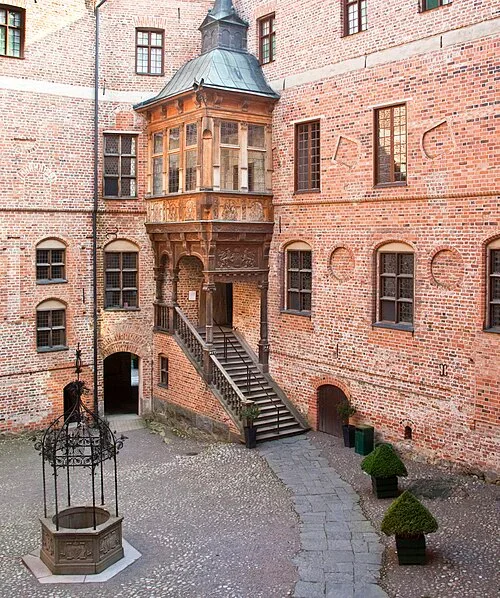 Inner Courtyard and the Restoration Debate
The Grand Staircase Tower
A carved wooden balcony juts over the open staircase here, the kind of feature Renaissance builders added to say something. A castle like Gripsholm was never only a fortress. Its brick façades, its stairways and its oriel were made for display, for arrivals and ceremonies, for being seen. That same appetite for effect shaped the 1890s restorers, and their boldest plan never left the drawing board. Lilljekvist wanted to tear down the Kavaljersflygeln, the court wing on the far side of the castle, and rebuild the original defensive wall that had once stood on its spot. He called the idea one of the main points of the whole restoration, both historically and architecturally. The demolition never happened, most likely because the money ran out. The wing survived, and the old wall remains a plan on paper.
Listen in the appAlexandru Baboş · CC BY-SA 3.0
06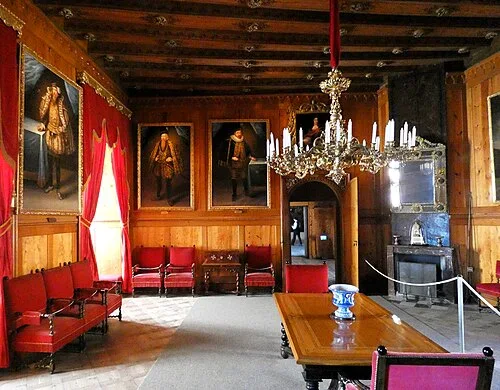 Vasa State Chambers and Rikssalen
The Vasa State Chamber
Dark timber ceiling, wood-panelled walls, portraits in gilded frames: this is a room built for the business of a royal household. Gripsholm was a working residence, not just a stronghold. The court lived here for long stretches, and the castle offered safety when the realm did not. During the Dacke War, an uprising that shook Gustav Vasa's reign, the royal children were brought here out of harm's way. The largest room in the castle is the Rikssalen, the State Hall, which has served for assemblies and grand occasions. Even that room kept changing; it was altered during the 1950s. Interiors here were never finished, only continued.
Listen in the appPhoto: Bingar1234 · CC BY-SA 4.0
07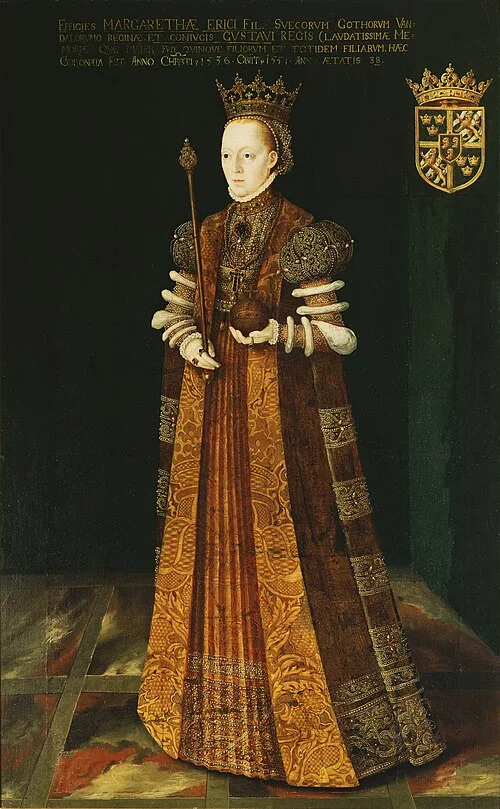 Vasa State Chambers and Rikssalen
Queen Margareta Leijonhufvud
The crowned woman in this portrait is Margareta Leijonhufvud, Gustav Vasa's queen. She is painted full length, sceptre in hand, orb in the other, with the royal arms beside her. The inscription gives the year 1561, which falls after her death, so this is a posthumous image, painted from memory and convention rather than life. In her own day she was closely tied to the building site at Gripsholm. In 1543 the works ran short of brick, and the queen wrote herself to the town of Arboga to ask for help. Building material was also carted in from Vårfruberga monastery on Fogdön, a short ride away. A queen, personally chasing bricks for her husband's fortress.
Listen in the appAttributed to Johan Baptista van Uther · Public domain
08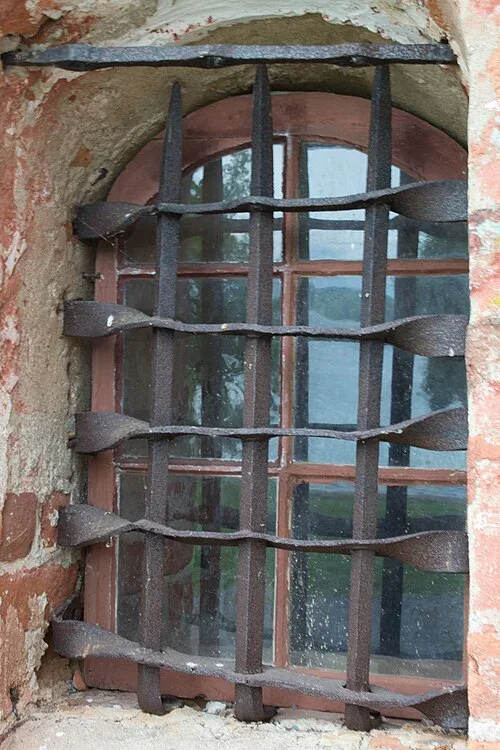 Royal Dynastic Prison Quarters
The Barred Window of the Prison Tower
Heavy iron bars cross this window opening, spiked and bolted into the masonry, with the water glinting beyond them. They suit the building's history. Gripsholm served as a prison on many occasions, and one of its towers is still called Fängelsetornet, the Prison Tower. Between 1597 and 1610 a total of thirty-five state and war prisoners were held in the castle. Among them were several of the age's great magnates, men like Gustav Banér and Klas Bielke. The last royal prisoner came in 1809. After the coup that spring, the deposed King Gustav IV Adolf was brought here under guard. He spent most of his final year in Sweden confined within these walls, and it was here that he signed the instrument giving up his throne, before his exile.
Listen in the appFredrik Alpstedt · CC BY-SA 2.0
09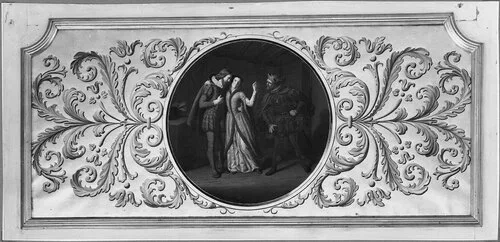 Royal Dynastic Prison Quarters
John III and Catherine Jagiellon in Captivity
Two of Gustav Vasa's sons turned Gripsholm into a family prison. From 1563 to 1567, King Eric XIV kept his brother John locked up here, together with John's consort, Catherine Jagiellon, a Polish princess. The couple's children were born in captivity. A daughter, Isabella, and then a son, Sigismund, born on the twentieth of June 1566. That child grew up to be King of Poland and, for a time, King of Sweden. When John in turn deposed Eric, the tables turned completely. Eric was held prisoner at Gripsholm from 1571 until 1573, and in June 1573 Duke Karl moved him away, officially to repair the castle roof. The picture here is a later artist's imagining of the imprisoned couple, made long afterwards, not a scene from their captivity. Tradition places John in the Prison Tower; Eric, by contrast, was held in another room on the first floor.
Listen in the appUnknown author · Public domain
10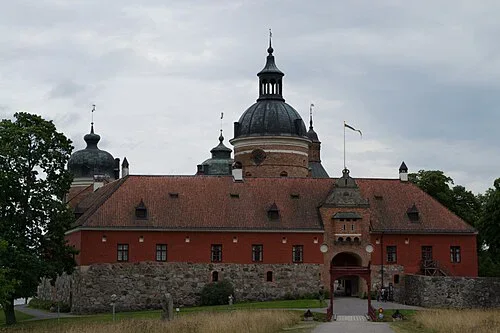 The National Portrait Collection
Gripsholm's chief business these days is faces. The castle houses the National Portrait Collection, the state's official gallery of the people who shaped Sweden. The collection was founded in 1820, and it came to the castle shortly afterwards, in 1822. Since the 1860s the Nationalmuseum in Stockholm has been responsible for it. More than five thousand works now hang here, following Swedish portraiture from the sixteenth century right up to the present. That makes it one of the oldest portrait collections in the world, housed in a building that never set out to be a gallery. It remains a crown palace, formally at the King's disposal, even as it opens its doors to the public.
Listen in the appFredrik Alpstedt · CC BY-SA 2.0
- 11
Gustav III by Alexander Roslin
The king in silver and ermine, who liked Gripsholm enough to bring his whole court for Christmas.
- 12
Gustav III's Court Theatre
From chapel to playhouse: how a round tower came to hold a theatre by Erik Palmstedt.
- 13
Backstage above the Stage
Above the auditorium: ropes, frames and the hand power that moved every scene change.
- 14
Leo the Lion
The famously misshapen taxidermied lion that has charmed visitors since the 1700s.
Gripsholm Castle
Frequently asked questions
How much does the guide cost?
Free app download. Listed guide price: $1.99. Guide price shown in the app. Audio guide only. Venue admission is separate.
Can I listen without internet?
Yes. Download the guide’s audio, images, and maps in the app before your visit. Your downloaded content is then available offline.
Can I listen in my language?
This audio guide is available in 15 languages, including English.
Do I need to follow a schedule?
No. This is a self-guided experience. Choose your stops, pause whenever you like, and return to a story at your own pace.
At your own pace
Explore Gripsholm Castle.
Download Stanza, then search for “Gripsholm Castle”.
Free app download · Guide price shown in the app
Keep exploring
Nearby audio guides
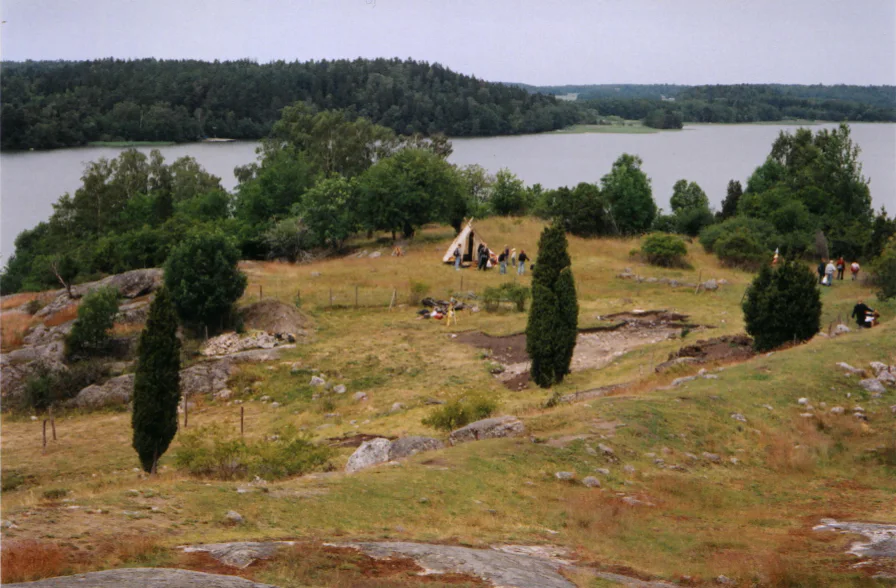
Ekerö kommun · 21 km
Birka
Content & sources
Alex Peterson · CC BY-SA 3.0
Stockholm · 49 km
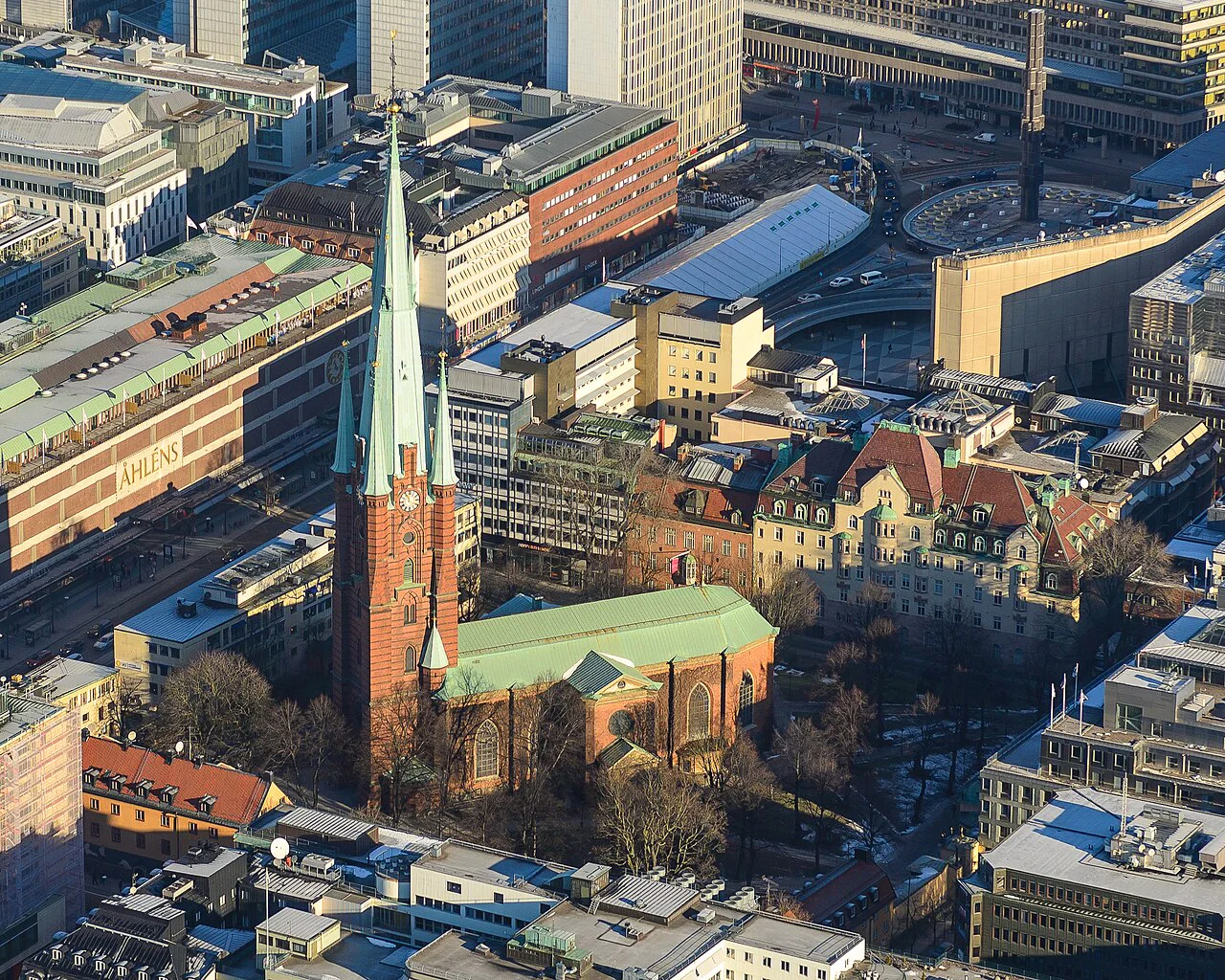
Klara Church
Content & sources
Arild Vågen · CC BY-SA 3.0
Stockholm · 50 km
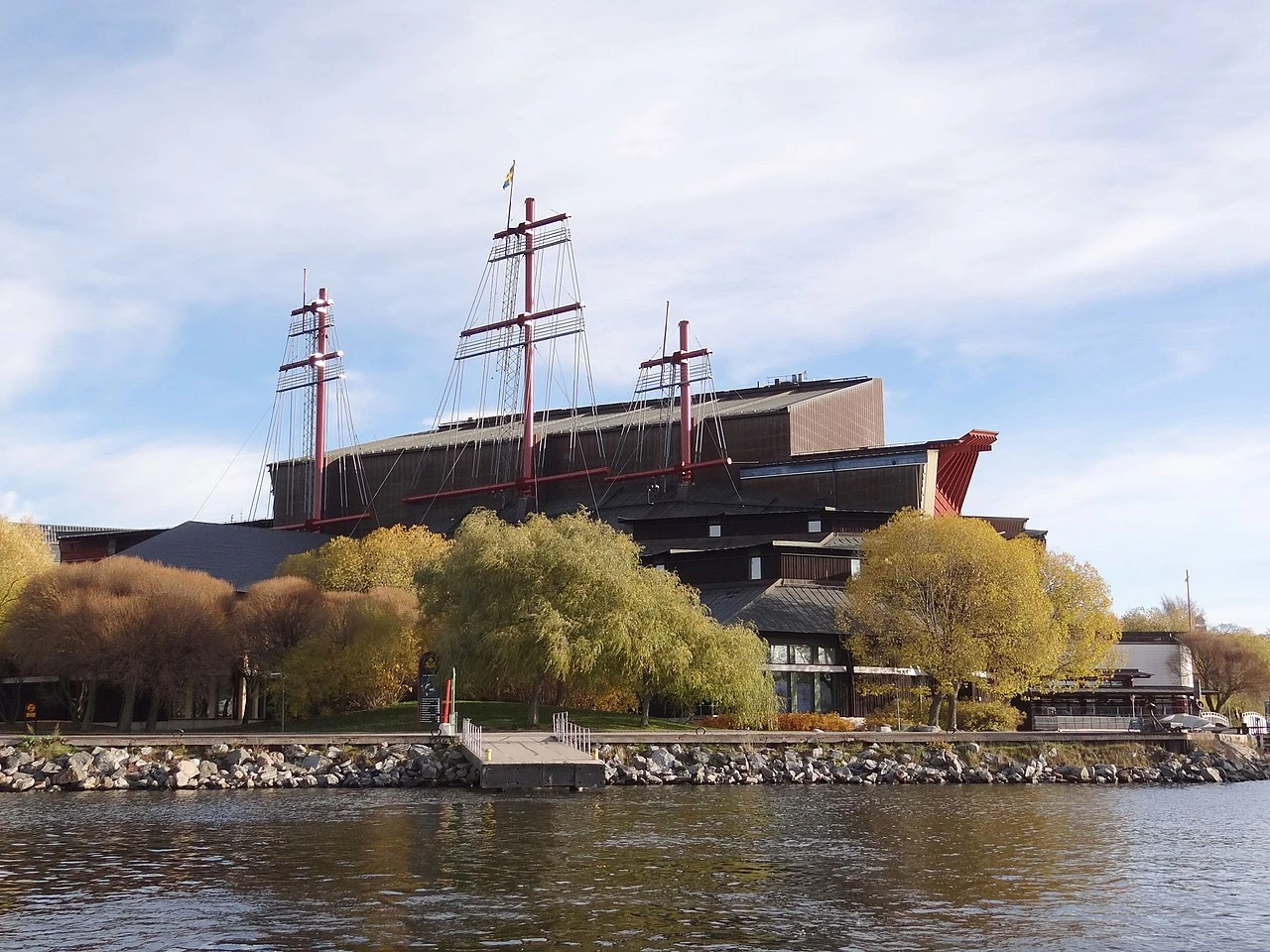
Vasa Museum
Content & sources
Photo: Hanay · CC BY-SA 3.0
Uppsala · 75 km
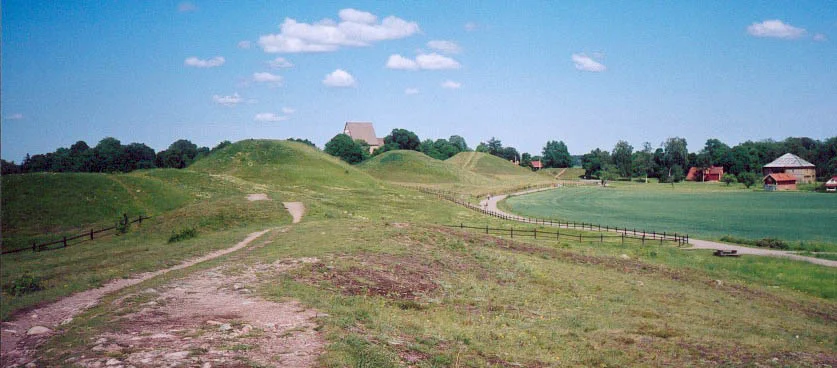
Gamla Uppsala
Content & sources
OlofE · CC BY-SA 3.0