Stanza · Audio guide
Ksar Ouled Soltane Audio Guide
A place to remember. A story to take with you.
Ksar Ouled Soltane is a fortified granary located in the Tataouine district in southern Tunisia. It features two courtyards surrounded by multi-story vaulted granary cellars known as ghorfas.
Download Stanza, then search for “Ksar Ouled Soltane”.
About the tour
One guide. Your kind of visit.
Ksar Ouled Soltane is a fortified granary located in the Tataouine district in southern Tunisia. It features two courtyards surrounded by multi-story vaulted granary cellars known as ghorfas.
Ready when you are.
- 01Get the free Stanza app.
iOS & Android
- 02Find your guide.
“Ksar Ouled Soltane”
- 03Download before you go.
Works offline
Audio guide / 7 narrated stops
Inside the guide
Get to know a few of the stories before you go. Open a stop to read more.
01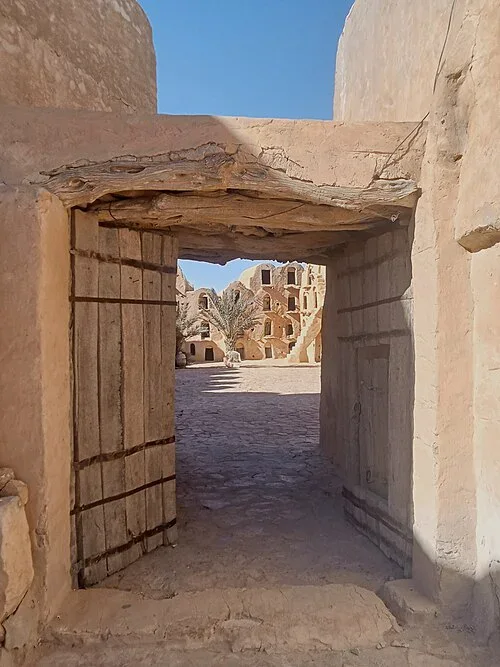 Main Entrance Portal
Entrance Portal of Ksar Ouled Soltane
Welcome to Ksar Ouled Soltane, in the Tataouine district of southern Tunisia. The heavy wooden door ahead is the only way into the place, and it opens on the first of two courtyards. A ksar is a fortified granary, and this one was built and used by local Berber communities. It worked like a shared safe-deposit for harvests, holding grain and valuables rather than housing families full time. Each family kept its own locked cell inside. The earliest construction here is dated to 1699. Beyond the gate, the stacked vaulted cells called ghorfas are waiting, and they are the heart of the story.
Photo: TOUMOU · CC BY-SA 4.0
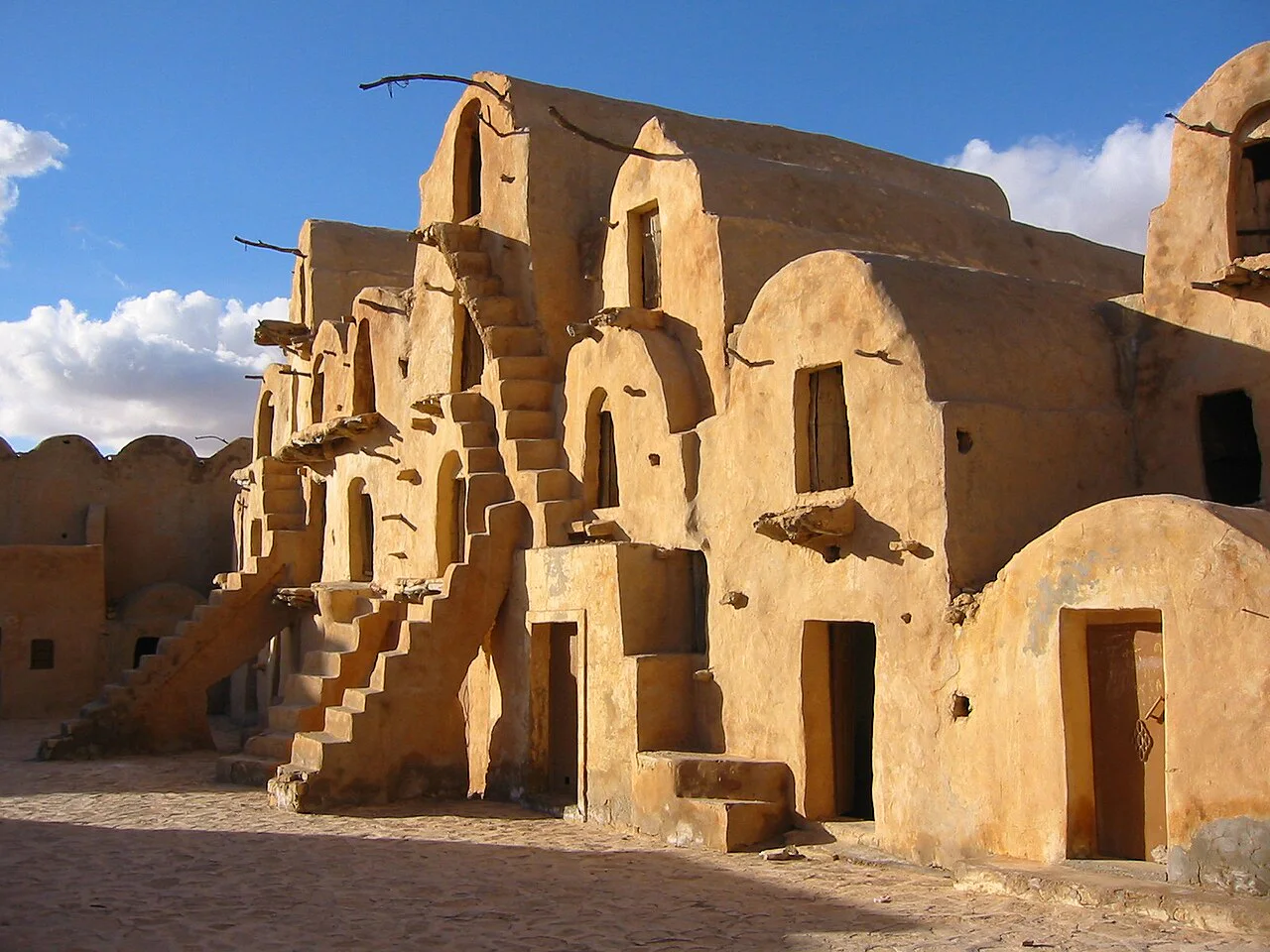
02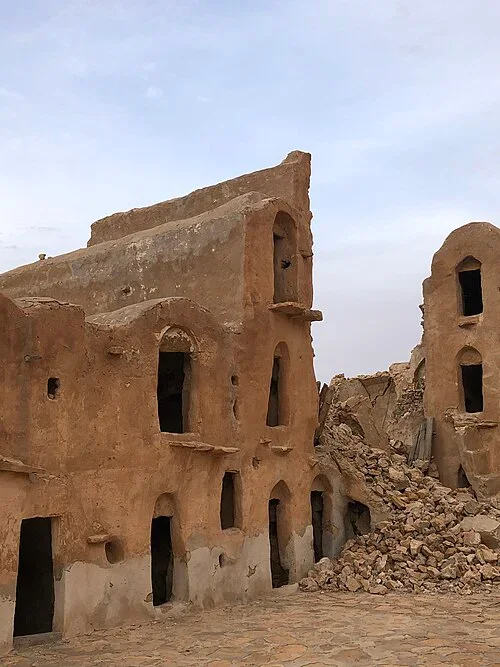 First Courtyard and Vaulted Ghorfas
Ghorfas of the First Courtyard
The buildings ringing this courtyard are ghorfas, the storage cells that give the ksar its purpose. A ghorfa is a private cell, owned and used by a single family, and they rise in tiers all around the perimeter. Each one is roofed with a curved vault made of earth and clay. That shape, together with the sheer mass of the walls, kept the inside cool and dry even in fierce desert heat, which is exactly what stored grain needs. These are centuries-old earthen structures, and it shows. Wind and rain have gnawed at the edges of some of them, softening the crisp lines a new building would keep. What survives is the original fabric, aged rather than rebuilt.
Photo: Yamen · CC BY-SA 4.0
03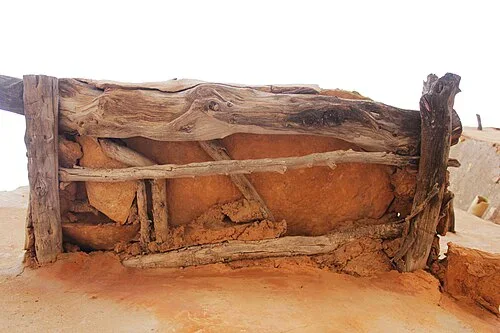 First Courtyard and Vaulted Ghorfas
Earthen Construction: Beams, Mud and Clay
Up close, the building material is wonderfully plain. Rough wooden beams and branches are laid across the openings, then packed around with earth and clay mortar. Stone and mud do the structural work, and the timber ties it all together. Everything came from the immediate surroundings, since the desert offered little else and little was needed. There is no fancy technique here, just mass, patience and local materials. That low-tech recipe kept grain safe in an arid climate for generations.
Listen in the appPhoto: Nassima Chahboun · CC BY-SA 4.0
04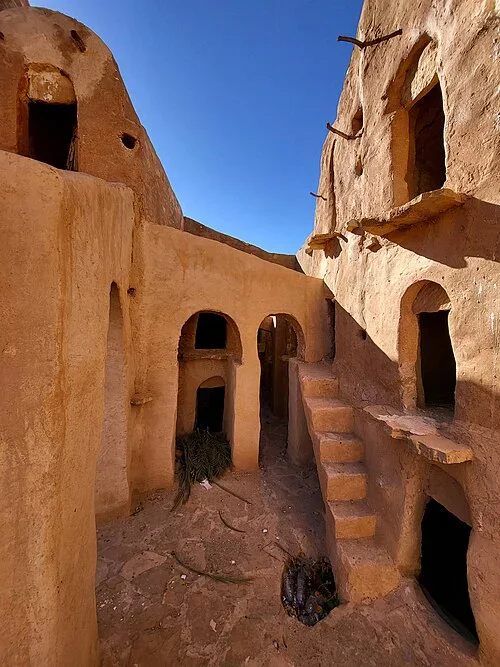 Exterior Ghorfa Staircases
Steep Stairways to the Upper Tiers
The staircases here are as striking as the granaries themselves. Narrow steps of hand-built stone climb the outside of the ghorfas, steep and completely without handrails. The cells stack up to four stories high, so families needed these stairs to reach the storage rooms above their own. Every sack of grain for an upper cell went up these steps, carried by hand. It gives a real sense of the practical limits of the place. Anyone using the granary had to be sure-footed, and the same is true for visitors today.
Listen in the appنعيم قربوسي · CC BY 4.0
05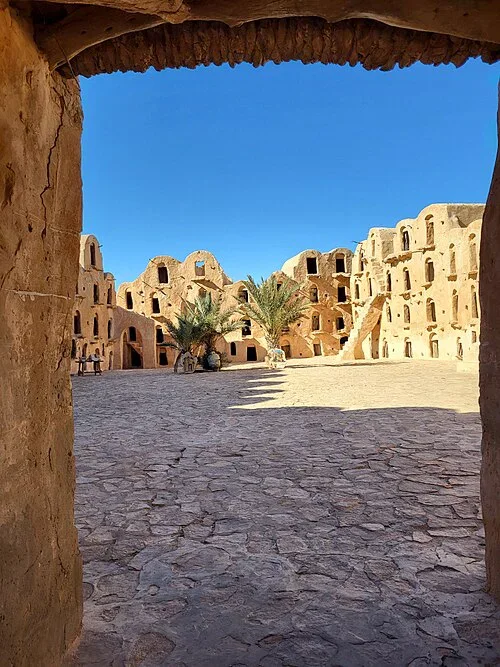 Central Connecting Archway
Connecting Archway and the Second Courtyard
This archway marks the seam between two courtyards, and it tells the story of growth. The ksar did not appear all at once after its founding in 1699. It expanded in phases over generations, as families added new ghorfas and eventually a second courtyard when storage needs outgrew the first. The view through the arch shows the scale of that later expansion. The whole complex now measures about sixty meters from end to end. It is roughly forty meters across as well. What began as a single enclosure became a communal enterprise, built one bay at a time.
Listen in the appنعيم قربوسي · CC BY 4.0
06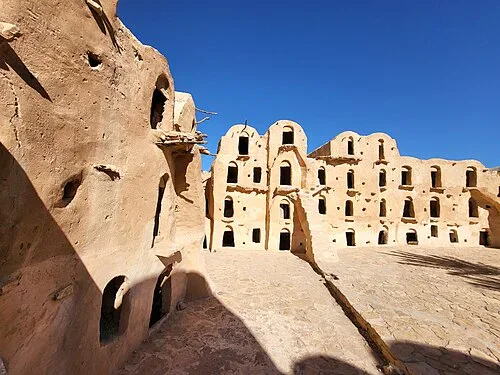 Second Courtyard and Star Wars Legacy
The Courtyard on Screen: Mos Espa
This courtyard has a second life on film. Ksar Ouled Soltane served as a location for the 1999 film Star Wars: Episode I, The Phantom Menace. Its scenes here stood in for the slave quarters of Mos Espa, on the desert planet Tatooine. That is where the character Anakin Skywalker lives as a boy in the film. The fitting is hardly an accident, since the region around the ksar is called Tataouine, a name the saga borrowed. The granary story comes first, though. The film fame is a modern chapter layered onto a place that was storing grain long before cameras arrived.
Listen in the appنعيم قربوسي · CC BY 4.0
07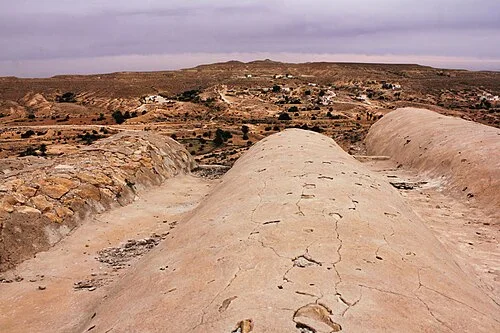 Roof Perimeter and Desert Vantage Point
Hilltop Vantage: Defense and Survival
From the top of the vaults, the landscape explains the site itself. Berber communities built their ksour on high ground, and this one is no exception. Watchmen on a hilltop could spot approaching raiding parties long before they arrived, giving the community time to secure the shared harvest inside. Defense and storage were one design decision. The ksar still draws visitors who come to see its well-preserved granary vaults. In 2021, Tunisia classified it as a national historic monument. A place built so families could survive lean years now has the state's own protection.
Listen in the appPhoto: Nassima Chahboun · CC BY-SA 4.0
Ksar Ouled Soltane
Frequently asked questions
How much does the guide cost?
Free app download. Listed guide price: $0.99. Guide price shown in the app. Audio guide only. Venue admission is separate.
Can I listen without internet?
Yes. Download the guide’s audio, images, and maps in the app before your visit. Your downloaded content is then available offline.
Can I listen in my language?
This audio guide is available in 15 languages, including English.
Do I need to follow a schedule?
No. This is a self-guided experience. Choose your stops, pause whenever you like, and return to a story at your own pace.
At your own pace
Explore Ksar Ouled Soltane.
Download Stanza, then search for “Ksar Ouled Soltane”.
Free app download · Guide price shown in the app
Keep exploring
Audio guides — Tunisia
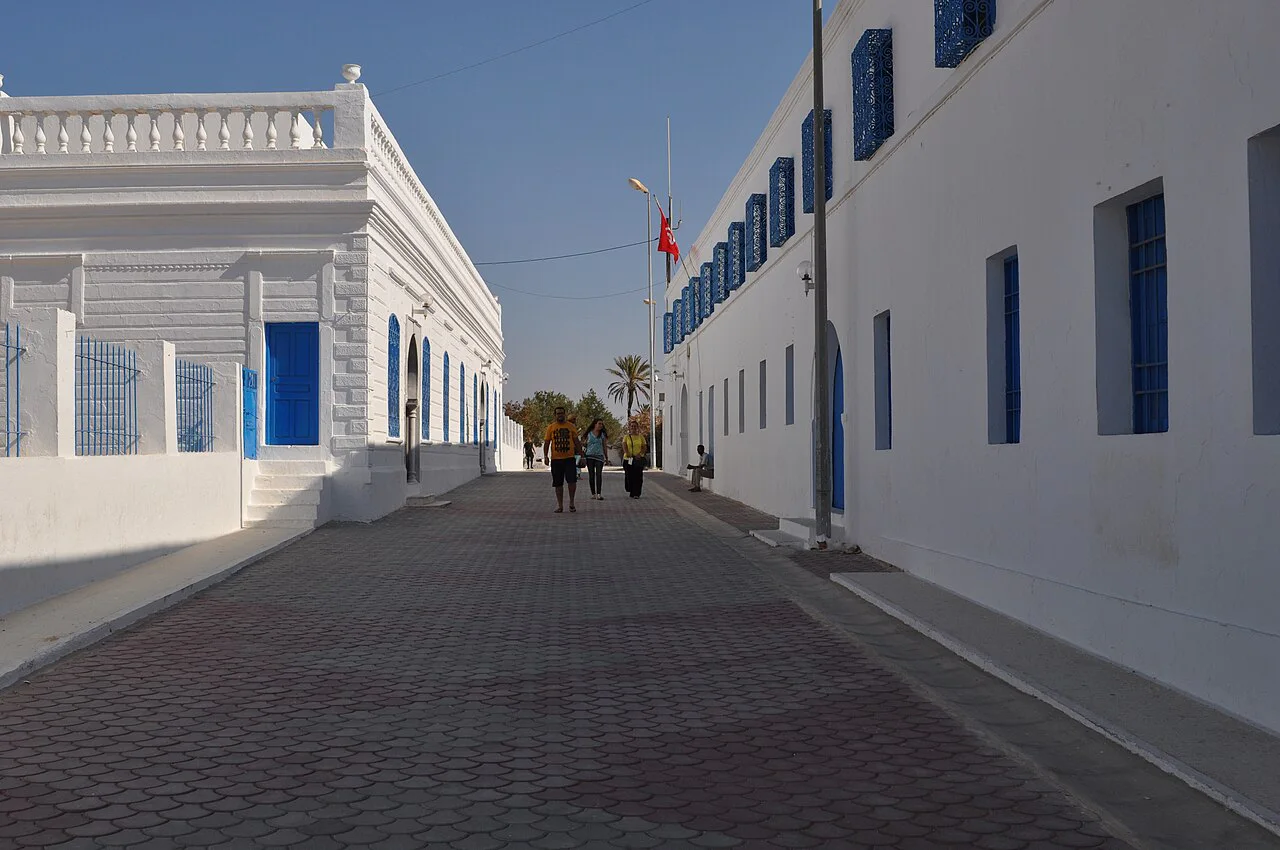
Erriadh · 118 km
El Ghriba Synagogue
Content & sources
Photo: Noomen9 · CC BY-SA 4.0
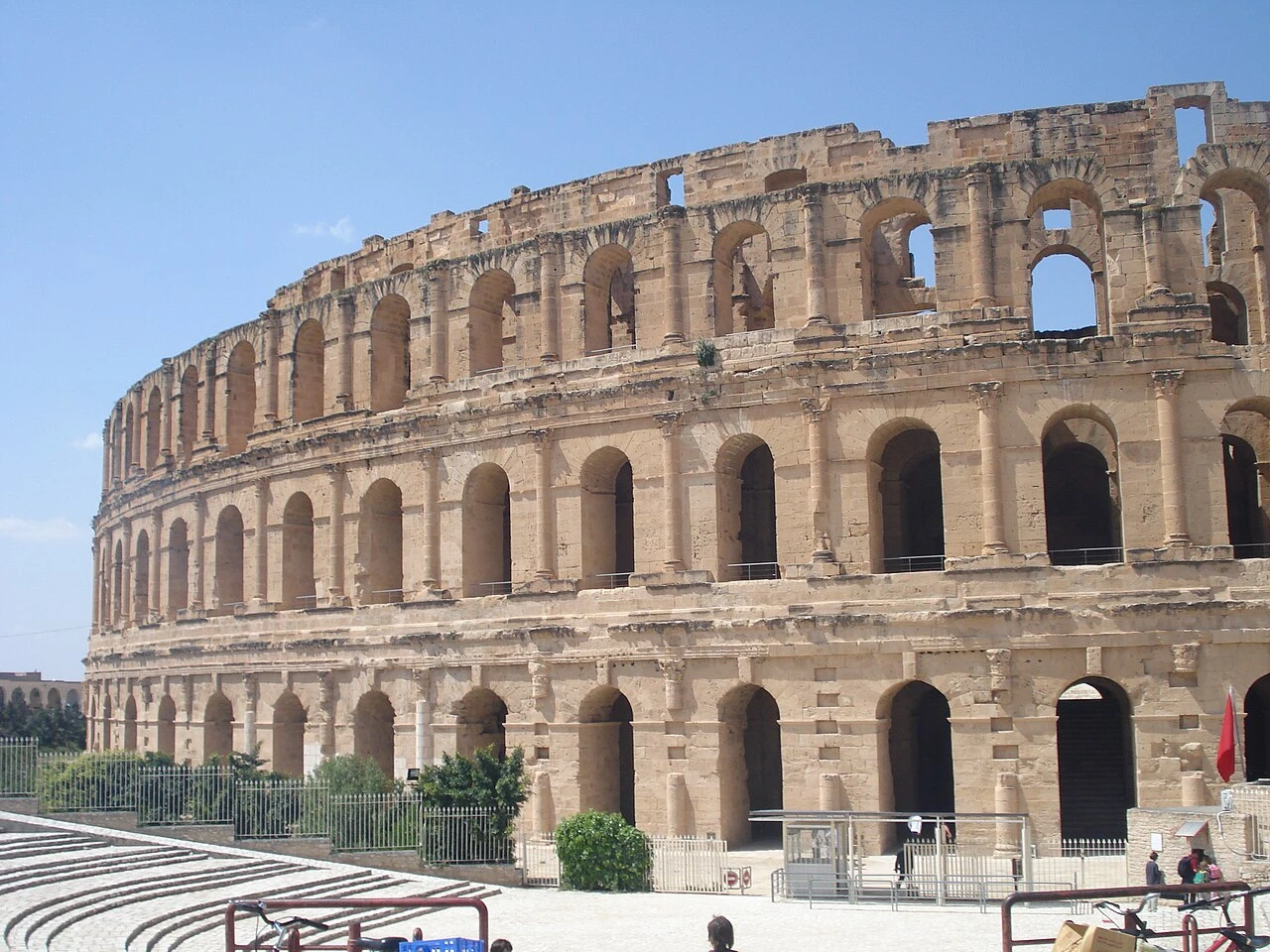
El Jem
Amphitheatre of El Jem
Content & sources
Photo: Cimoi · CC BY-SA 3.0
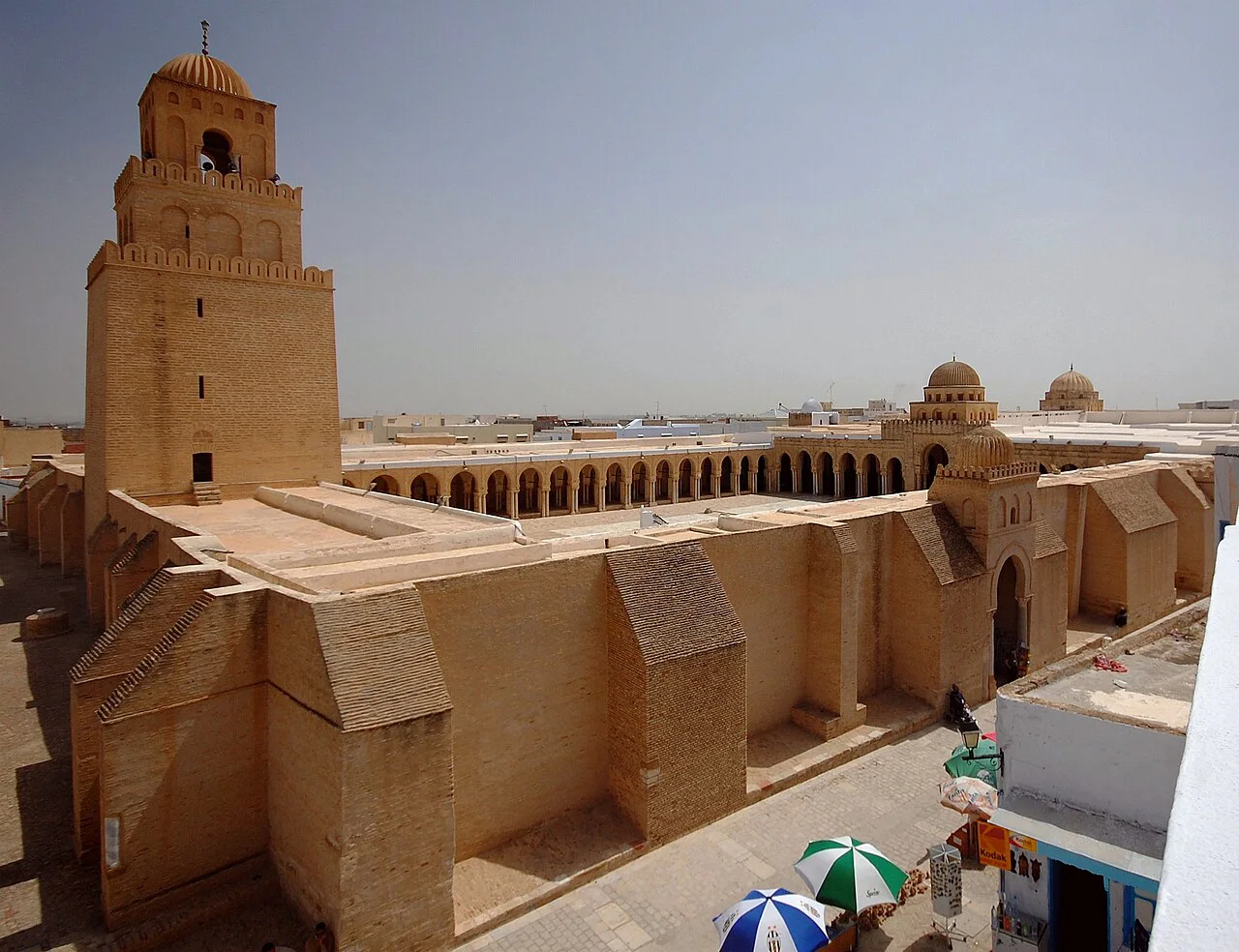
Kairouan
Great Mosque of Kairouan
Content & sources
weetoon66 · CC BY-SA 2.0
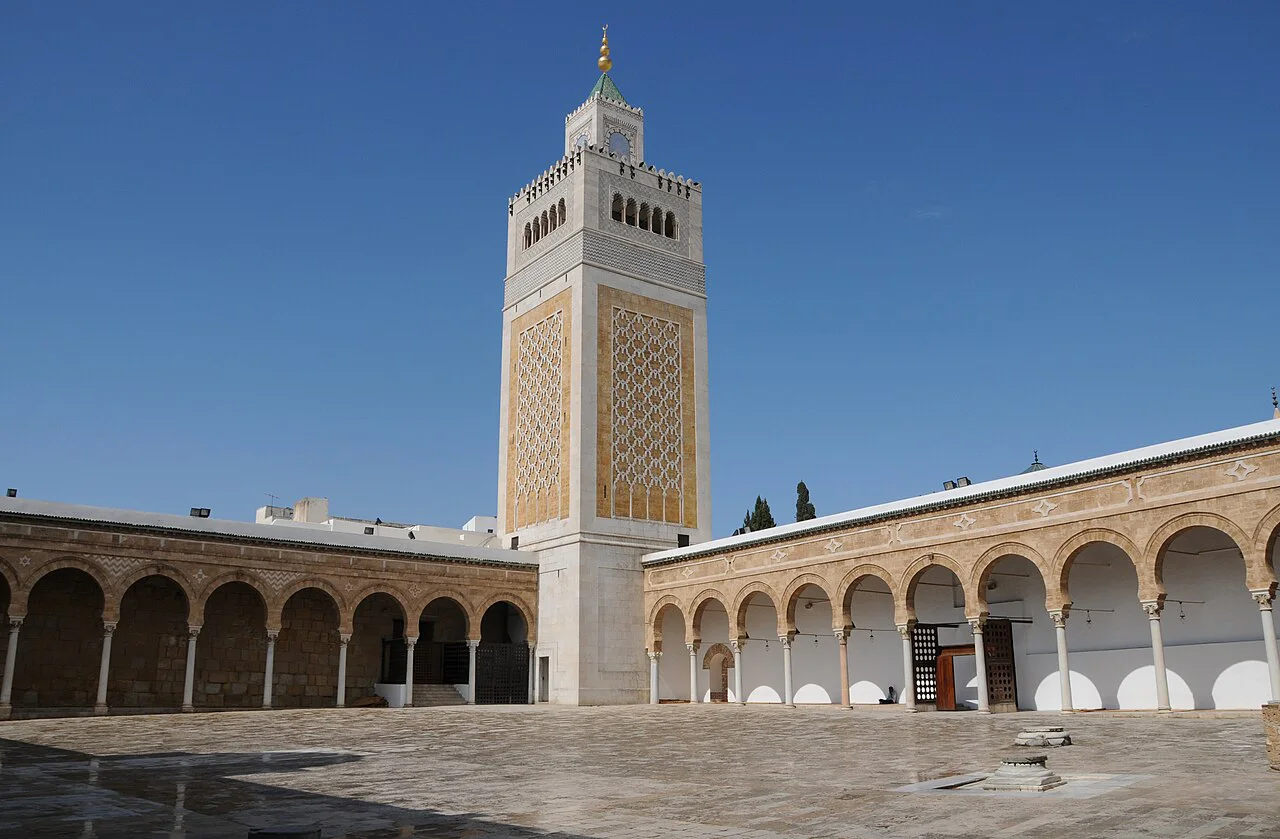
Tunis
Al-Zaytuna Mosque
Content & sources
Photo: Citizen59 · CC BY-SA 3.0