Stanza · Audio guide
Yıldız Sarayı Audio Guide
A place to remember. A story to take with you.
Yıldız Palace is a vast complex of former imperial Ottoman pavilions and villas in Istanbul, Turkey. It served as a residence for the sultan and his court during the late 19th century.
Download Stanza, then search for “Yıldız Sarayı”.
About the tour
One guide. Your kind of visit.
Yıldız Palace is a vast complex of former imperial Ottoman pavilions and villas in Istanbul, Turkey. It served as a residence for the sultan and his court during the late 19th century.
Ready when you are.
- 01Get the free Stanza app.
iOS & Android
- 02Find your guide.
“Yıldız Sarayı”
- 03Download before you go.
Works offline
Audio guide / 16 narrated stops
Inside the guide
Get to know a few of the stories before you go. Open a stop to read more.
01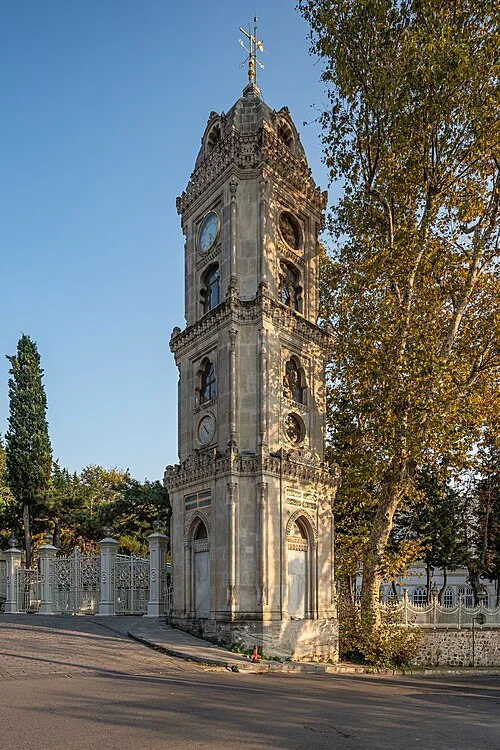 Imperial Approach: Yıldız Clock Tower and Hamidiye Mosque
Yıldız Clock Tower
The name Yıldız Palace means Star Palace. The land was once natural woodland, and it became an imperial estate under Sultan Ahmed the First. Later sultans came here to take their holidays. In the 1870s, Sultan Abdülhamid the Second left Dolmabahçe Palace. That palace stood on the Bosphorus shore. Accounts give different reasons for the move: fear of an attack from the sea, or the two upheavals Dolmabahçe had seen in 1876. He moved up the hill to Yıldız, away from the water. Here the palace became the fourth seat of Ottoman government. The earlier seats were the Old Palace in Edirne, and the Topkapı and Dolmabahçe palaces in Istanbul. A stone clock tower stands beside the ironwork gates. It has clock faces near its top. Today the complex is a museum, and its gardens are a popular place for the people of Istanbul.
Photo: A.Savin · FAL
02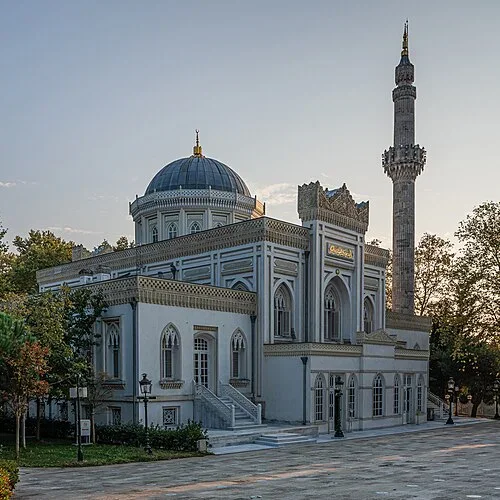 Imperial Approach: Yıldız Clock Tower and Hamidiye Mosque
Hamidiye Mosque Exterior
The Hamidiye Mosque has pale walls and a blue-grey dome, with a tall minaret rising beside it. Its windows have pointed arches, and the mosque stands on the road to the palace. Its details, like those of the palace's other buildings, reflect the eclectic character of nineteenth-century Ottoman architecture. Eclectic means drawing on several styles at once. Its official name is Hamidiye, but it is more commonly known as the Yıldız Mosque.
Photo: A.Savin · FAL
03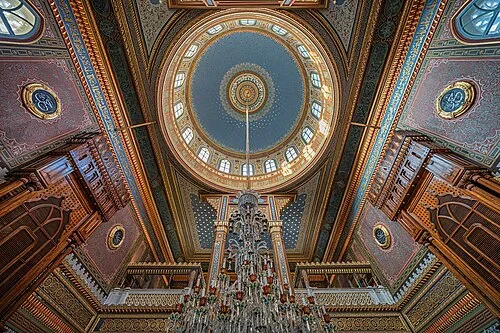 Imperial Approach: Yıldız Clock Tower and Hamidiye Mosque
Hamidiye Mosque Interior Dome
The dome of the Hamidiye Mosque rises on a ring of tall windows, and light falls through them into the room. At its centre is a round rosette, with patterned bands spreading out around it. Below the dome, the walls are covered in panels, and gold trim runs along their edges. The mixed styles of the exterior return here in richer form. A large chandelier hangs beneath the dome.
Listen in the appPhoto: A.Savin · FAL
04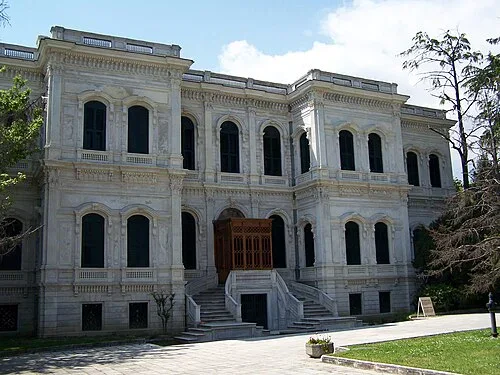 The Administrative Core: Great Mabeyn Pavilion
Great Mabeyn Pavilion
The Great Mabeyn was where Sultan Abdülhamid the Second held official meetings and received foreign visitors. An earlier sultan had it built in 1866, to a design by a court architect. Its pale facade rises in several tiers, with rows of arched windows. A broad flight of steps climbs to a carved wooden door at the centre. The building itself is no longer open to the public. In 1884 Crown Prince Rudolf of Austria came here with his wife, a princess of Belgium. Five years later, in 1889, Kaiser Wilhelm the Second was received in this building.
Listen in the appUser:Darwinek · CC BY-SA 3.0
05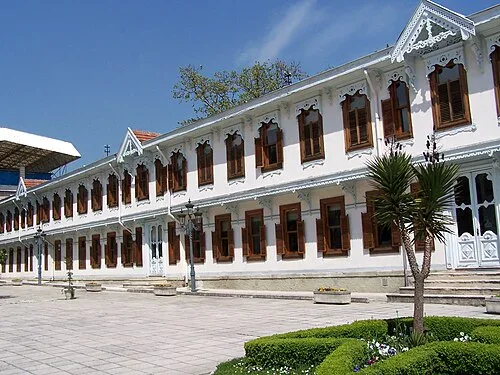 The Administrative Core: Great Mabeyn Pavilion
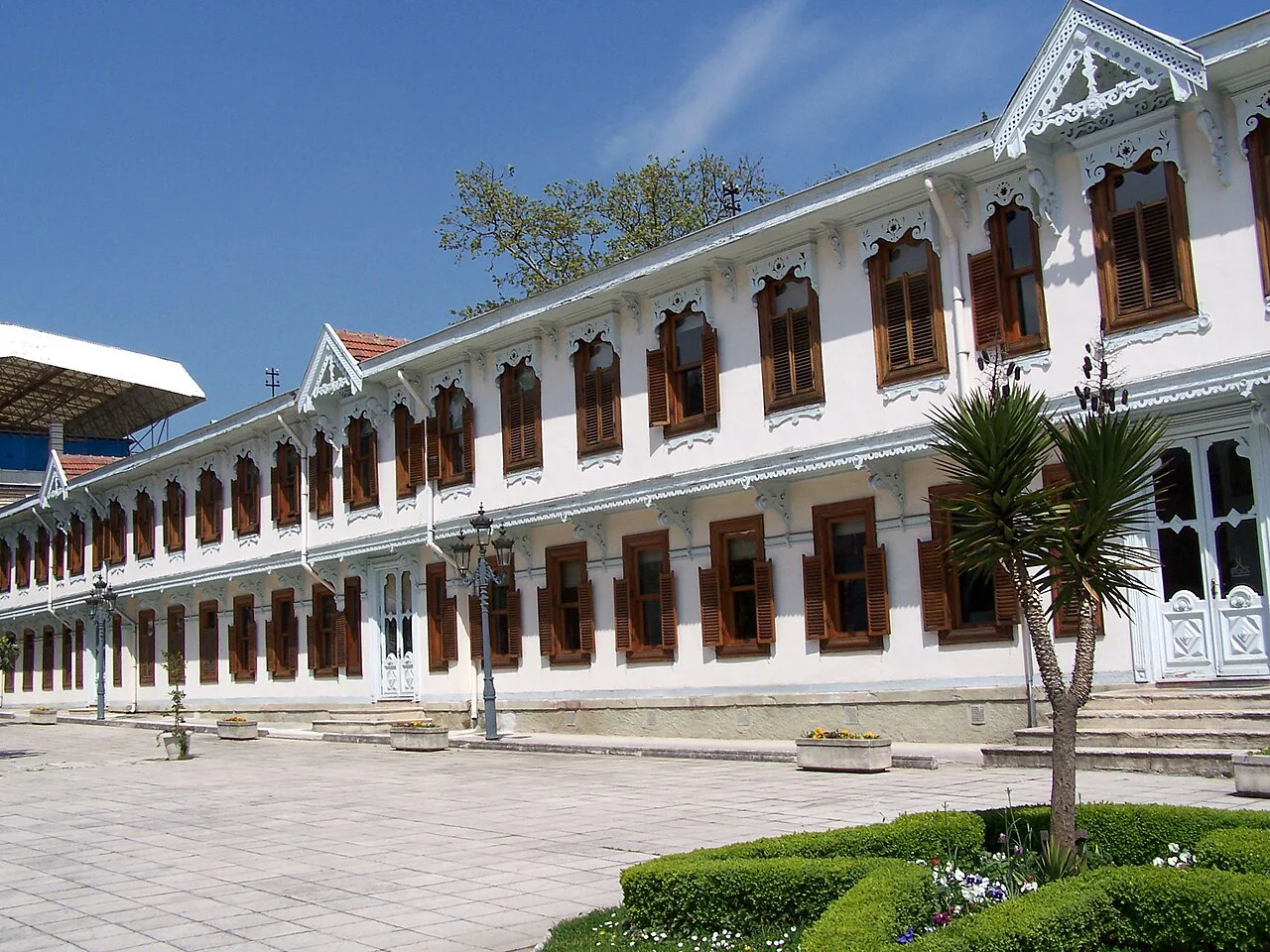
Courtyard Range with Timber Shutters (Unidentified)
The buildings with timber shutters here cannot be named for certain. They belong to a layout of three courtyards, and access grew stricter from one to the next. The first court was where the sultan and his leaders governed. Officials kept their offices there. Walls separated the courts from one another. The second court was the inner palace, the private home of the sultan and his family. Men from outside the family were not allowed in. The third court held the outer gardens.
Listen in the appUser:Darwinek · CC BY-SA 3.0
06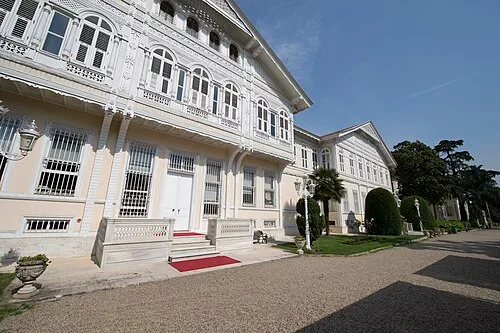 The Imperial Guest Mansion: Şale Kiosk
Şale Kiosk Entrance Facade
The Şale Kiosk grew in stages rather than rising all at once. Its cream entrance front is symmetrical, with grilled windows. Red carpet runs up the steps. The first part was built of wood in the late 1870s, to a design by the court architect Sarkis Balyan. A second wooden part followed in 1889, and it added the Mother-of-Pearl Hall. Accounts differ a little on these years, but these are the usual dates. The third part is built of stone. It dates from 1898, and the Italian architect Raimondo D'Aronco designed it.
Listen in the appPhoto: Dosseman · CC BY-SA 4.0
07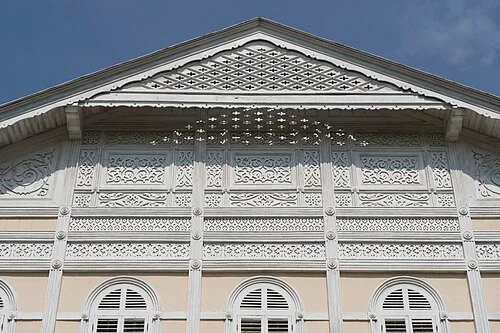 The Imperial Guest Mansion: Şale Kiosk
Şale Kiosk Decorated Gable
The gable at the top of the Şale Kiosk is covered in patterns. Raised geometric panels run across its middle, and a diamond lattice fills the peak. Below, a row of arched windows has slatted shutters. The first part of the building was designed to resemble a Swiss chalet, and that idea gave the building its name. The word Şale comes from the French chalet.
Listen in the appPhoto: Dosseman · CC BY-SA 4.0
08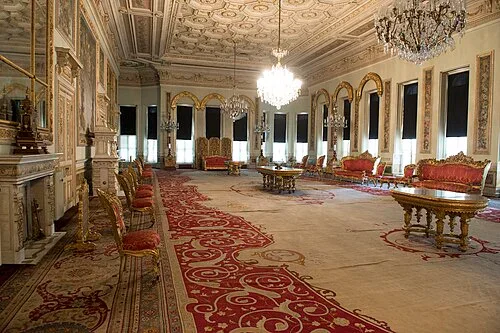 The Imperial Guest Mansion: Şale Kiosk
Şale Kiosk Reception Chamber
One account calls the reception chamber the most impressive room in the whole Şale. It sits in the stone third part, the one by the architect D'Aronco. Kaiser Wilhelm the Second came back to the city in 1898, and this room was built for that second visit. The ceiling is gilded and coffered, with recessed panels. Chandeliers hang beneath it, and large mirrors reflect the light. A fireplace stands at one end of the room. One reading sees the chamber as a symbol of ties between the Ottoman and German empires.
Listen in the appPhoto: Dosseman · CC BY-SA 4.0
09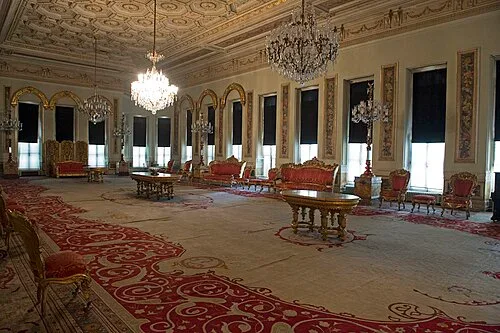 The Imperial Guest Mansion: Şale Kiosk
Şale Kiosk Ceremonial Hall: Carpet and Furnishings
It took sixty weavers, working by hand, to make the carpet covering the floor of this hall. Its area is more than four hundred square metres, and its red ground is covered in scrolling patterns. Some accounts link the Şale Kiosk's giant carpets to Hereke, but whether this one came from there is not known. Abdülhamid the Second was himself a skilled carpenter. He made some of the furniture that can be seen in the Şale. A tradition holds that his carpentry was inspired by the prophet Noah.
Listen in the appPhoto: Dosseman · CC BY-SA 4.0
10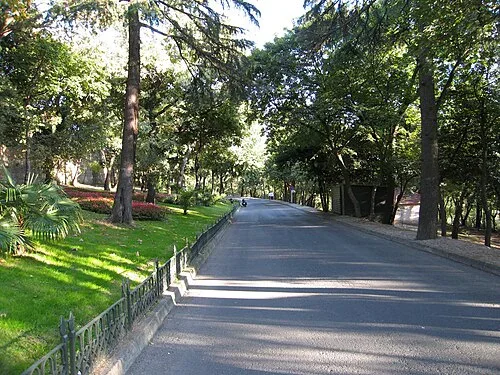 The Imperial Grounds: Parkland and Historic Greenhouse
Yıldız Park Tree-Lined Road
Tall trees line this road, in grounds that were woodland before they held a palace. Some of the sultans who came to these hills built mansions in the grounds. Selim the Third built the first pavilion in this park for his mother, Mihrişah Sultan. The work ran from 1798 to 1808. She loved the area, and she is said to have laid out its first gardens. By the 1870s, the palaces stood as separate pavilions among the trees. Unlike one great palace under a single roof, this palace is spread across the grounds. Each pavilion has its own purpose, and the buildings follow the slope of the hill. Some writers see this scattered plan as a return to the older Topkapı Palace, and as a sign of the sultan's absolute view of power.
Listen in the appPhoto: Chapultepec · Public domain
- 11
Yıldız Park Glasshouse
Rings of metal bars cross the top of a glasshouse in a park where a sultan asked for rare plants.
- 12
Yıldız Park Pond with Fountain
A pond with a fountain, once home to pelicans and gifted carp, and a bridge said to link it to the Bosphorus palace.
- 13
Malta Pavilion
A pale pavilion in the park, whose name may come from its stone or from a famous siege.
- 14
Malta Kiosk Corner Facade
The court architect behind the Malta Kiosk, and another name some have put forward for it.
- 15
Çadır Kiosk and Garden Pond
The palace court of 1882, the reputation Yıldız gained for fear and scheming, and the plundering of 1909.
- 16
Yıldız Porcelain Factory Castellated Tower
A factory built to look like a castle, making European-style ceramics with scenes of the Bosphorus.
Yıldız Sarayı
Frequently asked questions
How much does the guide cost?
Free app download. Listed guide price: $0.99. Guide price shown in the app. Audio guide only. Venue admission is separate.
Can I listen without internet?
Yes. Download the guide’s audio, images, and maps in the app before your visit. Your downloaded content is then available offline.
Can I listen in my language?
This audio guide is available in 15 languages, including English.
Do I need to follow a schedule?
No. This is a self-guided experience. Choose your stops, pause whenever you like, and return to a story at your own pace.
At your own pace
Explore Yıldız Sarayı.
Download Stanza, then search for “Yıldız Sarayı”.
Free app download · Guide price shown in the app
Keep exploring
Nearby audio guides
Beşiktaş · 1 km
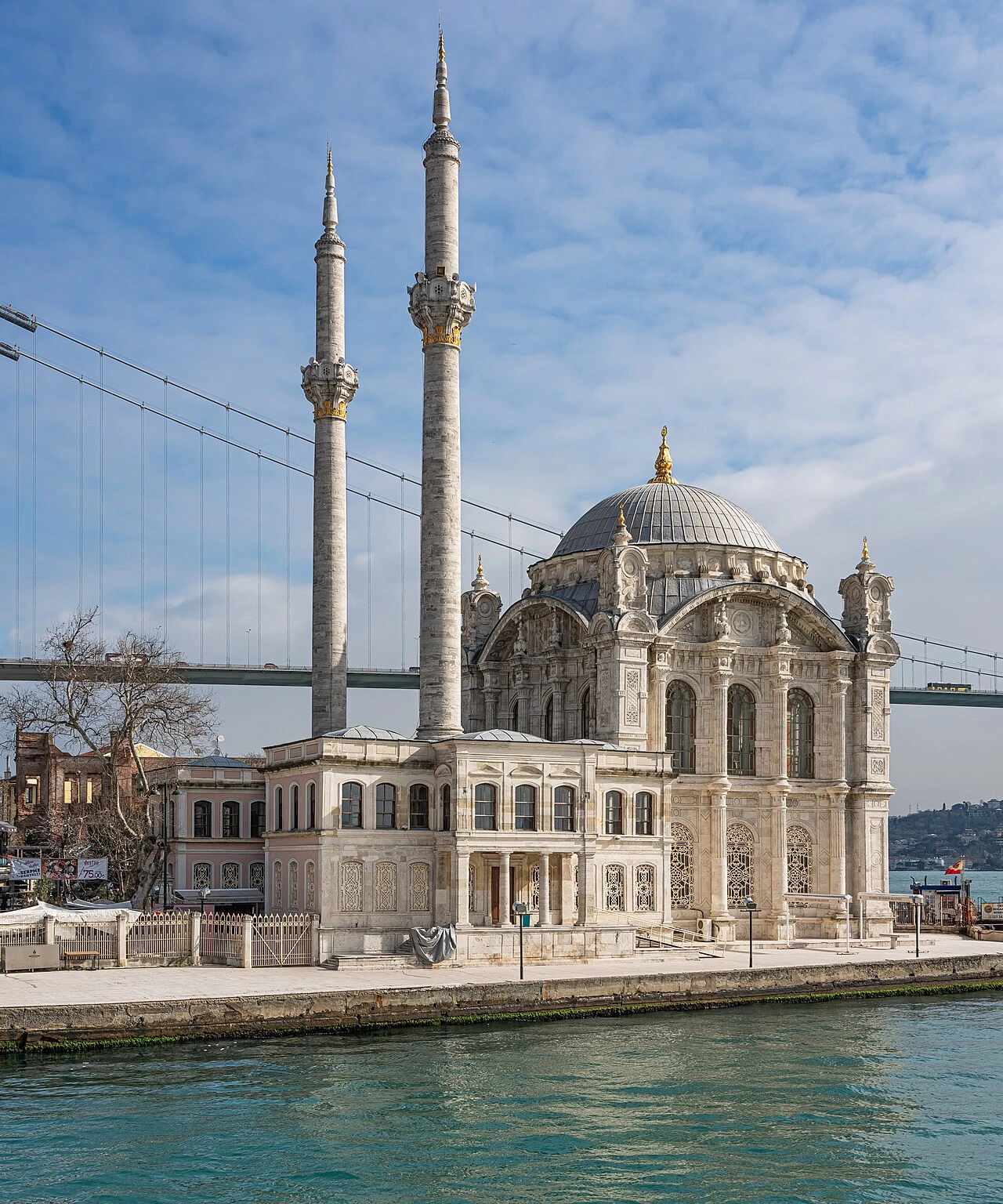
Ortaköy Mosque
Content & sources
Photo: A.Savin · FAL
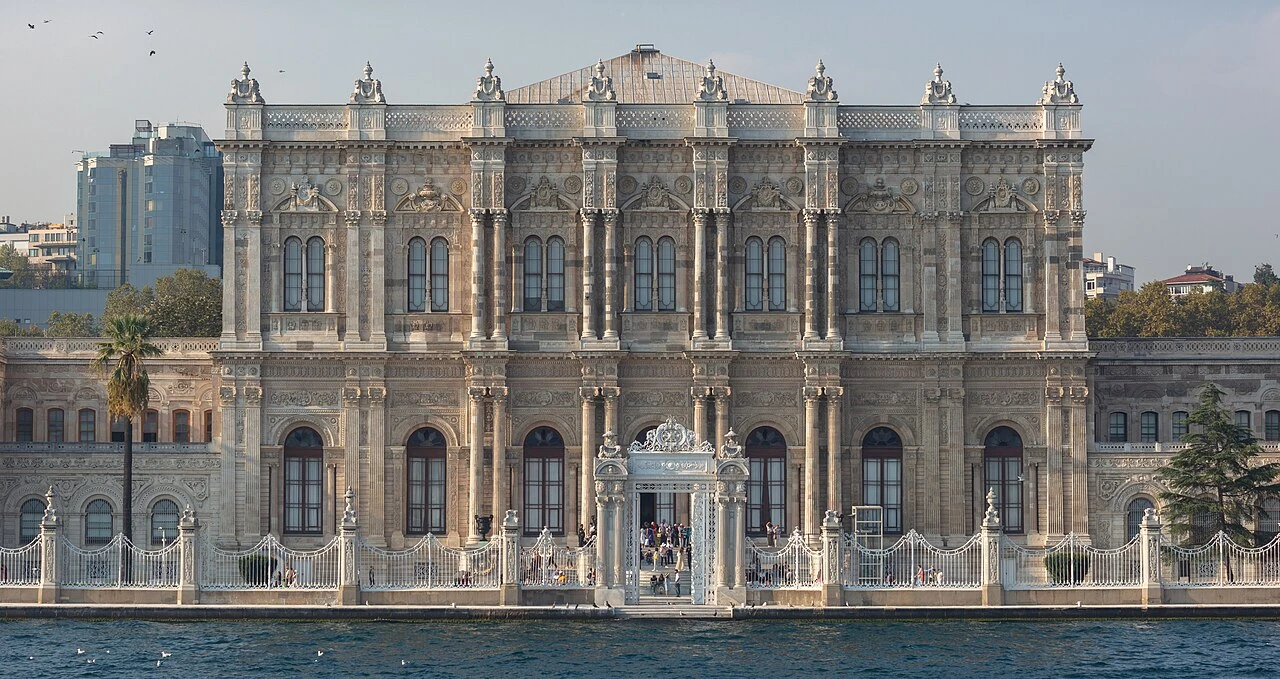
Beşiktaş · 1 km
Dolmabahçe Palace
Content & sources
Diego Delso · CC BY-SA 4.0
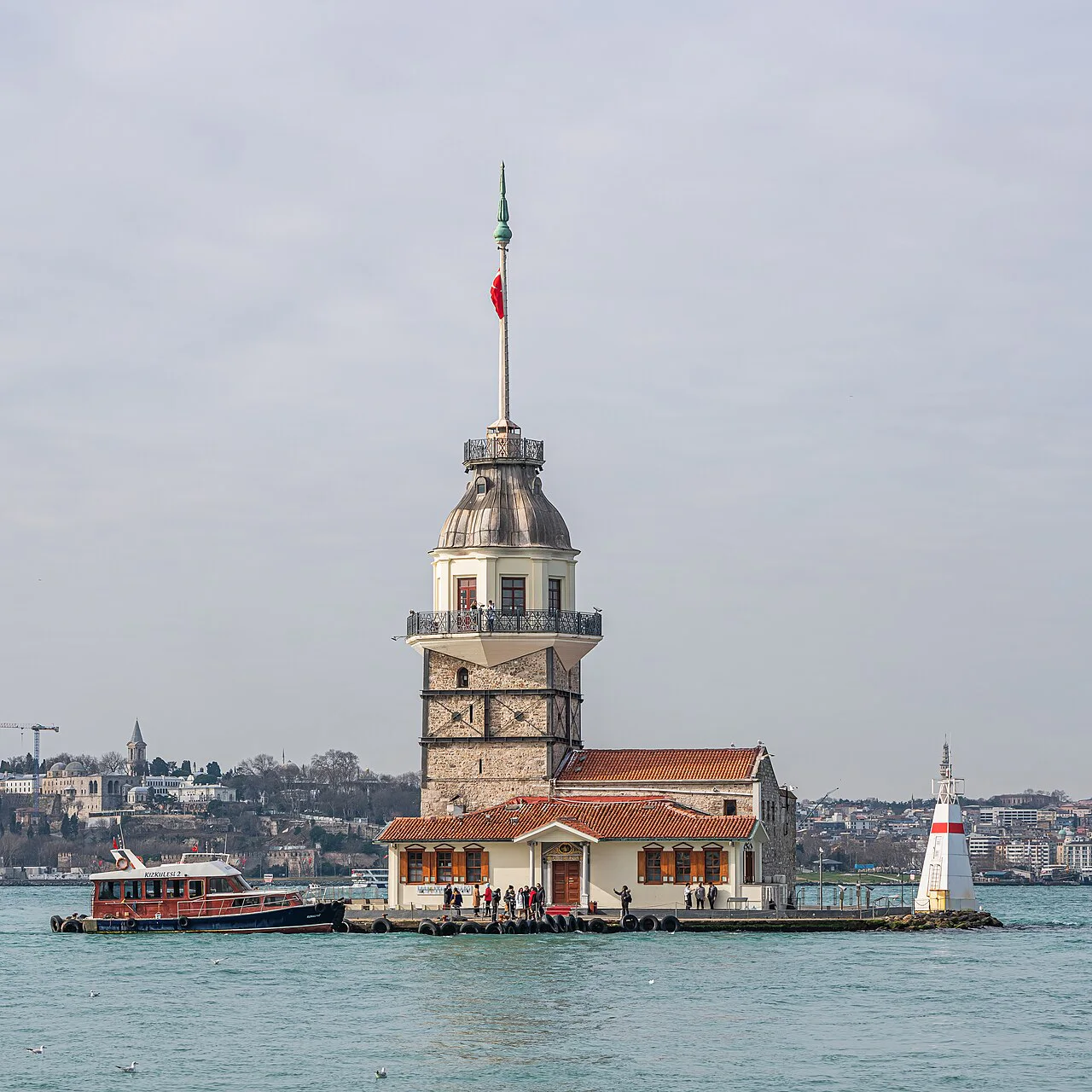
Istanbul · 3 km
Kız Kulesi
Content & sources
Photo: A.Savin · FAL
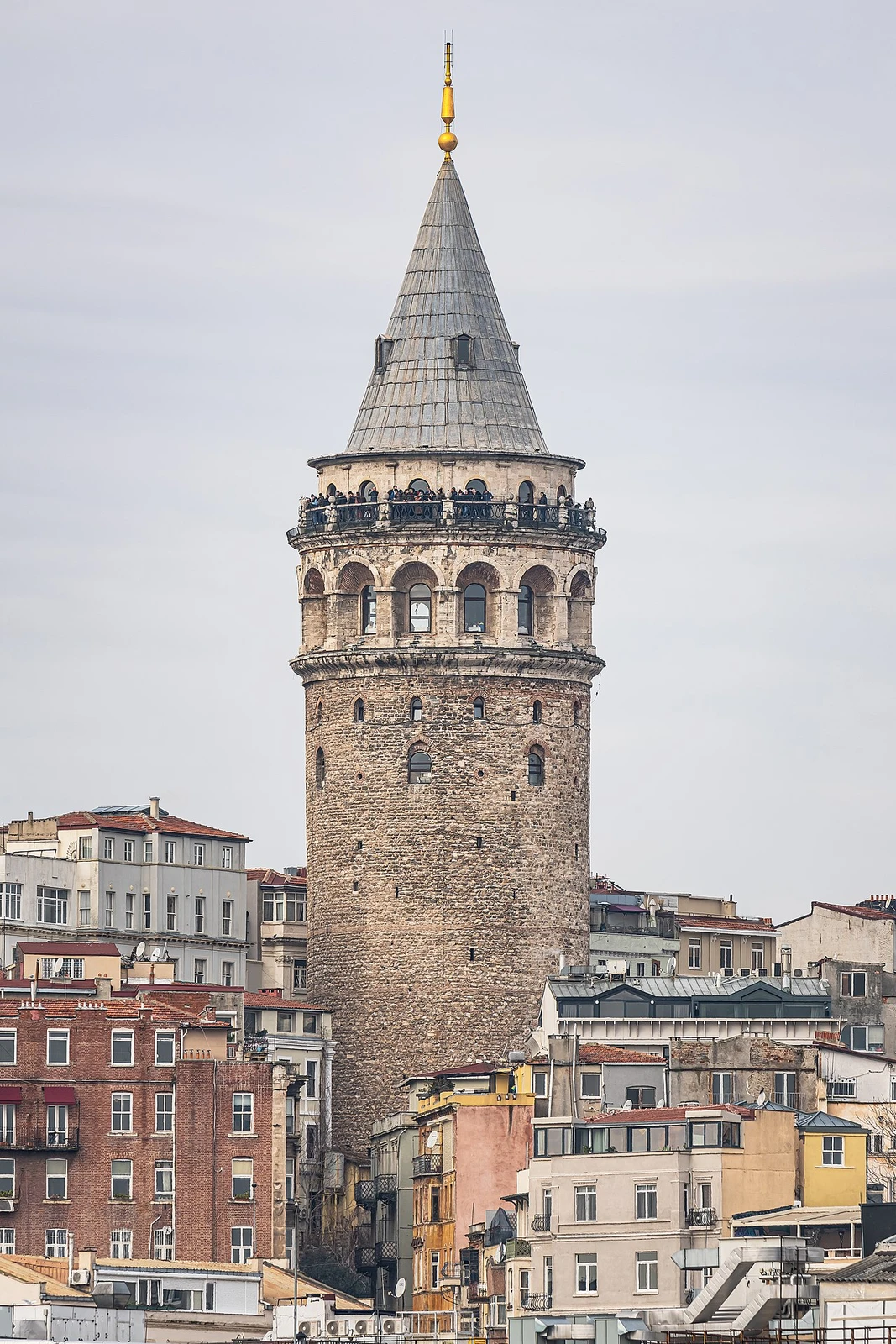
Beyoğlu · 4 km
Galata Tower
Content & sources
Photo: A.Savin · FAL