Stanza · Audio guide
Nemrut Dağı Audio Guide
A place to remember. A story to take with you.
Mount Nemrut is a 2,150-metre-high mountain in southeastern Turkey. It is notable for the summit where a number of large statues are erected around what is assumed to be a royal tomb from the 1st century BC.
Download Stanza, then search for “Nemrut Dağı”.
About the tour
One guide. Your kind of visit.
Mount Nemrut is a 2,150-metre-high mountain in southeastern Turkey. It is notable for the summit where a number of large statues are erected around what is assumed to be a royal tomb from the 1st century BC.
Ready when you are.
- 01Get the free Stanza app.
iOS & Android
- 02Find your guide.
“Nemrut Dağı”
- 03Download before you go.
Works offline
Audio guide / 13 narrated stops
Inside the guide
Get to know a few of the stories before you go. Open a stop to read more.
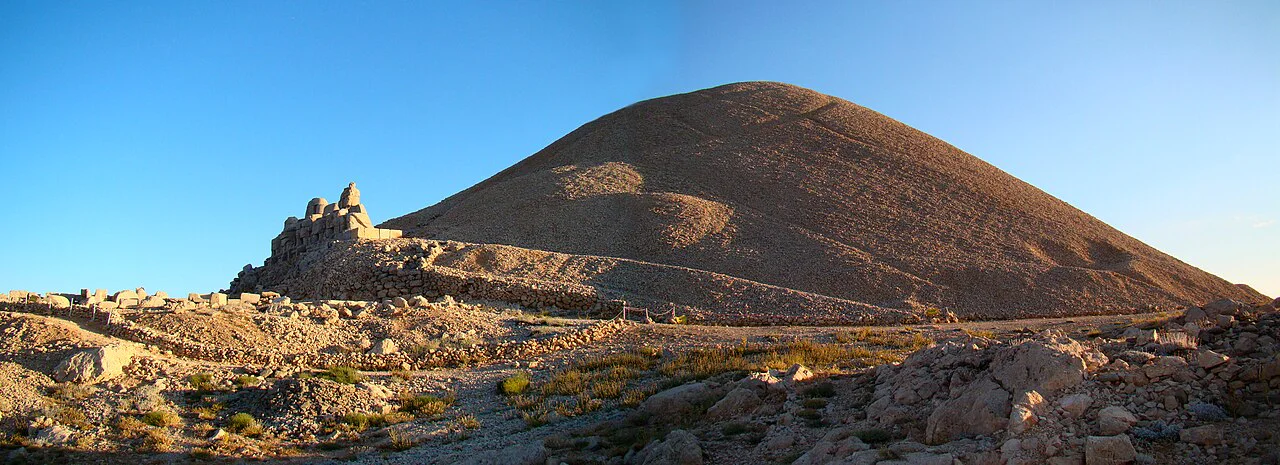
01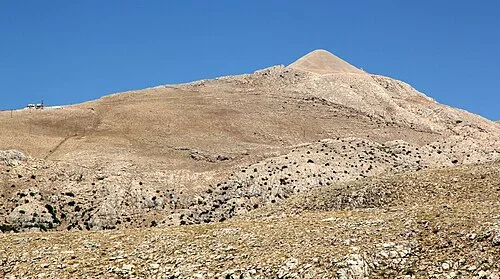 Ascent Trail and the Royal Tumulus
The Sacred Summit of Nemrut Dağı
Welcome to Nemrut Dağı, and to a tour of one of the boldest monuments of the ancient world. This peak in the Taurus range of southeastern Turkey rises about two thousand one hundred and fifty metres. Near the summit, in the first century BC, King Antiochus the First of Commagene built a tomb-sanctuary flanked by giant statues of gods and of himself. An arrangement like this, a royal tomb set among divine statues, has its own ancient name: a hierothesion. Commagene was a small kingdom north of Syria and the Euphrates, born after Alexander's empire broke apart. Antiochus filled his mountain with gods drawn from both the Greek and the Persian worlds, a mark of that double inheritance. In 1987 UNESCO listed the site as World Heritage.
Klaus-Peter Simon · CC BY-SA 3.0
02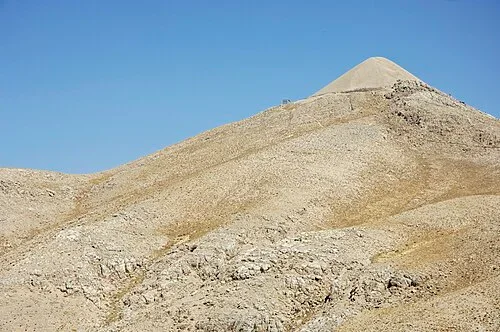 Ascent Trail and the Royal Tumulus
The Tumulus and the Search for the Tomb
That cone is no natural peak. It is a tumulus, an artificial mound built of loose crushed rock, rising about forty-nine metres. From side to side it stretches a hundred and fifty-two metres. The builders piled small stones instead of solid masonry, and it is possible the logic was cunning: anyone digging into loose rock would watch the shaft fill itself in again. The mound is assumed to hide a royal tomb, and people have been digging for it since the 1880s. An American archaeologist, Theresa Goell, first climbed the mountain in 1947 and came back to lead excavation campaigns from 1954. She gave the rest of her life to the site. The tomb of Antiochus has never been found. It is still believed to lie inside the mound.
Photo: Dosseman · CC BY-SA 4.0
03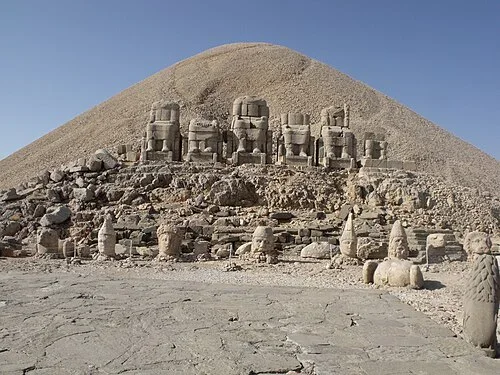 East Terrace: The Seated Gods and Fire Altar
The Colossal Seated Gods
Five colossal figures once sat in a row on this eastern terrace, king and gods side by side on stone thrones. Each stood eight to nine metres tall when intact. The names of the gods were inscribed on the statues themselves, so the court announced itself in writing as well as in stone. Behind the row, the great tumulus rises against the sky, and the seated figures sit with their backs to it, facing out over the terrace. The scale is hard to take in until a person stands beside one of the empty thrones.
Listen in the appnurettingülay(from T… · CC BY-SA 3.0
04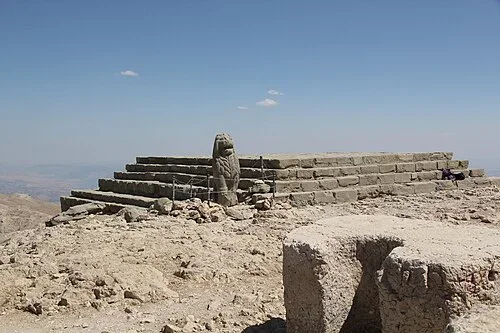 East Terrace: The Seated Gods and Fire Altar
The Great Altar of the East Terrace
Broad stone steps lead up a wide platform beside the seated figures, the great altar of the East Terrace. This is where the monument's religious purpose becomes most tangible. The astronomical and religious character of the sanctuary has led scholars to think it was used for religious ceremonies. The terrace faces east, which invites the thought that its rites were tied to the rising sun. No one can say exactly how those ceremonies ran, or how often. What survives is the setting: a level court of worship, built at two kilometres above the sea.
Listen in the appKlaus-Peter Simon · CC BY-SA 3.0
05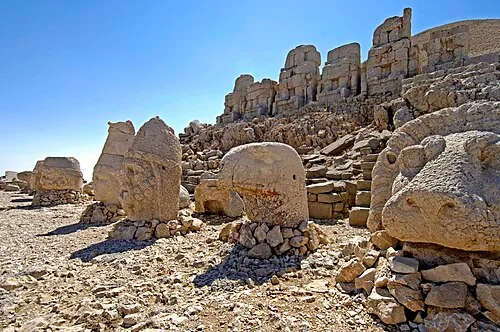 East Terrace: The Toppled Heads and Divine Guardians
The Fallen Heads
A row of enormous stone heads lies on the ground here, before the broken bodies of the seated statues. Earthquakes brought the figures down over the centuries. But the pattern of damage tells a second story. The noses were chiselled away, which suggests the heads were deliberately attacked as acts of iconoclasm against the pagan figures. Who did that, and when, no one knows. The statues have never been restored to their original places. The wider world learned of all this in 1881, when Karl Sester, a German engineer assessing transport routes for the Ottomans, came upon the site.
Listen in the appPhoto: Dosseman · CC BY-SA 4.0
06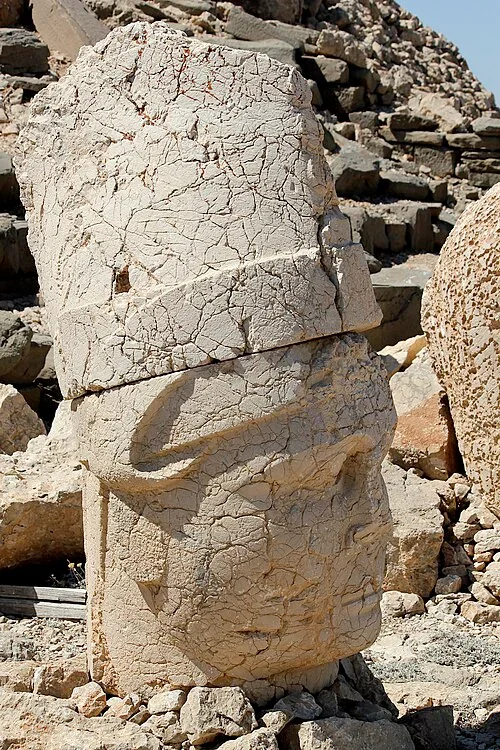 East Terrace: The Toppled Heads and Divine Guardians
Head of King Antiochus I
One of these heads wears a tall, cracked royal tiara, and it belongs to the man who ordered all the rest: King Antiochus the First. He reigned over Commagene from about 69 to 34 BC. He called himself Theos, a god, and commanded his own eternal worship on this mountain. Following the practice of the Mithridatic rulers of Pontus, he claimed descent from two royal lines at once, the Achaemenids of Persia and the Seleucids of Greece.
Listen in the appKlaus-Peter Simon · CC BY-SA 3.0
07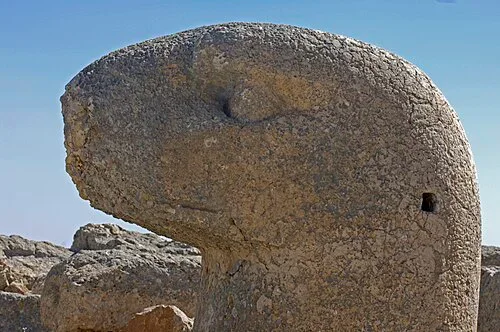 East Terrace: The Toppled Heads and Divine Guardians
The Guardian Eagle
Beside the gods stood guardians. Each terrace's seated figures were flanked by a pair of lions and a pair of eagles. This weathered head is one of the eagles, its beak worn smooth by wind and frost. A lion of the earth and an eagle of the sky, keeping company on a mountain built between two worlds.
Listen in the appPhoto: Dosseman · CC BY-SA 4.0
08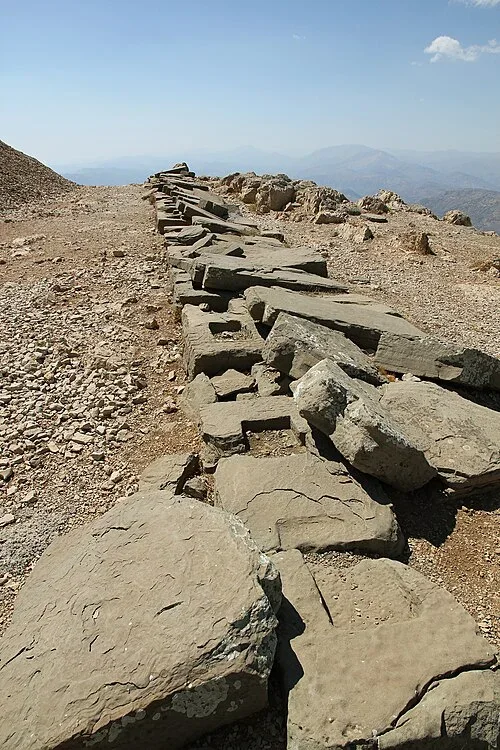 Northern Processional Corridor
The Northern Processional Way
A long line of stone slabs and bases runs along the north side of the tumulus. A path following the base of the mound here is evidence of a walled passageway linking the eastern and western terraces. This was the route by which processions could move between the two ceremonial sides of the sanctuary, passing around the royal mound. The walling survives as courses of dressed stone, now tumbled out of line. What each of the individual stone bases along the way once held, no one can now say.
Listen in the appKlaus-Peter Simon · CC BY-SA 3.0
09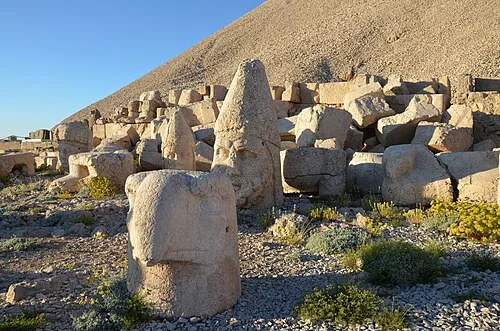 West Terrace: The Sunset Sanctuary
The West Terrace
The western side of the mountain holds a second court, arranged as a mirror of the first. More toppled statues, more guardian figures, the tumulus rising behind them. This terrace faces the sunset, and it is known for its low evening light, when the stone turns gold. Wildflowers and grasses have been reclaiming the ground between the ruins. The western orientation has suggested to some that rites were held here at dusk, though that is a reading of the layout rather than a recorded fact. Its own gods, its lion and its reliefs each carry a piece of the story.
Listen in the appKlearchos Kapoutsis from Santorini, Greece · CC BY 2.0
10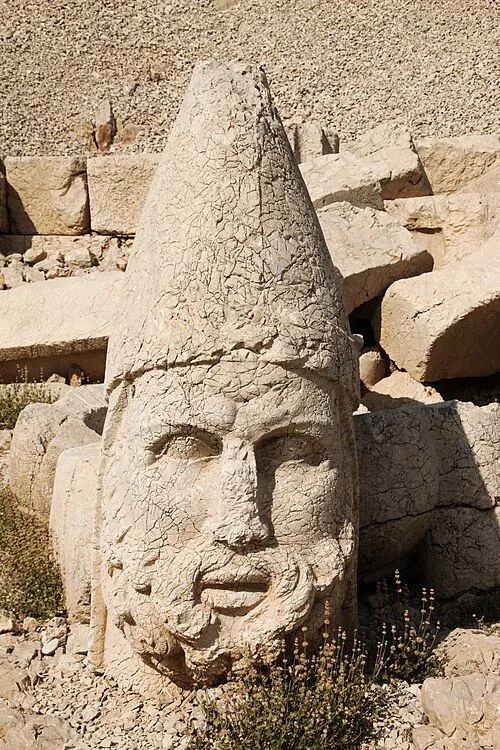 West Terrace: The Sunset Sanctuary
Zeus-Oromasdes
This bearded head wears a towering conical tiara, and it belongs to Zeus-Oromasdes, a god with two names and two homelands. Antiochus built composite deities for his mountain: Zeus-Oromasdes, Apollo-Mithras-Helios-Hermes, and Heracles-Artagnes-Ares. In doing so he drew heavily on Parthian and Armenian traditions, aiming to reinvigorate the religion of his ancestral dynasty. The statues show the fusion plainly. The faces are Greek in style, but the clothing and the hair are Persian. One look at this head gives both at once: a Greek face under a Persian hat.
Listen in the appKlearchos Kapoutsis from Santorini, Greece · CC BY 2.0
- 11
The Guardian Lion and the Lion Horoscope
The guardian lions, and the star-studded lion read as the sky on a single night in 62 BC.
- 12
The Handshake Relief
Two figures clasping hands across a stone slab, the sanctuary's message of royal favour at human scale.
- 13
Stele of Darius I, King of Kings
A Persian king carved in stone, and the double inheritance Antiochus wrote himself into.
Nemrut Dağı
Frequently asked questions
How much does the guide cost?
Free app download. Listed guide price: $1.99. Guide price shown in the app. Audio guide only. Venue admission is separate.
Can I listen without internet?
Yes. Download the guide’s audio, images, and maps in the app before your visit. Your downloaded content is then available offline.
Can I listen in my language?
This audio guide is available in 15 languages, including English.
Do I need to follow a schedule?
No. This is a self-guided experience. Choose your stops, pause whenever you like, and return to a story at your own pace.
At your own pace
Explore Nemrut Dağı.
Download Stanza, then search for “Nemrut Dağı”.
Free app download · Guide price shown in the app
Keep exploring
Audio guides — Turkey
Haliliye · 86 km
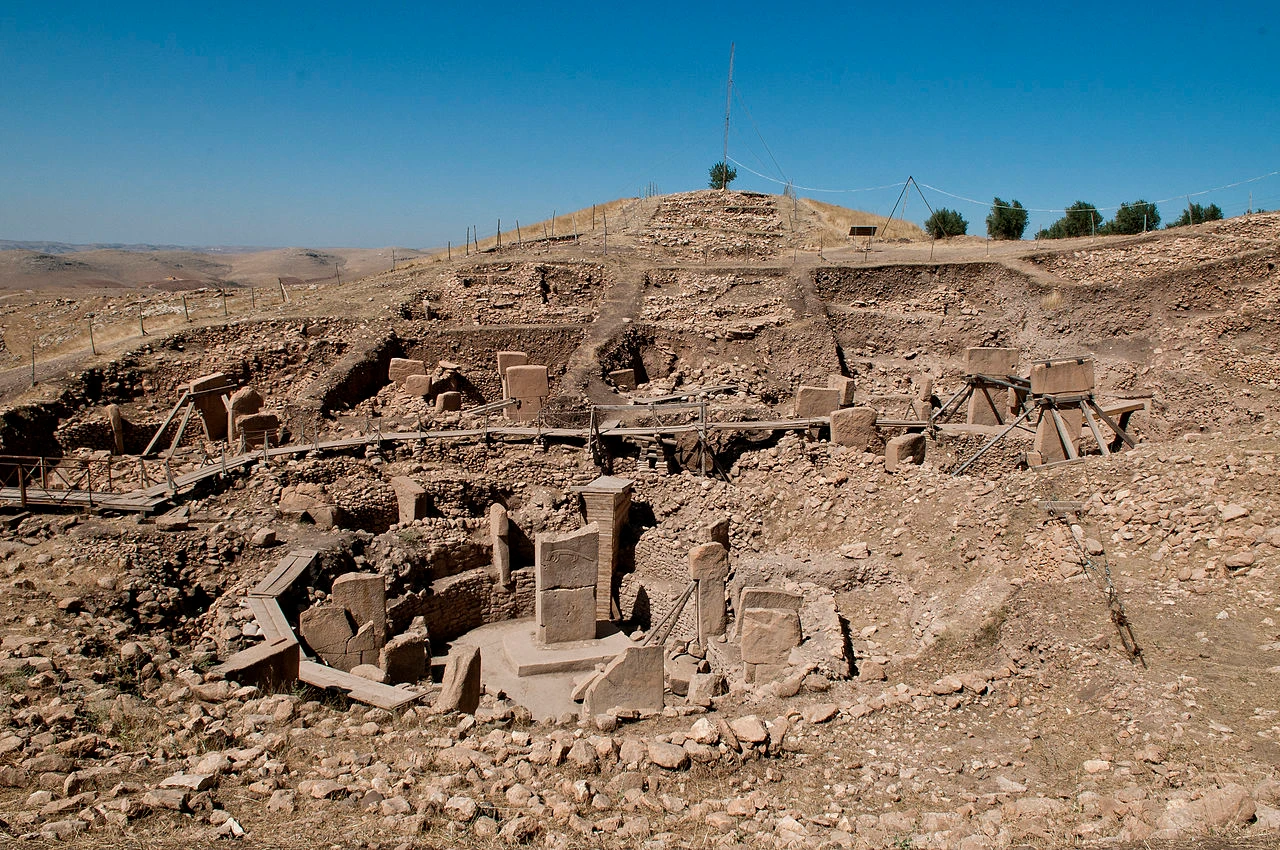
Göbekli Tepe
Content & sources
Photo: Teomancimit · CC BY-SA 3.0
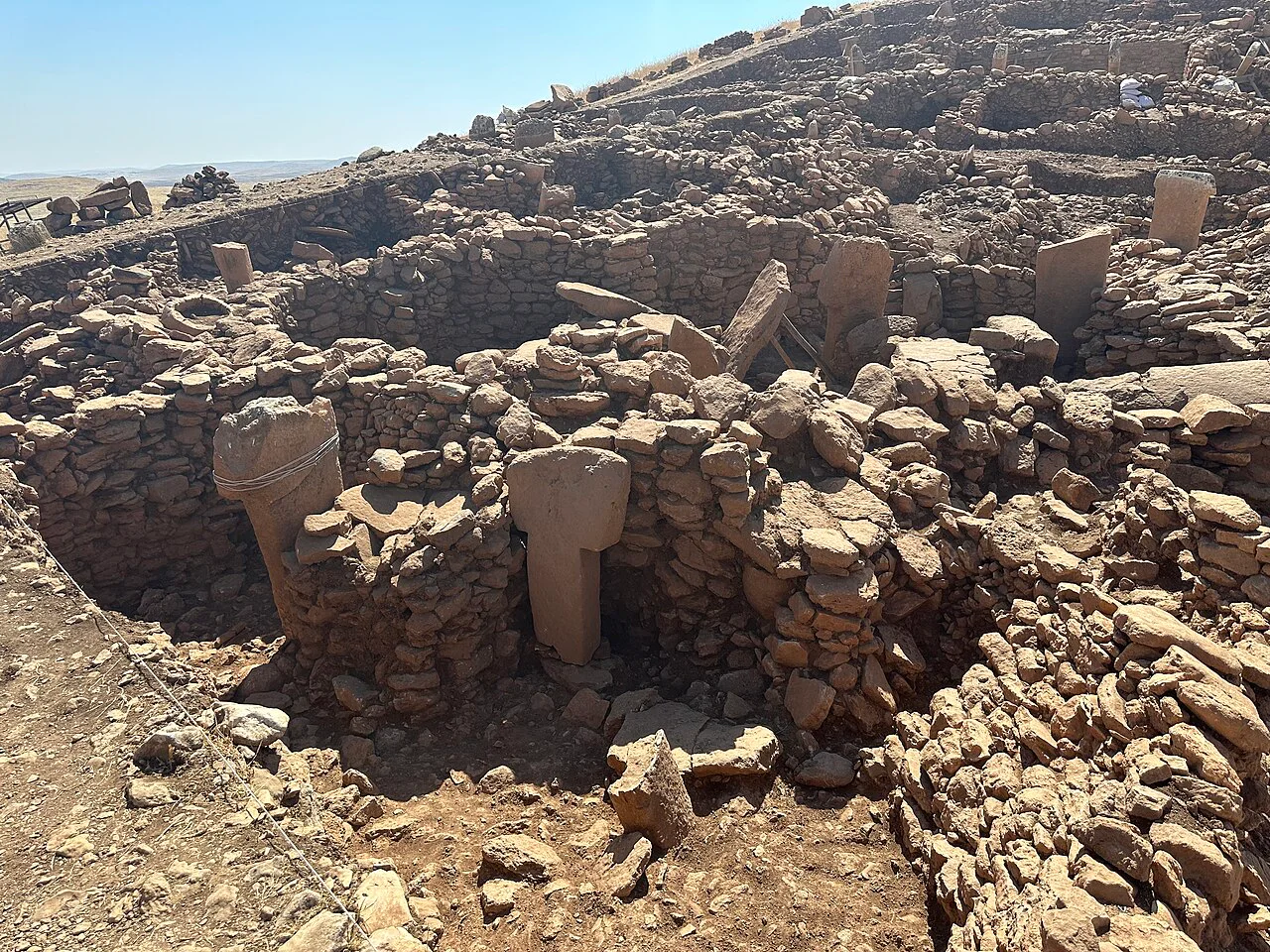
Haliliye · 111 km
Karahantepe
Content & sources
Photo: Vincent Vega · CC BY-SA 4.0
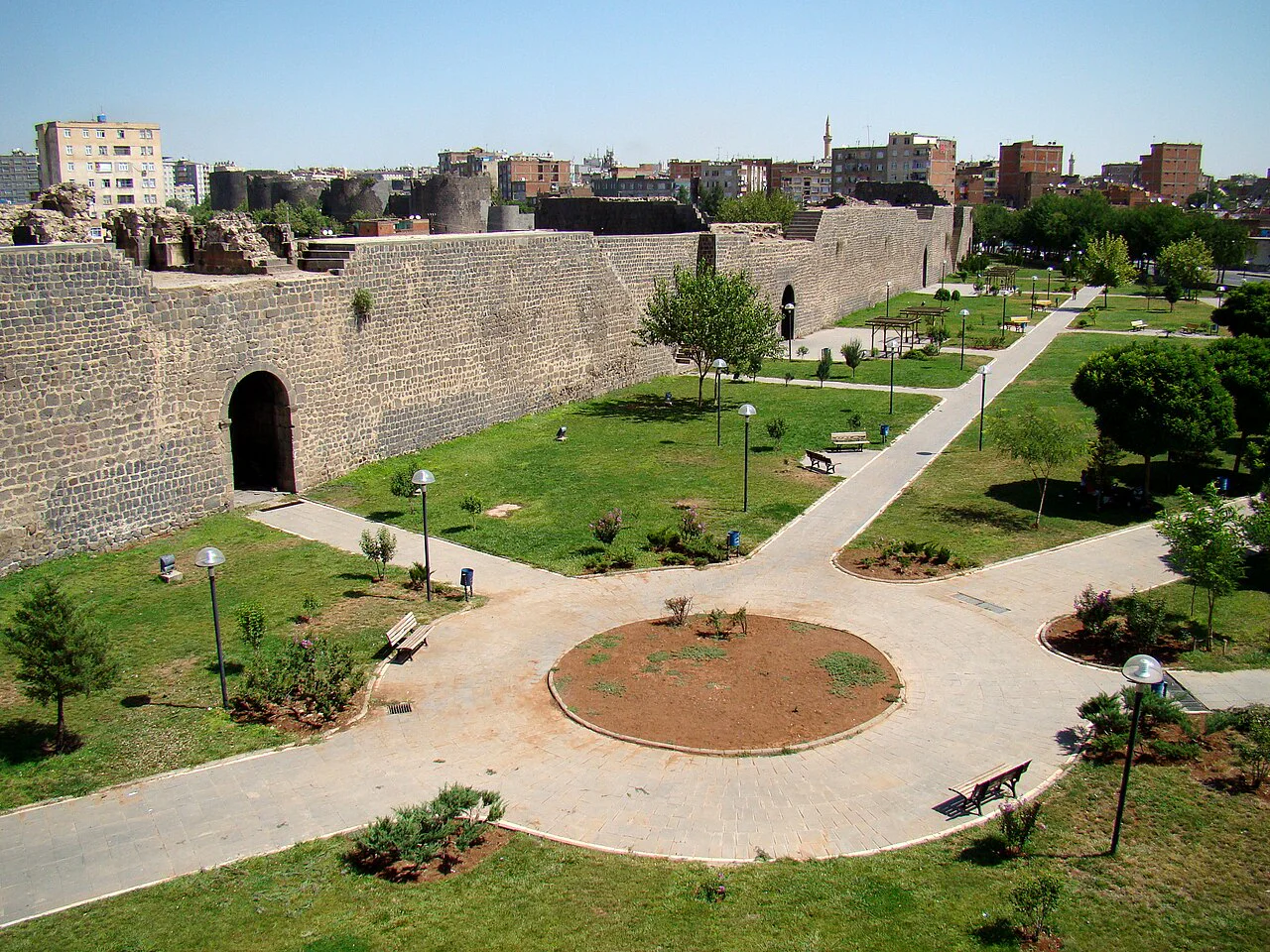
Diyarbakır · 131 km
Diyarbakır Kalesi
Content & sources
Bjørn Christian Tørrissen · CC BY-SA 3.0
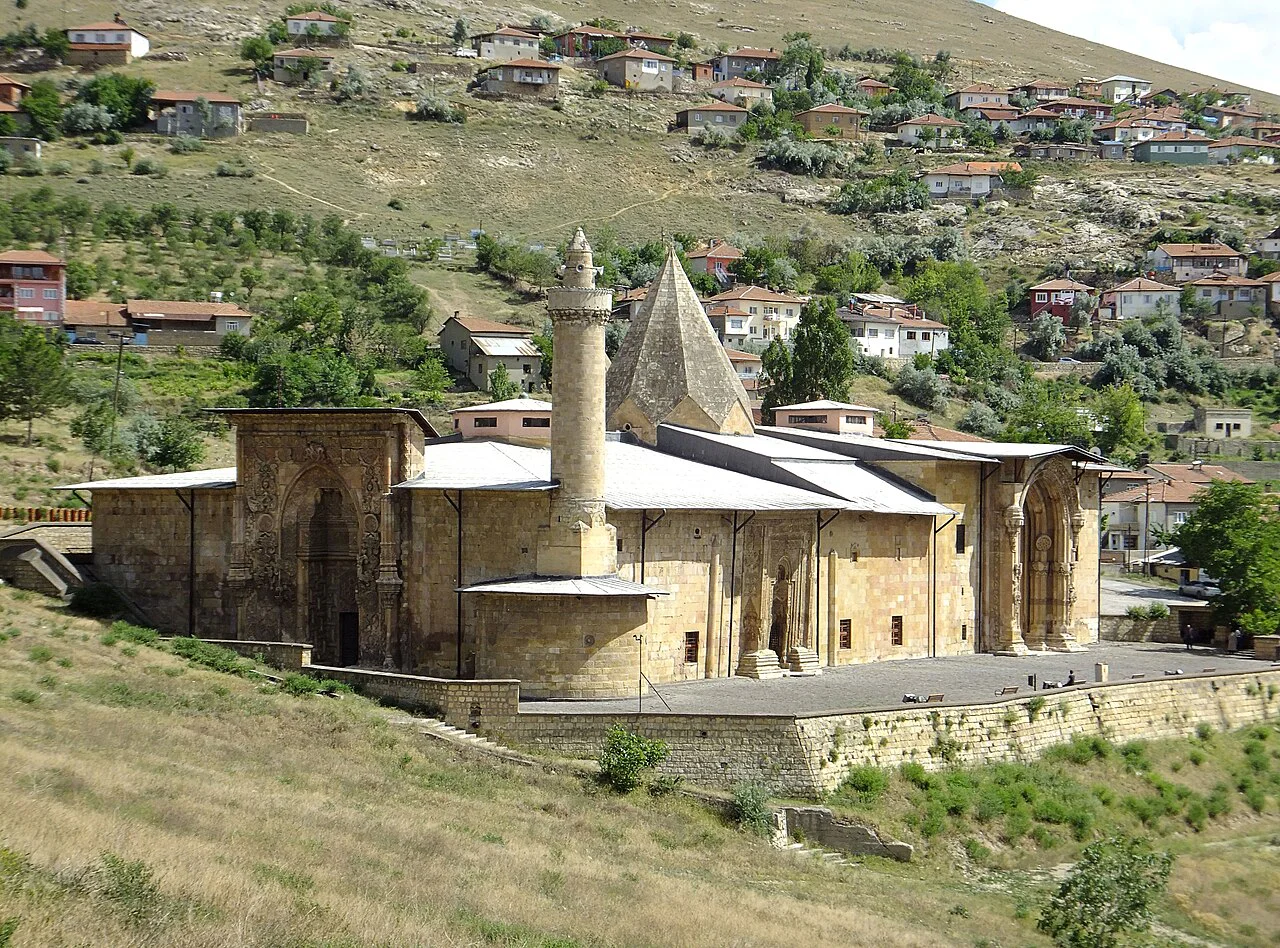
Divriği
Divriği Ulu Camii ve Darüşşifası
Content & sources
Photo: R Prazeres · CC BY-SA 4.0