Stanza · Audio guide
Durham Castle Audio Guide
A place to remember. A story to take with you.
Durham Castle is a Norman castle in Durham that has been occupied by University College since 1837. It is a cultural World Heritage Site that is open to the public through guided tours.
Download Stanza, then search for “Durham Castle”.
About the tour
One guide. Your kind of visit.
Durham Castle is a Norman castle in Durham that has been occupied by University College since 1837. It is a cultural World Heritage Site that is open to the public through guided tours.
Ready when you are.
- 01Get the free Stanza app.
iOS & Android
- 02Find your guide.
“Durham Castle”
- 03Download before you go.
Works offline
Audio guide / 11 narrated stops
Inside the guide
Get to know a few of the stories before you go. Open a stop to read more.
01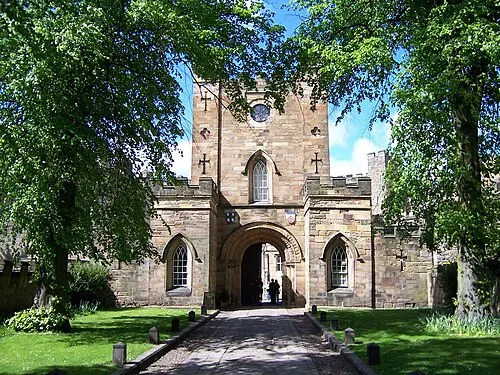 Palace Green Approach and the Norman Gatehouse
The Norman Gatehouse from Palace Green
You're standing on Palace Green, looking up at the gatehouse of Durham Castle. This is where our tour begins, at the threshold between the open green and the fortress beyond. Here's the story in one sentence: in 1072, six years after the Norman Conquest, William the Conqueror ordered a castle built here, to hold the newly taken North of England. It was raised in the style the Normans favoured everywhere, a wooden stronghold on an earthen mound with walled courtyards around it. But Durham's castle became something no other English castle quite became. The king handed it to the Bishop of Durham, telling him to rule on the Crown's behalf. Those bishops, and their successors, came to be called the Prince-Bishops, and they ruled this region for centuries from this very building. So keep one idea in mind as we go in: this place was built to be a stronghold and a palace at the same time. Everything you're about to see grows out of that double life. Walk through the gateway and into the courtyard.
Photo: Jungpionier · CC BY-SA 3.0
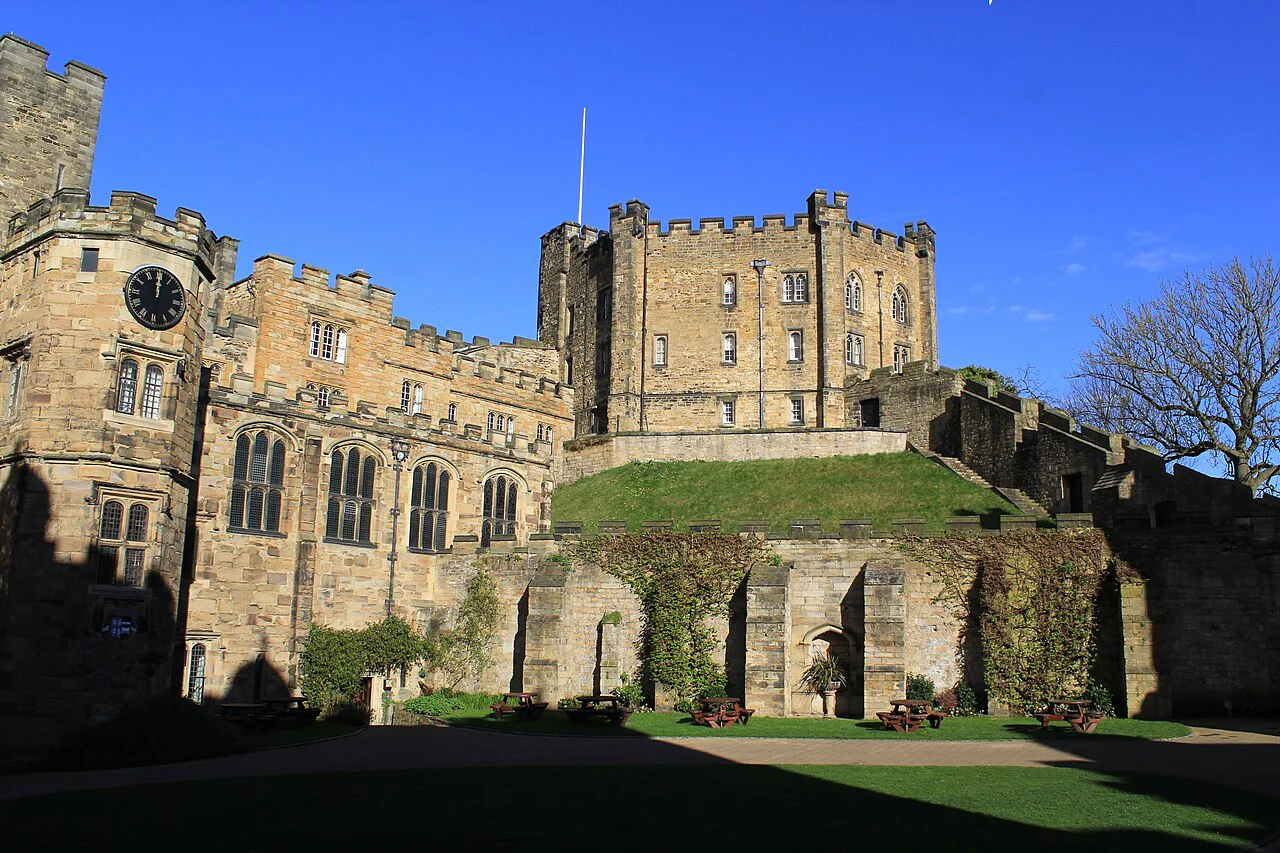
02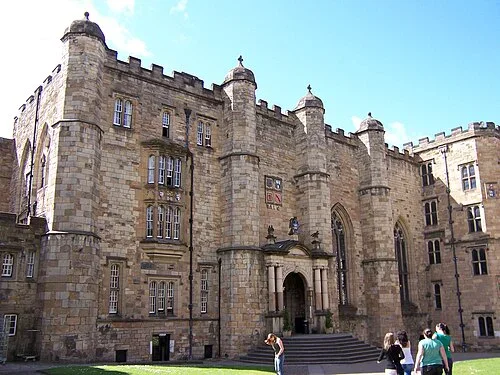 The Castle Courtyard and the Motte
The Castle Courtyard
This courtyard was the heart of the castle, the inner bailey, where the business of ruling Durham actually happened. And the man ruling here held powers almost unheard of in England. The Prince-Bishops could raise their own army, levy their own taxes, and mint their own coinage. The Crown gave them nearly free rein, partly because they stood as a shield against Scottish incursions from the north, and against rebellion within England itself. That power came at a price. The first of them, Bishop Walcher, learned that in May 1080. Rebels from Northumbria attacked this castle and besieged it for four days, and Walcher was killed. The line of prince-bishops he began lasted a remarkably long time. Look around you at the buildings ringing this space, and you may notice something curious: young people crossing the yard with books and laundry. Students live here today. We'll come to that part of the story at the Great Hall. First, follow me towards the great grassy mound you can see rising ahead.
Photo: Jungpionier · CC BY-SA 3.0
03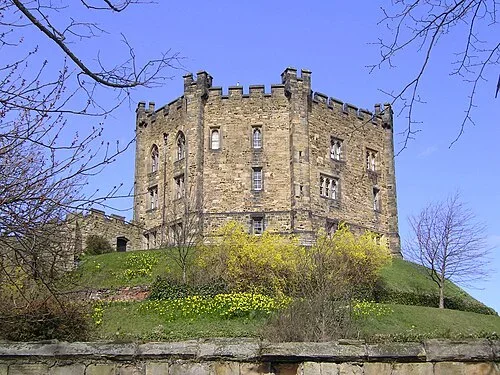 The Castle Courtyard and the Motte
The Keep on the Motte
The mound in front of you is the motte, the earthen hill at the centre of the original Norman design. A keep, the strongest tower of the castle, commands it from the top, with the walled courtyards, the baileys, spread around below. The whole peninsula you're standing on is a high rock above the River Wear. Now, a story about the man who supervised this castle's construction. He was Waltheof, Earl of Northumbria, a native Northumbrian noble, and William the Conqueror put him in charge of building the very fortress meant to hold his own people. Waltheof later joined a revolt against William, and in 1076 he was executed for treason. The man trusted to raise the king's castle died as a rebel against the king. The fortress didn't stand still after him. In the 1300s, Bishop Thomas Hatfield rebuilt the keep and enlarged the mound beneath it, so the castle kept evolving as the centuries passed. From here we'll step inside, to the oldest room in the building.
Listen in the appPJMarriott · CC BY 3.0
04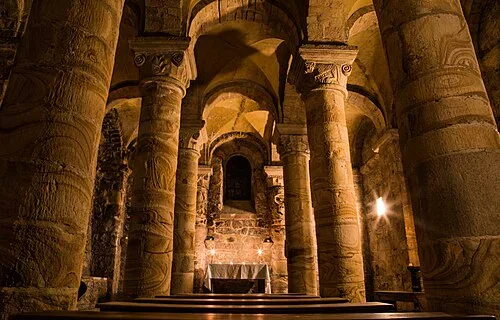 The 11th-Century Norman Chapel
The Norman Chapel
This is the Norman Chapel, the oldest accessible room in the whole castle. Take a moment to feel the proportions: a low rectangular chamber, about ten metres long and just over six metres wide, its stone ceiling carried on six sturdy columns. Notice how the room sits pressed against the masonry beside it, because it was originally built against the inside of the castle's inner bailey wall. The chapel was part of the fortress from very early on. It was probably built in 1075, or shortly after 1080, in the castle's first decades. There's something else worth knowing. One historian, David Rollason, has argued that this room may be the church where the body of Bishop William de St-Calais was laid before his burial. Now look closely at the tops of those columns. There's carving on them, and it tells its own story.
Listen in the appMatthew Hoser · CC BY-SA 4.0
05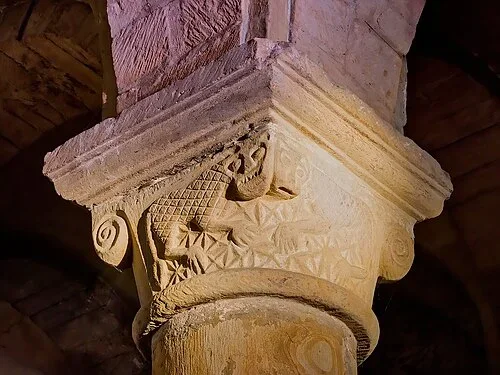 The 11th-Century Norman Chapel
The Carved Capital
Here's one of the six carved capitals up close: figures and patterns cut into the stone at the top of a column. Look at the style of it. This is Anglian work, the tradition of the Anglo-Saxon craftsmen of Northumbria, not the Norman manner the conquerors brought with them. The likeliest explanation is that Anglian hands built this chapel, quite possibly forced labour, the conquered people raising their conquerors' fortress. If so, these carvings are their mark, left inside the stone of a castle built to subdue them. The chapel itself had a rough passage through the centuries. In the 1400s, the expanded keep outside blocked up its three windows, and the room sank into disuse. In 1841 it served simply as a corridor to reach the keep. During the Second World War, the Royal Air Force used it as a command and observation post. And then, for the rest of the 1940s, this sacred space was a bicycle shed for students. It was re-consecrated in the 1950s, and it has been cared for ever since. Next, we'll see how the castle grew from stronghold into something grander.
Listen in the appBenjamin Smith · CC BY-SA 4.0
06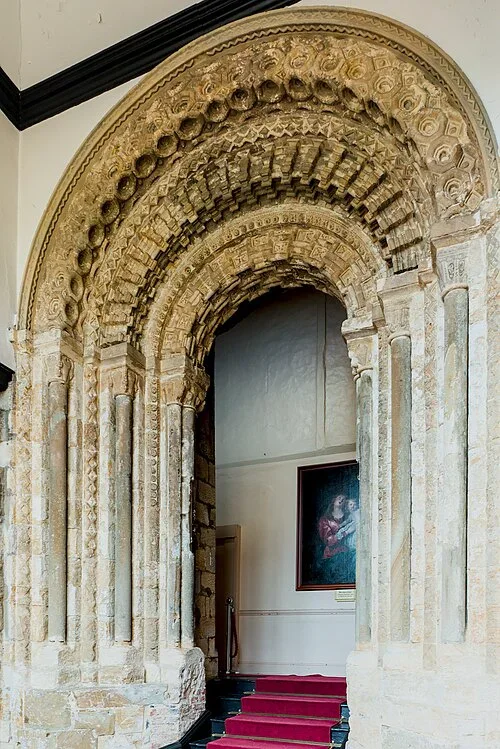 The Norman Gallery and Bishop Cosin's Staircase
Bishop Puiset's Norman Archway
Look at this doorway: arches within arches, carved with zigzag patterns and rows of ornament, Romanesque work at its most confident. This is the Norman archway built by Bishop Hugh de Puiset in the twelfth century. De Puiset's work made the castle grander still. De Puiset was building on the same grand scale across the way, too: he also built the Galilee, the chapel at the west end of Durham Cathedral. But there's a limit to this story of independence, and it came in 1177. King Henry II seized the castle after a disagreement with de Puiset. Even a man with all those powers could lose his fortress to the king simply by quarrelling with him. The archway survived that power struggle, and it survived the centuries after. Follow me on, to a staircase that shows how the bishops' household lived in a later age.
Listen in the appBenjamin Smith · CC BY-SA 4.0
07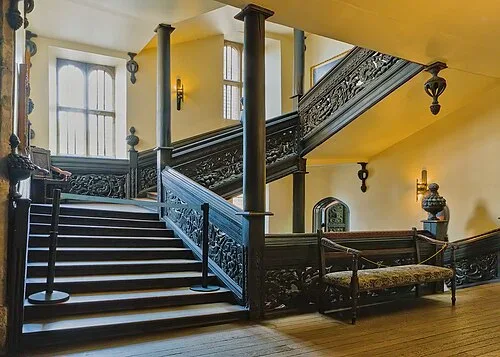 The Norman Gallery and Bishop Cosin's Staircase
The Black Oak Staircase
Here's a short stop, but a striking one: a staircase of blackened oak, heavily carved, sweeping up through the interior. This woodwork belongs to the seventeenth century, the era of Bishop Cosin, when the castle's rooms were remodelled for comfort and ceremony rather than defence. Think about what that means. Centuries after the first wooden tower went up on the motte, the bishops were still here, and their household wanted panelling, carved balustrades and handsome stairways, the furnishings of a great Stuart household. The dark oak you see was the face the castle turned to its guests in that age. Cosin's hand reached further through the castle, too, and we'll meet his work again shortly, in the chapel. For now, let's move on to the largest room in the building, and the one where the castle's newest life began.
Listen in the appBenjamin Smith · CC BY-SA 4.0
08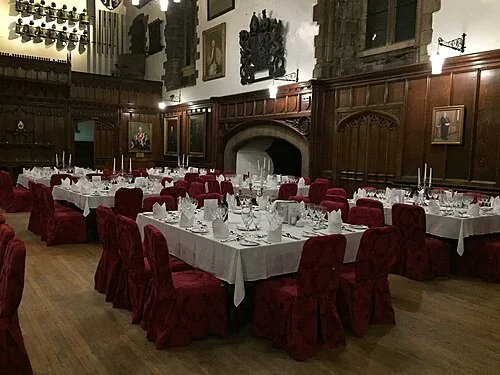 Bishop Bek's Great Hall
This is the Great Hall, the grandest chamber in the castle. It was created in the early fourteenth century by Bishop Antony Beck, and a hall like this was a statement. Its sheer size told every visitor that the man who feasted here commanded wealth and power on a princely scale. Bishop Thomas Hatfield, whom you heard about at the keep, later added a wooden minstrels' gallery, so musicians could play down over the diners. Later bishops kept adjusting the room, enlarging it, then reducing it again. Today it stands fourteen metres high and over thirty metres long. Now look at the tables in front of you, laid with white cloths and glasses. That's not a reconstruction. Since 1837, this castle has been home to University College, Durham. The story goes back to 1836, when the bishops lost their temporal powers under an Act of Parliament. Bishop William Van Mildert then gave the castle to the university. His successor, Edward Maltby, finished renovating it, and the students moved in. They still eat their dinners in the bishop's hall, under the same roof Beck raised for his feasts. Our next stop is another room of worship.
Listen in the appPhoto: Sharonlflynn · CC BY-SA 4.0
09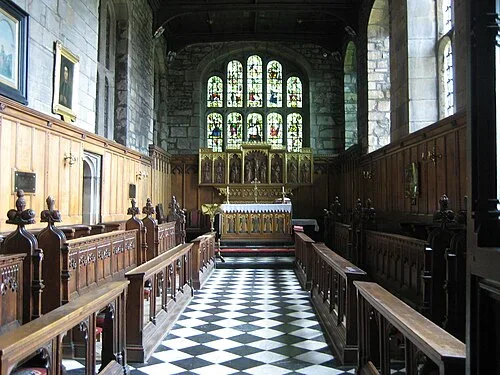 Tunstall's Chapel and Medieval Misericords
Tunstall's Chapel
This is Tunstall's Chapel, named for Cuthbert Tunstall, the Bishop of Durham who had it built in the sixteenth century. Look at the wood-panelled walls, the carved pew ends, the coloured glass above the altar, and the black and white chequered floor running down the middle. It was later modified in the seventeenth century by Bishop Cosin, the same bishop whose oak staircase you saw a little while ago. Think of this chapel as the last in a line. Worship in this castle goes back to the Norman Chapel, the oldest room you visited earlier in the tour, in the castle's first decades. From that eleventh-century chamber, through the centuries of the prince-bishops, to this Tudor chapel, the practice of prayer here has kept returning, century after century. And it continues today: the chapel is used for worship within the college, so the students who dine in Beck's hall also keep this room in use, nearly a thousand years after the first chapel was built against the bailey wall. Before we leave, one small carving here deserves a closer look.
Listen in the apptomaszd · CC BY 2.0
10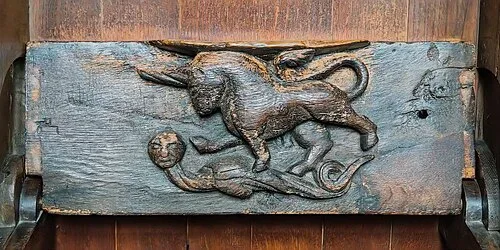 Tunstall's Chapel and Medieval Misericords
A Carved Misericord Seat
Lean in and look at this carved wooden seat. It's a misericord, and here's how these worked. The seat is hinged, so it tips up. When a worshipper stood for long stretches of prayer, he could fold the seat forward and rest discreetly on a small ledge underneath, hence the name, from the Latin for mercy. That underside ledge was where the carvers had their fun. The solemn faces of the chapel above gave way, down here, to whatever the craftsman's imagination produced: beasts, monsters, scenes from everyday life. This one shows a striding creature carved over a human figure. Nobody up front in the service ever saw it; only the seated and the curious ever did. It's a small reminder that the people who built and furnished these rooms were individuals with humour and skill, not just periods and styles. Now, for our final stop, we'll step outside for the widest view of all.
Listen in the appBenjamin Smith · CC BY-SA 4.0
- 11
Castle and Cathedral over the Wear
The peninsula above the River Wear, World Heritage since 1986, and the fog that saved the cathedral.
Durham Castle
Frequently asked questions
How much does the guide cost?
Free app download. Listed guide price: $1.99. Guide price shown in the app. Audio guide only. Venue admission is separate.
Can I listen without internet?
Yes. Download the guide’s audio, images, and maps in the app before your visit. Your downloaded content is then available offline.
Can I listen in my language?
This audio guide is available in 15 languages, including English.
Do I need to follow a schedule?
No. This is a self-guided experience. Choose your stops, pause whenever you like, and return to a story at your own pace.
At your own pace
Explore Durham Castle.
Download Stanza, then search for “Durham Castle”.
Free app download · Guide price shown in the app
Keep exploring
Nearby audio guides
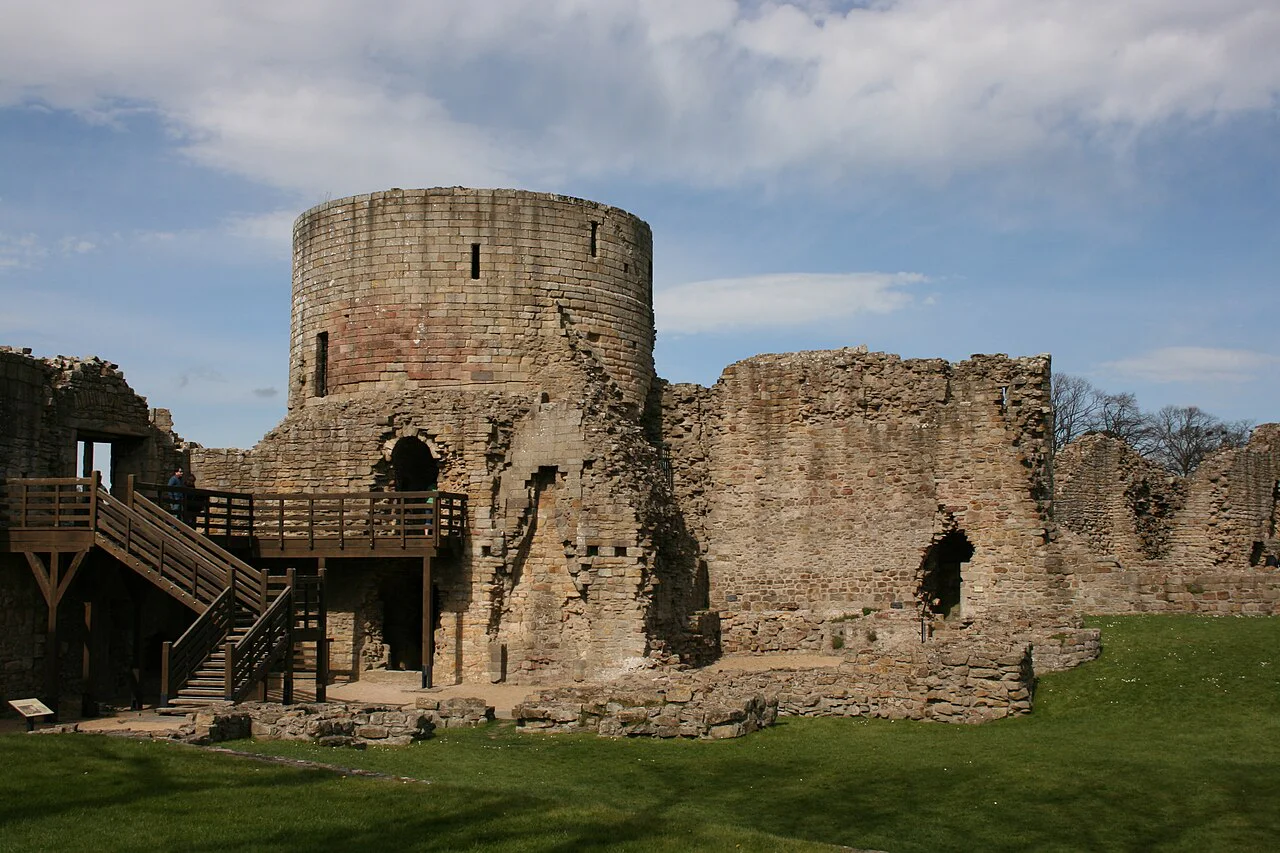
Barnard Castle · 34 km
Barnard Castle
Content & sources
Robert Scarth from London, England · CC BY-SA 2.0
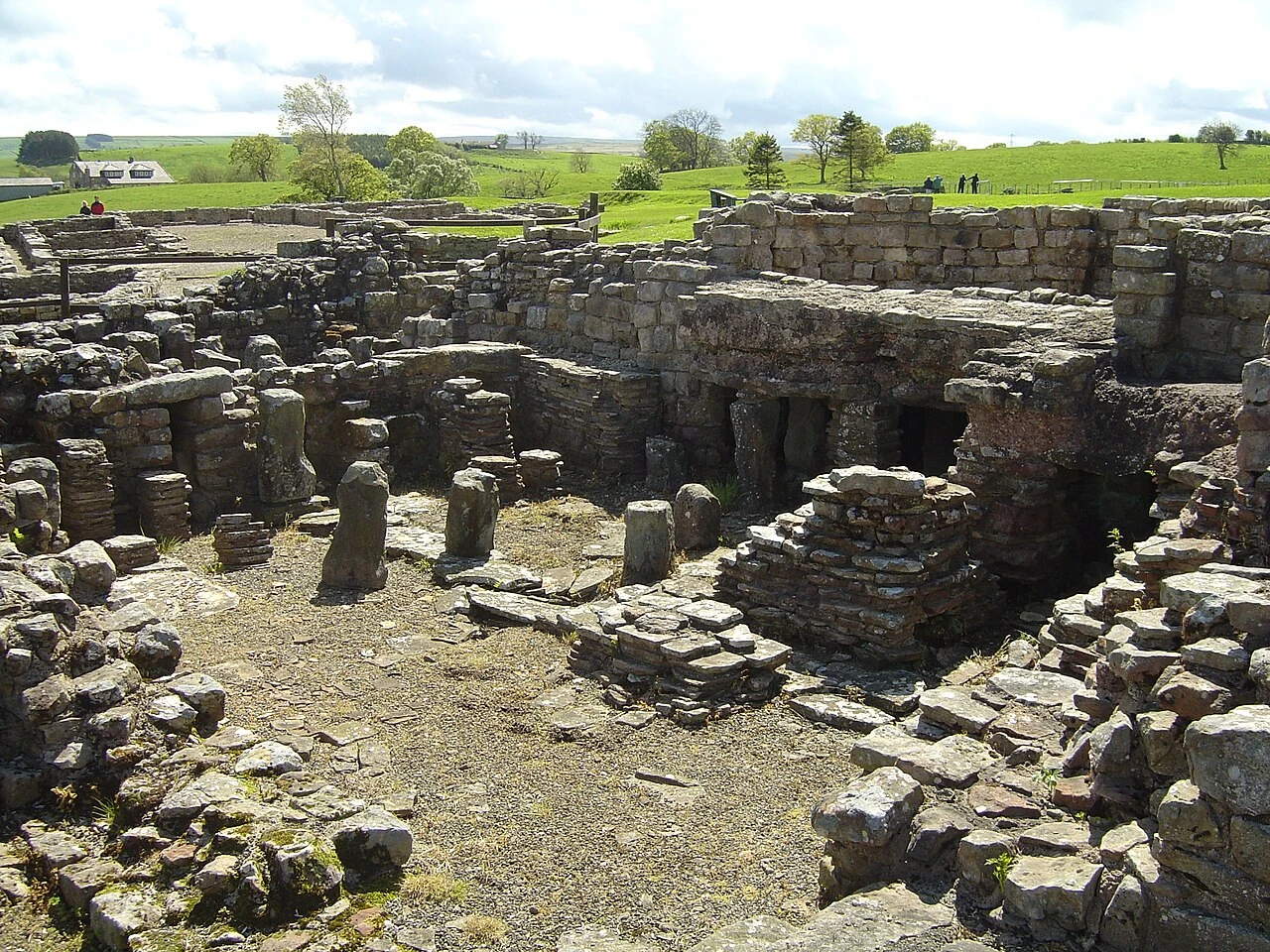
Bardon Mill · 56 km
Vindolanda
Content & sources
Photo: Voice of Clam · Public domain
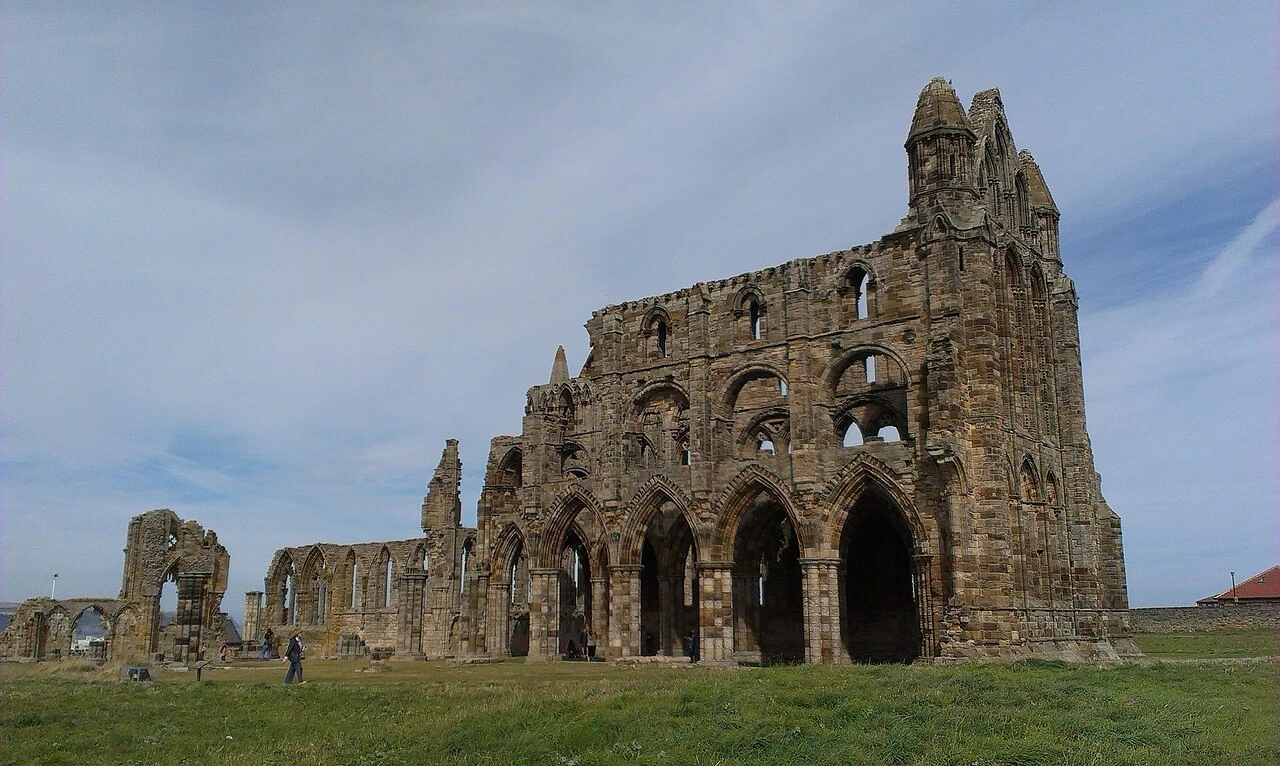
Whitby · 70 km
Whitby Abbey
Content & sources
Photo: Aude · CC BY-SA 3.0
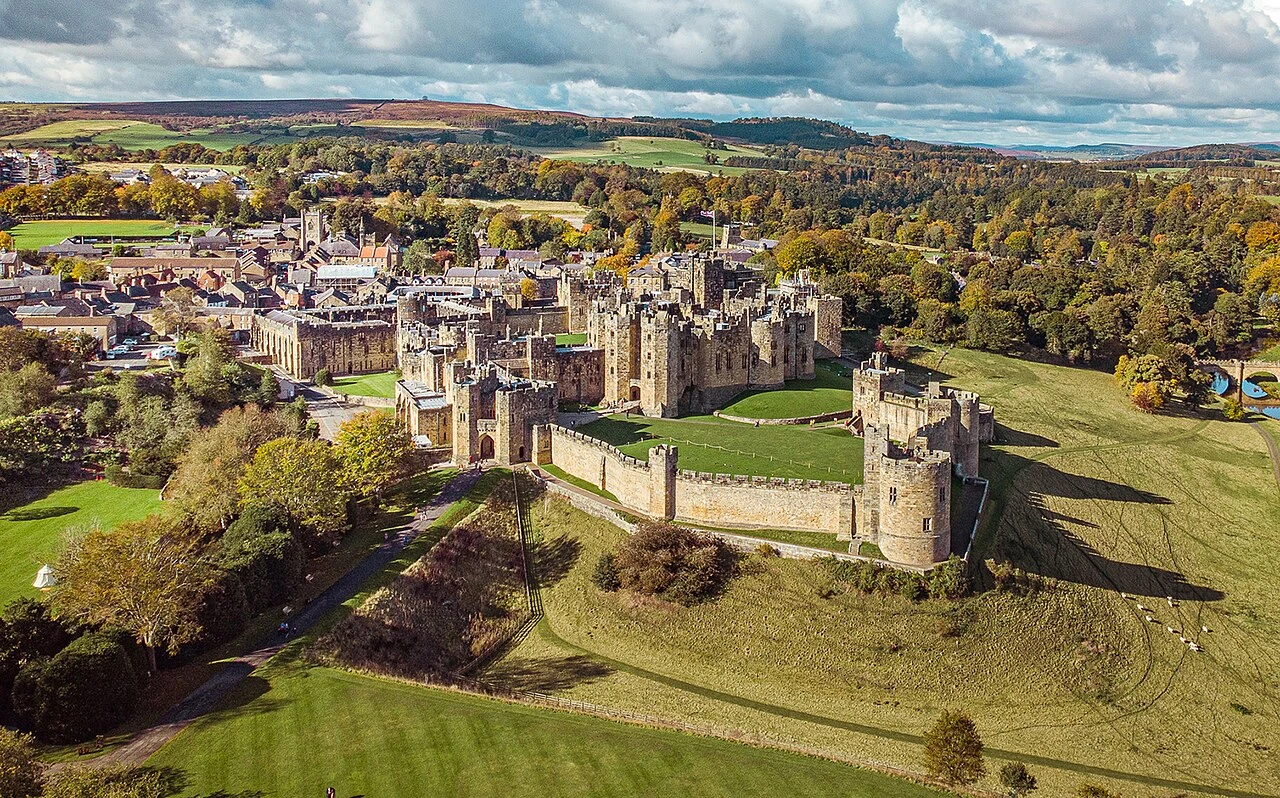
Alnwick · 72 km
Alnwick Castle
Content & sources
Clementp.fr · CC BY-SA 4.0