Languages
15Vindolanda Audio Guide
Vindolanda is an archaeological site in Bardon Mill, United Kingdom. Explore it with Stanza's guided offline audio tour — narrated in 15 languages.
Quick Facts
18
Stops
15
Languages
100%
Offline
📍 Bardon Mill, United Kingdom · 54.9916°N, -2.3595°E
About Vindolanda
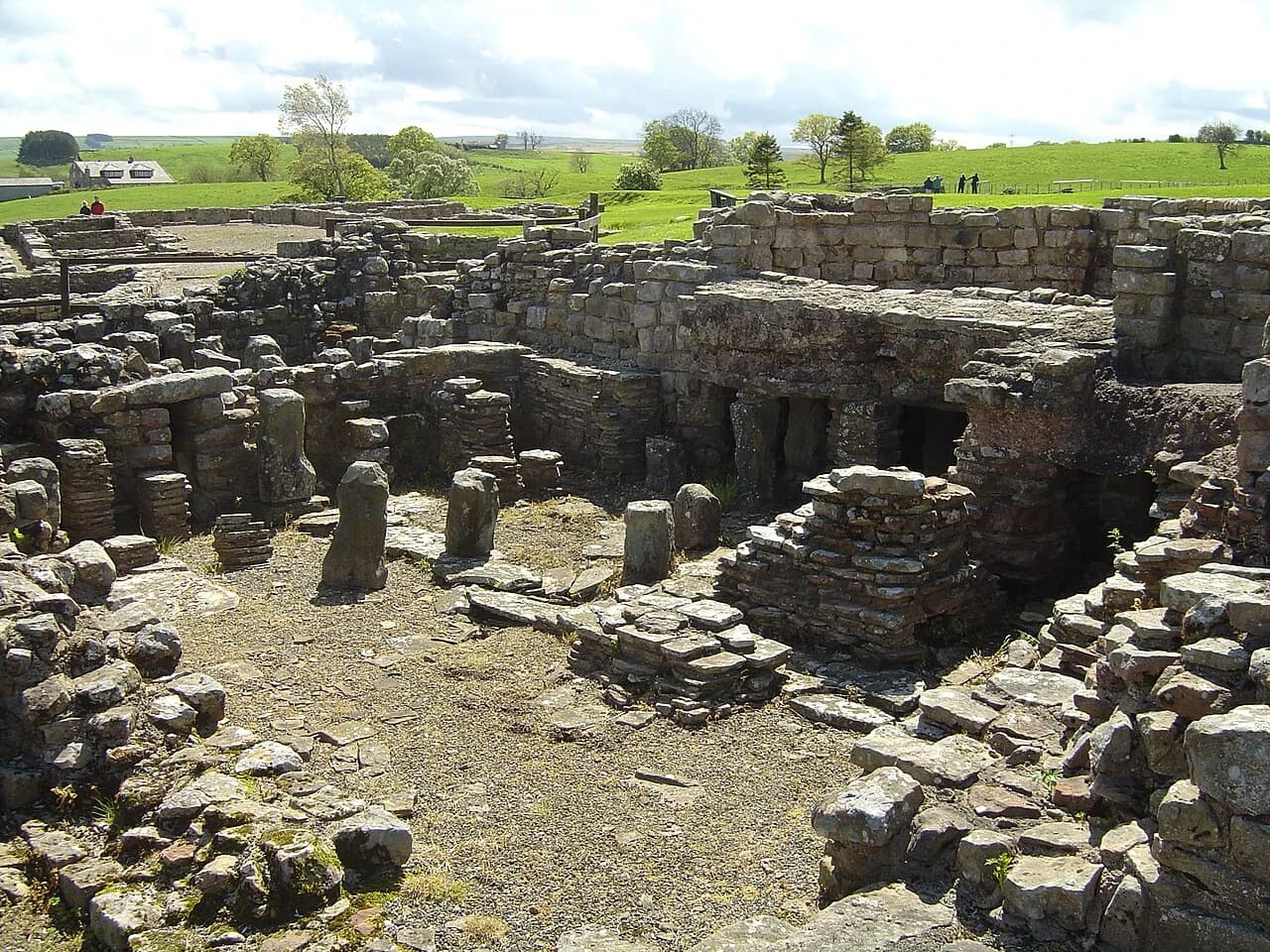
Vindolanda is a notable Roman auxiliary fort situated near Hadrian's Wall in Northern England. It is internationally renowned for the discovery of the Vindolanda tablets, which provide unique insights into daily life on the Roman frontier.
Vindolanda is also known as Vindolanda Roman Fort, Chesterholm Roman Fort, Castra Vindolanda, Chesterholm-Vindolanda (Samian Ware Discovery Site).
This self-guided audio tour features 18 narrated stops organized across 5 sections, including Chesterholm Museum and the Wonders of Preservation, The Vindolanda Tablets: Voices from the Past, Museum Gardens and Reconstructions, Fort Entrance and the Nine Periods of Occupation, The Praetorium: Command and Administration. As a archaeological site, Vindolanda offers a unique cultural experience in the heart of Bardon Mill, United Kingdom.
The Stanza audio guide is available in 15 languages and works entirely offline — download the complete tour including audio narration, maps, and images before your visit. As you walk through Vindolanda, GPS-triggered narration plays automatically at each point of interest.
Last updated:
What you will hear
Chesterholm Museum and the Wonders of Preservation
Start at the museum to understand why Vindolanda is unique: the oxygen-free soil that preserved organic life. Include the museum exterior as the entry point and specific organic artifacts like leather shoes and the boxing glove reconstruction.
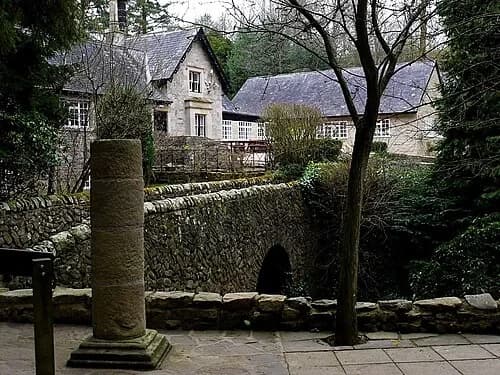
The Chesterholm Museum
Welcome to Vindolanda, a Roman frontier fort occupied for 322 years, from 85 AD to 407 AD. This site occupies a unique position in archaeological history because of the local soil. Unlike many other Roman sites where organic materials have long since decayed, the ground here is waterlogged and lacks oxygen. This natural phenomenon acted as a time capsule, preserving leather, wood, and even textiles that would usually vanish within decades. The 19th-century house that currently serves as the museum was built by local residents long before formal excavations began. At the time, builders simply scavenged high-quality squared stones from the visible Roman ruins to construct the walls you see today. This structure now protects the very artifacts that were once buried beneath its foundations. As you explore, you are seeing the results of decades of careful excavation in one of the most productive archaeological sites in the Roman world.
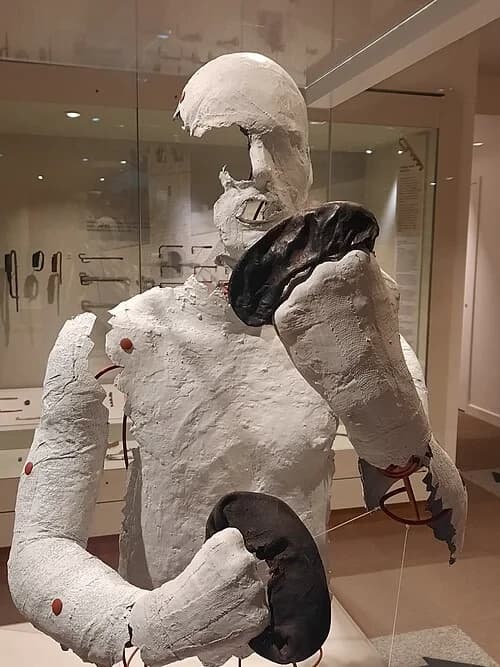
The Roman Boxing Gloves
In 2017, archaeologists made a groundbreaking discovery when they unearthed two leather boxing gloves dating to approximately 120 AD. These items are the only known surviving examples of Roman boxing gloves in the world. Unlike the heavy, metal-weighted gear used in gladiatorial combat, these were designed for sparring and fitness training. They were crafted to fit snugly over the knuckles, providing protection during practice matches. One glove still shows the indentation of the wearer's fingers, offering a direct physical link to a soldier who lived here centuries ago. The discovery reminds us that even on a rugged military frontier, life was not solely about combat and duty. Soldiers had access to sports and recreational activities to maintain their physical readiness and morale. These gloves were found in a layer of debris beneath a later stone floor, suggesting they were discarded when they became too worn for use, only to be rediscovered nearly two thousand years later.
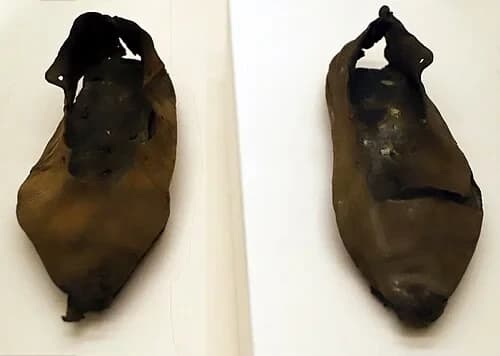
Roman Child's Shoes
The remarkably intact condition of these leather shoes demonstrates the extraordinary preservation capabilities of the oxygen-free soil at Vindolanda. Because organic materials did not rot, we can see incredible details that are usually lost to time, such as the delicate leather stitching and the patterns of the tiny iron studs on the soles used for grip. These studs were essential for navigating the muddy terrain of the northern frontier. While many people view Roman forts as exclusively male environments, the discovery of thousands of shoes in various sizes tells a different story. The presence of small, decorative footwear and tiny child-sized shoes proves that women and children lived here alongside the soldiers. Families were an integral part of the community on the edge of the empire, following the garrison as it moved between different postings along the frontier. Each shoe was handmade, often bearing the unique wear patterns of the individual who wore it nearly two millennia ago.
The Vindolanda Tablets: Voices from the Past
Dedicated to the world-renowned wooden leaf-tablets. Use a display overview followed by the most famous specific tablet: the birthday invitation.
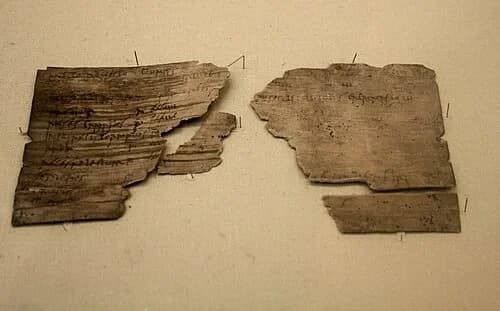
Voices of the Garrison
Administrative tablets like these provide the hard data needed to reconstruct the logistics of the Roman military. They detail the movement of hundreds of men and the vast quantities of supplies needed to sustain them. Lists mention grain, wine, lard, and salt, along with the names of the merchants who provided them. The tablets were often scored down the middle and folded after the ink was dry to keep the contents private and protect the text during transit. Some letters were sent from families far away, containing news from home or requests for money. The sheer volume of correspondence suggests a highly literate society where even common soldiers and their families used written communication regularly. By examining these fragile slices of wood, historians have learned how the Roman army managed its resources and maintained its presence in hostile territory. These documents turn the silent ruins into a place filled with names, ranks, and the concerns of real people living on the edge of the empire.
Museum Gardens and Reconstructions
Transition from the museum to the gardens to see full-scale reconstructions of Roman structures, including a temple and gravestones.
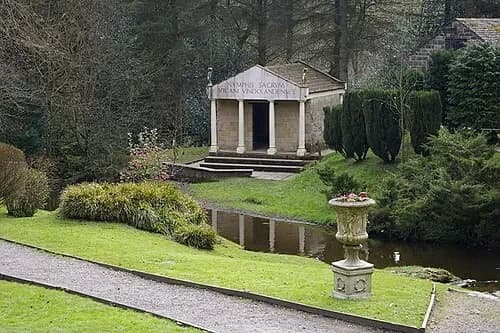
The Garden Temple
Outside in the museum gardens, you can see this reconstruction of a small Roman temple. It represents the spiritual life of the garrison, which was a true melting pot of cultures. The Roman army was composed of auxiliary units recruited from provinces across the empire, including modern-day Germany, France, and the Netherlands. These soldiers brought their own traditional gods with them, blending them with the Roman pantheon and local British deities. This specific reconstruction is based on architectural fragments found during excavations at Vindolanda. Notice the dedication inscribed above the entrance to the 'Nymphs.' In Roman religion, nymphs were spirits associated with nature, particularly springs and rivers. Because a freshwater spring flows nearby, it is likely that soldiers and their families would have come to a site like this to offer sacrifices and prayers for health and protection. This building demonstrates how the Romans integrated their surroundings into their religious practices, honoring the local spirits of the land they occupied.
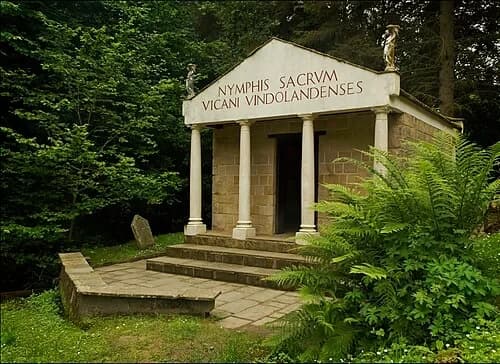
Sacred Inscriptions
Examine the architectural details of the temple reconstruction to see the classic elements of Roman design adapted for a frontier setting. The building features small, sturdy columns and a gabled roof, constructed from the same local yellow sandstone used throughout the site. While the fort itself was a military zone, areas like this garden temple were accessible to the 'Vicani'—the civilian villagers who lived just outside the fort walls. These civilians included the families of soldiers, as well as merchants and craftsmen who provided essential services to the army. Religious sites acted as common ground where the military and civilian populations could interact and worship together. This stop serves as a transition from the portable artifacts inside the museum to the massive stone structures of the archaeological site itself. The use of local materials highlights the Romans' ability to utilize regional resources to replicate the familiar architecture of their homeland, creating a sense of permanence and authority in the wild northern landscape.
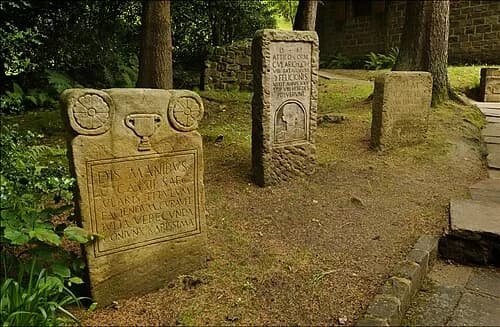
The Memorial Stones
Stone memorials like these were a common sight along the roads leading into Roman forts. These particular examples are replicas of gravestones found during excavations at Vindolanda. In the Roman world, burial was forbidden inside the fort or town walls, so cemeteries were established along the main highways. This ensured that every traveler passing by would see the names and achievements of the deceased. These stones commemorate soldiers from auxiliary units, such as the Cohors I Tungrorum, who came from the area of modern-day Belgium. Many memorials feature a carved portrait of the individual, often shown in their military gear or holding the tools of their trade. These images were intended to keep the memory of the deceased alive for future generations. By reading the inscriptions, we learn about the ages, ranks, and origins of the men who served here. These stones remind us that the history of Vindolanda is built upon the lives of thousands of individuals who lived and died far from their original homes.
Fort Entrance and the Nine Periods of Occupation
Entering the main fort area. This stop explains the successive timber and stone forts built over three centuries.
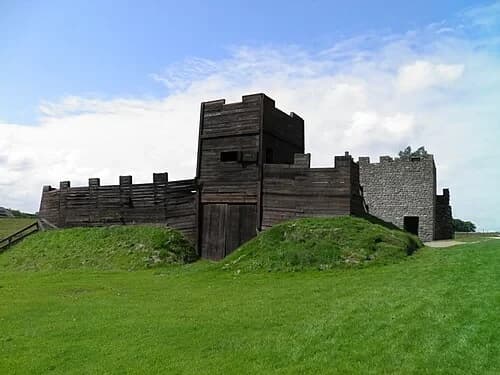
The Timber Ramparts
Nine distinct layers of occupation have been identified at Vindolanda, showing how the site evolved over three centuries. This reconstruction illustrates the earliest phases of the fort, which began around 85 AD. At that time, the Roman army relied on timber and turf for construction rather than stone. These early ramparts were built by stacking layers of cut turf to create a massive wall, which was then topped with a wooden palisade and sharp stakes. Elevated walkways provided sentries with a clear view of the surrounding hills, allowing them to watch for northern raiders or tribal movements. The use of wood allowed the army to establish a secure base quickly using local timber from the surrounding forests. However, wood rotted quickly in the damp British climate, requiring constant maintenance or complete rebuilding every few decades. Each time a new fort was built on top of the old one, the previous layers were flattened and sealed, creating the oxygen-free conditions that preserved the organic artifacts you saw in the museum.
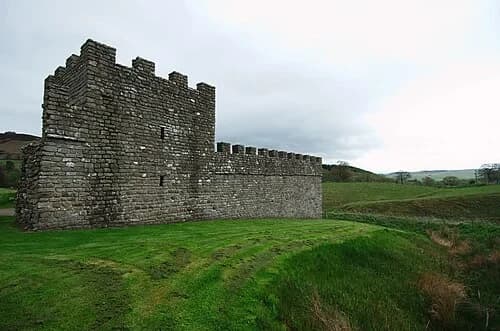
Stone Fortifications
Later periods of the fort’s history saw the replacement of temporary wooden structures with permanent stone fortifications. This turret reconstruction represents the era after Hadrian’s Wall was built, when Vindolanda served as a major support base for the frontier defenses. The stone walls were significantly more durable and difficult to scale than the earlier timber versions. These battlements provided a tactical advantage, offering soldiers a high vantage point for observation and defense. Notice the narrow windows, which were designed to allow archers to fire on attackers while remaining protected from return fire. The construction style is very similar to the milecastles and turrets found on Hadrian’s Wall itself, using locally quarried stone blocks laid in regular courses. This shift to stone indicates that the Roman occupation of the north had become permanent. The army was no longer just campaigning in a new territory; they were building a long-term military infrastructure that would define the landscape for the next three hundred years.
The Praetorium: Command and Administration
The administrative heart of the fort. Focus on the Principia (Headquarters) where the commanders managed the auxiliary units.
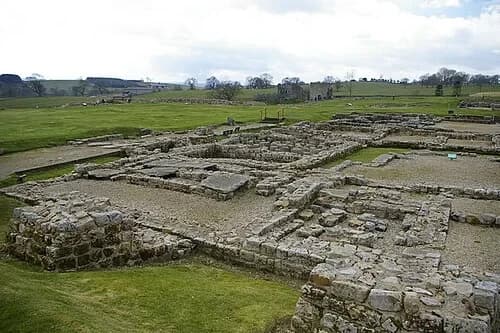
The Principia Headquarters
The foundations of the Principia mark the central administrative hub of the Roman fort. This headquarters was where the auxiliary unit's commanding officer and his staff managed the complex business of the garrison. The layout typically featured a large central courtyard where soldiers gathered for orders, surrounded by offices for clerks and record-keepers. At the back of the building was the most sacred spot in the fort: the 'aedes,' or shrine, where the regimental standards were kept. These decorated poles represented the honor and identity of the unit, and losing them in battle was considered a supreme disgrace. Beneath the shrine, there was often a strongroom or cellar used to store the soldiers' pay and the unit’s savings. The third timber fort’s headquarters at Vindolanda was exceptionally large, stretching over 166 feet long, which suggests it housed a particularly prestigious or numerous unit. This building was the nerve center of the community, where every aspect of military life was planned, recorded, and celebrated.
Want to hear the rest?
Download the Stanza app to unlock all 18 stops and the complete guided audio tour.
Frequently Asked Questions
How long does the Vindolanda audio tour take?
The Vindolanda audio guide includes 18 narrated stops. Most visitors spend 45 minutes to 1.5 hours exploring the complete tour, though you can listen at your own pace and skip or revisit any stop.
Is the Vindolanda audio guide available in my language?
Stanza supports 15 languages: English, Spanish, French, German, Italian, Portuguese, Russian, Japanese, Chinese, Korean, Arabic, Hindi, Polish, Dutch, Hebrew. Check the guide in the app to confirm the languages currently available for this tour.
Can I use the audio guide offline at Vindolanda?
Yes! Download the complete Vindolanda tour — including all audio, maps, and images — before your visit. The Stanza app works completely offline, so you don't need WiFi or mobile data at the venue.
How much does the Vindolanda audio guide cost?
The Stanza app is free to download. Free and paid audio guides are available; current prices are shown in the app.
How do I use the Stanza audio guide at Vindolanda?
Download the free Stanza app, search for "Vindolanda", and download the tour. When you arrive at the venue, the app uses GPS to detect your location and automatically plays the relevant narration as you move between points of interest — completely hands-free.
What makes the Stanza audio guide different from other Vindolanda tours?
Stanza offers GPS-triggered narration that plays automatically as you walk through Vindolanda — no need to manually select stops. The tour is available in 15 languages, works fully offline, and includes 18 expertly narrated stops with images and historical context.
What other audio guides are available near Vindolanda?
Stanza offers multiple audio guides in Bardon Mill, United Kingdom and nearby areas. After downloading the app, browse the map to discover all available tours near Vindolanda. Each guide can be downloaded for offline use.