Languages
15Whitby Abbey Audio Guide
Whitby Abbey is a landmark in Whitby, United Kingdom. Explore it with Stanza's GPS-triggered offline audio guide — available in 15 languages.
Quick Facts
13
Stops
15
Languages
100%
Offline
📍 Whitby, United Kingdom · 54.4880°N, -0.6075°E
About Whitby Abbey
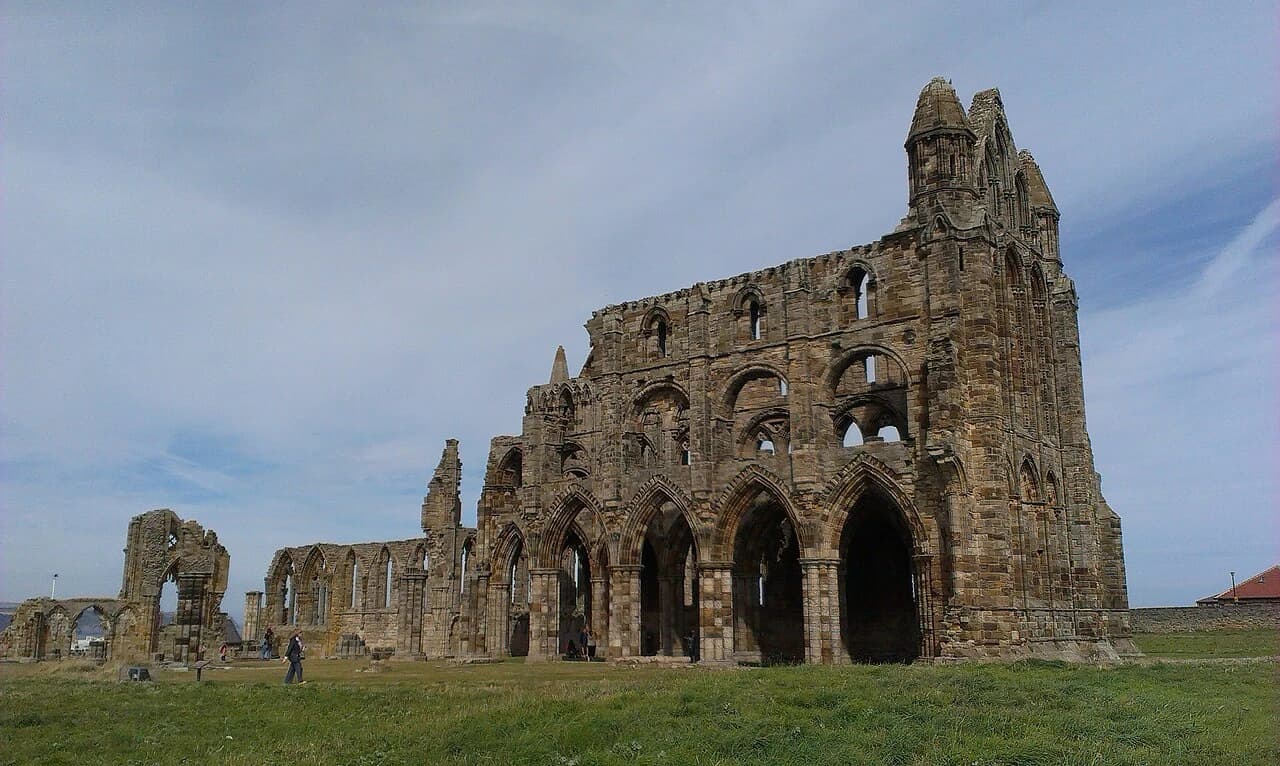
Whitby Abbey is a ruined Benedictine abbey located on the East Cliff above Whitby, North Yorkshire, England. It boasts a rich history dating back to the 7th century, serving as a significant religious and cultural center.
This self-guided audio tour features 13 narrated stops organized across 10 sections. As a abbey, Whitby Abbey offers a unique cultural experience in the heart of Whitby, United Kingdom.
The Stanza audio guide is available in 15 languages and works entirely offline — download the complete tour including audio narration, maps, and images before your visit. As you walk through Whitby Abbey, GPS-triggered narration plays automatically at each point of interest.
Last updated:
What you will hear
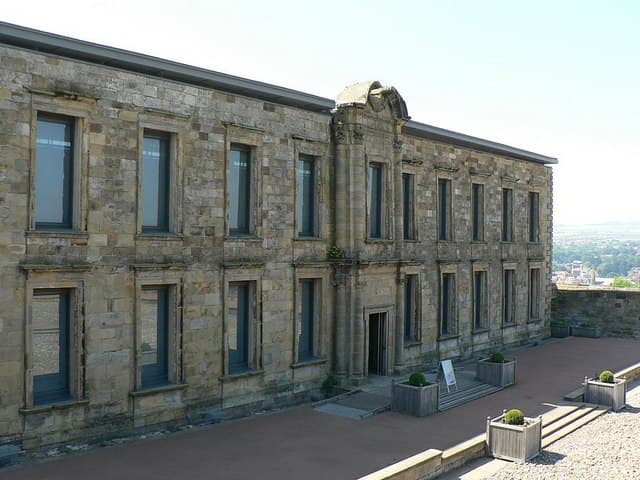
Cholmley House and Visitor Center
The starting point of the visit, housed in a 17th-century banqueting hall that serves as the gateway to the abbey's deep history.
The Banqueting Hall Entrance
Welcome to one of the most iconic heritage sites in England. Your visit begins here at Cholmley House, a striking 17th-century manor that now serves as the visitor center. Looking at the facade, you can see sharp, classical lines that contrast with the jagged Gothic silhouettes waiting just beyond the gate. This residence was built by Sir Hugh Cholmley following the Dissolution of the Monasteries in the 16th century. Interestingly, much of the stone used to construct this grand hall was salvaged directly from the abandoned abbey ruins. For the Cholmley family, the ruins were effectively a private quarry, a source of ready-cut masonry for their own domestic ambitions. This building represents a bridge between the medieval religious life and the secular estates that followed. As you pass through this entrance, you leave the relative modernity of the town behind and step onto a headland that has been a site of worship and gathering for over thirteen hundred years. The house marks the official transition point from the bustling seaside port below to the quiet, wind-swept sanctuary of the ancient East Cliff.
The Anglo-Saxon Foundations
The site of the original 7th-century monastery founded by Lady Hilda and the location of the historic Synod of Whitby.
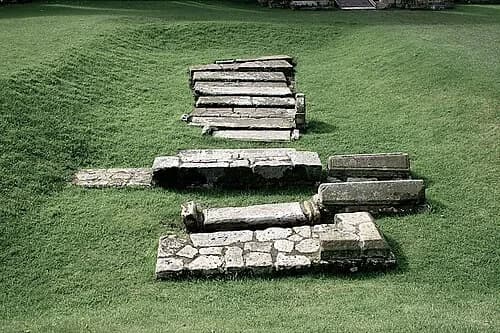
The Anglo-Saxon Foundations
Beneath the towering Gothic arches lie the quiet remains of the site's 7th-century origins. In 657 AD, King Oswiu of Northumbria founded a double monastery here—an institution for both men and women—under the leadership of Abbess Hilda. These low stone foundations are all that remain of that initial settlement, which was far more modest than the grand stone church that followed centuries later. This ground was the stage for the pivotal Synod of Whitby in 664 AD. It was here that the Northumbrian church decided to align with the Roman method for calculating the date of Easter over Celtic traditions, a decision that fundamentally linked England with the rest of Europe. This early community was also a cradle of culture; it was the home of Cædmon, the earliest known English poet. According to tradition, the humble cowherd received his poetic gift in a dream while living within these very walls. While the soaring ruins draw the eye upward, these foundation stones represent the intellectual and spiritual bedrock of the abbey, anchoring the site’s long history to the dawn of the Anglo-Saxon age.
The Iconic Silhouette
A panoramic view illustrating the dramatic skyline that has served as a maritime landmark and inspired countless artists.
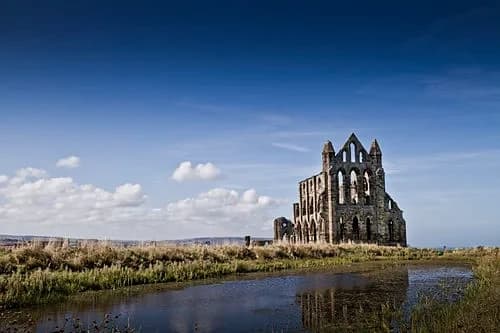
The Headland Landscape
Standing on the East Cliff, it is easy to see why this location was chosen for a monastery. Perched approximately 60 meters above sea level, the abbey occupies a dramatic, windswept plateau that offers sweeping views of the Yorkshire coastline. For nearly a thousand years, the silhouette of these ruins has served as an essential landmark for sailors navigating the treacherous waters of the North Sea. The choice of such an exposed site was deliberate, intended to provide a sense of spiritual isolation and strength. Here, the monks and nuns were removed from the distractions of the town, separated by height and the relentless elements. The sound of the wind and the crashing waves below provided a constant backdrop to a life of prayer and contemplation. From this vantage point, the ruins are visible for miles, standing as a defiant sentinel against the horizon. This landscape has witnessed Viking raids, royal councils, and the slow erosion of time, yet the physical presence of the cliff remains as formidable today as it was in the 7th century. The natural geography of the headland is inseparable from the history of the ruins.
The Gothic West Front
The main entrance to the 13th-century church, showcasing the elegant lancet windows characteristic of the Gothic style.
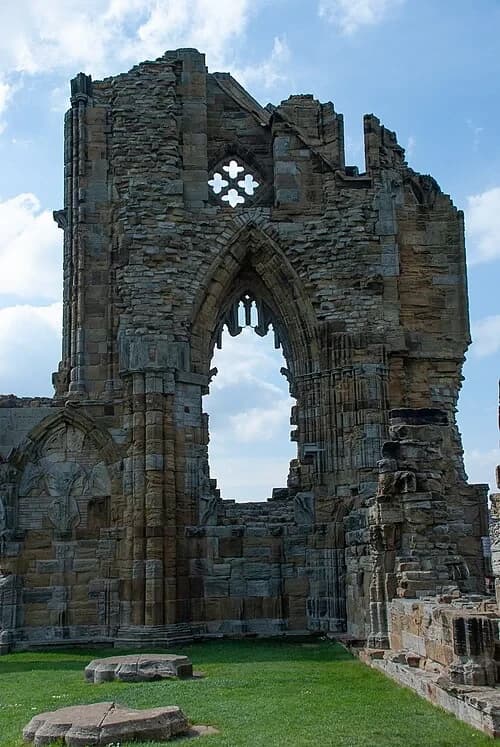
The Gothic West Front
The standing ruins primarily date from a major rebuilding project that began in the 1220s. This Gothic style was a radical departure from the heavy, rounded arches of the earlier Anglo-Saxon and Romanesque periods. Instead, the architecture emphasizes height and verticality, drawing the eye upward toward the heavens. Look for the high gables and you will see elegant lancet windows—tall, narrow openings with pointed tops. Decorative details like trefoil and quatrefoil openings, which resemble three-leafed and four-leafed clovers, add refinement to the masonry. These design choices were a masterful response to the environment. The master masons used narrow window openings and thick, reinforced walls to ensure structural stability against the fierce gales that frequently sweep across the headland. By reducing the surface area exposed to the wind, they allowed the building to reach impressive heights without sacrificing durability. This facade once greeted pilgrims arriving at the abbey, offering a display of architectural sophistication and light that signaled the wealth and spiritual prestige of the community during the height of the medieval era.
The Nave and Massive Pillars
Exploring the scale of the monastic church through the surviving clustered columns of the nave.
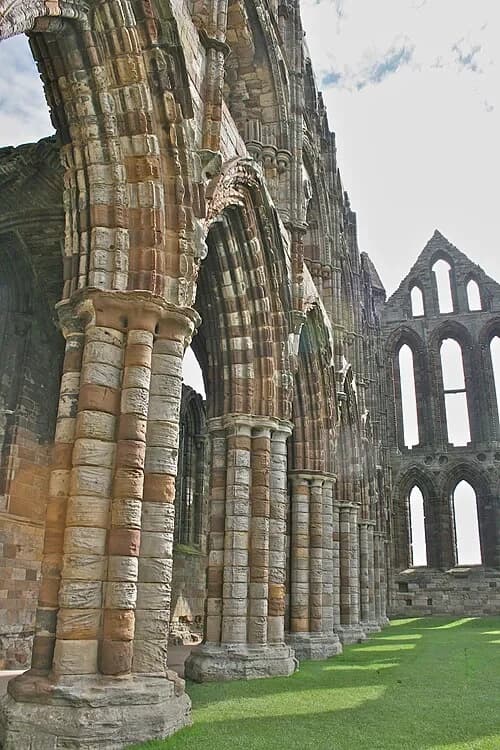
Clustered Sandstone Pillars
At the heart of the nave stand the massive clustered columns that once bore the immense weight of a stone vaulted ceiling. Each pillar is composed of several smaller shafts bundled together, a technique designed to distribute the downward pressure of the roof while maintaining an appearance of elegance. The material is local sandstone, which was readily available but particularly susceptible to the harsh coastal environment. Notice the soft, rounded textures of the stone; this is the result of centuries of exposure to salt spray and North Sea storms, which have gradually smoothed the sharp lines of the original carvings. If you examine the columns closely, you can see the distinct horizontal layers of the masonry. These reveal how the pillars were constructed by stacking hand-carved blocks of stone with rhythmic precision. The sheer scale of these supports gives you an idea of the original church's volume, which would have felt cavernous to the medieval visitor. Despite the loss of the roof and many of the walls, these sturdy pillars remain anchored in place, demonstrating the exceptional engineering skills of the 13th-century builders who worked with the limitations of their local materials.
The North Transept and War Scars
This section of the ruins still bears the marks of the 1914 bombardment by German battlecruisers during World War I.
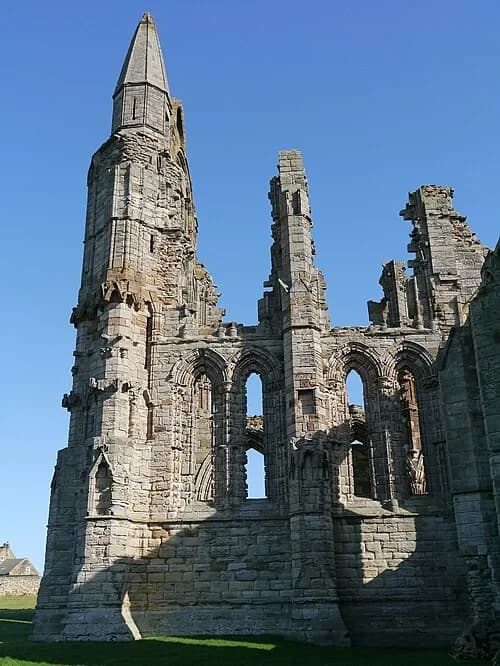
The Shelled North Transept
While much of the abbey's decay is the work of time and the elements, the North Transept bears the marks of a much more recent conflict. On December 16, 1914, during the First World War, German battlecruisers appeared off the coast and began a naval bombardment of Whitby. The abbey, standing prominently on the cliff, was a conspicuous target. It sustained heavy damage during the shelling, with several large shells striking the medieval masonry directly. You can still see the jagged, uneven edges of the standing walls where chunks of stone were violently sheared away by the explosions. This event brought the ruins back into the national consciousness in a new way. Rather than just being an ancient relic, the abbey became a symbol of British resilience in the face of modern aggression. The scars on the transept serve as a reminder that history is layered; the medieval and the modern intersect here on this headland. Following the attack, the damage was stabilized rather than repaired, preserving the evidence of the bombardment as a part of the abbey’s long and varied narrative of survival.
The East End and Chancel
The most complete section of the ruins, featuring intricate stonework and the towering East Window.
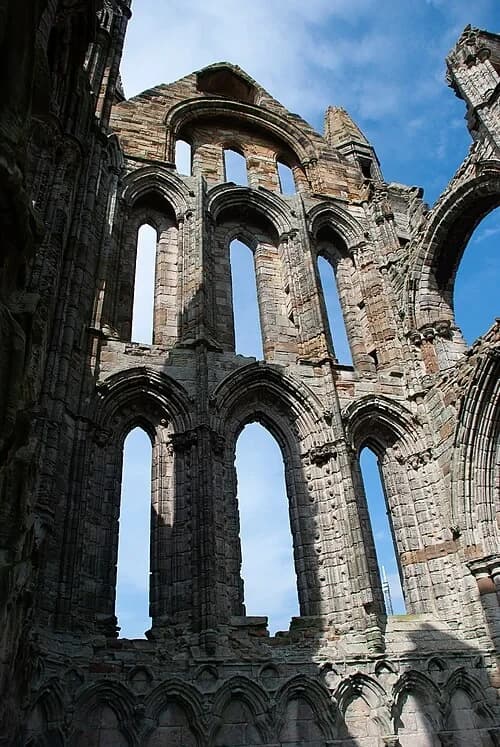
High Lancet Windows
Looking at the east end, your eyes are naturally drawn to the rows of slender, pointed windows that pierce the upper reaches of the walls. These are known as lancet windows, a term derived from their sharp, narrow shape which resembles the blade of a surgeon’s lancet. Notice how the architecture transitions from the solid masonry at the base to increasingly delicate and refined arches as the building rises. This progression was intended to make the stone feel lighter and more ethereal the higher it went. If you look closely at the arches themselves, you will see complex decorative moldings. These intricate patterns were hand-carved by 13th-century master masons, whose technical skill was matched by their anonymity, as their names have been lost to the passage of time. These windows were structural triumphs that allowed the walls to be taller and thinner than ever before. Even without their original glass, the rhythmic repetition of these arches creates a sense of harmony and grace. They stand as a testament to the sophistication of medieval design, managing to appear fragile while withstanding the relentless coastal winds for eight hundred years.
Evidence of the Dissolution
The visible scars and internal structures revealed when the abbey was stripped and abandoned under Henry VIII in 1538.
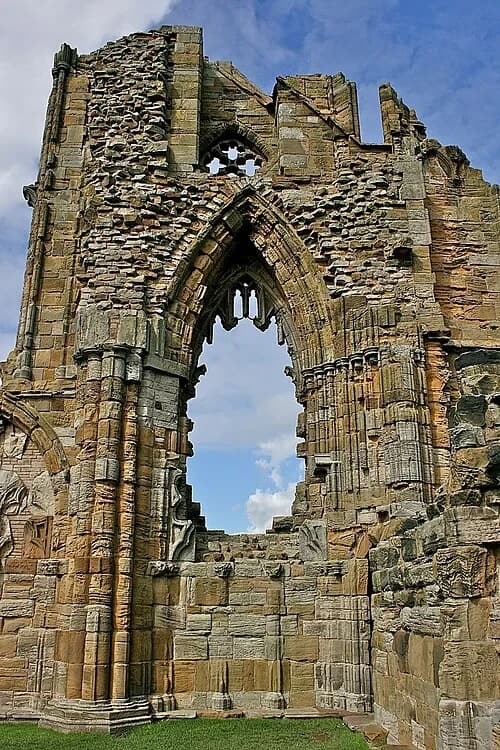
Scars of the Dissolution
The sudden decline of this institution can be traced back to 1538. During King Henry VIII’s Dissolution of the Monasteries, Whitby Abbey was officially disestablished, and its property was seized by the crown. The impact was immediate and devastating. The lead was stripped from the roofs to be melted down for the King’s treasury, leaving the internal sandstone exposed to the elements for the first time in centuries. Without the protection of the roof, the soft stone began to deteriorate rapidly under the influence of the coastal rain and salt. Furthermore, the abandoned abbey became a convenient source of building material for the local population. Many of the missing sections of the arches and walls you see today are not the result of natural collapse, but of deliberate quarrying. Stone was hauled away to build houses and walls in the town below. This period transformed the abbey from a vibrant center of religious life into a hollow shell. The jagged gaps in the masonry are physical scars of a political upheaval that reshaped the entire landscape of England, leaving these ruins as a permanent reminder of a lost monastic world.
Abbey House and Later Residents
The post-monastic life of the site, where the Cholmley family built their home using materials from the ruined abbey.
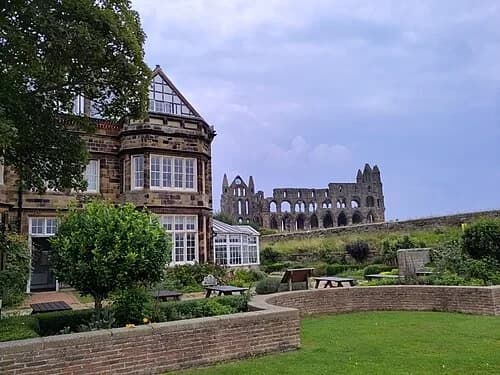
Abbey House Gardens
As you explore the gardens, you are standing on ground that has evolved significantly over the centuries. The building here, known as Abbey House, currently serves as a youth hostel, but its foundations are much older. It incorporates parts of the original medieval gatehouse and the abbot’s private lodging. After the monastery was dissolved in the 16th century, the site was purchased by the Cholmley family, who transformed the abbot’s quarters into a grand private estate. This marked the transition of the headland from a communal religious center to a seat of secular power. You can see a fascinating contrast here between the domestic scale of the manor house and the soaring, hollow shells of the adjacent abbey church. While the abbey was left to fall into ruin, this part of the complex was maintained and adapted for modern living. Eventually, the site moved from private ownership to become a public heritage landmark. The gardens provide a space to reflect on how the function of this headland has shifted—from a sanctuary of prayer to a family home, and finally to a place where visitors from around the world gather.
St. Mary's Churchyard Viewpoint
The historic graveyard overlooking the North Sea, connecting the abbey grounds to the town below.
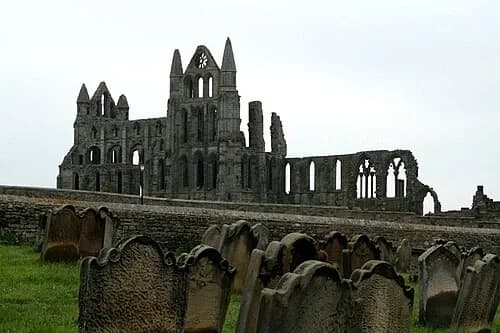
St. Mary’s Churchyard
Looking across from the abbey, you see the crowded churchyard of St. Mary’s. While the abbey church was for the monks, St. Mary’s served the spiritual needs of the local townspeople. The cemetery is filled with weathered 18th and 19th-century headstones, many of which mark the final resting places of Whitby’s prominent whaling and fishing families. These stones, often leaning at precarious angles due to the shifting cliff soil, tell the story of a community built on the bounty and the dangers of the sea. This graveyard is also the source of local folklore. Perhaps the most famous legend is that of the 'White Lady.' Tradition holds that the ghost of a former inhabitant of the abbey can be seen standing in the high windows of the ruins at night. Locals and visitors alike have long looked up from this graveyard, hoping to catch a glimpse of the pale figure against the dark stone. The proximity of the parish church to the abbey ruins highlights the dual nature of the East Cliff—one side representing the vanished world of monasticism, and the other reflecting the lived, working history of the town.
Want to hear the rest?
Download the Stanza app to unlock all 13 stops and full GPS-guided navigation.
Frequently Asked Questions
How long does the Whitby Abbey audio tour take?
The Whitby Abbey audio guide includes 13 narrated stops. Most visitors spend 45 minutes to 1.5 hours exploring the complete tour, though you can listen at your own pace and skip or revisit any stop.
Is the Whitby Abbey audio guide available in my language?
Stanza supports 15 languages: English, Spanish, French, German, Italian, Portuguese, Russian, Japanese, Chinese, Korean, Arabic, Hindi, Polish, Dutch, Hebrew. Check the guide in the app to confirm the languages currently available for this tour.
Can I use the audio guide offline at Whitby Abbey?
Yes! Download the complete Whitby Abbey tour — including all audio, maps, and images — before your visit. The Stanza app works completely offline, so you don't need WiFi or mobile data at the venue.
How much does the Whitby Abbey audio guide cost?
The Stanza app is free to download. The current listed price for the Whitby Abbey audio guide is $0.99; app-store region and currency may affect the final price.
How do I use the Stanza audio guide at Whitby Abbey?
Download the free Stanza app, search for "Whitby Abbey", and download the tour. When you arrive at the venue, the app uses GPS to detect your location and automatically plays the relevant narration as you move between points of interest — completely hands-free.
What makes the Stanza audio guide different from other Whitby Abbey tours?
Stanza offers GPS-triggered narration that plays automatically as you walk through Whitby Abbey — no need to manually select stops. The tour is available in 15 languages, works fully offline, and includes 13 expertly narrated stops with images and historical context.
What other audio guides are available near Whitby Abbey?
Stanza offers multiple audio guides in Whitby, United Kingdom and nearby areas. After downloading the app, browse the map to discover all available tours near Whitby Abbey. Each guide can be downloaded for offline use.