Stanza · Audio guide
Sherlock Holmes MuseumAudio guide
A place to remember. A story to take with you.
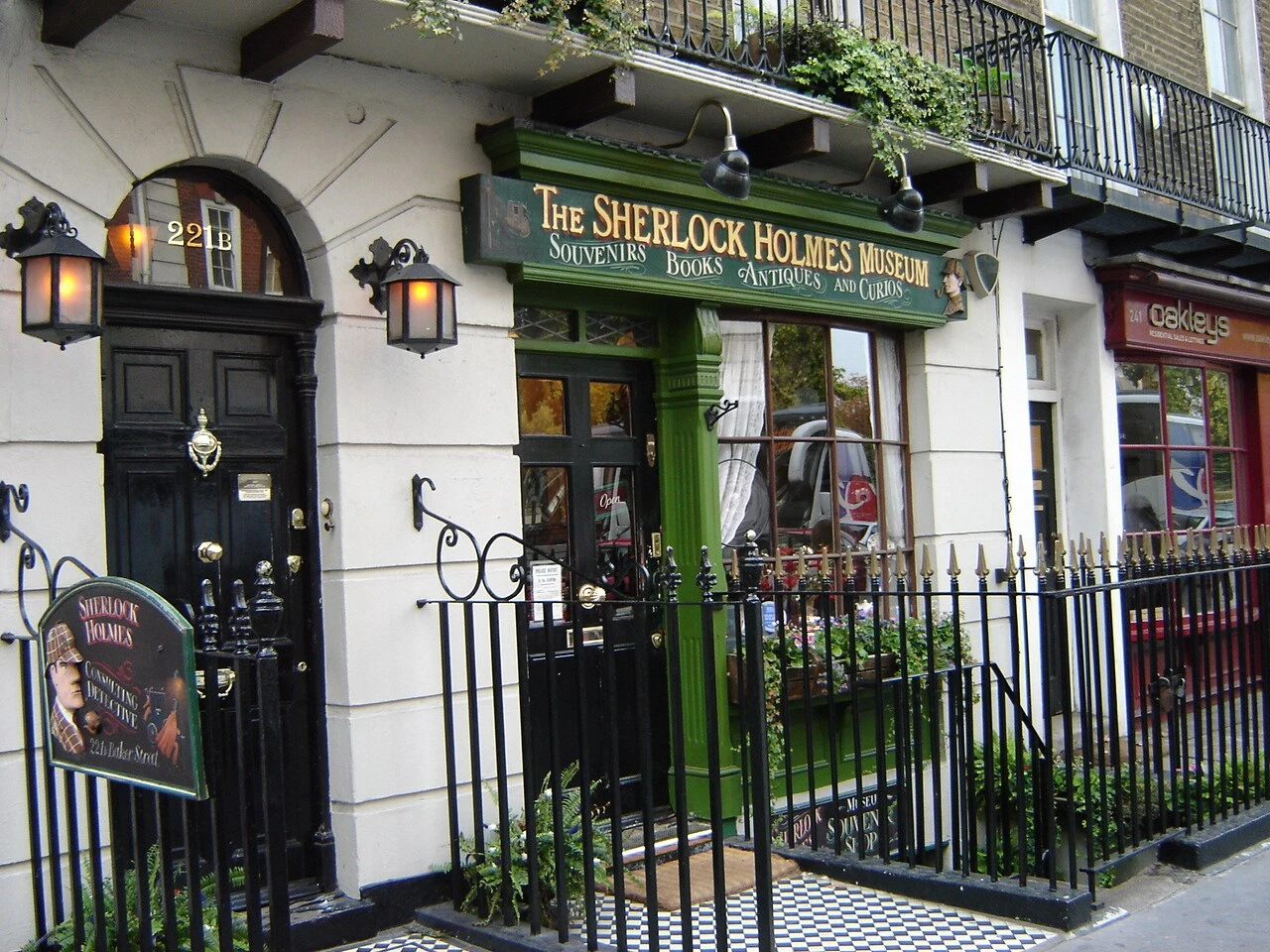
The Sherlock Holmes Museum is a private museum located in London, England, dedicated to the fictional detective Sherlock Holmes. It recreates the Victorian-era lodgings described in the stories at 221B Baker…
Download Stanza, then search for “Sherlock Holmes Museum”.
About the tour
One guide. Your kind of visit.
The Sherlock Holmes Museum is a private museum located in London, England, dedicated to the fictional detective Sherlock Holmes. It recreates the Victorian-era lodgings described in the stories at 221B Baker Street.
Ready when you are.
- 01Get the free Stanza app.
iOS & Android
- 02Find your guide.
“Sherlock Holmes Museum”
- 03Download before you go.
Works offline
Audio guide / 16 narrated stops
Inside the guide
Get to know a few of the stories before you go. Open a stop to read more.
01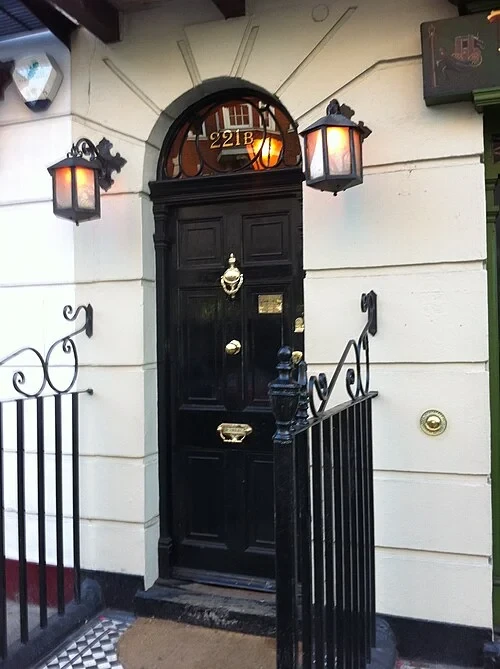 The Iconic Threshold of 221BThe Door to 221B
Established in 1990, this museum occupies a residence originally built in 1815. While the building physically stands between numbers 237 and 241 Baker Street, it has received special permission from the City of Westminster to use the world-famous address: 221B. This Grade II listed building serves as a permanent home for the legacy of Sir Arthur Conan Doyle’s creation. As you approach, you’ll likely be greeted by a staff member dressed in authentic Victorian-era attire, a tradition that helps bridge the gap between the modern world and the 19th-century setting of the stories. The black door, adorned with the iconic brass numbering, has become a site of pilgrimage for fans globally. Inside, the museum spans several floors, each carefully curated to represent the life of the detective and his companion, Dr. John Watson. By maintaining the architectural integrity of a 19th-century townhouse, the museum offers a glimpse into the everyday environment of a professional gentleman in the late Victorian era. It is a place where literature meets reality, allowing visitors to step directly into the world they have previously only encountered on the page or screen.
Photo: EvaW7 · CC BY-SA 3.0
02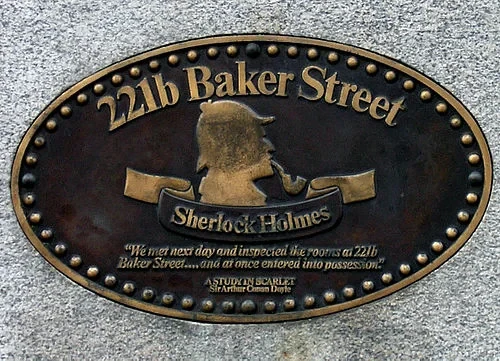 The Iconic Threshold of 221BThe Museum Plaque
The history of this location is tied to what became known as the "Great Mail Dispute." For many years, the Royal Mail delivered heaps of correspondence addressed to Sherlock Holmes to the Abbey National Bank, which occupied the block where 221B would have been located. The public’s belief in Holmes was so strong that the bank was forced to employ a full-time secretary specifically to answer these letters, responding as if the detective were simply too busy with a case to reply personally. This phenomenon highlights the unique place Holmes holds in the collective imagination; he is perhaps the only fictional character to have a "real" legal residence and a functional mail system managed by a financial institution. When the museum opened, a legal battle ensued over who had the right to receive mail for 221B. Eventually, the right was granted to the museum, allowing it to officially claim the mantle of the detective's home. This plaque serves as a reminder of that unusual historical intersection between a literary masterpiece and the administrative realities of the London postal service, proving that some characters are far too large for the boundaries of fiction.
gailf548 from New York State, USA · CC BY 2.0
03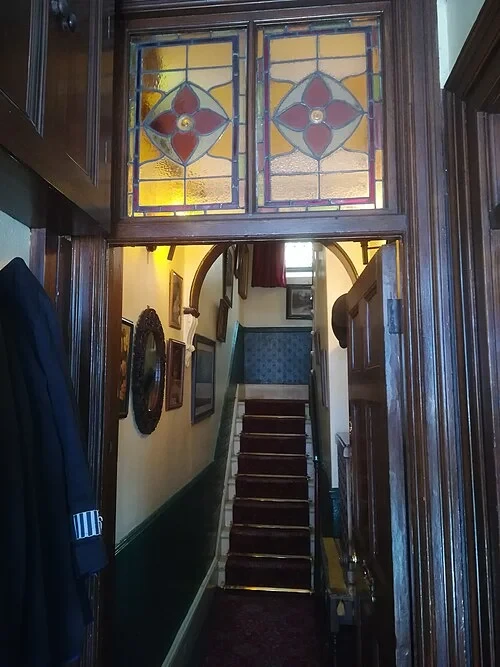 The Victorian StaircaseThe Victorian Staircase
Between 1860 and 1936, this building functioned as a traditional lodging house, a common feature of the Victorian city. The layout is characteristic of the period, with a vertical design necessitated by London's dense urban planning. As you look up the staircase, notice how the design prioritizes efficiency over spaciousness, with high, narrow risers and tight turns. One of the most significant details here is the count of the steps leading up to the first floor. The museum has ensured there are exactly seventeen steps. This is a direct reference to the 1891 story 'A Scandal in Bohemia'. In that mystery, Holmes famously tests Dr. Watson’s powers of observation by asking him if he knows how many steps lead up to their room. While Watson had walked them hundreds of times, he could not say; Holmes, however, knew the number precisely. This restoration demonstrates the museum's dedication to literary accuracy, turning a simple architectural feature into a test of your own deductive skills. The dark wood and period-appropriate lighting help maintain the atmosphere of a home where every detail might be a clue waiting to be discovered.
Listen in the appPhoto: MOs810 · CC BY-SA 4.0
04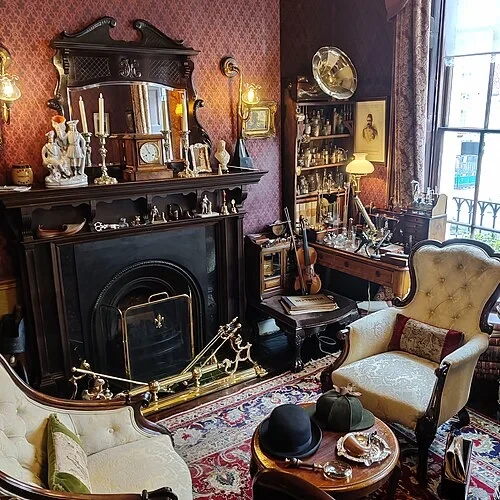 The First Floor Sitting RoomThe Sitting Room
The sitting room is designed as a direct physical manifestation of Sir Arthur Conan Doyle’s descriptions. Every corner of the room is packed with the kind of intellectual and domestic clutter one would expect of an eccentric Victorian bachelor. Large velvet armchairs are positioned near the fireplace, suggesting long nights of deliberation and discussion. Stacks of newspapers, unanswered correspondence pinned with a jack-knife, and various pipes scattered about reflect Holmes's disorganized but brilliant mind. This space was the primary theater for the detective's work; it was here that desperate clients would arrive to tell their strange tales of scandal, theft, or murder. The museum has gone to great lengths to ensure the wallpaper, carpeting, and furniture all match the aesthetic of the 1880s and 90s. The room doesn't just display objects; it recreates the lived-in feel of a space shared by two men of very different temperaments. While the room is filled with artifacts, it is the arrangement—the "organized chaos"—that truly captures the essence of the character's life. It remains the most recognizable room in the house, a sanctuary for logic in a city often shrouded in fog and mystery.
Listen in the appPhoto: Kaartic · CC BY-SA 4.0
05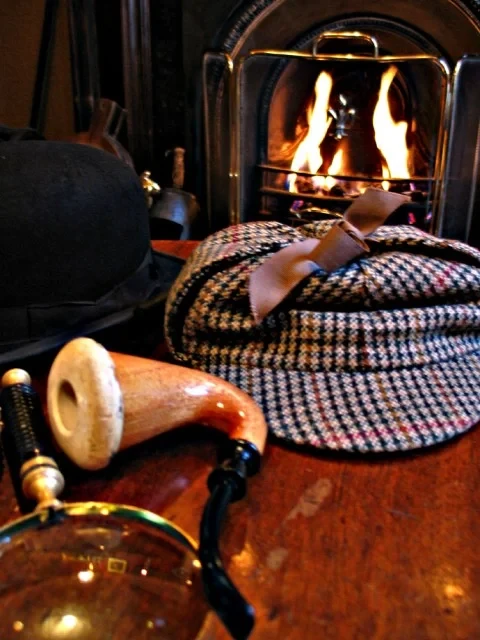 The First Floor Sitting RoomThe Detective's Equipment
On the table, you will find the essential tools of the trade: a magnifying glass, a calabash pipe, and the famous deerstalker hat. Interestingly, while the deerstalker is now perhaps the most recognizable part of the Holmes silhouette, Conan Doyle himself never explicitly named this specific type of hat in his text. Instead, he usually described Holmes as wearing a "close-fitting cloth cap." The transition to the deerstalker happened because of Sidney Paget, the original illustrator for 'The Strand Magazine'. Paget decided to give Holmes this distinctive "country" headwear for a scene involving travel to the countryside, and the image stuck so firmly in the public mind that it became permanent. Similarly, the curved calabash pipe became a staple of stage and screen adaptations because it was easier for actors to hold while speaking than the straight pipes Doyle described. These items represent the evolution of Sherlock Holmes from a literary figure into a cultural icon. They ground the detective in a tangible reality, reminding us that his methods were rooted in the observation of physical evidence. Each piece here is more than a prop; it is a key element of the visual language that defines the world's most famous detective.
Listen in the appAlterego · CC BY-SA 3.0
06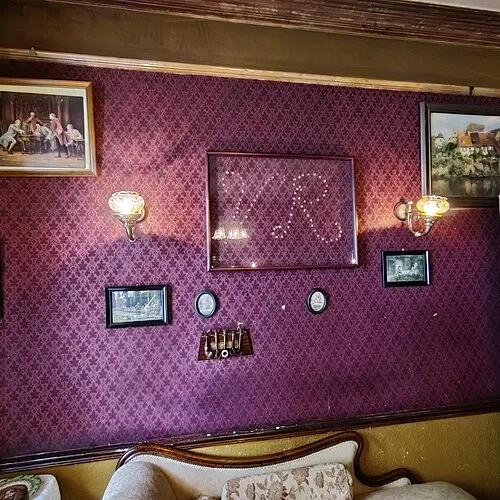 The First Floor Sitting RoomThe Patriotic Wall
If you look at the wallpaper, you will see the letters 'V.R.' formed by a series of small pockmarks. These stand for 'Victoria Regina,' referring to Queen Victoria, the reigning monarch during most of Holmes’s career. In 'The Musgrave Ritual', Dr. Watson describes this peculiar habit, noting that his companion would sometimes sit in an armchair with a hair-trigger Boxer revolver and proceed to "adorn the opposite wall with a patriotic V.R. done in bullet-pocks." This detail provides a fascinating look into Holmes’s personality—specifically his intense boredom when he was not occupied by a challenging case. For Holmes, domestic target practice was a way to vent restless energy, much to the presumed distress of Mrs. Hudson and the constant annoyance of Watson. The museum has recreated this scene precisely to show the detective's darker, more erratic side. It serves as a reminder that Holmes was not just a cold calculating machine, but a man of intense, sometimes destructive impulses. The presence of these marks on such elegant Victorian wallpaper captures the clash between the refined society of the era and the wild, untamable intellect of the man who lived here.
Listen in the appPhoto: Kaartic · CC BY-SA 4.0
07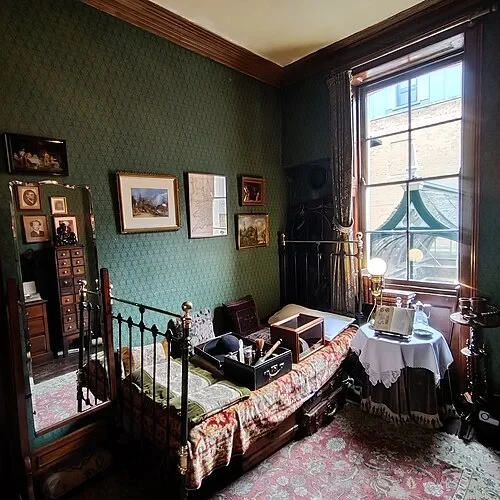 Sherlock Holmes's Private QuartersSherlock Holmes's Bedroom
The bedroom provides a more personal perspective on a character often defined by his public exploits. Here, the museum displays a washstand, personal grooming items, and a modest bed, all typical of a gentleman's quarters in the late 19th century. Interestingly, the creation of this museum was not without controversy. Dame Jean Conan Doyle, the author’s daughter, initially objected to the project. She was concerned that a physical museum dedicated to a fictional character at a real-world address would further blur the lines between history and literature, potentially leading people to forget that her father had invented the man. However, the museum’s popularity eventually helped cement the legacy of both the creator and his creation. The room is designed to feel as though Holmes has just stepped out for a moment; the personal effects are laid out with a sense of quiet residence. By focusing on these mundane, everyday objects, the display grounds the brilliant detective in a relatable human reality. It allows visitors to imagine the man behind the magnifying glass, dealing with the same daily rituals as any other Londoner of the period, before his next great adventure began.
Listen in the appPhoto: Kaartic · CC BY-SA 4.0
08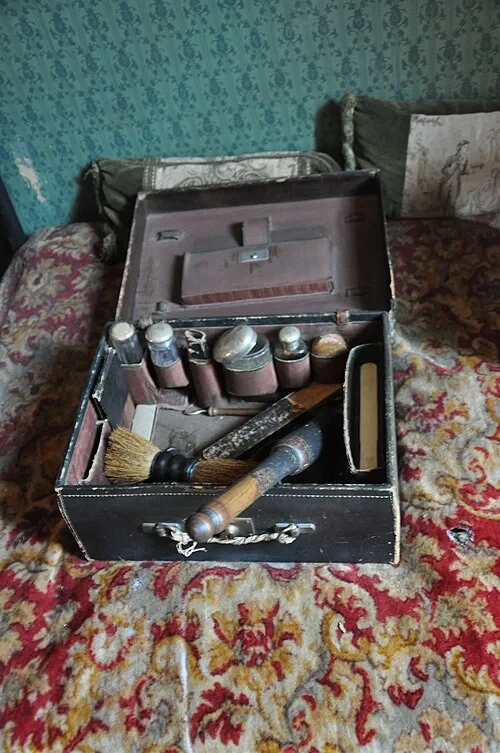 Sherlock Holmes's Private QuartersThe Traveling Case
Sitting on the bed is a leather traveling case, a necessary accessory for a Victorian gentleman. A close look reveals a variety of specialized tools, including straight razors, shaving brushes, and various glass bottles that likely held oils or tonics. These items are period-accurate, selected to represent what a man of Holmes's status would have carried while investigating a case in the countryside or traveling abroad. During the 19th century, travel was a significant undertaking, and maintaining one's appearance was a mark of social standing. For a detective like Holmes, who often had to go undercover or move between social classes, such a kit would have been indispensable. These physical artifacts help to anchor the fictional world in the material culture of the 1800s. They remind us that despite his extraordinary intellect, Holmes was still a man subject to the technologies and limitations of his time. The worn leather and the clink of glass bottles evoke the sensory experience of Victorian travel, where every journey started with a carefully packed bag and a sense of impending mystery. The case is a silent witness to the mobility required of a detective who followed clues wherever they might lead.
Listen in the appUser:FA2010 · Public domain
09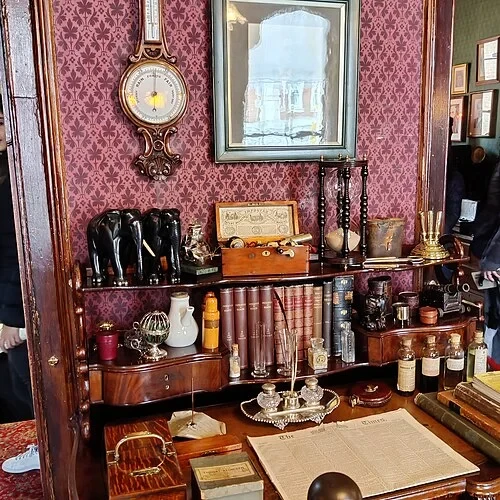 Dr. Watson's RoomDr. Watson's Study
Dr. Watson’s study reflects the dual nature of his life as an army surgeon and a writer. On the desk, you will find a variety of medical instruments alongside the papers and books where he recorded the adventures of his more famous roommate. As a veteran of the Second Anglo-Afghan War, Watson brought a practical, disciplined perspective to the household at 221B. The room is filled with items that denote his role as the stabilizing force in the partnership; while Holmes was prone to fits of manic energy or deep depression, Watson was the reliable observer. Notice the barometer on the wall and the travel-worn volumes on the shelves, suggesting a man of science and world experience. This space highlights Watson’s vital contribution to the stories; without his narrative voice, the reader would have no window into the brilliance of Holmes. The study is a tribute to the "everyman" hero who grounded the extraordinary in the relatable. It reminds us that every brilliant lead needs a steady chronicler to ensure the story is told. The atmosphere here is one of professional competence and quiet dedication, a stark contrast to the brilliant chaos found in the sitting room downstairs.
Listen in the appPhoto: Kaartic · CC BY-SA 4.0
10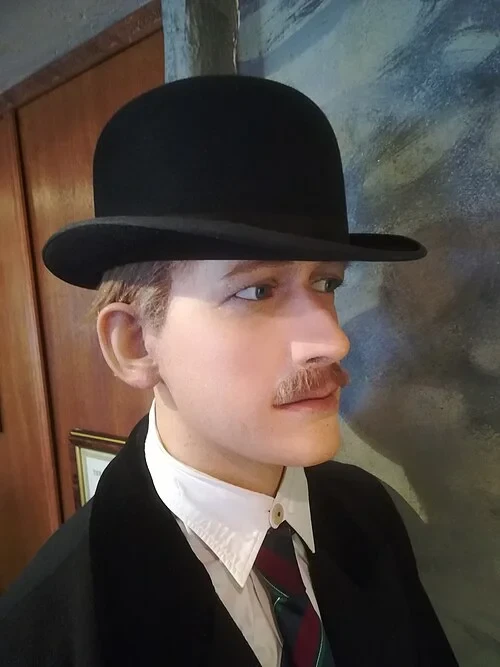 Dr. Watson's RoomThe Good Doctor
Standing in the study is a wax figure of Dr. Watson, complete with his signature mustache and a classic bowler hat. This depiction emphasizes his role as the quintessential Victorian gentleman. Watson is far more than just a sidekick; he is the relatable bridge between the audience and the alien, cold intellect of Sherlock Holmes. By narrating the stories, Watson allows us to experience the detective’s genius through a human lens, sharing in our confusion and eventually our awe. His background as a medical doctor and an army officer provided a necessary foundation of common sense and courage for their dangerous work. The choice of attire—the stout coat and formal hat—reflects a man of action who is also deeply integrated into the respectable society of the time. This figure serves as a reminder of the enduring partnership that sits at the center of the detective genre. Watson's character provides the warmth and morality that balance Holmes's detached logic. Without the good doctor, the stories would lack their emotional core, and Holmes would remain a brilliant but unreachable enigma. Here, Watson stands ready, as he always was in the stories, to follow Holmes into whatever darkness the next case might bring.
Listen in the appPhoto: MOs810 · CC BY-SA 4.0
Sherlock Holmes Museum
Frequently asked questions
How much does the guide cost?
Free app download. Listed guide price: $0.99. Guide price shown in the app. Audio guide only. Venue admission is separate.
Can I listen without internet?
Yes. Download the guide’s audio, images, and maps in the app before your visit. Your downloaded content is then available offline.
Can I listen in my language?
Stanza supports 15 languages. Check the app for the languages available for this guide.
Do I need to follow a schedule?
No. This is a self-guided experience. Choose your stops, pause whenever you like, and return to a story at your own pace.
At your own pace
Explore Sherlock Holmes Museum.
Download Stanza, then search for “Sherlock Holmes Museum”.
Free app download · Guide price shown in the app
Keep exploring
Nearby audio guides
London
Big Ben
Content & sources
Dave Bezaire · CC BY-SA 2.0
London
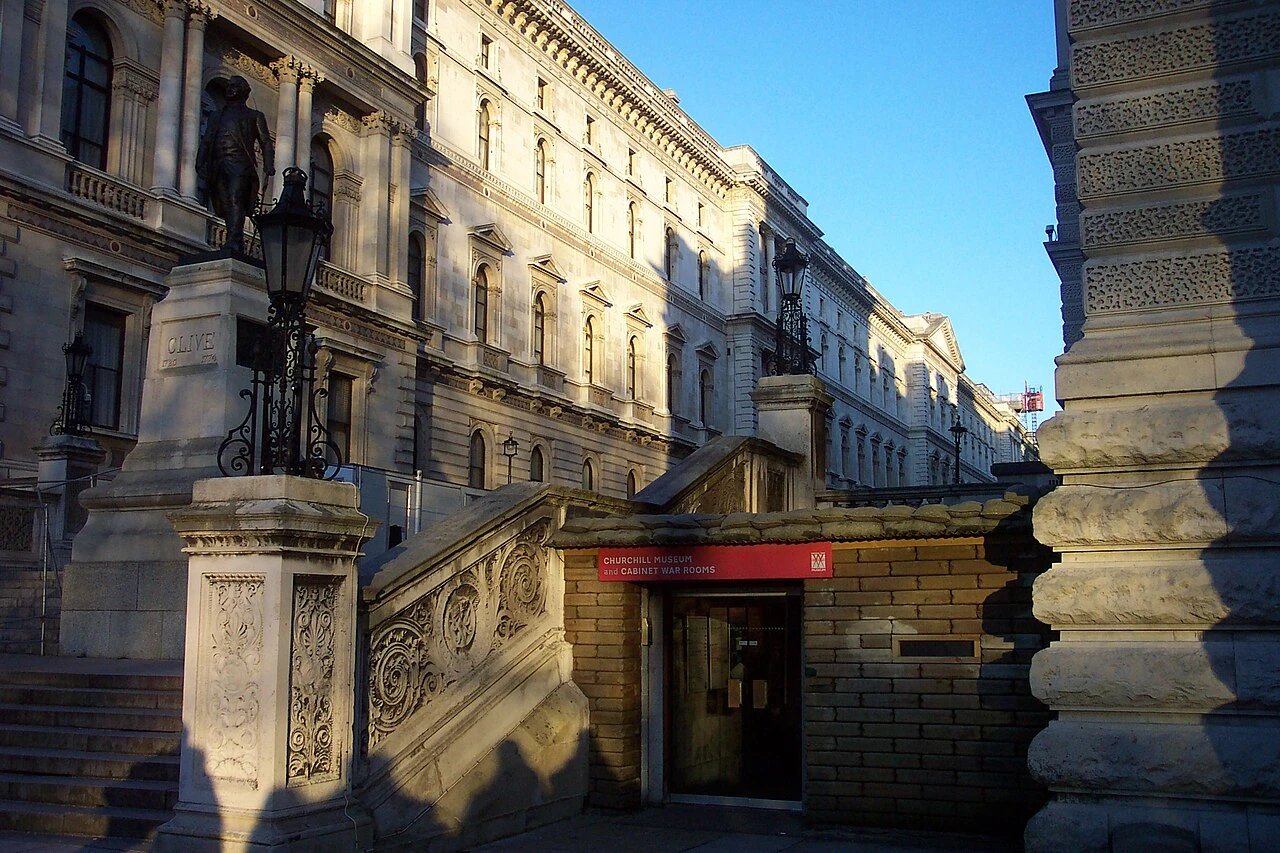
Churchill War Rooms
Content & sources
en:User:Jdhowens90 · CC BY-SA 3.0
London
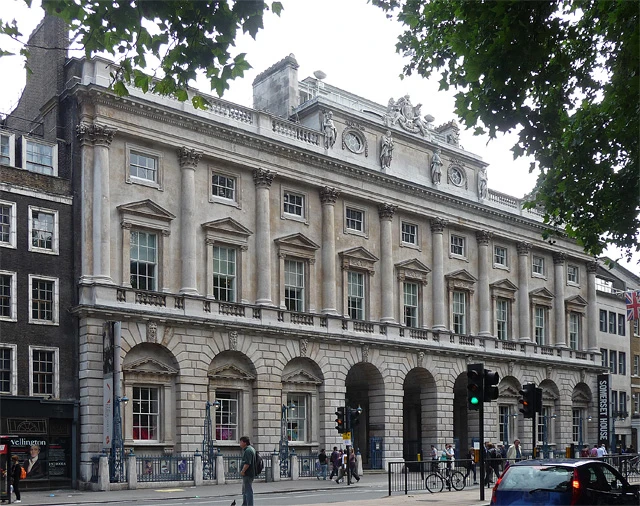
Courtauld Institute of Art
Content & sources
Stephen Richards · CC BY-SA 2.0
London
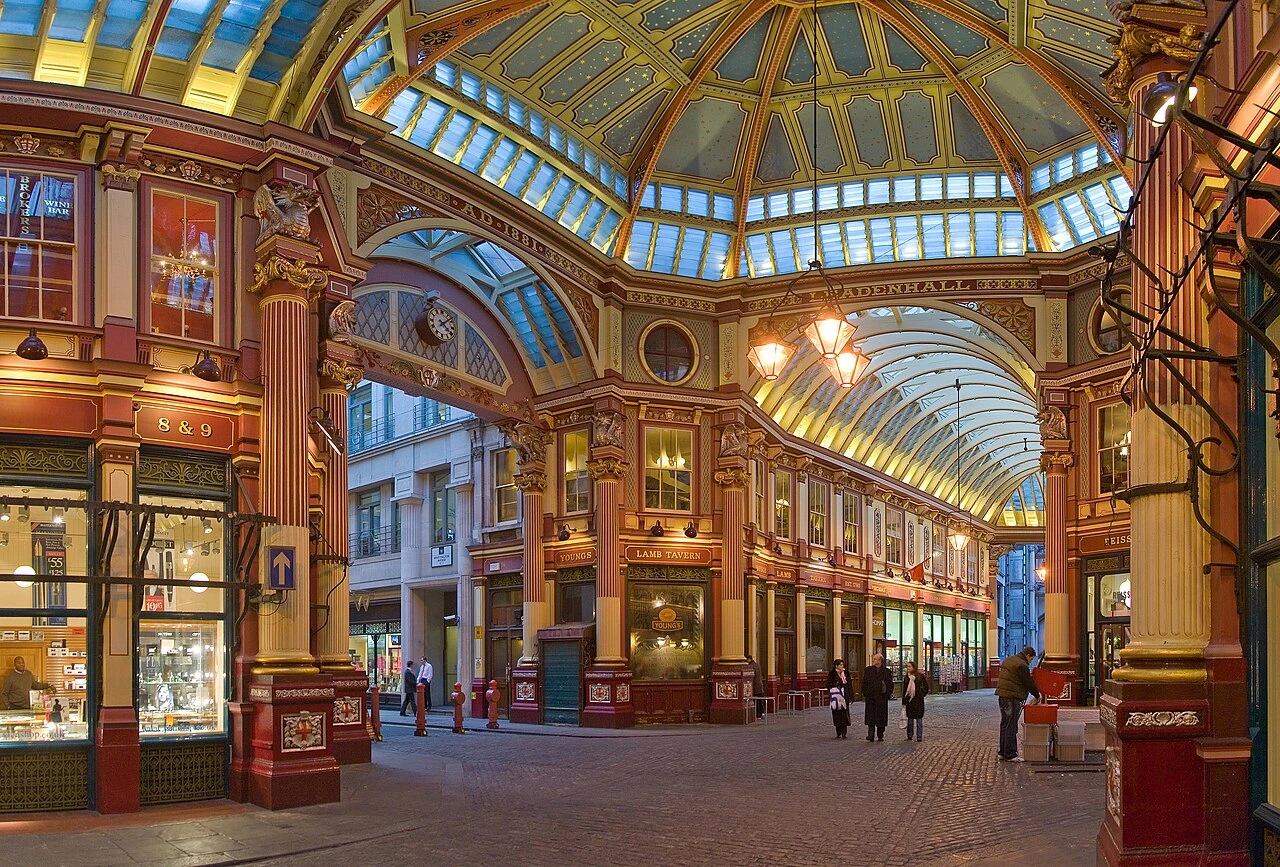
Leadenhall Market
Content & sources
Diliff · CC BY 2.5