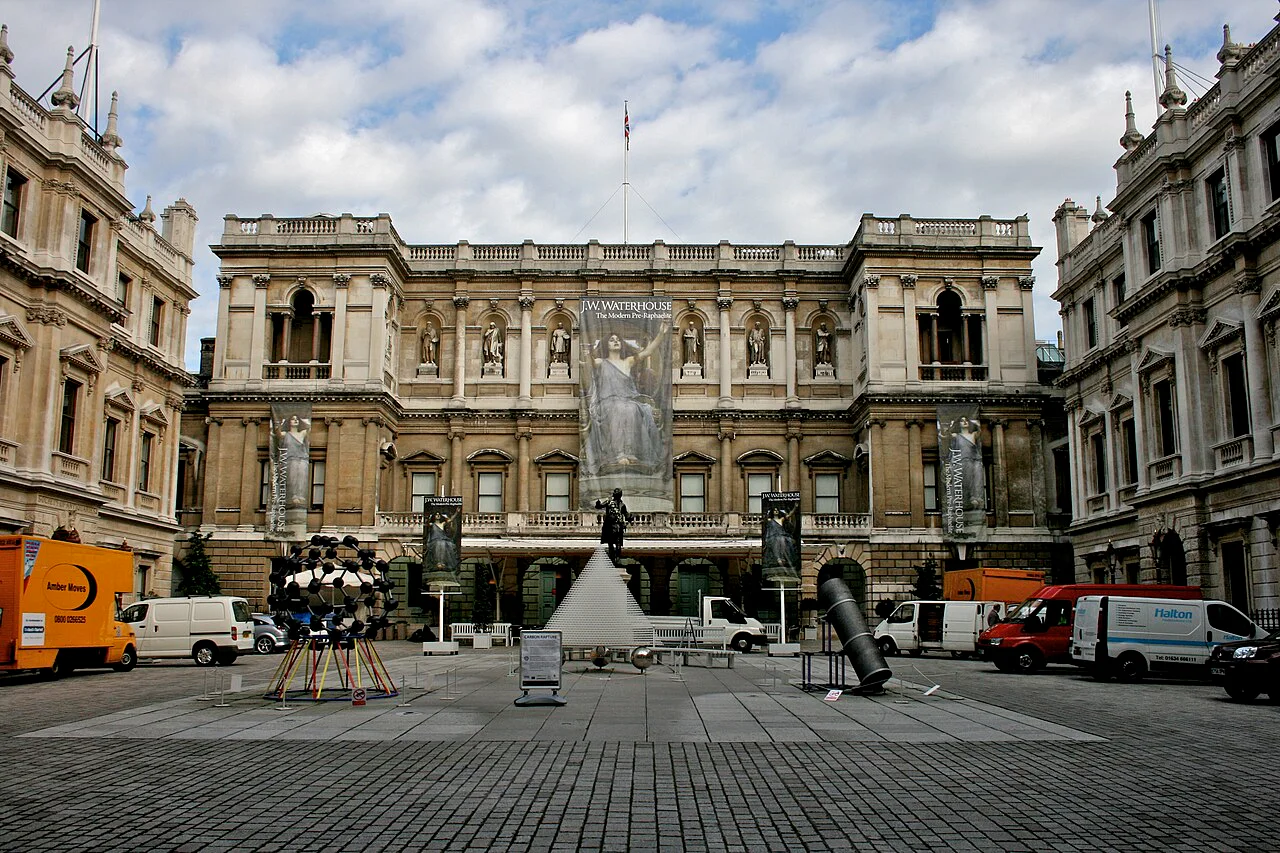
 Stanza / Audio guide
Content & sources
Stanza · Audio guide
Royal Academy of Arts Audio Guide
A place to remember. A story to take with you.
The Royal Academy of Arts is an art institution based in Burlington House in London. It is an independent, privately funded institution led by artists and architects that promotes the fine arts through…
Download Stanza, then search for “Royal Academy of Arts”.
About the tour
One guide. Your kind of visit.
The Royal Academy of Arts is an art institution based in Burlington House in London. It is an independent, privately funded institution led by artists and architects that promotes the fine arts through exhibitions, education, and debate.
The Royal Academy of Arts guide tells the stories of 50 artworks, including Taddei Tondo (Michelangelo), A Mermaid (John William Waterhouse), Thor Battering the Midgard Serpent (Henry Fuseli), Self-Portrait (Joshua Reynolds), Jael and Sisera (James Northcote), An Interior in Venice (John Singer Sargent), The Outcast (Richard Redgrave), and Queen Victoria (1819–1901) (Martin Archer Shee). Every artwork is free to hear in the Stanza app until 1 January.
Ready when you are.
- 01Get the free Stanza app.
iOS & Android
- 02Find your guide.
“Royal Academy of Arts”
- 03Download before you go.
Works offline
Audio guide / 50 artworks
Inside the guide
Get to know a few of the stories before you go. Open a stop to read more.
01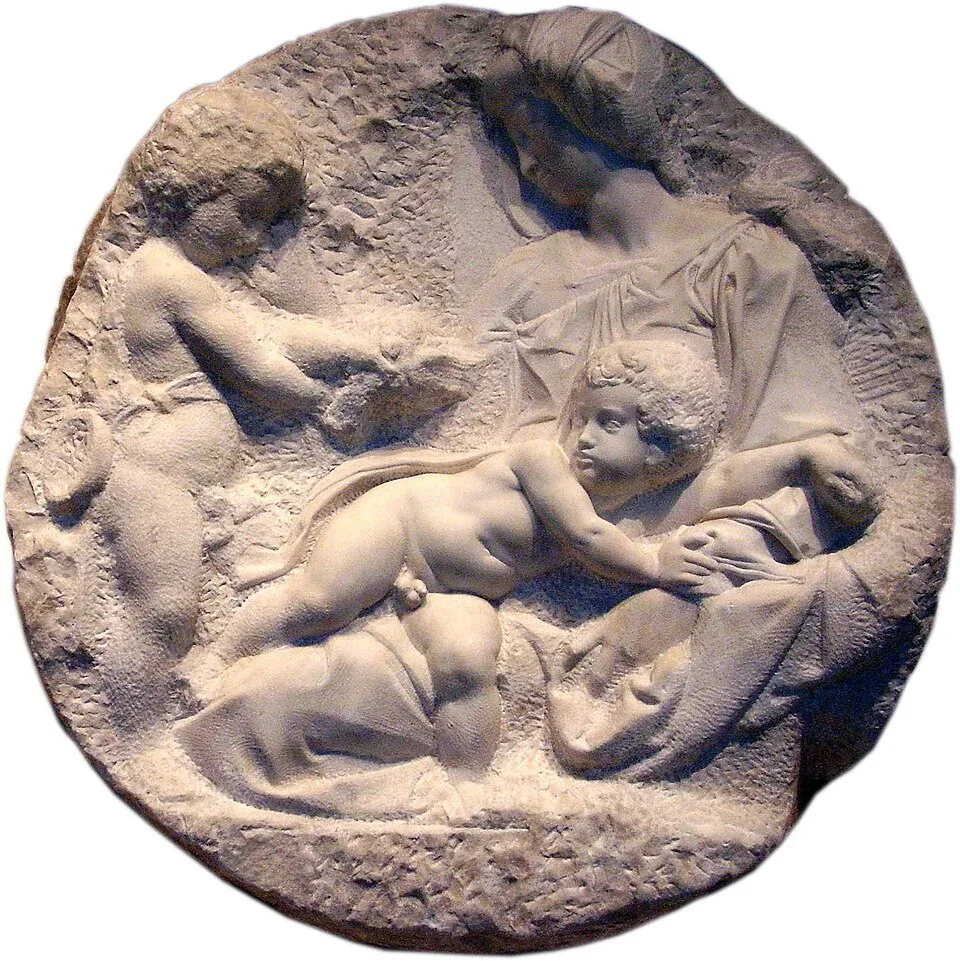
Taddei Tondo
Michelangelo was cutting into this marble to make a round relief for Taddeo Taddei, who wanted it for his home. He was after three figures, and the Christ child is the one he brought furthest out of the stone. He is sprawled across his mother's lap, turning back toward the infant Saint John. John holds a fluttering bird, most likely a goldfinch, the bird that stands for the Passion. Below it the marble is still rough, and that rough patch may have been meant for a crown of thorns. Mary is the least finished of the three, and the background is barely worked. But early on, a chisel blow from the back left a hairline crack right through the Virgin's face. It may only have become visible as he cut deeper. He kept carving anyway. Why he went on with marble he had cracked, when he cared so much about his materials, is still not known.
Listen in the appNo machine-readable author provided. Ham II assumed (based on copyright claims). · CC BY-SA 2.5
02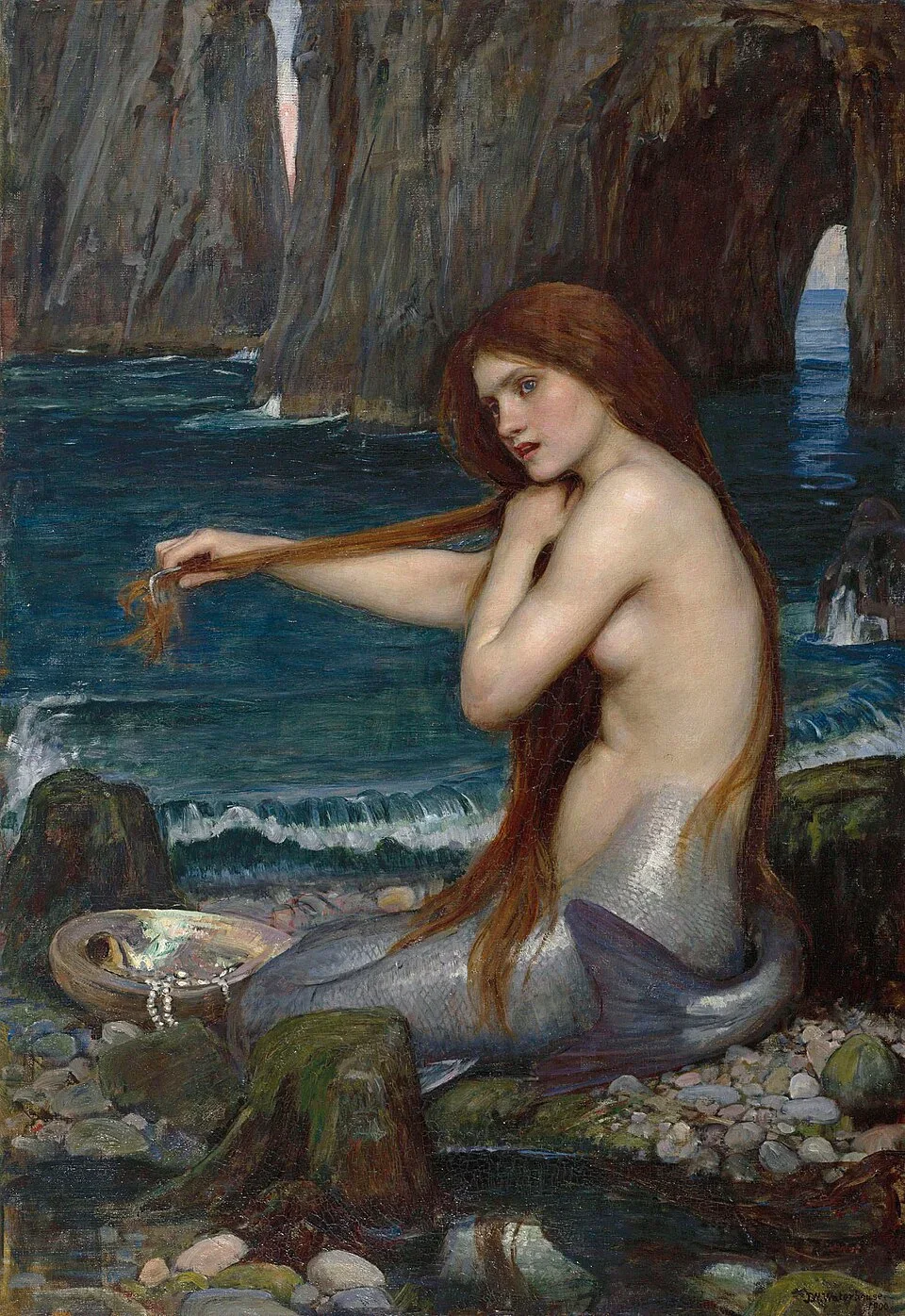
A Mermaid
A poem came first. Alfred, Lord Tennyson wrote it in 1830, about a mermaid combing her hair. Waterhouse made an oil sketch of that idea in 1892, and around 1900 he painted this. She is just what the poem described, alone on a shore of pebbles, with the waves running up to it. She has a fish's tail, yet she combs her long red hair, her lips parted in song. Mermaids were sirens in Greek myth, and their songs drew sailors to their deaths. There is not a sailor anywhere in this picture. She longs for the human world herself, and no man can live in hers, so any love between them was bound to end. This was his diploma painting, the one he gave the Royal Academy when he became a full member. Beside her lies a shell full of pearls, formed from the tears of the dead sailors.
Listen in the appJohn William Waterhouse · Public domain
03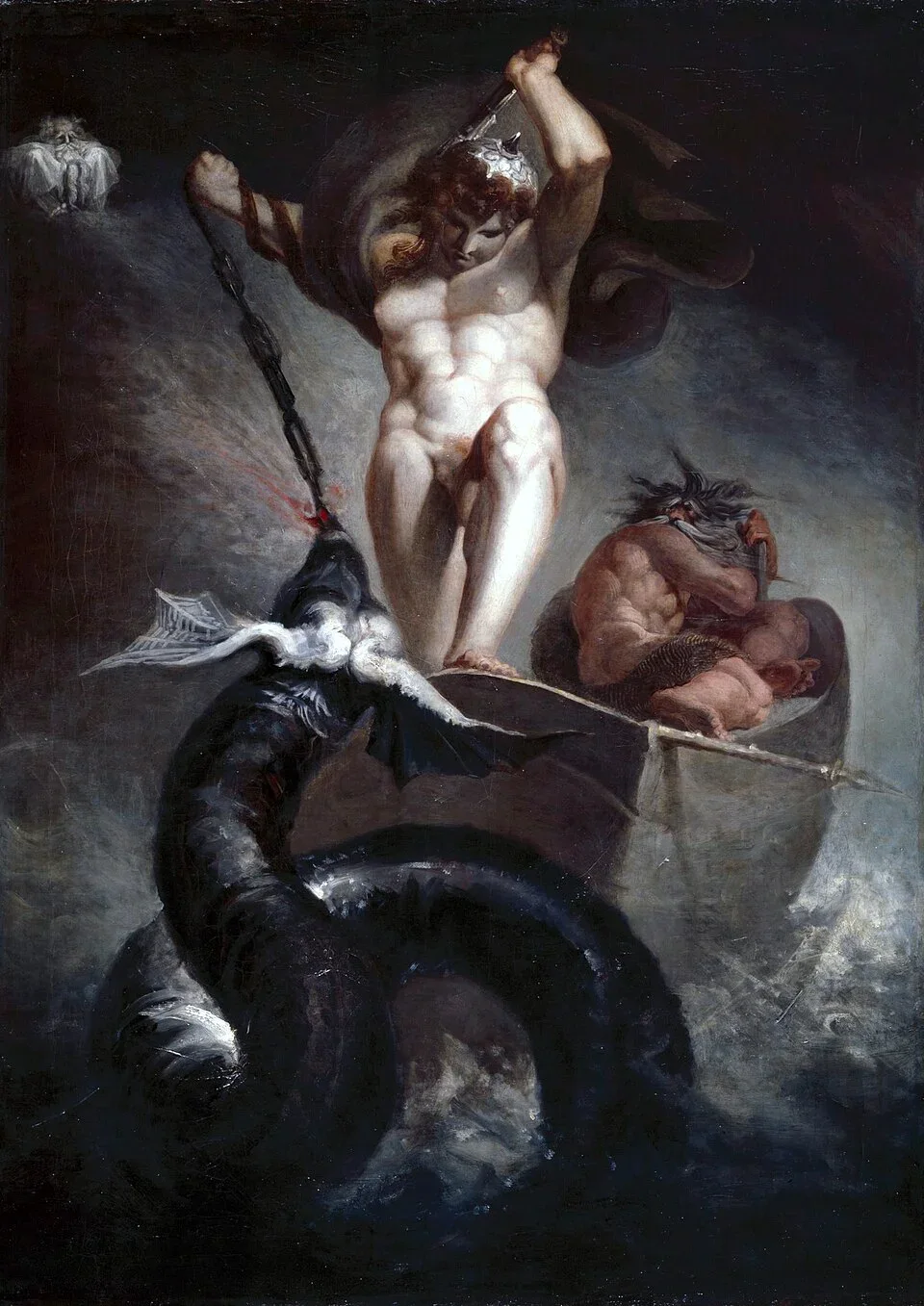
Thor Battering the Midgard Serpent
Thor stands at the prow of a boat, about to strike a monstrous sea serpent with his sword. His body is bare except for a helmet and cape, coming out of a dark background. This is the old Norse story of Thor's fishing trip, which Fuseli knew from a book of northern antiquities. He chose it as the piece that won him election to the Royal Academy. He supported the French Revolution. The serpent could stand for the old order of France, about to fall to the god of thunder. That god stands for the French people. And the serpent is already held fast, a chain stuck in its mouth, probably with a harpoon. Fuseli's muscular Thor takes its shape from sculptured nudes he had admired in Italy. The sea runs high around the boat, and it is the middle of the night. What is natural gives way here to the monstrous and the fantastic.
Listen in the appHenry Fuseli · Public domain
04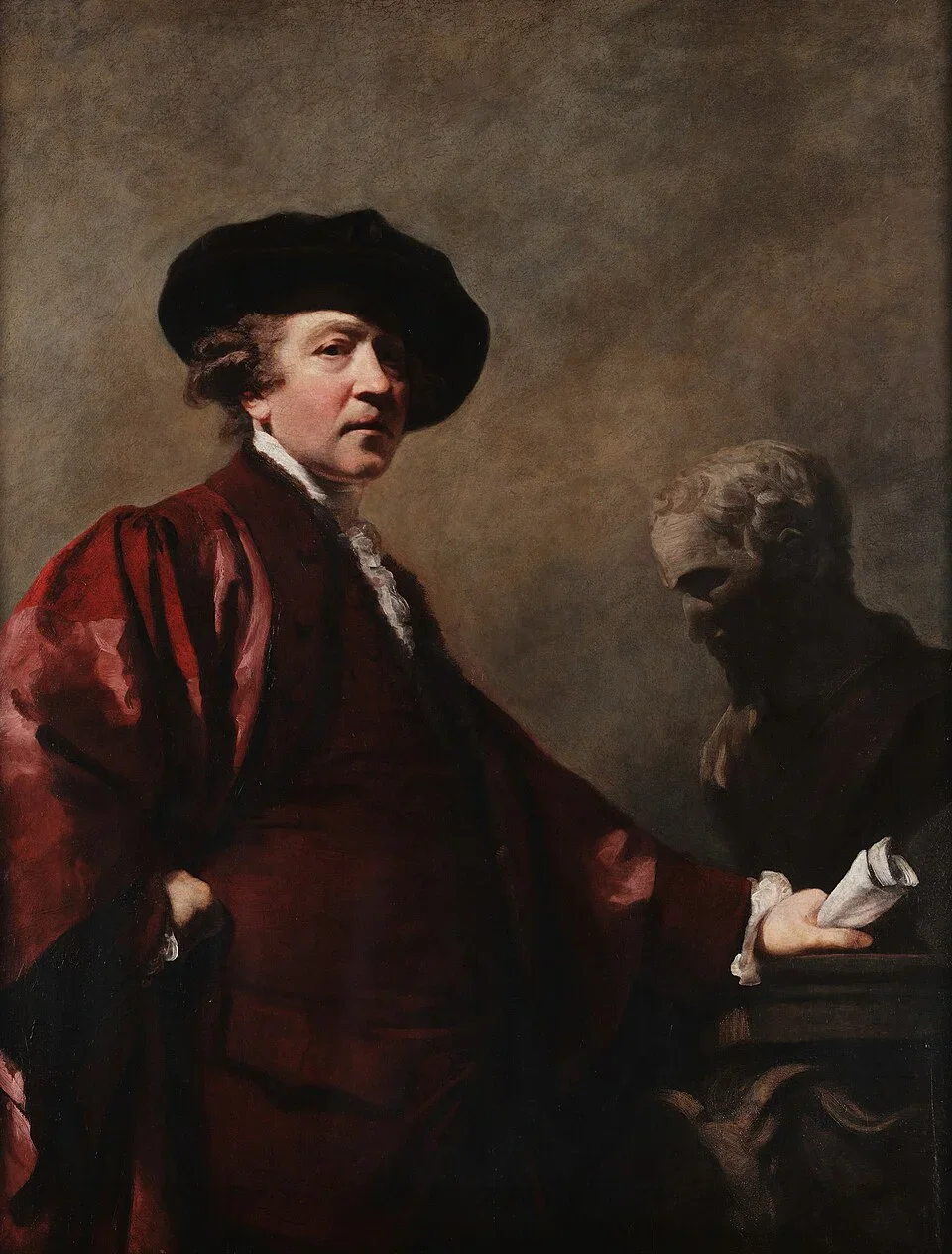
Self-Portrait
Light comes in from the left and lands on his cheek, his hand, and the forehead of the bust beside him. The rest of the picture is given over to shadow. That one patch of light against so much dark is Rembrandt's way of working, and Reynolds took the pose from him too. Rembrandt painted Aristotle gazing at a bust of Homer. Here the bust at his side is Michelangelo, made by Daniele da Volterra. Reynolds wears the robes of a Doctor of Civil Law, the degree Oxford gave him in 1773. He did not paint this for a private wall. He was fifty seven, and had been president of the Royal Academy since it began in 1768. He had just guided it into new rooms at Somerset House, and the portrait was made for the assembly hall there. It was painted to hang beside his portrait of William Chambers, who designed the building and served as the Academy's treasurer. A drawing of the room shows the two portraits on either side of the fireplace.
Listen in the appJoshua Reynolds · Public domain
05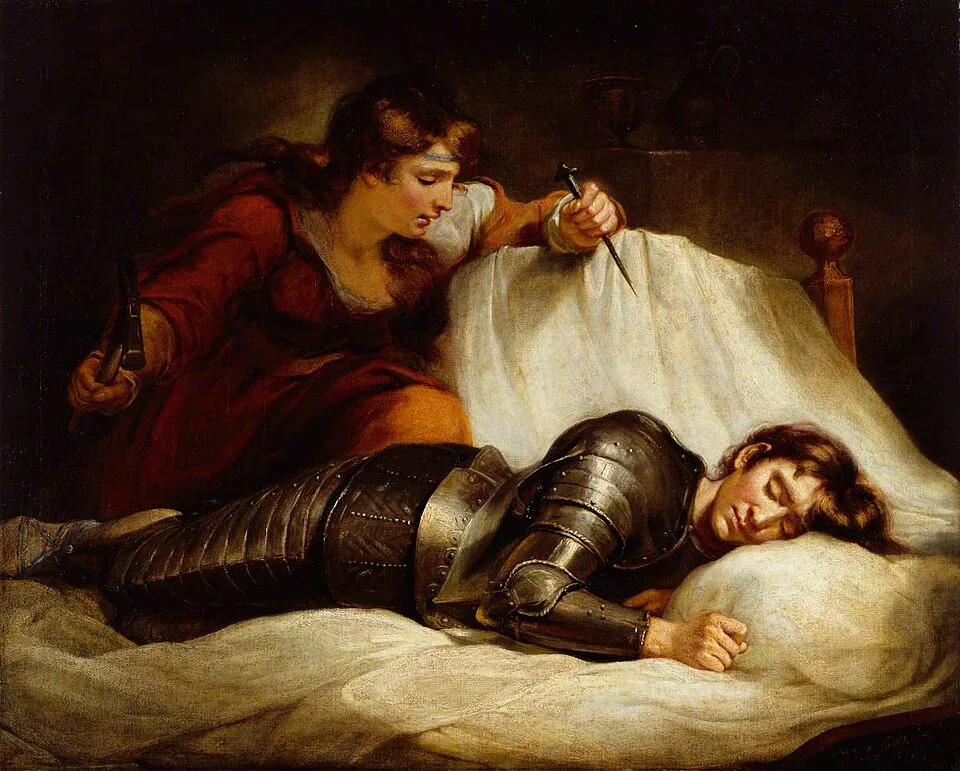
Jael and Sisera
A hammer and a tent peg, the kind you drive into the ground to hold a tent steady. In a moment the peg will be driven through a sleeping man's head. That man is Sisera, a general in the Canaanite army. He is young and beardless, dressed in armor, sleeping peacefully in a bed of white sheets. The woman who holds the hammer is about to kill him. She is Jael, a Kenite woman allied to the Jews, and the peg is hers too. The moment comes from the Old Testament Book of Judges, a scene painters returned to again and again. This version became one of the most popular pictures of the scene through the nineteenth century. In 1787 Northcote was elected a full member of the Royal Academy. That meant a diploma work, a picture he had to hand in. This is the one he chose.
Listen in the appJames Northcote · Public domain
06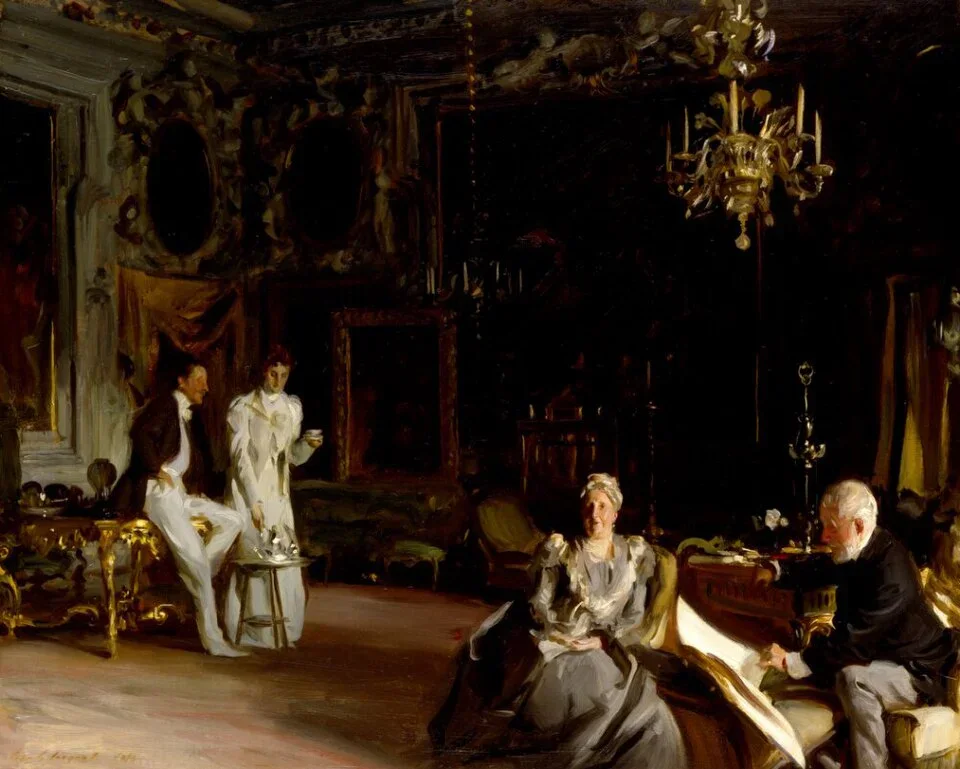
An Interior in Venice
Sargent spent the summer of 1899 staying with an American family in a Venetian palazzo, and he painted them at home. He was after the light. It rises off the canal and catches the gilt and the carvings. He meant the picture as a gift for Ariana Curtis. But when he gave it to her, she refused it. She thought it made her look too old, and she thought the informal way her son sat was improper. The four are Ariana and Daniel Curtis, their son Ralph and his wife Lisa. Theirs was a house that welcomed artists and writers. Monet came, and Browning, and Henry James. And James wrote that he loved the painting and had wanted few things more, hoping she had not let it go.
Listen in the appJohn Singer Sargent · Public domain
07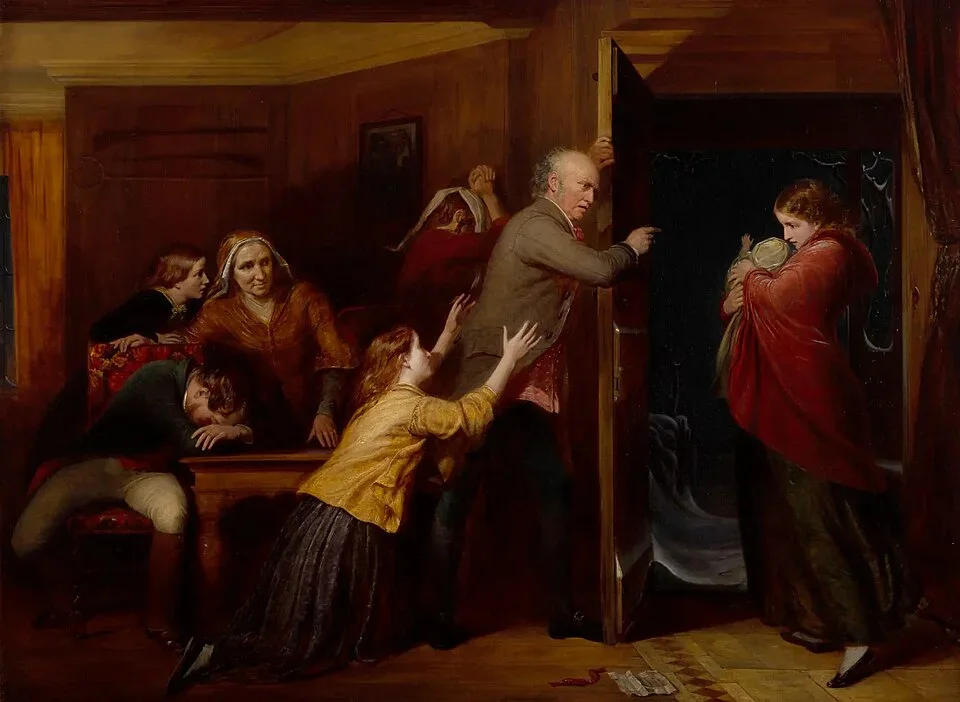
The Outcast
A man stands in an open doorway, gesturing angrily for someone to leave. Snow lies on the ground outside. A young woman and her baby are there, and the family around them is in tears. The man is the father of the family. The woman is probably his daughter, turned out because she has had a child without a husband. One young woman kneels, begging him to change his mind, and another weeps behind her. The mother comforts a weeping son, while a fourth daughter looks on, confused. On the floor lies a letter, the evidence against her. He is sending her and the baby out into the snow. Redgrave gave the painting to the Royal Academy when he was elected a full member. Whether he meant it as a warning to other women or as sympathy for the mother is still not known.
Listen in the appRichard Redgrave · Public domain
08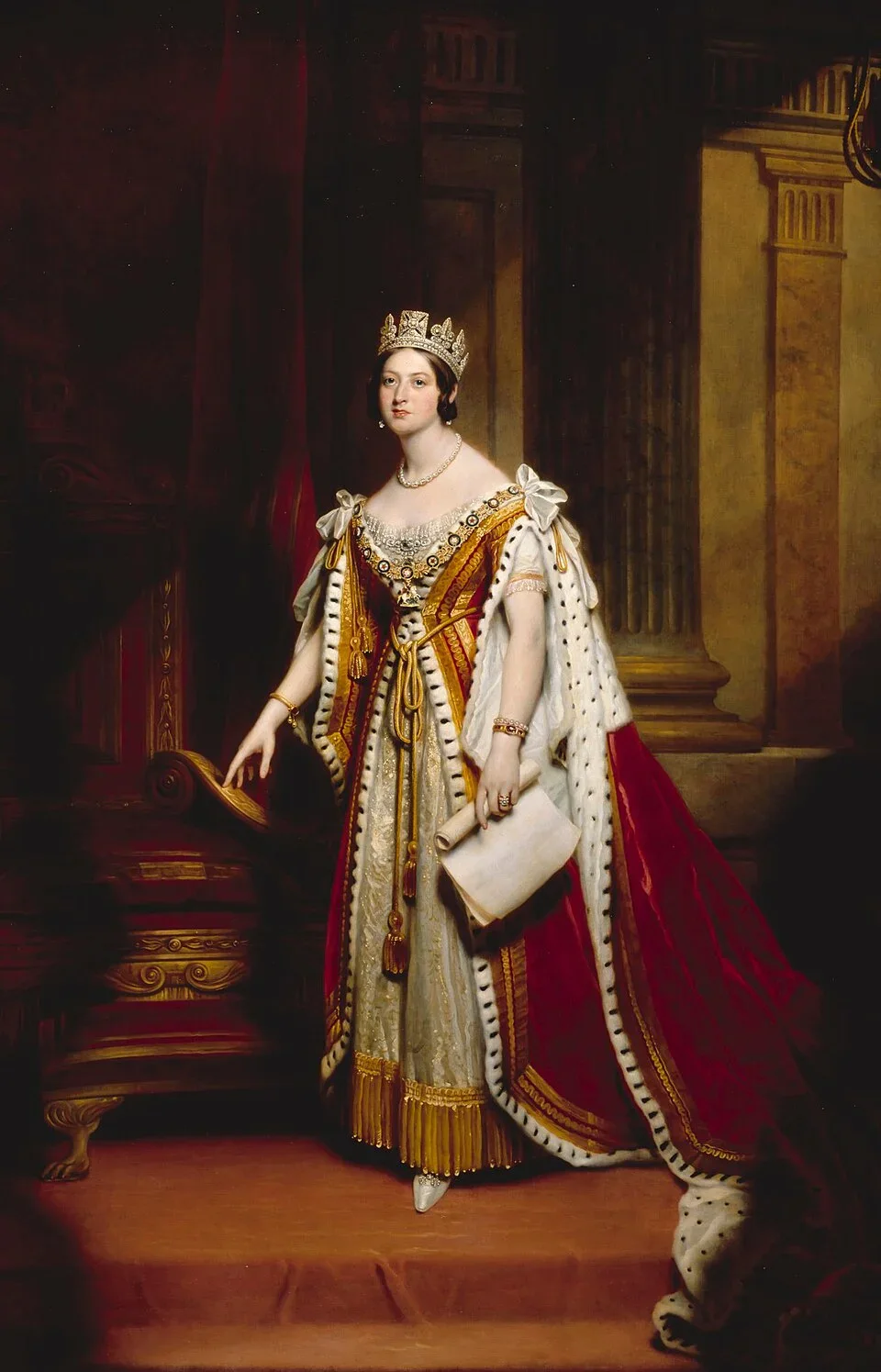
Queen Victoria (1819–1901)
Here is the queen at full length, in the robes of state. She had taken the throne only a few years before. The Royal Academy wanted a portrait of its new queen, and gave the job to its own president, the Irish painter Martin Archer Shee. He had made his name as a portraitist in the Regency era, and in 1830 became president, succeeding his friend and rival Thomas Lawrence. The academy had done this before. Sixty years earlier its first president, Joshua Reynolds, had painted her grandparents, George the Third and Queen Charlotte, for the academy. Now it was the granddaughter's turn, painted by the academy's president. The portrait went on show at the academy's exhibition of 1843 at Somerset House, and it has stayed in the academy's collection ever since.
Listen in the appMartin Archer Shee · Public domain
09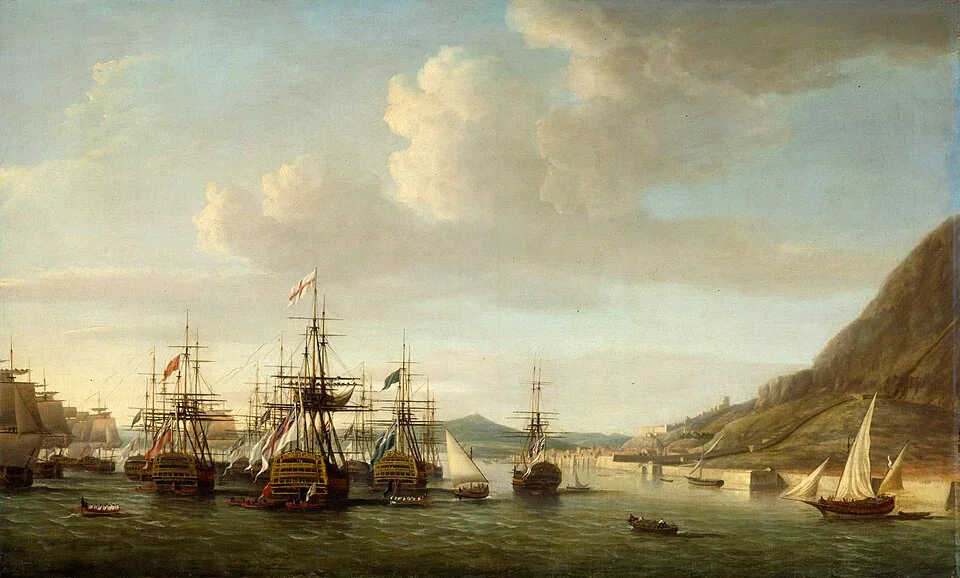
Gibraltar Relieved by Sir George Rodney, 1780
A fleet has come in to relieve Gibraltar, and Rodney's flagship, the Sandwich, is one of the ships here. The scene is January 1780. French and Spanish forces have been trying to take the stronghold since 1779, and they will keep trying until 1783. Rodney has just defeated the Spanish fleet. Now he has escorted ships carrying relief and supplies to the garrison. It is a major boost to the defence, and Gibraltar holds out. Dominic Serres was a founding member of the Royal Academy, and in 1782 he gave it this picture as his diploma piece. The other ship is the Fenix, until then the flagship of the Spanish admiral Juan de Lángara. Rodney captured it at Cape Saint Vincent. Its presence here is the victory that let the relief reach the garrison.
Listen in the appDominic Serres · Public domain
10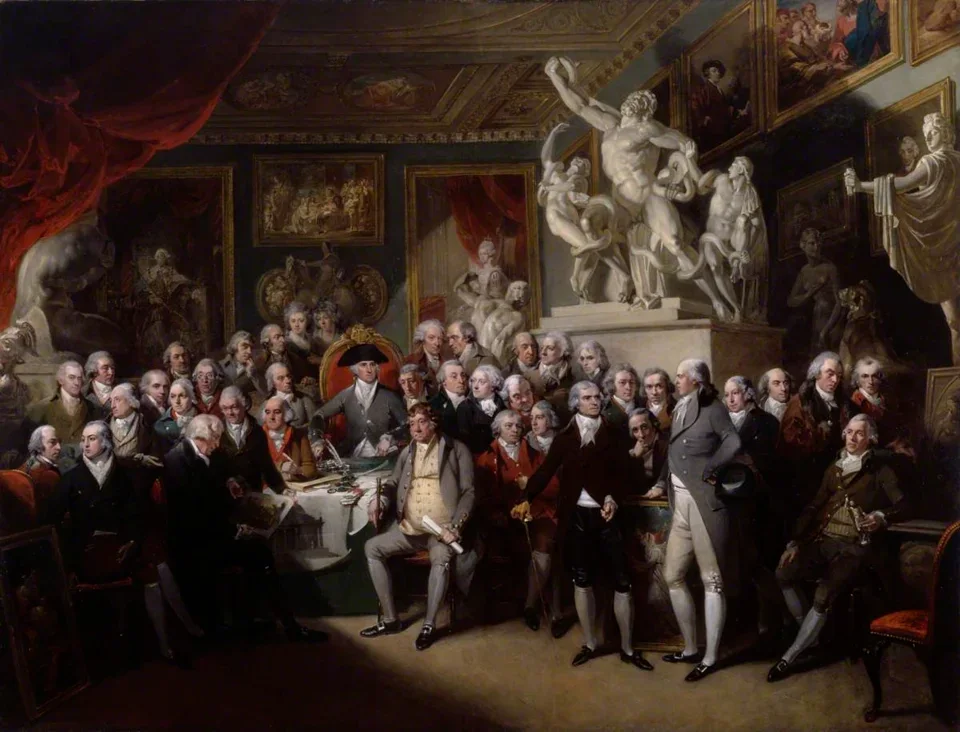
The Royal Academicians in General Assembly
Did this meeting ever actually happen? Academicians judge the work of their students here, in the Council Chamber at Somerset House. Benjamin West sits on the presidential throne. But on the right wall hangs a self-portrait of Joshua Reynolds, the first president, who died in 1792. William Beechey is in the crowd, though he would not be elected for another three years. Angelica Kauffman and Mary Moser, the academy's two founding women, are here as well, though they never attended meetings. No single meeting ever brought all these people together. Henry Singleton gathered them in one room, and the academicians argued among themselves about their places in the picture. It was Cantlo Bestland who commissioned the painting, so that he could make an engraving of it.
Listen in the appHenry Singleton (Life time: 1766-1839) · Public domain
- 11
The Oriental Love Letter
Henry William Pickersgill · 1824
- 12
The Sleeping Model
William Powell Frith · 1853
- 13
The Festival of Esther
Edward Armitage · 1865
- 14
A Pleasant Corner
John Callcott Horsley · 1865
- 15
Boy and Rabbit
Henry Raeburn · c. 1814
- 16
Portrait of Sir William Chambers
Joshua Reynolds · 1780
- 17
Le Chef de l’Hôtel Chatham
William Orpen · 1921
- 18
Samson and Delilah
John Francis Rigaud · 1784
- 19
The Tribute Money
John Singleton Copley · 1782
- 20
Venus and Adonis
Thomas Phillips · 1808
- 21
Hagar and Ishmael
Charles Lock Eastlake · 1830
- 22
The Fortune Teller
Edward Poynter · 1877
- 23
The Leaping Horse
John Constable · 1824–1825
- 24
Romantic Landscape with Sheep at a Spring
Thomas Gainsborough · c. 1783
- 25
A Gipsy Girl
Thomas Lawrence · 1794
- 26
The Artist's Son, William
Martin Archer Shee · c. 1820
- 27
A Boat Passing a Lock
John Constable · 1826
- 28
Jacobites, 1745
John Pettie · 1874
- 29
On Strike
Hubert von Herkomer · 1891
- 30
The Ghauts of Benares
William Hodges · 1787
- 31
Belisarius
Martin Archer Shee · 1809
- 32
Young Anglers
William Collins · 1820
- 33
Colonel Blood Stealing the Crown Jewels
Henry Perronet Briggs · 1824
- 34
The Faithful Hound
Edwin Landseer · 1830
- 35
On the Scheldt near Leiskenshoeck: A Squally Day
Clarkson Frederick Stanfield · 1837
- 36
The Dying Warrior
Charles Landseer · 1843
- 37
An Early Reading of Shakespeare
Solomon Hart · 1838
- 38
The Gateway to the Great Temple at Baalbec
David Roberts · 1841
- 39
Omnia vanitas
William Dyce · 1848
- 40
The Night before Naseby
Augustus Egg · 1859
- 41
Scheveningen Pincks off the Coast of Yarmouth
Edward William Cooke · 1864
- 42
Morning in the Meadows
Frederick Richard Lee · 1869
- 43
Volunteers at a Firing Point, 1866
Henry Tanworth Wells · 1866
- 44
The Souvenir of Velázquez
John Everett Millais · 1868
- 45
The Council of the Royal Academy Selecting Pictures for the Exhibition, 1875
Charles West Cope · 1876
- 46
A Wet Night at Piccadilly Circus
Arthur Hacker · 1910
- 47
Portrait of George, Prince of Wales
William Beechey · 1798
- 48
Boys Digging for Rats
David Wilkie · 1812
- 49
Last supper by Giampietrino
Giampietrino · 1520
- 50
Colour
Angelica Kauffmann · 1778–1780
Royal Academy of Arts
Frequently asked questions
How much does the guide cost?
Free app download. Free until 1 January. Listed guide price: $2.99. Audio guide only. Venue admission is separate.
Can I listen without internet?
Yes. Download the guide’s audio, images, and maps in the app before your visit. Your downloaded content is then available offline.
Can I listen in my language?
In English for now. More languages soon.
Do I need to follow a schedule?
No. This is a self-guided experience. Choose your stops, pause whenever you like, and return to a story at your own pace.
Which artworks are in the Royal Academy of Arts audio guide?
50 artworks, including Taddei Tondo (Michelangelo), A Mermaid (John William Waterhouse), Thor Battering the Midgard Serpent (Henry Fuseli), Self-Portrait (Joshua Reynolds), Jael and Sisera (James Northcote), An Interior in Venice (John Singer Sargent), The Outcast (Richard Redgrave), and Queen Victoria (1819–1901) (Martin Archer Shee). The full list is on this page.
Is this the museum’s official audio guide?
No. Stanza is an independent audio guide app and is not affiliated with Royal Academy of Arts. Museum admission is separate.
At your own pace
Explore Royal Academy of Arts.
Download Stanza, then search for “Royal Academy of Arts”.
Free app download · Guide price shown in the app
Keep exploring
Nearby audio guides
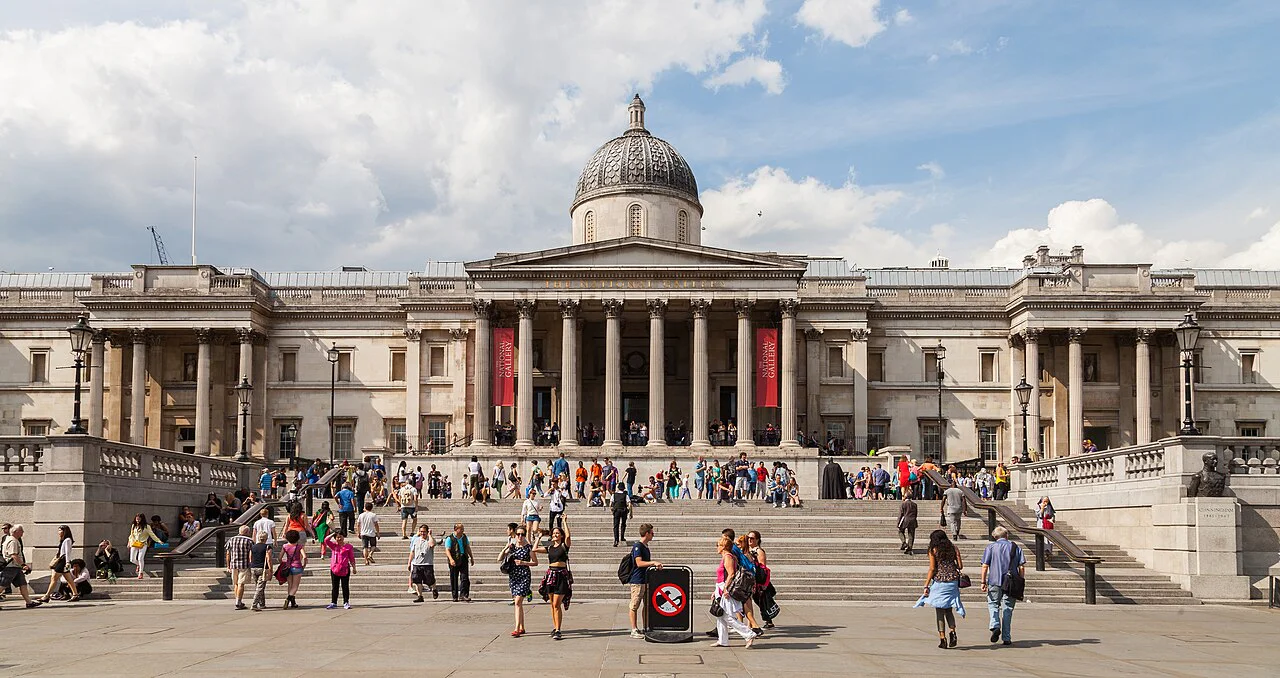
City of Westminster · 1 km
National Gallery, London
Content & sources
Diego Delso · CC BY-SA 4.0
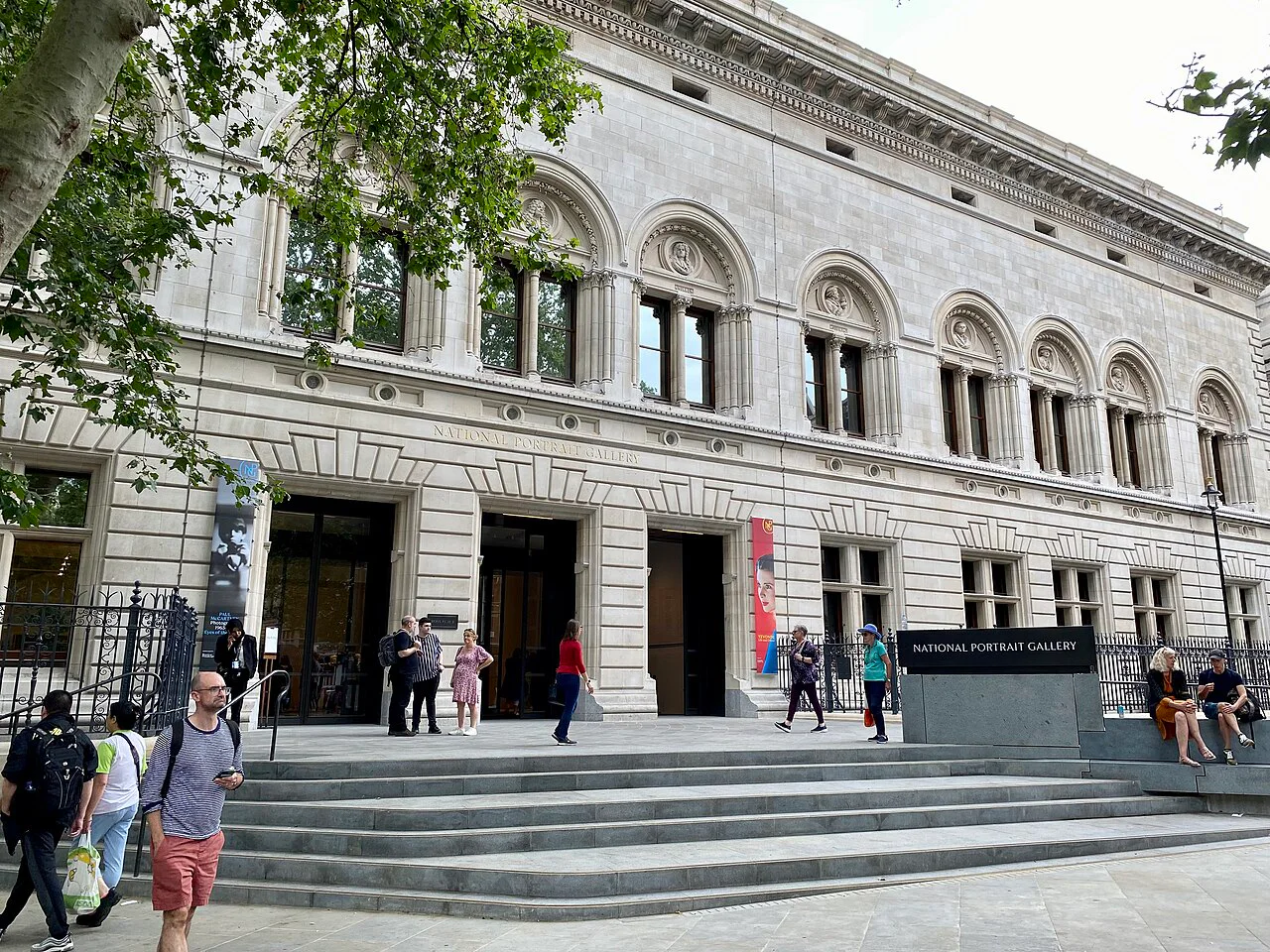
City of Westminster · 1 km
National Portrait Gallery, London
Content & sources
Photo: No Swan So Fine · CC BY-SA 4.0
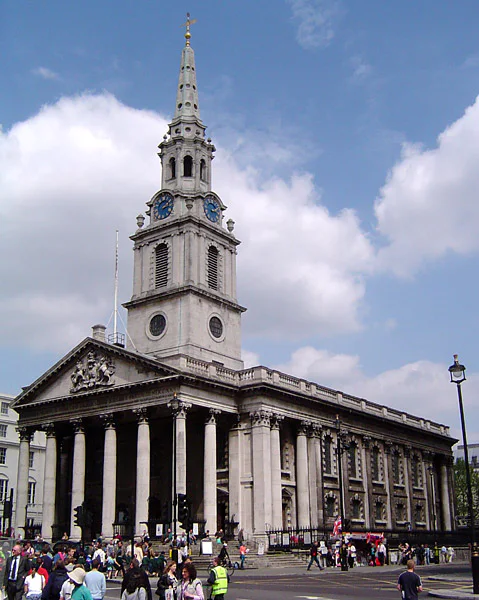
London · 1 km
St Martin-in-the-Fields
Content & sources
Photo: Yopohari~commonswiki · CC BY-SA 3.0
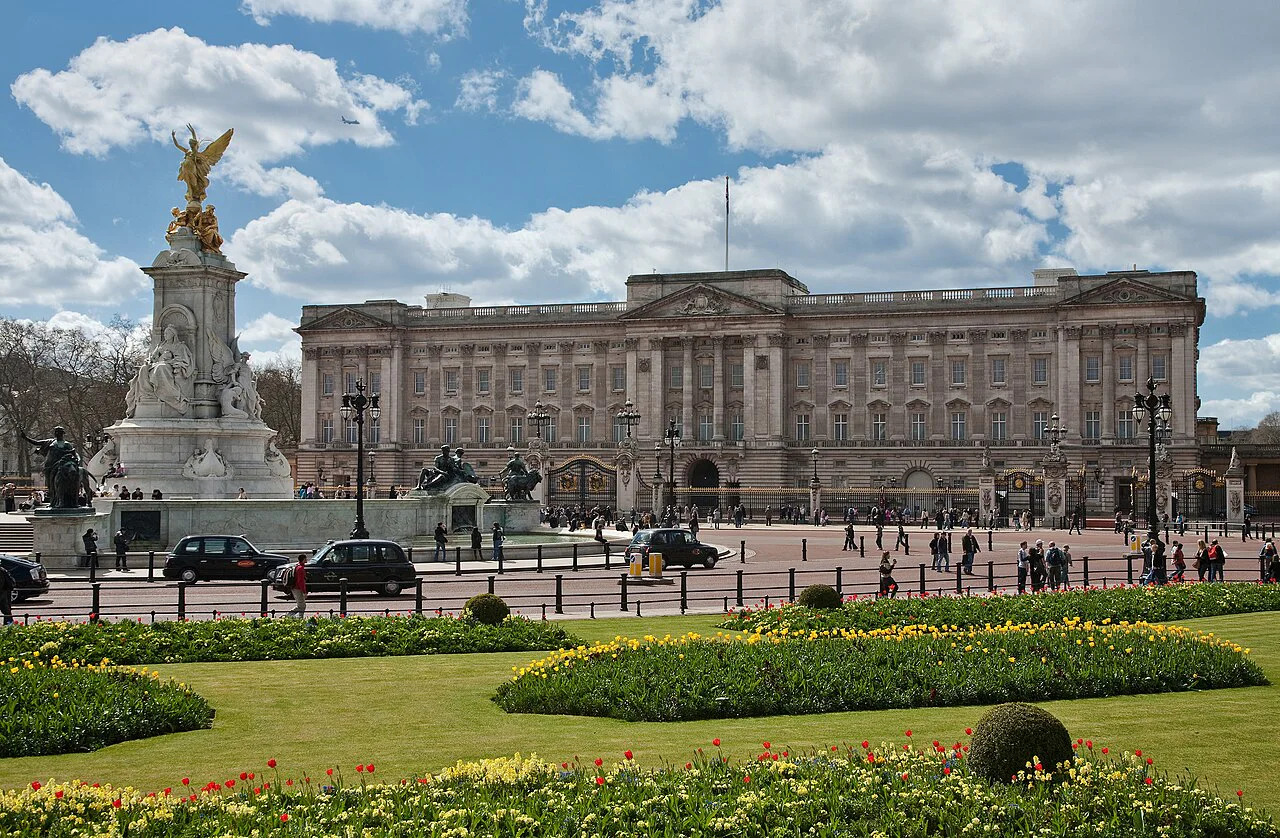
London · 1 km
Buckingham Palace
Content & sources
Photo: Diliff · CC BY-SA 3.0
Art museums
More art museum audio guides
London · 171 artworks
National Gallery, London
Content & sources
Diego Delso · CC BY-SA 4.0
London · 164 artworks
National Portrait Gallery, London
Content & sources
Photo: No Swan So Fine · CC BY-SA 4.0
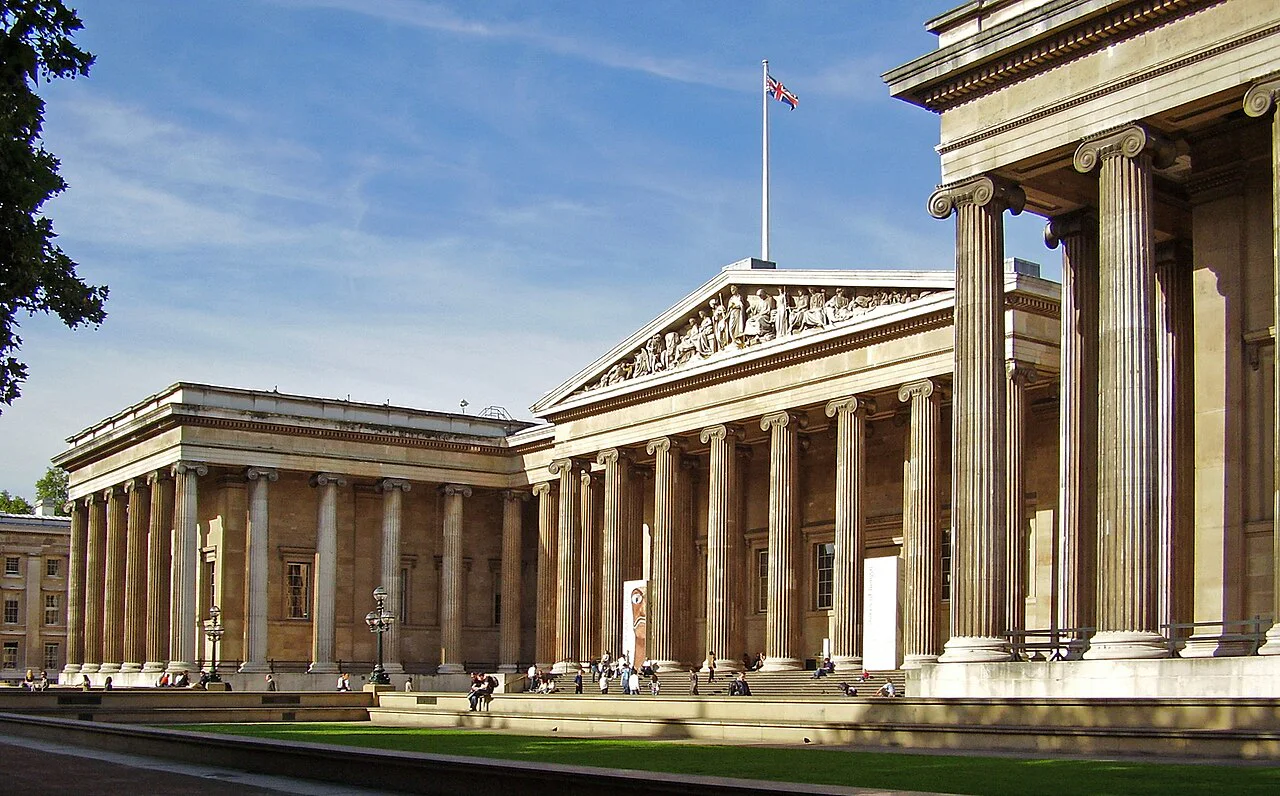
London · 68 artworks
British Museum
Content & sources
Ham · CC BY-SA 3.0
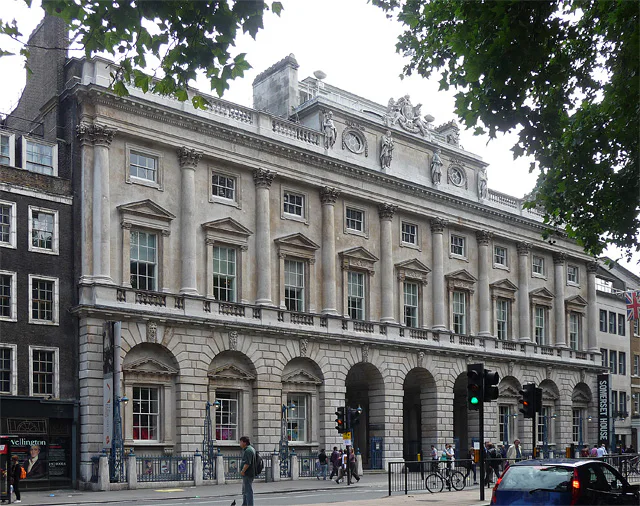
London · 33 artworks
Courtauld Gallery
Content & sources
Stephen Richards · CC BY-SA 2.0
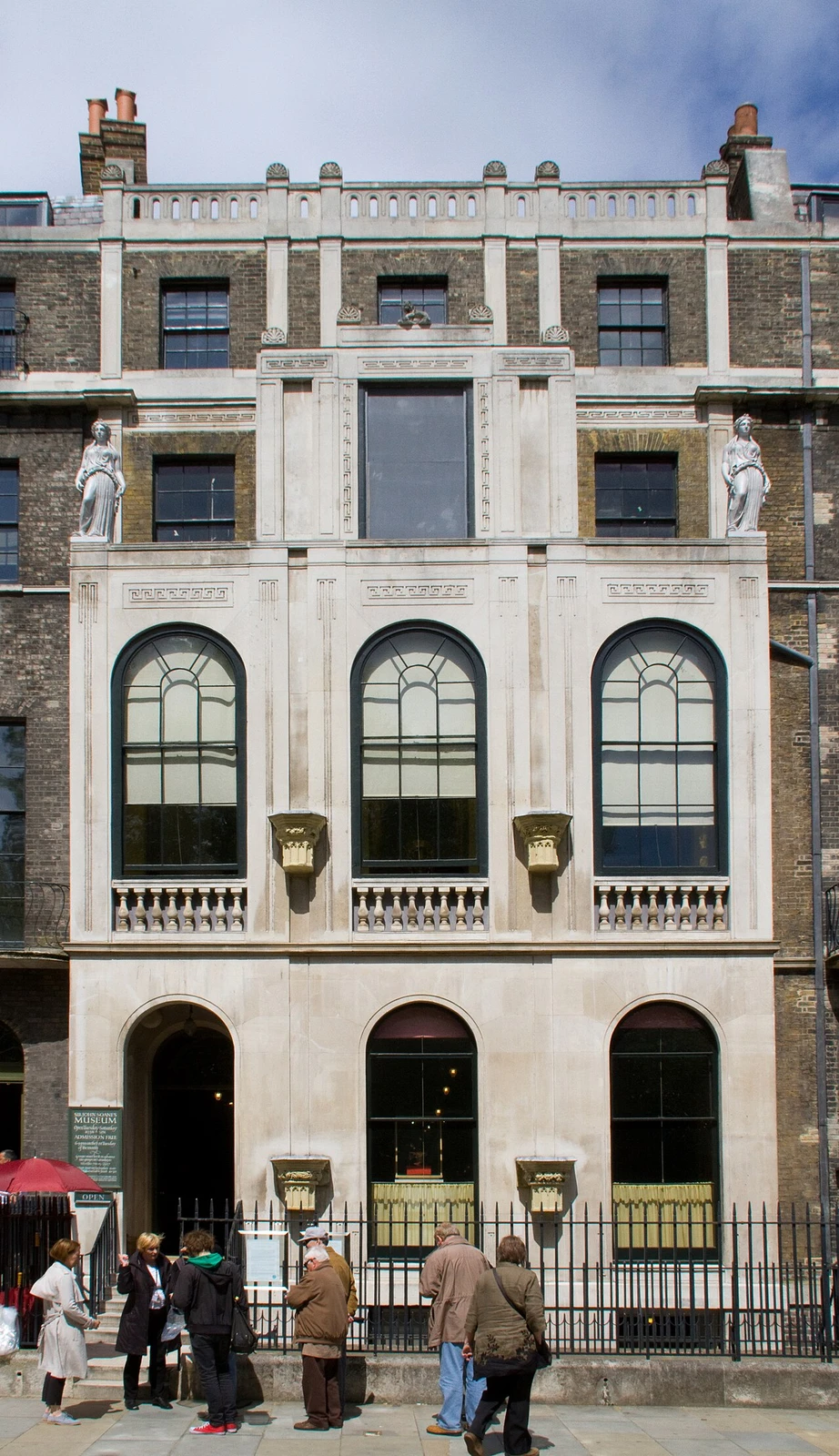
London · 8 artworks
Sir John Soane's Museum
Content & sources
Tony Hisgett from Birmingham, UK · CC BY 2.0
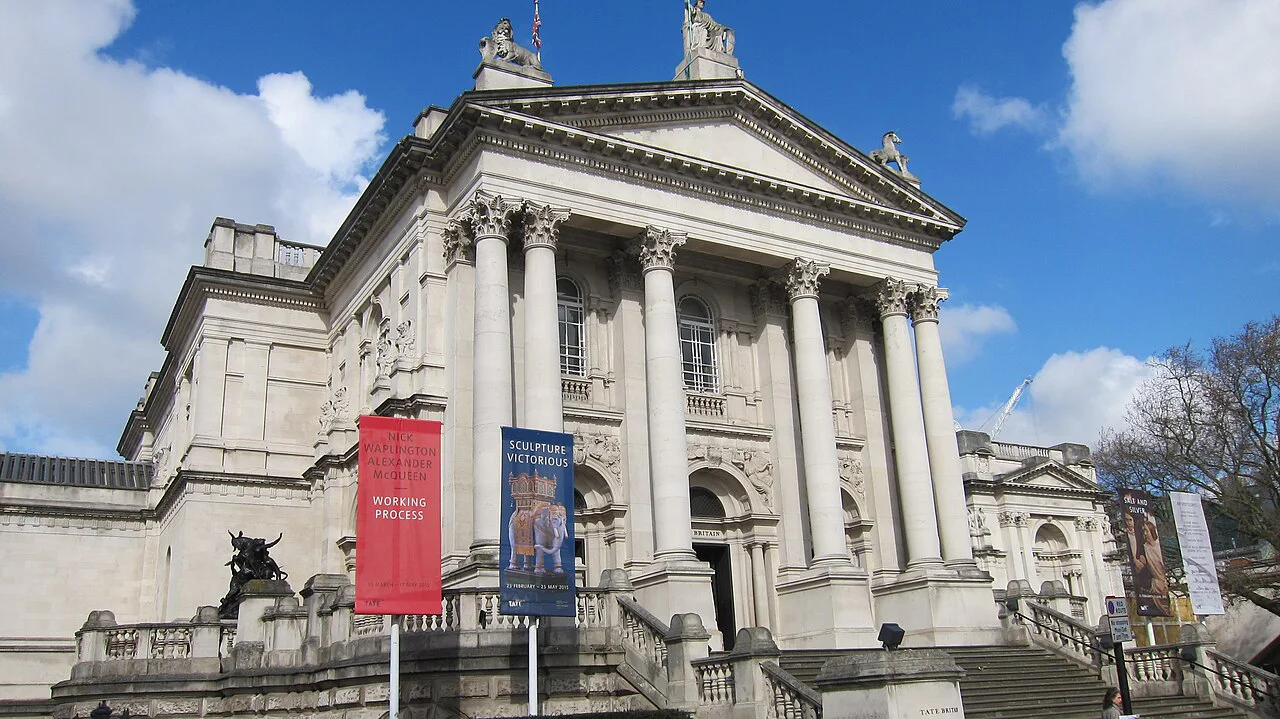
London · 69 artworks
Tate Britain
Content & sources
Carlos Cunha · CC BY-SA 3.0