 Stanza / Audio guide
Content & sources
Stanza · Audio guide
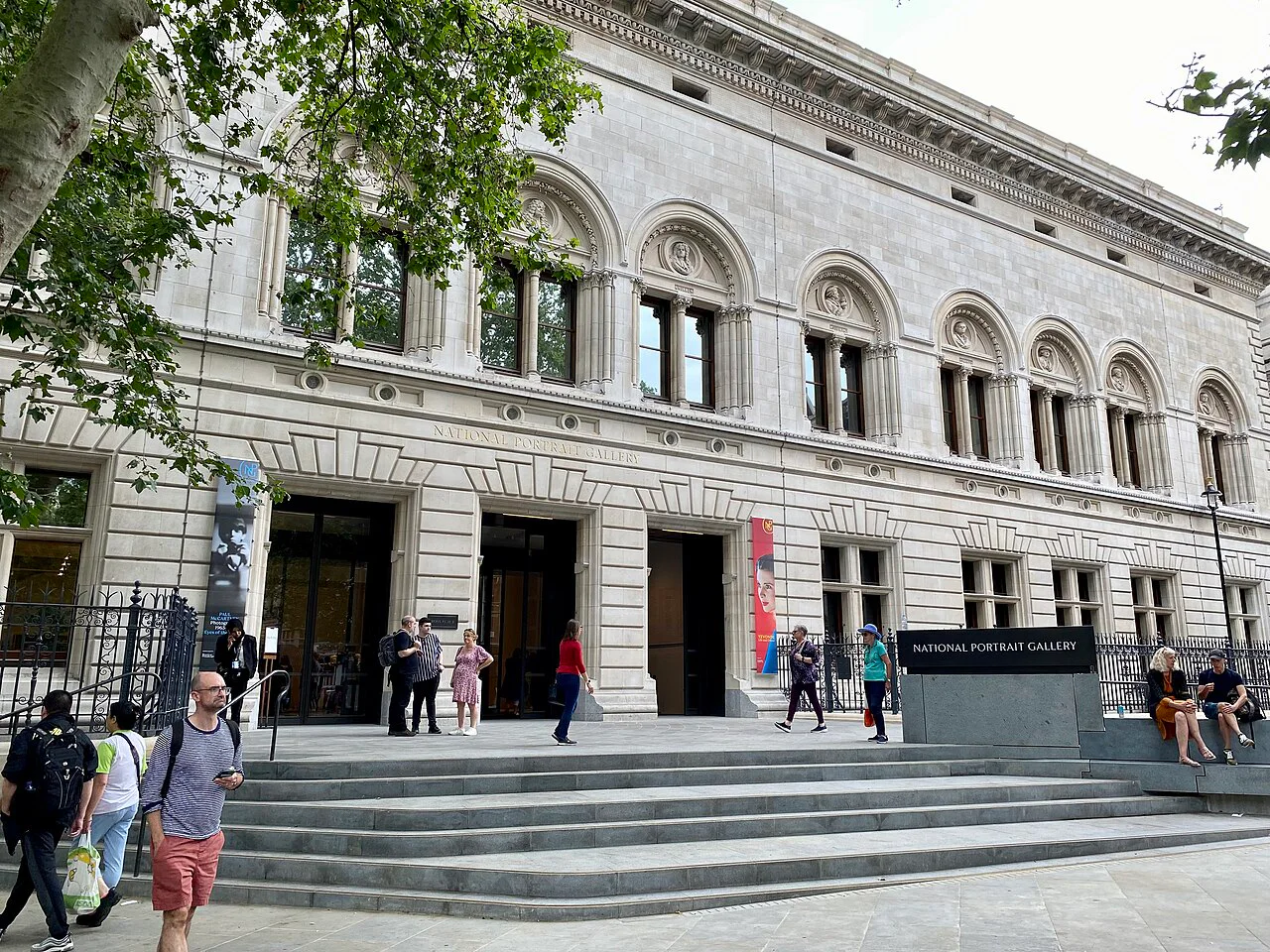
National Portrait Gallery, London Audio Guide
A place to remember. A story to take with you.
The National Portrait Gallery is an art gallery in London that houses a collection of portraits of historically important and famous British people. It was arguably the first national public gallery in the…
Download Stanza, then search for “National Portrait Gallery, London”.
About the tour
One guide. Your kind of visit.
The National Portrait Gallery is an art gallery in London that houses a collection of portraits of historically important and famous British people. It was arguably the first national public gallery in the world dedicated to portraits when it opened in 1856.
The National Portrait Gallery, London guide tells the stories of 164 artworks, including Chandos portrait (John Taylor), Statesmen of World War I (James Guthrie), General Officers of World War I (John Singer Sargent), Naval Officers of World War I (Arthur Stockdale Cope), The Death of the Earl of Chatham (John Singleton Copley), Sir Thomas More and Family (Rowland Lockey), Portrait of Omai (Joshua Reynolds), and Thomas Carlyle (John Everett Millais). Every artwork is free to hear in the Stanza app until 1 January.
Ready when you are.
- 01Get the free Stanza app.
iOS & Android
- 02Find your guide.
“National Portrait Gallery, London”
- 03Download before you go.
Works offline
Audio guide / 164 artworks
Inside the guide
Get to know a few of the stories before you go. Open a stop to read more.
01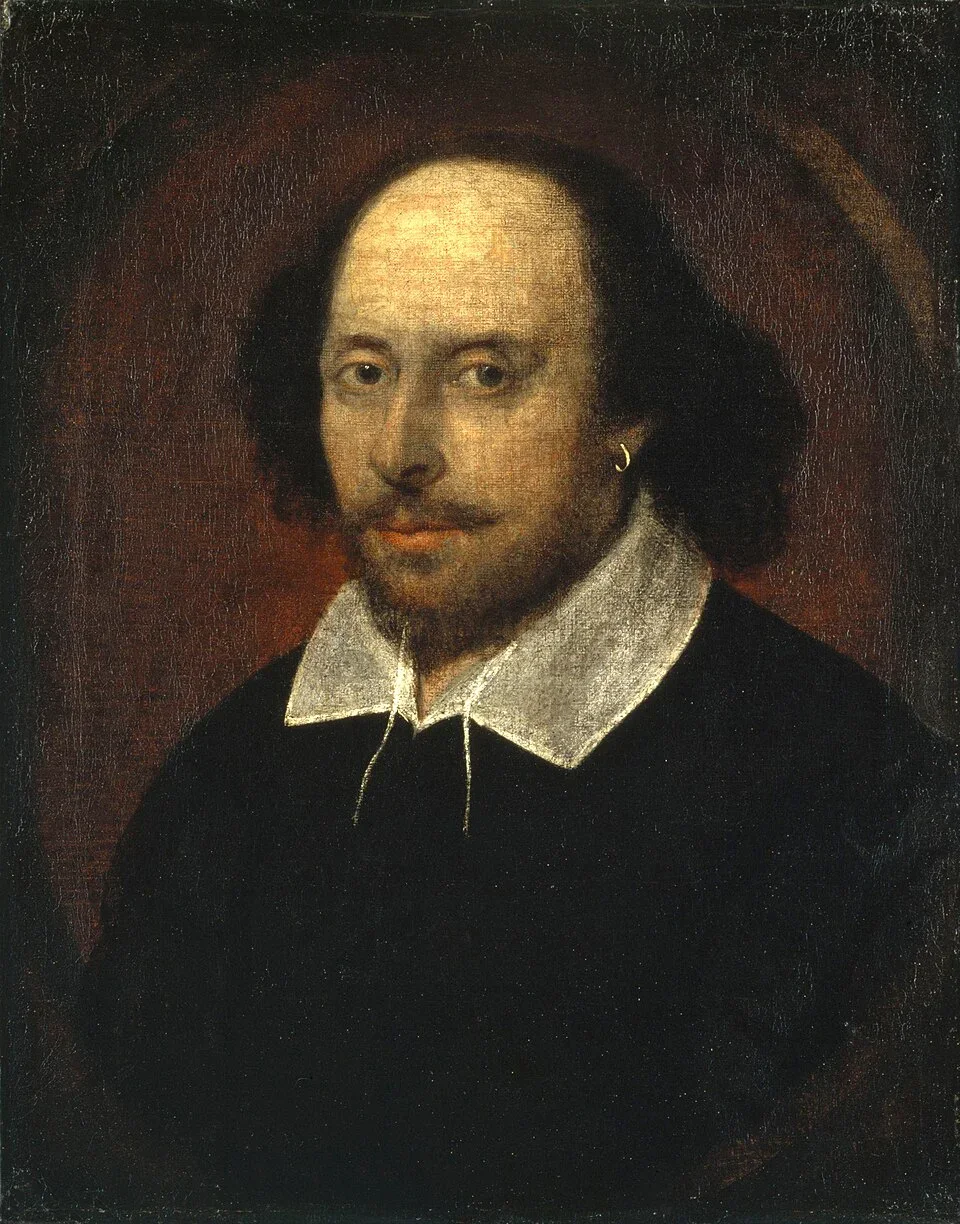
Chandos portrait
An earring, loose ties at the collar, a long pointed beard. For generations this has been the face people picture as Shakespeare. But no one can prove the man is Shakespeare, and no one is certain who painted him. Both are guesses. For a long while there was nothing to measure the face against. No description of how he looked from his own time is known. The one image we can be sure shows him is the engraving in the First Folio, the plays printed in 1623 after his death. This face resembles that engraving, and that is why people accept it as Shakespeare. The first known mention is a note from 1719. George Vertue wrote down Richard Burbage, crossed the name out, and put down one Taylor instead. Taylor may have been an actor too, and a close friend of Shakespeare. That name may even be a misreading of Joseph Taylor, a younger actor Shakespeare had helped. The earring and the loose ties point the same way. They were the marks of a poet then. John Donne wore the like. On that evidence this is most likely Shakespeare. Part of the face came later. The painting was cleaned and retouched so often that the hair was lengthened and the beard made longer and more pointed than it began. The painter probably worked from life, between 1600 and 1610.
Listen in the appAttributed to John Taylor · Public domain
02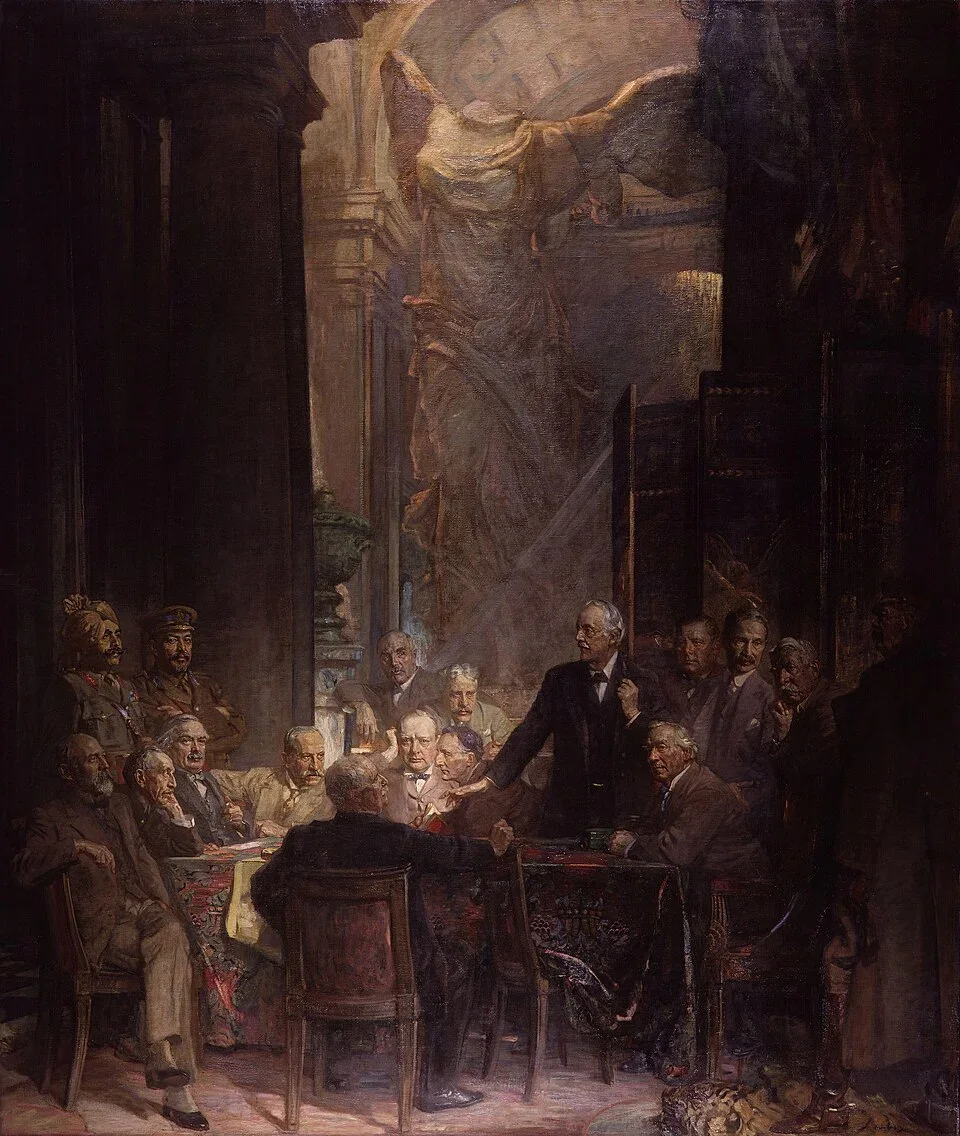
Statesmen of World War I
Who decided which men would appear in this picture? Seventeen men are grouped around a table in a large hall. Some are seated, some standing, beneath a sculpture modeled on the Winged Victory of Samothrace. They held office in Britain and its Dominions during the First World War. A South African financier, Sir Abraham Bailey, wanted to remember them. He paid for the picture and then gave it to the National Portrait Gallery. James Guthrie nearly turned the job down. He could not face painting officials as if they were posing for a photograph, and doubted he could make one whole picture. But he took it on in 1919, thinking it would be his last big commission. Instead they are shown in conference, not lined up. Bailey wanted the leaders who held office at the start and the end of the war. Sixteen names went on the list, and not one of them from India. Guthrie proposed adding the Maharaja of Bikaner, the Indian delegate at Versailles. That made seventeen. On the far right, apart from the others, Kitchener stands in uniform, his profile in deep shadow. He had died in 1916, so this portrait was made after his death. Guthrie worked on it for years, painting each man in a separate study, and fell ill. He died in September 1930, before the final touches were added.
Listen in the appJames Guthrie · Public domain
03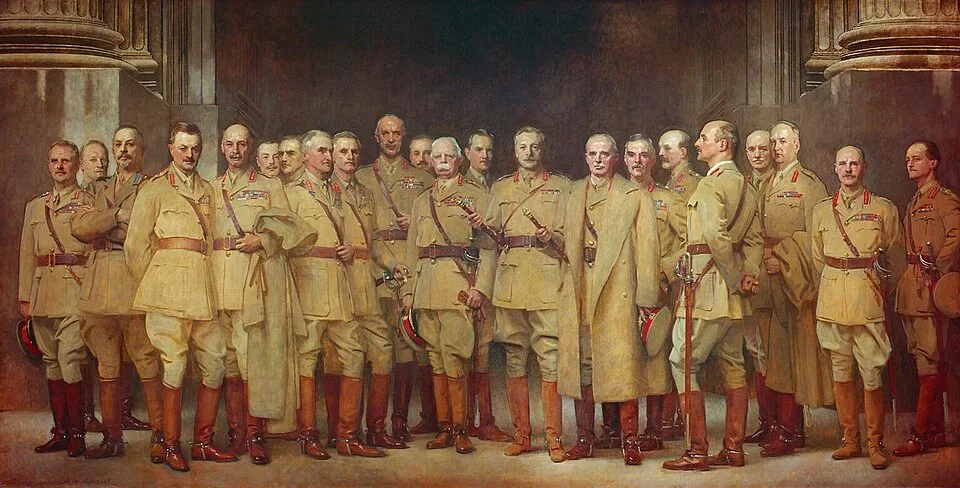
General Officers of World War I
A South African financier wanted the generals of the recent war remembered together, in one great group. Sir Abraham Bailey ordered three pictures like this, one of naval officers, one of statesmen, and this one of the army commanders. He meant to give all three to the National Portrait Gallery. So here stand twenty two of them, in khaki, packed close, each one upright as a column. They are twenty two out of roughly fifteen hundred who served as generals in the British and Imperial armies. This was not a picture Sargent wanted to paint. He had turned away from portraits, and he refused at first. The gallery's trustees kept asking, and offered him complete freedom. At last he agreed. Then he struggled to arrange so many figures standing at full length. He was sure it would fail, and he said the generals haunted him like a nightmare. In the finished picture they stare ahead with no apparent purpose, each seeming unaware of the man beside him. No one knows what the brown space behind them is, though it may be an open doorway.
Listen in the appJohn Singer Sargent · Public domain
04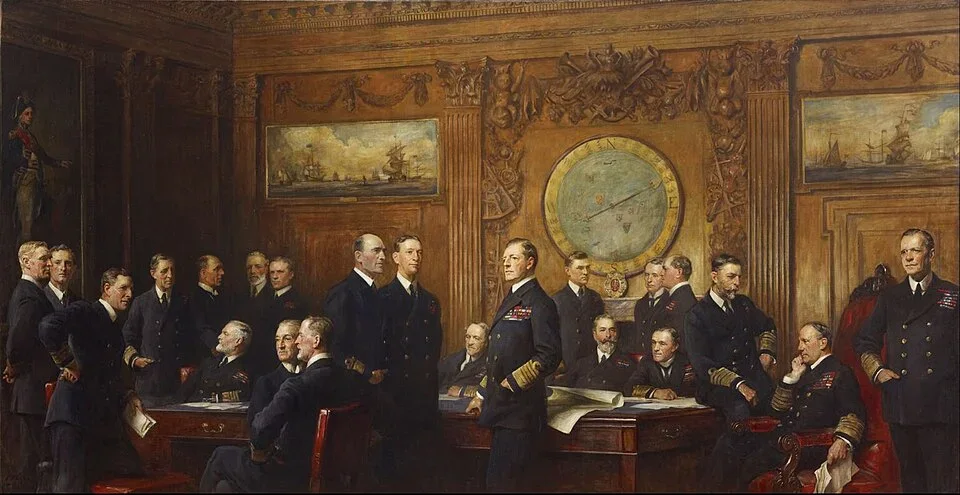
Naval Officers of World War I
For more than fifty years, this painting was out of sight. It left the wall in 1960 because its condition had grown too poor to display. It came back in 2014, restored, for the hundredth anniversary of the start of the First World War. And here are the men it was made for. Twenty-two senior officers of the Royal Navy fill the panelled Admiralty Board Room at the Old Admiralty in Whitehall. On the left wall is a portrait of Nelson. Near it are three officers killed in the war, Arbuthnot, Cradock and Hood. To the right, Jellicoe sits in a red leather chair, in conversation with his chief of staff, Madden. A South African financier, Sir Abraham Bailey, wanted these commanders remembered, and paid for the painting. It was one of three, the generals, the statesmen and the sailors. He paid five thousand pounds for each and gave all three to this gallery. Cope was offered the statesmen first. He asked for the naval officers instead. He said he was a bit of a sailor himself, and rather cold towards politics. Cope made a separate sketch of every man before painting the group.
Listen in the appArthur Stockdale Cope · Public domain
05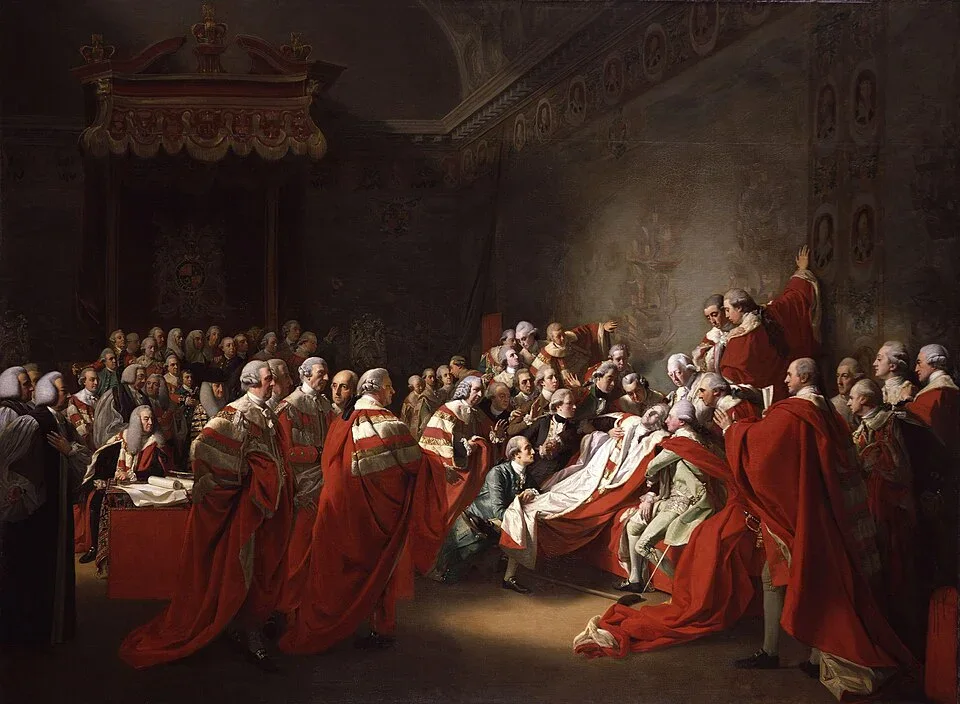
The Death of the Earl of Chatham
Tapestries of the Spanish Armada's defeat hang over the scene. They are easy to miss, because the man collapsing draws your eye. Chatham believed Britain's power grew from trade across the sea. Copley set him falling directly beneath one of England's greatest naval victories, the two meant to be read together. It was 1778, and the Lords were debating whether to pull British troops out of America. Chatham, pale and barely able to speak, came on crutches to argue against it. He rose, lifted a hand, and fell. The tapestries burned with Parliament in 1834, and this painting is a record of how they looked.
Listen in the appJohn Singleton Copley · Public domain
06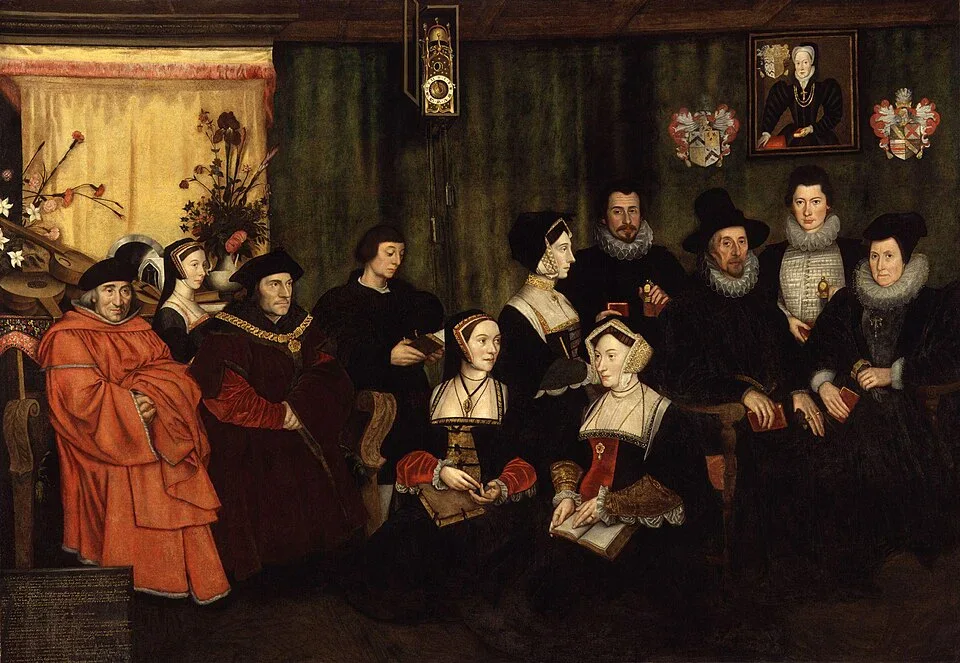
Sir Thomas More and Family
Thomas More's grandson wanted a place for his own family in the portrait of his grandfather's household. So in 1590 he asked a painter, Rowland Lockey, to make this version. He had some of the people in the original replaced by those of his own generation. Which means some of the faces here are not the ones from the original portrait. The picture Lockey was copying, Holbein's original, was made about 1527. Thomas More had asked him to paint his family at home. There he sits, surrounded by his family, with his own father beside him. A clock hangs at the centre, and it holds the whole arrangement steady. Musical instruments on the left may stand for the family's love of music. A tame monkey climbs a woman's skirt. It was a new way to paint a family, letting them interact with one another rather than the viewer. That original hung in a castle in Moravia until a fire destroyed it in 1752.
Listen in the appRowland Lockey · Public domain
07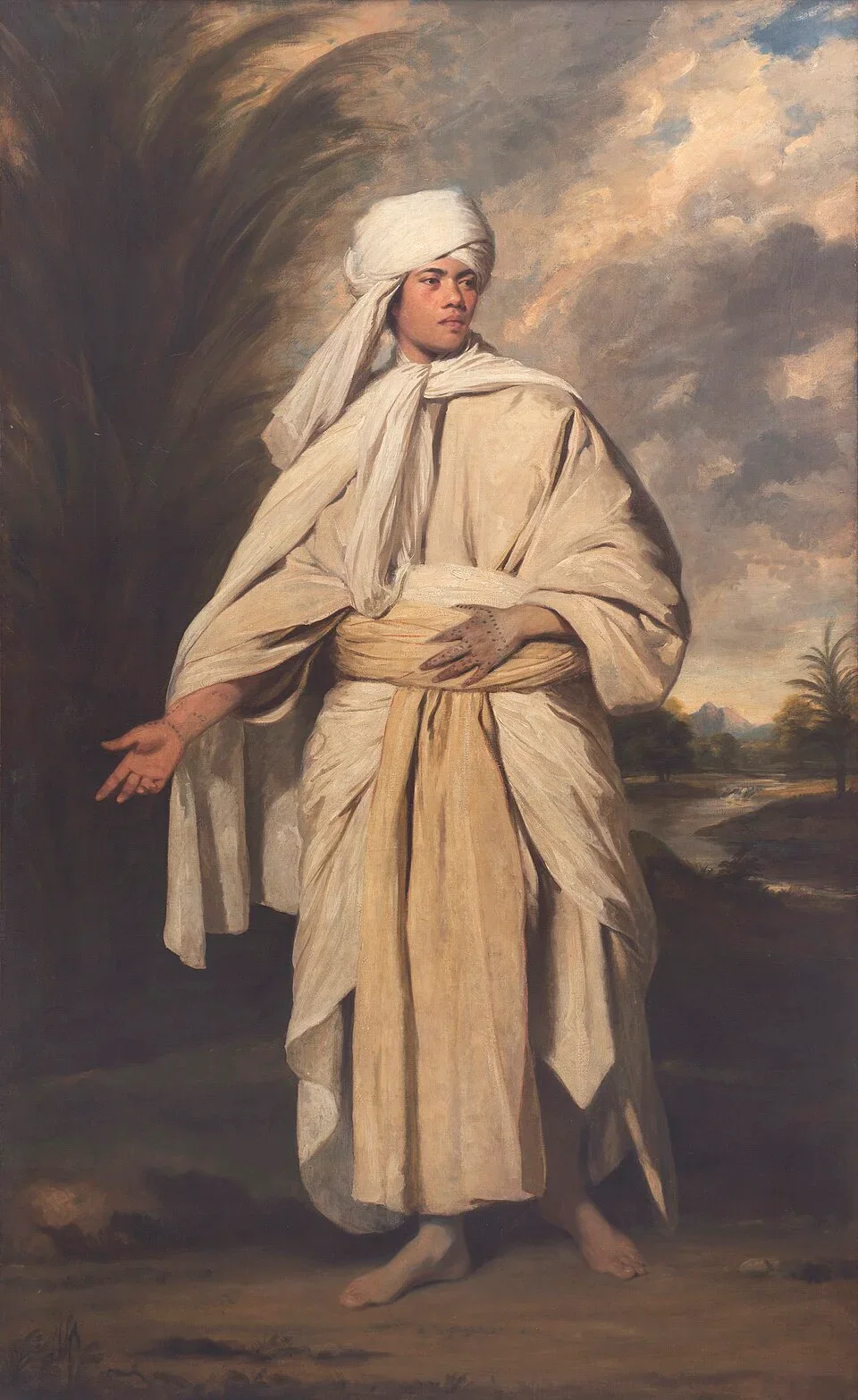
Portrait of Omai
He stands making the gesture of a Roman commander addressing his troops. The pose came from a statue in Rome, the Apollo Belvedere, and had first been used for a British naval commander. To give it to a visitor from the Pacific was the daring part. This is Omai, a young islander from Raiatea. He reached Britain in 1774 on a ship that had sailed with Cook, and London society took him up. No one had commissioned the portrait. Reynolds chose to paint Omai, and the picture stayed in his studio until his death. The pose brings out the ritual tattoos on his hands, tied to coming of age rites in the South Pacific. The same gesture speaks of classical Rome. His loose white robes echo the ceremonial dress of Tahitian nobles and priests. At his waist is a sash in a slightly creamier shade, edged with pale red. It may be tapa, a bark cloth from the islands of Polynesia, the world he came from.
Listen in the appJoshua Reynolds · Public domain
08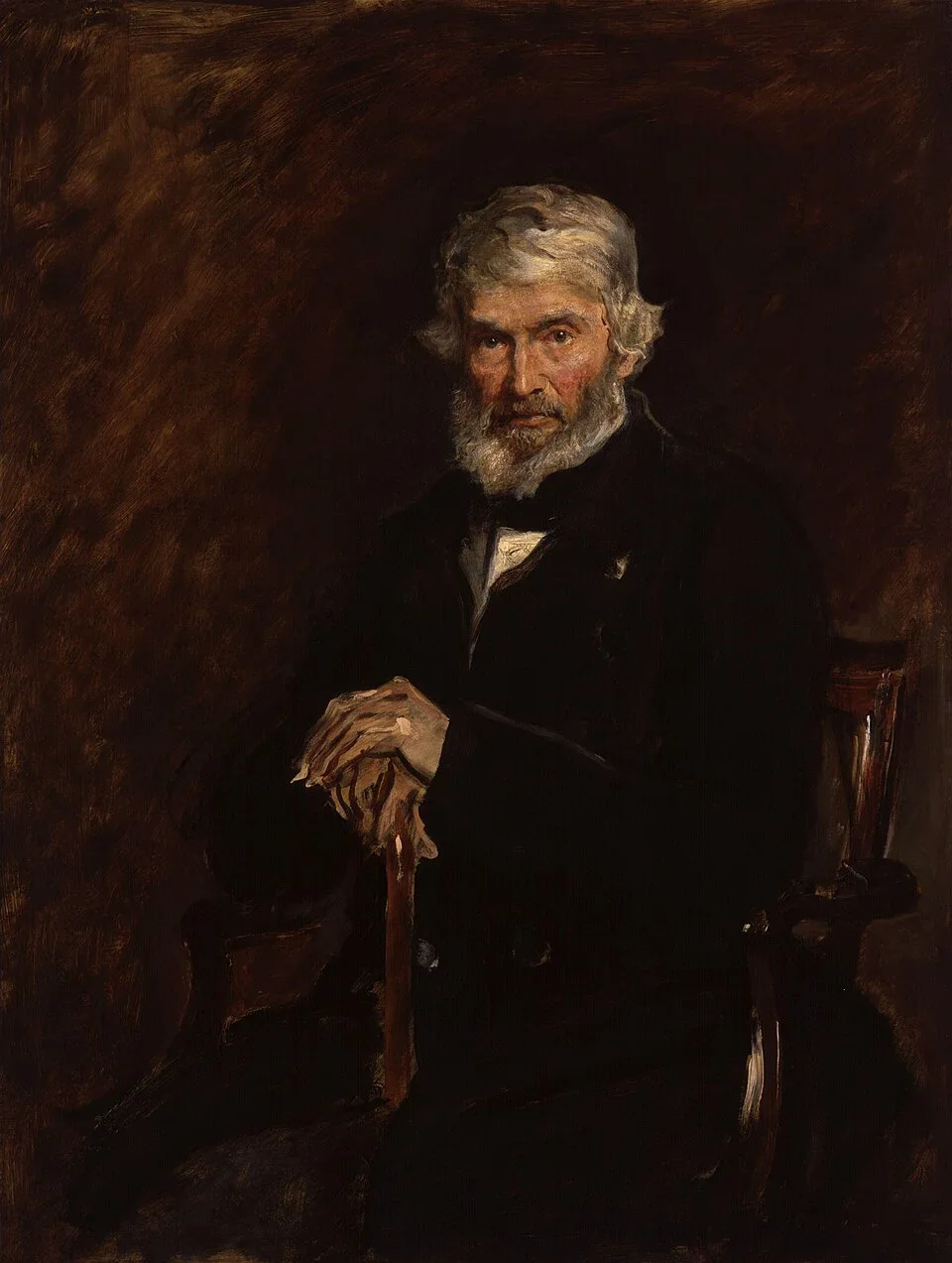
Thomas Carlyle
On a July day in 1914, a woman walked up to this portrait and slashed it. She was Anne Hunt, an American suffragette. She struck the canvas at least three times, in protest at the arrest of Emmeline Pankhurst, who greatly admired Carlyle. Two students were copying portraits when the glass broke. The damaged painting stayed on public view until five o'clock, when a restorer noticed it and had it taken down. The frame and broken glass went back on the wall. At her trial Hunt said the picture would gain value and historical importance from the attention of a Militant. She was sentenced to six months and served six days. What hangs here was never finished. One visitor to the studio said the painter had shown a rough shire peasant, not a philosopher or a sage. Another called it only a mask, with no soul behind it. By one account, Millais laid down his palette and never touched it again. Froude, who had commissioned it, watched the fierceness leave the face during the sittings, and tenderness and mild sorrow come into its place. The old Carlyle stood on the canvas again. Then it faded away. Carlyle said the picture did not please many, nor altogether himself, but that every feature was true to life. His one condition was that the portrait show what the painter could see.
Listen in the appSir John Everett Millais, 1st Bt (died 1896) · Public domain
09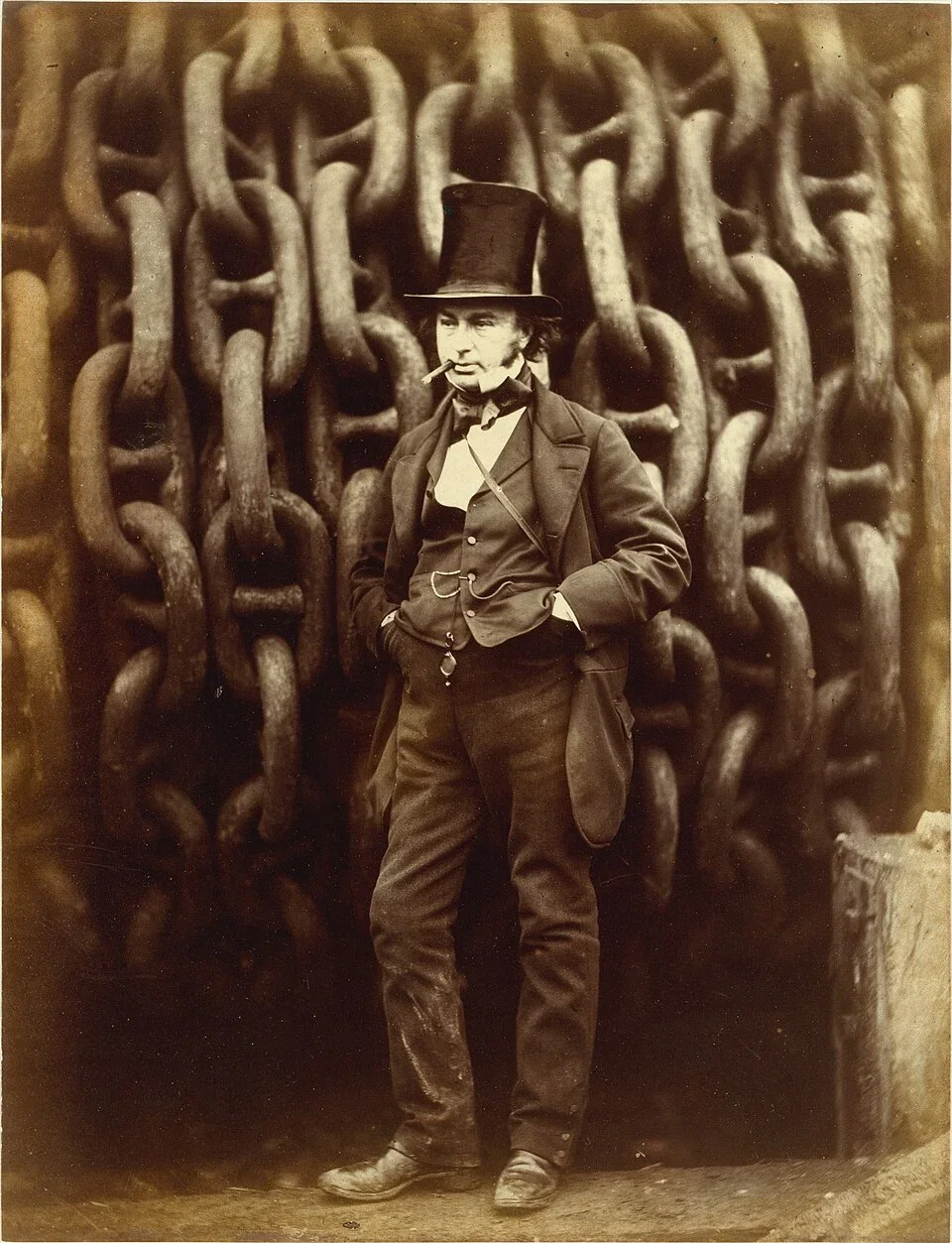
Isambard Kingdom Brunel Standing Before the Launching Chains of the Great Eastern
Robert Howlett wanted his camera to make a ship look enormous. In November 1857 he came to the Millwall shipyard, sent by a newspaper to photograph the launch for engravings. The vessel was the Great Eastern, six times the tonnage of anything built before, and getting her into the water had become a struggle, watched by ten thousand people. But the picture that lasted is not of the ship. Howlett turned his camera on the engineer who built her, and set him against the chains. Those chains held the ship back as she slid sideways down a timber ramp. In the picture they stand behind Brunel, and he looks small against the thing he made. He moved his camera to face one drum of chain head on. His trousers and boots are muddy from the site. He is smoking a cigar, and carrying the case across his shoulder, as he usually did in public. His waistcoat is crooked, his hands are in his pockets, and he is looking away, casual and sure of himself. The chains came to stand for his ambition, and for the weight of work that led to his death in 1859. The picture was engraved and published in January 1858, just before the launch succeeded, and it spread widely. Where the print was made is not certain, though it was probably at Howlett's London studio.
Listen in the appRobert Howlett (British, 1831–1858) · Public domain
10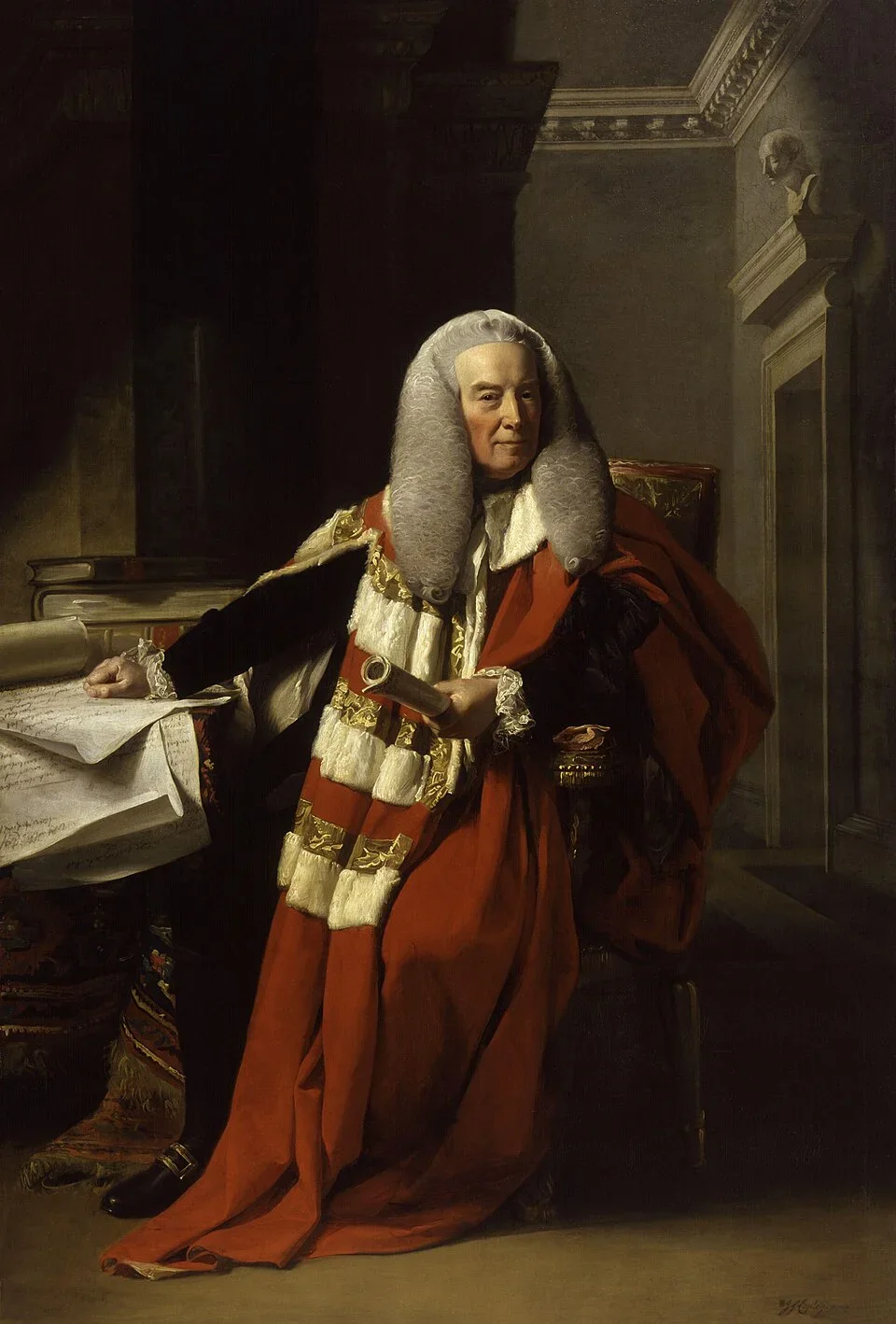
William Murray, 1st Earl of Mansfield
Here is a man in the robes of the House of Lords, with documents in front of him. Those documents point to the office he held. He was William Murray, Earl of Mansfield, Lord Chief Justice. He had a long career in politics and the law, but he is remembered above all for his rulings on slavery. In 1772, in the Somerset case, he freed a slave from his owner, saying that the nation's common law left no room for slavery. In 1783, the year Copley painted this portrait, Mansfield ruled in the case of the Zong, a slave-trading ship. His own great-niece, Dido Elizabeth Belle, was the daughter of an enslaved woman.
Listen in the appJohn Singleton Copley · Public domain
- 11
Charles Grey, 2nd Earl Grey
Thomas Phillips · 1820
- 12
The Royal Family at Buckingham Palace, 1913
John Lavery · 1913
- 13
John Stuart, 3rd Earl of Bute
Joshua Reynolds · 1773
- 14
The Trial of Queen Caroline 1820
George Hayter · 1823
- 15
Dorothy, Lady Browne (née Mileham); Sir Thomas Browne
Joan Carlile · c. 1641–1650
- 16
Self-portrait
Thomas Gainsborough · 1759
- 17
Laurence Sterne
Joshua Reynolds · 1760
- 18
Charles Cornwallis, 1st Marquess Cornwallis
Thomas Gainsborough · 1783
- 19
Gertrude Elizabeth (née Blood), Lady Colin Campbell
Giovanni Boldini · c. 1894
- 20
Oliver Cromwell
Robert Walker · c. 1649
- 21
Robert Stewart, 2nd Marquess of Londonderry (Lord Castlereagh)
Thomas Lawrence · 1809
- 22
Sir Francis Burdett, 5th Bt
Thomas Lawrence · 1793
- 23
Sir John Moore
Thomas Lawrence · 1800–1804
- 24
The House of Commons, 1833
George Hayter · 1833–1843
- 25
Capel family
Cornelis Janssens van Ceulen · c. 1641
- 26
Mary Wollstonecraft Shelley
Richard Rothwell · 1840
- 27
Somerset House Conference
Unknown Artist · 1604
- 28
Flora Macdonald
Richard Wilson · 1747
- 29
Sir William Hamilton
David Allan · 1775
- 30
The House of Commons 1793-94
Anton Hickel · 1793–1794
- 31
Robert Jenkinson, 2nd Earl of Liverpool
Thomas Lawrence · c. 1796
- 32
Sir Marc Isambard Brunel
James Northcote · 1812–1813
- 33
Charles William Vane-Stewart, 3rd Marquess of Londonderry
Thomas Lawrence · 1812
- 34
William Carr Beresford, Viscount Beresford
William Beechey · 1814–1815
- 35
Princess Charlotte Augusta of Wales
George Dawe · 1817
- 36
Sir Thomas Stamford Bingley Raffles
George Francis Joseph · 1817
- 37
John George Lambton, 1st Earl of Durham
Thomas Phillips · 1820
- 38
Thomas Campbell
Thomas Lawrence · 1820
- 39
Henry Brougham, 1st Baron Brougham and Vaux
Thomas Lawrence · 1825
- 40
George Canning
Thomas Lawrence · 1826
- 41
Ernest Augustus, Duke of Cumberland and King of Hanover
George Dawe · 1828
- 42
Arthur Wellesley, 1st Duke of Wellington
Thomas Lawrence · 1829
- 43
Thomas Denman, 1st Baron Denman
Martin Archer Shee · 1832
- 44
Sir John Conroy, 1st Bt
Henry William Pickersgill · 1837
- 45
The Anti-Slavery Society Convention, 1840
Benjamin Haydon · 1841
- 46
Sidney Herbert, 1st Baron Herbert of Lea
Francis Grant · 1847
- 47
The Arctic Council planning a search for Sir John Franklin
Stephen Pearce · 1851
- 48
Sir Edwin Landseer
Francis Grant · 1852
- 49
Sir (Francis) Leopold McClintock
Stephen Pearce · 1859
- 50
The Landing of HRH The Princess Alexandra at Gravesend, 7th March 1863
Henry Nelson O'Neil · 1864
- 51
Sir Edwin Landseer in His Studio
John Ballantyne · 1865
- 52
Frederick Burnaby
James Tissot · 1870
- 53
William Ewart Gladstone
John Everett Millais · 1879
- 54
Private View of the Old Masters Exhibition, Royal Academy, 1888
Henry Jamyn Brooks · 1889
- 55
The Company of Undertakers
William Hogarth · 1736
- 56
King George II
Thomas Hudson · 1744
- 57
Horace Walpole
Joshua Reynolds · 1756–1757
- 58
David Garrick
Thomas Gainsborough · 1770
- 59
Jeffrey Amherst, 1st Baron Amherst
Thomas Gainsborough · 1780
- 60
William (Thomas) Beckford
Joshua Reynolds · 1782
- 61
James Boswell
Joshua Reynolds · 1785
- 62
Maria Anne Fitzherbert (née Smythe)
Joshua Reynolds · 1788
- 63
Charles Watson-Wentworth, 2nd Marquess of Rockingham
After Joshua Reynolds · c. 1768
- 64
Portraits in the Characters of the Muses in the Temple of Apollo
Richard Samuel · 1778
- 65
King William IV
Martin Archer Shee · c. 1800
- 66
Arthur James Balfour, 1st Earl of Balfour
John Singer Sargent · 1908
- 67
Sir Christopher Wren
Godfrey Kneller · 1711
- 68
Frederick North, 2nd Earl of Guilford
Pompeo Batoni · 1753–1756
- 69
Sir Joseph Banks, Bt
Joshua Reynolds · 1771–1773
- 70
John Philip Kemble as Cato
Thomas Lawrence · 1812
- 71
Frederick, Duke of York and Albany
David Wilkie · 1823
- 72
Sir Francis Burdett, 5th Bt
Martin Archer Shee · 1843
- 73
King James II
Godfrey Kneller · 1684
- 74
Portrait of Benjamin West
Gilbert Stuart · 1785
- 75
William Wyndham Grenville, 1st Baron Grenville
John Hoppner · 1800
- 76
Henry Addington, 1st Viscount Sidmouth
William Beechey · 1803
- 77
Princess Caroline of Brunswick-Wolfenbüttel
Thomas Lawrence · 1804
- 78
William Blake
Thomas Phillips · 1807
- 79
William Lamb, 2nd Viscount Melbourne
John Partridge · 1844
- 80
The Mission of Mercy: Florence Nightingale receiving the Wounded at Scutari
Jerry Barrett · 1857–1858
- 81
Henry James
John Singer Sargent · 1913
- 82
Portrait of John Gibson
Margaret Sarah Carpenter · 1857
- 83
Portrait of Richard Parkes Bonington
Margaret Sarah Carpenter · c. 1827–1830
- 84
Portrait of Samuel Pepys
John Hayls · 1666
- 85
George Jeffreys, 1st Baron Jeffreys of Wem
John Michael Wright · 1675
- 86
Sir Godfrey Kneller, Bt
Godfrey Kneller · 1685
- 87
Henry Compton
Godfrey Kneller · c. 1712
- 88
John Campbell, 2nd Duke of Argyll and Greenwich
William Aikman · c. 1720
- 89
William Murray, 1st Earl of Mansfield
Jean-Baptiste van Loo · c. 1737
- 90
George Frideric Handel
Thomas Hudson · 1756
- 91
Nathaniel Dance (later Sir Nathaniel Holland, Bt)
Nathaniel Dance-Holland · c. 1773
- 92
Capability Brown
Nathaniel Dance-Holland · 1769
- 93
Richard Cumberland
George Romney · c. 1776
- 94
Henry Fuseli
James Northcote · 1778
- 95
James Macpherson
George Romney · 1780
- 96
Sir William Herschel
Lemuel Francis Abbott · 1785
- 97
John Opie
John Opie · 1785
- 98
John Carr
William Beechey · 1791
- 99
Henry Charles William Angelo
Mather Brown · c. 1790
- 100
Dorothy Jordan
John Hoppner · 1791
- 101
Sir Graham Moore
Thomas Lawrence · 1792
- 102
Sarah Siddons (née Kemble) ('Mrs Siddons with the Emblems of Tragedy')
William Beechey · 1793
- 103
Charles James Fox
Anton Hickel · 1794
- 104
Sir Martin Archer Shee
Martin Archer Shee · 1794
- 105
Joseph Nollekens
Lemuel Francis Abbott · 1797
- 106
Thomas Hope
William Beechey · 1798
- 107
Amelia Opie
John Opie · 1798
- 108
John Constable
Ramsay Richard Reinagle · 1799
- 109
Thomas Girtin
John Opie · 1800
- 110
William Henry West Betty
John Opie · 1804
- 111
William Lamb, 2nd Viscount Melbourne
Thomas Lawrence · c. 1805
- 112
William Pitt
John Hoppner · 1804
- 113
Sir Peter Francis Bourgeois
William Beechey · 1810
- 114
Harriot Beauclerk (née Mellon), Duchess of St Albans
William Beechey · c. 1815
- 115
Sir Francis Leggatt Chantrey
Thomas Phillips · 1818
- 116
Edmund Kean
James Northcote · 1819
- 117
William Charles Macready
John Jackson · 1821
- 118
John Ruskin
James Northcote · 1822
- 119
Edward George Earle Lytton Bulwer-Lytton, 1st Baron Lytton
Henry William Pickersgill · 1831
- 120
Frances Trollope
Auguste Hervieu · 1832
- 121
William Harrison Ainsworth
Daniel Maclise · c. 1834
- 122
William Powell Frith
William Powell Frith · 1838
- 123
Sir Robert Peel, 2nd Bt
John Linnell · 1838
- 124
Thomas Arnold
Thomas Phillips · 1839
- 125
Charles Dickens
Daniel Maclise · 1839
- 126
George Bradshaw
Richard Evans · 1841
- 127
Michael Faraday
Thomas Phillips · 1841–1842
- 128
Edward Stanley, 14th Earl of Derby
Frederick Richard Say · 1844
- 129
Henry John Temple, 3rd Viscount Palmerston
John Partridge · 1845
- 130
Sir Francis Grant
Francis Grant · 1845
- 131
Daniel Maclise
Edward Matthew Ward · 1846
- 132
Agnes Strickland
John Hayes · 1846
- 133
Sir James Brooke
Francis Grant · 1847
- 134
Wilkie Collins
John Everett Millais · 1850
- 135
Sir Charles Barry
John Prescott Knight · 1851
- 136
Sir John Everett Millais, 1st Bt
Charles Robert Leslie · 1852
- 137
Thomas Babington Macaulay, Baron Macaulay
Edward Matthew Ward · 1853
- 138
John Russell, 1st Earl Russell
Francis Grant · 1853
- 139
Charles Dickens
Ary Scheffer · 1855
- 140
Queen Victoria's First Visit to her Wounded Soldiers
Jerry Barrett · 1856
- 141
Mary Elizabeth Braddon
William Powell Frith · 1865
- 142
Gladstone's Cabinet of 1868
Lowes Cato Dickinson · 1871
- 143
Louise Jane Jopling (née Goode, later Rowe)
John Everett Millais · 1879
- 144
Benjamin Disraeli, Earl of Beaconsfield
John Everett Millais · 1881
- 145
Robert Gascoyne-Cecil, 3rd Marquess of Salisbury
John Everett Millais · 1883
- 146
Sir Arthur Seymour Sullivan
John Everett Millais · 1888
- 147
Joe Chamberlain; Arthur James Balfour, 1st Earl of Balfour
Sydney Prior Hall · 1895
- 148
Ramsay MacDonald
Solomon Joseph Solomon · 1911
- 149
Winston Churchill
William Orpen · 1916
- 150
Portrait of Venetia, Lady Digby
Anthony van Dyck · 1633
- 151
Agostino Carlini; Francesco Bartolozzi; Giovanni Battista Cipriani
John Francis Rigaud · 1777
- 152
Sir William Chambers; Joseph Wilton; Sir Joshua Reynolds
John Francis Rigaud · 1782
- 153
George Romney
George Romney · 1784
- 154
Emma Hamilton as a Bacchante
George Romney · 1782–1785
- 155
Queen Mary II
Peter Lely · 1677
- 156
'A Conversation of Virtuosis...at the Kings Arms'
Gawen Hamilton · 1735
- 157
Karl Friedrich Abel
Thomas Gainsborough · c. 1765
- 158
King Richard III
Unknown Artist · late 16th century
- 159
Queen Elizabeth I
Unknown Artist · 1575
- 160
Queen Elizabeth I
Nicholas Hilliard · 1575–1576
- 161
Queen Elizabeth I ('The Ditchley portrait')
Marcus Gheeraerts the Younger · c. 1592
- 162
Katherine of Aragon
Lucas Horenbout · 1525–1527
- 163
Katherine Parr
Unknown Artist · c. 1545
- 164
Anne Boleyn
Unknown Artist · 1530–1536
National Portrait Gallery, London
Frequently asked questions
How much does the guide cost?
Free app download. Free until 1 January. Listed guide price: $2.99. Audio guide only. Venue admission is separate.
Can I listen without internet?
Yes. Download the guide’s audio, images, and maps in the app before your visit. Your downloaded content is then available offline.
Can I listen in my language?
In English for now. More languages soon.
Do I need to follow a schedule?
No. This is a self-guided experience. Choose your stops, pause whenever you like, and return to a story at your own pace.
Which artworks are in the National Portrait Gallery, London audio guide?
164 artworks, including Chandos portrait (John Taylor), Statesmen of World War I (James Guthrie), General Officers of World War I (John Singer Sargent), Naval Officers of World War I (Arthur Stockdale Cope), The Death of the Earl of Chatham (John Singleton Copley), Sir Thomas More and Family (Rowland Lockey), Portrait of Omai (Joshua Reynolds), and Thomas Carlyle (John Everett Millais). The full list is on this page.
Is this the museum’s official audio guide?
No. Stanza is an independent audio guide app and is not affiliated with National Portrait Gallery, London. Museum admission is separate.
At your own pace
Explore National Portrait Gallery, London.
Download Stanza, then search for “National Portrait Gallery, London”.
Free app download · Guide price shown in the app
Keep exploring
Nearby audio guides
City of Westminster · 1 km
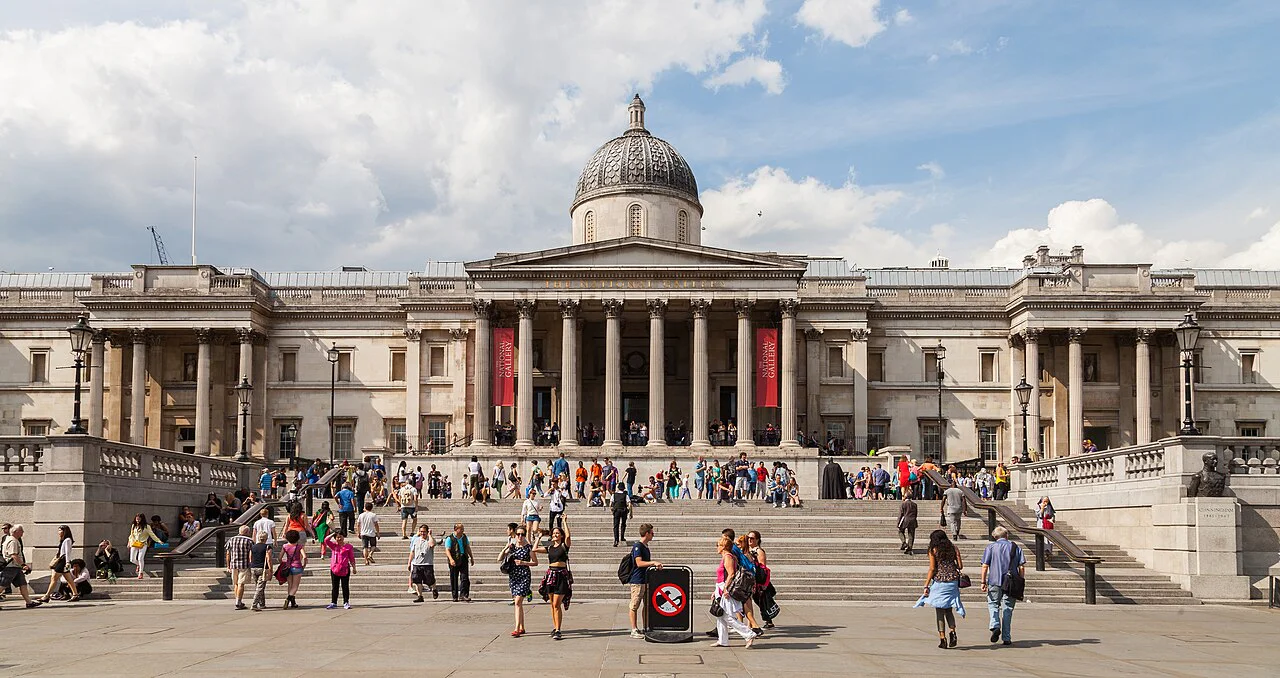
National Gallery, London
Content & sources
Diego Delso · CC BY-SA 4.0
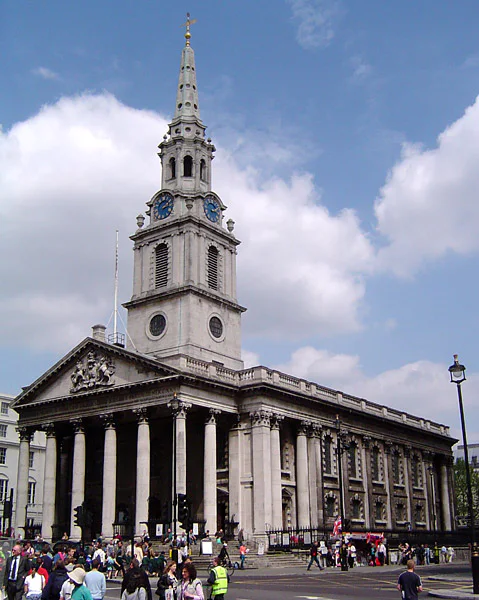
London · 1 km
St Martin-in-the-Fields
Content & sources
Photo: Yopohari~commonswiki · CC BY-SA 3.0
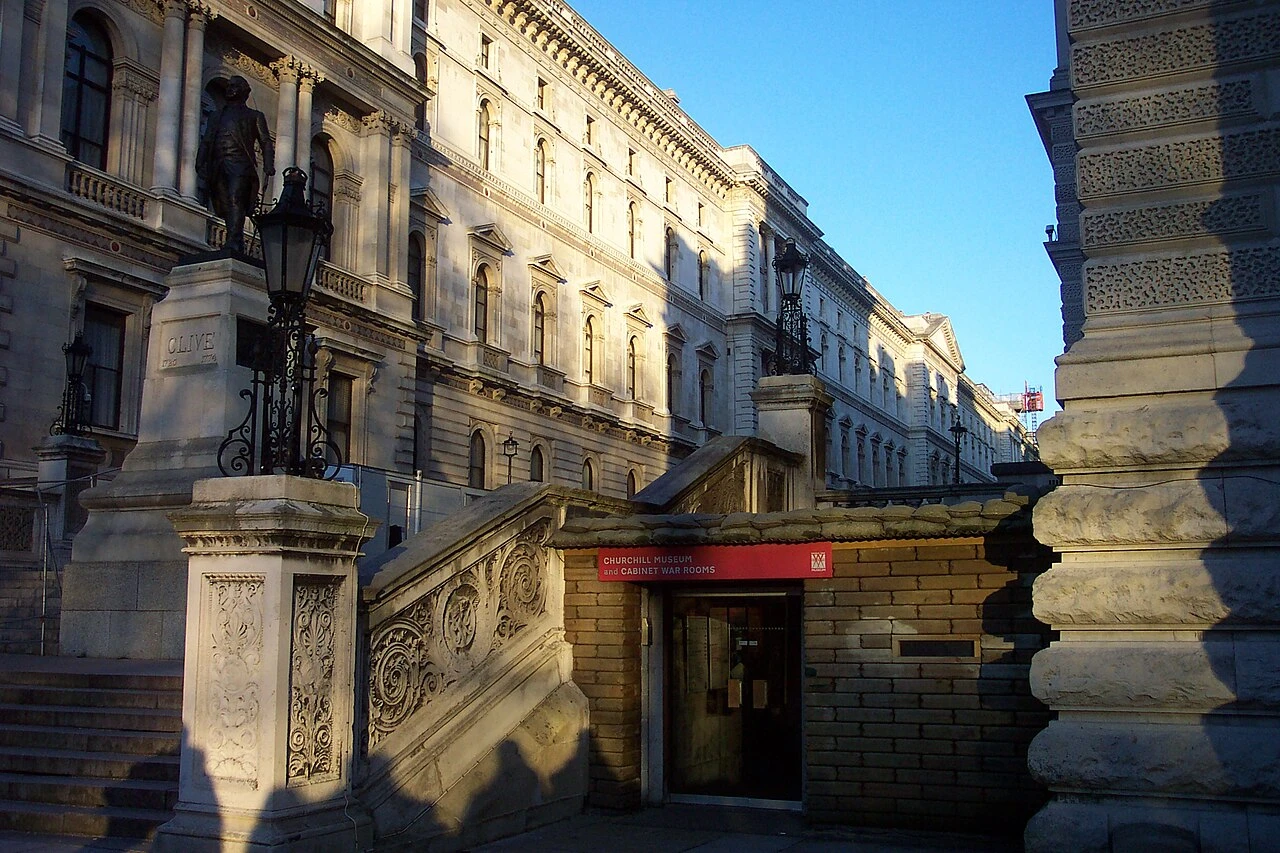
London · 1 km
Churchill War Rooms
Content & sources
en:User:Jdhowens90 · CC BY-SA 3.0
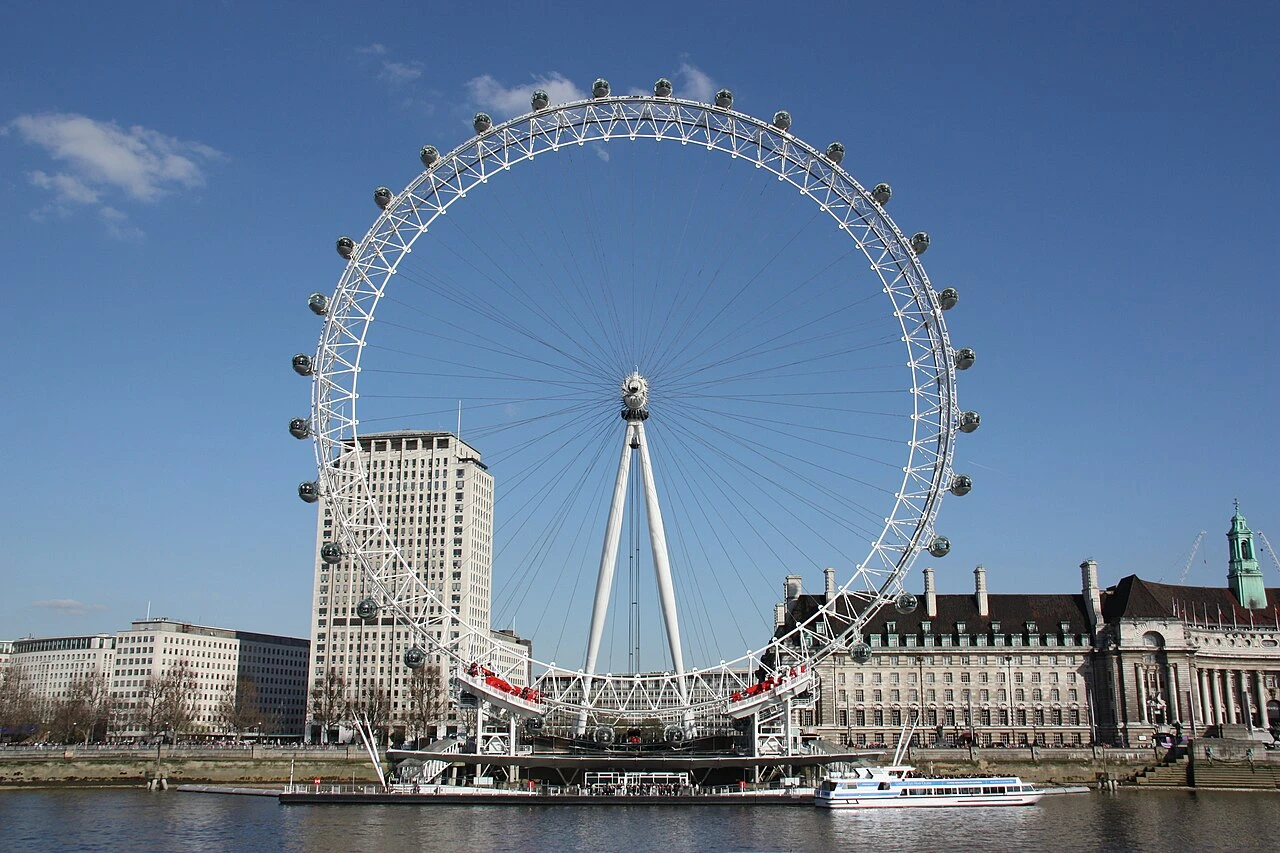
Greater London · 1 km
London Eye
Content & sources
Photo: Khamtran · CC BY-SA 3.0
Art museums
More art museum audio guides
London · 171 artworks
National Gallery, London
Content & sources
Diego Delso · CC BY-SA 4.0
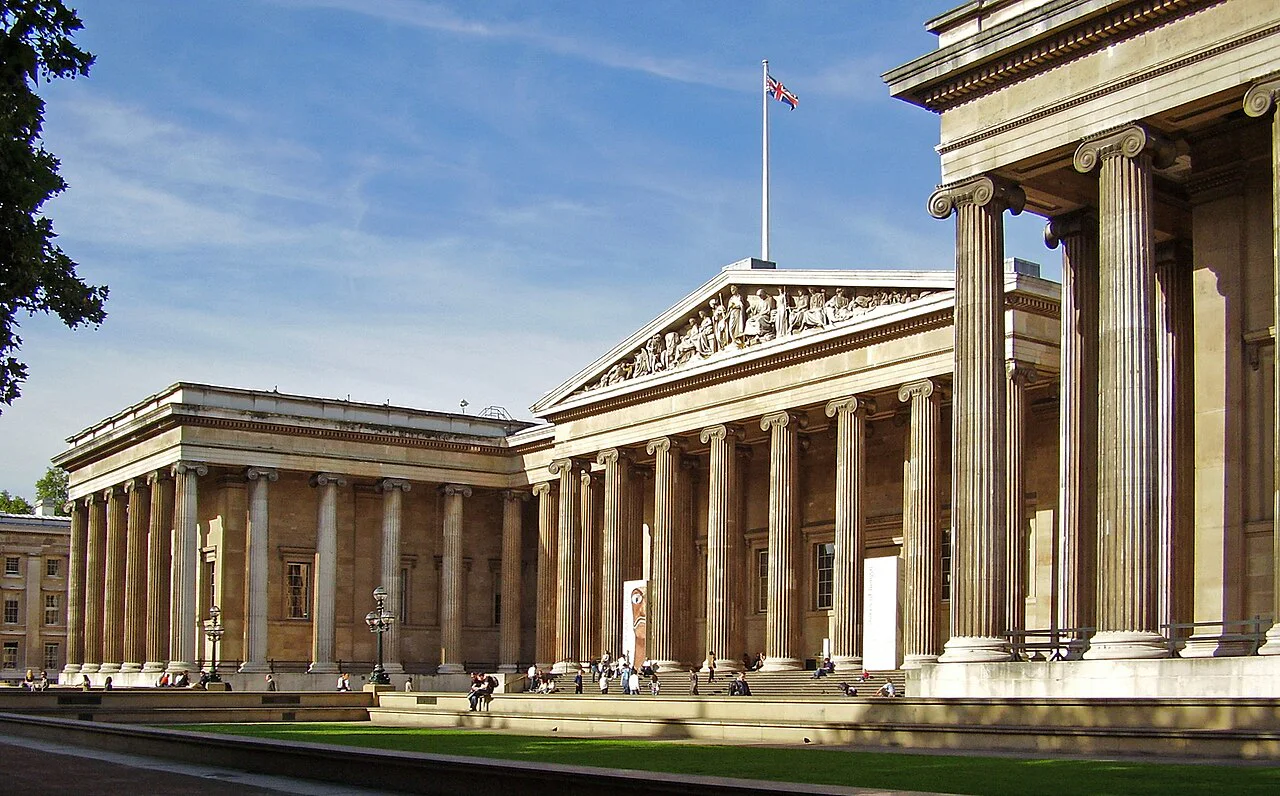
London · 68 artworks
British Museum
Content & sources
Ham · CC BY-SA 3.0
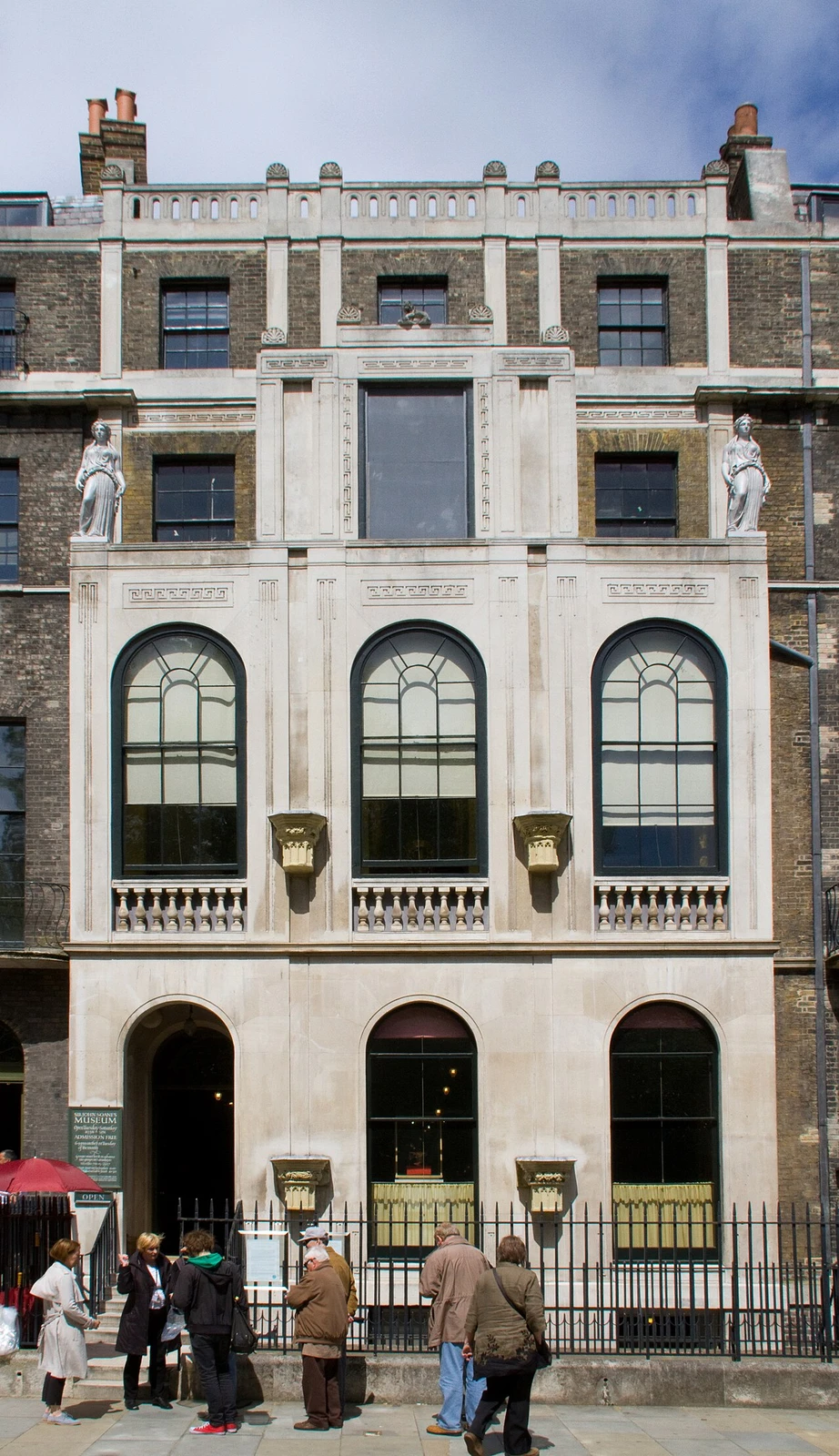
London · 8 artworks
Sir John Soane's Museum
Content & sources
Tony Hisgett from Birmingham, UK · CC BY 2.0
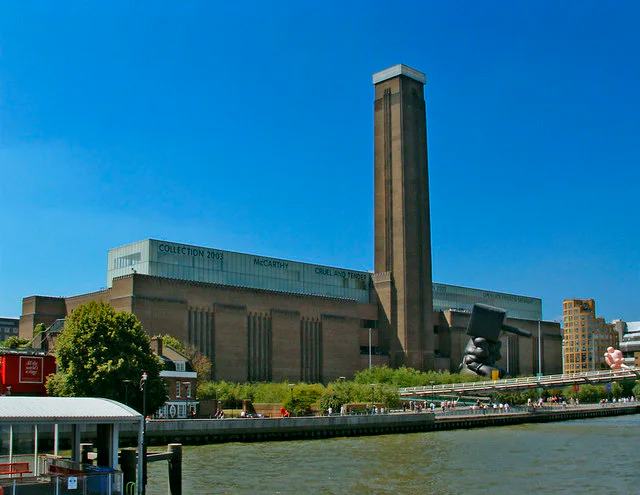
London Borough of Southwark · 15 artworks
Tate Modern
Content & sources
Christine Matthews · CC BY-SA 2.0
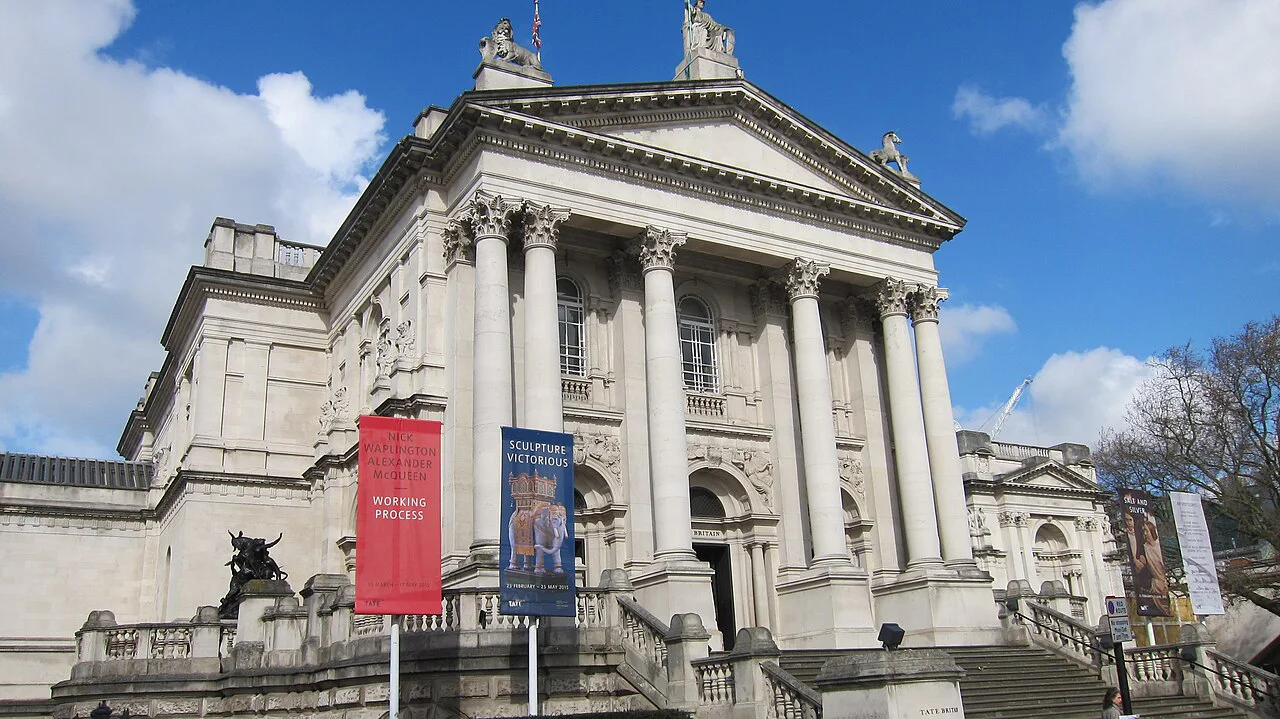
London · 69 artworks
Tate Britain
Content & sources
Carlos Cunha · CC BY-SA 3.0
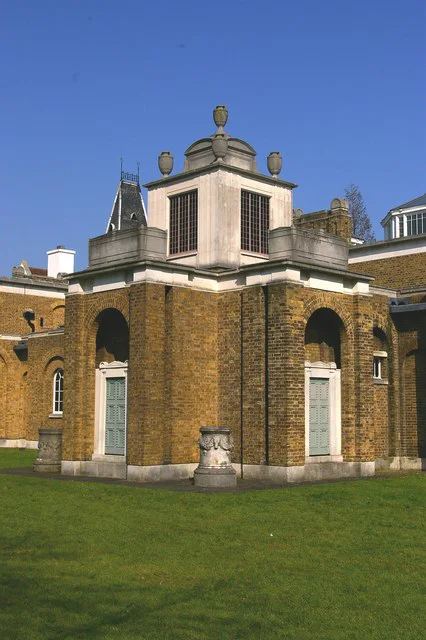
London · 24 artworks
Dulwich Picture Gallery
Content & sources
Julian Osley · CC BY-SA 2.0