Languages
15London Eye Audio Guide
London Eye is a landmark in Greater London, United Kingdom. Explore it with Stanza's GPS-triggered offline audio guide — available in 15 languages.
Quick Facts
22
Stops
15
Languages
100%
Offline
📍 Greater London, United Kingdom · 51.5033°N, -0.1197°E
About London Eye
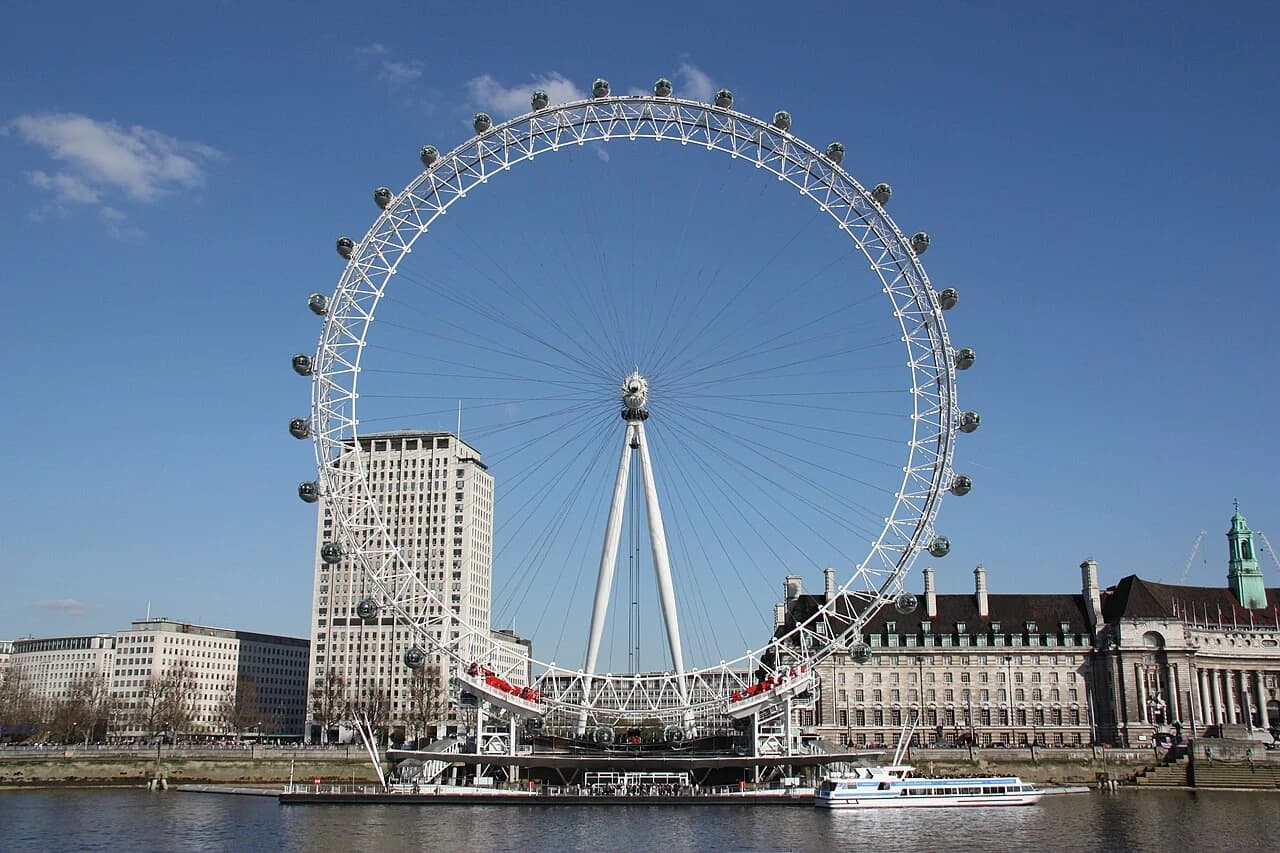
The London Eye is a cantilevered observation wheel located on the South Bank of the River Thames in London. It is a major tourist attraction offering panoramic views of the city's iconic skyline.
London Eye is also known as Millennium Wheel, The London Eye, Coca-Cola London Eye, lastminute.com London Eye.
This self-guided audio tour features 22 narrated stops organized across 7 sections. As a landmark, London Eye offers a unique cultural experience in the heart of Greater London, United Kingdom.
The Stanza audio guide is available in 15 languages and works entirely offline — download the complete tour including audio narration, maps, and images before your visit. As you walk through London Eye, GPS-triggered narration plays automatically at each point of interest.
Last updated:
What you will hear
Arrival at the Queen's Walk
Sets the scene at the visual threshold where visitors first encounter the scale of the wheel from the riverfront.
The Cantilevered A-Frame
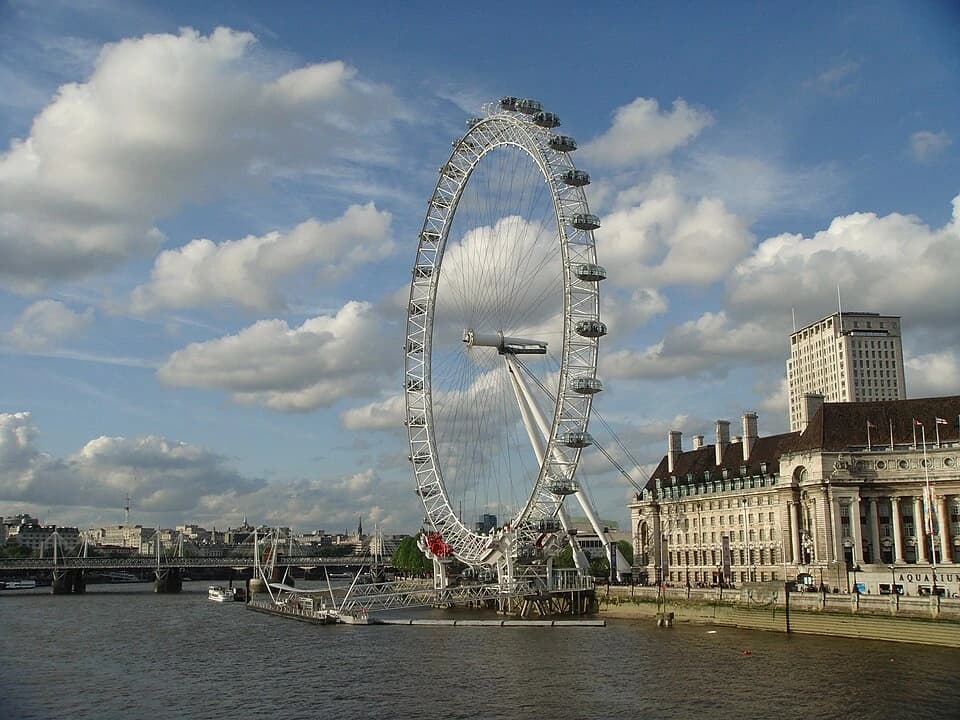
The London Eye is not just a Ferris wheel; it is a groundbreaking feat of engineering. What makes it unique is that it is the world's tallest cantilevered observation wheel. Unlike traditional Ferris wheels, which are supported by towers on both sides of the hub, the Eye is held up by a massive white A-frame structure on only the landward side. This design choice provides an unobstructed view of the river for those inside the capsules. The entire structure reaches a total height of 135 meters and features a massive rim with a diameter of 120 meters. To support this immense weight, the A-frame is anchored deeply into the ground, while the wheel itself is held in place by heavy-duty cables that function much like the spokes of a bicycle wheel. This cantilevered design was a bold choice that pushed the boundaries of what was thought possible in urban engineering at the turn of the century. The sheer scale of the A-frame, leaning out over the river, serves as a testament to the innovation required to create such a stable and permanent landmark in the heart of a busy metropolis.
County Hall and the 4D Experience
Focuses on the historic building housing the ticket office and the pre-flight cinema experience.
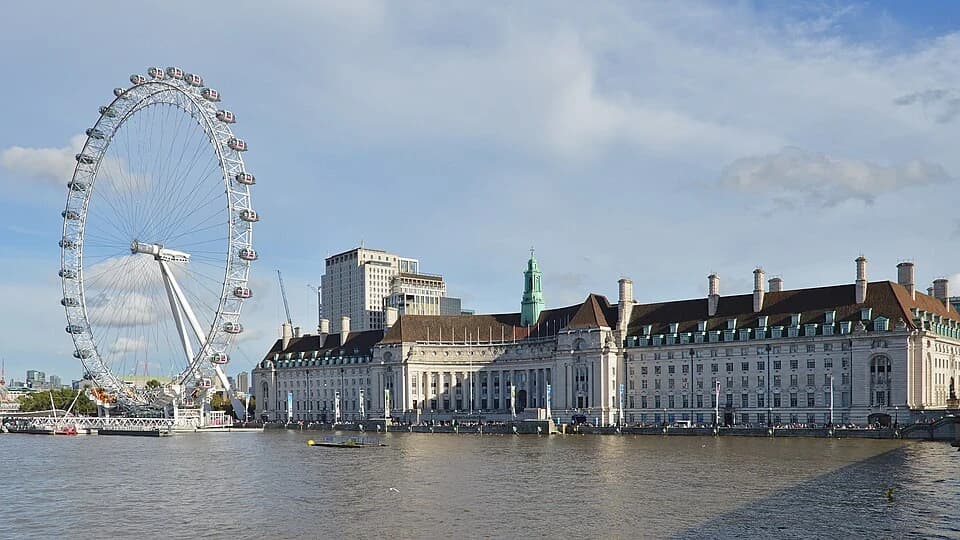
London's Cultural South Bank
The setting of the London Eye is as significant as the structure itself. It sits at the heart of the South Bank, an area that has undergone a dramatic transformation over the last few decades. Before the millennium, much of this riverside stretch was characterized by neglected industrial sites and warehouses. The success of the Eye served as a primary catalyst for the area's rebirth, turning it into a premier cultural hub filled with theaters, galleries, and public spaces. Directly adjacent to the wheel, you will see the grand historic building known as County Hall. Once the headquarters of London's local government, it now serves a much more public-facing role. It is here that you will find the London Eye ticket office, as well as the immersive 4D cinema experience that often serves as a prelude to the ride. The synergy between the modern steel wheel and the Edwardian Baroque architecture of County Hall creates a striking visual contrast that defines this part of the Thames. The South Bank's evolution into a lively pedestrian zone is a direct legacy of the ambition that brought the Eye to this specific location.
Jubilee Gardens: The South Bank Transformation
Highlights the green space at the base of the Eye, which was revitalized as part of the Millennium project.
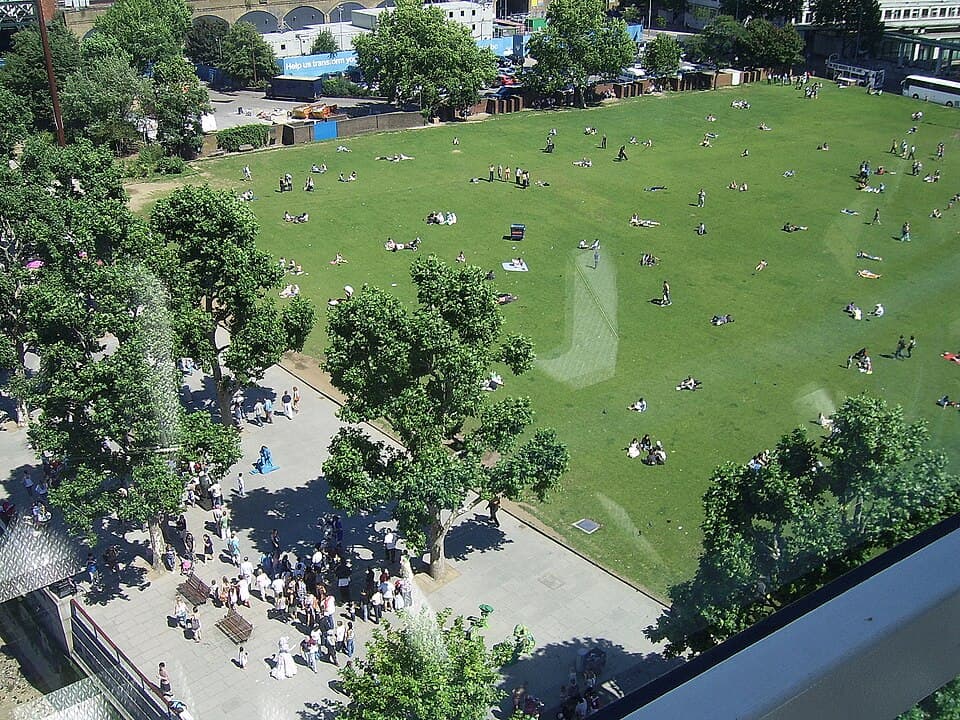
Jubilee Gardens from Above
As your capsule begins to lift away from the boarding platform, the landscape below starts to reveal itself in new ways. Directly beneath the wheel lie the Jubilee Gardens, a lush green space that provides a much-needed breath of fresh air in the center of the city. This park was originally created for the Silver Jubilee of Queen Elizabeth II in 1977 and was extensively redeveloped as part of the London Eye project. There is a fascinating history to the ground you are rising above. Because the London Eye is so large, it could not be built in its upright position. Instead, the wheel was assembled horizontally on massive platforms floating in the River Thames. Once the structure was completed, it had to be lifted into its final vertical position. This was a painstakingly slow process; the engineers raised the 1,700-tonne wheel at a rate of just 2 degrees per hour until it reached its current orientation. Standing in Jubilee Gardens today, it is hard to imagine the complex industrial operation that took place here to bring this modern marvel to life. The park now serves as a peaceful gathering spot for locals and tourists alike, framed by the rotating pods of the Eye.
The Cantilevered Engineering
Explains the unique engineering that allows the wheel to be supported on only one side.
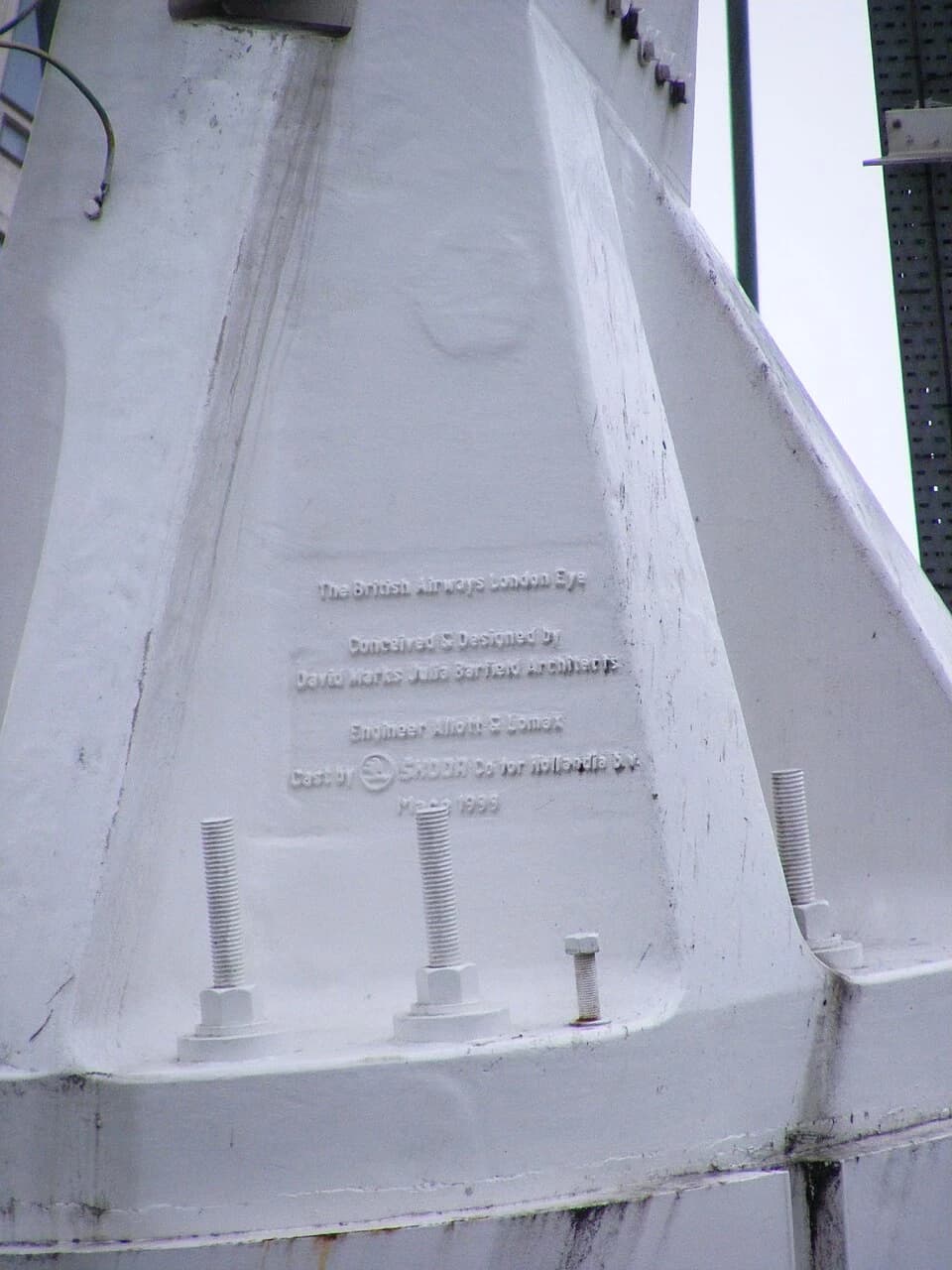
The Architects' Recognition
If you look closely at the white casting of the main support structure, you will find a plaque that pays tribute to the people and organizations responsible for this landmark. It credits the design to the husband-and-wife architectural team of David Marks and Julia Barfield, whose vision and persistence turned a competition entry into a reality. Their name is forever linked to this structure, which has redefined the Thames riverside. The plaque also highlights the global nature of the assembly. For instance, the enormous central spindle, which is the very core of the wheel's rotation, was cast in the Czech Republic by the Škoda company. This company, perhaps better known for its automobiles, provided the heavy industrial expertise required to forge such a massive and precise steel component. The inclusion of this information on the structure itself serves as a reminder that the London Eye was not the product of a single mind or nation, but rather a complex, multi-national assembly project. Every bolt, cable, and casting was part of a meticulously coordinated effort involving thousands of people across several different countries, all working toward the goal of opening by the new millennium.
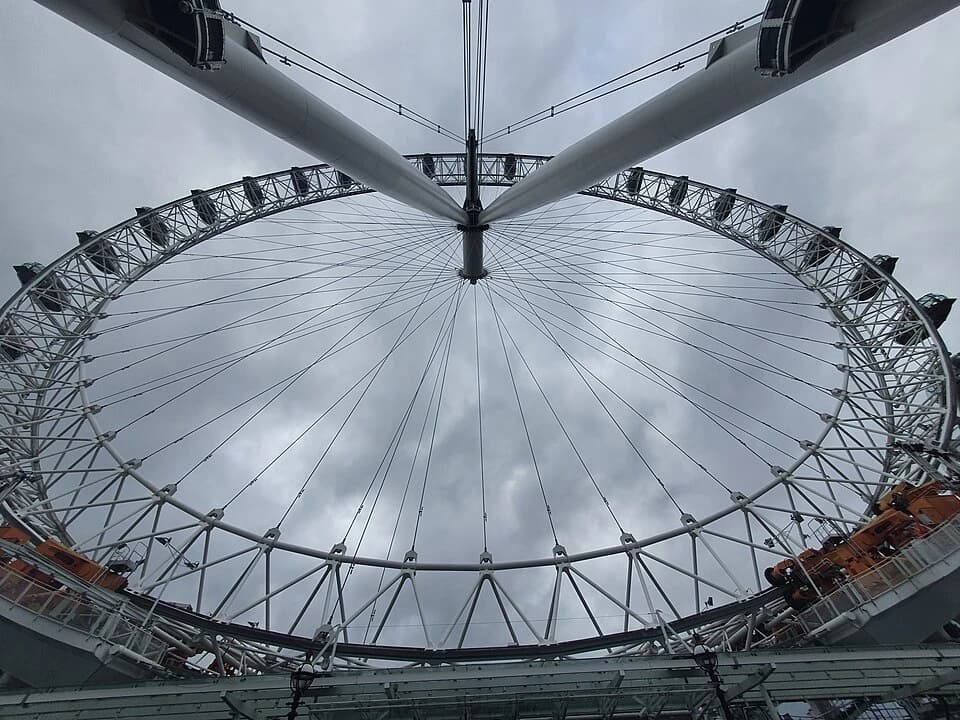
The Hub and Spindle
At the very heart of the London Eye is the central hub, a structure that represents a truly international effort in engineering. While the Eye is a quintessential London landmark, its construction was a global undertaking. The high-grade steel used in the frame came from the United Kingdom, but many other critical components were sourced from across the European continent. The tension cables that keep the wheel circular were manufactured in Italy, while the high-precision bearings that allow the wheel to rotate smoothly were crafted in Germany. Even the glass for the observation capsules has its origins in France. Connecting all these parts is the massive central spindle. This single component alone weighs hundreds of tonnes and is the pivot point around which the entire 1,700-tonne structure rotates. This collaboration of European expertise was necessary to meet the extreme technical demands of the project. The hub must withstand not only the weight of the structure but also the dynamic forces of the wind and the movement of the passengers. It stands as a silent testament to what can be achieved through international partnership and shared technical vision.
Boarding the 32 Capsules
The transition from ground to capsule, highlighting the drive motors and the significance of the 32 pods.
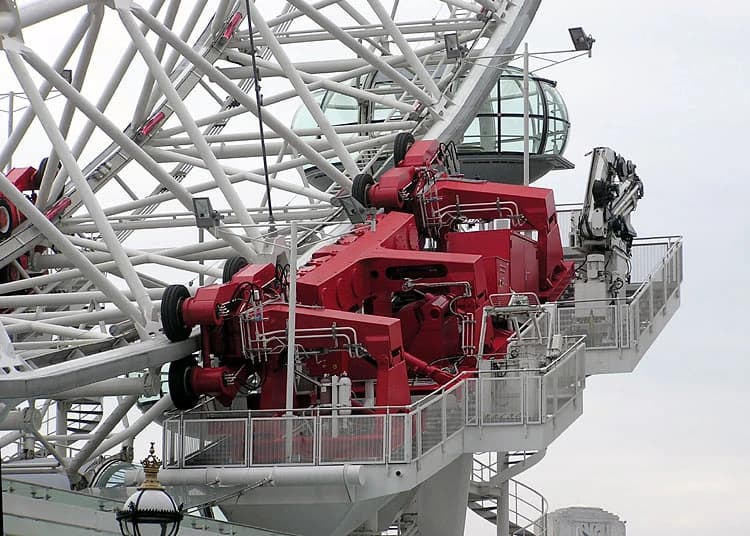
The Rotation Machinery
You might wonder how such a massive, 1,700-tonne structure manages to move so silently and steadily. The answer lies in the specialized machinery at the base. If you look down as you depart or arrive, you can see large red drive motors and sets of tires that grip the rim of the wheel. This system works much like the drive system of a modern cable car or people mover. These mechanical systems are designed for extreme reliability and quiet operation. Rather than using a traditional gear or chain system, the friction provided by these heavy-duty tires allows for a smooth, vibration-free rotation. This ensures that the experience inside the capsules remains peaceful, even as the massive wheel turns against the wind. It takes a significant amount of torque to keep the structure moving, but once in motion, its own momentum helps maintain the steady pace. A single complete revolution of the wheel takes approximately 30 minutes, a timeframe chosen to give visitors ample time to take in the 360-degree views without feeling rushed. This silent machinery is the heartbeat of the London Eye, working continuously to provide a stable journey for everyone on board.
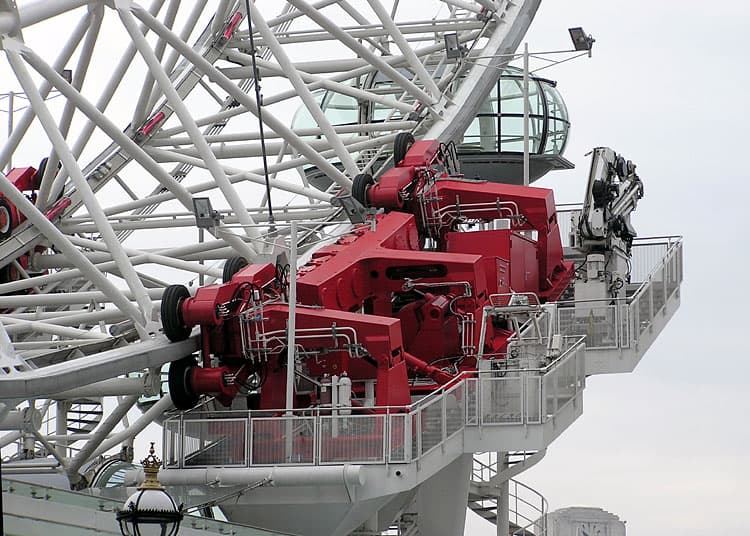
Stepping into the Capsule
One of the most unique aspects of the London Eye experience is the way you board. Unlike many other large observation wheels or traditional carnival rides, the London Eye never actually stops. It moves at a slow, constant speed of approximately 26 centimeters per second. This pace is carefully calibrated to be slow enough that passengers of all ages and abilities can comfortably step on and off the moving capsules without any specialized assistance. This continuous motion is part of what makes the rotation so efficient and smooth. It allows for a steady flow of visitors, meaning there is rarely a complete halt to the journey. As you step onto the platform, you are essentially merging with the wheel's rotation. The floor of the boarding area and the floor of the capsule are perfectly aligned, creating a seamless transition. This high-tech approach to boarding was designed to maximize the number of people who could enjoy the experience while ensuring that the 30-minute journey remains a quiet, uninterrupted glide. It is a subtle but essential part of the engineering that allows the Eye to handle thousands of visitors every day with a sense of calm and precision.
The Summit: 135 Meters High
Reaching the highest point of the rotation for the most expansive 360-degree views.
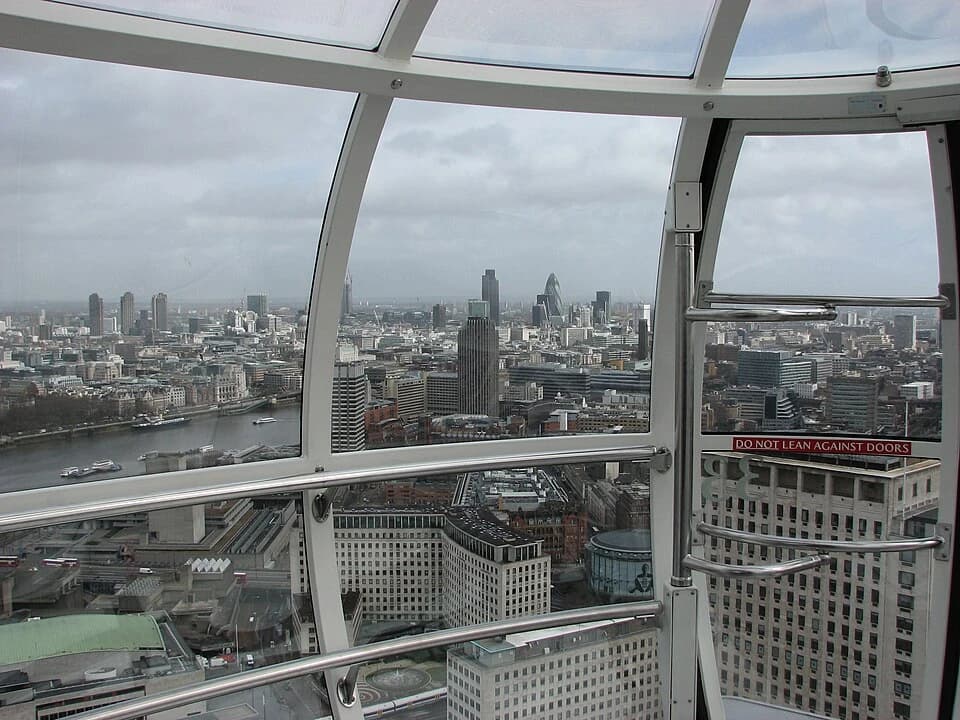
Inside the Observation Pod
While the view outside is spectacular, the interior of the capsule is a marvel in itself. The design is focused entirely on the sensory experience of the visitor. The walls are made almost entirely of high-clarity glass, allowing for unobstructed 360-degree views. This transparency is meant to make you feel like you are floating in the air rather than being enclosed in a heavy structure. There are no blind spots, ensuring that you can see every landmark from every angle as the wheel turns. Inside, you will notice a sophisticated climate control system. This is an essential feature given London's notoriously unpredictable weather. Whether it is a blistering summer day or a freezing winter morning, the system keeps the pod at a comfortable temperature and prevents the glass from fogging up, ensuring your view is always crystal clear. The central bench provides a place to sit and reflect, though many visitors prefer to walk around the perimeter to take photographs. The pods are also equipped with interactive tablets that provide information about the landmarks you are seeing, helping to contextualize the vast landscape before you. Every detail of the pod’s interior has been engineered to provide a high-tech, comfortable environment that lets the beauty of London take center stage.
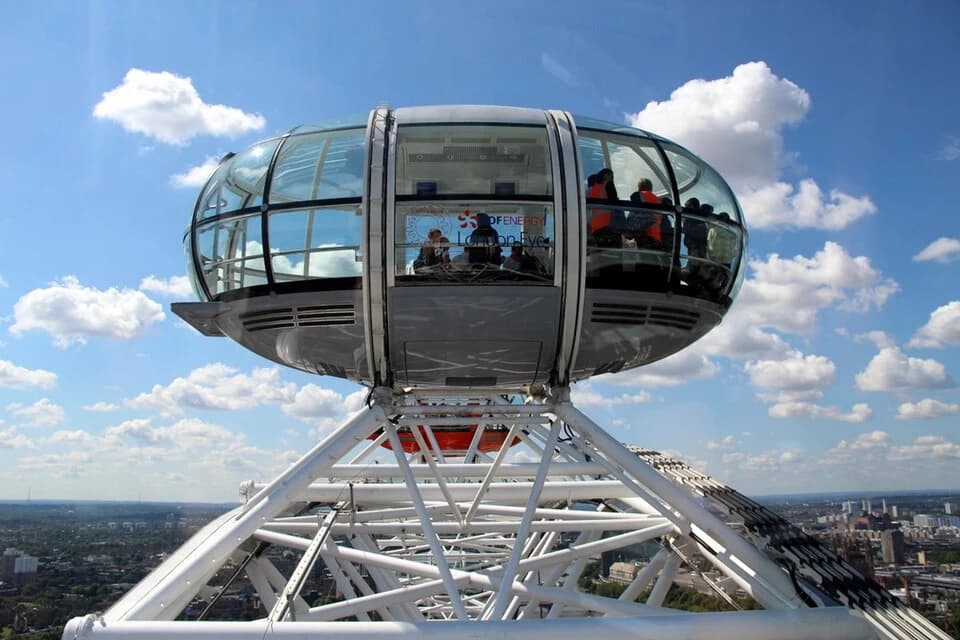
The 135-Meter Summit
You have reached the very top of the London Eye. At 135 meters above the ground, the sensation is one of being temporarily suspended directly over the River Thames. For a brief few minutes, your capsule is the highest point in the immediate area, providing a truly panoramic 360-degree view of the entire Greater London region and beyond. On a clear day, the visibility from this summit is remarkable. You can see up to 40 kilometers in every direction. If the weather is on your side, look toward the west, and you might be able to spot the distant spires of Windsor Castle on the horizon. To the east, the skyscrapers of the City and Canary Wharf appear as a cluster of glass and light. This moment at the peak is the highlight of the journey, offering a sense of quiet and perspective that is hard to find in the bustling streets far below. You are standing at the apex of a structure that was once the tallest of its kind in the world, and even as taller buildings have risen nearby, the experience of being out over the river at this height remains one of the most unique and peaceful ways to see the capital.
The Descent: Westminster and Big Ben
The final half of the journey offers the most iconic views of the UK's political heart.
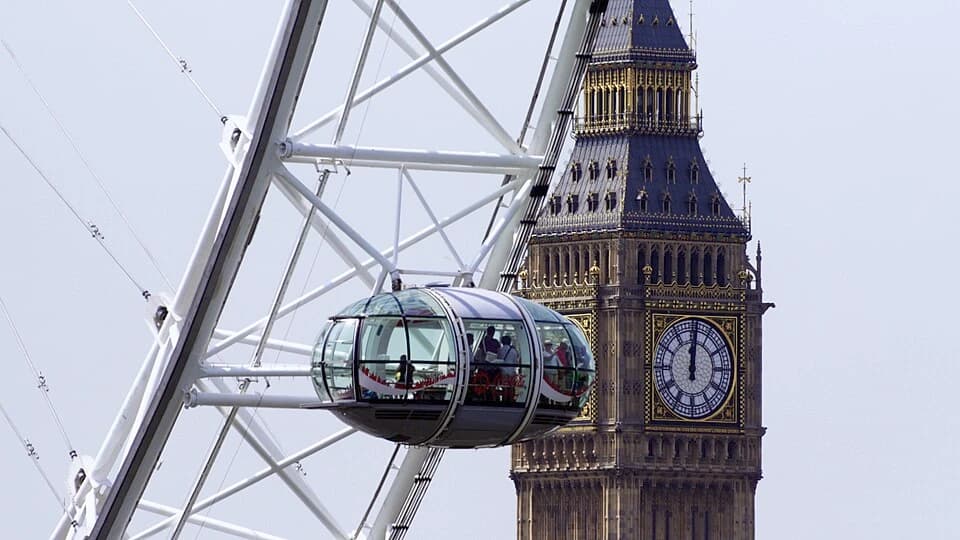
Eye-to-Face with Big Ben
As the wheel continues its steady rotation, you will find yourself almost eye-to-face with one of the most famous landmarks on Earth: the Elizabeth Tower. While many people refer to the entire tower as 'Big Ben,' that name technically belongs only to the massive 13-ton bell that hangs inside. The tower itself was renamed in 2012 to honor the Diamond Jubilee of Queen Elizabeth II. Being at this height allows you to see the incredible detail of the clock faces in a way that is simply impossible from the ground. Each clock face is seven meters in diameter and is made up of hundreds of individual pieces of opal glass. You can see the intricate ironwork and the ornate carvings that decorate the top of the tower. There is a strange and wonderful sensation in being level with such a massive piece of history as you slowly glide past in your high-tech capsule. The clock has been a symbol of reliability and timekeeping for the city since it first began ticking in 1859. From your vantage point, you can appreciate the craftsmanship of the Victorian era, a reminder of the engineering ambition of a previous century that mirrors the ambition of the London Eye today.
Want to hear the rest?
Download the Stanza app to unlock all 22 stops and full GPS-guided navigation.
Frequently Asked Questions
How long does the London Eye audio tour take?
The London Eye audio guide includes 22 narrated stops. Most visitors spend 45 minutes to 1.5 hours exploring the complete tour, though you can listen at your own pace and skip or revisit any stop.
Is the London Eye audio guide available in my language?
Stanza supports 15 languages: English, Spanish, French, German, Italian, Portuguese, Russian, Japanese, Chinese, Korean, Arabic, Hindi, Polish, Dutch, Hebrew. Check the guide in the app to confirm the languages currently available for this tour.
Can I use the audio guide offline at London Eye?
Yes! Download the complete London Eye tour — including all audio, maps, and images — before your visit. The Stanza app works completely offline, so you don't need WiFi or mobile data at the venue.
How much does the London Eye audio guide cost?
The Stanza app is free to download. The current listed price for the London Eye audio guide is $4.99; app-store region and currency may affect the final price.
How do I use the Stanza audio guide at London Eye?
Download the free Stanza app, search for "London Eye", and download the tour. When you arrive at the venue, the app uses GPS to detect your location and automatically plays the relevant narration as you move between points of interest — completely hands-free.
What makes the Stanza audio guide different from other London Eye tours?
Stanza offers GPS-triggered narration that plays automatically as you walk through London Eye — no need to manually select stops. The tour is available in 15 languages, works fully offline, and includes 22 expertly narrated stops with images and historical context.
What other audio guides are available near London Eye?
Stanza offers multiple audio guides in Greater London, United Kingdom and nearby areas. After downloading the app, browse the map to discover all available tours near London Eye. Each guide can be downloaded for offline use.