Stanza · Audio guide
St Martin-in-the-Fields Audio Guide
A place to remember. A story to take with you.
St Martin-in-the-Fields is a Church of England parish church located at the north-east corner of Trafalgar Square in London. There has been a church on this site since at least the medieval period.
Download Stanza, then search for “St Martin-in-the-Fields”.
About the tour
One guide. Your kind of visit.
St Martin-in-the-Fields is a Church of England parish church located at the north-east corner of Trafalgar Square in London. There has been a church on this site since at least the medieval period.
Ready when you are.
- 01Get the free Stanza app.
iOS & Android
- 02Find your guide.
“St Martin-in-the-Fields”
- 03Download before you go.
Works offline
Audio guide / 8 narrated stops
Inside the guide
Get to know a few of the stories before you go. Open a stop to read more.
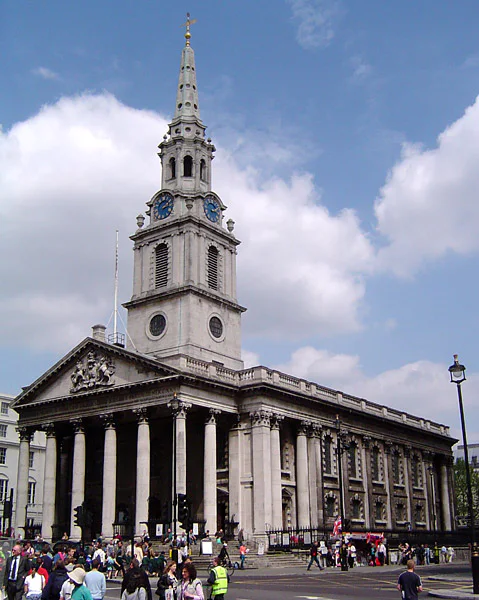
01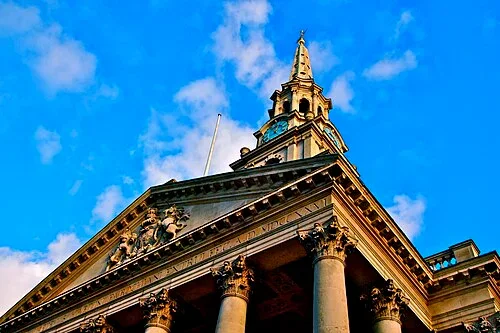 West Portico and Classical Facade
West Portico and Integrated Spire
Welcome to St Martin-in-the-Fields, the parish church at the north-east corner of Trafalgar Square. Six giant Corinthian columns carry the pediment of the west front, and behind them the steeple climbs straight up from the roof. That was the revolutionary part. Christopher Wren had set his steeples beside the church, as separate towers. James Gibbs built his tower into the west wall itself, so the spire rises directly above the portico. It reaches a hundred and ninety-two feet above the church floor. The old church on this spot had grown dangerous, and in 1720 Parliament allowed the parish to rebuild, funded by a rate on the parishioners. The foundation stone went down on 19 March 1722, and the last stone of the spire was placed in December 1724. The bill came to thirty-three thousand, six hundred and sixty-one pounds, well over the twenty-two thousand Parliament had budgeted. People mocked the design at first. Then it became one of the most copied church buildings in the world, especially in America, where its temple front and central steeple turned into the standard shape for Protestant churches. As for the name, this ground was once farmland and fields beyond the London wall. It is still the royal parish church, with close ties to Downing Street and the Admiralty.
Photo: Mickyflick · CC BY-SA 3.0
02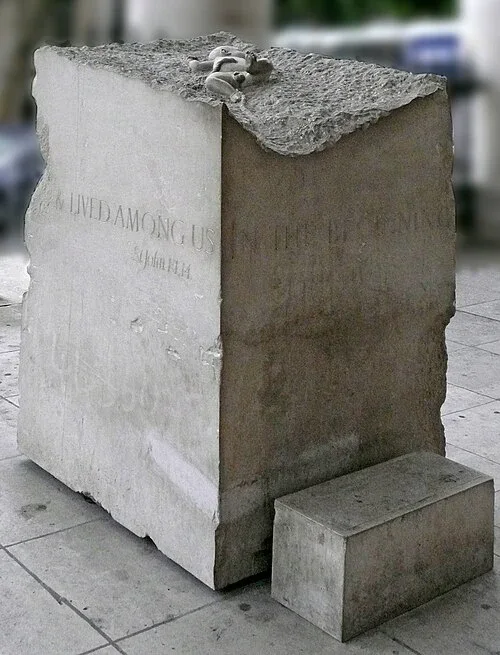 West Portico and Classical Facade
The Christ Child sculpture
Beneath the great columns of the portico sits a rough block of Portland limestone, weathered at the edges. Carved into its top lies an infant figure, the Christ Child, made in 1999. Part of an inscription from the opening of St John's Gospel reads across the stone: lived among us. A church finished in the seventeen-twenties is still commissioning new religious art, and it has given this piece one of the most public spots in the whole building.
Brett Jordan · CC BY 2.0
03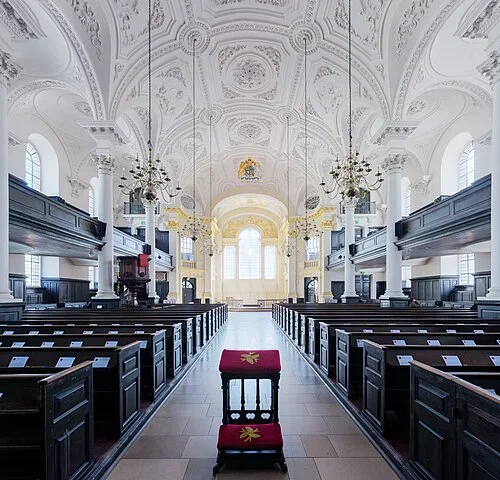 The Nave and Barrel-Vaulted Ceiling
Gibbs's first idea for this church was a circular nave under a dome. The commissioners thought it too expensive, so he gave them a simpler rectangle instead. What they got was still extraordinary. Five bays of giant Corinthian columns separate the nave from its aisles, with galleries running above both sides and across the west end. Overhead, the ceiling is a flattened barrel vault, divided into panels by ribs. Italian craftsmen Giuseppe Artari and Giovanni Bagutti filled those panels with stucco: cherubs, clouds, shells and scrollwork. It is the ceiling people remember, a piece of Italian plasterwork floating over a Protestant preaching hall.
Listen in the appPhoto: Txllxt TxllxT · CC BY-SA 4.0
04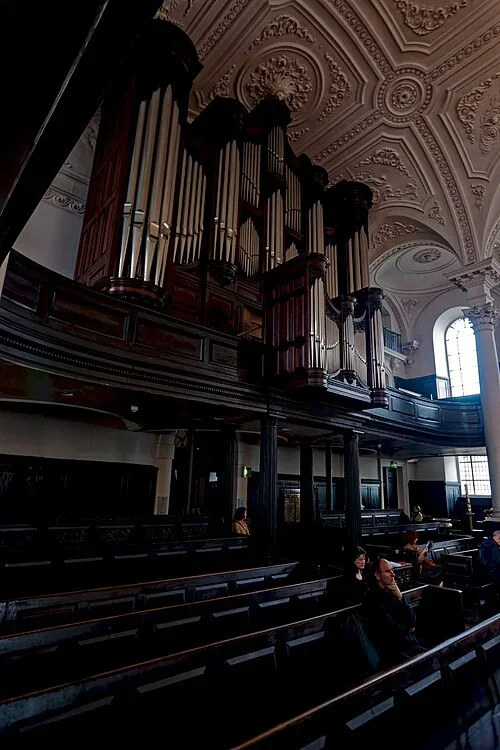 The Nave and Barrel-Vaulted Ceiling
West Gallery Organ and the Musical Tradition
High on the west gallery sits the organ, its glittering pipes stacked against Gibbs's vaulting. The first organ in this church, installed in 1726, was built by Christopher Schreider. The instrument played today dates from 1990, built by J.W. Walker and Sons. Music matters enormously here. The church runs regular lunchtime and evening concerts, and its name travels the world through the Academy of St Martin in the Fields, the chamber orchestra co-founded by Sir Neville Marriner and John Churchill, a former Master of Music here. Even the bells emigrated: twelve of them, cast in 1725, now ring from a tower in Perth, Australia.
Listen in the appPhoto: Txllxt TxllxT · CC BY-SA 4.0
05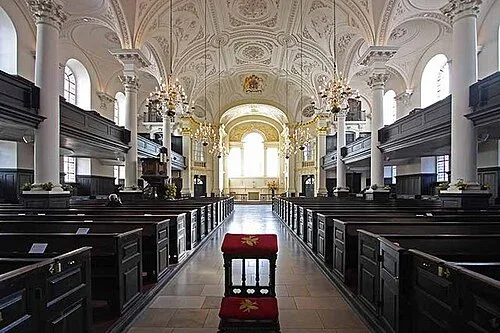 The Sanctuary and East Window
Sanctuary and East End: Worship on This Site
There has been a church on this ground since at least the medieval period, when it stood in open fields between the cities of London and Westminster. In 1542 Henry VIII rebuilt it, so that plague victims in the area would not have to pass through his Palace of Whitehall. As Westminster grew, St Martin's became the principal parish church west of the old City, and the crowds kept coming. In 1606 the king granted an acre of ground to the west for a new churchyard, and the building was enlarged eastwards over the old burial ground, growing about half as long again. Galleries were added later, and new parishes like St Anne's in Soho finally took some of the pressure off. Worship here has never stopped.
Listen in the appJohn Salmon · CC BY-SA 2.0
06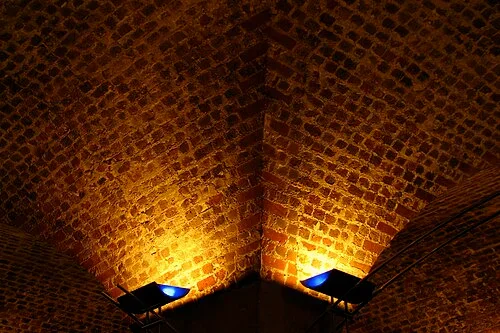 Subterranean Crypt and Social Mission
Cafe in the Crypt
Beneath the church, warm lamps light the eighteenth-century brick vaulting, and café tables now sit under the arches. For centuries this ground was a burial place. The sculptor Louis-François Roubiliac lies here, and so does the furniture-maker Thomas Chippendale, whose workshop stood in St Martin's Lane. Nell Gwyn and the scientist Robert Boyle were buried in the earlier church, and the highwayman Jack Sheppard in the churchyard. Part of that churchyard was lost when Duncannon Street was cut through in the nineteenth century to reach the new Trafalgar Square. Then the diggers found something older. Excavations in 2006 uncovered Roman burials from about A.D. 350, including a sarcophagus burial from around A.D. 410, a mile beyond the limits of Roman London. Some think they mark a Christian centre here, others a reused pagan temple; the question is still open. The café itself came out of a renewal project begun in 2006, backed by more than fifteen million pounds from the Heritage Lottery Fund, with the church and crypt reopening in the summer of 2008. Its jazz concerts raise money for the church's programmes.
Listen in the appCGP Grey · CC BY 2.0
07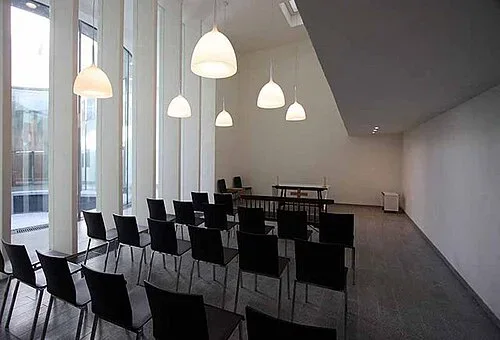 Subterranean Crypt and Social Mission
Dick Sheppard Chapel: The Ever Open Door
This calm, plain chapel is named for Dick Sheppard, vicar from 1914 to 1927. In the First World War he opened the church to soldiers on their way to the Western Front, and to homeless Londoners. He called it the Church of the Ever Open Door, and the phrase stuck. The giving became routine. The church has run a Christmas appeal every year since 1920, and in December 1927 it began its annual BBC radio charity appeal, a broadcast that continues today. The work carries on through The Connection at St Martin's, formed in 2003 from programmes dating back to at least 1948. It supports about four thousand homeless people in London each year, with accommodation, medical and dental care, skills training and hot cooked meals.
Listen in the appJohn Salmon · CC BY-SA 2.0
08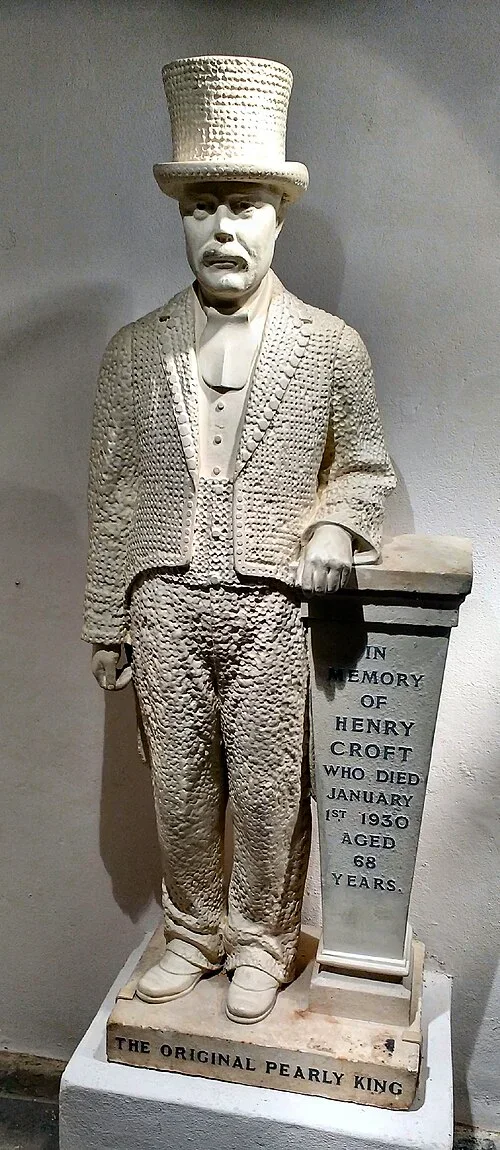 Subterranean Crypt and Social Mission
Henry Croft, the Original Pearly King
In the crypt stands a life-sized marble figure in a top hat and a suit covered from shoulder to shoe in pearl buttons. The plinth names him plainly: The Original Pearly King. This is Henry Croft, who died in January 1930, aged sixty-eight. His decorated pearly suits became a London working tradition of street collecting for charity, and this statue was moved here in 2002 from St Pancras Cemetery. The crypt around him holds other everyday life too: the London Brass Rubbing Centre has run here since 1975, alongside the café and its music. A church that began in open fields, paid for by its parishioners, still keeps its door open to the city that grew up around it.
Listen in the appPhoto: AndyScott · CC BY-SA 4.0
St Martin-in-the-Fields
Frequently asked questions
How much does the guide cost?
Free app download. Listed guide price: $0.99. Guide price shown in the app. Audio guide only. Venue admission is separate.
Can I listen without internet?
Yes. Download the guide’s audio, images, and maps in the app before your visit. Your downloaded content is then available offline.
Can I listen in my language?
This audio guide is available in 15 languages, including English.
Do I need to follow a schedule?
No. This is a self-guided experience. Choose your stops, pause whenever you like, and return to a story at your own pace.
At your own pace
Explore St Martin-in-the-Fields.
Download Stanza, then search for “St Martin-in-the-Fields”.
Free app download · Guide price shown in the app
Keep exploring
Nearby audio guides
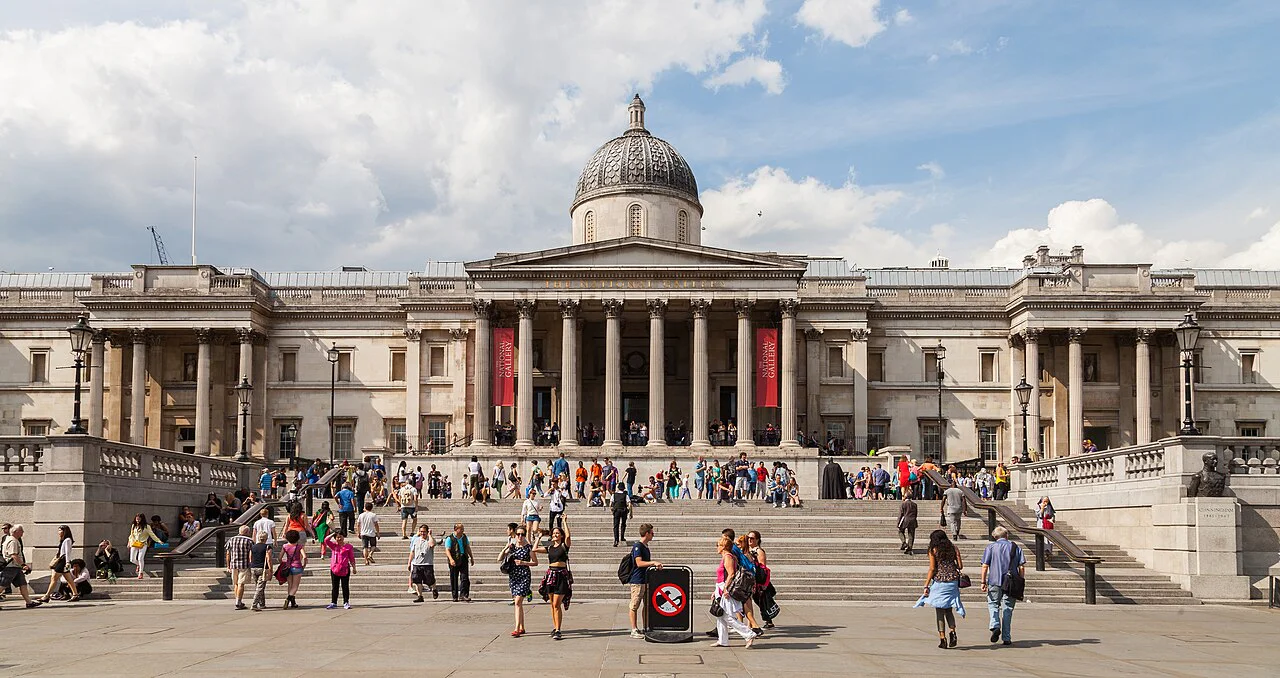
City of Westminster · 1 km
National Gallery, London
Content & sources
Diego Delso · CC BY-SA 4.0
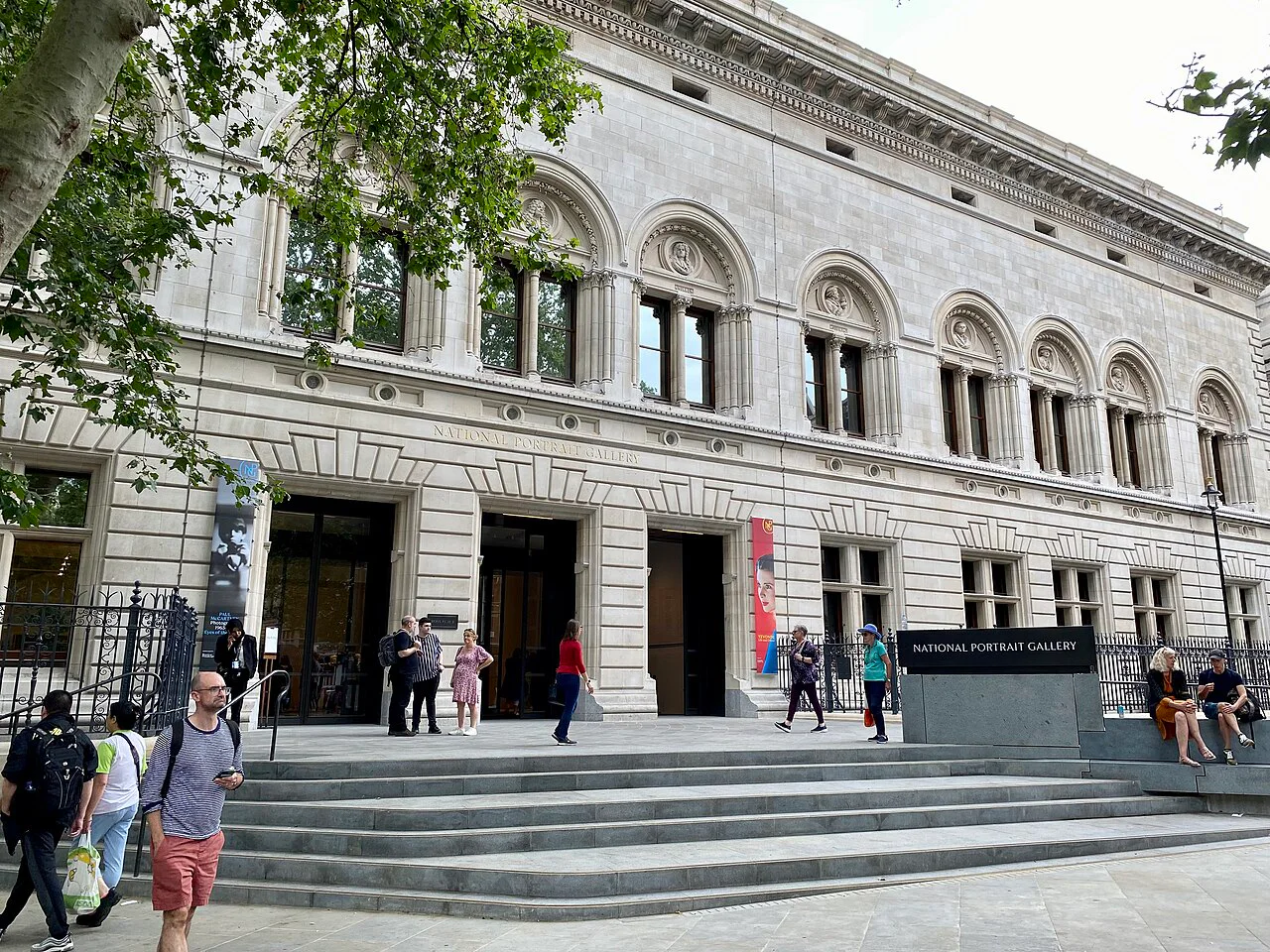
City of Westminster · 1 km
National Portrait Gallery, London
Content & sources
Photo: No Swan So Fine · CC BY-SA 4.0
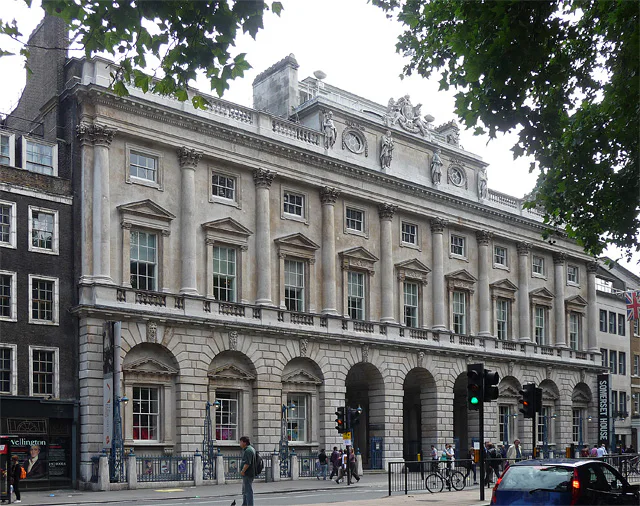
City of Westminster · 1 km
Courtauld Gallery
Content & sources
Stephen Richards · CC BY-SA 2.0
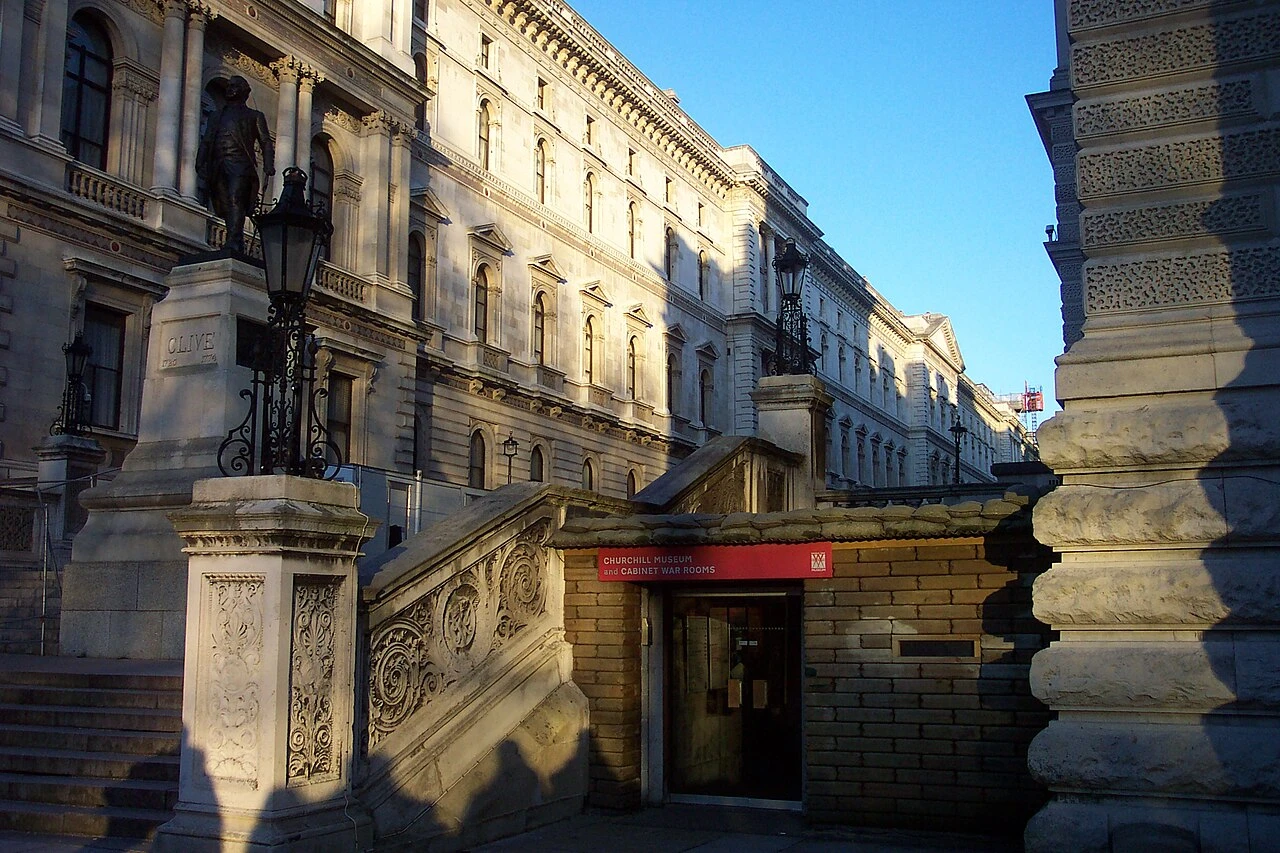
London · 1 km
Churchill War Rooms
Content & sources
en:User:Jdhowens90 · CC BY-SA 3.0