Stanza · Audio guide
Churchill War RoomsAudio guide
A place to remember. A story to take with you.
The Churchill War Rooms is a historic underground complex in London that served as the British government's command centre during World War II. It now operates as a museum dedicated to wartime operations and…
Download Stanza, then search for “Churchill War Rooms”.
About the tour
One guide. Your kind of visit.
The Churchill War Rooms is a historic underground complex in London that served as the British government's command centre during World War II. It now operates as a museum dedicated to wartime operations and Winston Churchill's life.
Ready when you are.
- 01Get the free Stanza app.
iOS & Android
- 02Find your guide.
“Churchill War Rooms”
- 03Download before you go.
Works offline
Audio guide / 16 narrated stops
Inside the guide
Get to know a few of the stories before you go. Open a stop to read more.
01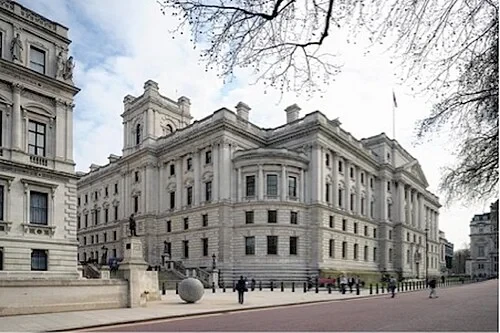 Arrival at King Charles StreetThe New Public Offices
Welcome to the Churchill War Rooms. Construction to convert the basement of this government building into an emergency bunker began in June 1938, long before the first bombs fell on the capital. As Europe drifted toward conflict, engineers worked secretly to adapt the foundation into a secure command center. This facility became fully operational on 27 August 1939, just one week before Britain formally declared war on Germany. Standing here at the street level, the contrast is stark. Above ground, the New Public Offices represent the height of Victorian architectural grandeur, with Portland stone facades and ornate detailing designed to project imperial strength. Below, a world of low ceilings and narrow corridors waited, designed for survival and strategy rather than aesthetic beauty. While the public saw a standard government office, the reality was a subterranean fortress prepared to house the nation's leadership during the dark years of the Second World War. This tour will take you through those hidden spaces, which remain largely as they were when the lights were finally dimmed in 1945.
UK Government · OGL 3
02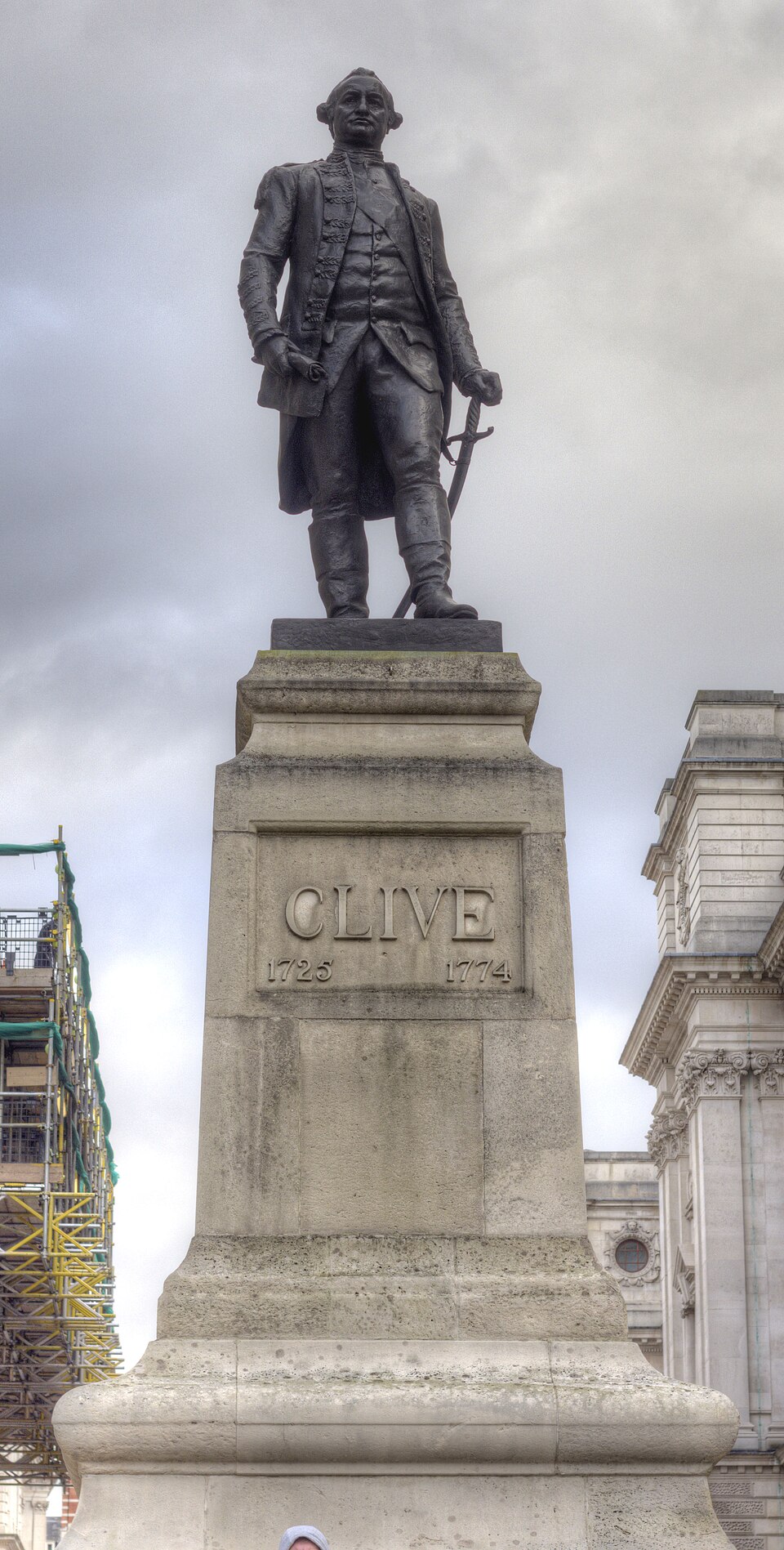 Arrival at King Charles StreetThe Clive Statue
Situated outside the Treasury building, this figure serves as a prominent navigational landmark for visitors searching for the subterranean complex. While many statues populate the Whitehall area, this one is a useful marker for the entrance to the Churchill War Rooms. Follow the path near the base of the pedestal to find the staircase leading down from the street level. In the 1940s, this area looked very different, often crowded with military personnel and government staff moving quickly between departments. Today, the monument remains a fixed point in an ever-changing city, watching over the secret entrance that was once one of the most protected sites in the British Empire. Once you descend the stairs, the open air of London will give way to the enclosed atmosphere of the bunker. The transition marks the beginning of your journey into the heart of British wartime operations, where decisions affecting millions of lives were made under the very ground you are about to step onto.
Photo: Prioryman · CC BY-SA 4.0
03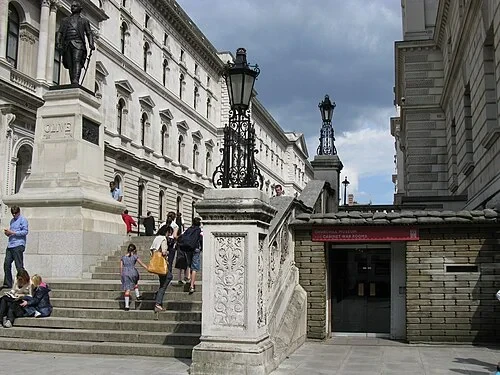 The Bunker EntranceThe Descent
As the noise of the city fades, the atmosphere shifts. These steps take you into a space often described as a time capsule. When the war in Europe ended and the lights were turned off here in 1945, the facility was largely abandoned in place. Many of the rooms were left exactly as they appeared on the final day of operations, with maps still on the walls and equipment resting on desks. This lack of disturbance has preserved an authentic glimpse into the working conditions of the 1940s. The subterranean environment was a necessity for survival during the Blitz, providing a level of protection not found in standard office buildings. The air here feels different—enclosed and purposeful. You are leaving the daylight of the 21st century behind to enter a period of extreme national crisis. The preservation of these rooms allows for a unique connection to the past, where the physical objects and layout tell the story of a nation under siege, working tirelessly beneath the surface of the capital.
Listen in the appPhoto: IxK85 · CC BY-SA 3.0
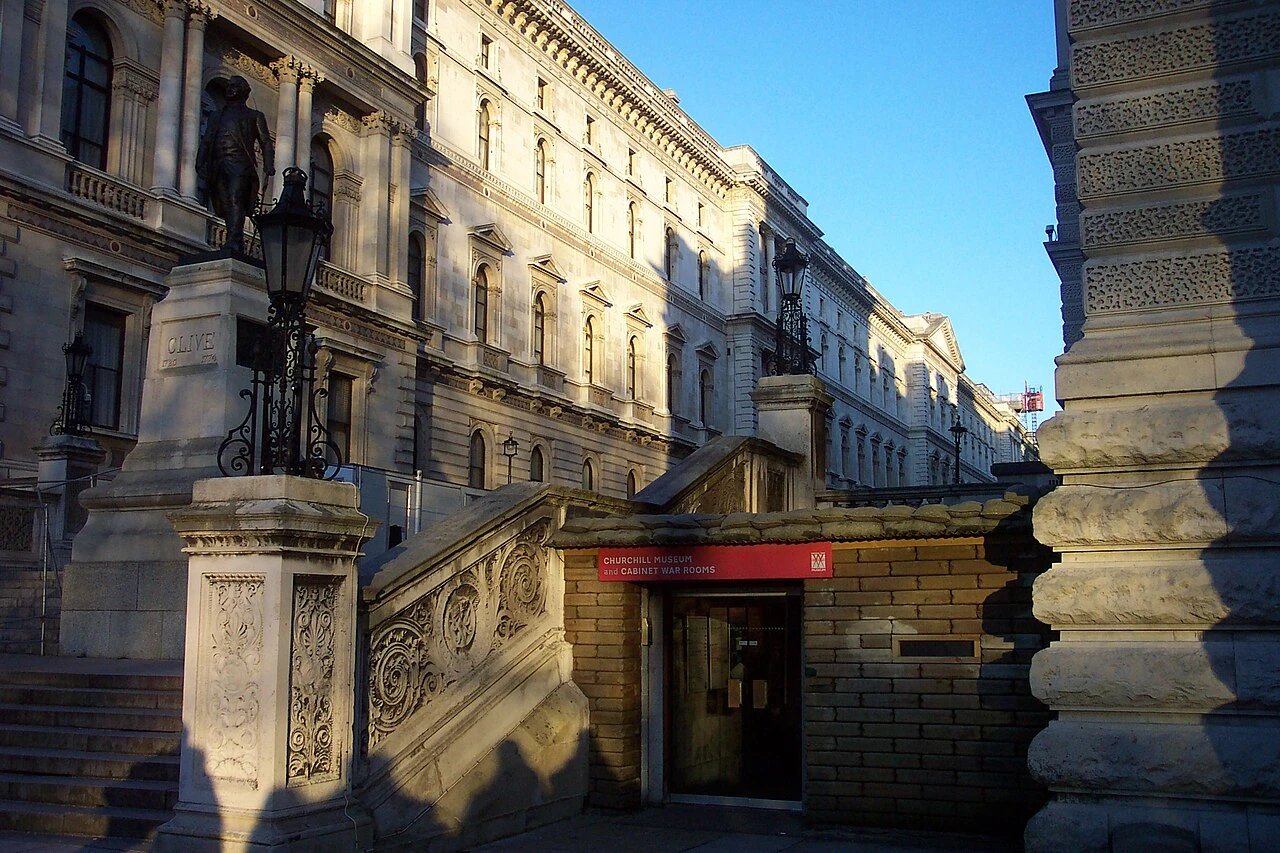
04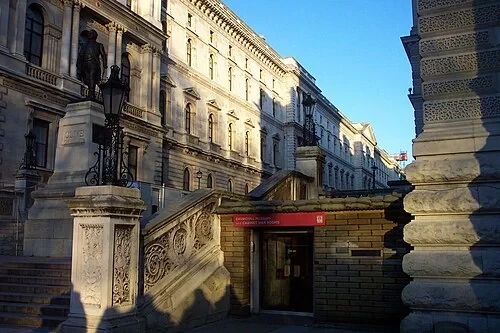 The Bunker EntranceThe Bunker Entrance
Crossing this threshold brings you into the nerve center of the war effort. The entrance is marked by a distinctive modern faceted design that contrasts with the historical stone of the surrounding buildings. During the Second World War, this was far more than just a convenient bomb shelter; it functioned as the strategic core from which the British Empire was managed during its most desperate years. Security was paramount, and access was strictly controlled. Only those with the highest clearance were permitted to enter these corridors. Inside, military planners, intelligence officers, and government ministers worked around the clock to coordinate global operations. The facility was designed to keep the government functioning even if the buildings above were destroyed by aerial bombardment. Consider the intense pressure felt by those who worked here, knowing that the decisions recorded in these cramped rooms would determine the outcome of the conflict. This was the place where strategy met survival, housing the leadership that directed the Allied response to the Axis powers across multiple continents and oceans.
Listen in the appen:User:Jdhowens90 · CC BY-SA 3.0
05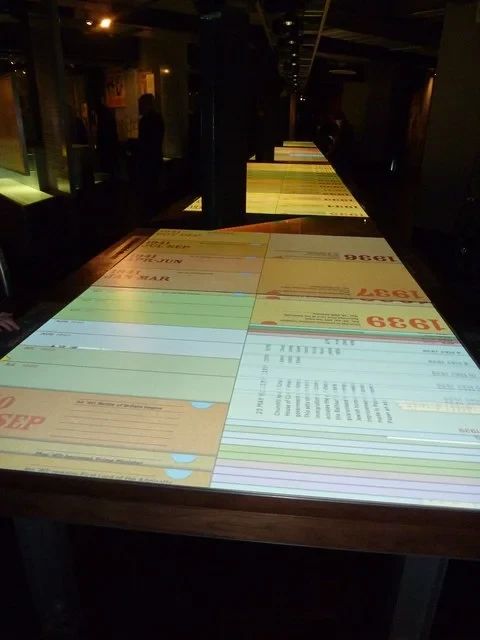 The Churchill MuseumThe Lifeline Table
This central feature of the Churchill Museum allows for a deep exploration of the man behind the wartime leadership. The Lifeline Table is a fifteen-meter digital interface that spans his entire life, from his early years and military career to his political triumphs and personal struggles. By interacting with the display, you can access thousands of documents, photographs, and film clips that provide context to his decisions and character. The museum section itself covers 850 square meters, offering a comprehensive look at Churchill’s legacy that goes beyond the physical rooms of the bunker. It serves as a bridge, connecting the subterranean workspace with the broader historical impact of the person who occupied it. The volume of information available here reflects the complexity of Churchill’s role in British history. Visitors can investigate specific dates or themes, gaining a clearer understanding of how his past experiences shaped the leader who would eventually guide the nation through its darkest hours. This digital archive ensures that his story remains accessible to new generations, providing a modern way to engage with a historical figure of immense global significance.
Listen in the appBasher Eyre · CC BY-SA 2.0
06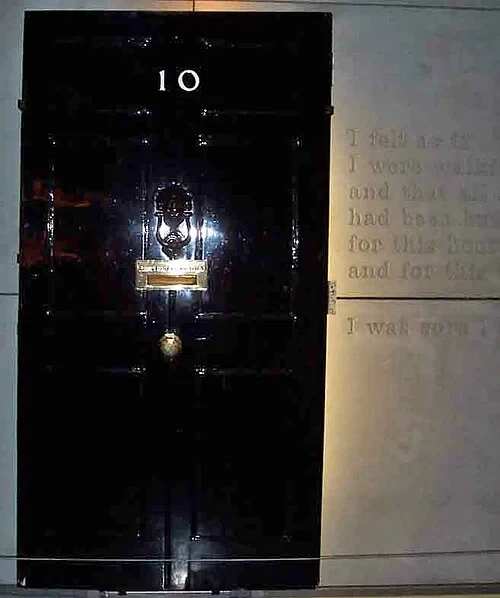 The Churchill MuseumThe Door to Number 10
The black door with the famous number '10' and the brass knocker is an iconic symbol of British political power. During the war, the threat of targeted aerial strikes on the official residence was so severe that Winston Churchill was forced to relocate his primary working space to this reinforced basement. This door was brought here as a reminder of the authority that had been moved underground for safety. While 10 Downing Street remained the symbolic home of the government, the practical reality of the Blitz made it too dangerous for continuous use. Seeing this familiar object in such a claustrophobic setting emphasizes the precarious nature of the time. The transition from a grand Georgian townhouse to a reinforced concrete bunker illustrates the extreme measures taken to ensure the continuity of government. The presence of the door served both a functional and psychological purpose, maintaining a sense of normalcy and tradition even as the world above was being reshaped by conflict. It stands now as a silent witness to the era when the leadership of the nation was literally driven underground by the forces of modern warfare.
Listen in the appmaggie jones. · Public domain
07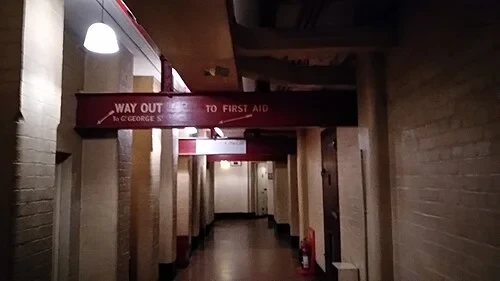 Subterranean Corridors and The SlabThe Protective Slab
The massive structural reinforcements visible overhead were added in 1940. As the threat of the Blitz intensified, engineers recognized that the original basement ceiling offered insufficient protection against direct hits from heavy bombs. To rectify this, they installed a massive layer of concrete and steel, reaching a thickness of approximately five feet or one and a half meters in some areas. This feature, known to the staff as 'The Slab,' was the only thing standing between the military leadership and the high-explosive ordnance being dropped by the Luftwaffe above. Walking through these narrow corridors, the physical presence of the slab is a constant reminder of the danger that defined daily life in London. The cramped height and heavy beams create a sense of compression, reflecting the lived experience of hundreds of men and women who worked here for years. They carried out their duties while the ground above them frequently shook from the impact of nearby explosions. This structural reinforcement was essential for the bunker's survival, providing the necessary shield that allowed the core of the empire to remain operational throughout the most intense periods of aerial bombardment.
Listen in the appWFan · CC BY-SA 4.0
08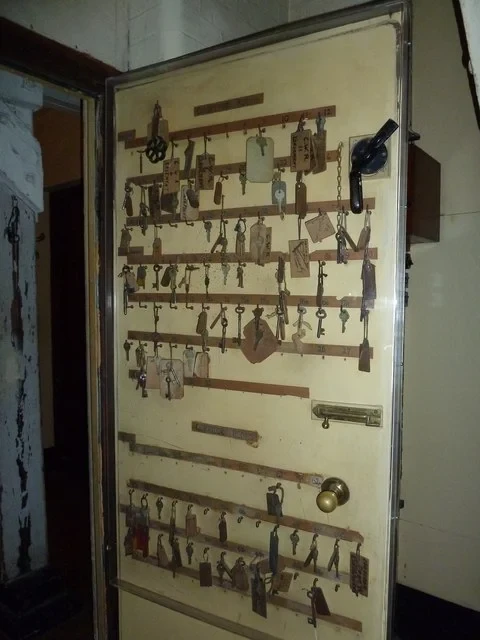 Subterranean Corridors and The SlabThe Key Cabinet
Security within the bunker was meticulous, as every room contained highly sensitive information. This board of keys highlights the complex logistics required to manage access to this secret labyrinth. Each key corresponds to a specific office, map room, or storage area, ensuring that only authorized personnel could enter particular zones. In a facility where the most critical military secrets were discussed daily, compartmentalization was a vital defense against espionage and accidental leaks. The staff responsible for these keys managed a constant flow of officers, typists, and messengers through the corridors. The simple wooden tags and metal keys are a low-tech reminder of the immense responsibility placed on the shoulders of the security detail. Managing such a facility meant balancing the need for rapid communication with the necessity of absolute secrecy. Each turn of a lock protected a piece of the strategic puzzle that the Allied forces were assembling to defeat the Axis. This artifact offers a small, tangible connection to the daily routines of the people who maintained the integrity of this underground headquarters during the war years.
Listen in the appBasher Eyre · CC BY-SA 2.0
09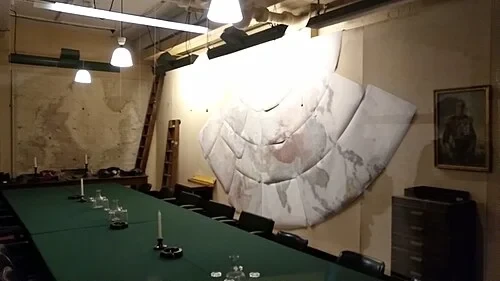 The Cabinet RoomThe Cabinet Room
This room is the heart of the wartime government. Between 1939 and 1945, 115 Cabinet meetings took place around this large table. At the center of the arrangement is the Prime Minister's chair, the one with the distinctive wooden back. In 1940, shortly after taking office, Churchill stood in this very room and declared that this was the room from which he would direct the war. His words set the tone for the years that followed. The atmosphere in this space during those meetings was often incredibly tense, as the leadership debated strategies that would affect millions. The scratch marks on the arms of the Prime Minister's chair are said to have been made by Churchill's fingernails during particularly stressful sessions. Surrounded by his most trusted advisors, he made the difficult choices necessary to maintain the British war effort. The room has been preserved just as it was, with the clocks stopped and the blotters still on the table, allowing you to sense the weight of the history that unfolded within these four walls.
Listen in the appWFan · CC BY-SA 4.0
10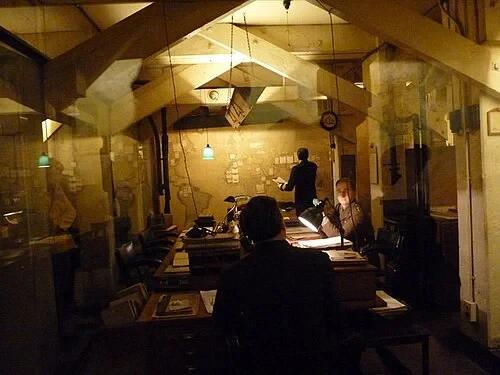 The Map Room Nerve CenterThe Map Room Overview
This room was never silent during the war. Officers from the Royal Navy, the Army, and the Royal Air Force worked here in shifts around the clock, ensuring that the latest intelligence was always available to the King and the Prime Minister. The mannequins present represent the actual roles and positions held by the personnel who tracked global military movements. Every piece of information received from around the world was processed here, from troop deployments to naval convoy positions. The atmosphere was one of intense, organized activity, with information constantly arriving via telephone and teleprinter. This collective effort provided the leadership with a real-time overview of the conflict across every theater of war. The integration of the different military branches in a single space was a relatively new concept at the time, reflecting the need for total coordination in a global struggle. The maps on the walls were constantly updated, creating a visual record of the changing front lines and the progress of Allied operations. Every decision made at the highest levels of government began with the data compiled in this room.
Listen in the appBasher Eyre · CC BY-SA 2.0
Churchill War Rooms
Frequently asked questions
How much does the guide cost?
Free app download. Listed guide price: $0.99. Guide price shown in the app. Audio guide only. Venue admission is separate.
Can I listen without internet?
Yes. Download the guide’s audio, images, and maps in the app before your visit. Your downloaded content is then available offline.
Can I listen in my language?
Stanza supports 15 languages. Check the app for the languages available for this guide.
Do I need to follow a schedule?
No. This is a self-guided experience. Choose your stops, pause whenever you like, and return to a story at your own pace.
At your own pace
Explore Churchill War Rooms.
Download Stanza, then search for “Churchill War Rooms”.
Free app download · Guide price shown in the app
Keep exploring
Nearby audio guides
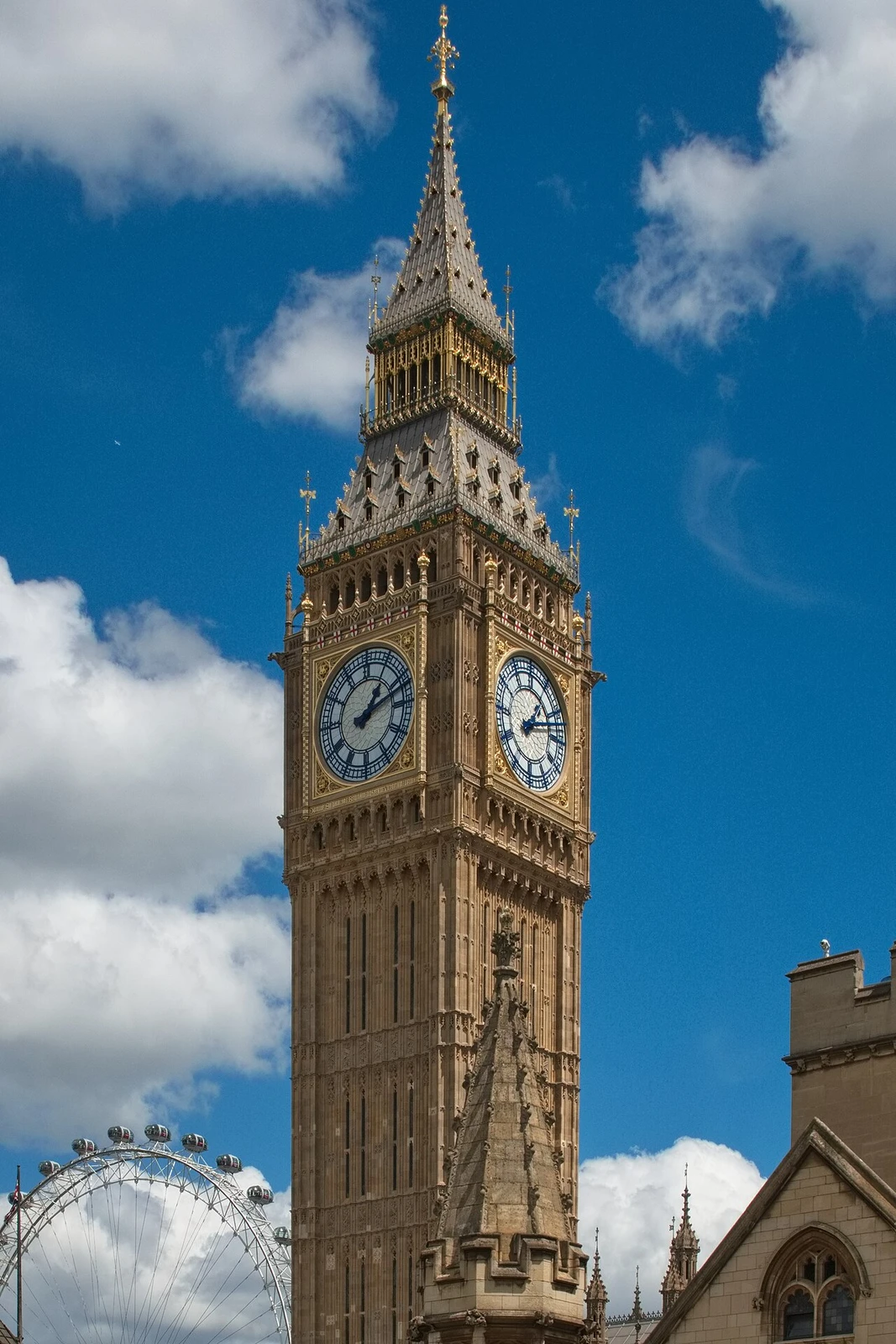
London
Big Ben
Content & sources
Dave Bezaire · CC BY-SA 2.0
London
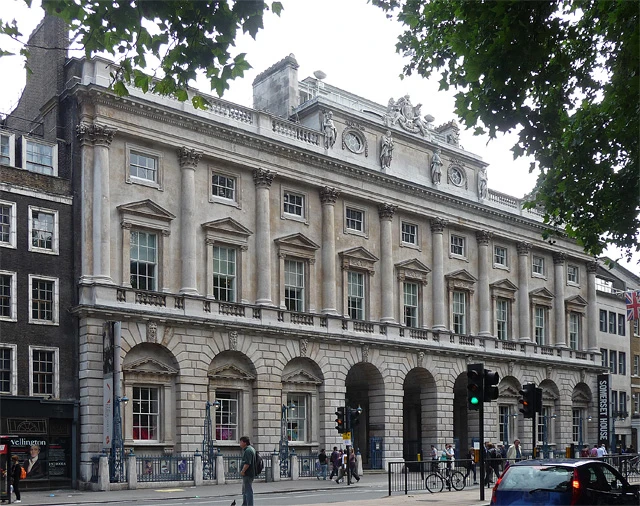
Courtauld Institute of Art
Content & sources
Stephen Richards · CC BY-SA 2.0
London
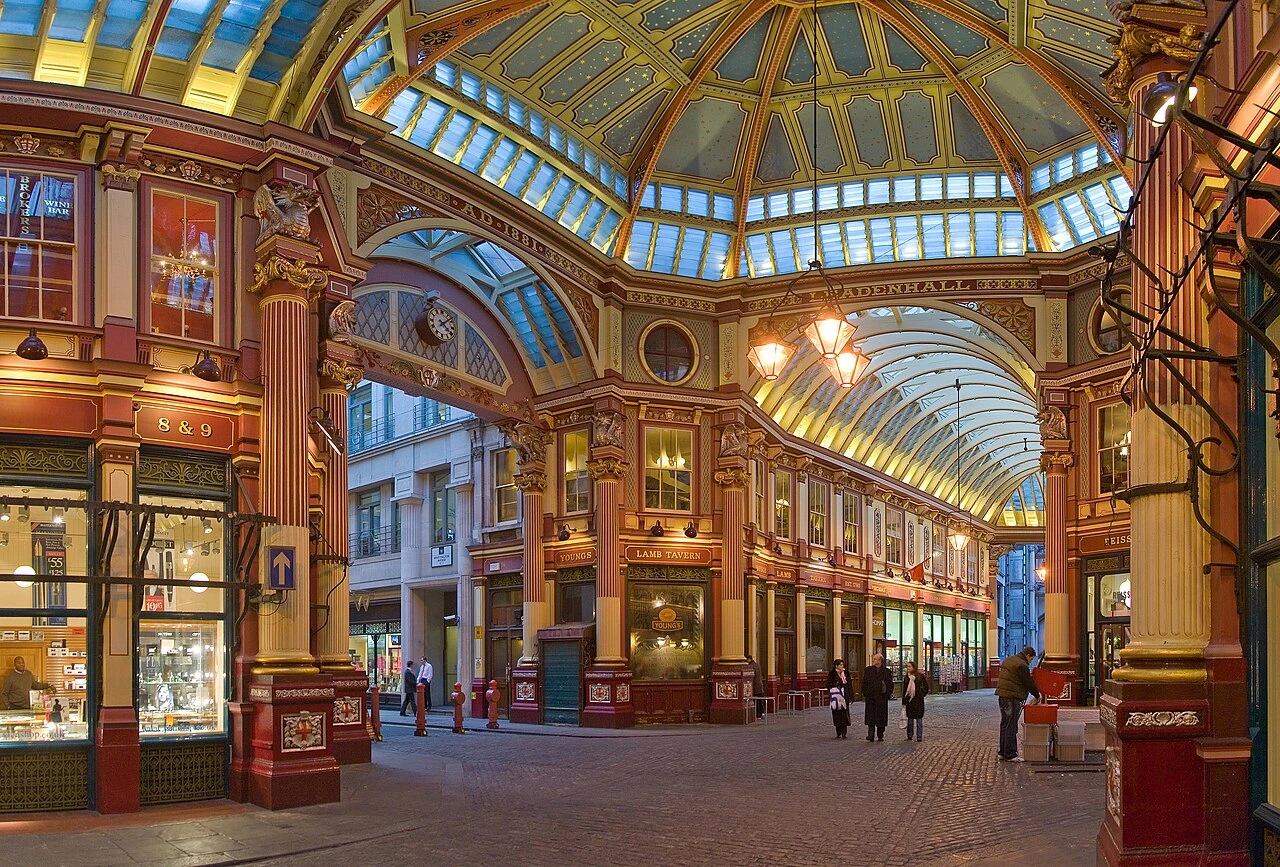
Leadenhall Market
Content & sources
Diliff · CC BY 2.5
London
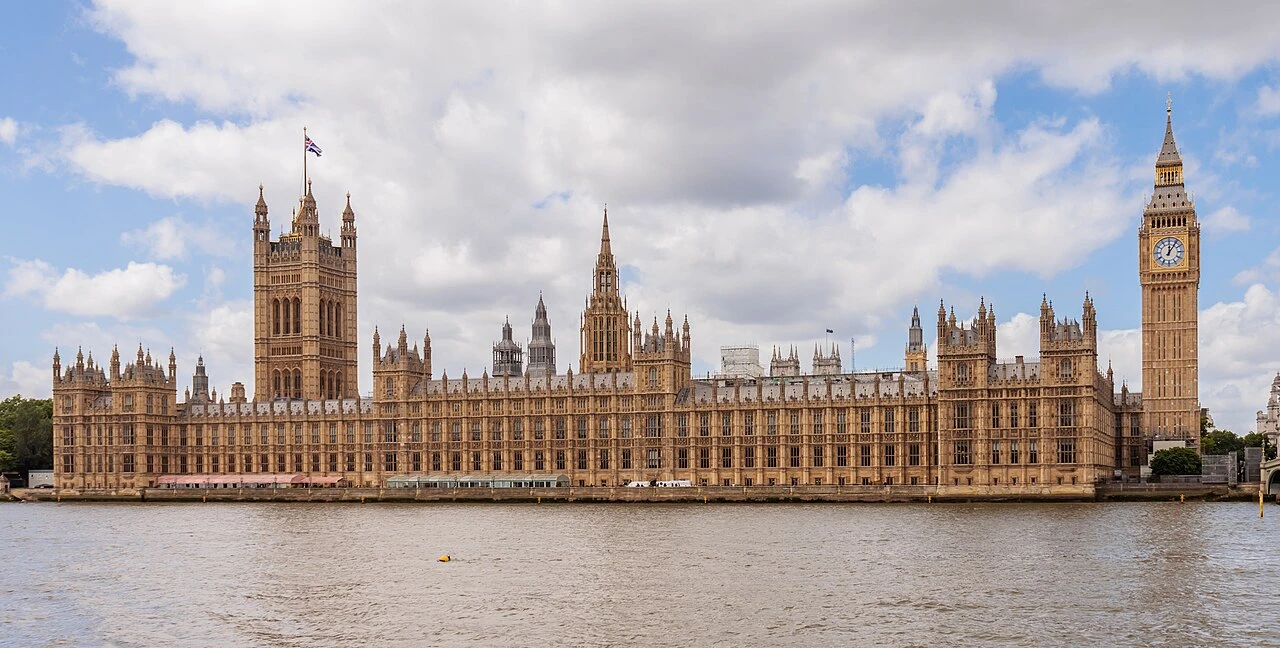
Palace of Westminster
Content & sources
Terry Ott from Washington, DC Metro Area, United States of America · CC BY 2.0