Stanza · Audio guide
Big BenAudio guide
A place to remember. A story to take with you.
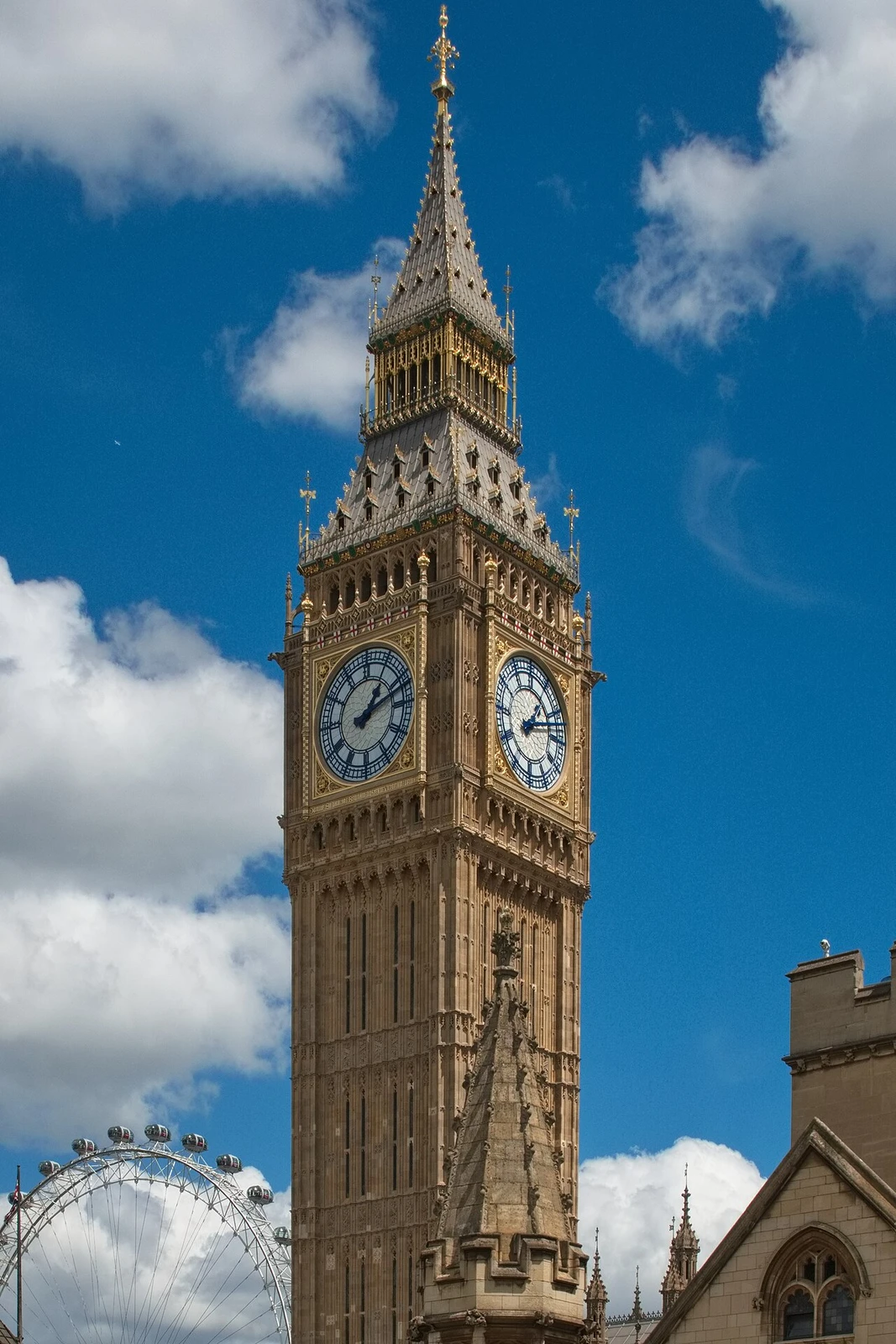
Big Ben is the iconic clock tower located at the Palace of Westminster in London. Officially known as Elizabeth Tower, it houses the Great Bell and is a world-renowned symbol of the United Kingdom.
Download Stanza, then search for “Big Ben”.
About the tour
One guide. Your kind of visit.
Big Ben is the iconic clock tower located at the Palace of Westminster in London. Officially known as Elizabeth Tower, it houses the Great Bell and is a world-renowned symbol of the United Kingdom.
Ready when you are.
- 01Get the free Stanza app.
iOS & Android
- 02Find your guide.
“Big Ben”
- 03Download before you go.
Works offline
Audio guide / 16 narrated stops
Inside the guide
Get to know a few of the stories before you go. Open a stop to read more.
01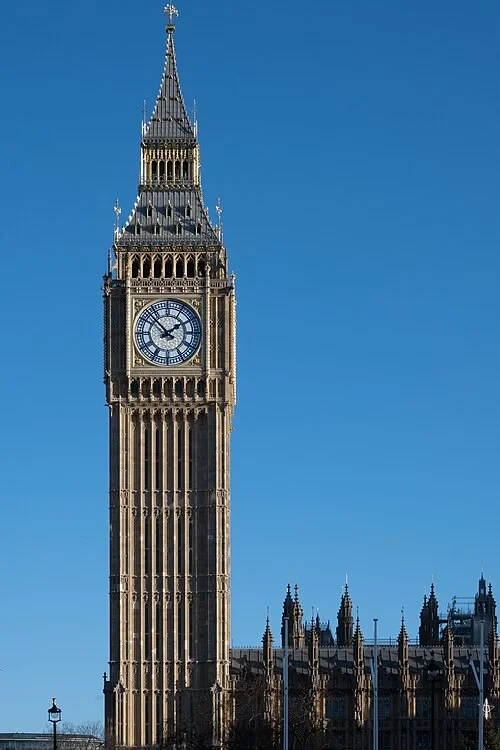 The Iconic Silhouette (Westminster Bridge)The Iconic Silhouette
Welcome to one of the most recognizable structures in the world. As you look up at this towering presence, you are viewing what is officially known as the Elizabeth Tower. Many people mistakenly refer to the entire structure as Big Ben, but that name actually belongs to the massive Great Bell hanging deep within the belfry. Standing at a height of 96 meters, the tower is roughly equivalent to 21 London double-decker buses stacked on top of each other, making it a dominant feature of the city skyline. The tower we see today was born out of tragedy. In 1834, a catastrophic fire destroyed much of the original Palace of Westminster. During the subsequent rebuilding process, this clock tower was envisioned as a grand centerpiece for the new seat of government. Since its completion, it has become much more than just a timepiece; it is a global icon that represents the heart of British political life. Its silhouette, with its intricate ornamentation and four massive clock faces, serves as a constant reminder of London’s architectural heritage and its resilience through centuries of change.
Jim Bowen · CC BY 2.0
02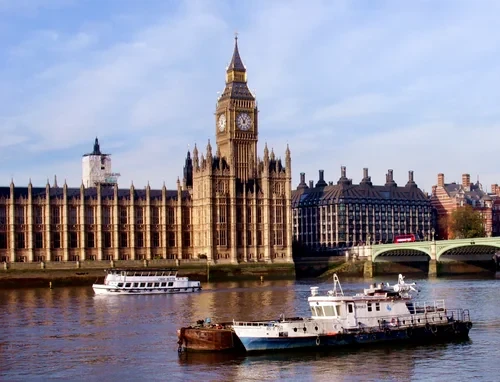 The Iconic Silhouette (Westminster Bridge)View from the Thames
The position of the tower right at the water's edge was a strategic choice made by Victorian planners. When construction began on September 28, 1843, the River Thames acted as a vital industrial highway. Because London's streets were narrow and often congested, the vast majority of the heavy building materials were brought in via barge. This allowed the construction to proceed steadily over a period of 16 years, reaching completion in 1859. From this perspective, you can see how the tower anchors the Palace of Westminster, serving as a global symbol of parliamentary democracy. The scale of the project was immense for the mid-19th century, requiring a workforce of hundreds and precise coordination. The proximity to the river not only facilitated its creation but also enhanced its visual impact, allowing the tower's reflection to dance on the water. Today, the sight of the tower beside the Thames is an image synonymous with the United Kingdom, representing a stable point of reference in a city that has evolved dramatically around it since those first stones were laid in the 1840s.
Trevworld37 · CC BY-SA 4.0
03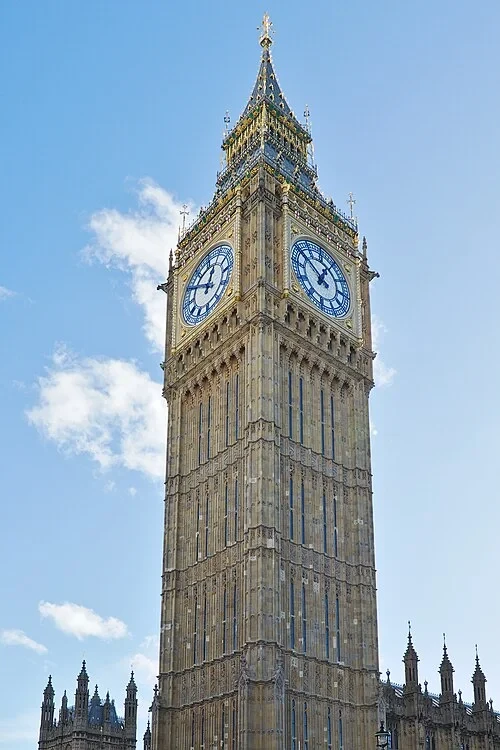 Pugin's Gothic MasteryPugin's Gothic Masterpiece
The visual character of the tower is defined by a style known as Perpendicular Gothic. This architectural movement is a branch of Gothic Revival, which sought to bring back the grandeur and detail of medieval design. While Sir Charles Barry was the chief architect for the Palace of Westminster, the credit for this tower’s specific, intricate exterior goes to Augustus Pugin. Pugin was a master of detail, and his influence is visible in every inch of the stonework. Notice the strong vertical lines that run from the base toward the heavens. These lines are designed to draw the eye upward, a classic hallmark of the Gothic style that emphasizes height and spiritual aspiration. The exterior is covered in a complex array of carvings, including niches, paneling, and heraldic symbols. This level of craftsmanship ensures that the tower appears different depending on the light and the distance from which you view it. From afar, it is a sturdy sentinel; up close, it reveals itself as a delicate, lace-like tapestry of carved stone. Pugin’s work here helped define the Victorian era’s aesthetic, blending industrial-age engineering with the romanticized beauty of the past.
Listen in the appPhoto: Ryan Hodnett · CC BY-SA 4.0
04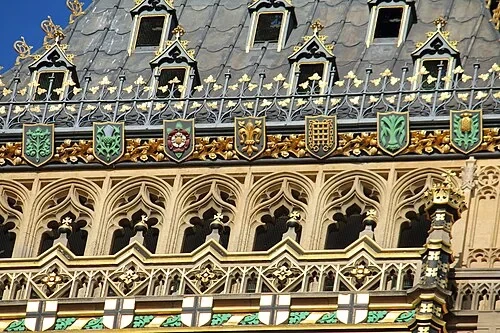 Pugin's Gothic MasterySymbols of the Kingdom
Just above the clock dials, the tower displays a series of 52 decorative shields, each one rich with heraldic meaning. These carvings are not merely ornamental; they serve as a visual representation of the four nations that comprise the United Kingdom, alongside the symbols of the Tudor dynasty. If you look closely at the details of these carvings, you can identify the specific floral emblems associated with each region. The rose represents England, the thistle stands for Scotland, the shamrock signifies Ireland, and the leek denotes Wales. These symbols are intricately carved into the stone and highlighted with gold leaf, which catches the light and ensures they remain visible even from the ground far below. The use of gold leaf is a traditional technique used throughout the palace to denote areas of high importance and royal connection. By placing these symbols so prominently on the clock tower, the architects were making a statement about national unity and the reach of parliamentary authority. It is a reminder that while the tower is located in London, it stands as a sentinel for the entire kingdom, celebrating the diverse identities that have shaped British history over many centuries.
Listen in the appPhoto: FrDr · CC BY-SA 4.0
05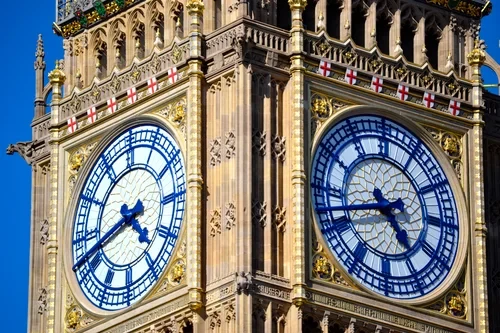 The Restored Prussian Blue DialsThe Prussian Blue Dials
The clock faces you see today look remarkably different than they did for most of the 20th century. Between 2017 and 2021, the tower underwent a massive restoration project that aimed to return it to its original Victorian glory. For decades, the clock dials and the surrounding stonework were painted black. This wasn't the original design choice; rather, it was a practical measure taken in the mid-1900s to hide the thick black soot and pollution that plagued London’s air. During the restoration, historians discovered that the original color scheme chosen by Pugin was a vibrant shade known as Prussian Blue. Restorers carefully removed the layers of black paint and reapplied this rich blue to the clock hands and the frame. Each of the four clock dials is 6.9 meters in diameter and is composed of 324 individual pieces of opalescent glass. These glass pieces are held in a cast-iron frame, which acts like a giant stained-glass window. When the clock is lit from within at night, the Prussian Blue stands out against the glowing white glass, providing a crisp, elegant contrast that visitors in the 1850s would have recognized immediately.
Listen in the appketrin1407 · CC BY 2.0
06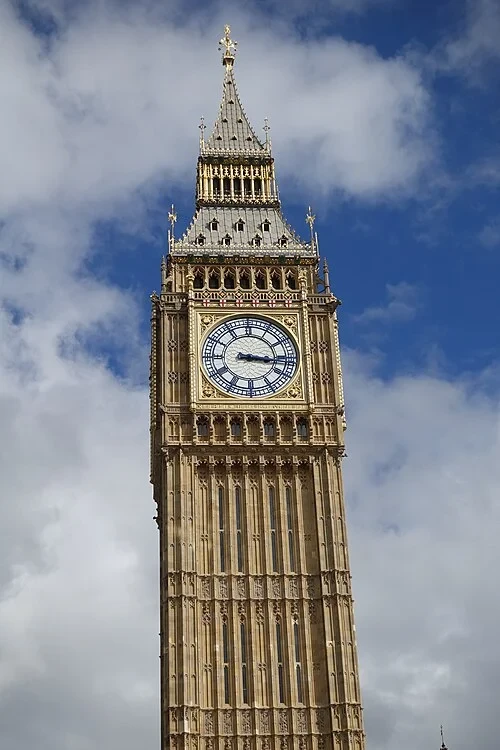 The Restored Prussian Blue DialsClimbing the Tower
Ascending the Elizabeth Tower is a rigorous physical experience that few get to undertake. There are 334 stone steps winding upward to reach the belfry where the bells are housed. For over 150 years, maintenance workers and clockmakers had to make this climb daily to ensure the mechanism was functioning correctly. The staircase is narrow and spiraled, creating a sense of enclosed verticality that contrasts sharply with the sprawling, horizontal layout of the Palace of Westminster located directly below. Because the tower was built in the mid-19th century, it was never designed with a lift. However, during the recent major renovation, a service lift was finally installed to assist with maintenance and emergency access. Despite this modern addition, the stone steps remain the primary way to experience the tower's internal architecture. The climb provides a unique perspective on the tower's construction, revealing the massive thickness of the walls required to support such a height. As you reach the higher levels, the sounds of the city below begin to fade, replaced by the humming of the clock mechanism and the anticipation of standing near the famous bells that chime across the capital.
Listen in the appPhoto: Joseolgon · CC BY-SA 4.0
07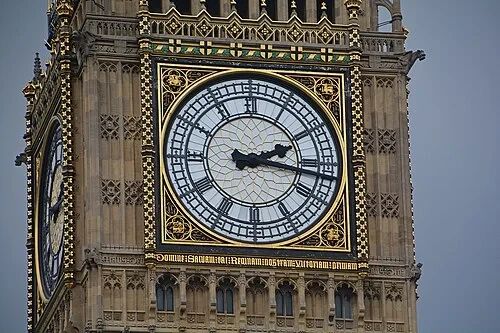 The Latin DedicationThe Latin Dedication
Encircling the base of each clock dial is a line of elegant gold lettering that many visitors overlook from a distance. Written in Latin, the inscription reads: 'DOMINE SALVAM FAC REGINAM NOSTRAM VICTORIAM PRIMAM.' In English, this translates to: 'Lord, keep safe our Queen Victoria the First.' This dedication is a significant historical marker, as it honors the monarch who was on the throne when the tower was finally completed in 1859. Queen Victoria’s reign was a time of immense expansion and industrial progress for Britain, and the clock tower was a centerpiece of that era's architectural ambition. The use of Latin was a standard practice for official and monumental inscriptions in the Victorian period, lending a sense of timelessness and gravity to the structure. The gold lettering is meticulously maintained to ensure it remains legible against the stonework. This dedication serves as a permanent link between the building and the crown, reinforcing the tower's role as part of a royal palace. It reminds us that while the building serves the parliament, it does so under the symbolic authority of the monarchy, a core tenet of the British constitutional system that has endured since Victoria's time.
Listen in the appLewis Clarke · CC BY-SA 2.0
08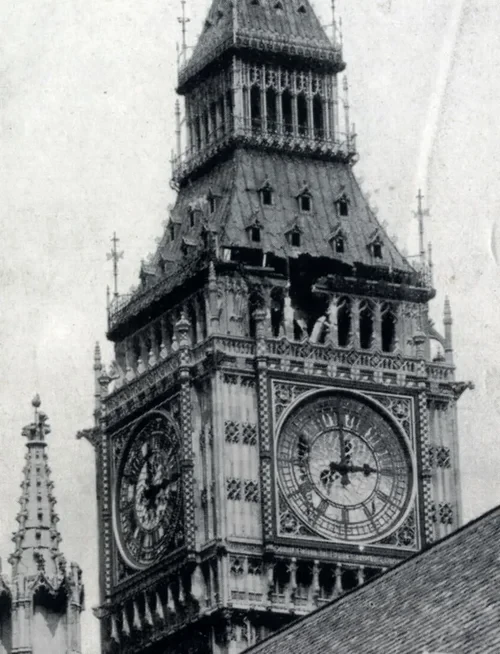 Surviving the BlitzSurvival of the Blitz
The Elizabeth Tower is more than just an architectural feat; it is a survivor of modern warfare. During the London Blitz in World War II, the Palace of Westminster was hit by enemy bombs multiple times. One of the most significant incidents occurred in May 1941, when an air raid caused substantial damage to the roof of the tower and smashed the south clock dial. Despite the surrounding destruction and the damage to its own frame, the clock mechanism itself proved remarkably resilient. Crucially, the clock continued to keep time accurately throughout the raid and the subsequent repairs. This ability to maintain its steady beat while the city around it was under fire turned the tower into a potent national symbol of endurance. For the British public, the sound of the chimes on the radio and the sight of the tower still standing amidst the smoke was a sign that the country would not be broken. It became a beacon of stability in an era of chaos. Today, the restored dials show no obvious scars from the war, but the story of its survival remains a vital part of its legacy, representing the spirit of a city that refused to stop even in its most difficult hours.
Listen in the appPhoto: Tom1911 · CC BY-SA 4.0
09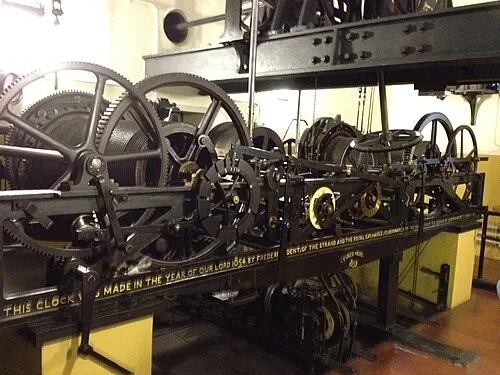 The Clock Mechanism RoomThe Great Clock Mechanism
Deep inside the tower sits a five-ton internal mechanism that is a masterpiece of Victorian engineering. Designed by Edmund Beckett Denison and Edward Dent, the clock utilizes what is known as a 'double three-legged gravity escapement.' This ingenious invention ensures that the clock remains accurate to within one second, as it isolates the pendulum from external forces like high winds or heavy snow on the clock hands. It was a revolutionary step forward in horology when it was installed in the 1850s. One of the most charming aspects of this high-precision machine is the 'Penny Regulation' system. To adjust the speed of the clock, horologists don’t use digital computers; they use old copper pennies. By adding or removing a single pre-decimal penny from the top of the massive pendulum, they can change the weight and, consequently, the speed of the swing. A single penny added to the stack changes the clock's speed by precisely 0.4 seconds per day. This low-tech solution for a high-stakes job demonstrates the enduring brilliance of Victorian mechanical design. It is a rare example of a 19th-century machine that still performs its primary function with world-class accuracy in the modern age.
Listen in the appPhoto: Paulobrad · CC BY-SA 4.0
10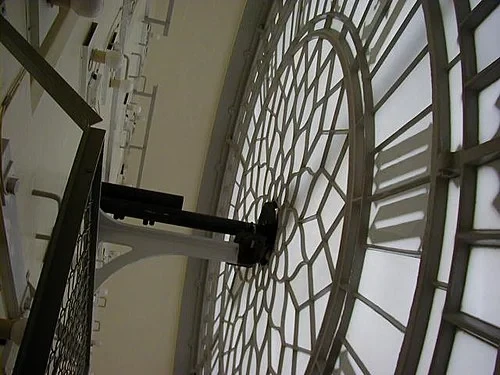 The Clock Mechanism RoomBehind the Dials
Standing behind the clock faces offers a perspective on the tower's scale that is difficult to appreciate from the ground. Each of the four dials is composed of 324 individual pieces of opalescent glass, which glow brilliantly when backlit. From this vantage point, you can truly appreciate the size of the clock hands. The minute hands are approximately 4.2 meters, or 14 feet, long. Because they are so large and exposed to the elements, they were originally made of copper to save weight while remaining durable against London’s weather. The immense size of these hands once led to a famous and bizarre delay. In 1949, a flock of starlings decided to use one of the minute hands as a perch. The collective weight of the birds was so significant that it physically slowed the mechanical movement, causing the clock to fall four and a half minutes behind schedule. It is a reminder that even the most robust Victorian engineering is still subject to the whims of nature. Today, the glass remains a vital barrier, protecting the delicate machinery from the environment while allowing the light of the tower to serve as a constant timekeeper for the streets of Westminster below.
Listen in the appDS Pugh · CC BY-SA 2.0
Big Ben
Frequently asked questions
How much does the guide cost?
Free app download. Listed guide price: $2.99. Guide price shown in the app. Audio guide only. Venue admission is separate.
Can I listen without internet?
Yes. Download the guide’s audio, images, and maps in the app before your visit. Your downloaded content is then available offline.
Can I listen in my language?
Stanza supports 15 languages. Check the app for the languages available for this guide.
Do I need to follow a schedule?
No. This is a self-guided experience. Choose your stops, pause whenever you like, and return to a story at your own pace.
At your own pace
Explore Big Ben.
Download Stanza, then search for “Big Ben”.
Free app download · Guide price shown in the app
Keep exploring
Nearby audio guides
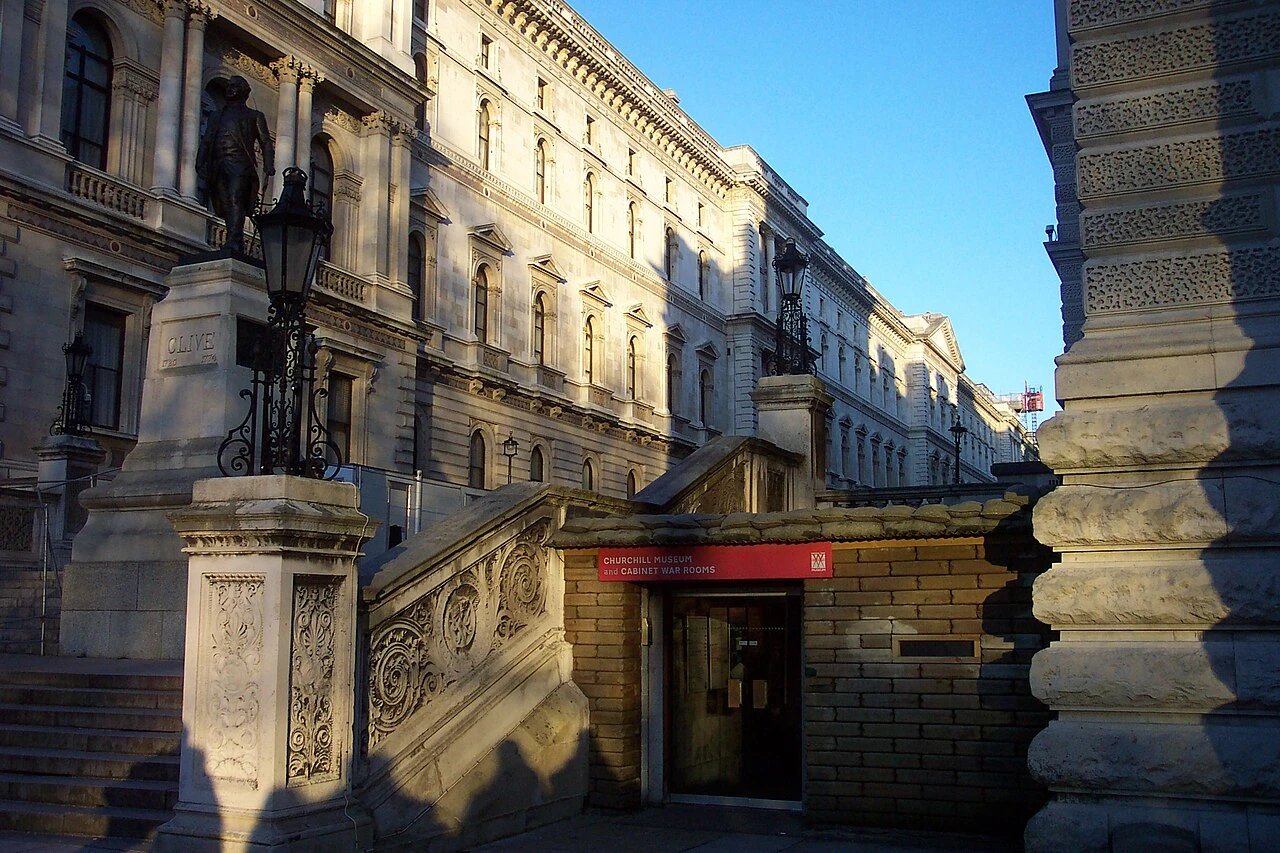
London
Churchill War Rooms
Content & sources
en:User:Jdhowens90 · CC BY-SA 3.0
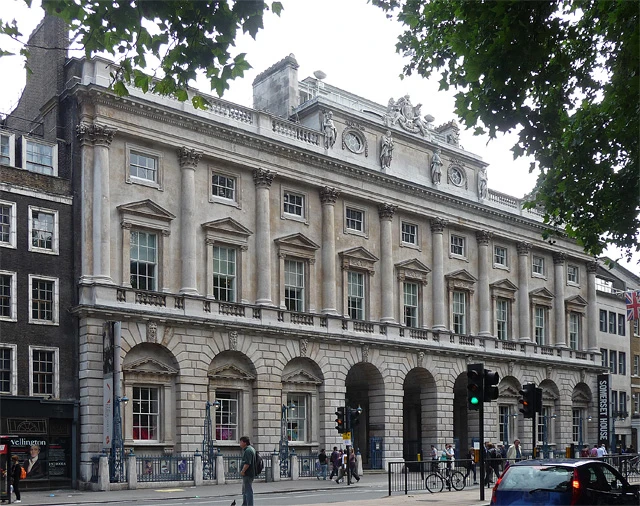
London
Courtauld Institute of Art
Content & sources
Stephen Richards · CC BY-SA 2.0
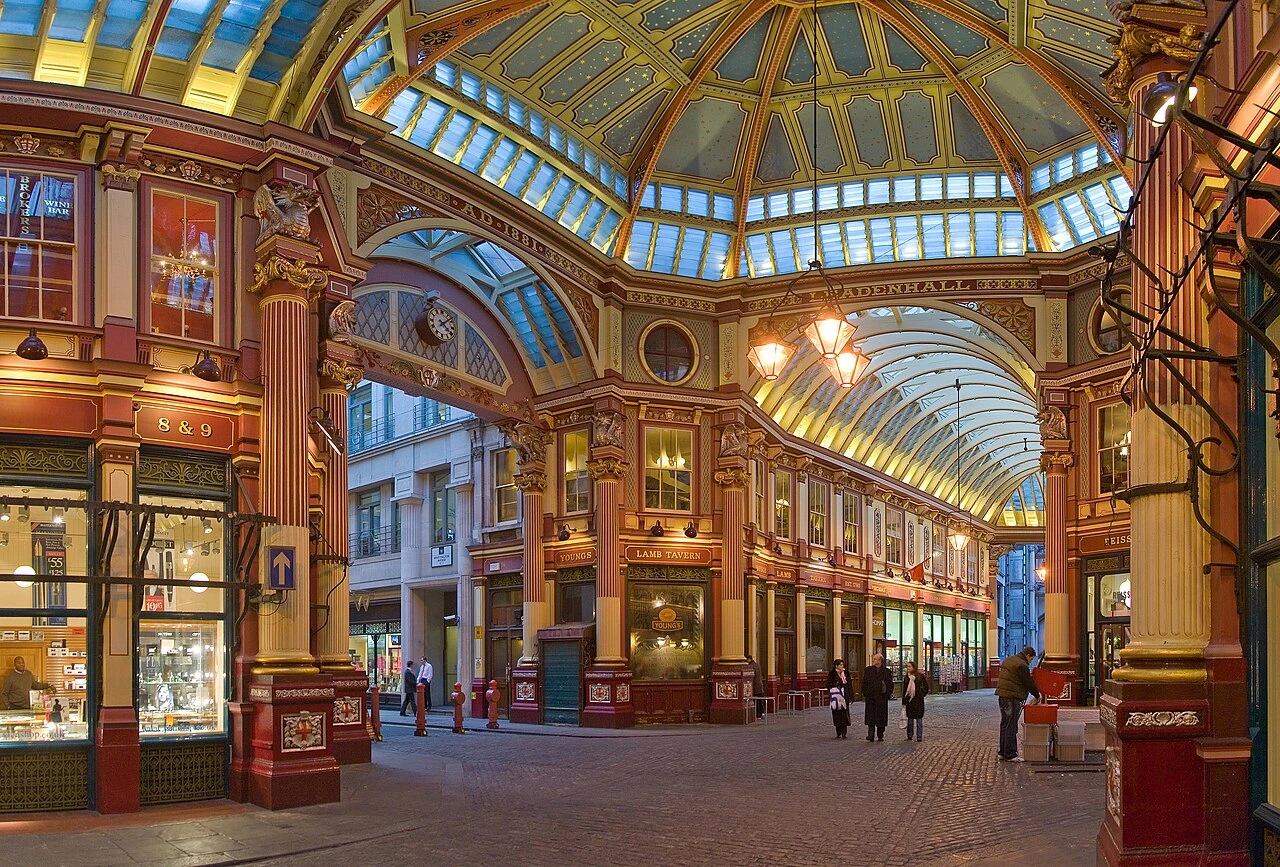
London
Leadenhall Market
Content & sources
Diliff · CC BY 2.5
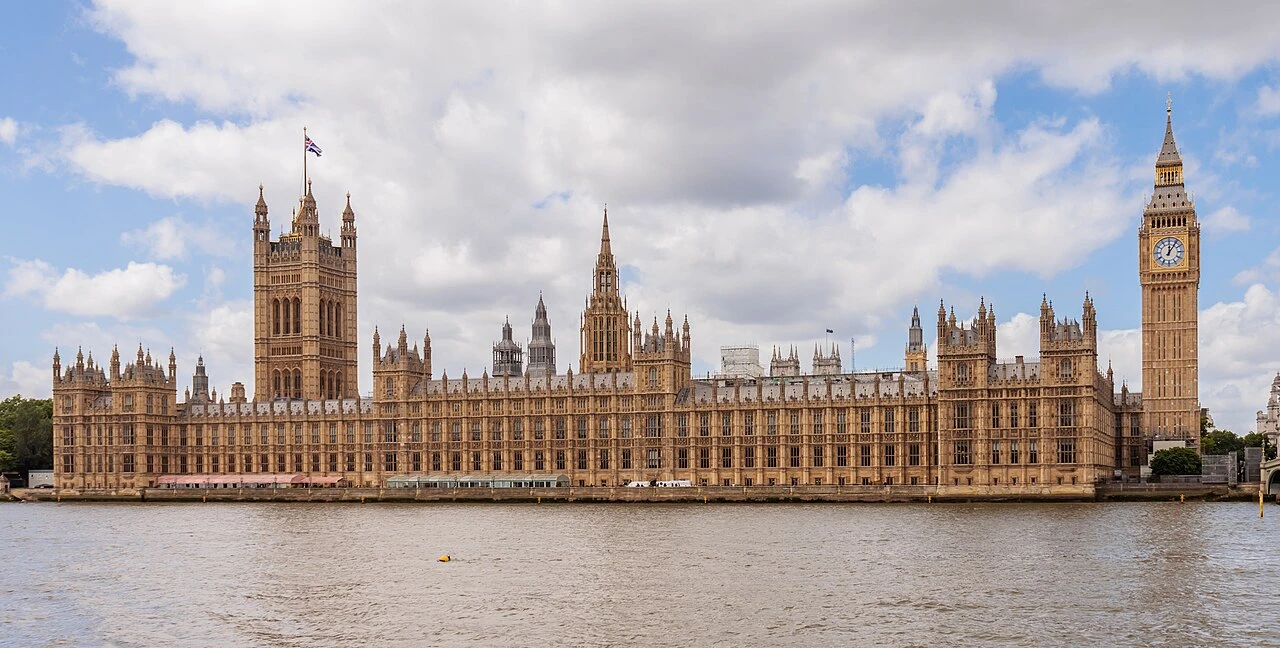
London
Palace of Westminster
Content & sources
Terry Ott from Washington, DC Metro Area, United States of America · CC BY 2.0