 Stanza / Audio guide
Stanza · Audio guide
Palace of WestminsterAudio guide
A place to remember. A story to take with you.
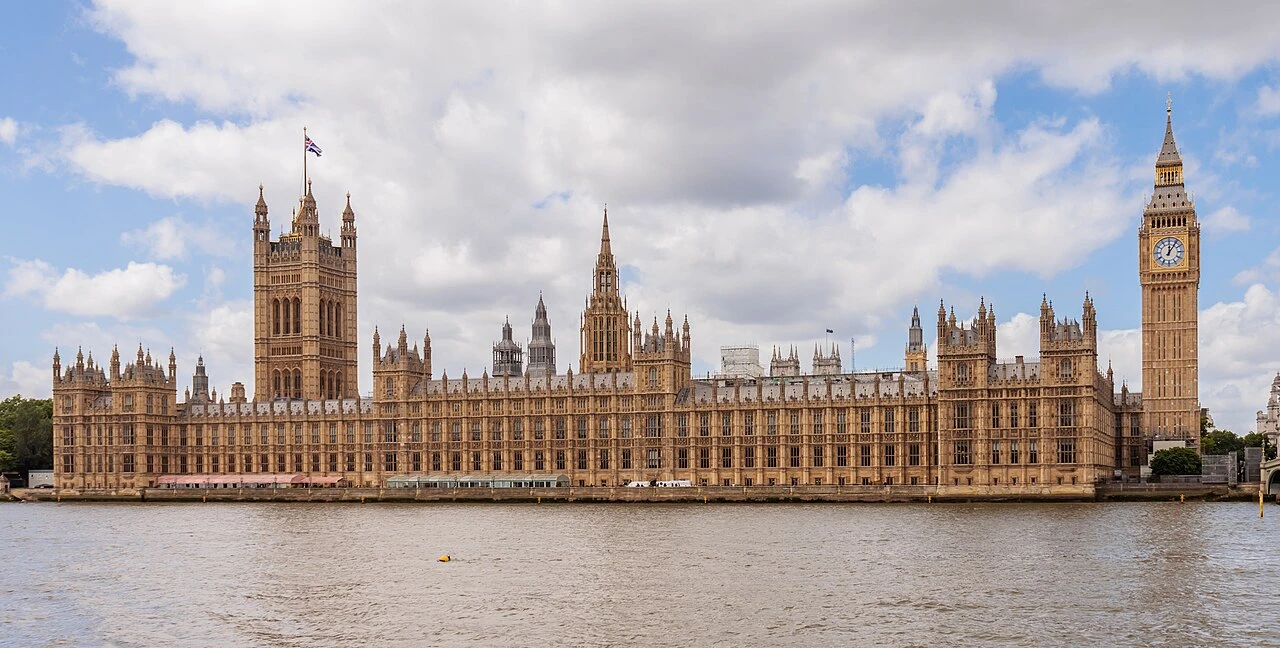
The Palace of Westminster is the meeting place of the Parliament of the United Kingdom. It is located in London, England.
Download Stanza, then search for “Palace of Westminster”.
About the tour
One guide. Your kind of visit.
The Palace of Westminster is the meeting place of the Parliament of the United Kingdom. It is located in London, England.
Ready when you are.
- 01Get the free Stanza app.
iOS & Android
- 02Find your guide.
“Palace of Westminster”
- 03Download before you go.
Works offline
Audio guide / 24 narrated stops
Inside the guide
Get to know a few of the stories before you go. Open a stop to read more.
01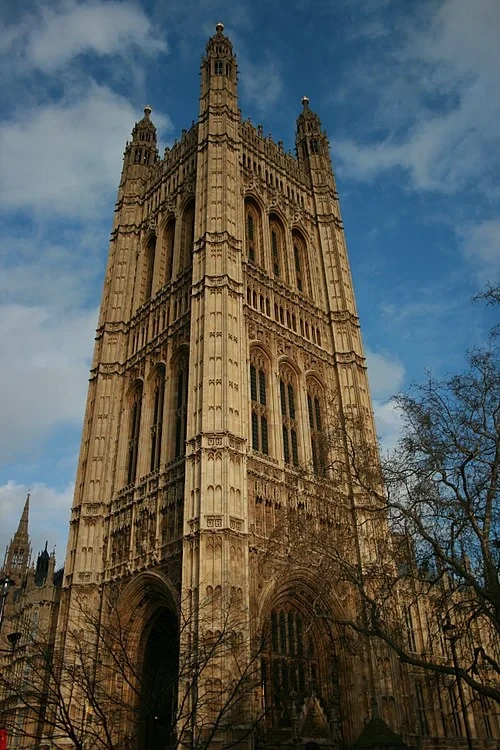 The Victoria Tower and Sovereign's EntranceThe Victoria Tower
Welcome to the Palace of Westminster. Standing at the south-western corner is the Victoria Tower, the tallest point of the entire complex at 98.5 meters. While many visitors first recognize the clock tower at the opposite end, this massive square structure was actually designed to be the palace’s most dominant feature. Construction began in 1840, following the devastating Great Fire of 1834 that leveled much of the medieval site. Sir Charles Barry and Augustus Pugin designed the tower in the Perpendicular Gothic Revival style, characterized by its strong vertical lines and intricate stone tracery. Beyond its architectural grandeur, the tower serves a critical functional purpose. It was specifically built as a fireproof repository for the records of Parliament. Today, it still houses the Parliamentary Archives, containing millions of documents spread across twelve floors, including the original signed copies of every Act of Parliament since 1497. When Parliament is in session, the Union Flag flies from the mast atop the tower; if the monarch is present within the building, it is replaced by the Royal Standard. This tower represents the massive 30-year reconstruction project that transformed the fire-scarred site into the global icon of democracy visible today.
Damien Everett from Southampton, UK · CC BY 2.0
02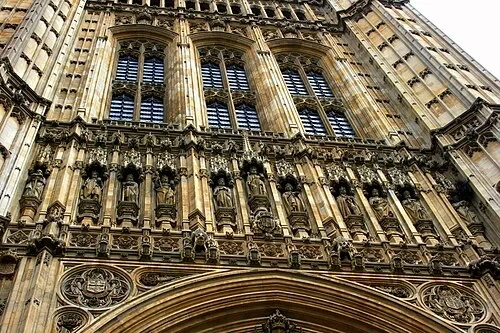 The Victoria Tower and Sovereign's EntranceGothic Stone Carvings
The exterior of the palace is a masterclass in the Perpendicular Gothic style, largely thanks to the tireless work of Augustus Pugin. He was responsible for the staggering level of detail found on nearly every square inch of the building’s stone surfaces. Look closely at the rows of statues set into niches across the facade. These figures represent the monarchs of England, dating back to before the Norman Conquest, alongside various patron saints. This sculptural program was intended to ground the nineteenth-century building in a sense of deep historical continuity. This level of craftsmanship isn't limited to a few focal points; it is consistent across the entire palace, which contains over 1,100 rooms, 100 staircases, and nearly three miles of passages. Every window frame, pinnacle, and heraldic shield was meticulously planned. Pugin’s obsession with detail was so intense that he is said to have designed everything down to the inkstands and umbrella stands used by the Members of Parliament. This exhaustive ornamentation serves to hide the modern, industrial-era engineering required to keep such a massive structure standing on the marshy banks of the Thames, blending the functionality of a working government building with the aesthetic of a medieval cathedral.
Abir Anwar from Sydney, Australia · CC BY 2.0
03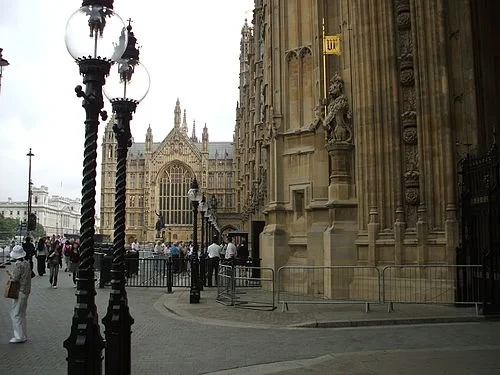 The Victoria Tower and Sovereign's EntranceThe Sovereign's Entrance
The large archway at the base of the Victoria Tower is known as the Sovereign's Entrance. It was designed with specific proportions to accommodate the massive royal carriage used during the State Opening of Parliament. This annual event is one of the few times each year when the three elements of Parliament—the Monarch, the House of Lords, and the House of Commons—come together in one place. The ritual is highly choreographed; the monarch travels from Buckingham Palace to this very spot to enter the building. From this high-status entrance, the monarch ascends the Sovereign's Staircase to reach the Norman Porch and the Royal Gallery. The interior of the palace is vast, containing roughly three miles of passageways that connect the hundreds of rooms and offices. Starting from grand areas like this, the hierarchy of the building is reflected in its decor, with the most lavish ornamentation reserved for the areas frequented by the Sovereign and the House of Lords. While much of the palace is accessible to the public and officials, this entrance remains a symbol of the constitutional link between the Crown and the legislative body that meets within these walls.
Listen in the appPhoto: Ozeye · CC BY-SA 3.0
04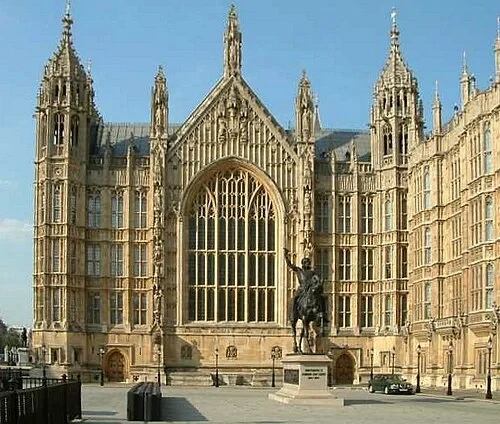 Westminster Hall: The Medieval HeartWestminster Hall
Westminster Hall stands in stark contrast to the Victorian Gothic style seen elsewhere. This is the oldest surviving part of the Palace of Westminster, with its origins dating back to 1097 during the reign of William II, the son of William the Conqueror. While the rest of the medieval complex was almost entirely destroyed in the fire of 1834, this hall survived through a combination of luck and human effort. As the fire raged, the wind fortunately changed direction at a critical moment, blowing the flames away from the hall's massive timber structure. In the eleventh century, this was one of the largest halls in Europe, designed to impress visitors with the power and wealth of the new Norman dynasty. Over the centuries, it has served as the heart of English public life, hosting royal banquets, coronation feasts, and the early meetings of Parliament. Its thick stone walls have remained constant while the building around them has been repeatedly modified, expanded, and eventually rebuilt. Walking across its floor, you are stepping into a space that has been the site of government and justice for nearly a millennium, bridging the gap between the medieval world and modern British democracy.
Listen in the appPhoto: Sir James · CC BY-SA 3.0
05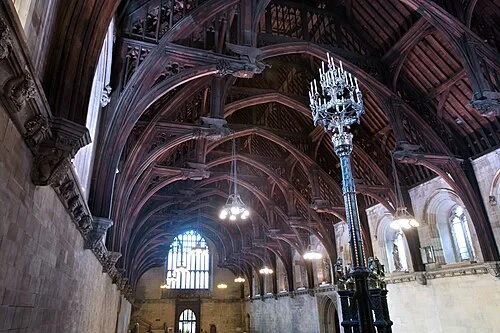 Westminster Hall: The Medieval HeartThe Hammerbeam Roof
Above Westminster Hall sits the largest clear-span medieval hammerbeam roof in England. Commissioned by Richard II in 1393, this massive timber structure was a revolutionary feat of engineering for its time. Unlike earlier roofs that required central pillars for support, the hammerbeam design uses a series of short horizontal beams—the 'hammerbeams'—projecting from the walls to support the weight of the roof. This created a vast, unobstructed interior space that was unprecedented in the fourteenth century. The roof is constructed primarily from English oak, and the complexity of its joinery is staggering. If you look closely at the ends of the projecting beams, you can see carved figures of angels, each holding a shield. These details were intended to be seen from the floor far below, signifying the divine protection of the monarch. Despite its age, the roof survived the Great Fire of 1834 and even several direct hits from incendiary bombs during the Second World War. It remains one of the most significant examples of medieval carpentry in the world, demonstrating the incredible skill of the master craftsmen who worked under the direction of the King’s master carpenter, Hugh Herland, over six hundred years ago.
Listen in the appJorge Royan · CC BY-SA 3.0
06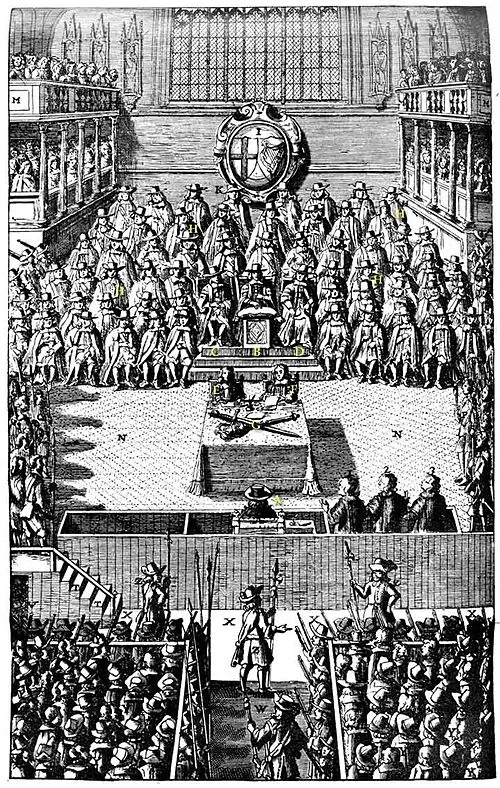 Westminster Hall: The Medieval HeartTrial of Charles I, King of England, Scotland and Ireland
For centuries, Westminster Hall functioned as the primary seat of the English legal system. One of the most significant events to ever occur within these walls was the trial of King Charles I in January 1649. Following the English Civil War, the King was brought here to face a specially convened High Court of Justice. He was charged with high treason against the people of England. The trial was a radical departure from tradition, as it challenged the long-held belief in the Divine Right of Kings, asserting that even a monarch was subject to the law of the land. Charles I was ultimately found guilty and sentenced to death, leading to his execution shortly thereafter outside the Banqueting House in Whitehall. This was not the only famous trial held on this floor; other figures of immense historical importance were also judged here, including the Scottish knight William Wallace and Guy Fawkes, the most famous of the Gunpowder Plot conspirators. These trials transformed the hall from a royal feasting space into a site of profound constitutional and legal reckoning. Today, brass plaques set into the floor mark the exact spots where these figures stood during their trials, serving as a quiet reminder of the hall's long and often turbulent history as a place of judgment.
Listen in the appUncredited engraver · Public domain
07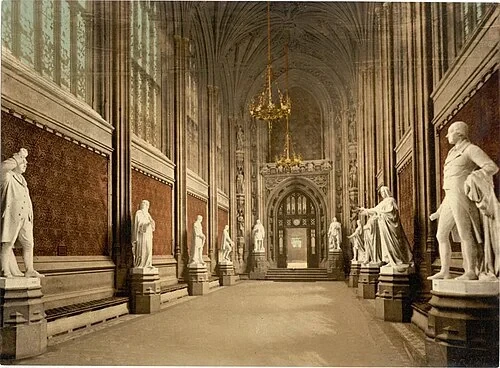 St Stephen's HallSt Stephen's Hall
St Stephen's Hall is a space steeped in political history, standing directly on the site of the original St Stephen’s Chapel. From the mid-sixteenth century until the fire of 1834, this chapel served as the debating chamber for the House of Commons. For three hundred years, this was the room where the fundamental principles of British parliamentary democracy were forged. When the palace was rebuilt in the Victorian era, the architects chose to recreate the dimensions of the old chapel here to honor that heritage. The hall is lined with statues of famous British statesmen who once debated on this very spot, including influential figures like William Pitt the Younger and Charles James Fox. These figures are depicted in poses of oration, as if they are still engaged in the spirited arguments of their day. Today, St Stephen's Hall serves as the primary entrance for members of the public visiting Parliament. As visitors queue to enter the Central Lobby, they pass between these silent guardians of the past. The murals on the walls further illustrate scenes from British history, ensuring that even as a thoroughfare, the hall continues to educate visitors about the long evolution of the United Kingdom’s political system.
Listen in the appSnapshots Of The Past · CC BY-SA 2.0
08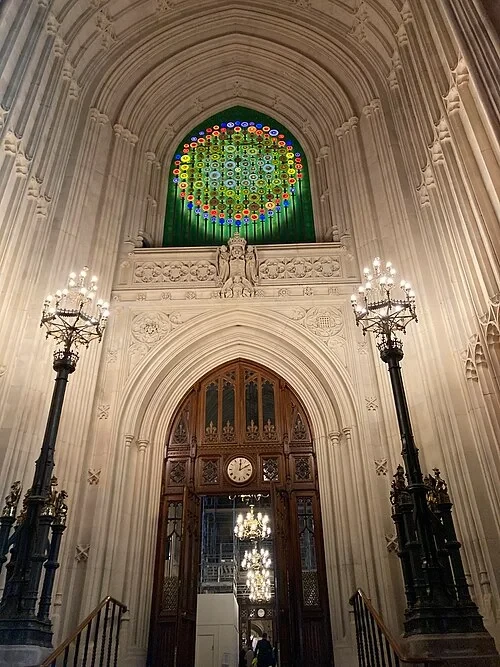 St Stephen's HallNew Dawn
Located above the entrance to St Stephen's Hall is 'New Dawn,' a contemporary glass installation by artist Mary Branson. Unveiled in 2016, this work commemorates the long and difficult struggle for women's suffrage in the United Kingdom. It is composed of 168 hand-blown glass disks, arranged in a circular pattern that mimics the form of the portcullis, a long-standing symbol of Parliament. The colors of the glass—green, pink, and white—reflect the different factions of the suffrage movement, including the Suffragists and the Suffragettes. The most unique feature of the installation is its connection to the environment. The lights behind the glass disks are linked to the tide of the nearby River Thames. As the water rises, the installation glows more brightly, reaching its full illumination at high tide. This serves as a metaphor for the 'rising tide' of the women's movement, which grew in strength and momentum until the vote was finally won. By placing such a modern piece in a building dominated by Victorian and medieval history, the palace acknowledges that the story of democracy is still being written. It stands as a vibrant tribute to the thousands of women who campaigned for political equality, ensuring their legacy is visible to everyone who enters the building.
Listen in the appJ. Powell O'Brien · CC BY 2.0
09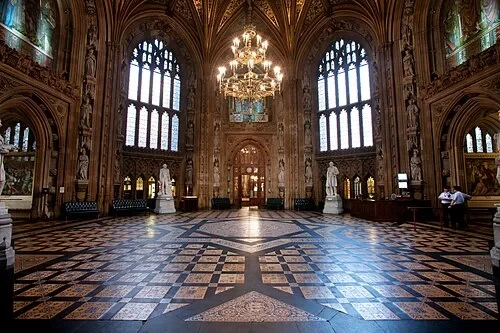 The Central LobbyThe Central Lobby
The Central Lobby is the geographical and functional heart of the Palace of Westminster. This octagonal space acts as a grand crossroads, with corridors radiating out towards the House of Lords to the south and the House of Commons to the north. Looking up, you can see the magnificent vaulted ceiling, which is decorated with intricate stone carvings and Venetian glass mosaics. These mosaics depict the four patron saints of the United Kingdom: Saint George for England, Saint Andrew for Scotland, Saint David for Wales, and Saint Patrick for Ireland. This lobby is famously where the term 'lobbying' originated in a political context. It is the one place in the palace where constituents can come to meet their Members of Parliament without an appointment. People would gather here to wait for their MP to pass through, hoping to catch their attention and influence their vote on a particular issue. Today, it remains a site of constant activity, where politicians, journalists, and members of the public mingle under the watchful eyes of the patron saints. The space is designed to be awe-inspiring, reinforcing the significance of the parliamentary process through its grand proportions and rich symbolism, marking the point where the different branches of government and the public intersect.
Listen in the appJorge Royan · CC BY-SA 3.0
10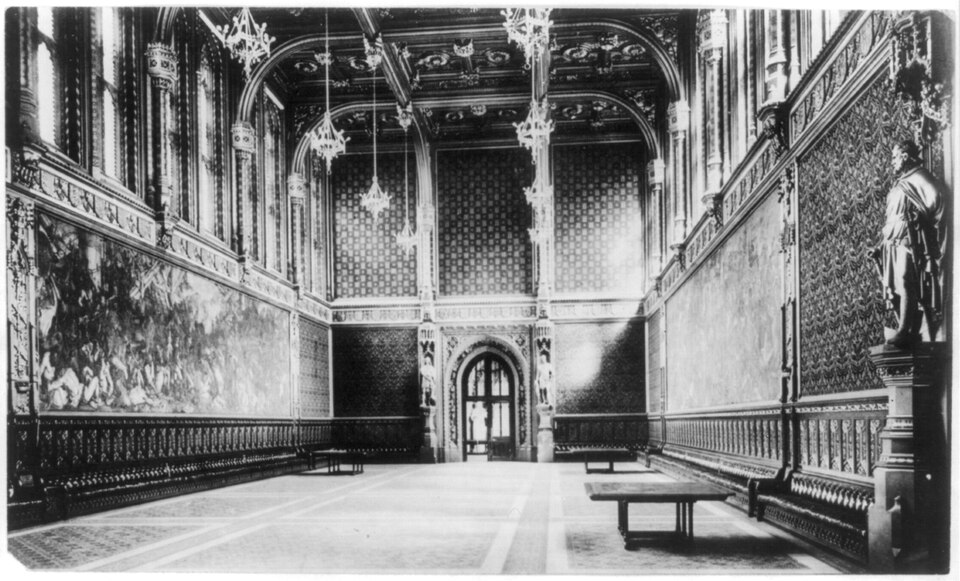 The Royal GalleryThe Royal Gallery
The Royal Gallery is one of the largest and most impressive rooms in the palace, designed specifically to host royal processions and major state ceremonies. During the State Opening of Parliament, the monarch leads a grand procession through this space from the Robing Room to the House of Lords Chamber. The walls are decorated with two enormous murals, each forty-five feet long, which depict significant moments in British military history. The scale of the room, combined with its high gilded ceiling and elaborate floor, was intended to project the power and prestige of the British Empire at its height. Beyond its role in royal ritual, the Royal Gallery has served as a venue for significant diplomatic events. It is one of the few spaces in the building large enough to host joint meetings of both the House of Commons and the House of Lords. Because of this, it has been used for addresses by visiting foreign dignitaries, including French and United States presidents. These occasions underscore the palace's role not just as a domestic legislature, but as a site of international political significance. The statues of monarchs and the portraits of past leaders that line the walls provide a historic backdrop for these modern diplomatic encounters, bridging centuries of statecraft.
Listen in the appGeorge Grantham Bain Collection · Public domain
Palace of Westminster
Frequently asked questions
How much does the guide cost?
Free app download. Listed guide price: $1.99. Guide price shown in the app. Audio guide only. Venue admission is separate.
Can I listen without internet?
Yes. Download the guide’s audio, images, and maps in the app before your visit. Your downloaded content is then available offline.
Can I listen in my language?
Stanza supports 15 languages. Check the app for the languages available for this guide.
Do I need to follow a schedule?
No. This is a self-guided experience. Choose your stops, pause whenever you like, and return to a story at your own pace.
At your own pace
Explore Palace of Westminster.
Download Stanza, then search for “Palace of Westminster”.
Free app download · Guide price shown in the app
Keep exploring
Nearby audio guides
London
Big Ben
Content & sources
Dave Bezaire · CC BY-SA 2.0
London
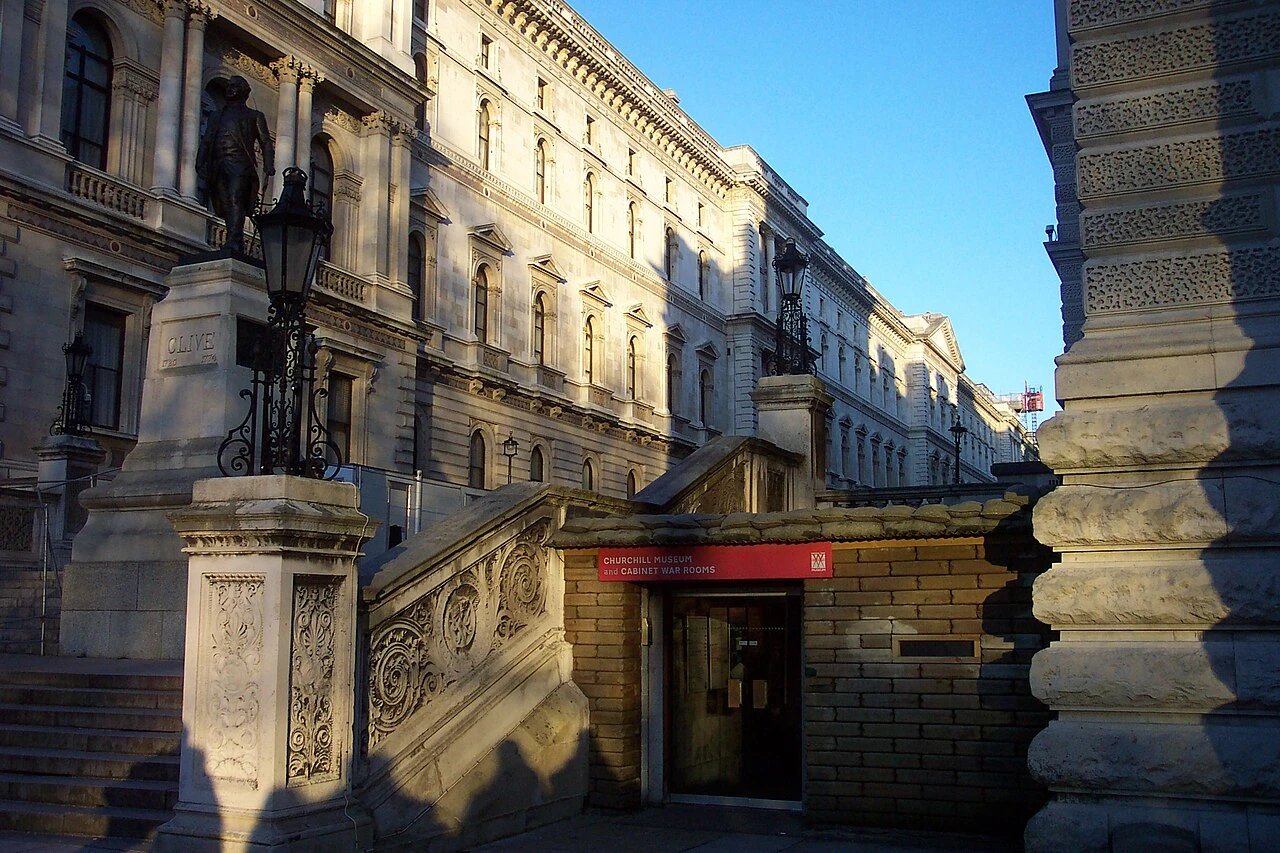
Churchill War Rooms
Content & sources
en:User:Jdhowens90 · CC BY-SA 3.0
London
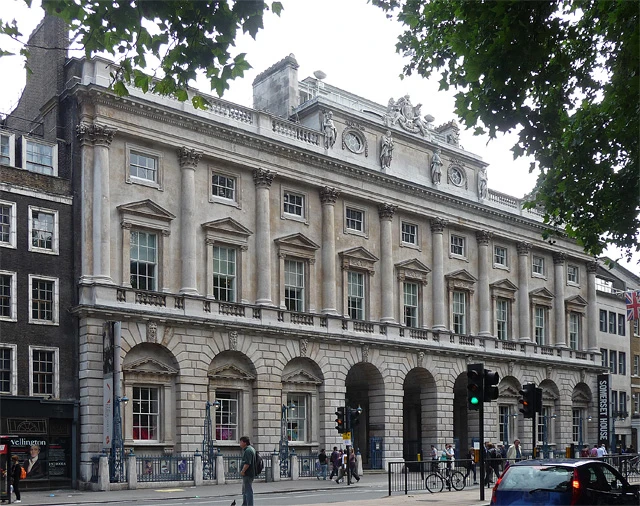
Courtauld Institute of Art
Content & sources
Stephen Richards · CC BY-SA 2.0
London
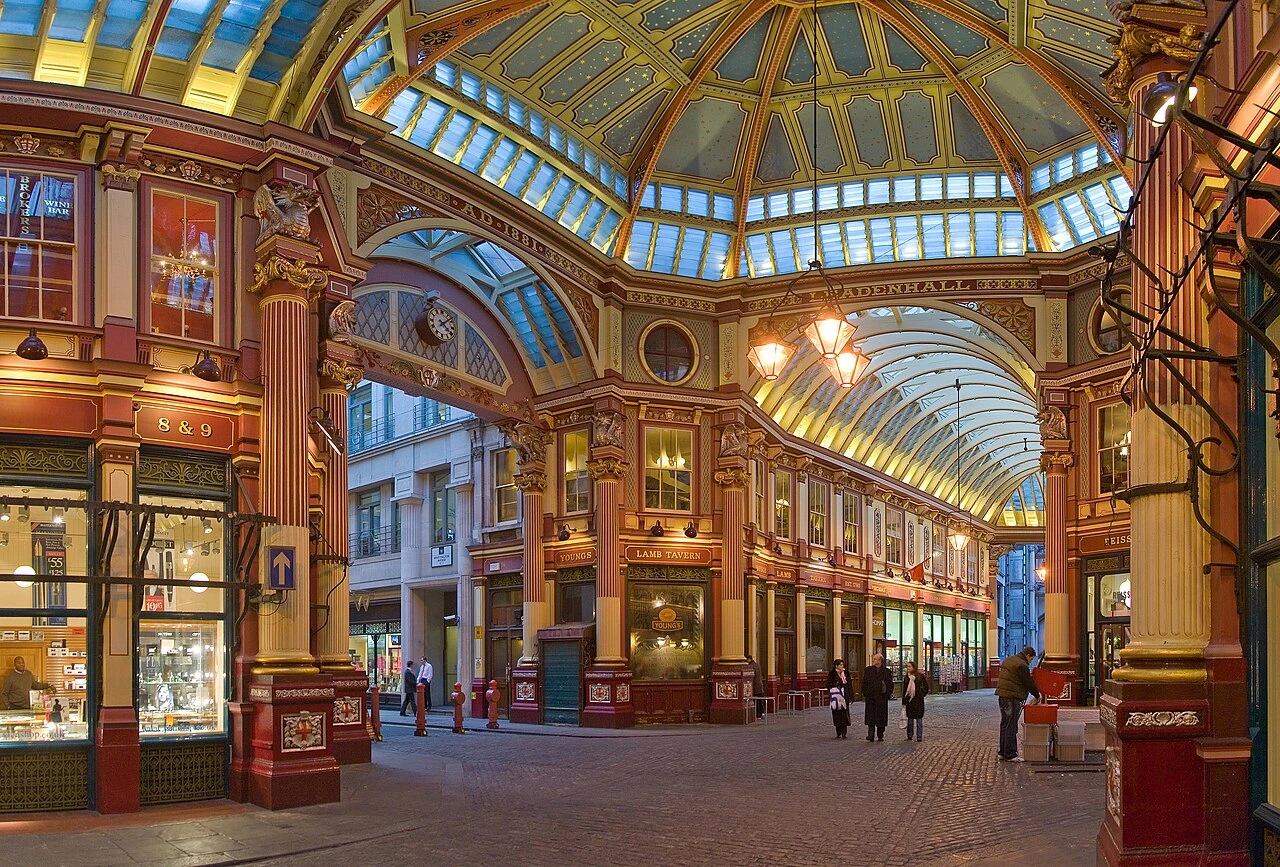
Leadenhall Market
Content & sources
Diliff · CC BY 2.5