 Stanza / Audio guide
Content & sources
Stanza · Audio guide
Courtauld Gallery Audio Guide
A place to remember. A story to take with you.
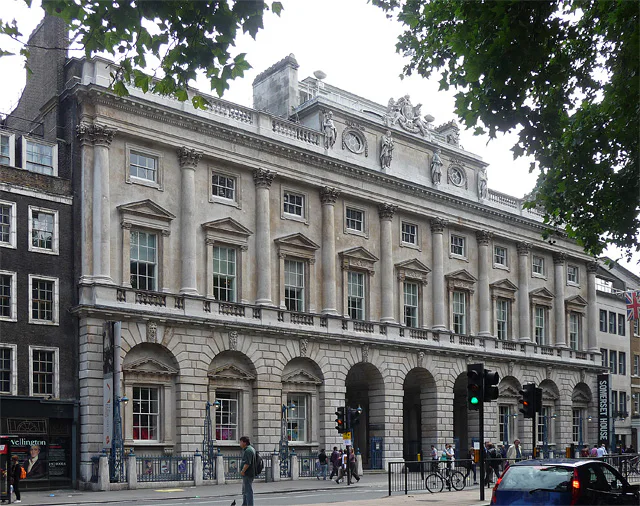
The Courtauld Gallery is an art museum located in Somerset House in central London. It houses the collection of the Samuel Courtauld Trust and operates as part of the Courtauld Institute of Art.
Download Stanza, then search for “Courtauld Gallery”.
About the tour
One guide. Your kind of visit.
The Courtauld Gallery is an art museum located in Somerset House in central London. It houses the collection of the Samuel Courtauld Trust and operates as part of the Courtauld Institute of Art.
The Courtauld Gallery guide tells the stories of 33 artworks, including A Bar at the Folies-Bergère (Édouard Manet), La loge (Pierre-Auguste Renoir), Self-Portrait with Bandaged Ear (Vincent van Gogh), Young Woman Powdering Herself (Georges Seurat), Holy Trinity (Sandro Botticelli), Christ and the Woman Taken in Adultery (Pieter Bruegel the Elder), Landscape with the Flight into Egypt (Pieter Bruegel the Elder), and Mont Sainte-Victoire with Large Pine (Paul Cézanne). Every artwork is free to hear in the Stanza app until 1 January.
Ready when you are.
- 01Get the free Stanza app.
iOS & Android
- 02Find your guide.
“Courtauld Gallery”
- 03Download before you go.
Works offline
Audio guide / 33 artworks
Inside the guide
Get to know a few of the stories before you go. Open a stop to read more.
01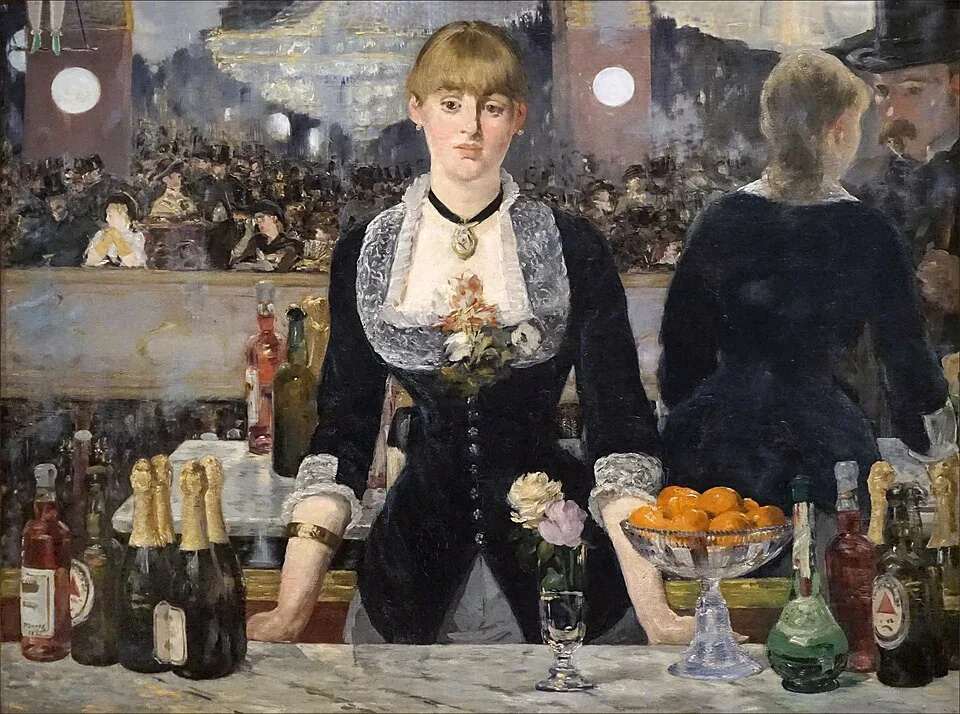
A Bar at the Folies-Bergère
Manet wanted the real Folies Bergère. Ill and unable to get back, he brought pieces of it to his studio. Bottles came, and so did Suzon, a woman who worked at the bar. She stands before a mirror. Behind her, the mirror runs the length of the picture. At the right edge, a man's reflection seems to be talking to her. A reconstruction in 2000 changed that. He stands to the left, outside the painter's view, looking away rather than standing in front of her. You would be standing to the right, closer to the bar than he is. In her face she is withdrawn and guarded. In the mirror she seems engaged with a customer. She was first placed over to the right, then moved to the center, but her reflection stayed where it was. In the upper left corner, a pair of green feet. They belong to a trapeze artist performing above the patrons, and they tell you this place was part café, part theatre.
Listen in the appÉdouard Manet · CC BY 2.0
02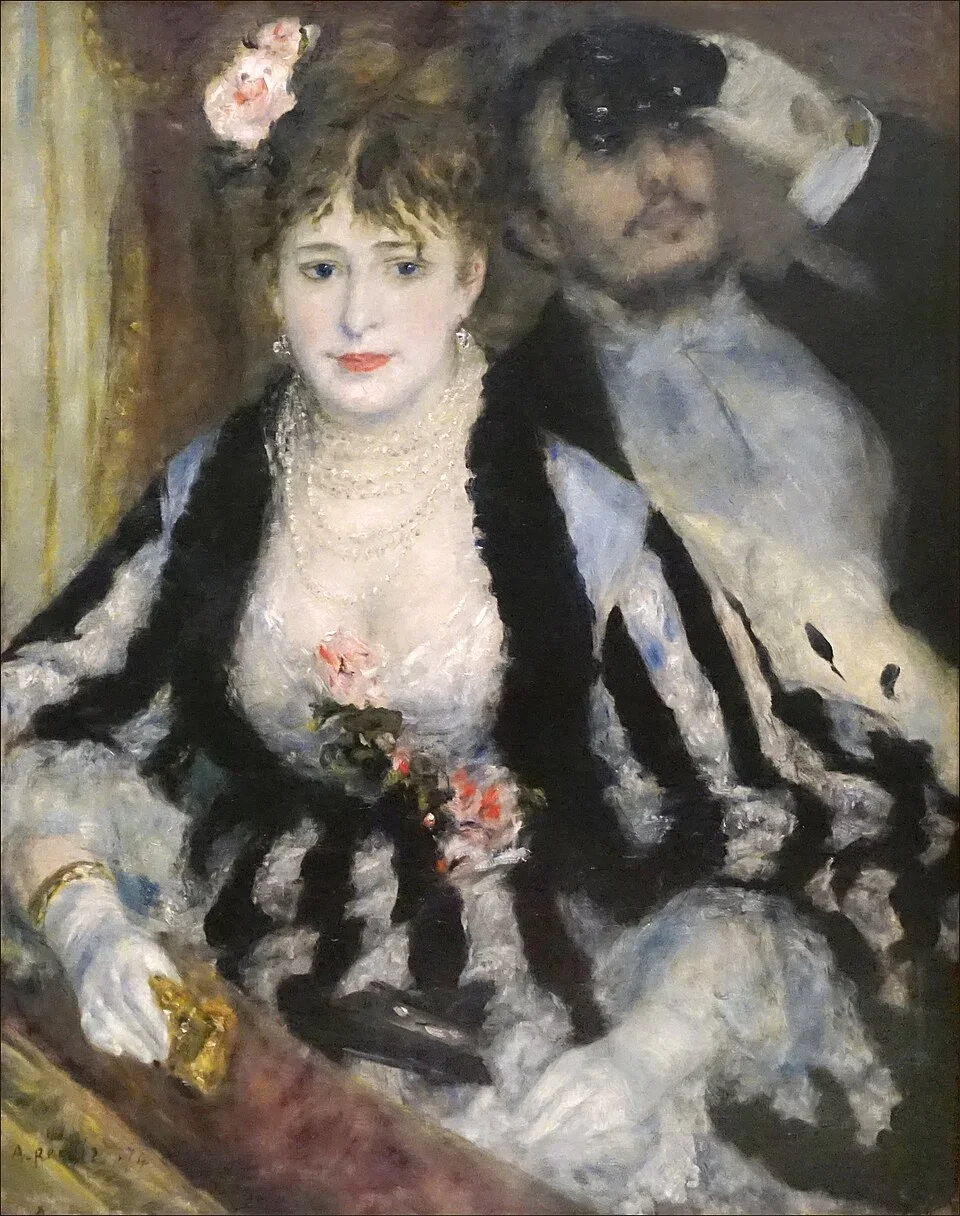
La loge
A young woman faces you from a theatre box in Paris, in a gown of bold black and white stripes. Pearls sit at her neck and pink roses in her hair, dressed to be looked at. Behind her, a man holds a pair of binoculars. The performance is one part of why they are here. In Paris then, the theatre was a place to be seen as much as to watch. She is there to be seen, and those stripes pull your eye straight to her as she looks back at you. He is there to see, scanning the room through them. The balcony rail at the corner puts you in the box next door, right beside them. Renoir took up a subject that had until then belonged mostly to caricatures and fashion plates. The woman is Nini Lopez, a model who would appear in fourteen of his paintings over the next few years. The man is his brother Edmond, a journalist and art critic. Under the paint, she may once have worn a hat. Apart from that and a small change to the man's arm, he altered almost nothing.
Listen in the appJean-Pierre Dalbéra from Paris, France · CC BY 2.0
03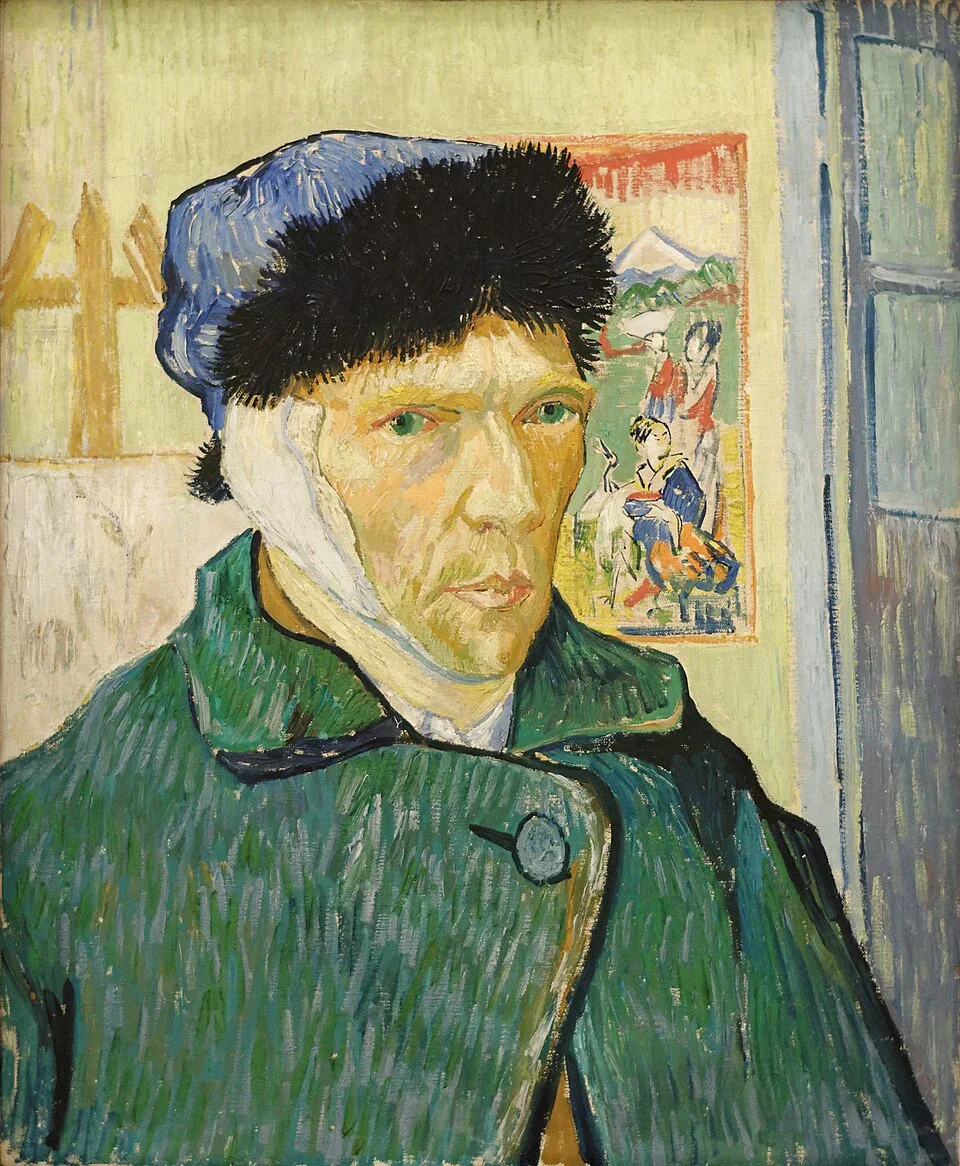
Self-Portrait with Bandaged Ear
A bandage crosses his ear and runs under his chin. He has pulled a blue cap with black fur over it, bought recently to hold the dressing in place against the cold. Behind him a canvas stands on an easel with only a few marks on it. That bandage came from one night. He had moved from Paris to Arles to build a place where artists could support one another. He rented four rooms in the Yellow House and invited Gauguin to join him. On the evening of the twenty third of December 1888, Gauguin said he was leaving. Van Gogh approached him with a razor. Later that night he cut off his own left ear. He carried it, wrapped, to a woman who cleaned at the brothel the two men used to go to. He worked from a mirror, and let the reversal stand. The bandage in the painting sits on the right ear. The ear he cut off was the left. On the seventeenth of January 1889 he wrote to his brother Theo that he had finished another new self portrait. This is probably the picture he meant.
Listen in the appVincent van Gogh · Public domain
04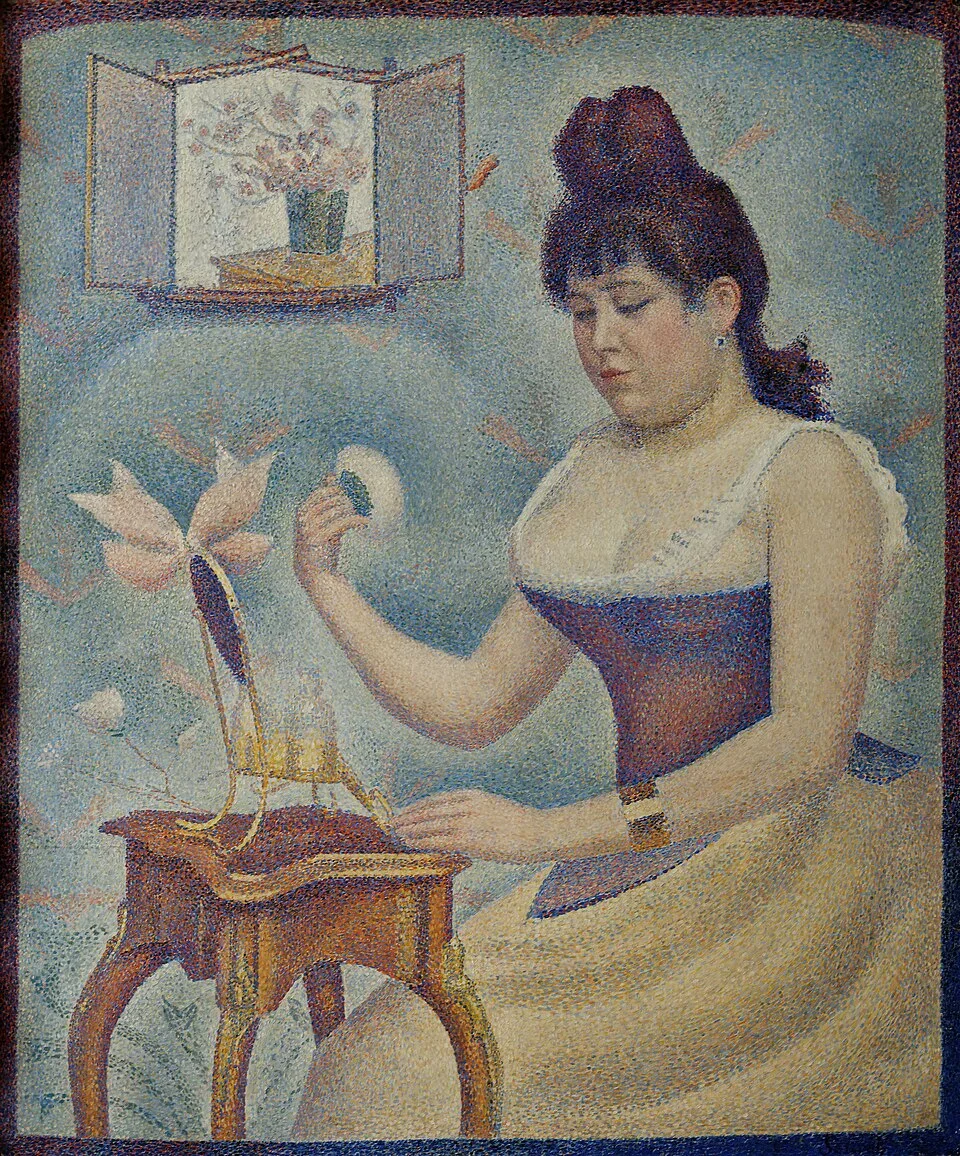
Young Woman Powdering Herself
This whole picture is built from small dots of paint. Close together, they blend in your eye, becoming the woman and the wall behind her. In that wall hangs a mirror with a bamboo frame, and in it a vase of flowers. Those flowers were painted over an earlier image. Seurat first put himself in that mirror, a bearded man sitting before a canvas. A friend warned him his portrait there might look comical. Nobody knows who that friend was. So he painted over the man with the flowers and the corner of a chest of drawers. For years the flowers were all anyone could see. Scans in 1958 and 1987 found a hidden layer beneath them, but new imaging in 2014 showed the man himself. The face resembles Seurat's, and this is the only self portrait of him we know. In that hidden portrait he holds a long stick, most likely a paintbrush, and that puts him at work.
Listen in the appGeorges Seurat · Public domain
05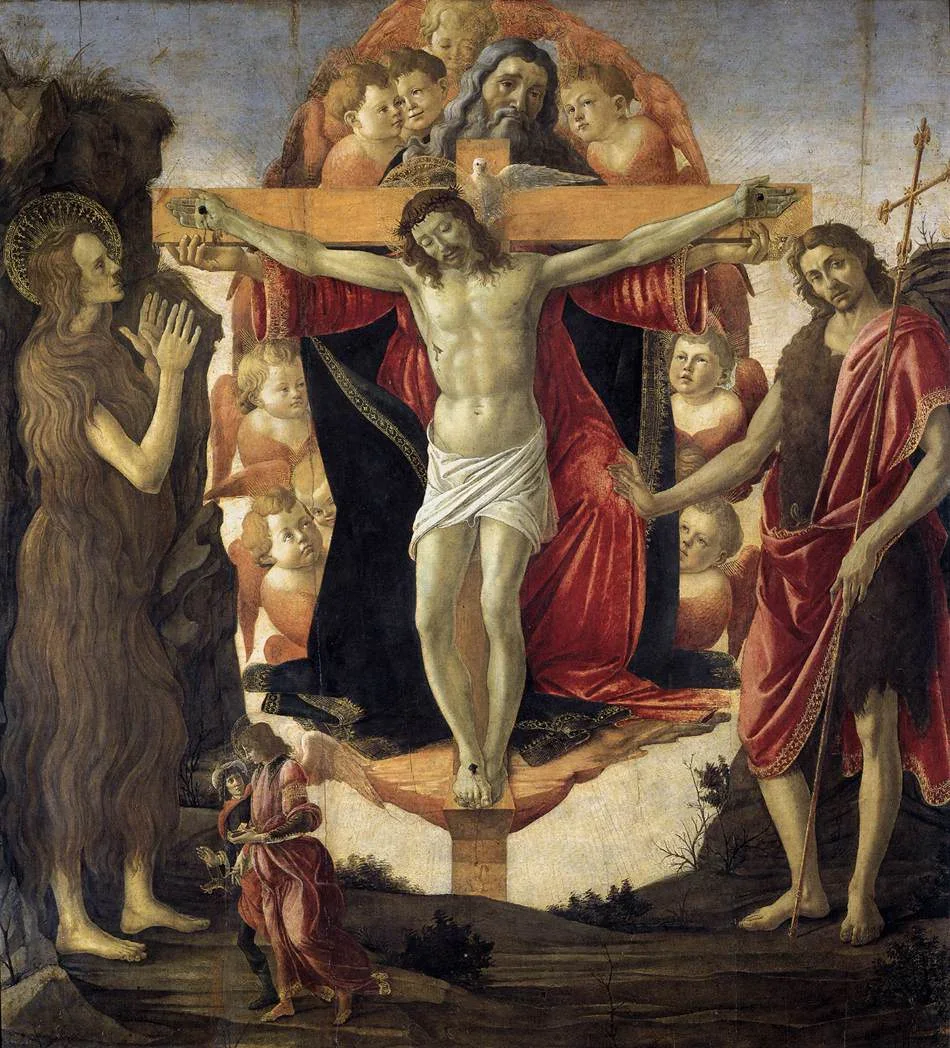
Holy Trinity
Nobody knows quite when this altarpiece was painted. It seems to have been worked on for some thirty years. Mary Magdalene and Saint John the Baptist stand on either side of the Trinity, and their styles do not match. They were probably painted at different times. At the bottom, and much smaller, Tobias walks past with the fish, the archangel Raphael beside him. They take no notice of the scene above them. This pair is painted in a different style from the large figures. The pair now in place was probably painted by Botticelli himself, in the 1490s. An earlier pair, thought to be by his assistant Filippino Lippi, once stood on the right behind the cross, in a landscape later painted over. The altarpiece was ordered by the guild of doctors and pharmacists. It was meant for a church in Florence, a home for women who had left prostitution and converted. Mary Magdalene was their saint. Raphael was the guild's patron saint, and that is why the pair is here. When the convent closed in 1808, its contents were scattered. The panels that once ran beneath this altarpiece have been in Philadelphia since 1947.
Listen in the appSandro Botticelli / Workshop of Sandro Botticelli · Public domain
06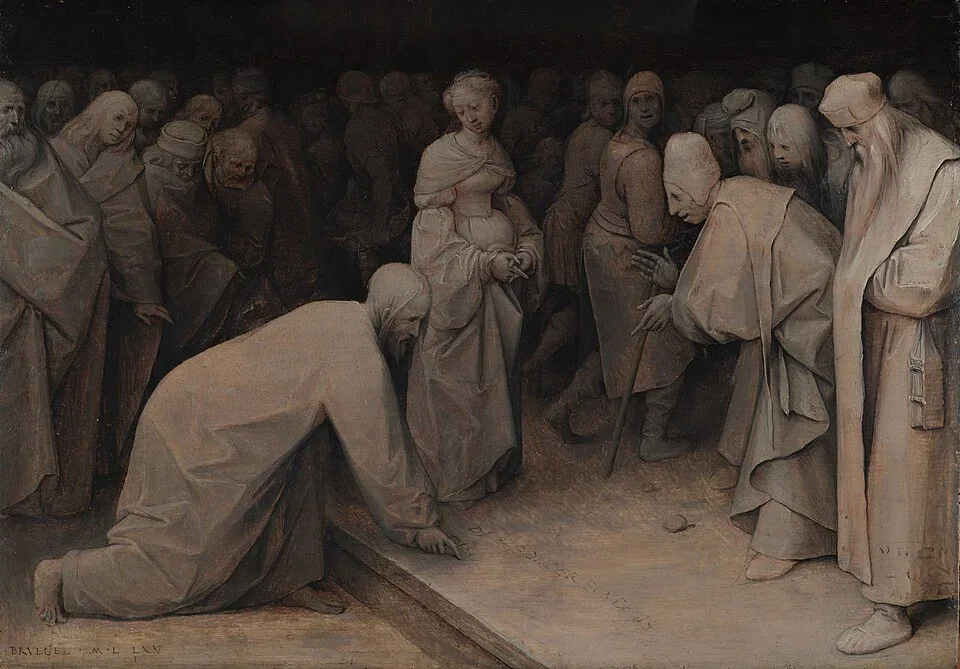
Christ and the Woman Taken in Adultery
What will happen to the woman at the centre of this crowd? She has been accused of adultery, a crime punishable by stoning. The answer is written on the ground at her feet. Jesus kneels before her and writes in Dutch that whoever is without sin should throw the first stone. The men who brought her are scribes and Pharisees, trying to trap him over a question about the law. Bruegel, who painted country women as earthy figures, made this one an idealized beauty at the very centre. Her fingers are crossed, perhaps a sign of tension. He painted this in Brussels, where heretics had been put to death for decades. The year after he finished it, the Beggars' revolt broke out, so this may be a plea for tolerance. Behind her, the men who wanted her stoned drift away, and the stones lie untouched on the floor to her left.
Listen in the appPieter Bruegel the Elder · Public domain
07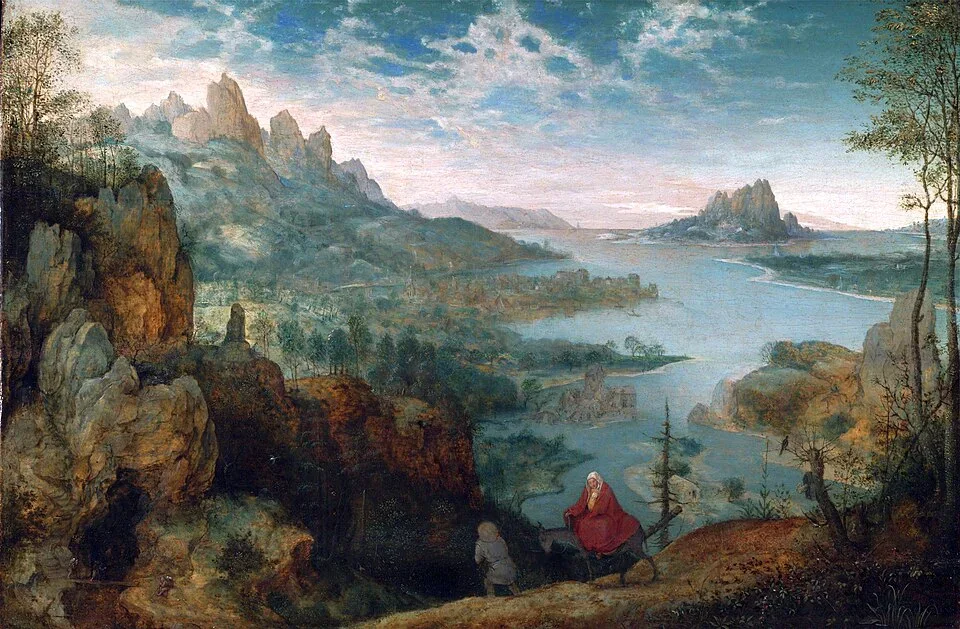
Landscape with the Flight into Egypt
On the right, a little shrine stands empty. Its pagan god has fallen out as the family passed by. That fall is no accident in the picture. It marks Christ's triumph over the old gods, and it is one of several miracles that grew up around this story. The Bible tells the flight in a few lines. An angel came to Joseph in a dream, because Herod wanted the child dead. That is the whole of it. The miracles were added later, by medieval legend, filling in a journey that had been almost bare. Bruegel set them tiny on a slope, nearly swallowed by rivers and hills, and let the landscape carry the meaning. A branch has fallen against a tree and made a cross, a hint of the crucifixion still to come. Mary's red cloak, unusual for her, is what picks her out against the blue river. Down by the bottom edge, two tiny salamanders stand for evil.
Listen in the appPieter Bruegel the Elder · Public domain
08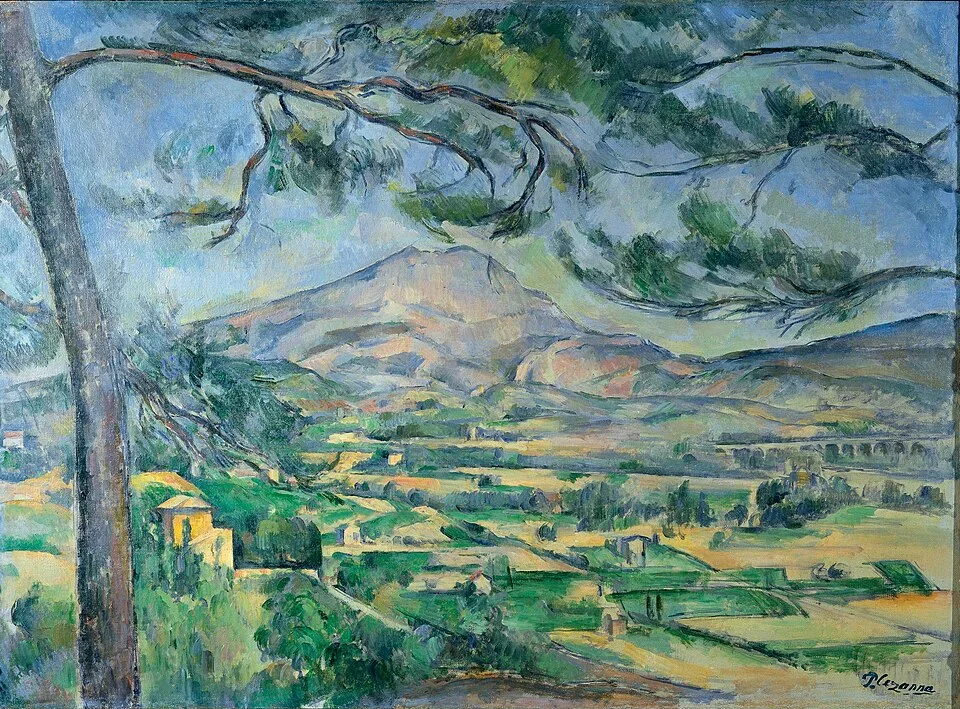
Mont Sainte-Victoire with Large Pine
A mountain and a large pine, with a bridge crossing a valley. That bridge carries the railway from Aix to Marseille, over the valley of the Arc. The railway was only about six months old in April 1878. Cézanne wrote to his friend Émile Zola that month, describing the mountain from a train window between Aix and Marseille. He called it a beautiful subject. He was thirty-nine and had never painted it before. Around that time he started, and kept returning to the mountain for the rest of his career. The whole series was probably inspired by views from that moving train. So the railway that carried him past the mountain is right here in the picture, near the center on the right. He painted this from Montbriand, at Aix-en-Provence, on the estate of his brother-in-law Maxime Conil.
Listen in the appPaul Cézanne · Public domain
09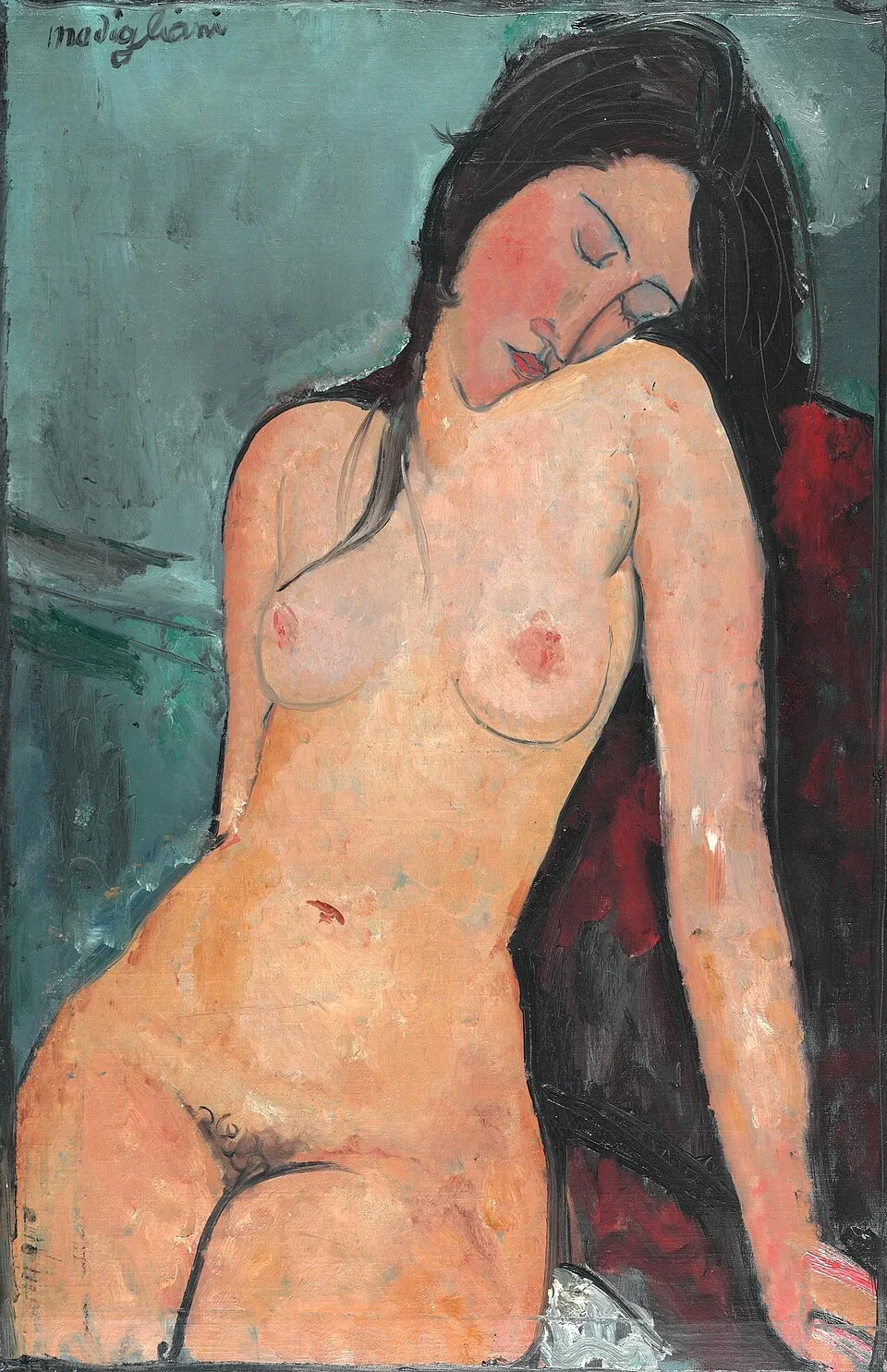
Female Nude
In this painting the room falls away and leaves only this woman. She leans against a chair in a plain interior, nothing behind her to distract you. Her face is calm and serene. Her pale skin suggests youth, like a Renaissance Madonna without her clothes. The lines run long and angular, her oval face almost carved. Her eyes, mouth and nose sit slightly off, yet the whole holds together. Her legs are cut off at the bottom, so the attention stays on her torso and the pubic hair, which he shows in detail. In 1917 his dealer hung this nude and several others in Berthe Weill's gallery in Paris, the only solo show he ever had. On the opening day the police closed it at once, judging the paintings obscene and pornographic. Weill asked the commissioner what was wrong with them. He pointed to the visible hair and called it obscene. Once the works were taken out of the window, the show went on behind closed doors. Who she was is still not known.
Listen in the appAmedeo Modigliani · Public domain
10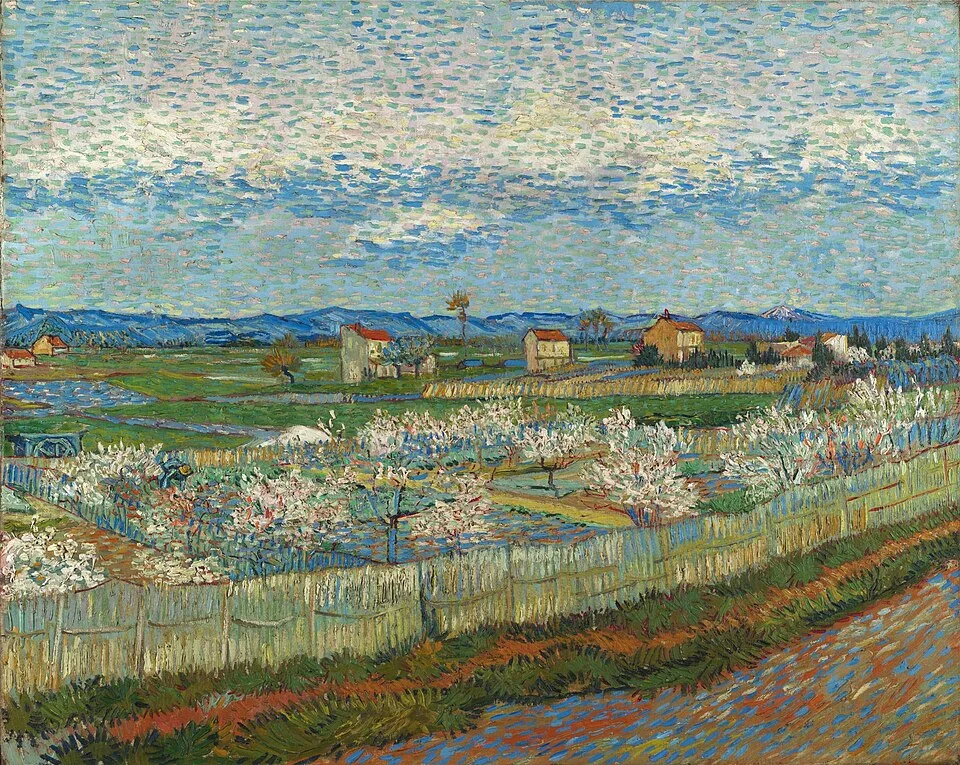
Peach Trees in Blossom
In June 2022, two protesters glued themselves to the frame of this painting. They caused two thousand pounds of damage. Both were found guilty of criminal damage. One was jailed for three weeks, and the other received a suspended sentence. Inside that frame is a field of peach trees in blossom on the edge of Arles, with the Alpilles mountains behind them. Van Gogh meant it as a tribute to the Japanese landscape prints that influenced him. Yet he painted it only a few months after cutting off his ear, while still a patient in the men's hospital in Arles. In April 1889 he wrote to his brother Theo about the work, and sent a sketch of it to Paul Signac. In 1891 the Belgian artist Anna Boch bought it for three hundred and fifty francs. Samuel Courtauld paid nine thousand pounds for it in 1927 and hung it in the Etruscan Room of his own house. In 1935 he lent it to a village hall in Essex, as part of a project to open art up to more people. That same year, a drive through Kent brought the painting back to him. He wrote of its green grass, fruit trees in flower, the sky washed clean, and water shining everywhere.
Listen in the appVincent van Gogh · Public domain
- 11
The Conversion of Saint Paul
Peter Paul Rubens · 1610–1612
- 12
Don Francisco de Saavedra
Francisco Goya · 1798
- 13
Madonna with child
Parmigianino · 1527–1529
- 14
Nativity
Parmigianino · c. 1521–1522
- 15
Cain Slaying Abel
Peter Paul Rubens · 1608–1609
- 16
Coronation of the Virgin
Peter Paul Rubens · c. 1613–1620
- 17
Autumn Effect at Argenteuil
Claude Monet · 1873
- 18
Woman at a Window
Edgar Degas · 1871
- 19
Bridge of Courbevoie
Georges Seurat · 1886–1887
- 20
Cupid and Psyche
Joshua Reynolds · 1789
- 21
Lordship Lane Station, Dulwich
Camille Pissarro · 1871
- 22
Ambroise Vollard
Pierre-Auguste Renoir · 1908
- 23
Still life with Cherub in plaster
Paul Cézanne · c. 1895
- 24
Allegorical Portrait of Sir John Luttrell
Hans Eworth · 1550
- 25
Queen's Road Station, Bayswater
Walter Sickert · 1916
- 26
Two Heads of Angels
Giovanni Battista Tiepolo · 1767–1769
- 27
In a Private Dining Room
Henri de Toulouse-Lautrec · 1899
- 28
Place Lafayette, Rouen
Camille Pissarro · 1883
- 29
God the Father
Giovanni Battista Cima da Conegliano · 1510
- 30
Saint Joseph with the Child - Drawing at Musée Jenisch Vevey
Giandomenico Tiepolo? · 1767–1769
- 31
The Fair at Hoboken
Pieter Bruegel the Elder · 1559
- 32
Adam and Eve
Lucas Cranach the Elder · 1526
- 33
Solomon and the Queen of Sheba
Peter Paul Rubens · 1620
Courtauld Gallery
Frequently asked questions
How much does the guide cost?
Free app download. Free until 1 January. Listed guide price: $0.99. Audio guide only. Venue admission is separate.
Can I listen without internet?
Yes. Download the guide’s audio, images, and maps in the app before your visit. Your downloaded content is then available offline.
Can I listen in my language?
In English for now. More languages soon.
Do I need to follow a schedule?
No. This is a self-guided experience. Choose your stops, pause whenever you like, and return to a story at your own pace.
Which artworks are in the Courtauld Gallery audio guide?
33 artworks, including A Bar at the Folies-Bergère (Édouard Manet), La loge (Pierre-Auguste Renoir), Self-Portrait with Bandaged Ear (Vincent van Gogh), Young Woman Powdering Herself (Georges Seurat), Holy Trinity (Sandro Botticelli), Christ and the Woman Taken in Adultery (Pieter Bruegel the Elder), Landscape with the Flight into Egypt (Pieter Bruegel the Elder), and Mont Sainte-Victoire with Large Pine (Paul Cézanne). The full list is on this page.
Is this the museum’s official audio guide?
No. Stanza is an independent audio guide app and is not affiliated with Courtauld Gallery. Museum admission is separate.
At your own pace
Explore Courtauld Gallery.
Download Stanza, then search for “Courtauld Gallery”.
Free app download · Guide price shown in the app
Keep exploring
Nearby audio guides
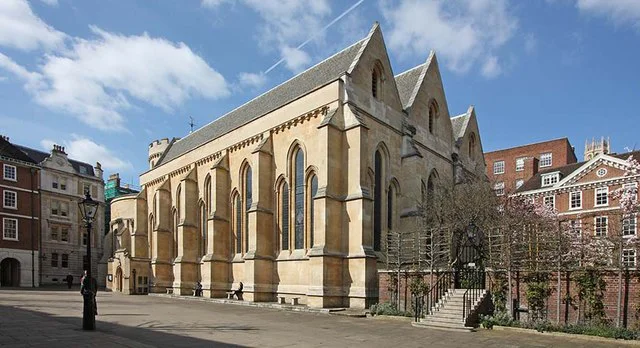
London · 1 km
Temple Church
Content & sources
John Salmon · CC BY-SA 2.0
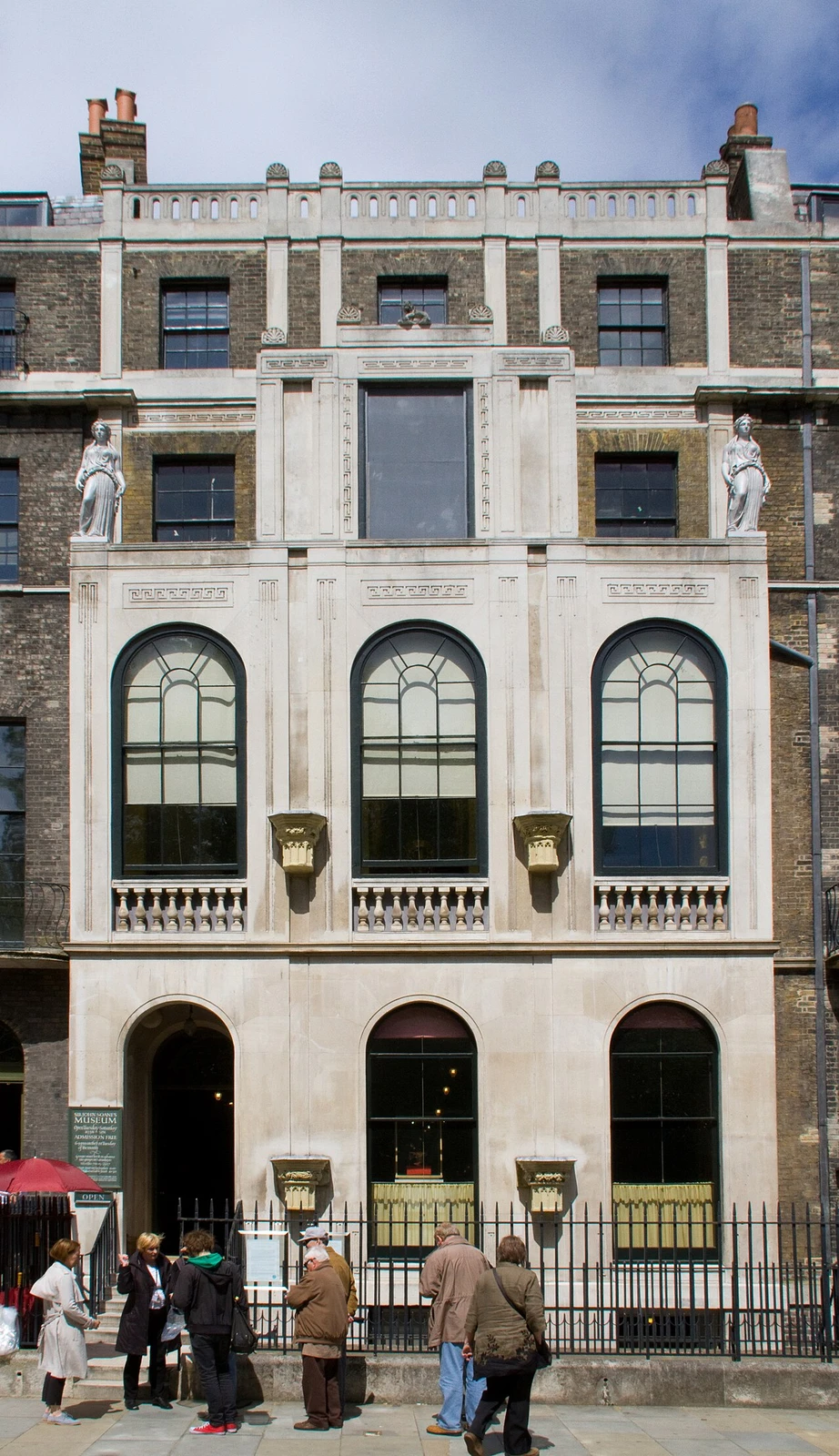
Greater London · 1 km
Sir John Soane's Museum
Content & sources
Tony Hisgett from Birmingham, UK · CC BY 2.0
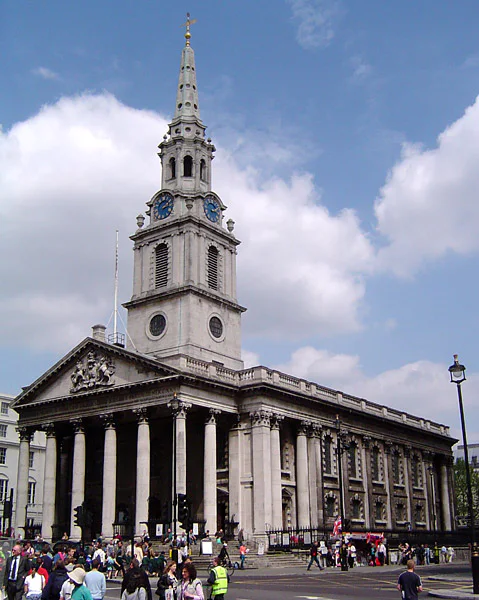
London · 1 km
St Martin-in-the-Fields
Content & sources
Photo: Yopohari~commonswiki · CC BY-SA 3.0
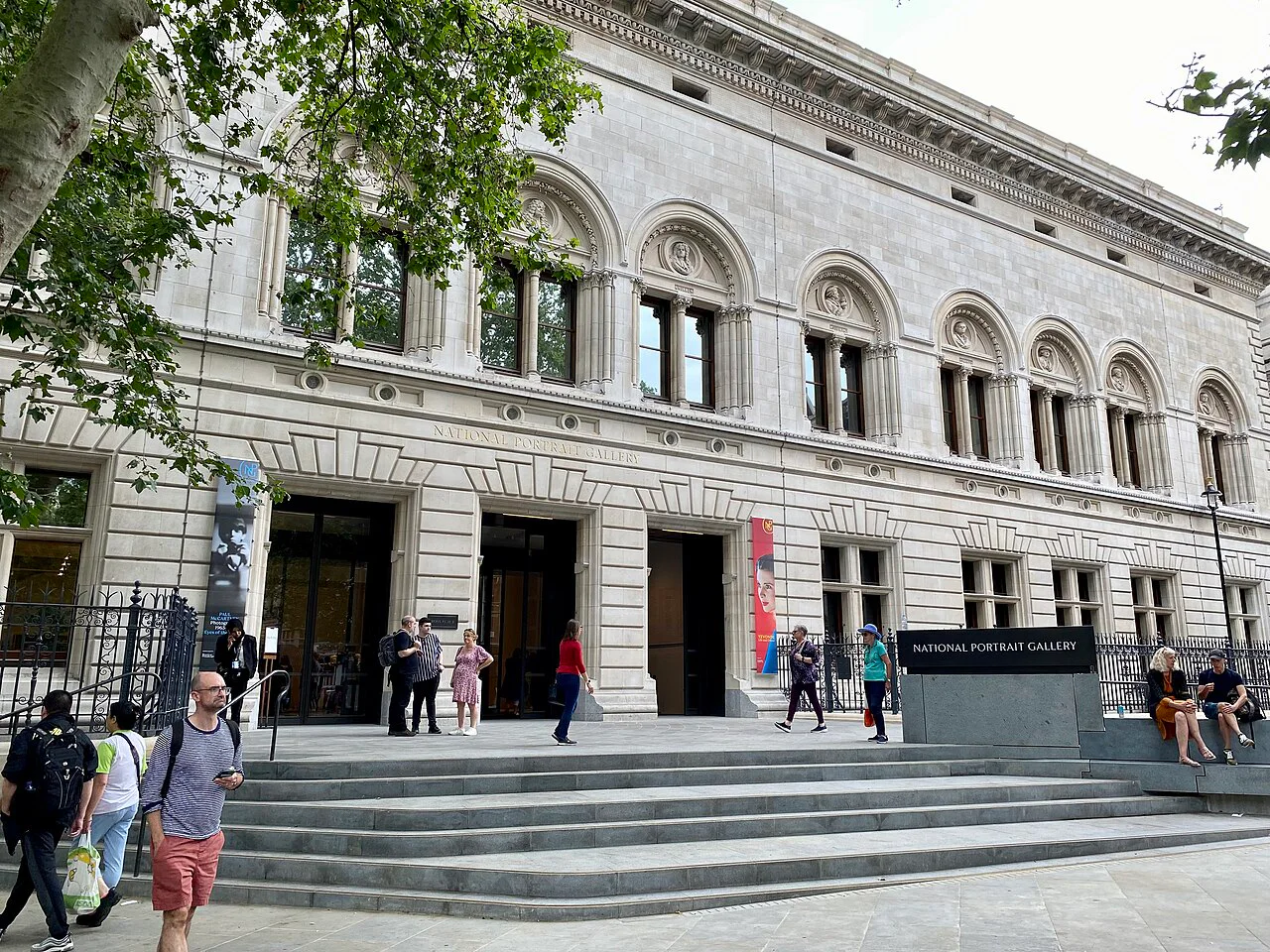
City of Westminster · 1 km
National Portrait Gallery, London
Content & sources
Photo: No Swan So Fine · CC BY-SA 4.0
Art museums
More art museum audio guides
London · 8 artworks
Sir John Soane's Museum
Content & sources
Tony Hisgett from Birmingham, UK · CC BY 2.0
London · 164 artworks
National Portrait Gallery, London
Content & sources
Photo: No Swan So Fine · CC BY-SA 4.0
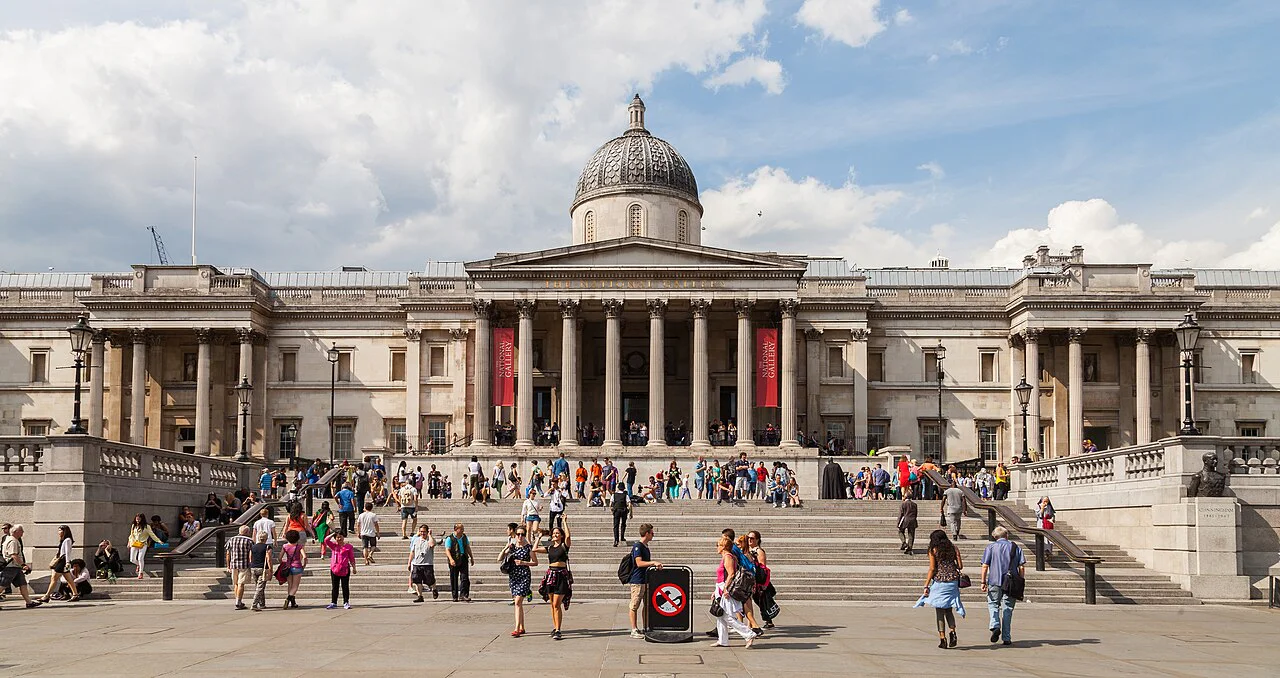
London · 171 artworks
National Gallery, London
Content & sources
Diego Delso · CC BY-SA 4.0
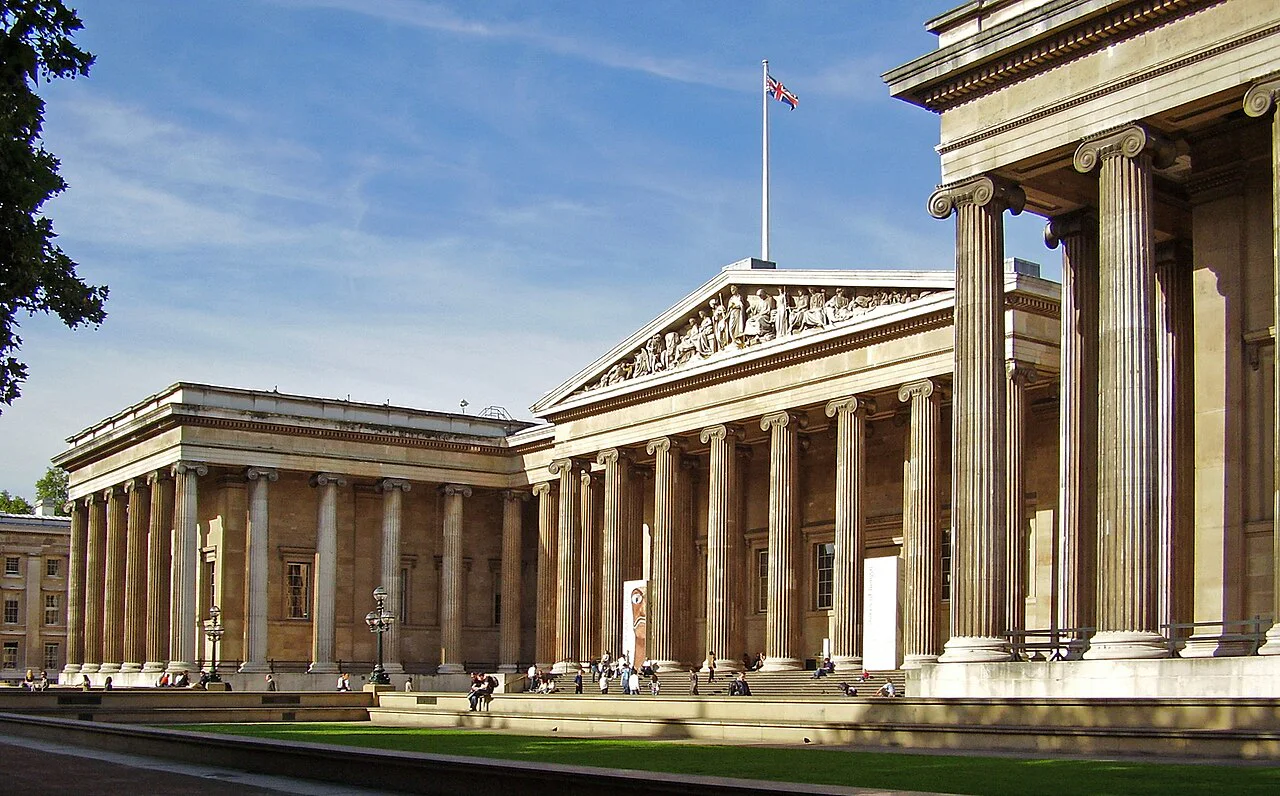
London · 68 artworks
British Museum
Content & sources
Ham · CC BY-SA 3.0
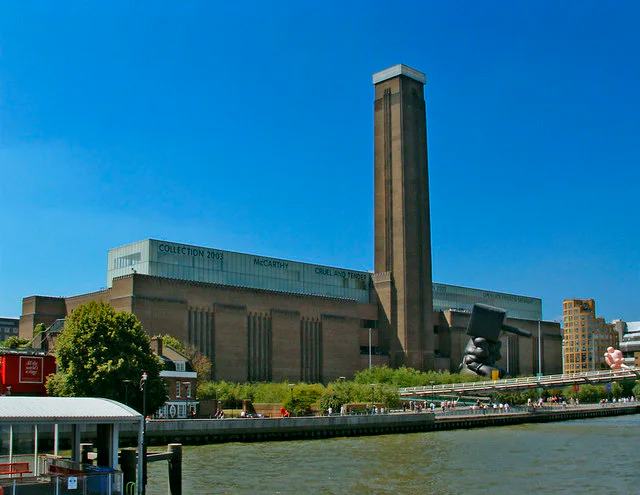
London Borough of Southwark · 15 artworks
Tate Modern
Content & sources
Christine Matthews · CC BY-SA 2.0
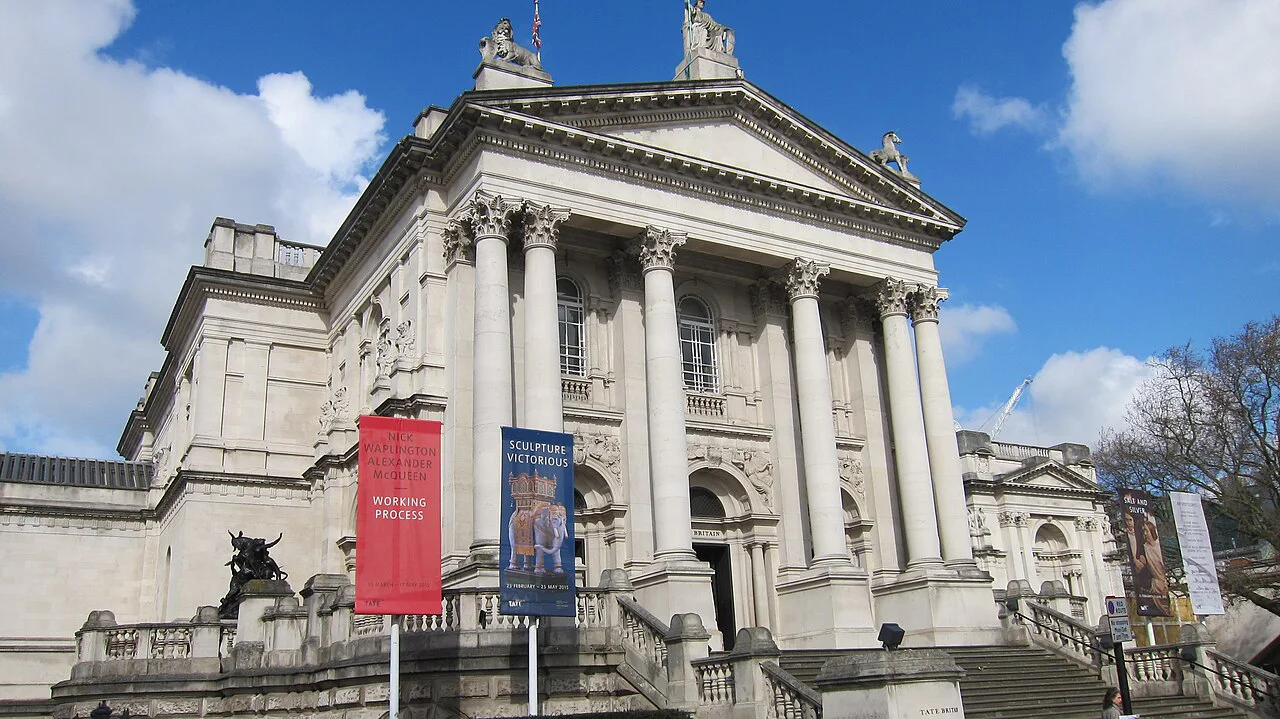
London · 69 artworks
Tate Britain
Content & sources
Carlos Cunha · CC BY-SA 3.0