Stanza · Audio guide
Temple Church Audio Guide
A place to remember. A story to take with you.
The Temple Church is a 12th-century church in London built by the Knights Templar for their English headquarters. It is famous for being a round church and for its 13th- and 14th-century stone effigies.
Download Stanza, then search for “Temple Church”.
About the tour
One guide. Your kind of visit.
The Temple Church is a 12th-century church in London built by the Knights Templar for their English headquarters. It is famous for being a round church and for its 13th- and 14th-century stone effigies.
Ready when you are.
- 01Get the free Stanza app.
iOS & Android
- 02Find your guide.
“Temple Church”
- 03Download before you go.
Works offline
Audio guide / 8 narrated stops
Inside the guide
Get to know a few of the stories before you go. Open a stop to read more.
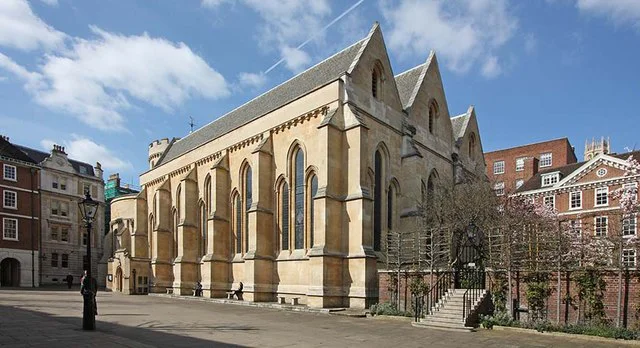
01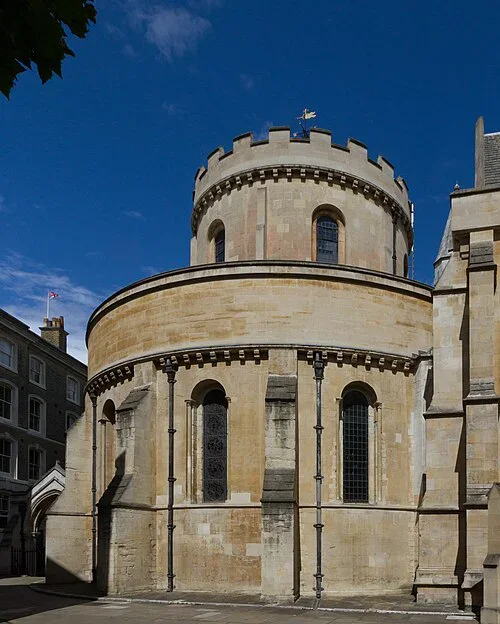 Temple Precinct and Church Exterior
Temple Church from the Precinct
Welcome to the Temple Church, hidden in the lanes between Fleet Street and the River Thames. The round building rising over the courtyard is one of London's oldest surviving medieval churches. It was built by the Knights Templar, the crusading order of warrior-monks, as their English headquarters. On the tenth of February 1185 it was consecrated by Heraclius, the Patriarch of Jerusalem himself. It is believed that King Henry II was there to watch. The round shape is the clue to who built it, because circular churches were a signature of Templar foundations. This tour follows the building through eight centuries, from the Templars who raised it to the lawyers who worship in it today. Along the way there are secret rites, a stone knight, a king who changed his mind, and a fire that nearly ended everything. The story begins at the church's carved western door.
User:Matthias Süßen · CC BY-SA 3.0
02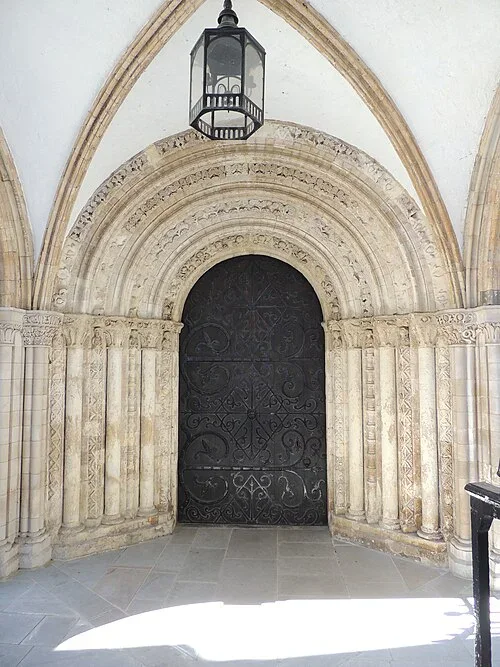 The Norman West Portal
A new Templar knight began his life here at first light. In England, recruits entered the church through this western door at dawn, the hour when the precinct was still dark and quiet. They walked into the circular nave beyond and took monastic vows of piety, chastity, poverty and obedience. The details of the ceremony were a closely guarded secret, known only to the order. That secrecy proved dangerous. Gossip spread about what might be said and done behind the closed door, and rumours grew of blasphemous rites. Whether anything improper actually happened, the whispers alone were enough to work with. The order's enemies seized on them, above all King Philip IV of France, who used the gossip to build a case against the Templars. From 1307 the Templars were arrested, and within a few years the order was suppressed. The carved arches of this doorway, with their concentric rings of Romanesque stonework, are twelfth-century work that has watched all of it.
Photo: Eishiya · CC0
03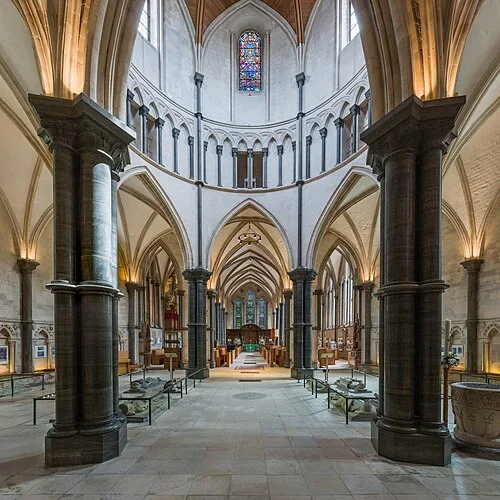 The Round Church Nave
When the Crusaders took Jerusalem in 1099, they found two holy buildings that shaped everything the Templars built afterwards. One was the Church of the Holy Sepulchre, raised over the place of Christ's burial. The other was the Dome of the Rock, which the Templars called the Templum Domini, standing on the site of Solomon's Temple. The Dome appeared on the seals of the order's Grand Masters, and together the two buildings became the model for round Templar churches across Europe. This nave follows that pattern. The round space measures fifty-five feet across, and at its centre stands a ring of Purbeck marble columns. They are the earliest known surviving free-standing columns of that stone, polished dark and hard from the Dorset coast. The carved heads and walls were probably painted in bright colours originally, though the paint has long since gone. The design meant that every Templar who worshipped here was standing inside an echo of Jerusalem.
Listen in the appPhoto: Diliff · CC BY-SA 3.0
04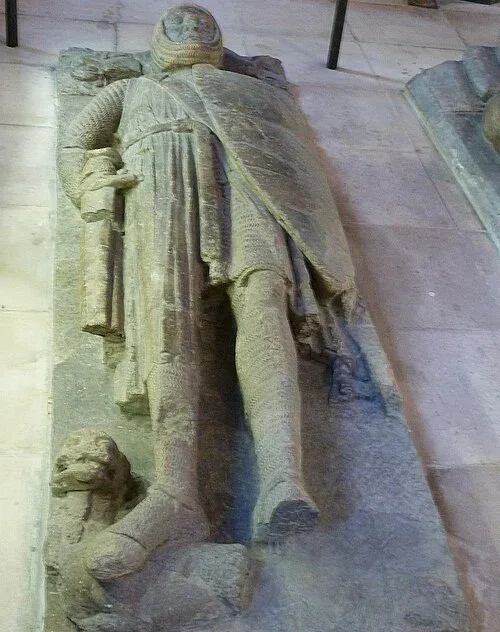 The Medieval Knight Effigies
The Effigy of William Marshal
Lying on the floor of the Round Church is a knight carved in stone, in full chain mail with his shield at his side. This is William Marshal, Earl of Pembroke, and his story is the most famous the church holds. In January 1215, England was close to civil war. King John met his rebellious barons here at the Temple, and Marshal served as the negotiator between them. The barons demanded that the king uphold the rights granted in the Coronation Charter of his brother, King Richard the First. Marshal swore on the king's behalf that their grievances would be addressed in the summer. The king kept enough of that promise to seal Magna Carta in June. When John died the following year, Marshal became regent for the child king Henry the Third, effectively ruling England. He was buried here, and the effigy marks his grave. He is one of nine thirteenth- and fourteenth-century knights lying in stone on the church floor.
Listen in the appRob Farrow · CC BY-SA 2.0
05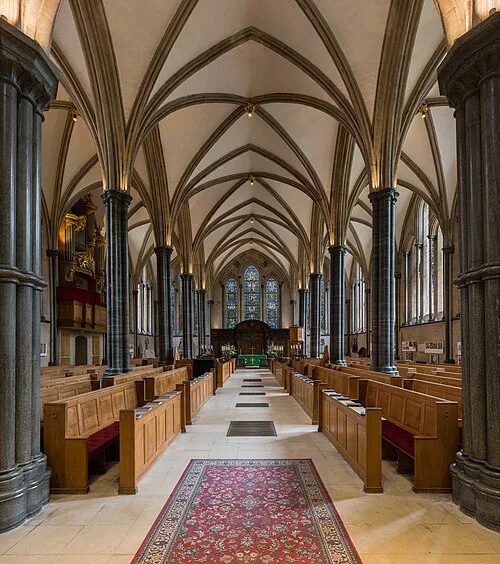 The Gothic Chancel
The older round church was never meant to end here. King Henry the Third expressed a wish to be buried in the Temple, and a royal burial called for grander space. So the original chancel was pulled down and replaced with this much larger one, its basic form surviving to this day. It was consecrated on Ascension Day 1240, in the Early English Gothic style. The design is unusual: a central aisle flanked by two side aisles of identical width, so the building rises in even steps towards the high altar. The ribbed vault above reaches thirty-six feet and three inches. The stone knight you heard about earlier lies just behind, in the round church. Henry never came to rest here. He later altered his will and chose Westminster Abbey instead, leaving the church with a chancel built for a king who never occupied it. One of his infant sons was buried in it, close to the altar.
Listen in the appPhoto: Diliff · CC BY-SA 3.0
06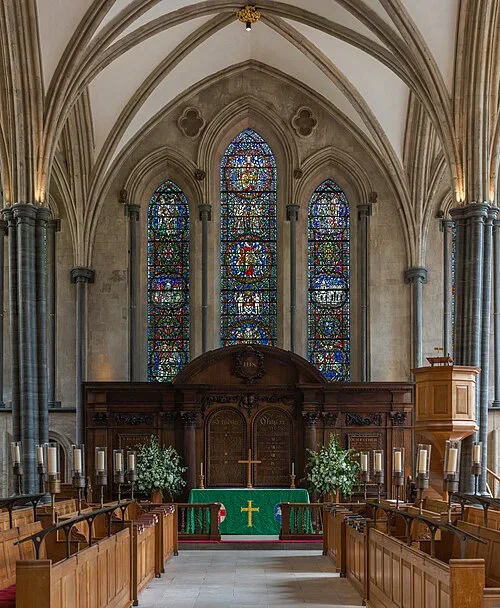 The High Altar and East Windows
This end of the church, with its altar and east windows, has passed through many hands. After the Templars fell, King Edward the Second took the church as a possession of the Crown. It then passed to the Knights Hospitaller, another military order, who found a use for it that changed the Temple's whole character. They leased the grounds to two colleges of lawyers. One college took the part of the Temple once used by the knights, the other the part used by the order's clergy, and both shared the church. Those colleges grew into the Inner Temple and the Middle Temple, two of the four Inns of Court at the heart of English law. In 1608 King James the First granted the two Inns use of the church in perpetuity, on condition that they maintain it. They still hold it as their private chapel, with Sunday services, and weddings for members of the Inns. The church itself escaped the Great Fire of London in 1666, yet Christopher Wren still refurbished the interior, adding an altar screen and the church's first organ. In 1841 the Victorians, Smirke and Burton, redecorated the walls and ceiling in high Gothic style, trying to return the church to how it was meant to look.
Listen in the appPhoto: Diliff · CC BY-SA 3.0
07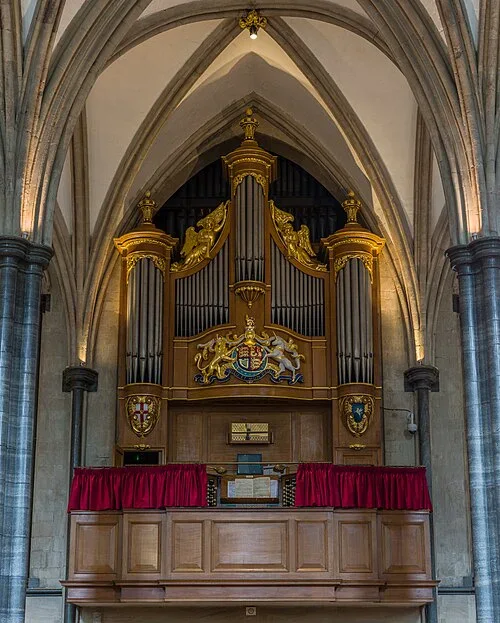 The Organ and Post-War Rebirth
On the tenth of May 1941, German incendiary bombs set the roof of the Round Church alight. The fire spread quickly to the nave and the chapel. It destroyed the organ and every wooden part of the church, including the Victorian decorations, and the Master's House burned down the same night. The heat was so fierce that the Purbeck marble columns in the chancel cracked. They still held the vault up, but they were judged unsound and replaced in identical form, even copying their slight outward lean. After the war the architect Walter Godfrey led the rebuilding. During the work, parts of the seventeenth-century woodwork that Christopher Wren had installed were discovered in storage, and were put back in their original positions. The church was rededicated in November 1958. This gilded organ is part of that rebirth. It was built in 1924 as a private ballroom organ for Glen Tanar House in Scotland, and installed here in 1954. Decades later the film composer Hans Zimmer chose the church to record the organ music for his score to Interstellar, with the church's former organist Roger Sayer at the keys. Zimmer said that setting foot into Temple Church is like stepping into profound history.
Listen in the appPhoto: Diliff · CC BY-SA 3.0
08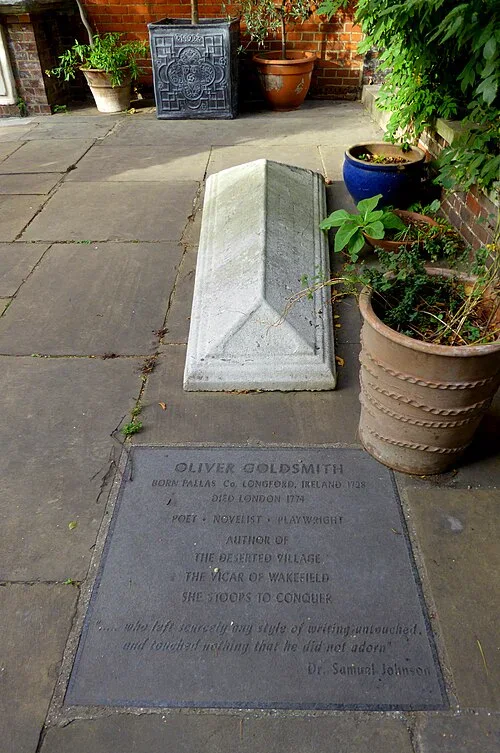 The Churchyard and Goldsmith's Tomb
The Grave of Oliver Goldsmith
In the shade of the churchyard wall lies a low stone tomb with a simple inscription. It marks Oliver Goldsmith, the poet, novelist and playwright, who died in 1774. He wrote She Stoops to Conquer and The Vicar of Wakefield, works that filled London theatres and parlours in their day. The stone carries a tribute from his friend Dr Samuel Johnson, who said of him that he left scarcely any style of writing untouched, and touched nothing that he did not adorn. Goldsmith belongs to a different chapter of this place than the warrior-monks and the kings who came before him. A church built by a crusading order, claimed by crowns, and adopted by the legal profession, ended up gathering writers and musicians into its quiet ground as well. Through every change of owner, fire and bomb, the building itself has simply carried on.
Listen in the appEthan Doyle White · CC BY-SA 4.0
Temple Church
Frequently asked questions
How much does the guide cost?
Free app download. Listed guide price: $0.99. Guide price shown in the app. Audio guide only. Venue admission is separate.
Can I listen without internet?
Yes. Download the guide’s audio, images, and maps in the app before your visit. Your downloaded content is then available offline.
Can I listen in my language?
This audio guide is available in 15 languages, including English.
Do I need to follow a schedule?
No. This is a self-guided experience. Choose your stops, pause whenever you like, and return to a story at your own pace.
At your own pace
Explore Temple Church.
Download Stanza, then search for “Temple Church”.
Free app download · Guide price shown in the app
Keep exploring
Nearby audio guides
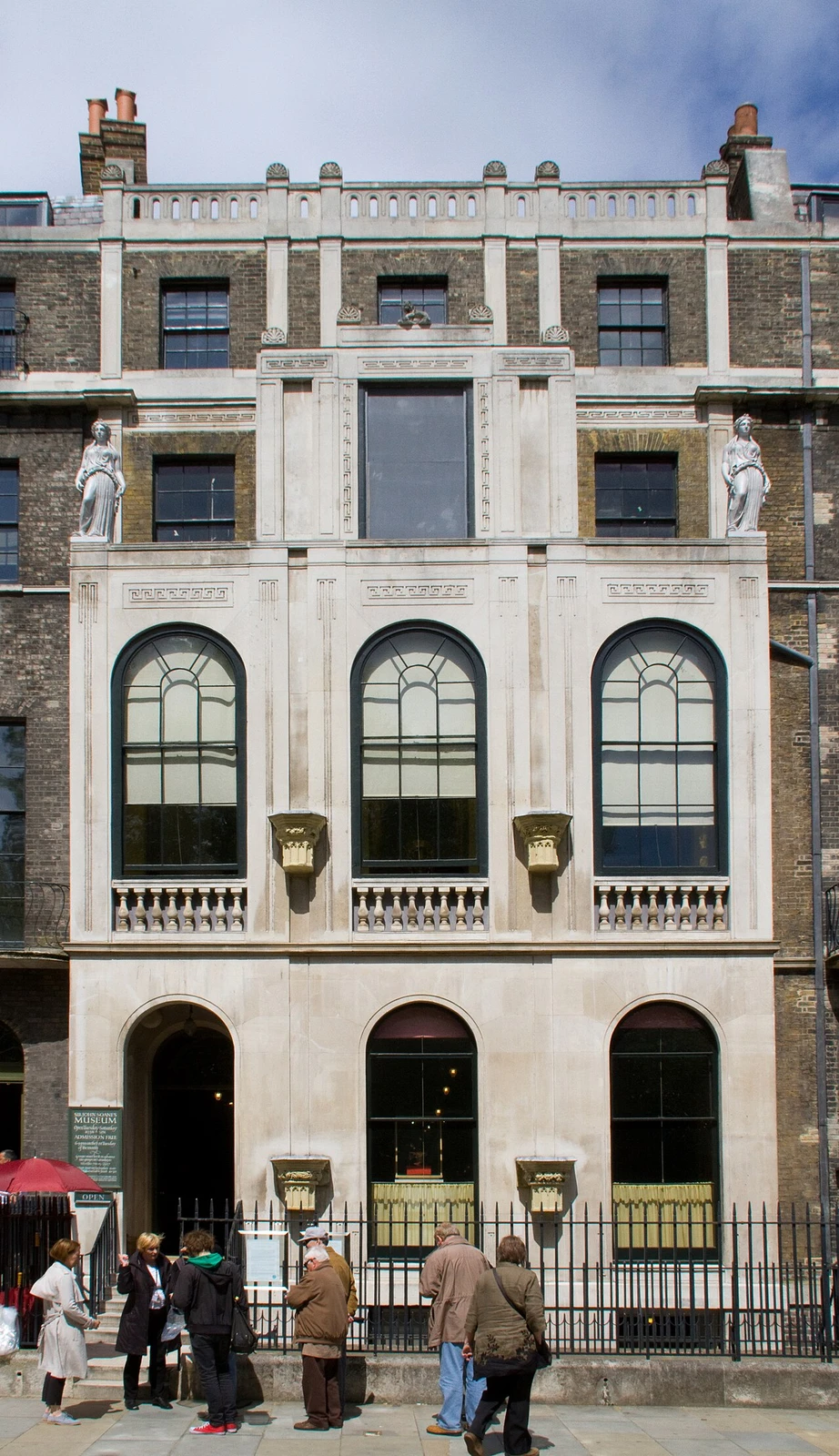
Greater London · 1 km
Sir John Soane's Museum
Content & sources
Tony Hisgett from Birmingham, UK · CC BY 2.0
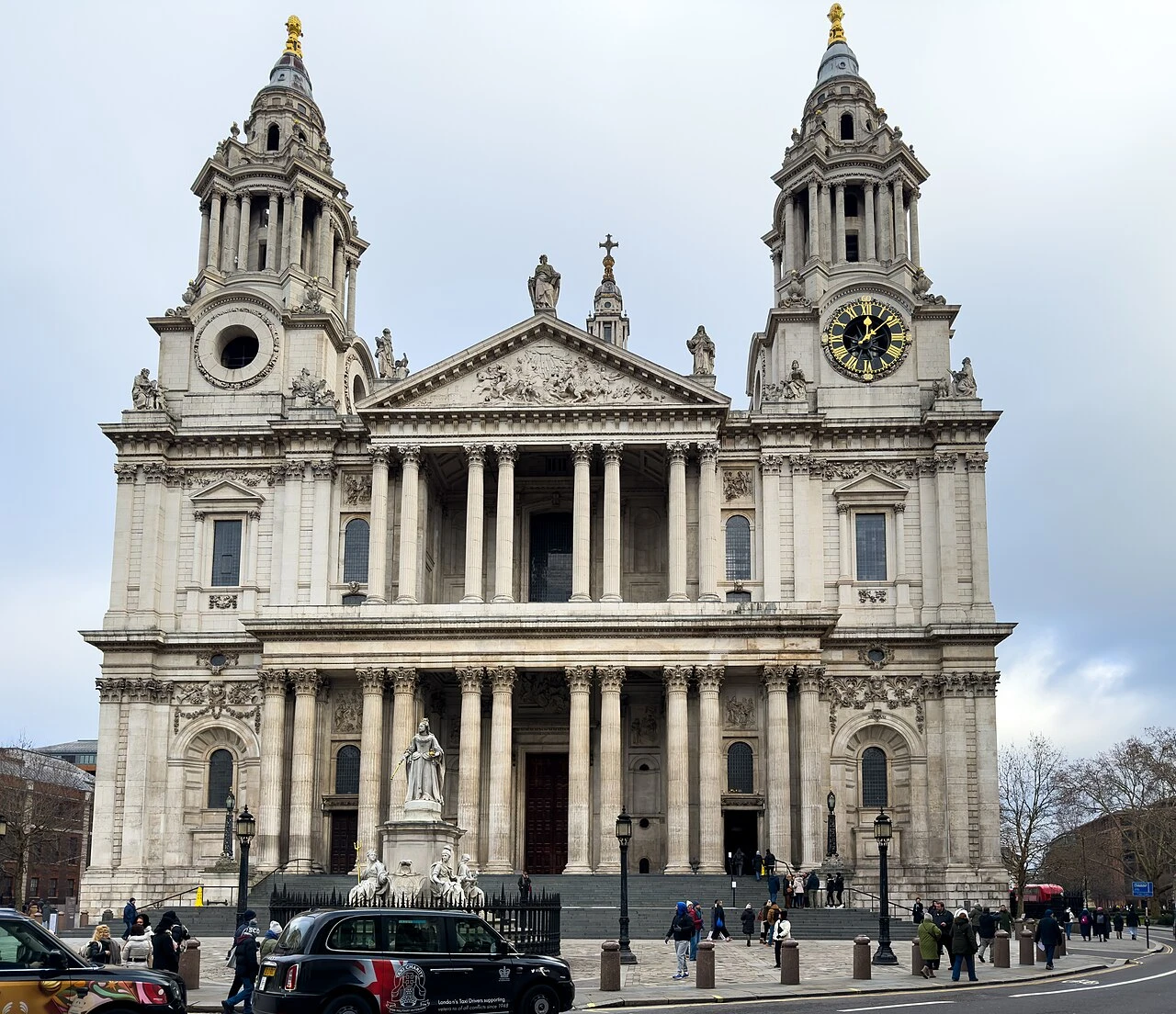
City of London · 1 km
St Paul's Cathedral
Content & sources
Photograph by Mike Peel (www.mikepeel.net). · CC BY-SA 4.0
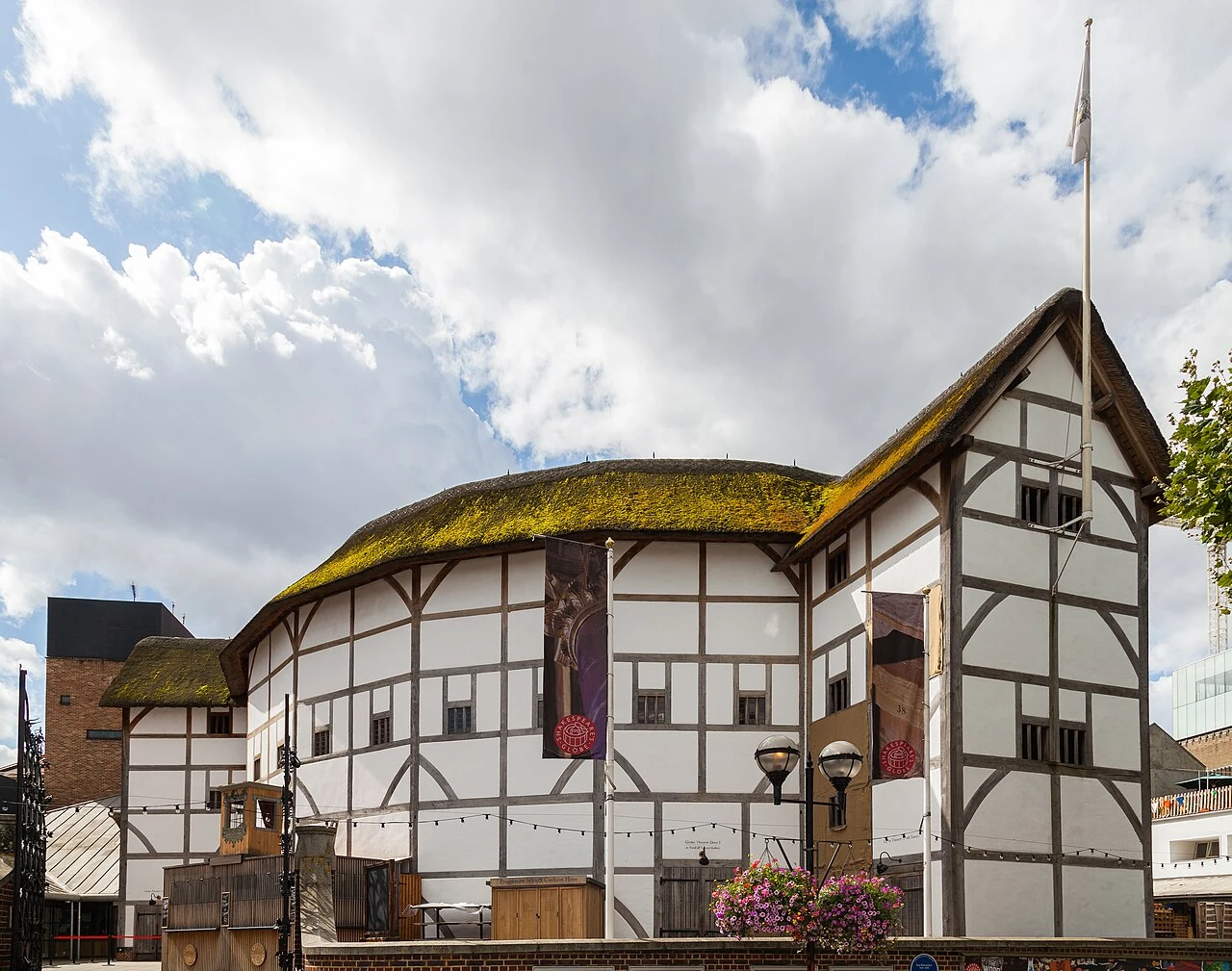
Greater London · 1 km
Shakespeare's Globe
Content & sources
Diego Delso · CC BY-SA 4.0
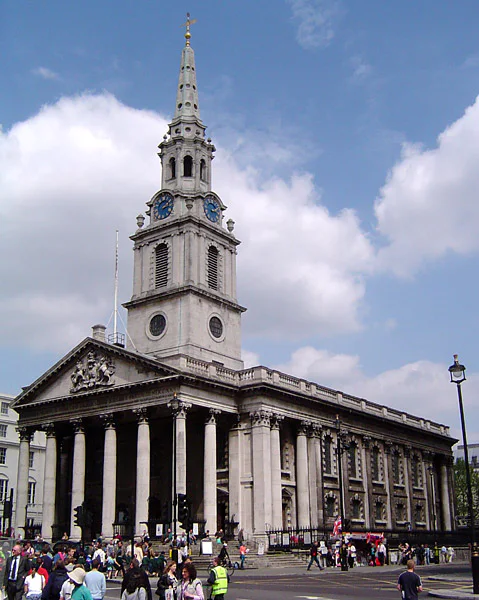
London · 1 km
St Martin-in-the-Fields
Content & sources
Photo: Yopohari~commonswiki · CC BY-SA 3.0