Stanza · Audio guide
Wellington ArchAudio guide
A place to remember. A story to take with you.
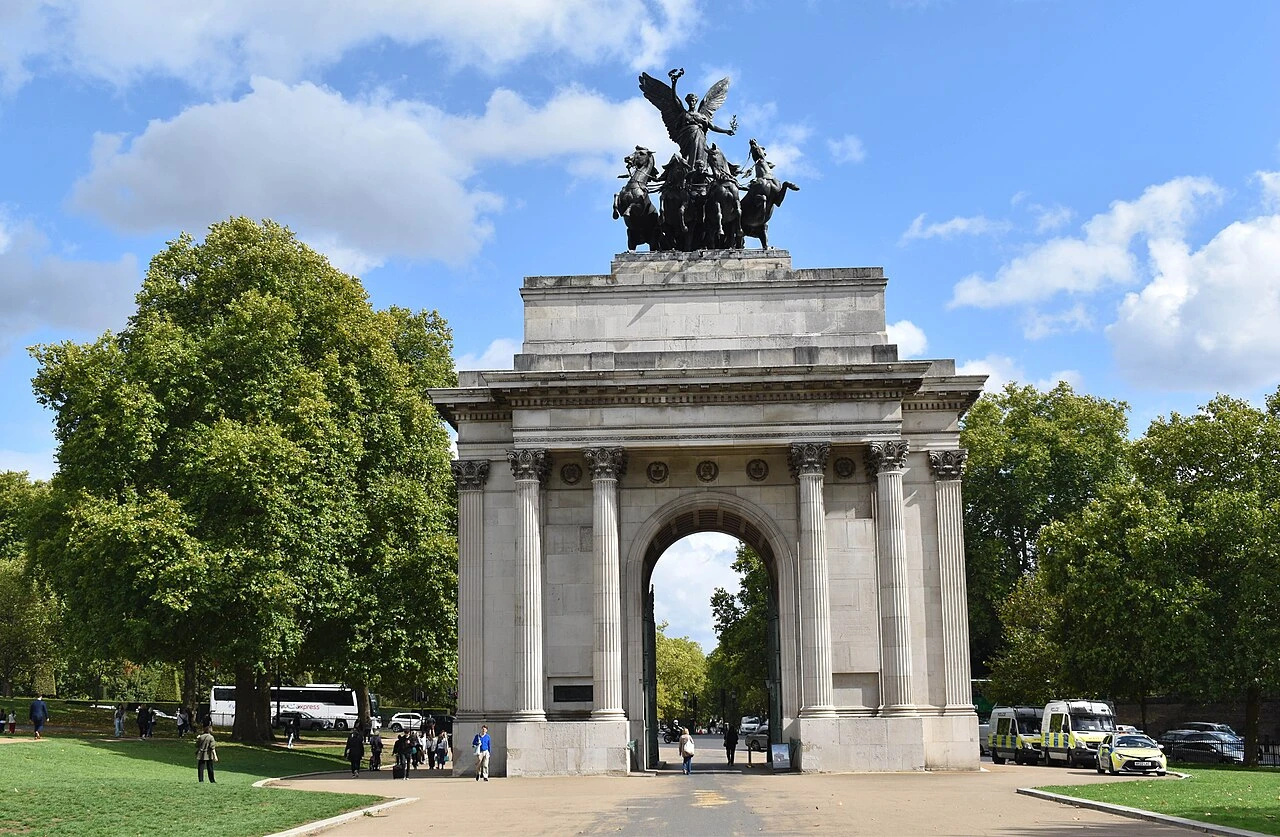
Wellington Arch is a triumphal arch in London, originally designed as an entrance to Buckingham Palace. It commemorates Britain's victories in the Napoleonic Wars.
Download Stanza, then search for “Wellington Arch”.
About the tour
One guide. Your kind of visit.
Wellington Arch is a triumphal arch in London, originally designed as an entrance to Buckingham Palace. It commemorates Britain's victories in the Napoleonic Wars.
Ready when you are.
- 01Get the free Stanza app.
iOS & Android
- 02Find your guide.
“Wellington Arch”
- 03Download before you go.
Works offline
Audio guide / 20 narrated stops
Inside the guide
Get to know a few of the stories before you go. Open a stop to read more.
01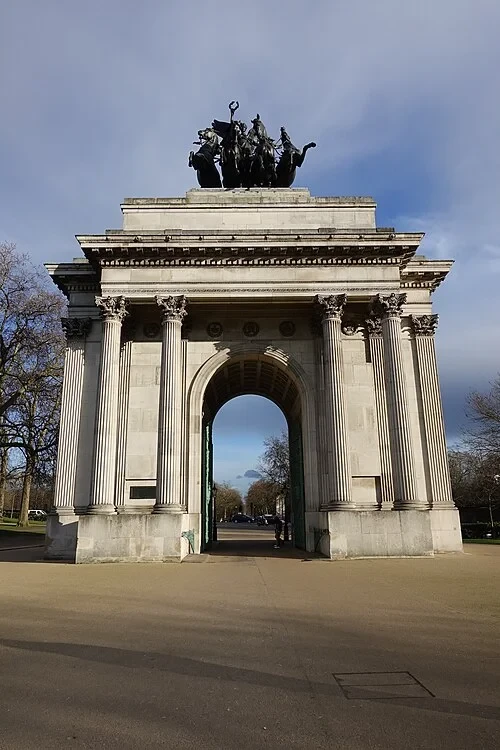 The Grand Entrance at Hyde Park CornerThe Ceremonial Gateway
Welcome to the Wellington Arch, a monumental landmark that stands approximately 30 meters tall at the corner of Hyde Park. While its weathered stone might suggest an ancient Roman origin, construction actually began in 1826 and was completed in 1830. The young architect Decimus Burton was commissioned to create this structure as a ceremonial gateway to Buckingham Palace, intended to celebrate Britain's victories in the Napoleonic Wars. Look up at the sheer scale of the archway; it was designed to accommodate royal processions passing through its central opening. Burton’s vision was part of a larger plan to transform this area into a grand civic space worthy of the capital. Despite its current position as a centerpiece of a busy traffic island, it remains one of the finest examples of neoclassical architecture in the city. The structure is built with a core of brick faced with stone, featuring heavy cornices and detailed carvings that reference classical antiquity. As you stand beneath this towering frame, consider how it was originally meant to set the tone for the entire royal approach to the King’s residence just down the hill.
Photo: CrisNYCa · CC BY-SA 4.0
02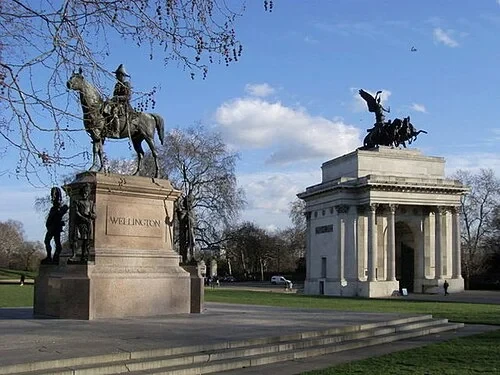 The Grand Entrance at Hyde Park CornerThe Moving Monument
The Wellington Arch did not always occupy this central island. Until 1883, it stood directly opposite the entrance to Hyde Park, aligned precisely with the gateway you see nearby. However, as Victorian London expanded, the narrow roadway became a major bottleneck for horse-drawn carriages and early motorized vehicles. To alleviate this growing traffic congestion, the decision was made to dismantle the entire arch and move it a short distance to its current site. This was a massive engineering feat for the era, requiring the structure to be carefully taken apart and reconstructed. This move fundamentally changed the character of the area, transitioning it from a quiet, exclusive royal approach into one of the busiest and most recognizable intersections in the world. What was once a private gateway for the monarch became a public landmark surrounded by the constant flow of city life. The relocation also allowed for the widening of the roads we see today, creating the large traffic circle known as Hyde Park Corner. This shift reflects the changing priorities of London, balancing the preservation of grand ceremonial architecture with the practical needs of a rapidly modernizing city.
Shaun Ferguson · CC BY-SA 2.0
03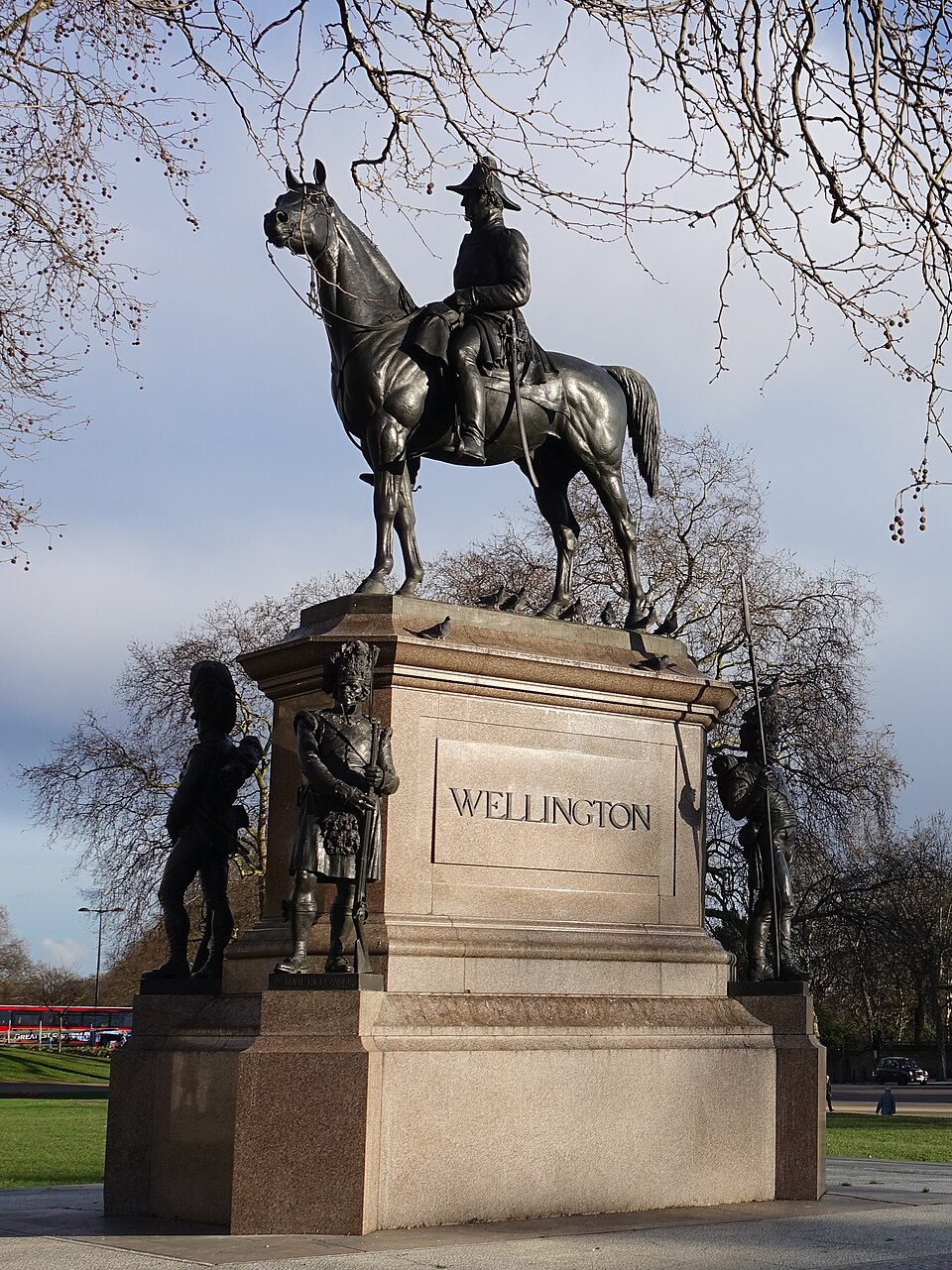 The Battle of the StatuesThe Iron Duke
Nearby, a separate monument honors Arthur Wellesley, the 1st Duke of Wellington, who is famously known as the 'Iron Duke.' This statue depicts him mounted on his favorite charger, Copenhagen. Copenhagen was a legendary animal in his own right, having carried the Duke through the entire day at the Battle of Waterloo. If you look at the base of the monument, you will see four distinct figures representing the soldiers who fought under Wellington’s command. These figures include a Grenadier, a Highlander, a Welsh Fusilier, and an Inniskilling Fusilier. Each soldier is rendered with historical accuracy, showcasing the uniform and equipment of the British regiments from the early nineteenth century. This composition serves to remind us that Wellington's victories were achieved through the discipline and bravery of men from across the United Kingdom. The Duke himself is shown in his typical campaigning attire rather than full ceremonial dress, reflecting his practical nature as a military commander. The placement of this statue near the arch reinforces the connection between the monument and the man whose victories it was ultimately built to celebrate. It remains one of the most prominent tributes to Wellington in the capital.
Listen in the appCrisNYCa · CC BY-SA 4.0
04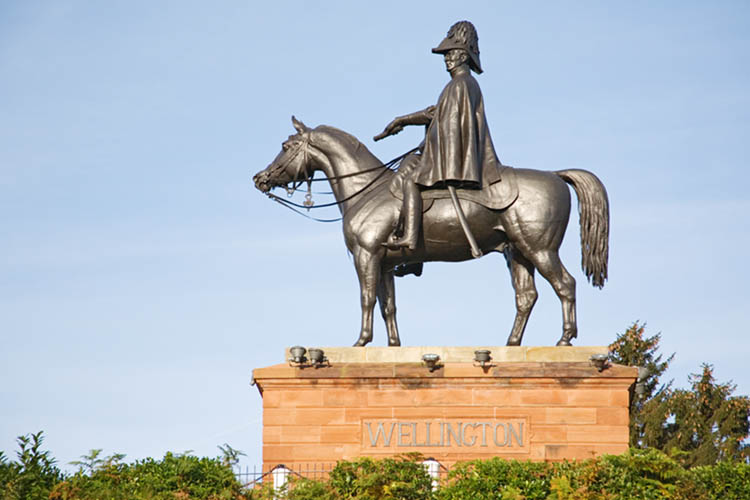 The Battle of the StatuesThe Exiled Giant
The arch we see today looks very different from how it appeared in the mid-1800s. For nearly forty years, the top of the structure was occupied by a colossal 40-ton bronze statue of the Duke of Wellington, designed by Matthew Cotes Wyatt. However, this massive figure was widely ridiculed from the moment it was installed. Critics and the public felt the scale was completely wrong, making the arch itself look small and insignificant by comparison. Decimus Burton, the arch's architect, was particularly devastated, believing the giant statue ruined the neoclassical proportions of his work. The controversy lasted for decades until the arch was moved in 1883. During that relocation, the opportunity was taken to permanently remove the 'Exiled Giant.' It was eventually sent to the military town of Aldershot, where it still stands today in a woodland setting. This original statue was much more rigid and stylistically heavy than the refined Boehm statue that stands nearby now. Its removal allowed for the eventually more balanced ornamentation we see crowning the building today. The story of the Wyatt statue serves as a famous example of how public opinion and artistic taste can radically change the skyline of a city over time.
Listen in the appThe original uploader was Wyrdlight at English Wikipedia. · CC BY-SA 3.0
05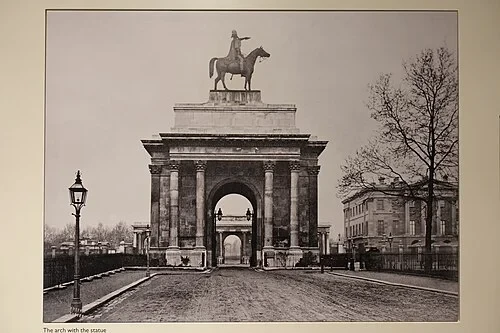 The Battle of the StatuesA Visual Controversy
Historical photographs and illustrations provide a glimpse into what was known as the 'Battle of the Statues.' When the massive Wyatt sculpture of Wellington was placed atop the arch, the visual imbalance was staggering. The horse and rider were so large that they appeared to be crushing the delicate columns below. Decimus Burton was so horrified by what he saw as a desecration of his architectural vision that he spent the rest of his life campaigning for its removal. He was so committed to this cause that he even left a specific sum of money in his will to pay for the statue to be taken down if it hadn't happened before his death. This archival image shows the arch with that original, oversized decoration, highlighting how much the proportions were skewed. It took the relocation of the arch itself in the 1880s to finally fulfill Burton's wish. This conflict between architect and sculptor became a legendary tale in London's design history, illustrating the challenges of coordinating large-scale public art projects. Today, the arch stands without that heavy burden, restored to the more harmonious neoclassical silhouette that Burton had originally intended back in the 1820s.
Listen in the appPhoto: CrisNYCa · CC BY-SA 4.0
06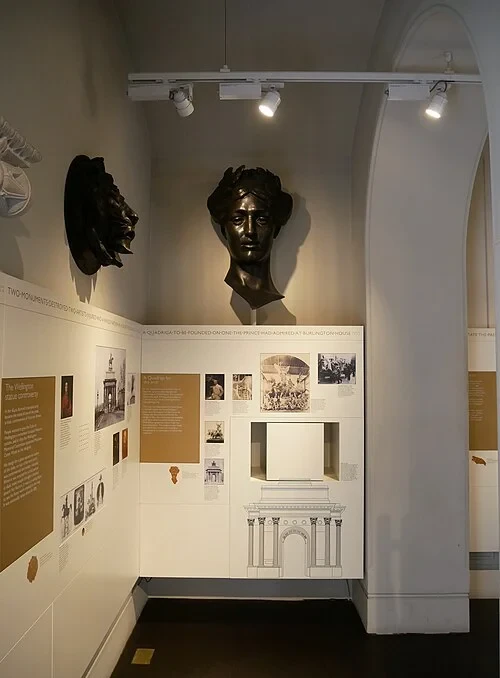 Inside the Arch: Museums and MemoriesThe Hollow Interior
While many visitors assume the Wellington Arch is a solid block of masonry, it is actually a hollow structure containing a series of functional rooms. For over a century, these spaces served various practical purposes, but today they house an exhibition area spread across three floors. Inside, you can discover the fascinating design history of the arch itself. The displays include original architectural drawings and models that reveal how Decimus Burton’s vision evolved over time. You can learn about the various design competitions held to decide exactly how the arch should be ornamented, from the controversial original statue to the final bronze sculpture that was eventually placed on top. The interior also provides a unique look at the Victorian engineering required to maintain such a massive stone gate. Large windows on the upper levels offer unexpected views of the surrounding parkland and the city streets below. Exploring the inside of the arch changes your perspective on the monument, transforming it from a static decorative gate into a living building with its own internal history. It is a rare chance to step inside a piece of triumphal architecture and see the world from within the heart of a London icon.
Listen in the appPhoto: Doyle of London · CC BY-SA 4.0
07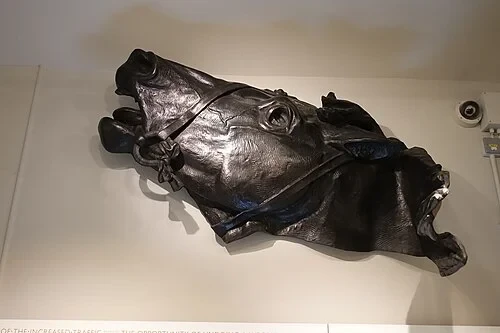 Inside the Arch: Museums and MemoriesCopenhagen's Likeness
Mounted on the wall here is a bronze cast of a horse’s head, which offers an intimate look at the craftsmanship required for the monument. This is a likeness of Copenhagen, the Duke of Wellington’s most trusted mount. Copenhagen was a chestnut stallion of mixed Thoroughbred and Arabian parentage, celebrated for his incredible stamina. His most famous achievement was during the Battle of Waterloo in 1815, where he carried the Duke for seventeen straight hours without rest. The level of detail in this cast—from the texture of the coat to the veins in the muzzle—demonstrates the anatomical precision sought by nineteenth-century sculptors. It brings the history of the Napoleonic Wars down to a personal, sensory level. After his military service, Copenhagen retired to the Duke’s estate at Stratfield Saye, where he lived to the age of twenty-eight and was buried with full military honors. Seeing this likeness up close reminds us that the grand victories commemorated by the arch were made possible by the endurance of animals as well as men. The cast serves as a permanent tribute to the bond between the commander and the horse that carried him through the most pivotal moment of his career.
Listen in the appPhoto: CrisNYCa · CC BY-SA 4.0
08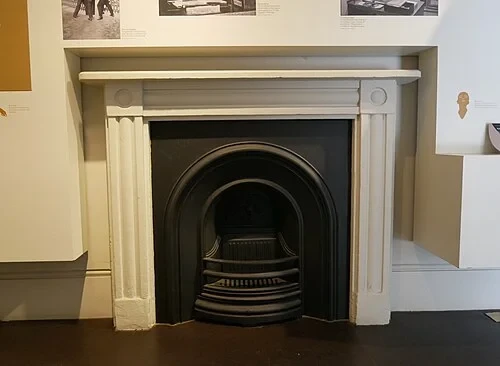 Inside the Arch: Museums and MemoriesLondon's Smallest Police Station
Notice the fireplace located within the stone walls of the arch. This seemingly domestic feature points to a surprising chapter in the building's history. From 1886 until 1992, the right-hand pier of the arch actually served as the smallest police station in London. Despite the grand, ceremonial appearance of the exterior, the inside was a functional post for the Metropolitan Police. Ten officers and one sergeant were stationed here, primarily tasked with managing the traffic and security at this busy gateway to the royal parks. The interior was cramped, and this fireplace provided essential warmth for the officers during long shifts in the cold London winters. It is a striking contrast to think of a working police squad operating out of the heart of a triumphal arch designed to honor a military hero. The station was eventually closed in the 1990s when the arch was transferred to the care of English Heritage, but the presence of the fireplace remains a tangible reminder of the arch's practical, everyday past. It highlights how London's historic monuments often find unexpected second lives as functional spaces in the service of the city.
Listen in the appPhoto: Doyle of London · CC BY-SA 4.0
09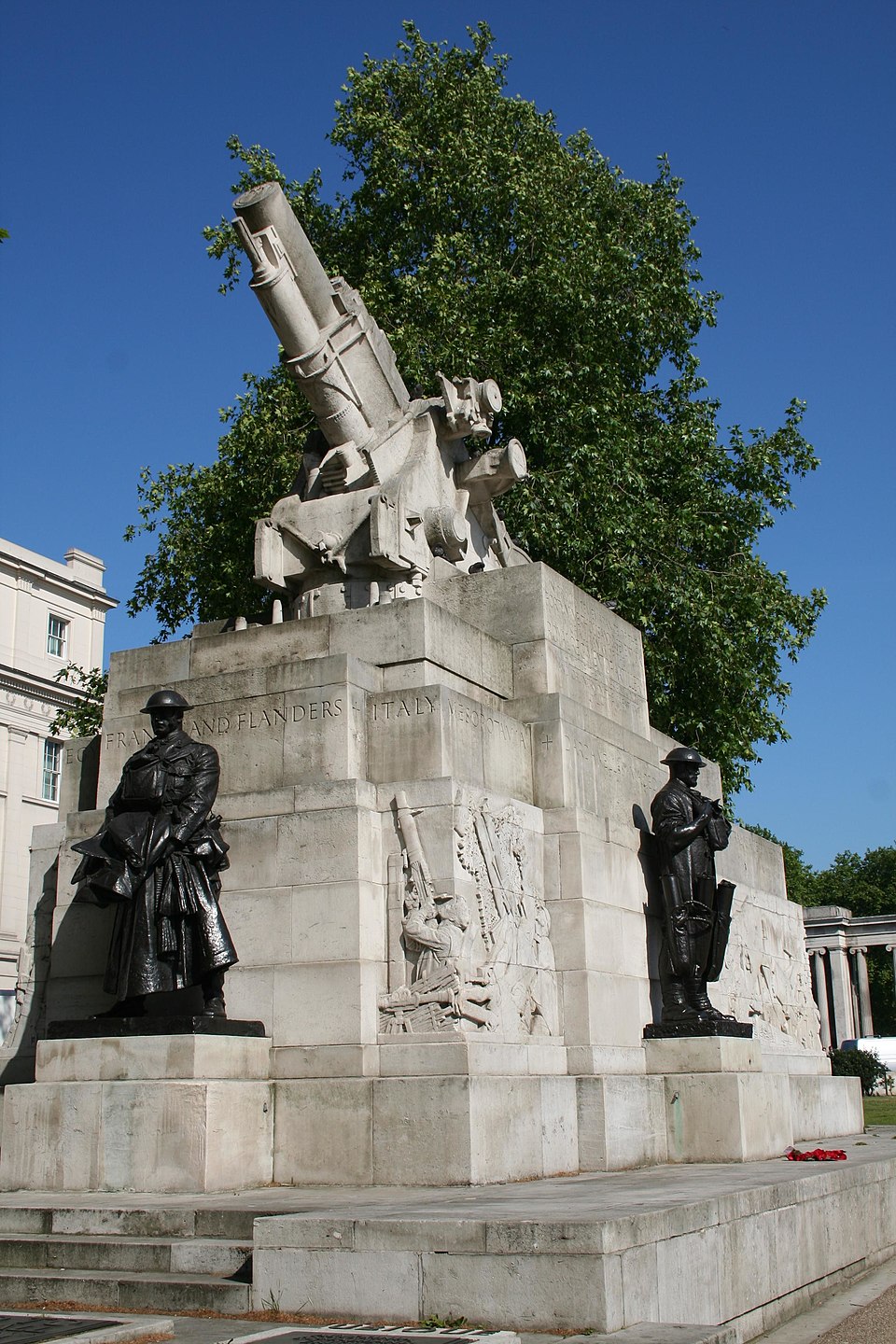 The Memorials of Hyde Park CornerThe Artillery Memorial
Shifting our focus to the surrounding memorials, we find the Royal Artillery Memorial. This monument is known for its stark and somber realism, a departure from more idealized war memorials of the past. It is crowned by a massive stone representation of a 9.2-inch howitzer, a powerful piece of heavy weaponry used during the First World War. The sculptor, Charles Sargeant Jagger, was himself a veteran of the conflict and was determined to avoid a sanitized or heroic depiction of combat. Instead, the bronze figures around the base show soldiers in positions of exhaustion and grit, wearing the heavy, practical gear of trench warfare. Jagger insisted on showing the reality of the service, including a figure of a fallen soldier covered by a coat, which was a controversial choice at the time. This memorial honors the nearly 50,000 members of the Royal Regiment of Artillery who died during the Great War. Its raw honesty serves as a powerful counterpoint to the neoclassical celebration of the Wellington Arch nearby. It stands as a reminder that modern conflict is often defined by industrial scale and human endurance in the face of terrible hardship.
Listen in the appGalileo55 (Michael Arrighi) · CC BY 2.0
10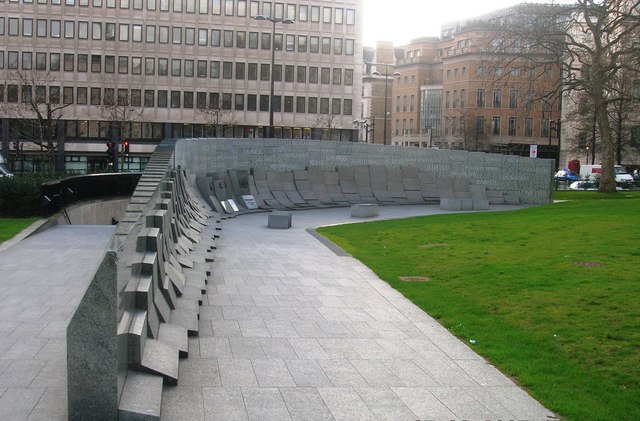 The Memorials of Hyde Park CornerThe Australian Memorial
This memorial consists of a long, curved wall of grey granite that creates a quiet space of reflection. Etched into the surface of the stone are the names of 23,800 towns and cities across Australia. These represent the birthplaces of the men and women who served in the Australian Imperial Force during the two World Wars. A gentle sheet of water flows over the names, which is intended to evoke the sound of the Australian bush and the long distance traveled by those who came to serve in Europe. This water feature adds a sensory layer to the memorial, creating a soothing sound that helps mask the noise of the surrounding traffic. The design emphasizes the personal connection between the vast Australian landscape and the individual sacrifices made during global conflicts. By listing the towns rather than just individual names, the memorial honors entire communities that were impacted by the wars. It is a place of deep significance for many visitors from the Southern Hemisphere, serving as a permanent piece of Australian soil in the heart of London. The monument was dedicated in 2003, marking the centenary of the first Australian military units sent overseas.
Listen in the appR Sones · CC BY-SA 2.0
Wellington Arch
Frequently asked questions
How much does the guide cost?
Free app download. Listed guide price: $0.99. Guide price shown in the app. Audio guide only. Venue admission is separate.
Can I listen without internet?
Yes. Download the guide’s audio, images, and maps in the app before your visit. Your downloaded content is then available offline.
Can I listen in my language?
Stanza supports 15 languages. Check the app for the languages available for this guide.
Do I need to follow a schedule?
No. This is a self-guided experience. Choose your stops, pause whenever you like, and return to a story at your own pace.
At your own pace
Explore Wellington Arch.
Download Stanza, then search for “Wellington Arch”.
Free app download · Guide price shown in the app
Keep exploring
Nearby audio guides
London
Big Ben
Content & sources
Dave Bezaire · CC BY-SA 2.0
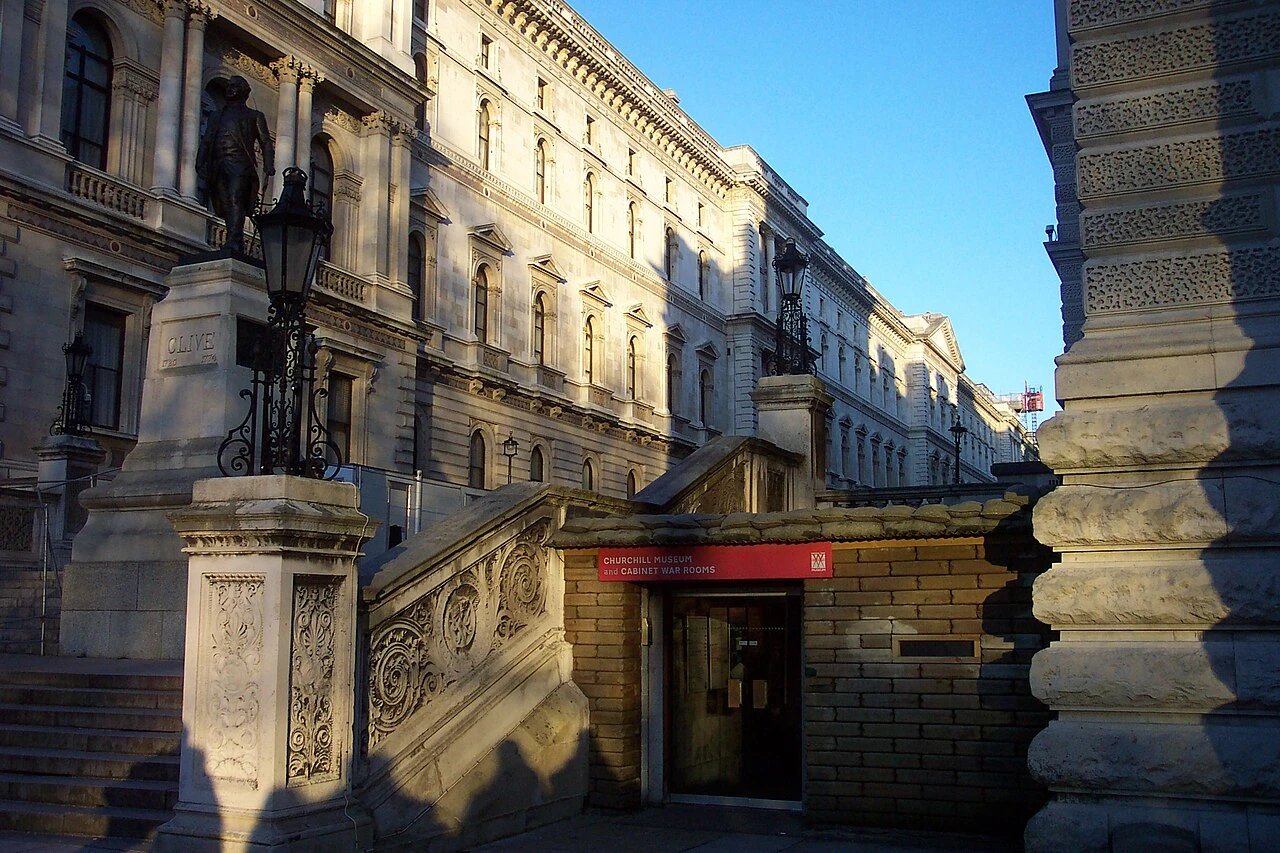
London
Churchill War Rooms
Content & sources
en:User:Jdhowens90 · CC BY-SA 3.0
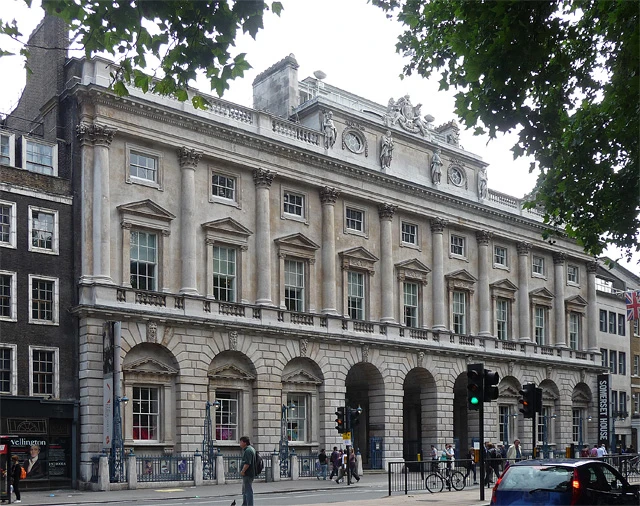
London
Courtauld Institute of Art
Content & sources
Stephen Richards · CC BY-SA 2.0
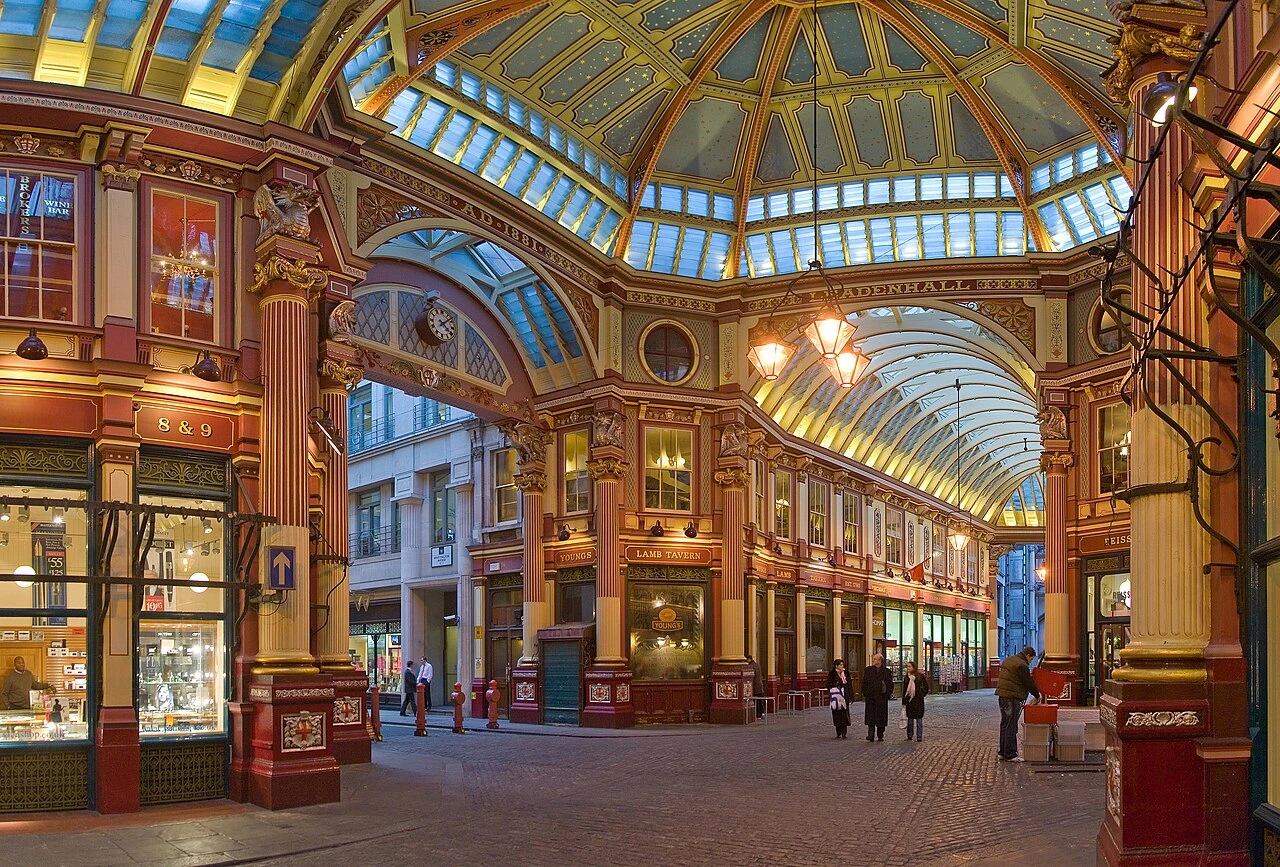
London
Leadenhall Market
Content & sources
Diliff · CC BY 2.5