Stanza · Audio guide
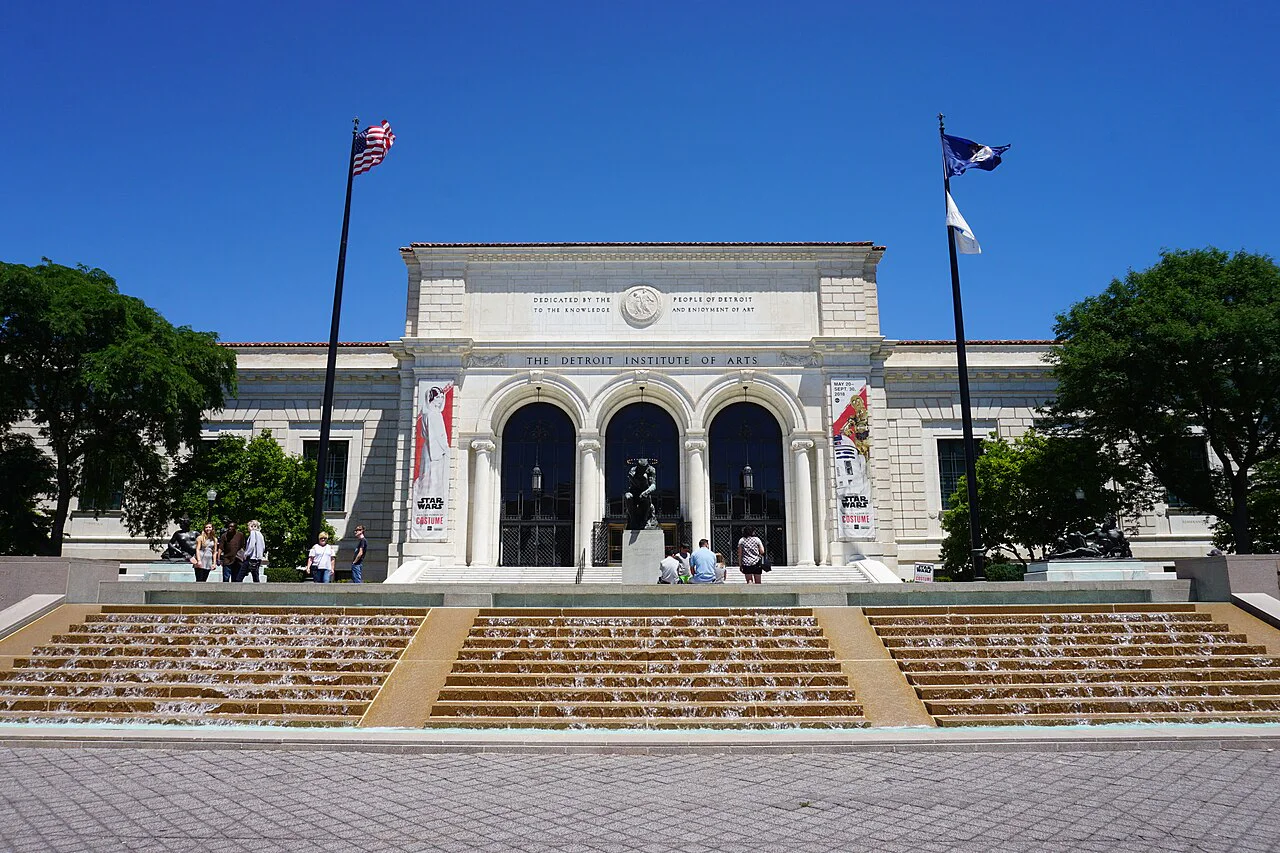
Detroit Institute of Arts Audio Guide
A place to remember. A story to take with you.
The Detroit Institute of Arts is an art museum located in midtown Detroit, Michigan. It houses one of the largest and most significant art collections in the United States, spanning from ancient Egyptian…
Download Stanza, then search for “Detroit Institute of Arts”.
About the tour
One guide. Your kind of visit.
The Detroit Institute of Arts is an art museum located in midtown Detroit, Michigan. It houses one of the largest and most significant art collections in the United States, spanning from ancient Egyptian works to contemporary art.
The Detroit Institute of Arts guide tells the stories of 57 artworks, including Martha and Mary Magdalene (Caravaggio), The Nightmare (Henry Fuseli), Nocturne in Black and Gold – The Falling Rocket (James McNeill Whistler), Watson and the Shark (John Singleton Copley), The Wedding Dance (Pieter Bruegel the Elder), The Nut Gatherers (William-Adolphe Bouguereau), Cotopaxi (Frederic Edwin Church), and The Jewish Cemetery (Jacob van Ruisdael). Every artwork is free to hear in the Stanza app until 1 January.
Ready when you are.
- 01Get the free Stanza app.
iOS & Android
- 02Find your guide.
“Detroit Institute of Arts”
- 03Download before you go.
Works offline
Audio guide / 57 artworks
Inside the guide
Get to know a few of the stories before you go. Open a stop to read more.
01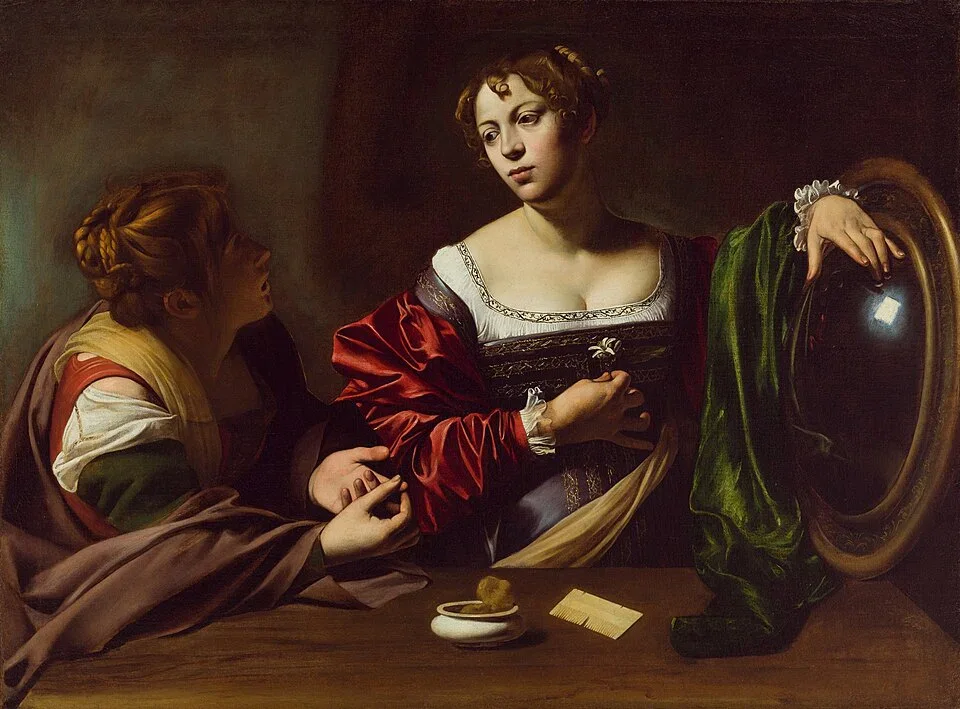
Martha and Mary Magdalene
Caravaggio set out to paint something you cannot see. It is the moment a person's life begins to turn. Mary Magdalene's conversion is just starting here. He put the change in the light. The glow on her face is more than ordinary daylight. It stands for divine revelation, and the picture's whole force sits in that face. Martha leans in from the left, her face in shadow, arguing hard, counting Christ's miracles on her fingers to win her sister over. Mary, in red, twirls an orange blossom in one hand and holds a mirror in the other. A table runs in front of them with an ivory comb and a dish holding a sponge. For all its sacred subject, the scene is staged like something from everyday life. He used two well-known courtesans from his patron Cardinal del Monte's circle as the sisters. Fillide Melandroni sat for Mary, Anna Bianchini for Martha. The mirror reflects a rectangular window, and Mary's middle finger points at the reflection. The mirror stands for the vanity she is about to give up.
Listen in the appCaravaggio · Public domain
02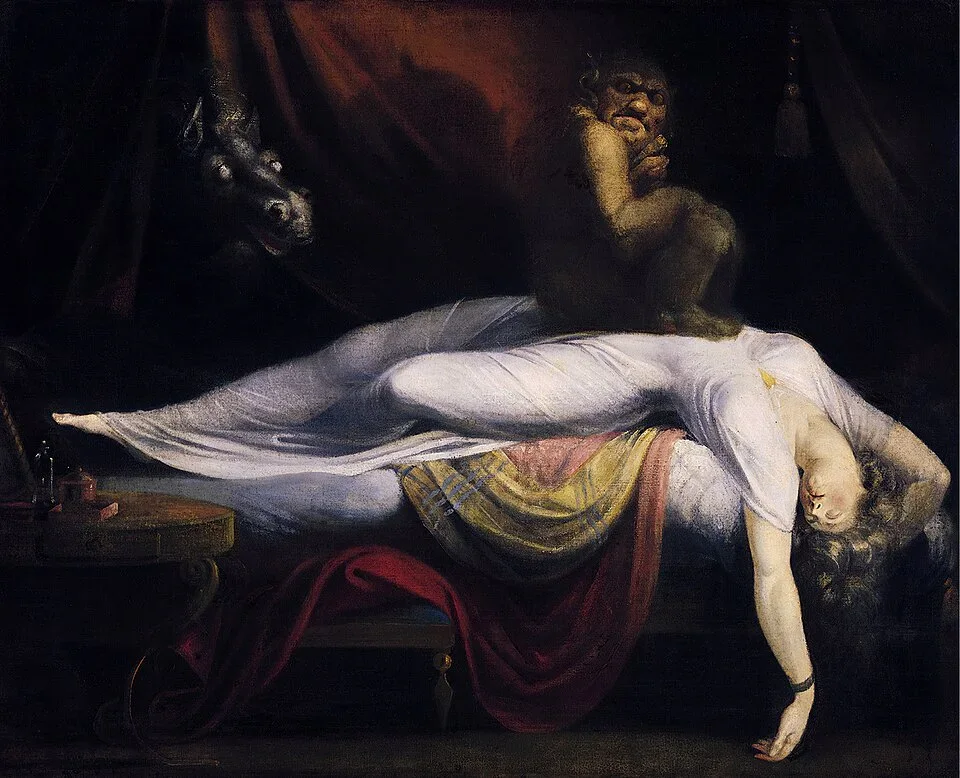
The Nightmare
A young woman lies draped over the end of a bed, her head hanging down and her long neck bare. Her arms are thrown down below her, and she seems lifeless. On her chest crouches a creature, part ape, part demon, staring straight out at you. From a parting in the red curtain behind her, the head of a horse looks on. It may have grown out of a love that came to nothing. A few years before, Henry Fuseli had fallen in love in Zurich with a woman named Anna Landolt. Her father refused to let them marry, and she married a friend of the family instead. He wrote to a friend of dreams of her in his bed, of clasping her in his arms and pouring his spirit into hers. When the painting was shown in London in 1782, its open sexuality shocked people. It became the first of his works to sell well. The creature's stare may be a jealous one. It may be Fuseli himself, finally holding the woman he could not have. On the back of the canvas is an unfinished portrait of a girl. No one knows whether that girl and the woman here are Anna Landolt.
Listen in the appHenry Fuseli · Public domain
03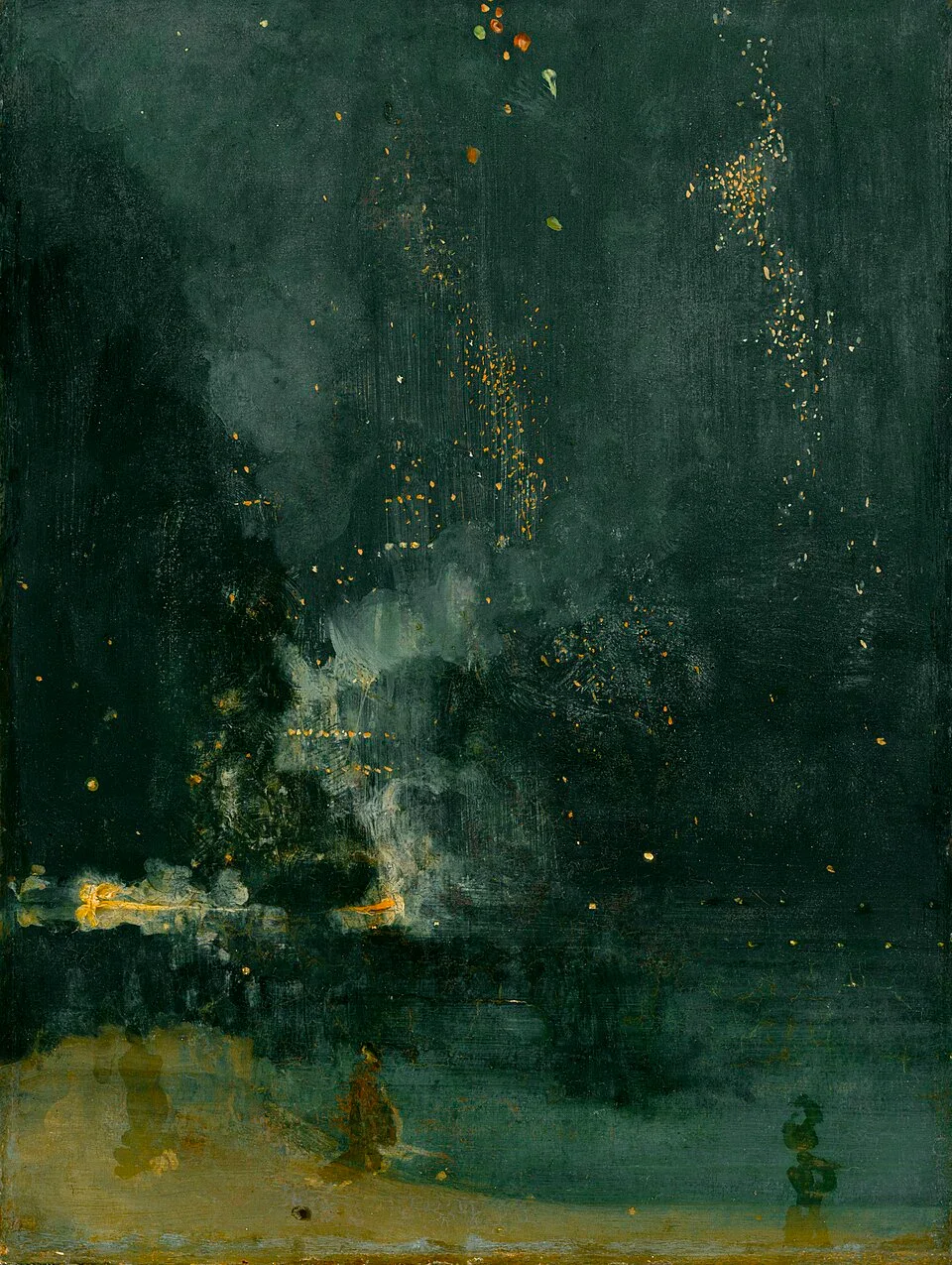
Nocturne in Black and Gold – The Falling Rocket
A few people watch the fireworks, so faint you could pass them by. They are almost transparent, their shapes simple. They belong to the night. The rocket of the title is not a thin streak. It is a great fall of fog across the sky, with dabs of yellow breaking through where the fireworks burst. Blue, green and yellow. Whistler called works like this Nocturnes. He said they were not pictures but scenes or moments. They were arrangements of color and tone, meant to work like music and not tell a story. His critics called the technique reckless. But he spent years perfecting it, until one flick could make a figure appear, and he studied his work in mirrors for flaws. He showed this one in London in 1877. The critic John Ruskin said he had thrown a pot of paint in the public's face. Suddenly it was shameful to own a Whistler, and his finances suffered. So he sued Ruskin for libel. In court he insisted this was an arrangement of the Cremorne fireworks, not a view of the place. The painting was even presented upside down at the trial. He won in 1878, but the damages were one farthing, and the costs left him bankrupt. Afterwards he spent fourteen months in Venice, and the paintings he brought back restored his name.
Listen in the appJames McNeill Whistler · Public domain
04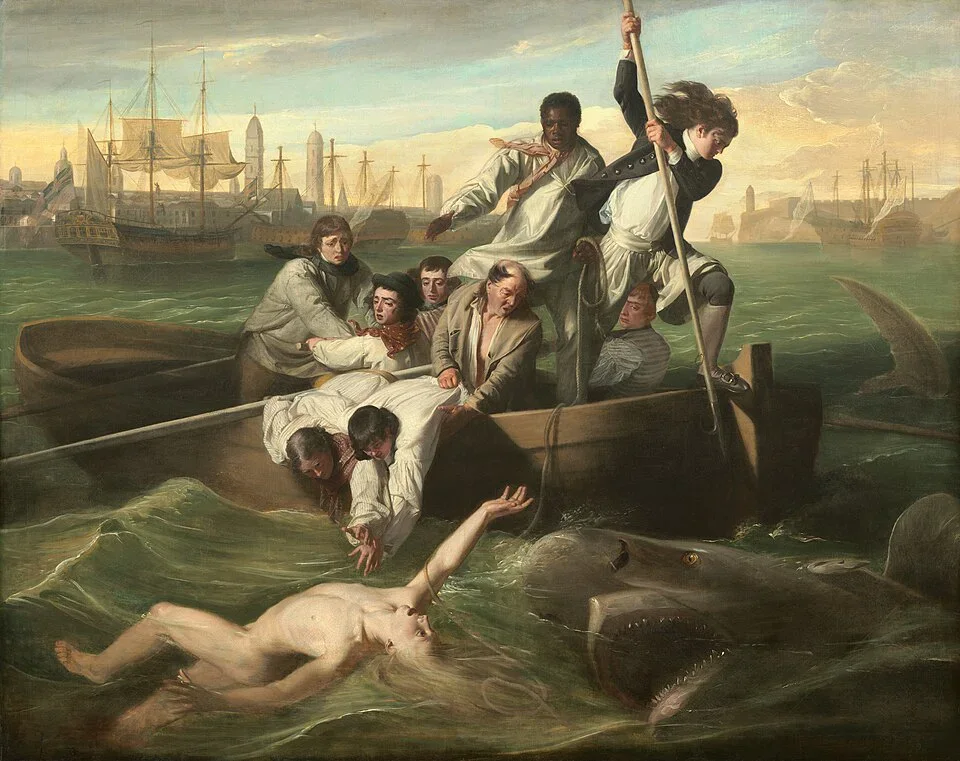
Watson and the Shark
The man who painted this never saw it happen. He had never been to Havana, and he had probably never seen a shark, much less one attacking a person. The shark gives it away. It has lips. Its eyes face forward the way a tiger's do, and air blows out of its nostrils. No real shark has any of those. The harbor is not all invented either. There is Morro Castle on the right, a real landmark in Havana. John Singleton Copley may have worked from prints and book illustrations, having never seen the place. Even the boy comes from somewhere else. His pose follows a statue in the Louvre, the Borghese Gladiator. The men in the boat strain toward him while he floats there. Why take on a scene he was not at, with a shark he had never seen? Because the boy was real. Brook Watson lost his right leg below the knee in that harbor in 1749. Twenty-five years later he was a successful merchant in London and the painter's friend. He wanted the moment painted.
Listen in the appJohn Singleton Copley · Public domain
05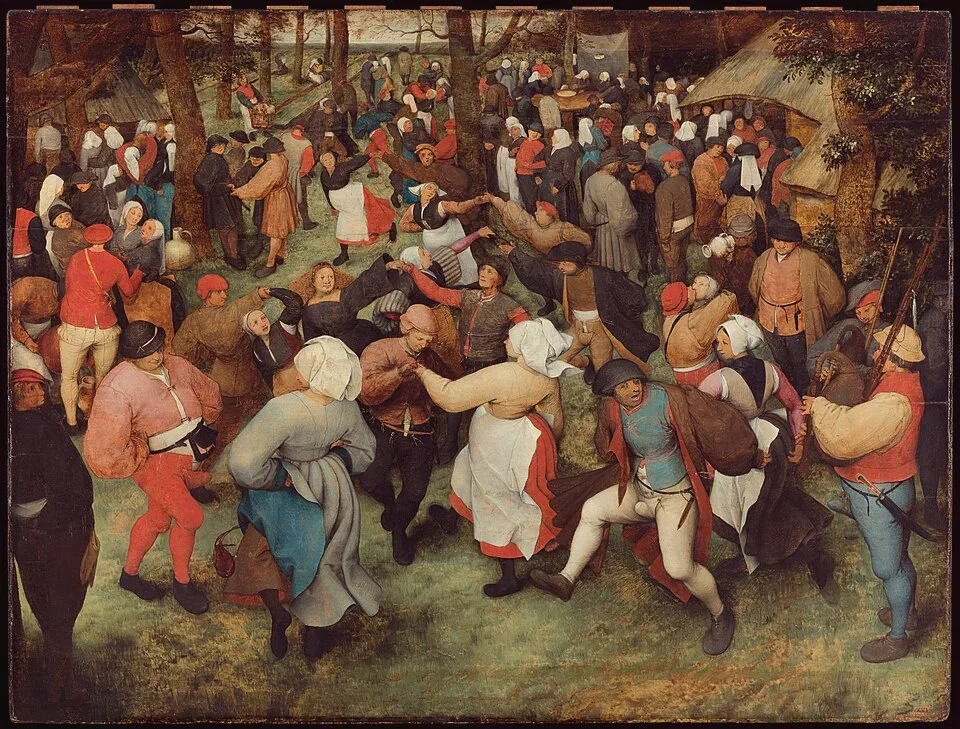
The Wedding Dance
A hundred and twenty five wedding guests dance almost to the edges of the panel. In the middle the bride, in black, dances with an older man, her father. A bagpiper plays on the right, and behind him a man watches from the side with writing tools at his belt. The painting did not stay as Bruegel left it. The narrow board along the top came from a different tree. His black chalk sketch stops short of it, so the board was added later, perhaps as late as 1750. He likely never meant the painting to have a horizon at all. The codpieces were changed too. Lines were scratched into five of the most prominent ones, and the area was painted over. In 1941 that paint was taken off and the codpieces came back. No one knows when those lines were scratched into the codpieces.
Listen in the appPieter Brueghel the Elder · Public domain
06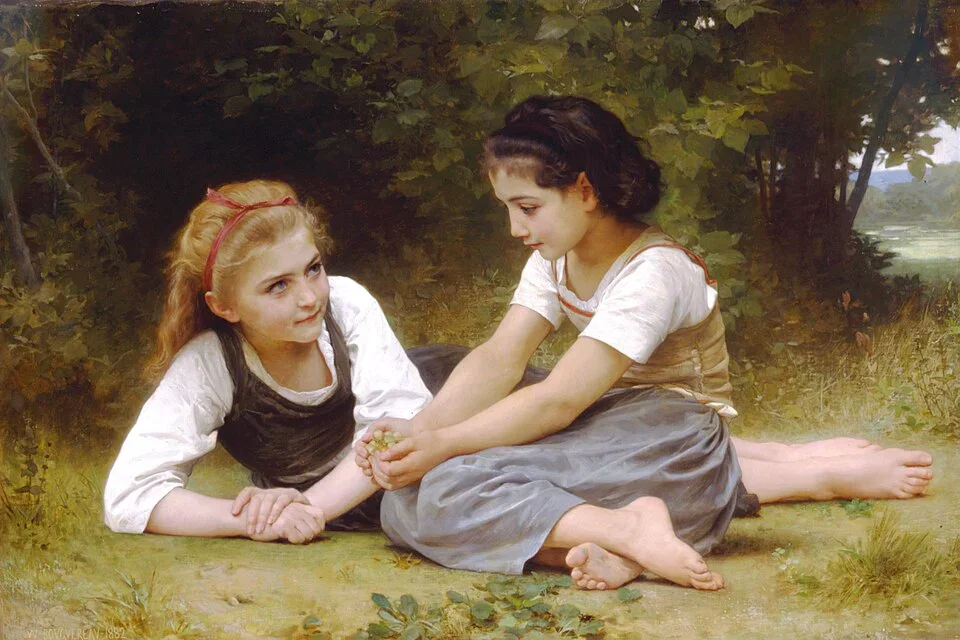
The Nut Gatherers
Two young women rest after gathering hazelnuts. Bouguereau chose to paint the pause that follows, not the collecting itself. The French title, Les Noisettes, means the hazelnuts, so the picture is named for the very thing these two have just been gathering. He painted it in 1882. Bouguereau was the quintessential salon painter of his generation, and he was hugely popular in France and the United States. Eight hundred and twenty-two of his paintings are known. This one was given to the Detroit Institute of Arts by William E. Scripps in 1954, and it is now one of the most popular pieces there.
Listen in the appWilliam-Adolphe Bouguereau · Public domain
07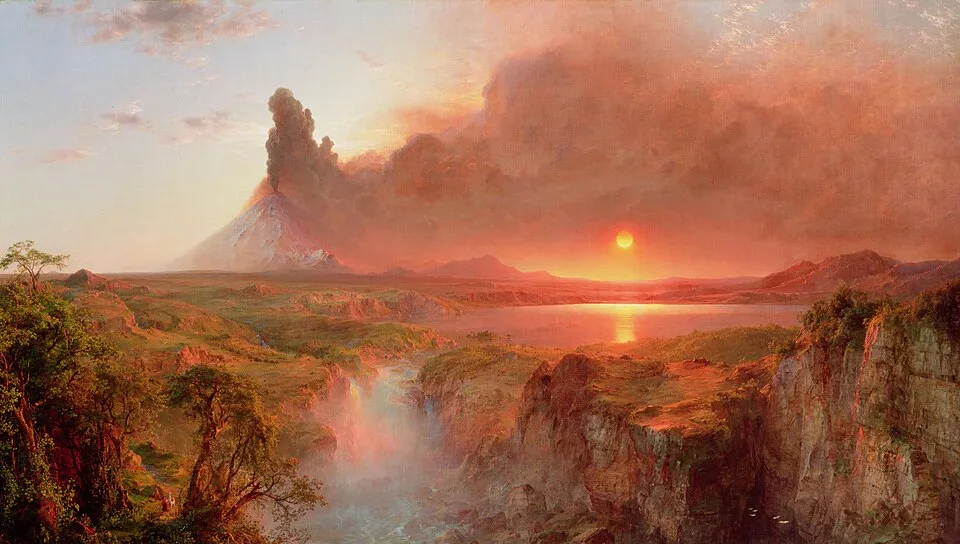
Cotopaxi
Frederic Church wanted the energy of the Andes. He found it in a mountain that throws smoke and ash into the air. He had gone to South America with scientists, drawn there by Humboldt's writings and drawings, and this erupting peak held him. He painted it again and again, at least ten times, sketching on the spot and finishing the canvases back in his New York studio. And the ash does not simply vanish. It falls into a lake, then pours out as a waterfall into a larger body of water. Given enough time and pressure, it turns to rock, and that rock is the steep cliffs in the foreground. He put the scene together from different places, and made the slopes more dramatic than they really are. Behind the smoke is a colorful sunrise. When the painting was first shown in New York in 1863, the Civil War was raging in the South. Perhaps that light against all the darkness was a parable of the war.
Listen in the appFrederic Edwin Church · Public domain
08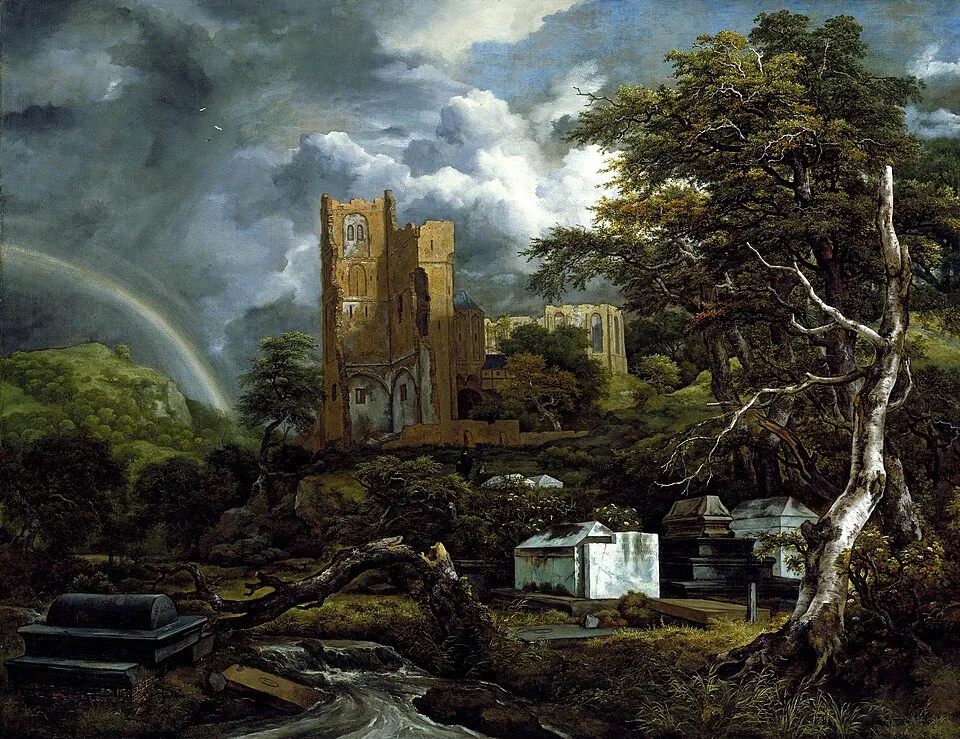
The Jewish Cemetery
No one knows who asked for this painting. No one even knows whether anyone asked for it at all. High in the picture a rainbow curves, almost a bridge to heaven. Perhaps, for the Portuguese Jews whose graves these are, it promised that the dead would rise, the first sign that the messiah was coming. Light forces through the storm and settles on one tomb. A broken column set on another grave probably means death. The stream rushes over large stones, an image of time passing. That lit tomb is Elias Montalto's. He was doctor to Maria de' Medici. When he died in 1616, his remains were brought to Beth Haim, at Ouderkerk near Amsterdam. This was the burial ground of Amsterdam's Portuguese Jews, and the monuments mark its leaders. Ruisdael worked from drawings he had made of the real tombs. The ruins and the rushing stream never stood at Ouderkerk. The setting is Ruisdael's own invention.
Listen in the appJacob van Ruisdael · Public domain
09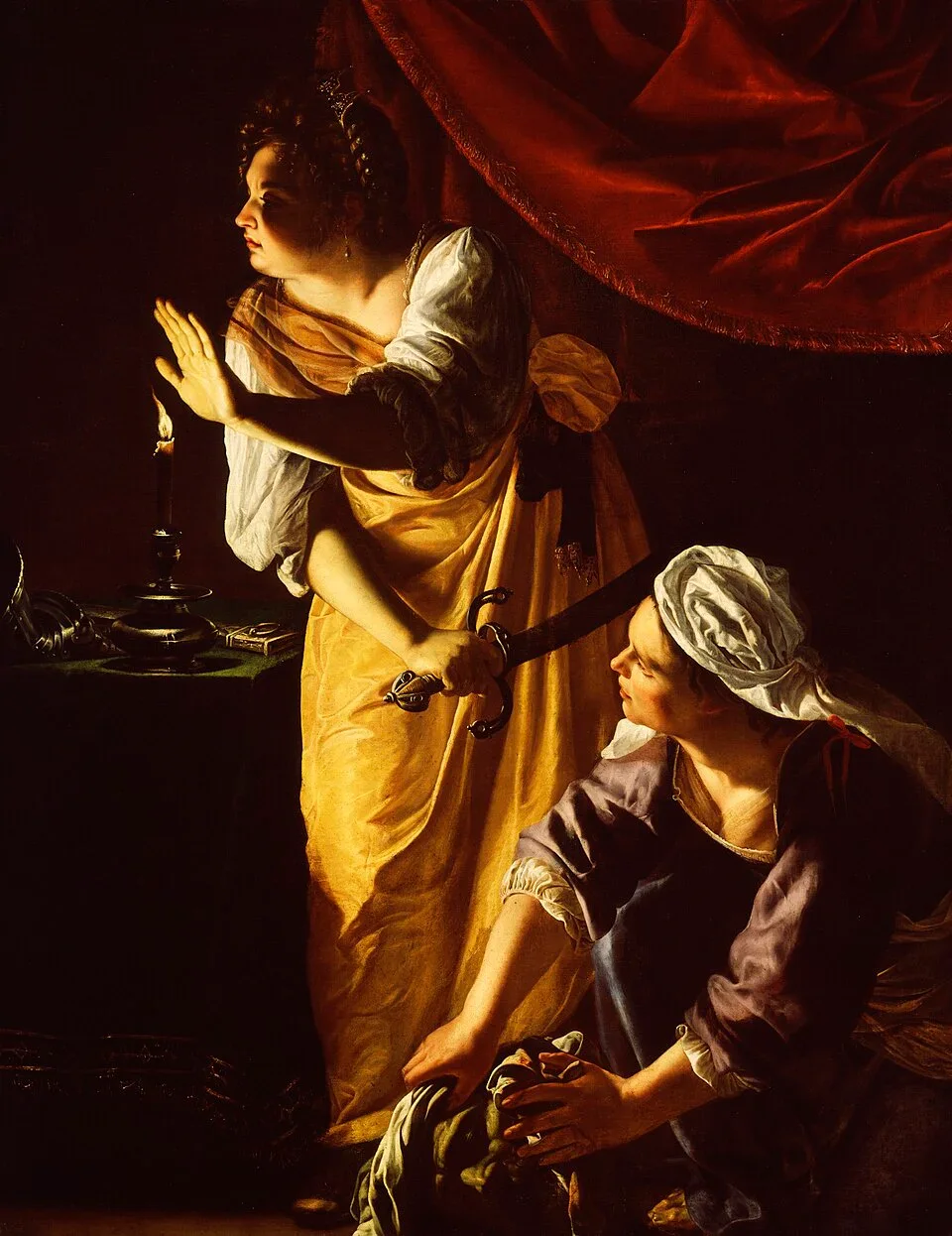
Judith and Maidservant with Head of Holofernes
When Artemisia Gentileschi returned to Rome, a new way of painting had arrived. Painters from the north were lighting night scenes with a single candle, and she took it up here. The candle is the only light in the general's tent. Judith's face catches half of it, and she holds a hand against the glow, as if to protect their escape. The shadow across her face falls like a crescent moon, a shape that links her to Artemis. Abra kneels and wraps the severed head in cloth, her eyes elsewhere, her hands moving on their own. Judith wears elegant yellow silk, her head adorned with jewels. Bethulia was under siege, and she had gone to save her people. She must hide the sword that killed him. The two women are tense, choosing the moment to flee. The painting may carry a deeper meaning, reaching back to the rape trial against Agostino Tassi. Between 2020 and 2021 the painting was cleaned and restored.
Listen in the appArtemisia Gentileschi · Public domain
10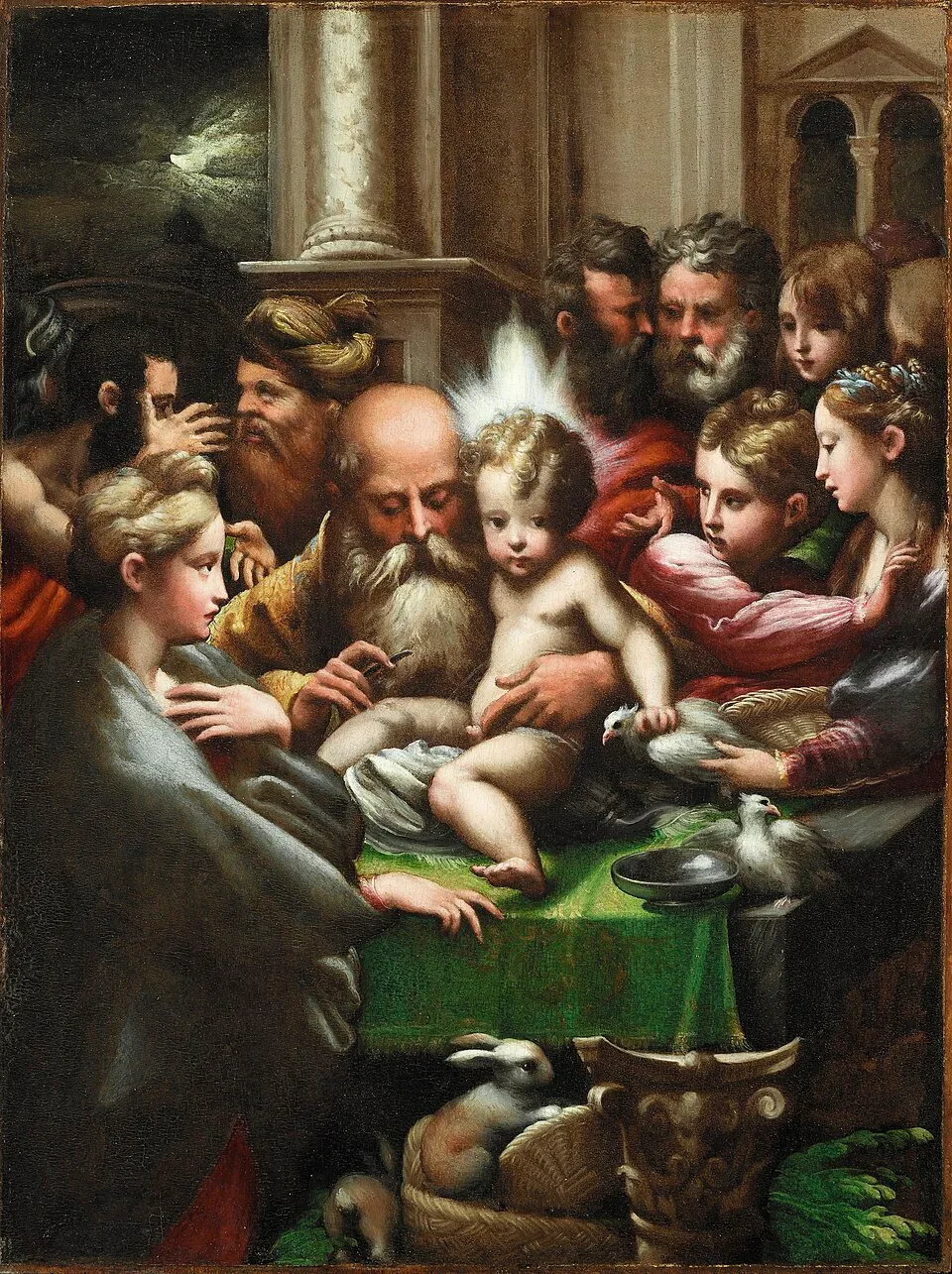
The Circumcision
Behind the two people talking at the left, a sliver of sun pushes out of a cloud in a sky still black. The main light in this painting comes from the child at the centre, with rays spreading from his face. Parmigianino used several light sources here, as he did in the portrait he painted of himself inside a convex mirror. The child is held on an altar by a priest. In his other hand the priest holds the ritual knife, and a crowd presses close around them. Vasari, who wrote lives of the artists, described a Circumcision by this painter, with light coming from the face of Christ. But he also told of figures walking with ladders and lit torches, and a landscape of countless buildings opening before them in the dawn. Nothing of that kind appears here. Whether he meant this painting is still not known.
Listen in the appParmigianino · Public domain
- 11
Saint Jerome in His Study
Jan van Eyck · 1435–1442
- 12
The Flight into Egypt
Bartolomé Esteban Murillo · c. 1647–1650
- 13
Judith with the Head of Holofernes
Titian · c. 1570
- 14
Porto San Giorgio Polyptych
Carlo Crivelli · 1470
- 15
Two Diggers among Trees
Vincent van Gogh · 1889
- 16
Madonna and Child
Giovanni Bellini · 1509
- 17
A Weeping Woman
Rembrandt · 1644
- 18
Detroit Trio
Giorgione, Titian, Sebastiano del Piombo · 1500–1510
- 19
Empire of the Sultans: Ottoman Art of the Khalili Collection
Unknown Artist · 1995–2004
- 20
Detroit Industry Murals
Diego Rivera · 1932–1933
- 21
The Flight into Egypt
Henry Ossawa Tanner · c. 1899
- 22
Portrait of Andrea dei Franceschi
Titian · c. 1532
- 23
St Jerome and the Lion
Rogier van der Weyden · c. 1450–1465
- 24
Philippe Rubens, the Artist's Brother
Peter Paul Rubens · 1610–1611
- 25
The Resurrected Christ
Sandro Botticelli · c. 1480
- 26
Old Peasant Woman
Paula Modersohn-Becker · 1905–1907
- 27
Bank of the Oise at Auvers
Vincent van Gogh · 1890
- 28
Helmet of Iron Gates
Unknown Artist · 4th century BC
- 29
Reclining Figure
Henry Moore · 1939
- 30
The Mystic Marriage of Saint Catherine
Antonio da Correggio · c. 1512
- 31
The Visitation
Rembrandt · 1640
- 32
Lagoon of the Guayaquil River, Ecuador
Louis Rémy Mignot · 1863
- 33
The Window
Henri Matisse · 1916
- 34
John Montresor
John Singleton Copley · 1771
- 35
The Flight of Florimell
Washington Allston · 1819
- 36
Leisure Hours
John Everett Millais · 1864
- 37
Saint Joseph and the Christ Child
Giovanni Battista Tiepolo · 1767–1769
- 38
Madonna with two Angels Adoring the Christ Child in a landscape
Leonardo da Vinci · 1473–1478
- 39
Pietà di Porto San Giorgio
Carlo Crivelli · 1470
- 40
Assumption of the Virgin
Guercino · c. 1650
- 41
A Standard Bearer
Albrecht Durer · 1500–1502
- 42
Georg Brandes at the University in Copenhagen
Harald Slott-Møller · 1889
- 43
Montefiore dell'Aso Polyptych
Carlo Crivelli · 1470–1473
- 44
In the Studio
Michiel Sweerts · 1652
- 45
Portrait of Madame Paul Poirson
John Singer Sargent · 1885
- 46
Portrait of a Woman
Frans Hals · 1634
- 47
Saint John the Evangelist
Carlo Crivelli · c. 1471
- 48
Saint Peter
Carlo Crivelli · c. 1471
- 49
The Fortune Teller
Bartolomeo Manfredi · 1616–1617
- 50
Selene and Endymion
Nicolas Poussin · c. 1630
- 51
Saint Joseph with the Child - Drawing at Musée Jenisch Vevey
Giandomenico Tiepolo? · 1767–1769
- 52
Deer in Repose
Rosa Bonheur · 1867
- 53
Saint Nicholas of Tolentino Restoring Two Partridges to Life
Unknown Artist · 1500–1501
- 54
Saint Nicholas of Tolentino Rescuing a Boy from Drowning
Unknown Artist · 1500–1501
- 55
James Peale
Charles Willson Peale · 1822
- 56
Portrait of a Lady
Henry Fuseli · 1781
- 57
The Resurrection
Master of the Osservanza · c. 1445
Detroit Institute of Arts
Frequently asked questions
How much does the guide cost?
Free app download. Free until 1 January. Listed guide price: $1.99. Audio guide only. Venue admission is separate.
Can I listen without internet?
Yes. Download the guide’s audio, images, and maps in the app before your visit. Your downloaded content is then available offline.
Can I listen in my language?
In English for now. More languages soon.
Do I need to follow a schedule?
No. This is a self-guided experience. Choose your stops, pause whenever you like, and return to a story at your own pace.
Which artworks are in the Detroit Institute of Arts audio guide?
57 artworks, including Martha and Mary Magdalene (Caravaggio), The Nightmare (Henry Fuseli), Nocturne in Black and Gold – The Falling Rocket (James McNeill Whistler), Watson and the Shark (John Singleton Copley), The Wedding Dance (Pieter Bruegel the Elder), The Nut Gatherers (William-Adolphe Bouguereau), Cotopaxi (Frederic Edwin Church), and The Jewish Cemetery (Jacob van Ruisdael). The full list is on this page.
Is this the museum’s official audio guide?
No. Stanza is an independent audio guide app and is not affiliated with Detroit Institute of Arts. Museum admission is separate.
At your own pace
Explore Detroit Institute of Arts.
Download Stanza, then search for “Detroit Institute of Arts”.
Free app download · Guide price shown in the app
Keep exploring
Audio guides — United States
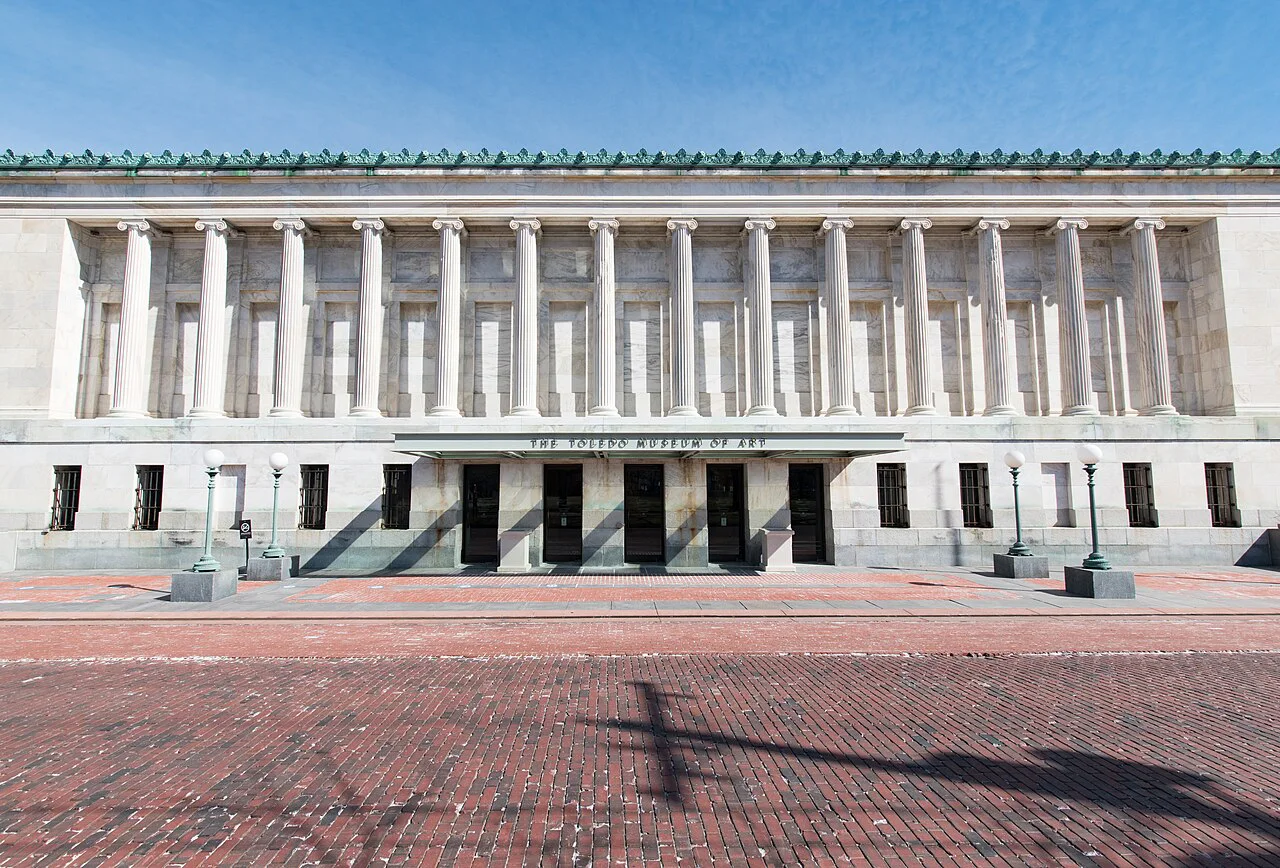
Toledo · 88 km
Toledo Museum of Art
Content & sources
Photo: Ɱ · CC BY-SA 4.0
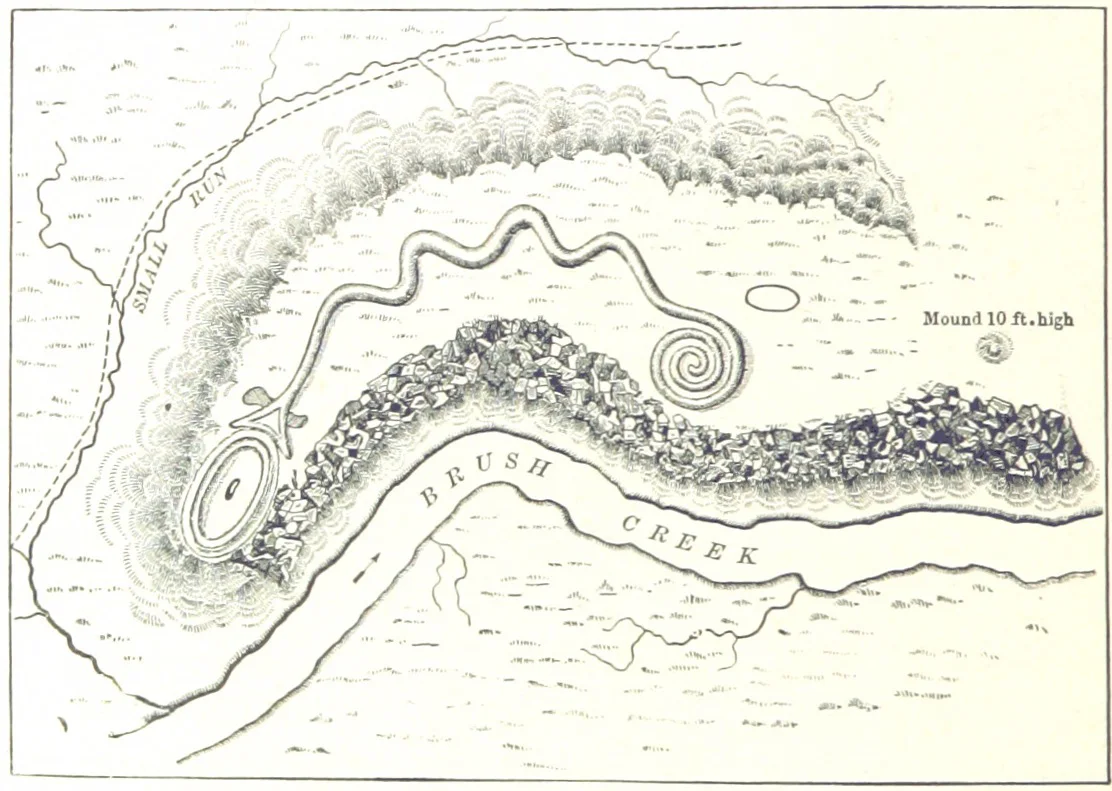
Bratton Township
Serpent Mound
Content & sources
The British Library · No restrictions
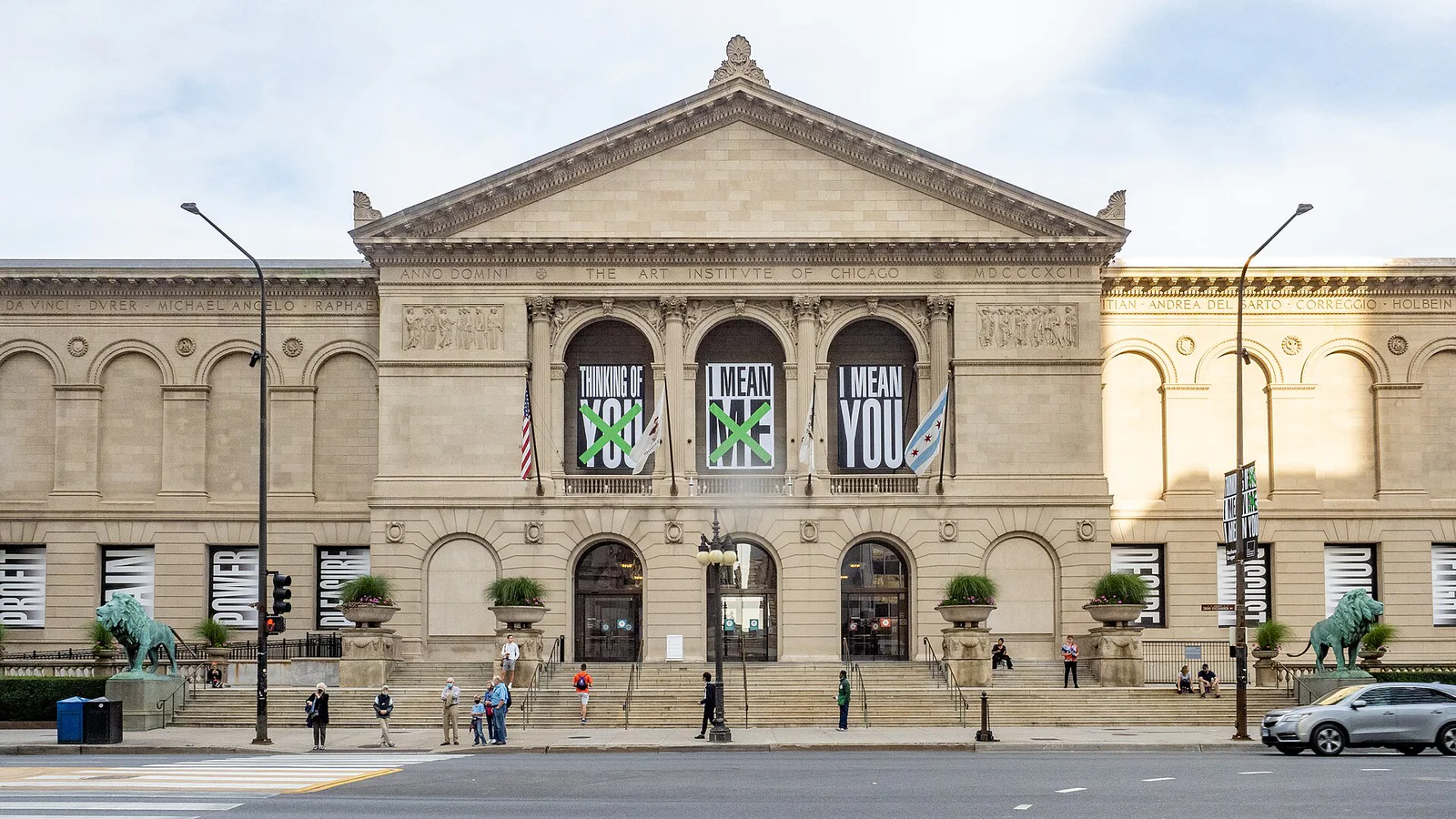
Chicago
Art Institute of Chicago
Content & sources
ajay_suresh · CC BY 2.0
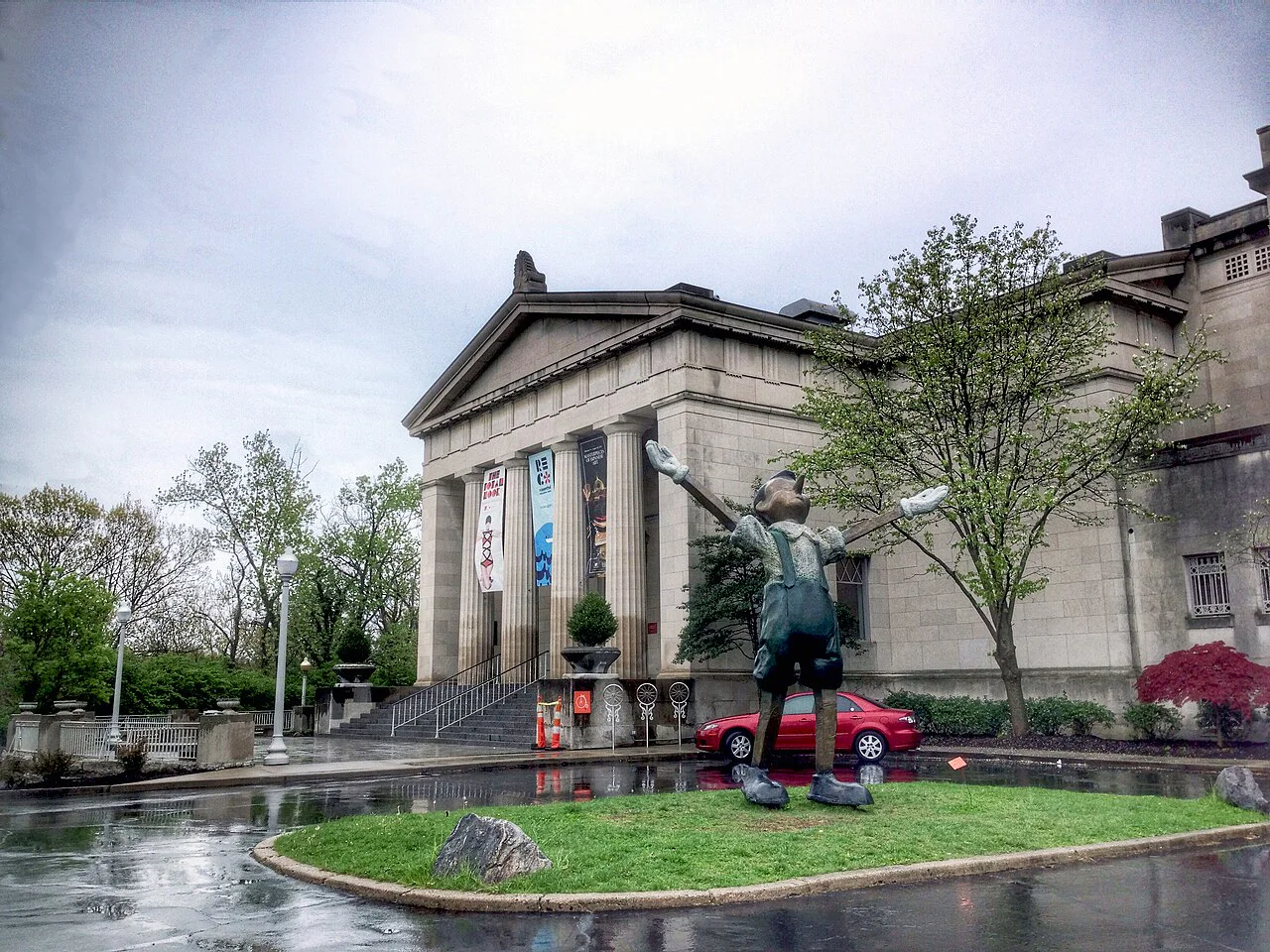
Cincinnati
Cincinnati Art Museum
Content & sources
5chw4r7z on Flickr · CC BY-SA 2.0
Art museums
More art museum audio guides
Toledo · 32 artworks
Toledo Museum of Art
Content & sources
Photo: Ɱ · CC BY-SA 4.0
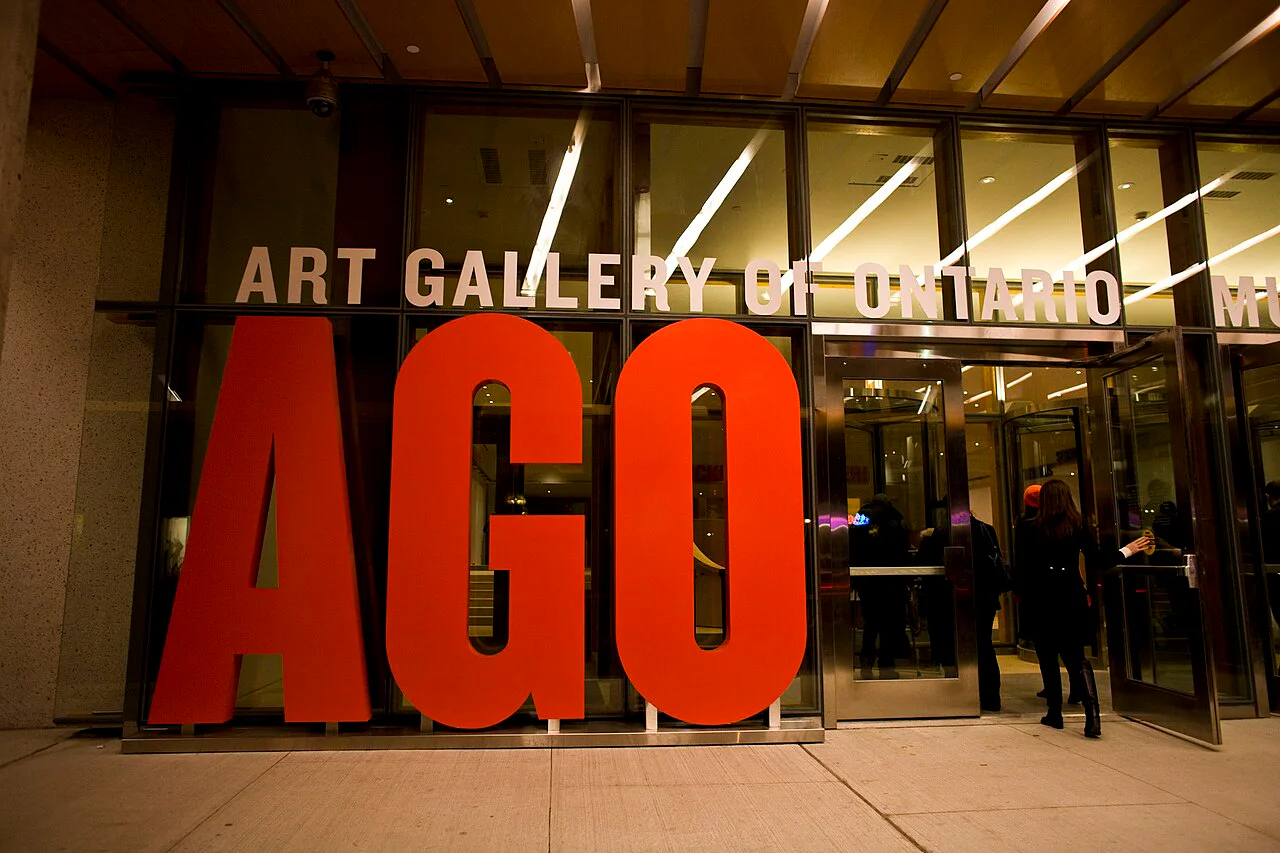
Toronto · 21 artworks
Art Gallery of Ontario
Content & sources
Owen Byrne from Ottawa, Canada · CC BY 2.0
Chicago · 67 artworks
Art Institute of Chicago
Content & sources
ajay_suresh · CC BY 2.0
Cincinnati · 24 artworks
Cincinnati Art Museum
Content & sources
5chw4r7z on Flickr · CC BY-SA 2.0
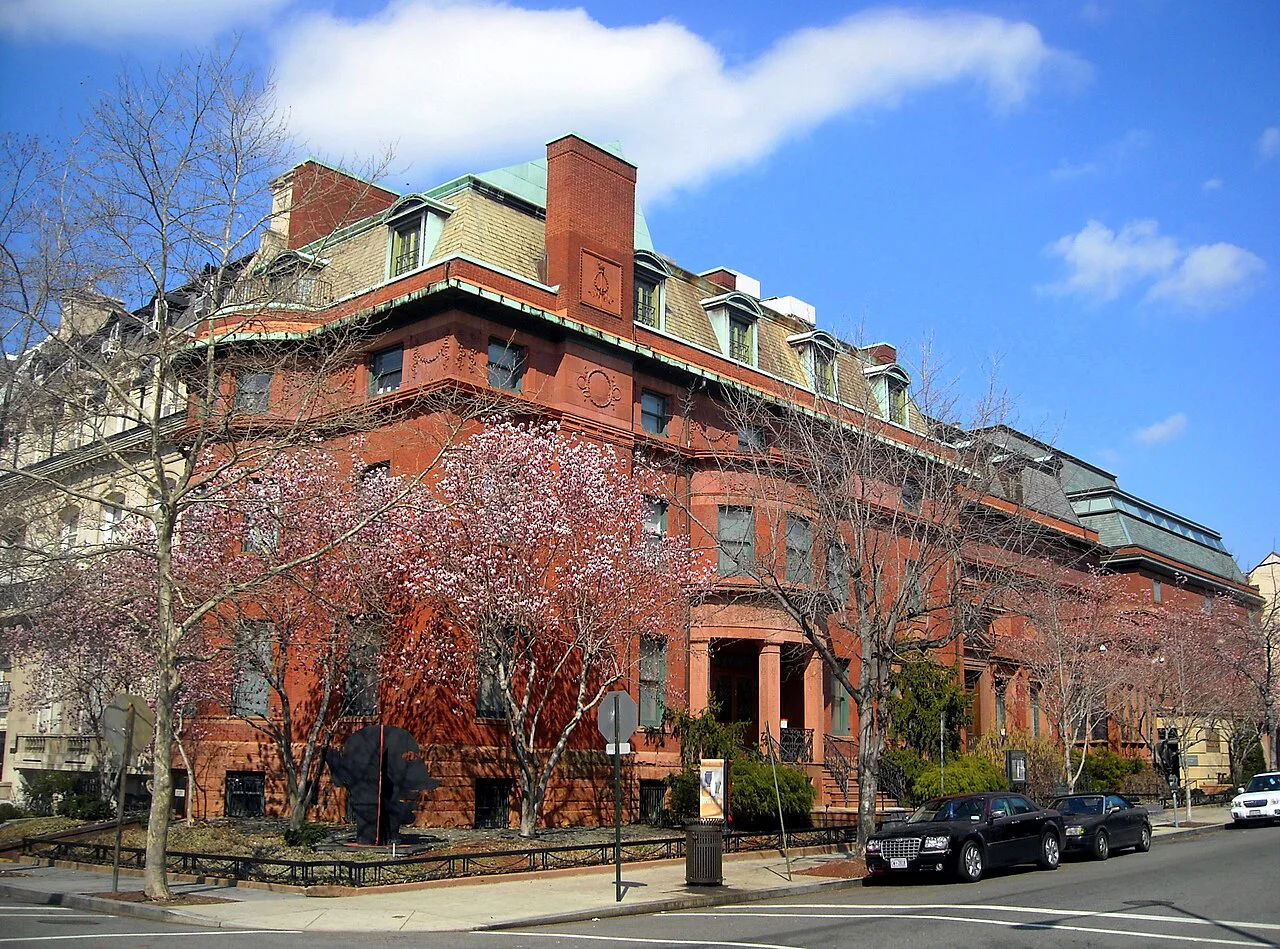
Washington, D.C. · 15 artworks
The Phillips Collection
Content & sources
APK · CC BY-SA 3.0
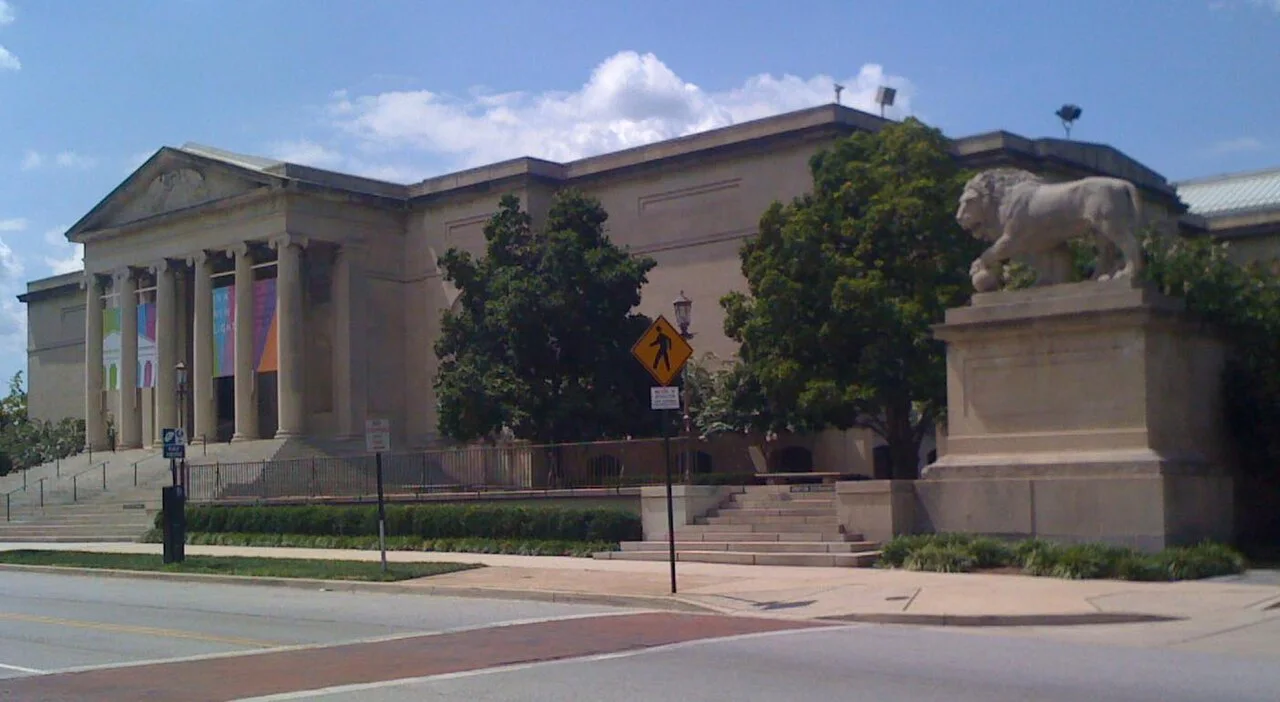
Baltimore · 19 artworks
Baltimore Museum of Art
Content & sources
«Marylandstater» «reply» at English Wikipedia. · Public domain