Stanza · Audio guide
Art Institute of Chicago Audio Guide
A place to remember. A story to take with you.
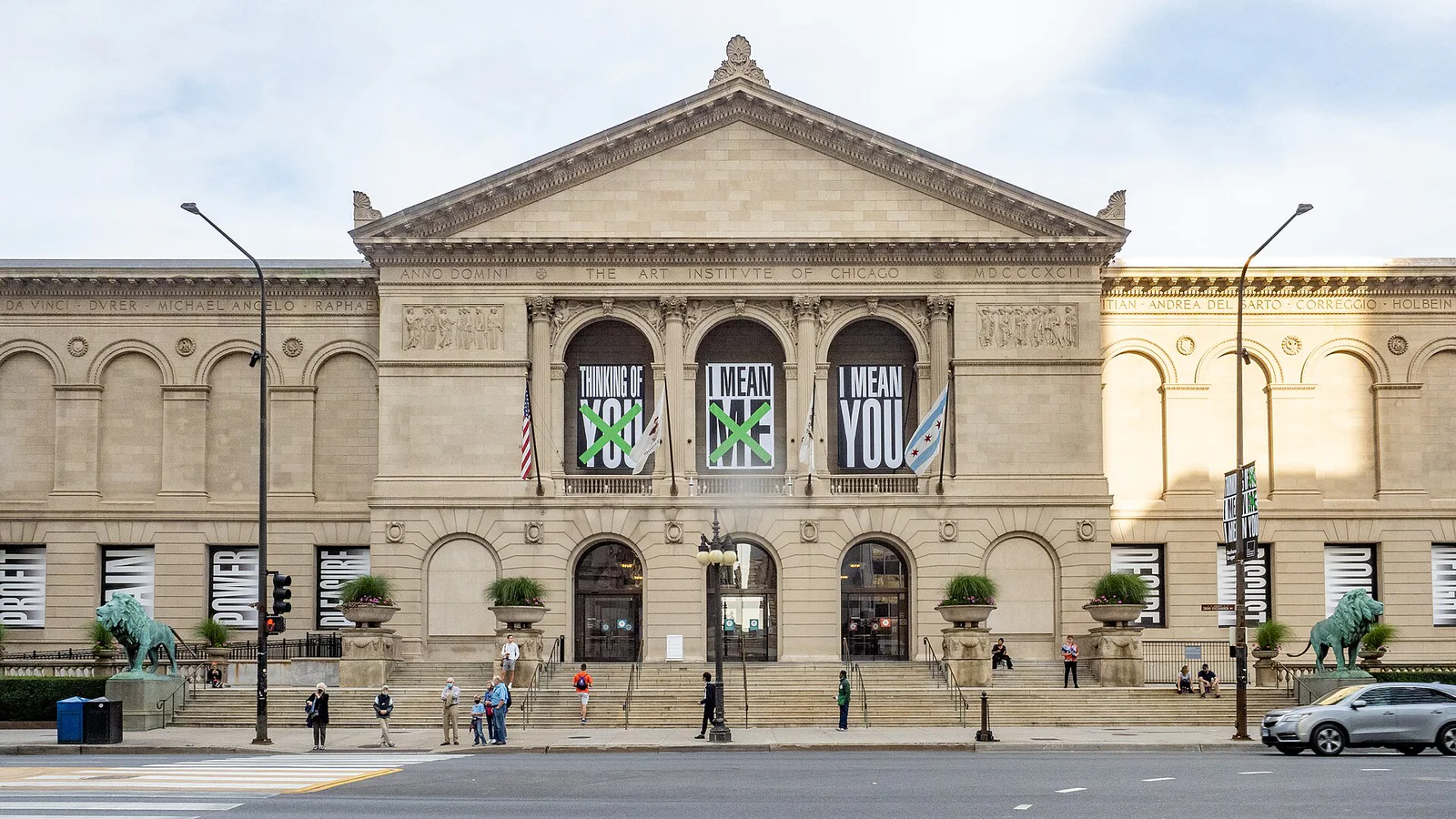
Founded in 1879, the Art Institute of Chicago in Grant Park is one of the oldest and largest art museums in the United States, with a collection of nearly 300,000 works. This free guide tells the stories of…
Download Stanza, then search for “Art Institute of Chicago”.
About the tour
One guide. Your kind of visit.
Founded in 1879, the Art Institute of Chicago in Grant Park is one of the oldest and largest art museums in the United States, with a collection of nearly 300,000 works. This free guide tells the stories of its most famous paintings on view, from Georges Seurat's A Sunday on La Grande Jatte to Gustave Caillebotte's Paris Street; Rainy Day. Point your camera at a painting to hear about it. The texts draw on the Art Institute of Chicago's collection descriptions (CC BY 4.0), the Web Gallery of Art and Wikipedia.
The Art Institute of Chicago guide tells the stories of 67 artworks, including A Sunday on La Grande Jatte — 1884 (Georges Seurat), Cliff Walk at Pourville (Claude Monet), The Departure of the Boats, Étretat (Claude Monet), Paris Street; Rainy Day (Gustave Caillebotte), Two Sisters (On the Terrace) (Pierre-Auguste Renoir), The Seine at Port-Marly, Piles of Sand (Alfred Sisley), On the Bank of the Seine, Bennecourt (Claude Monet), and Acrobats at the Cirque Fernando (Francisca and Angelina Wartenberg) (Pierre-Auguste Renoir). 5 of the most famous are longer stories that move across the picture detail by detail, set to music. Every artwork is free to hear in the Stanza app until 1 January.
Ready when you are.
- 01Get the free Stanza app.
iOS & Android
- 02Find your guide.
“Art Institute of Chicago”
- 03Download before you go.
Works offline
Audio guide / 67 artworks
Inside the guide
Get to know a few of the stories before you go. Open a stop to read more.
01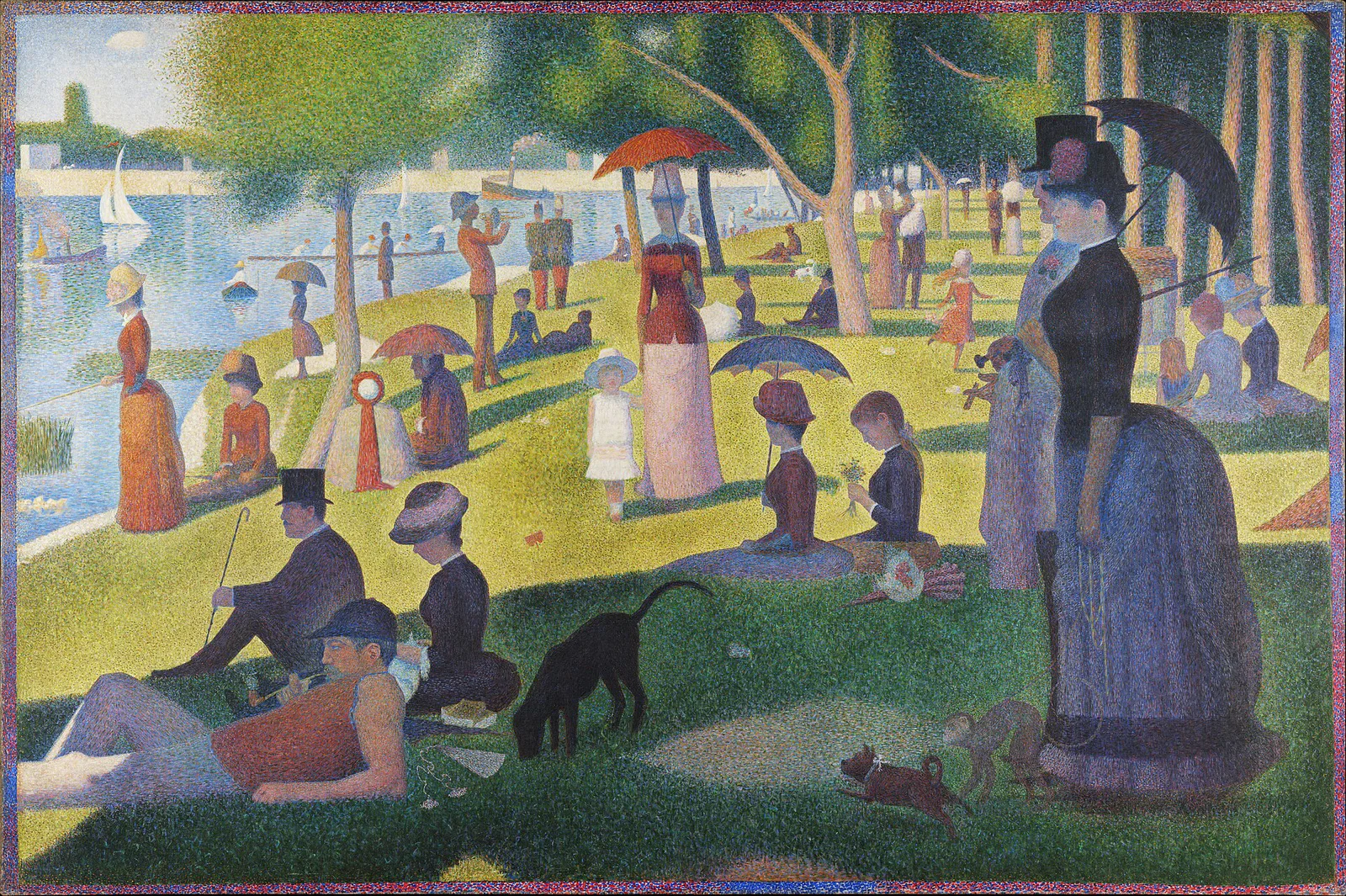 Gallery 240
A Sunday on La Grande Jatte — 1884
It looks like the easiest afternoon in the world. Grass, water, and sun through the trees. So why does nobody move? Georges Seurat called it A Sunday on La Grande Jatte. Start on the right. A woman in a dark jacket, a man in a top hat at her side. Both in profile. Both upright, eyes straight ahead. Not a glance between them. His model was the stone procession on the Parthenon, and he wanted ordinary Parisians to move the way those figures do. From her hand, a leash. At the end of it, a small monkey, back arched. Two years after he began, Seurat came back to the canvas. He made some figures bigger. He added others. The monkey was one. Now the man on the grass, left of centre. Top hat, a hand on his cane. Even sitting, his back is straight. Farther on, a woman sits with her back to us. Beside her, a girl bows over a small bunch of flowers. Side by side, and not looking at each other. Now go close. The figures dissolve into dashes of colour, orange beside blue. Your eye does the mixing. Seurat painted it dot by dot, over two years. And then, in the middle, a little girl in white. Many of the figures here sit in shadow. She is standing in the light. And she looks straight at you, as if silently asking you something. So, the easiest afternoon in the world? Everyone is holding still for you. And one of them looks back.
Georges Seurat · Public domain
02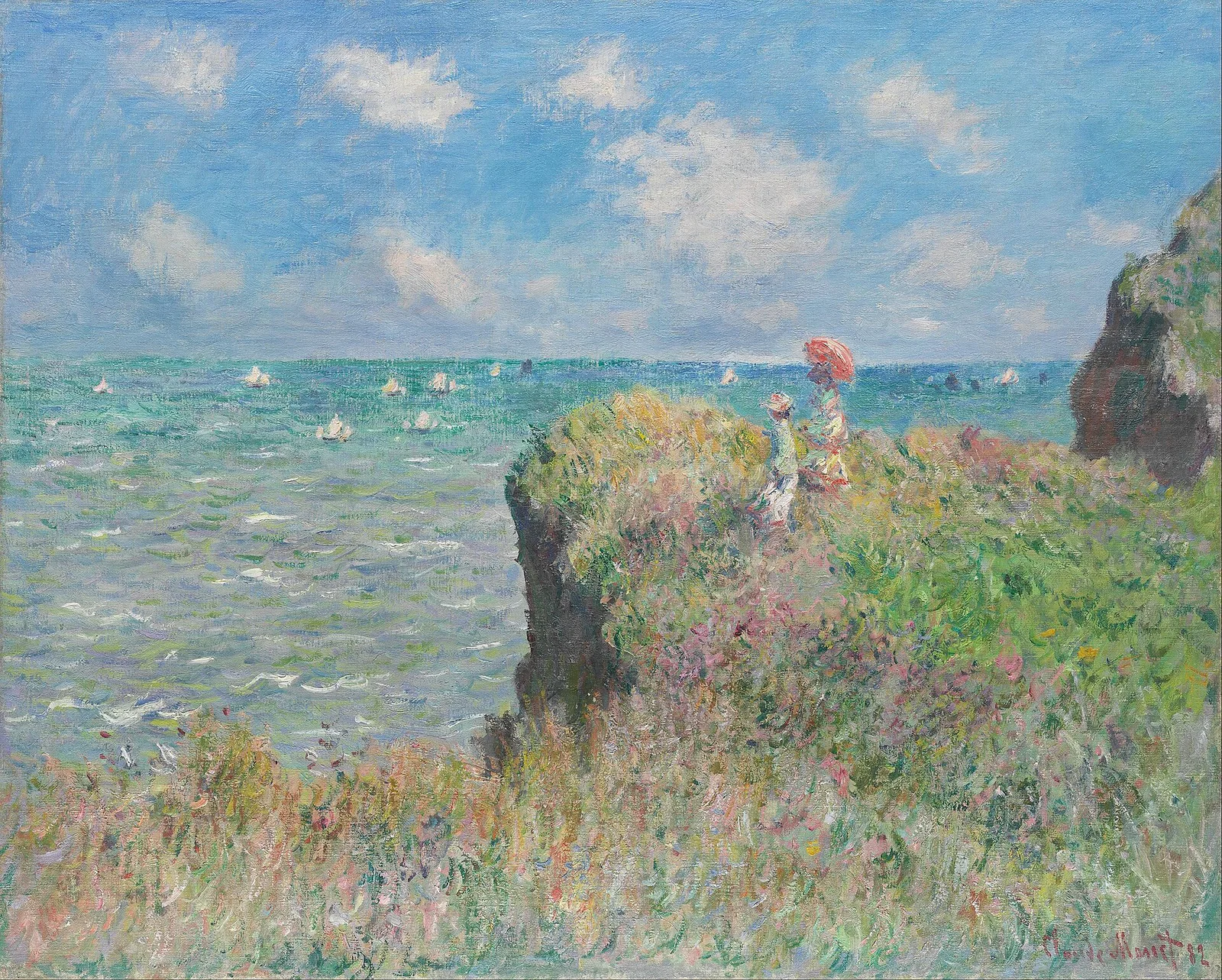 Gallery 240
Cliff Walk at Pourville
Two young women stroll on a high cliff overlooking the sea near a fishing village, with fishing boats visible on the horizon. Painted in 1882, Cliff Walk at Pourville is an oil on canvas created by Claude Monet. The French Impressionist painter was a founder of Impressionism and a key precursor to modernism, known for trying to paint nature as he perceived it and for his outdoor landscape painting. During an 1882 trip to Normandy, he settled in the fishing village of Pourville. The two strolling figures are likely Marthe and Blanche, the eldest daughters of Alice Hoschedé. In this work, the artist solved the challenge of placing figures into a landscape by using similar textures and colors to unite the surface. Short, curved brushstrokes make the grass appear to move in the wind, while matching strokes and colors represent the dresses, shawls, and sea. X-radiographs reveal that he altered the rocky formation on the right to balance the sea and sky.
unknown artist · Public domain
03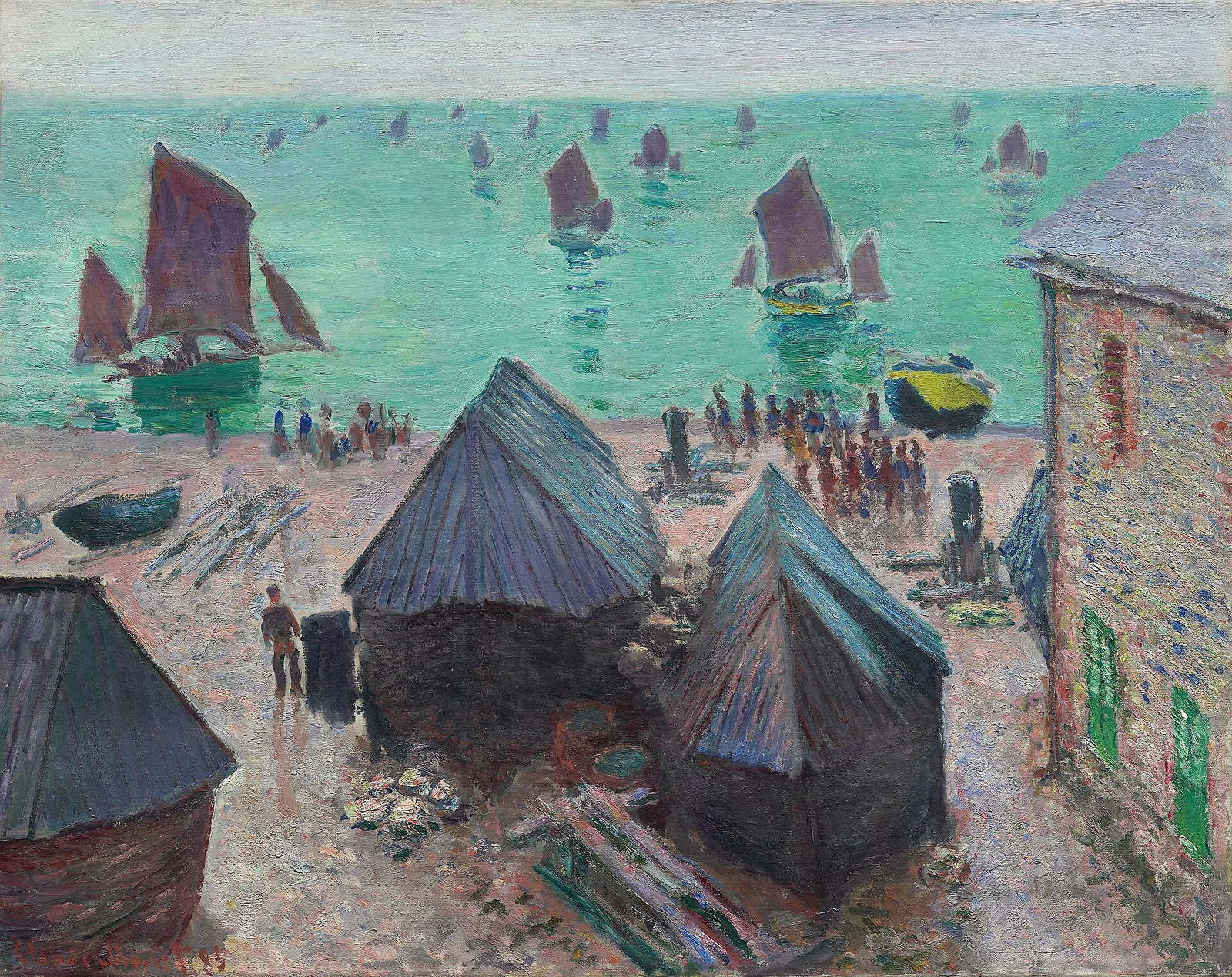 Gallery 240
The Departure of the Boats, Étretat
Painted in 1885, The Departure of the Boats, Étretat was created by Claude Monet. Stuck inside his room at the Hôtel Blanquet during stormy autumn weather, Claude Monet worked on the painting by looking out his window. The composition focuses on boats and features groups of figures near the water, made with fast, gestural strokes to show human activity. Claude Monet arrived after the tourist season ended, leaving it uncertain whether he actually saw the fashionably dressed women on the left or placed them there as a contrast to the local fishermen on the right. A French painter, Claude Monet founded Impressionism and served as a crucial precursor to modernism through his efforts to paint nature as he experienced it.
Listen in the appClaude Monet · Public domain
04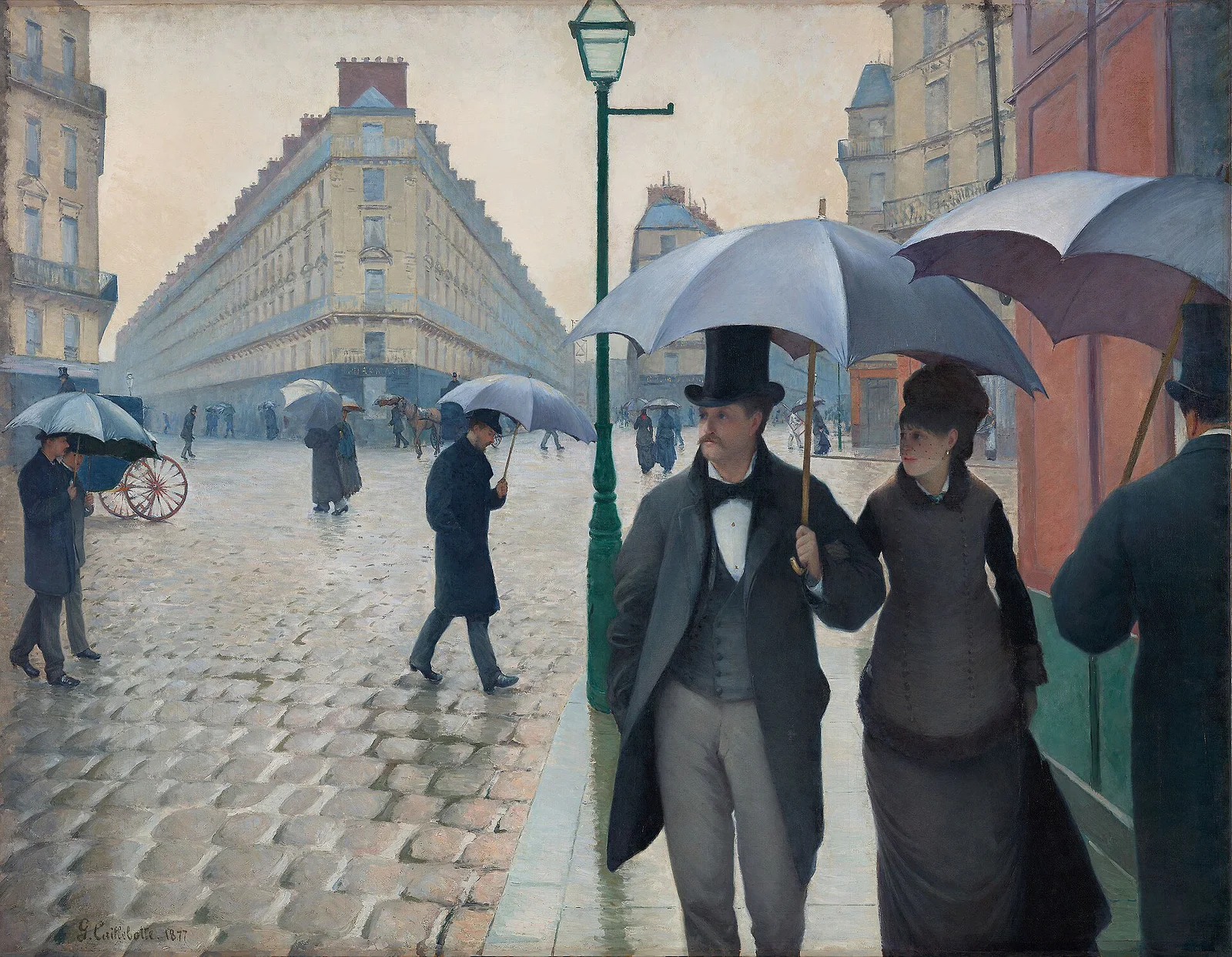 Gallery 201
Paris Street; Rainy Day
You can feel the rain in this street. The damp. The cold. The hush under the umbrellas. And yet there is not one raindrop in the whole picture. Gustave Caillebotte titled it Paris Street, Rainy Day. So where is the rain? It is on the ground. The cobblestones shine, wet, catching the pale grey light. That shine is how he paints the rain. Then look up, at the umbrellas. Grey, blue, purple, one overlapping the next. They were brand new. Retractable umbrellas had only just been invented. He paints the weather by painting what people had just learned to hold against it. Under one of them, a couple walks straight toward you. Her veil is dotted, her earring small, her fur hat tall and dark. His top hat is tall and black, and his moustache is neat. Their clothes were the latest fashion. Their arms are linked, and yet they look off to one side, at something we cannot see. We never learn what. Even the street behind them was new. Decades of rebuilding had turned medieval streets into wide boulevards like this one. Long pale walls, every window in line. Caillebotte did not travel to find it. This corner was a short walk from his home. At the right edge, a man is cut off by the frame, only a dark coat and a hat. It feels like a snapshot, a moment caught as people pass. Perhaps the new art of photography inspired him to cut a scene that way. No raindrops. Only new umbrellas, new fashion, a new city, and wet stones. Look at those stones, and you will swear it is raining.
Listen in the appGustave Caillebotte · Public domain
05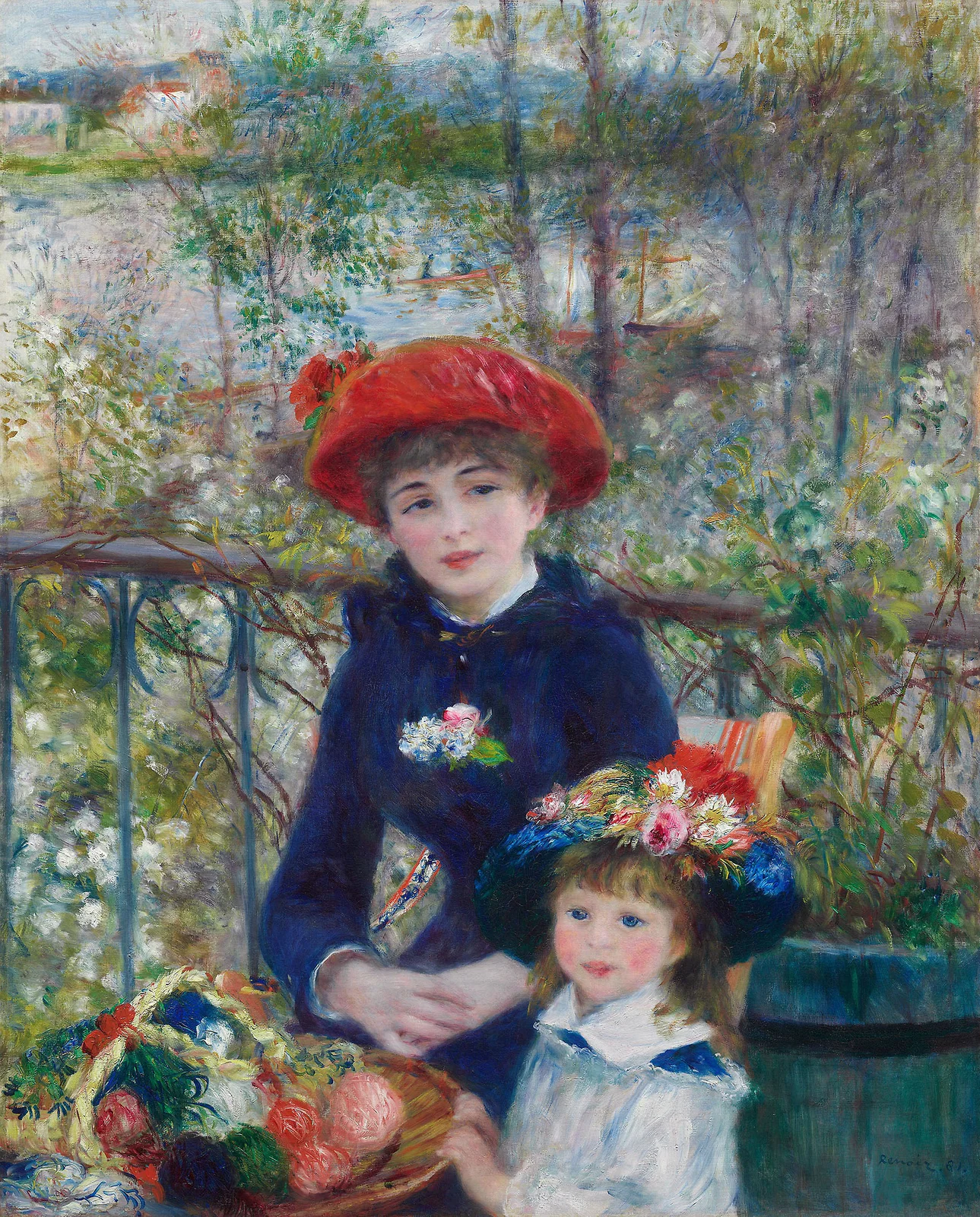 Gallery 201
Two Sisters (On the Terrace)
A young woman and her younger companion sit outside together next to a small basket holding balls of wool, while shrubbery, foliage, and the River Seine appear beyond the terrace railings. Painted in 1881, Two Sisters was created by the leading French Impressionist artist Pierre-Auguste Renoir. He worked on the canvas on the terrace of the Maison Fournaise, a restaurant situated on an island in the Seine in Chatou, a village along the river. Although the title suggests a family connection, the models were not actually related. A future actress posed as the elder sister, wearing a boater outfit of blue flannel along with a red hat, while her companion wears an oversize floral bouquet headdress and touches the brightly colored skeins of yarn in the basket. Renoir painted the faces with controlled brushwork to create a porcelain-like surface, contrasting with the impressionist backdrop of blossoming trees, boats, and the river. He exhibited the work for the first time at the Impressionist exhibition in the spring of 1882.
Listen in the appPierre-Auguste Renoir · Public domain
06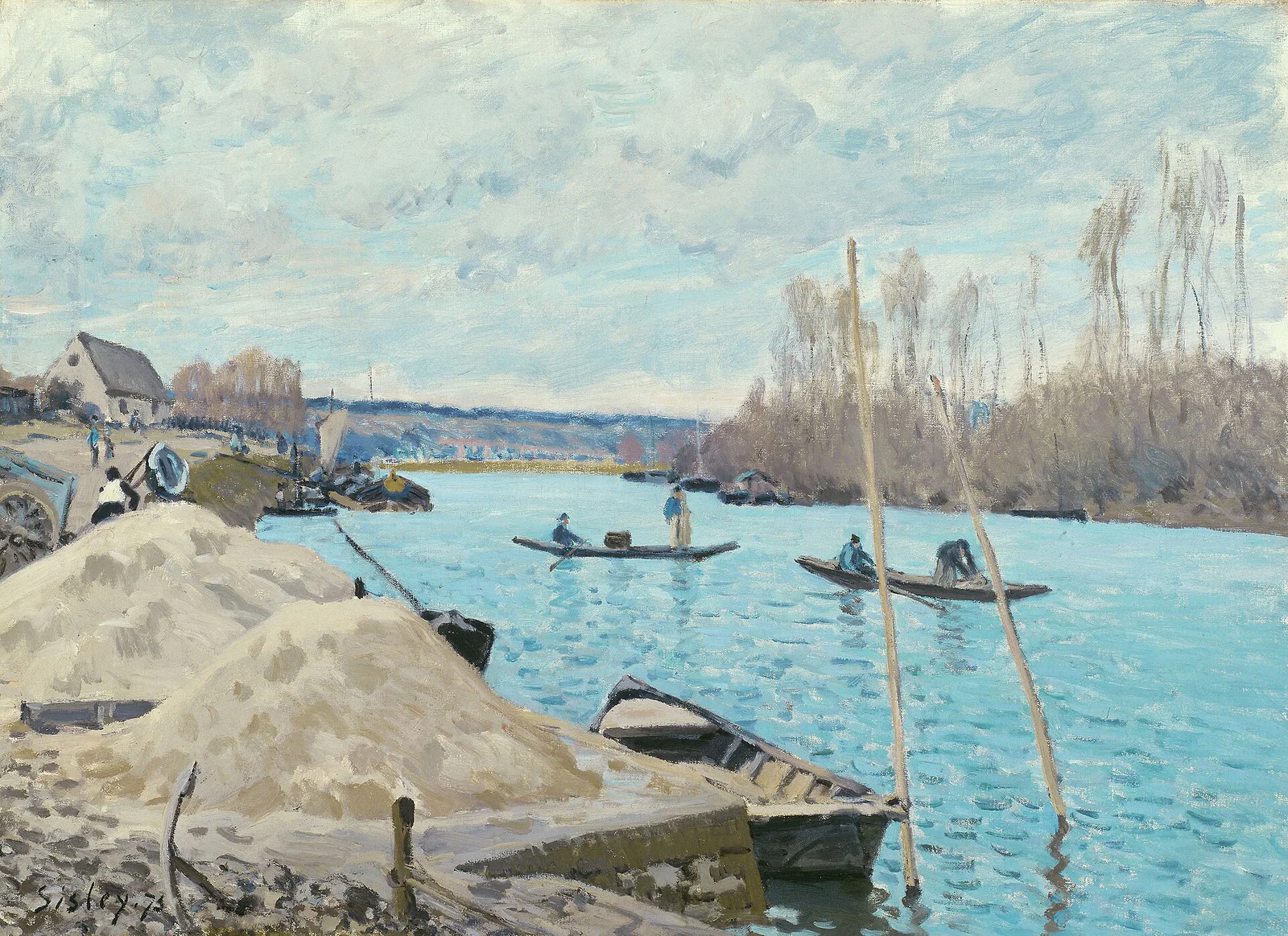 Gallery 201
The Seine at Port-Marly, Piles of Sand
Two men on a flat-bottomed barge dredge the river. Painted in 1875, The Seine at Port-Marly, Piles of Sand is a work by Alfred Sisley. This British Impressionist landscape painter was born in Paris to British expatriate parents. He is considered the most consistent of the Impressionists in his dedication to painting outdoors. Unlike most Impressionists who showed the river as a place of weekend leisure, Sisley depicted the River Seine as a workplace near Port-Marly. The workers dredge the river to create a navigable channel for cargo vessels travelling between Le Havre and Paris. Sisley was interested in the sand-extraction industry and painted several works on the quayside at Port-Marly. This scene shows the town's paper factory with smoke emerging from the gable, while the ochre colours of the sand contrast with the turquoise blue of the water.
Listen in the appAlfred Sisley · Public domain
07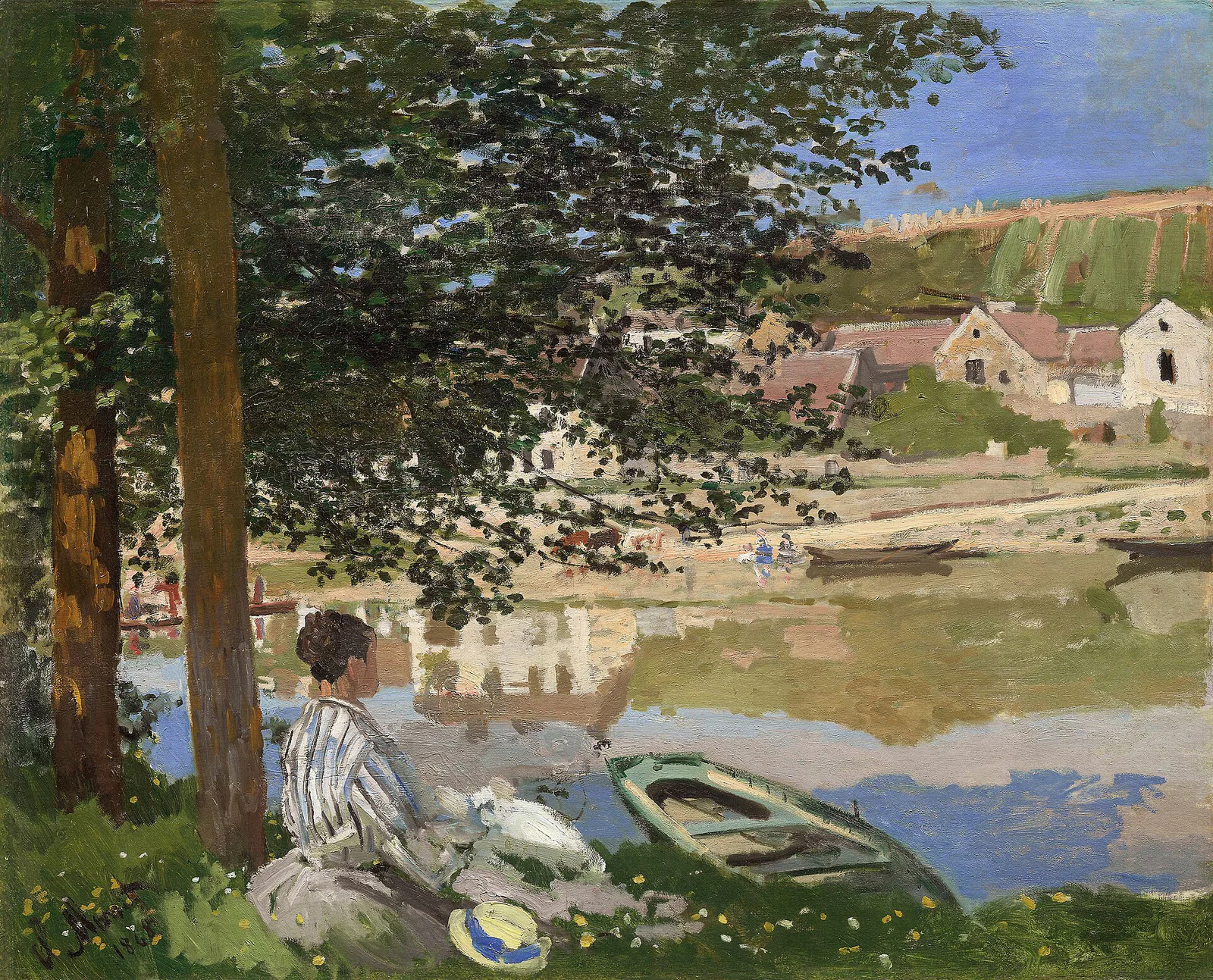 Gallery 201
On the Bank of the Seine, Bennecourt
Camille Doncieux sits on an island in the river, looking toward a hamlet next to a town from which she and the artist have presumably rowed. Painted in 1868, On the Bank of the Seine, Bennecourt is a work by Claude Monet. This picture portrays his model, partner and future wife looking back toward the village of Gloton on the outskirts of Bennecourt, where they were temporarily staying with their young son. Visible traces of earlier painting beneath the paint suggest that in an early stage of the work, she held a bonneted child, presumably the couple's baby. It was made during a brief period the couple spent in a rural retreat recommended by a novelist. This is the only painting to survive from that time, which occurred during a low point in the artist's life. He was a French painter and founder of Impressionism, and a key precursor to modernism in his attempts to paint nature.
Listen in the appClaude Monet · Public domain
08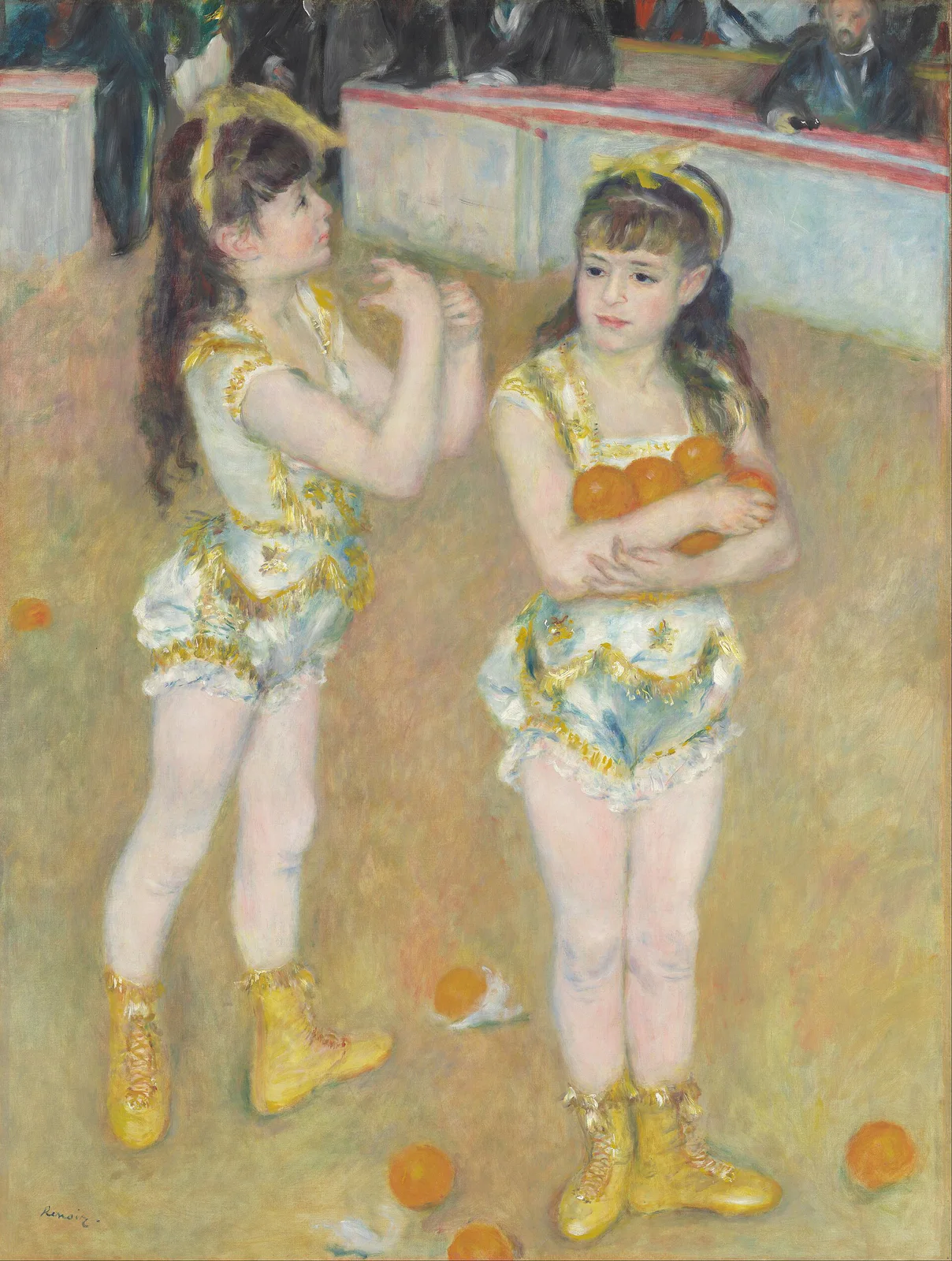 Gallery 201
Acrobats at the Cirque Fernando (Francisca and Angelina Wartenberg)
Two young circus performers finish their act as one bows to the audience and the other holds oranges thrown into the ring by spectators. Acrobats at the Cirque Fernando (Francisca and Angelina Wartenberg) was painted in 1879 by the leading French Impressionist artist Pierre-Auguste Renoir. He created it as a French Impressionist oil painting depicting a favorite Parisian pastime of attending the circus. The models are the sisters Francisca and Angelina Wartenberg, who belonged to an itinerant German acrobatic troupe. Renoir posed the sisters in costume at his studio rather than under harsh circus gas lighting. Dark-suited men sit in the front row at the top of the composition. Renoir wanted his pictures to be joyous, pretty, and likeable. He reflected his enchantment with childhood innocence in this work. Bertha Honoré Palmer, the painting's first owner, became so enamored of it that she kept it with her at all times, even when traveling abroad.
Listen in the appPierre-Auguste Renoir · Public domain
09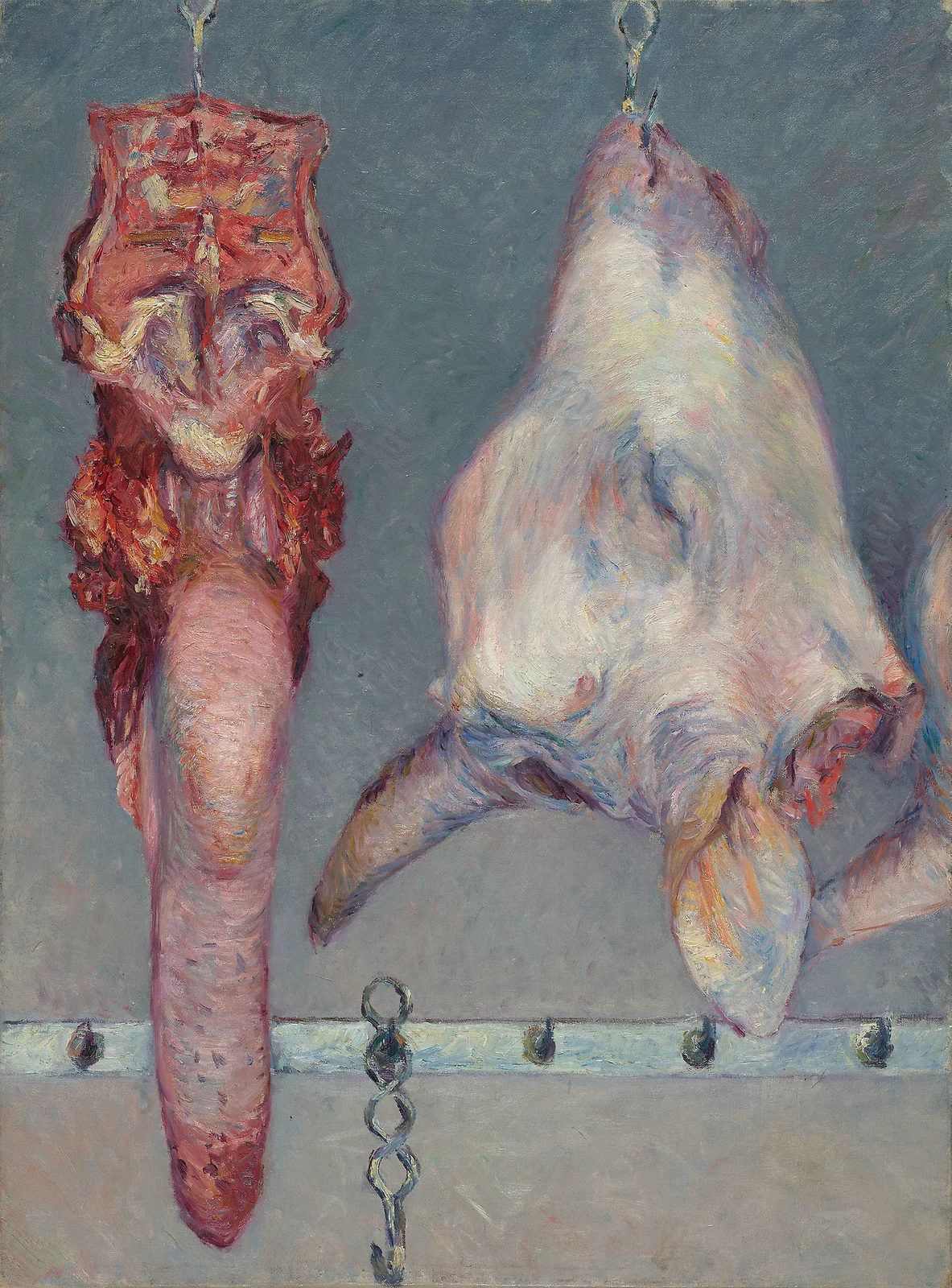 Gallery 201
Calf's Head and Ox Tongue
A bloody scene presents animal parts ready for human consumption. Painted about 1882, Calf's Head and Ox Tongue is an oil on canvas by Gustave Caillebotte. He may have drawn inspiration from the butcher shop located beneath his family home in Paris. The work confronts viewers with visually unpleasant objects rendered using soft brushstrokes and highly decorative pastel colors. Such still lifes stand among his most original compositions. The French painter was a member and patron of the Impressionists, painting in a more realistic manner than many peers in the group and showing an early interest in photography as an art form.
Listen in the appGustave Caillebotte · Public domain
10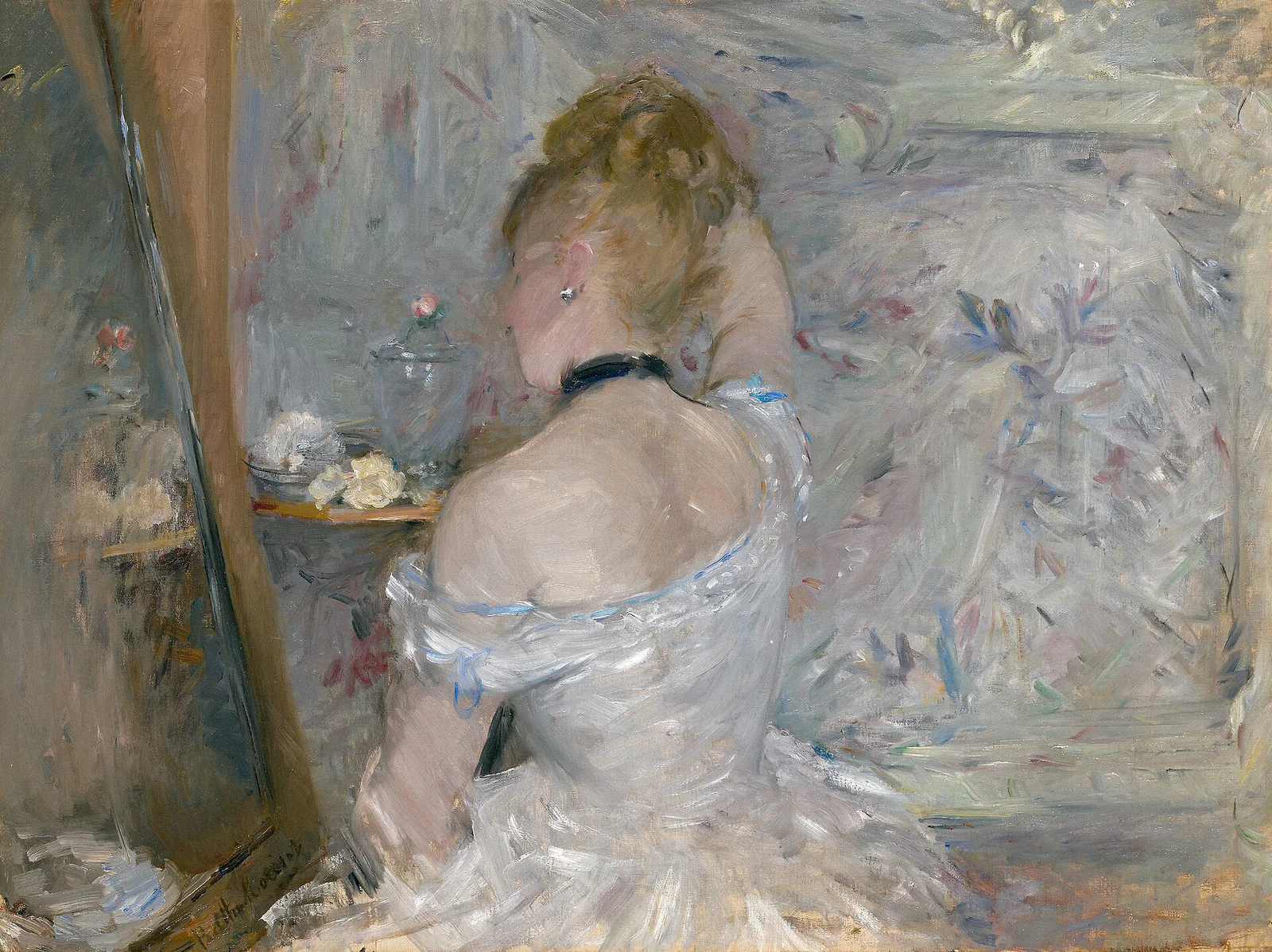 Gallery 201
Woman at Her Toilette
A figure sits at a vanity table after a ball, wearing earrings and a velvet ribbon while reaching up to take down her chignon hairstyle, with a floral-patterned bedspread and wallpaper suggested in the background by soft, feathery brushstrokes that are also applied to the mirror to obscure the reflection. Painted between 1875 and 1880, Woman at Her Toilette was created by French artist Berthe Morisot. The French painter, printmaker, and member of the Impressionists was described in 1894 by art critic Gustave Geffroy as one of the three great ladies of Impressionism. The work was first shown at the fifth Impressionist exhibition in 1880 alongside works by Paul Cézanne, Pierre-Auguste Renoir, and Camille Pissarro, and received high acclaim. Morisot provided a glimpse into the private life of a fashionable urban woman epitomizing modernity in late nineteenth-century France. The artist signed her name along the bottom of the mirror, an enigmatic detail that may suggest the figure is a stand-in for the artist herself.
Listen in the appBerthe Morisot · Public domain
- 11
Woman Reading
Édouard Manet, 1880–82
- 12
The Crystal Palace
Camille Pissarro, 1871
- 13
The Child's Bath
Mary Cassatt, 1893
- 14
At the Moulin Rouge
Henri de Toulouse-Lautrec, 1892–95
- 15
Equestrienne (At the Cirque Fernando)
Henri de Toulouse-Lautrec, 1887–88
- 16
The Basket of Apples
Paul Cézanne, c. 1893
- 17
Madame Cezanne in a Yellow Chair
Paul Cézanne, 1888–90
- 18
Jacques and Berthe Lipchitz
Amedeo Modigliani, 1916
- 19
Madam Pompadour
Amedeo Modigliani, 1915
- 20
The Millinery Shop
Edgar Degas, 1879-86
- 21
The Races at Longchamp
Édouard Manet, 1866
- 22
The Beach at Sainte-Adresse
Claude Monet, 1867
- 23
Bullfight
Édouard Manet, 1865–66
- 24
Self-Portrait (Frédéric Bazille)
Frédéric Bazille, 1865–66
- 25
Merahi metua no Tehamana (Tehamana Has Many Parents or The Ancestors of Tehamana)
Paul Gauguin, 1893
- 26
Mahana no atua (Day of the God)
Paul Gauguin, 1894
- 27
Madame de Pastoret and Her Son
Jacques-Louis David, 1791–92
- 28
Kitchen Scene
Diego Velázquez, 1618–20
- 29
The Assumption of the Virgin
El Greco, 1577–79
- 30
The Resurrection
Cecco del Caravaggio, c. 1619-20
- 31
Cupid Chastised
Bartolomeo Manfredi, 1613
- 32
Saint John the Baptist in the Wilderness
Diego Velázquez, c. 1622
- 33
Still Life with Game Fowl
Juan Sánchez Cotán, c. 1600–3
- 34
Virgin and Child with the Young Saint John the Baptist
Antonio da Correggio, c. 1515
- 35
Lucrezia di Lippo di Iacopo Guidi
Andrea del Sarto, 1525–28
- 36
Virgin and Child with Two Angels
Sandro Botticelli, 1485–95
- 37
Amédée-David, the Comte de Pastoret
Jean-Auguste-Dominique Ingres, 1823–26
- 38
The Captive Slave (Ira Aldridge)
John Simpson, 1827
- 39
Lion Hunt
Eugène Delacroix, 1860–61
- 40
Fishing Boats with Hucksters Bargaining for Fish
J. M. W. Turner, 1837–38
- 41
The Combat of the Giaour and Hassan
Eugène Delacroix, 1826
- 42
Jesus Mocked by the Soldiers
Édouard Manet, 1865
- 43
The Song of the Lark
Jules Breton, 1884
- 44
Mère Grégoire
Gustave Courbet, 1855, reworked 1857–59
- 45
Hercules and the Lernaean Hydra
Gustave Moreau, 1875–76
- 46
Chariot Race
Jean-Léon Gérôme, 1876
- 47
Old Man with a Gold Chain
Rembrandt, 1631
- 48
The Denial of Saint Peter
Hendrick ter Brugghen, c. 1626
- 49
Portrait of a Lady
Frans Hals, 1627
- 50
Landscape with Saint John on Patmos
Nicolas Poussin, 1640
- 51
Self-Portrait (Vincent van Gogh)
Vincent van Gogh, 1887
- 52
Madame Roulin Rocking the Cradle (La berceuse)
Vincent van Gogh, 1889
- 53
The Harvest of Buckwheat
Paul Sérusier, 1899
- 54
A Peasant Woman Digging in Front of Her Cottage
Vincent van Gogh, c. 1885
- 55
Madame François Buron
Jacques-Louis David, 1769
- 56
The Dreamer (La Rêveuse)
Jean-Antoine Watteau, 1712–14
- 57
Are They Thinking about the Grape? (Pensent-ils au raisin?)
François Boucher, 1747
- 58
The Feast in the House of Simon
El Greco, c. 1608–14
- 59
Tarquin and Lucretia
Jacopo Tintoretto, 1578–80
- 60
The Herring Net
Winslow Homer, 1885
- 61
The Sacred Grove, Beloved of the Arts and the Muses
Pierre Puvis de Chavannes, 1884–89
- 62
The Destruction of Pharaoh's Army
Philip James de Loutherbourg, 1792
- 63
Saint George and the Dragon
Bernat Martorell, 1434–35
- 64
Boy on a Ram
Francisco Goya, 1786–87
- 65
Ad Astra
Akseli Gallen-Kallela, 1894–96
- 66
The Holy Family with Saints Elizabeth and John the Baptist
Peter Paul Rubens, c. 1615
- 67
Madame Paul Escudier (Louise Lefevre)
John Singer Sargent, 1882
Art Institute of Chicago
Frequently asked questions
How much does the guide cost?
Free app download. Free until 1 January. Audio guide only. Venue admission is separate.
Can I listen without internet?
Yes. Download the guide’s audio, images, and maps in the app before your visit. Your downloaded content is then available offline.
Can I listen in my language?
In English for now. More languages soon.
Do I need to follow a schedule?
No. This is a self-guided experience. Choose your stops, pause whenever you like, and return to a story at your own pace.
Which artworks are in the Art Institute of Chicago audio guide?
67 artworks, including A Sunday on La Grande Jatte — 1884 (Georges Seurat), Cliff Walk at Pourville (Claude Monet), The Departure of the Boats, Étretat (Claude Monet), Paris Street; Rainy Day (Gustave Caillebotte), Two Sisters (On the Terrace) (Pierre-Auguste Renoir), The Seine at Port-Marly, Piles of Sand (Alfred Sisley), On the Bank of the Seine, Bennecourt (Claude Monet), and Acrobats at the Cirque Fernando (Francisca and Angelina Wartenberg) (Pierre-Auguste Renoir). The full list is on this page.
Is this the museum’s official audio guide?
No. Stanza is an independent audio guide app and is not affiliated with Art Institute of Chicago. Museum admission is separate.
At your own pace
Explore Art Institute of Chicago.
Download Stanza, then search for “Art Institute of Chicago”.
Free app download · Guide price shown in the app
Keep exploring
Audio guides — United States
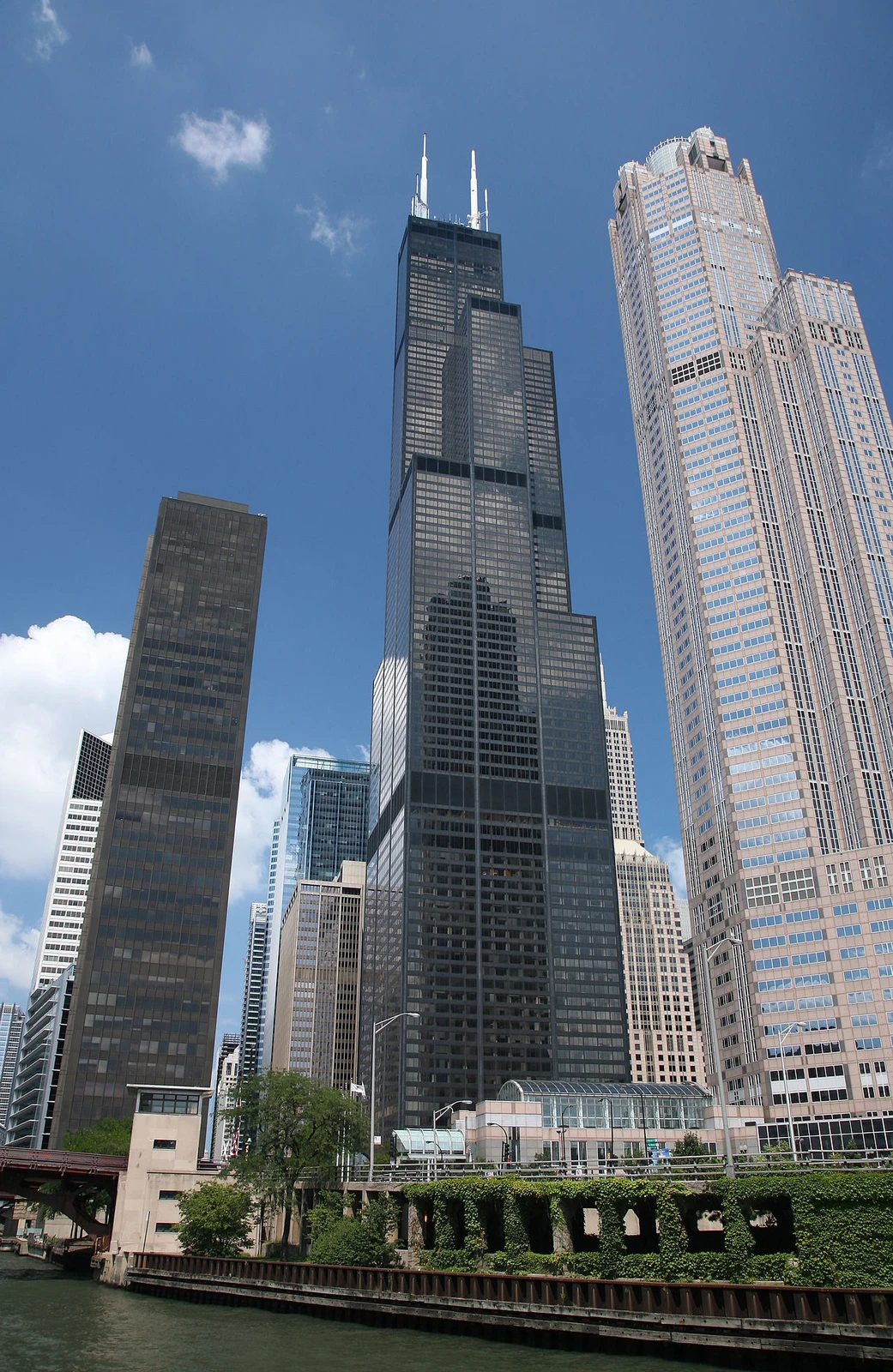
Chicago · 1 km
Willis Tower
Content & sources
Daniel Schwen · CC BY-SA 4.0
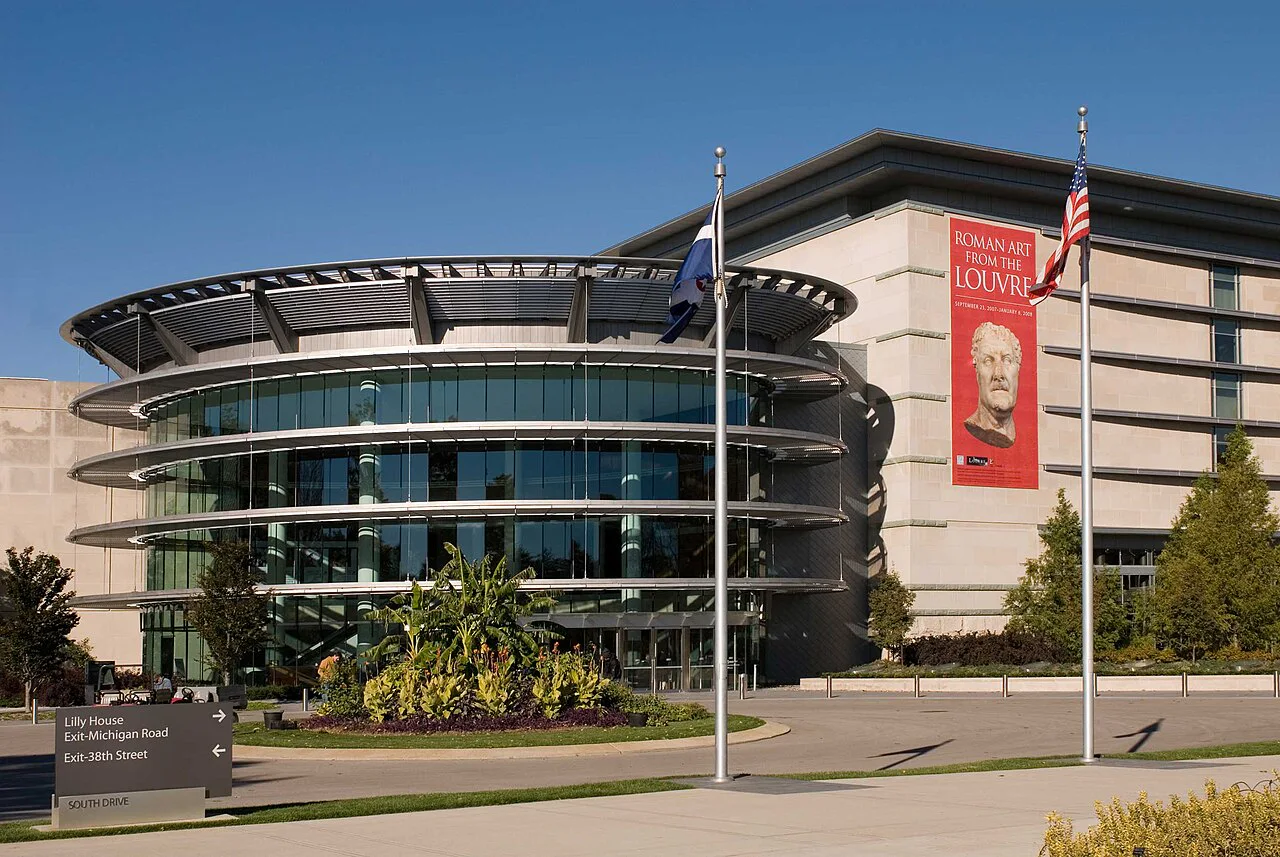
Indianapolis
Indianapolis Museum of Art
Content & sources
No machine-readable author provided. Cszmurlo assumed (based on copyright claims). · CC BY 3.0
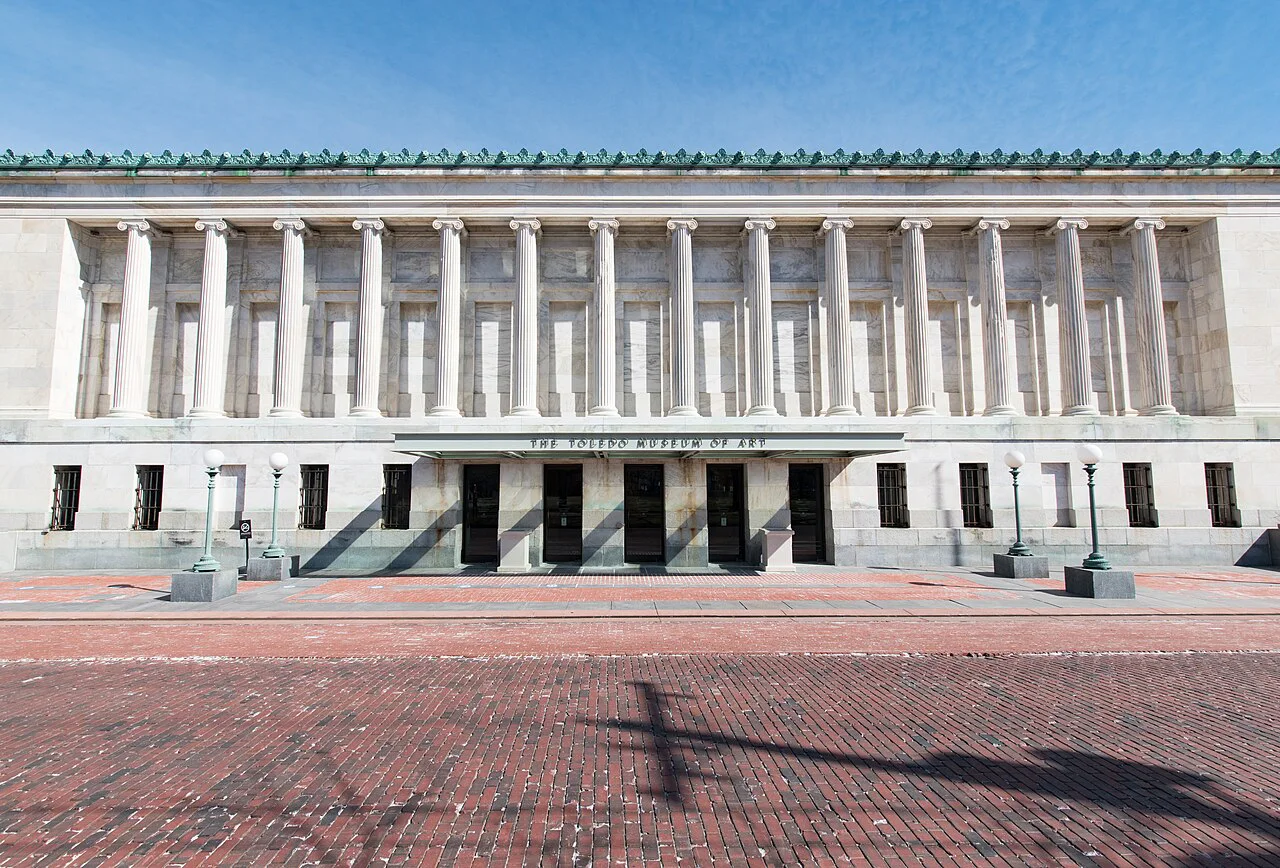
Toledo
Toledo Museum of Art
Content & sources
Photo: Ɱ · CC BY-SA 4.0
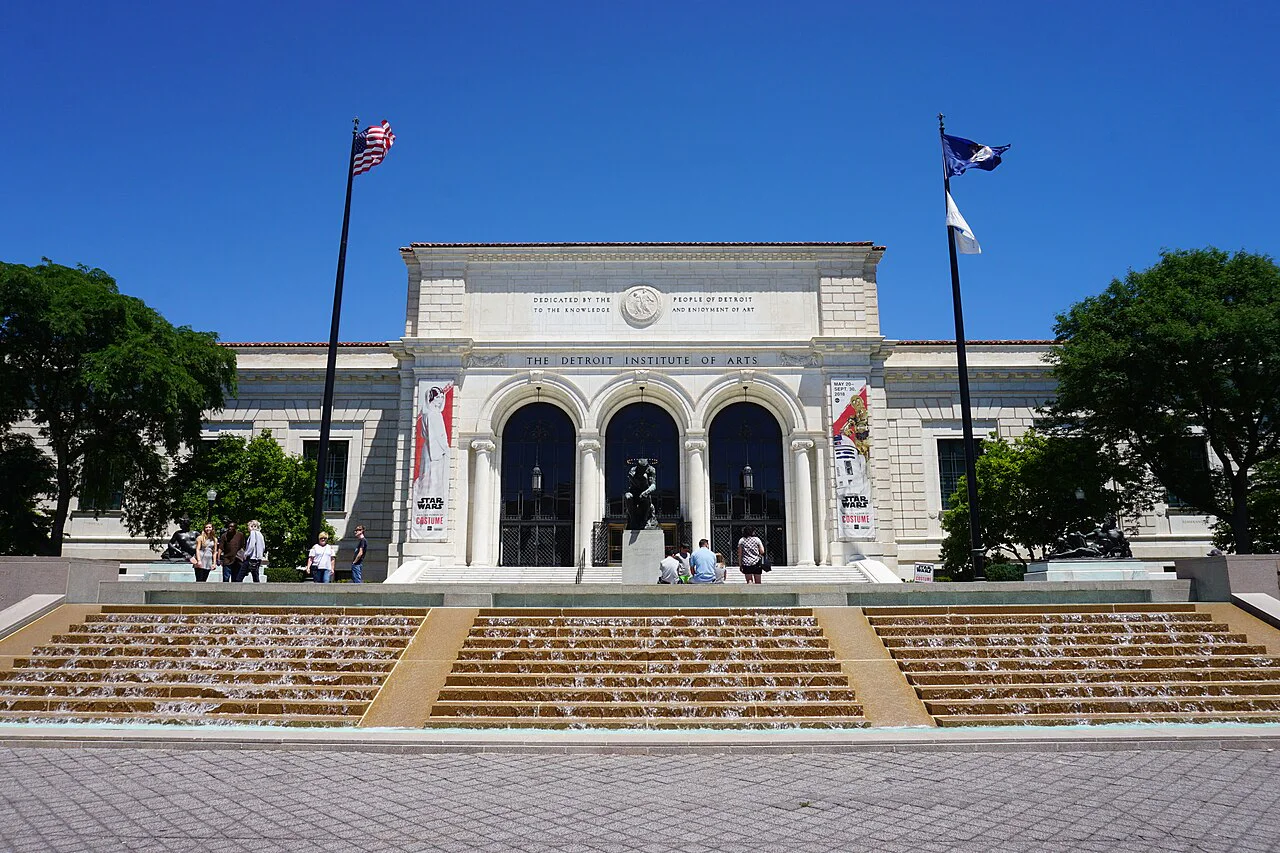
Detroit
Detroit Institute of Arts
Content & sources
Photo: Michael Barera · CC BY-SA 4.0
Art museums
More art museum audio guides
Indianapolis · 102 artworks
Indianapolis Museum of Art
Content & sources
No machine-readable author provided. Cszmurlo assumed (based on copyright claims). · CC BY 3.0
Toledo · 32 artworks
Toledo Museum of Art
Content & sources
Photo: Ɱ · CC BY-SA 4.0
Detroit · 57 artworks
Detroit Institute of Arts
Content & sources
Photo: Michael Barera · CC BY-SA 4.0
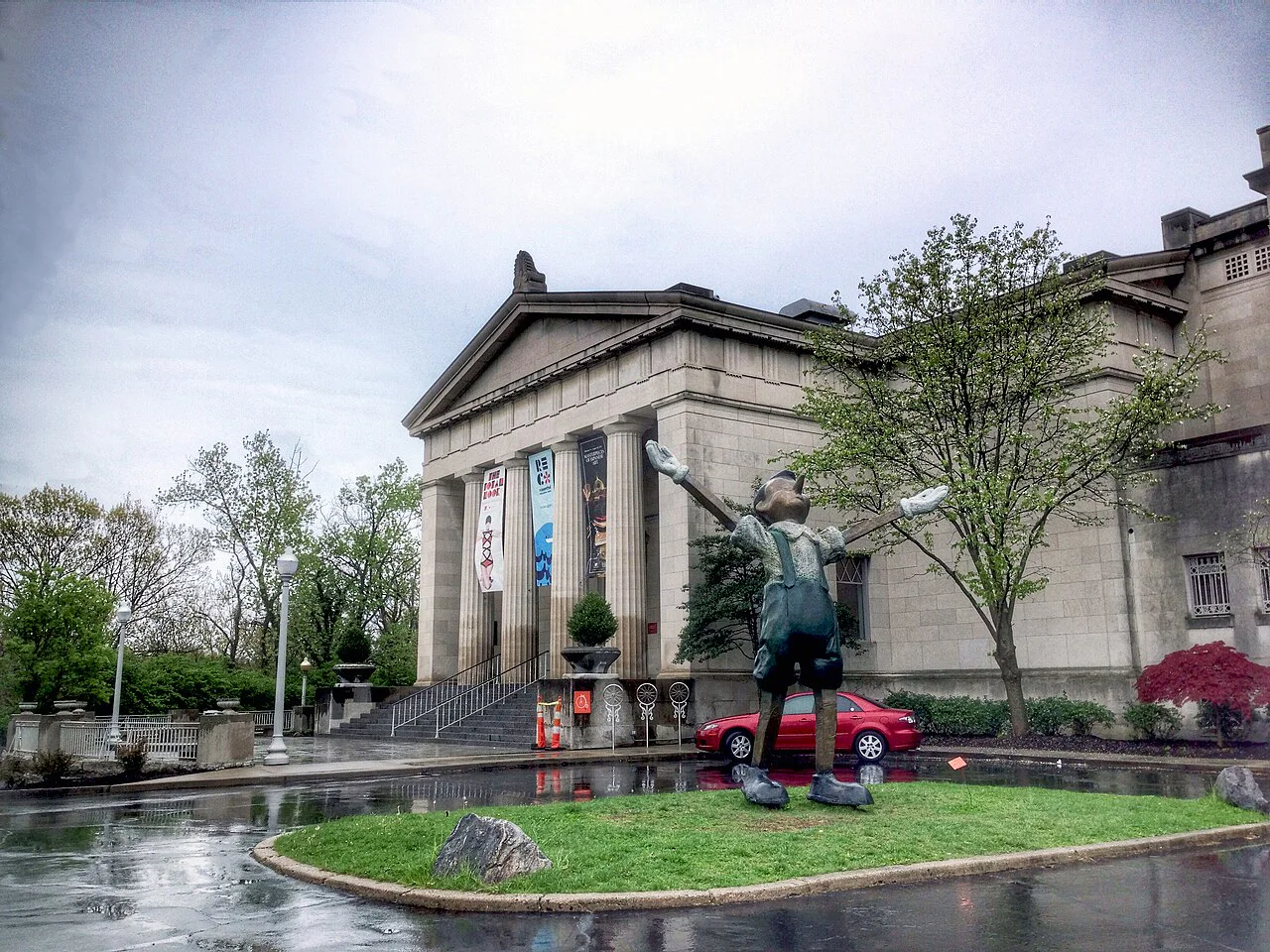
Cincinnati · 24 artworks
Cincinnati Art Museum
Content & sources
5chw4r7z on Flickr · CC BY-SA 2.0
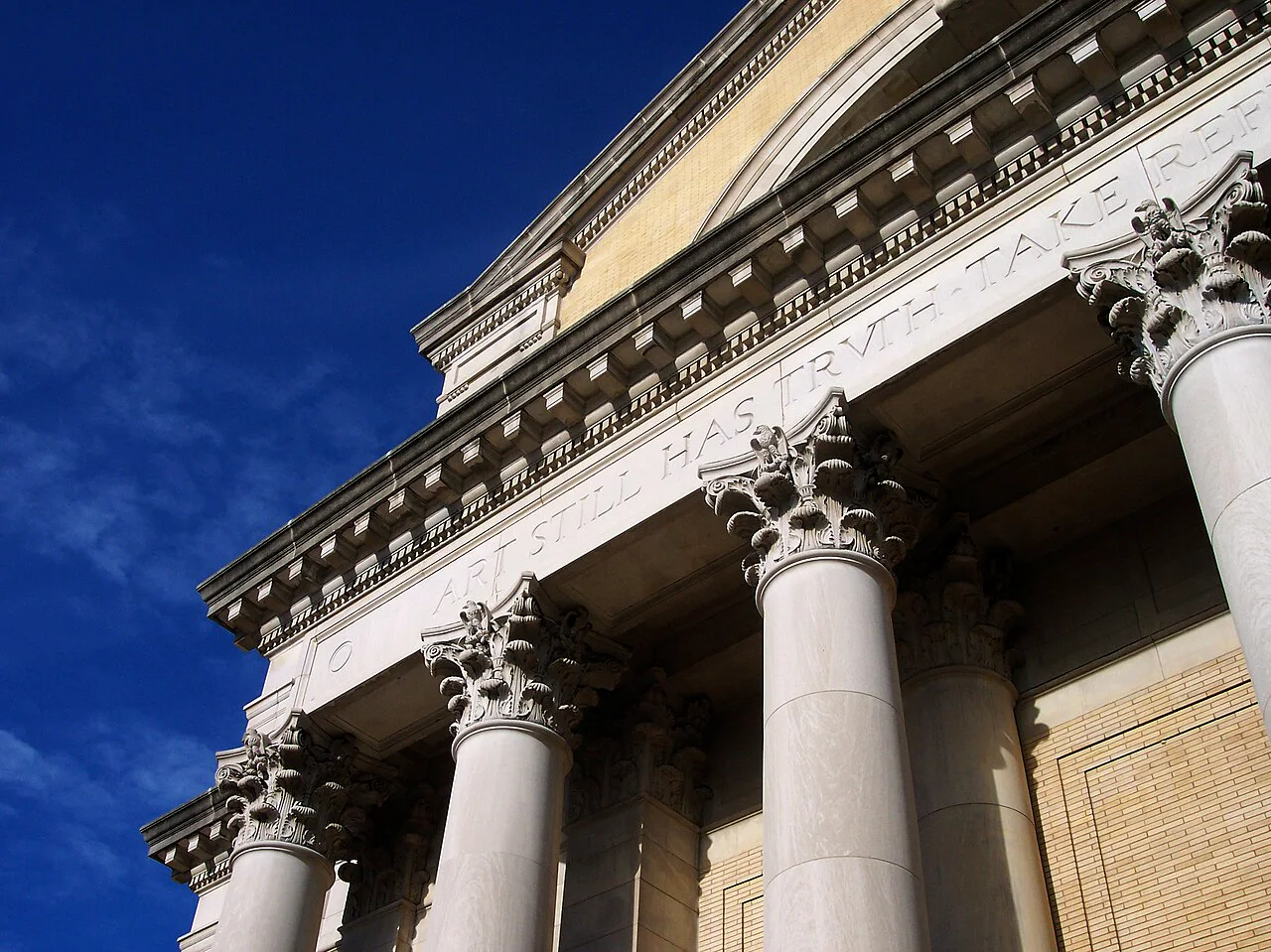
St. Louis · 38 artworks
Saint Louis Art Museum
Content & sources
Photo: Colin.faulkingham~commonswiki · Public domain
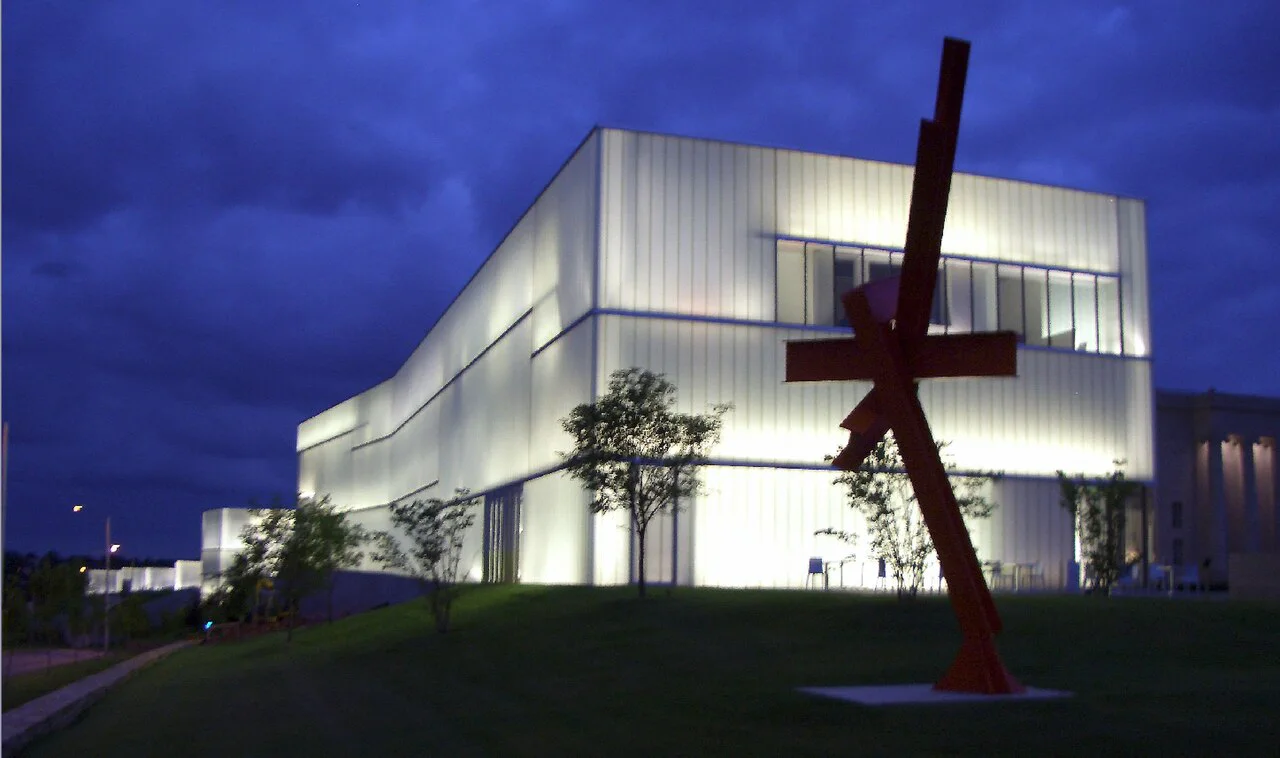
Kansas City · 34 artworks
Nelson-Atkins Museum of Art
Content & sources
User:Charvex · Public domain