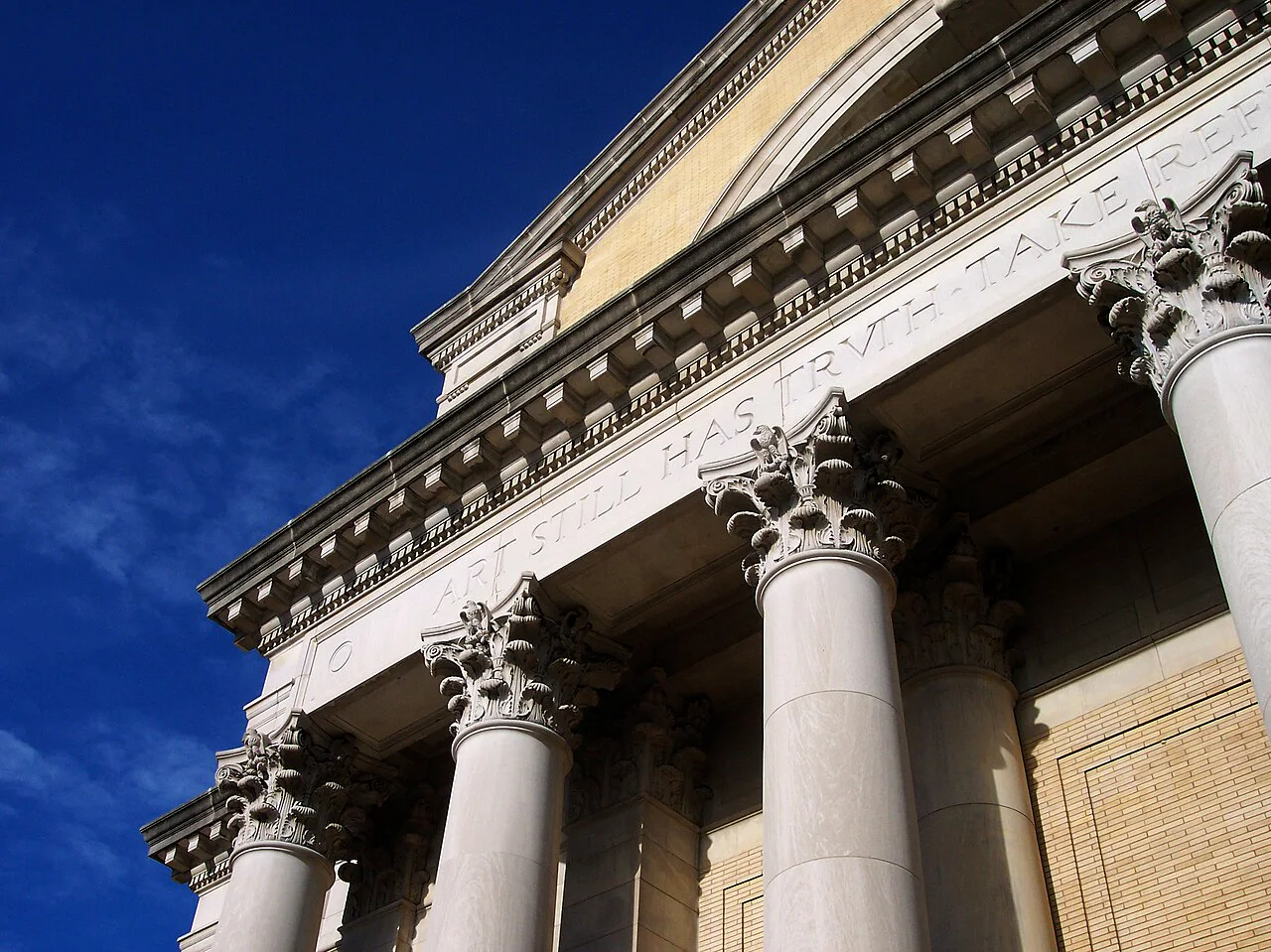
 Stanza / Audio guide
Content & sources
Stanza · Audio guide
Saint Louis Art Museum Audio Guide
A place to remember. A story to take with you.
The Saint Louis Art Museum is an art museum located in Forest Park in St. Louis, Missouri. It houses paintings, sculptures, cultural objects, and ancient masterpieces from around the world.
Download Stanza, then search for “Saint Louis Art Museum”.
About the tour
One guide. Your kind of visit.
The Saint Louis Art Museum is an art museum located in Forest Park in St. Louis, Missouri. It houses paintings, sculptures, cultural objects, and ancient masterpieces from around the world.
The Saint Louis Art Museum guide tells the stories of 38 artworks, including Danaë (Artemisia Gentileschi), Bathers with a Turtle (Henri Matisse), Madame Roulin (Paul Gauguin), Street Musicians at the Door (Jacob Ochtervelt), Smiling Girl, a Courtesan, Holding an Obscene Image (Gerard van Honthorst), Factories at Clichy (Vincent van Gogh), Léonard Renoir, The Artist’s Father (Pierre-Auguste Renoir), and Apotheosis of St. Louis (Charles Henry Niehaus). Every artwork is free to hear in the Stanza app until 1 January.
Ready when you are.
- 01Get the free Stanza app.
iOS & Android
- 02Find your guide.
“Saint Louis Art Museum”
- 03Download before you go.
Works offline
Audio guide / 38 artworks
Inside the guide
Get to know a few of the stories before you go. Open a stop to read more.
01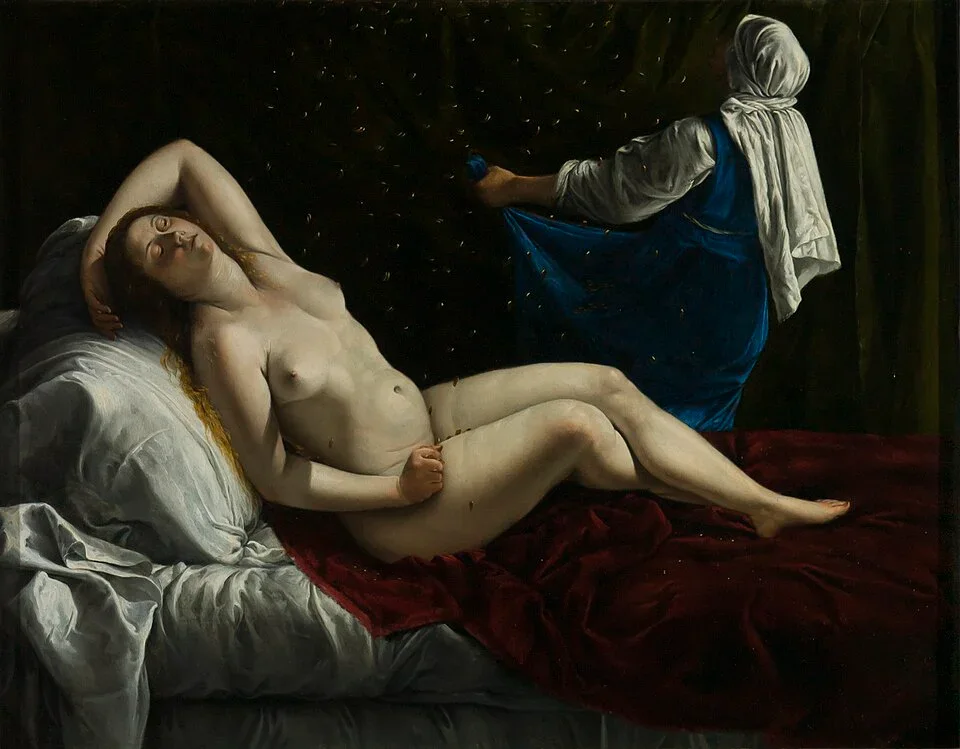
Danaë
A woman lies naked on rich fabric in a dark room. Gold coins fall onto her body from above. At the back, a servant in a white headscarf holds wide the hem of her blue skirt to catch them. And the woman's right hand is closed tight around the coins. Artemisia Gentileschi used this reclining woman, and this closed fist, in an earlier painting of Cleopatra. There the fist held a poisonous snake. Here it holds coins. Whether this Danaë is really hers is not fully settled. Those coins between her fingers are the night Zeus came to her. Her father Acrisius had shut her away, because a prophecy told him his own grandson would kill him. Zeus reached her room as a shower of gold. The son she bore, Perseus, grew up and killed his grandfather.
Listen in the appArtemisia Gentileschi · Public domain
02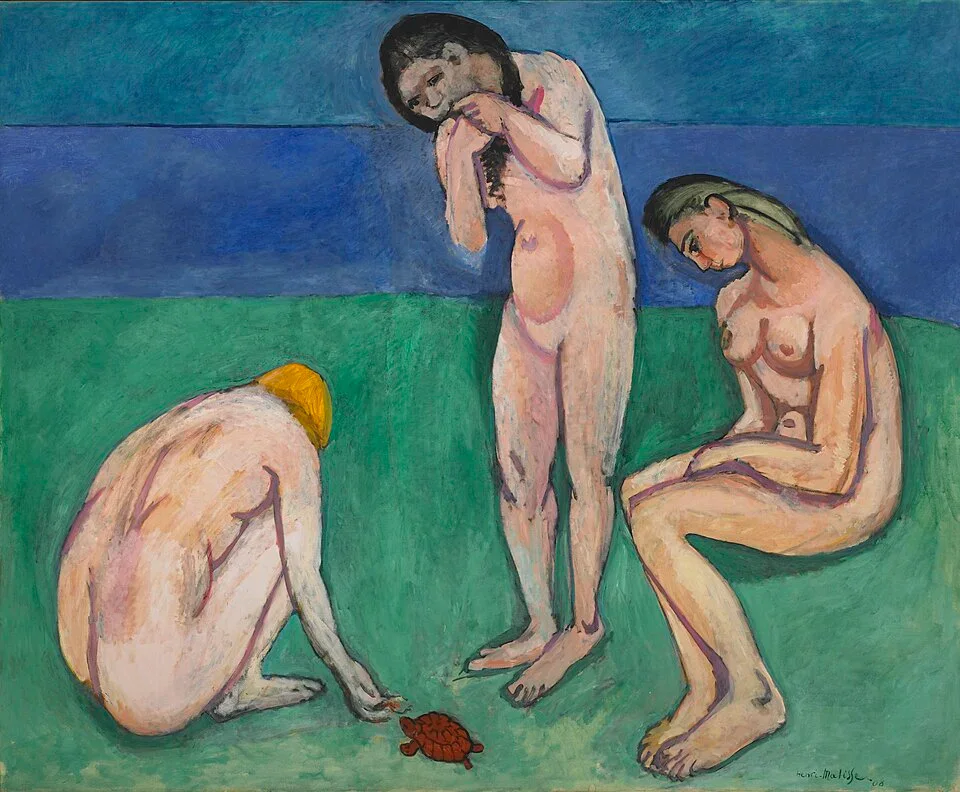
Bathers with a Turtle
The Nazis took this picture off a museum wall in Hagen, Germany, and shut it away in a palace storehouse. It was 1937. They had decided that work like this should not be seen. Two years later, in 1939, it went up for sale in Lucerne, Switzerland, at an auction of art the government called degenerate. The money would go to the Nazis. An American, Joseph Pulitzer Junior, bought it, urged on by the artist's son Pierre, who sold art. Pulitzer bought it to save it from destruction, though he knew the payment would help the people who had condemned it. In 1964 he and his wife gave it to this museum. This is the picture they wanted gone. The scene suggests a beach on the Mediterranean, yet it was painted in Paris, between autumn 1907 and February 1908. Three wide bands of color run across the background. At first there were clouds and hills and boats. Matisse replaced them with these. Against those flat bands, the bathers' bodies are simple, solid shapes. When he painted it, Matisse owned a work by Cézanne called Three Bathers. From it he took not the scene, but the way the figures are arranged.
Listen in the appUnknown author · Public domain
03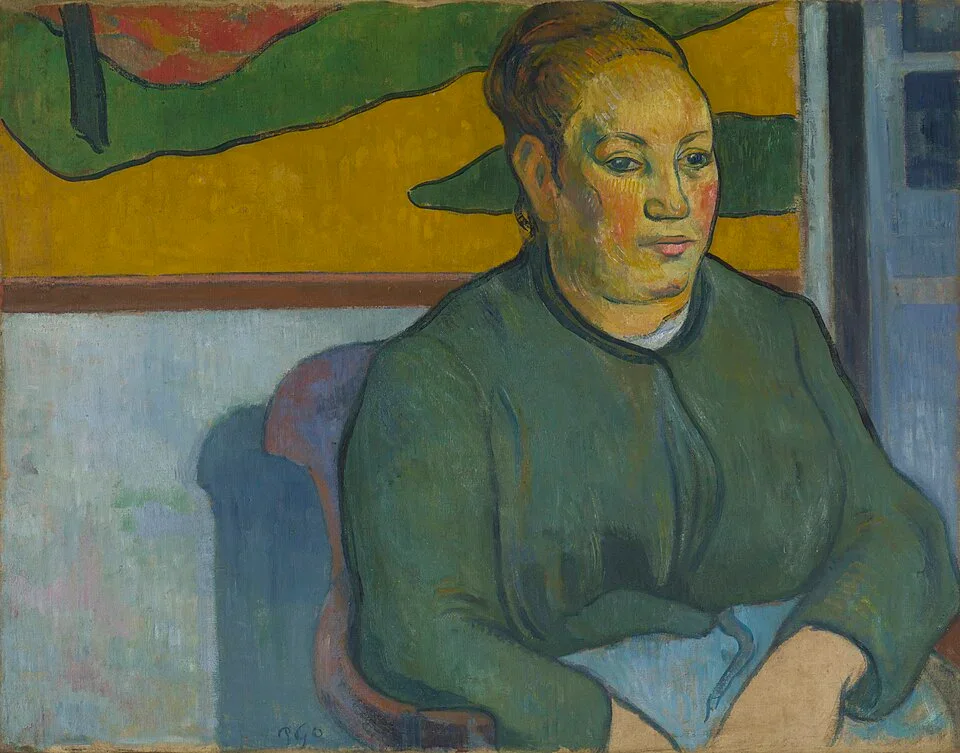
Madame Roulin
There is a green blouse here, and it is the same one she wears in a portrait by van Gogh. That is what connects the two pictures. They were painted while the two men lived together at the Yellow House in Arles, at the end of November 1888. Van Gogh was painting the Roulin family again and again that winter, and Augustine posed for both of them. She was the postman Joseph Roulin's wife, and she was thirty seven. Here Gauguin sets her in a simple, thoughtful pose. And behind her is a picture he painted himself, called the Blue Trees. She is sitting in front of his work as she poses for him.
Listen in the appPaul Gauguin · Public domain
04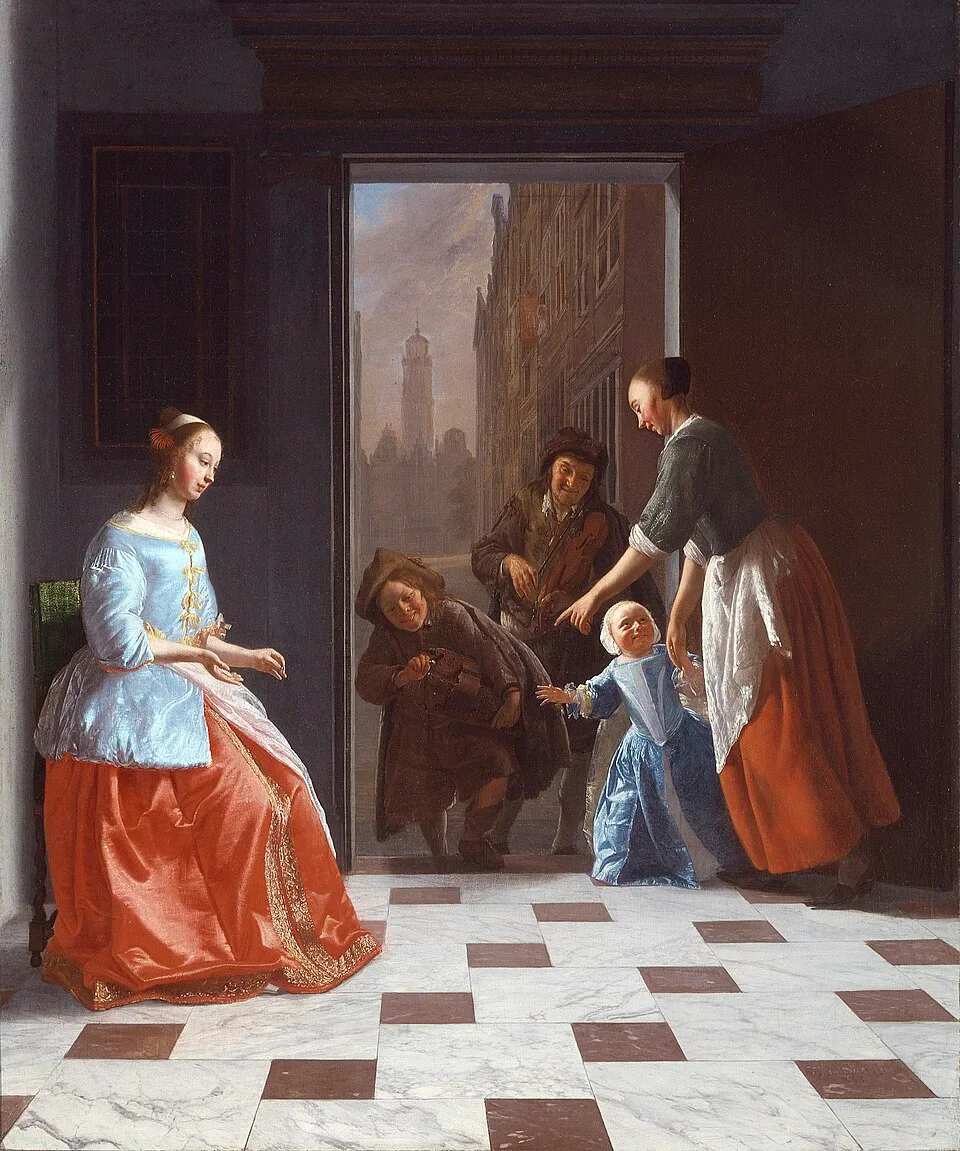
Street Musicians at the Door
A mother is showing her child how to give money to two begging musicians at the door of their house. The child and the maid are the link between the family inside and the poor people of the street. There was a custom behind this. A beggar was expected to perform some small service, and could be paid for it. Here the service is music, a violin and a hurdy-gurdy. Ochtervelt kept returning to the open door of a wealthy home, and this is one of the first of them. The door lets him show the family inside and the street beyond at once. The women inside are brightly lit and colourfully dressed, and the room is painted with care. The street beyond, leading toward a church, is darker and painted roughly. Even the faces change. The women are shown with dignity, the musicians more like caricatures. What the music means here is still uncertain.
Listen in the appJacob Ochtervelt · Public domain
05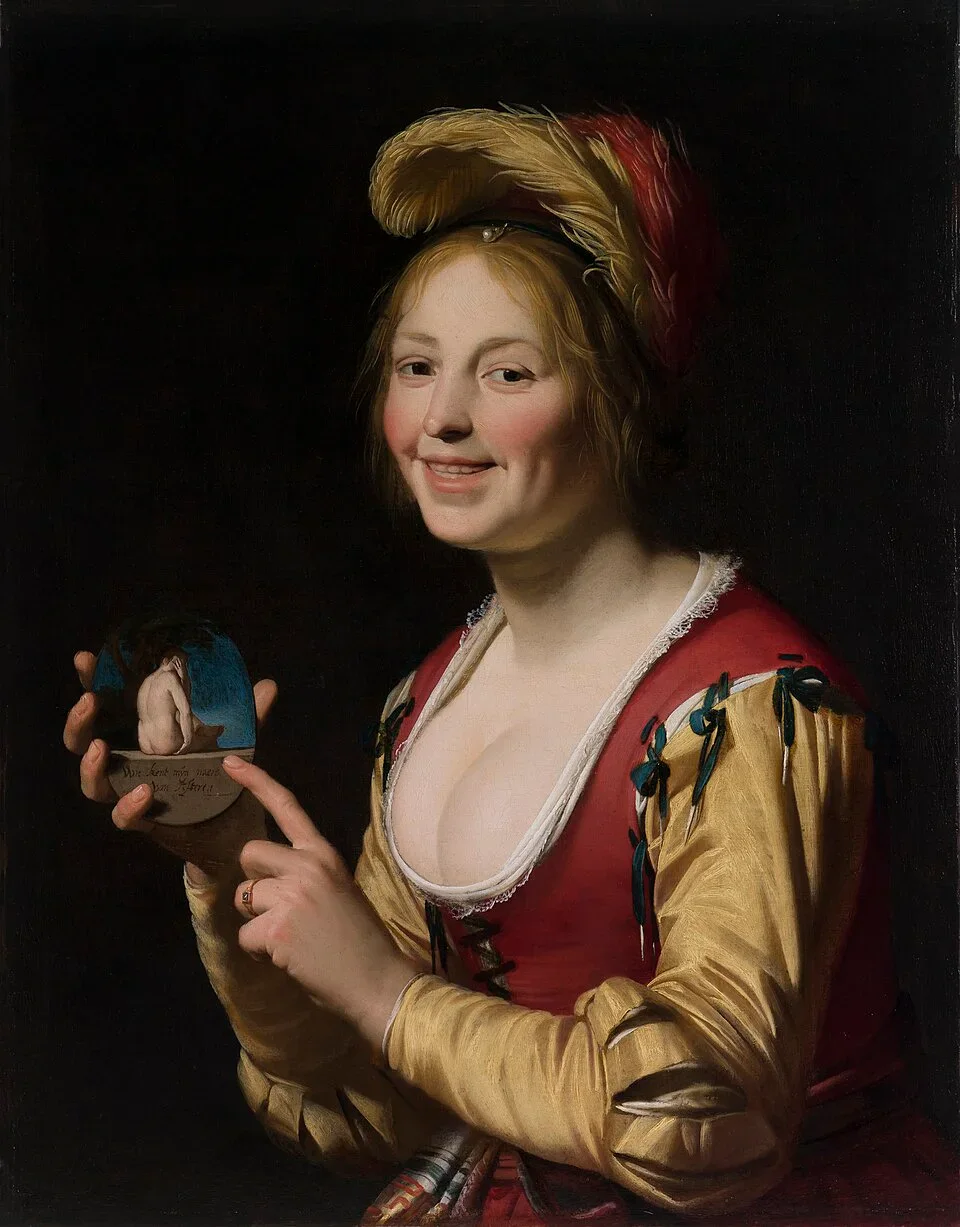
Smiling Girl, a Courtesan, Holding an Obscene Image
For centuries, no one could say who painted this picture. The woman laughs with her teeth showing, as no respectable lady of her time would. Her clothes are gold and red. In her right hand she holds up a small painted medallion. It shows a naked woman seated beside a tree, perhaps the same one, hiding her face with her hand while looking out through her fingers. Below her, Dutch words ask who can recognize her backside from behind. This little picture was likely her advertisement. Prostitutes in the Netherlands used tokens like this to offer themselves to clients, with a rude line underneath. The same woman, in nearly the same clothes, appears in another painting from the same year. Gerard van Honthorst painted this several years after coming home to Utrecht from Italy. His name was not attached to this picture until 1922.
Listen in the appGerard van Honthorst · Public domain
06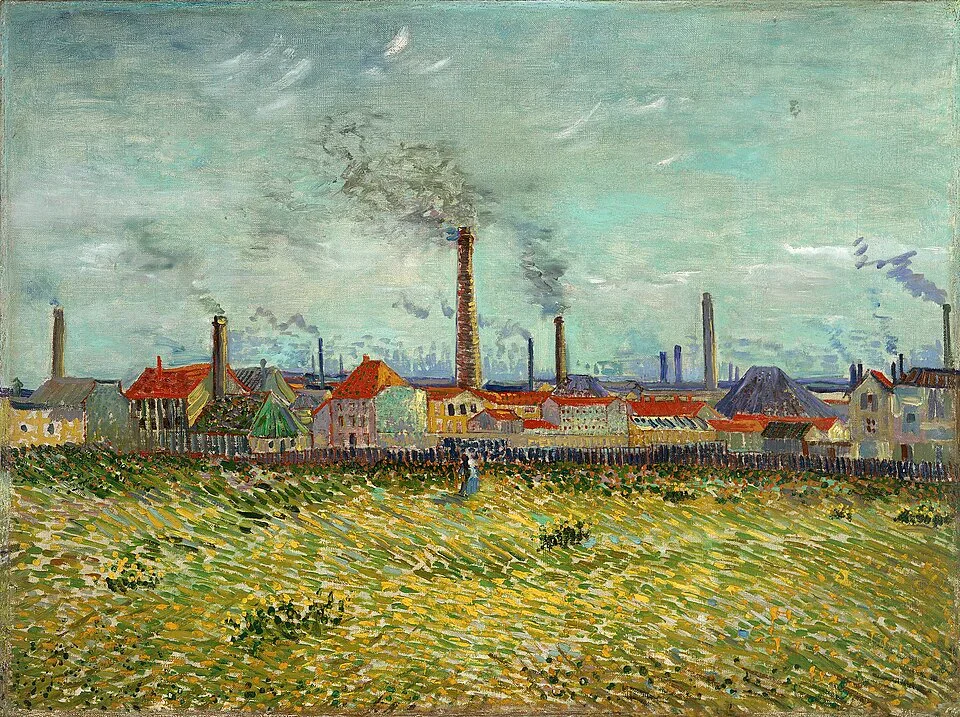
Factories at Clichy
Black smoke is pushing up from the chimneys behind the red roofs, and more keeps coming, filling a sky of gray and blue. Below that, the field is painted in green and yellow strokes, and a couple stands at its center. A fence of stakes runs the whole way across, holding all the factories on the far side. Other painters came to this stretch of the Seine for the cafes and the boating at Asnières, the village on the other bank. Van Gogh looked the other way, toward Clichy, where chemical works and soap factories and laundries had taken over. He had walked out from Montmartre, where he lived with his brother Theo. The fence divides the field from the industry pressing up behind it. He was working through a group of paintings of the Seine banks that summer, with the Grande Jatte and Asnières among them. In one of his favorite novels, Zola's L'Assommoir, there is a line about a great forest of factory chimneys hiding the horizon. He was trying out a way of painting he had picked up in Paris, and it shows most in the field along the bottom.
Listen in the appVincent van Gogh · Public domain
07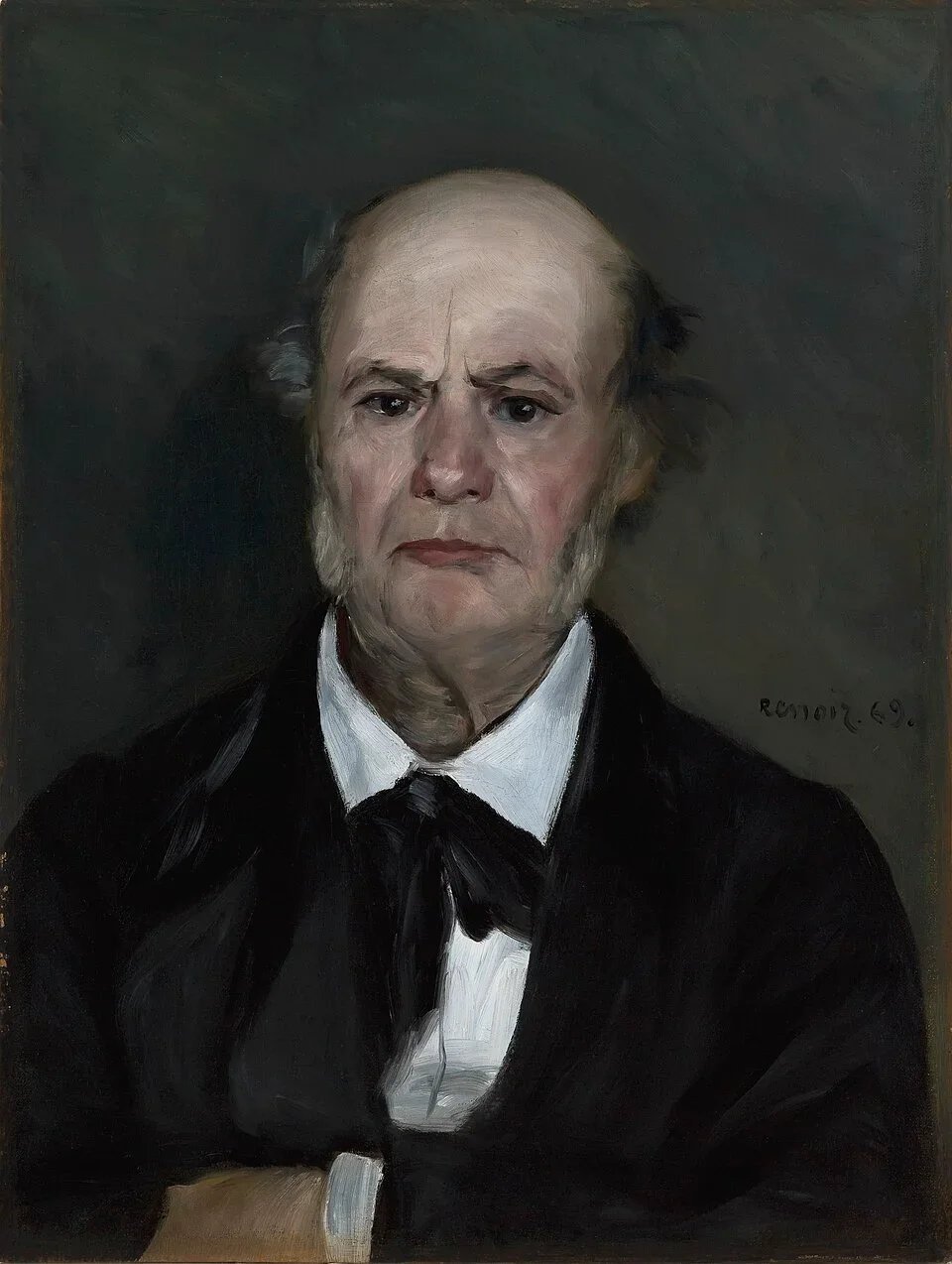
Léonard Renoir, The Artist’s Father
Renoir made this portrait from almost nothing but black and white, and he chose that narrow range on purpose. He was twenty eight, working in the plain style called Realism, with Manet's example behind him. And the restraint is there for the man himself. This is his own father, a tailor of seventy. Those few colors bring out his sternness, and there is nothing soft about him. It was the summer of 1869. Short of money, he was living under his parents' roof, so he had his father close at hand. He painted this just before he went to work with Monet on the Seine at Croissy-sur-Seine.
Listen in the appPierre-Auguste Renoir · Public domain
08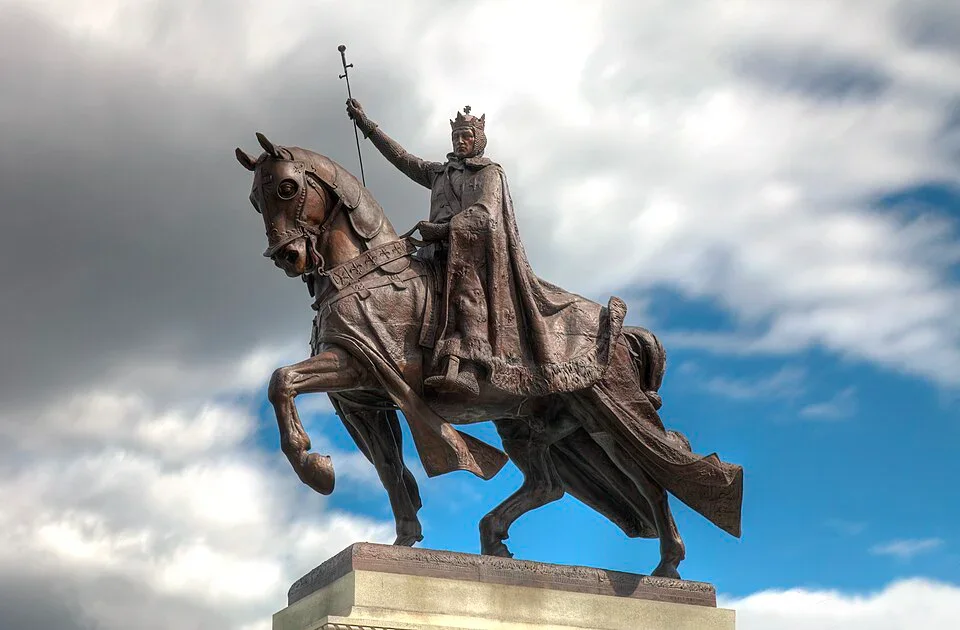
Apotheosis of St. Louis
A king in bronze stands before you. On the base is a credit, the words designed by Charles Henry Niehaus. Those words were won in court. Niehaus made the original figure in plaster for the 1904 World's Fair. It stood near the main entrance to the fairgrounds. When the fair closed, the company that ran it wanted a bronze. Niehaus offered to cast his own design for ninety thousand dollars. The Louisiana Purchase Exposition Company took a lower bid instead, thirty seven thousand five hundred dollars, from a local artist named W. R. Hodges. Niehaus sued, saying the bronze copied his design. He was awarded three thousand dollars and the right to put his name on the base. This bronze is a replica of the plaster figure from the fair.
Listen in the appRyan Ashelin - Sculpture by C.H. Niehaus · CC BY 3.0
09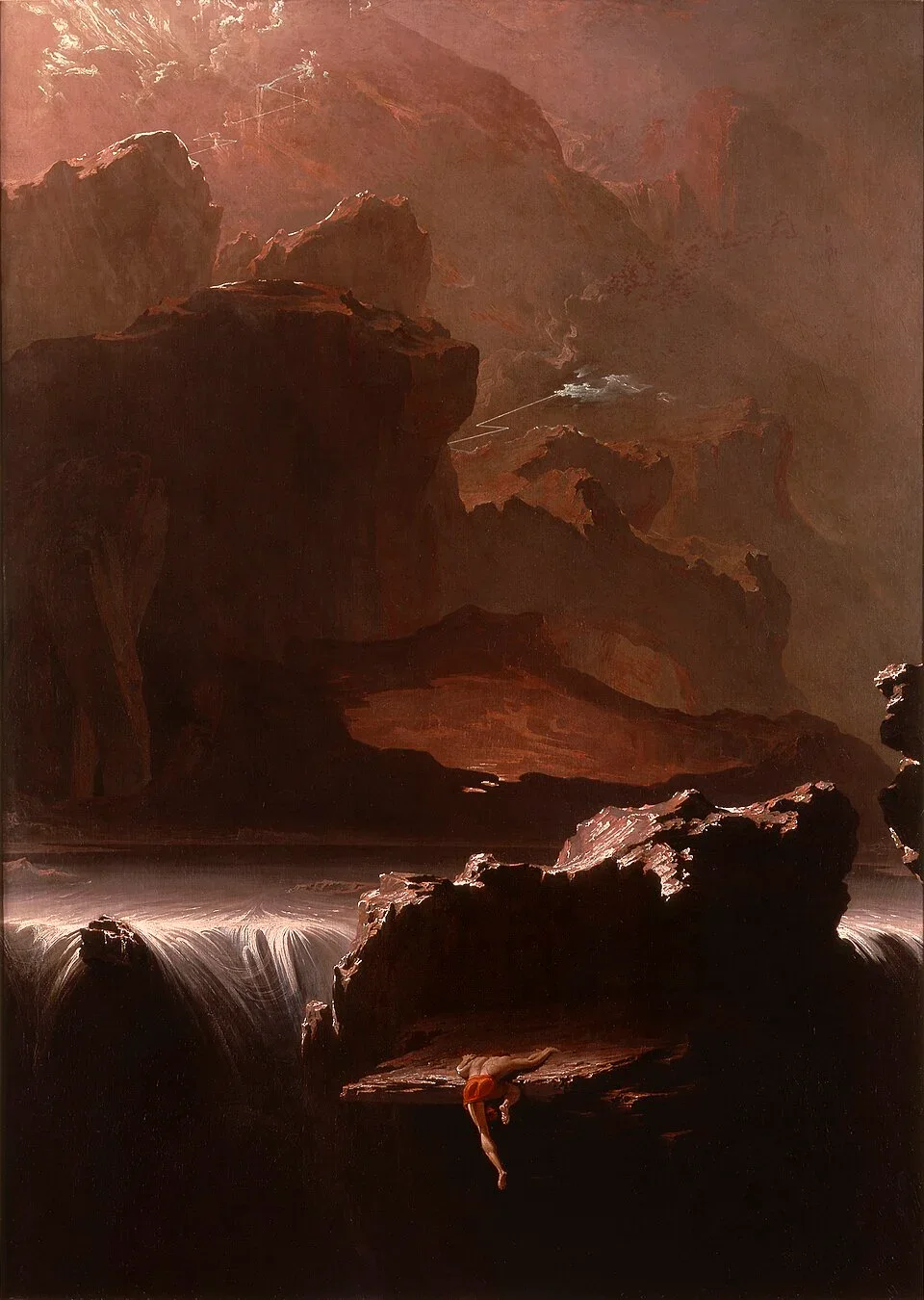
Sadak in Search of the Waters of Oblivion
A streak of light shines in one corner. It is easy to miss, and it carries a small chance of hope in a grim scene. Everything else looks like the end of the world. Jagged peaks stretch far into the distance. A volcano erupts and lightning streaks the mountains. A pool and waterfall lie beside the rocks. Against all of that, the man on the ledge is barely there. He clings to the rock, with no chance against the vast landscape around him. That man is Sadak. His Sultan, Amurath, sent him to find waters that erase memory. He meant them for Sadak's wife, Kalasrade, so that he could seduce her. On the way, Sadak lived through a storm at sea, a plague, evil spirits and a whirlpool underground. Martin chose to paint him at the climax, just before he reaches the water. He was not trying to show a real place. He wanted you to feel what Sadak felt. In the end, the waters took effect on Amurath himself, and when he died, Sadak became Sultan.
Listen in the appJohn Martin · Public domain
10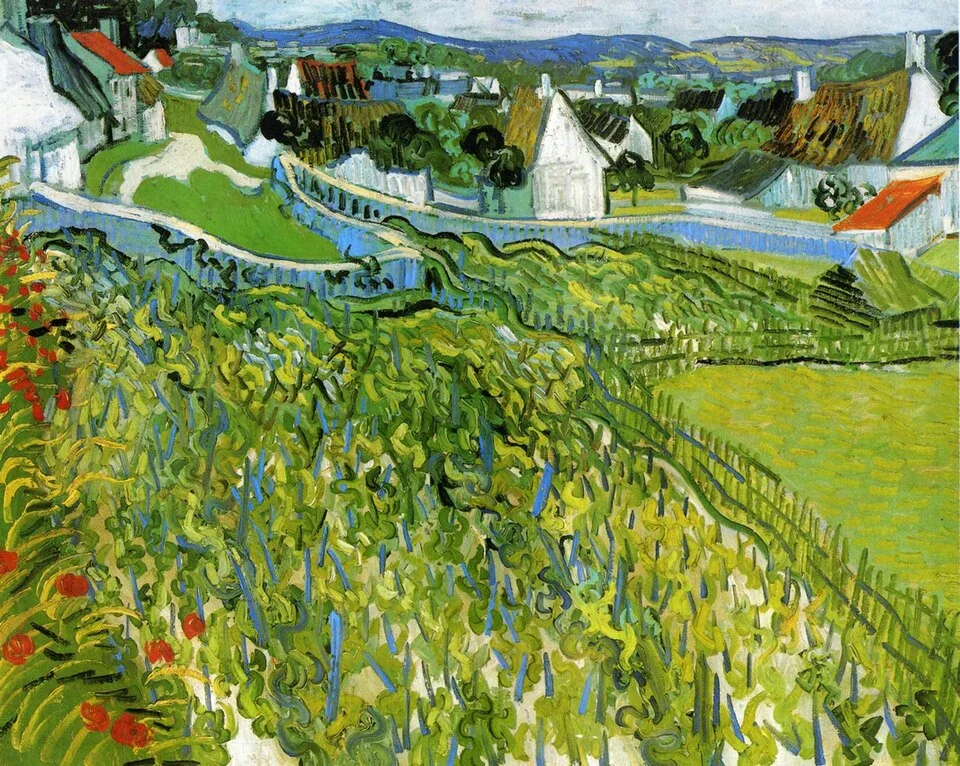
Vineyards at Auvers
Vincent van Gogh had just left the hospital at Saint Remy and come to Auvers, near Paris, where a doctor who also painted looked after him. In the weeks that followed he painted almost a canvas a day, nearly seventy pictures in all. What drew him were the green grapes, still short of harvest. They fill the foreground, with the village roofs coming one after another behind them, just as he wrote to his sister Wil. At Arles he had painted vineyards too, but those pictures had people in them and bright, varied colour. Here the colour is quieter, and there is no one in the scene. The vines have the whole picture to themselves. He wrote to Theo, his brother, about a vineyard that Doctor Gachet had seen on his last visit and liked very much. He never wrote of sending the canvas to Theo. So it probably stayed in Auvers with him until he died, a few weeks later.
Listen in the appVincent van Gogh · Public domain
- 11
Golshan Album
Jafar Tabrizi · 1700
- 12
Still Life, Basket of Apples
Vincent van Gogh · 1887
- 13
Christ and the Sinner
Max Beckmann · 1917
- 14
Arria and Paetus
François-André Vincent · 1784
- 15
Portrait of Mink with Violet Shawl
Max Beckmann · 1910
- 16
The Verdict of the People
George Caleb Bingham · 1854
- 17
Saint Eustace
Albrecht Durer · c. 1501
- 18
Stairway at Auvers
Vincent van Gogh · 1890
- 19
Daniel Interpreting to Belshazzar the Writing on the Wall
Benjamin West · 1775
- 20
Interior at Nice
Henri Matisse · c. 1919
- 21
Portrait of Henry Addington, 1st Viscount Sidmouth
John Singleton Copley · c. 1798
- 22
Sea Captains Carousing in Surinam
John Greenwood · 1752–1758
- 23
Attachment
Edwin Landseer · 1829
- 24
The Reading of the Bulletin of the Grande Armée
Louis-Léopold Boilly · 1807
- 25
High Torne Mountain, Rockland County, New York
Jasper Francis Cropsey · 1850
- 26
The Tryst
Jean-Léon Gérôme · 1840–1850
- 27
St. Francis Contemplating a Skull
Francisco de Zurbarán · c. 1635
- 28
Port-en-Bessin: The Outer Harbor (Low Tide)
Georges Seurat · 1888
- 29
Apollo and Marsyas
Bartolomeo Manfredi · c. 1616–1620
- 30
Relay Hunting
Rosa Bonheur · 1887
- 31
Woman in Pink
Chaïm Soutine · c. 1924
- 32
Elvira Resting at a Table
Amedeo Modigliani · 1919
- 33
The Silver Goblet
Jean-Baptiste-Siméon Chardin · c. 1728
- 34
Camaret, Moonlight and Fishing Boats
Maximilien Luce · 1894
- 35
Christ Shown to the People (Ecce Homo)
Titian · 1570–1575
- 36
Saint John's vision of the seven candlesticks
Albrecht Durer · 1497–1498
- 37
Mary, Lady Guildford
Hans Holbein the Younger · 1527
- 38
An Island in the Lagoon with a Gateway and a Church
Giovanni Antonio Canal · 1740–1745
Saint Louis Art Museum
Frequently asked questions
How much does the guide cost?
Free app download. Free until 1 January. Listed guide price: $0.99. Audio guide only. Venue admission is separate.
Can I listen without internet?
Yes. Download the guide’s audio, images, and maps in the app before your visit. Your downloaded content is then available offline.
Can I listen in my language?
In English for now. More languages soon.
Do I need to follow a schedule?
No. This is a self-guided experience. Choose your stops, pause whenever you like, and return to a story at your own pace.
Which artworks are in the Saint Louis Art Museum audio guide?
38 artworks, including Danaë (Artemisia Gentileschi), Bathers with a Turtle (Henri Matisse), Madame Roulin (Paul Gauguin), Street Musicians at the Door (Jacob Ochtervelt), Smiling Girl, a Courtesan, Holding an Obscene Image (Gerard van Honthorst), Factories at Clichy (Vincent van Gogh), Léonard Renoir, The Artist’s Father (Pierre-Auguste Renoir), and Apotheosis of St. Louis (Charles Henry Niehaus). The full list is on this page.
Is this the museum’s official audio guide?
No. Stanza is an independent audio guide app and is not affiliated with Saint Louis Art Museum. Museum admission is separate.
At your own pace
Explore Saint Louis Art Museum.
Download Stanza, then search for “Saint Louis Art Museum”.
Free app download · Guide price shown in the app
Keep exploring
Audio guides — United States
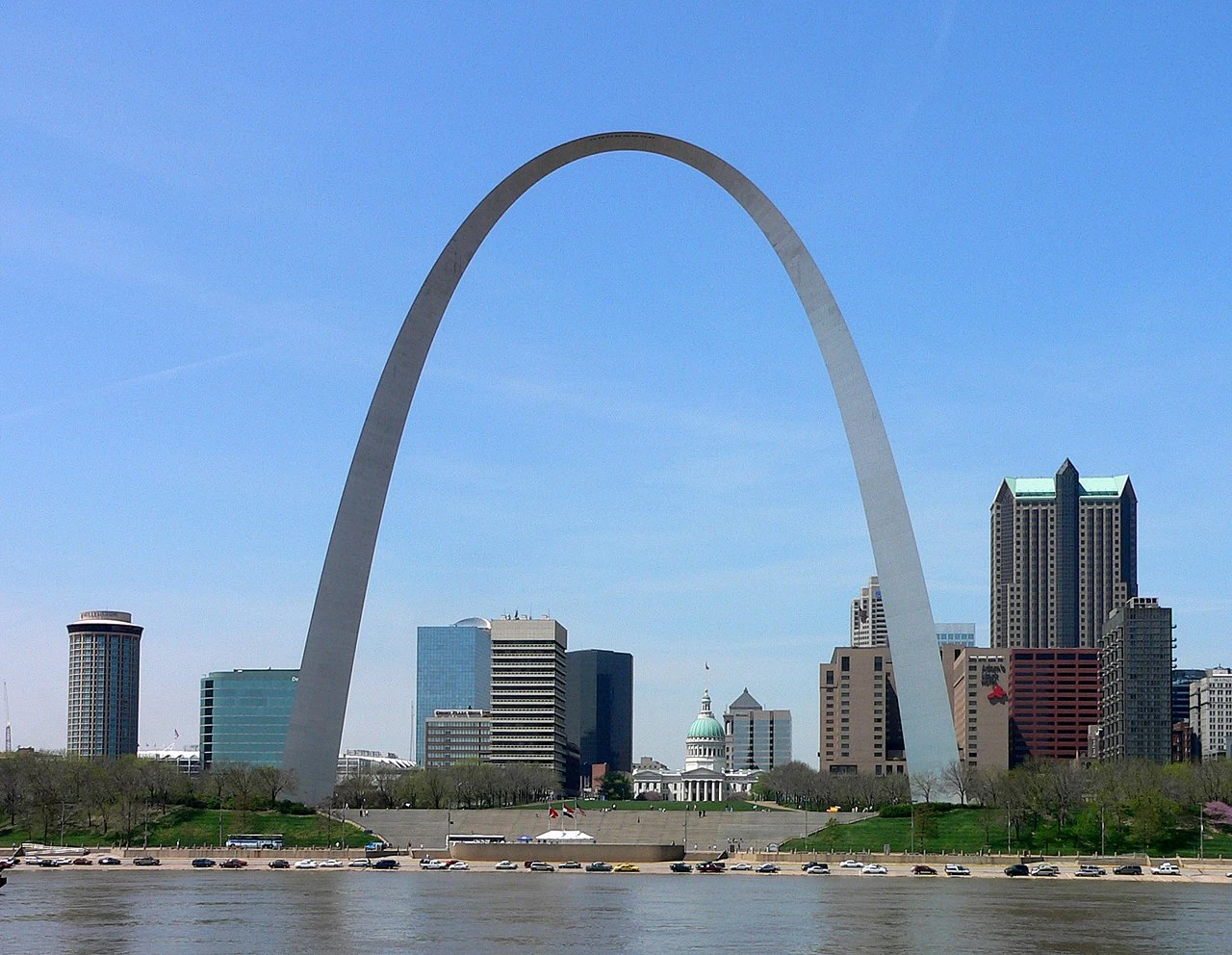
St. Louis · 10 km
Gateway Arch
Content & sources
[https://www.flickr.com/photos/11399912@N00 B0iwehijro2i0- ] `1l]] from Davis, CA, USA · CC BY 2.0
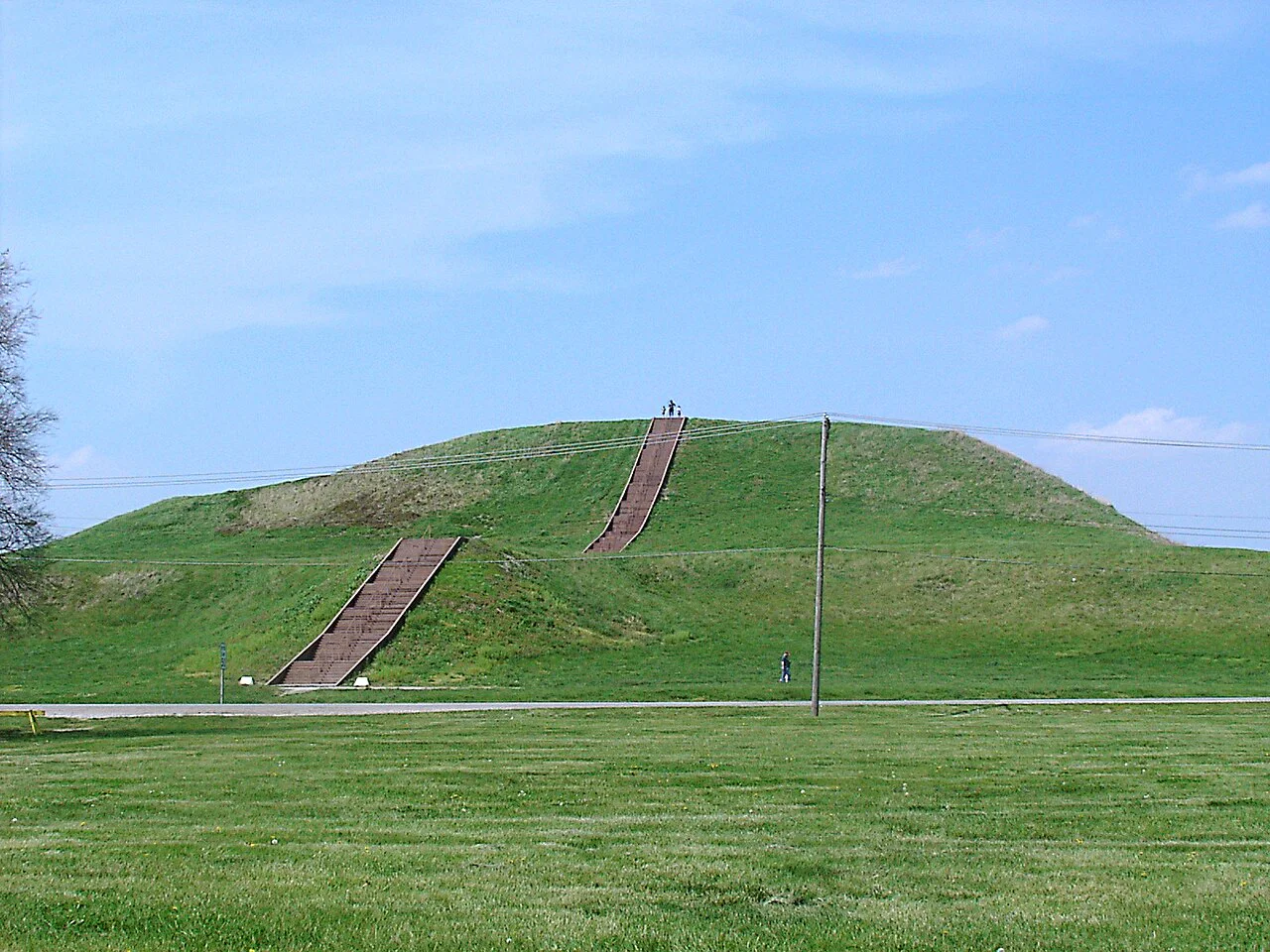
Collinsville · 20 km
Cahokia
Content & sources
Skubasteve834 · CC BY-SA 3.0
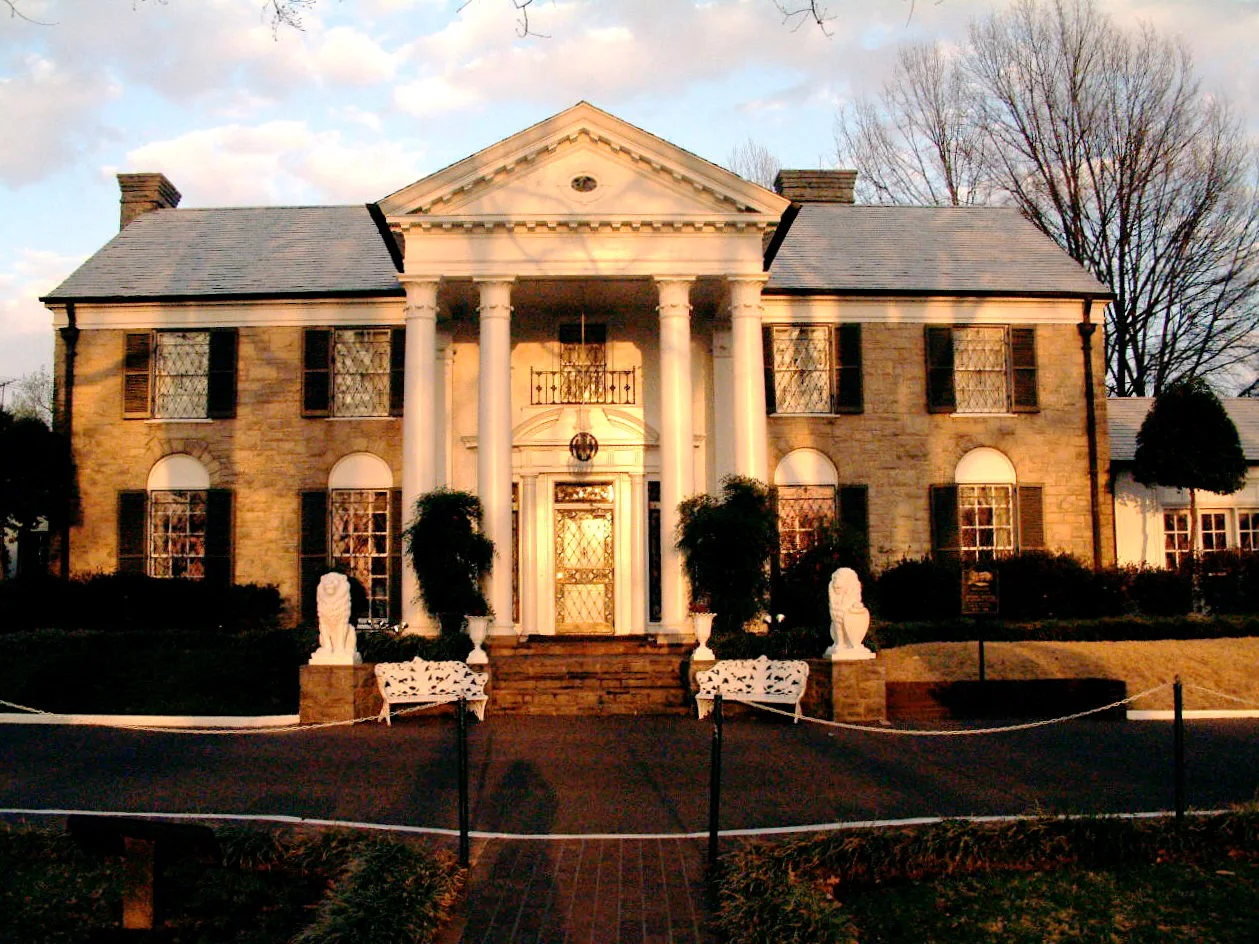
Memphis
Graceland
Content & sources
User:Maha · CC BY 2.5
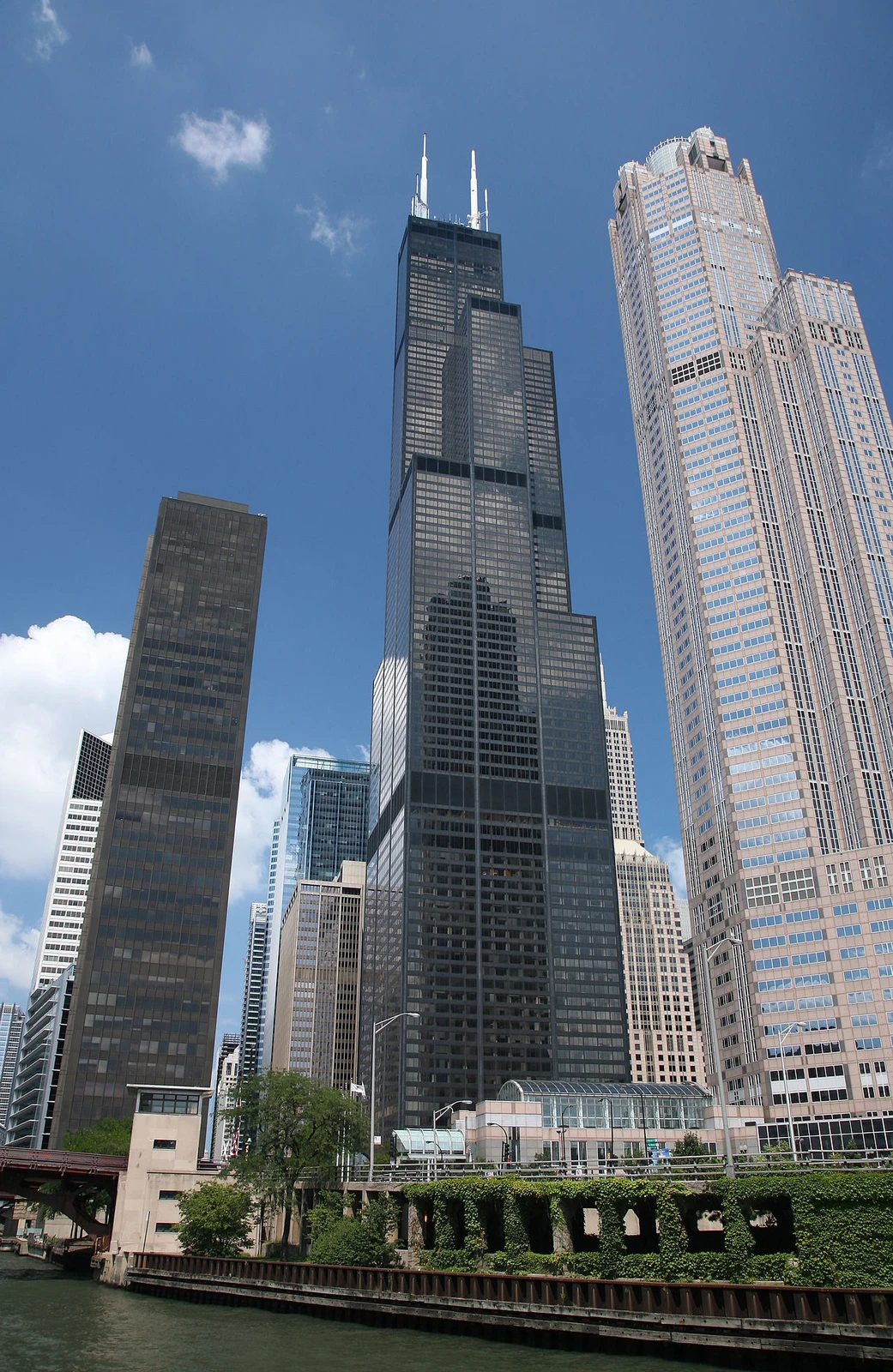
Chicago
Willis Tower
Content & sources
Daniel Schwen · CC BY-SA 4.0
Art museums
More art museum audio guides
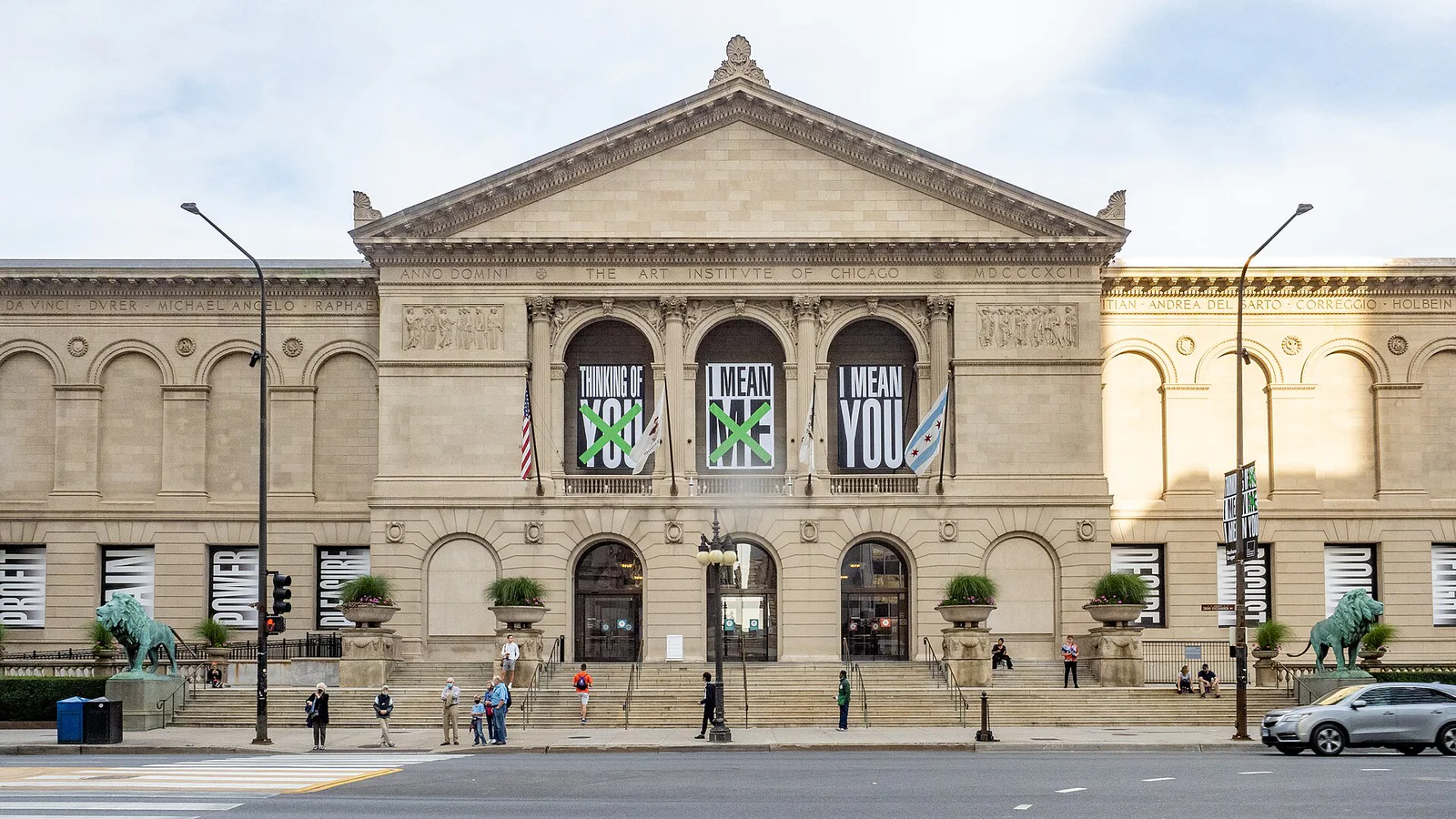
Chicago · 67 artworks
Art Institute of Chicago
Content & sources
ajay_suresh · CC BY 2.0
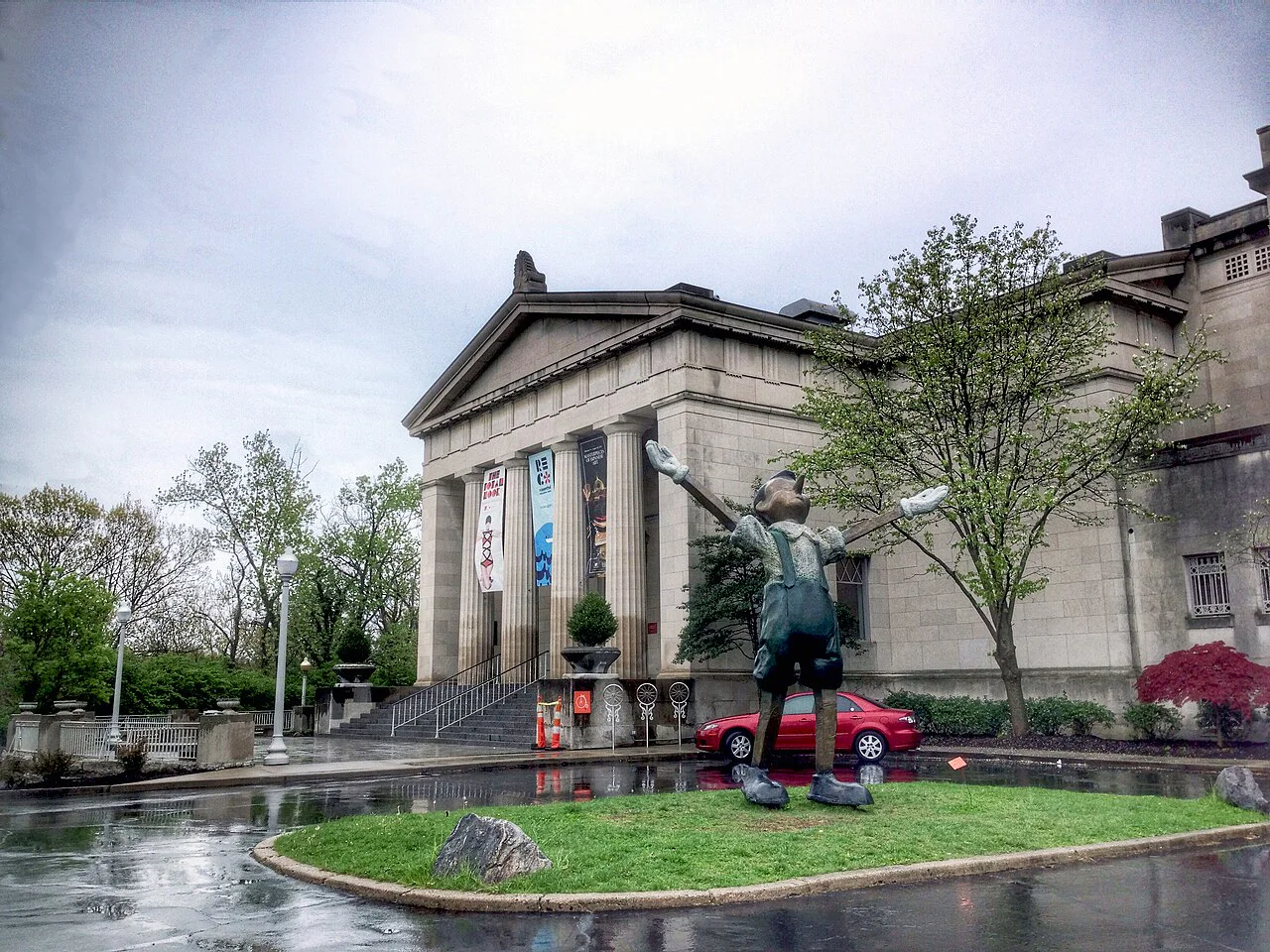
Cincinnati · 24 artworks
Cincinnati Art Museum
Content & sources
5chw4r7z on Flickr · CC BY-SA 2.0
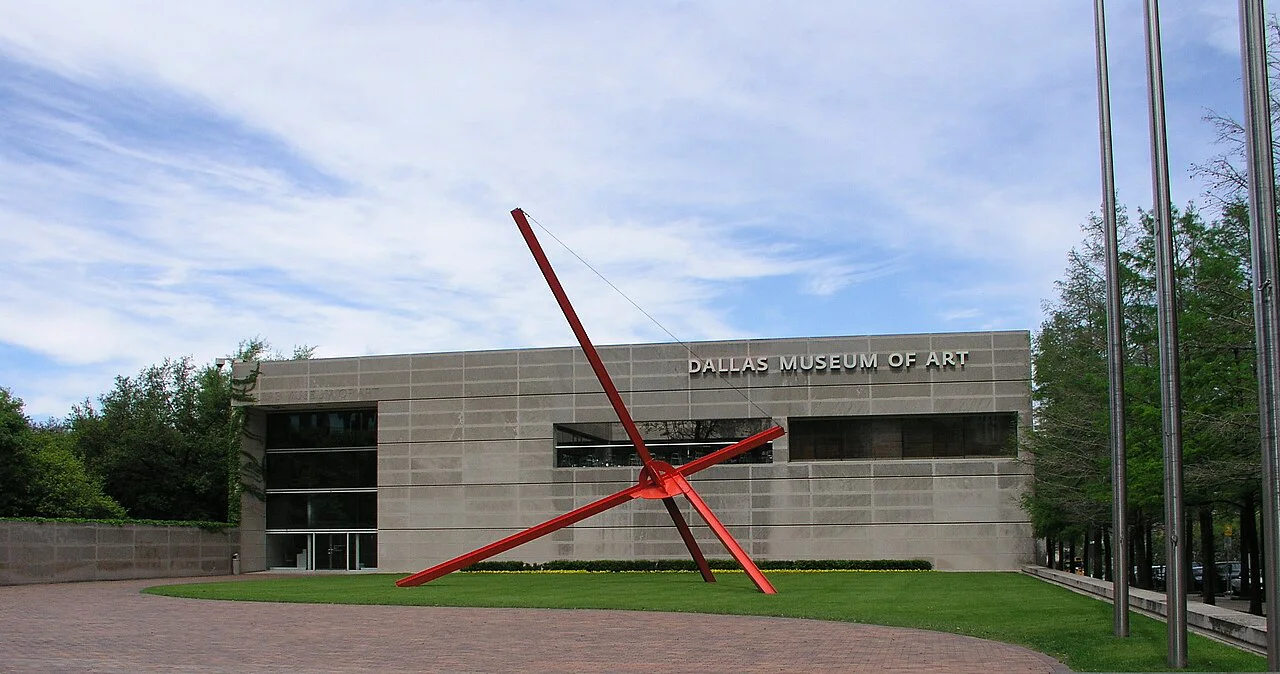
Dallas · 31 artworks
Dallas Museum of Art
Content & sources
KeithJonsn at English Wikipedia · CC BY-SA 3.0
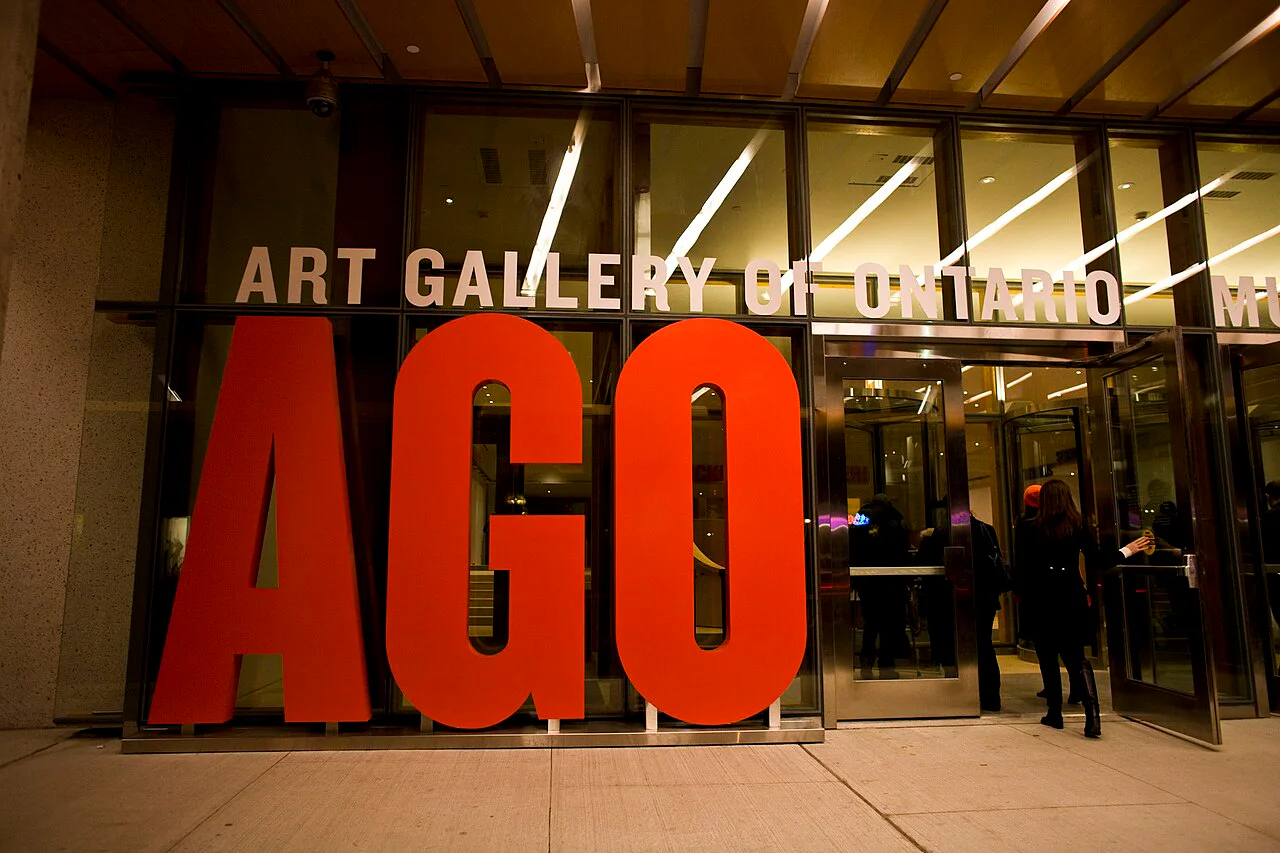
Toronto · 21 artworks
Art Gallery of Ontario
Content & sources
Owen Byrne from Ottawa, Canada · CC BY 2.0
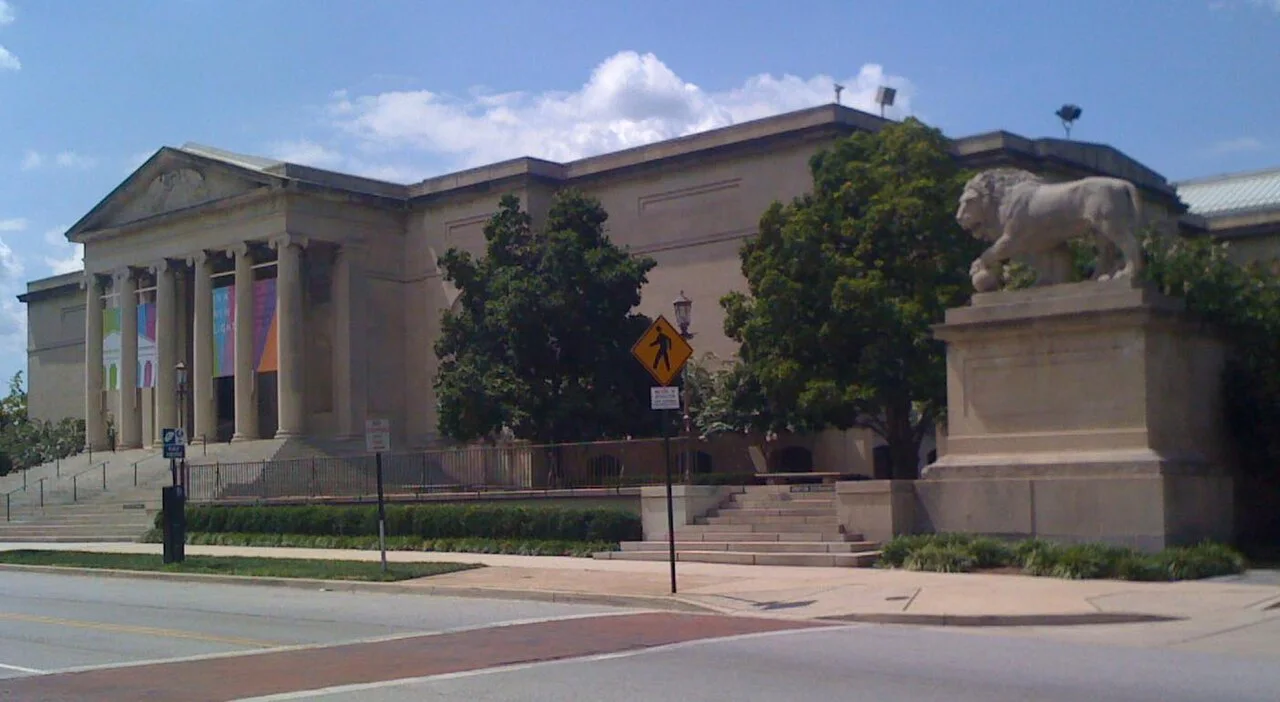
Baltimore · 19 artworks
Baltimore Museum of Art
Content & sources
«Marylandstater» «reply» at English Wikipedia. · Public domain
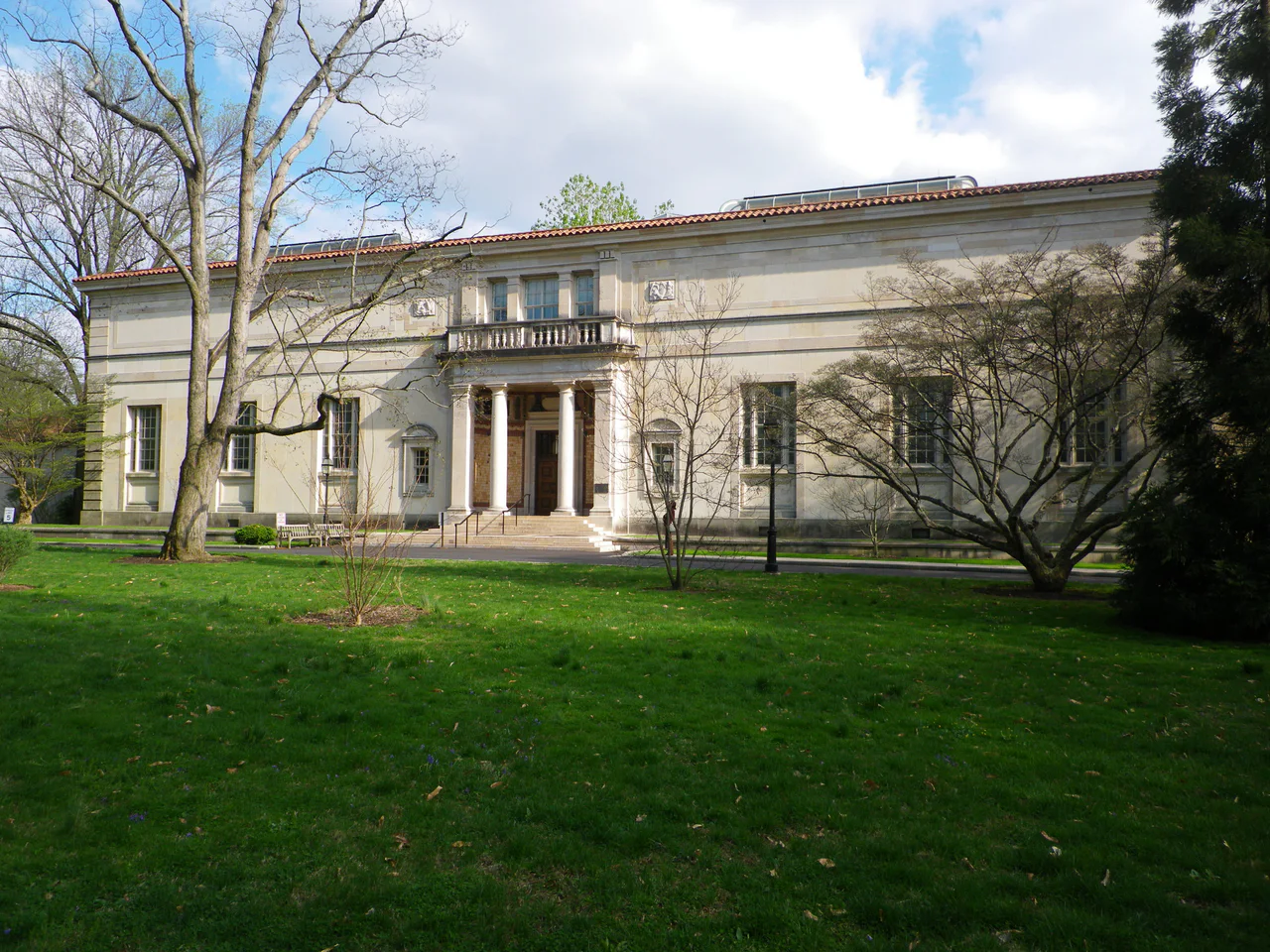
Philadelphia · 38 artworks
Barnes Foundation
Content & sources
Photo: Dmadeo · CC BY-SA 3.0