Languages
15Gateway Arch Audio Guide
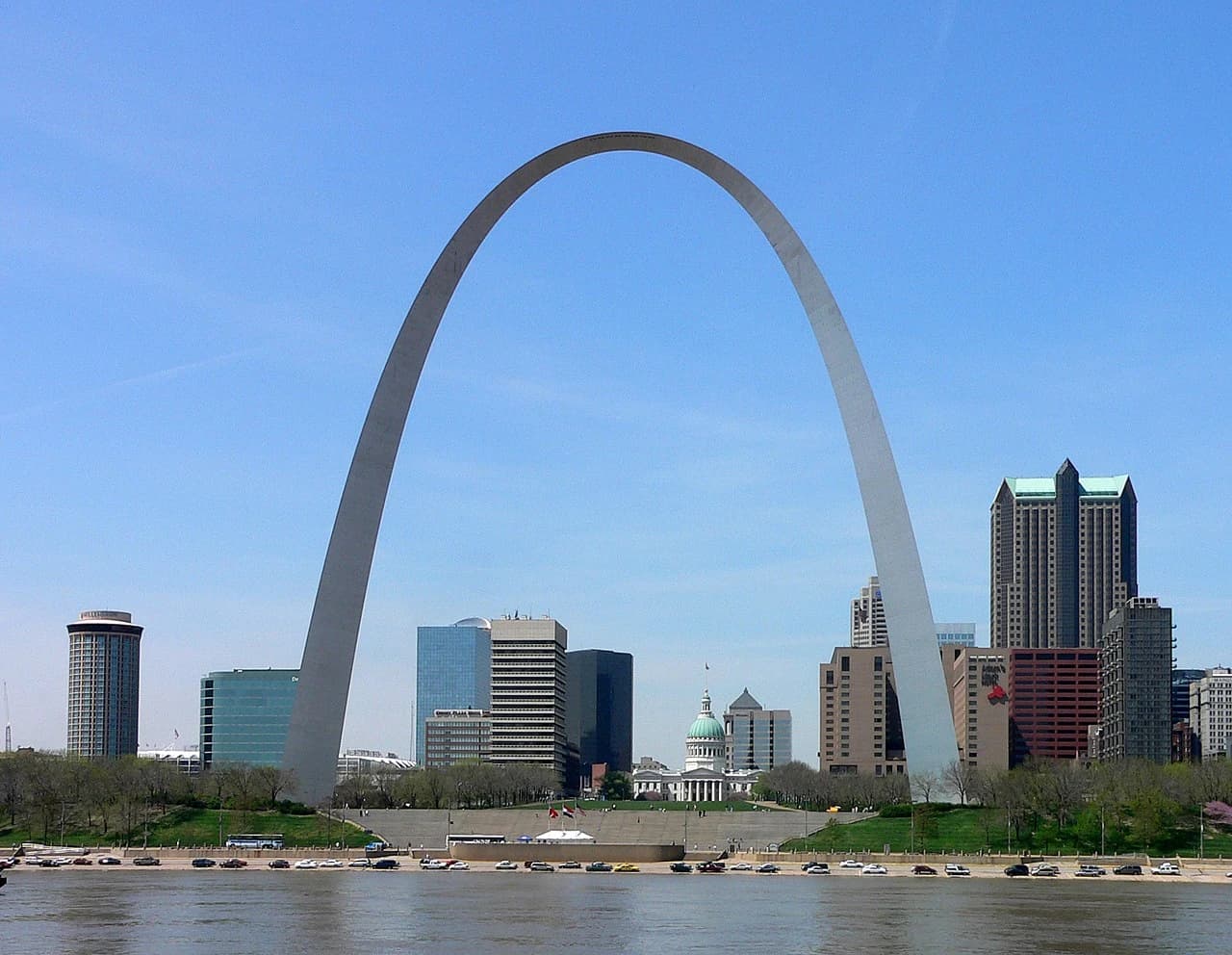
Gateway Arch is a landmark in St. Louis, United States. Explore it with Stanza's GPS-triggered offline audio guide — available in 15 languages.
Quick Facts
22
Stops
15
Languages
100%
Offline
📍 St. Louis, United States · 38.6246°N, -90.1850°E
About Gateway Arch
The Gateway Arch is an iconic stainless-steel arch in St. Louis, Missouri, symbolizing the westward expansion of the United States. It offers observation decks at its summit with panoramic views of the city and Mississippi River.
Gateway Arch is also known as St. Louis Arch.
This self-guided audio tour features 22 narrated stops organized across 6 sections, including Gateway Arch National Park (Arrival), Engineering the Catenary Leg, Museum of Westward Expansion, The Tram Journey, The Summit Observation Deck, Legacy and the Old Courthouse. As a monument, Gateway Arch offers a unique cultural experience in the heart of St. Louis, United States.
The Stanza audio guide is available in 15 languages and works entirely offline — download the complete tour including audio narration, maps, and images before your visit. As you walk through Gateway Arch, GPS-triggered narration plays automatically at each point of interest.
Last updated:
What you will hear
Gateway Arch National Park (Arrival)
Establishing the scale of the world's tallest arch and its role as a symbolic gateway. Includes the verified POI image for the National Park and shots emphasizing the reflection and human scale.
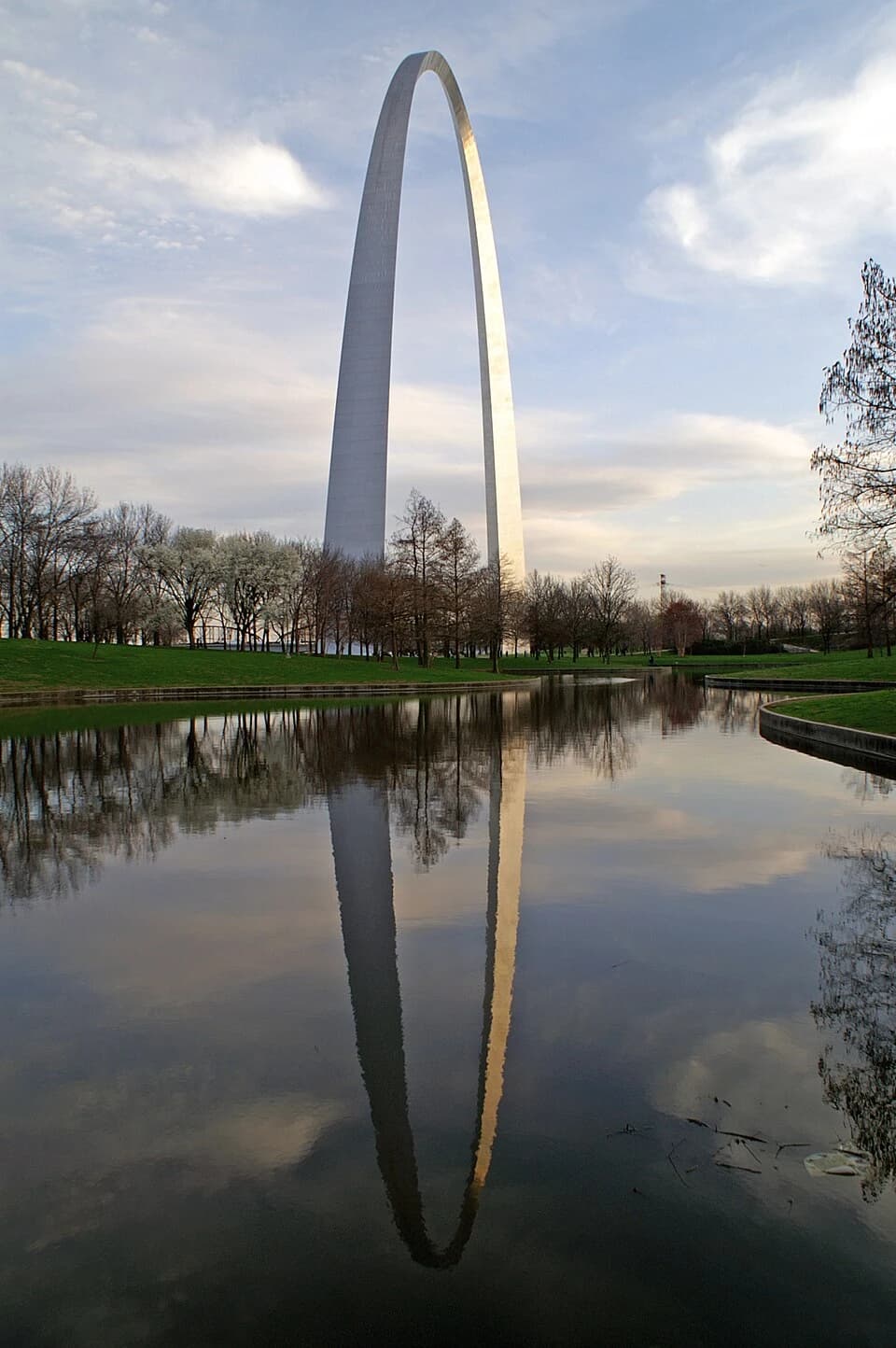
Reflection at North Pond
Notice how the sweeping curve of the monument is captured in the still waters of the park’s north pond. This harmonious relationship between architecture and nature was the vision of Eero Saarinen, the Finnish-American architect who won the 1947 national design competition for this site. Saarinen’s design was chosen from 172 entries for its bold simplicity and timeless elegance. He sought to create a monument that wasn't just a statue on a pedestal, but a structure that felt integrated into the landscape itself. This approach is a signature of the mid-century modern aesthetic, which emphasizes clean lines and geometric purity. The way the arch rises seamlessly from the green hills reflects Saarinen’s belief that a monument should be both inspiring and approachable. From this vantage point, you can appreciate how the surrounding parkland, with its walking paths and quiet water features, provides a tranquil setting that balances the sheer industrial power of the structure. Although Saarinen passed away before the project was completed, his legacy lives on in this iconic form, which continues to be celebrated as a masterpiece of 20th-century design, perfectly capturing the optimistic spirit of the era in which it was conceived.
Engineering the Catenary Leg
Focuses on Eero Saarinen’s 'weighted catenary' design and the record-breaking use of stainless steel. Includes close-ups of the skin and the dramatic upward perspective.
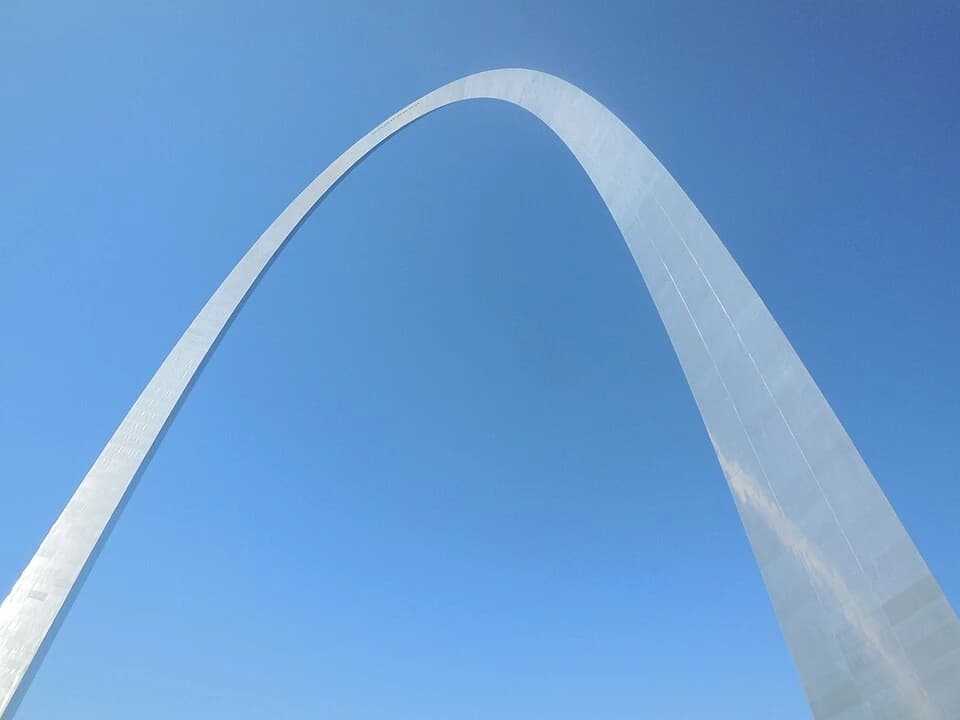
The Arch Vertex
Standing directly underneath the center of the monument and looking straight up provides a perspective like no other. From this angle, you can clearly see the dramatic taper of the structure. While the legs are 54 feet wide at ground level, they narrow significantly as they rise, reaching just 17 feet wide at the very top. This tapering creates a forced perspective that makes the monument feel even taller than its 630 feet. You can also appreciate the geometric precision of the triangular cross-sections that make up the structure. Each section is an equilateral triangle, though the dimensions change as you move upward. The sharp, clean edges of these triangles meet at the vertex to create a seamless peak that seems to pierce the sky. This view emphasizes the mathematical beauty of Saarinen's design, highlighting how the massive industrial materials have been shaped into a form of extreme elegance. The triangular shape was chosen not just for aesthetics, but for structural integrity, as the triangle is the strongest geometric shape. Looking up, the sky is framed by the converging legs, creating a powerful sense of verticality. This vista allows you to grasp the sheer height of the monument in a way that viewing it from a distance cannot, forcing the eye to follow the gleaming steel lines until they disappear into the blue, emphasizing the incredible precision required to make the two sides meet perfectly at the top.
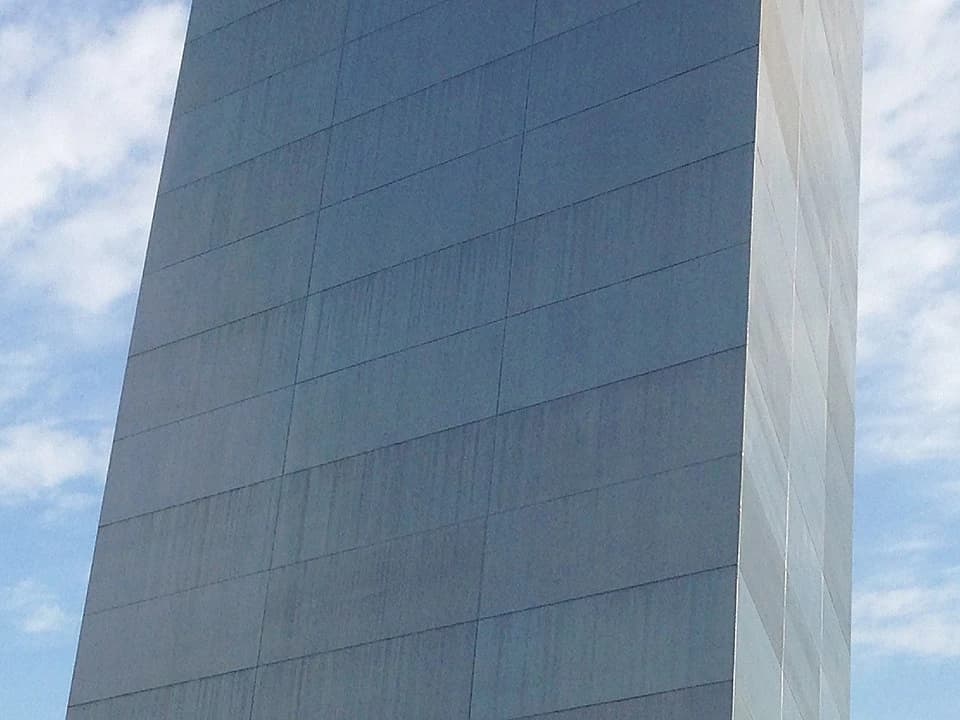
Engineering the Catenary
The specific shape of this monument is known in mathematics and engineering as a weighted catenary. To understand this concept, imagine holding a heavy chain and letting it hang freely between your two hands—the U-shape it forms naturally is a catenary curve. Architect Eero Saarinen took that mathematical principle, inverted it, and thickened the base to create a structure that is exceptionally stable. Because of this specific geometry, the Arch is purely in compression; the weight of the structure is directed downward through the legs to the foundations, allowing it to stand without the need for an internal skeleton or support beams. This design makes it incredibly strong and resistant to wind and seismic activity. The mathematical precision required to calculate this curve was immense, especially in an era before advanced computer modeling. Every triangular section of the monument had to be perfectly sized and weighted to ensure the compression forces remained balanced as the structure climbed higher. This self-supporting design is what gives the monument its clean, unobstructed interior space and its sense of effortless grace. By following the laws of physics and geometry so closely, Saarinen created a form that feels both natural and profoundly engineered, a perfect marriage of art and science that has stood the test of time since it was first topped out in the mid-1960s.
Museum of Westward Expansion
The subterranean heart of the monument, detailing the 19th-century frontier and the construction of the Arch itself. Features the verified museum POI and key artifacts like the grizzly bear and Jefferson statue.
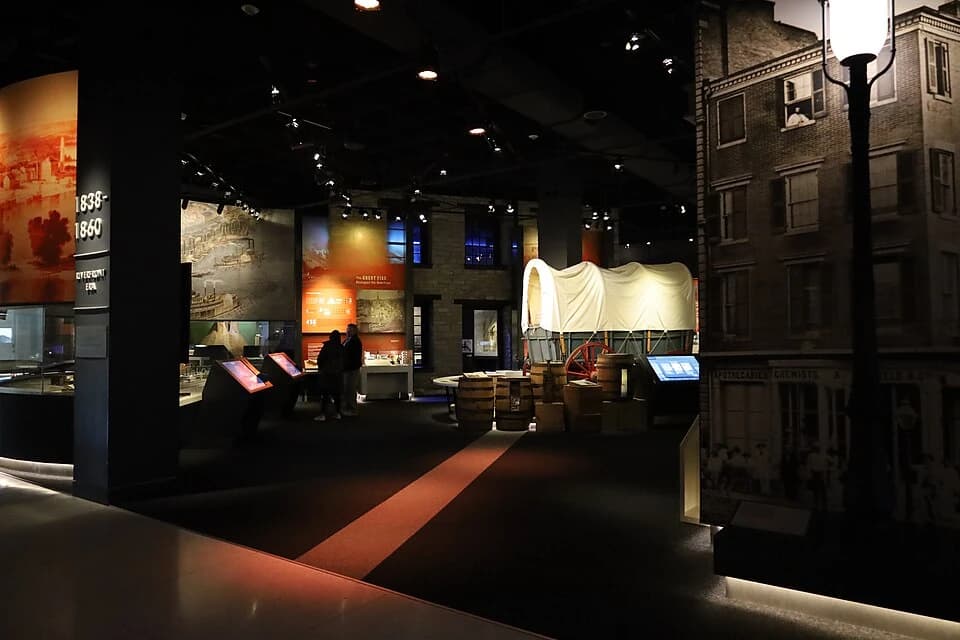
Pioneer Life Gallery
In this gallery, the human side of the 'Gateway' story comes to life through a series of immersive exhibits. Central to the display is an authentic covered wagon, the primary vehicle for the thousands of families who headed west during the 19th century. St. Louis earned its nickname as the 'Gateway to the West' because it was the last major city where travelers could outfit themselves with necessary supplies before entering the frontier. Here, pioneers would purchase their wagons, livestock, and months' worth of food and tools. The gallery illustrates the sheer grit and determination required for such a journey. Imagine a family packing their entire lives into a small, jolting wagon to traverse thousands of miles of rugged terrain, often with no clear path ahead. The exhibits detail the daily struggles they faced, from crossing treacherous rivers to enduring extreme weather and disease. This part of the museum shifts the focus from the grand political movements of the era to the personal, individual stories of those who actually made the trip. It highlights the diversity of the people who participated in this expansion, including entrepreneurs, farmers, and those seeking religious or political freedom. Seeing the scale of the wagon and the simplicity of the tools used helps us appreciate the monumental risks these individuals took, turning the abstract idea of 'expansion' into a tangible, human experience of hope and survival.
Museum of Westward Expansion
As you move beneath the monument, you enter the Museum of Westward Expansion, a world built entirely underground. This subterranean design was a deliberate choice to ensure that the exterior grounds remained open, uncluttered, and focused entirely on the Arch itself. Inside, the museum serves as a time capsule of the 19th-century American West. One of the most striking artifacts you'll encounter is a preserved grizzly bear, a powerful symbol of the wild, untamed frontier that early explorers like Lewis and Clark faced as they departed from St. Louis. During their famous expedition, these men encountered animals, landscapes, and indigenous cultures that were entirely unknown to the young United States at the time. The museum uses such artifacts to tell the story of the difficult and often dangerous journey westward. It explores the lives of the diverse groups of people who shaped this era—from the Native American tribes who had inhabited the land for millennia to the pioneers, trappers, and soldiers who pushed the borders of the nation. By placing the museum below ground, the architects created a space for deep historical reflection that doesn't compete with the soaring monument above. It provides the essential context for why the Arch was built, grounding the soaring steel structure in the gritty, real-world history of the people who actually traversed the 'Gateway to the West' in search of a new life.
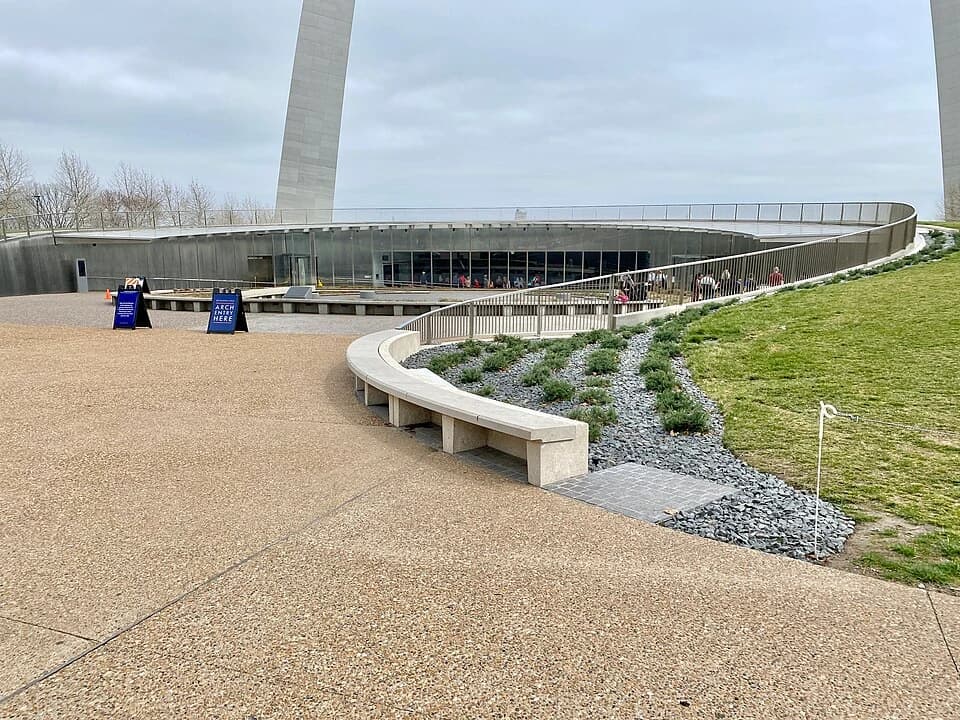
The Modern Glass Entrance
Notice the sleek, circular glass entrance that invites you into the visitor center. This addition was the centerpiece of a massive 2018 renovation project aimed at modernizing the park and improving the visitor experience. For decades, the Arch grounds were physically separated from downtown St. Louis by a sunken highway, making the monument feel like an isolated island. The renovation included the creation of a wide landscaped bridge over the highway, and this new entrance was designed to face the city directly. Symbolically and physically, it connects the heart of downtown St. Louis to the historic riverfront for the first time in over half a century. The use of glass and light creates a sense of openness and accessibility, contrasting with the solid, subterranean feel of the original 1960s museum. As you approach, you can see the reflection of the surrounding city buildings in the glass, blending the old and the new. This entrance also represents a shift in how the monument is presented to the public—as a welcoming community space rather than just a distant landmark. The renovation updated the museum exhibits, improved park trails, and made the entire site more accessible, ensuring that the 'Gateway to the West' remains a vital and integrated part of the city's modern urban fabric while honoring its deep historical roots.
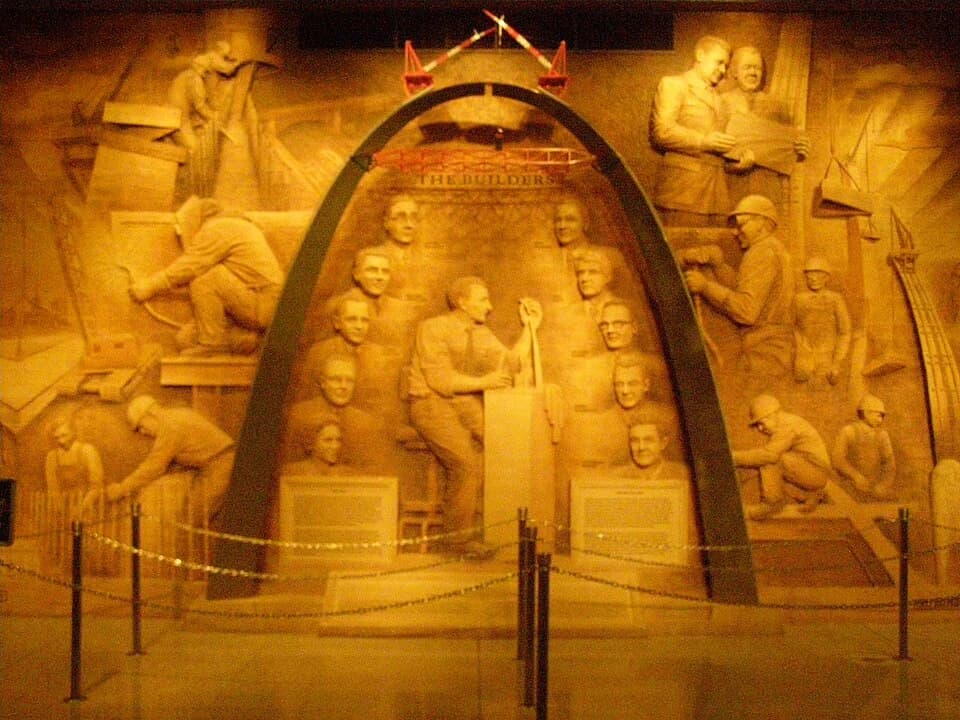
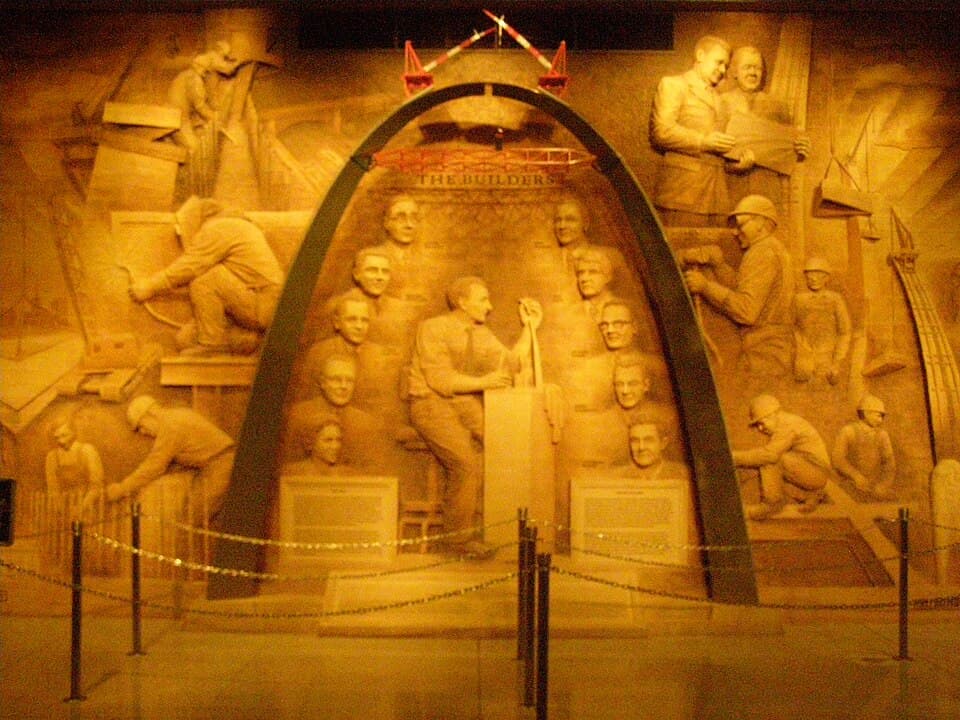
The Builders Mural
This detailed mural pays tribute to the hundreds of ironworkers, welders, and engineers who brought Eero Saarinen’s vision to life between February 1963 and October 1965. Construction of the Arch was a daunting task that required immense skill and nerves of steel. At the time, safety standards were very different from today; workers often balanced on the narrow steel legs hundreds of feet in the air without safety harnesses, sometimes even working in high winds. The mural captures the human stories of these 'Skywalkers,' showing them at work on the triangular sections as they rose toward the apex. Despite the extreme heights and the inherent dangers of the project, the Arch was completed without a single construction-related fatality—a remarkable achievement for a project of this scale and complexity in the early 1960s. The workers used giant 'creeper cranes' that climbed up the outside of the legs, lifting the massive steel sections into place. Many of the men who worked on the Arch were local St. Louisans who took immense pride in building what they knew would become a world-famous symbol for their city. This mural serves as a reminder that behind the sleek, geometric perfection of the finished monument lies the grit, sweat, and bravery of the people who literally built it piece by piece, working high above the city to complete one of the greatest engineering feats of the 20th century.
The Tram Journey
Explaining the unique hybrid tram system required by the arch's curve. Shows the loading zone, the interior of the rotating capsules, and the internal structure.
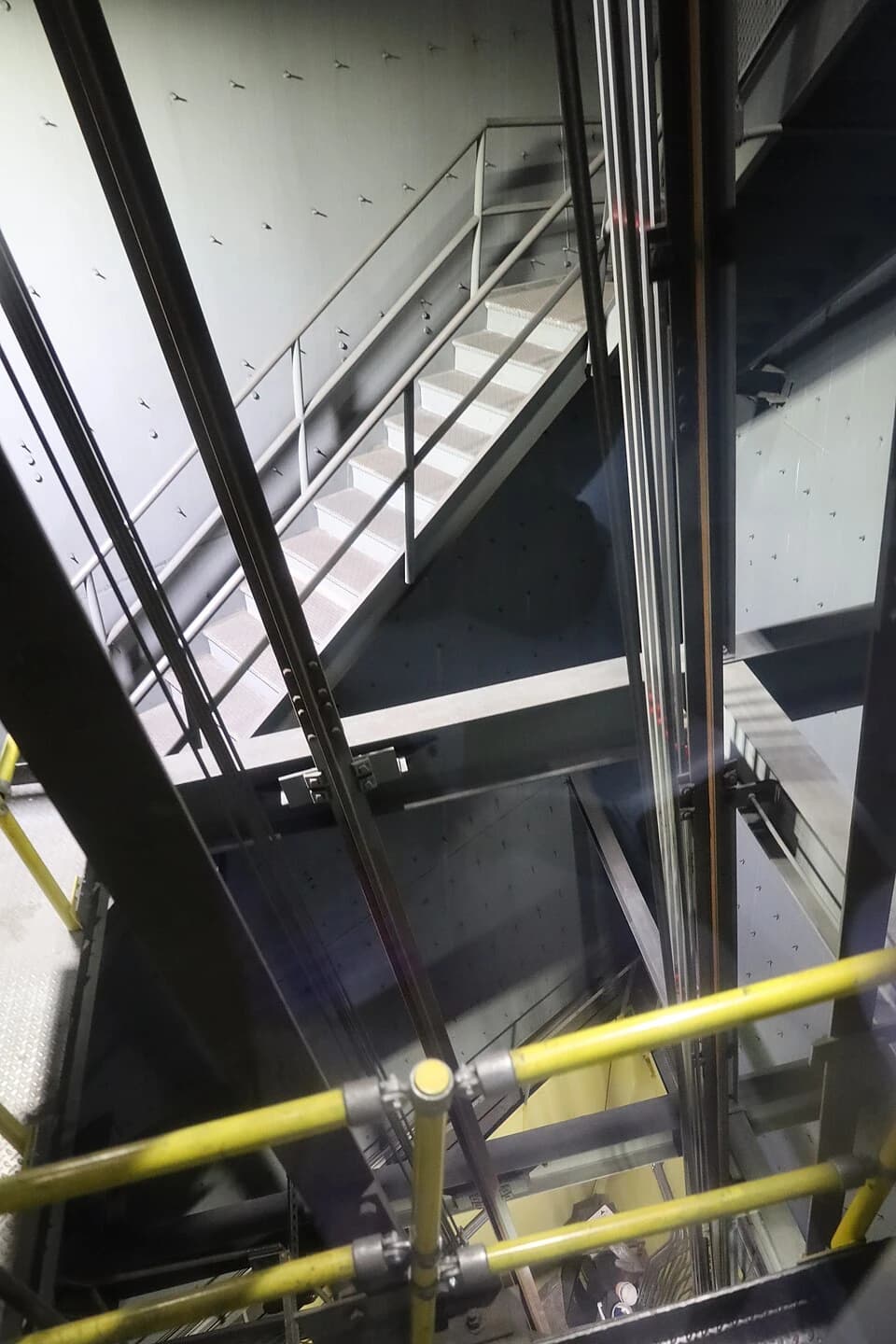
The Arch's Interior
During your four-minute ride to the top, keep an eye out the tram windows for a rare look at the 'guts' of the monument. You will see the massive internal structural beams that provide the Arch with its incredible strength. You will also notice a long, narrow staircase that zig-zags its way up the triangular interior of the leg. This staircase consists of exactly 1,076 steps. However, don't plan on hiking it; the stairs are strictly for maintenance and emergency use only. They are used by park rangers and technicians to perform regular inspections of the structure and the tram system. Seeing the stairs and the industrial framework gives you a sense of the sheer volume of the space inside the legs, which is much larger than the small tram pods would suggest. The interior is largely unlit except for maintenance lights, creating a dramatic, cathedral-like atmosphere of echoing steel. You might catch a glimpse of the various cables and pulleys that power the tram system, further highlighting the mechanical complexity required to operate this monument. This view into the hidden interior reveals that the Arch is not just a hollow shell, but a carefully braced and maintained structure designed to endure for centuries, with every beam and step playing a vital role in its continued stability and operation.
The Summit Observation Deck
The reward at 630 feet. This area highlights the narrow, angled windows and the experience of standing at the very top of the monument.
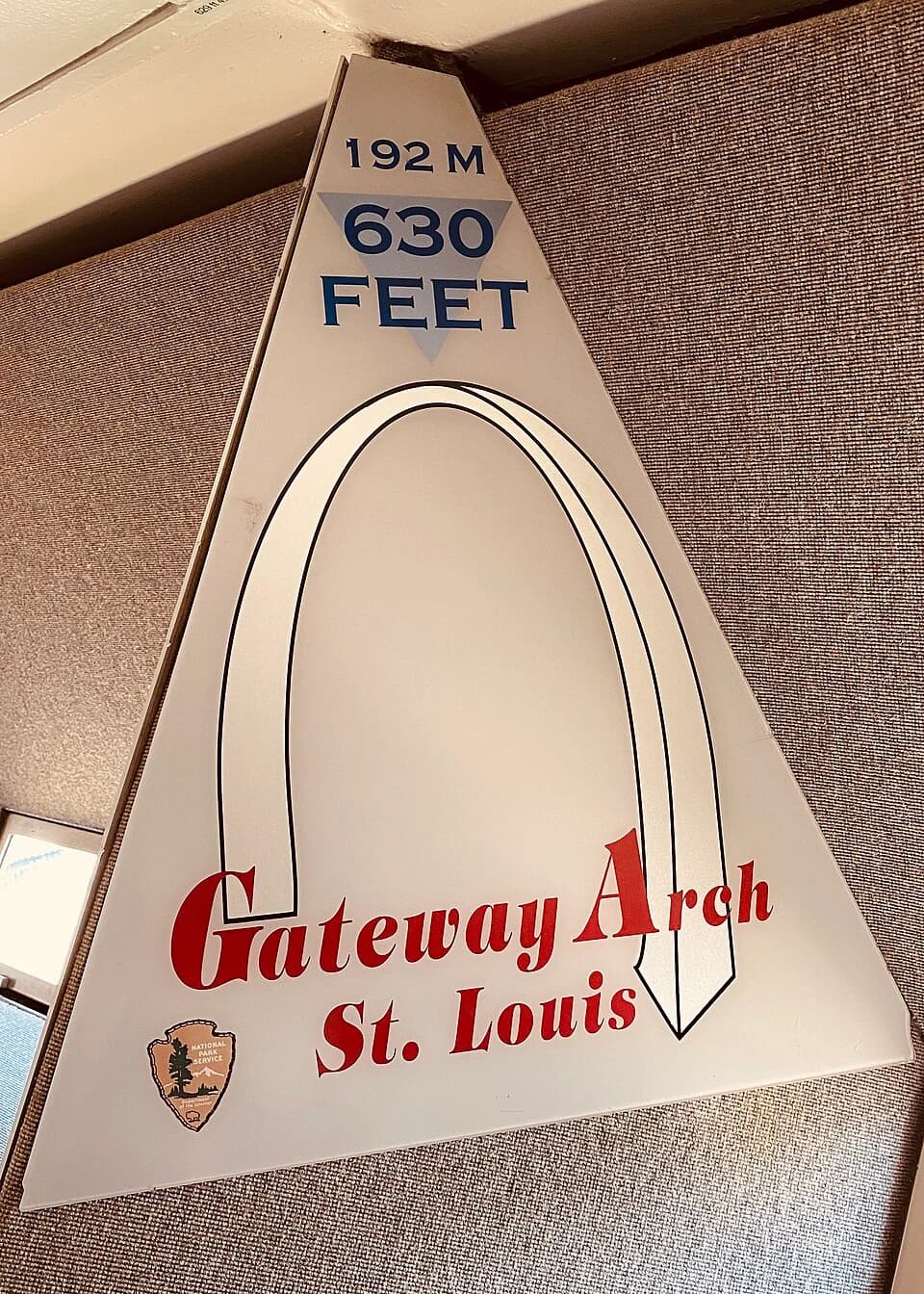
The Height Graphic
This graphic on the observation deck provides a quick summary of where you are and the capacity of the space around you. The summit is designed to hold up to 160 people at once, though it often feels more intimate than that. As the diagram indicates, you are currently at the highest point for many miles. On a clear day, the visibility from these windows can reach up to 30 miles. To the east, you can see far into the plains of Illinois, while to the west, you can see the rolling hills of Missouri stretching toward the horizon. This graphic helps put your experience into perspective, reminding you that you are standing atop the tallest human-made monument in the Western Hemisphere. It also serves as a reminder of the precision involved in every aspect of the Arch's construction. From the initial 1947 design to the final piece being placed in 1965, the goal was always to reach this exact height of 630 feet. This summit is more than just a viewpoint; it's the symbolic peak of the westward journey, a place to look out over the vast territory that defined the American identity in the 19th century and continues to shape the character of the region today.
Legacy and the Old Courthouse
Concluding the tour by linking the monument to the historic Old Courthouse and the city's broader history of civil rights and expansion.
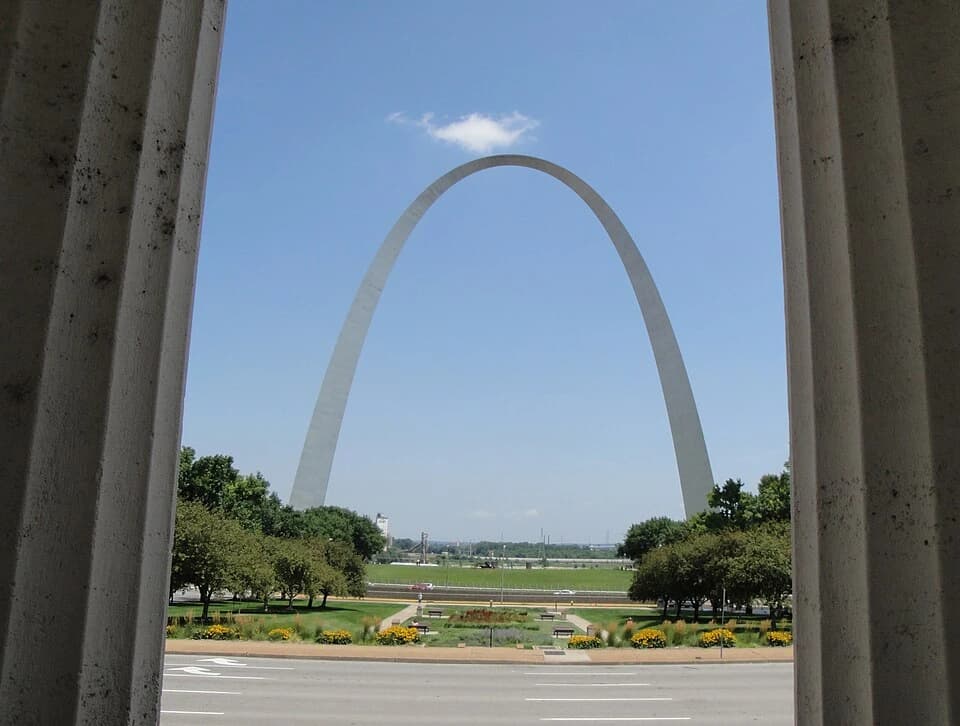
The Gateway Perspective
Now that you've returned to ground level, look back at the Arch from the steps of the Old Courthouse. This view allows you to reflect on a pivotal moment in the monument's history that isn't always visible in the postcards. In 1964, while the Arch was still under construction, two Civil Rights activists, Percy Green and Richard Daly, climbed 125 feet up the north leg. Their protest was a bold demand for job equity; despite the project being funded by federal dollars, almost no African American workers had been hired for the construction. The protest successfully halted work for a day and drew national attention to the lack of minority hiring in the building trades in St. Louis. It was a significant moment in the local Civil Rights movement, highlighting that the 'Gateway to the West' also stood as a symbol of the ongoing struggle for equal opportunity within the city itself. Standing here today, the Arch represents many things: an engineering marvel, a symbol of expansion, and a site of important social change. This perspective reminds us that monuments are not just static pieces of steel; they are living parts of a city's history, shaped by the voices and actions of the people who live in their shadow.
Want to hear the rest?
Download the Stanza app to unlock all 22 stops and full GPS-guided navigation.
Frequently Asked Questions
How long does the Gateway Arch audio tour take?
The Gateway Arch audio guide includes 22 narrated stops. Most visitors spend 45 minutes to 1.5 hours exploring the complete tour, though you can listen at your own pace and skip or revisit any stop.
Is the Gateway Arch audio guide available in my language?
Stanza supports 15 languages: English, Spanish, French, German, Italian, Portuguese, Russian, Japanese, Chinese, Korean, Arabic, Hindi, Polish, Dutch, Hebrew. Check the guide in the app to confirm the languages currently available for this tour.
Can I use the audio guide offline at Gateway Arch?
Yes! Download the complete Gateway Arch tour — including all audio, maps, and images — before your visit. The Stanza app works completely offline, so you don't need WiFi or mobile data at the venue.
How much does the Gateway Arch audio guide cost?
The Stanza app is free to download. The current listed price for the Gateway Arch audio guide is $1.99; app-store region and currency may affect the final price.
How do I use the Stanza audio guide at Gateway Arch?
Download the free Stanza app, search for "Gateway Arch", and download the tour. When you arrive at the venue, the app uses GPS to detect your location and automatically plays the relevant narration as you move between points of interest — completely hands-free.
What makes the Stanza audio guide different from other Gateway Arch tours?
Stanza offers GPS-triggered narration that plays automatically as you walk through Gateway Arch — no need to manually select stops. The tour is available in 15 languages, works fully offline, and includes 22 expertly narrated stops with images and historical context.
What other audio guides are available near Gateway Arch?
Stanza offers multiple audio guides in St. Louis, United States and nearby areas. After downloading the app, browse the map to discover all available tours near Gateway Arch. Each guide can be downloaded for offline use.