Languages
15Alcatraz Island, Alcatraz Audio Guide
Alcatraz Island, Alcatraz is a landmark in San Francisco, United States. Explore it with Stanza's GPS-triggered offline audio guide — available in 15 languages.
Quick Facts
18
Stops
15
Languages
100%
Offline
📍 San Francisco, United States · 37.8267°N, -122.4228°E
About Alcatraz Island, Alcatraz
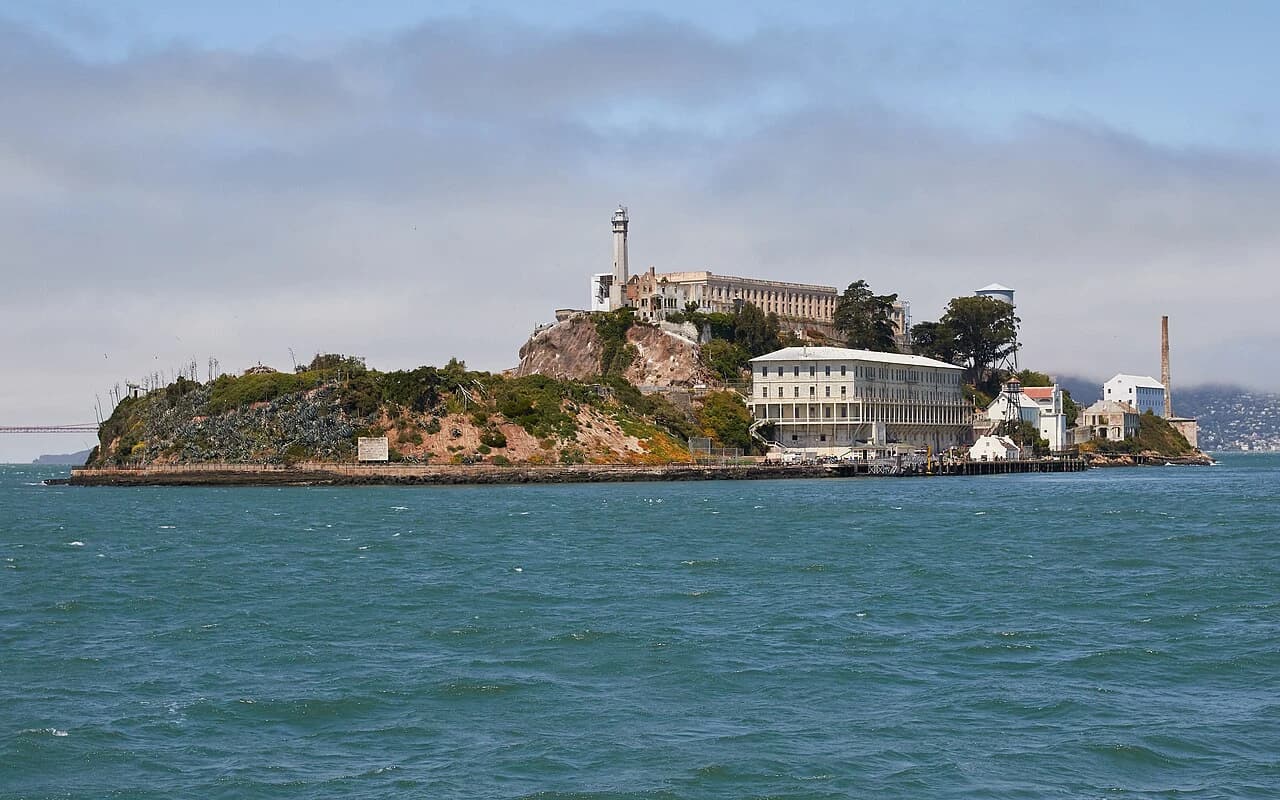
Alcatraz Island is a small island located in San Francisco Bay, California, famously known as a former federal prison. It is now part of the Golden Gate National Recreation Area and a major tourist attraction.
Alcatraz Island, Alcatraz is also known as Alcatraz.
This self-guided audio tour features 18 narrated stops organized across 7 sections. As a national park, Alcatraz Island, Alcatraz offers a unique cultural experience in the heart of San Francisco, United States.
The Stanza audio guide is available in 15 languages and works entirely offline — download the complete tour including audio narration, maps, and images before your visit. As you walk through Alcatraz Island, Alcatraz, GPS-triggered narration plays automatically at each point of interest.
Last updated:
What you will hear
The Administration Building and Prison Entrance
As visitors walk up the hill, they encounter the formal entrance to the federal penitentiary. This area highlights the transition from a military fort to the 'Rock'.
The Administration Building
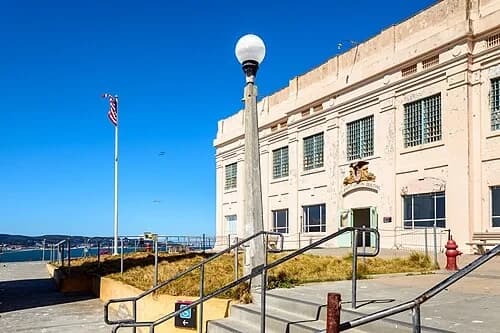
The Administration Building stands as a gateway between the island's diverse historical eras. Long before it became a federal penitentiary, Alcatraz was established as a military fort in 1847 to protect the San Francisco Bay during the Gold Rush. The thick walls and strategic positioning of these early fortifications provided the foundation for what would later become a high-security prison. In 1934, the site was officially transferred to the Department of Justice, beginning its most famous chapter as a home for the nation's most difficult-to-manage inmates. Today, the function of this entry point has shifted once again. Instead of processing military personnel or federal prisoners, it now welcomes nearly 1.4 million visitors every year. The facade of the building retains much of its imposing, functional design, intended to project authority and order. Modern security gates and visitor information booths now occupy spaces that once served as offices for prison staff and administrators. While the internal use of the space has changed to accommodate global tourism, the exterior remains a clear example of government architecture from the mid-twentieth century. The flag still flies over the pier, just as it did when the site was a military stronghold.
Broadway and the Main Cell Blocks
The heart of the prison experience, these corridors were the main thoroughfares for inmates. Broadway was the central hall where every prisoner was visible to the guards.
The Standard Cell
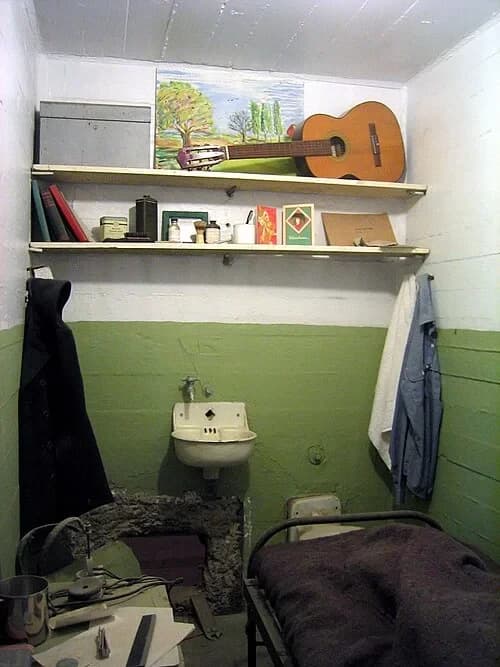
A standard cell at Alcatraz measures approximately five feet wide by nine feet long, a space that often felt even smaller due to the thick concrete walls. Every inmate was guaranteed only four basic rights: food, clothing, shelter, and medical care. Anything beyond these essentials was considered a privilege that had to be earned through good behavior and strict adherence to prison rules. This included items that offered a mental escape, such as books from the prison library or the opportunity to play a musical instrument. Looking at the shelves, you might see a guitar or a small collection of books, representing the limited ways an inmate could occupy their mind during the long hours of confinement. The cells were equipped with a simple cot, a small sink with only cold running water, and a toilet. A single light bulb provided illumination, controlled by the guards from outside the cell row. The bars on the front of the cell were made of tool-resistant steel, designed to withstand any attempt at sawing through them. For many, these small rectangular spaces were their entire world for years at a time, making any small personal possession a vital connection to life beyond the bars.
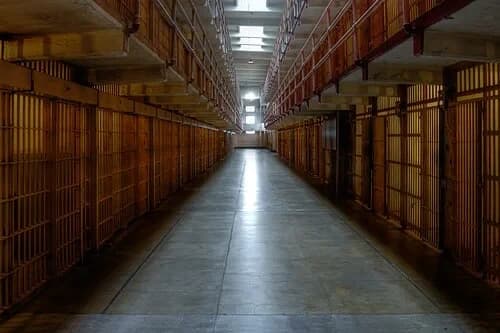
Broadway Corridor
Broadway is the central corridor that runs the length of the main cellhouse, flanked on both sides by three tiers of steel-barred cells. During the twenty-nine years that Alcatraz operated as a federal penitentiary, this was the primary route for moving inmates between their cells, the mess hall, and the recreation yard. Some of the nation's most notorious criminals walked this concrete path, including the gangster Al Capone and George "Machine Gun" Kelly. The name "Broadway" was a bit of prison irony, referencing the bright lights and activity of the famous New York City street, though the reality here was one of strict silence and constant surveillance. Guards patrolled the floor and the elevated catwalks above, ensuring that any movement along the corridor was strictly regulated. The polished floor and high, arched ceiling created an environment where even a soft footstep or a whispered word would echo and carry. This acoustic property made it difficult for inmates to communicate undetected. The corridor remains a focal point for understanding the daily routine of the prison, where thousands of headcounts were performed over the decades to ensure no one had slipped away.
D-Block and Solitary Confinement
Known as the treatment unit, D-Block housed the most difficult prisoners and contained the dreaded 'holes' for solitary confinement.
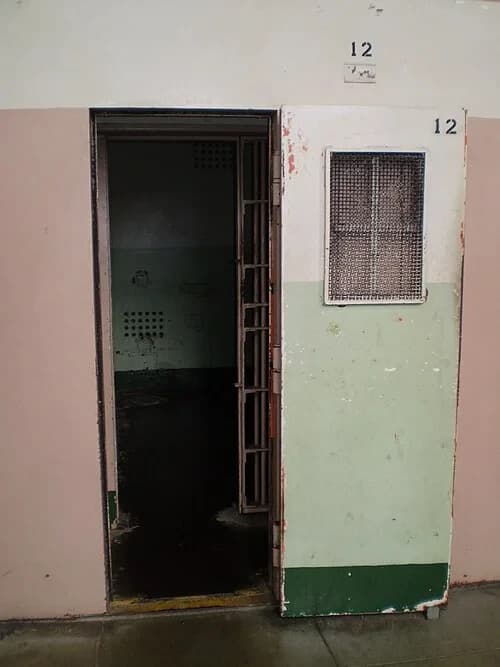
Solitary Confinement Doors
Within D-Block were the most feared cells in the entire prison, known colloquially as "the holes." These solitary confinement units featured a dual-door system. Beyond the standard barred gate was a massive, solid steel outer door. When a guard closed this outer door, it completely blocked out all light and most sound, leaving the prisoner in total darkness. This was a form of extreme psychological punishment and sensory deprivation. Inmates were often stripped of their clothing and given only a blanket, sleeping on the cold concrete floor. Meals were delivered through a small slot in the door, and contact with other human beings was non-existent. A stay in "the hole" could last anywhere from a few days to several weeks, depending on the severity of the offense. The lack of visual stimuli was intended to force a prisoner into deep reflection, though for many, it resulted in severe mental strain. The heavy hinges and thick steel of the doors underscore the finality of being placed inside. Even today, the dark, damp interior of these cells conveys a sense of the intense isolation that was a regular feature of life in this part of the prison.
The Prison Hospital
Located on the upper floor of the cellhouse, the hospital provided medical care to inmates, including the infamous Robert 'Birdman' Stroud.
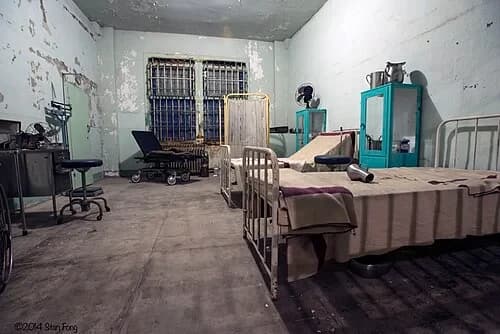
The Prison Hospital
Medical care on Alcatraz was managed within this dedicated hospital wing, which was equipped to handle everything from routine check-ups to surgeries. While the facility was relatively modern for its time, it remained a high-security environment with barred windows and locked wards. One of the hospital's most famous long-term residents was Robert Stroud, known as the "Birdman of Alcatraz." Contrary to popular belief, Stroud was never allowed to keep birds on the island; he had earned that nickname during his time at Leavenworth. He spent seventeen years in the Alcatraz hospital wing, not because he was ill, but because he was considered too dangerous and unstable to be part of the general prison population. The hospital provided a way to keep him isolated while still fulfilling the government's obligation to provide medical oversight. Walking through the ward today, you can see vintage medical equipment, including heavy metal beds and examination tables that date back to the mid-twentieth century. The peeling paint and weathered walls reflect the years of disuse after the prison closed in 1963. Despite the clinical setting, the atmosphere remained one of confinement, with the sounds of the bay often the only thing breaking the silence.
The Mess Hall and Kitchen
The dining hall was the most dangerous place in the prison due to the concentration of inmates. Guards monitored from elevated galleries with tear gas canisters overhead.
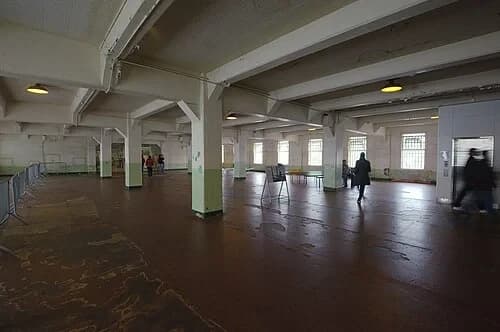
The Mess Hall
The mess hall was a site of constant tension, as it was the only time hundreds of inmates were gathered in one room at the same time. Because the men were armed with metal forks and knives, the potential for a riot or a sudden attack was always present. To manage this risk, the prison administration implemented extreme security measures. If you look up at the ceiling beams, you might notice small, circular metal fixtures. These were part of a tear gas delivery system that could be activated by guards from a protected observation gallery if trouble broke out. The idea was that a cloud of gas could quickly neutralize a large group of prisoners without the guards having to enter the fray directly. Meals were eaten in strict silence, and inmates had only twenty minutes to finish their food before being marched back to their cells. Despite the danger, many prisoners looked forward to mealtime because the food on Alcatraz was reputedly the best in the entire federal prison system. This was a strategic choice; well-fed inmates were believed to be less likely to cause trouble. The large, open space with its rows of long tables stands in stark contrast to the cramped cells.
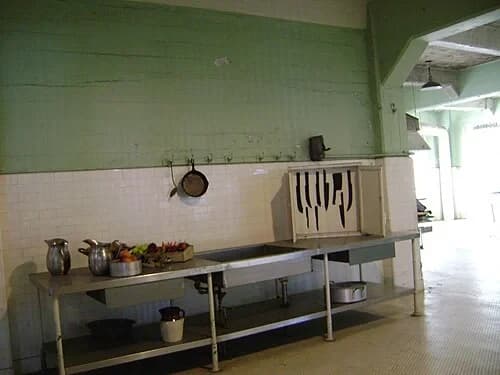
The Kitchen
The kitchen was a hub of activity where inmate workers prepared three meals a day under the watchful eyes of armed guards. Because of the presence of numerous sharp tools, security protocols here were among the strictest on the island. One of the most visible examples of this control is the knife silhouette board. Every blade, from large butcher knives to small paring tools, had a designated spot on the board where its shape was painted in black. This allowed guards to perform an instant visual inventory at the end of every work shift. If a single silhouette remained empty, it meant a weapon was missing, and the entire prison would be placed on immediate lockdown until the item was recovered. This prevented inmates from smuggling knives back to the cellblocks or into the mess hall. The kitchen was also equipped with its own heavy steel doors and barred windows to prevent any unauthorized entry or exit. The large sinks and prep tables were designed for durability and easy cleaning in a high-volume environment. Even the smallest oversight in the kitchen could have deadly consequences, making the meticulous accounting of every tool a vital part of the daily security routine.
The Recreation Yard
The yard offered inmates their only outdoor time and a tantalizing view of the San Francisco skyline and the Golden Gate Bridge.
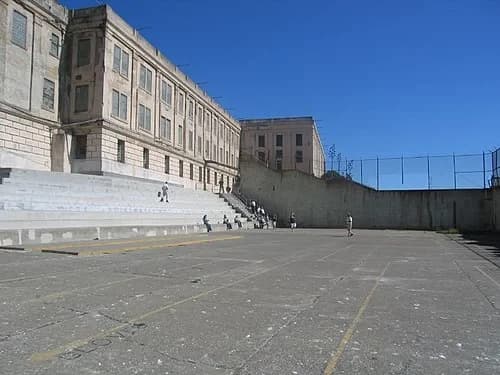
The Recreation Yard
The recreation yard provided inmates with their only regular opportunity for fresh air and exercise. Surrounded by towering concrete walls topped with barbed wire, the yard offered a limited view of the sky but kept the prisoners securely contained. In May 1946, this area became the epicenter of the "Battle of Alcatraz," a bloody forty-eight-hour uprising. A group of inmates managed to overpower guards and seize weapons, leading to a violent standoff that eventually required the intervention of the U.S. Marines. Two guards and three inmates were killed during the conflict. On more peaceful days, the yard was a place for social interaction, where prisoners could sit on the concrete bleachers to talk, play cards, or participate in organized sports like baseball. However, they were always under the close supervision of guards stationed in the elevated towers with rifles. The wind here can be remarkably strong and cold, a constant reminder of the island's exposed position in the bay. The worn pavement and high walls create a sense of an arena where the rules were absolute. Despite the bit of freedom it offered, the yard was still a place of intense observation and regulation.
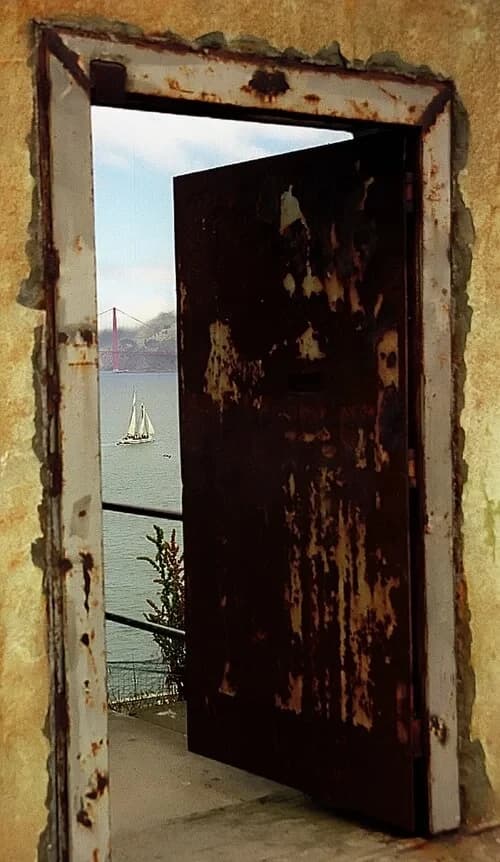
The Gateway to the Bay
Through this weathered and rusted door, inmates were sometimes able to catch glimpses of the Golden Gate Bridge and the San Francisco skyline. This view was often described as a form of psychological torture. While the city's lights and the iconic bridge seemed just a short distance away, they were separated by the treacherous, cold waters of the bay. On quiet nights when the wind blew from the west, the sounds of San Francisco would drift across the water and into the prison. Inmates reported hearing the distant music from parties, the hum of city traffic, and even the laughter of people on passing boats. These echoes of normal life served as a painful reminder of what they had lost and the world they were barred from rejoining. The contrast between the grim, gray interior of the prison and the vibrant life just over a mile away was a constant mental burden. The door itself, with its heavy iron frame and layers of peeling paint, shows the effects of decades of exposure to the salt spray and fog. It stands as one of the final barriers between the confined space of the island and the freedom of the open sea beyond.
The Lighthouse and Warden's House Ruins
Standing at the highest point of the island, these structures represent the early navigation history and the residential life of the prison administration.
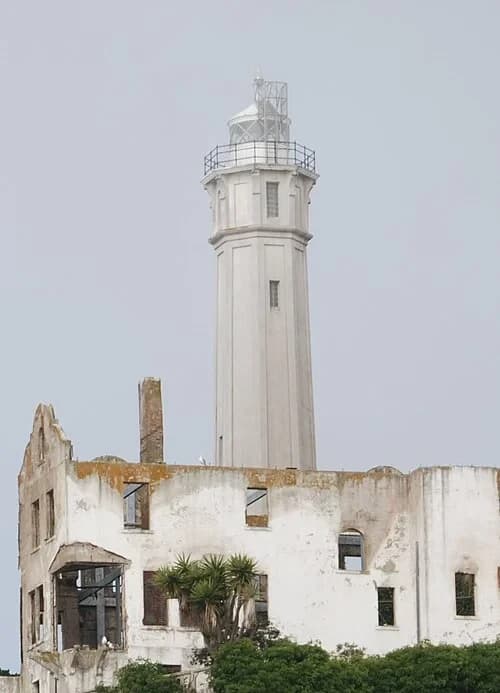
Alcatraz Lighthouse
Standing tall above the prison walls, this lighthouse has been an essential navigational aid since it first began operating in 1854. Though the current concrete structure replaced the original tower after the 1906 earthquake, it continues a legacy as the oldest light station on the United States West Coast. Its presence was vital because of the San Francisco Bay’s unique geography. Treacherous currents and a thick, unpredictable fog often blanket the waters, creating a natural barrier that once made escape from the island seem impossible. The light served two purposes: helping maritime traffic avoid the rocky shores and reinforcing the island's role as a high-security facility. During the prison years, the rotating beam was a constant reminder to the inmates below of the barrier between them and the mainland. Today, the station is fully automated. Its beacon continues to flash every five seconds, and the light is visible for up to twenty-two miles across the Pacific. Unlike the crumbling ruins nearby, the lighthouse is meticulously maintained to ensure safe passage for the many ferries and cargo ships that navigate these complex waters every single day.
Want to hear the rest?
Download the Stanza app to unlock all 18 stops and full GPS-guided navigation.
Frequently Asked Questions
How long does the Alcatraz Island, Alcatraz audio tour take?
The Alcatraz Island, Alcatraz audio guide includes 18 narrated stops. Most visitors spend 45 minutes to 1.5 hours exploring the complete tour, though you can listen at your own pace and skip or revisit any stop.
Is the Alcatraz Island, Alcatraz audio guide available in my language?
Stanza supports 15 languages: English, Spanish, French, German, Italian, Portuguese, Russian, Japanese, Chinese, Korean, Arabic, Hindi, Polish, Dutch, Hebrew. Check the guide in the app to confirm the languages currently available for this tour.
Can I use the audio guide offline at Alcatraz Island, Alcatraz?
Yes! Download the complete Alcatraz Island, Alcatraz tour — including all audio, maps, and images — before your visit. The Stanza app works completely offline, so you don't need WiFi or mobile data at the venue.
How much does the Alcatraz Island, Alcatraz audio guide cost?
The Stanza app is free to download. The current listed price for the Alcatraz Island, Alcatraz audio guide is $0.99; app-store region and currency may affect the final price.
How do I use the Stanza audio guide at Alcatraz Island, Alcatraz?
Download the free Stanza app, search for "Alcatraz Island, Alcatraz", and download the tour. When you arrive at the venue, the app uses GPS to detect your location and automatically plays the relevant narration as you move between points of interest — completely hands-free.
What makes the Stanza audio guide different from other Alcatraz Island, Alcatraz tours?
Stanza offers GPS-triggered narration that plays automatically as you walk through Alcatraz Island, Alcatraz — no need to manually select stops. The tour is available in 15 languages, works fully offline, and includes 18 expertly narrated stops with images and historical context.
What other audio guides are available near Alcatraz Island, Alcatraz?
Stanza offers multiple audio guides in San Francisco, United States and nearby areas. After downloading the app, browse the map to discover all available tours near Alcatraz Island, Alcatraz. Each guide can be downloaded for offline use.