Languages
15Golden Gate Bridge Audio Guide
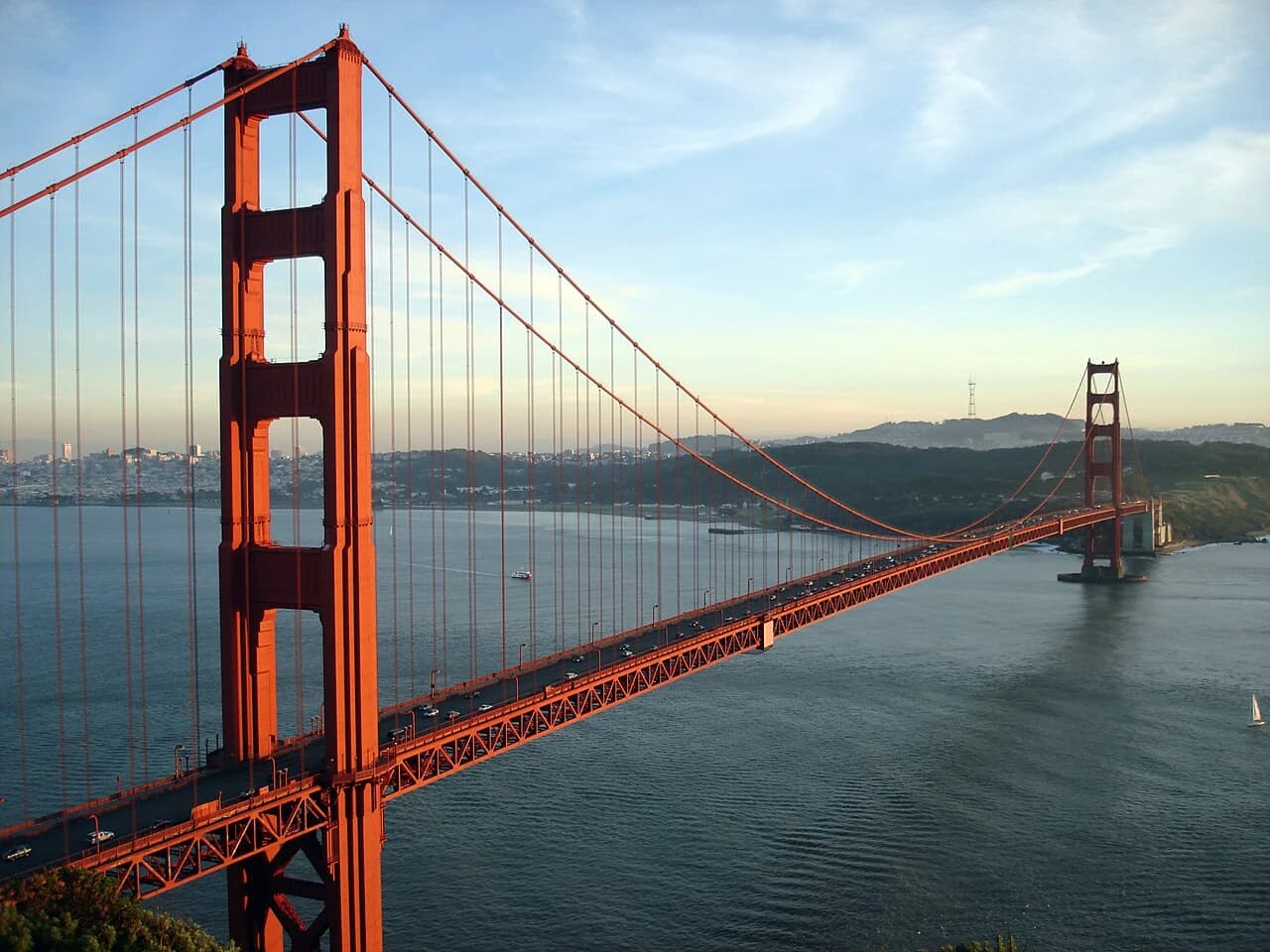
Golden Gate Bridge is a landmark in San Francisco, United States. Explore it with Stanza's GPS-triggered offline audio guide — available in 15 languages.
Quick Facts
23
Stops
15
Languages
100%
Offline
📍 San Francisco, United States · 37.8197°N, -122.4786°E
About Golden Gate Bridge
The Golden Gate Bridge is an iconic suspension bridge spanning the Golden Gate strait at the entrance to San Francisco Bay. It is renowned worldwide for its distinctive international orange color and impressive engineering.
Golden Gate Bridge is also known as The bridge that couldn't be built, Golden Gate, The Golden Gate.
This self-guided audio tour features 23 narrated stops organized across 9 sections. As a landmark, Golden Gate Bridge offers a unique cultural experience in the heart of San Francisco, United States.
The Stanza audio guide is available in 15 languages and works entirely offline — download the complete tour including audio narration, maps, and images before your visit. As you walk through Golden Gate Bridge, GPS-triggered narration plays automatically at each point of interest.
Last updated:
What you will hear
Joseph Strauss Legacy Circle
A tribute to the chief engineer who led the construction of the bridge against all odds.
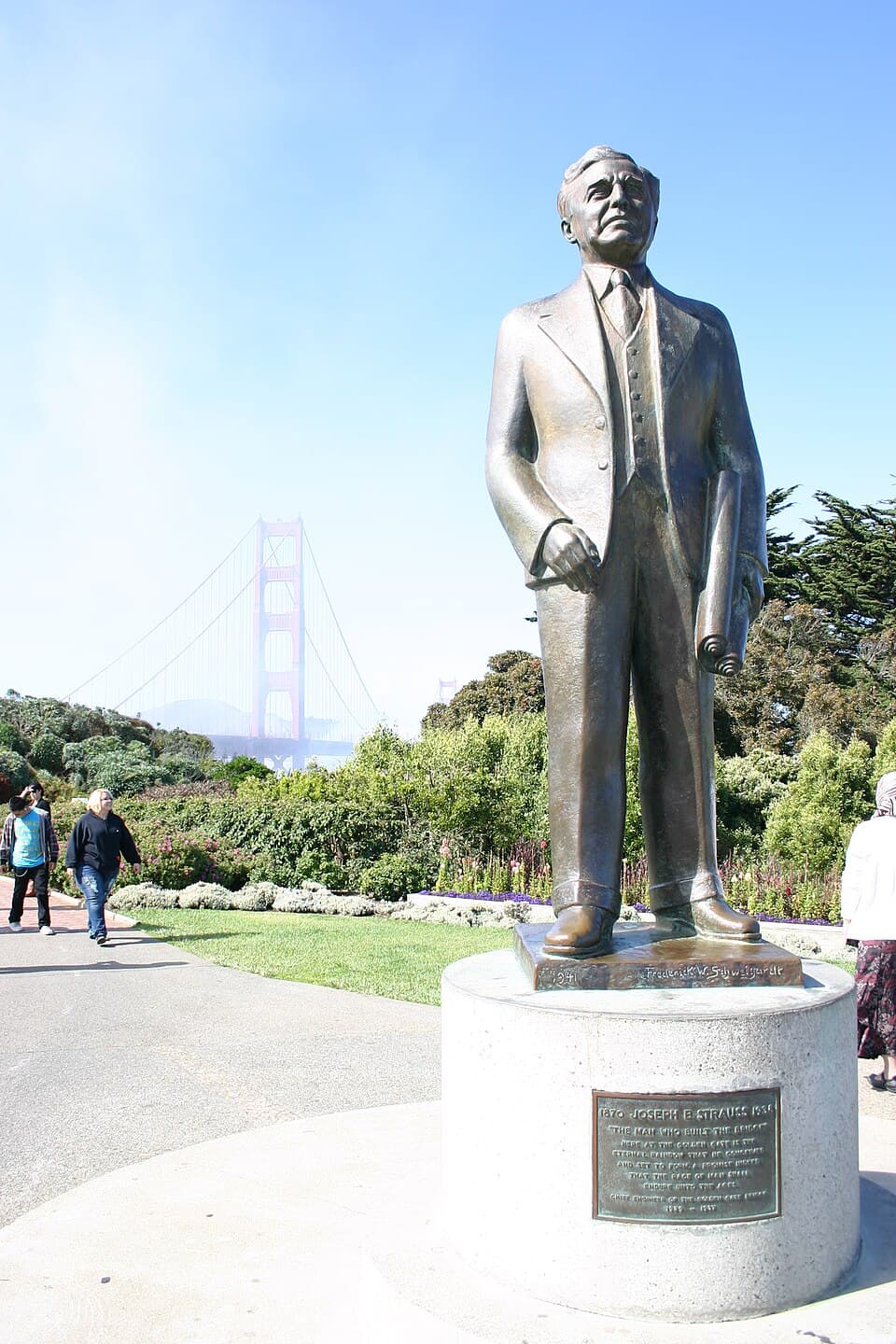
Joseph Strauss Statue
The figure you see depicted in this statue is Joseph Strauss, the chief engineer who served as the primary driving force behind the bridge's creation. Strauss was not just an engineer; he was a persistent advocate who spent more than a decade overcoming massive political, financial, and technical opposition. Many experts at the time claimed that a bridge across the Golden Gate was 'unbuildable' due to the intense currents and deep water, but Strauss refused to accept defeat. His leadership was instrumental in navigating the complex web of approvals needed to start construction. Once the project finally broke ground in 1933, his dedication ensured it moved forward with remarkable speed, reaching completion in just over four years. Notice how he is depicted here holding a set of blueprints, representing the years of planning and the vision he carried until the last rivet was hammered into place. While Strauss is the most famous name associated with the project, this monument stands as a tribute to his tenacity in the face of skepticism. He lived to see his dream fulfilled, though he passed away just a year after the bridge opened. His legacy remains standing behind him, a permanent fixture of the San Francisco skyline that many said would never exist.
The Cable Exhibit
A close-up look at the massive suspension cables that hold the weight of the entire bridge.
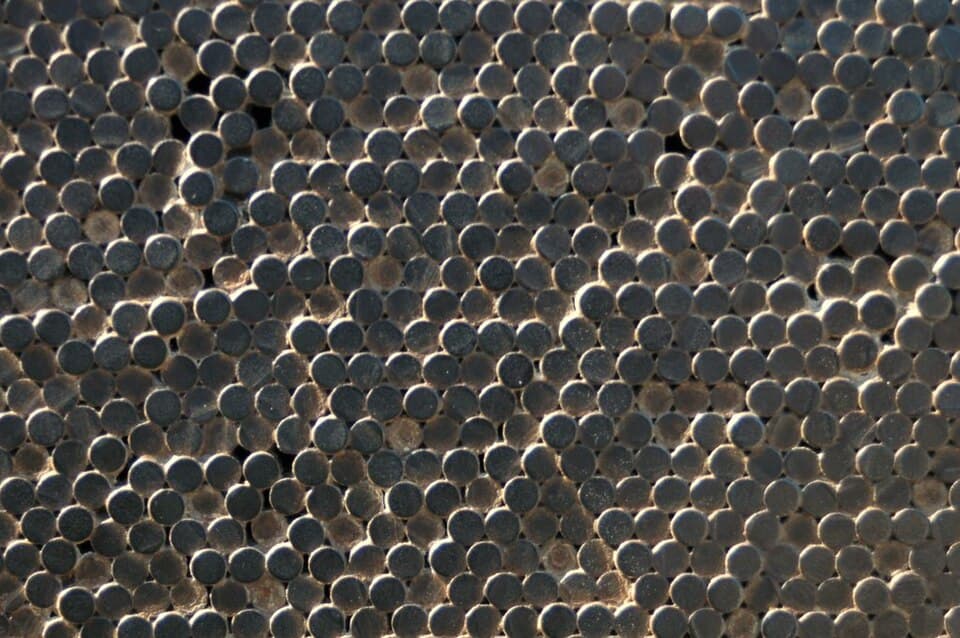
Main Cable Cross-Section
Here, you can get a close-up look at a cross-section of one of the bridge's two main cables. These cables are the literal lifelines of the structure, responsible for supporting the immense weight of the entire 1.7-mile roadway. Looking at the sheer density of the wires inside, it is easier to understand the engineering power required to hold up a bridge of this magnitude. Each of these two main cables contains exactly 27,572 individual wires of galvanized steel. If you were to take all the wire used in just these two cables and lay it out end-to-end, it would stretch for 80,000 miles. That is enough wire to encircle the Earth at the equator more than three times. This incredible length highlights the scale of the materials involved in the 1930s construction. The process of creating these cables was a feat in itself. Instead of being manufactured elsewhere and shipped in, they were 'spun' on-site using a moving shuttle that traveled back and forth across the strait, pulling the wires into place. This section allows you to appreciate the massive collective strength of those thousands of individual strands, which work together to maintain the bridge's iconic shape and structural integrity against gravity and the elements.
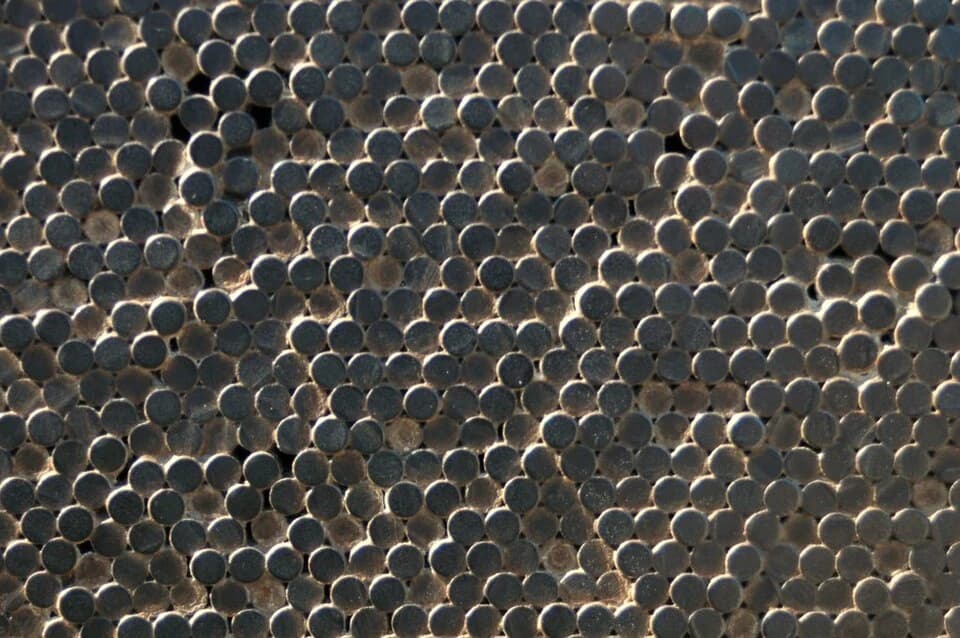
Steel Wire Bundle
The intricate, honeycomb-like texture you see here is the result of bundling 27,572 individual steel wires into a single, massive cable. Each wire is about the thickness of a pencil, yet when combined, they create a support system capable of carrying the total weight of 894,500 tons of steel and concrete. This artifact provides a rare opportunity to touch and see the internal makeup of the bridge that is usually hidden from view. The technique used to create these bundles is known as 'cable spinning.' During construction, massive spinning wheels traveled across the span on ropes, carrying strands of wire from one side to the other. Workers then carefully organized these strands into bundles, which were later compressed into the circular shape you see here using hydraulic jacks. This on-site assembly was necessary because the completed cables were far too heavy and stiff to be transported. This process ensured that the bridge could flex and move under the pressure of heavy traffic and high winds without snapping. It is a testament to the industrial ingenuity of the 1930s, where precision and massive scale had to work hand-in-hand. Every single one of these thousands of wires plays a critical role in keeping the bridge standing, showcasing a collective strength that has endured for nearly a century.
The Round House Cafe
A historic Art Deco building originally opened in 1938 as a roadside diner.
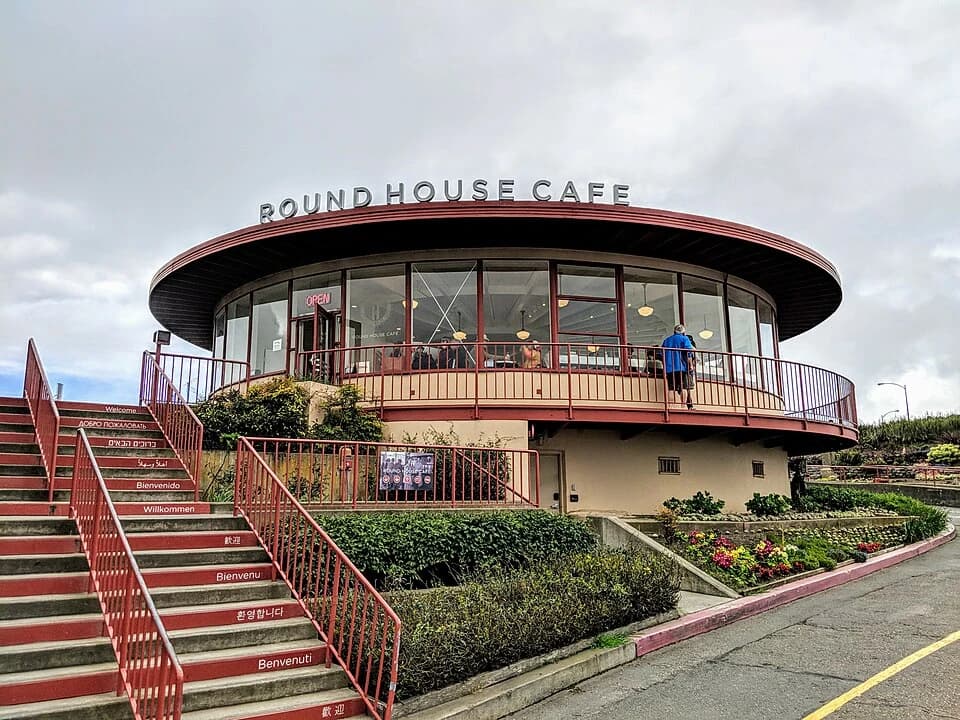
The Round House Cafe
The building before you is the Round House Cafe, a striking example of Art Deco architecture that has been a part of the bridge's landscape since it opened in 1938. Originally designed as a roadside diner, its circular shape was a deliberate choice by the architects to mirror the grace and verticality of the bridge towers. The smooth, curved lines and geometric simplicity are classic hallmarks of the style that dominated American design during the 1930s. One of the most notable features of the cafe is its floor-to-ceiling windows. These were intended to provide visitors with panoramic views of the newly opened engineering marvel while they enjoyed a meal. In its early days, it served as a primary destination for the first waves of tourists who flocked to San Francisco to see the bridge for themselves, offering a modern and stylish place to rest. Today, the Round House Cafe remains a popular stop, preserving the historical charm of the era in which the bridge was born. Its placement near the southern entrance makes it a symbolic part of the visitor experience, connecting the industrial achievement of the bridge with the mid-century roadside culture that grew up around it. It stands as a reminder that even the auxiliary buildings of the Golden Gate were designed with a keen eye for aesthetic harmony.
The Fort Point Arch
An engineering solution designed by Charles Ellis to preserve the pre-Civil War fort at the bridge's base.
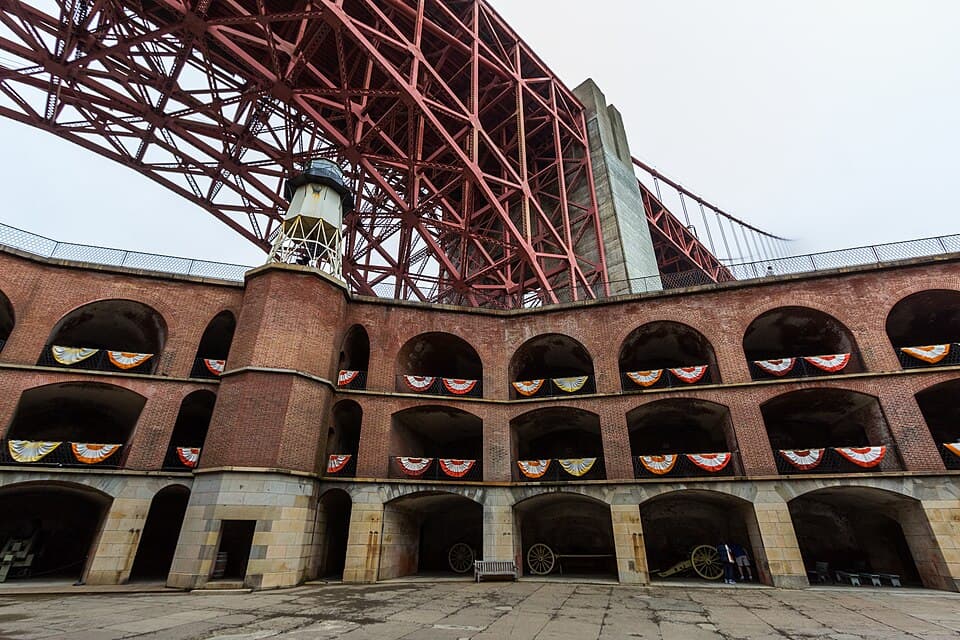
The Fort Point Arch
As you look toward the base of the bridge on the San Francisco side, you might notice a distinct steel arch that seems to leap over a brick building. This is the Fort Point Arch, a brilliant 'bridge within a bridge' solution designed by engineer Charles Ellis. When the bridge was being planned, the construction path sat directly over Fort Point, a pre-Civil War masonry fortification that was already over 70 years old. Many expected the historic fort to be demolished to make way for the new bridge's massive concrete pylons. However, Ellis recognized the historical value of the fort and designed this specific steel arch to span directly over it. This allowed the bridge's roadway to continue without disturbing the 1861 brickwork below. It was a pioneering example of historic preservation integrated into a massive modern infrastructure project. The arch itself is a marvel of steelwork, showing the intricate lattice of beams required to support the roadway overhead while maintaining a clear span. This design choice added complexity and cost to the project, but it ensured that San Francisco could keep both its military history and its modern gateway. Today, the contrast between the red bricks of the fort and the orange steel of the arch is one of the most photographically interesting parts of the entire structure.
The Eastern Walkway
The primary pedestrian path offering spectacular views of the San Francisco skyline and Alcatraz.
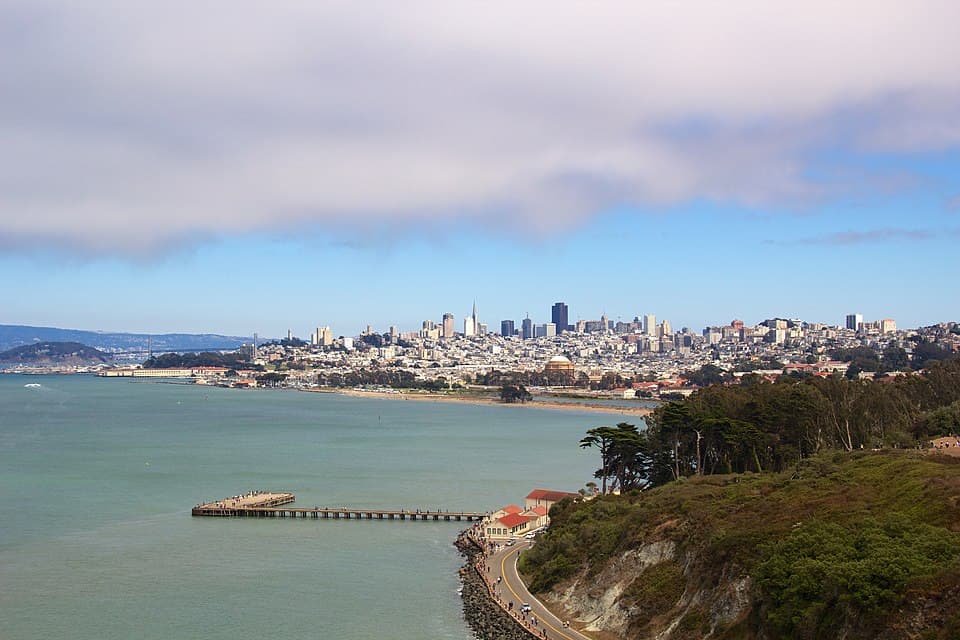
The Eastern Walkway
Walking across the eastern span of the bridge is a multi-sensory experience that goes beyond the visual views. As you move along the walkway, you may hear a mysterious, deep humming sound, especially on windy days. These are known as 'Aeolian tones,' named after Aeolus, the Greek god of the wind. This musical effect is caused by air passing through the bridge's railings, essentially turning the entire structure into a giant wind instrument. You might be surprised to learn that this specific sound is a relatively recent addition to the bridge's character. In 2020, a new aerodynamic railing was installed to replace the original ones. The goal was to help the bridge better withstand high-velocity winds, some of which can reach up to 100 miles per hour in the strait. The new design allows wind to flow through more easily, reducing the physical strain on the bridge but creating that signature hum in the process. Beyond the sound, the walkway offers a firsthand look at the massive suspension cables and the constant vibration of the roadway under the weight of traffic. It is the best place to feel the 'breath' of the bridge as it subtly sways and reacts to the environment, a reminder that this massive steel object is actually a flexible, living piece of engineering.
The Golden Gate Foghorns
A unique navigational system of five horns used to guide ships through the dangerous strait.
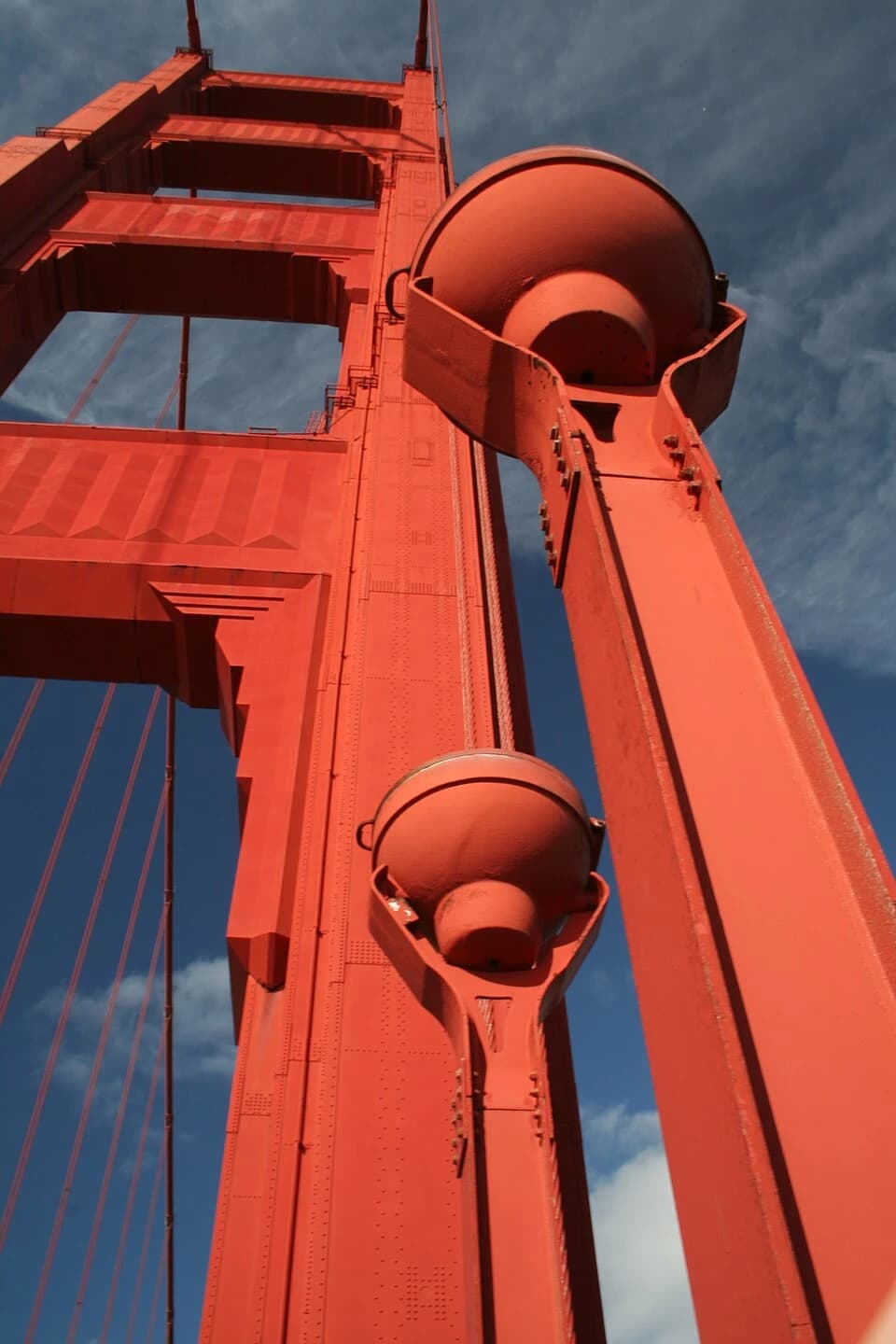
The Bridge Foghorns
Visible near the base of the towers and along the span are the bridge’s foghorns, a critical component of the maritime navigation system in the San Francisco Bay. Because the Golden Gate Strait is often blanketed in thick, impenetrable fog, these horns are essential for guiding ships through the narrow and dangerous passage. They don't just blast at random; they use a sophisticated system of five distinct tones and locations so that pilots can determine their exact position by sound alone. The foghorns have been a signature part of the San Francisco soundscape since the bridge opened. Their deep, resonant 'basso' tones can be heard for miles across the water, providing a comforting, rhythmic pulse during the city's frequent foggy nights. One horn is located at the center of the span, while others are mounted on the tower piers, ensuring that ships have a clear audio map of the obstacles in their path. In the era before advanced GPS, these horns were the only thing preventing massive cargo ships and passenger liners from colliding with the bridge or the shore. Even today, with all our modern technology, the foghorns remain a vital backup and a cherished local tradition. They are a reminder that the bridge is not just a road for cars, but a sentinel for the sea, ensuring safe passage for everyone entering the harbor.
The Midspan & Safety Systems
The highest point of the bridge, featuring the historic safety net legacy and the new suicide prevention system.
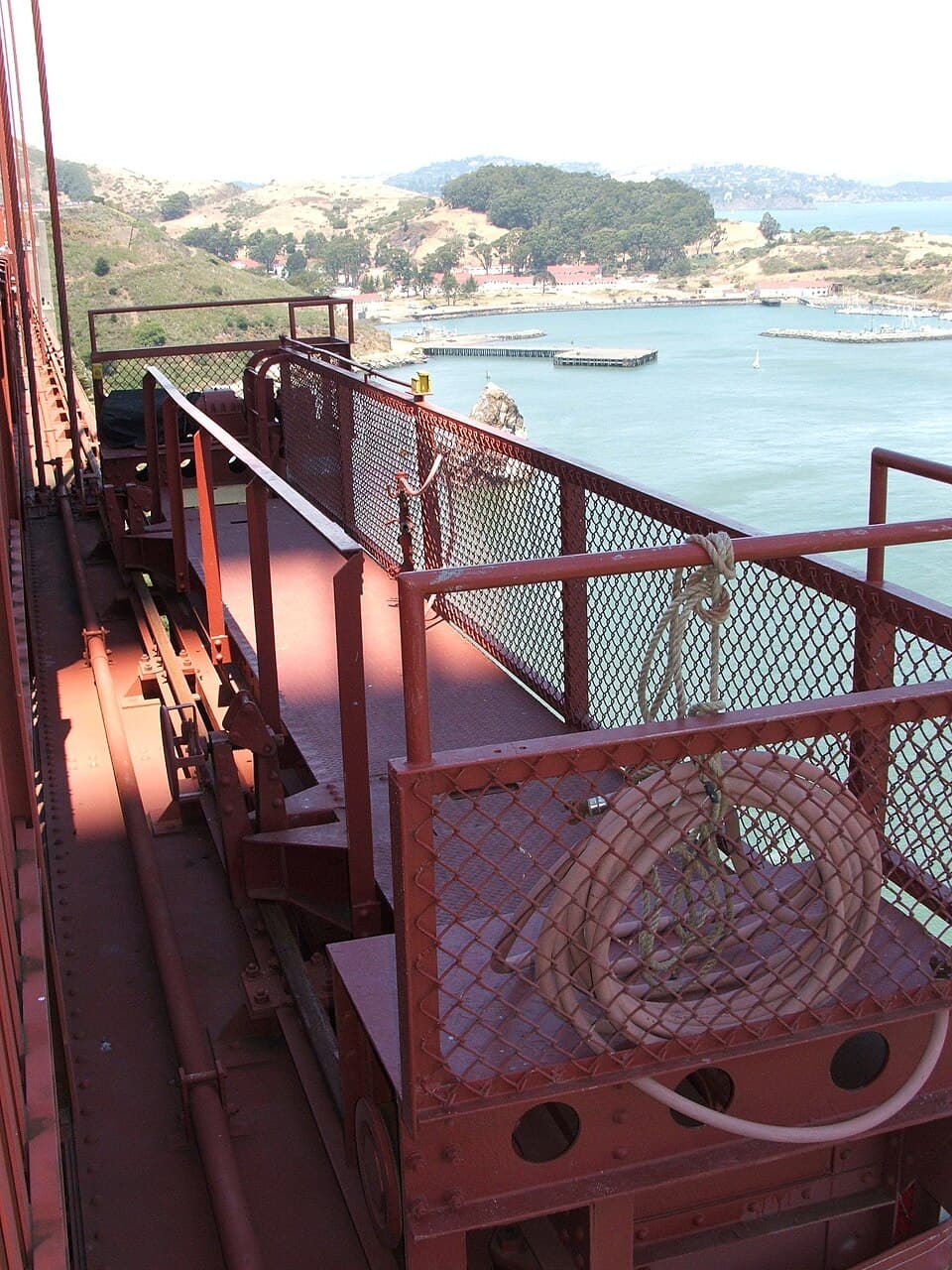
The Walkway Railing
As you stand by the railing and look down toward the water, it is worth remembering the workers who built this bridge in the 1930s. At the time, bridge construction was exceptionally dangerous, and it was a common, grim expectation that one worker would die for every million dollars spent. Chief engineer Joseph Strauss was determined to change this, and he insisted on a revolutionary safety measure: a massive net suspended beneath the bridge. This safety net, resembling a giant circus net, extended the entire length of the span during construction. It was an expensive and unprecedented move that many skeptics criticized, but it proved to be a life-saver. During the four years of work, the net caught nineteen men who fell from the high steel. These survivors eventually formed an exclusive and grateful group known as the 'Half Way to Hell Club.' While the project unfortunately did suffer a tragic accident near its end that cost eleven lives, the net's success set a new standard for industrial safety in the United States. It demonstrated that massive engineering projects did not have to come at a staggering human cost. Today, the railings you stand by provide safety for millions of visitors, but they also serve as a quiet tribute to that first safety net that caught those nineteen men and changed the way we build forever.
The North Tower
The tower connecting San Francisco to the rugged hills of Marin County.
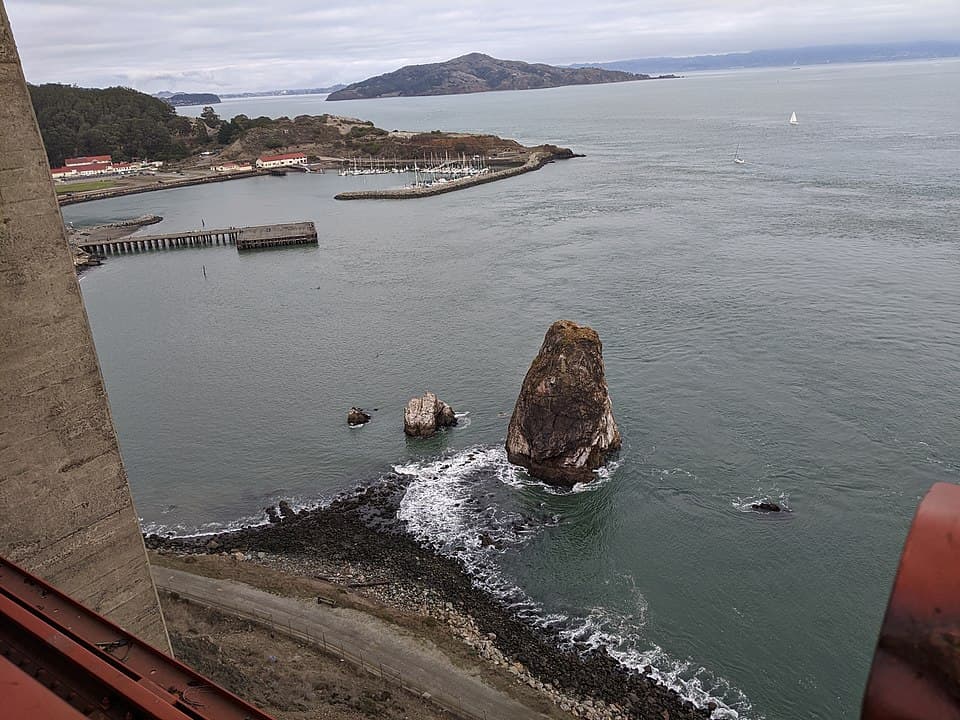
The North Tower Roadway
Standing near the North Tower, you can truly feel the vibration of the bridge as it carries its daily load. This roadway is a vital transit link, with approximately 112,000 vehicles crossing the strait every single day. To manage this massive volume, the bridge uses a clever system of flexible lane assignments. If you are here at the right time, you might see a specialized vehicle known as the 'zipper truck' moving across the span. The zipper truck is a heavy-duty machine that literally 'zips' the concrete median barrier from one side to the other. By shifting these 12-inch wide concrete blocks, the bridge authorities can adjust the number of lanes for the morning and evening commutes. This allows for more inbound lanes toward San Francisco in the morning and more outbound lanes toward Marin in the afternoon, maximizing the efficiency of the six-lane roadway. Before this system was installed in 2015, workers had to manually place plastic pylons to separate traffic, a job that was incredibly dangerous. Now, the concrete barrier provides a significant safety improvement, preventing head-on collisions while allowing for dynamic traffic management. It is a fascinating example of how a nearly 100-year-old bridge continues to adapt its technology to meet the needs of a modern, bustling metropolitan region.
H. Dana Bower Vista Point
The primary lookout on the Marin side, offering a head-on view of the bridge roadway and the city beyond.
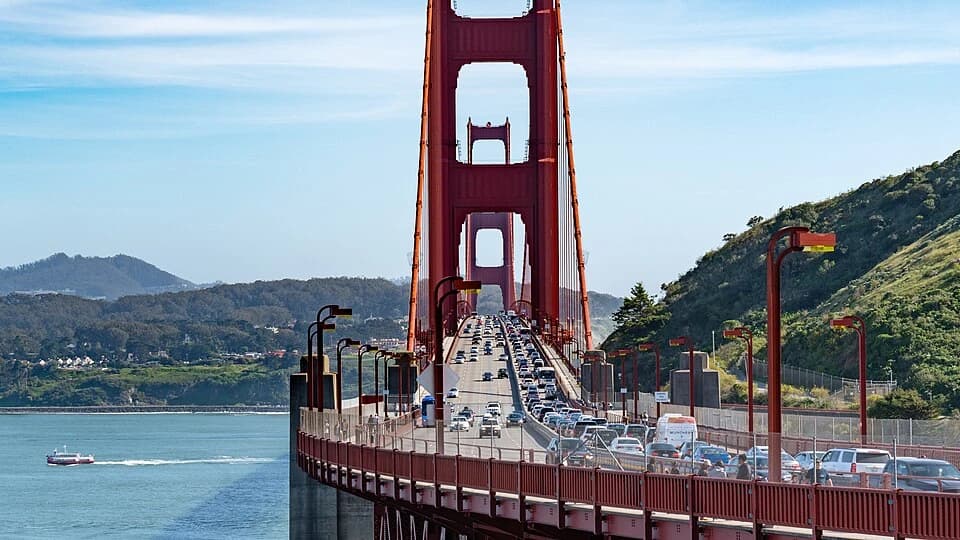
North Vista Point
Welcome to North Vista Point, which offers a breathtaking, head-on view of the bridge's roadway as it stretches back toward San Francisco. From here, you can truly appreciate the engineering triumph of the suspension system. When the bridge opened in 1937, it was both the tallest and the longest suspension bridge in the world, a record it held for 27 years. Even today, nearly a century later, it remains a marvel of structural design. one of the most impressive aspects of the bridge's engineering is its resilience. This point offers a great view of how the bridge is built to move. In 1989, the region was hit by the powerful 6.9-magnitude Loma Prieta earthquake. While many other structures in the city suffered significant damage, the Golden Gate Bridge stood firm. Its design allowed it to flex and sway with the seismic waves, absorbing the energy rather than resisting it to the point of breaking. This survival proved the brilliance of the early 20th-century designers who accounted for the region's geological volatility. As you look down the long line of traffic and the massive cables, you are seeing a structure that has not only survived the elements but has become more trusted with time. It remains a vital artery and a symbol of strength, proving that visionary engineering can create something that is both beautiful and incredibly durable.
Want to hear the rest?
Download the Stanza app to unlock all 23 stops and full GPS-guided navigation.
Frequently Asked Questions
How long does the Golden Gate Bridge audio tour take?
The Golden Gate Bridge audio guide includes 23 narrated stops. Most visitors spend 45 minutes to 1.5 hours exploring the complete tour, though you can listen at your own pace and skip or revisit any stop.
Is the Golden Gate Bridge audio guide available in my language?
Stanza supports 15 languages: English, Spanish, French, German, Italian, Portuguese, Russian, Japanese, Chinese, Korean, Arabic, Hindi, Polish, Dutch, Hebrew. Check the guide in the app to confirm the languages currently available for this tour.
Can I use the audio guide offline at Golden Gate Bridge?
Yes! Download the complete Golden Gate Bridge tour — including all audio, maps, and images — before your visit. The Stanza app works completely offline, so you don't need WiFi or mobile data at the venue.
How much does the Golden Gate Bridge audio guide cost?
The Stanza app is free to download. The current listed price for the Golden Gate Bridge audio guide is $4.99; app-store region and currency may affect the final price.
How do I use the Stanza audio guide at Golden Gate Bridge?
Download the free Stanza app, search for "Golden Gate Bridge", and download the tour. When you arrive at the venue, the app uses GPS to detect your location and automatically plays the relevant narration as you move between points of interest — completely hands-free.
What makes the Stanza audio guide different from other Golden Gate Bridge tours?
Stanza offers GPS-triggered narration that plays automatically as you walk through Golden Gate Bridge — no need to manually select stops. The tour is available in 15 languages, works fully offline, and includes 23 expertly narrated stops with images and historical context.
What other audio guides are available near Golden Gate Bridge?
Stanza offers multiple audio guides in San Francisco, United States and nearby areas. After downloading the app, browse the map to discover all available tours near Golden Gate Bridge. Each guide can be downloaded for offline use.