Stanza · Audio guide
Castillo San Felipe del MorroAudio guide
A place to remember. A story to take with you.
Castillo San Felipe del Morro is a 16th-century citadel located at the entrance of San Juan Bay in Puerto Rico. It was designed to defend the port from seaborne enemies and is now a major historic landmark.
Download Stanza, then search for “Castillo San Felipe del Morro”.
About the tour
One guide. Your kind of visit.
Castillo San Felipe del Morro is a 16th-century citadel located at the entrance of San Juan Bay in Puerto Rico. It was designed to defend the port from seaborne enemies and is now a major historic landmark.
Ready when you are.
- 01Get the free Stanza app.
iOS & Android
- 02Find your guide.
“Castillo San Felipe del Morro”
- 03Download before you go.
Works offline
Audio guide / 25 narrated stops
Inside the guide
Get to know a few of the stories before you go. Open a stop to read more.
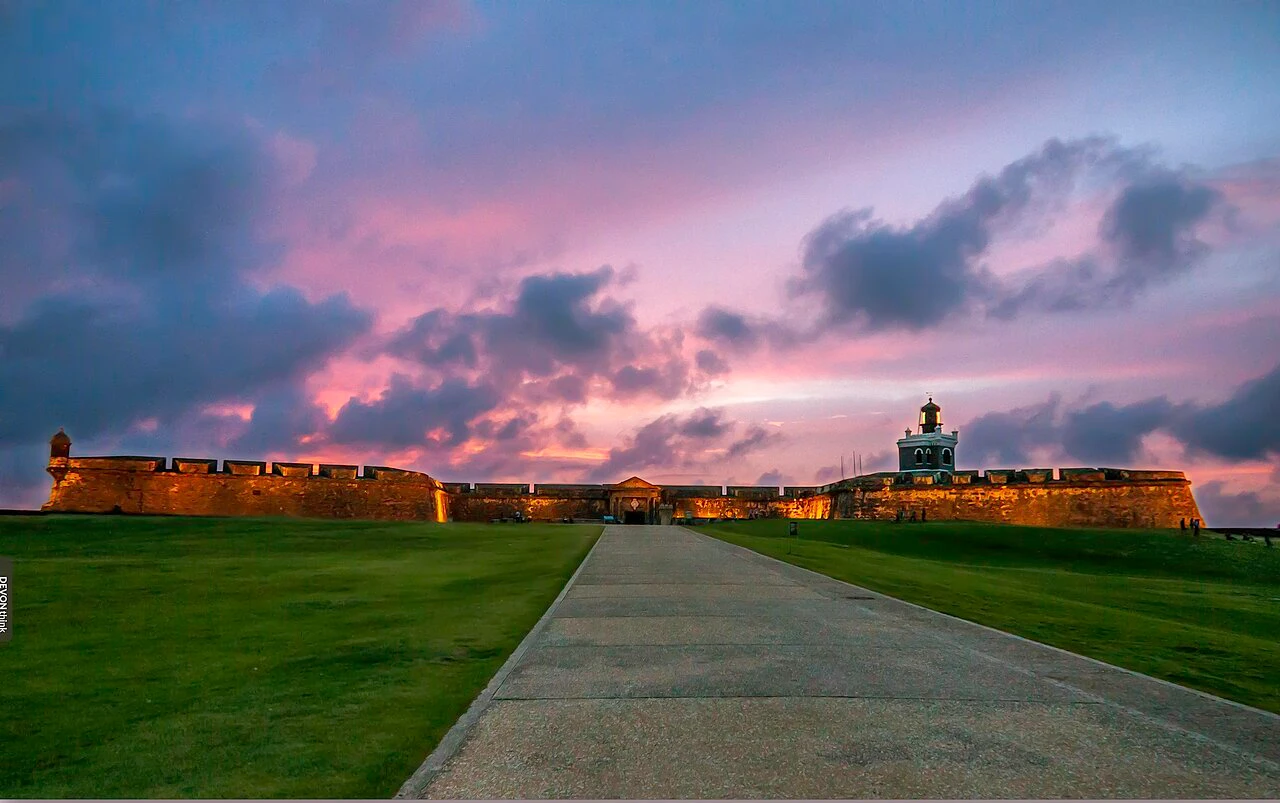
01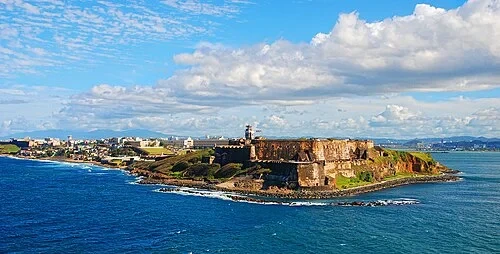 The Great Esplanade and Campo de TiroThe Key to the Indies
Welcome to Castillo San Felipe del Morro, the most imposing fortress in the Caribbean. You are standing on a rocky promontory that rises forty-three meters above the Atlantic shoreline, a position so strategic it earned the nickname 'The Key to the Indies.' This site was the primary defensive bastion for the Spanish Empire, serving as the first line of defense against any fleet attempting to enter the protected waters of San Juan Bay. The citadel you see today is organized into six distinct levels, each designed to rain fire down upon encroaching ships. This rugged setting provided a natural advantage, allowing the Spanish to control the maritime traffic into their vital port. For nearly four hundred years, this complex has withstood the corrosive salt air and the battering of tropical storms. As you begin your walk, notice how the massive walls seem to grow directly out of the jagged cliffs, creating an seamless barrier between the island and the open sea.
Francisco Jose Carrera Campos · CC BY-SA 4.0
02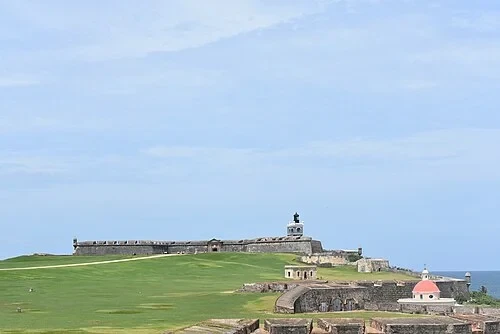 The Great Esplanade and Campo de TiroThe Great Esplanade
The wide green expanse stretching before the fortress, known as the Great Esplanade, spans approximately twenty-eight hectares. Today, it is a peaceful area where locals fly kites, but its historical purpose was much more grim. This space functioned as a 'field of fire,' a defensive tactic where the land was kept entirely clear of trees, buildings, or any other structures. By maintaining this unobstructed view, the Spanish garrison ensured that any enemy attempting a land approach would have no place to take cover from the cannons and muskets on the walls above. It took two hundred and forty-eight years for the fortress and its surrounding landscape to reach this fully developed form, which was finally completed in 1787. This long construction period reflects the evolving nature of military engineering as the Spanish responded to increasingly powerful artillery and naval tactics. The lawn today represents the final, most sophisticated version of the fort’s landward defenses.
Rodney R Rivera Rolon · CC BY-SA 4.0
03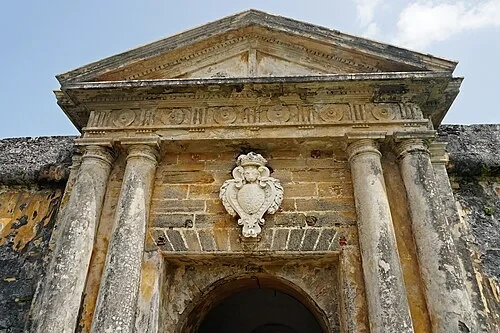 The Main Gate and Defensive HornworkThe Main Gate
The transition from the open esplanade to the inner world of the fortress occurs at the Main Gate. This entrance features refined neoclassical architectural details, contrasting with the rugged, functional nature of the exterior battlements. The gateway is set into a wall of staggering proportions. Depending on their location, these masonry walls range from five and a half meters to over twelve meters in thickness. This massive bulk was not just for show; it was essential for absorbing the impact of heavy iron cannonballs fired during naval bombardments. Stepping through the archway, you move into the heart of the military establishment where hundreds of soldiers once lived and worked. The gate served as a vital choke point, often protected by a drawbridge and heavy wooden doors. Its design reflects the dual nature of Spanish colonial architecture: an aesthetic nod to European style paired with the uncompromising strength required for a front-line military outpost in the New World.
Listen in the appMariordo (Mario Roberto Durán Ortiz) · CC BY-SA 4.0
04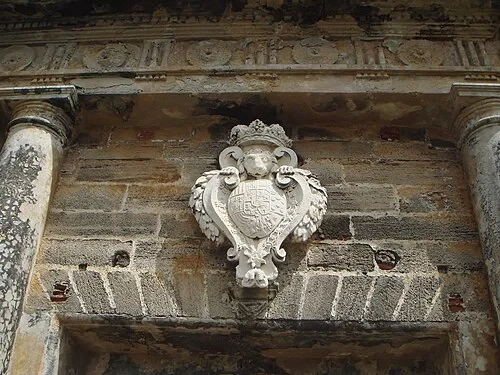 The Main Gate and Defensive HornworkSpanish Royal Coat of Arms
Observe the intricate carving situated directly above the main entrance. This is the Spanish royal coat of arms, a powerful symbol of sovereignty representing King Charles V. It was he who ordered the original construction of the fort in 1539 to protect Spain's interests in the region. Within the design, you can identify specific motifs that tell the story of a unified Spain. The lion represents the Kingdom of León, while the castle motif signifies the Kingdom of Castile. These symbols were more than mere decoration; they served as a constant reminder to every soldier and visitor of the global reach and power of the Spanish monarchy. In an era when most of the population was illiterate, heraldry like this functioned as an essential form of communication, establishing exactly who held the legal and military rights to this territory. Despite centuries of exposure to the humid Caribbean air and ocean spray, the fine details of the carving remain a testament to the skill of the artisans who crafted it.
Listen in the appPhoto: Xemenendura · CC BY-SA 3.0
05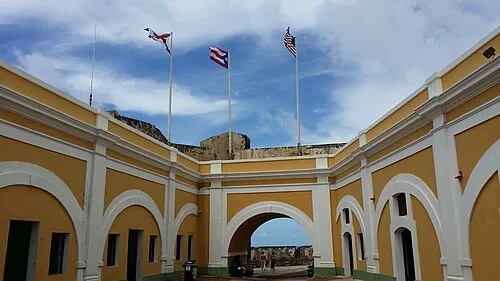 The Main Courtyard (Plaza de Armas)The Main Courtyard
Known as the Plaza de Armas, this central courtyard is the heart of the entire complex. The distinctive yellow and white color scheme is a hallmark of Spanish colonial military architecture, providing a bright contrast to the weathered stone of the outer batteries. This space was far more than an open square; it was the vital link connecting all six defensive levels of the citadel. From here, officers could quickly relay orders and move troops to wherever they were most needed. During the fort's operational peak, this courtyard would have been a hive of activity, serving as the primary gathering point for the hundreds of Spanish soldiers stationed here. You can imagine the sounds of rhythmic drilling, the shouting of commands, and the clatter of equipment. The buildings surrounding the plaza housed necessary facilities like the commander's quarters, barracks, and storage rooms, ensuring that the garrison remained self-sufficient during long periods of isolation or under the direct pressure of a naval siege.
Listen in the appPhoto: Russellesq · CC BY-SA 3.0
06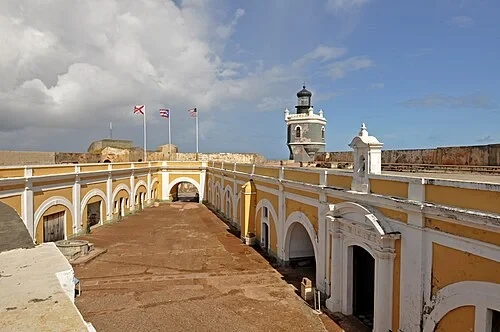 The Main Courtyard (Plaza de Armas)View from the Upper Tiers
Looking down into the courtyard from the upper levels provides a unique perspective on the sophisticated engineering of the fortress. This tiered design was part of a 'hornwork' defensive system, where each level was positioned to provide overlapping fields of fire while remaining protected by the tier above it. One of the most critical survival features is hidden directly beneath your feet. Beneath the stone floor of the courtyard are three massive underground cisterns. These chambers were meticulously designed to collect and store eight hundred and twenty thousand liters of rainwater. In a environment where the surrounding sea was salt and local wells could be poisoned or cut off during a land siege, these cisterns were the garrison's lifeline. The ability to maintain a fresh water supply for months on end allowed the Spanish to endure long-term blockades that would have forced a lesser fortification to surrender. This blend of combat engineering and basic survival infrastructure is what made the citadel nearly impregnable for centuries.
Listen in the appP. Hughes · CC BY-SA 4.0
07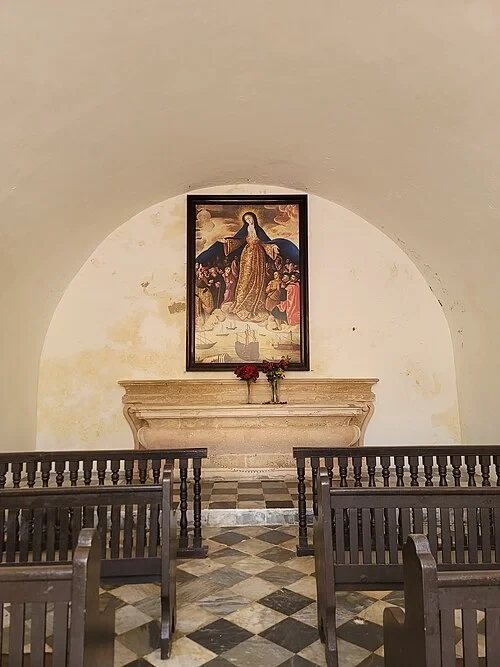 The Garrison ChapelThe Fortress Altar
Inside this vaulted chamber, you will find the fortress altar, dominated by a painting of the Virgin Mary. For the soldiers stationed at this remote outpost, faith was a central pillar of daily life. The atmosphere here is intentionally simple and somber, providing a sharp contrast to the brutal military function of the exterior batteries. This was a place where men would gather to pray for protection before an expected battle or seek solace during the grueling months of a naval siege. Living in isolation thousands of miles from home, many soldiers viewed their service as both a military duty and a spiritual mission for the Spanish Crown. The thick masonry arches overhead created a sanctuary that was relatively quiet even during the chaos of a bombardment. The presence of such a dedicated religious space within the fort highlights how deeply the Catholic Church and the Spanish military were intertwined during the colonial era, providing a moral framework for the garrison's endurance.
Listen in the appPhoto: Mookieperez · CC BY-SA 4.0
08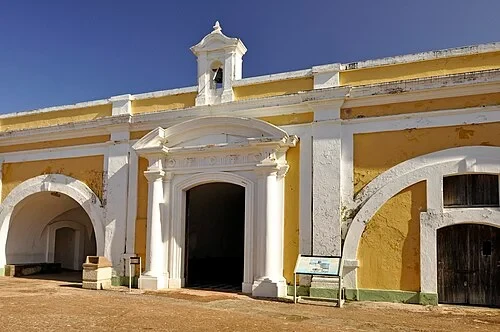 The Garrison ChapelThe Garrison Chapel
The Garrison Chapel, with its formal facade, was a focal point of courtyard life. For the Spanish Crown, maintaining the spiritual well-being of the troops was considered just as vital as regular military drills and the upkeep of artillery. This building provided a sense of normalcy and continuity for the men serving far from their families. Look toward the top of the pediment to see the small bell tower. This bell served a dual purpose in the daily life of the fort. It signaled the hours for religious services, calling the garrison to mass, but it was also a vital tool for emergency communication. In the event of a sudden attack or a fire, the rapid ringing of this bell would alert every soldier in the complex to drop their tasks and move to their defensive stations. The chapel stands as a quiet reminder that even in a place designed for war, the human needs for community and ritual remained a constant priority for the Spanish authorities.
Listen in the appP. Hughes · CC BY-SA 4.0
09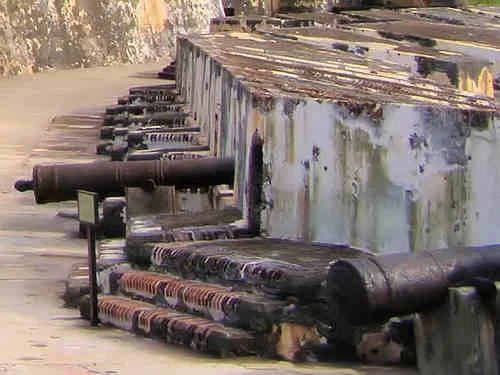 The Santa Bárbara BatteryThe Santa Barbara Battery
The Santa Barbara Battery served as the primary defensive line of the entire citadel. This level was designed to house the heaviest artillery in the fort’s arsenal, with the barrels aimed directly at the narrow channel of the harbor entrance. During a naval engagement, this space would have been transformed into a scene of intense noise and thick, sulfurous smoke as the massive cannons fired in sequence. In 1595, these very defenses were tested during a famous attack by the English privateer Sir Francis Drake. The heavy fire from this battery was instrumental in repelling the English fleet, preventing them from seizing the city's gold and supplies. The engineering of the battery allowed multiple guns to fire simultaneously, creating a wall of iron that few wooden ships could withstand. Today, the space is quiet, but the heavy masonry and the layout of the gun positions still convey the sheer power this battery once projected across the Atlantic waters.
Listen in the appPhoto: Caballero1967 · CC BY-SA 4.0
10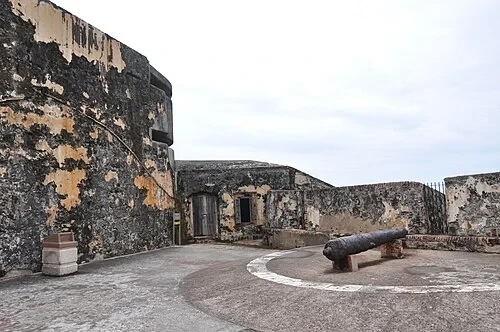 The Santa Bárbara BatteryArtillery of the Citadel
The historic cannons resting on these battlements were once state-of-the-art military technology. Unlike stationary guns, these pieces were mounted on specialized swivel mechanisms that allowed the crew to pivot the massive barrels. If you look at the ground, you can see the curved stone tracks that facilitated this movement. This design was crucial for tracking a moving target, such as an enemy ship attempting to sail quickly through the harbor entrance. Firing one of these weapons was a complex, coordinated effort. A crew of several men worked in unison, with each individual responsible for a specific task: swabbing the barrel, loading the gunpowder and projectile, aiming, and finally igniting the charge. The recoil from a single shot was immense, requiring the carriage to be reset after every fire. These cannons were the fort's main teeth, capable of launching heavy iron balls over long distances with enough force to shatter the hulls of the largest naval vessels of the era.
Listen in the appJorge Láscar from Australia · CC BY 2.0
Castillo San Felipe del Morro
Frequently asked questions
How much does the guide cost?
Free app download. Listed guide price: $3.99. Guide price shown in the app. Audio guide only. Venue admission is separate.
Can I listen without internet?
Yes. Download the guide’s audio, images, and maps in the app before your visit. Your downloaded content is then available offline.
Can I listen in my language?
Stanza supports 15 languages. Check the app for the languages available for this guide.
Do I need to follow a schedule?
No. This is a self-guided experience. Choose your stops, pause whenever you like, and return to a story at your own pace.
At your own pace
Explore Castillo San Felipe del Morro.
Download Stanza, then search for “Castillo San Felipe del Morro”.
Free app download · Guide price shown in the app
Keep exploring
Nearby audio guides
San Francisco
Alcatraz Island, Alcatraz
Content & sources
Photo: Frank Schulenburg · CC BY-SA 4.0
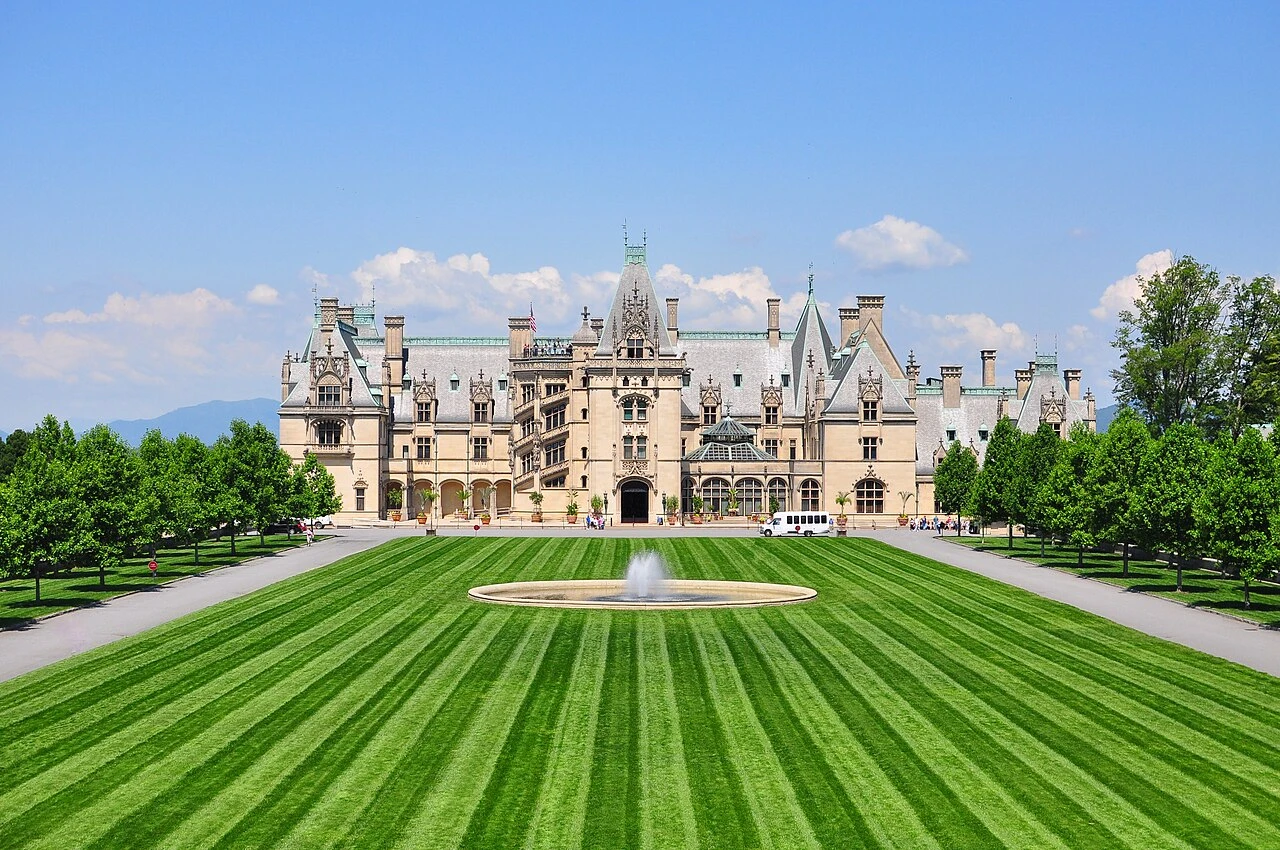
Biltmore Estate
Content & sources
Blake Lewis · CC BY-SA 2.0
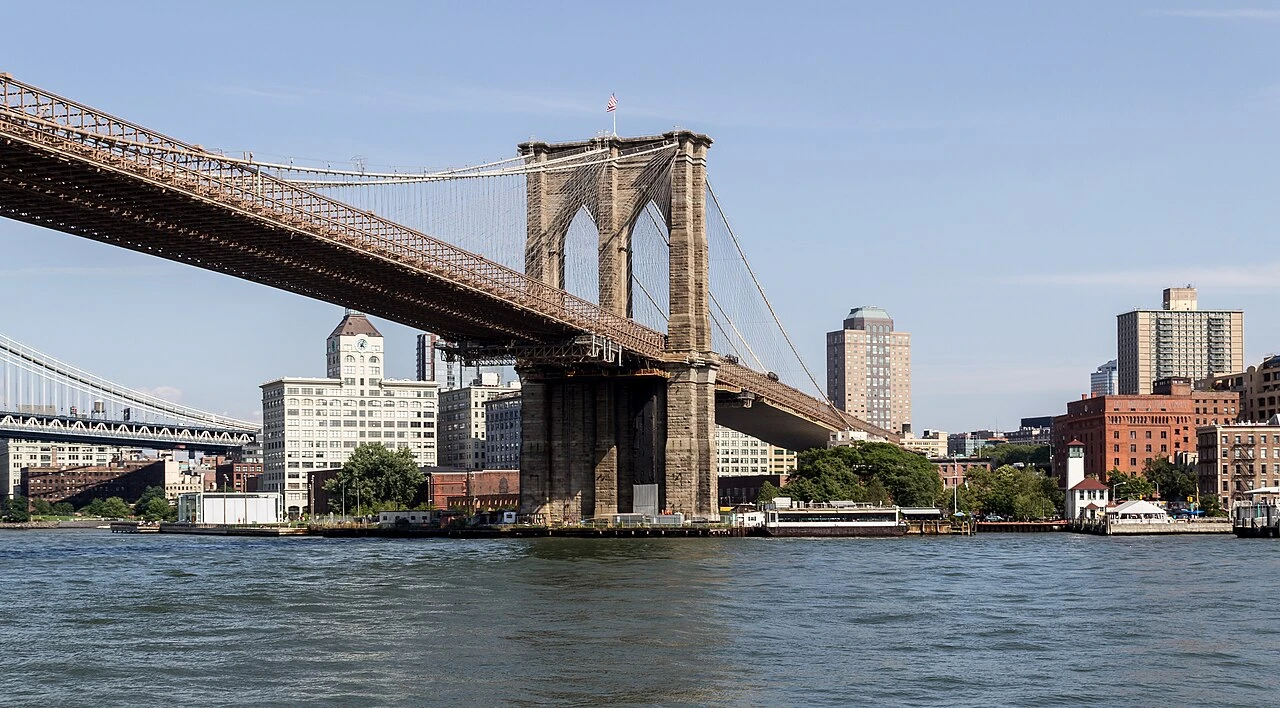
New York
Brooklyn Bridge
Content & sources
Dietmar Rabich · CC BY-SA 4.0
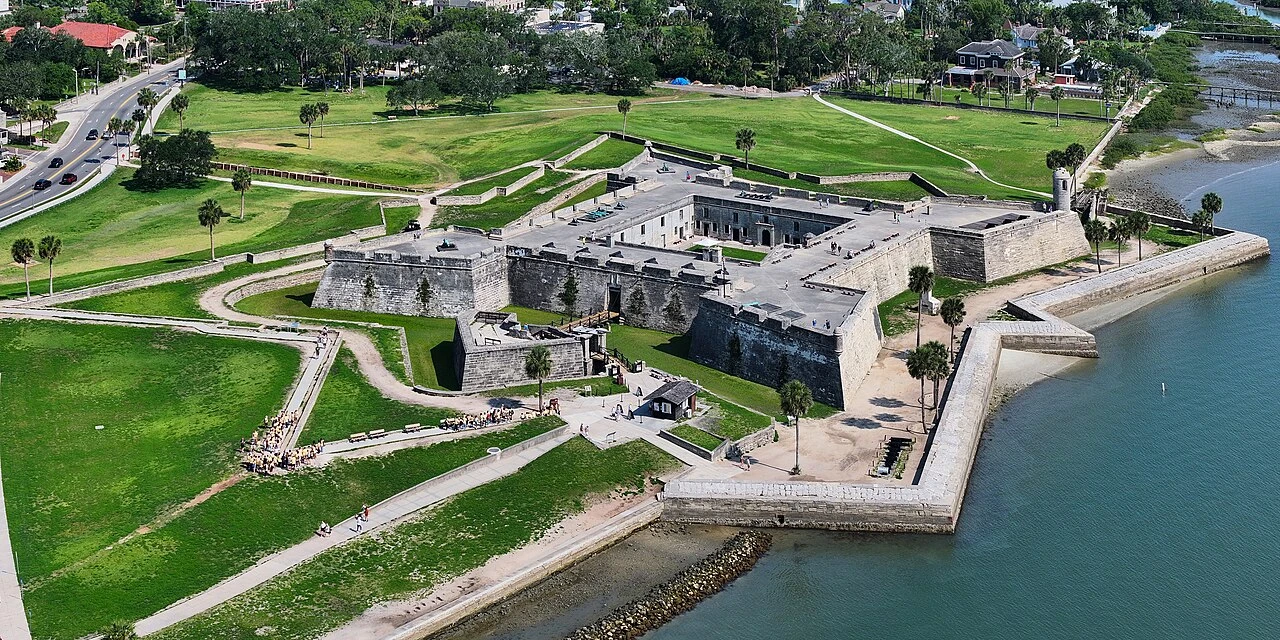
Saint Augustine
Castillo de San Marcos
Content & sources
Photo: Schwerdf · CC BY 4.0