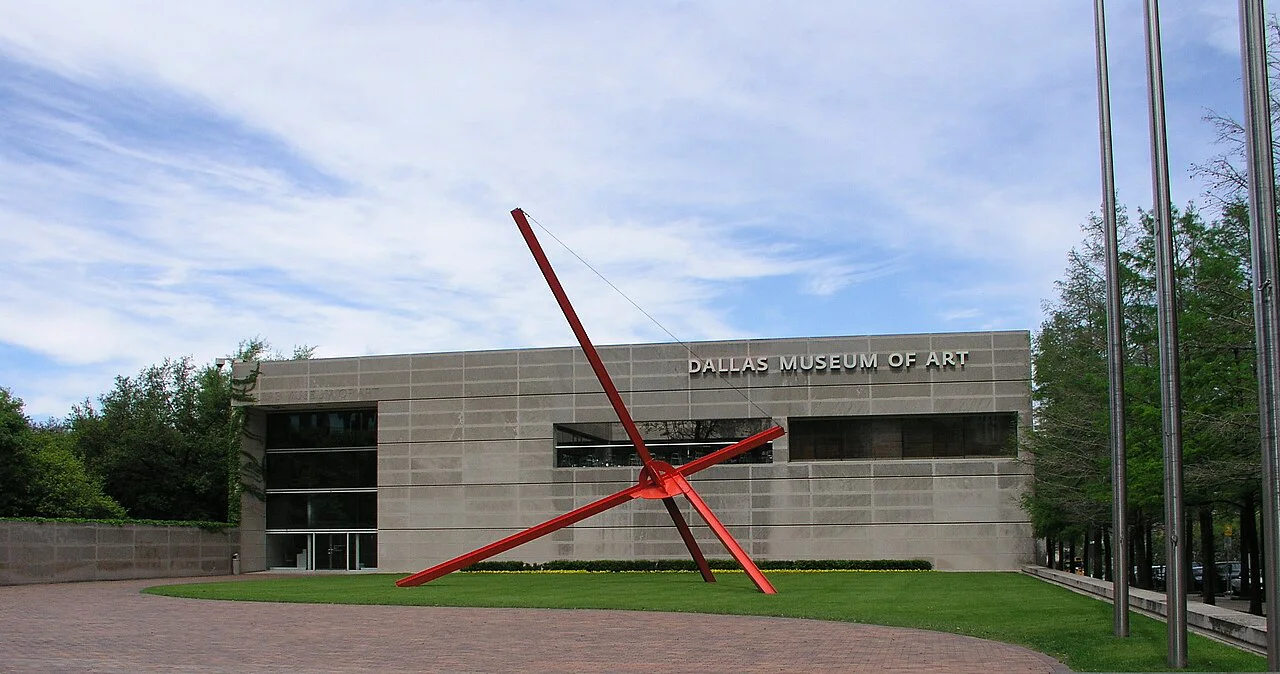
 Stanza / Audio guide
Content & sources
Stanza · Audio guide
Dallas Museum of Art Audio Guide
A place to remember. A story to take with you.
The Dallas Museum of Art is an art museum located in the Arts District of downtown Dallas, Texas. The building was designed by Edward Larrabee Barnes and John MY Lee Associates.
Download Stanza, then search for “Dallas Museum of Art”.
About the tour
One guide. Your kind of visit.
The Dallas Museum of Art is an art museum located in the Arts District of downtown Dallas, Texas. The building was designed by Edward Larrabee Barnes and John MY Lee Associates.
The Dallas Museum of Art guide tells the stories of 31 artworks, including The Icebergs (Frederic Edwin Church), The Fountain of Vaucluse (Thomas Cole), Apollo and Diana Attacking the Children of Niobe (Jacques-Louis David), Fox in the Snow (Gustave Courbet), St. John (El Greco), Battle of Arab Horsemen Around a Standard (Théodore Chassériau), Sheaves of Wheat (Vincent van Gogh), and The Bugler (Édouard Manet). Every artwork is free to hear in the Stanza app until 1 January.
Ready when you are.
- 01Get the free Stanza app.
iOS & Android
- 02Find your guide.
“Dallas Museum of Art”
- 03Download before you go.
Works offline
Audio guide / 31 artworks
Inside the guide
Get to know a few of the stories before you go. Open a stop to read more.
01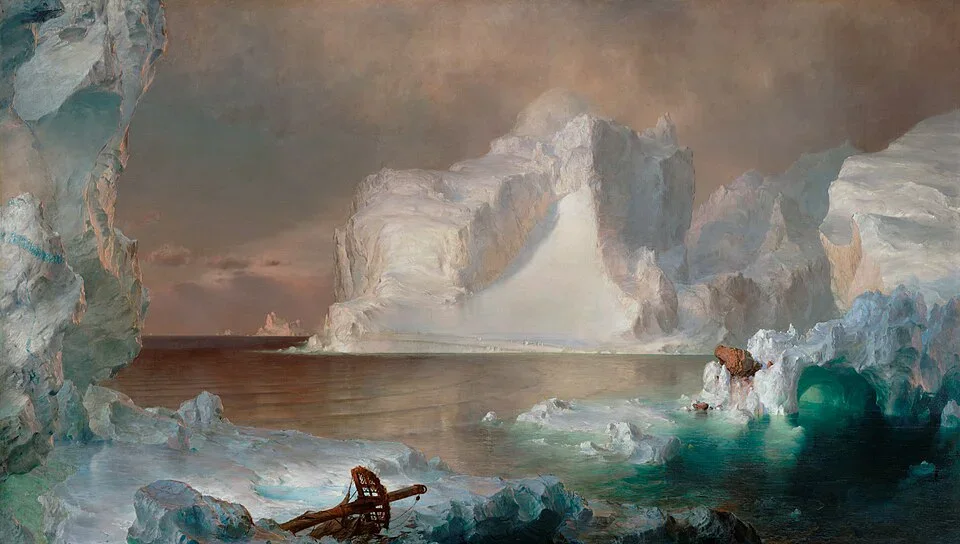
The Icebergs
Near the front is the broken stub of a mast. It seems to be all that is left of a ship that failed to get through. It was not there at the first showing. It was added later, and the title changed with it. At first this looks like a place where nothing much happens. Ice, water and sky, with no people and no story. To fill a large painting with so little was a risky idea. Some viewers found it hard to know what to make of. The Arctic was on everyone's mind then. A British expedition looking for the Northwest Passage had vanished, and the public followed the search for years. Church went north himself in 1859. He took a rowboat in among the icebergs to sketch them, and came home with about a hundred studies. He built the painting from those sketches and his imagination, taking about six months over it. He first showed it as The North, just as the Civil War began. That name also meant the northern Union, and the proceeds went to a fund for Union soldiers' families. Above the grotto, a boulder rests on the ice and stains it the color of rust. It is a reminder that the iceberg once touched land, and of changes that take ages to happen.
Listen in the appFrederic Edwin Church · Public domain
02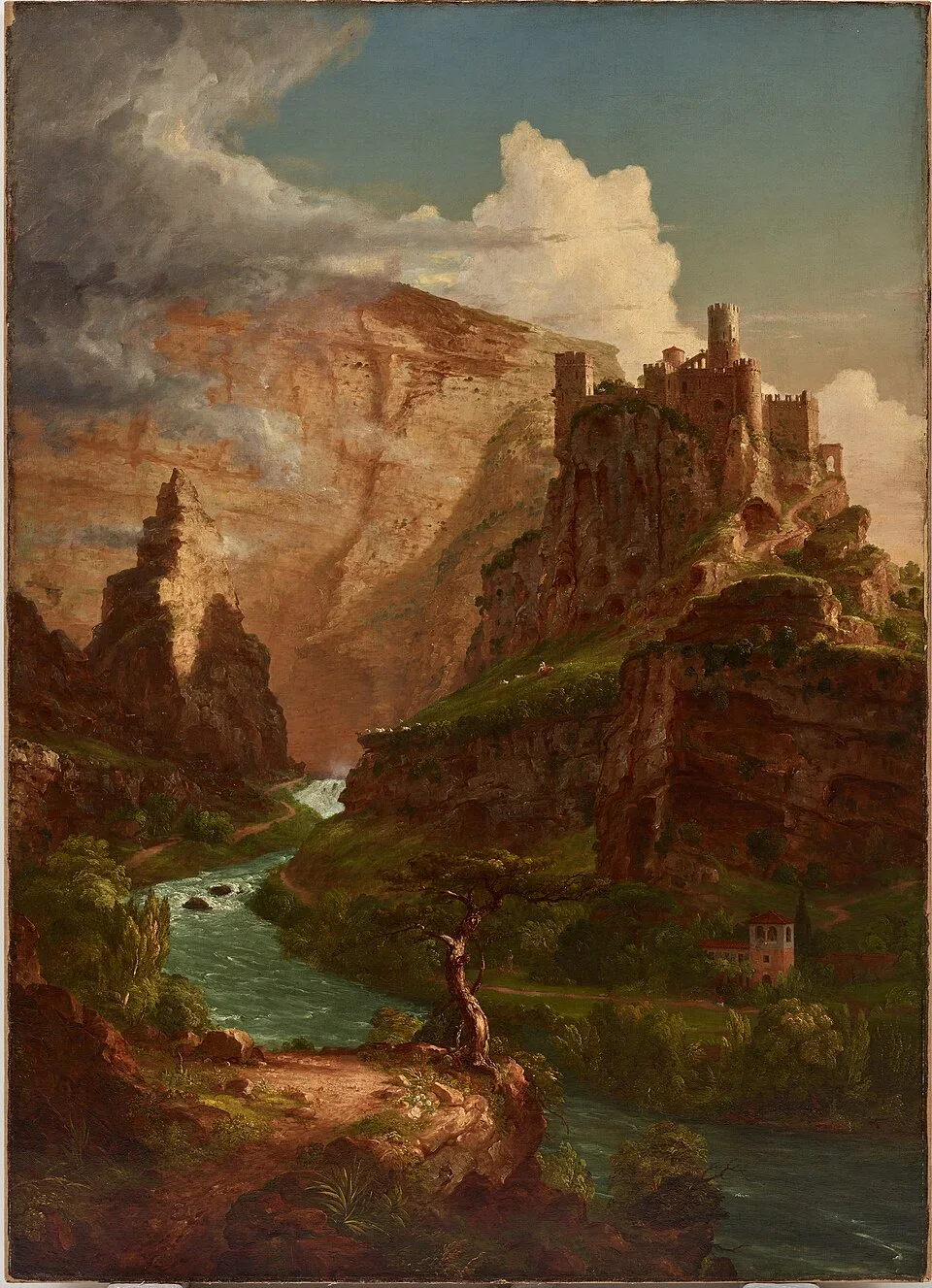
The Fountain of Vaucluse
A ruined castle stands whole again in this picture. Thomas Cole put it back together in paint, on his second trip to Europe. The real castle at Vaucluse was already in ruins when he worked, and he had met ruins before, crossing Italy between 1831 and 1832. Here he chose to make it whole, drawing the canyon in tight around it to make the setting more inspiring. The Sorgue runs at the castle's foot, not far from the fountain of Vaucluse. This was Petrarch's home. From 1339 he came often to this source, France's largest underground water supply, whose depth no one has fully explored. Chateaubriand sang of this water. Of this place Petrarch said that here he had built his Rome, his Athens, his homeland.
Listen in the appThomas Cole · Public domain
03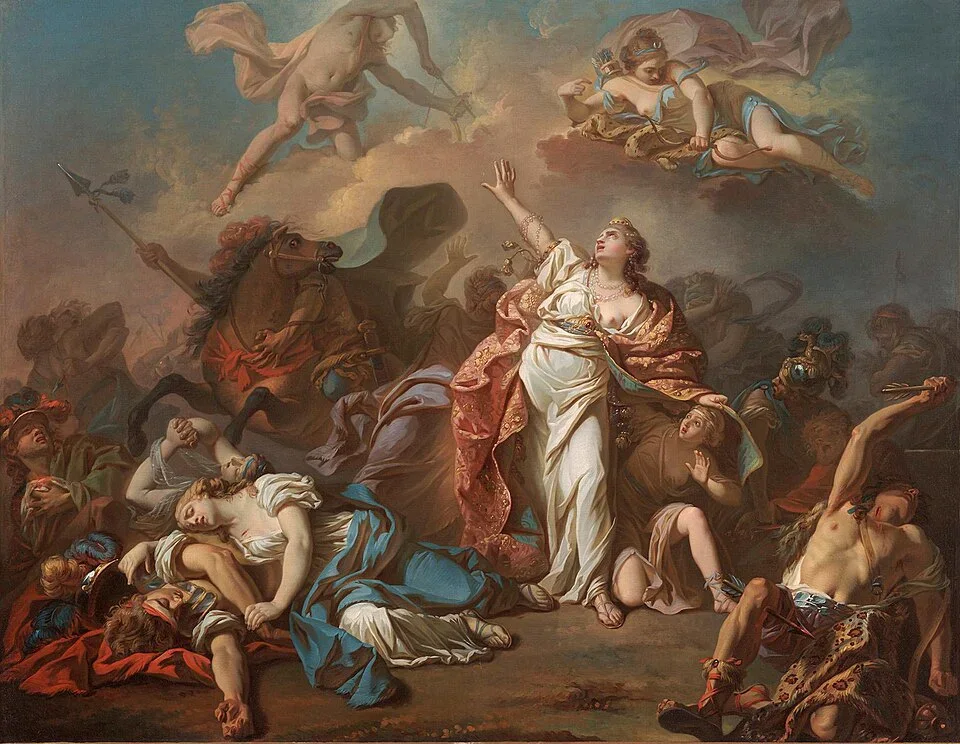
Apollo and Diana Attacking the Children of Niobe
Apollo and Diana shoot arrows at Niobe's children. Niobe had boasted she had more children than Leto, their mother, who had only two, and the gods were furious. David painted this for the Prix de Rome in 1772, his second attempt. It belongs to the rococo style of his early work, yet he turned away from Boucher's example and reached back to the noble style of the seventeenth century. But the jury arranged the vote against him. He was robbed of a prize that was his due, and two other students shared the first prize instead. The scandal exposed the Academy's questionable practices. After this second rejection, David tried to starve himself in his room. He gave up after Sedaine, a playwright, and Doyen, a painter on the jury who favored him, intervened.
Listen in the appJacques-Louis David · Public domain
04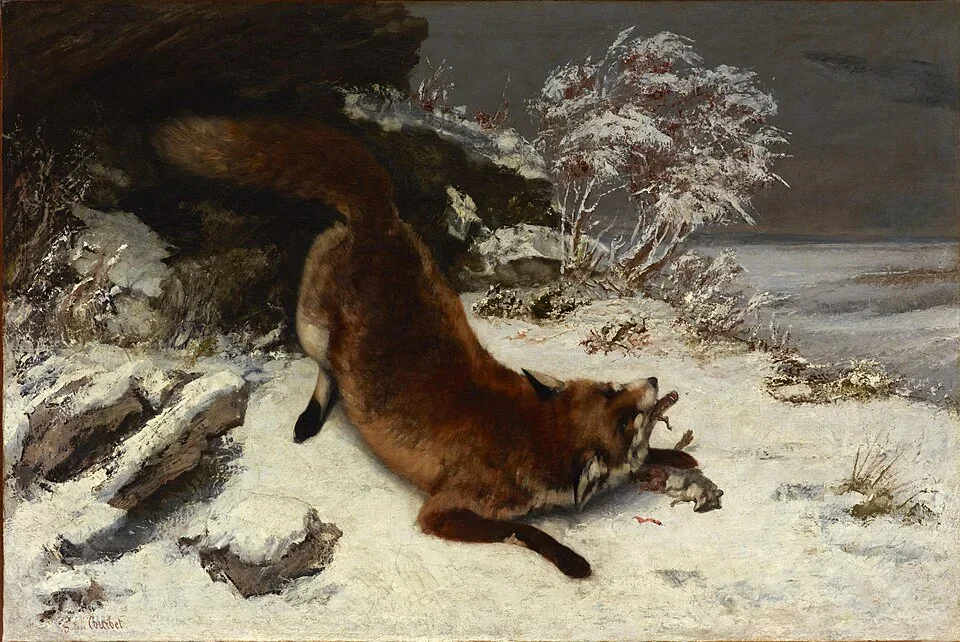
Fox in the Snow
The fox has just caught a rodent in the snow. Now it is crunching it, and there is blood on the white. That is the whole event. The picture lives in the contrast between the fox's coat, the red blood and the white snow. Courbet showed this at the Salon in Paris in 1861. He led the Realists and believed a painter should paint only what the eye can see. He turned away from the grand religious and historical scenes of his day.
Listen in the appGustave Courbet · Public domain
05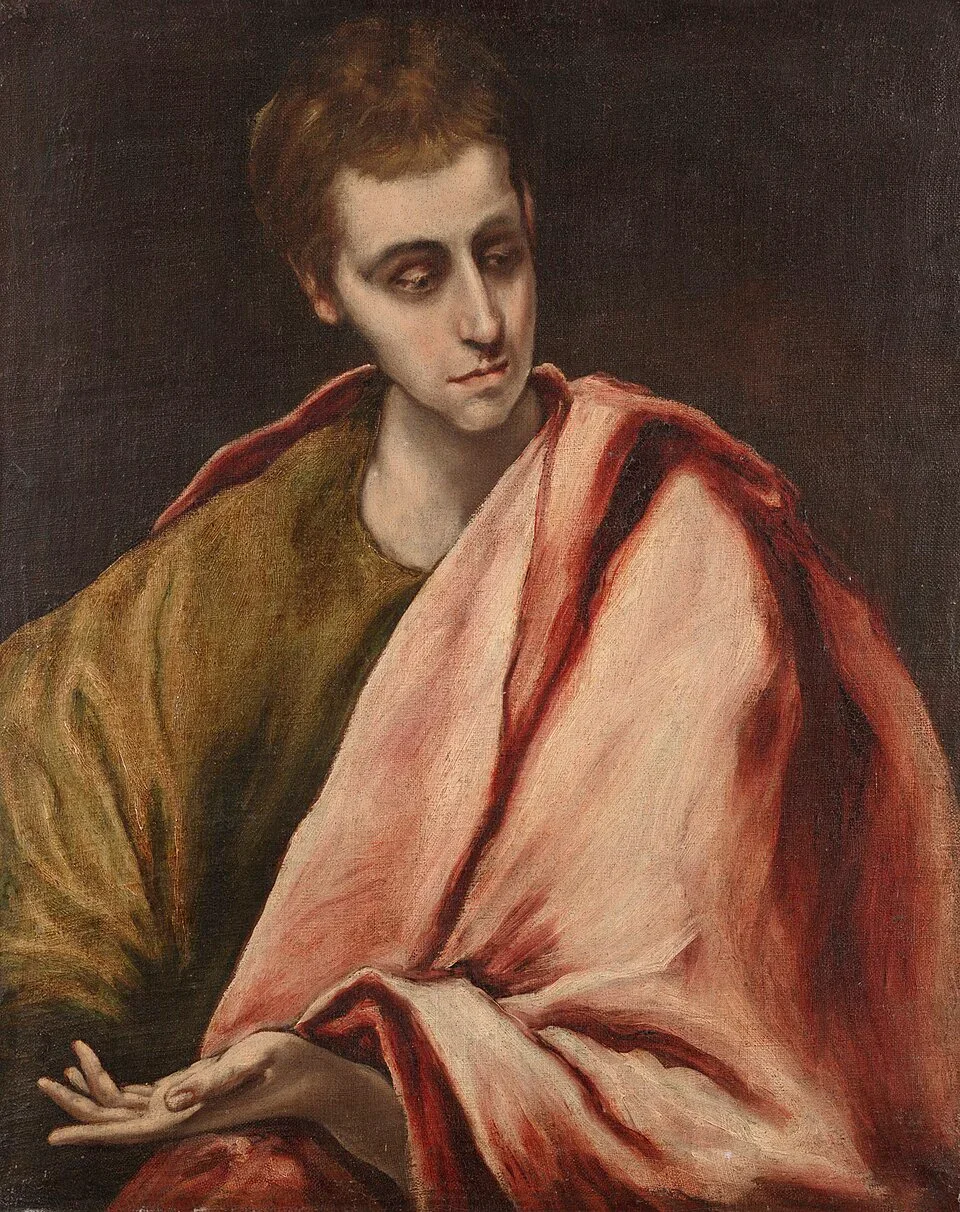
St. John
Nobody knows for certain what set of pictures this Saint John was painted for. For a long time it was taken for one of a group of apostles from a church in Almadrones. That group repeated models from other sets of apostles painted earlier in Toledo. But when the paintings from Almadrones were counted, not one of them showed Saint John. The connection was a mistake, and where this picture really came from is still unknown. The face has something of a harlequin about it, stubborn and, at the same time, almost hallucinated. The painter made it with help from his workshop between 1608 and 1614. In the upper right are two Greek letters, delta and theta, set there like a signature. El Greco signed his pictures in Greek, the language of the name he was born with, long after he had settled in Spain.
Listen in the appafter El Greco · Public domain
06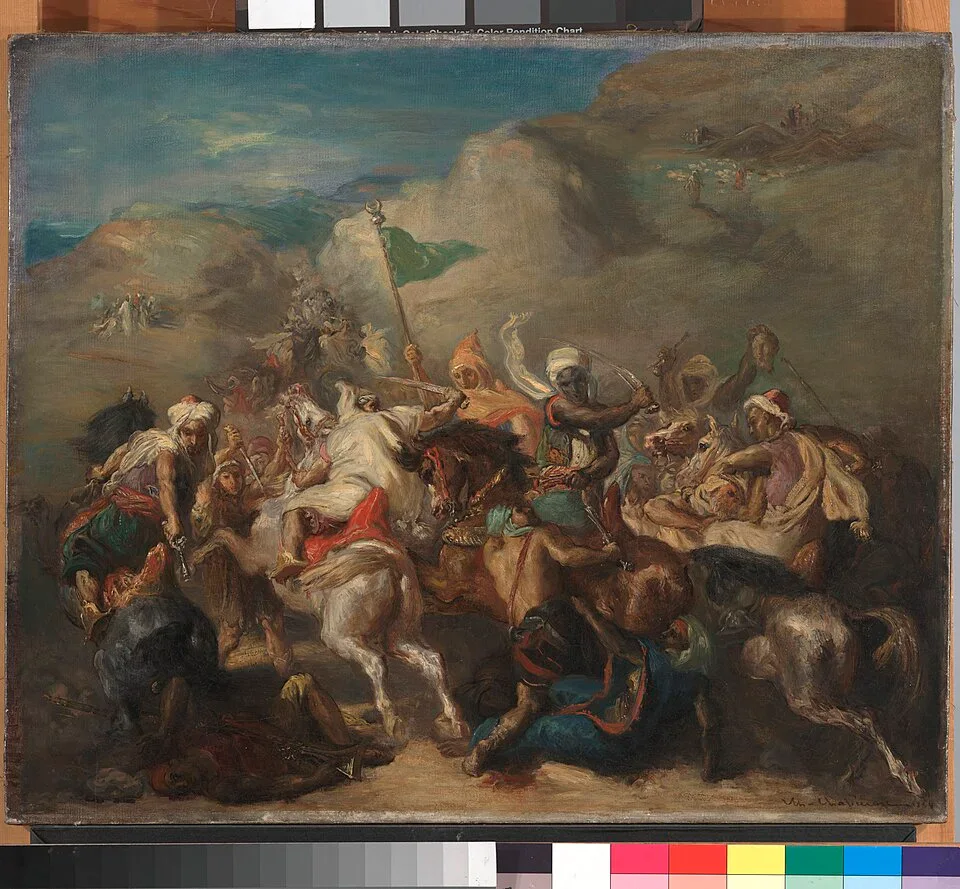
Battle of Arab Horsemen Around a Standard
Chassériau had just got back from Algeria when he painted this, working from sketches he made there. For the Moor warrior on the white horse at the left, he probably reused a rider from another of his own paintings. The center is dense, with soldiers and horses sketched close together in loose strokes. At the left, on the ground, lie a severed head and a corpse. The swords are bloody, and the horses show terror in their faces. For the people who first saw it, the subject would have been charged with political meaning. It reflected the violent French conquest and occupation of Algeria.
Listen in the appThéodore Chassériau · Public domain
07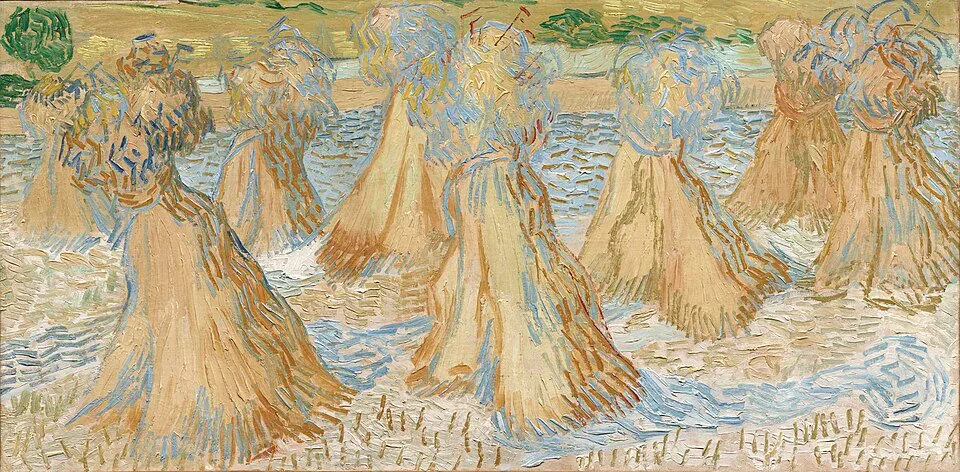
Sheaves of Wheat
Van Gogh came to Auvers to be looked after by a doctor, Paul Gachet, and he liked the place. Wheat fields became what he kept painting, thirteen of them in less than a month. This is one. What he was after was order. The sheaves are cut alike and set in a row, rising like towers against horizontal lines. Those lines run into an empty distance, and the whole thing looks more like wallpaper on a wall than a field. There is no sky, and the sheaves fill the whole picture. He used lavender blue for the shadows and for the glow at the tops of the sheaves. That makes the sun feel blinding and the heat suffocating. For all the gold, the painting seems filled with a sense of something menacing. Whether the series was meant for the doctor's house is not known.
Listen in the appVincent van Gogh · Public domain
08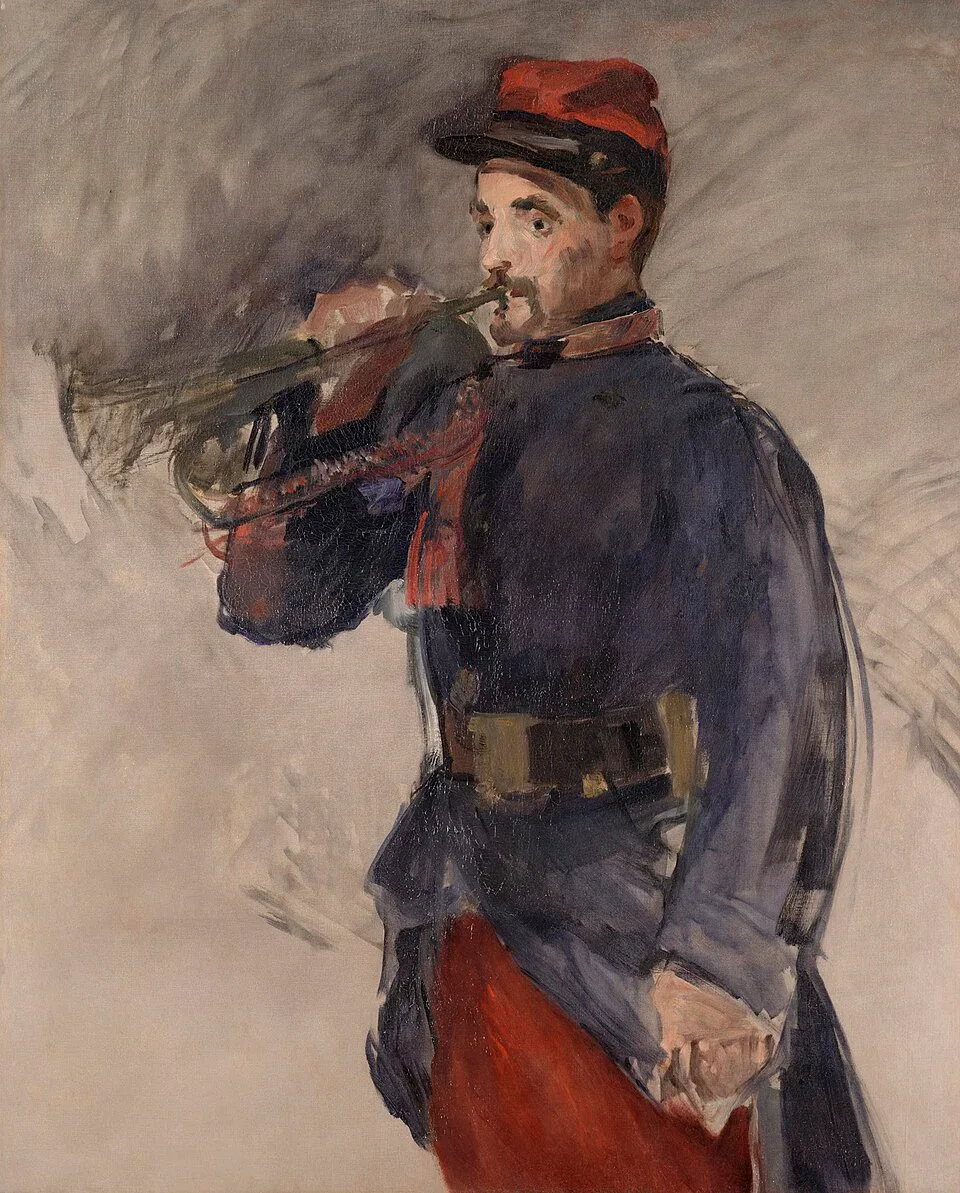
The Bugler
No one can say why he chose a soldier for this picture. A French infantryman fills almost the whole canvas against an undefined gray and beige background. He faces almost straight to the left, a brass bugle raised to his mouth. He wears a blue coat with a black belt, red trousers, and a red and black cap, and the canvas cuts him off at the thighs. The face got the most attention, built up in thin layers around the forehead, nose and cheekbones, the eyes wide open, the beard neatly kept. He is shown playing. He meant this for the Salon in Paris, the exhibition that mattered most to him. A medal at the Salon in 1881 meant his pictures no longer had to pass the jury, and that year he was admitted to the Legion of Honor. So in the autumn of 1882 he began two paintings for the next Salon, this bugler among them. He was already seriously ill and could hardly stand at his easel. Perhaps his friend, the military painter Henri Dupray, suggested the soldier. Dupray lent the uniform, the bugle, and the man who posed. Then the illness quickened, and Manet had to stop. When he died on the thirtieth of April 1883, one day before the Salon opened, the picture was still unfinished in his studio.
Listen in the appÉdouard Manet · Public domain
09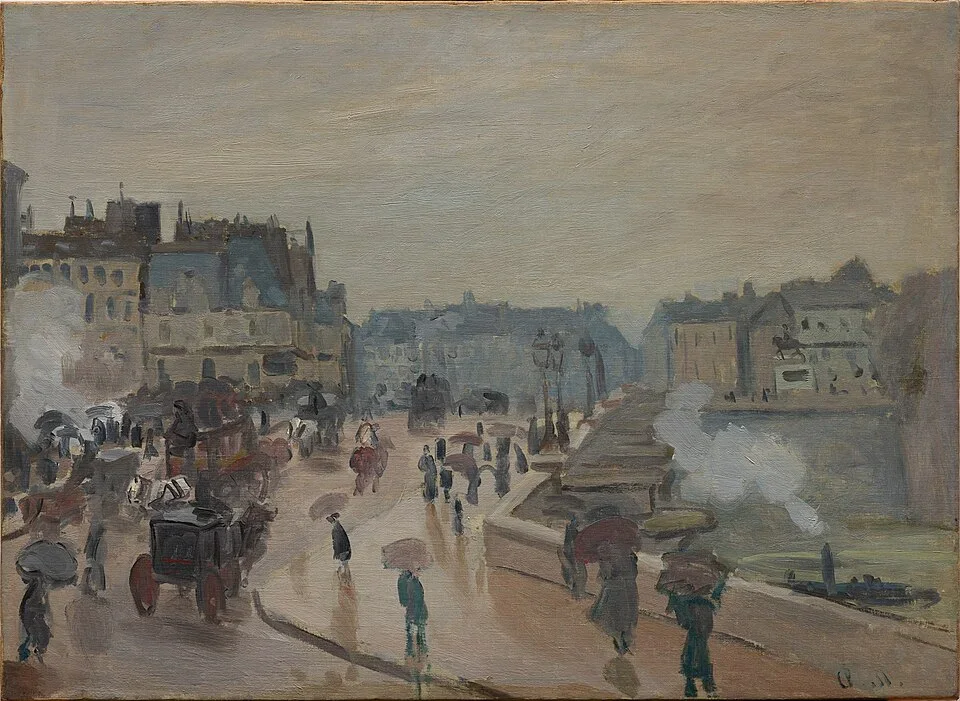
Le Pont Neuf
Rain falls on the Pont Neuf. Boats are moored on the Seine, others crossing the water, and people and carriages move over the bridge. The sky is gray, and the clouds have no shape. The landmarks are gone. The Panthéon is nowhere here, and neither is the church of Saint-Germain-l'Auxerrois. The crown prince's palace matters no more than the nameless houses beside it. The statue of Henry the Fourth, king of France, stands on the far bank of the Seine. It is smaller and farther away than in life, like a child soldier. Monet had painted this city before, from balconies and windows of the Louvre, with summer sun on its busy streets. Then he spent more than a year away, in Britain and the Netherlands, during the Franco-Prussian War. He came back in 1871 to strikes and unrest, and found Paris in despair. This is the only painting he made that year, probably from a rented room or a friend's apartment. The people crossing here have no features to tell one from another. On the wet cobblestones they seem to glide rather than walk.
Listen in the appClaude Monet · Public domain
10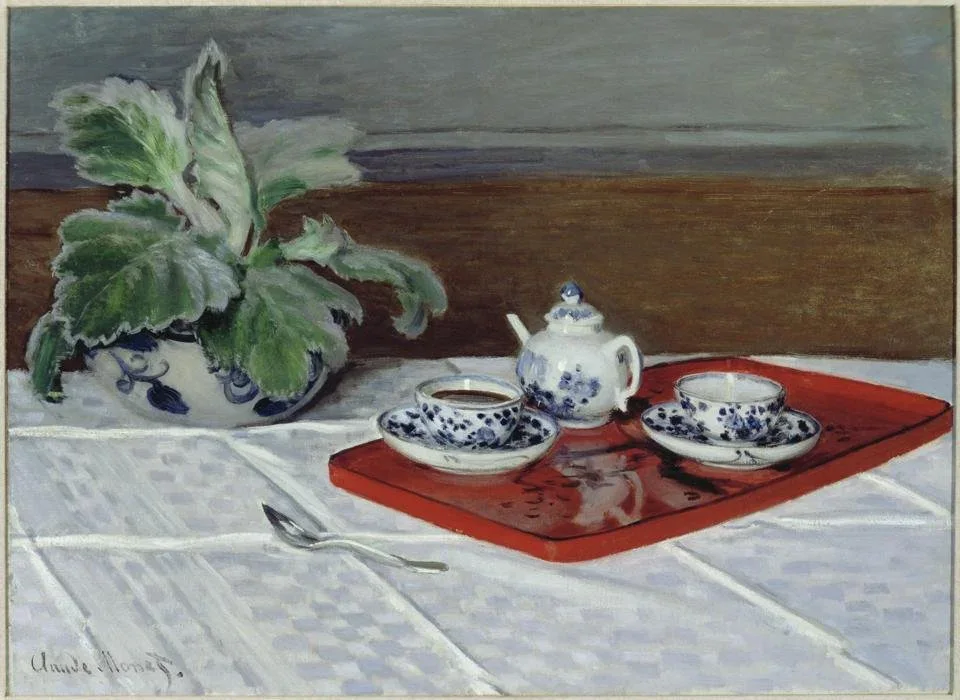
The Tea Service
There is a small spoon in this still life, its metal painted more carefully than anything behind it. The reflections are worked out closely, while the background is kept brief. All the fine painting is held in the middle, where the tea service sits on its lacquered tray. The white cloth folds forward, its lines giving the sense of depth. The picture is built in three layers. The whites are in front, the service and the greens in the middle, the background behind. The porcelain and the velvety sage leaves all sit in that middle band, and the careful painting stays there too. In the autumn of 1871 Monet came back from Holland with his wife Camille and their son Jean. The troubles of the Commune were still recent in Paris. They wanted somewhere quiet, and a rent they could manage. Manet put him in touch with someone who had a house to rent at Argenteuil. It had a small room attached, where he could set up a studio. At Argenteuil he worked mostly outdoors. This is one of the few still lifes he made indoors.
Listen in the appClaude Monet · Public domain
- 11
Bonneville, Savoy
J. M. W. Turner · 1803
- 12
Lise Sewing
Pierre-Auguste Renoir · 1866–1868
- 13
"Untitled" (Perfect Lovers)
Unknown Artist · 1987–1990
- 14
Cinderella at the Kitchen Fire
Thomas Sully · 1843
- 15
Woman Showing Her Portrait
Louis-Léopold Boilly · c. 1790
- 16
Morning after a Heavy Gale, Weather Moderating, the Ramsgate Life-Boat and Pilot Boat Going to the Assistance of an East Indiaman Foundering on the North Sandhead of the Goodwin Sands
Edward William Cooke · 1857
- 17
The Abduction of Europa
Jean-Baptiste Marie Pierre · 1750
- 18
Hercules
Albrecht Durer · 1496–1497
- 19
Breton Women Attending a Pardon
Émile Bernard · 1892
- 20
Bridge at Pont-Aven
Émile Bernard · 1891
- 21
The Lady Riding and the Landsknecht
Albrecht Durer · c. 1497
- 22
Winter
Berthe Morisot · 1880
- 23
The Salon
Émile Bernard · 1890
- 24
Ballet Dancers on the Stage
Edgar Degas · 1883
- 25
Lighthouse Hill
Edward Hopper · 1927
- 26
Interior (Madame Vuillard and Grandmother Roussel at L'Étang-la-Ville)
Édouard Vuillard · c. 1902
- 27
Celtic Tale
Paul Sérusier · 1894
- 28
Five Soldiers and a Turk on Horseback
Albrecht Durer · c. 1495
- 29
Man of Sorrows by the Column
Albrecht Durer · 1509
- 30
The Entombment
Albrecht Durer · 1512
- 31
Cardinal Albrecht of Brandenburg - The Small Plate
Albrecht Durer · 1519
Dallas Museum of Art
Frequently asked questions
How much does the guide cost?
Free app download. Free until 1 January. Listed guide price: $0.99. Audio guide only. Venue admission is separate.
Can I listen without internet?
Yes. Download the guide’s audio, images, and maps in the app before your visit. Your downloaded content is then available offline.
Can I listen in my language?
In English for now. More languages soon.
Do I need to follow a schedule?
No. This is a self-guided experience. Choose your stops, pause whenever you like, and return to a story at your own pace.
Which artworks are in the Dallas Museum of Art audio guide?
31 artworks, including The Icebergs (Frederic Edwin Church), The Fountain of Vaucluse (Thomas Cole), Apollo and Diana Attacking the Children of Niobe (Jacques-Louis David), Fox in the Snow (Gustave Courbet), St. John (El Greco), Battle of Arab Horsemen Around a Standard (Théodore Chassériau), Sheaves of Wheat (Vincent van Gogh), and The Bugler (Édouard Manet). The full list is on this page.
Is this the museum’s official audio guide?
No. Stanza is an independent audio guide app and is not affiliated with Dallas Museum of Art. Museum admission is separate.
At your own pace
Explore Dallas Museum of Art.
Download Stanza, then search for “Dallas Museum of Art”.
Free app download · Guide price shown in the app
Keep exploring
Audio guides — United States
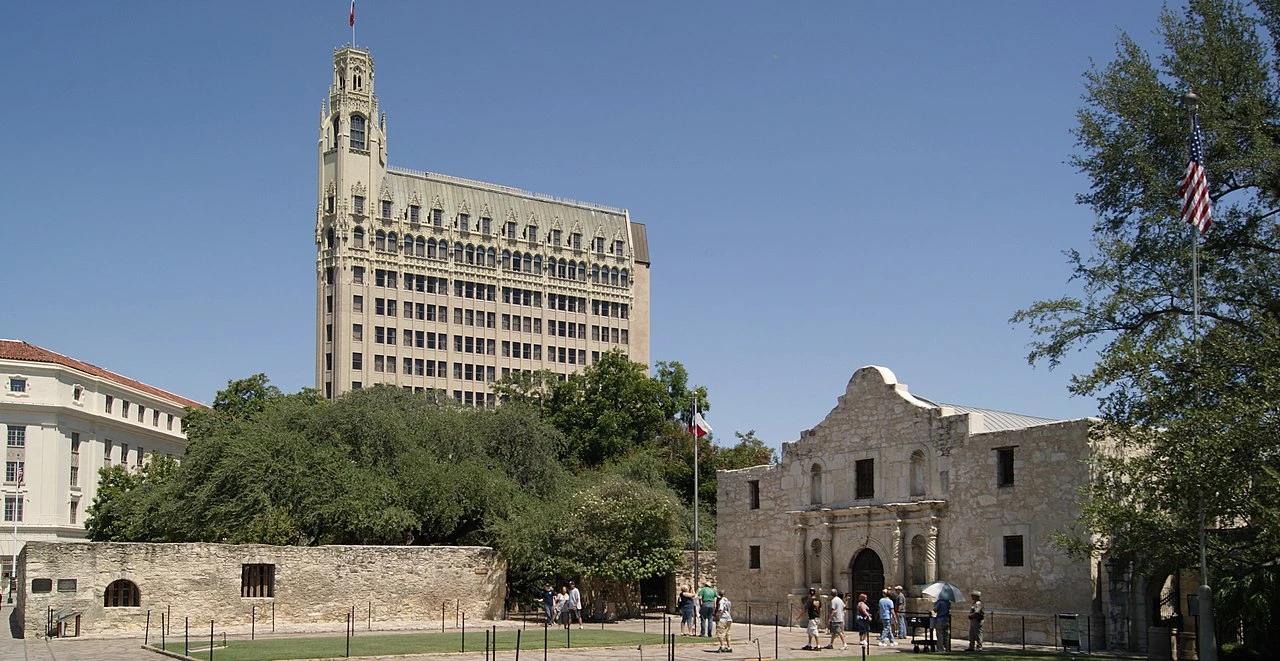
San Antonio
The Alamo
Content & sources
Zygmunt Put Zetpe0202 · CC BY-SA 4.0
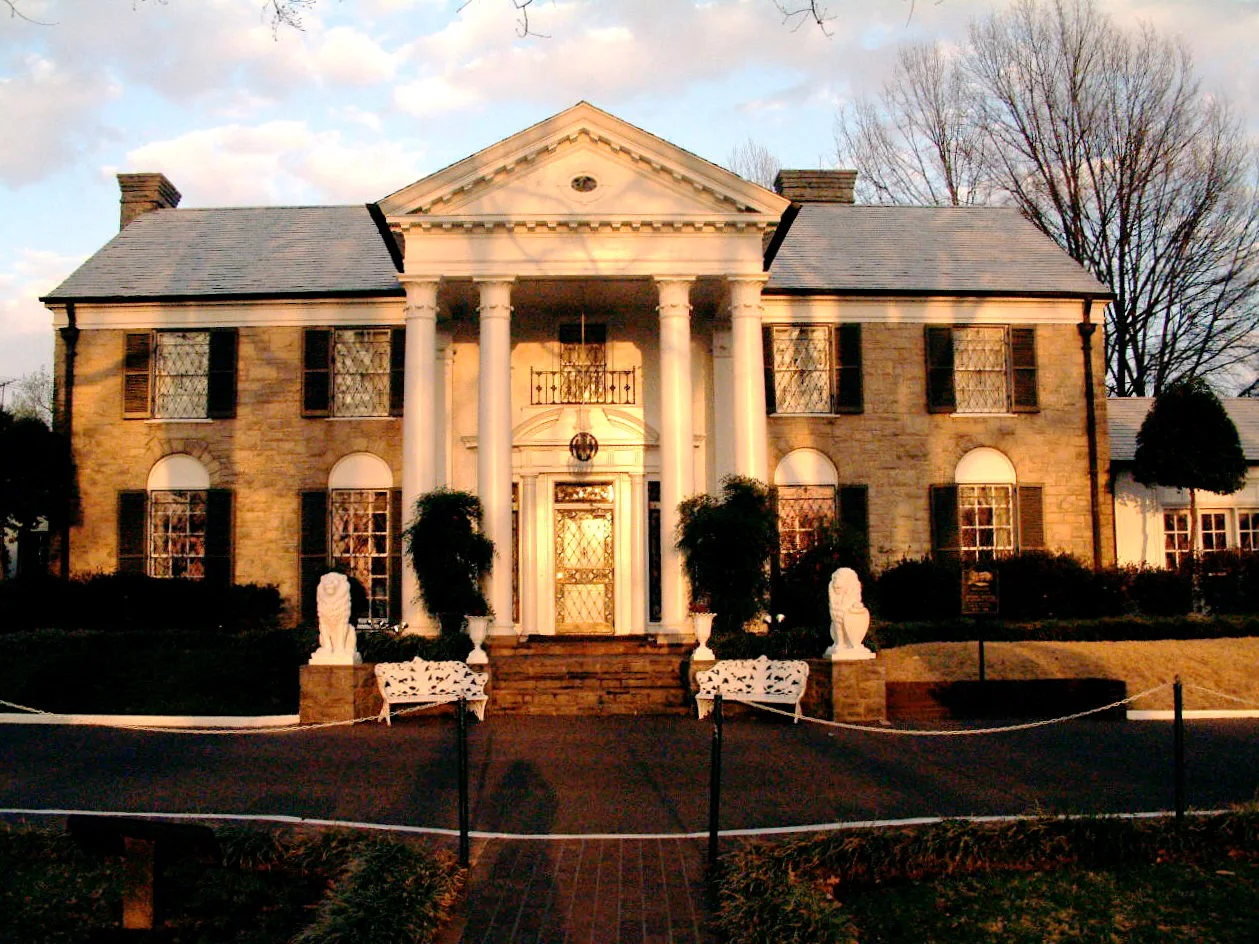
Memphis
Graceland
Content & sources
User:Maha · CC BY 2.5
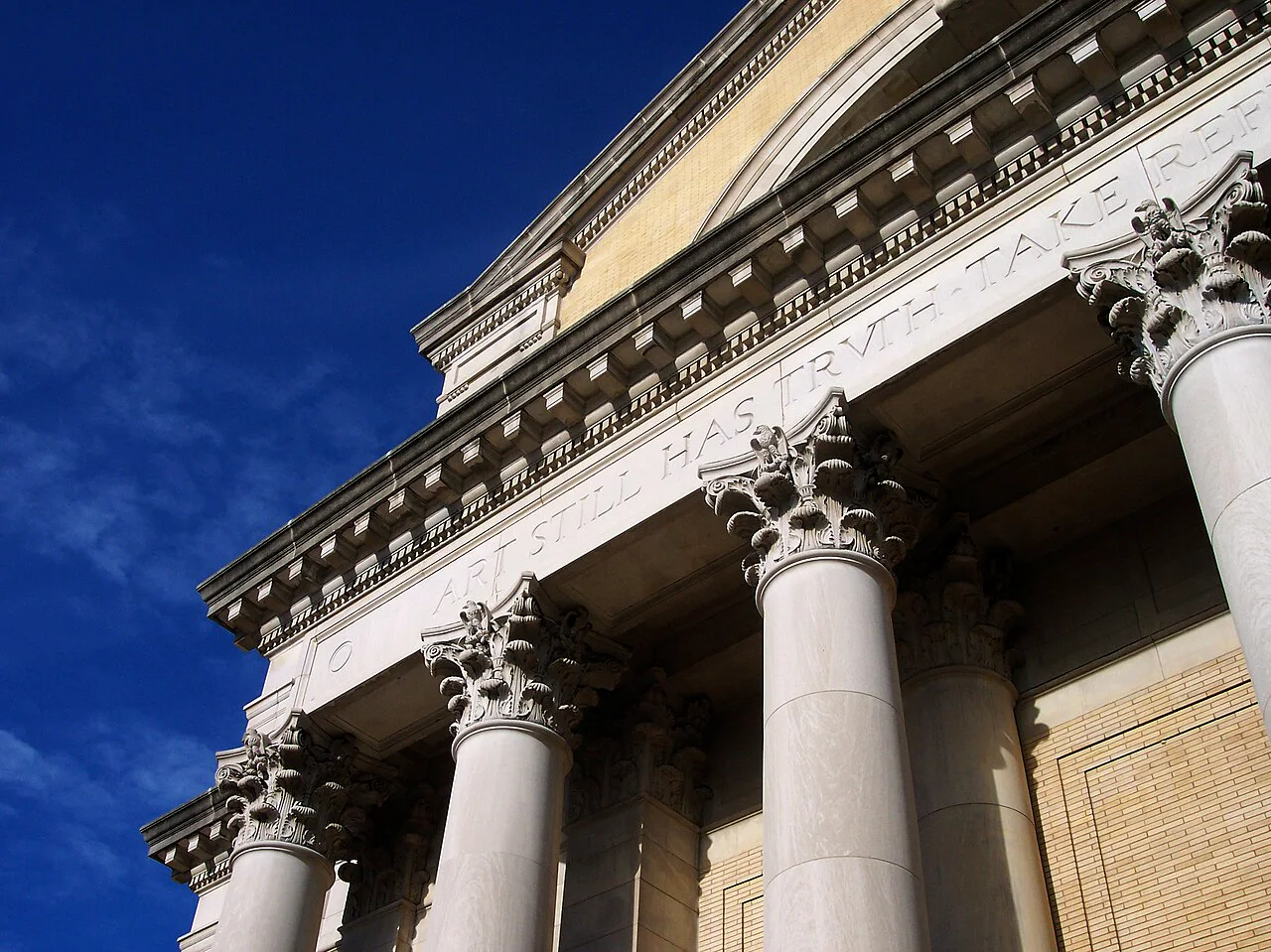
St. Louis
Saint Louis Art Museum
Content & sources
Photo: Colin.faulkingham~commonswiki · Public domain
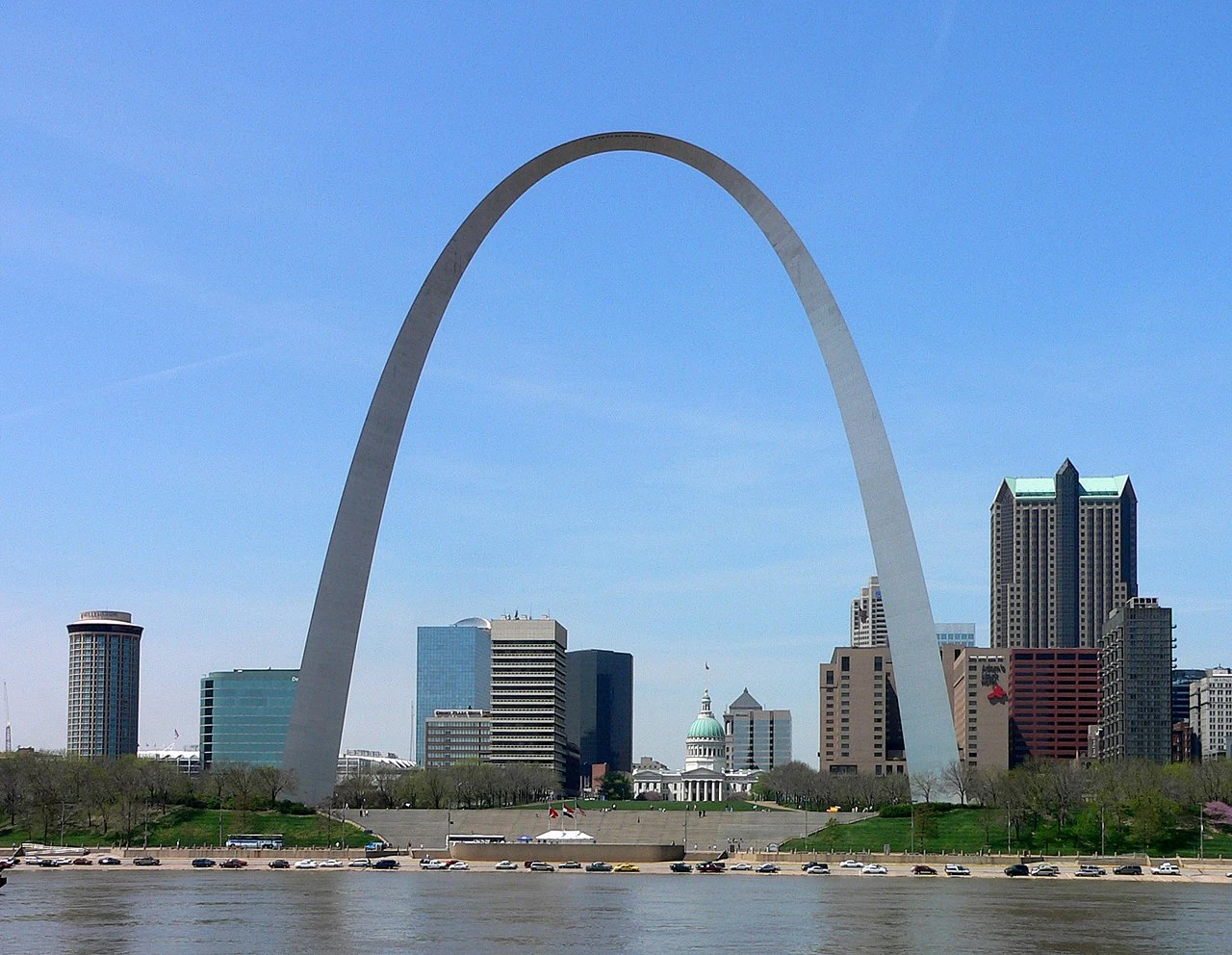
St. Louis
Gateway Arch
Content & sources
[https://www.flickr.com/photos/11399912@N00 B0iwehijro2i0- ] `1l]] from Davis, CA, USA · CC BY 2.0
Art museums
More art museum audio guides
St. Louis · 38 artworks
Saint Louis Art Museum
Content & sources
Photo: Colin.faulkingham~commonswiki · Public domain
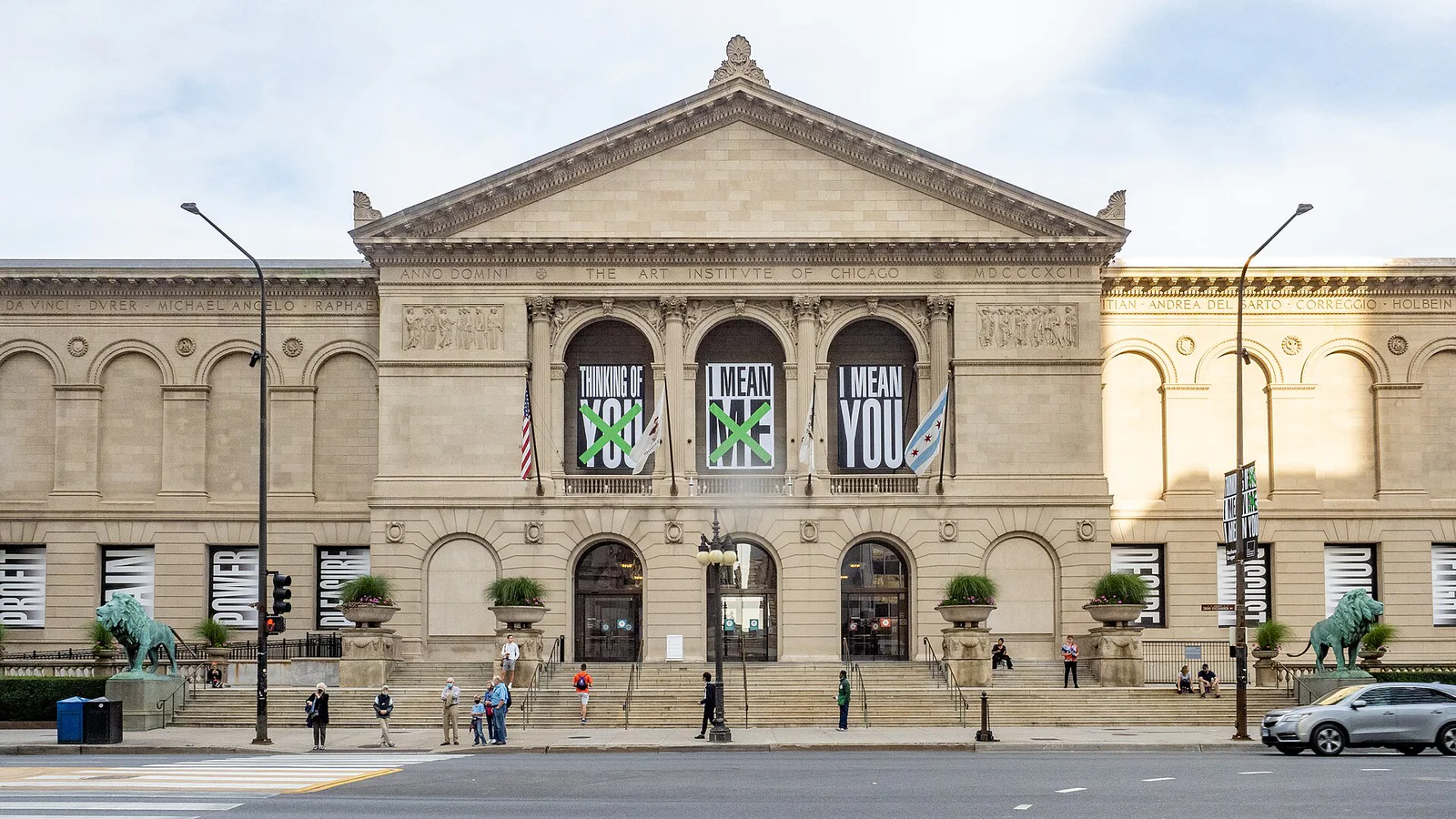
Chicago · 67 artworks
Art Institute of Chicago
Content & sources
ajay_suresh · CC BY 2.0
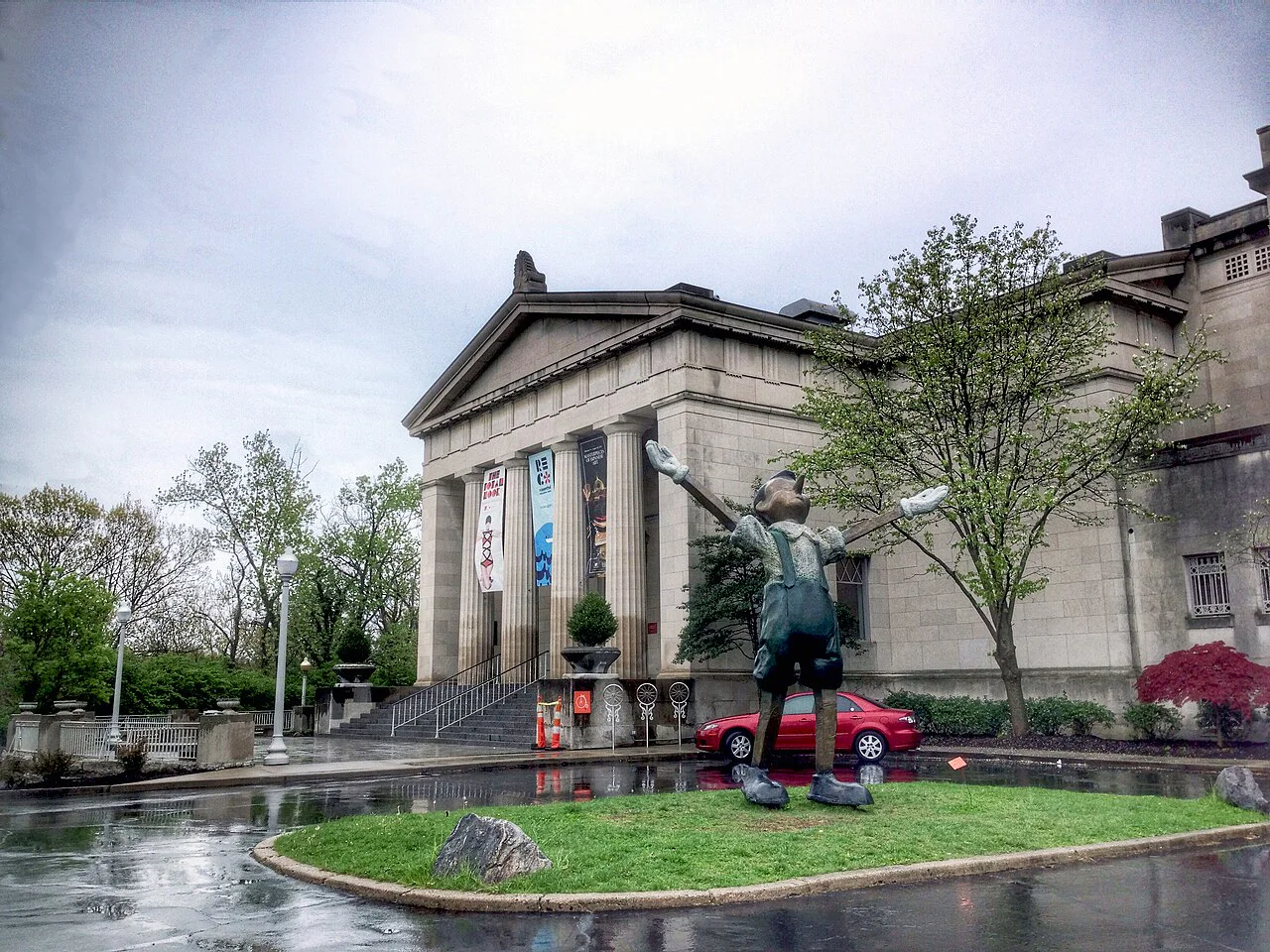
Cincinnati · 24 artworks
Cincinnati Art Museum
Content & sources
5chw4r7z on Flickr · CC BY-SA 2.0
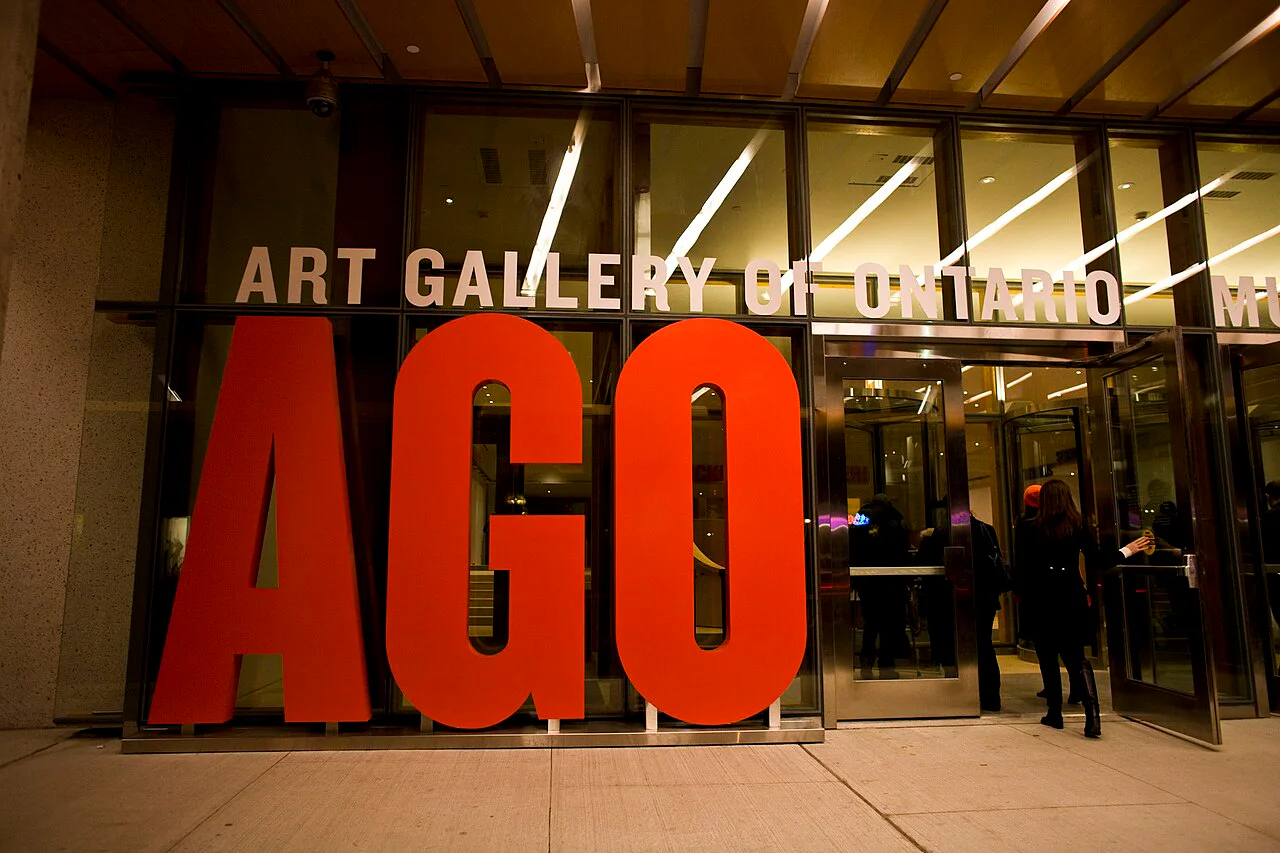
Toronto · 21 artworks
Art Gallery of Ontario
Content & sources
Owen Byrne from Ottawa, Canada · CC BY 2.0
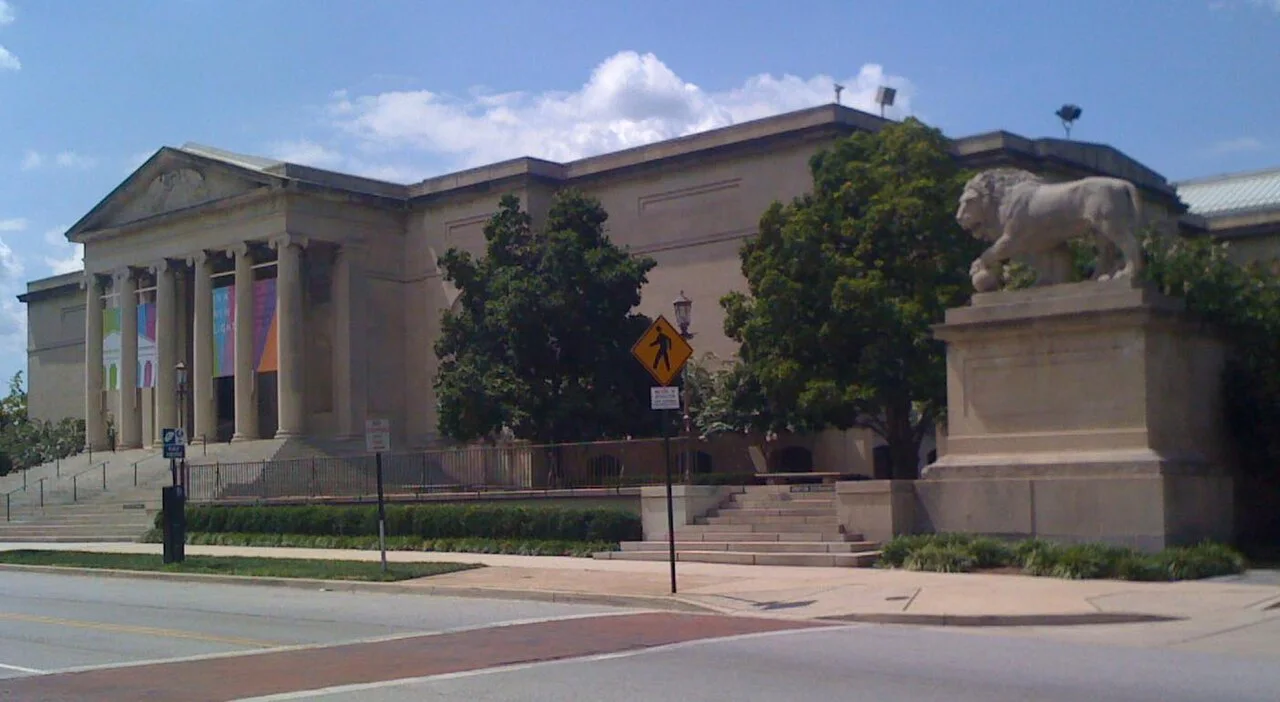
Baltimore · 19 artworks
Baltimore Museum of Art
Content & sources
«Marylandstater» «reply» at English Wikipedia. · Public domain
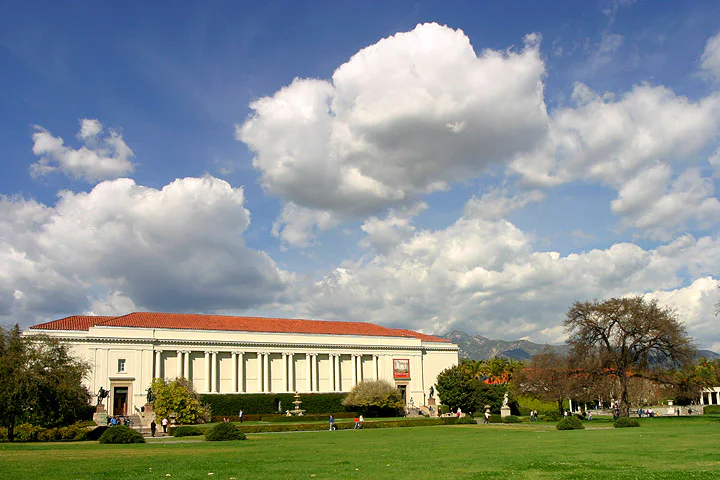
San Marino · 12 artworks
Huntington Library
Content & sources
By Aaron Logan · CC BY 1.0