Stanza · Audio guide
The AlamoAudio guide
A place to remember. A story to take with you.
The Alamo is a historic Spanish mission and fortress compound that served as the site of the 1836 Battle of the Alamo. It is now a preserved museum and monument commemorating the Texas Revolution.
Download Stanza, then search for “The Alamo”.
About the tour
One guide. Your kind of visit.
The Alamo is a historic Spanish mission and fortress compound that served as the site of the 1836 Battle of the Alamo. It is now a preserved museum and monument commemorating the Texas Revolution.
Ready when you are.
- 01Get the free Stanza app.
iOS & Android
- 02Find your guide.
“The Alamo”
- 03Download before you go.
Works offline
Audio guide / 16 narrated stops
Inside the guide
Get to know a few of the stories before you go. Open a stop to read more.
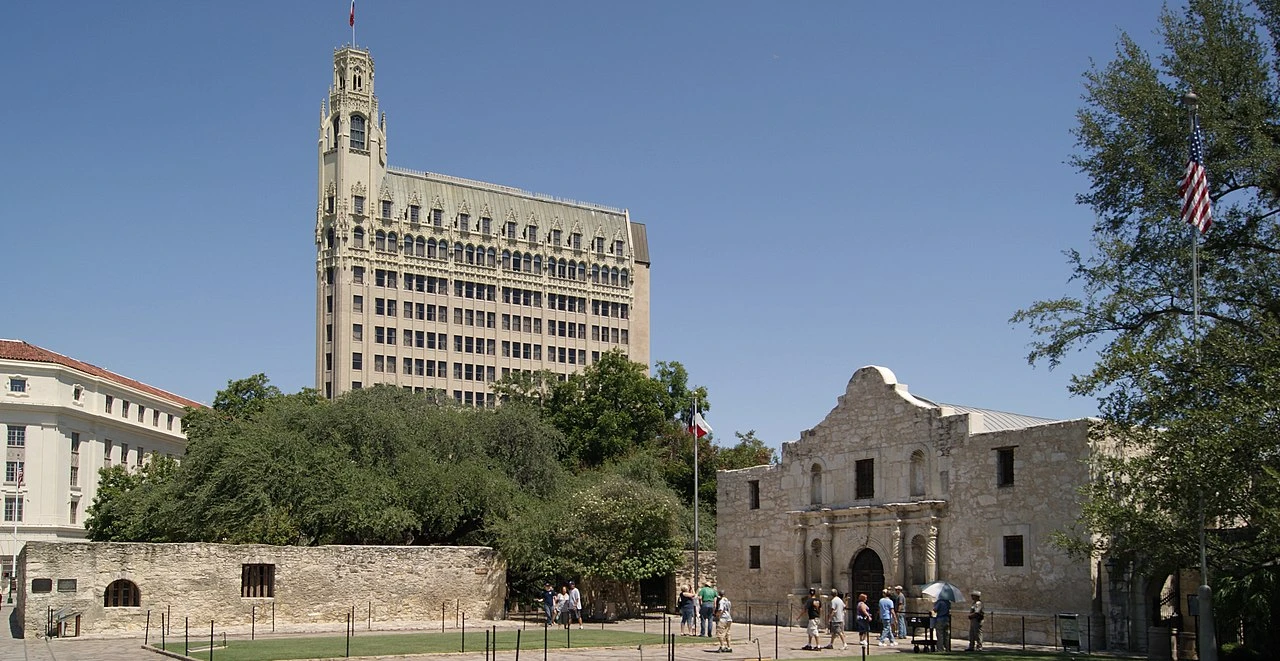
01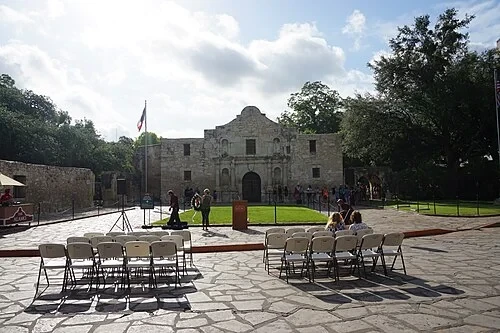 Alamo Plaza and the Gateway to HistoryThe Alamo Mission
Welcome to one of the most significant historical sites in North America. Originally established in 1718 as Misión San Antonio de Valero, this site was founded by Father Antonio de San Buenaventura y Olivares. The structure was never intended to be a fortress; it was a religious mission aimed at converting local indigenous populations to Christianity. However, the mission’s design included massive four-foot-thick limestone walls, which provided unexpected protection when the site’s purpose shifted from religion to defense. In 2015, the Alamo and the four other San Antonio missions were collectively designated as a UNESCO World Heritage site, recognizing their cultural and architectural importance. While many know the Alamo for the battle that took place in 1836, the history of this ground stretches back much further, beginning with the Franciscan friars and the Coahuiltecan people. These thick stone walls set the stage for a conflict that would eventually define the future of Texas. As you walk through the grounds, you are walking on land that has served as a mission, a military barracks, and a place of memorial for over three centuries.
Photo: Michael Barera · CC BY-SA 4.0
02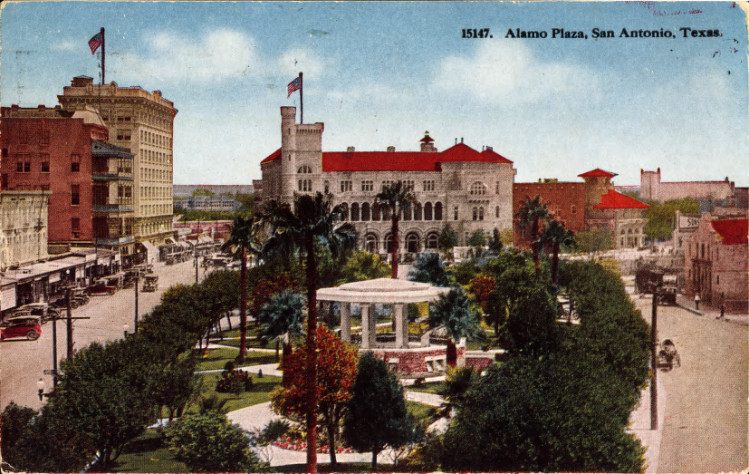 Alamo Plaza and the Gateway to HistoryThe Historic Plaza
Looking at historic depictions of the plaza, it becomes clear how much this space has changed since its inception. What was once a remote Spanish mission sitting on a five-acre compound has been swallowed by the growth of a major modern city. The evolution of this ground followed a series of transitions. Initially, it served as a religious center for the Spanish Franciscan order. By the early 1800s, it transitioned into a military fortress, occupied by both Mexican and Texian forces. Following the famous battle, the site and its surrounding plaza were repurposed, becoming a bustling commercial district filled with stores, warehouses, and eventually hotels. In the late 19th and early 20th centuries, a concentrated effort began to reclaim and preserve the area, leading to its current status as a historic shrine. This journey from a frontier outpost to a central urban hub reflects the broader history of Texas itself—shifting from colonial rule to independence and eventually statehood. Today, the plaza serves as a quiet space of reflection, bordered by the tall buildings of downtown San Antonio that now rise where mission walls once stood.
University of Houston Digital Library · Public domain
03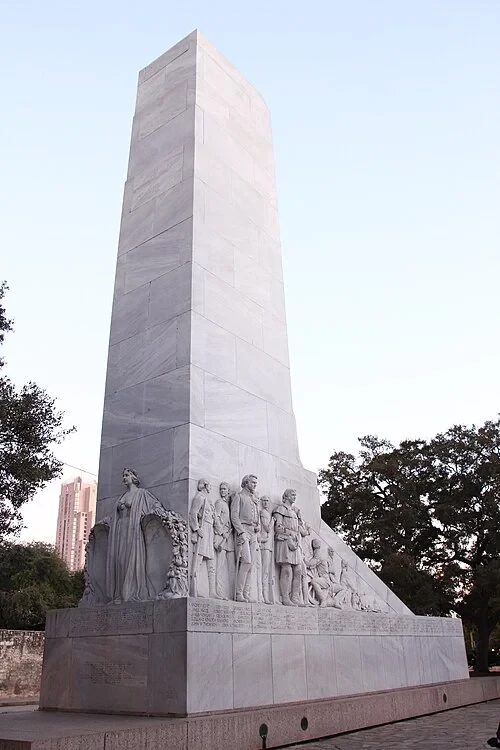 The Alamo Cenotaph: Spirit of SacrificeThe Cenotaph
Known as "The Spirit of Sacrifice," this massive monument stands sixty feet tall and is crafted from white marble. It was erected to honor the memory of the approximately 189 defenders who perished during the battle on March 6, 1836. As you look at the sides of the structure, you can see figures of the defenders carved in a way that makes them appear to be emerging directly from the stone. These figures represent the wide-ranging backgrounds of the men who fought here; they were not just local residents, but individuals from across the United States and several European countries, all united by a single cause. The names of the fallen are inscribed on the base, providing a permanent record of those who stood their ground against the Mexican Army. Designed by sculptor Pompeo Coppini and completed for the Texas Centennial in the 1930s, the monument is positioned near the location where the funeral pyres of the defenders were believed to have been placed. The sheer scale of the Cenotaph ensures that the stories of these individuals remain a central part of the visitor experience, towering over the plaza they once defended.
Listen in the appLoadmaster (David R. Tribble) This image was made by Loadmaster (David R. Tribble). Email the author: David R. Tribble Also see my personal gallery at Google Photos · CC BY-SA 3.0
04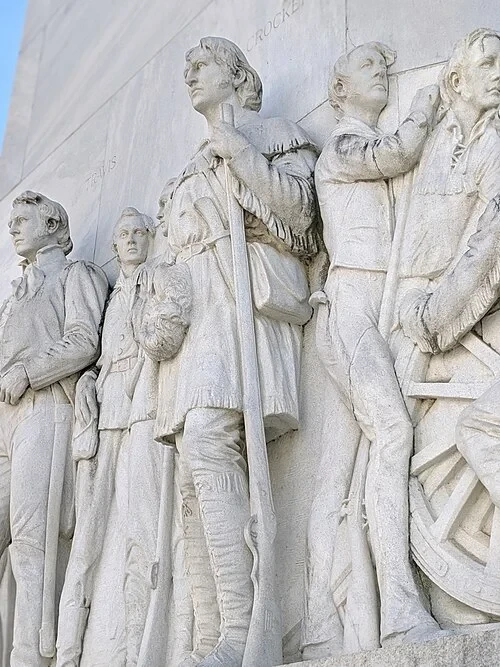 The Alamo Cenotaph: Spirit of SacrificeDavy Crockett Statue
This figure depicts David Crockett, perhaps the most legendary individual associated with the defense of the Alamo. He is easily recognized by his iconic buckskin fringe and coonskin cap, items that have become synonymous with his frontier persona. Before arriving in Texas, Crockett was a well-known U.S. Congressman from Tennessee. His departure for the West was marked by a famous, defiant message to his political constituents: he told them they could go to hell, and he would go to Texas. He arrived at the Alamo with a group of volunteers, bringing with him his reputation as a sharpshooter and a man of the people. Notice the long flintlock rifle resting in his hands, a primary tool for a frontiersman of the 1830s. While popular culture often focuses on his mythic status, his presence here was a significant morale boost for the other defenders during the thirteen-day siege. Crockett was nearly fifty years old at the time of the battle, making him one of the older men among the group. His story remains a central pillar of the site's history, representing the many volunteers who traveled long distances to join the Texian cause.
Listen in the appEden, Janine and Jim from New York City · CC BY 2.0
05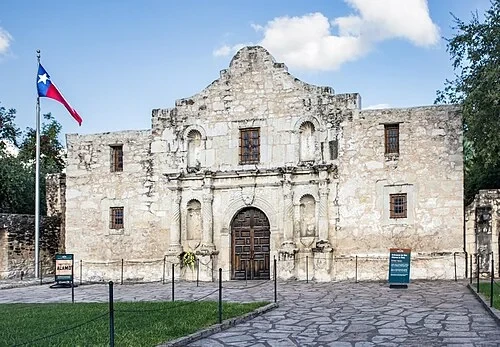 The Chapel Facade: The Shrine of Texas LibertyThe Chapel Facade
The stone building before you is the chapel, the heart of the Alamo compound. While its silhouette is iconic, many of its most famous features were not present during the 1836 battle. The distinctive curved top of the facade was a later addition made by the U.S. Army in 1850 when they used the building as a supply depot. Originally, the facade would have appeared much flatter and more jagged. Construction on this stone church began in 1744, intended to be a grand structure with a dome and twin bell towers. However, due to recurring structural collapses and a chronic lack of funds, these ambitious architectural features were never completed. For much of its early history, the chapel stood as an unroofed shell. During the siege, the interior was filled with earth to create a ramp for cannons, turning a place of worship into a makeshift gun platform. The weathered limestone and incomplete carvings serve as a visual record of the mission’s struggle to thrive on the Spanish frontier. Despite the modifications and the passage of time, the facade remains the most recognizable feature of the site, though its current appearance is a mix of original Spanish colonial masonry and 19th-century military engineering.
Listen in the appRenelibrary · CC BY-SA 4.0
06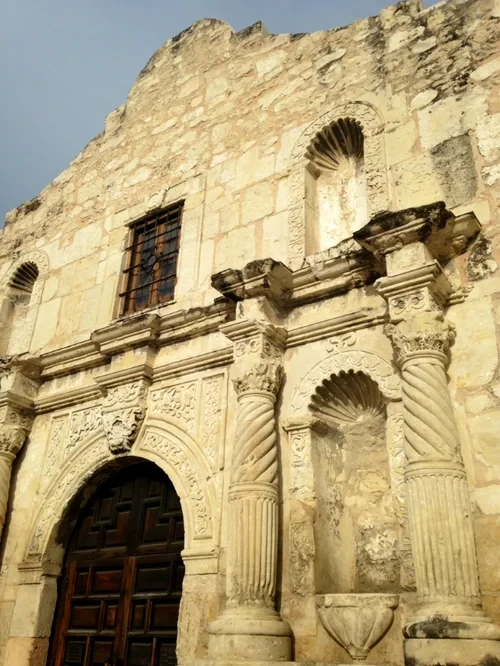 The Chapel Facade: The Shrine of Texas LibertySpanish Colonial Details
Closer inspection of the chapel entrance reveals beautiful examples of Spanish Colonial Baroque architecture. Most notable are the spiral Salomonic columns flanking the main door. These columns, with their twisting, vine-like patterns, were a common feature in Spanish churches of the era. You will also notice several empty niches carved into the limestone. In the mid-18th century, these niches were intended to hold statues of Catholic saints, such as Saint Anthony and Saint Dominic. These religious icons were meant to serve as visual teaching tools for the Coahuiltecan tribes whom the Franciscan friars sought to convert to Christianity. The presence of such fine decorative work on the remote Texas frontier was a significant undertaking, requiring skilled artisans and many years of labor. The carvings represent the mission's original purpose as a community where indigenous people would live, work, and adopt Spanish culture and faith. Although the statues are long gone and the stone has been worn smooth by centuries of sun and rain, these architectural details remain. They provide a vital link to the site's early identity as Misión San Antonio de Valero, reminding visitors that before it was a battlefield, it was a center of spiritual and cultural exchange.
Listen in the appSozanetta · CC BY-SA 4.0
07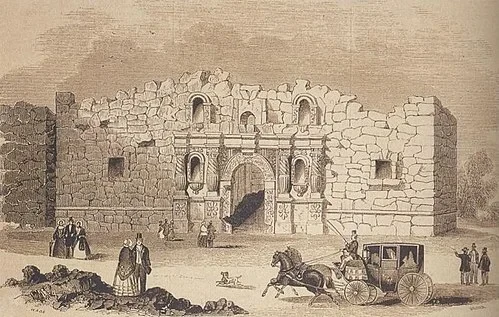 The 13-Day SiegeSiege of the Alamo
Historical engravings help illustrate the landscape during the thirteen-day siege that gripped this compound in early 1836. However, the survival of the buildings we see today was never guaranteed. By the 1850s, the Alamo had fallen into a state of crumbling ruin and was being used as a commercial warehouse. The story of its preservation is often called the "Second Battle of the Alamo." In the early 20th century, a fierce debate erupted over the future of the site. Two determined women, Adina De Zavala and Clara Driscoll, led the fight to save the remaining structures from being demolished to make way for a hotel. De Zavala was so committed that she famously barricaded herself inside the Long Barrack for three days to prevent its destruction. Their efforts eventually led to the state purchasing the property and entrusting it to the Daughters of the Republic of Texas for many decades. This preservation movement transformed the site from a derelict group of buildings into a protected historic shrine. Without their intervention, the plaza today would likely be occupied by modern commercial structures rather than the historic limestone walls that continue to draw millions of visitors.
Listen in the appUnknown author · Public domain
08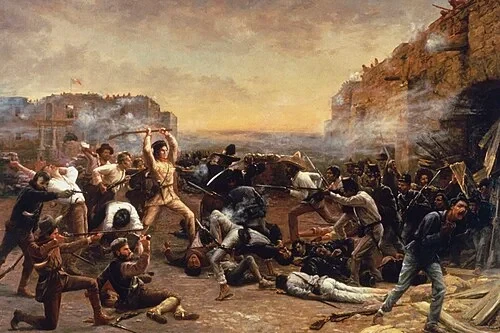 The Battle of the Alamo: The Final StandBattle of the Alamo
The scene depicted here captures the intense and bloody conclusion of the siege. In the early morning hours of March 6, 1836, General Santa Anna ordered a final predawn assault on the compound. While the siege had lasted thirteen days, the actual battle was remarkably brief, lasting only about ninety minutes. The scale of the struggle was heavily lopsided; the Mexican Army consisted of several thousand soldiers, while the Texian defenders numbered fewer than two hundred. The artwork uses dense smoke and chaotic movement to convey the confusion of the hand-to-hand combat that took place once the Mexican forces breached the outer walls. Because the battle happened in the dark, the flash of muskets and the sounds of bugles were the primary indicators of where the fighting was heaviest. Every defender within the walls was killed in the fighting, while a small number of non-combatants, mostly women and children, were spared and later released to spread word of the fall. The brutality of this short engagement galvanized the remaining Texian forces, turning the phrase "Remember the Alamo" into a rallying cry that would echo through the rest of the revolution. This visual representation serves as a contrast to the quiet, respectful atmosphere found on the grounds today.
Listen in the appRobert Jenkins Onderdonk · Public domain
09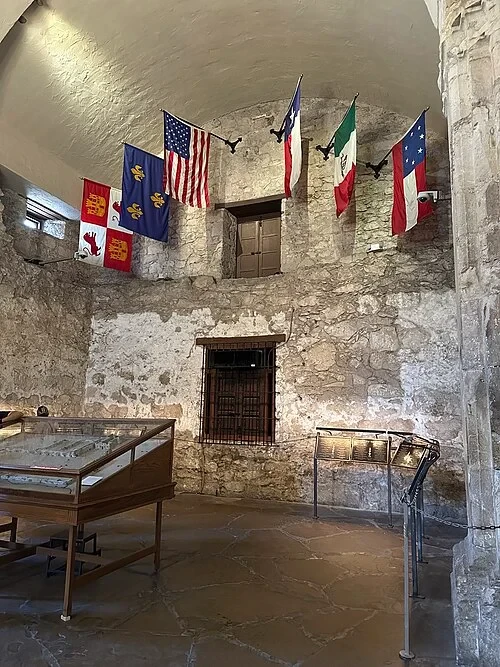 Inside the Shrine: Sacred SilenceThe Shrine Interior
Entering the interior of the chapel requires a move toward quiet respect. This space is managed as a place of reverence dedicated to the memory of those who fell here. The air is cool and the light is dim, filtered through the thick limestone walls that provided the final, desperate shelter for the defenders during the last moments of the battle. Look up at the walls to see a series of flags hanging from the ceiling. These banners represent the different groups and nations that have been involved in the long and complex history of Texas, from Spanish colonial interests to the early pioneers and the Mexican government. The interior remains relatively empty, allowing the massive scale of the masonry to speak for itself. You can see the rough texture of the stone and the simple, functional architecture that characterizes Franciscan mission design. This was the most secure building in the compound, and it was here that the final stand was made. Today, visitors are asked to remain silent and remove their hats, honoring the tradition of the chapel as a site of remembrance. The silence inside offers a connection to the events of 1836, far removed from the busy city streets just outside the doors.
Listen in the appPhoto: Gatorfan252525 · CC BY-SA 4.0
10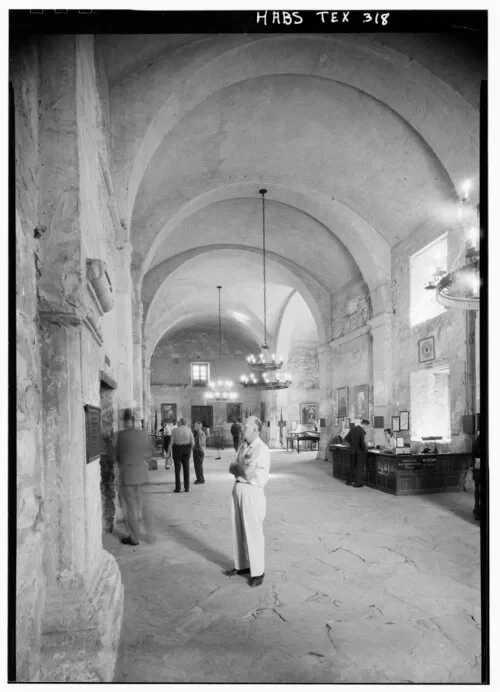 Inside the Shrine: Sacred SilenceThe Nave
Detailed architectural documentation, such as the 1961 Historic American Buildings Survey (HABS), has been essential in unraveling the chapel’s complex history. These surveys help historians distinguish between the original 18th-century Franciscan design and the later modifications made for military use. The nave, or the central part of the church, is characterized by its vaulted ceiling and structural simplicity. Originally, the Franciscans planned for a much more elaborate interior, but what remains is a representation of the rugged conditions of the Texas frontier. The thick walls and rounded arches are typical of Spanish colonial mission architecture, designed for durability and thermal mass to keep the interior cool in the summer. When the building was repurposed as a fort, many of its religious features were removed or altered. The HABS project utilized photography and measured drawings to preserve a record of these structural details before modern restoration efforts began. By studying these documents, we can see how the space was divided into different rooms during the siege, serving as both a powder magazine and a final defensive position. The nave's current state is a carefully preserved balance between its identity as a place of worship and its role as a historic fortress.
Listen in the appJack Boucher · Public domain
The Alamo
Frequently asked questions
How much does the guide cost?
Free app download. Listed guide price: $3.99. Guide price shown in the app. Audio guide only. Venue admission is separate.
Can I listen without internet?
Yes. Download the guide’s audio, images, and maps in the app before your visit. Your downloaded content is then available offline.
Can I listen in my language?
Stanza supports 15 languages. Check the app for the languages available for this guide.
Do I need to follow a schedule?
No. This is a self-guided experience. Choose your stops, pause whenever you like, and return to a story at your own pace.
At your own pace
Explore The Alamo.
Download Stanza, then search for “The Alamo”.
Free app download · Guide price shown in the app
Keep exploring
Nearby audio guides
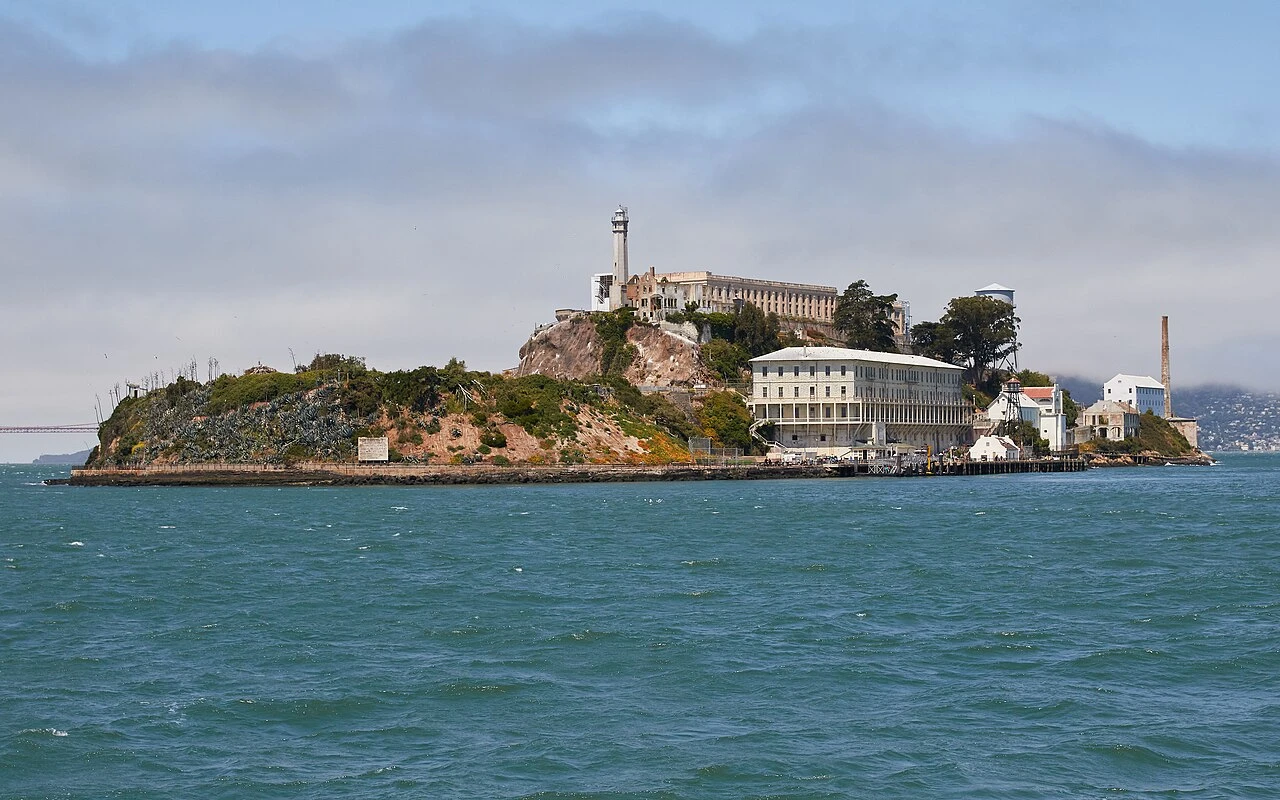
San Francisco
Alcatraz Island, Alcatraz
Content & sources
Photo: Frank Schulenburg · CC BY-SA 4.0
Biltmore Estate
Content & sources
Blake Lewis · CC BY-SA 2.0
New York
Brooklyn Bridge
Content & sources
Dietmar Rabich · CC BY-SA 4.0
Saint Augustine
Castillo de San Marcos
Content & sources
Photo: Schwerdf · CC BY 4.0