Stanza · Audio guide
Graceland Audio Guide
A place to remember. A story to take with you.
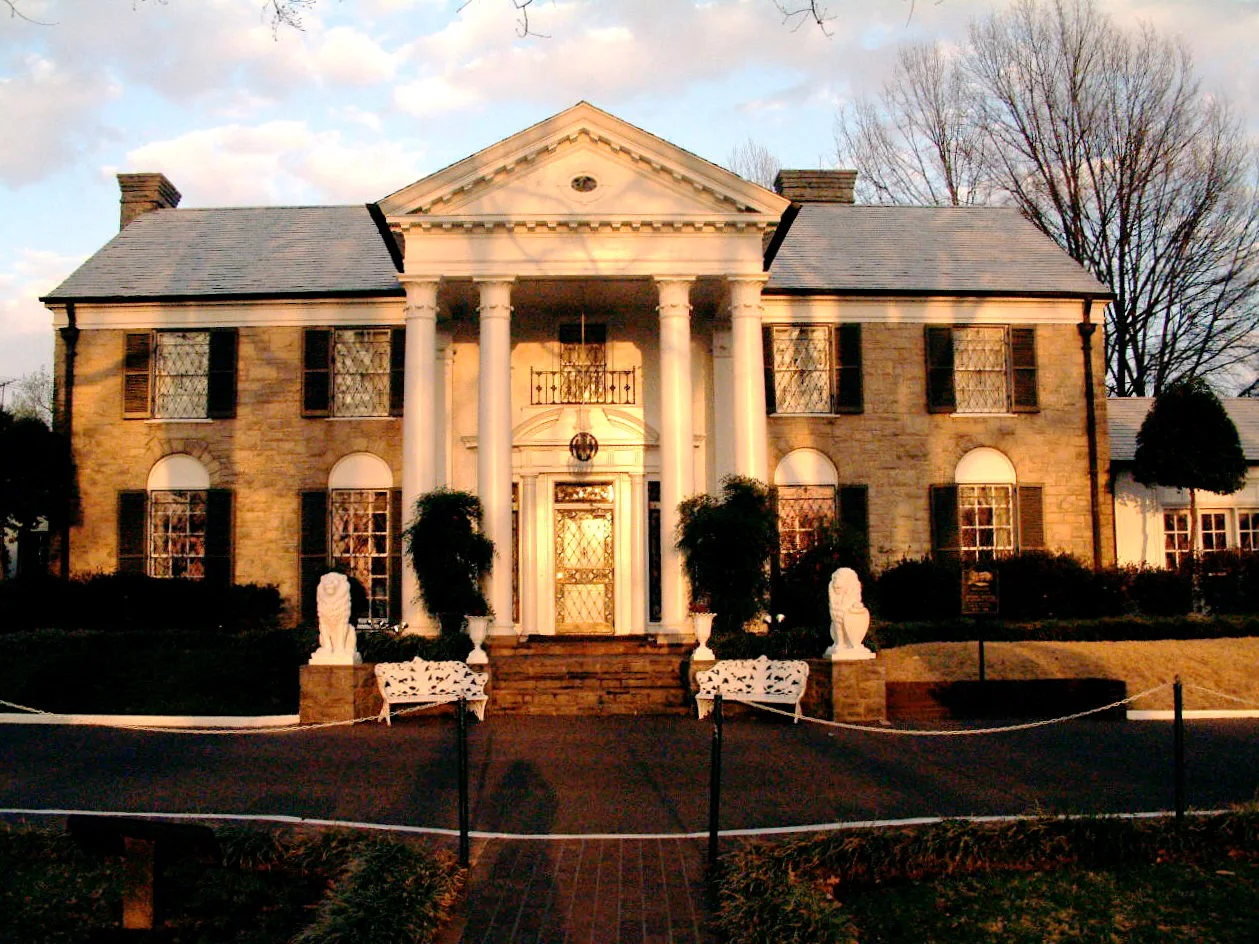
Graceland is a mansion in Memphis, Tennessee, that was once owned by American singer Elvis Presley. Elvis Presley and several of his family members are buried on the estate.
Download Stanza, then search for “Graceland”.
About the tour
One guide. Your kind of visit.
Graceland is a mansion in Memphis, Tennessee, that was once owned by American singer Elvis Presley. Elvis Presley and several of his family members are buried on the estate.
Ready when you are.
- 01Get the free Stanza app.
iOS & Android
- 02Find your guide.
“Graceland”
- 03Download before you go.
Works offline
Audio guide / 17 narrated stops
Inside the guide
Get to know a few of the stories before you go. Open a stop to read more.
01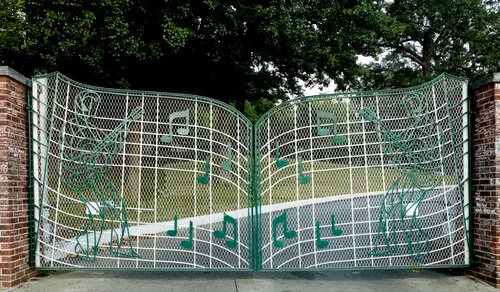 The Musical Gates and Front Portico
The Musical Gates
Welcome to Graceland, the Memphis home of Elvis Presley, and the story starts right here at these gates. In early 1957, Elvis gave his parents Vernon and Gladys a hundred thousand dollars and one instruction: find a farmhouse-style place with plenty of space around it. Fame had a cost. Fans and journalists gathered constantly outside his home on Audubon Drive, and the neighbors had enough. On March 19, 1957, he bought this estate for $102,500, several miles south of Memphis. Then he made it his. The wrought-iron gates were designed and built by Abe Sauer, shaped like an open book of sheet music. Green musical notes run across the bars, and two mirrored silhouettes show Elvis himself playing guitar. A pink Alabama fieldstone wall wraps the grounds, and visitors have covered it with signatures and messages for years. Fans simply call it the wall. Elvis liked to tell guests that the government had once proposed showing the estate to Khrushchev, as proof that a poor boy could rise that far. That was his own tale, and he told it with relish.
Carol M. Highsmith · Public domain
02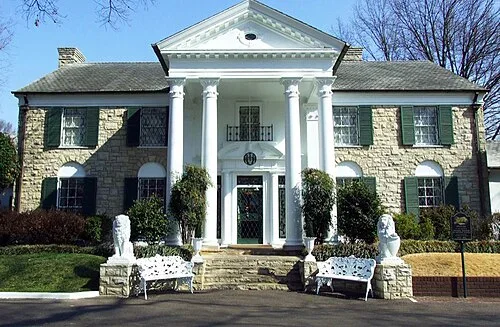 The Musical Gates and Front Portico
Graceland Mansion: The Front Portico
The house itself is older than Elvis's fame. Graceland takes its name from Grace, daughter of Stephen C. Toof, who ran the oldest commercial printing firm in Memphis. She inherited the property in 1894, and it later passed to her niece, the Memphis socialite Ruth Moore. In 1939, Ruth and her husband Thomas built a Colonial Revival mansion here, designed by the architects Furbringer and Ehrman. The face of the house is this two-story portico, with its pediment and four Corinthian columns. Their capitals follow architect James Stuart's conjectural designs for the Tower of the Winds in Athens. Two marble lions flank the stone steps from the driveway. Elvis spent twenty years remodeling, eventually growing the house to over seventeen thousand square feet and twenty-three rooms. The classical bones stayed; everything inside became his.
Joseph Novak · CC BY 2.0
03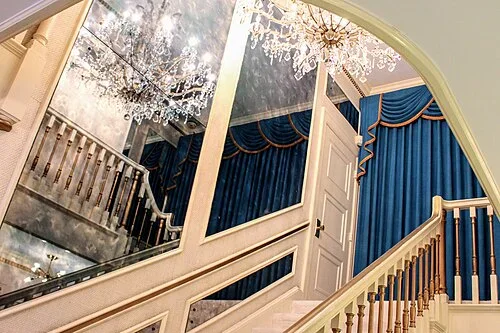 The Foyer and the Sealed Staircase
The Entrance Hall and Sealed Staircase
The entrance hall holds a white staircase and a wall of mirrors, with a chandelier overhead. The stairs lead to the second floor, and that floor is closed. Visitors do not go up, out of respect for the Presley family, and partly to keep attention away from the bathroom where Elvis died on August 16, 1977, at the age of forty-two. The upstairs has been left untouched since that day. It holds his bedroom and dressing room, his daughter Lisa Marie's bedroom, and a private office. Few people outside the family have seen it since. So the tour of the house stays down here, in the rooms Elvis shared with everyone he loved.
Listen in the appTerry Waggoner · CC BY-SA 4.0
04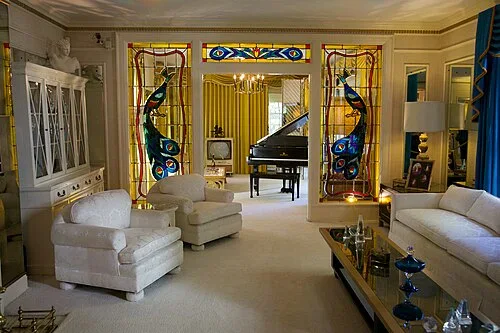 The Grand Living Room and Peacock Music Room
The Grand Living Room
Through the arched opening to the right of the entrance hall sits the living room. Against the wall overlooking the front yard runs a white couch fifteen feet long. Two more white sofas face it, beside a china cabinet and a fireplace set against a mirrored wall. The painting hanging here was Elvis's last Christmas present from his father Vernon. Family photographs line the room: Vernon and Gladys, Elvis, and Lisa Marie. After his death, this house became a place of public grief. He lay in repose just inside the foyer, in a copper-lined coffin weighing nine hundred pounds. More than three thousand five hundred mourning fans passed by to pay their respects, in the very rooms he had filled with his family.
Listen in the appDavid Brossard · CC BY-SA 2.0
05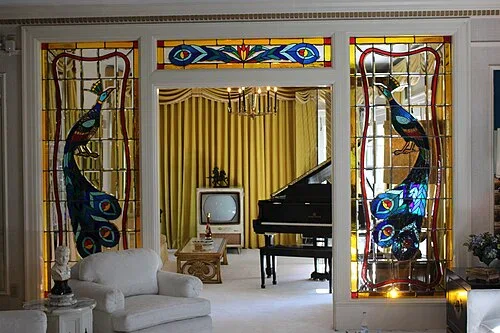 The Grand Living Room and Peacock Music Room
The Peacock Music Room
Behind the living room, a doorway is framed by two vivid peacocks set in stained glass, their tails blazing in blues and greens. Through them lies the music room, with a black baby grand piano and a television styled like the 1950s. Elvis framed this room himself, and it may be the most personal space on the ground floor. On August 18, 1977, the family held his funeral here in the house. Two hundred mourners came, and the casket stood in front of this stained-glass doorway. The peacocks and the piano were what the family faced as they said goodbye.
Listen in the appTerry Waggoner · CC BY-SA 4.0
06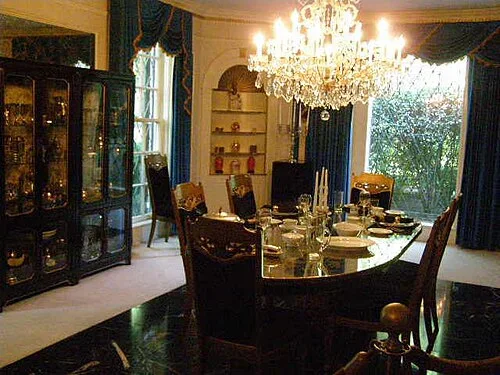 The Dining Room and Family Kitchen
The Dining Room
Across the entrance hall, mirroring the living room, is the dining room. A massive crystal chandelier hangs at its center. Six plush chairs in golden metal frames stand around a marble table, set on black marble flooring with carpet around the edge. It is the formal entertaining side of a Southern country house, kept much as the original builders might have imagined it. In a house where Elvis personalized nearly everything, this room kept its manners.
Listen in the appPhoto: Chris Light · CC BY-SA 4.0
07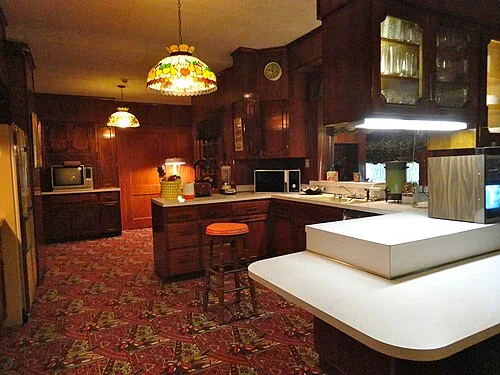 The Dining Room and Family Kitchen
Aunt Delta's Kitchen
Connected to the dining room is the kitchen, all dark wood paneling and warm hanging lamps. This was the domain of Elvis's aunt Delta. He invited her to live at Graceland after her husband's death, and she stayed for decades. She worked in this kitchen until her own death in 1993, the last family member in residence. Two years later, the kitchen opened to the public. Long after the tours began, this remained a lived-in family home.
Listen in the appPhoto: Ronincmc · CC BY-SA 4.0
08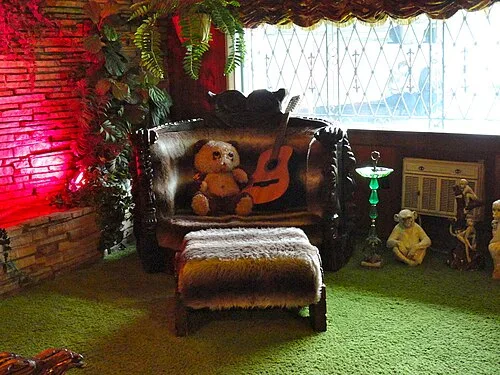 The Jungle Room and Home Recording Studio
The Jungle Room Den
A famous room in the house came from the mid-1960s expansion. Elvis enlarged the mansion to create this den, with an indoor waterfall of cut fieldstone on the north wall. Green shag carpet covers the floor, and carved Polynesian-style wood furnishings fill it, some draped in fur. The inspiration was Hawaii. After starring in the film Blue Hawaii in 1961, he wanted memorabilia from the islands and something of their feeling at home. When he toured, his hotel rooms were remodeled in advance to match the spaces he had here, so he could unwind in familiar surroundings. One writer called the result lurid kitsch. The family simply used it as their den.
Listen in the appPhoto: Ronincmc · CC BY-SA 4.0
09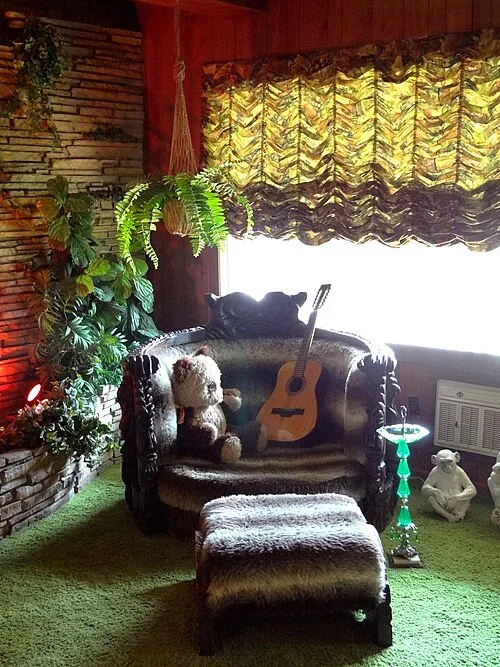 The Jungle Room and Home Recording Studio
The Jungle Room Home Studio
In 1976, this den took on a second life. It was converted into a recording studio, and Elvis sang here among the fur upholstery and carved chairs, with a guitar close at hand. He recorded the bulk of his final two albums in this room: From Elvis Presley Boulevard, Memphis, Tennessee in 1976, and Moody Blue in 1977. These were his final known recordings in a studio setting. The room that began as a tropical fantasy ended as the place where the last of the music was made.
Listen in the appAdam Jones from Kelowna, BC, Canada · CC BY-SA 2.0
10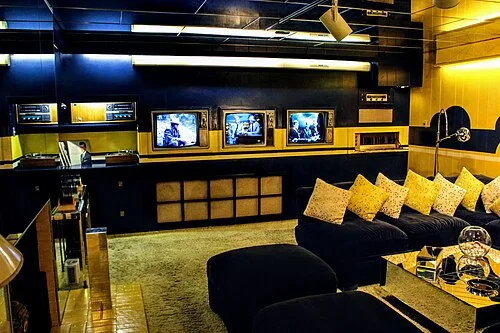 The Basement: TV Room and Billiard Room
The Basement TV Room and TCB
Down here the house turns playful. When the basement was remodeled in 1974, it became Elvis's own retreat, a world away from the formal rooms upstairs. The yellow and blue lounge holds three television sets, built into the south wall. He often watched all three at once, flipping between programs from his seat. A wet bar stood within easy reach, along with a stereo and cabinets for his record collection. On the west wall, a lightning bolt cuts through a painted cloud, next to the letters TCB. The motto stood for taking care of business in a flash, and Elvis lived by it. It was his answer to the endless demands of fame: handle it, and handle it fast.
Listen in the appTerry Waggoner · CC BY-SA 4.0
- 11
The Fabric-Covered Billiard Room
The pool table Elvis bought in 1960, in a room draped floor to ceiling in pleated fabric.
- 12
The Trophy Building
The wing that went from slot car track to shrine of gold records, jumpsuits, and family treasures.
- 13
The Racquetball Court
The court where Elvis played his final game and sang his last songs at the upright piano.
- 14
The Meditation Garden: Elvis's Grave
The quiet garden Elvis built for reflection, now the resting place of five generations of Presleys.
- 15
The Presley Memorial Cross and the Pilgrimage
Why tens of thousands gather here each August for Elvis Week and the candlelight vigil.
- 16
The Pink Cadillac
The 1955 pink Cadillac Fleetwood at Presley Motors, heart of the Elvis Presley's Memphis complex.
- 17
The Lisa Marie Convair 880
The Lisa Marie jet, and how Priscilla Presley saved Graceland by opening its doors in 1982.
Graceland
Frequently asked questions
How much does the guide cost?
Free app download. Listed guide price: $1.99. Guide price shown in the app. Audio guide only. Venue admission is separate.
Can I listen without internet?
Yes. Download the guide’s audio, images, and maps in the app before your visit. Your downloaded content is then available offline.
Can I listen in my language?
This audio guide is available in 15 languages, including English.
Do I need to follow a schedule?
No. This is a self-guided experience. Choose your stops, pause whenever you like, and return to a story at your own pace.
At your own pace
Explore Graceland.
Download Stanza, then search for “Graceland”.
Free app download · Guide price shown in the app
Keep exploring
Audio guides — United States
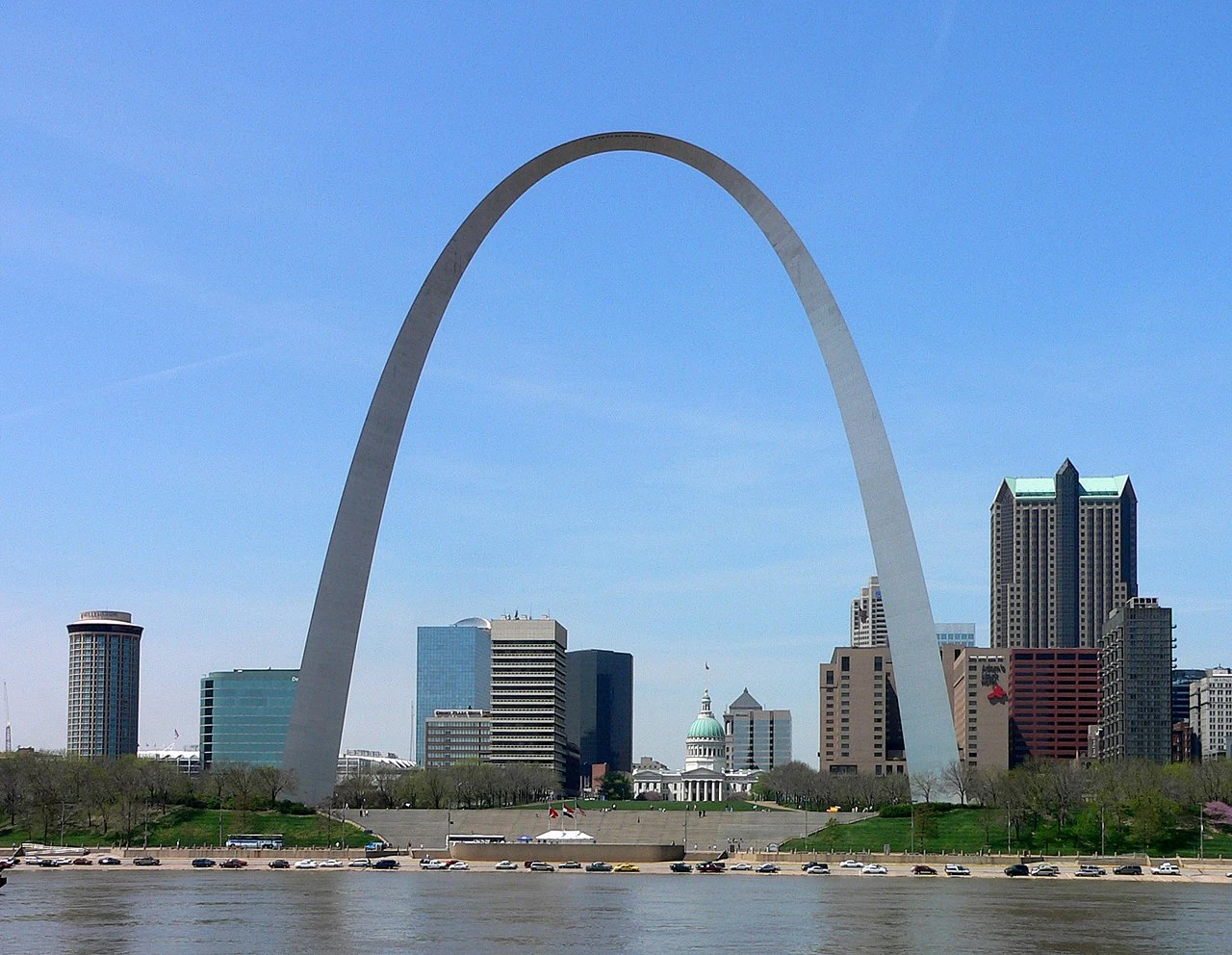
St. Louis
Gateway Arch
Content & sources
[https://www.flickr.com/photos/11399912@N00 B0iwehijro2i0- ] `1l]] from Davis, CA, USA · CC BY 2.0
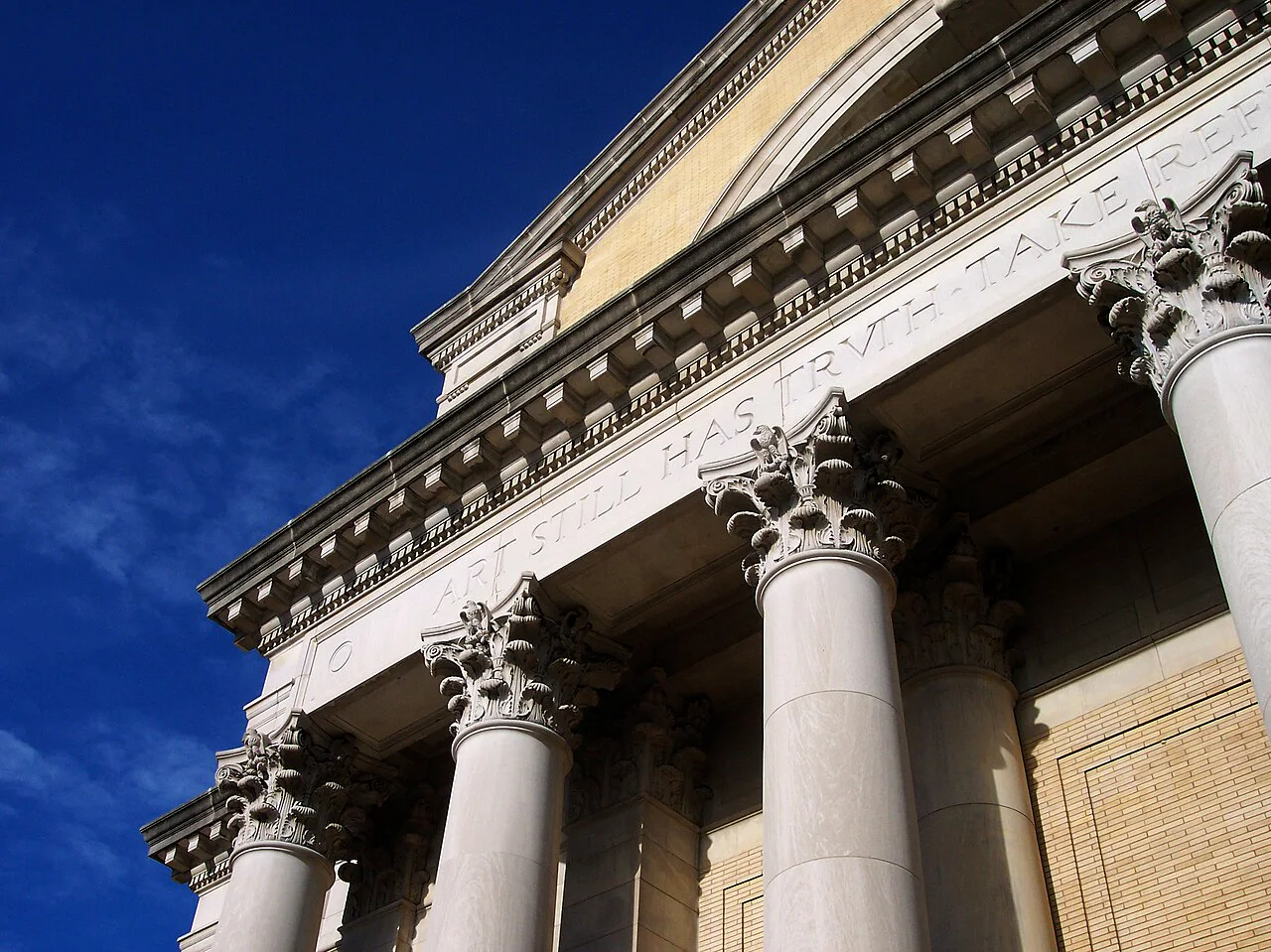
St. Louis
Saint Louis Art Museum
Content & sources
Photo: Colin.faulkingham~commonswiki · Public domain
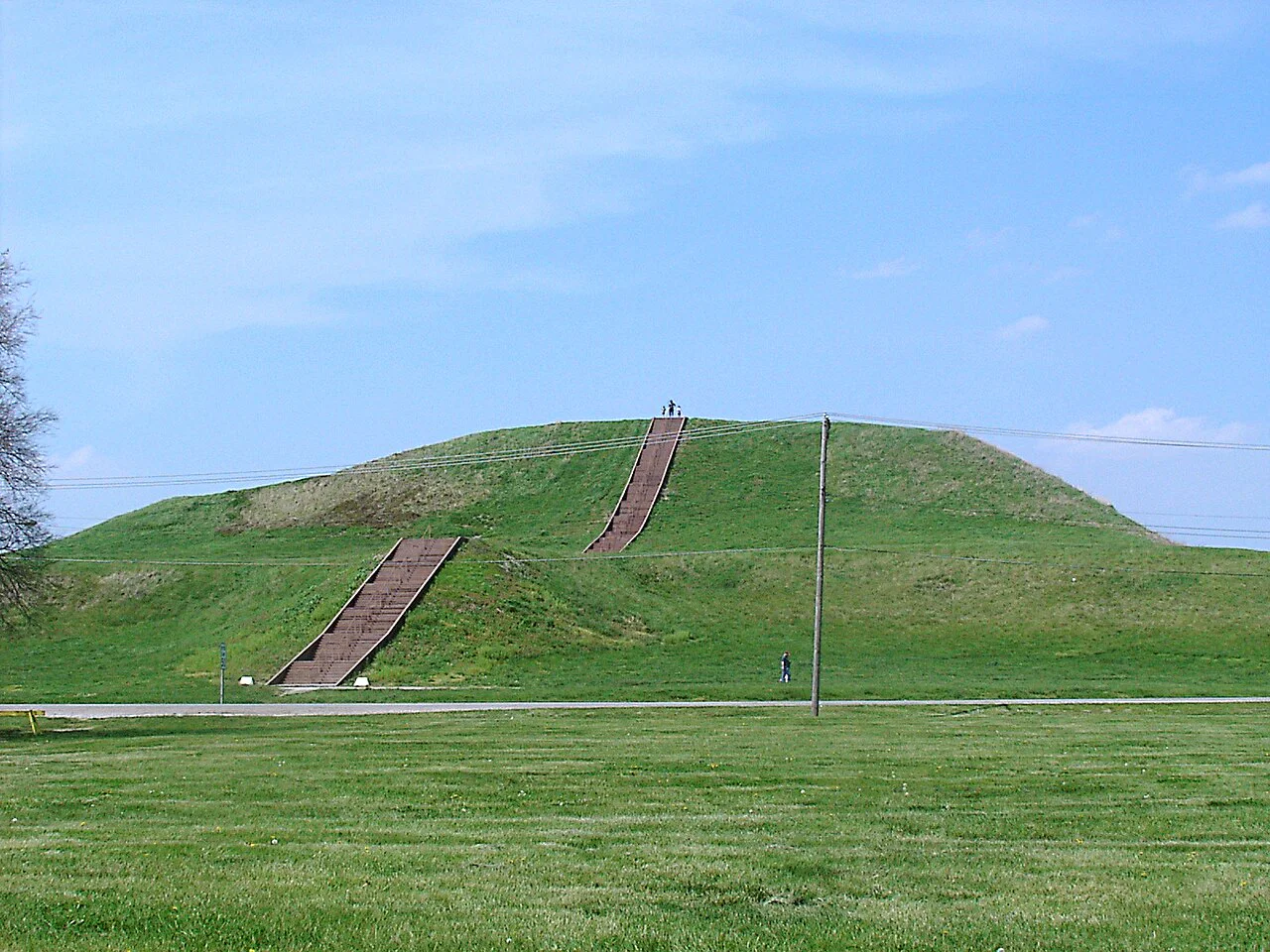
Collinsville
Cahokia
Content & sources
Skubasteve834 · CC BY-SA 3.0
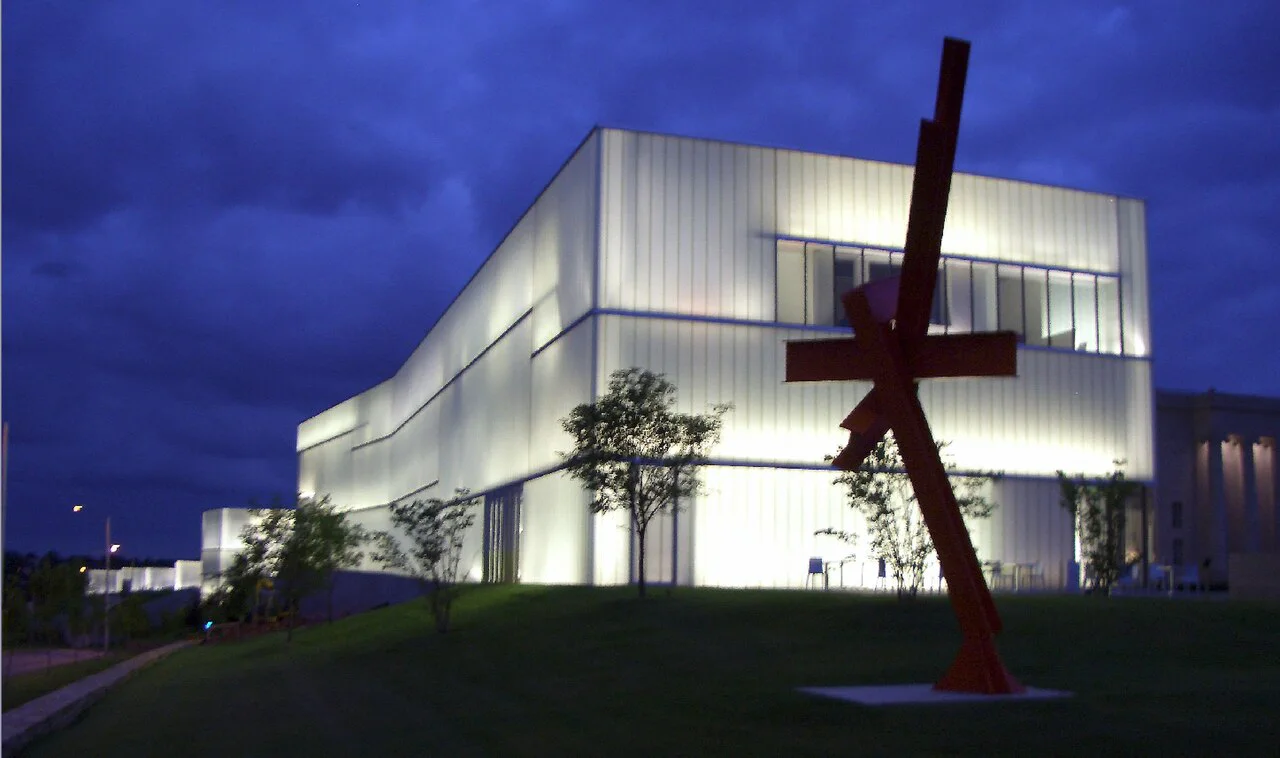
Kansas City
Nelson-Atkins Museum of Art
Content & sources
User:Charvex · Public domain