Stanza · Audio guide
Ayaz-Kala Audio Guide
A place to remember. A story to take with you.
Ayaz-Kala is an archaeological site in northern Uzbekistan that was built between the 4th century BCE and the 7th century CE. The site features the ruins of an ancient Khorezm fortress situated on a hilltop…
Download Stanza, then search for “Ayaz-Kala”.
About the tour
One guide. Your kind of visit.
Ayaz-Kala is an archaeological site in northern Uzbekistan that was built between the 4th century BCE and the 7th century CE. The site features the ruins of an ancient Khorezm fortress situated on a hilltop overlooking the Kyzylkum Desert.
Ready when you are.
- 01Get the free Stanza app.
iOS & Android
- 02Find your guide.
“Ayaz-Kala”
- 03Download before you go.
Works offline
Audio guide / 10 narrated stops
Inside the guide
Get to know a few of the stories before you go. Open a stop to read more.
01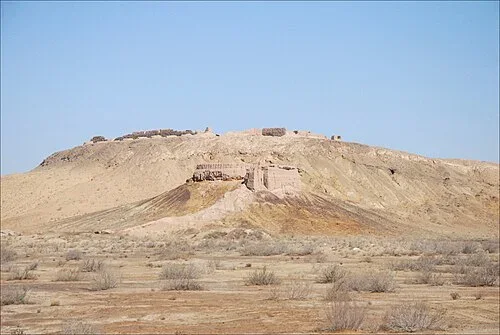 Base Approach and the Triple Fortress Trilogy
The Three Fortresses from the Desert Floor
Welcome to Ayaz-Kala, a cluster of lost fortresses in northern Uzbekistan. Three separate forts stand here at the edge of the Kyzylkum Desert, where the sands meet the old Khorezm oasis. The oldest walls went up in the fourth century before our era. Building, burning and rebuilding carried on until the seventh century after it. Together these forts formed a chain shielding the farming settlements of Khorezm from raiders. The threat came from nomads of the steppe and from the Saka of the Syr Darya delta. From the desert floor the ruins read as a broken line of towers on a hilltop. The tour ahead climbs through all three: a vast garrison on the flat, a feudal palace on its cone, and the oldest sentinel on the high ground.
Jean-Pierre Dalbéra from Paris, France · CC BY 2.0
02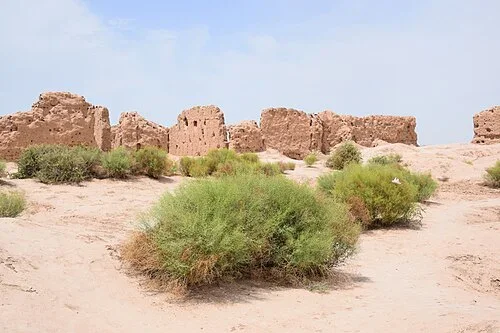 Ayaz-Kala 3: The Great Garrison
Ayaz-Kala 3 hardly looks like a fortress at first. Its walls run low across the flat desert, enclosing a huge parallelogram of ground. The long sides stretch about two hundred sixty meters. The short sides run one hundred eighty. All told it covers some five hectares. That makes it two-thirds bigger than Ayaz-Kala 1 and one of the largest forts in Karakalpakstan. In Kushan times, around the first and second centuries, this is believed to have been a garrison. The same walls offered shelter to farming families when raiders appeared. The interior is strikingly empty, because a garrison needed open ground for animals and supplies. The entrance on the western side bends in an S-shape, a crooked passage that slowed anyone coming in. Everything about the plan points to soldiers and logistics rather than comfort.
Jean Housen · CC BY-SA 4.0
03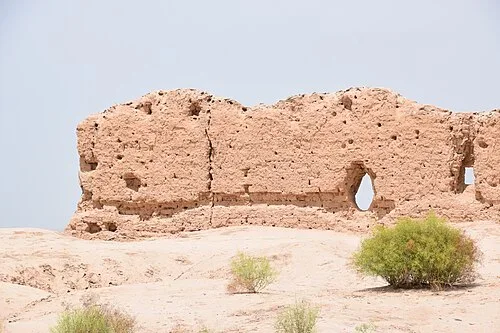 The Monumental 40-Room Building
In the northeast corner of the garrison stands its most ambitious building. It covers about two thousand four hundred square meters. Forty rooms filled the block, and a pair of central corridors divided them into four groups. Narrow passages ran along three of its sides, with small square watchtowers on the southern and eastern walls. The foundations may reach back to the fifth or fourth century before our era. The building was later reused in Kushan times, possibly as a residence for a ruler. What exactly happened inside is still debated; headquarters, residence and storehouse have all been suggested. The finds tell a clearer story. Excavation brought up pottery, tools, weapons and jewelry, and coins struck in the name of Kanishka, one of the great Kushan kings. Those coins tie this remote desert fort firmly into the empire's economy.
Listen in the appJean Housen · CC BY-SA 4.0
04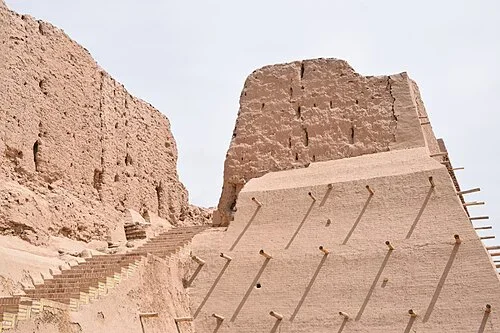 The Southern Slope Climb
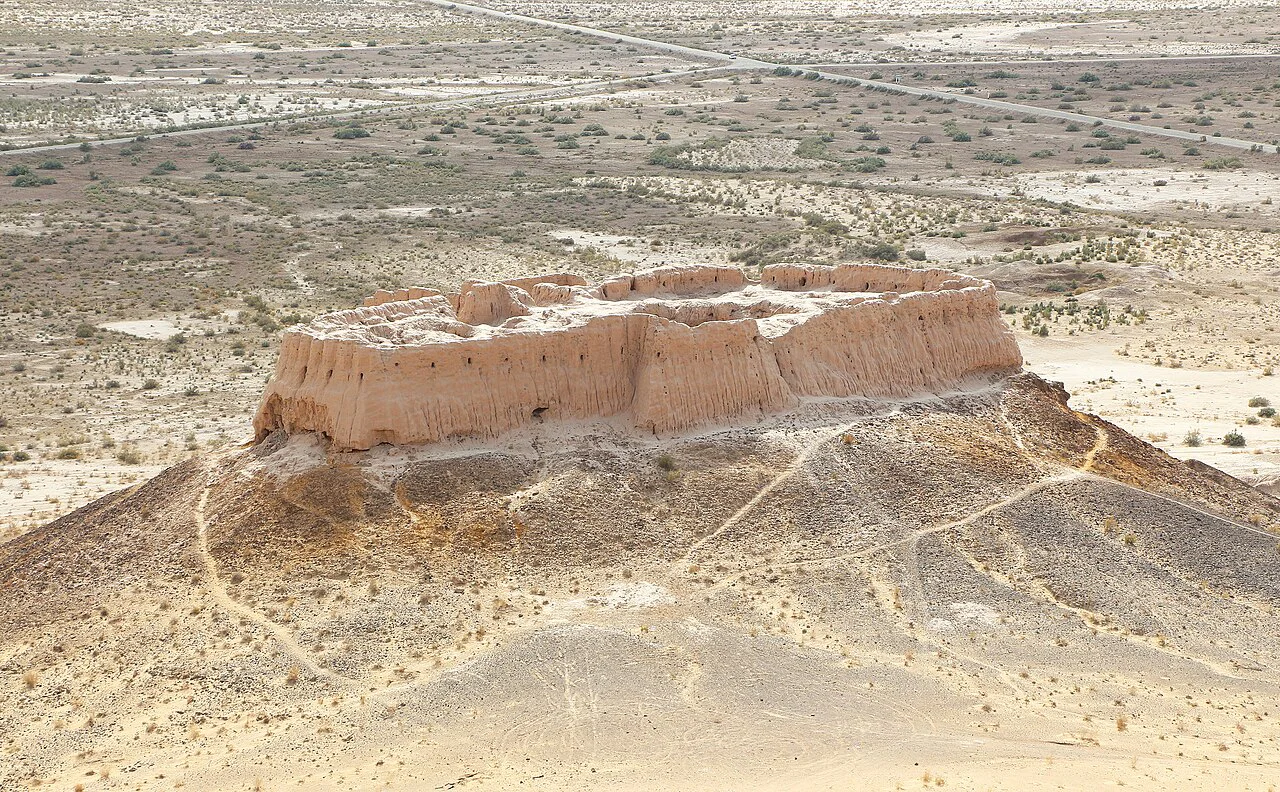
The Climb to Ayaz-Kala 2
The second fortress waits on top of a steep cone of earth, about forty meters high. Getting in meant earning it. A sloping man-made staircase, some fifty meters long, once climbed the southern face of the fort. The formal entrance lay on the southwestern side, so arrivals had to cross open ground. That was the point. Anyone attacking had to come up in the open, slow and exposed, while defenders waited above with arrows. The stairway on the slope today is probably a modern rebuild for visitors, and the exact course of the ancient ramp is uncertain. The design logic still holds all the same: the approach itself was the first line of defense.
Listen in the appJean Housen · CC BY-SA 4.0
05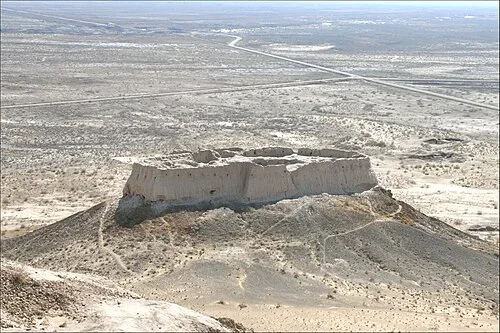 Ayaz-Kala 2: Palace of the Feudal Lords
By the sixth century the world around these forts had changed. Khorezm was ruled by the Afrighid dynasty, and a new class of landowners had risen, the dihqans. They descended from the old nobility, or from courtiers and soldiers rewarded for military service. Their estates were called rustaq, and they lived in small square forts known as donjons, wrapped in defensive walls. Ayaz-Kala 2 is exactly that kind of stronghold, built between the sixth and eighth centuries on its cone southwest of Ayaz-Kala 1. The main building is oval in shape, with the entry on the southwestern side. Its builders set rectangular mud bricks on a base of packed cob, topped the walls with battlements and cut a row of arrow slits. A comparable fortress, Yakke Parsan, stands about ten kilometers to the south.
Listen in the appJean-Pierre Dalbéra from Paris, France · CC BY 2.0
06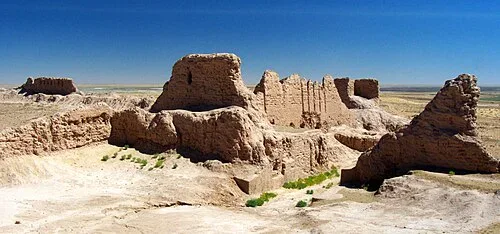 Ayaz-Kala 2: Palace of the Feudal Lords
The Fire Temple and the Great Fires
Inside the oval walls stood something grander than a barracks. The main building is read as a palace: living quarters, ceremonial halls whose ceilings rested on rows of columns, and a fire temple. Wall paintings once covered it lavishly. Dating it is tricky, and one account puts its construction in the fourth century, as the residence of a feudal lord loyal to the Khorezmshah. Then came catastrophe, twice over. Two separate fires destroyed the palace, and nothing explains what started them. The building lived on humbly. In the sixth and seventh centuries people turned its halls into ordinary dwellings. A vast urban complex once spread across the ground at the foot of the fortress.
Listen in the appFulvio Spada from Torino, Italy · CC BY-SA 2.0
07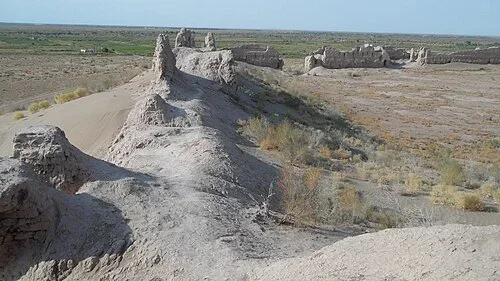 The Connecting Ridge Walk
The Ridge Between the Fortresses
The ridge between the two hills carries the oldest story here. Ayaz-Kala 1 dates to the end of the fourth or the start of the third century before our era. That was when Khorezm had just become independent from Persia and begun governing itself. The fortress crowns a hill roughly a hundred meters high, with wide views over the surrounding plains. Its plan is a rectangle. The long sides run about one hundred eighty-two meters. The shorter sides measure one hundred fifty-two. In the later, Kushan arrangement, a small force is believed to have manned this lookout while the main garrison sat down at Ayaz-Kala 3. Watchers on the heights and soldiers on the plain worked as one system.
Listen in the appHergit · CC BY-SA 3.0
08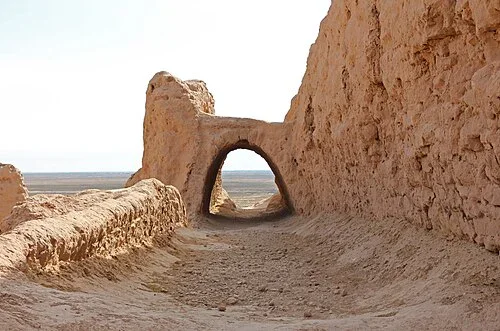 Ayaz-Kala 1: The Southern Gateway Trap
The Southern Gateway Trap
The southern gateway was built to be a trap. A square gateway like this is a classic feature of Khorezm's frontier fortresses. The ground outside forced attackers to approach parallel to the southeastern walls, which left them exposed to fire from above. Behind the first gate waited the real danger. A massive entry defended by two rectangular towers led into a small rectangular chamber. High walls overlooked that chamber on every side. If the first gate fell, bowmen on those walls could shoot down into the enclosed space at will. Invaders who broke through the door found themselves in a box with no cover at all.
Listen in the appPhoto: Bgag · CC0
09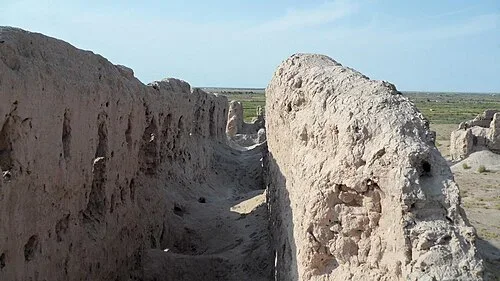 Ayaz-Kala 1: Vaulted Wall Corridors
The Vaulted Wall Corridors
These walls were engineered for fighting, not just for keeping people out. An inner and an outer wall run parallel, with a vaulted corridor about two meters wide between them. The walls carry on above the vaults, forming a protected walk along the rampart. Defenders could move troops, arrows and news around the whole perimeter without ever showing themselves. The walls rise to about ten meters. At the base they are more than two meters thick. Forty-five watchtowers were added later, half-elliptical in shape, spaced at regular intervals around the circuit. That strengthening came in the third century before our era. From the towers and the rampart walk, a handful of men could hold off a much larger force.
Listen in the appHergit · CC BY-SA 3.0
10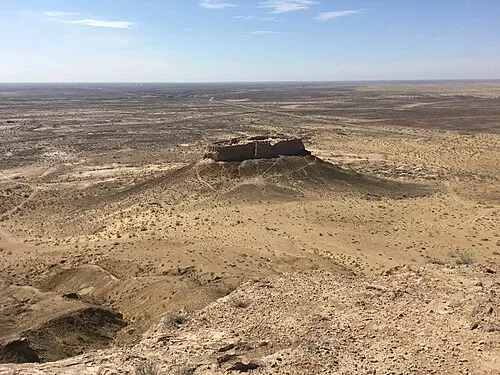 Ayaz-Kala 1: Northern Ramparts and the Desert Sentinel
The Desert Sentinel and the Rediscovery
For centuries these ruins sat in the sands with no name attached. In 1937 the Khorezm Archaeological-Ethnographic Expedition found the complex and put it back on the map. The expedition was led by Sergey Tolstov, and his team surveyed the fortresses and dug into their buried rooms. The work brought out the Kushan-era coins and everyday objects met earlier in the tour. What Tolstov's people recovered made Ayaz-Kala one of the key sites for understanding ancient Khorezm. From this high ground the desert runs to the horizon, and the fortress hills sit dark against it. A thousand years of soldiers, farmers, feudal lords and priests passed through this one place, and the desert held what they left behind.
Listen in the appPhoto: Stephanieadams99 · CC BY-SA 4.0
Ayaz-Kala
Frequently asked questions
How much does the guide cost?
Free app download. Listed guide price: $0.99. Guide price shown in the app. Audio guide only. Venue admission is separate.
Can I listen without internet?
Yes. Download the guide’s audio, images, and maps in the app before your visit. Your downloaded content is then available offline.
Can I listen in my language?
This audio guide is available in 15 languages, including English.
Do I need to follow a schedule?
No. This is a self-guided experience. Choose your stops, pause whenever you like, and return to a story at your own pace.
At your own pace
Explore Ayaz-Kala.
Download Stanza, then search for “Ayaz-Kala”.
Free app download · Guide price shown in the app
Keep exploring
Audio guides — Uzbekistan
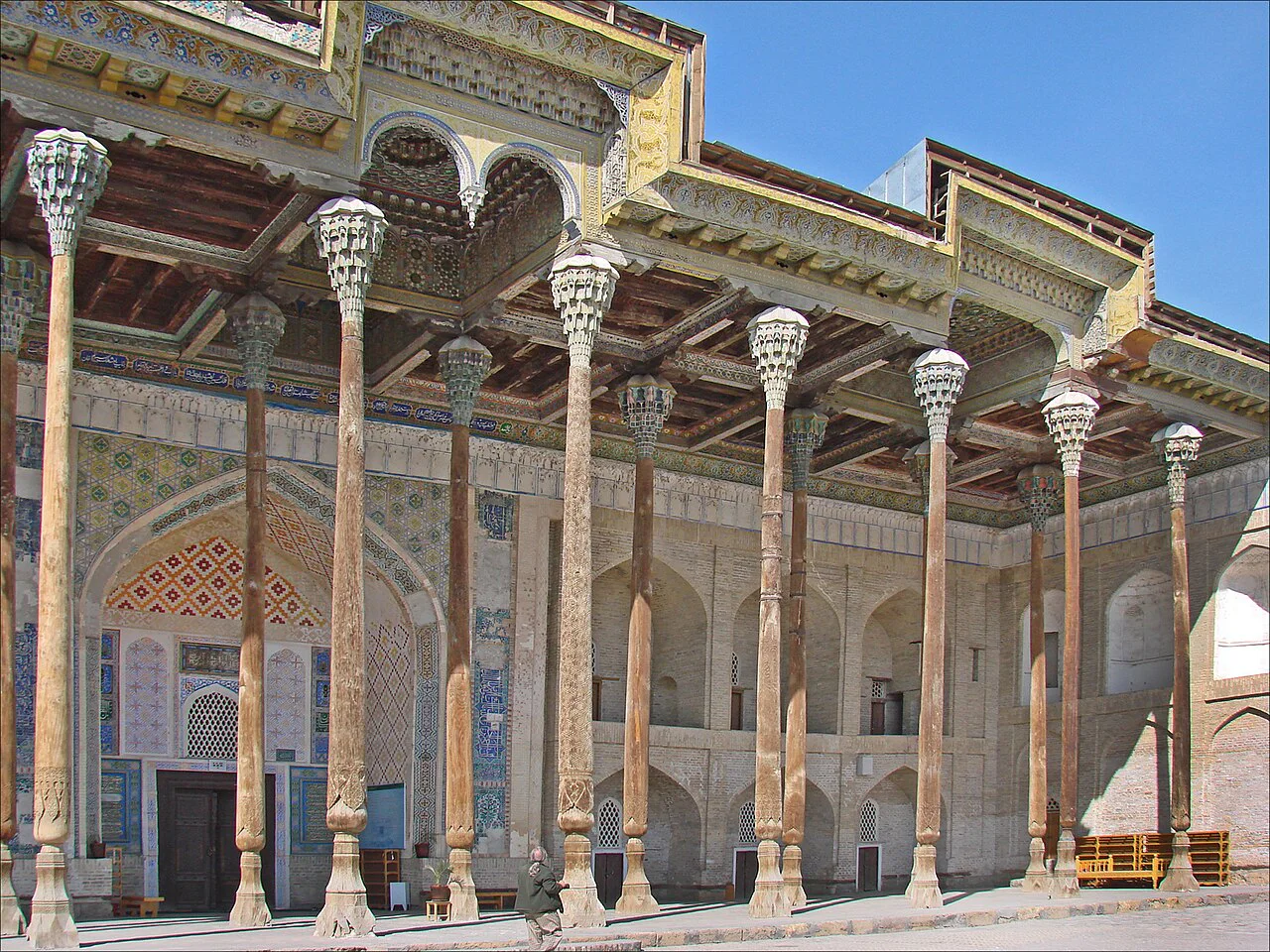
Bukhara
Bolo Haouz Mosque
Content & sources
Jean-Pierre Dalbéra from Paris, France · CC BY 2.0
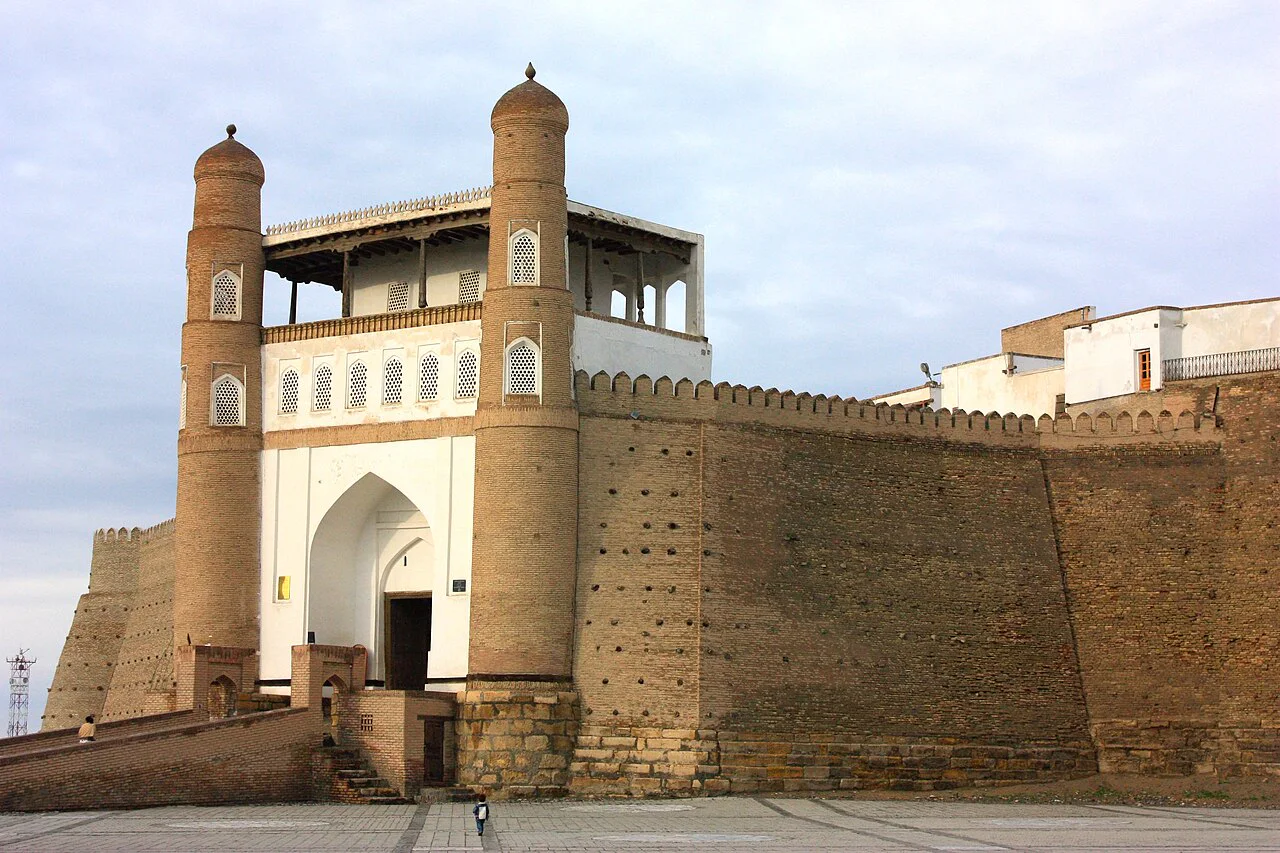
Bukhara
Ark of Bukhara
Content & sources
RK · CC BY-SA 4.0
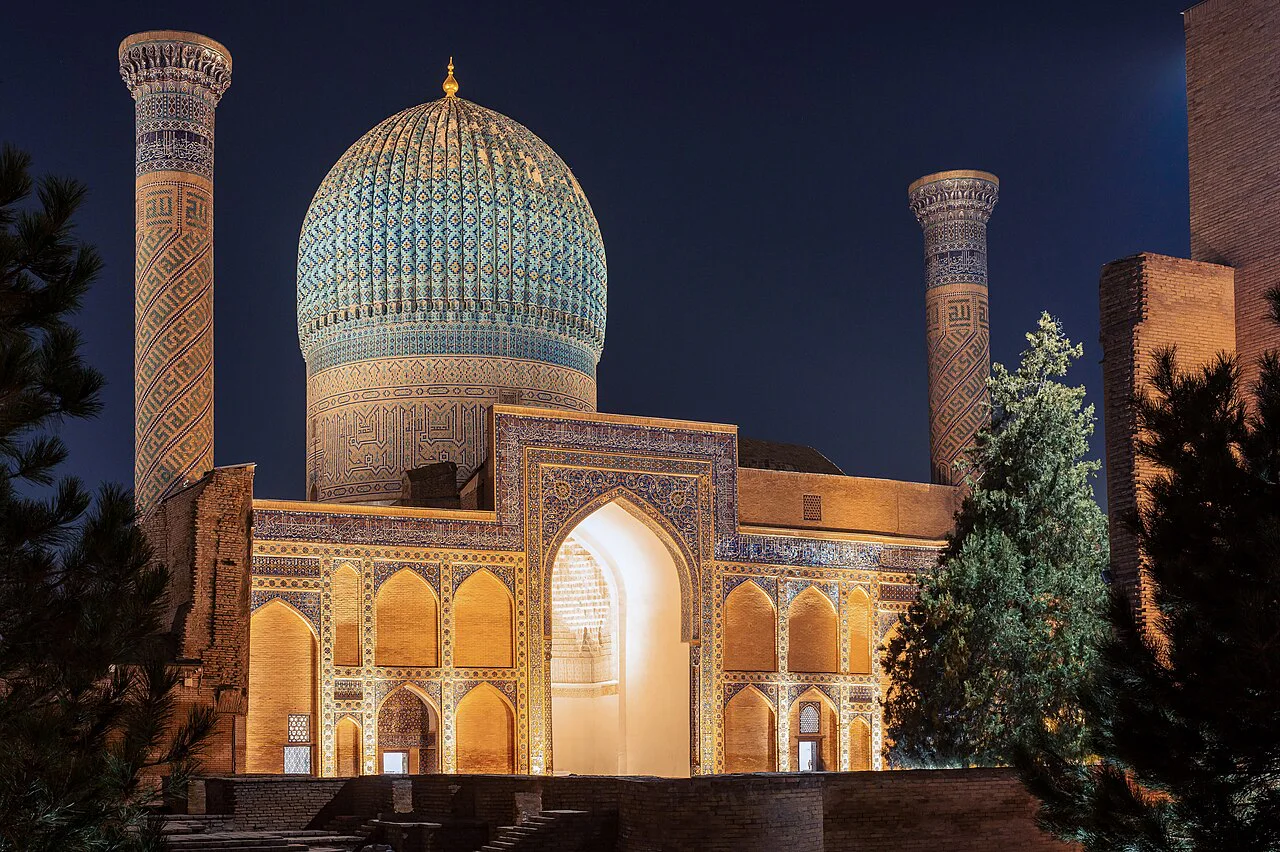
Samarkand
Gur-e-Amir
Content & sources
Photo: Arina Pan · CC BY-SA 4.0
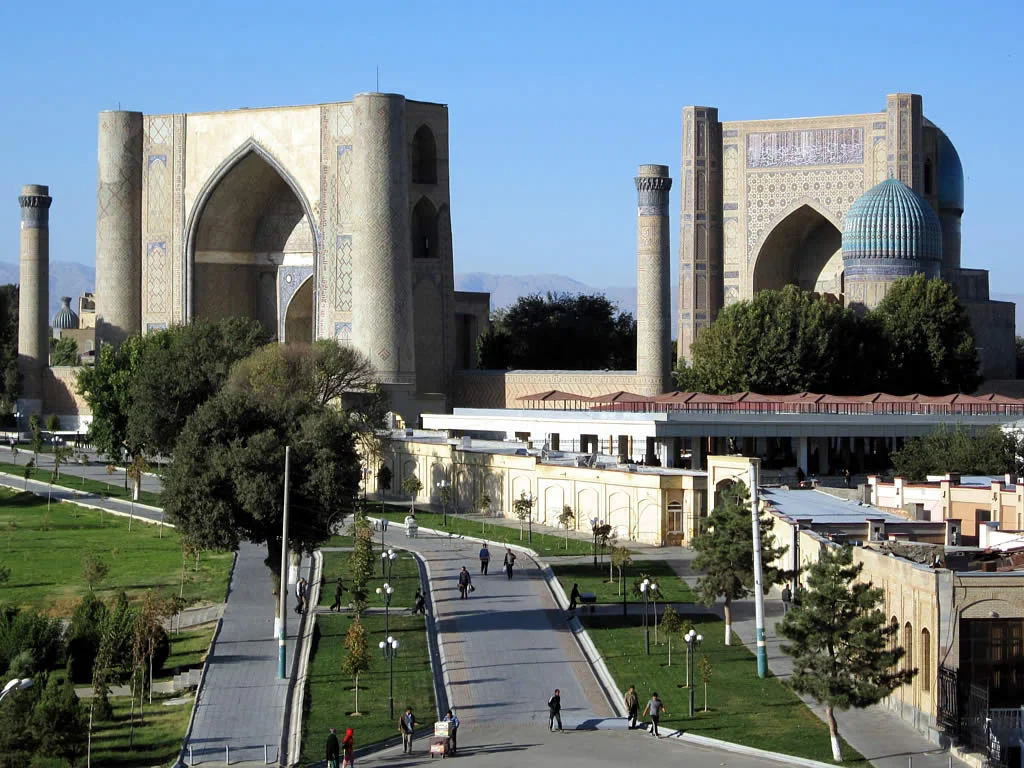
Samarkand
Bibi-Khanym Mosque
Content & sources
David Stanley from Nanaimo, Canada · CC BY 2.0