Stanza · Audio guide
Ark of Bukhara Audio Guide
A place to remember. A story to take with you.
The Ark of Bukhara is a massive fortress located in the city of Bukhara that was initially built and occupied around the 5th century AD. It served as a military structure and a royal residence until 1920 and…
Download Stanza, then search for “Ark of Bukhara”.
About the tour
One guide. Your kind of visit.
The Ark of Bukhara is a massive fortress located in the city of Bukhara that was initially built and occupied around the 5th century AD. It served as a military structure and a royal residence until 1920 and currently houses several museums.
Ready when you are.
- 01Get the free Stanza app.
iOS & Android
- 02Find your guide.
“Ark of Bukhara”
- 03Download before you go.
Works offline
Audio guide / 13 narrated stops
Inside the guide
Get to know a few of the stories before you go. Open a stop to read more.
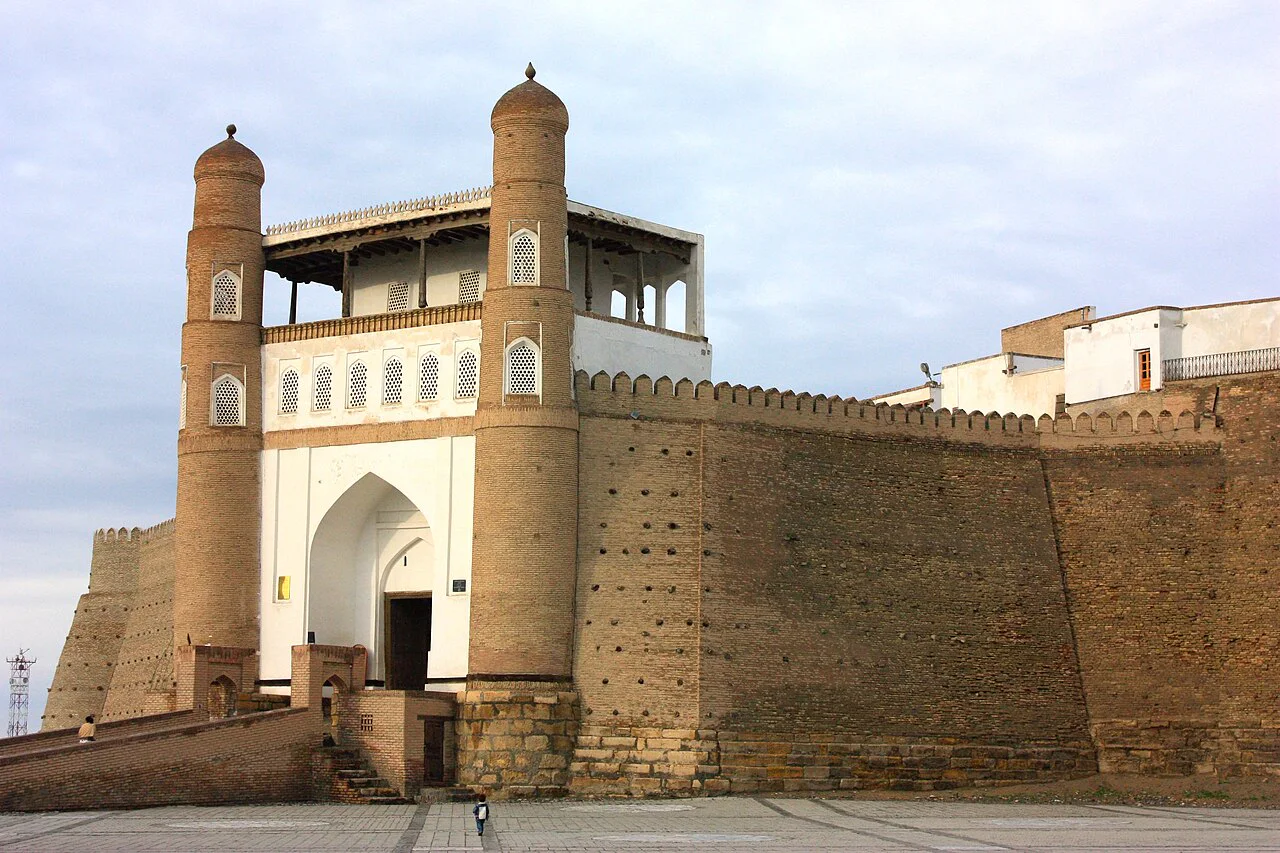
01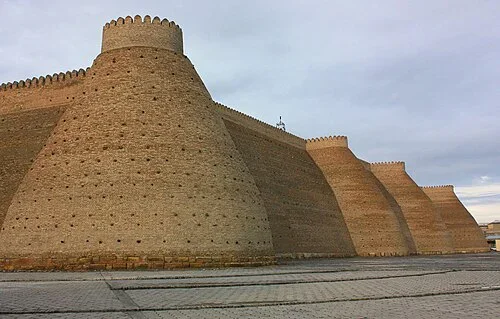 Registan Square and the Citadel Ramparts
Citadel Walls above the Plaza
Welcome to the Ark of Bukhara, a royal fortress that was also a small town, raised on an artificial earthen mound above the city. It is counted the oldest architectural and archaeological monument in Bukhara. The walls rise steeply from the square, crowned with a line of small battlements. Beyond the gates lies the Registan, a name that means Sandy. The ground under these walls holds a long story. A dig in 1979 and 1980 went down through more than twenty metres of layered remains. Near the bottom, archaeologists found two older adobe walls. One dates to the fourth and third centuries before Christ, the other to the fourth and fifth centuries after. Fortress after fortress was built here and destroyed, and each destruction left its layer. The Mongol capture of Bukhara is one of them. The walls stand nearly twenty metres above the surrounding ground and enclose about four hectares.
RK · CC BY-SA 4.0
02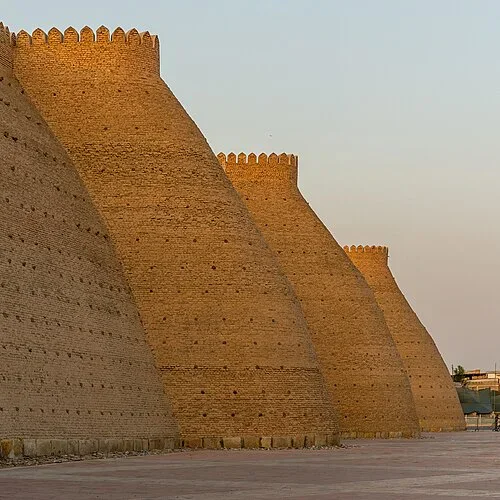 Registan Square and the Citadel Ramparts
Outer Wall at Golden Hour
The story people tell about these walls begins with a prince named Siyavush. In the epic tradition, told in Ferdowsi's Shahnameh, he fled as a youth to the oasis land of Turan, away from his stepmother. There he fell in love with the daughter of the local ruler. Her father agreed to the marriage on one condition: Siyavush had to build a palace on land bounded by a bull's hide. It was meant to be impossible. Siyavush cut the hide into slender strips, tied the ends together, and built inside the line they made. Legend says the prince was buried in the citadel, and that it was put out of use in mourning for him. The wall here tapers as it climbs, thick at the base and crowned with battlements, running a perimeter of just under eight hundred metres. The same trick of a hide cut into strips appears in the old tale of Dido and the founding of Carthage.
Nikolai Bulykin · CC BY-SA 4.0
03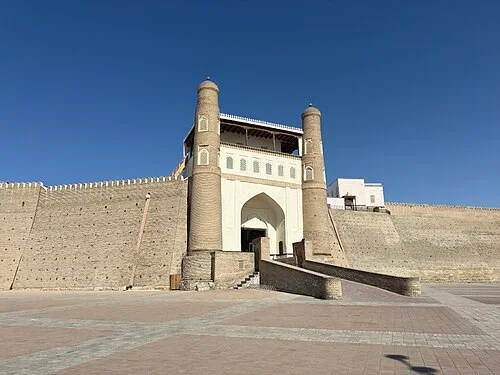 The Ceremonial Western Portal and Dalon Ramp
Western Gateway with Twin Towers
The way in was meant to impress. Two tall cylindrical towers, built in the eighteenth century, frame the great arched gate. Their upper parts are joined by a gallery with rooms and terraces, and a three-storeyed block fills the space between them. One account dates the gate itself to the sixteenth century, so the towers are later than the gateway they flank. Beyond the arch, a ramp climbs gently toward the heart of the citadel. It passes a portal that could be raised by winch, then runs into a long covered corridor. Along the left wall of that passage are twelve niches, and along the right, thirteen. The corridor gave access to storerooms and to prison cells. Beneath the towers lay damp, dark cellars.
Listen in the appPhoto: Umid1108 · CC0
04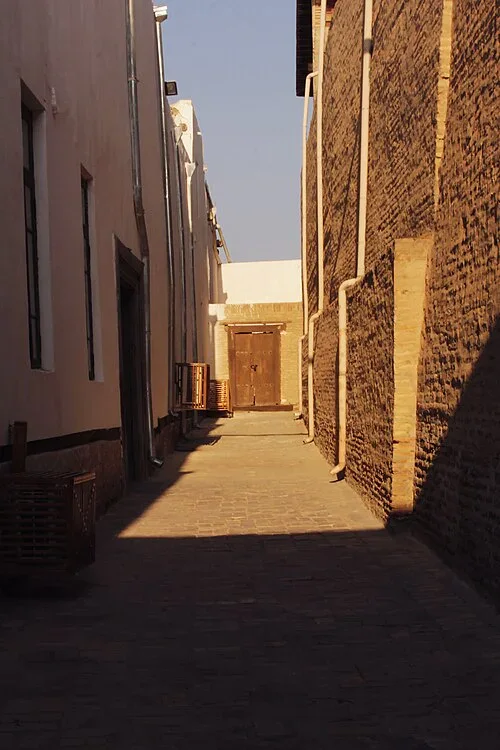 The Ceremonial Western Portal and Dalon Ramp
Inner Lane Between Buildings
Inside the walls, the court lived and worked. The royal court lived here, with the amirs, the generals, the viziers and their many servants. In the seventh century a new palace went up for the Bukhar Khudahs, the rulers of the city. Beside it stood chancery buildings, a treasury, a prison and a temple. Narshakhi, a historian of the tenth century, wrote that the palace plan repeated the shape of the constellation Ursa Major, for magical purposes. The palace is said to have had seven stone pillars, one for each star of the Great Bear. Lanes like this one ran between the buildings, packed close together under the open sky.
Listen in the appPhoto: Nassima Chahboun · CC BY-SA 4.0
05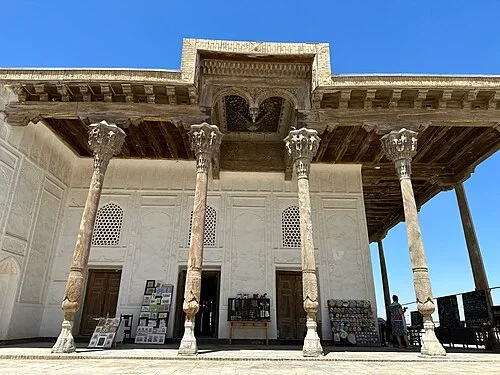 The Court Mosque of Subhan Quli Khan
Court Mosque (Dzhuma Mosque) Portico
At the top of the covered ramp stands the court mosque, the mosque of Dzhuma. The name points to Friday, the day of communal prayer, when the whole community gathered. This was the palace's own mosque, worship at the centre of royal life. The front portico is its visible face: a row of carved columns with decorated capitals, carrying a bracketed overhang of wood. Behind them, latticed windows soften the light into the prayer hall. The name of its builder has not come down to us.
Listen in the appPhoto: Ziegler175 · CC BY-SA 4.0
06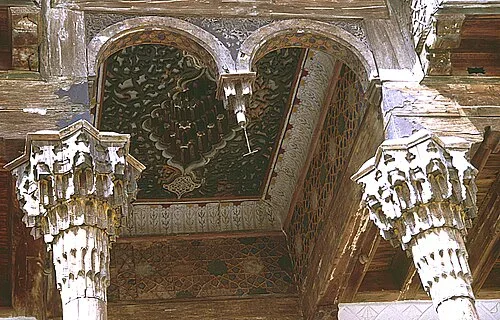 The Court Mosque of Subhan Quli Khan
Carved Capitals and Painted Ceiling
The capitals repay a second glance. Each one is carved in tiers, like small stacked baskets, and above them the ceiling carries painted panels framed by arches and filled with pattern. Mosques inside the Ark were built of whatever came to hand: wood and clay, cotton, and raw brick as well as baked. The baked brick was the finer material, laid decoratively to line the walls. Craftsmen mixed these materials across the citadel's mosques, letting each part show what it was made of.
Listen in the appPhoto: Ziegler175 · CC BY-SA 4.0
07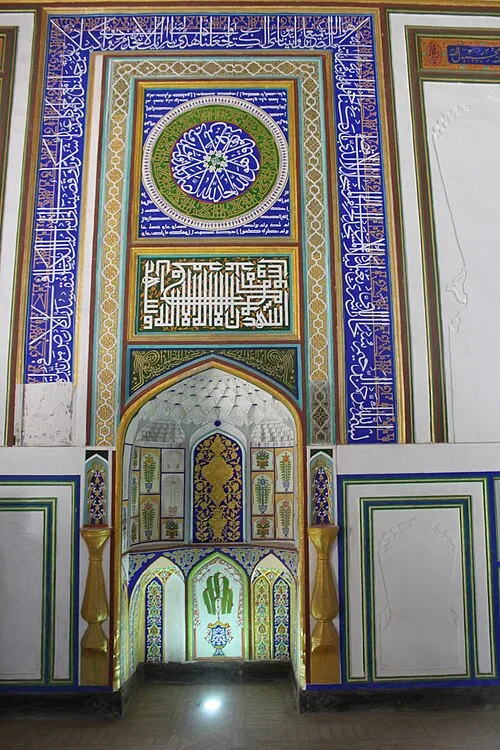 The Court Mosque of Subhan Quli Khan
Prayer Niche (Mihrab) and Calligraphy
A mihrab is the niche that shows the direction of prayer, and every mosque has one. This one is framed in blue, gold and white, with panels of calligraphy and a tiled arch at its centre. Worship on this spot goes back a very long way. Arabs built the first mosque of Bukhara in 713, inside the Ark, on the site of a temple. The commander Qutayba ibn Muslim turned that temple into a mosque. By the end of the eighth century the mosque had moved down from the citadel, to the ground between the fortress and the shahristan, the main town. The niche here belongs to a much later building.
Listen in the appFaqscl · CC BY-SA 3.0
08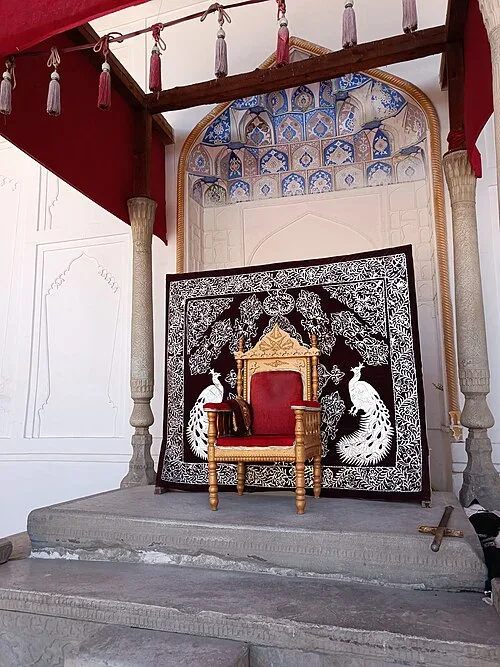 The Coronation Court and Royal Throne
Royal Throne (Taxt)
A gilded chair with a red seat waits on a stone platform. Above it hangs a red canopy with tassels, and behind it a tiled niche glows with pattern. This is the ruler's throne, the taxt, the seat of authority in the citadel. Among the restored spaces of the Ark, the accounts name both a throne room and a reception and coronation court. Which of the two this is, no one can say for certain. What is certain is the effect: the emir raised on a step, framed in tile and cloth, facing whoever was admitted.
Listen in the appViaggiamocela · CC BY-SA 4.0
09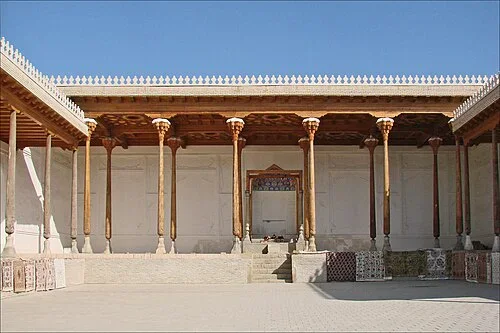 The Coronation Court and Royal Throne
Colonnaded Pavilion Facing the Court
Facing the throne across the paved court runs a long pavilion of slender columns, each with its carved capital under a deep roofline. Much of what stands here now owes its condition to a modern restoration. For the 2,500th anniversary of Bukhara, the courtyard where the throne stands was repaired and put in order. The walls of the Ark were renewed along with it. The work was carried out on the initiative of Islam Karimov, then President of Uzbekistan.
Listen in the appJean-Pierre Dalbéra from Paris, France · CC BY 2.0
10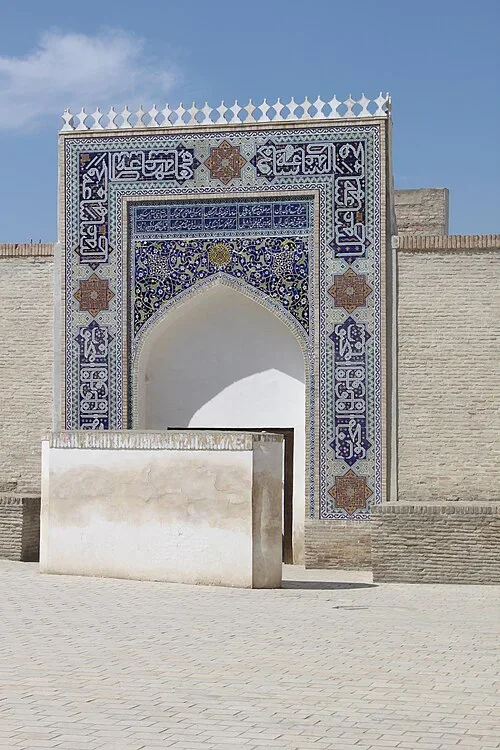 The State Reception Court and Citadel Treasury
Tiled Portal of the Reception Room
An official audience needed a setting that spoke before anyone did. This portal does that work: a tall arch in a plain brick wall, framed in bands of blue and gold tile. Star motifs and panels of calligraphy run up the sides, and a row of small pointed finials crowns the top. This is the emir's reception and hearing courtyard, the space where officials and petitioners were received. A low white block stands in front of the arch, its purpose no longer obvious.
Listen in the appFaqscl · CC BY-SA 3.0
- 11
Coin of the Samanid State
A Samanid coin, a grand palace portal, and the royal library that Avicenna loved.
- 12
1920 Bombardment Damage at the Ark
How the fortress fell in 1920, to bombs from aircraft and, some believe, to the last emir's own order.
- 13
Sunset View of Bukhara from the Ark
Evening over the city, from the high ground its rulers watched for centuries.
Ark of Bukhara
Frequently asked questions
How much does the guide cost?
Free app download. Listed guide price: $0.99. Guide price shown in the app. Audio guide only. Venue admission is separate.
Can I listen without internet?
Yes. Download the guide’s audio, images, and maps in the app before your visit. Your downloaded content is then available offline.
Can I listen in my language?
This audio guide is available in 15 languages, including English.
Do I need to follow a schedule?
No. This is a self-guided experience. Choose your stops, pause whenever you like, and return to a story at your own pace.
At your own pace
Explore Ark of Bukhara.
Download Stanza, then search for “Ark of Bukhara”.
Free app download · Guide price shown in the app
Keep exploring
Audio guides — Uzbekistan
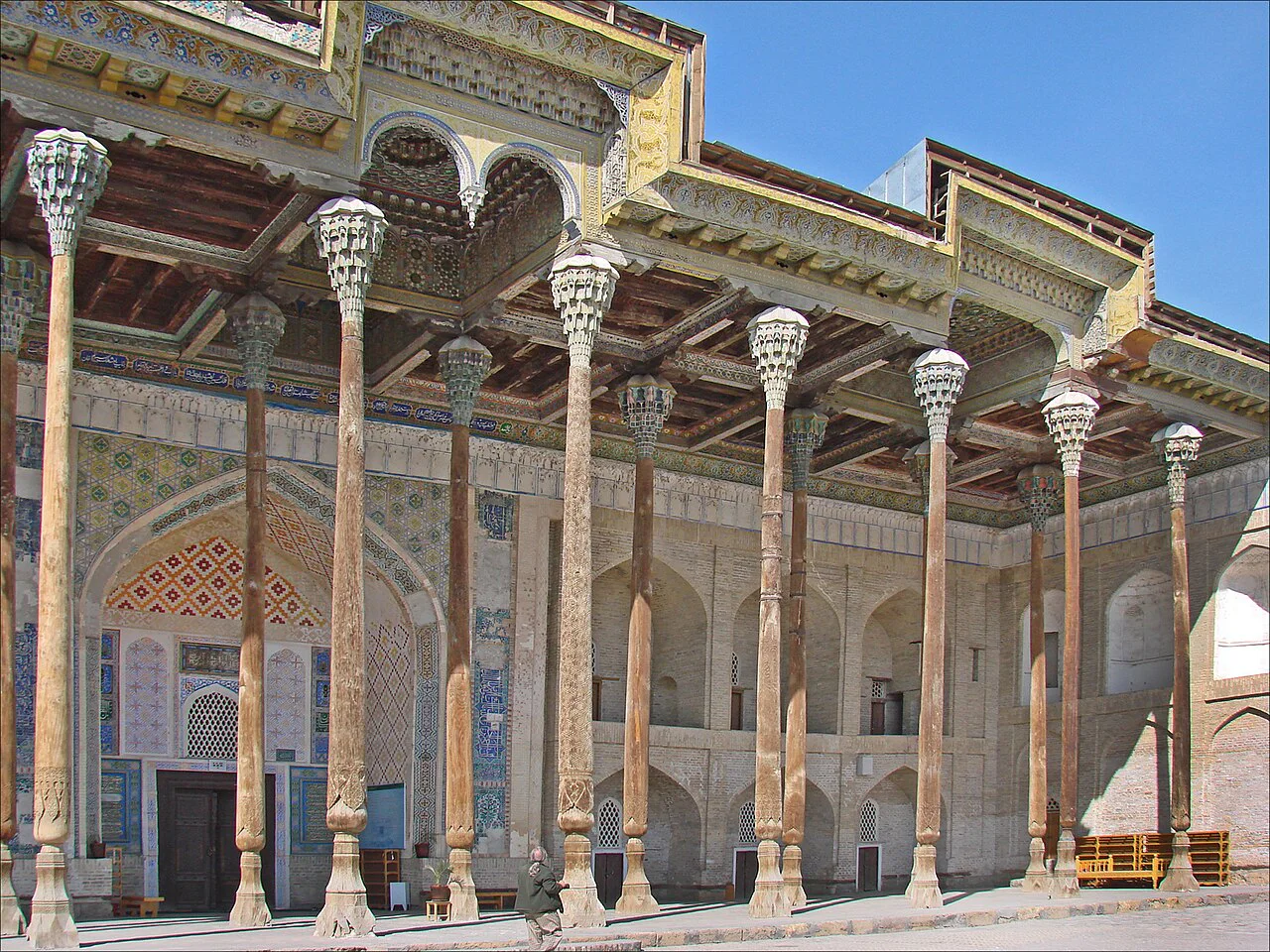
Bukhara · 1 km
Bolo Haouz Mosque
Content & sources
Jean-Pierre Dalbéra from Paris, France · CC BY 2.0
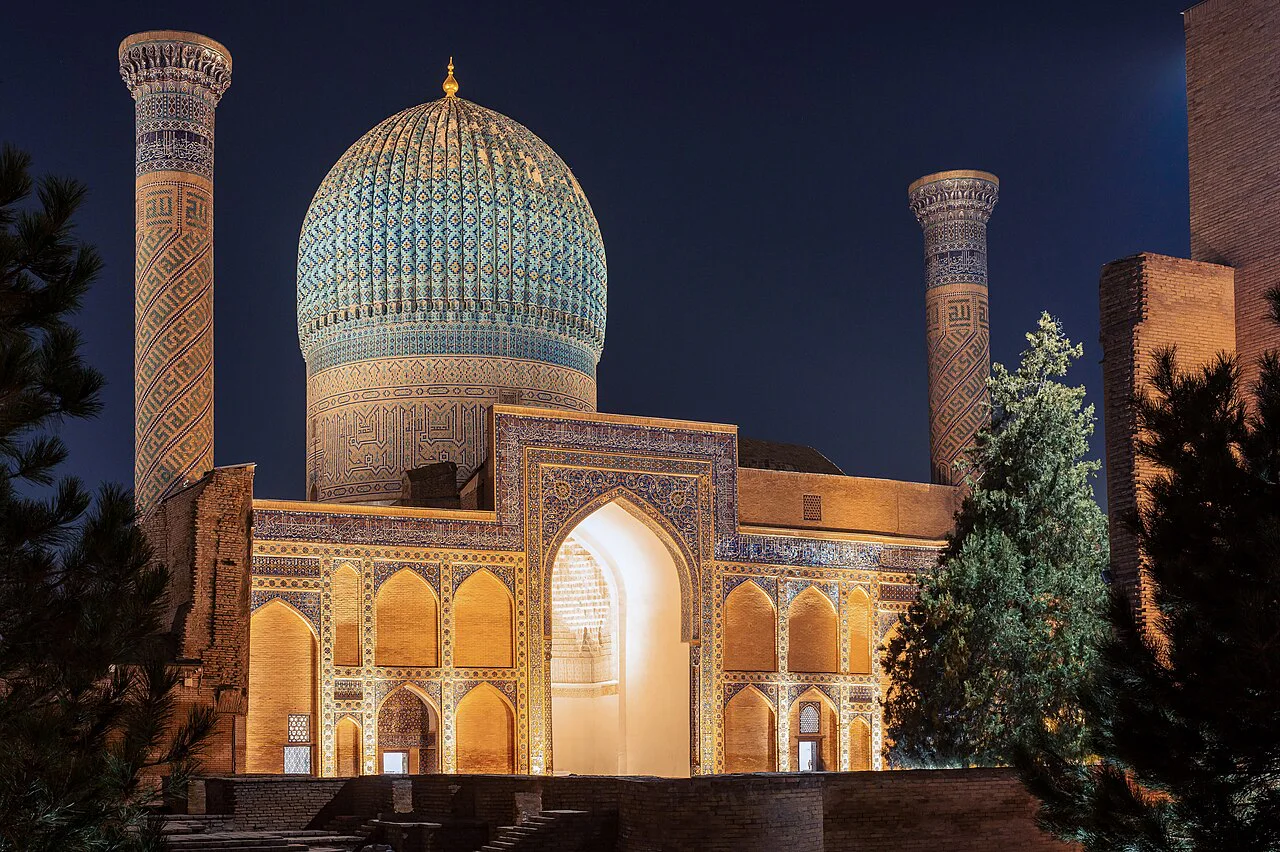
Samarkand
Gur-e-Amir
Content & sources
Photo: Arina Pan · CC BY-SA 4.0
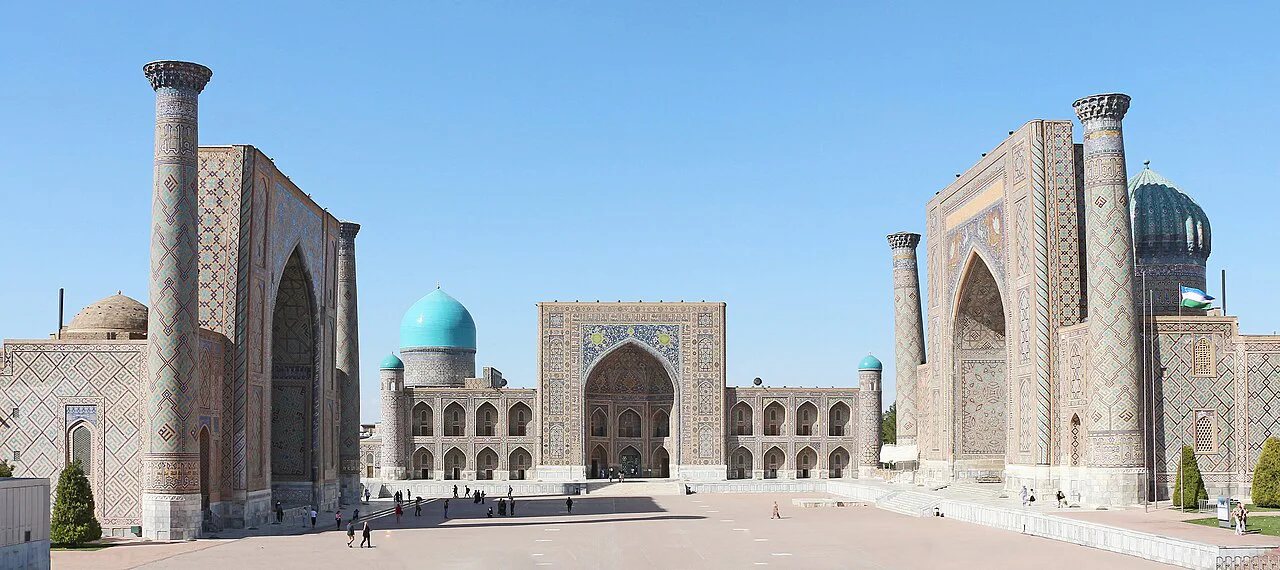
Samarkand
Registan
Content & sources
Bernard Gagnon · CC0
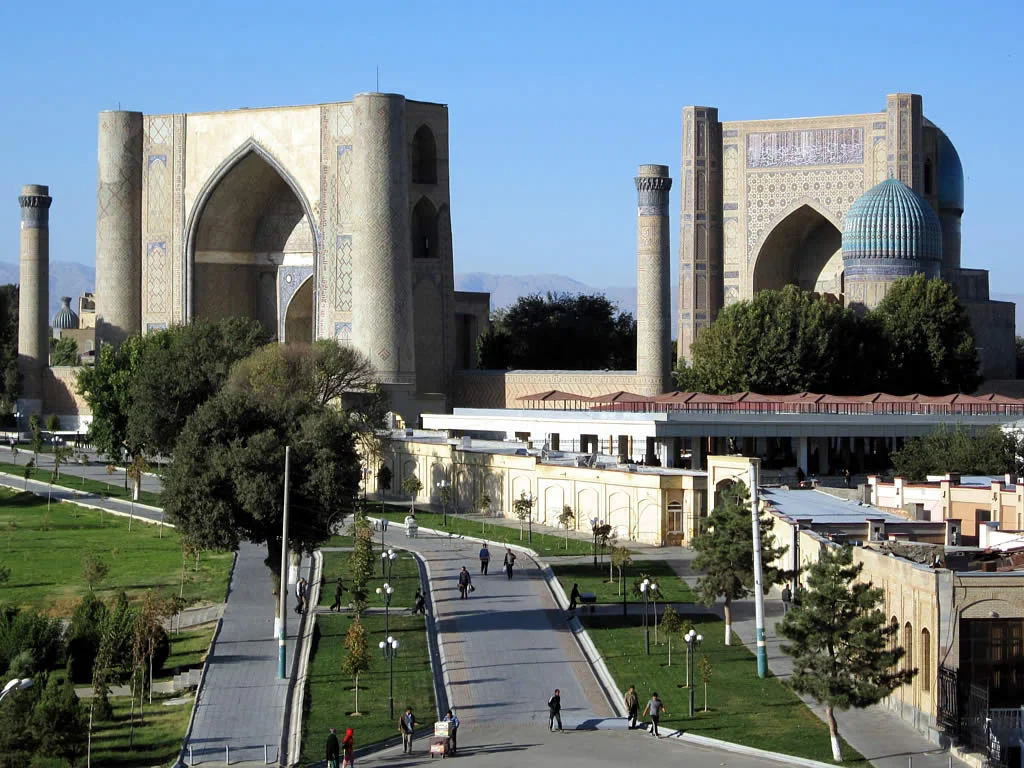
Samarkand
Bibi-Khanym Mosque
Content & sources
David Stanley from Nanaimo, Canada · CC BY 2.0
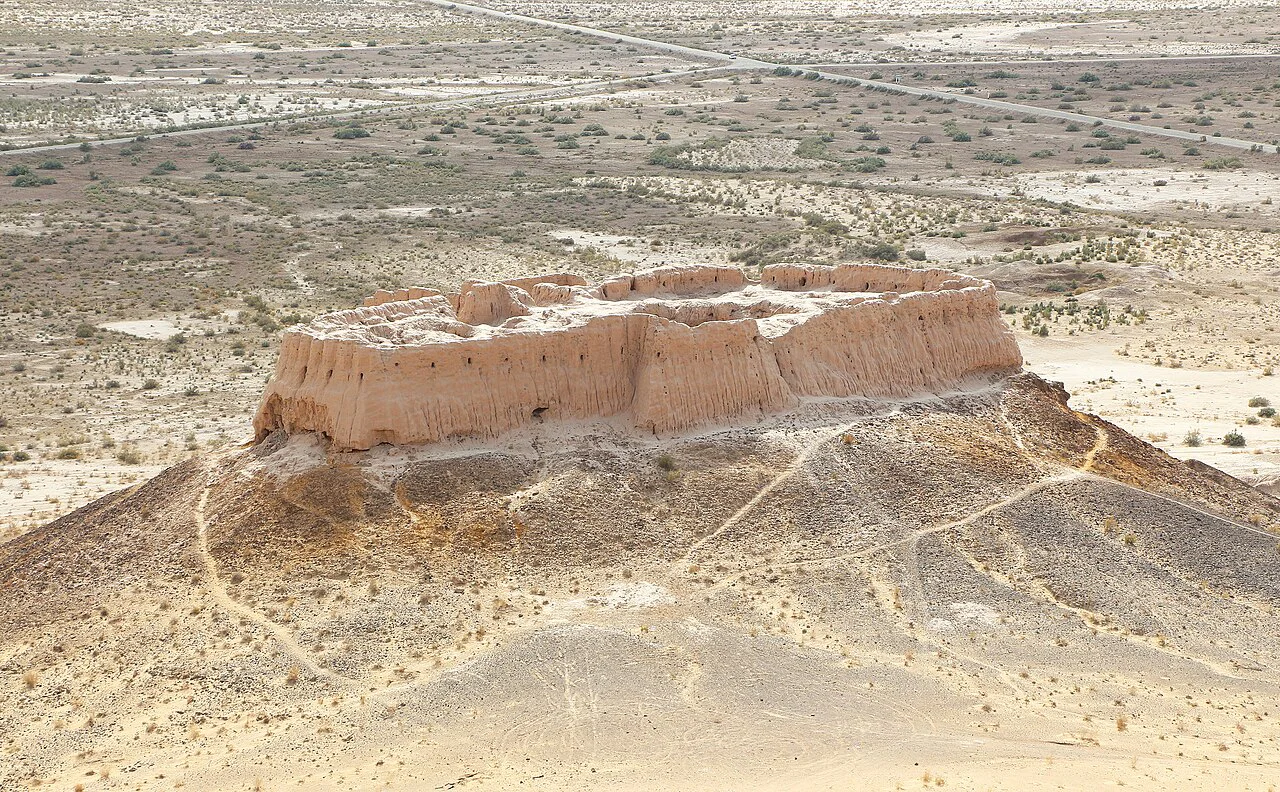
Ellikqala rayonı
Ayaz-Kala
Content & sources
Bernard Gagnon · CC0