Stanza · Audio guide
Registan Audio Guide
A place to remember. A story to take with you.
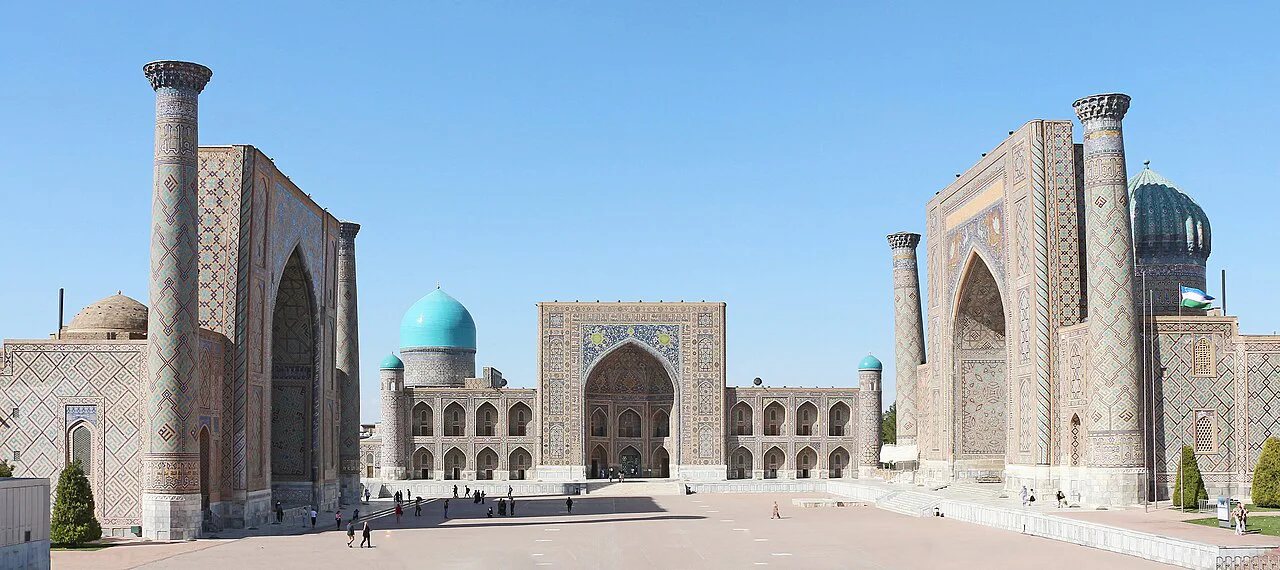
Registan is a historic public square located in the city of Samarkand. It is an architectural ensemble of three madrasas that represents some of the finest achievements of Islamic architecture in Central Asia.
Download Stanza, then search for “Registan”.
About the tour
One guide. Your kind of visit.
Registan is a historic public square located in the city of Samarkand. It is an architectural ensemble of three madrasas that represents some of the finest achievements of Islamic architecture in Central Asia.
Ready when you are.
- 01Get the free Stanza app.
iOS & Android
- 02Find your guide.
“Registan”
- 03Download before you go.
Works offline
Audio guide / 10 narrated stops
Inside the guide
Get to know a few of the stories before you go. Open a stop to read more.
01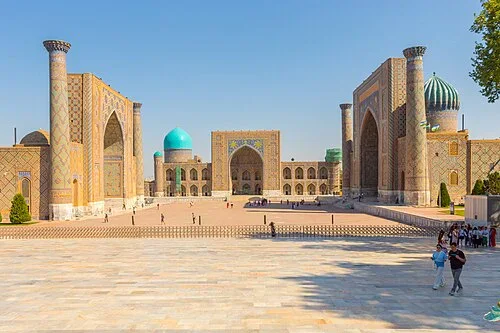 Registan Square: The Heart of the Silk Road
Registan Square
Welcome to the Registan, the historic heart of Samarkand. The name means sandy place, and long ago this was open ground at the centre of the city. Crowds gathered here to hear royal proclamations, heralded by blasts on enormous copper pipes called dzharchis. The square also saw public executions. It served as the heart of the Timurid Empire, and later as the city's commercial, educational and ceremonial centre. Three madrasas, Islamic schools, frame it on three sides, each faced with soaring portals, turquoise domes and intricate tilework. The oldest of the three rose in 1417. The newest was finished in 1660. So the ensemble grew over more than two centuries, one ruler adding to the work of another. Together they are counted among the finest achievements of Islamic architecture in Central Asia.
Photo: Bok · CC BY-SA 4.0
02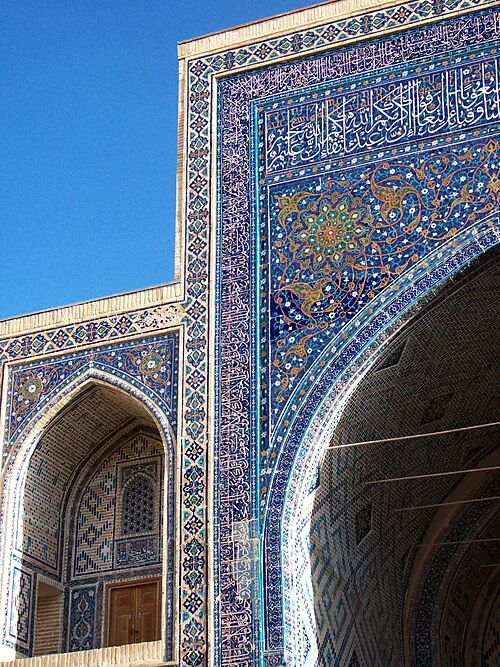 Ulugh Beg Madrasa: The Astronomer's Academy
Ulugh Beg Madrasa Portal
The oldest building on the square was begun in 1417. Its founder was Ulugh Beg, a grandson of Timur, who ruled the Timurid state and was also a leading astronomer. The madrasa was completed in 1420. Ulugh Beg gave lectures here himself. Within a short time he added an observatory to the city as well. In the fifteenth century this was one of the foremost universities of the Muslim Orient, and the madrasa and observatory together made Samarkand famous as one of the great centres of science in the East. The portal facing the square rises as a tall lancet arch, flanked at the corners by high minarets. Above its entrance arch runs a mosaic panel of stylised geometric ornament in blue and gold.
Fulvio Spada from Torino, Italy · CC BY-SA 2.0
03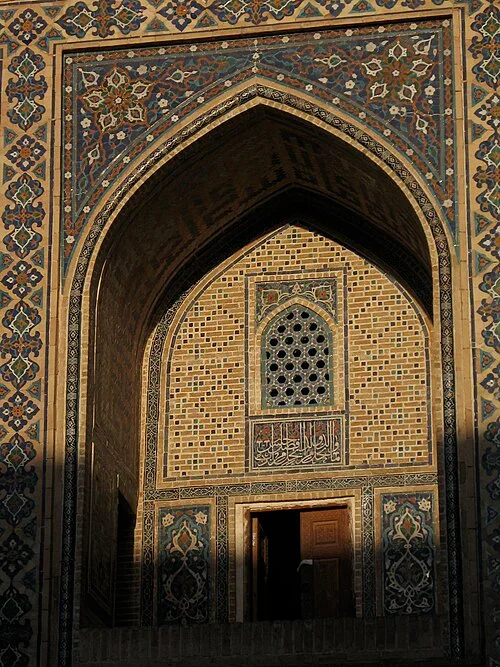 Ulugh Beg Madrasa: The Astronomer's Academy
Ulugh Beg Madrasa Courtyard
A madrasa was a school, but also a place to live. This one was built around a square courtyard, with a mosque and lecture rooms opening onto it. Along the sides ran the dormitory cells where the students lived, so study, sleep and prayer shared one enclosure. Deep galleries run along the main axes of the courtyard. Originally the building had two storeys, with four domed lecture rooms at its corners. Among those who studied here was Jami, remembered as a Persian poet, scholar, mystic, scientist and philosopher, a measure of the calibre of men the school attracted. Lessons in the courtyard, evenings in a small cell, prayers in the mosque: that was the shape of a scholar's life here.
Listen in the appAriel Gera · CC BY-SA 4.0
04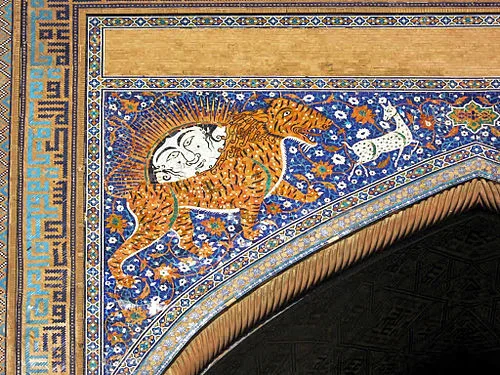 Sherdar Madrasa: The Lion-Bearing Portal
The Tiger Mosaic of the Sherdar Portal
Over the arch of this portal crouch two great cats, each with a rising sun on its back, and each sun wears a human face. Beside them runs a white deer. The word sher can mean tiger or lion, and these portal beasts gave the madrasa its name, Sherdar, the Lion-Bearing. What strikes visitors most is that the figures are there at all. Islamic art generally avoids depicting living beings, especially on religious buildings, so great beasts on the face of a college are strikingly unusual. The mosaic also draws on Turko-Persian motifs, a blend that is especially interesting. Whatever the sun-faces were meant to say, the cats have spoken for the building ever since.
Listen in the appDavid Stanley from Nanaimo, Canada · CC BY 2.0
05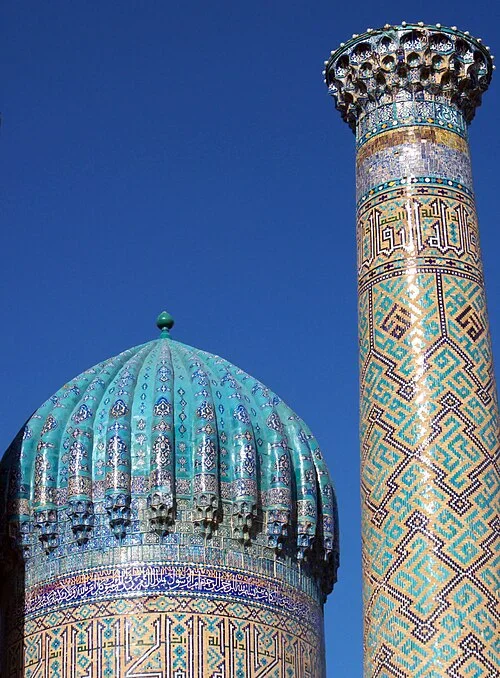 Sherdar Madrasa: The Lion-Bearing Portal
Sherdar Madrasa: Dome and Minaret
Two centuries after Ulugh Beg, a new patron took up the square. Yalangtoʻsh Bakhodir, the Uzbek ruler of Samarkand, ordered the Sherdar Madrasa built between 1619 and 1636. It rose on the site of an earlier building, a khanaqah that Ulugh Beg had erected in 1424, which by the early seventeenth century had grown old and dilapidated along with the rest of the square. The men who made it are known by name: an architect called Abdul-Jabbor and a decorator called Muhammad Abbos. The Sherdar was laid out as a deliberate mirror of the Ulugh Beg Madrasa across the square, matching the older college's mass and portal. Its dome glows a fluted turquoise, ribbed like a melon, and beside it the minaret shaft climbs in patterned tile with bands of calligraphy.
Listen in the appFulvio Spada from Torino, Italy · CC BY-SA 2.0
06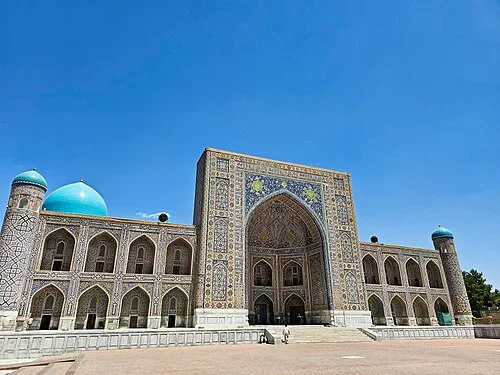 Tilakari Madrasa and the Gilded Mosque
Tilakari Madrasa
Ten years after the Sherdar, work began on the third and last madrasa. The Tilakari was built from 1646 to 1660, filling the north side of the square and completing the three-sided ensemble. It was unusual in holding two roles at once: a residential college for students, and the city's grand Friday mosque. Its main facade has two storeys, and a vast courtyard fringed with dormitory cells stretches behind it, with four galleries along the axes. On the south side there once stood another complex, joined to the Tilakari, which people called Childuxtaron, the Forty Daughters. It was built by Koʻchkunchixon, but after an earthquake in 1904 it fell into ruin, and by 1910 it had been completely demolished. Its site simply became part of the square.
Listen in the appProf. Mortel · CC BY 2.0
07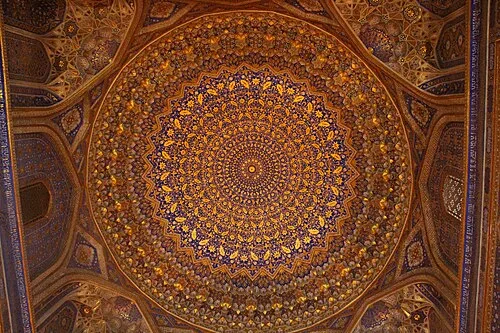 Tilakari Madrasa and the Gilded Mosque
The Painted Dome of the Tilakari Mosque
The name Tilakari means the Gilded, the Madrasa of Gilding. Overhead, the dome shows why. From a star-shaped centre at its crown, rings of ornament spread outward in ever-widening circles, gold and deep blue turning together like a great rosette. Every band carries its own pattern, petal forms, scrollwork and geometric stars, dense to the very edge of the dome. The main hall of the mosque here is said to have been abundantly gilded, and this ceiling is the clearest sign of it. Most college buildings of the square announce themselves on their tiled facades. This one saved its richest effect for the inside, and put gold on the ceiling.
Listen in the appPhoto: Игорь Улитин · CC BY-SA 4.0
08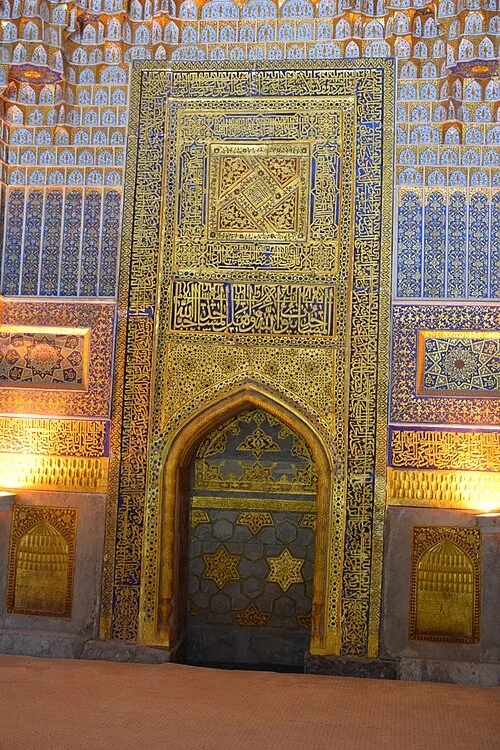 Tilakari Madrasa and the Gilded Mosque
The Gilded Mihrab of the Tilakari Mosque
At the heart of the mosque hall stands the mihrab, the prayer niche that orients worshippers toward Mecca, as it does in mosques everywhere. Here the niche is framed in dense gold and blue ornament, calligraphy and pattern packed edge to edge. A mosque like this did more than serve prayer. Gold on this scale was a statement of the wealth and ambition of Samarkand's seventeenth-century rulers, who could turn a college's prayer hall into a treasure of leaf and pigment. It is the promise of the name, kept all the way to the wall.
Listen in the appJean Housen · CC BY-SA 4.0
09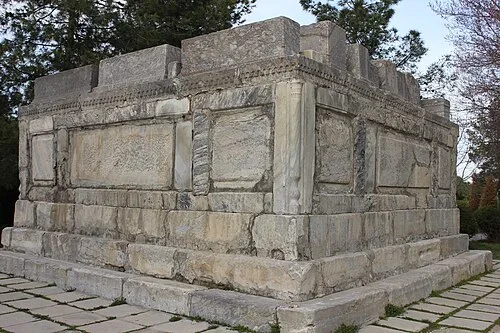 Dakhma of the Shaybanids: Tombs of the Uzbek Khans
Dakhma of the Shaybanids
East of the Tilakari Madrasa stands a low platform of weathered stone. This is the dakhma, the dynastic tomb of the Shaybanids, built in the sixteenth century. The dynasty's founder was Muhammad Shaybani, grandson of Abu'l-Khayr Khan and a leader of nomadic Uzbek tribes. In 1500, with the backing of the Chagatai Khanate, then based in Tashkent, he conquered Samarkand and Bukhara from their last Timurid rulers. He then turned on his benefactors and took old Tashkent in 1503. Under him and his successors the Uzbek tribes settled in the oases of Central Asia, and this last great Uzbek invasion became a large component of today's Uzbek nation. The platform holds the dynasty's tombs together, a collective resting place rather than separate graves.
Listen in the appPhoto: Xoqoni Said · CC0
10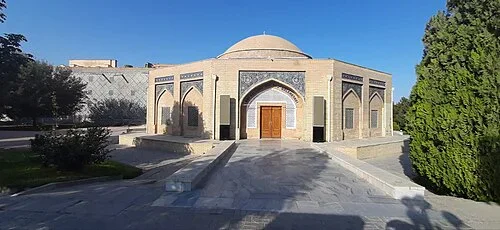 Chorsu Trading Dome: Ancient Silk Road Crossroads
Chorsu Trading Dome
Behind the Sherdar stands the last piece of the story, the trading dome called Chorsu. The word is Persian for crossing roads, and it marks the intersection of the routes connecting Samarkand with Tashkent, Bukhara and Shahrisabz. An older bazaar stood here before, and it was rebuilt in the eighteenth century, becoming a hat market. The current building took its form in 1785, under Amir Shahmurad. The bazaar itself later moved away, to the Siyob Bazaar near the Bibi-Khanym Mosque. In 2005 the building passed to the Academy of Arts of Uzbekistan, and renovators removed three metres of dirt from around it, revealing the original base construction. Chorsu now serves as an art gallery, showing the work of contemporary and historical artists. In 2001 the historic centre of Samarkand, the Registan with it, joined the UNESCO World Heritage List under a name that says it all: Samarkand, Crossroads of Cultures.
Listen in the appPhoto: ShHamrayev · CC BY-SA 4.0
Registan
Frequently asked questions
How much does the guide cost?
Free app download. Listed guide price: $0.99. Guide price shown in the app. Audio guide only. Venue admission is separate.
Can I listen without internet?
Yes. Download the guide’s audio, images, and maps in the app before your visit. Your downloaded content is then available offline.
Can I listen in my language?
This audio guide is available in 15 languages, including English.
Do I need to follow a schedule?
No. This is a self-guided experience. Choose your stops, pause whenever you like, and return to a story at your own pace.
At your own pace
Explore Registan.
Download Stanza, then search for “Registan”.
Free app download · Guide price shown in the app
Keep exploring
Nearby audio guides
Samarkand · 1 km
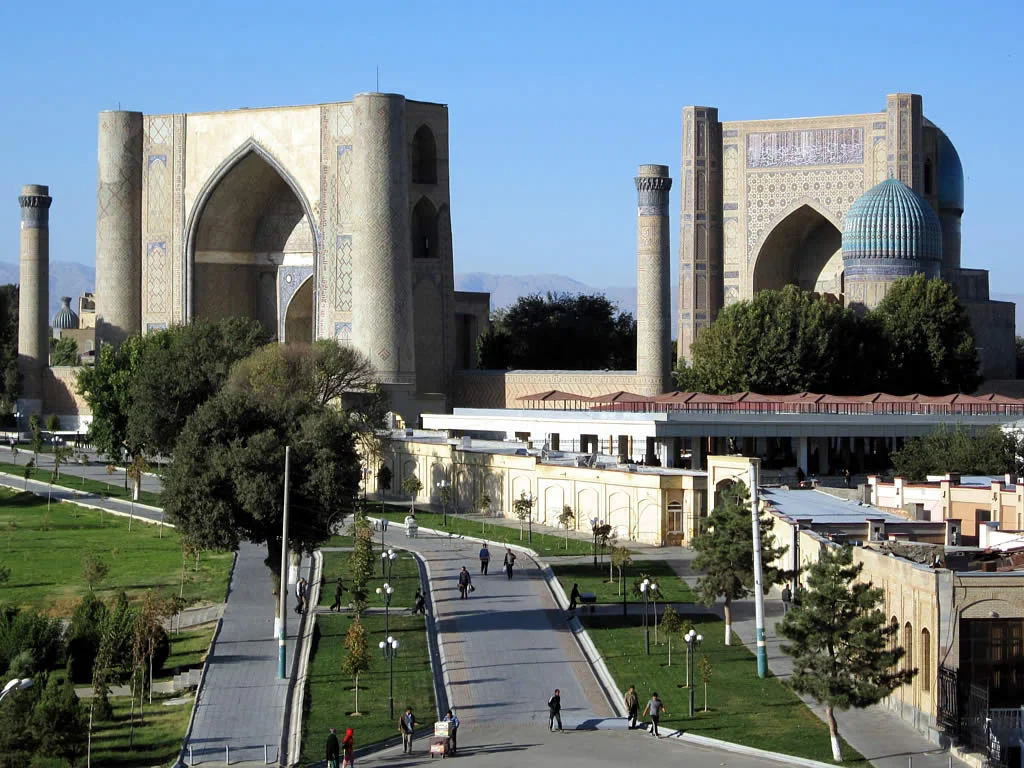
Bibi-Khanym Mosque
Content & sources
David Stanley from Nanaimo, Canada · CC BY 2.0
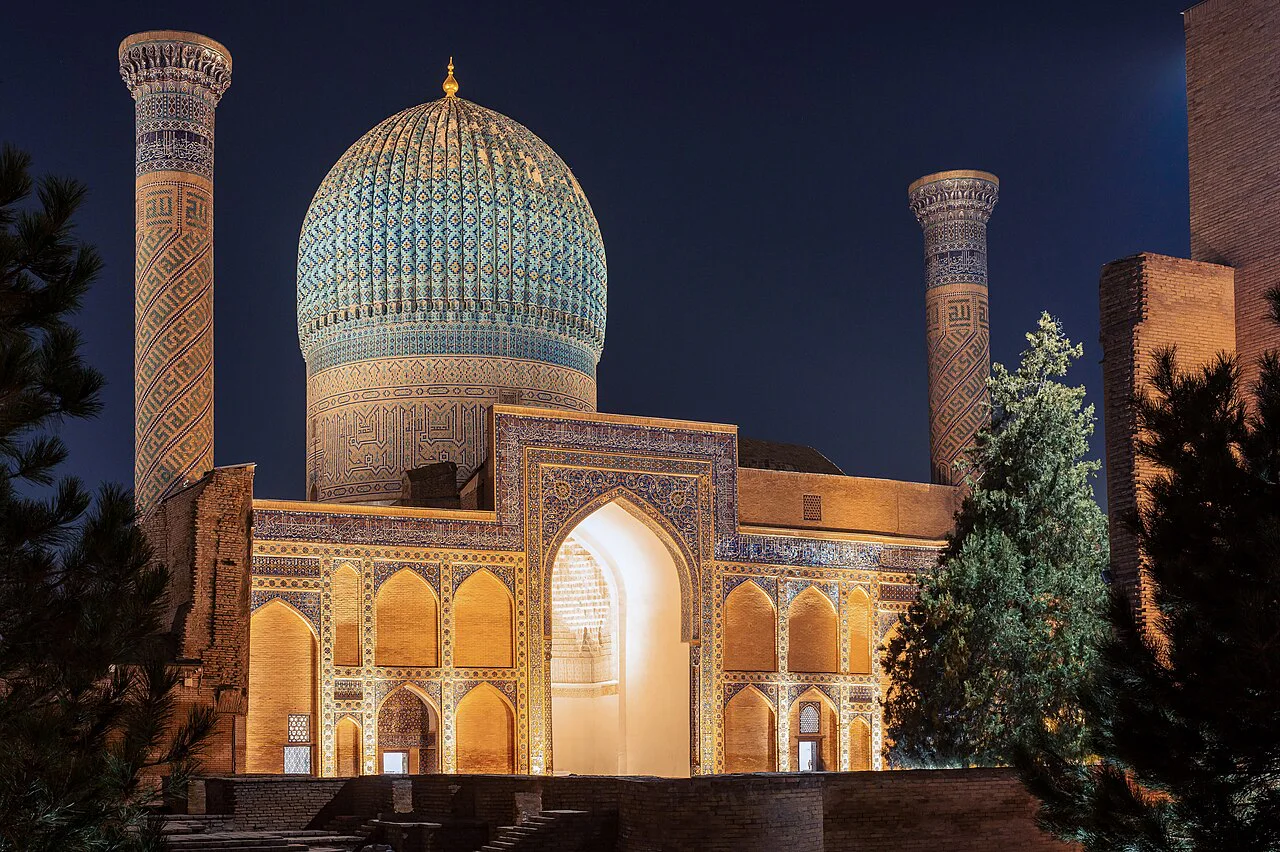
Samarkand · 1 km
Gur-e-Amir
Content & sources
Photo: Arina Pan · CC BY-SA 4.0
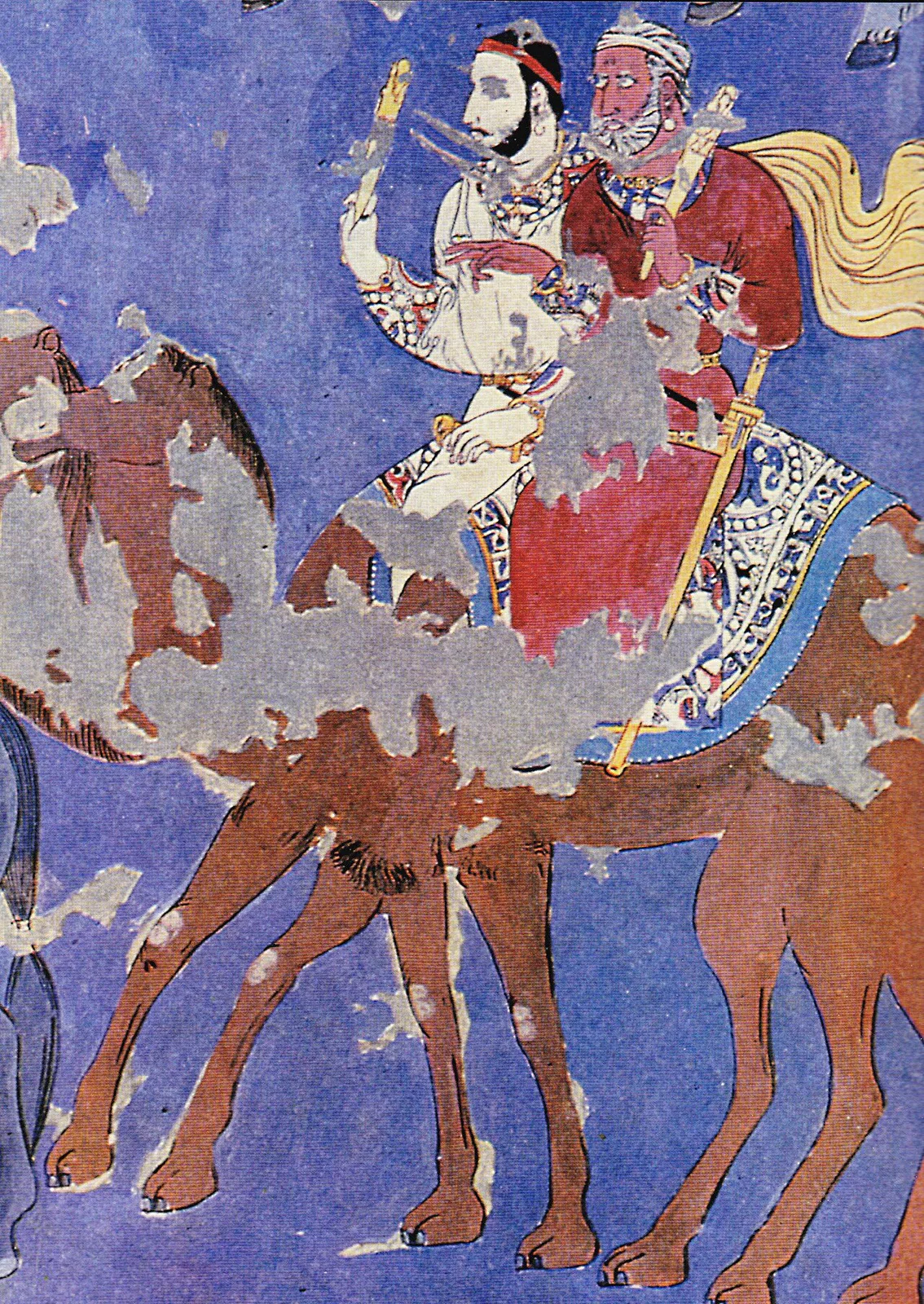
Samarkand · 2 km
Afrasiyab
Content & sources
Unknown author · Public domain
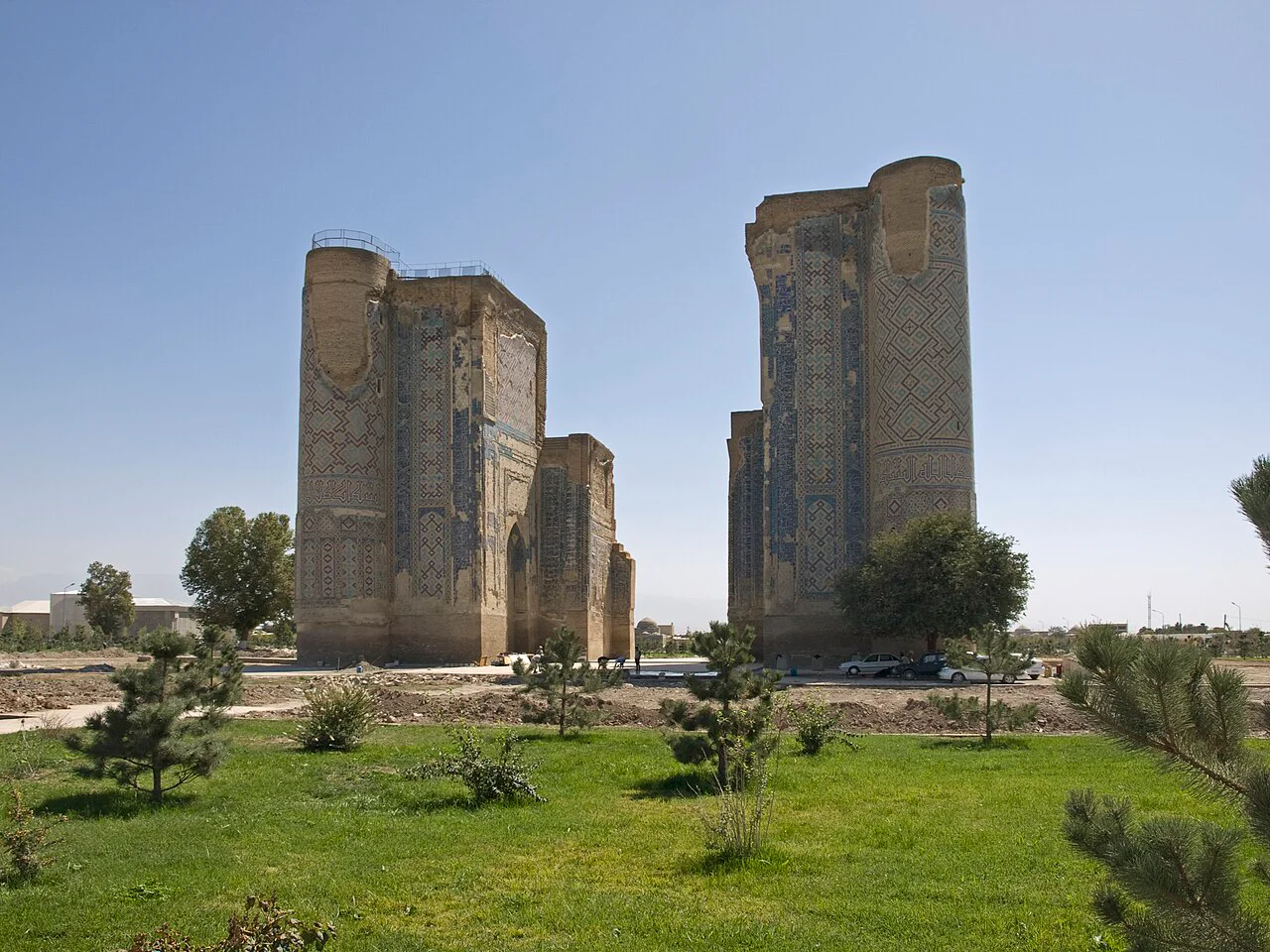
Shahrisabz · 67 km
Ak-Saray Palace
Content & sources
Photo: Ymblanter · CC BY-SA 4.0