Stanza · Audio guide
Afrasiyab Audio Guide
A place to remember. A story to take with you.
Afrasiyab is an ancient site in northern Samarkand that was occupied from approximately 500 BC to 1220 AD. Excavations at the site uncovered famous frescoes that are now displayed in the nearby Afrasiab…
Download Stanza, then search for “Afrasiyab”.
About the tour
One guide. Your kind of visit.
Afrasiyab is an ancient site in northern Samarkand that was occupied from approximately 500 BC to 1220 AD. Excavations at the site uncovered famous frescoes that are now displayed in the nearby Afrasiab Museum of Samarkand.
Ready when you are.
- 01Get the free Stanza app.
iOS & Android
- 02Find your guide.
“Afrasiyab”
- 03Download before you go.
Works offline
Audio guide / 14 narrated stops
Inside the guide
Get to know a few of the stories before you go. Open a stop to read more.
01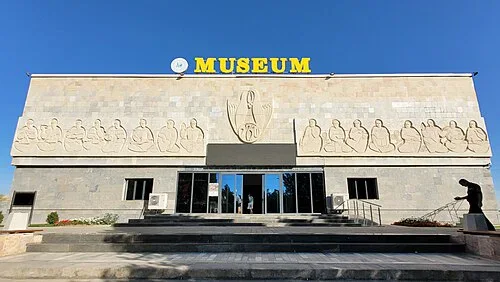 Afrasiyab Museum Entrance
Afrasiyab Museum of Samarkand - Tour Opening
Welcome to the Afrasiyab Museum of Samarkand, the doorway to the oldest part of the city. Afrasiyab is the ruined heart of ancient Samarkand, today a hilly grass mound beside the modern metropolis, not far from the Bibi Khanum Mosque. People settled this high ground in the middle of the first millennium BC, and it grew into the centre of Sogdian culture. The name itself carries two stories. Folklore gives the fortress to a mythical king, Afrasiyab of the Shahnameh, the legendary lord of Turan. Scholars hear it differently: a worn-down form of the old Sogdian word Parshvab, meaning beyond the black river. That river is the Siyab, which still bounds the site to the north. The name Castle of Afrasiyab only turns up in writing towards the end of the seventeenth century. Inside the museum wait the famous seventh-century murals, and outside lies the buried city itself.
Photo: Bgag · CC0
02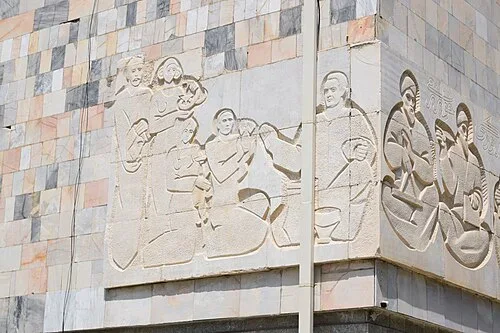 Afrasiyab Museum Entrance
Carved Frieze on the Museum Facade
The carved figures on the museum's facade are modern work, cut to adorn the building rather than dug from the hill. Pale stone musicians and seated guests run in a frieze along the front. Nothing identifies them by name, date or story; they belong to the decoration, not to the excavation. The museum was purpose-built to display what the digs uncovered, and the frieze sets the tone for what waits inside.
Jean Housen · CC BY-SA 4.0
03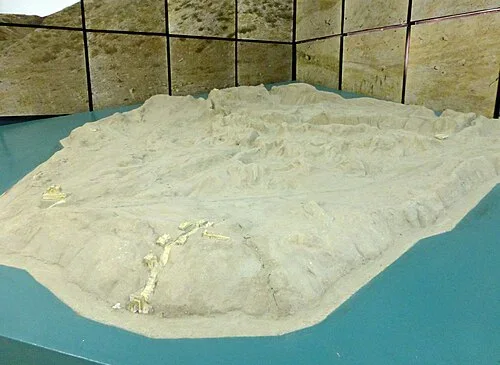 Afrasiyab Museum Entrance
Relief Model of the Ancient City
The relief model shows what the ground outside can no longer say. Afrasiyab covered about two hundred and twenty hectares, laid out as a triangle with its point facing south. Dig down anywhere and the layers of occupation run eight to twelve metres deep. The founders chose high ground on purpose: a river valley to the north, rich farmland to the south, and defence in every direction. High walls once ringed the whole town, and from ground level today they read as long clay ridges. The model restores the shape the eye has lost.
Listen in the appPhoto: Ji-Elle · CC BY-SA 4.0
04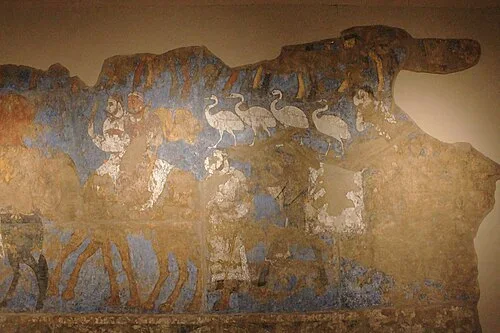 The Hall of the 7th-Century Murals
The Hall of the Afrasiyab Murals
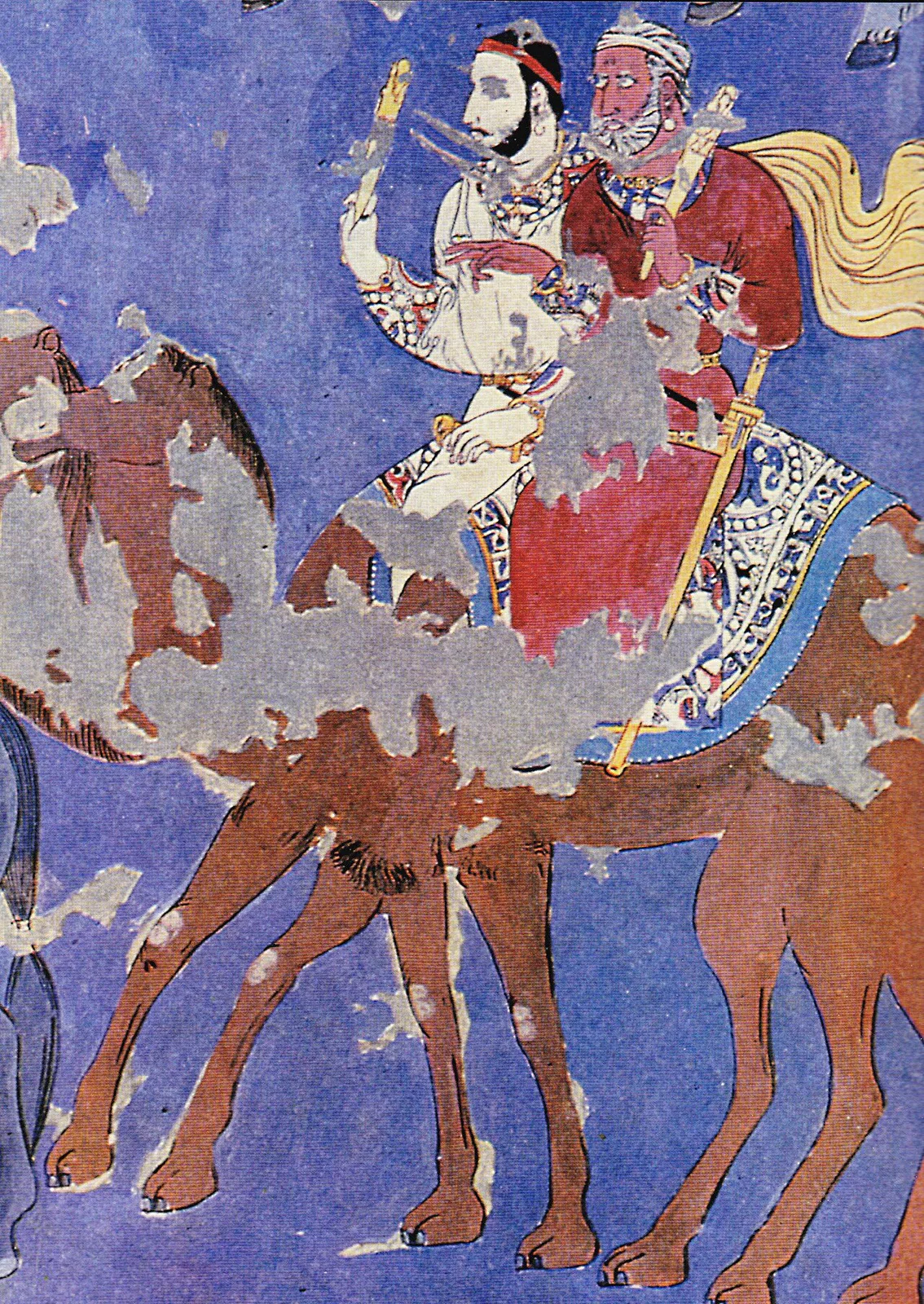
The mural hall holds the museum's treasure: wall paintings cut from a seventh-century palace. They show Samarkand's king, Varkhuman, receiving embassies from country after country, China among them. An inscription painted into the scenes names him directly, and Chinese histories mention the same man. Dating the paintings is genuinely uncertain. They may have been painted around 648 to 651, as the Western Turkic Khaganate was fading. Or soon after 658, when the Tang dynasty had conquered it and Varkhuman could deal with the Chinese directly. Either way, the walls of a Samarkand palace once carried this procession of visiting nations.
Listen in the appPhoto: Nassima Chahboun · CC BY-SA 4.0
05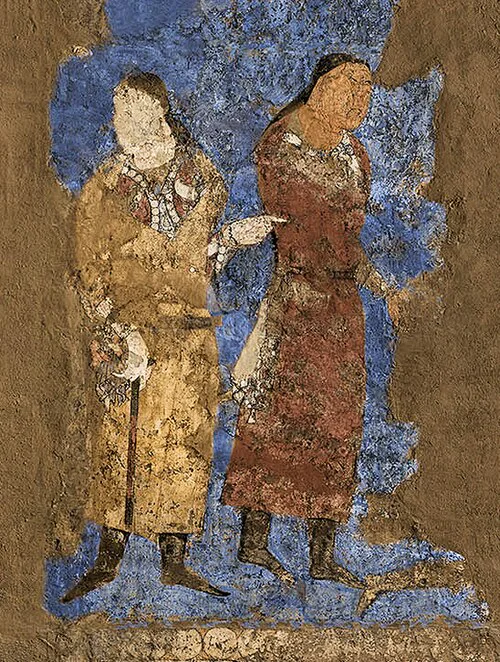 The Hall of the 7th-Century Murals
Turkic Dignitaries in the Murals
The painters had their own way of telling the envoys apart. These are Turkic officers at an audience with King Varkhuman, and their long plaits give them away. Other dignitaries carry painted labels naming where they came from; one is marked as arriving from Argi, Karashahr in today's Xinjiang. Dress, plait and inscription did the work a museum caption does now. The artists of the seventh century wanted every delegation recognisable.
Listen in the appPhotographer: NORTHEAST ASIAN HISTORY FOUNDATION · Public domain
06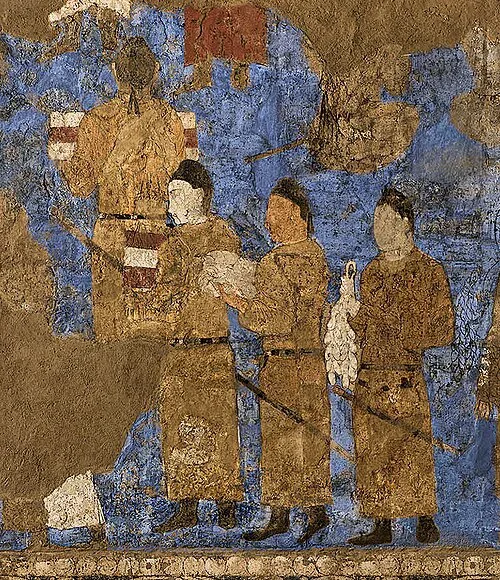 The Hall of the 7th-Century Murals
The Chinese Embassy with Silk and Silkworm Cocoons
One procession in the murals carries the Silk Road in its hands. A Chinese embassy arrives before the Sogdian ruler, bearing silk and a string of silkworm cocoons. The cocoons are the telling cargo, because they hold the secret of how silk is made. For a trading city on the routes between China and the west, that small painted detail says everything. Silk and the knowledge of it travelled these roads together, and Samarkand lived on what passed through.
Listen in the appNORTHEAST ASIAN HISTORY FOUNDATION · Public domain
07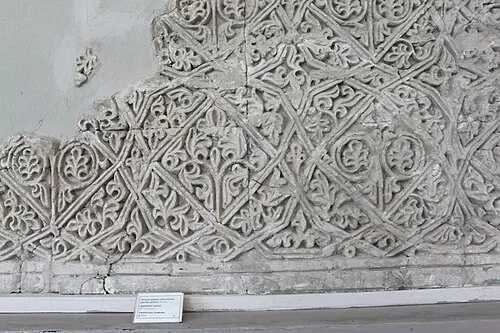 The Archaeological Artifacts Gallery
Samanid-Era Carved Stucco
This carved alabaster panel carries the ornament of Samarkand's Islamic centuries. Excavation showed that a palace of the Samanid dynasty once stood at Afrasiyab, and with it a wealthy tenth-century dwelling: a domed hall panelled inside and out with carved gypsum stucco. That ornamentation survives as an example of medieval art. The prosperous city of the ninth and tenth centuries had comforts to match. Diggers found five bathhouses, complete with cisterns, pipes carrying heated water, dressing rooms, warm and cold halls, and open courtyards. Some of the bathhouses were themselves decorated with carved stucco and frescoes.
Listen in the appFaqscl · CC BY-SA 3.0
08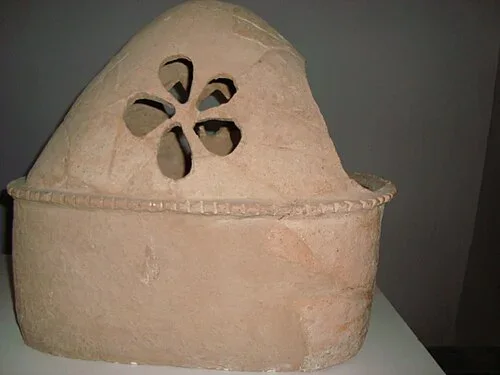 The Archaeological Artifacts Gallery
Pre-Islamic Sogdian Ossuary
Before the Islamic layers, this ground belonged to the Sogdians, and the galleries reach back to that older world. This ceramic ossuary is a vessel of a kind used across Zoroastrian-influenced Central Asia to hold the bones of the dead. In that tradition the body was laid out first, and the bones were later gathered into containers like this one. The piece is a reminder that the collection spans the whole life of the city, not only its final centuries.
Listen in the appFaqscl · CC BY-SA 3.0
09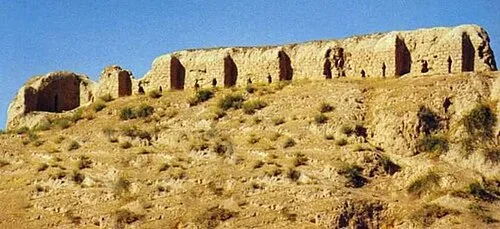 The Ancient Fort and Southern Ramparts
The Ruined City - The Mongol Destruction of 1220
Out on these bare mounds, the city met its end. In 1220 the armies of Genghis Khan besieged Samarkand here. The walls were breached, palaces were burned, and the elaborate water supply was cut. The surviving population left the hilltop, and after that the hill stayed empty. What the catastrophe preserved is the site itself: the city had stood here, continuously inhabited and rebuilt, for some seventeen centuries. Nothing rose over the ruins afterwards, and the grass mounds are that moment, left where it fell.
Listen in the appPhoto: Akhemen · CC BY-SA 4.0
10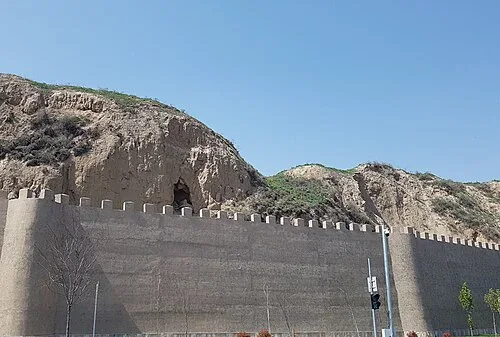 The Ancient Fort and Southern Ramparts
The Clay Ramparts
The ramparts earned their own reputation. On the inside, those clay embankments rise up to forty metres high. Remains of towers have come to light in several places along the surrounding wall, whose longest recorded stretch runs over three kilometres. The main entrance to the town lay in the middle part of the eastern wall. Like the houses, the defences were built of unbaked brick set on wooden framework and finished with clay moulding. These were the walls the Mongol assault had to break.
Listen in the appPhoto: BeshevI · CC BY-SA 4.0
- 11
Eroded Streets and the City's Water
Daily life in old Samarkand: modest houses, glass-set windows and a reservoir holding millions of litres.
- 12
The Citadel - Then and Now
A century of archaeology: Veselovsky, Masson, Viatkin and the digs that opened the hill.
- 13
Hazrat Khizr Mosque and the Iron Kesh Gate
The Iron Kesh Gate and its lost, unreadable inscriptions, at the site's southern edge.
- 14
Samarkand Reborn - The View from Hazrat Khizr
The closing view: after 1220 the city moved south, and Afrasiyab became its buried first chapter.
Afrasiyab
Frequently asked questions
How much does the guide cost?
Free app download. Listed guide price: $0.99. Guide price shown in the app. Audio guide only. Venue admission is separate.
Can I listen without internet?
Yes. Download the guide’s audio, images, and maps in the app before your visit. Your downloaded content is then available offline.
Can I listen in my language?
This audio guide is available in 15 languages, including English.
Do I need to follow a schedule?
No. This is a self-guided experience. Choose your stops, pause whenever you like, and return to a story at your own pace.
At your own pace
Explore Afrasiyab.
Download Stanza, then search for “Afrasiyab”.
Free app download · Guide price shown in the app
Keep exploring
Nearby audio guides
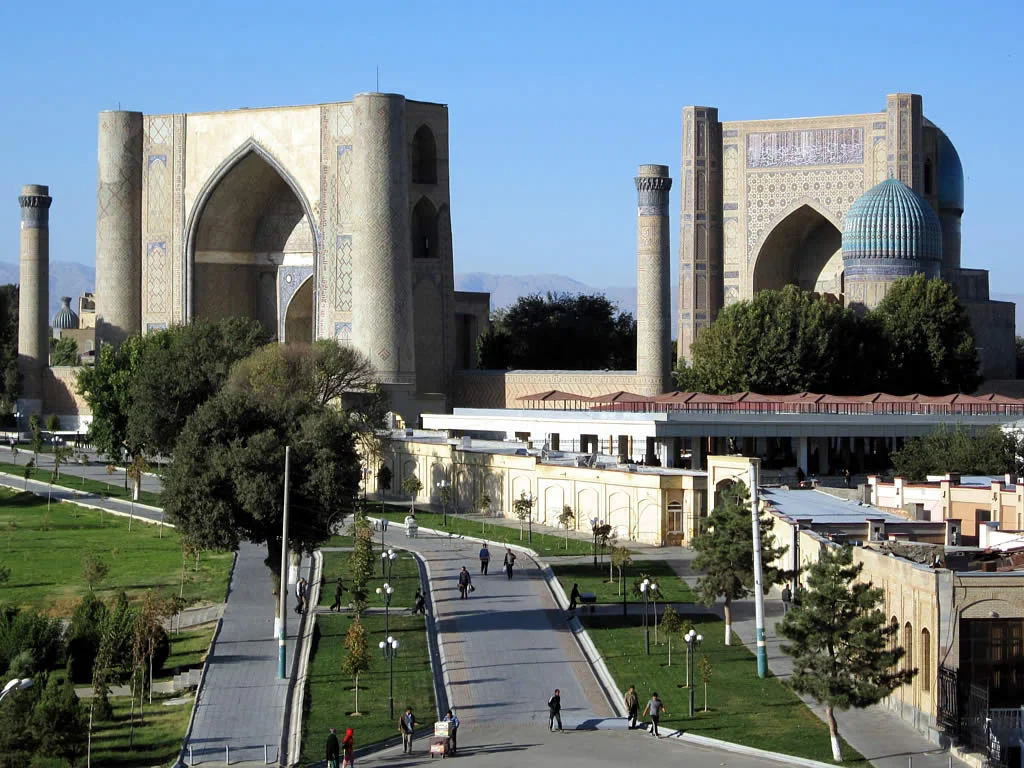
Samarkand · 1 km
Bibi-Khanym Mosque
Content & sources
David Stanley from Nanaimo, Canada · CC BY 2.0
Samarkand · 2 km
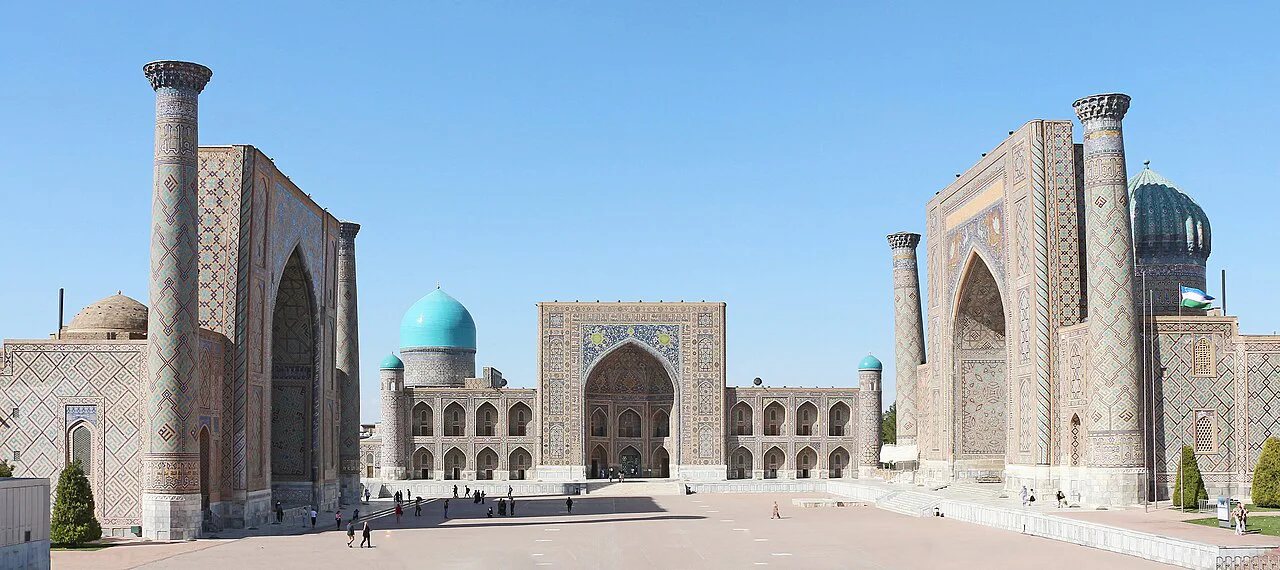
Registan
Content & sources
Bernard Gagnon · CC0
Samarkand · 3 km
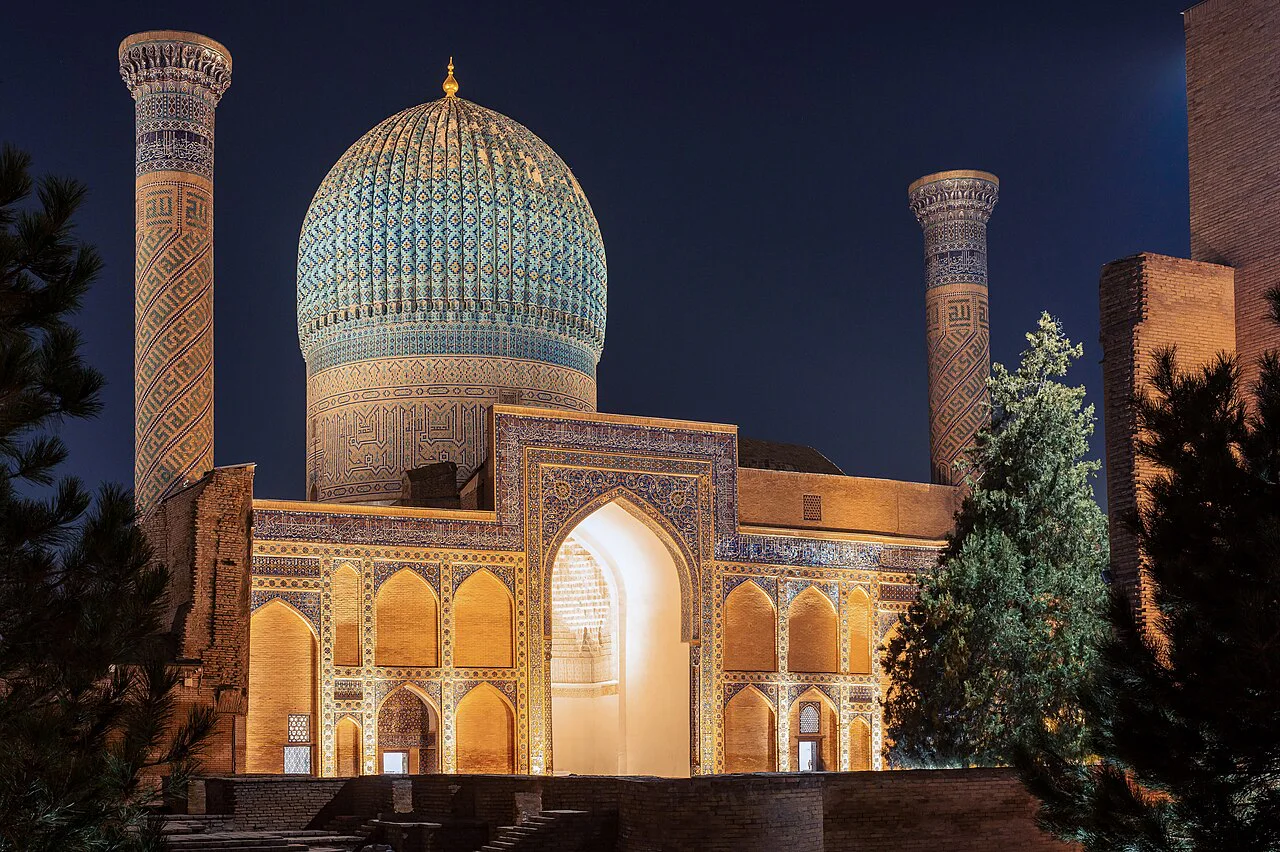
Gur-e-Amir
Content & sources
Photo: Arina Pan · CC BY-SA 4.0
Shahrisabz · 69 km
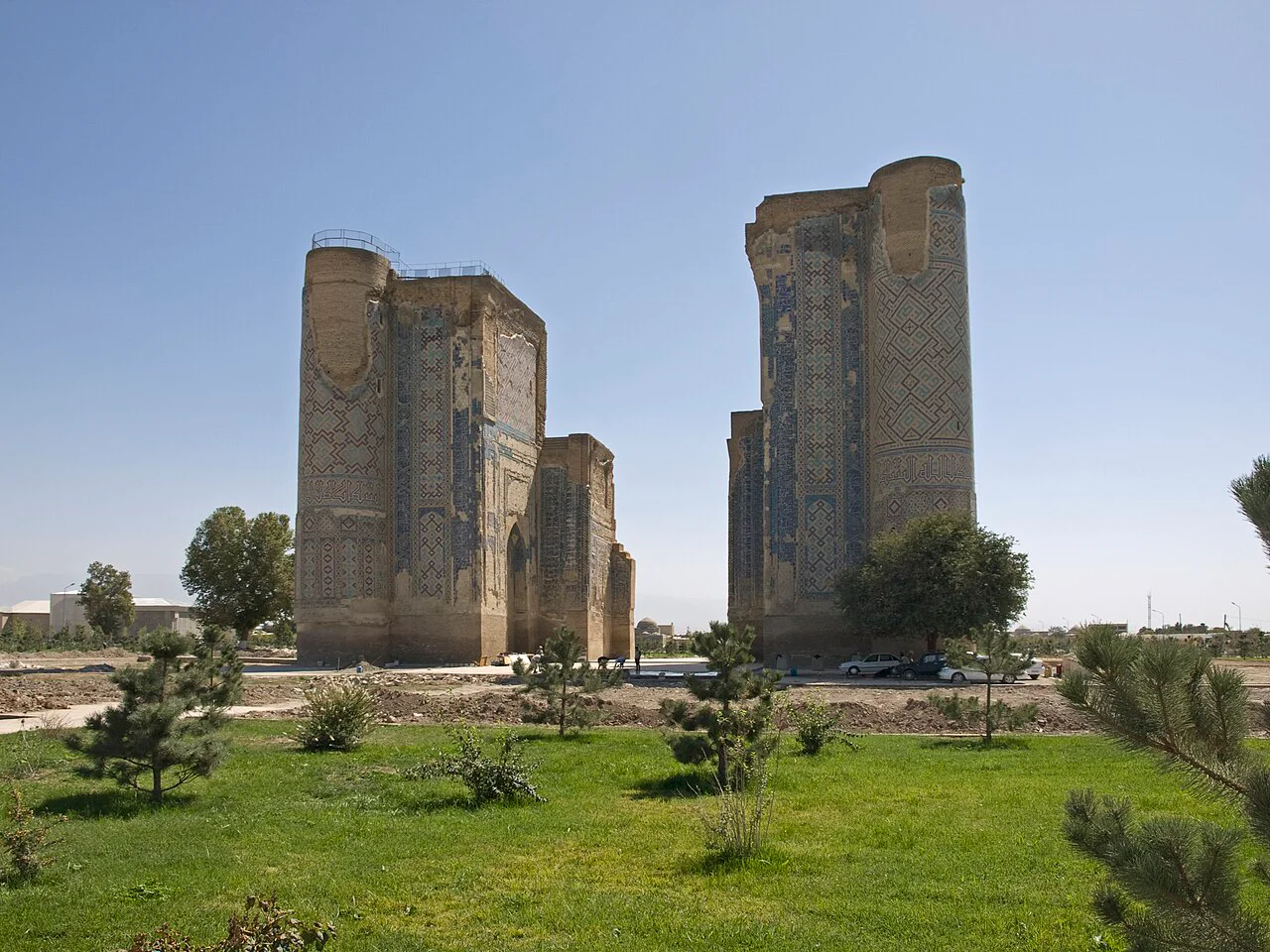
Ak-Saray Palace
Content & sources
Photo: Ymblanter · CC BY-SA 4.0