 Stanza / Audio guide
Content & sources
Stanza · Audio guide
Bolo Haouz Mosque Audio Guide
A place to remember. A story to take with you.
Bolo Haouz Mosque is a historical mosque in Bukhara, Uzbekistan, built in 1712. It is inscribed in the UNESCO World Heritage Site list and features thin columns made of painted wood added to the frontal part…
Download Stanza, then search for “Bolo Haouz Mosque”.
About the tour
One guide. Your kind of visit.
Bolo Haouz Mosque is a historical mosque in Bukhara, Uzbekistan, built in 1712. It is inscribed in the UNESCO World Heritage Site list and features thin columns made of painted wood added to the frontal part of the iwan in 1917.
Ready when you are.
- 01Get the free Stanza app.
iOS & Android
- 02Find your guide.
“Bolo Haouz Mosque”
- 03Download before you go.
Works offline
Audio guide / 7 narrated stops
Inside the guide
Get to know a few of the stories before you go. Open a stop to read more.
01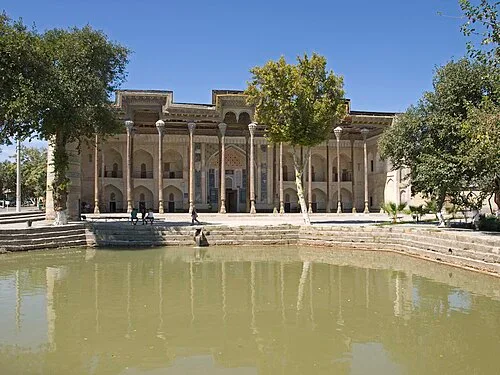 The Registan Approach & The Octagonal Pond
The Friday Mosque Facing the Ark
Welcome to the Bolo Haouz Mosque, the Friday mosque of the emirs of Bukhara. Across the square from it rises the Ark, the great citadel where the rulers of the city lived. The two buildings face each other, and that arrangement tells you what this mosque was for. It was built in 1712 as the royal mosque, the place where the emir came to pray the Friday prayer together with the townspeople. The ruler crossed the Registan square from his fortress to worship among his subjects, not apart from them. The founding patron was a woman: Sitorai Mohi Xossa, the mother of Khan Abulfayz, who paid for the mosque and its great domed hall. Her name survives attached to the building she gave the city. The mosque stands in the historic centre of Bukhara, which is listed by UNESCO as a World Heritage Site. In the nineteen-twenties, when Bukhara fell under Bolshevik rule, this was still the Friday mosque of the city, the main sermon and gathering of the week. Keep the pond in view for a moment, because it holds the answer to the mosque's curious name.
Photo: Ymblanter · CC BY-SA 4.0
02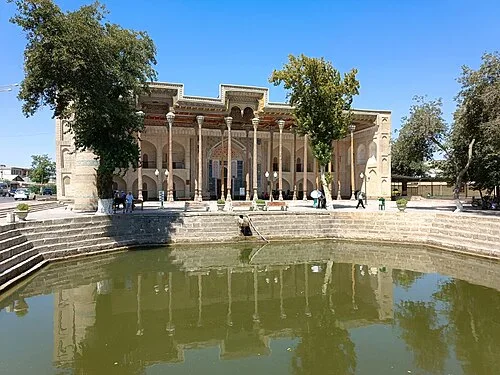 The Registan Approach & The Octagonal Pond
The Octagonal Pond and the Name Bolo Haouz
The name Bolo Haouz means, roughly, the mosque above the pond. The pond in question is the one filling the foreground here, an octagonal artificial reservoir known in Central Asia as a howz. It likely dates back to the mosque's own construction, and its purpose was practical rather than ornamental. In the days before piped water, reservoirs like this one served as the water sources for the population of the city. People drew their daily water from its stepped stone banks, and the mosque was built beside it. The wide stone steps you can see sloping down to the water on every side are part of that old design. Only later did the mirror in the water become part of the pleasure of the place. On a calm day the whole facade of the mosque, columns and painted roof, floats upside down in the green water. The building and its reflection meet at the rim of the octagon, which is exactly how this view has been framed for centuries.
Viaggiamocela · CC BY-SA 4.0
03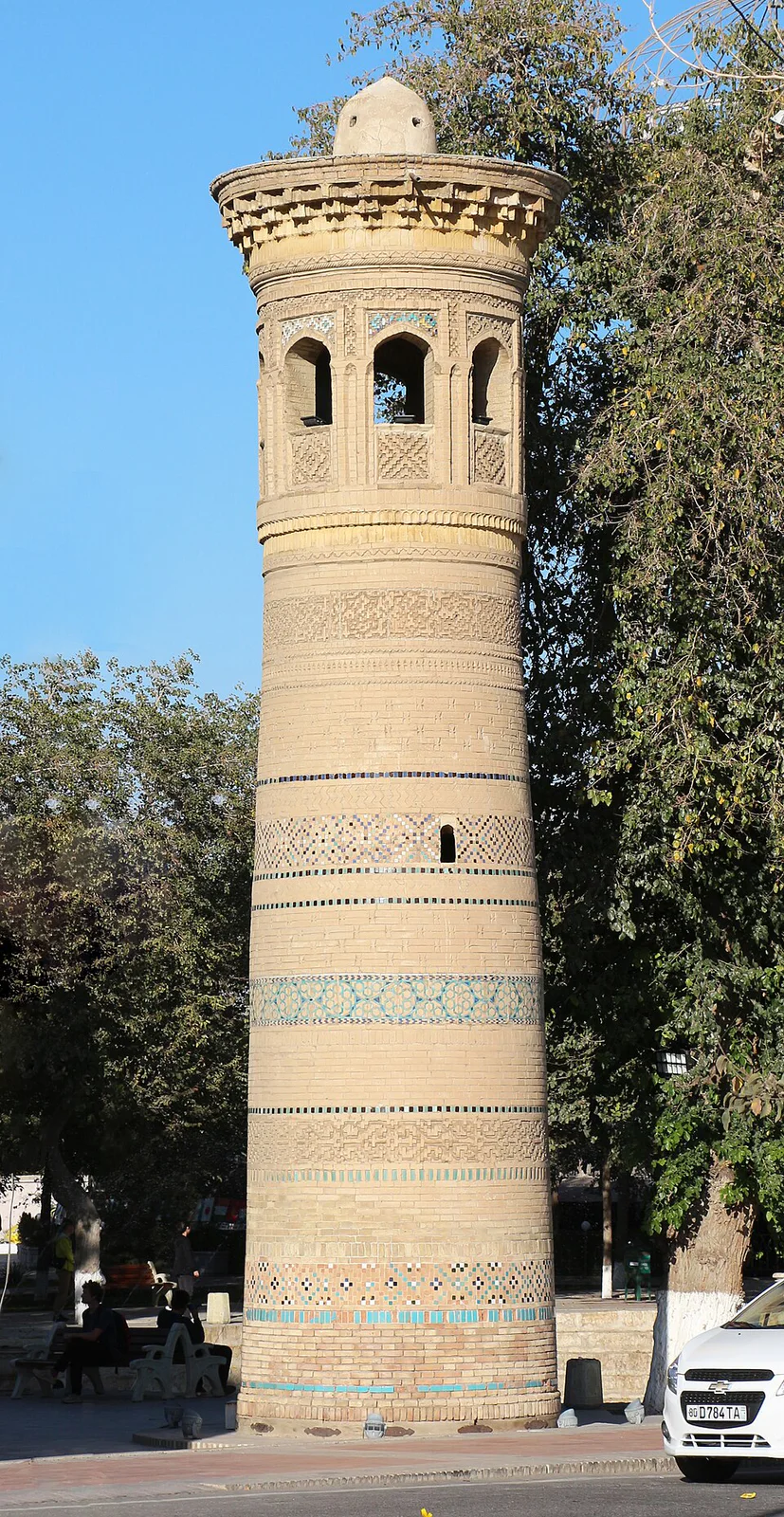 The 1917 Brick Minaret
The 1917 Minaret of Usta Shirin Murodov
Beside the mosque stands a short, thickset minaret, and it is younger than it looks. The mosque's earlier minaret did not survive, and the one rising here now was built in 1916 and 1917 in a different form from the lost original. Two master craftsmen are named as its builders: Usta Shirin Murodov and Usta Hafizov. An usta is a master of his craft, and these two rebuilt the tower from the ground up just over a century ago. Its decoration is the work of patient hands. Bands of patterned brickwork run around the shaft, alternating with bands of blue glazed tiles set in a variety of geometric designs. Some of the patterns are in laid brick alone, raised and cut so the light catches them. Higher up, narrow arched openings open the tower, where the call to prayer once sounded out over the square. So this tower is really a creation of the nineteen-teens, a craftsman's tribute to an older building tradition.
Listen in the appPhoto: Bgag · CC0
04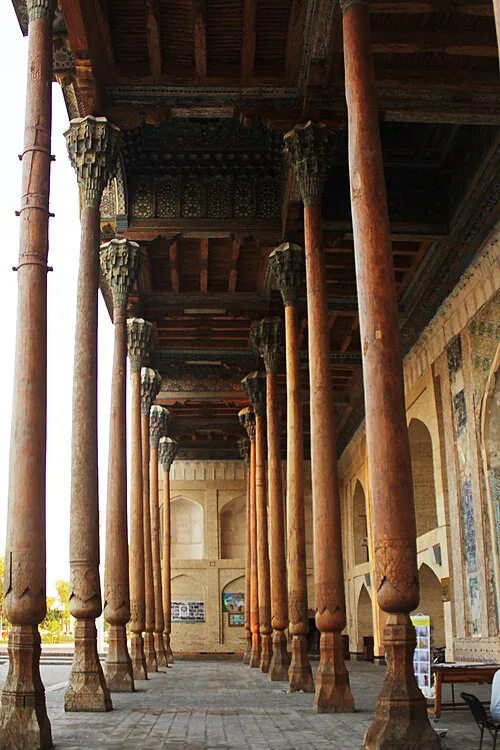 The 20-Column Summer Iwan
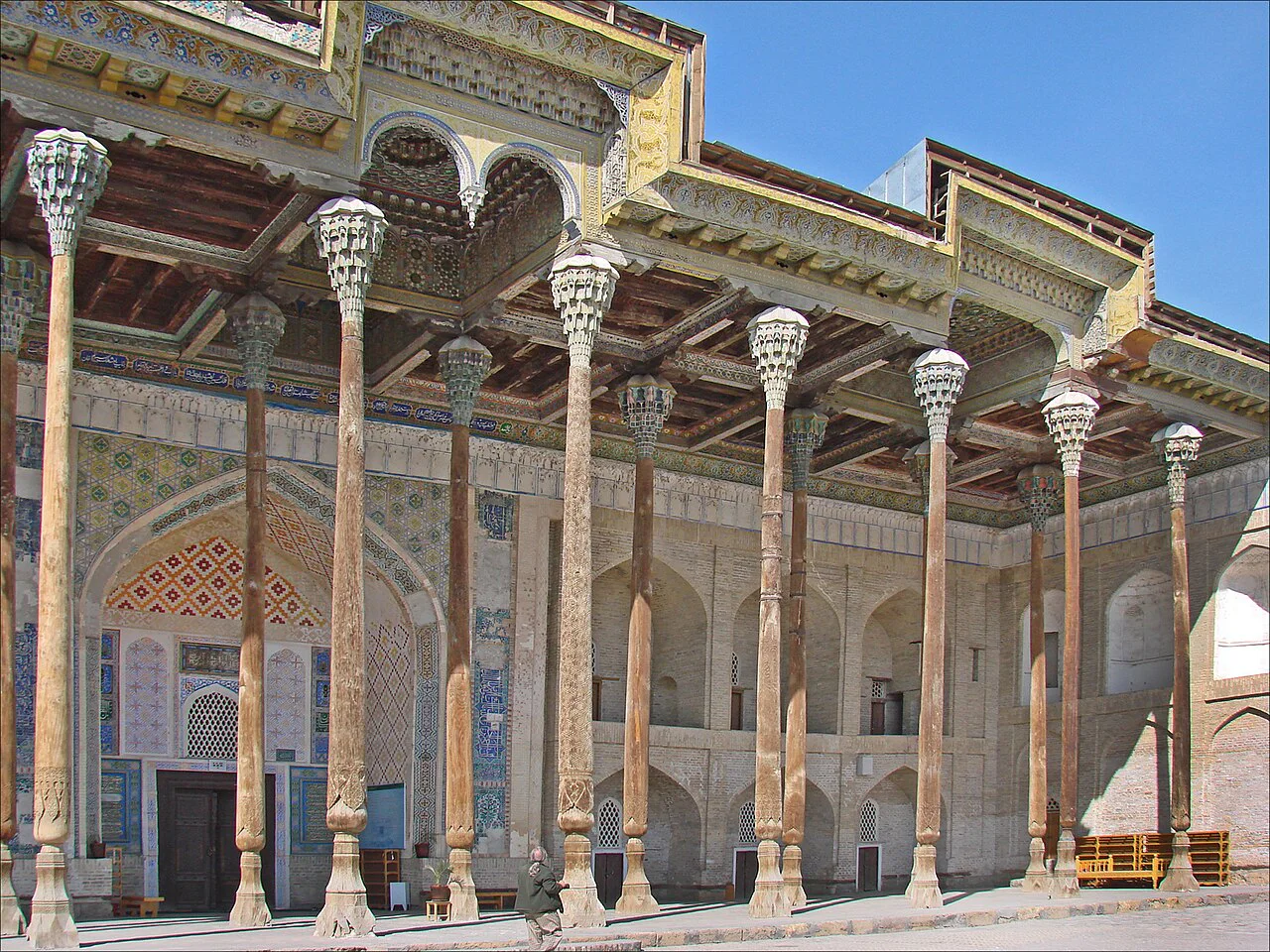
The Twenty Columns of the Summer Iwan
The famous face of this mosque is a forest of wooden columns. Twenty of them, slender and painted, carry the bulging roof of the summer prayer hall, the open porch that Central Asians call an iwan. The hall behind them is enormous: about forty-two metres long and ten metres deep, with its roof held some twelve metres above the ground. This was the summer prayer room, open to the air on hot days, attached to the enclosed hall that served the winter months. The wooden columns rest on foundations at their feet and rise the full height of the porch, each one carved and painted by hand. Here is the twist in the story: the columns at the front, the ones that make the famous view, were only added in 1917, supporting the bulged roof of the summer prayer room. By one account, between 1915 and 1917 the iwan was rebuilt into its present three-sided form. So the grandest feature of this eighteenth-century mosque is really an early twentieth-century remaking of it.
Listen in the appPhoto: Nassima Chahboun · CC BY-SA 4.0
05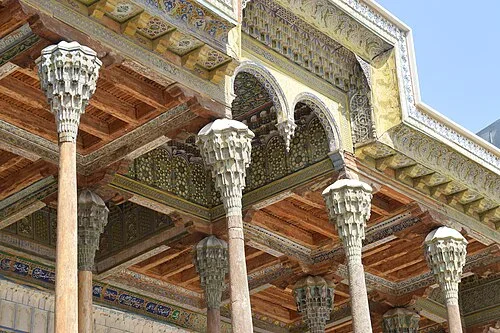 The 20-Column Summer Iwan
Muqarnas Capitals and the Painted Ceiling
Raise your eyes to the tops of the columns and the work gets even finer. Each capital, the widening block where the column meets the roof, is carved in the form of muqarnas, the honeycomb of little stalactite niches that is a hallmark of Islamic architecture. Its columns are decorated with coloured muqarnas, and here they are, tier upon tier, each little cell catching its own shadow. Above them the wooden ceiling beams are painted in full colour, panel after panel of plant forms and ornament in red, green, gold and blue. This painting and carving is the work of Bukharan master craftsmen of the early twentieth century, and the painted ceiling, hung with lamps, is especially sumptuous. Wood was the material Bukhara's carvers knew best, and they treated a soft poplar column like a precious surface, working every centimetre of it. The whole porch is, in effect, one large piece of joined and painted carpentry, built to be looked at from below.
Listen in the appJean Housen · CC BY-SA 4.0
06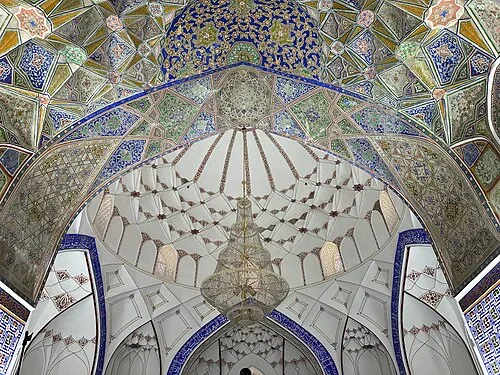 The Winter Prayer Hall & Mihrab
Inside the Winter Prayer Hall
Inside, the mosque changes character. The winter prayer hall is a square chamber measuring about eleven and a half metres on each side, roofed by a dome and lit by a hanging lamp. It is supported on just four columns, which leaves the floor open and clear for the rows of worshippers. Several entrances connect it to the courtyard, so people could move easily between the two halls. The interior is in the typical style of eighteenth-century Central Asia, and the vault overhead is covered in richly painted ornament, blue and white and gold spreading out from the crown of the dome.
Listen in the appPhoto: Umid1108 · CC BY-SA 4.0
07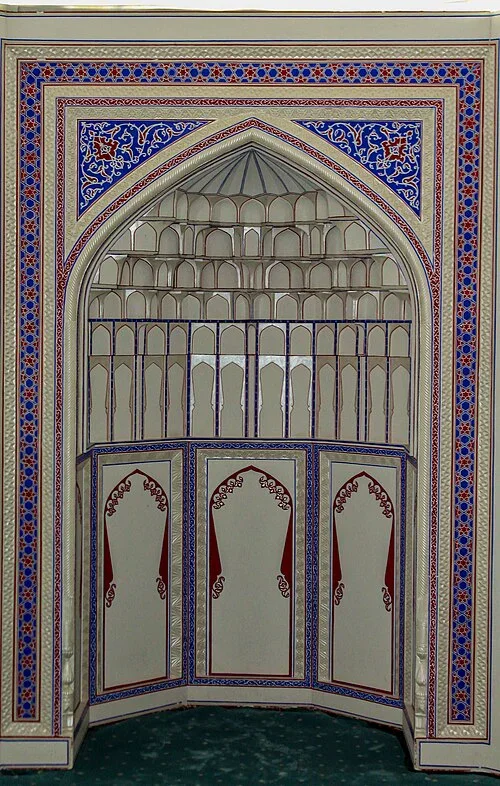 The Winter Prayer Hall & Mihrab
The Mihrab and the Continuity of Prayer
Every mosque has one fixed point, and here it is: the mihrab, the niche in the wall that marks the direction of Mecca, towards which every prayer is said. Whatever else changes in a mosque, the mihrab does not move. This one is worked with fine ornament. Its surface is composed of layered, vaulted forms, a cascade of little arched cells rising inside the great pointed arch, and it is framed by borders of painted pattern in red, blue and white. The plasterwork tradition of this region, called ganch, lends itself to just such crisp carved and painted detail. Think of what this niche has watched. A mosque founded by a khan's mother in 1712, its porch remade by master craftsmen in 1917, and the Friday prayer continuing through all of it, dynasties and rebuildings alike. The worshippers face this wall today as they did three hundred years ago, and the niche still answers the only question a prayer needs: which way is Mecca.
Listen in the appPhoto: Spartak22 · CC BY-SA 4.0
Bolo Haouz Mosque
Frequently asked questions
How much does the guide cost?
Free app download. Listed guide price: $0.99. Guide price shown in the app. Audio guide only. Venue admission is separate.
Can I listen without internet?
Yes. Download the guide’s audio, images, and maps in the app before your visit. Your downloaded content is then available offline.
Can I listen in my language?
This audio guide is available in 15 languages, including English.
Do I need to follow a schedule?
No. This is a self-guided experience. Choose your stops, pause whenever you like, and return to a story at your own pace.
At your own pace
Explore Bolo Haouz Mosque.
Download Stanza, then search for “Bolo Haouz Mosque”.
Free app download · Guide price shown in the app
Keep exploring
Audio guides — Uzbekistan
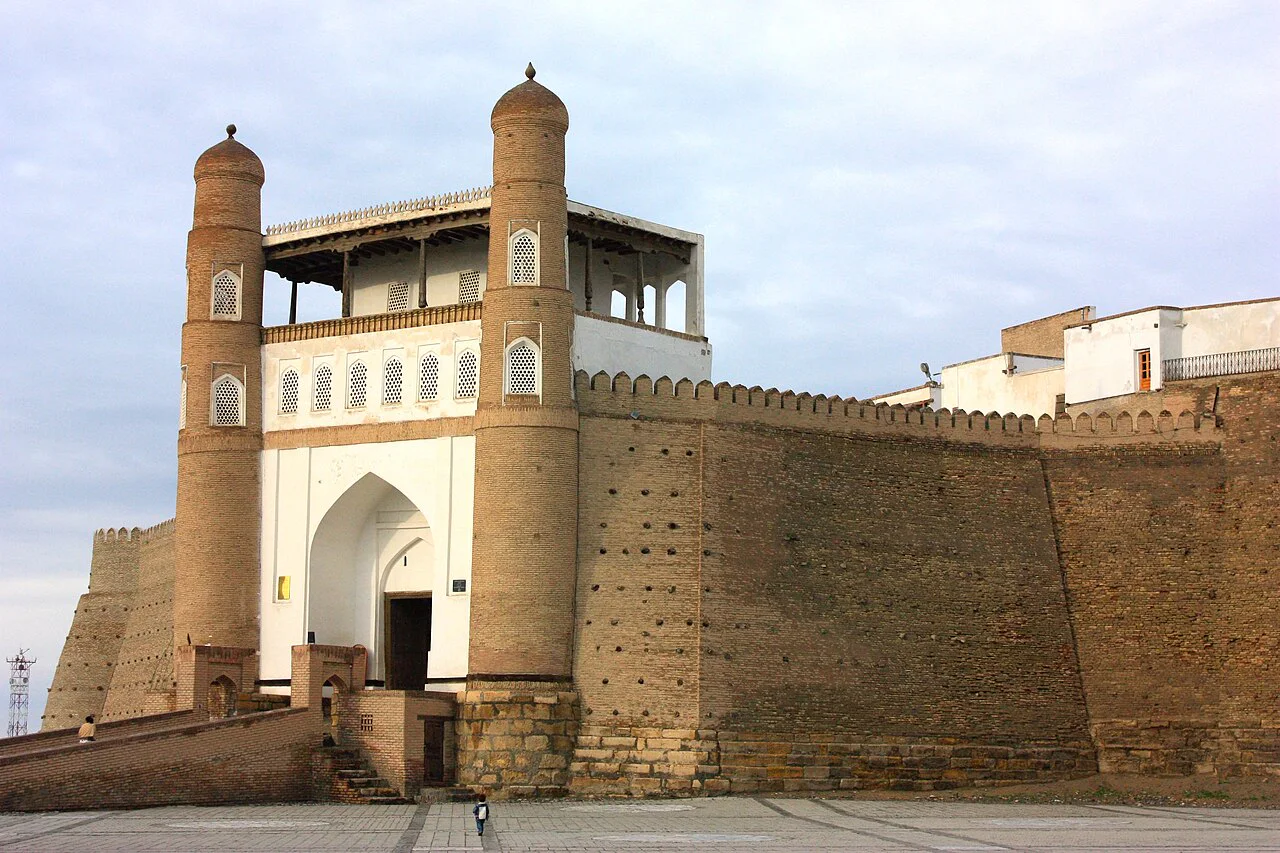
Bukhara · 1 km
Ark of Bukhara
Content & sources
RK · CC BY-SA 4.0
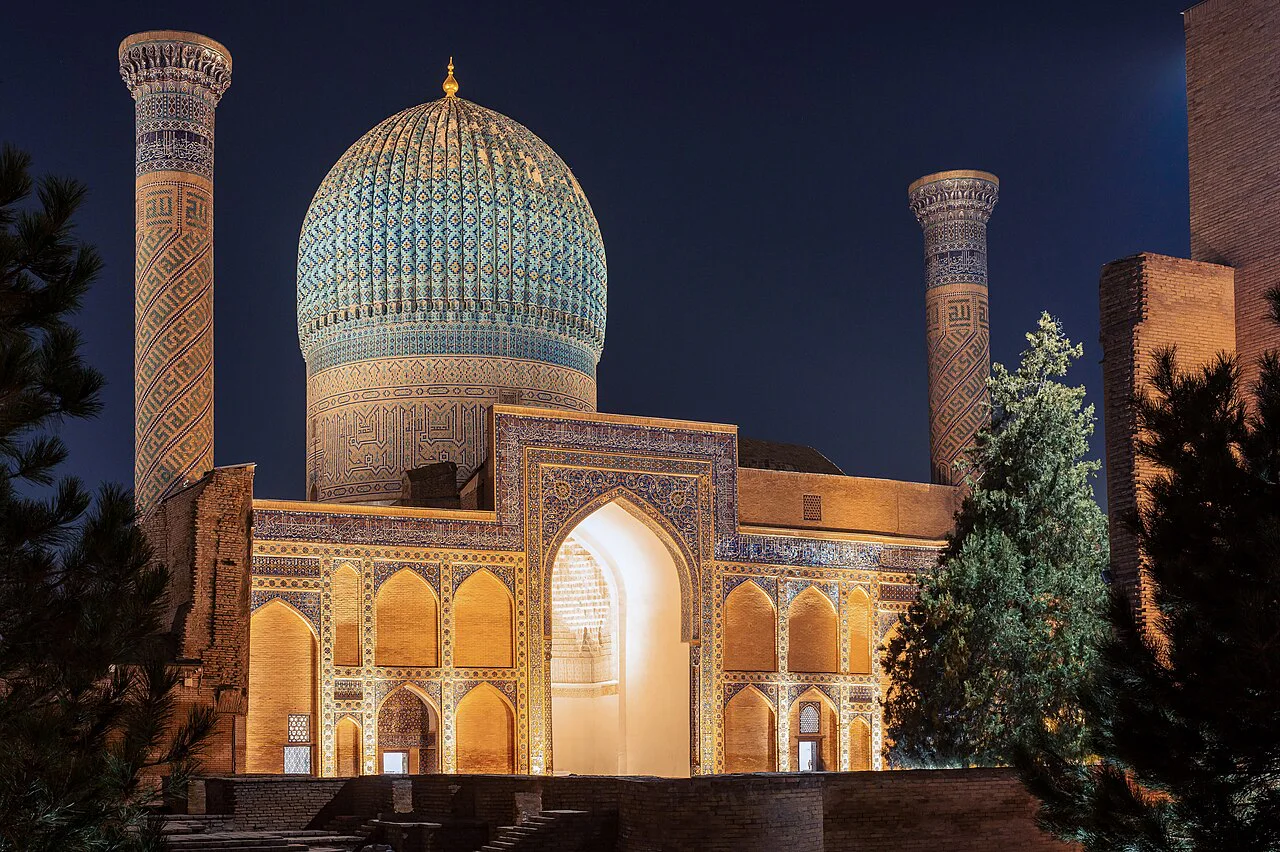
Samarkand
Gur-e-Amir
Content & sources
Photo: Arina Pan · CC BY-SA 4.0
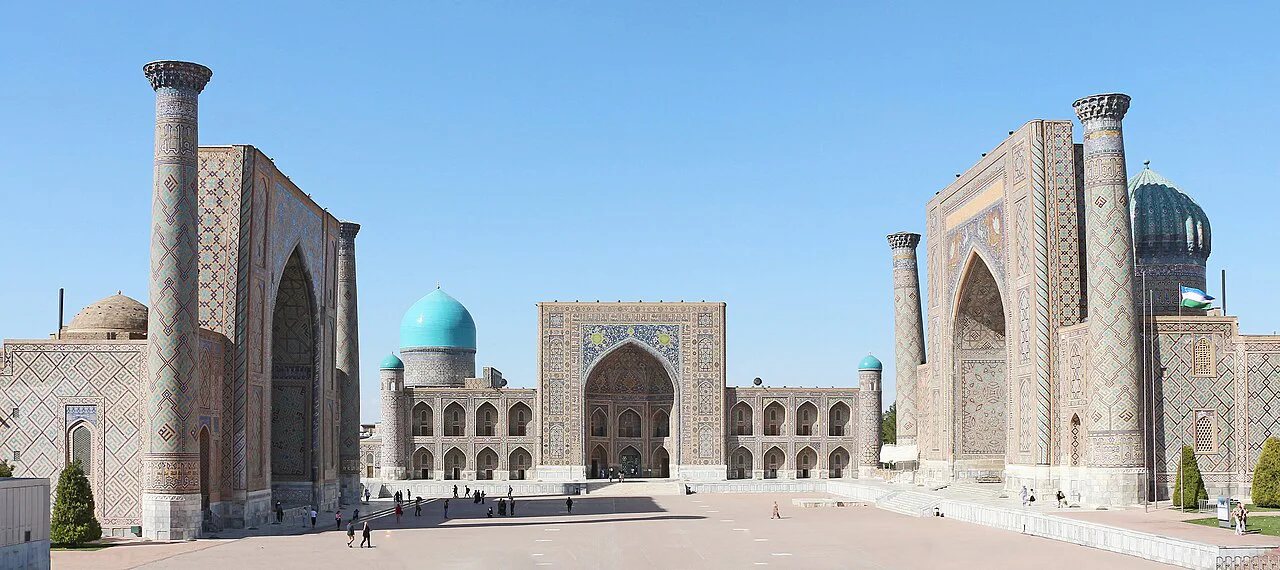
Samarkand
Registan
Content & sources
Bernard Gagnon · CC0
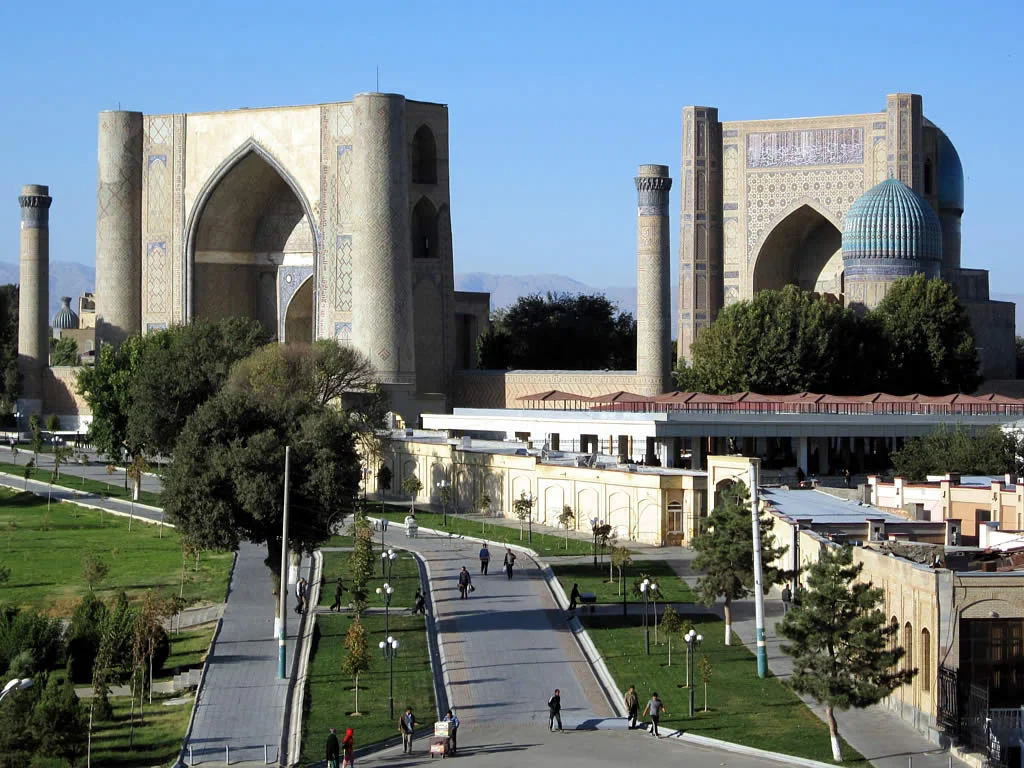
Samarkand
Bibi-Khanym Mosque
Content & sources
David Stanley from Nanaimo, Canada · CC BY 2.0
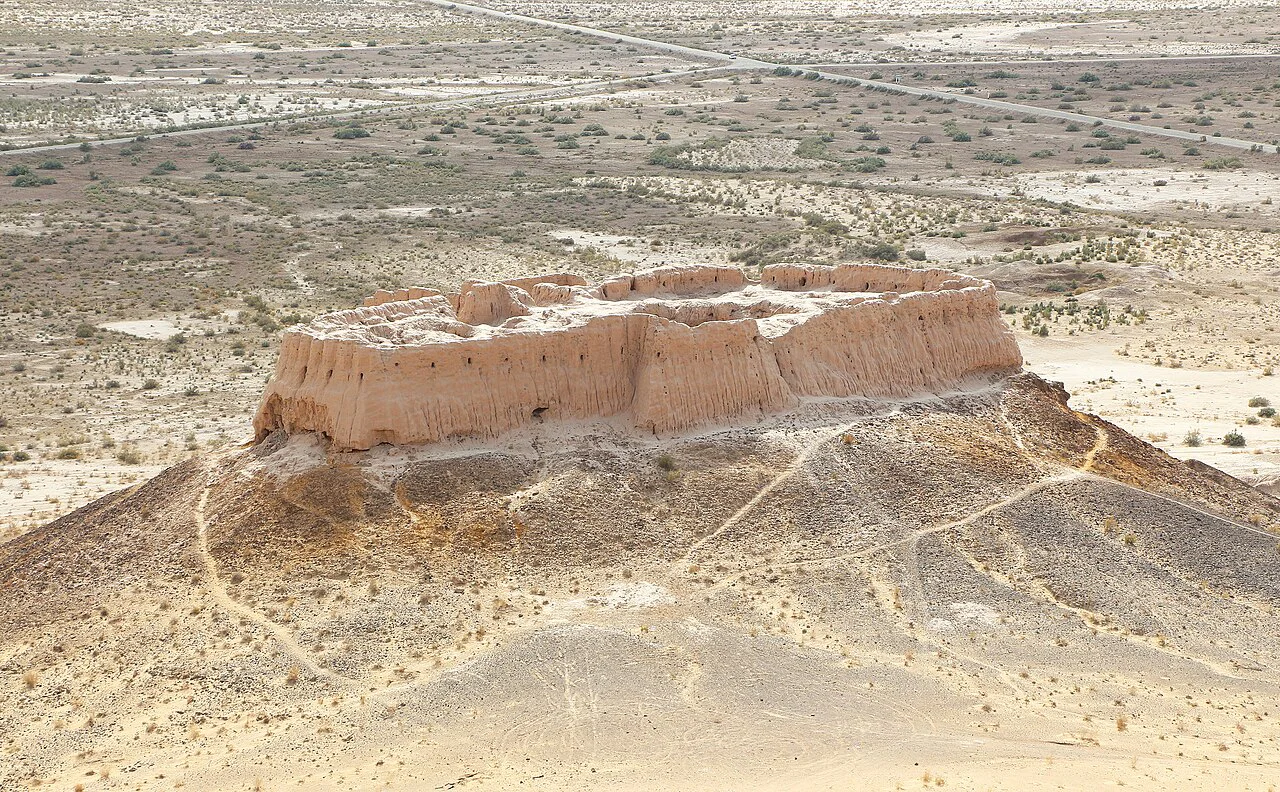
Ellikqala rayonı
Ayaz-Kala
Content & sources
Bernard Gagnon · CC0