Stanza · Audio guide
Ho Chi Minh Mausoleum Audio Guide
A place to remember. A story to take with you.
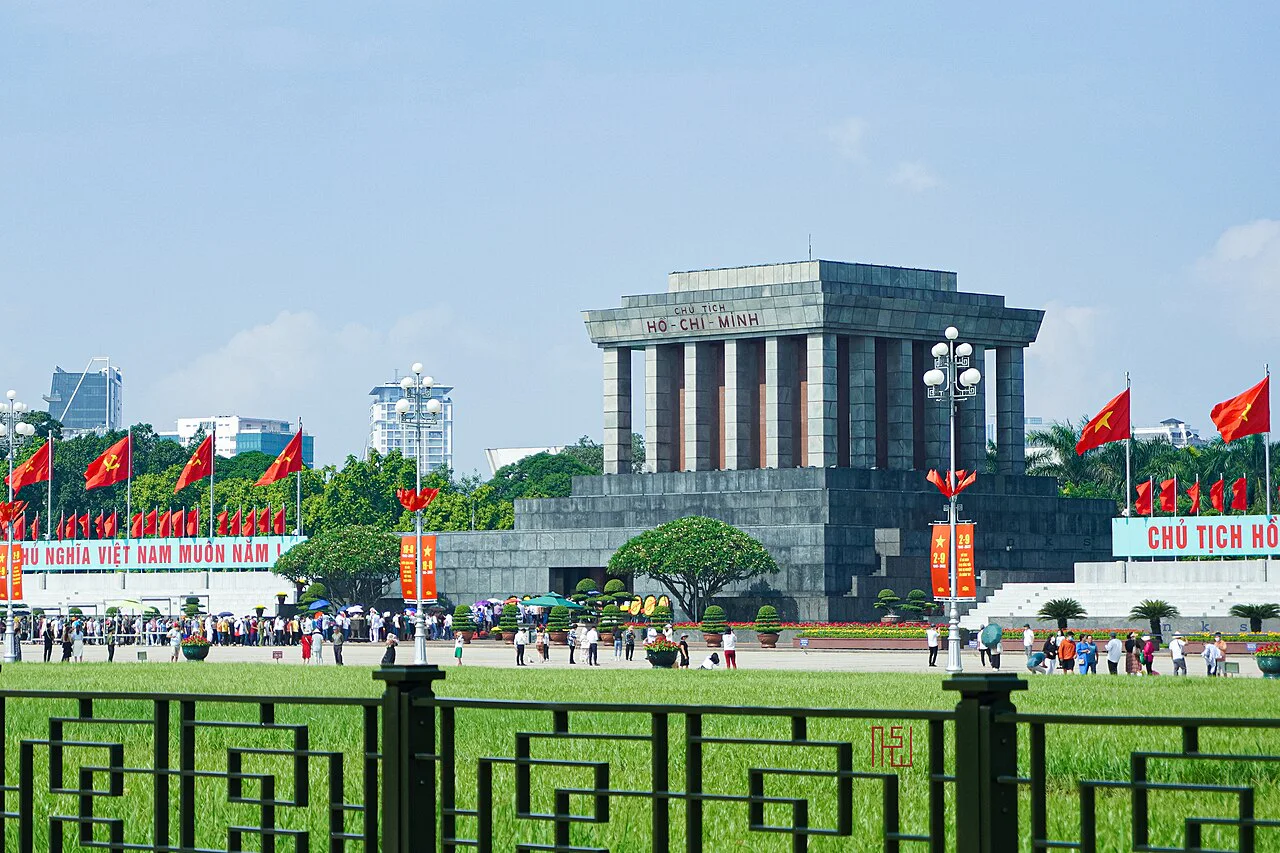
The Ho Chi Minh Mausoleum is the resting place of Vietnamese revolutionary leader and President Ho Chi Minh. It is located in Ba Đình Square, where Ho read the Declaration of Independence in 1945.
Download Stanza, then search for “Ho Chi Minh Mausoleum”.
About the tour
One guide. Your kind of visit.
The Ho Chi Minh Mausoleum is the resting place of Vietnamese revolutionary leader and President Ho Chi Minh. It is located in Ba Đình Square, where Ho read the Declaration of Independence in 1945.
Ready when you are.
- 01Get the free Stanza app.
iOS & Android
- 02Find your guide.
“Ho Chi Minh Mausoleum”
- 03Download before you go.
Works offline
Audio guide / 7 narrated stops
Inside the guide
Get to know a few of the stories before you go. Open a stop to read more.
01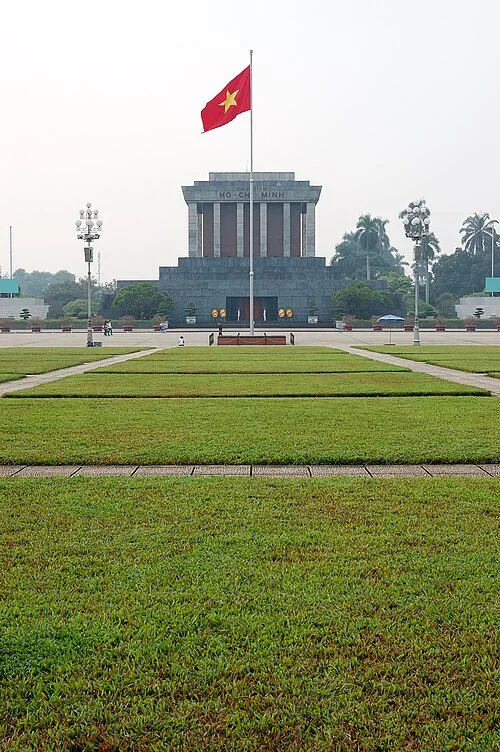 Ba Dinh Square and Central Flagpole
Ba Dinh Square and the Flagpole
Welcome to Ba Dinh Square in Hanoi, and to the mausoleum of Ho Chi Minh. On the second of September, 1945, he stood on this square and read out Vietnam's Declaration of Independence, founding the Democratic Republic of Vietnam. The granite building on the square was raised for a single purpose. It holds his preserved body, and millions of people have come to stand before it. The flagpole in front flies the national flag every day of the year. In the hot season, the flag is raised at six in the morning. In the cold season, it goes up half an hour later. Every night at nine, it comes down again.
Rosino · CC BY-SA 2.0
02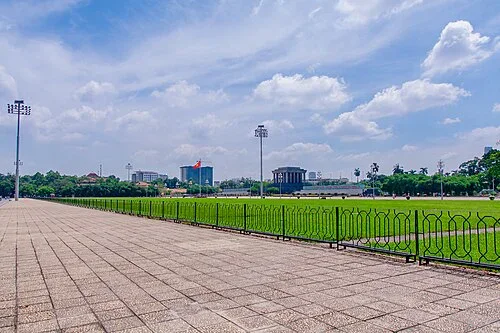 Ba Dinh Square and Central Flagpole
The Grass Carpet of the Parade Square
The grass covering Ba Dinh Square comes from the south of the country. It is ginger grass, a native southern variety, planted by an artisan named Nguyen Van Hoa, and it stays green through all four seasons. The lawn runs about three hundred and eighty meters, cut into green squares separated by pathways. Beside it lies the parade route used for military reviews and major ceremonies. On the north and south sides of the mausoleum stand two grandstands, each sixty-five meters long, reserved for guests on those great days. During parades, the tribune serves as a viewing stage for the country's leaders. Beyond the lawn, Bac Son Street is lined with red roses and peach blossom, leading to the Martyrs' Memorial.
Hòa Nguyễn · CC BY 2.0
03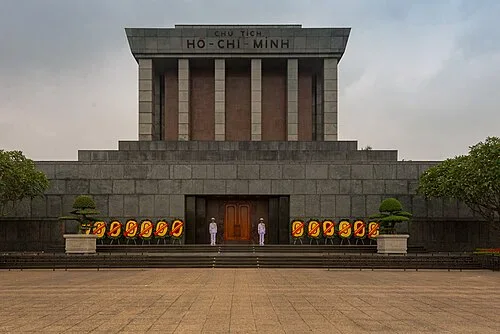 The Monumental Facade and Portico
The Monumental Facade
Work began on September 2, 1973. The date was the anniversary of the independence declaration. The building was finished in May 1975 and formally inaugurated that August, after roughly twenty months of construction. The design came from the Soviet architect Garol Isakovich, working with a Vietnamese team. His model was Lenin's Mausoleum in Moscow, but he added distinctly Vietnamese elements, above all the sloping roof. The style is known as Stripped Classicism, severe and square and almost without ornament. Grey granite sheathes the exterior, and polished grey, black and red stone lines the interior. Across the portico, the words 'Chủ tịch Hồ Chí Minh' spell out President Ho Chi Minh's name. Beside it hangs the banner of the Socialist Republic of Vietnam.
Listen in the appxiquinhosilva · CC BY 2.0
04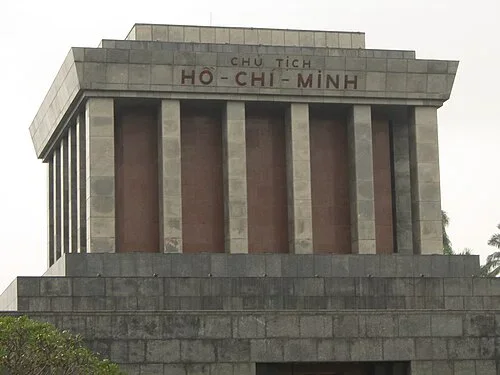 The Monumental Facade and Portico
The Nation in Stone and Wood
The dark red letters at the top of the facade spell Ho Chi Minh's name in jade from Cao Bang, in the far north. Almost every region of the country sent something to build this place. The great front door came from precious timber of the Central Highlands. People along the Truong Son range contributed sixteen kinds of rare wood. Carpenters from Nam Ha, Ha Bac and Nghe An worked them, with timber sent from the south, into two hundred doors inside. The Muong people of Hoa Binh hauled sand down from their mountain streams. From the Soviet Union came twenty thousand slabs of polished granite and marble. Young volunteers joined in as well, grinding stone and planting trees on the site.
Listen in the appHector Garcia from Barcelona, Catalonia, Spain · CC BY-SA 2.0
05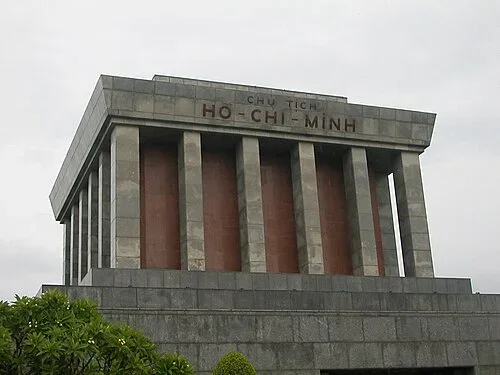 The Upper Colonnade and Sanctum Threshold
The Colonnade Threshold
In his testament, Ho Chi Minh asked to be cremated, his ashes scattered across the country. The Party's leaders decided otherwise. By later accounts, it was Le Duan and the Politburo who chose preservation, so that people of the still-divided south could one day come and see him. Visitors pass through this colonnade in single file, in silence, leaving cameras and phones behind. Accounts of the interior describe a chamber lined with marble from Ha Tay. The body lies in a high-impact glass case, on a bronze bed cast with lotus flowers, raised and lowered by an automatic elevator. He wears a faded khaki outfit, with rubber sandals placed at his feet. Four soldiers stand guard around the case. Behind it hang the national and party flags, made from four thousand pieces of ruby stone from Thanh Hoa.
Listen in the appPhoto: Syced · CC0
06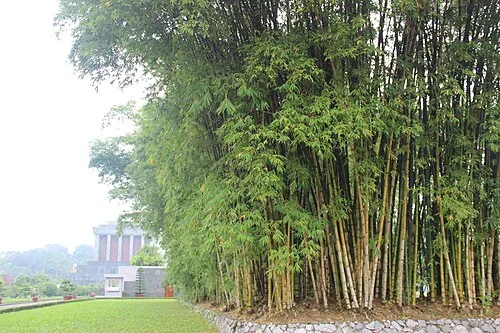 Botanical Grounds and Memorial Gardens
The Bamboo Groves and Memorial Gardens
The gardens around the mausoleum carry the same idea as the building itself, told this time in living plants. Bamboo, the enduring symbol of Vietnam, stands in two rows along the north and south sides. In front and behind, seventy-nine cycad trees are planted, one for each year of Ho Chi Minh's life. Altogether the gardens hold close to two hundred and fifty species of plants and flowers, gathered from every region of the country. Two frangipani trees flank the main door. At the entrance, two soldiers stand guard day and night, changing every hour.
Listen in the appGary Todd from Xinzheng, China · CC0
07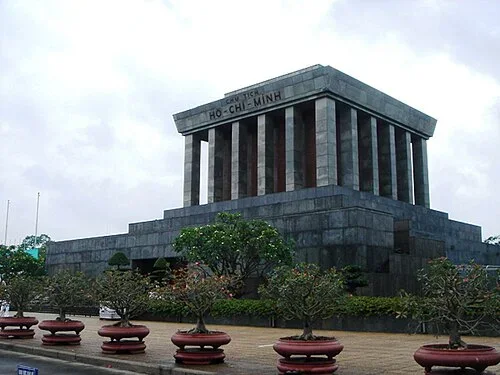 Botanical Grounds and Memorial Gardens
A Place Like No Other
Nearly fifty million people had visited the mausoleum by 2012. More than seven million of them came from abroad. Admission is free, five mornings a week, and waiting areas let visitors rest and watch documentary films before they enter. For groups of legless veterans, the honour guards prepare special wheelchairs. One story shows how singular this place became. When Mao Zedong died in 1976, relations between China and the Soviet Union had turned sour. So China sent two delegates to Hanoi to learn the embalming method, according to Mao's personal doctor, Li Zhisui. Vietnam declined to share the Soviet-developed technique, and would not even let the scientists see the body. This building was raised not for conquest or dynasty, but so ordinary citizens of a reunified country could stand before their leader. It still serves exactly that purpose.
Listen in the appUser: (WT-shared) Shoestring at wts wikivoyage · Public domain
Ho Chi Minh Mausoleum
Frequently asked questions
How much does the guide cost?
Free app download. Listed guide price: $0.99. Guide price shown in the app. Audio guide only. Venue admission is separate.
Can I listen without internet?
Yes. Download the guide’s audio, images, and maps in the app before your visit. Your downloaded content is then available offline.
Can I listen in my language?
This audio guide is available in 15 languages, including English.
Do I need to follow a schedule?
No. This is a self-guided experience. Choose your stops, pause whenever you like, and return to a story at your own pace.
At your own pace
Explore Ho Chi Minh Mausoleum.
Download Stanza, then search for “Ho Chi Minh Mausoleum”.
Free app download · Guide price shown in the app
Keep exploring
Audio guides — Vietnam
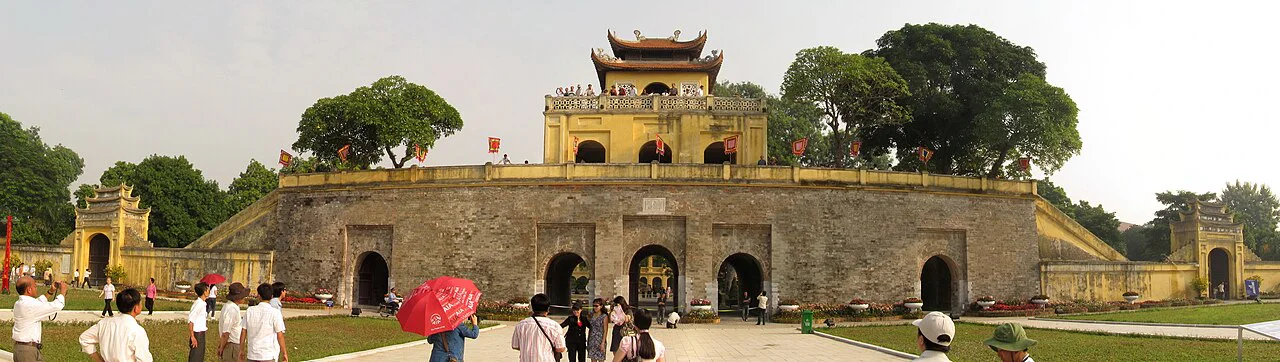
Hanoi · 1 km
Imperial Citadel of Thăng Long
Content & sources
Photo: Grenouille vert · CC BY-SA 3.0
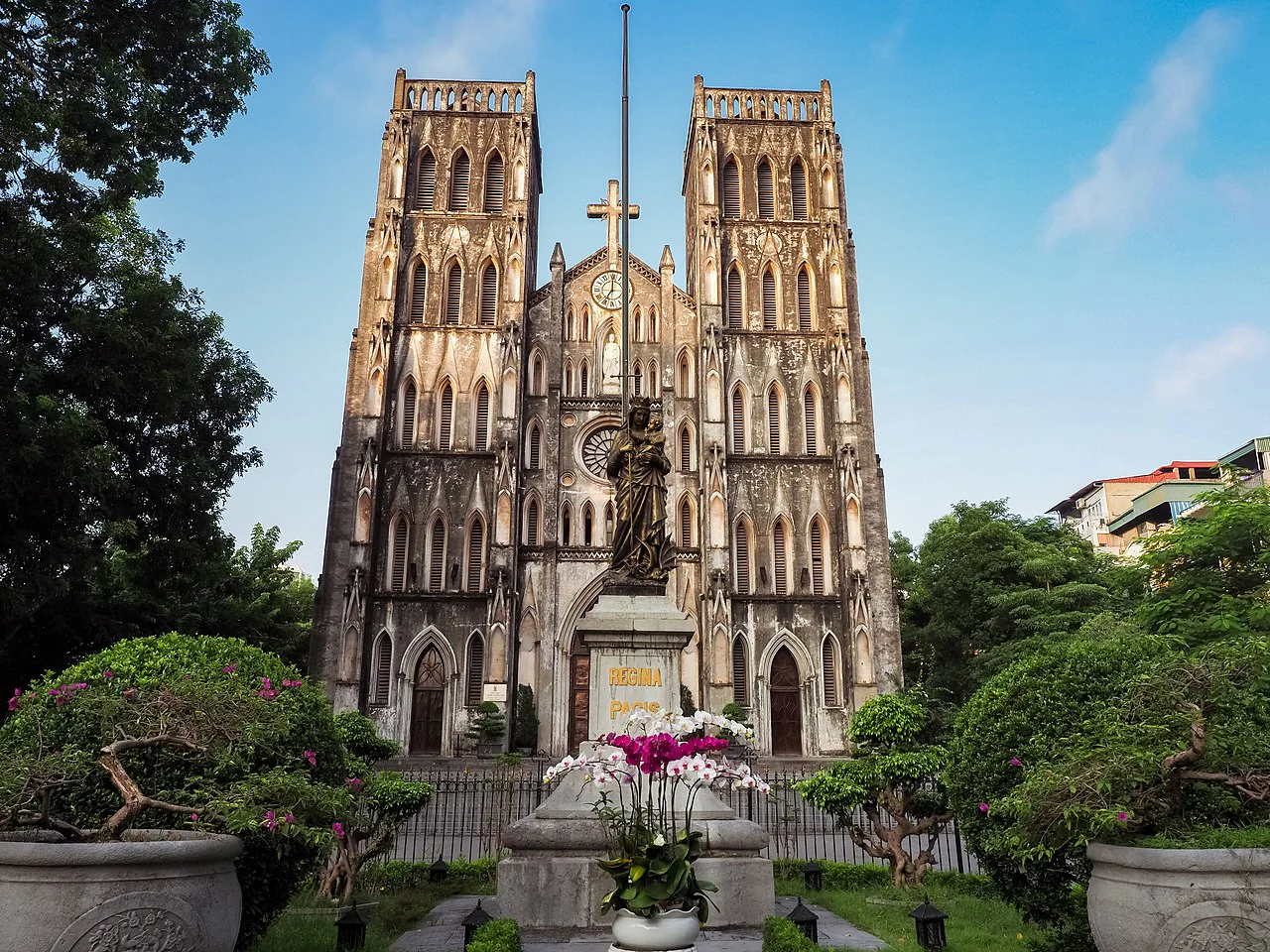
Hanoi · 2 km
St. Joseph's Cathedral, Hanoi
Content & sources
John Ragai · CC BY 2.0
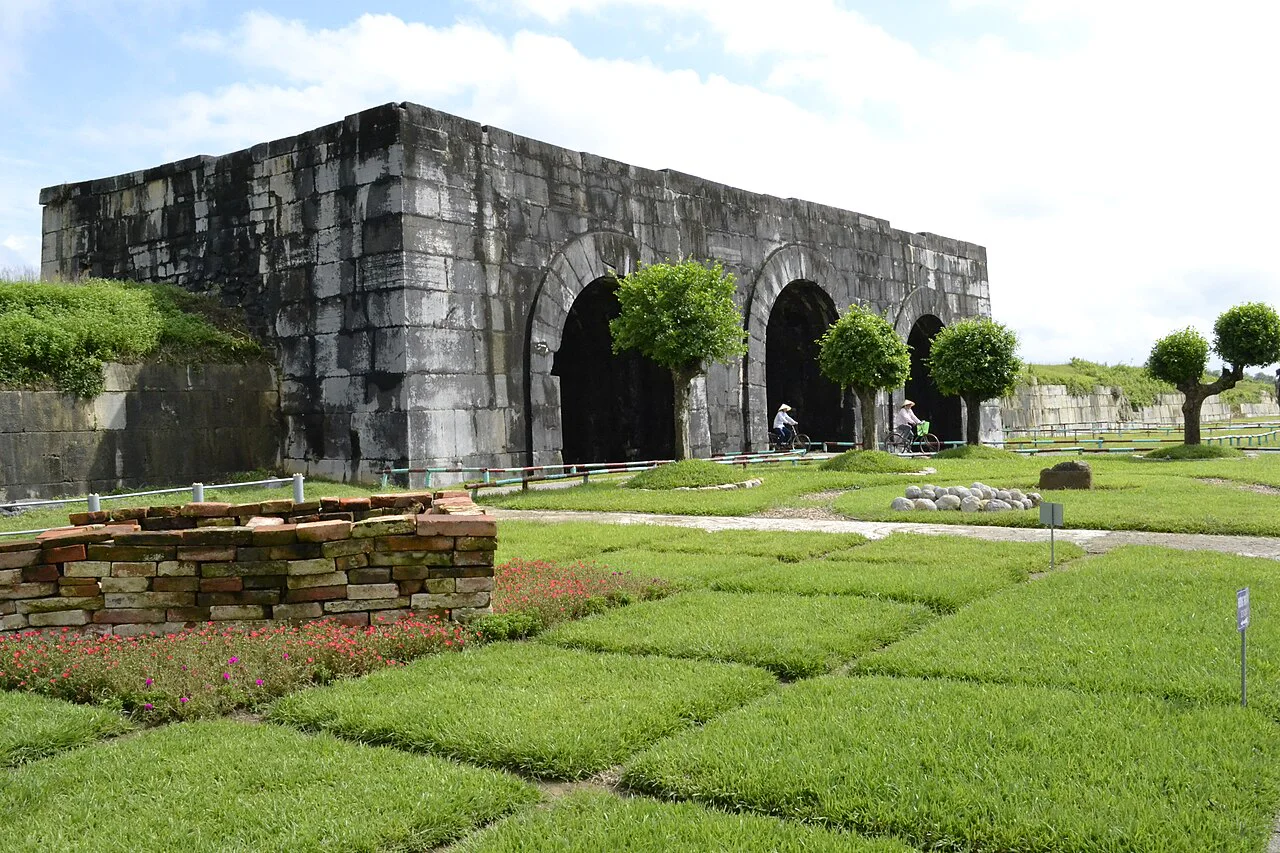
Tây Đô Commune · 109 km
Citadel of the Hồ Dynasty
Content & sources
Loi Nguyen Duc · CC BY 2.0
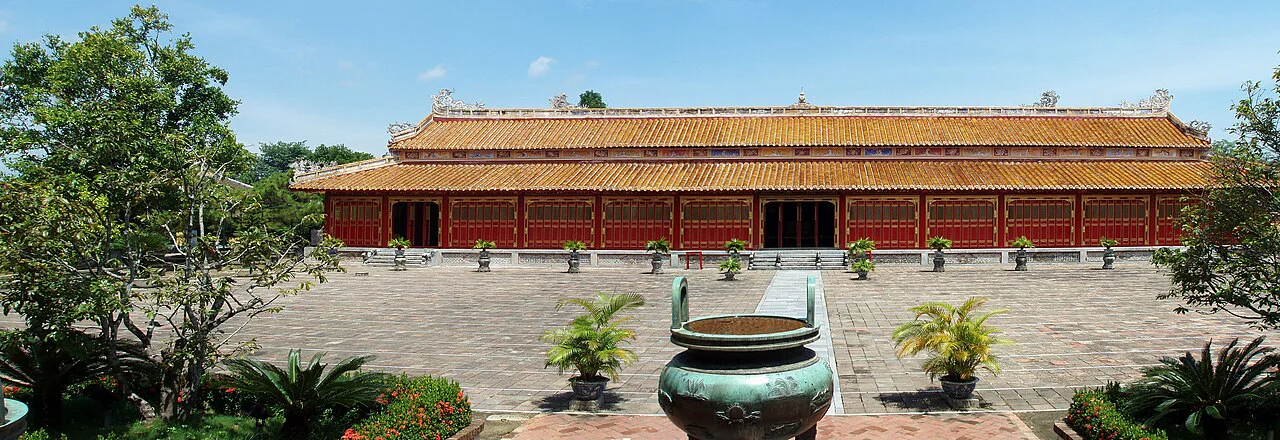
Huế
Imperial City of Huế
Content & sources
https://www.flickr.com/photos/sixty4coupe/ · CC BY-SA 2.0