Stanza · Audio guide
St. Joseph's Cathedral, Hanoi Audio Guide
A place to remember. A story to take with you.
St. Joseph's Cathedral is a late 19th-century Gothic Revival church located in Hanoi, Vietnam. It serves as the cathedral of the Roman Catholic Archdiocese of Hanoi and is named after the patron saint of…
Download Stanza, then search for “St. Joseph's Cathedral, Hanoi”.
About the tour
One guide. Your kind of visit.
St. Joseph's Cathedral is a late 19th-century Gothic Revival church located in Hanoi, Vietnam. It serves as the cathedral of the Roman Catholic Archdiocese of Hanoi and is named after the patron saint of Vietnam.
Ready when you are.
- 01Get the free Stanza app.
iOS & Android
- 02Find your guide.
“St. Joseph's Cathedral, Hanoi”
- 03Download before you go.
Works offline
Audio guide / 8 narrated stops
Inside the guide
Get to know a few of the stories before you go. Open a stop to read more.
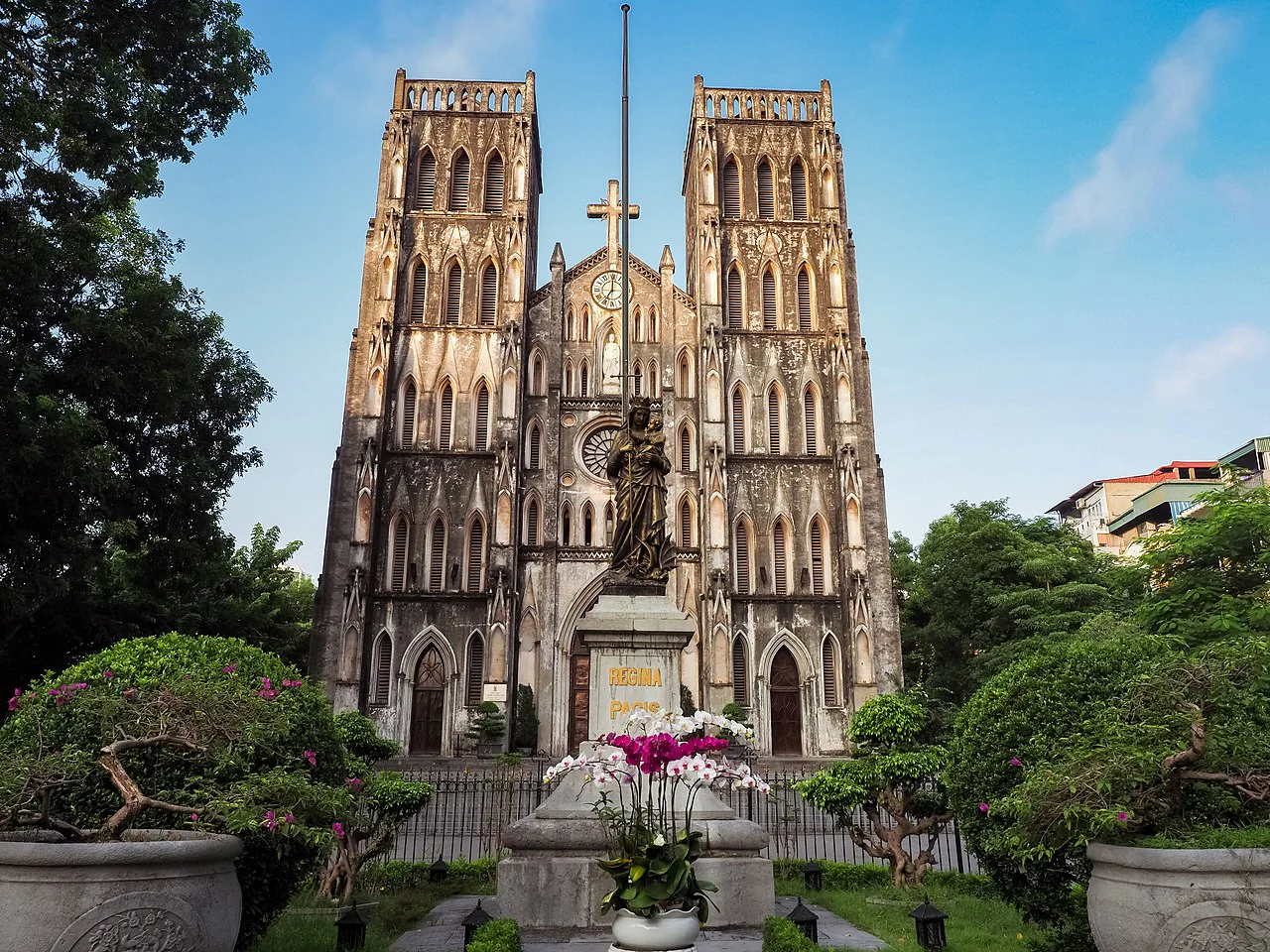
01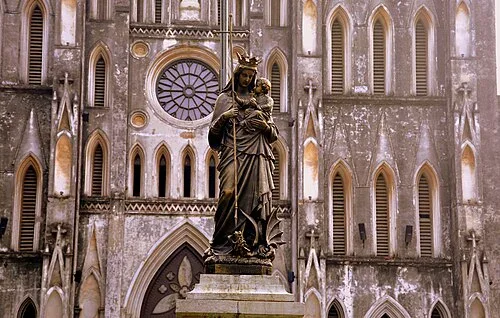 Cathedral Plaza and Regina Pacis Statue
Regina Pacis and the Cathedral Plaza
Welcome to St. Joseph's Cathedral, and to the small square where its story begins. A bronze figure of Mary stands here before the twin towers, crowned and holding the Christ child. Catholics call her Regina Pacis, Queen of Peace. Behind her rises the cathedral of the Archdiocese of Hanoi, the oldest surviving church in the city. The ground it stands on is older and more layered than the building itself. In the eleventh century, the Ly dynasty raised the Bao Thien Pagoda here, one of the most celebrated temples of imperial Dai Viet. Its tower collapsed in 1542 and was never rebuilt. For centuries the site lay in ruins, and old Vietnamese accounts say a market later spread across the abandoned grounds. In the 1880s the land passed to the Church. Vietnamese and French sources tell that transfer differently, but all agree the pagoda ruins were cleared to make way for the cathedral. Today Mass is celebrated here several times a day. On Sunday evenings the crowds overflow into the square, and the hymns are broadcast outside for those who cannot get in.
Eustaquio Santimano · CC BY 2.0
02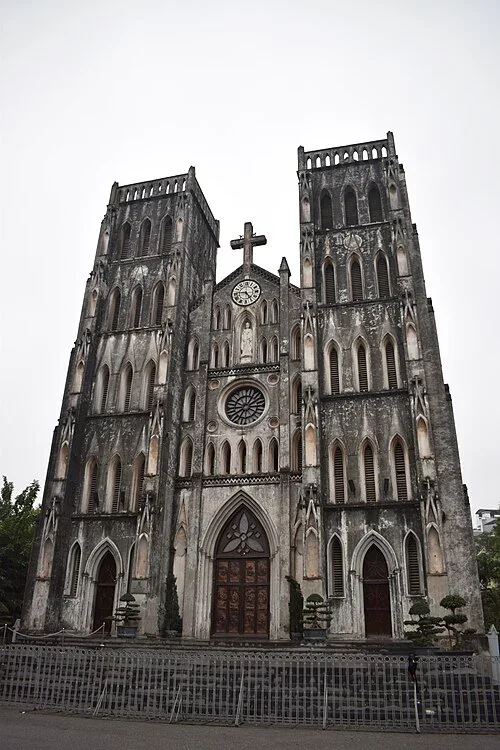 The Western Neo-Gothic Façade
The Western Neo-Gothic Facade
Two square towers, each rising about thirty-one metres, frame the western front of the cathedral. Their builders were thinking of Paris. The design deliberately echoes Notre-Dame, and the comparison has followed the building ever since. The walls are made of granite slabs over brick, faced with concrete, and the whole front rises in pointed Gothic lines to a stone cross. When it opened in December 1886, the church was one of the first structures built by the new French colonial government in Hanoi. The towers hold the cathedral's bells; accounts differ on whether five hang in each tower or five in all. Time was not kind to the stonework. Decades of heavy pollution wore the exterior badly down, so between mid-2020 and May 2022 the facade underwent a major restoration that returned its original appearance and strengthened the structure.
Mig Gilbert from Brighton · CC BY-SA 2.0
03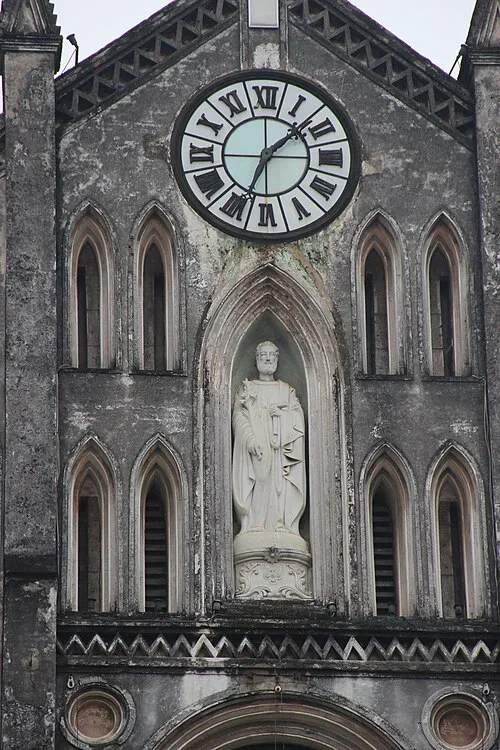 The Western Neo-Gothic Façade
The Clock, Bishop Puginier and the Cost of Building
High in the gable, the hands of a clock cross a pale round face. Just below it, a pointed niche holds a carved figure of St Joseph, the cathedral's patron and the patron saint of Vietnam. The man behind the building was Bishop Paul-Francois Puginier, the French missionary who served as apostolic vicar of Western Tonkin. He began the brick cathedral in 1884, and it cost roughly two hundred thousand francs. To help pay for it, he asked the colonial administration for permission to run lotteries. He was refused twice before finally winning approval for two draws, one in 1883 and one in 1886. Together they raised about thirty thousand francs, which, with other contributions, carried the work to completion. The cathedral was consecrated on Christmas Eve, the twenty-fourth of December 1886.
Listen in the appGary Todd from Xinzheng, China · CC0
04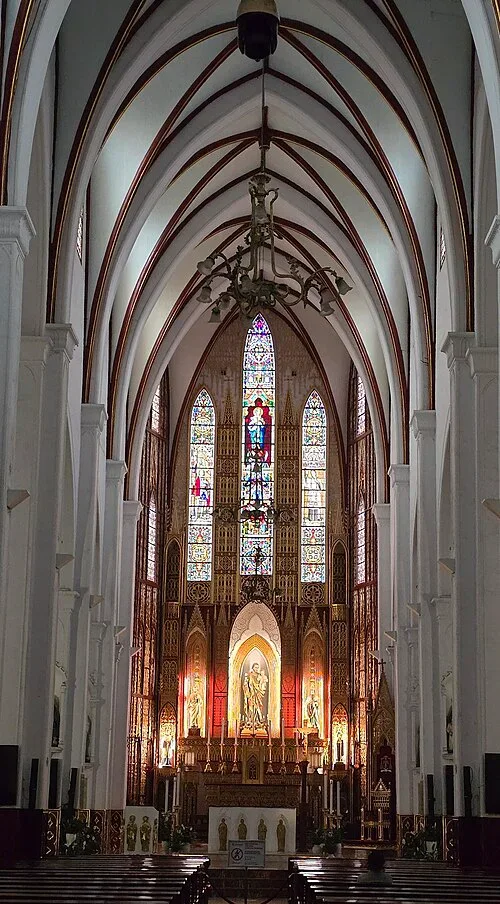 The Central Nave and Ribbed Vaults
The Central Nave and the Return of Mass
Inside, pointed ribs sweep up from the columns and cross overhead, built the way medieval European masons spanned their churches. The nave stretches about sixty-four and a half metres long and twenty and a half metres wide. This room has known silence. After the Geneva Accords of 1954 and the Viet Minh takeover of the north, the Catholic Church in Vietnam suffered decades of persecution. Priests were arrested, and church property was seized. St. Joseph's was closed, and it stayed closed until Christmas Eve of 1990, when Mass was finally permitted here again and worshippers returned to these pews. To the left of the nave, a statue of the Virgin Mary is kept in a palanquin, following local custom.
Listen in the appkitmasterbloke · CC BY 2.0
05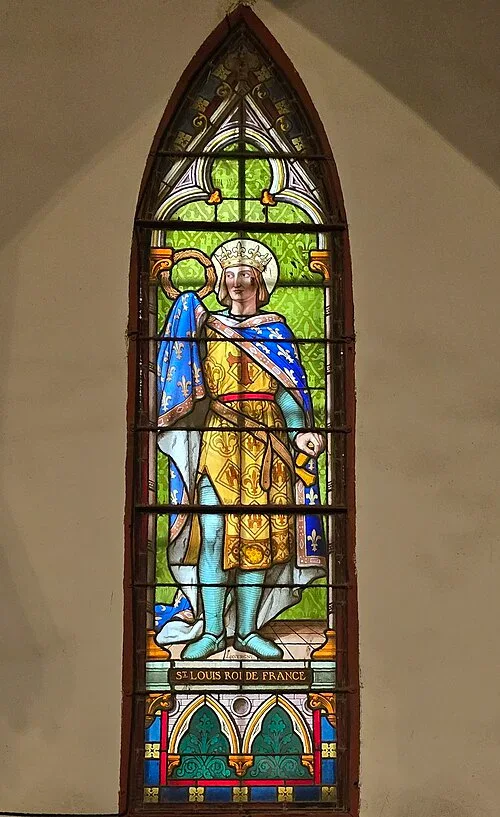 The French Stained Glass Windows
A Window from France: St Louis, King of France
One of the tall pointed windows shows a king. He wears a crown and a blue cloak scattered with golden fleurs-de-lis, and a band of glass beneath his feet reads St. Louis Roi de France. This is Louis, the medieval King of France who was later declared a saint. The cathedral's stained glass was all produced in France and then shipped to Vietnam, filling these pointed arches with coloured daylight. This particular panel is attributed to the French firm Lavergne and Company. A royal saint of France glowing in a Hanoi church says a great deal about who furnished this building, and when.
Listen in the appkitmasterbloke · CC BY 2.0
06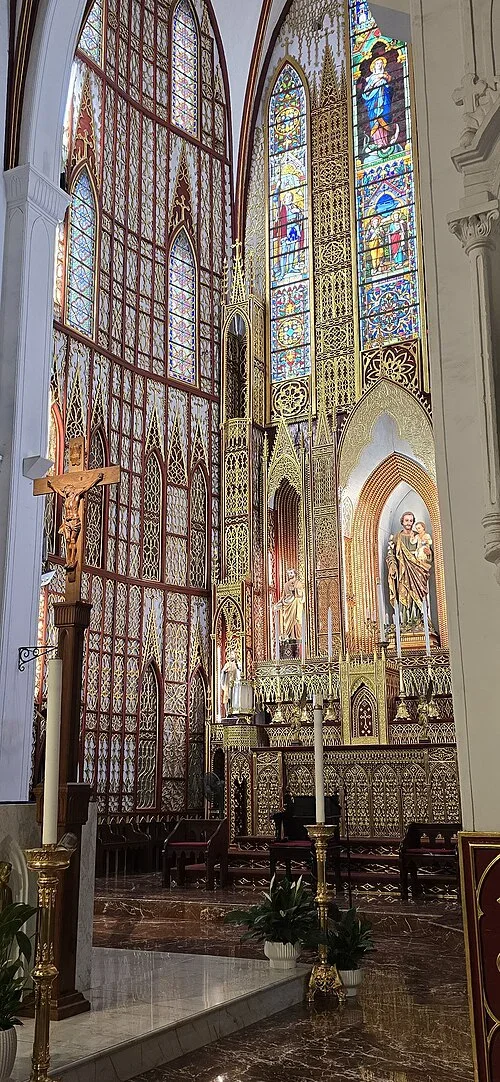 The Gilded High Altar and Sanctuary
The Gilded Sanctuary and High Altar
The nave walls are weathered and plain, but the sanctuary gleams. Its altars are carved from polished wood, trimmed with gilt and finished in the red-and-gold style of Vietnam's imperial tradition. The effect is often compared to Phat Diem Cathedral, the famous church where European and Vietnamese building arts were fused. Here the Gothic lines are French, but the delicate carving and lacquer work belong to Vietnamese folk craftsmanship. A crucifix and statues of the saints are set against the Gothic tracery, and in the main hall stands a terracotta figure of St Joseph more than two metres tall. The result is a European church dressed, at its most sacred point, in Vietnamese hands.
Listen in the appkitmasterbloke · CC BY 2.0
07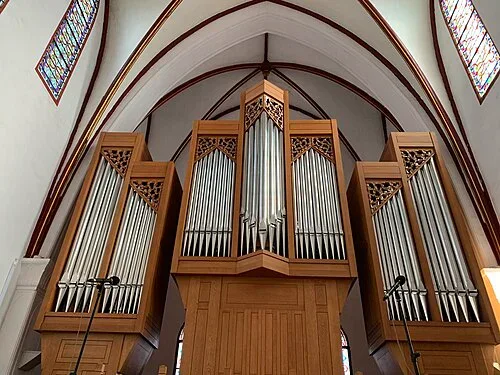 The Schumacher Pipe Organ
Against the vaults rises a great wooden case filled with shining metal pipes. This is a pipe organ designed by the Belgian craftsman Guido Schumacher, and it was installed on the twenty-third of November 2022. The instrument has one thousand eight hundred and fifty pipes. It arrived as part of a cultural exchange project linking Itami in Japan with Hasselt in Belgium. A cathedral completed in 1886, receiving a new voice nearly a century and a half later, is clearly not a monument frozen in time. It is a working church, still acquiring new instruments of worship.
Listen in the appPhoto: Xtvl.1971 · CC BY-SA 4.0
08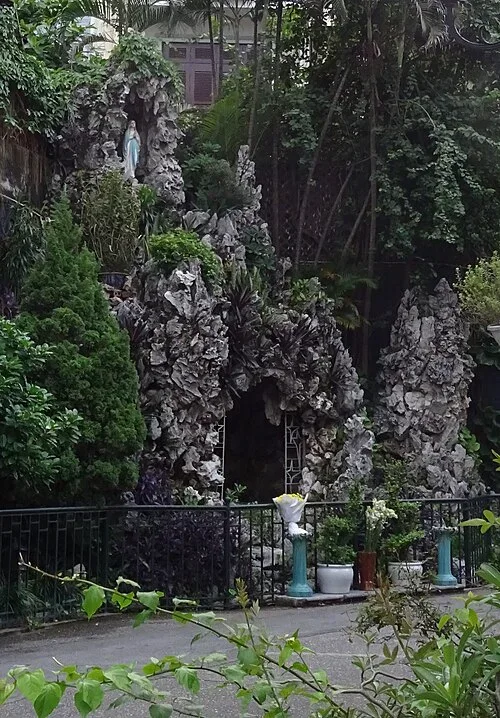 The Side Grotto and Courtyard Gardens
The Marian Grotto in the Courtyard
In the courtyard behind the cathedral, a statue of the Virgin Mary stands set into rough rockwork, shaded by trees and greenery. Fresh flowers and planted offerings rest at the base of the grotto, tended by the people who pray here. Nothing about it is grand. Yet it belongs to the same long habit that shaped everything else on this ground: a sacred spot, cared for generation after generation, first as a Buddhist pagoda, then as a Catholic cathedral, and now as a quiet corner of a living parish. Few places in Hanoi hold so many layers of devotion in so small a space.
Listen in the appPhoto: Christophe95 · CC BY-SA 4.0
St. Joseph's Cathedral, Hanoi
Frequently asked questions
How much does the guide cost?
Free app download. Listed guide price: Free guide. Guide price shown in the app. Audio guide only. Venue admission is separate.
Can I listen without internet?
Yes. Download the guide’s audio, images, and maps in the app before your visit. Your downloaded content is then available offline.
Can I listen in my language?
This audio guide is available in 15 languages, including English.
Do I need to follow a schedule?
No. This is a self-guided experience. Choose your stops, pause whenever you like, and return to a story at your own pace.
At your own pace
Explore St. Joseph's Cathedral, Hanoi.
Download Stanza, then search for “St. Joseph's Cathedral, Hanoi”.
Free app download · Guide price shown in the app
Keep exploring
Audio guides — Vietnam
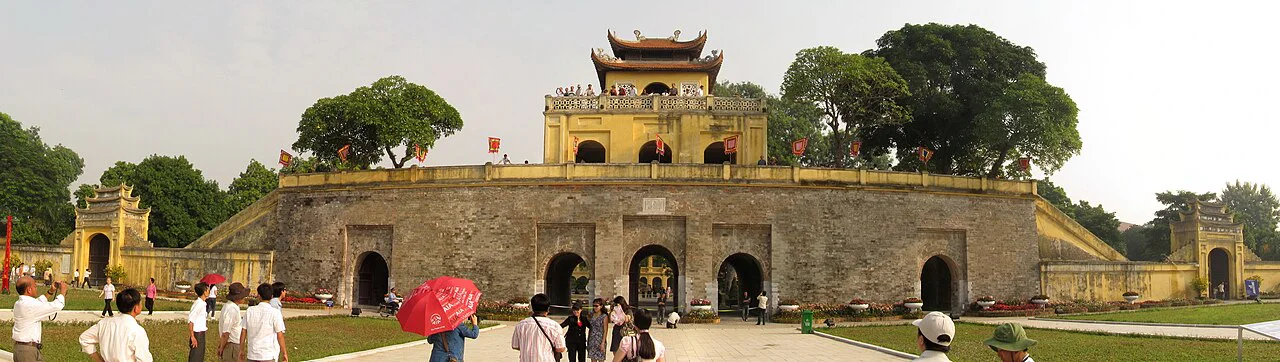
Hanoi · 1 km
Imperial Citadel of Thăng Long
Content & sources
Photo: Grenouille vert · CC BY-SA 3.0
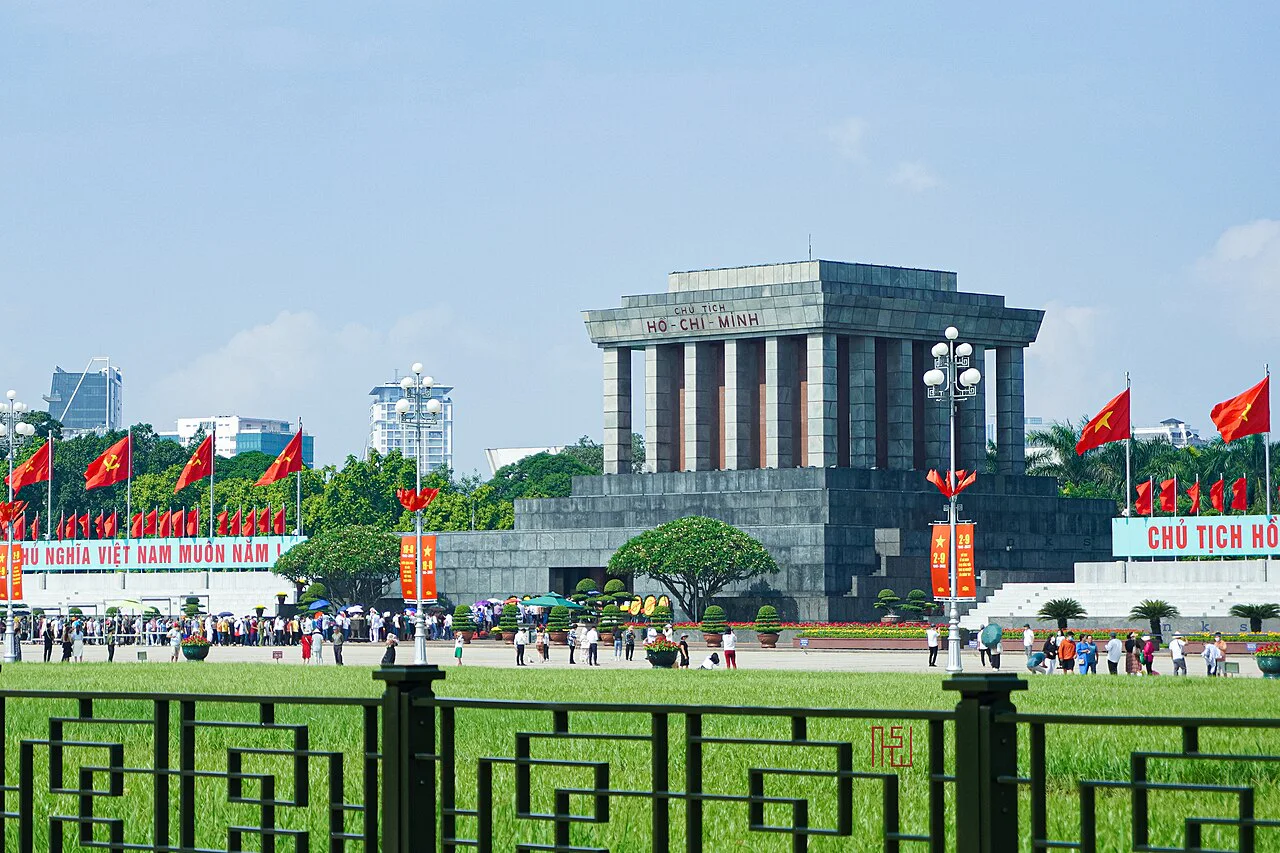
Hanoi · 2 km
Ho Chi Minh Mausoleum
Content & sources
Photo: NKSTTSSHNVN · CC BY-SA 4.0
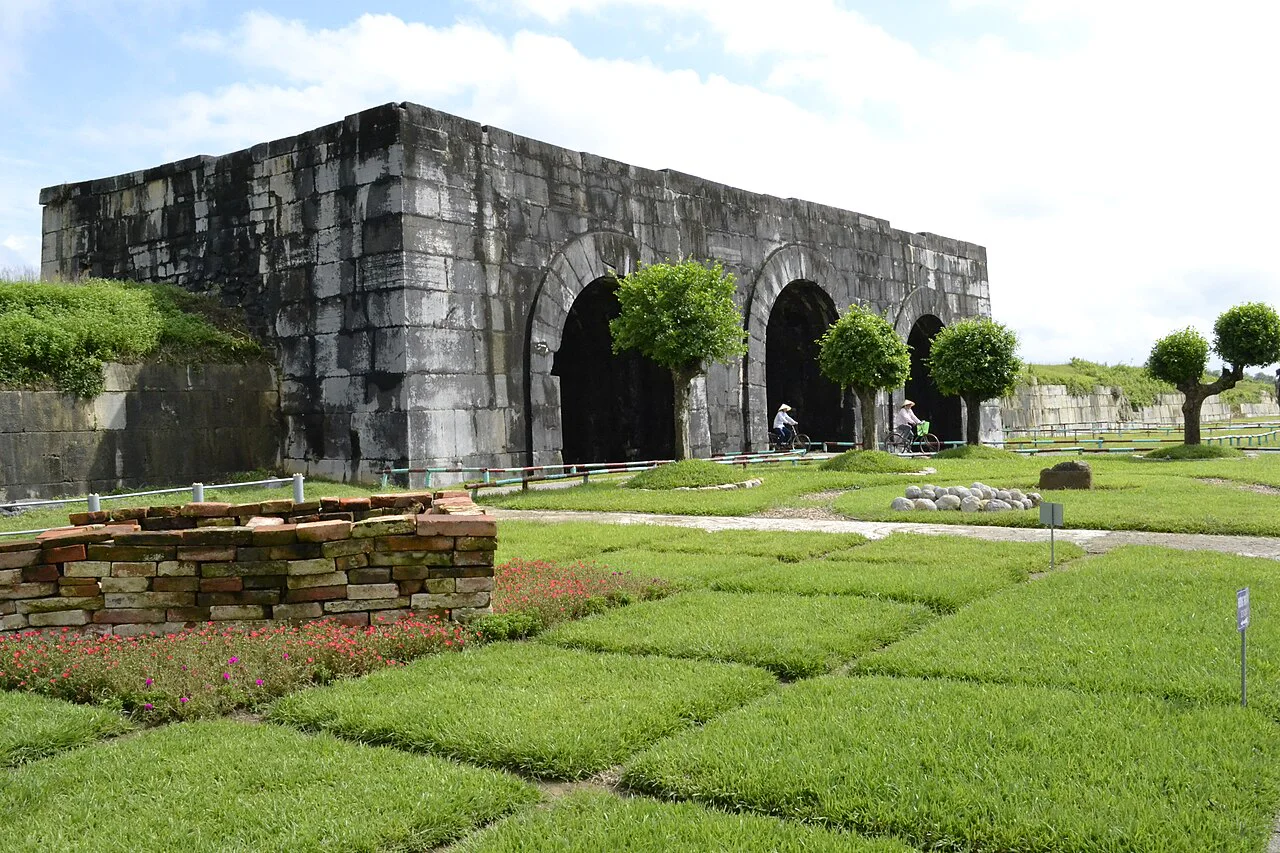
Tây Đô Commune · 109 km
Citadel of the Hồ Dynasty
Content & sources
Loi Nguyen Duc · CC BY 2.0
Huế
Imperial City of Huế
Content & sources
https://www.flickr.com/photos/sixty4coupe/ · CC BY-SA 2.0