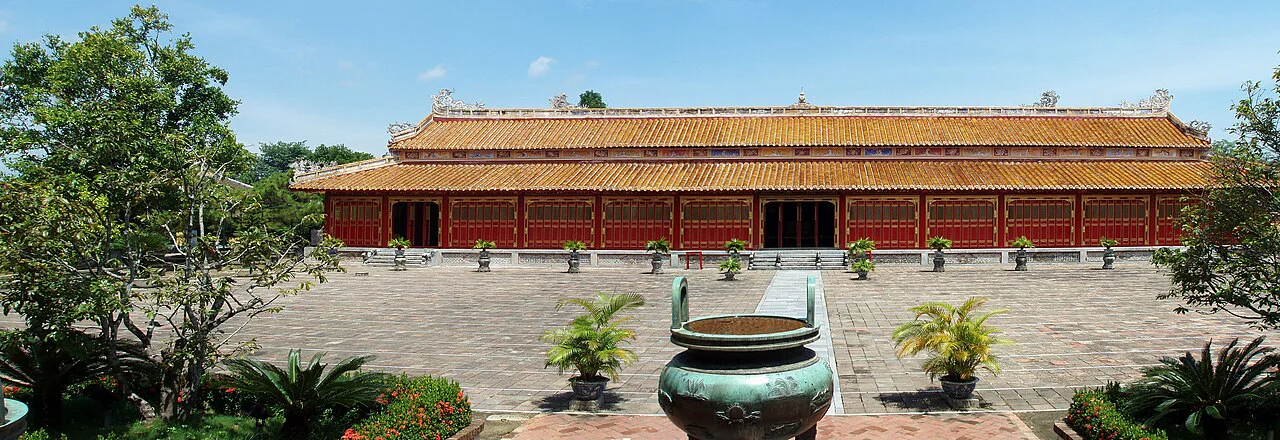
 Stanza / Audio guide
Content & sources
Stanza · Audio guide
Imperial City of Huế Audio Guide
A place to remember. A story to take with you.
The Imperial City is a royal enclosure within the walled city of Huế that served as the imperial capital during the Nguyễn dynasty. It is a UNESCO World Heritage Site that contains palaces, shrines, gardens…
Download Stanza, then search for “Imperial City of Huế”.
About the tour
One guide. Your kind of visit.
The Imperial City is a royal enclosure within the walled city of Huế that served as the imperial capital during the Nguyễn dynasty. It is a UNESCO World Heritage Site that contains palaces, shrines, gardens, and offices for mandarins.
Ready when you are.
- 01Get the free Stanza app.
iOS & Android
- 02Find your guide.
“Imperial City of Huế”
- 03Download before you go.
Works offline
Audio guide / 16 narrated stops
Inside the guide
Get to know a few of the stories before you go. Open a stop to read more.
01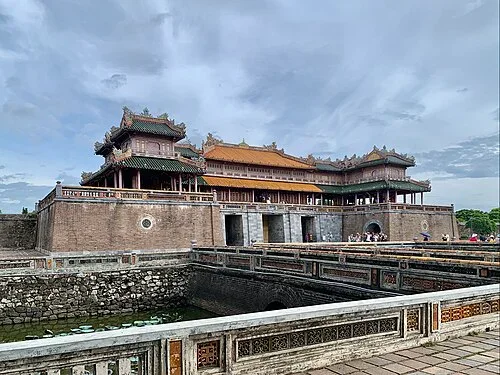 Ngọ Môn Gate and the Nine Divine Cannons
Ngọ Môn, the Meridian Gate
Welcome to Huế, and to the Imperial City of the Nguyễn emperors. In June 1802, after more than a century of division, Nguyễn Phúc Ánh defeated the Tây Sơn dynasty and united Vietnam, from the Red River Delta down to the Mekong. He proclaimed himself Emperor Gia Long and chose Huế as his capital, the ancestral seat of his family. Following Confucian models of rule, he ordered a palace complex built on the pattern of Beijing's Forbidden City. Work on the walled citadel began in 1803, and the imperial enclosure rose from 1804. Thousands of laborers raised ramparts and dug a moat running some ten kilometers around. The gate before you is Ngọ Môn, the Meridian Gate, the principal southern entrance to the Imperial City. It pierces the second of the great walls, raised to protect the throne halls, the ancestral temples, and the emperor's private residence. Royal proclamations were read from here, and here the dynasty reached its end. On the thirtieth of August 1945, Emperor Bảo Đại handed over the golden seal and the sword, closing the Nguyễn reign and ages of monarchy in Vietnam. The stops ahead follow the central axis from this gate, through the courtyards and the throne hall, deep into the palace.
Photo: Chainwit. · CC BY 4.0
02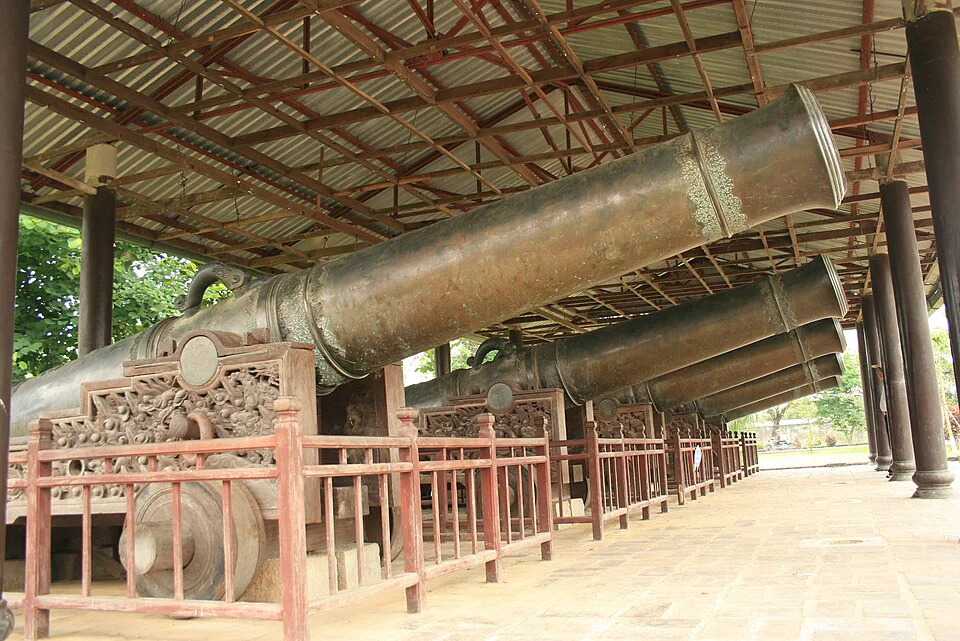 Ngọ Môn Gate and the Nine Divine Cannons
The Nine Divine Cannons
Nine great cannons stand in a row under this open shelter, each resting on a carved wooden carriage. Huế artisans cast them in 1803, the second year of Gia Long's reign, from bronze weapons collected after his victory over the Tây Sơn dynasty. They count as the largest cannons in Vietnam and among the country's most valuable works in bronze. Gia Long chose the casting masters with care, men outstanding not only in their craft but in character, and the work was finished by the end of December 1804. Each cannon carries a name from the four seasons and the five elements: Spring, Summer, Autumn, Winter, then Wood, Fire, Earth, Metal, and Water. The name is embossed on the knob at the tail of each gun. These were guardians, not weapons of war. Military officers were assigned to watch over them, and the court held solemn ceremonies to worship the Nine Divine Cannons. Under Emperor Đồng Khánh, that court worship was abolished in 1886, though the guards kept up their own devotions. The cannons first stood before the Imperial palace, and in 1917, under Khải Định, they were moved to this position along the wall. In 2012 they were named a National Treasure of Vietnam.
Original uploader was Lưu Ly at vi.wikipedia · Public domain
03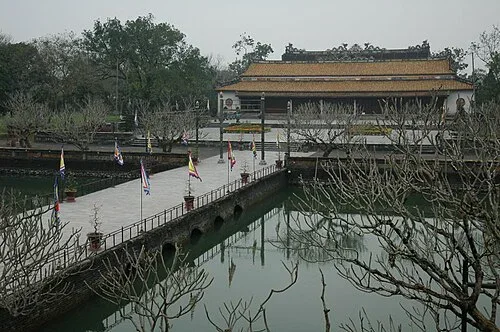 Thái Dịch Lake and Trung Đạo Bridge
Thái Dịch Lake and the Trung Đạo Bridge
A quiet stretch of water, Thái Dịch Lake, lies on the path to the throne hall, and the stone Trung Đạo bridge crosses it. This crossing is a good moment to see the plan of the whole complex. Three rings of walls nest within one another: the great Citadel around the capital, the Imperial City around the court, and, innermost, the Purple Forbidden City for the emperor and his family. Everything sits on a strict central axis reserved for the emperor, with the buildings on either side matched symmetrically, area by area. The siting itself was chosen for harmony. Geomancers advised Gia Long on a propitious location, and they found a remarkable one. Mount Ngự Bình, a flat-topped hill a little over a hundred meters high, lies before the citadel like a natural screen protecting it. Two islands in the river stand to either side, Cồn Hến and Cồn Dã Viên, read as the Azure Dragon on the left and the White Tiger on the right. Together they formed, in the geomancers' eyes, a perfect position for imperial power. The bridge itself served as the emperor's processional way, the road he took toward the throne hall ahead.
Listen in the appUser: (WT-shared) Jpatokal at wts wikivoyage · CC BY-SA 3.0
04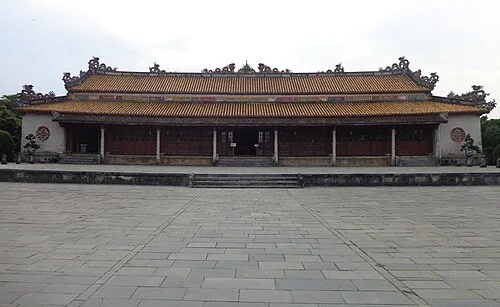 Điện Thái Hòa and the Imperial Throne
Điện Thái Hòa, the Palace of Supreme Harmony
Điện Thái Hòa, the Palace of Supreme Harmony, is the ceremonial heart of the empire. It was first built in 1805, begun in the second month of that year and finished by October, on the ground of an earlier hall. In 1833, Emperor Minh Mạng rebuilt it and moved it to its present site as part of his reorganization of the whole palace. The hall shows the signature style of the Imperial City, called trùng thiềm điệp ốc: a timber building with two stacked roofs on a single high stone platform. The roof tiles are tubes of glazed ceramic, yellow for the emperor's own buildings and blue for those of other royals. The primary timber is erythrophoeum fordii, the dense ironwood Vietnamese builders call gõ. This was the stage for the empire's defining ceremonies. Enthronements were held here, the emperor's birthday was celebrated here, and foreign envoys were received here. Court also convened twice each lunar month, on the first day and the fifteenth.
Listen in the appPhoto: Doãn Hiệu · CC BY-SA 4.0
05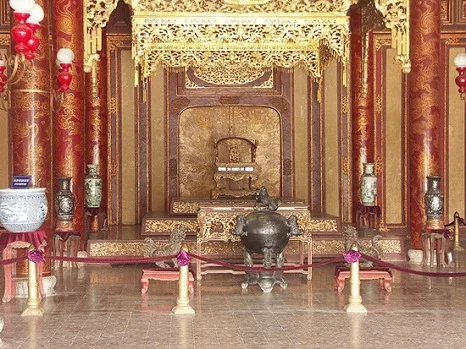 Điện Thái Hòa and the Imperial Throne
The Imperial Throne of Thái Hòa
Inside the hall, beneath a gilded canopy, stands the throne of the Nguyễn emperors. Every one of the dynasty's thirteen emperors, from Gia Long to Bảo Đại, was crowned at this hall, before this seat. It was the single throne of the unified state, the one chair that mattered in Vietnam. The interior around it is as ceremonial as the throne itself. The panels are worked in cloisonné in the style called nhất thi nhất họa, one poem, one painting, pairing a hundred and ninety-seven Chinese poems with carved and painted scenes. The inscribed poems and plaques are gilded, and so is the canopy above the throne. The great columns are painted and lacquered with dragons moving among clouds, the pattern reserved for the emperor's own spaces. The throne has outlasted every man who sat on it, and the hall still holds the room where they all began their reigns.
Listen in the appPhoto: Pham hieu 94 · CC BY-SA 3.0
06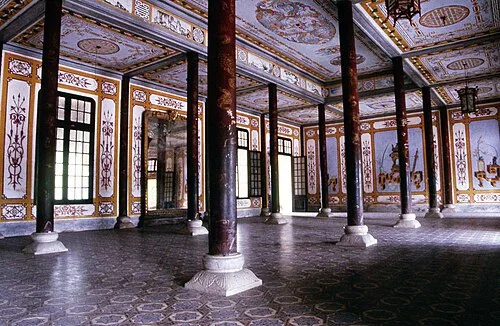 Tả Vu and Hữu Vu Preparation Halls
Tả Vu and Hữu Vu, the Halls of the Mandarins
Government here had its own rooms, and these twin halls were them. Tả Vu and Hữu Vu were built in 1819, the eighteenth year of Gia Long, flanking the great hall of state. Tả Vu, on the left, belonged to the civil mandarins; Hữu Vu, on the right, to the military ones. Here officials prepared the rituals, and themselves, before holding court with the emperor. Tả Vu carried a heavier load than the rest. It served as the office of the Privy Council, the court's inner circle of advisers. It also hosted the Thi Đình, the final stage of the imperial examinations, when the empire's scholars competed for the highest degrees. And banquets were held here, when celebration was called for. The buildings were renovated in 1899, and again in 1923 ahead of Khải Định's fortieth birthday, which gave them their present form. After the wars left them badly degraded, they were restored in 1977, in 1986, and again in the late 1990s. The long rows of dark columns and the painted ceilings give a sense of how the empire's paperwork and ceremony were carried, hall by hall, day by day.
Listen in the appPhoto: Viault · CC BY-SA 3.0
07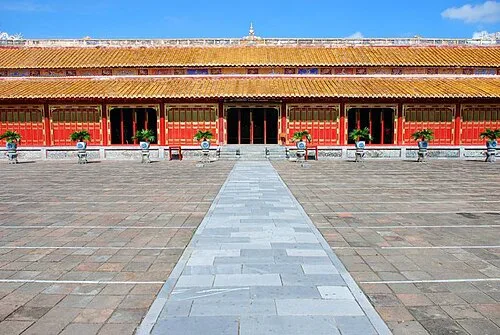 Thế Tổ Miếu Shrine, Hiển Lâm Các, and Cửu Đỉnh
Thế Tổ Miếu, the Dynastic Temple
From government, the story turns to the sacred. Thế Tổ Miếu is the temple where the royal court came to worship the deceased emperors of the Nguyễn dynasty. The dynasty rooted its right to rule in its ancestors, so honoring them here was the spiritual foundation of the whole reign. The long hall and the wide stone courtyard were shaped for ritual procession, with the emperors' tablets enshrined within. One rule of the rites stands out. Women of the court were not allowed to attend these ceremonies, and that ban included the empress herself. The temple has also proved durable. When the battle of 1968 devastated the citadel, Thế Miếu was among the handful of major buildings that survived, and it still anchors this precinct of ancestral worship.
Listen in the appEverjean from Antwerp, Belgium · CC BY 2.0
08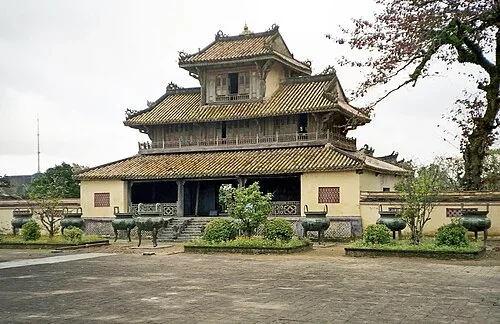 Thế Tổ Miếu Shrine, Hiển Lâm Các, and Cửu Đỉnh
Hiển Lâm Các, Pavilion of Glorious Coming
Hiển Lâm Các, the Pavilion of Glorious Coming, rises in three wooden tiers above the worship precinct. It was built from 1821 and completed in 1822 under Emperor Minh Mạng, raised alongside the dynastic temple as part of the same sacred ensemble. It stands seventeen meters high, the tallest structure in the whole Imperial City, and no other building here was allowed to rise higher. Its purpose was commemoration. The pavilion is considered a monument to the achievements of the Nguyễn emperors, and to the great mandarins and generals who served the dynasty with distinction. Beside the temple of the ancestors, it honored the living record of the reign, the men whose names the court wanted kept in view. Nearly two centuries after its completion, its roofline still crowns this precinct, the highest point of wood and tile in the old imperial city.
Listen in the appBernard Gagnon · CC BY-SA 3.0
09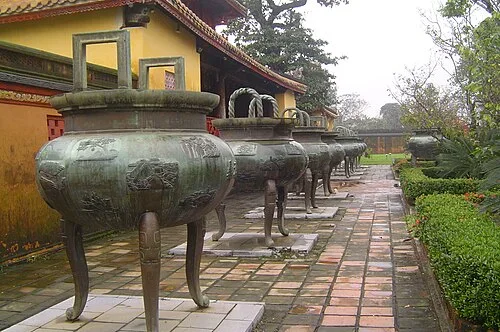 Thế Tổ Miếu Shrine, Hiển Lâm Các, and Cửu Đỉnh
The Nine Tripod Cauldrons (Cửu Đỉnh)
Nine great bronze cauldrons stand in a row before the dynastic temple, each resting on three legs. Emperor Minh Mạng ordered them cast in the winter of 1835, taking his inspiration from the Nine Tripods of China's ancient Xia dynasty. His decree went to the Cabinet and the Ministry of Public Works, and the foundries of Huế poured the rough bronze the following year. Finishing the surfaces took nearly eight months more. On the first of March 1837, Minh Mạng presided over a grand ceremony to set the tripods in the temple courtyard. Each cauldron bears the posthumous title of one Nguyễn emperor, and the heaviest weighs about two and a half tonnes. Every tripod carries seventeen engraved motifs and a calligraphic inscription. The images show mountains and rivers, birds and animals, products of the land, and weapons. Together the nine form a bronze panorama of a unified Vietnam. Through the Indochina War, the Vietnam War and the lean decades after, they were never moved and never broken.
Listen in the appPhoto: Lưu Ly · CC BY-SA 3.0
10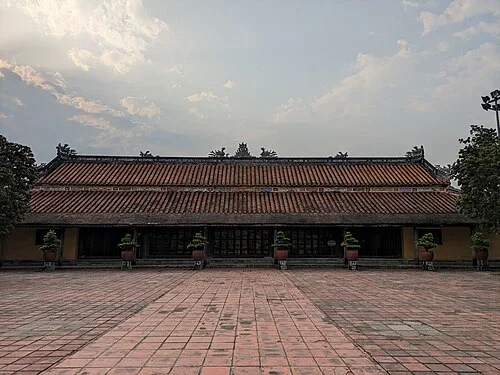 Cung Diên Thọ and Cung Trường Sanh Palaces
Diên Thọ Palace, Home of the Queen Mothers
Diên Thọ Palace began in April 1804 as the home of Empress Dowager Ý Tĩnh, mother of the first emperor, Gia Long. It was first named Trường Thọ, and later emperors renovated, repaired and renamed it again and again. Down the generations it housed the dynasty's empress dowagers. The complex now covers about seventeen thousand five hundred square meters, considered the largest surviving palace complex in the old capital. Its halls and pavilions, among them the main hall and Thọ Ninh Palace, are strung together by covered corridors. After the monarchy fell in 1945, many structures in the citadel were severely damaged or vanished entirely. The Diên Thọ complex came through almost intact. Not every building here shared that luck.
Listen in the appPhoto: Vano111ru · CC BY-SA 4.0
- 11
Cung Trường Sanh Palace
A quieter companion palace in the dowager quarter, set among lakes, gardens and old shade trees.
- 12
The Red Corridors and the Wartime Ruins
How the innermost palace was burned in 1947 and shelled in 1968, and how restoration goes on.
- 13
Điện Kiến Trung, Palace of the Last Emperors
Khải Định's mosaic-faced palace, home and workplace of the last emperors of the Nguyễn.
- 14
Thái Bình Lâu, the Peace Pavilion
Khải Định's two-story reading pavilion, where the emperor read and wrote poetry away from the throne.
- 15
Duyệt Thị Đường, the Royal Theater
The oldest surviving theater in Vietnam, where the court watched tuồng opera and Nhã nhạc music.
- 16
Cửa Hiển Nhơn, the Eastern Gate
The ornate eastern gate, and the World Heritage listing that now protects all that remains.
Imperial City of Huế
Frequently asked questions
How much does the guide cost?
Free app download. Listed guide price: $0.99. Guide price shown in the app. Audio guide only. Venue admission is separate.
Can I listen without internet?
Yes. Download the guide’s audio, images, and maps in the app before your visit. Your downloaded content is then available offline.
Can I listen in my language?
This audio guide is available in 15 languages, including English.
Do I need to follow a schedule?
No. This is a self-guided experience. Choose your stops, pause whenever you like, and return to a story at your own pace.
At your own pace
Explore Imperial City of Huế.
Download Stanza, then search for “Imperial City of Huế”.
Free app download · Guide price shown in the app
Keep exploring
Audio guides — Vietnam
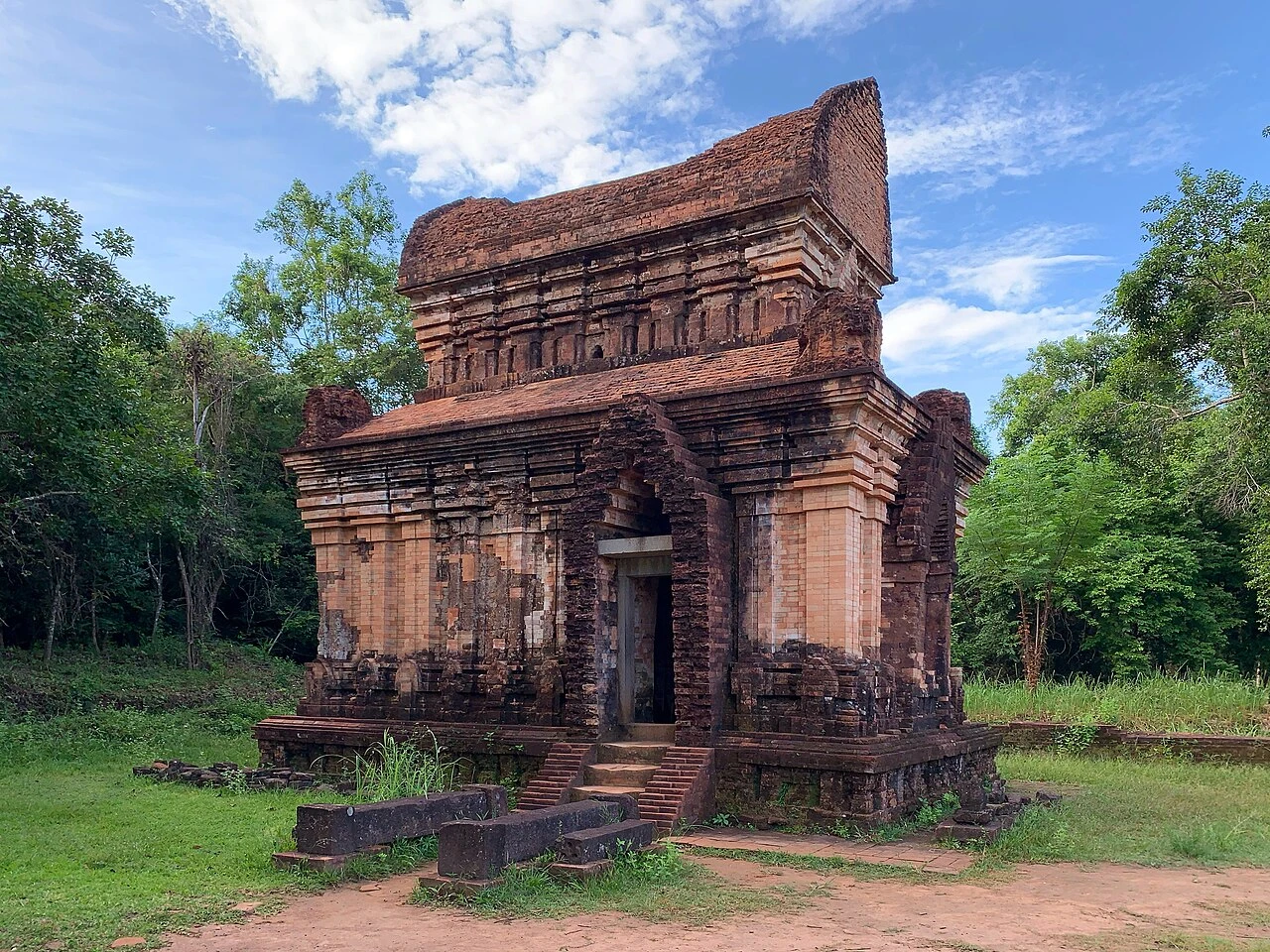
Da Nang · 98 km
My Son Sanctuary
Content & sources
Photo: Chainwit. · CC BY 4.0
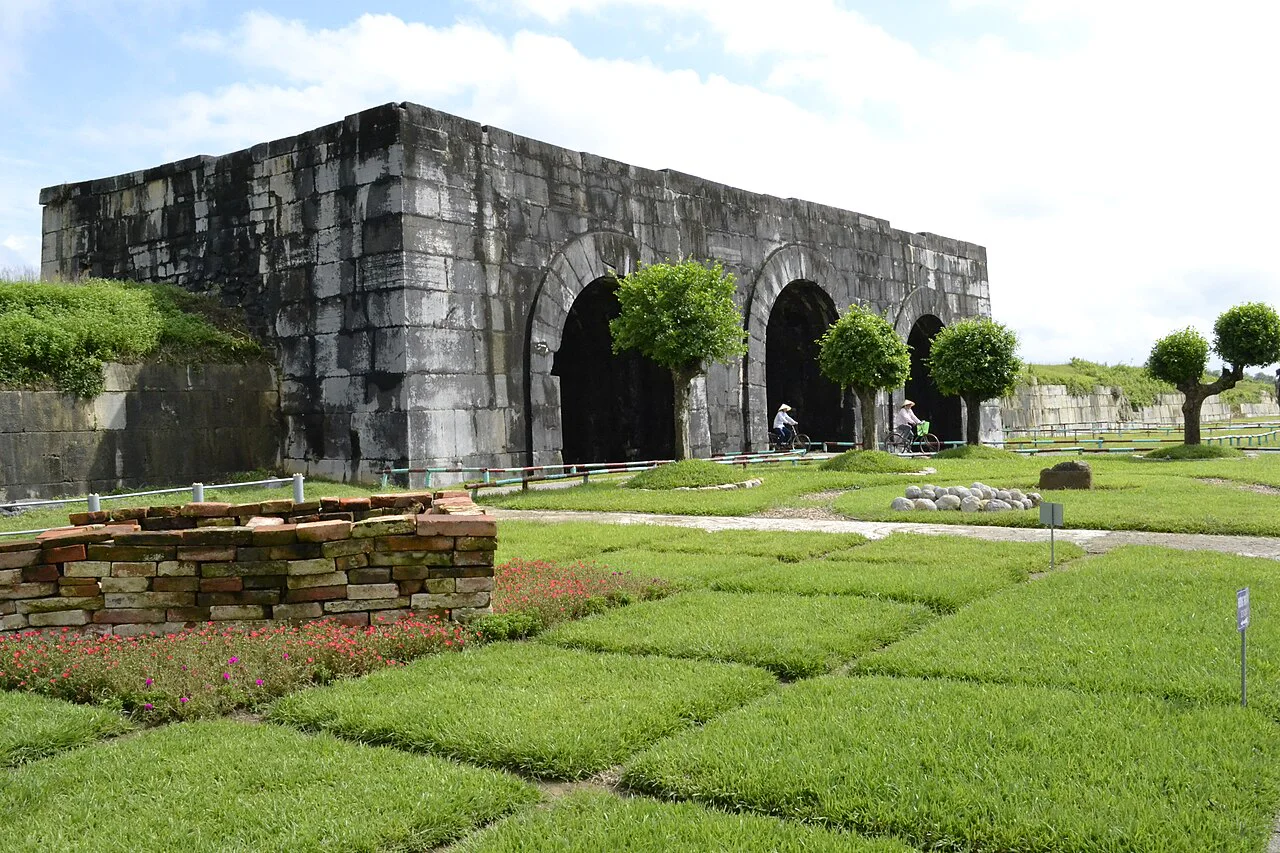
Tây Đô Commune
Citadel of the Hồ Dynasty
Content & sources
Loi Nguyen Duc · CC BY 2.0
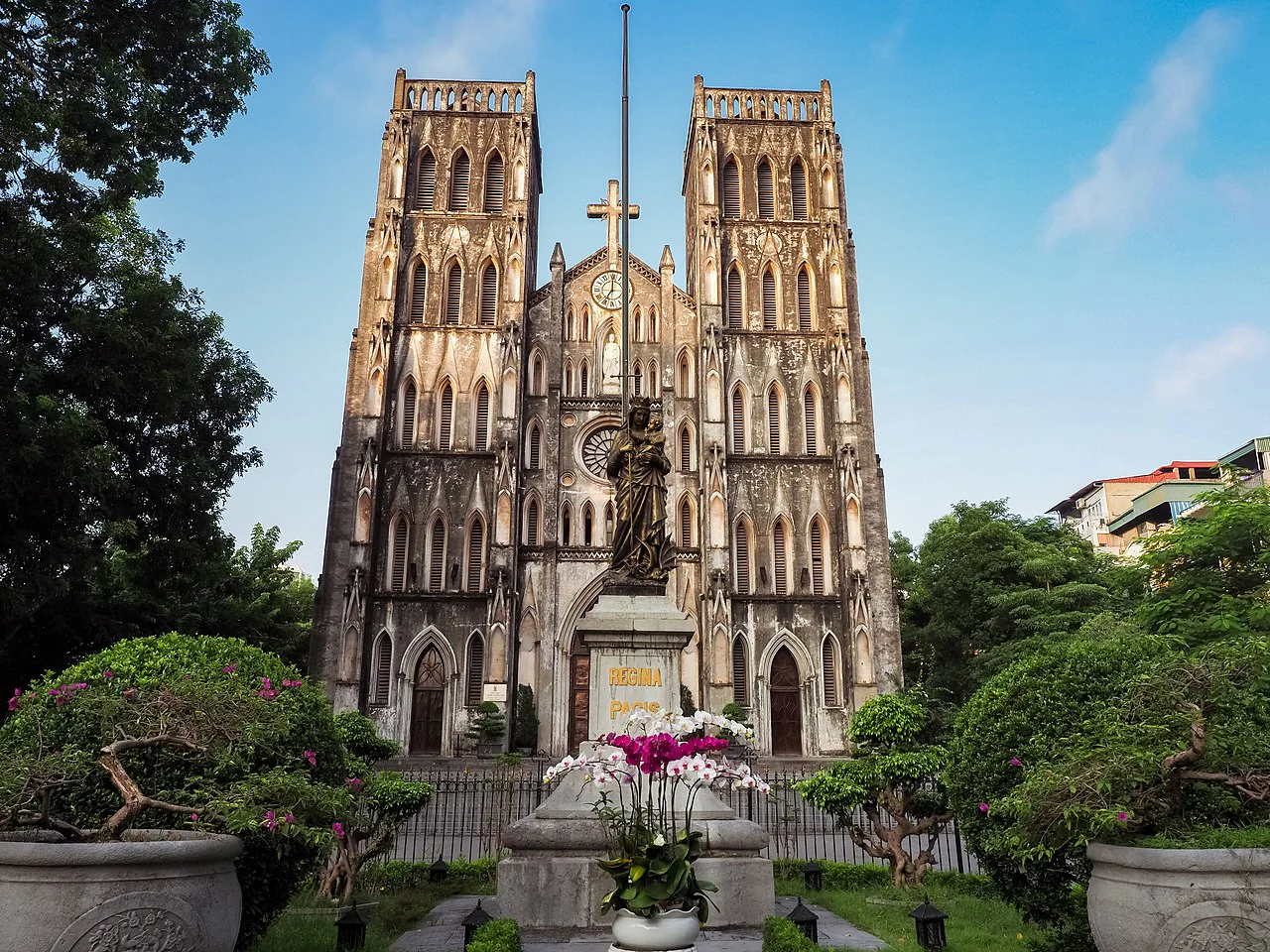
Hanoi
St. Joseph's Cathedral, Hanoi
Content & sources
John Ragai · CC BY 2.0
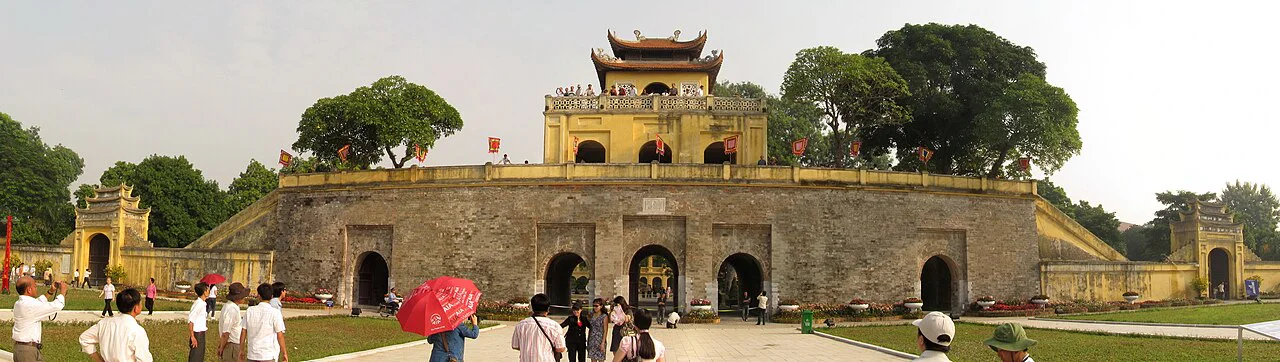
Hanoi
Imperial Citadel of Thăng Long
Content & sources
Photo: Grenouille vert · CC BY-SA 3.0