Stanza · Audio guide
My Son Sanctuary Audio Guide
A place to remember. A story to take with you.
Mỹ Sơn is a cluster of abandoned and partially ruined Hindu temples constructed by the Champa kings between the 4th and 14th centuries. It is a designated UNESCO World Heritage site showcasing significant…
Download Stanza, then search for “My Son Sanctuary”.
About the tour
One guide. Your kind of visit.
Mỹ Sơn is a cluster of abandoned and partially ruined Hindu temples constructed by the Champa kings between the 4th and 14th centuries. It is a designated UNESCO World Heritage site showcasing significant religious architecture.
Ready when you are.
- 01Get the free Stanza app.
iOS & Android
- 02Find your guide.
“My Son Sanctuary”
- 03Download before you go.
Works offline
Audio guide / 31 narrated stops
Inside the guide
Get to know a few of the stories before you go. Open a stop to read more.
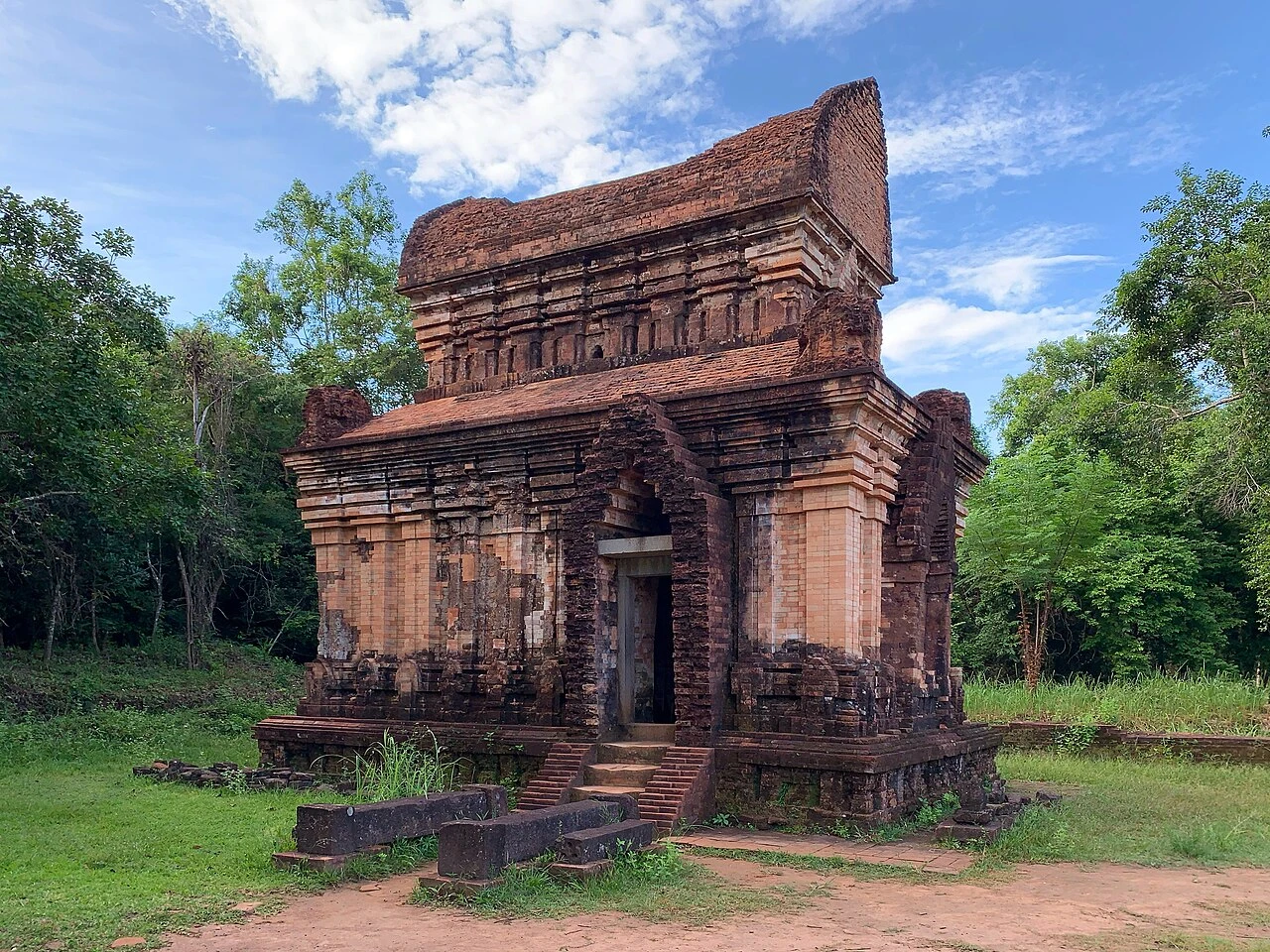
01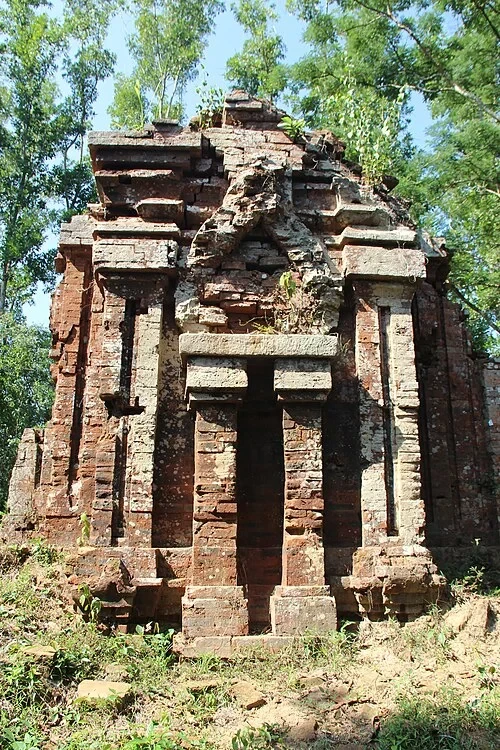 Group K Gateway Temples
Group K
Group K functioned as the monumental entry gate to the entire sacred valley. Before passing into the inner sanctuary complex, Cham worshippers and kings would halt at this very portal to undergo rituals of purification. Looking closely at the standing walls, you can see the signature brickwork of the Champa civilization. The reddish bricks are stacked incredibly tight without any visible mortar. Instead of cement, Cham builders are thought to have joined them with a sticky binder, either tree resin or a mortar of the same clay as the bricks, and one old theory holds that the entire structure was then fired together. The exact process of how they achieved such flawless, durable joins without warping the clay remains a puzzle to modern construction engineers and archaeologists alike. This gateway marks the transition from the secular world to the realm of the Hindu gods, initiating a journey through the valley's spiritual heart.
Gary Todd · CC0
02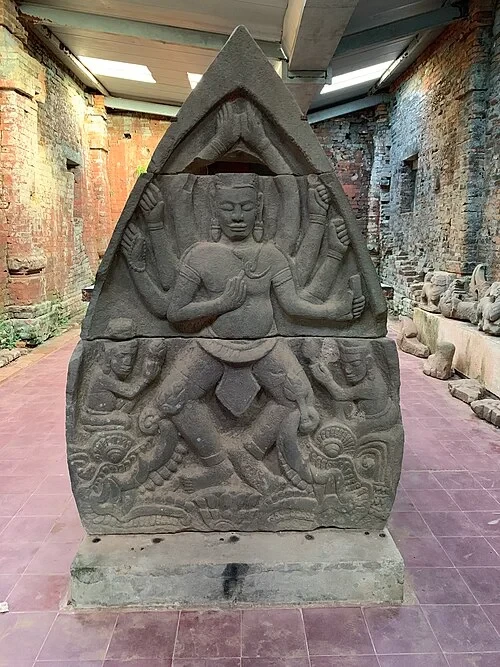 Group H Sanctuary Ruins
The Dancing Shiva
Sandstone panels like this one, known as tympanums, sat above temple doorways to greet worshippers. This carving features a multi-armed Shiva performing the Tandava, his cosmic dance of destruction and creation. In Shaiva Hinduism, Shiva's energetic dance is not a malevolent act; instead, it systematically destroys a weary, decaying universe to clear the path for spiritual rebirth and new life. His numerous arms fan out symmetrically to form a circular pattern resembling a solar halo. Below his dancing feet, look for the small carved figures of musicians. They play traditional instruments to maintain the steady cosmic rhythm of the universe. This carving captures the Cham artistic preference for portraying dynamic, multi-limbed deities with serene, composed facial expressions.
Photo: Chainwit. · CC BY 4.0
03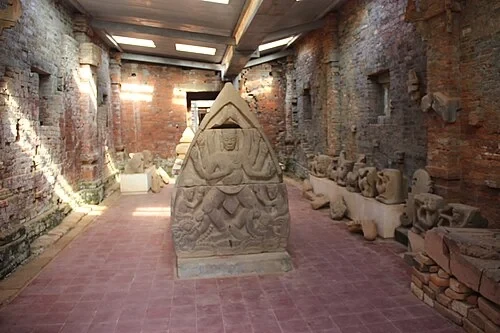 Group H Sanctuary Ruins
The Gallery of Stone Gods
The ancient brick walls of Group D's assembly hall now serve a protective purpose as an open-air museum. Lined up along the red tiled floor and against the brickwork are rows of weathered sandstone statues, pedestals, and steles. In the center stands the striking carved tympanum of the dancing Shiva. These stone artifacts were gathered from across the valley floor and rescued from the crumbling ruins of surrounding temples. By consolidating them within this sheltered space, archaeological teams have managed to protect these irreplaceable objects from further deterioration caused by tropical monsoons, as well as the constant threat of looting. Walking through this gallery allows you to examine the varied carving styles and regional influences that shaped Cham religious art over several centuries.
Listen in the appGary Todd · CC0
04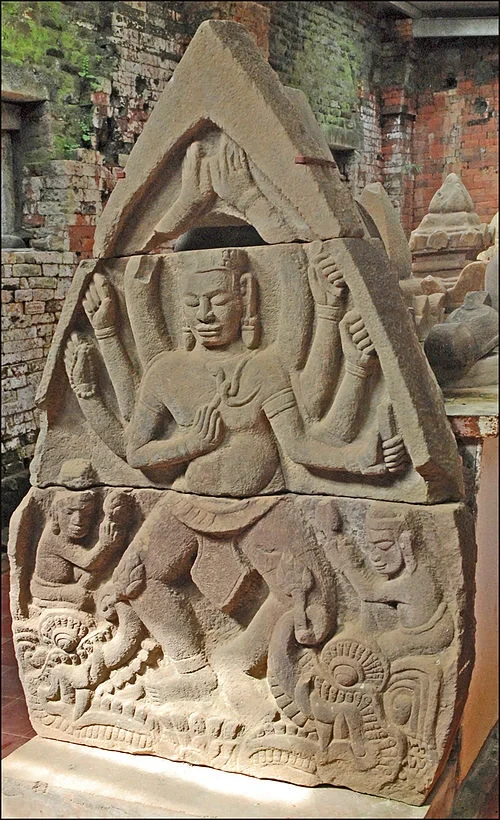 Group H Sanctuary Ruins
Carving of the Multi-Armed Lord
Look again at the dancing Shiva, this time for how it was made. Unlike the massive brick temples, which were built and carved directly on-site, decorative sandstone elements like this tympanum, along with lintels and doorframes, were carved by artisans off-site in dedicated workshops. Once completed, these heavy stone blocks were transported to the site and integrated into the red brick facades, demonstrating a sophisticated system of pre-fabricated construction and a seamless synthesis of different materials.
Listen in the appdalbera from Paris, France · CC BY 2.0
05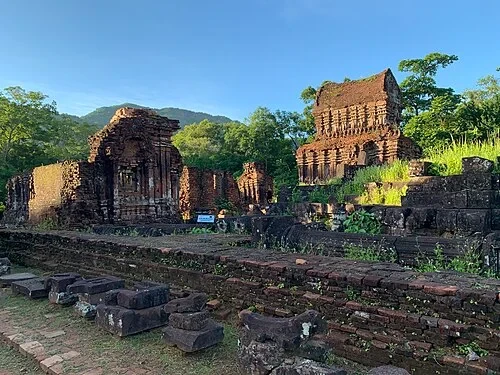 Groups B, C, and D Sanctuary Complex
My Son Groups B, C and D
Looking across the clearing of Groups B, C, and D reveals the dense sacred core of Mỹ Sơn. A distinct visual contrast exists between the tall, relatively intact brick treasury tower with its curved, boat-like roof and the flat, low-lying foundations of the surrounding destroyed shrines. This cluster of structures was the main spiritual power center of the entire valley. Here, Champa kings would sponsor building campaigns, dedicate sacred monuments, and perform elaborate rituals to legitimize their divine right to rule. The concentration of structures in this small area shows how successive generations of kings continued to add to and embellish this central sanctuary, making it a focal point of state power and religious devotion for centuries.
Listen in the appPhoto: Chainwit. · CC BY 4.0
06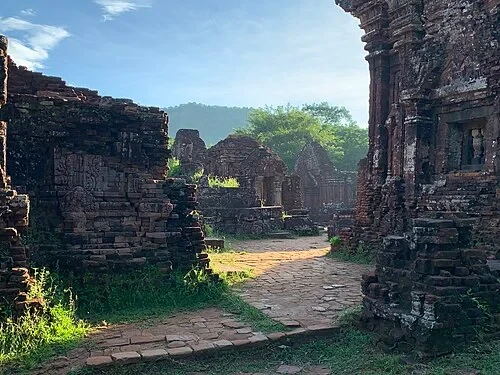 Groups B, C, and D Sanctuary Complex
The Royal Ritual Pathway
Walking along the brick-paved path running between the towering temple walls of Group B reveals the tight, almost seamless layout of the ancient complex. This processional route was once restricted to the king, high priests, and sacred temple dancers during major astronomical festivals and state ceremonies. The narrowness of the pathway was deliberate, focusing the minds of the participants as they approached the inner sanctuaries. The bricks underfoot have been stabilized, but their placement mirrors the original layout designed by Cham architects over a thousand years ago. Moving along this path helps you experience the spatial transition from the open valley to the intimate, shadow-filled spaces where sacred rites were performed to honor the royal ancestors and the gods.
Listen in the appPhoto: Chainwit. · CC BY 4.0
07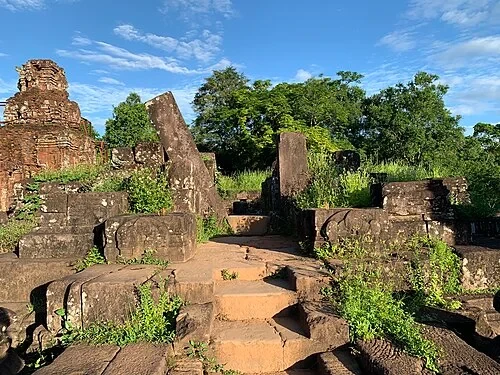 Temple B1
My Son B1
Heavy stone block steps and pillars remain scattered in the courtyard of Temple B1, offering clues about Cham construction techniques. Looking closely at the block bases reveals small, worn decorative reliefs depicting floral patterns and animal motifs. These heavy stone elements served as the bedrock foundations for lighter brick walls and wooden superstructures that have long since vanished due to decay and conflict. The combination of durable stone bases with lighter upper materials shows the multi-layered architectural style typical of the region. While the wooden roofs and elaborate carvings have dissolved over time, these massive foundation stones remain firmly in place, mapping out the original dimensions of the complex and showing how Cham builders anchored their sacred structures to the earth.
Listen in the appPhoto: Chainwit. · CC BY 4.0
08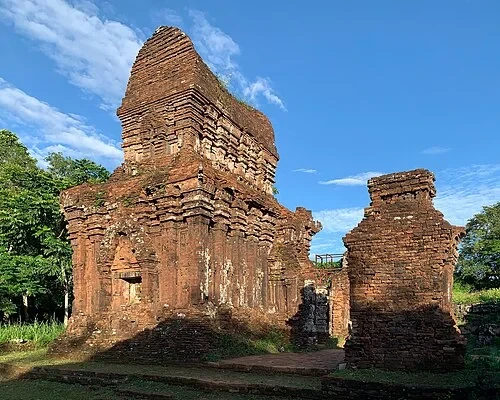 Temple B5 Treasury
My Son B5
The beautifully preserved B5 tower is immediately recognizable by its concave, saddle-shaped roof that mimics the hull of a boat. This structure served as a treasury or repository, used to store sacred Sanskrit manuscripts, ceremonial gold and silver vessels, and precious offerings dedicated to the deities of the valley. The distinctive roof design is not merely decorative; it directly reflects the maritime identity of the Champa people. As master sailors, navigators, and merchants, the Cham dominated the critical maritime trade routes across the South China Sea for centuries. Incorporating boat motifs into their religious architecture connected their everyday reliance on the sea with their spiritual devotion, ensuring that their prosperity on the water was blessed by the gods inside.
Listen in the appPhoto: Chainwit. · CC BY 4.0
09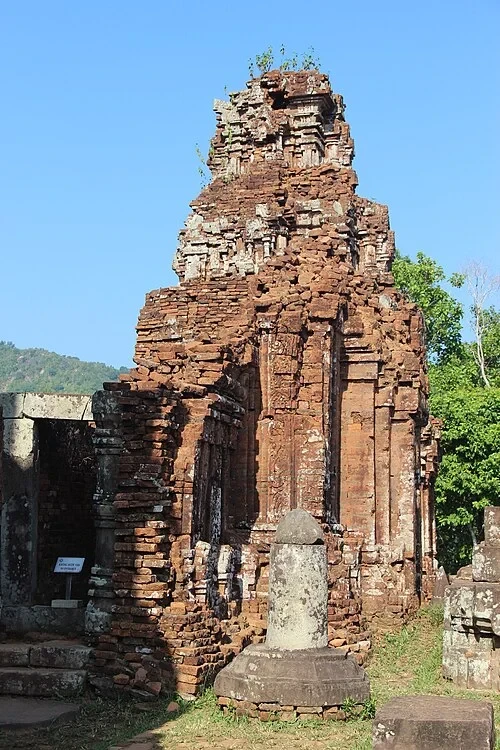 Temple B4 Auxiliary Tower
My Son B4
A weathered sandstone linga stands on its pedestal directly in front of the ruined brick walls of Temple B4. In Hindu iconography, the linga represents the formless, infinite, and creative nature of the god Shiva. Positioning this symbol outdoors rather than deep inside the sanctuary allowed the natural elements to wash over the sacred stone. This setup mirrored the ancient rituals performed by Cham priests, who poured offerings of milk, honey, and holy river water over the linga. The liquids would cascade down the stone and flow out through a channel, symbolizing the distribution of divine blessings across the soil of the kingdom, ensuring agricultural abundance and political stability for the ruling dynasty.
Listen in the appGary Todd · CC0
10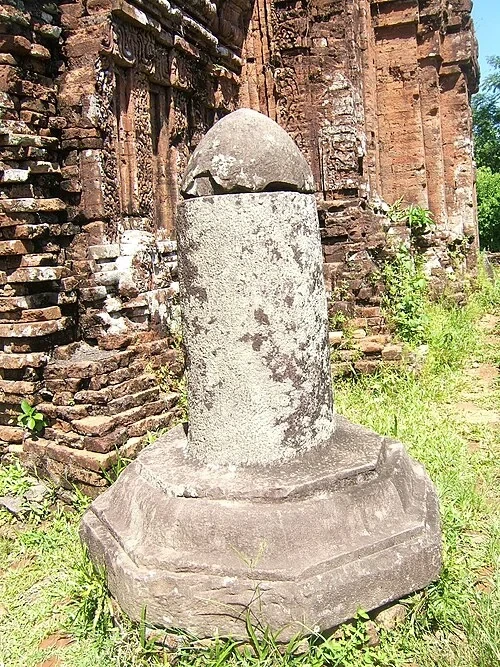 Temple B4 Auxiliary Tower
The Pillar of Shiva
The physical details of this sandstone linga show a rounded dome and a weathered, rough texture from centuries of exposure. A classical Hindu linga is divided into three distinct vertical sections, though some of these layers are often hidden within the support pedestal. The square bottom section represents Brahma the Creator, the octagonal middle section represents Vishnu the Preserver, and the cylindrical top section represents Shiva the Destroyer. This tripartite design symbolizes the unity of the three supreme Hindu deities within a single sacred pillar. The top portion, which remains fully visible, received the ritual libations during ceremonies, acting as the main point of spiritual contact where worshippers directed their prayers and offerings to the cosmic forces of the universe.
Listen in the appKhương Việt Hà · Public domain
- 11
My Son C1
Temple C1 stands as a dramatic sanctuary structure featuring decorative brick pilasters and a dark, recessed entrance leading into the ancient chamber.
- 12
My Son D1
Temple D1 is a long, low-slung building that served as an assembly hall for pilgrims preparing to enter the sacred shrines.
- 13
The Headless Guardian of the Hall
A seated, headless sandstone statue resting on a stone plinth against the brickwork of the assembly hall tells a story of both devotion and loss.
- 14
My Son D2
The long brick pavilion of Temple D2 features an elegant entrance gate framed by rounded brick columns, showcasing the evolution of Cham architectural engineering.
- 15
The Elephant Relief Carving
This rectangular sandstone block features a dynamic relief carving of an elephant decorated with ornate jewelry, representing royal power and spiritual protection.
- 16
Group A
The wide clearing of Group A, framed by the jagged Cat's Tooth Mountain, holds the tragic remains of Temple A1, which was destroyed during a 1969 bombing raid.
- 17
The Reconstructed Bases
These stepped red brick foundations and central stone pedestal represent auxiliary shrines carefully stabilized by modern archaeological teams to reveal the temple complex's original scale.
- 18
My Son A10 Altar
This massive sandstone pedestal in Temple A10 features a central linga and yoni, representing Shiva and Shakti, complete with a stone spout for ritual liquids.
- 19
The Altar Chamber of A10
This narrow, high-walled corridor leading to the A10 altar was deliberately designed to create an intimate, atmospheric chamber for sacred royal ceremonies.
- 20
The Pedestal Relief of A10
The base of the A10 pedestal displays exceptionally detailed sandstone carvings of a worshipper standing beneath an ornate canopy, representing the height of Champa art.
- 21
The Miniature Guardian of Group A
This sandstone relief fragment features a miniature guardian spirit carved inside an arched niche, designed to protect the temple portals from malevolent forces.
- 22
My Son Group G
Group G, built on a distinct hilltop in the late twelfth century under King Jaya Harivarman I, features raised earth terraces that elevate the sacred complex.
- 23
The Kala Guardian
This menacing sandstone relief depicts the legendary monster Kala, symbolizing time and death, placed at temple thresholds to ward off evil spirits.
- 24
My Son G1
The primary tower of Group G features steep brick staircases and heavy terracing that reflect the artistic influence of neighboring Khmer temple architecture.
- 25
My Son Groups E and F
This stone sculpture of the kneeling bull Nandi, Shiva's sacred companion, sits in front of the green mounds of Groups E and F, oriented toward the temple entrance.
- 26
The Sacred Meadow of E and F
This peaceful meadow contains the ruins of Groups E and F, some of the oldest structures in Mỹ Sơn dating to the seventh and eighth centuries.
- 27
The Mound of Temple E4
This large grass mound is all that remains of Temple E4, showing how tropical weather and conflict have reclaimed once-imposing brick structures.
- 28
The Sanskrit Inscriptions of E1
This circular sandstone pedestal features ancient Cham inscriptions based on Sanskrit, recording royal deeds and temple donations that provide valuable clues about the lost Champa kingdom.
- 29
The Circular Pedestal of E1
Originally resting inside Temple E1, this circular sandstone pedestal features delicate lotus carvings and a flat yoni top designed to hold a sacred linga.
- 30
Brick Ruins in the Tall Grass
The wild, scattered ruins of Group F represent an ancient neighborhood of priests, now constantly threatened by the encroachment of the surrounding jungle.
- 31
My Son F1
A massive modern steel canopy shields the fragile remains of Temple F1, protecting the porous ancient brickwork from heavy monsoon rains.
My Son Sanctuary
Frequently asked questions
How much does the guide cost?
Free app download. Listed guide price: $3.99. Guide price shown in the app. Audio guide only. Venue admission is separate.
Can I listen without internet?
Yes. Download the guide’s audio, images, and maps in the app before your visit. Your downloaded content is then available offline.
Can I listen in my language?
This audio guide is available in 15 languages, including English.
Do I need to follow a schedule?
No. This is a self-guided experience. Choose your stops, pause whenever you like, and return to a story at your own pace.
At your own pace
Explore My Son Sanctuary.
Download Stanza, then search for “My Son Sanctuary”.
Free app download · Guide price shown in the app
Keep exploring
Audio guides — Vietnam
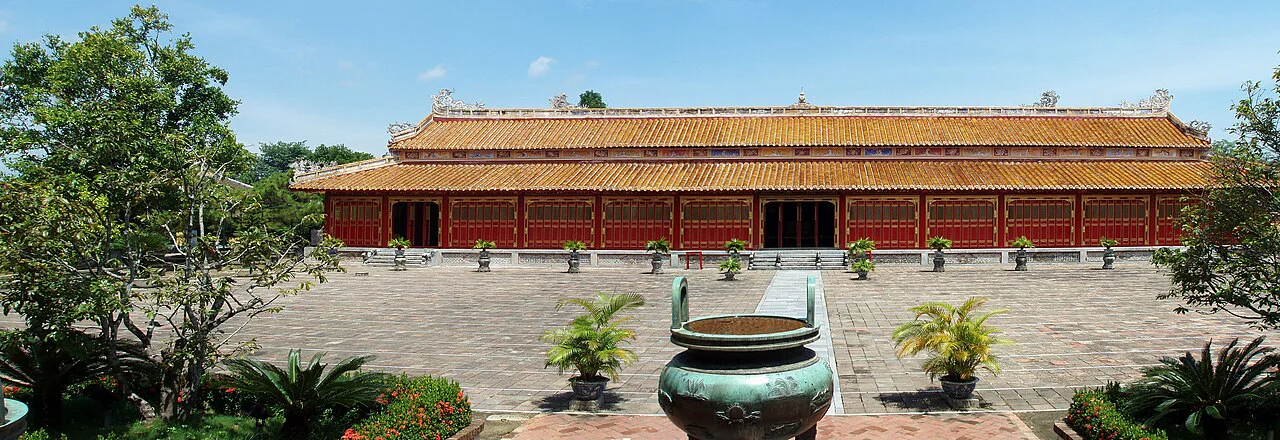
Huế · 98 km
Imperial City of Huế
Content & sources
https://www.flickr.com/photos/sixty4coupe/ · CC BY-SA 2.0
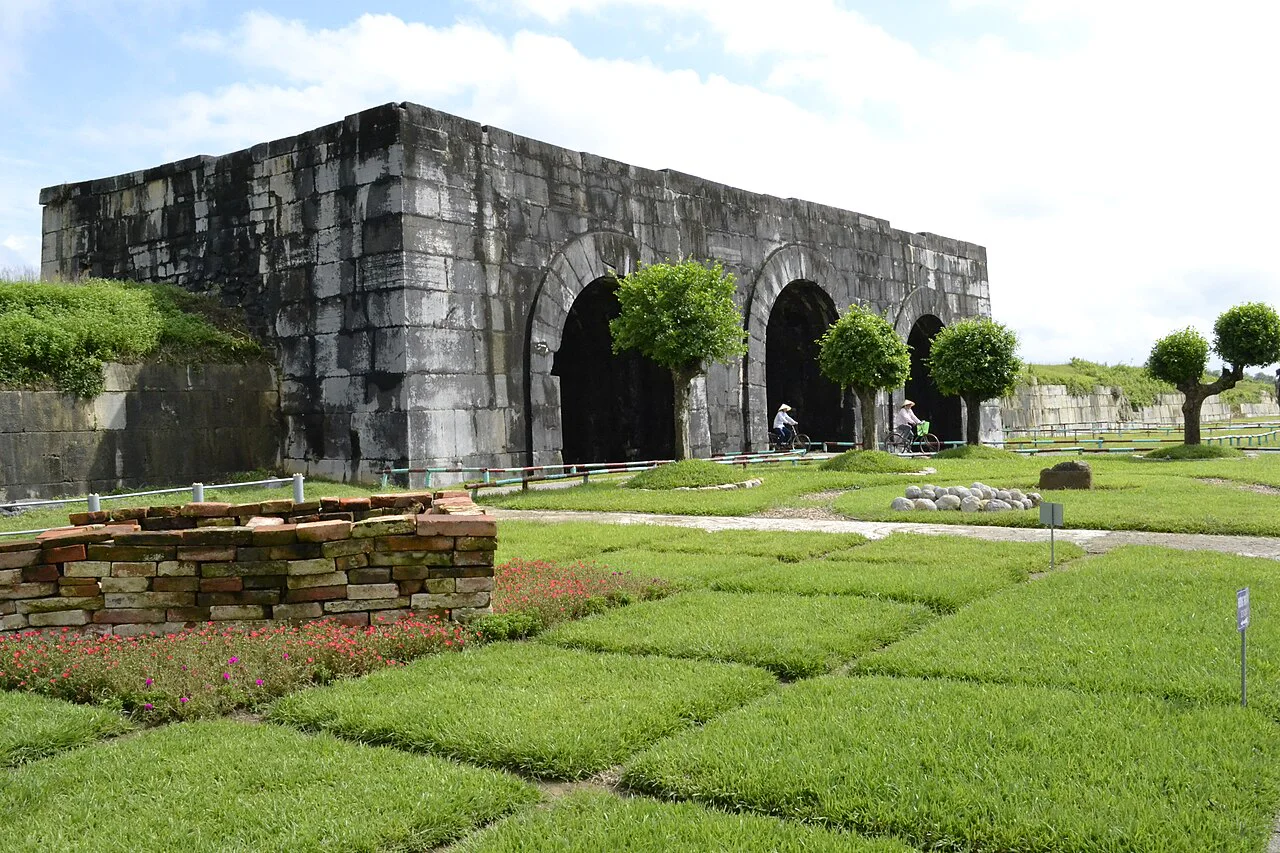
Tây Đô Commune
Citadel of the Hồ Dynasty
Content & sources
Loi Nguyen Duc · CC BY 2.0
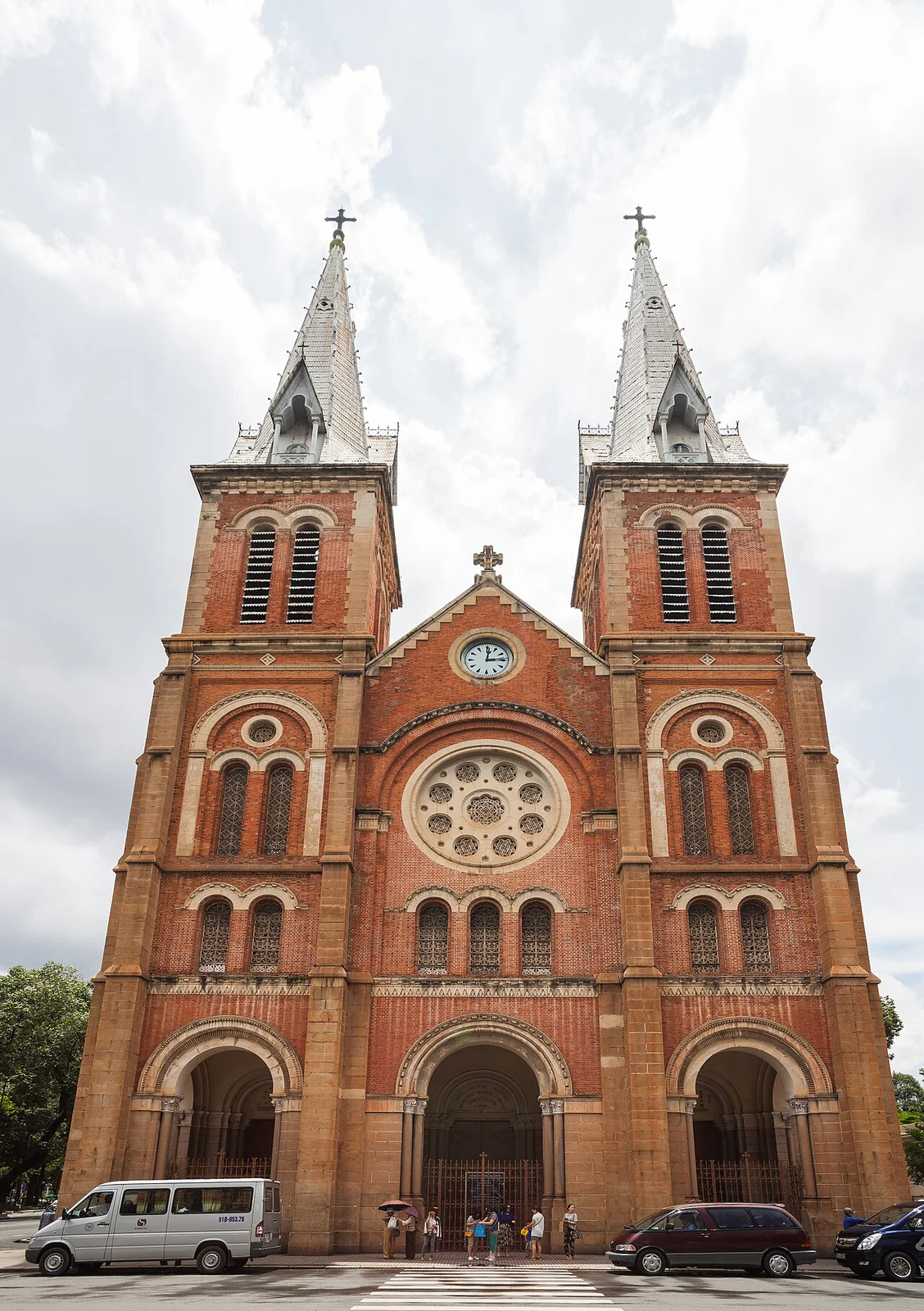
Ho Chi Minh City
Notre-Dame Cathedral Basilica of Saigon
Content & sources
Diego Delso · CC BY-SA 3.0
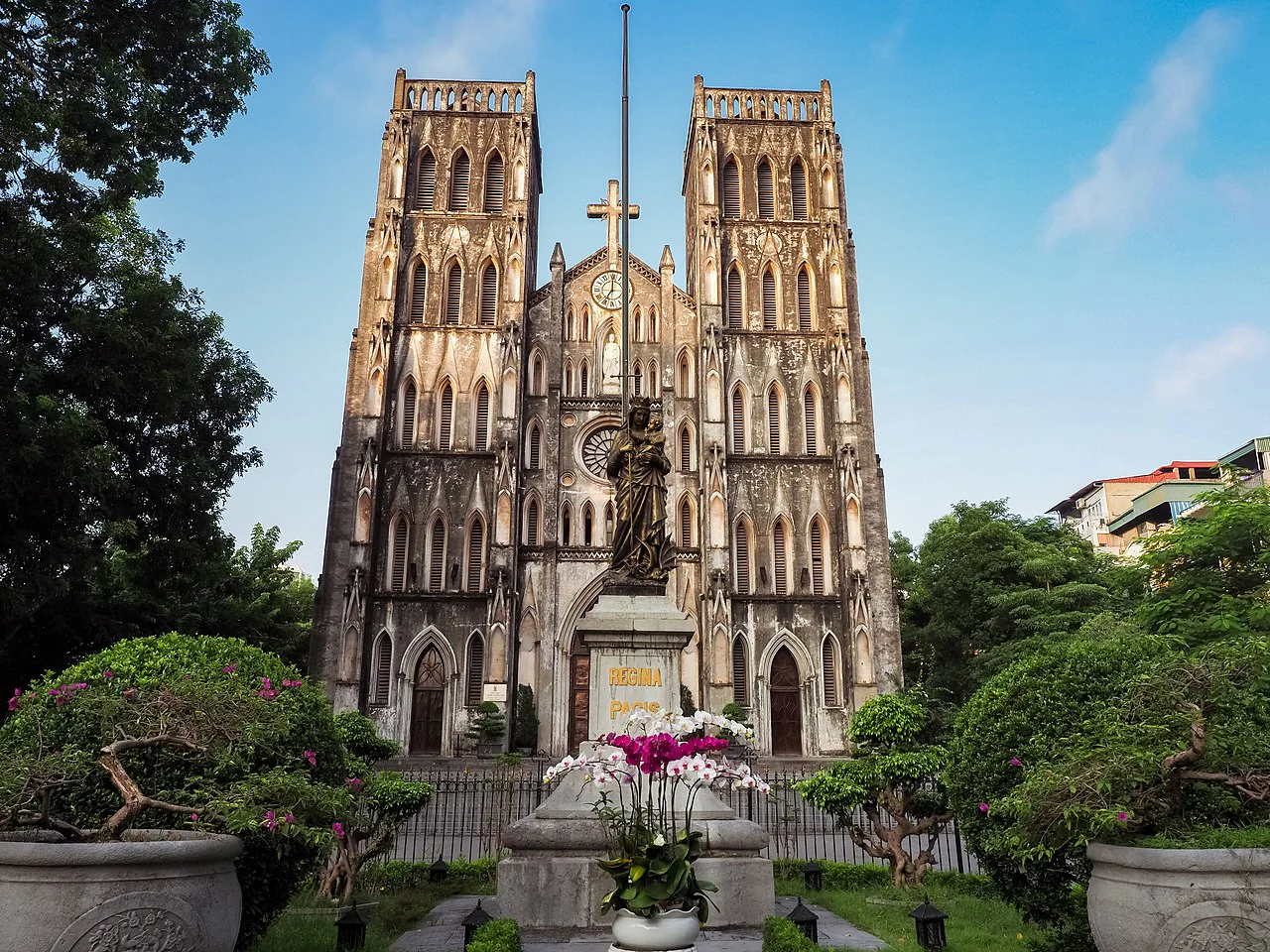
Hanoi
St. Joseph's Cathedral, Hanoi
Content & sources
John Ragai · CC BY 2.0