Venue spotlights/Epidaurus, Greece
Epidaurus beyond the theatre: understanding the ancient healing sanctuary
The theatre is one part of a much larger place. Follow the spaces for worship, sleep, hospitality and public life to understand why people came to Epidaurus.
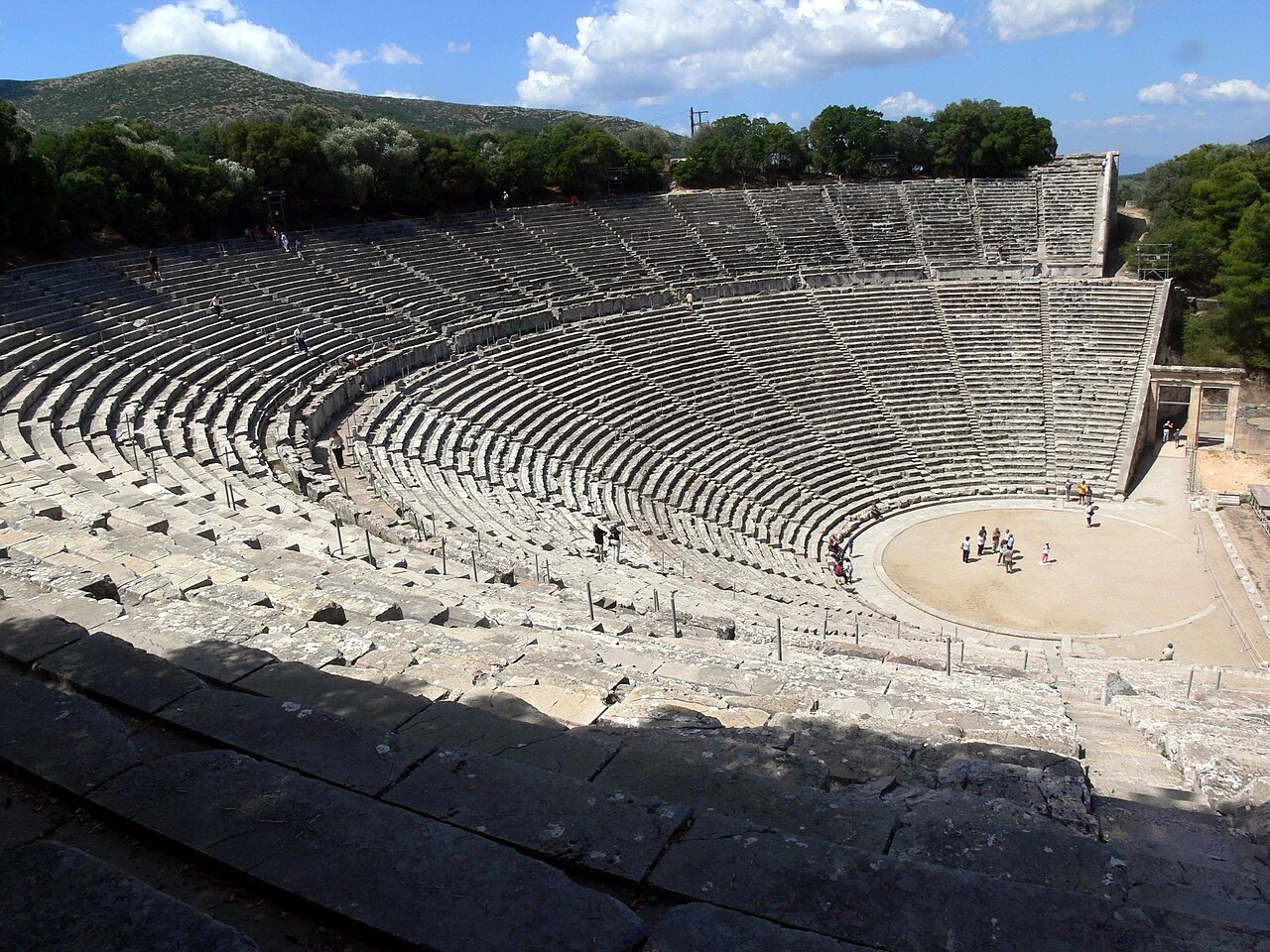
The theatre is so complete and legible that it can make the lower remains nearby seem like an optional extra. At Epidaurus, that reverses the story. The Sanctuary of Asklepios brought people seeking divine help, and its buildings accommodated worship, ritual sleep, meals, lodging and games. Give those spaces a connected reading and the theatre becomes part of a place, rather than the whole destination.
Start with the modern entrance, not an imaginary pilgrimage
The Ephorate’s published route places today’s approach on the south side, passing the museum before paths lead towards either theatre or sanctuary. Ancient worshippers entered through the northern Great Propylon. You are not retracing their arrival simply by following the modern entrance. For our suggested visit, see the theatre first, return towards the museum junction, then follow the signed sanctuary route. Keep the museum for the end if its confirmed hours allow; see it first if they do not.
At the sanctuary’s southern approach, the large Katagogion was a guesthouse: its footprint introduces the practical scale of hosting visitors. Continue towards the Temple, Tholos and Abaton as one group, using signs and current barriers rather than assuming every ruin is enterable. Include the stadium on your return if energy and the permitted route allow. This is a selection of linked stops, not a promise of an uninterrupted circuit.
The Abaton: read sleep as a religious practice
The Abaton, also called the Enkoimeterion, was associated with incubation, or enkoimesis: prepared worshippers slept hoping to encounter Asklepios in a dream and receive healing or guidance. Cleansing and the sacred well were part of the sanctuary’s ritual setting. Describe what participants believed, rather than announcing that a god actually cured a disease. The long portico is a different kind of space from a theatre: it asks you to imagine waiting, preparation and restricted access, not an audience watching a stage.
Temple and Tholos: recognise different shapes and different certainties
The rectangular Temple of Asklepios housed the god’s cult image. The neighbouring Tholos is circular, with an elaborate underground arrangement. Its precise purpose remains uncertain in the Ephorate’s own account; a confident story about exactly how its underground spaces were used would go beyond that evidence. Look from permitted positions and compare the two plans. The difference between rectangle and circle is visible without needing to enter a subterranean chamber.
UNESCO treats the theatre, sanctuary buildings, sports and accommodation as a coherent ensemble linked to healing cults and the history of medicine. That is a useful broader frame, not a reason to map every building onto a modern hospital department. Meals, worship and games belonged to the same sanctuary world, while buildings and practices changed over centuries.
In the museum, ask what kind of evidence you are seeing
Ministry educational resources identify architectural fragments, bronze surgical tools, votive objects and cure stelae in the museum. Seek one architectural piece to relate to a building outside, and one inscription or offering to relate to a person seeking help. The cure texts record claims and religious narratives; they are evidence for how healing was represented, not modern medical trials. The same ministry resource labels some statues and reliefs as copies, so read labels rather than assuming every displayed figure is an original.
The museum directory describes material from Archaic through Roman times. That long span matters: there was no single unchanging treatment programme lasting throughout the sanctuary’s history. You need not read ancient Greek unaided to get value from an inscription. Its presence, display context and explanation help connect an apparently empty foundation outside with a community of visitors, donors and interpreters.
Make room for the sanctuary, and keep the theatre enjoyable
As an editorial planning allowance, reserve roughly three hours for theatre, a selected sanctuary route and museum, with pauses; this is not a measured walking time. On 19 October 2026, Hellenic Heritage lists full admission at €20, 08:00–18:00 for 16–31 October, 08:00–17:00 for November–February and 08:00–18:00 for March, with last admission 20 minutes before closing. Confirm holidays and the museum’s own availability on +30 27530 22009. Ask specifically about distances, surfaces and steps if mobility affects your route; an accessibility symbol does not establish access to every monument.
At the theatre, enjoy the proportions and listen considerately. A coin-drop demonstration or a whisper audible from every seat is not a guaranteed part of admission. Stanza’s independent Epidaurus guide offers a public preview; try it before deciding whether to buy, and download in the app before travelling for offline listening. Audio, archaeological admission and event tickets are separate. Use only the stops that fit your actual open route, and pause audio while negotiating difficult ground.
A few more questions before you go
Sources & further reading
Visitor information checked .
Checked 19 October 2026 against the Argolis Ephorate’s site description and visitor route, Hellenic Heritage, UNESCO and Ministry museum resources. The route below is an editorial selection, not a tested accessible itinerary. Confirm open paths, restoration barriers and museum hours before visiting. Ancient healing claims are treated as historical beliefs, not evidence of clinical efficacy.
- Argolis Ephorate: the Asklepieion at Epidaurus
- Argolis Ephorate: published tour of the sanctuary
- UNESCO: Sanctuary of Asklepios at Epidaurus
- Ministry of Culture: Archaeological Museum of Asklepieion Epidaurus
- Ministry educational project: sanctuary and museum objects
- Hellenic Heritage: current visitor information
Questions or a correction? Let us know. Our content standards (English).