Stanza · Audio guide
Ancient EpidaurusAudio guide
A place to remember. A story to take with you.
Epidaurus is an ancient city in Argolis, Greece, renowned for its well-preserved theater and the Sanctuary of Asclepius. It served as a major healing center in the classical world and is now a significant…
Download Stanza, then search for “Ancient Epidaurus”.
About the tour
One guide. Your kind of visit.
Epidaurus is an ancient city in Argolis, Greece, renowned for its well-preserved theater and the Sanctuary of Asclepius. It served as a major healing center in the classical world and is now a significant archaeological site.
Ready when you are.
- 01Get the free Stanza app.
iOS & Android
- 02Find your guide.
“Ancient Epidaurus”
- 03Download before you go.
Works offline
Audio guide / 24 narrated stops
Inside the guide
Get to know a few of the stories before you go. Open a stop to read more.
01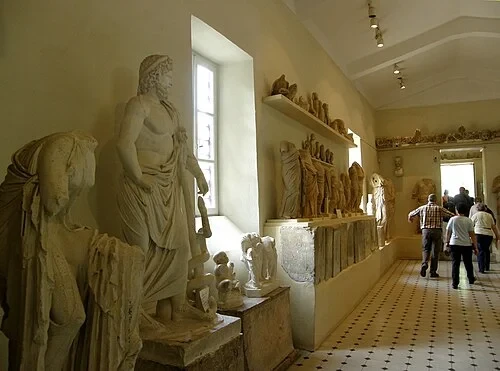 Archaeological Museum of EpidaurusArchaeological Museum of Epidaurus
This first room contains the survivors of the sanctuary's former glory. As you walk through the space, you will see a row of headless figures positioned along the wall. In antiquity, it was a common practice to carve bodies separately from the heads. This allowed a statue to be efficiently updated with a new portrait head if a different benefactor or ruler took over the site or came into power. Beyond the figures, take a look at the massive size of the various architectural fragments displayed here. These heavy stone pieces were once perched high atop the temples. It reflects ancient engineering that these fragments were held in place primarily by their immense weight and high-precision carving rather than mortar. They give a clear sense of the monumental scale the sanctuary once possessed before time and earthquakes took their toll. Many of these pieces were recovered during excavations and moved indoors to protect them from further weathering. They represent the artistic and structural standards of one of the most important religious sites in the Peloponnese, where medicine and mythology met. Look at the jagged edges on the larger pieces; they still show the marks of the tools used to shape them thousands of years ago.
Angela Monika Arnold, Berlin · CC BY 3.0
02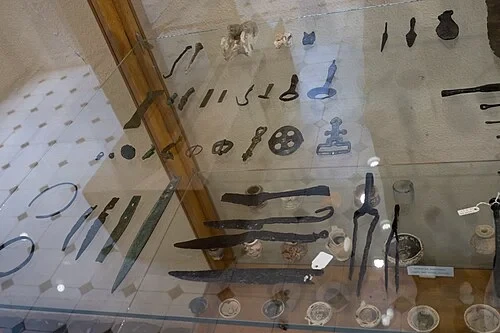 Archaeological Museum of EpidaurusAncient Medical Tools
The tools inside this display case might surprise you with how modern they appear. These bronze scalpels, forceps, and probes were the everyday equipment for doctors working at the sanctuary over two millennia ago. While many visitors associate ancient healing with purely magical rituals or religious faith, the medical practitioners here were actually highly skilled surgeons. Historical records suggest they performed complex operations for bladder stones, eye ailments, and severe war wounds. The design of these tools has remained remarkably consistent over two thousand years. For instance, the shape of the forceps or the curve of a probe used today would be instantly recognizable to an ancient Greek physician. This is because human anatomy has not changed, and the mechanical solutions for grasping or cutting flesh reached a peak of functional design very early on. Seeing these artifacts serves as a reminder that the Sanctuary of Asclepius functioned as a real hospital campus. It was a place where physical intervention and clinical observation were integral parts of the patient’s recovery process. Some of these tools still show the fine, sharp edges required for delicate work on the human body.
Photo: Zde · CC BY-SA 4.0
03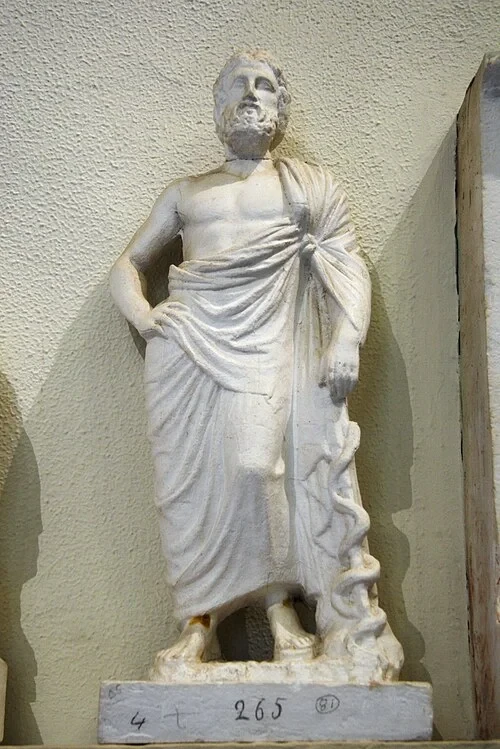 Archaeological Museum of EpidaurusStatue of the Healing God
This figure represents Asclepius, the Greek god of medicine and the central figure of the sanctuary. If you look near his right leg, you can see a snake winding its way up his staff. This image, known as the 'Rod of Asclepius,' is still the international symbol for medicine. In ancient times, snakes were considered sacred because they shed their skin, which people interpreted as a visual symbol of rebirth and healing. The sculptors intentionally gave Asclepius a calm, fatherly expression. This was a deliberate artistic choice intended to reassure the nervous patients who often traveled hundreds of miles across treacherous terrain just to seek his help. His bearded, mature appearance suggests wisdom and care, qualities that would have inspired confidence in those seeking a miracle. In his original form, he might have been seated on a throne or standing tall as a beacon of hope within his temple. While the original temples are in ruins, statues like this one help us understand how the ancient Greeks personified the abstract concepts of health and physical restoration into a figure they could turn to in times of suffering. Small copies of these statues were often purchased by pilgrims to take home as protective charms.
Listen in the appPhoto: Zde · CC BY-SA 4.0
04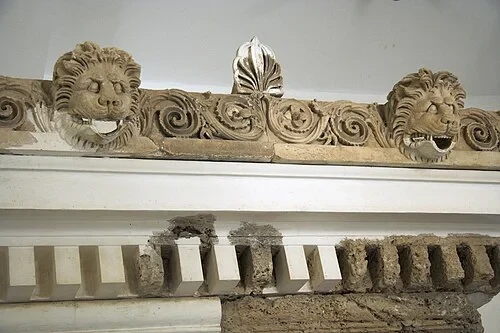 Archaeological Museum of EpidaurusLion Head Water Spouts
These fierce lion heads served a very practical purpose as functional gargoyles on the temple roofs. Look closely at the holes in their open mouths where water once jetted out. During heavy Greek rainstorms, these spouts channeled water away from the building’s foundations and its delicate, brightly painted marble surfaces. This prevented erosion and kept the sanctuary looking pristine and colorful. Dating back to approximately 280 BC, these specific carvings demonstrate impressive ancient engineering and artistic foresight. Because they were positioned high above the ground on the roofline, they were carved with deep, exaggerated features to ensure they remained visible and impressive to visitors looking up from below. The craftsmanship is remarkably detailed, from the flowing manes to the snarling teeth. Water management was a critical concern for ancient architects building monumental structures on sloping terrain. By transforming simple drainpipes into majestic predators, they combined utility with religious symbolism. These spouts are among the few decorative elements that survived the eventual collapse of the temples, giving us a glimpse into the sophisticated finishing touches that once adorned the sanctuary's most sacred buildings. One lion even has traces of the original paint still tucked into the crevices of its mane.
Listen in the appPhoto: Zde · CC BY-SA 4.0
05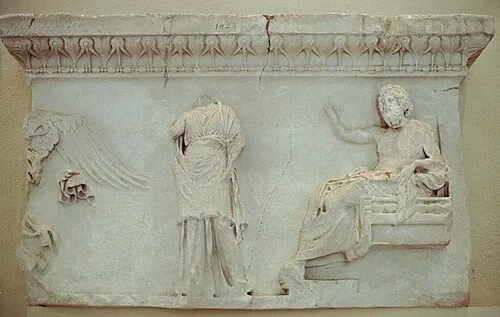 Archaeological Museum of EpidaurusThe Votive Relief
This artwork represents a common ancient practice called 'votives.' When a patient at Epidaurus was successfully cured, they did not simply pay a fee for the medical service. Instead, they often commissioned an artwork like this one to express their gratitude to the god. In this specific relief, you can see a patient approaching a seated Asclepius, who is depicted as much larger than life to emphasize his divine status. This visual hierarchy was a standard way to show the relationship between mortal and deity. Some patients went even further than general reliefs. They would commission stone models of the specific body part that had been healed—such as ears, legs, or even lungs—and hang them on the temple walls. These offerings served as tangible proof of the god's healing power, acting as a form of ancient advertising to other visitors seeking hope. The sanctuary walls would once have been covered with hundreds of these small sculptures, creating a crowded gallery of successful recoveries. Each piece tells the personal story of a traveler who arrived in pain and left with a renewed sense of health. Notice the tiny details on the figures, showing the patient in a humble stance of prayer before the seated deity.
Listen in the appPhoto: Zde · CC BY-SA 4.0
06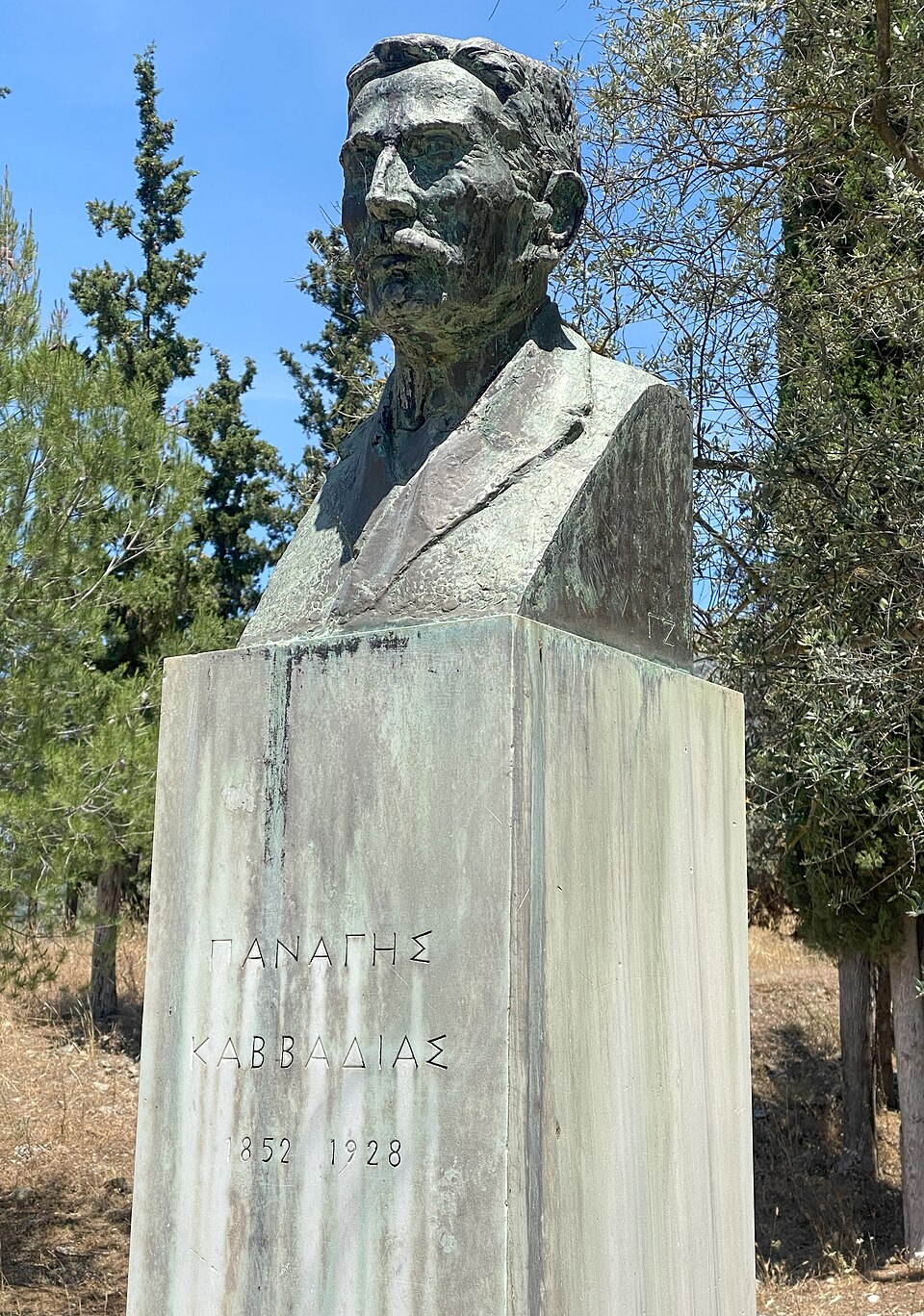 Bust of Panagiotis KavvadiasBust of Panagiotis Kavvadias
This bust commemorates Panagiotis Kavvadias, the Greek archaeologist who was instrumental in bringing Epidaurus back to light. When he began his work here in 1881, the sanctuary was essentially lost to time, buried under meters of soil and hidden by dense overgrowth. Kavvadias dedicated nearly 40 years of his professional life to this single location. Notice the focused and determined expression on the statue's face; it reflects the decades of patience required to meticulously piece together thousands of shattered marble fragments found scattered across the valley. His work was not just about digging; it was about the careful reconstruction of a broken puzzle. Without his tireless efforts and systematic approach to excavation, our understanding of ancient Greek medicine and theater would be far more limited. He oversaw the discovery of the major temples, the guesthouse, and the famous theater, ensuring they were preserved for future generations. His legacy is the very site you see around you today. He stands as a central figure in the history of Greek archaeology, representing the transition from accidental discoveries to the scientific recovery of the past. The pedestal beneath the bust was placed there to honor him on the fiftieth anniversary of his first excavation.
Listen in the appPhoto: JBradyK · CC BY-SA 3.0
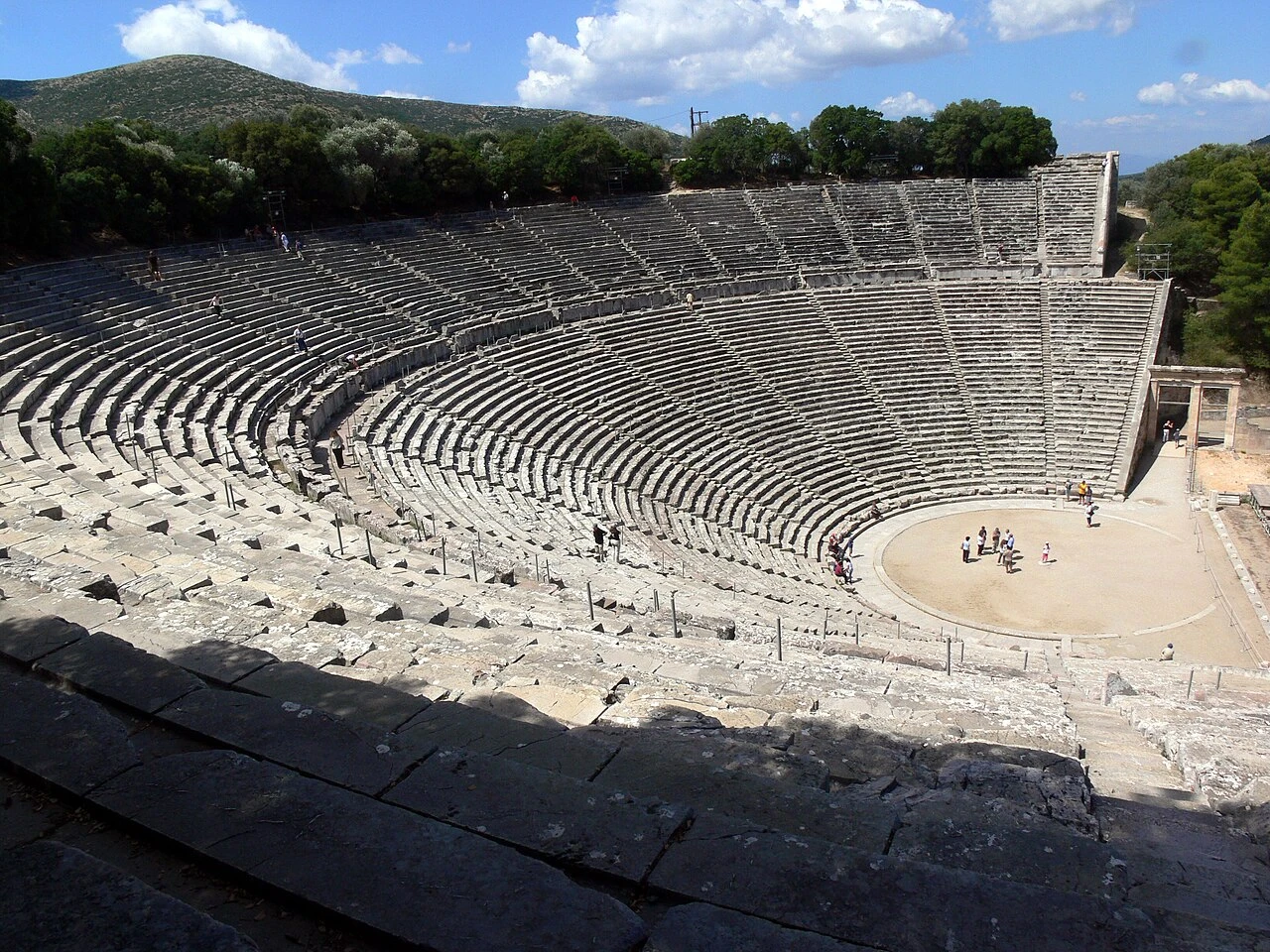
07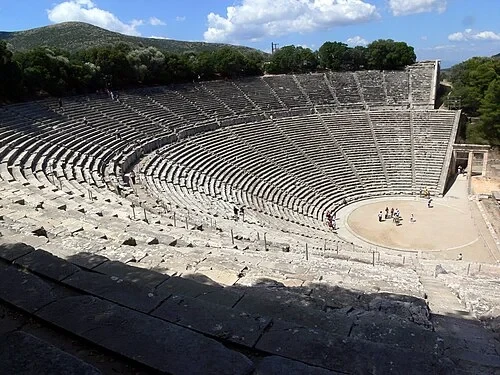 Ancient Theatre of EpidaurusAncient Theatre of Epidaurus
The Theatre of Epidaurus is widely considered the best-preserved ancient theater in the world. It is legendary for its acoustics, which are so precise that a person sitting in the very last row, 55 tiers up, can hear the sound of a coin dropping or a match being struck on the stage below. For years, people wondered how ancient architects achieved this without modern technology. Scientific research suggests that the limestone seats are the secret. The stone surfaces act as a natural acoustic filter, suppressing low-frequency background noises, like the rustle of wind or the chatter of a crowd, while simultaneously amplifying high-frequency sounds from the performers on stage. Originally built to seat approximately 14,000 people, the theater was designed so that every single spectator had a perfect line of sight and an identical auditory experience. While it is a masterpiece of engineering, it was also a vital part of the sanctuary's mission. The Greeks believed that drama and music were essential for emotional health, making this theater a key component of the overall healing process at the site. This acoustic effect is still used as a case study in modern sound engineering courses.
Listen in the appPhoto: Fingalo · CC BY-SA 2.0 de
08 Ancient Theatre of EpidaurusThe Theatre Landscape
Looking across the massive sweep of the auditorium, you can see how the structure is integrated into the hillside. Greek architects were masters of using the natural landscape to support their buildings, avoiding the need for complex substructures. This theater was actually built in two distinct phases. The lower 34 rows represent the original Greek construction, dating to the late 4th century BC. Much later, during the Roman period, an additional 21 rows were added at the top to accommodate larger crowds. This expansion brought the total capacity to the thousands we see today. It is important to remember that this theater was more than just a venue for entertainment. It was a crucial part of the healing sanctuary. The ancient Greeks believed that watching powerful tragedies and comedies could help purge the soul of stress and illness—a process they called catharsis. By experiencing these intense emotions in a communal setting, patients were thought to achieve a state of mental balance that was necessary for their physical recovery. The natural beauty surrounding the theater likely added to this restorative effect. On clear days, the view from the top row reaches all the way to the mountains on the horizon.
Listen in the appHansueli Krapf, restitching by Ferengi · CC BY-SA 3.0
09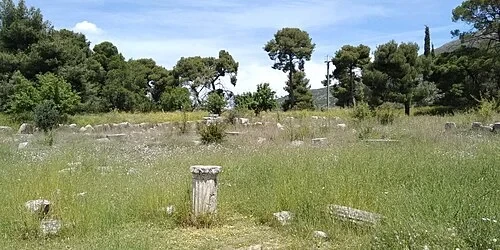 The Katagogion (Ancient Hostel)The Katagogion Guest House
These low stone foundations mark the site of the Katagogion, which was effectively the largest guest house in the ancient world. You can think of it as the 'Hilton' of antiquity. It was a massive square building divided into four internal courtyards, containing approximately 160 guest rooms. Because people traveled from all over the Mediterranean to reach Epidaurus, they often needed to stay for several weeks while waiting for their turn to consult with the priests. This building provided essential housing for these sick travelers, their families, and even their servants. The ruins suggest the building was originally two stories high, built around central open spaces that allowed for light and air circulation. Life here would have been a mix of hopeful anticipation and communal living. Patients from different cultures and backgrounds would share their stories while they prepared for the rituals ahead. While only the base of the walls remains today, the sheer footprint of the building gives a sense of the immense popularity of the sanctuary and the logistical effort required to host thousands of visitors every year. Archaeologists found hundreds of bronze coins dropped between the stones of the flooring, likely lost by travelers as they checked into their rooms.
Listen in the appPhoto: Patrice78500 · CC BY-SA 4.0
10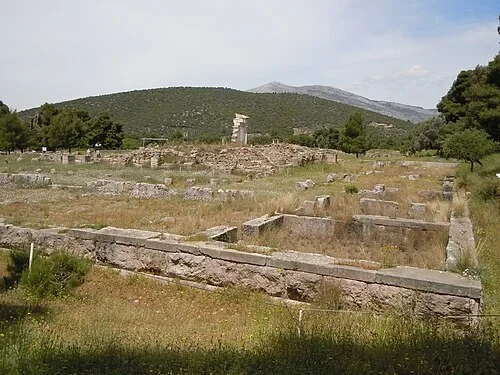 The Great Dining Hall (Hestiatorion)The Hestiatorium Banquet Hall
The ruins here belong to the Hestiatorium, a grand banquet hall used for ritual dining. Healing at Epidaurus was a holistic wellness retreat that extended far beyond medicine and surgery. The Greeks understood that social connection and healthy eating were vital components of physical recovery. In this space, pilgrims would gather to eat together, often sharing the meat from animals that had been sacrificed in the nearby temples. This communal act was both a religious ritual and a way to build a supportive community among the patients. Interestingly, the central courtyard once featured an indoor running track. This demonstrates the Greek belief that physical fitness was directly tied to medical health. Even as they sought divine cures, visitors were encouraged to keep their bodies active. The combination of prayer, social interaction, and physical exercise created a comprehensive environment designed to restore the whole person. Today, we only see the outlines of these rooms, but they once echoed with the sounds of hundreds of people dining and debating, all unified by their shared journey toward health. Some of the stone drainage channels used to wash the floors after banquets are still visible in the corners of the foundations.
Listen in the appPhoto: Patrice78500 · CC BY-SA 4.0
Ancient Epidaurus
Frequently asked questions
How much does the guide cost?
Free app download. Listed guide price: $2.99. Guide price shown in the app. Audio guide only. Venue admission is separate.
Can I listen without internet?
Yes. Download the guide’s audio, images, and maps in the app before your visit. Your downloaded content is then available offline.
Can I listen in my language?
Stanza supports 15 languages. Check the app for the languages available for this guide.
Do I need to follow a schedule?
No. This is a self-guided experience. Choose your stops, pause whenever you like, and return to a story at your own pace.
At your own pace
Explore Ancient Epidaurus.
Download Stanza, then search for “Ancient Epidaurus”.
Free app download · Guide price shown in the app
Keep exploring
Nearby audio guides
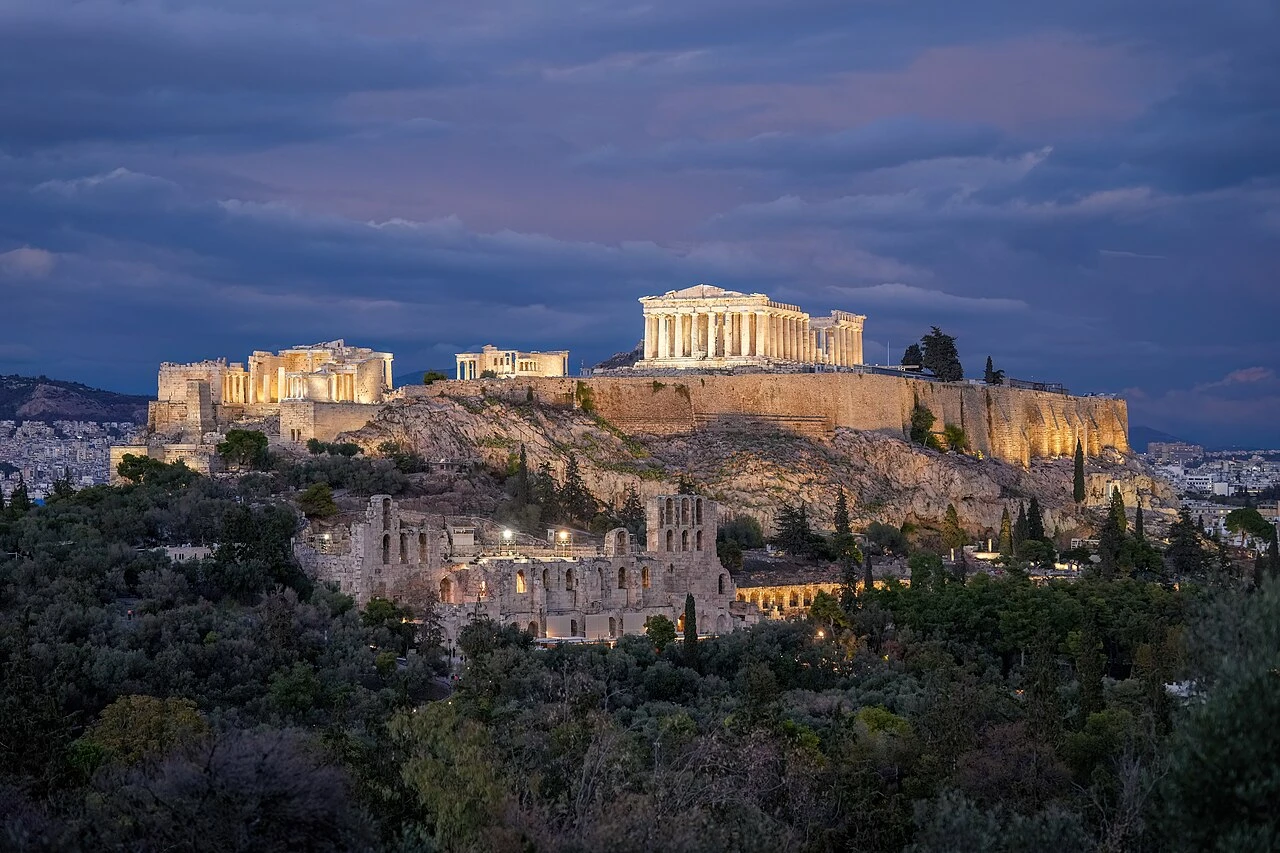
Athens
Acropolis of Athens
Content & sources
Photo: Giles Laurent · CC BY-SA 4.0
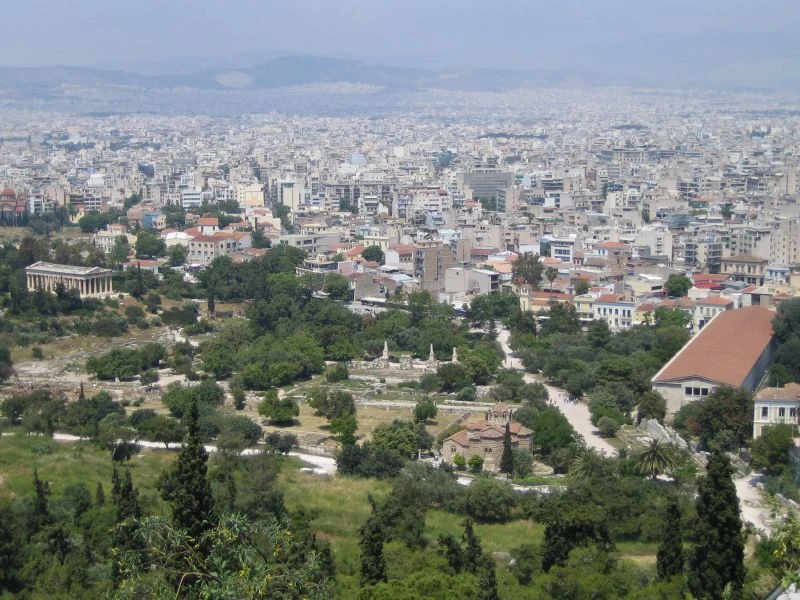
Athens
Ancient Agora of Athens
Content & sources
https://www.flickr.com/people/jonezes/ · CC BY-SA 2.0
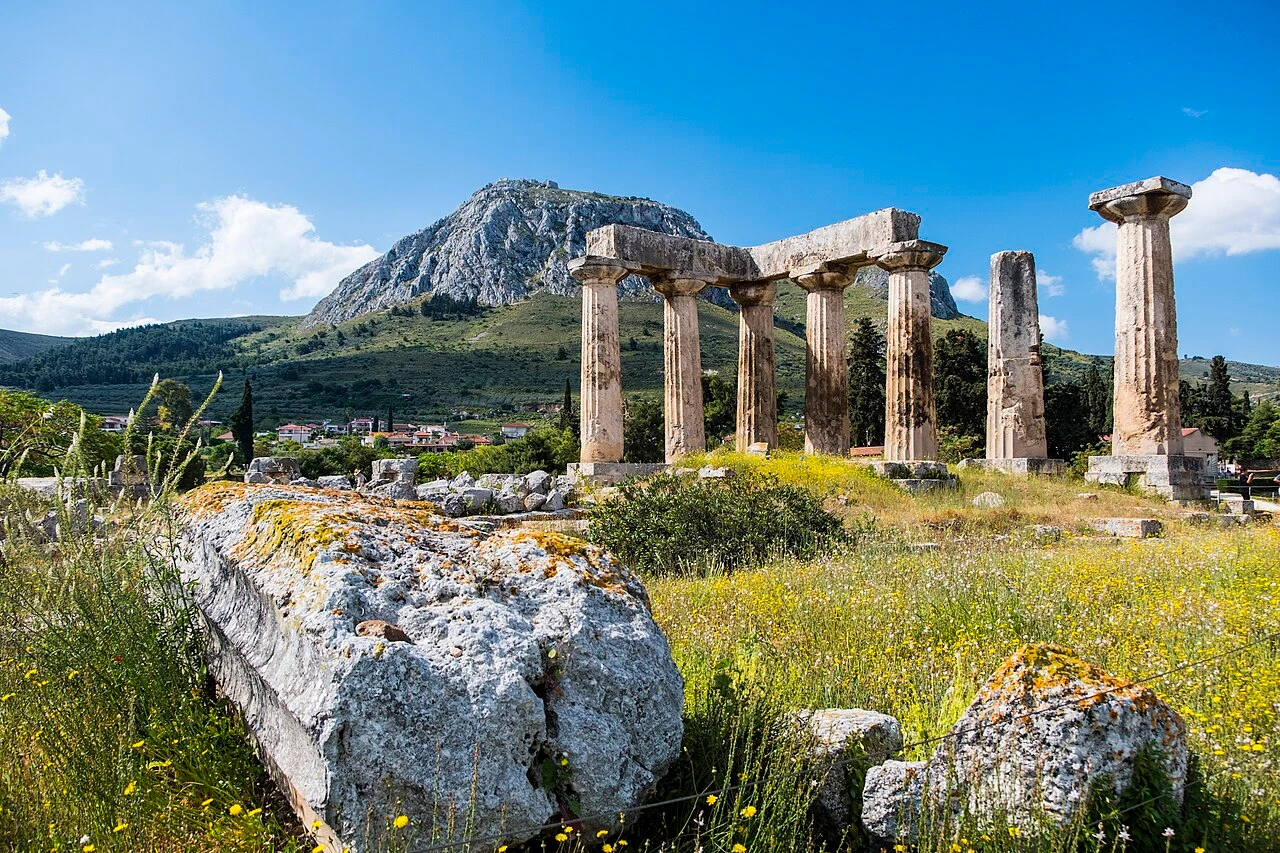
Corinth
Ancient Corinth
Content & sources
Davide Mauro · CC BY-SA 4.0
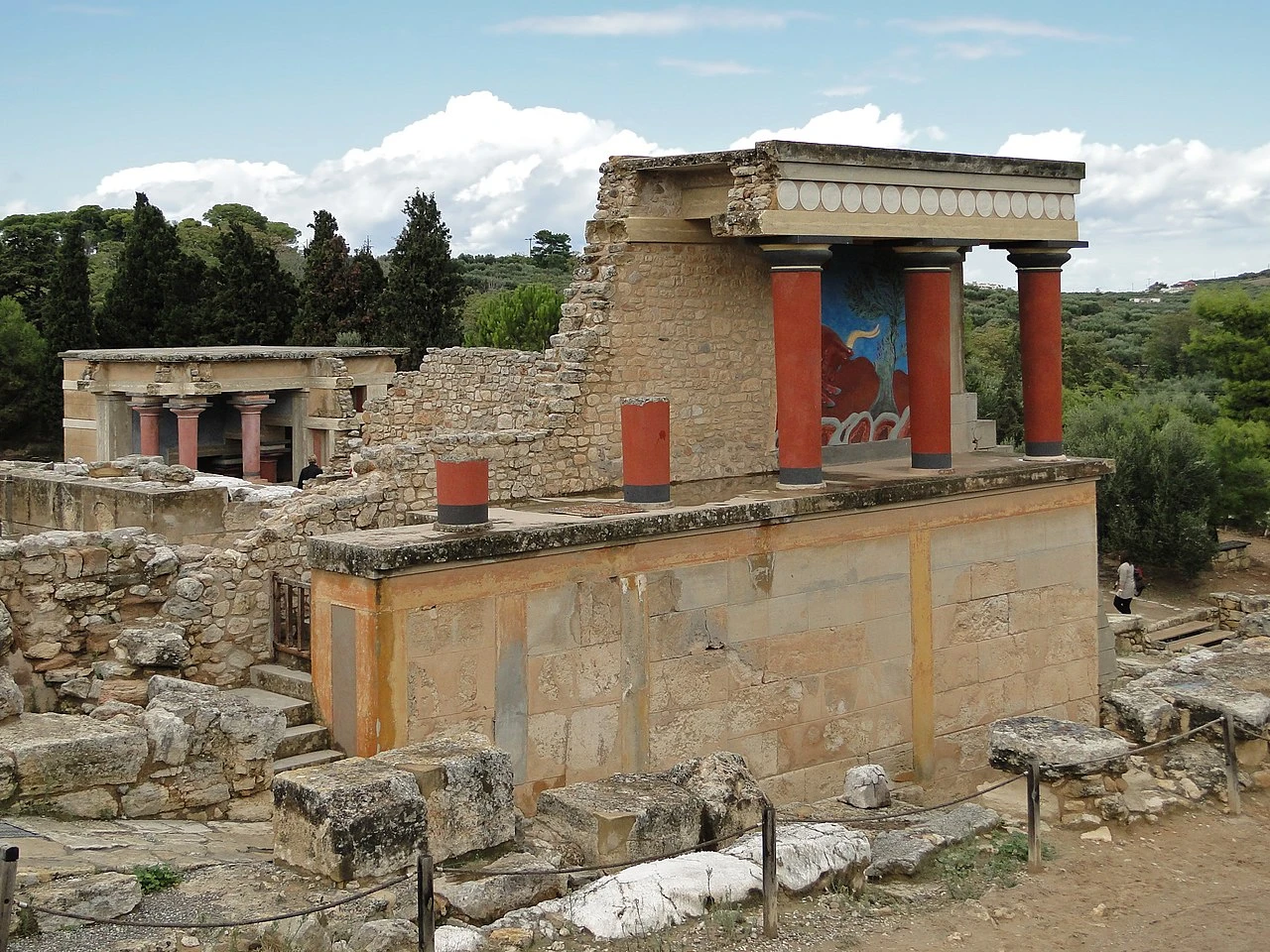
Heraklion
Knossos
Content & sources
Bernard Gagnon · CC BY-SA 3.0