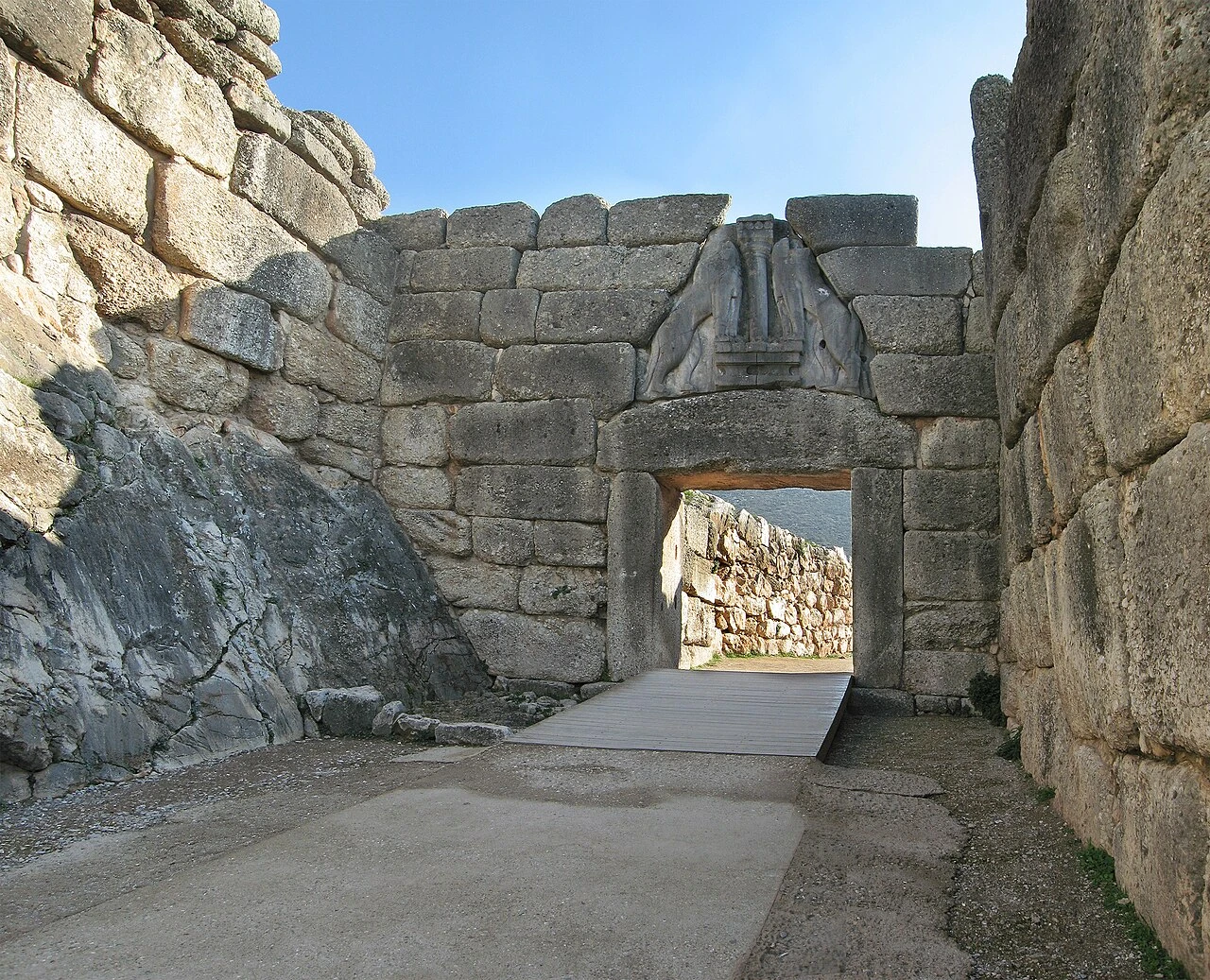
Stanza · Audio guide
Mycenae Archaeological SiteAudio guide
A place to remember. A story to take with you.
Mycenae is an ancient city, now an archaeological site in Argolis, Greece. It was a major centre of Mycenaean civilization, a Late Bronze Age civilization that flourished in southern Greece.
Download Stanza, then search for “Mycenae Archaeological Site”.
About the tour
One guide. Your kind of visit.
Mycenae is an ancient city, now an archaeological site in Argolis, Greece. It was a major centre of Mycenaean civilization, a Late Bronze Age civilization that flourished in southern Greece.
Ready when you are.
- 01Get the free Stanza app.
iOS & Android
- 02Find your guide.
“Mycenae Archaeological Site”
- 03Download before you go.
Works offline
Audio guide / 32 narrated stops
Inside the guide
Get to know a few of the stories before you go. Open a stop to read more.
01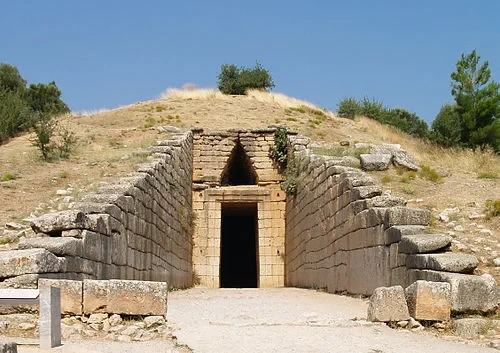 Treasury of AtreusTreasury of Atreus
This structure represents a pinnacle of prehistoric engineering. Look at the massive stone beam spanning the doorway—this is the lintel. It measures nine meters in length and weighs an estimated 120 tons. This single block is so heavy that later Greeks, centuries after the site’s decline, believed only the mythical one-eyed giants known as Cyclopes could have possessed the strength to move it. While traditionally called a treasury, archaeological evidence confirms this was actually a tholos, or beehive tomb. It was likely built for a high-ranking king who ruled around 1250 BC. The precision with which these stones were cut and placed allowed the structure to remain standing for over three millennia without the use of mortar. Standing at the base of this entrance, you get a sense of the sheer physical effort required to transport and lift such monumental materials into place using only pulleys, ramps, and human labor. The scale was intended to be intimidating, reminding everyone who approached of the ruler’s divine right and absolute authority. This tomb was meant to be seen from the plain, signaling the city’s dominance.
Ken Russell Salvador · CC BY 2.0
02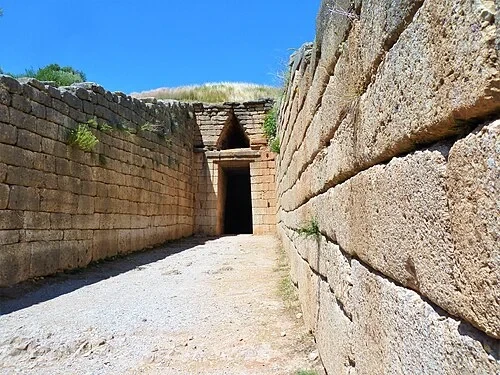 Treasury of AtreusThe Ceremonial Entrance Path
Notice how the walls of this 36-meter passage are composed of perfectly fitted blocks of local limestone. The Mycenaeans built this without mortar, relying on the precision of their stone-cutting to keep the walls stable over thousands of years. This passage was not just a road; it was a stage set for funeral processions. Priests and mourners would have walked this path toward the dark opening of the tomb, surrounded by high walls that blocked out the surrounding landscape to focus attention on the threshold. Interestingly, this grand entrance was only visible for a short time. After the royal burial was complete, workers filled the entire dromos with earth. This was a deliberate security measure intended to hide the entrance and protect the king’s treasures from potential grave robbers. The stones were likely transported from nearby quarries using wooden rollers and massive teams of laborers. Today, with the earth removed, we can see the sophisticated masonry that defines the peak of the Mycenaean era, showcasing their ability to transform a natural hillside into a highly structured ceremonial space.
Νίκος Χριστοδουλόπουλος · CC BY-SA 4.0
03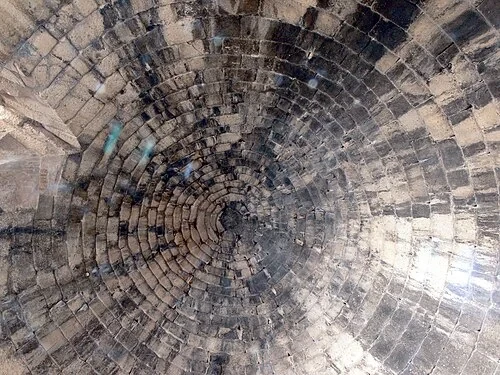 Treasury of AtreusThe Beehive Dome
The ceiling above you utilizes a technique called corbelling. Each ring of stone is set slightly further inward than the one beneath it, gradually narrowing the space until the entire structure meets at a single capstone at the peak. This engineering marvel created a vast, open interior space without any supporting pillars. For over 1,300 years, until the Romans constructed the Pantheon, this stood as the tallest and widest dome in the world. If you look closely at the interior stones, you can see small, regularly spaced holes. Archaeological research suggests these holes once held bronze rosettes or decorative plates. In the darkness of the tomb, illuminated by flickering torchlight during a royal ceremony, these metal ornaments would have shimmered against the stone like stars in a night sky. This decoration turned a subterranean chamber into a celestial representation of the afterlife. The dome’s survival is due to the weight of the earth piled on top of it, which provides the necessary counter-pressure to keep the stones locked in place by gravity and friction alone. The capstone at the very top is the key that prevents the whole structure from falling inward.
Listen in the appPhoto: Fingalo · CC BY-SA 2.0 de
04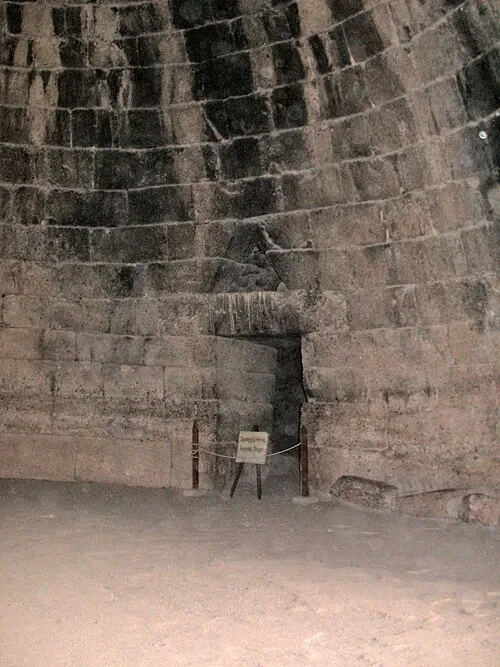 Treasury of AtreusThe Main Burial Chamber
The large, circular hall where you stand was intended for the public-facing aspects of the funeral rites. However, if you look to the side, you will notice a smaller, square-cut chamber. This side room was the true resting place where the bodies of the royal family and their most precious possessions were deposited. By the time modern archaeologists began scientific excavations, the tomb had already been stripped of its wealth. Looters throughout the centuries had successfully breached the entrance and carried off the gold, jewelry, and fine weapons that once filled this space. The Roman traveler Pausanias, who visited this site in the 2nd century AD, recorded that the locals still spoke of the structure’s grandeur. He was told it was the treasury of King Atreus, the father of Agamemnon, the legendary leader of the Greek forces at Troy. While his identification was based more on folklore than fact, it highlights how this site has captured the imagination of travelers for thousands of years. Today, the bare stone floor reminds us that most of Mycenae's history was taken by force or lost to time.
Listen in the appPhoto: MM · Public domain
05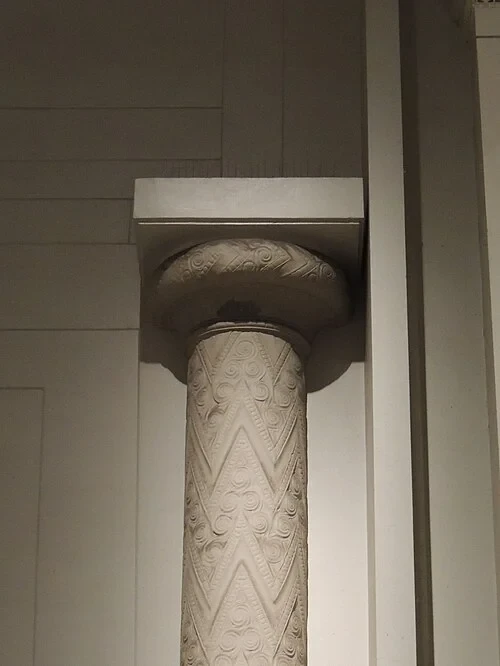 Treasury of AtreusThe Decorative Entrance Columns
The intricate zig-zag and spiral patterns on this column fragment suggest that the tomb’s entrance was far more decorative than the bare stone we see today. It is important to note that the pieces here are replicas. The original columns, carved from green limestone, were removed in the early 1800s and are now housed in the British Museum. Originally, a pair of these tall, tapered pillars flanked the doorway, supporting a red marble facade above the lintel. This use of contrasting colors and complex geometric designs transformed the entrance into something resembling a magnificent palace rather than a simple cave or earth mound. The architectural style here is distinctly Mycenaean, characterized by a love for bold patterns and imported, high-quality stone. By framing the tomb in this way, the builders signaled that the occupant inside was not merely a leader, but a figure of immense status. The decoration served as a transition point, marking the boundary between the world of the living and the eternal, regal realm of the deceased. The use of red and green would have been a striking contrast against the pale limestone of the walls.
Listen in the appOrangeaurochs · CC BY 2.0
06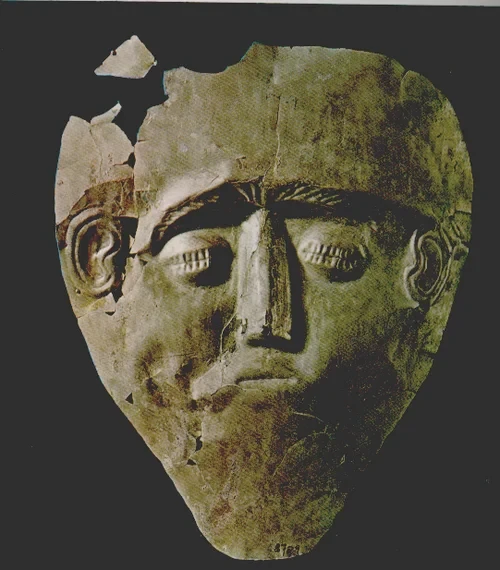 Grave Circle BGrave Circle B, Mycenae
This mask was discovered in Grave Circle B and is significantly older than the more famous gold masks found elsewhere on the site. It is made of electrum, which is a natural blend of silver and gold. Notice the almond-shaped eyes and the faint, mysterious smile that crosses the figure's lips. Because it is made of electrum, the color is paler and the metal is much thinner and more fragile than later funerary artifacts. This piece marks a critical moment in the development of Mycenaean art, where the elite began the tradition of giving the dead a permanent, metallic face for the afterlife. The mask was likely hammered into shape over a wooden mold to create its features. It reveals a society that was just beginning to accumulate the vast wealth it would later become famous for. While it lacks the heavy, solid feel of the later gold masks, its delicate features offer a more intimate look at the funerary customs of the early warrior class. This mask helped preserve the identity of the deceased for eternity, long after the physical body had returned to the earth.
Listen in the appPhoto: Alexikoua · CC BY-SA 3.0
07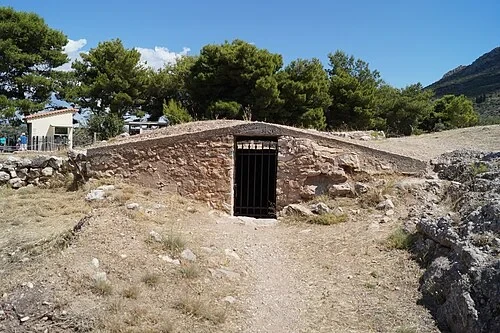 Grave Circle BThe Older Royal Cemetery
Grave Circle B was discovered quite by accident in 1951 when workers were performing road repairs. It contains 26 graves, some dating as far back as 1650 BC. These shaft graves provided the first definitive evidence that the Mycenaeans had established a major power base centuries before they built the massive fortifications we see today. The graves held the remains of what archaeologists call a warrior elite. Interestingly, forensic analysis of the skeletons found here showed that these individuals were significantly taller and healthier than the average Greek population of that time. This suggests they enjoyed a high-protein diet and superior living conditions, consistent with a privileged ruling class. The discovery of weapons, pottery, and early jewelry inside these shafts confirmed that the site was already part of a sophisticated trade network. Unlike the later tholos tombs, these graves were deep pits cut into the rock, covered by timber and stone. They represent the foundational period of the Mycenaean civilization, where the roots of their legendary military and economic power were first planted. The cemetery remained a respected landmark even as the city expanded around it.
Listen in the appPhoto: Schuppi · CC BY-SA 3.0
08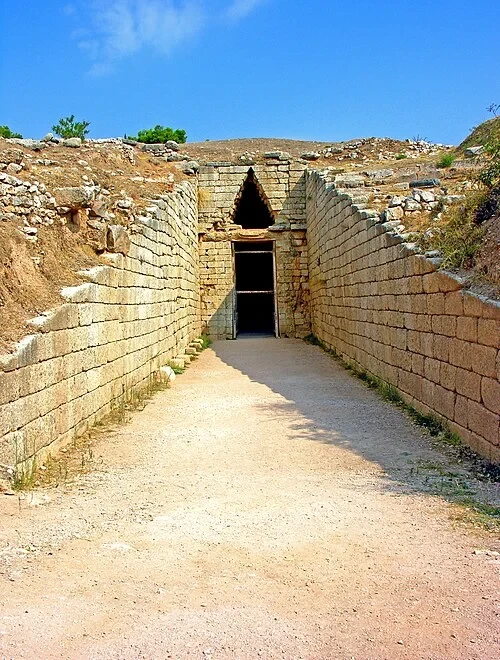 Tomb of ClytemnestraTomb of Clytemnestra
Clytemnestra was the wife of Agamemnon who famously murdered him in his bathtub according to Greek myth. This tomb is the second most impressive on the site, reflecting the high status of its occupant. Observe the empty triangular space directly above the heavy stone beam of the doorway. This is known as a relieving triangle. Its function is entirely practical: it funnels the immense downward pressure of the thousands of tons of stone above away from the center of the beam. By redirecting the weight to the thicker walls on either side, the engineers ensured that the 100-ton lintel would not crack or collapse under the strain. This innovation was essential for building doorways wide enough to accommodate grand ceremonial processions while maintaining structural integrity. The precision of the stonework here reflects the height of Mycenaean power, demonstrating how their architects solved complex physics problems using nothing but carefully shaped limestone and a deep understanding of gravity. The interior of this tomb is nearly as vast as the Treasury of Atreus, illustrating the immense resources available to the royal family.
Listen in the appDennis G. Jarvis · CC BY-SA 2.0
09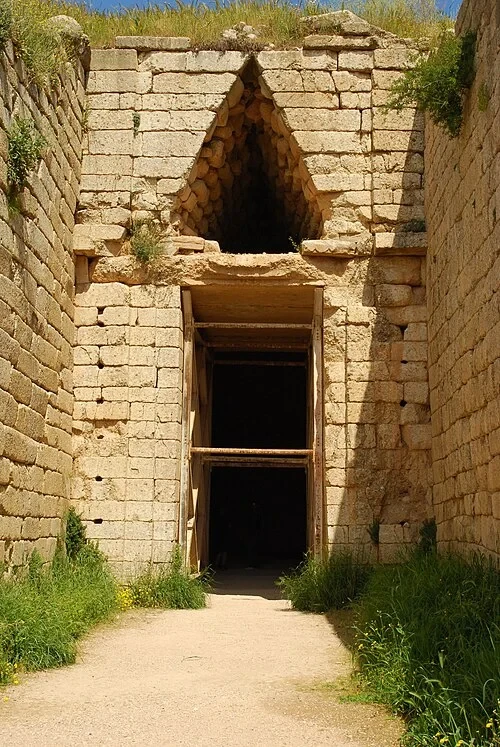 Tomb of ClytemnestraThreshold of the Queen
Notice how the texture of the masonry changes as you approach the entrance. The outer walls of the passage are relatively rough, but the stones immediately surrounding the doorway are finely carved and polished until they are smooth. This tomb was constructed around 1220 BC, a period when Mycenae was at the very height of its regional influence and military power. The refinement of the threshold was intended to emphasize the importance of the boundary between the outside world and the sacred space within. When archaeologists excavated this area in the 19th century, they found several items of women's jewelry and mirrors buried in the vicinity. These feminine artifacts led early researchers to link the tomb to the infamous Queen Clytemnestra. Even though we cannot prove exactly who was buried here, the presence of such high-status items confirms that this was the final resting place of a woman of significant royal importance. The smooth, light-colored stones would have stood out brilliantly against the darker hillside, acting as a permanent monument to a royal life that ended over three millennia ago.
Listen in the appJean Housen · CC BY 3.0
10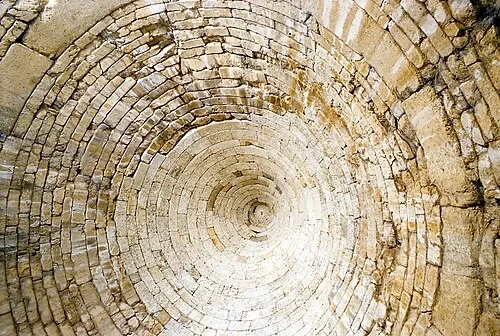 Tomb of ClytemnestraCeiling of the Queen's Tomb
Look upward at the concentric circles of stone that form this vaulted ceiling. This dome is held in place by the principles of gravity and friction alone. There is no glue, mortar, or cement binding these blocks together. Each stone was meticulously shaped by hand to fit the specific curve of its layer, creating a self-supporting structure that narrows until it reaches the final stone at the top. This design is exceptionally stable, as the weight of the hill above pushes the blocks tighter together. However, nature took its toll over time; the top section of this dome actually collapsed in antiquity. It was only during the 1950s that archaeologists carefully restored the ceiling. They used the original stones that had been found scattered on the floor, puzzle-piecing them back into their original positions. The result allows us to see the chamber exactly as it was intended. The height of the vault was meant to evoke the vastness of the sky, providing a grand and eternal home for the spirit of the deceased royal. The faint variations in stone color mark where the modern restoration met the ancient walls.
Listen in the appFalk2 · CC BY-SA 4.0
Mycenae Archaeological Site
Frequently asked questions
How much does the guide cost?
Free app download. Listed guide price: $3.99. Guide price shown in the app. Audio guide only. Venue admission is separate.
Can I listen without internet?
Yes. Download the guide’s audio, images, and maps in the app before your visit. Your downloaded content is then available offline.
Can I listen in my language?
Stanza supports 15 languages. Check the app for the languages available for this guide.
Do I need to follow a schedule?
No. This is a self-guided experience. Choose your stops, pause whenever you like, and return to a story at your own pace.
At your own pace
Explore Mycenae Archaeological Site.
Download Stanza, then search for “Mycenae Archaeological Site”.
Free app download · Guide price shown in the app
Keep exploring
Nearby audio guides
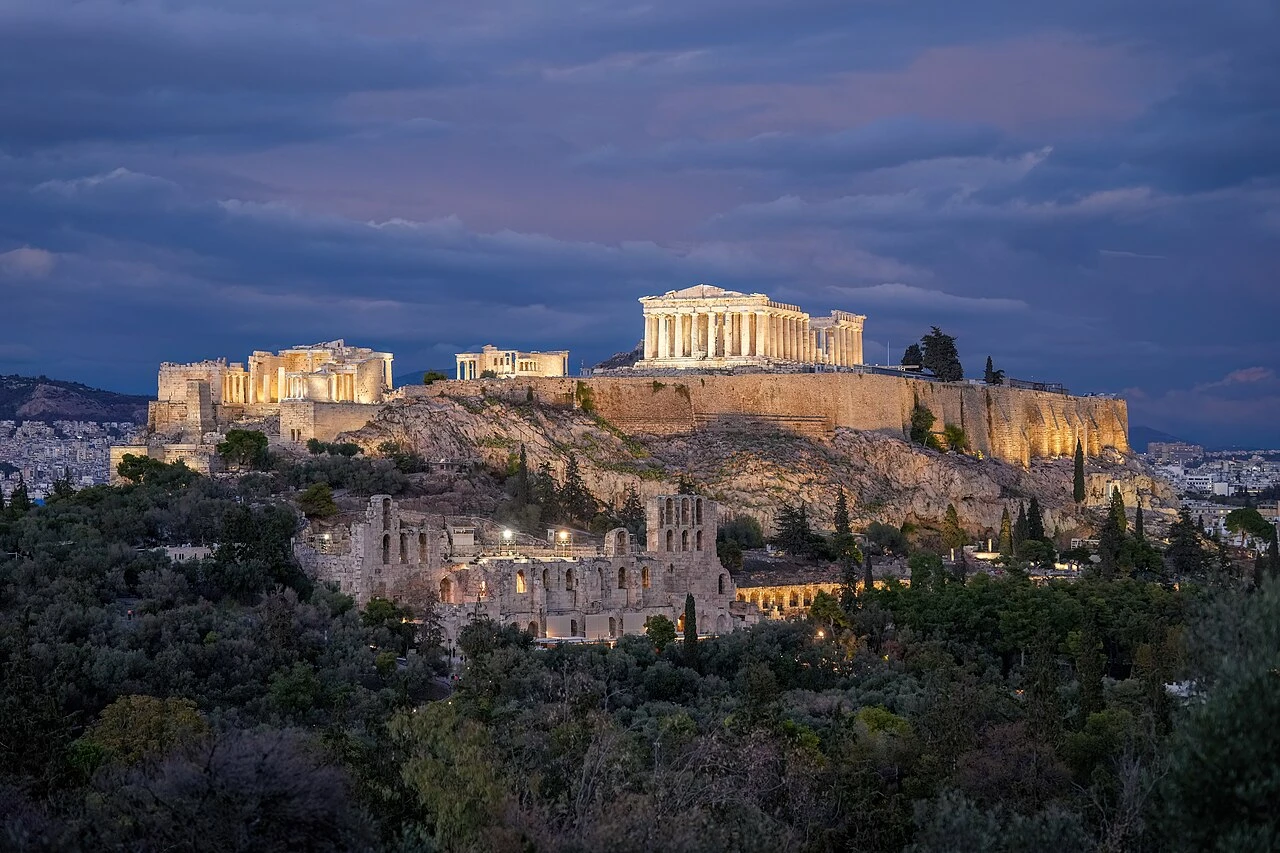
Athens
Acropolis of Athens
Content & sources
Photo: Giles Laurent · CC BY-SA 4.0
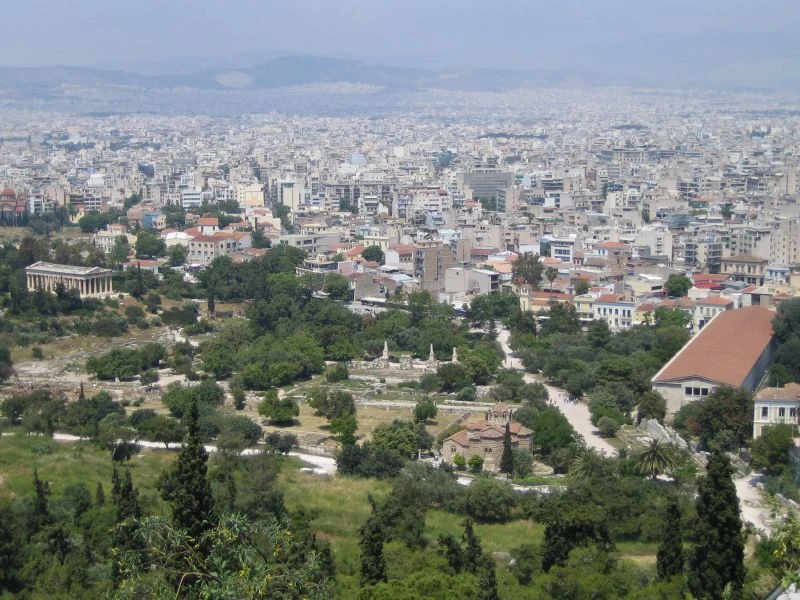
Athens
Ancient Agora of Athens
Content & sources
https://www.flickr.com/people/jonezes/ · CC BY-SA 2.0
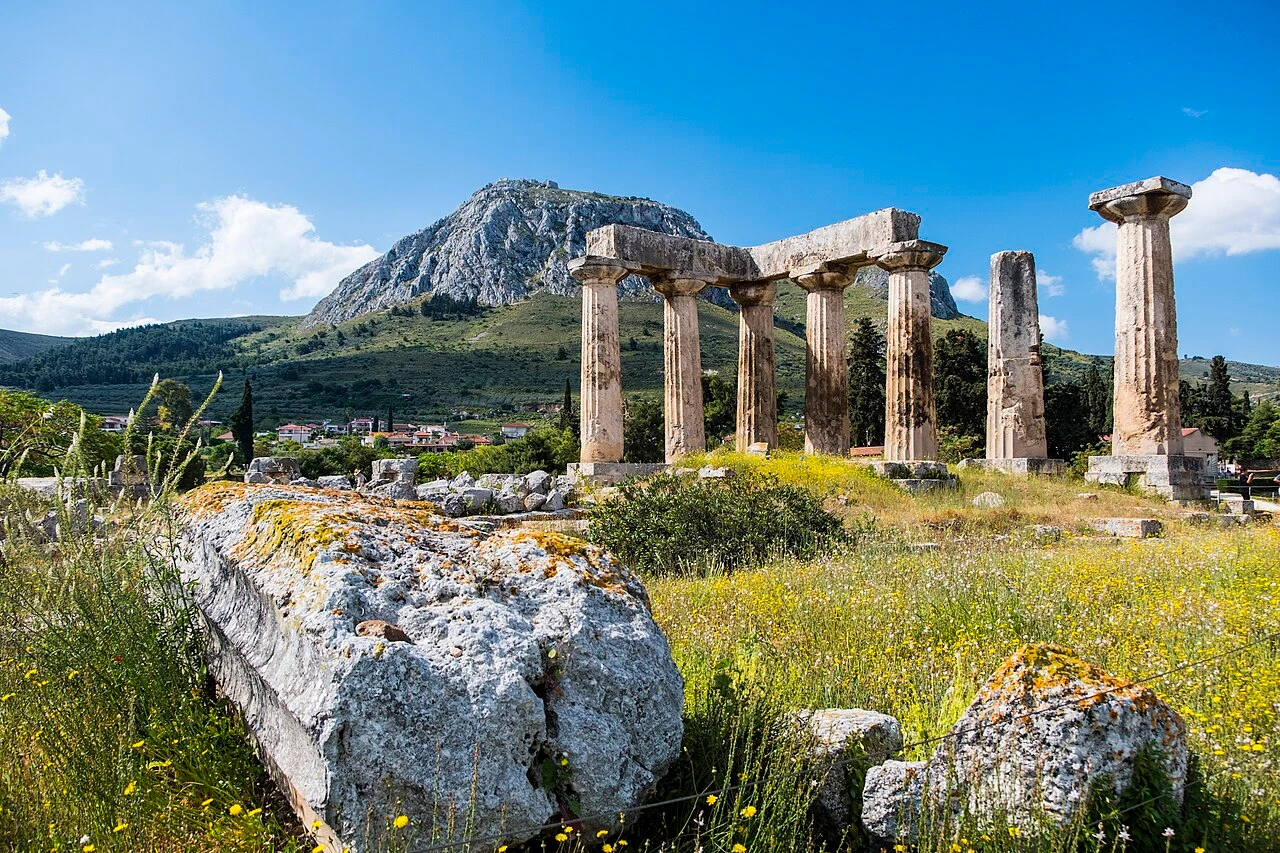
Corinth
Ancient Corinth
Content & sources
Davide Mauro · CC BY-SA 4.0
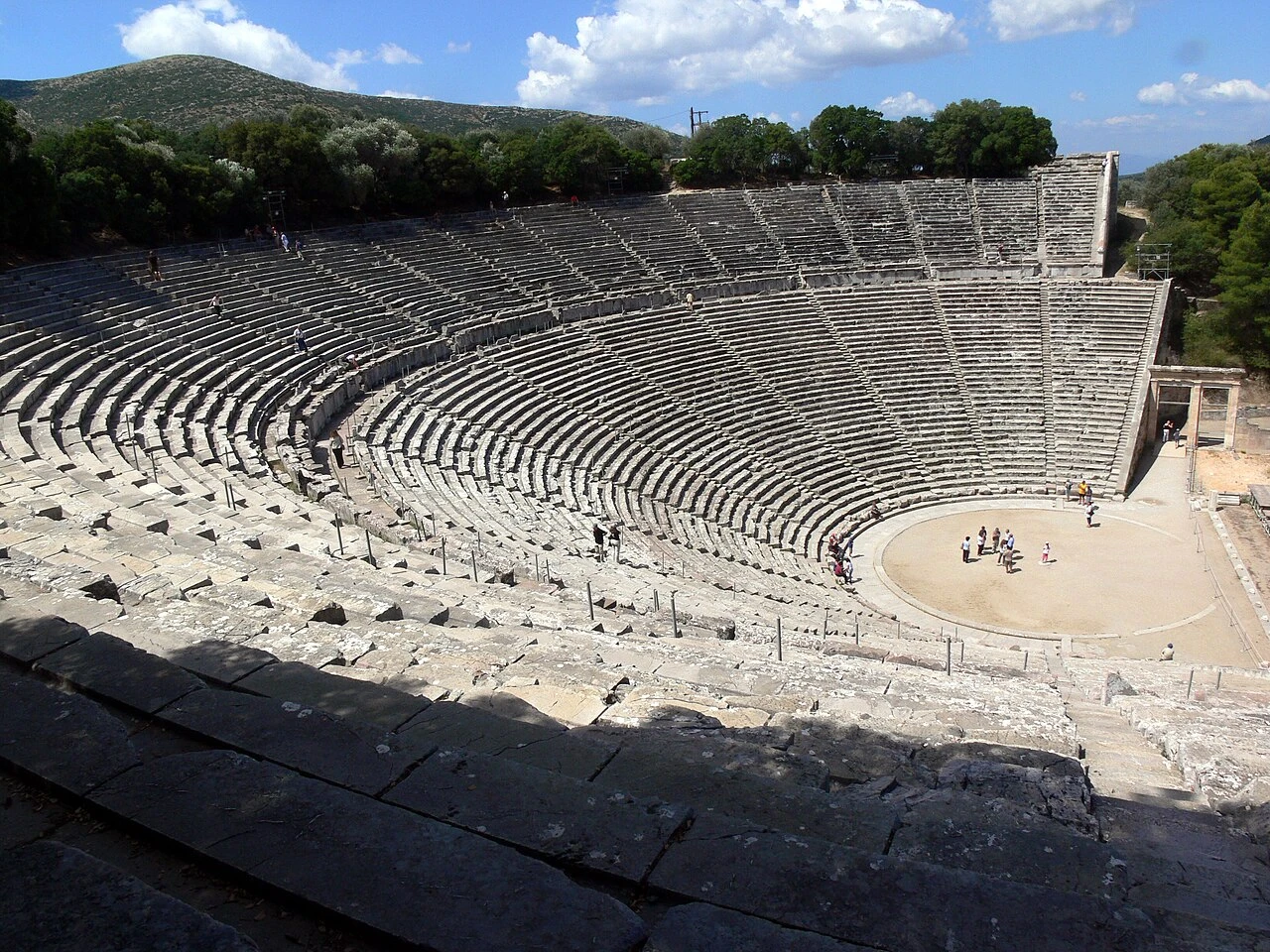
Epidaurus
Ancient Epidaurus
Content & sources
Photo: Fingalo · CC BY-SA 2.0 de