Stanza · Audio guide
Αρχαία Νεμέα Audio Guide
A place to remember. A story to take with you.
Nemea was an ancient sanctuary located in the northeastern Peloponnese. It served as a panhellenic religious centre and hosted one of the four prestigious Panhellenic games.
Download Stanza, then search for “Αρχαία Νεμέα”.
About the tour
One guide. Your kind of visit.
Nemea was an ancient sanctuary located in the northeastern Peloponnese. It served as a panhellenic religious centre and hosted one of the four prestigious Panhellenic games.
Ready when you are.
- 01Get the free Stanza app.
iOS & Android
- 02Find your guide.
“Αρχαία Νεμέα”
- 03Download before you go.
Works offline
Audio guide / 14 narrated stops
Inside the guide
Get to know a few of the stories before you go. Open a stop to read more.
01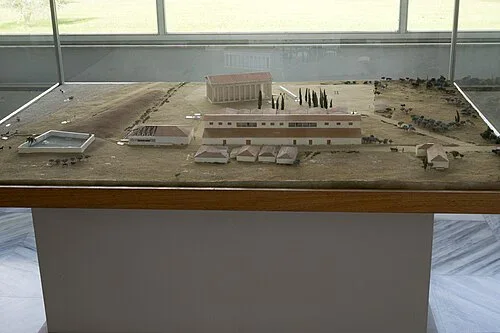 Archaeological Museum of Nemea: Mythic Origins and Ancient Treasures
Scale Model of the Sanctuary of Zeus
Nemea was an ancient sanctuary, home to one of the four great Panhellenic games. The others were held at Olympia, Delphi and Isthmia. Nemea stood on neutral ground, where the borders of several regions met. Here the games honoured Zeus. This model shows the whole sanctuary at once. The temple of Zeus stands out, its columns rising among a few tall trees. The sanctuary also had a great open-air altar and baths, along with a row of low buildings. Greek myth placed the Nemean Lion in this valley, where the hero Heracles was said to have killed it. The stadium was built farther from the temple, on land of its own. The museum that holds this model was built as part of the University of California's excavations. Excavations here have run in annual campaigns since 1973.
Photo: Zde · CC BY-SA 4.0
02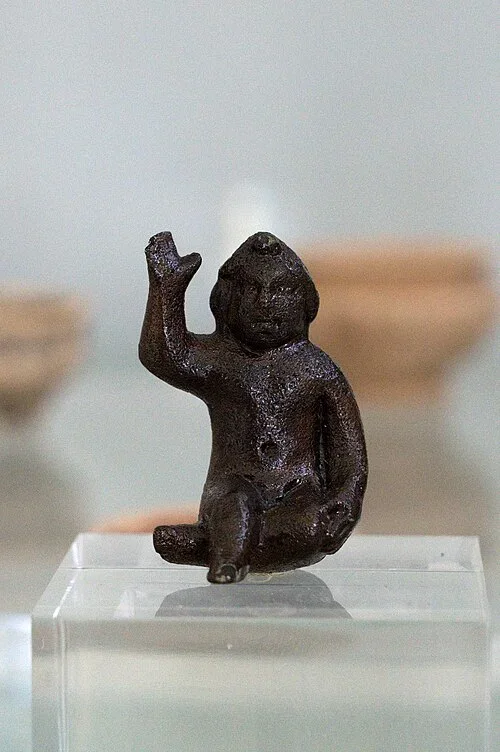 Archaeological Museum of Nemea: Mythic Origins and Ancient Treasures
Bronze Figurine of the Infant Opheltes
A serpent killed the infant Opheltes while his nurse was away. Hypsipyle had laid him on a bed of parsley. She had gone to fetch water for the Seven Against Thebes, who were marching from Argos. This small bronze is thought to show the child with one arm raised. The Seven founded the Nemean Games in his memory. The victors' crowns were made of parsley, or of wild celery. The judges wore black, which is taken as a sign of mourning.
Photo: Zde · CC BY-SA 4.0
03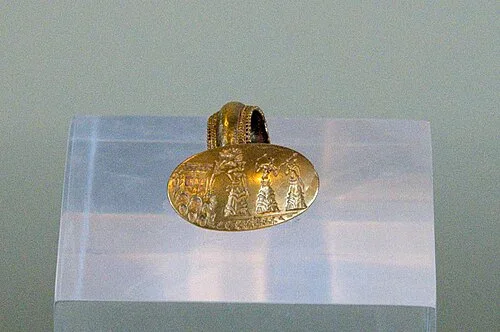 Archaeological Museum of Nemea: Mythic Origins and Ancient Treasures
Mycenaean Gold Ring from Aidonia
The Mycenaean tombs at Aidonia were rich, and this gold ring came from them. It dates to about 1500 BC. Its oval face is engraved with small figures. Aidonia was one of several burial grounds in the valley, with others at Ayia Sotira and Barnavos. Many finds from those tombs are kept in this museum. An early Bronze Age village also stood on nearby Tsoungiza Hill. The valley was settled centuries before the sanctuary took shape. In 2018, archaeologists found a large, intact tomb from the early Mycenaean era. It belongs to the same broad period as this ring.
Listen in the appPhoto: Zde · CC BY-SA 4.0
04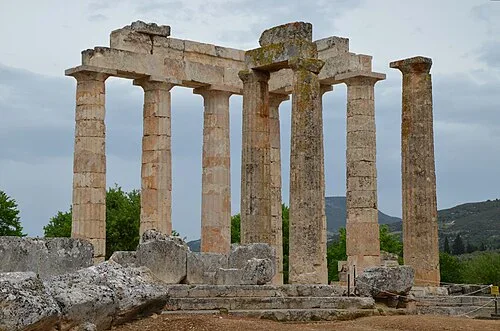 The Temple of Nemean Zeus
The Temple of Zeus
A fire destroyed the earlier temple of Zeus at Nemea, which dated to the sixth century BC. Only a foundation wall of that older building is still visible. Around 330 BC, when the games returned to Nemea, the city of Argos built a new temple. It was built on top of the older foundations. The builders combined three of the Greek architectural orders in one building: Doric, Ionic and Corinthian. The columns on the outside are Doric. The finished temple had no sculpted decoration at all.
Listen in the appCarole Raddato from FRANKFURT, Germany · CC BY-SA 2.0
05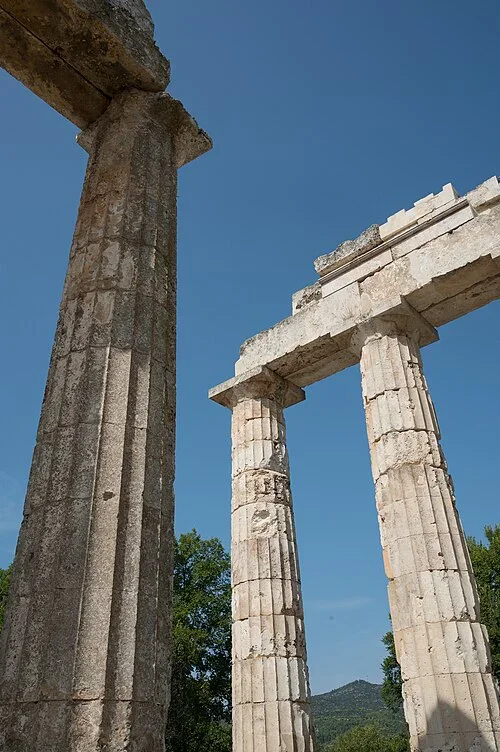 The Temple of Nemean Zeus
Standing Columns of the Temple
The outer Doric columns are slender, standing six point three four column diameters tall. That slenderness looked ahead to the styles of the Hellenistic period. Pausanias saw the temple when its roof had already fallen in, and he called it worth seeing. The temple stood among cypress trees, with no statue of the god inside. Three of its columns have stood since they were first set up. Rebuilding began in 2002. Two columns were rebuilt from fallen drums, the round stone sections that make up a column. Four more have been rebuilt since then.
Listen in the appPhoto: Zde · CC BY-SA 4.0
06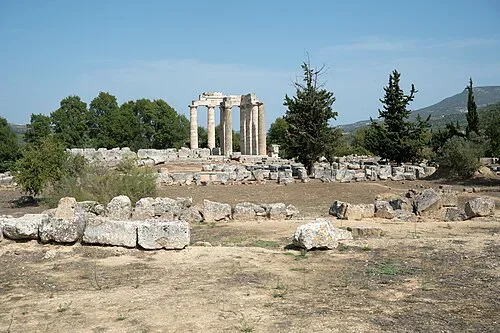 The Sacred Enclosure: Civic Oikoi and the Heroon of Opheltes
The Oikoi: City-State Houses of the Sanctuary
South of the temple lie nine poorly preserved buildings. Archaeologists call them oikoi, the Greek word for houses, because their purpose is unclear. They may have served as treasuries, like those at Olympia, and as meeting halls, as at Delos. The festival was held every two years, in July. Before it, a sacred truce was declared for a month. During that month all wars and hostilities were suspended, so athletes could travel to Nemea. The first oikos is the largest of them, at twenty-two point four metres long. Only the limestone foundations survive, after later farming and the robbing of building stone. Three of them date to the first half of the fifth century BC, after the Persian Wars.
Listen in the appPhoto: Zde · CC BY-SA 4.0
07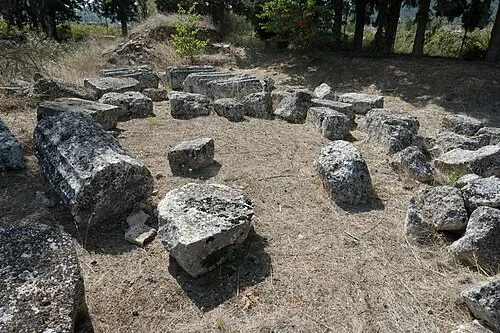 The Sacred Enclosure: Civic Oikoi and the Heroon of Opheltes
The Heroon of Opheltes
Pausanias wrote of a grave within the sacred enclosure in the second century AD. He wrote that it was the grave of Opheltes, the child of the founding myth. Open-air altars surrounded it, and a stone wall enclosed the whole. Excavators call this site the Heroon of Opheltes, a hero shrine. Greeks honoured certain dead people as heroes, with altars and offerings. Low blocks of stone still lie on the dry ground.
Listen in the appPhoto: Zde · CC BY-SA 4.0
08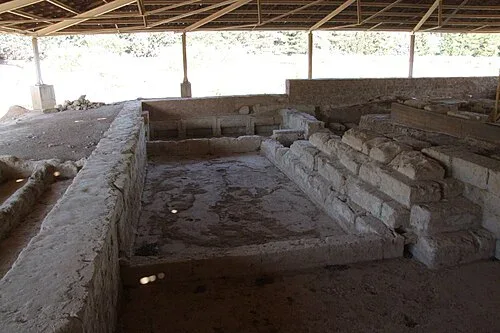 The Sanctuary Baths and Hydraulic Engineering
The Sanctuary Baths and the Aqueduct
An aqueduct about one kilometre long carried spring water to the baths. Its channel was built from special tapered tiles, shaped like a U and covered with roof tiles. The baths are thought to date to the fourth century BC, at the southern end of the Hellenistic complex. Athletes used them during the games, along with a lodging called the Xenon. Part of the aqueduct is still visible near the baths.
Listen in the appPhoto: Harald Rossa · CC BY-SA 3.0
09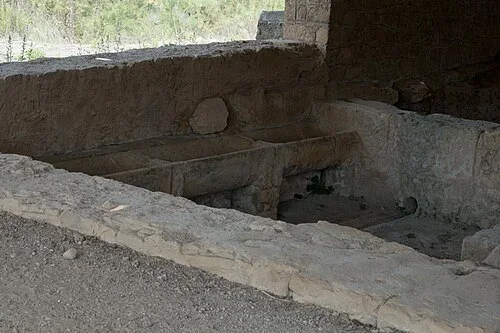 The Sanctuary Baths and Hydraulic Engineering
Bathing Basins of the Sanctuary
The west wing of the bath held a series of individual basins. Athletes most likely used them for personal washing. Basins like these were typical of fourth century Greek baths, and similar ones have been found at Eretria and Corinth. The east wing held a round plunge bath, where a person could be fully immersed. It is one of only four such baths in Greece. All four come from Panhellenic athletic sites, so the baths may have served a ritual purpose as well as a practical one. Channels and reservoirs lead toward the bath. One idea is that the water warmed in the sun before it reached the bathers.
Listen in the appPhoto: Zde · CC BY-SA 4.0
10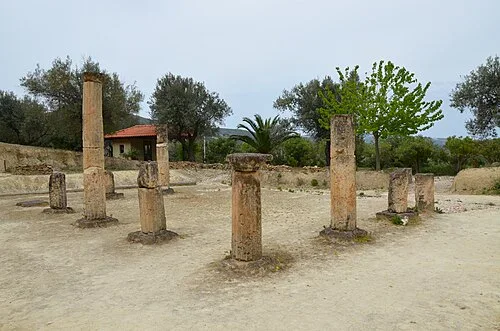 The Hellenistic Stadium: Apodyterion and Vaulted Tunnel
The Apodyterion: Athletes' Changing Room
The apodyterion was a rectangular building with a portico around it, and stamps on its roof tiles name the architect, Sosikles. The name means changing room. It sits in a natural dip in the ground, just east of the stadium. Here athletes took off their clothes, rubbed oil into their skin, and prepared for the games.
Listen in the appCarole Raddato from FRANKFURT, Germany · CC BY-SA 2.0
- 11
The Vaulted Athletes' Tunnel
A thirty-six metre tunnel, the earliest Greek vault known, with ancient graffiti on its walls.
- 12
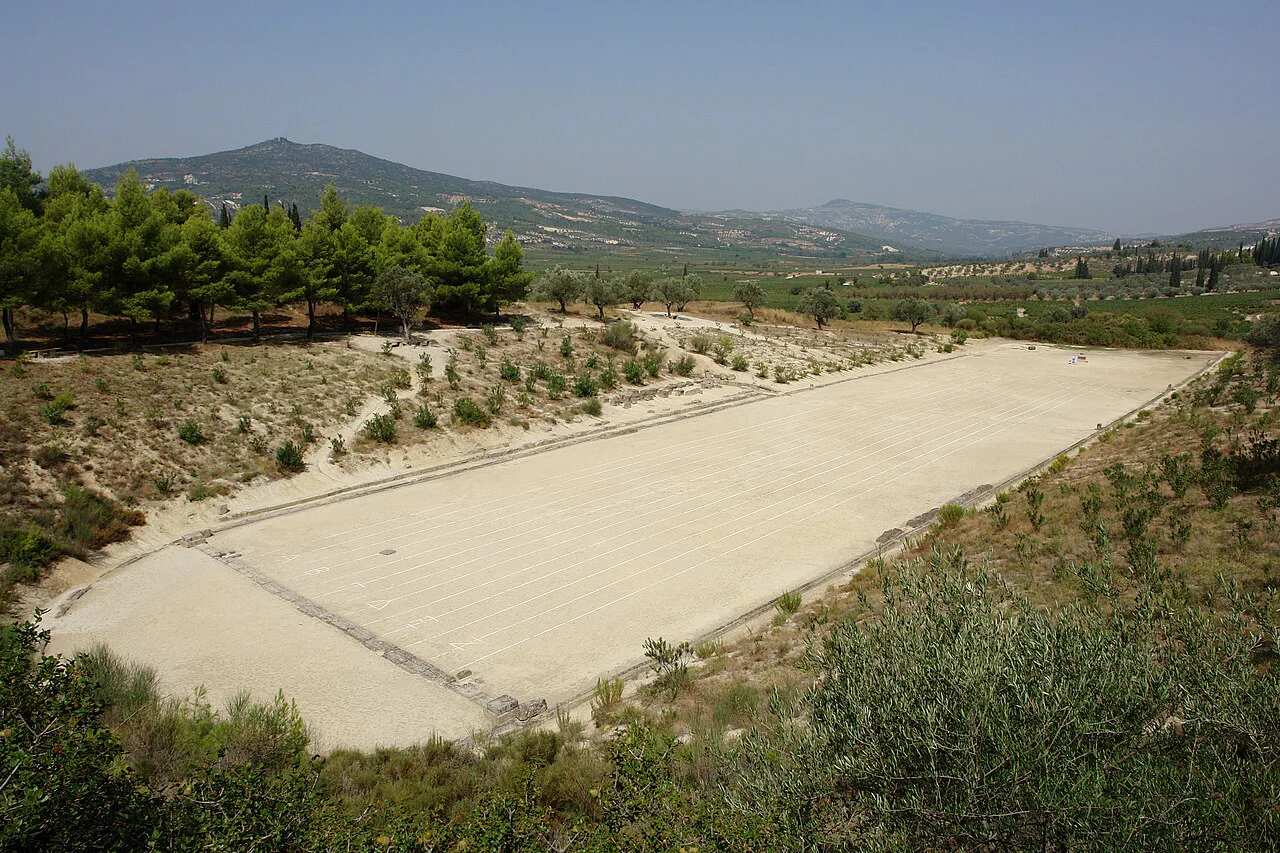
The Hellenistic Stadium
A stadium set into a hollow between two ridges, with earth banks for seats and a track of six hundred ancient feet.
- 13
The Ancient Starting Line (Balbis)
The stone grooves where ancient runners set their toes, and the holes cut for a starting mechanism.
- 14
The Hysplex Starting Mechanism (Reconstruction)
A wooden reconstruction of the starting gate that gave every runner an accurate start.
Αρχαία Νεμέα
Frequently asked questions
How much does the guide cost?
Free app download. Listed guide price: $1.99. Guide price shown in the app. Audio guide only. Venue admission is separate.
Can I listen without internet?
Yes. Download the guide’s audio, images, and maps in the app before your visit. Your downloaded content is then available offline.
Can I listen in my language?
This audio guide is available in 15 languages, including English.
Do I need to follow a schedule?
No. This is a self-guided experience. Choose your stops, pause whenever you like, and return to a story at your own pace.
At your own pace
Explore Αρχαία Νεμέα.
Download Stanza, then search for “Αρχαία Νεμέα”.
Free app download · Guide price shown in the app
Keep exploring
Nearby audio guides
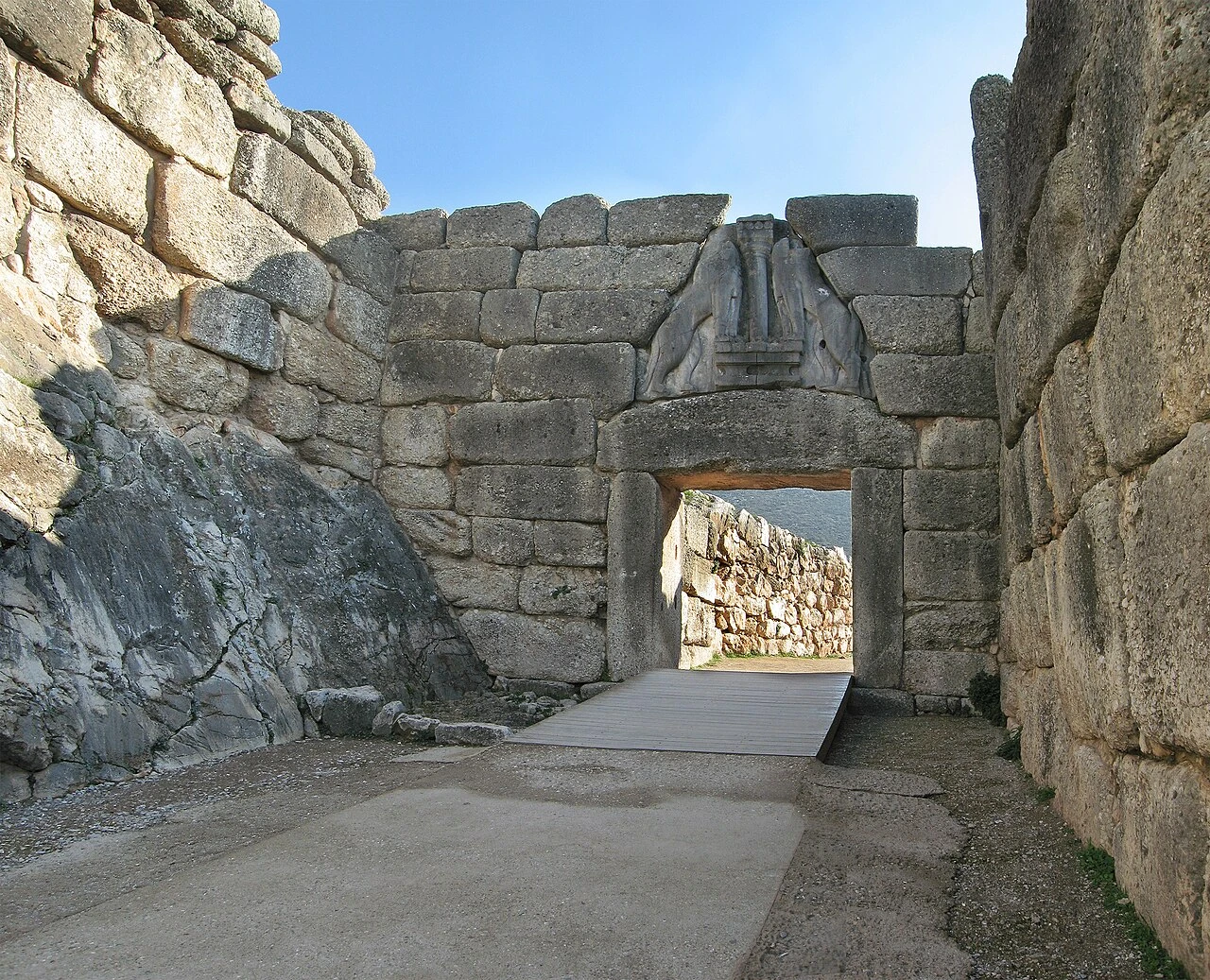
Mycenae · 10 km
Mycenae Archaeological Site
Content & sources
Andreas Trepte · CC BY-SA 2.5
Municipal Unit of Corinth · 17 km
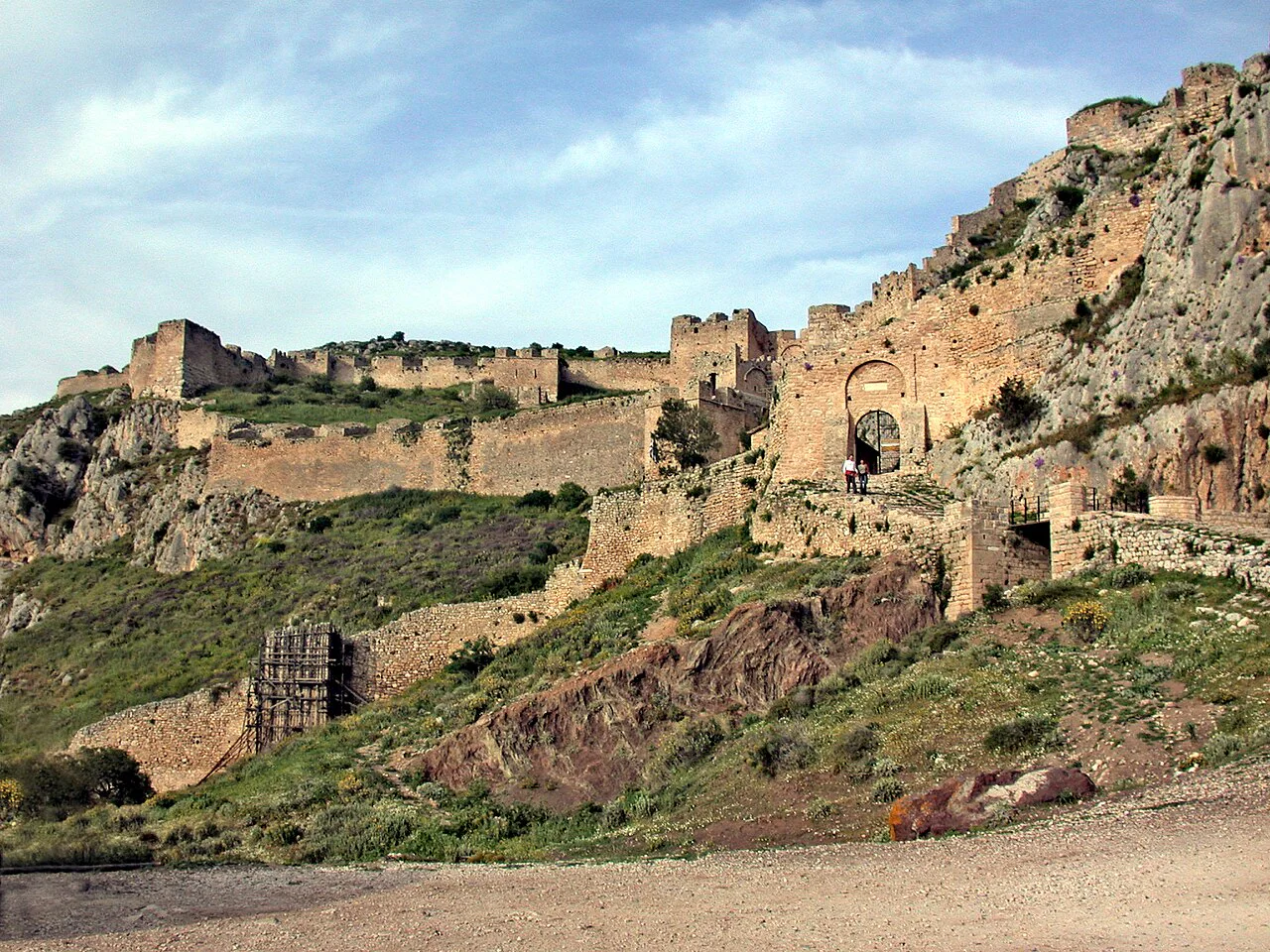
Ακροκόρινθος
Content & sources
MM · Public domain
Corinth · 18 km
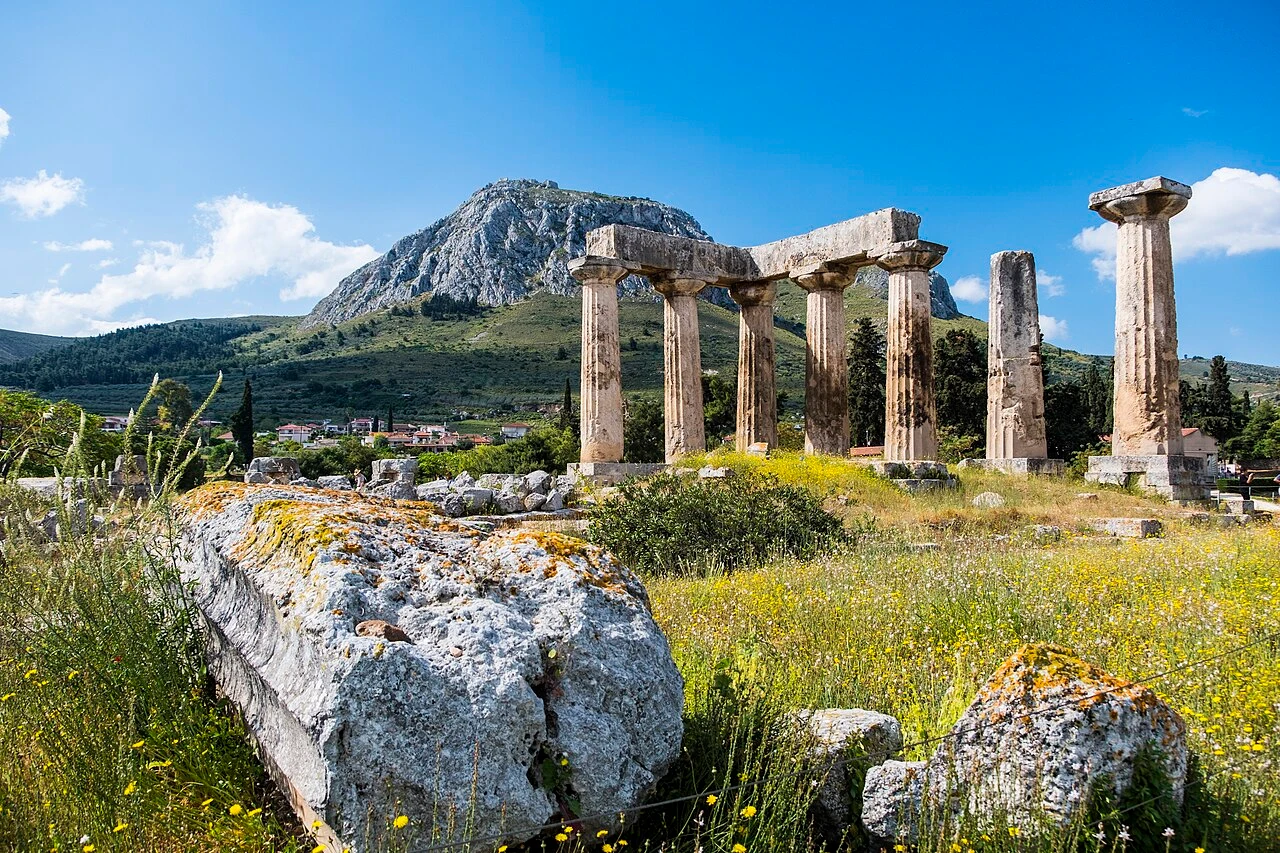
Ancient Corinth
Content & sources
Davide Mauro · CC BY-SA 4.0
Nafplio · 25 km
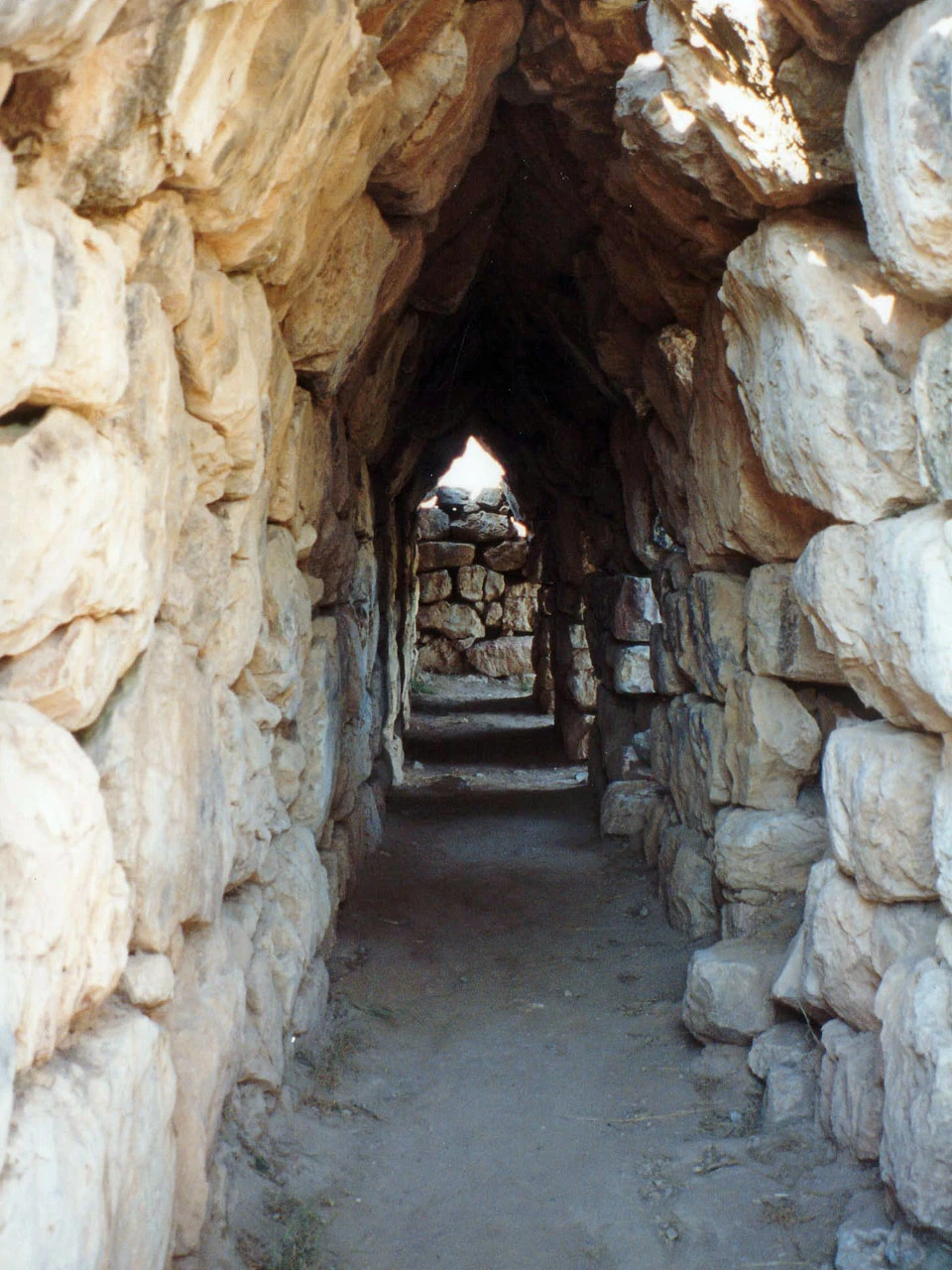
Tiryns
Content & sources
Alun Salt · CC BY-SA 2.0